Category: propTech

  • Four axes that are reorganizing the real estate industry

    Four axes that are reorganizing the real estate industry

    Data & AI
    Industry reports see data-driven decisions and AI-based analytics as one of the strongest drivers. From predictive analytics for rents, vacancy rates and capex to automated valuations and AI-supported due diligence and document processing.

    Along the life cycle, this starts with land acquisition and project development (location scoring, risk and scenario models) and extends to operations and portfolio management (predictive maintenance, portfolio optimization, dynamic price and space management).

    Decarbonization and ESG
    Net-zero targets, taxonomy rules and ESG investing make green proptech a cluster in its own right. Smart building systems, IoT sensor technology and ESG data platforms measure emissions, energy and resources, automate reporting obligations and support refurbishment and investment decisions.

    This has a social impact through stricter regulation and investor pressure, and an economic impact through the growing difference in value between stranded assets and climate-friendly stocks. From carbon screening when purchasing land to decarbonization roadmaps for ongoing operations.

    User experience and flexibility
    Digital tenant experience, hybrid working models and flexible residential and commercial spaces are considered a core trend. Mobile access, self-service portals, real-time communication and dynamically bookable, usage-based spaces are required.

    Throughout the life cycle, this shifts the focus to user-centric concepts and mixed use right from the planning stage and requires platforms for booking, community building and personalized services during operation, which directly changes the value creation logic of properties.

    Platform ecosystems
    Many sources see a move away from isolated stand-alone solutions towards networked platforms in which data, processes and services from different players converge. Open interfaces and integrations are seen as the most important requirement on the part of developers and operators.

    Economically, this creates new platform operators, while socially, transparency, power and role models are shifting. From land purchase CRM and development tools to operating and ESG platforms that digitally connect the entire lifecycle.

  • New cooperation improves precision in surveying and construction

    New cooperation improves precision in surveying and construction

    Fixposition announced a collaboration with Topcon Positioning Systems at the Geo Week 2026 trade fair. The fair is taking place in Denver, Colorado, until 18 February 2026. According to a press release, the Schlieren-based specialist in real-time kinematic (RTK) and visually assisted positioning will provide its solutions to the Californian company. The technologies developed by the spin-off of the Swiss Federal Institute of Technology Zurich, founded in 2017, are to be integrated into the high-precision satellite-based positioning systems of the Californian company Topcon.

    Topcon offers high-precision GNSS (Global Navigation Satellite System) positioning technologies for geomatics, construction and agricultural applications worldwide, according to Ron Oberlander, head of Topcon’s Geomatics platform. The integration of Fixposition’s visual positioning technologies will help his company create added value for its customers.

    “Fixposition has developed technology that improves satellite positioning and benefits users even when working inside buildings and transitioning between indoor and outdoor areas, without disrupting the workflow, by combining RTK-GNSS with artificial intelligence to ensure positioning accuracy. We see this AI-powered technology as an innovative integration into our next-generation GNSS solutions.”

    Zhenzhong Su, CEO and co-founder of Fixposition, says he is “proud to deliver Fixposition’s xFusion, Vision and multimodal fusion positioning technology to support Topcon’s next-generation GNSS solutions. We look forward to bringing this new solution to market and helping surveying professionals in geomatics, construction and agriculture achieve faster results and do more without compromising on quality, even in environments where GNSS connections are difficult.”

  • Valais municipalities launch online.vs.ch

    Valais municipalities launch online.vs.ch

    In four pilot municipalities in Valais, the confirmation of residence is available as a digital service, simply, regardless of location and around the clock. The service is provided via the online.vs.ch portal, which has been set up since January 2025 as a joint access point for digital services from the canton, municipalities and semi-public institutions. By the end of the year, all 122 municipalities in Valais should offer this online service, taking their residents’ services a further step towards end-to-end digital processes.

    A portal for modern government services
    By launching this service, the canton and municipalities are responding to the growing expectations of the population and businesses for simple, accessible contact with the authorities at any time. As the project organiser, the canton of Valais is responsible for financing the project and is working closely with the pilot municipalities to design and introduce the services. The aim is to consistently simplify administrative procedures, avoid media disruptions and make digital interaction the preferred option for contact with the administration.

    Electronic identification increases security
    Until now, many online applications have been based on web forms with subsequent manual identity checks. Identification is now carried out electronically via online.vs.ch, which simplifies the completion of forms, speeds up processing and increases data security. Users can choose between two types of connection, including the AGOV public authority login provided by the federal government, which does not require a password and is based on modern authentication technologies. This provides better protection for personal information and at the same time makes access to digital administrative services more convenient.

    Expansion of the offering
    Since going live at the beginning of 2025, over 40 cantonal administration services have already been integrated. Further services from the canton, municipalities and semi-public organisations will follow step by step. In the long term, the portal should become the central access point for all digital services of the Valais authorities and thus bring the cantonal digitalisation strategy to life.

  • Startup accelerates engineering simulations with AI

    Startup accelerates engineering simulations with AI

    Hardware development and material testing today rely heavily on physics-based simulations for design, validation and production. These calculations often take hours or days and incur high costs, which delays projects and pushes back production launches. Engineers therefore often reduce model complexity to shorten calculation times, at the expense of accuracy and proximity to real operating conditions.

    Physics-aware AI for faster workflows
    Fainite is developing a physics-aware AI platform that speeds up and simplifies existing simulation workflows. The engine learns from physics-based simulations and can derive accurate predictions without relying on large historical data sets. Engineers set up new workflows in minutes, run simulations much faster and can intelligently reuse previous results, even with limited amounts of data. An integrated AI agent guides them through complex steps, suggests settings and makes advanced analyses usable for broader teams.

    cHF 150,000 for scaling and market entry
    The CHF 150,000 from the Venture Kick programme will be used to expand the technology to additional engineering disciplines and use cases and to build a scalable platform with next-generation functionalities. At the same time, the funds will strengthen the team structure and go-to-market activities in order to accelerate deployment at industrial companies. The company is thus addressing around 9 million hardware engineers worldwide whose work is currently slowed down by slow, complex simulation processes.

    Founding team with physics and AI expertise
    The start-up was founded by researchers and engineers from Caltech, ETH Zurich, the University of Cambridge and Google, including CEO Alex Donzelli, Chief Scientist Prof Burigede Liu and ML Lead Matthias Bonvin. The team is complemented by former executives from established simulation software manufacturers, bringing together in-depth expertise in deep learning, computational physics and industrial simulation platforms. According to Alex Donzelli, Venture Kick’s funding, feedback and network have been instrumental in moving quickly from technical validation to the first industrial applications.

  • Why the real estate industry is tackling digitalisation

    Why the real estate industry is tackling digitalisation

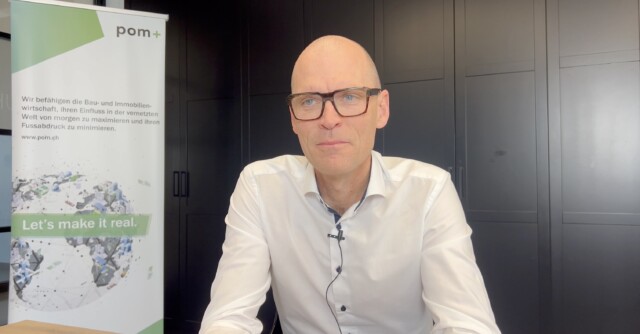
    Mr Caspar, pom is regarded as one of the leading consulting companies in the areas of digitalisation, transformation and sustainable property development. How would you describe your role within this ecosystem?
    At pom, we see ourselves as an intermediary between research, development and practice in the property industry. Our role is to recognise new topics at an early stage, classify trends and develop an understanding of what will move the industry in the future. We translate this knowledge into concrete use cases, recommendations and a basis for decision-making for our clients. In doing so, we help companies to separate the important from the unimportant and to focus specifically on those methods, technologies and data that actually create added value for their role in the property industry.

    Which topics are your customers currently most concerned with: data, processes, organisation or technology?
    There is no simple answer to this question. In recent years, the focus has been very much on technology. Many companies have introduced new systems and launched numerous digitalisation projects. This has certainly brought progress, but has also led to a certain amount of disillusionment. Projects were more time-consuming, more expensive and more complex than expected. This was often due to the fact that data and processes were underestimated. We are currently observing a clear shift away from purely technology-driven projects towards more data- and process-orientated approaches. The current AI hype is further reinforcing this development.

    pom emphasises that data is the foundation of modern property management. Where do Swiss companies stand today in terms of data readiness?
    Basically, Swiss property companies are not in a bad position. Most of them have sufficient data readiness to operate their core processes reliably and answer relevant stakeholder questions, but we see a need for development in automation in particular. This requires data to be structured, consistent and available company-wide. Data-intensive topics such as ESG show where the limits lie. Another important point is collaboration across company boundaries. The property industry has always been highly networked. Greater data readiness is crucial to making this collaboration more efficient, digital and automated in the future.

    What are the most common misconceptions about the digitalisation of property portfolios?
    The effort and complexity are often underestimated. In particular, the provision and preparation of the required data is estimated too optimistically. Although data is available, it is often not of the necessary quality or structure. This leads to delays, additional costs and extra work for the specialist departments that should actually be doing their core business. Another misconception is that digitalisation projects can be implemented “on the side”. Professional project structures and the corresponding expertise are often lacking. This has a negative impact on motivation, acceptance and ultimately the success of the project.

    Which technological developments will change the property sector the most in the next 5-10 years?
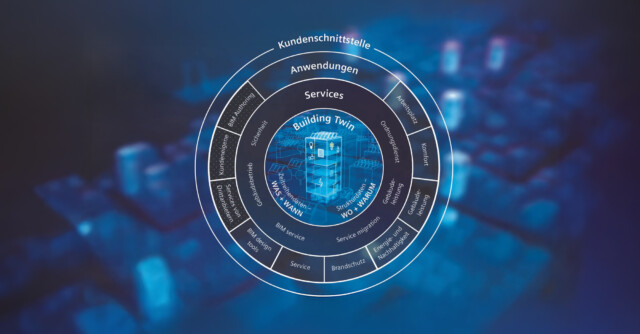
    Basically, we distinguish between two levels: the digitalisation of the property itself and the digitalisation of the companies that operate these properties. At building level, we are seeing major advances in the cloud, IoT and digital models. The digital mapping of properties, often referred to as the digital twin, is increasingly becoming the standard and enables new forms of automation, while at company level, development will be strongly characterised by AI and process digitalisation. A small number of core applications, combined with flexible low-code platforms, will make it possible to automate processes efficiently and across companies.

    Many companies are experimenting with AI. Where do you see realistic fields of application in the next 24 months?
    In the short term, there is great potential in analysing and evaluating documents and unstructured data. Content can be summarised, evaluated and created more quickly. Another important step is the integration of AI tools into everyday working life, for example as assistance solutions. The next step will be to increasingly link these systems with company-specific data. Reporting and analyses will also change: instead of fixed reports, information will be compiled according to the situation and needs.

    What risks do you see in the use of AI in the property industry?
    We see the biggest challenges less in the regulatory area and more at a cultural and technological level. Many companies do not yet have the necessary skills and structures in place to deal with data and technology. In addition, the Swiss market is highly fragmented and heterogeneous, which makes it difficult to introduce standardised solutions. The property industry is project-orientated and has little serial logic. This further slows down the introduction of new technologies.

    Rate of adoption instead of technology: what are the biggest cultural hurdles?
    A key hurdle is that digitalisation is not yet anchored as a strategic topic in many companies. A lack of expertise, unclear responsibilities and the expectation of implementing digitalisation “on the side” are slowing down implementation. In addition, there is often a lack of willingness to consistently scrutinise and change existing ways of working.

    How is digitalisation changing roles in real estate companies?
    Digital skills will be part of the basic qualification of many roles in the future. The focus will be less on a deep understanding of technology and more on secure user knowledge. At the same time, new roles are emerging, for example for the management of digitalisation projects and digital platforms. These functions ensure that systems are used, developed and operated sensibly.
    This allows asset, property and facility managers to continue to focus on their core business.

    What makes a digitally mature company?
    A digitally mature company anchors digitalisation, technology and data at the highest management level. There is a clear strategic stance, defined goals and responsibilities. Digitalisation is not delegated to IT, but is seen as an entrepreneurial task.
    Such a company also has the necessary roles, processes and expertise to continuously develop digital solutions and adapt them to changing conditions.

    ESG and PropTech are growing together. Which technologies are already creating real impact?
    ESG is a strongly data-driven topic. There are now functioning solutions along the entire data chain, from measurement to key figures. Smart meters, automated analyses of energy bills and the consolidation of data across several buildings are technically feasible. The challenge lies less in individual components and more in end-to-end integration and automation within companies. We do not yet see a comprehensive all-in-one solution.

    Where do you see the biggest gaps between requirements and reality on the market?
    The biggest gaps arise where requirements are only implemented selectively without considering the entire value chain. Data-driven topics in particular show that technical possibilities are available, but organisational and structural requirements are often lacking.

    How do you assess the maturity of the Swiss PropTech market in an international comparison?
    Switzerland has a very lively and innovative PropTech scene. Many solutions are internationally successful. The biggest challenge lies in scalability due to the size of the market and the federal structures. Overall, however, the level of maturity is high and competitive.

    Which PropTech areas are underdeveloped and which are overheated?
    The ESG sector is currently very overheated. There are a large number of solutions, which leads to a certain disillusionment. In international comparison, the consistent use of BIM across the entire property life cycle is particularly underdeveloped. Other countries are further ahead here, especially when it comes to institutional investors.

    Where do you see potential for partnerships between established companies and start-ups?
    Partnerships offer great potential, but are challenging. Established companies think long-term, start-ups are dynamic and innovation-driven. Cooperations are successful where there is mutual understanding and clear expectations are defined, be it in projects, partnerships or targeted funding models.

    Which developments currently surprise you in particular, both positive and negative?
    The AI hype is both positive and challenging. Positive because it promotes innovation, efficiency and new ways of thinking. Negative because expectations are often overestimated in the short term. Sustainable success requires an in-depth examination of data, processes and governance.

    If you could change one thing in the industry immediately, what would it be?
    I would like to see more consistency across the entire property life cycle.
    The project-based, highly individualised way of working makes it difficult to use scalable digital solutions. Approaches such as prefabrication and standardised construction methods could help to enable technological leaps without losing quality and design freedom.

    What drives you personally to drive forward the transformation of the industry?
    I am motivated by change, new projects and the opportunity to develop things further.
    Property is a particularly exciting field because it shapes our daily lives, from living to working. I find shaping digitalisation and transformation in this context to be meaningful and highly relevant.

  • PropTech Switzerland 2025

    PropTech Switzerland 2025

    Around 430 PropTech companies are currently active in Switzerland, many of them with roots at ETH or EPFL. This is an indication of the strong focus on deep tech and research. A large proportion of the companies are still in the early stages of development, with around half generating less than CHF 0.5 million in annual revenue. Nevertheless, the majority of companies expect increasing revenues, which characterises the mix of young start-ups, growing scale-ups and established technology companies.

    Funding, segments and sustainability pressure
    Due to the high number of completed financing rounds in 2024 and according to estimates, several hundred million francs have flowed into Swiss PropTechs in recent years. Solutions for smart buildings, energy efficiency, digital transactions, data analysis and AI-based services are particularly in demand. Around a fifth of companies are active in digital brokerage, followed by smart building solutions and data and AI products. The area of sustainability and lifecycle management is becoming increasingly important, driven by ESG requirements and net zero strategies. A significant proportion of PropTechs now integrate environmental sustainability as a core function of their offerings.

    Internationalisation and visibility in the start-up ecosystem
    Between 30 and 40 Swiss PropTech companies are already active in European or global markets, exporting their technologies or testing them in international pilot projects. At the same time, PropTechs regularly appear in rankings of the most promising Swiss start-ups, where they are among the fastest-growing young companies. The picture is thus shifting from a niche to a visible growth segment in the national innovation ecosystem.


    Slow adoption meets increasing digitalisation pressure
    Despite scalable products, customer acquisition remains challenging. Decision-making and procurement processes in the property industry often take one to one and a half years, which delays market entry and stretches out roll-outs. At the same time, there is increasing pressure to digitalise processes, make better use of data and operate buildings more sustainably. From regulatory requirements to rising energy prices. For PropTechs, this creates a field of tension between long cycles on the customer side and the fast pace of technology and capital requirements.

    Europe as a growth lever and opportunity for Switzerland
    The European PropTech market is growing dynamically and is expected to expand its volume significantly by the end of the decade, driven by investments in AI, smart buildings and sustainable refurbishment technologies. Europe currently holds a substantial share of the global PropTech market, from which Switzerland can benefit disproportionately with its high level of innovation, strong university landscape and exportable solutions. Overall, the scene is small but highly innovative. It is in the process of professionalising itself, becoming internationally oriented and changing the real estate industry in the long term.

    Facts & Figures PropTech Switzerland 2025

  • International cooperation is gaining importance in digital construction

    International cooperation is gaining importance in digital construction

    The software provider Revizto, based in Lausanne, has announced its membership of buildingSmartin a press release. The international organisation buildingSmart, based in Hertfordshire, UK, is committed to improving work processes, for example through internationally valid and open standards for Building Information Modelling (BIM).

    By joining, Revizto is responding to the problem that construction projects are becoming increasingly complex and technically sophisticated. Greater interdisciplinary and international cooperation is needed. As a result, standards and rules must be adapted to the market situation. “Open standards are increasingly crucial to the way the AECO industry works,” said Arman Gukasyan, founder and CEO of Revizto, in the announcement regarding companies in the architecture, engineering, construction and operations (AECO) sectors. “As a Swiss company, joining buildingSMART organisations in Germany, Austria and Switzerland allows us to intensify our involvement in regional communities that are driving the adoption of openBIM. By working closely with project teams in ongoing programmes, we can help link standard development to the practical requirements of project delivery – improving team coordination, minimising risk and working more efficiently.”

    Revizto plans to participate in regional initiatives, working groups and knowledge-sharing activities as part of its memberships and to support the ongoing progress towards open, efficient digital construction practices in the DACH region.

  • New platform provides early information on building applications

    New platform provides early information on building applications

    With Baugesuche Pro, Zurich-based Houzy AG has developed a “Switzerland-wide construction alert for your own neighbourhood,” as it describes the service in a press release. Owners, tenants or prospective buyers can use it to get an overview of building applications in their neighbourhood, which previously required studying official gazettes or municipal websites.

    “Transparency about the immediate environment is the basis for smart real estate decisions,” Houzy’s COO and CMO Nicolas Steiner is quoted as saying in the press release. “With Baugesuche Pro, we now offer everyone – from long-time homeowners to tenants planning to buy a flat – a tool to better understand the dynamics in their own neighbourhood without tedious research.”

    Users can register with Houzy and enter the location of their property or their desired neighbourhood. They will then receive a notification for every new building application within a relevant radius.

  • Digitalization in the DNA

    Digitalization in the DNA

    The DNA of SMG Real Estate has been summarized in one word since day 1 and with ImmoScout24 and Homegate for over two decades: Digitalization. With targeted investments in AI innovations, marketing and cybersecurity, SMG Real Estate is continuously developing its platforms and offering real estate professionals future-proof products and services for a digital competitive edge in the market.

    Achieving unprecedented efficiency with AI
    Artificial intelligence acts as a booster when it comes to making real estate agents and managers not only more efficient but also more successful in the long term. It accelerates the development of innovative products that create real added value for real estate professionals and free up valuable time – time for personal advice and support for their customers. A concrete example: thanks to the AI-based creation of advertisement texts in Business Manager, real estate professionals at SMG Real Estate save an average of 14 minutes per advertisement.

    Maximum reach thanks to full marketing power
    Visibility is and remains a decisive factor in real estate marketing. With dedicated marketing activities, SMG Real Estate invests specifically in addressing its platform brands, including ImmoScout24 and Homegate, to reach a wide target group. The aim is to lead the most relevant interested parties directly to the listings, strengthen the market opportunities of business customers and position the two brands as the top real estate platforms in Switzerland in the long term. Attention-grabbing content combined with target group-specific social media campaigns raise awareness among property seekers and set the course for real estate properties to be in the right place at the right time.

    Reliability and security as the basis for customer success
    With hundreds of thousands of visitors to SMG Real Estate’s platforms every day, reliability is a basic requirement. Accordingly, a team of over 100 tech specialists ensures that the required systems function efficiently and with the latest technology at all times. The same applies to cybersecurity: thanks to state-of-the-art protection mechanisms, two-factor authentication and integrated access control, data is even better protected. This allows real estate professionals to focus fully on their marketing. In summary, these and other extensive investments by SMG Real Estate are not only pursuing an optimal price-performance ratio, but also a competitive advantage for their customers in the highly competitive real estate market thanks to noticeable innovation and performance. Because only those who can sustainably position themselves in the market and stand out will have the best possible marketing opportunities.

    You can find more information here

  • AI monitoring brings new precision to infrastructure planning

    AI monitoring brings new precision to infrastructure planning

    Innovation Zurich has published the latest report from its AI Innovation Sandbox. Under the title “Sensor-based bridge monitoring – data collection and predictions for infrastructure maintenance”, Innovation Zurich, a joint initiative of the Canton of Zurich Economic Development Agency, Greater Zurich Area and Switzerland Innovation Park Zurich, investigated what data-based monitoring can achieve in terms of risk assessment and modernisation strategies for infrastructure structures. Data-based monitoring approaches are not yet an integral part of established standard-based condition assessment, which is usually extremely conservative, according to the report.

    In a pilot project, Swiss South-Eastern Railwayfrom St. Gallen and irmos technologies AG, based in Technopark Zurich, examined the Reidholz Bridge on the Wädenswil-Einsiedeln line as an example. It was built in 1910 and rebuilt in 1953. The railway company wanted to clarify whether extending its use from ten to 20 years would be technically possible and economically viable. It also examined whether the methodology could be transferred to comparable bridges in its portfolio.

    Using easy-to-install sensors from irmos technologies, which are specially tailored to the requirements of bridge monitoring, the research partners collected data from real-world operations during a test phase lasting several months. Cameras were also used to document train types, speeds and compositions and to validate the modelled traffic loads.

    The results show that even short measurement periods enable robust statements to be made about fatigue and stiffness, facilitating the trade-off between extending the service life and replacing the structure. This is because “based on sensor data, the system supports infrastructure operators in identifying risks at an early stage and planning maintenance measures in a targeted manner,” summarises irmos founder and CEO Dr Panagiotis Martakis.

    The report concludes that it is crucial that data collection is not an end in itself and that data-based methods solve a specific operational problem, such as the question: How long will the bridge actually last compared to standard-based estimates? The method delivers the greatest added value when it goes beyond individual cases: monitoring entire bridge portfolios enables comparisons, prioritisation and long-term investment strategies. To achieve this, infrastructure operators need to build up their expertise.

  • Digitalisation drives strategic expansion

    Digitalisation drives strategic expansion

    According to a press release, pom Consulting AG is celebrating its 30th anniversary this year. The company was founded by Peter Staub and Professor Hansruedi Schalcher as a spin-off from the Swiss Federal Institute of Technology Zurich. It was based on a research project on the integration of tasks, data and processes in the construction industry.

    The consulting firm now offers its services in real estate, infrastructure and construction not only in Zurich, but also in Basel, Bern, Lausanne and St. Gallen, as well as in Berlin, Frankfurt and Cologne. It employs over 130 people, has advised over 800 clients and carried out around 8,000 projects.

    According to a press release, pom is now entering its “next strategic growth phase”. It intends to focus on the further development of its digital services, the automation of customer processes and the targeted expansion of its team.

    In doing so, it can rely on the Zurich-based investment company White Peaks Capital, which became an investor in the summer of 2025. The family-owned investor, which specialises in SMEs, is the ideal partner, Peter Staub, founder and chairman of pom, explained in a press release at the time. “This partnership gives us the basis to accelerate our growth in a sustainable manner while remaining true to our roots.”

  • Digital assistant makes everyday rental life easier

    Digital assistant makes everyday rental life easier

    Zurich-based LIVIT AG has launched a chatbot supported by artificial intelligence (AI). According to a press release, the chatbot, called Livio, is designed to guide tenants digitally through a catalogue of essential questions about renting and living. The real estate service provider, a subsidiary of Swiss Life, wants to expand its digital offerings with this innovation.

    The chatbot draws exclusively on verified content from the LIVIT website, which is constantly updated and expanded by an in-house team of experts from the fields of property management, communication and digital business. Livio is currently in a beta phase.

    “Livio enables us to assist tenants in a straightforward manner. Recurring enquiries are answered automatically, while employees can focus more on individual concerns,” said David Rivière, Head of Management at LIVIT AG, in the press release. Livit is collaborating with the Zurich-based AI company Typewise on the technical implementation of the chatbot.

  • New innovation programme strengthens the canton of Jura

    New innovation programme strengthens the canton of Jura

    According to its announcement, the location and investment promoter Basel Area Business & Innovation is launching a comprehensive innovation programme for the canton of Jura. It is called InnoJura and expands the agency’s activities. In addition to the Switzerland Innovation Park in Allschwil and the one on the Novartis Campus in Basel, it has also been managing the Switzerland Innovation Park Basel Area – Jura in Courroux since 2019. Since 2022, Courroux has been hosting the Medtech Congress, the Accelerators i4Challenge and DayOne Tech, all of which promote the establishment and development of start-ups.

    According to the information provided, InnoJura builds on the experience gained in this process. The new programme is divided into three parts. It includes the InnoJura Accelerator, the entry point for start-ups. Young companies from industry-intensive sectors are prepared for partnerships with SMEs through coaching, group sessions and seminars.

    The programme also includes the InnoJura Academy. This is the entry point for SMEs. It is aimed at industrial companies that want to benefit from external innovations and collaborate with start-ups in expert-led workshops and practical modules. Finally, the InnoJura platform is the third element that brings start-ups and SMEs together. Sébastien Meunier, Director of SME Innovation at Basel Area Business & Innovation, has no doubt: “I am convinced that InnoJura will be met with great interest among companies in the Jura.”

  • Steel profiles expand digital planning software

    Steel profiles expand digital planning software

    The steel profiles from Pestalozzi AGwill be available in LogiKal from April, according to a statement from the Dietikon-based company. The software was developed by the German company Orgadata and is used for planning window construction. According to the statement from Pestalozzi, it is also used for planning projects involving doors and façades.

    A total of more than 400 suppliers have stored their components in the software. Open interfaces allow LogiKal to be connected to machine control systems, enterprise resource planning (ERP) and computer-aided design (CAD) software. An integrated automatic error check also reduces costly calculation errors, according to Pestalozzi.

    The Dietikon-based company describes the integration of steel profiles into LogiKal as a “digital milestone”.

  • Technology fund supports AI-based energy optimisation

    Technology fund supports AI-based energy optimisation

    Scandens can finance upcoming business developments with a guarantee from the technology fund. According to a statement by Dominik Bucher, co-founder and CCO of the Zurich-based cleantech company, receiving this guarantee confirms its approach: “Enabling the right investment decisions for real estate portfolios – economically sound and future-proof” while making the best possible decisions for the climate and the environment. “We are delighted to be part of the technology fund,” said Bucher.

    Founded in 2021 as a spin-off from the Swiss Federal Institute of Technology Zurich, the company launched software in 2023 that makes it easier to plan and implement energy-efficient building renovations. With this artificial intelligence-based internet application, owners of real estate portfolios as well as private homeowners can check whether and which renovation measures make economic and ecological sense.

    According to a statement from Scandens, the software displays over 500 renovation combinations and creates a plan that serves as a basis for implementation. This is intended to save time and promote sustainable decisions.

    With the technology fund, the federal government promotes innovations that reduce greenhouse gases or resource consumption, favour the use of renewable energies and increase energy efficiency. Guarantees make it easier for innovative companies to take out loans. The guarantee is granted to banks or other suitable lenders. To cover guarantee losses, a maximum of CHF 25 million per year from the proceeds of the CO2 levy is paid into a technology fund.

  • Digital marketplace promotes circular economy in construction

    Digital marketplace promotes circular economy in construction

    Zirkular GmbH, based in Basel, has launched its new platform , rematerial. According to a press release, the new online DIY store will offer high-quality, reusable building components. For example, it will offer LED lights that have been reconditioned by specialist companies and now come with a guarantee. Components can also be reserved for a month or stored temporarily for up to 24 months for just-in-time deliveries. The building components collected from demolition sites are stored in a systematic manner.

    The rematerial platform can be used in conjunction with thePlanularplanning tool, which was also developed by Zirkular. In this module, architects, planners and builders can select the components required for their respective projects from a database. The path of the building material can be traced through the steps of source object, component, warehouse and target object.

    With both modules, Zirkular GmbH supports sustainable construction through circular economy, as demonstrated, for example, in construction projects such as the Lysbüchel Süd neighbourhood in Basel.

  • Robots bring new efficiency to underground pipeline construction

    Robots bring new efficiency to underground pipeline construction

    Schlieren-based start-up promoter Venture Kick is supporting the deep tech start-up Under Industries from Dübendorf with CHF 150,000. According to a press release, the funding will support the development of Under Industries’ Micro Tunnel Boring Robots (MTBRs). The MTBRs are designed to enable faster and cleaner laying of underground utility lines while reducing road closures, noise emissions and surface damage.

    Under Industries was founded as a spin-off of Swissloop Tunneling, an engineering student initiative at the Swiss Federal Institute of Technology Zurich (ETH). Under Industries’ MTBRs are designed for use in a wide variety of soil conditions. Compared to conventional pipe jacking methods, they minimise surface disruption, shorten construction times and improve adaptability. This could promote more sustainable and flexible development of urban infrastructure.

    Venture Kick’s funding will support the completion of Under Industries’ minimum viable product (MVP). According to the press release, this is an “industrial-grade MTBR that will be used for the first demonstrator and commercial pilot projects and will strengthen the industry’s confidence in the technology”.

    The start-up is initially focusing on the Swiss electricity distribution market. It is working with distribution network operators who are responsible for expanding the electricity grids and transitioning from overhead lines to underground cables. Expansion in Europe and the development of further supply lines are to follow. According to Venture Kick, the realistically achievable market for Under Industries in Switzerland and Europe amounts to around CHF 150 million per year for electricity grids alone.

  • Artificial intelligence assists with advertising residential properties

    Artificial intelligence assists with advertising residential properties

    The Swiss Marketplace Group (SMG) is launching new options on its real estate platforms ImmoScout24 and Homegatethatallow private sellers to advertise their properties online. According to a press release, these tools are supported by artificial intelligence (AI) and make it easier for non-professional sellers to advertise on the internet.

    To create an advertisement, all that is required is to enter the most important property attributes such as address, size and amenities. The real estate platforms then use AI to create the complete advertisement title and description of the property. This includes descriptions of the location and surroundings of the property, according to the press release. Finally, users can upload pictures and complete the advertisement.

    “Many private landlords only occasionally deal with creating an advertisement. Thanks to AI support, they now receive a high-quality, structured proposal within a few seconds that meets the standards of professional estate agents,” Martin Waeber, Managing Director at SMG Real Estate, is quoted as saying in the press release. “This also benefits all searchers, because the more accurately an advertisement is described and the faster it goes online, the faster people can find their new home.”

    The modules have been available to professional providers for about a year. With the now broader positioning for private providers as well, SMG aims to further advance digitalisation in the Swiss real estate business.

    SMG Swiss Marketplace Group AG combines the digital marketplaces of TX Group, Ringier and Mobiliar.

  • Digital product passport brings transparency to the circular economy

    Digital product passport brings transparency to the circular economy

    Sky-Frame AG, based in Frauenfeld, offers its customers frameless sliding windows manufactured in Switzerland. The recyclability of the products plays a major role in this. The company has now launched a digital product passport with a Cradle to Cradle Compass to provide information on the extent to which the products used comply with the strict Cradle to Cradle circular economy principle.

    The Digital Product Passport Compass Cradle to Cradle (DPPCCC) was developed by epeaswitzerland in Widnau. It is based on the digital product passports that, according to an EU regulation, are to be gradually introduced for all products sold in the EU. It evaluates Sky-Frame products according to a series of criteria, such as their performance, recyclability and energy consumption. It makes the company’s supply chains transparent and proves the recyclability of the company’s products.

    “The frameless windows and sliding doors manufactured in Switzerland create an extraordinary architectural, boundless spatial experience with spectacular views. Together with the ‘Digital Product Passport Compass Cradle to Cradle’ tool from epeaswitzerland, we are committed to a new level of transparency, identity, orientation and compliance with future EU legislation,” says Michael Fuchsberger, Head of QM & Sustainability at Sky-Frame AG, on further aspects of the DPPCCC. For example, it provides information about the supply chain and options for returning Sky-Frame products. In addition, the information can be structured and displayed in detail according to aspects such as material health or various areas of suitability for the circular economy.

    “As a globally active company, Sky-Frame has once again demonstrated its pioneering role with the introduction of the Digital Product Passport Compass Cradle to Cradle from epeaswitzerland,” says Albin Kälin, founder and managing director of epeaswitzerland.

  • Data-driven decisions for green real estate strategies

    Data-driven decisions for green real estate strategies

    Empiraintends to utilise Zurich-basedOptimI’s Real Estate Decision Intelligence (REDI) to strengthen data-driven decision-making in the areas of investment, funds, asset management and sustainability management. According to a statement, the aim is to develop an integrated approach that holistically combines financial performance, climate impact and regulatory requirements. OptimI’s REDI platform supports Empira in making informed investment decisions, developing scientifically sound decarbonisation pathways at fund and asset level, and planning capital-efficient investment and refurbishment strategies.

    Empira uses the platform in particular in the context of its Transition to Green Fund, which targets energy-inefficient properties with repositioning potential and utilises government incentives for green refurbishments and comprehensive asset management to create high-quality, sustainable residential and office properties.

    “Digital decision intelligence is essential today to achieve both stable returns and credible decarbonisation, starting from the moment we receive an initial investment memorandum,” said Torsten Bergmann, Vice President of Investment Advisory at Empira. “Optiml provides us with the analytical depth we need to achieve consistent, scalable impact across all our funds and supports our transition-to-green strategy with reliable decision-making processes.”

    According to the announcement, the introduction of the OptimI solution underscores the industry trend toward data-driven asset optimisation, in which sustainability and financial performance are assessed holistically. The real estate sector is responsible for around 40 per cent of total energy-related CO2 emissions worldwide. Industry players are therefore increasingly obliged to present credible and financially robust decarbonisation strategies.

  • Digital intelligence in construction

    Digital intelligence in construction

    “Planning is already highly digitalized, construction less so and operations more so,” explained Alex Walzer from the FHNW. A lot of information still gets lost between the project phases. This is a problem, particularly with regard to the circular economy. Walzer sees great potential in the consistent use of data. Learning from projects, designing buildings based on data, standardizing processes. But without a clean data basis and precise questions, even artificial intelligence remains ineffective.

    Consistent data with Lakeup
    Michal Rzinski from Bond BIM presented the Lakeup platform, a system for life cycle data management. It is designed to enable building owners and real estate organizations to use data in a structured way over the entire life cycle of a building. From the definition of requirements to ordering and evaluation, Lakeup creates data consistency and transparency.

    According to Rzinski, the focus is on people. “We want to pick up specialist planners, engineers and decision-makers in equal measure.” One example is provided by the University Hospital Basel, where AI agents automatically classified 25,000 data records, the basis for later applications. The platform has a modular structure, from specialist planning tools to corporate solutions.

    Virtual bathrooms and real decisions
    Things got practical with Patrick Marti from Hegias Vision. His platform combines 3D visualization with real-time data in bathroom renovation. Using an iPhone, rooms can be scanned, objects automatically recognized and designed in a digital environment. Customers can immediately see what their bathroom could look like, including materials, lighting moods and real product data.

    Together with BMS, Hegias is enabling a new, interactive consultation process. “People used to leave the showroom with a block full of product names, now they leave with a link to their dream bathroom,” says Ilona Lupart from BMS. The room scanner makes it easier to get started, speeds up decisions and increases satisfaction.

    People at the heart of digitalization
    In the final round, everyone agreed that automation cannot replace people. “AI should relieve the burden on advisors, not replace them,” emphasized Marti. Walzer emphasized that AI is particularly strong where large amounts of data are analysed or supply chains are optimized. Nevertheless, specialist knowledge, reflection and further training are still required.

    Rzinski added that Lakeup was deliberately designed to cover different levels of expertise, from data specialists to management. Lupart added that training, involvement and communication are key to reducing skepticism. Openness is more important than age: even 90-year-olds have used VR glasses enthusiastically.

    New skills and outlook
    Walzer sees a change at the FHNW. “Students today are working more collaboratively and critically with technology.” In addition to technical skills, soft skills, communication, understanding of interfaces and teamwork are increasingly in demand.

    Marti and Rzinski announced that they will continue to expand their platforms in the future. More automation, better user guidance and deeper integration of AI into existing processes. Walzer dares to look ahead “In ten years, AI will work as naturally in the background as electricity from the socket. The goal will have been achieved when building is fun again thanks to technology.”

  • Zurich municipal council elections 2026

    Zurich municipal council elections 2026

    Experience politics in a fun way with SVIT Zurich’s “Built&Rent” game!
    The first round of elections in the city of Zurich will take place on March 8, 2026. With regard to this important election in the largest municipality in our canton (with an impact beyond the cantonal borders), SVIT Zurich is recommending seven candidates for election. They are members of the relevant commissions HBD/SE (Department of Buildings, Urban Development) and FD (Department of Finance) or hold important positions in their parties. Newcomers who are not yet members of the municipal council are also included.

    However, all seven candidates share a common interest: To advance a liberal housing and real estate policy for Zurich that addresses the current challenges on the housing market quickly and effectively.

    The “Built&Rent” game brings to life the pressure that real estate professionals are under – and how political decisions shape the sector. Great learning and non-cash prizes can be won. From numerous Apple vouchers to free participation in SVIT Zurich training courses and seminars. Participation is free for everyone. SVIT membership is not required. Political education becomes an interactive experience! It’s played like “Tetris”.
    (Playing time January 28 to February 15, 2026)

    Competition link: https://www.svit.ch/de/svit-zuerich/politik

  • How artificial intelligence secures the construction process

    How artificial intelligence secures the construction process

    According to a press release, the Benetics AI email assistant is designed to help prevent one of the most costly sources of error in everyday construction work: incorrect execution due to outdated plans. This assistant was developed by Benetics AG. Founded in 2022, the Zurich-based software company will be presenting it as a world first at Swissbau in Basel from 20 January.

    Following the voice assistant for the skilled trades, also based on artificial intelligence (AI), which will be launched in 2024, “the AI email assistant is the second world first from Benetics AI,” says CEO Ferdinand Metzler. “This brings us another step closer to our vision: less time-consuming administrative work and more focus on what makes the skilled trades strong: productive work.”

    The email assistant recognises construction plan PDFs in incoming email attachments and compares them with existing plans in all current projects. It automatically notifies users when a new plan version has been received. And at the touch of a button, it ensures that no one is still working on the old plan version.

    The AI assistant is embedded directly in Microsoft Outlook and can be integrated from there into other systems such as SharePoint or other DMS and CDE solutions. According to the information provided, the open API of Benetics AI and new connectors on Make.com and Zapier enable flexible integrations. “This creates a continuous digital plan flow all the way to the fitter on the construction site for the first time,” the press release states.

    “The Outlook integration brings even more structure to the construction process,” says Bledar Beqiri. He is head of installation in plant engineering at Basler Rosenmund Haustechnik AG and a user of the AI email assistant. “New plan statuses reach our teams faster and without detours. This reduces sources of error and gives our project managers more certainty in execution.”

  • View into the fire zone

    View into the fire zone

    Fires in large buildings, tunnels or industrial plants are a race against time. Emergency services often have to venture into smoke-filled, unstable structures without knowing exactly what to expect. The FireDrone is designed to close this gap and, as a heat-resistant reconnaissance platform, flies into hazardous areas and delivers situation information to the screen in real time.

    Instead of sending people into areas at risk of collapse, the flying robot takes over the reconnaissance. It detects hazardous substances, helps to locate missing persons and shows sources of fire where visibility and access are limited. This reduces the risk for emergency services and increases the quality of decisions.

    Greater safety for fire departments and industry
    Toxic smoke, collapsing components and explosions are among the greatest risks in fire operations. Searching complex structures such as multi-storey parking lots, industrial halls or tunnels is particularly difficult and dangerous. This is where the drone comes into its own, as it can fly over such areas quickly and precisely without causing any damage.

    The heat-resistant drone also opens up new options in industry. Today, plants with furnaces, refineries or thermal processes often have to be shut down for hours or days before an inspection is possible. The drone should be able to inspect cement or steel plants as well as waste incineration plants during operation. This shortens downtimes, reduces costs and saves energy.

    Aerogel shell for 200 degrees
    Where conventional drones fail at around 40 degrees Celsius, this one stays in the air. Its core is a patented insulation made of ultra-light aerogel. This material consists almost entirely of air, embedded in a heat-resistant polyimide structure, and protects the sensitive electronics from temperatures of up to 200 degrees Celsius.

    The new generation dispenses with complex composite structures with glass fibers and relies on a pure polyimide aerogel that can be cast into three-dimensional shapes. This means that the shell is practically cast in one piece and fits snugly around the components.

    The new aerogel variant combines high heat resistance with mechanical flexibility and is supplemented by an internal temperature management system that actively monitors and cools the electronics.

    Thermal images in real time even without GPS
    When in use, the drone delivers high-resolution thermal images directly to the remote control. An infrared camera makes sources of fire, heat pockets or hidden people visible, even through thick smoke. Several emergency crews can follow the images at the same time and thus get a picture of the situation independently of the first team in the building.

    The drone can be modularly equipped with additional cameras or sensors. It can also measure outside temperatures or detect gases produced by fires. Another highlight is its use indoors. As GPS often fails in buildings, tunnels or covered industrial facilities, the system works with specially developed assistance and localization functions that ensure stable flights even without a satellite signal.

    From laboratory to operational vehicle
    The path from prototype to operational solution leads through tests under real conditions. The drone has already been tested on training grounds for firefighters and in operating industrial plants, including the Siggenthal cement works. The aim is for pilots to be able to use the drone safely in extreme situations after minimal training.

    With the planned FireDrone Nest, the spin-off is going one step further. The mobile, thermally insulated docking and maintenance station is to be integrated into fire engines or modern fire protection systems. After a mission, the drone lands automatically, is secured, checked and prepared for the next flight. This turns a research project into a reliable system for everyday use by fire departments and industry.

    Spin-off with a tailwind
    The drone represents a line of development that began in the Empa laboratories for “Sustainability Robotics” and “Building Energy Materials and Components”. Today, a spin-off from Empa and EPFL is driving the technology towards market application. The team is supported by various funding programs and foundations that enable the transition from idea to product.

    For the researchers, it is clear that the combination of new material technology, robotics and practical testing opens up a new chapter in firefighting. The task now is to take the drone from the test environment to real operations so that in future it can fly to places where it is better for people to keep their distance.

  • Interior design combines design and technology

    Interior design combines design and technology

    Christinger AG from Brugg supported SV Group AG from Dübendorf with the interior design of its new hotel in Zurich. Moxy Zurich is a 162-room hotel located next to the Letzigrund Stadium. According to apress release, Christinger was responsible for part of the interior design, including large-scale images, lettering and various signage elements. The Christinger team used AI (artificial intelligence) tools for many elements of the image design.

    The Moxy is located at Badenerstrasse 537 and opened at the end of 2025. According to a statement from the SV Group, the hotel combines trend-conscious design with energetic hospitality and urban lifestyle.

    “Moxy stands for uncomplicated hospitality, modern design and a good dose of joie de vivre,” Marco Meier, Managing Director of SV Hotel, is quoted as saying in the press release. “With the new Moxy Zurich, we are creating a place that brings people together, whether they are travelling for business or pleasure.”

  • Modern eGates drive terminal modernisation forward

    Modern eGates drive terminal modernisation forward

    Dormakaba has announced a strong order situation in the German airport sector. The locking technology company supplies, replaces and maintains more than 650 Argus Air sensor gates, known as eGates, at Frankfurt, Munich and Düsseldorf airports. The order volume is in the low double-digit million range.

    From spring 2026, new Argus Air boarding sensor gates will be in use in Frankfurt (Terminal 1) and Munich (Terminal 2). The access solutions enable passengers of Lufthansa and Star Alliance airlines to board easily themselves. In Frankfurt, dormakaba is also supplying sensor gates for the new Terminal 3 and has equipped all security-relevant passages in the terminal with security doors.

    “We continue to see very strong demand for our access control solutions in the airport sector,” CEO Till Reuter is quoted as saying in the announcement. “We are delighted that many long-standing customers are once again relying on our systems when modernising their terminals. The replacement of older systems with modern solutions shows that the requirements for security, efficiency and passenger comfort continue to increase.”

    Dormakaba’s eGates link biometric recognition data with boarding passes and ID cards and compare this information with databases. According to the company, the sensor technology reliably identifies authorised persons, prevents the exchange of access authorisations and double access, and distinguishes between people and luggage.

    Dormakaba achieved net sales of CHF 2.9 billion in the 2024/2025 financial year with 15,000 employees worldwide.

  • Real-time data against heat stress in construction and energy

    Real-time data against heat stress in construction and energy

    TrueWindSpeed is targeting the construction and energy industries in the Gulf region at Abu Dhabi Sustainability Week. As one of the exhibitors at the SWISS Pavilion, the Geneva-based start-up will be presenting its Heatector from 11 to 15 January 2026. The networked environmental measuring station provides fully automated, location-specific data for extreme climatic conditions. The high-precision sensor measures the WBGT index (wet bulb globe temperature) at the site of use in order to accurately assess the thermal load. By providing real-time data and automated alerts, it is designed to help companies comply with safety regulations and optimise their productivity.

    TrueWindSpeed has developed Heatector so that the measuring station can be deployed quickly and easily. The battery life is designed to allow the station to operate autonomously for five years. Heatector is now ready for the industrialisation phase.

    Extreme heat is a major occupational hazard recognised by the International Labour Organisation and the World Health Organisation, TrueWindSpeed argues in a statement. Beyond the health risks, heat stress is expected to reduce global working hours by 2.2 per cent in 2030 and cost the global economy $2.4 trillion. Heatector aims to convert this risk into manageable, verifiable data for ESG reporting. ESG stands for environmental, social and good corporate governance. In addition, the technology “protects the dignity of workers, prevents serious accidents and ensures social justice in the face of climate change,” according to TrueWindSpeed.

    “In a warming world, it is no longer enough to rely on general weather apps to ensure safety,” says company founder Guillaume Locher, who trained as an engineer at the Swiss Federal Institute of Technology in Lausanne (EPFL), in the press release. “We provide the accurate on-site data needed to transform heat hazards into measurable safety and resilience for workers.”

  • Market digitally. Sell more economically.

    Market digitally. Sell more economically.

    For over two decades, the Swiss real estate industry has benefited from the performance of established brands such as ImmoScout24, Homegate and Flatfox, which SMG Real Estate continues to develop further. Such platforms have become an integral part of the everyday lives of home seekers and real estate professionals alike. The results in practice are correspondingly clear: In an analysis by management consultants McKinsey, over 90 percent of the agents surveyed rated real estate marketplaces as by far the most cost-efficient marketing channel. Without their use, the successful sale of a property would take around 25 days longer on average, according to the respondents.

    To enable this efficiency, SMG Real Estate combines direct access to some of the most widely used real estate platforms in Switzerland with a continuously growing range of data-based products and services. The aim is to generate more qualified leads, shorten marketing times and further reduce the cost per contact request. For real estate agents and property managers, this results in a sustainable competitive advantage: new mandates can be acquired more efficiently, deals can be concluded more quickly and sales and lettings can be realized with a significantly better cost-benefit ratio than would be possible via alternative marketing channels.

    In addition to the high reach, SMG’s platforms also impress with strong economic key figures. This is particularly evident in the costs per contact request: according to McKinsey, the platforms operated by SMG Real Estate have the best price-performance ratio in the industry compared to the next largest competitors. Specifically, the costs per qualified contact request are three to four times lower on average. More than half of the buyers surveyed in Switzerland found their dream property on ImmoScout24 or Homegate.

    However, it is not only the large number but also the quality of the contacts generated that is a decisive success factor. The McKinsey analysis also shows that advertisements on specialized real estate platforms generate on average twice as many qualified contact requests as comparable offers on other channels. Less wastage and shorter marketing times also have a positive effect on the success and revenue per advertisement.

    In addition to the high marketing opportunity, operational efficiency is an equally important driver of economic success. On SMG Real Estate’s platforms, automated and AI-supported advertisement text creation reduces the time required per advertisement by around 14 minutes on average. Intelligent matching algorithms, personalized marketing formats, specific recommendations based on data-based analyses and modern cybersecurity solutions are also used. As a result, real estate offers reach relevant potential buyers faster, in a more targeted and secure manner.

    Overall, it is clear that digital real estate marketing delivers its greatest economic benefits where wide reach, meaningful data, intelligent automation and high efficiency consistently work together. The result is more qualified contacts, shorter marketing times, lower costs per inquiry and a sustainable increase in profitability for real estate players.

    Find out more

  • Official surveying in Switzerland gets a new strategy until 2040

    Official surveying in Switzerland gets a new strategy until 2040

    The institutions involved in Switzerland’s official surveying have defined a new strategic direction for the period up to 2040. According to a statement by the Federal Office of Topography swisstopo, the federal government, cantons, municipalities and the institutions responsible for updating the data are placing users at the heart of the system. Swisstopo will coordinate the implementation of the new strategy.

    According to the information provided, it aims to ensure a “more transparent, up-to-date and usable official surveying system for society as a whole”. This will create legal certainty, for example in decisions relating to spatial planning. In addition, the new system is intended to guarantee and improve the protection of property rights through the land register and to support innovation and sound planning in the future.

    The strategic vision also envisages the integration of new technologies, in particular artificial intelligence and three-dimensional modelling. For example, 3D views can replace two-dimensional division plans for condominiums. Height restrictions can also be taken into account more reliably when it comes to rights of way or passage, for example.

    In addition, these technologies also allow the documentation of past events. This can be crucial in disputes or when assessing the legal situation. “The new vision,” according to swisstopo, “aims to facilitate the exchange of knowledge and the use of data by all stakeholders – citizens, surveyors, GIS specialists, public administrations, companies and research institutions.” GIS refers to geographic information systems.

  • Valais start-up drives district heating planning forward in Europe

    Valais start-up drives district heating planning forward in Europe

    The software solutions developed by Valais-based start-up Urbio, which supports energy suppliers in their transition to clean energy and facilitates the creation of energy plans and district heating networks, will soon be available throughout Europe. The start-up has previously supported more than 200 projects in Switzerland, Germany, France and Belgium.

    The reason for the European expansion is the considerable potential for district heating, according to a press release. District heating could cover 50 per cent of Europe’s total heating needs from renewable sources, compared with just 10 per cent at present, and even less in some large economies. Sébastien Cajot, CEO of Urbio, identifies the obstacles: “We repeatedly encounter the same weaknesses in the initial planning phases: there is a high degree of uncertainty, reliable data is scarce and financing is difficult. As a result, fossil fuels remain the standard solution for most property owners.” This is where Urbio comes in, explains the CEO: “Collecting data, analysing it and dimensioning energy infrastructures: Urbio digitises this process in a single application. Thanks to generative design, our algorithms offer the most suitable solutions according to predefined energy requirements. The solution currently includes energy planning for specific areas, feasibility studies for district heating and direct integration with third-party tools such as websites or CRMs.”

    Industry players can now create their account on urb.io and learn about examples of projects that have already been completed. The first project application of the software solution is free of charge.