Category: propTech

  • Energy self-sufficiency for buildings and 6G

    Energy self-sufficiency for buildings and 6G

    Traditional sensor solutions are cumbersome. They contain environmentally harmful substances such as lead or rare earths, require costly maintenance and often cause hazardous waste due to batteries. The new sensors are based on lead-free aluminium nitride and use special metamaterials produced using 3D printing. These focus metamaterials bundle vibration energy, such as vibrations from rail or road traffic, exactly where it is needed on the sensor (“rainbow trapping”). This maximises the efficiency with which vibration energy is converted into electricity for the sensor

    The result is a prototype just 300 micrometres long, i.e. smaller than a five-wheeler, which obtains its energy directly from the environment, works completely without a battery and transmits data wirelessly in real time.

    From bridges to 6G stations
    The potential applications are diverse. In structural monitoring, the sensors enable continuous, maintenance-free monitoring of bridges, tunnels and high-rise buildings, especially in places that were previously difficult to reach. They provide continuous data on material fatigue, vibrations or any damage and offer the possibility of equipping critical infrastructures with early warning systems. For example, to detect earthquake movements or damage to the terrain.

    Another field is opening up with 6G technology. High-frequency, energy-autonomous microsensors will enable a very dense sensor network, which is essential for the next generation of digital communication. The new technology will become a key element for real smart cities.

    Sustainability, ethics and regulatory added value
    The elimination of lead and rare earths not only protects the environment. The innovation is also beneficial from a regulatory perspective, as no special disposal is required and global supply chains become more independent. The use of freely available materials also increases the economic feasibility and scalability of such solutions.

    Interdisciplinary partnership and funding landscape
    The technology is the result of a major collective research effort. From mathematical modelling at Imperial College, materials research in Zurich and Milan, through to industrial implementation by the project partners Multiwave and STMicroelectronics. The project was funded by the EU’s Horizon 2020 programme and the EIC Pathfinder, which specifically bridge the gap between basic research and concrete applications, bringing sustainable, microscale sensor technology to where it is most urgently needed – on buildings, in remote areas and in the network technology of the future. The combination of energy self-sufficiency, robust material selection and integrated digitalisation is exemplary for a construction and infrastructure sector that combines ecological transformation and technical innovation. The project thus provides a construction kit for an Internet of Things that works with the environment instead of against it. Pioneering and immediately applicable in practice

  • Hotel castle wins prestigious design award

    Hotel castle wins prestigious design award

    Dormakaba, which specialises in access and locking systems, has won the ICONIC AWARD from the German Design Council with its Quantum Pixel hotel lock. The digital lock, which is integrated directly into the door leaf, enables access with mobile devices at any time thanks to its compatibility with NFC, Bluetooth Low Energy and digital wallets. The Quantum Pixel can also be activated with RFID (Radio Frequency Identification) access media such as access cards, key fobs and wristbands.

    The versatility of the lock thus increases convenience for hotel guests, according to a press release from dormakaba, while at the same time simplifying the administration of hotel management with the digital allocation of access rights. With a choice of different surfaces, lever handle versions and two escutcheon designs, the access solution can also be configured to suit the hotel’s taste.

    “Global technological and user-centred aspects are decisive in the design. The honouring of our Quantum Pixel electronic hotel lock with the prestigious ICONIC AWARD shows once again that dormakaba brings innovative solutions with high customer benefits to the market,” Bernhard Heitz, Head of Strategic Product Design, is quoted as saying in the press release.

    According to the German Design Council, the ICONIC AWARD honours outstanding achievements in architecture, interior design and product innovation and strengthens international exchange in the construction and design industry. In 2025, the winners were selected from over 560 entries in five main categories and 42 sub-categories.

  • Switzerland Innovation Park Basel Area Main Campus

    Switzerland Innovation Park Basel Area Main Campus

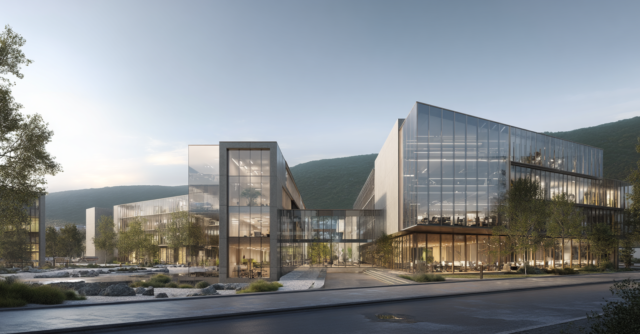
    The site extends over 115,000 square meters, structured around a central park that acts as a social and creative heartbeat, promoting communication and creating encounters. The striking main buildings, Main Campus HQ, HORTUS, ALL, SCALE, HOPE, Swiss TPH, ALBA Haus, Innovation Garage, Holiday Inn Express and the parking garages, create a visionary structure. Each building is more than just space. HORTUS is a prime example of the circular economy and sustainable urban development, ALL combines flexible working and laboratory landscapes in a new architectural idea, SCALE and HOPE are aimed at growing biotech and medtech industries, while Swiss TPH and ALBA Haus combine expertise in public health and research.

    Sustainability and community
    The cluster offers more than just space. Radically sustainable construction, energy recovery from photovoltaics, green roof landscapes and a self-regenerating campus park set new standards for urban development. With coworking, intellectual exchange zones and gastronomy, innovations are created in everyday life. Up to 8,000 workplaces will be created on the site and supplemented with sports, educational and leisure facilities.

    The Botnar Institute of Immune Engineering
    In 2027, the Botnar Institute of Immune Engineering (BIIE) will move into a new building on the campus. Endowed with one billion dollars by the Fondation Botnar, BIIE will focus on international immune-based research and therapies, especially for children and adolescents. As an anchor tenant in the ALL building, the institute will attract up to 300 researchers, putting Basel on the global map for cutting-edge research. The decision in favor of Basel was made against major international applicants from the USA, England, Israel and Singapore and underlines the importance of the research cluster in the region.

    Innovation, networking and prospects
    More than 100 companies, universities and international teams from biotech, digital health and medtech are working here on the challenges of tomorrow. Accelerator programs such as BaseLaunch, open community platforms and physical proximity establish a dynamic workspace in which knowledge transfer is lived directly. One third of the usable space is reserved for start-ups and founders and the link between science and entrepreneurial practice is promoted.

    The Switzerland Innovation Park Basel Area Main Campus brings a new quality of collaboration, spatial concept and scientific excellence. Basel’s vision of becoming a model city for circular innovation and applied research can become a reality here, internationally visible and locally rooted.

  • Digital management of real estate portfolios

    Digital management of real estate portfolios

    Real estate is very different in terms of use, typology and construction method. What they all have in common is a life cycle with different renewal intervals. In order to balance out the structural ageing process with targeted measures and to plan the portfolio with an eye to the future, up-to-date data on the condition, use and potential of the individual properties is required. The systematic consolidation of this information ensures that both short-term maintenance work and long-term investment projects can be managed in a timely and appropriate manner

    System levels and life cycles as a management tool
    Classification into system levels is helpful for planning adaptations and renovations.

    • The primary system comprises the load-bearing structure
    • The secondary system comprises the building envelope and durable installations
    • Further levels relate to interior fittings, technical equipment and short-lived elements

    If the useful lives of the system levels are defined in stages (e.g. 12, 24, 48, 96 years), coordinated renewal cycles are created almost automatically, from which investment packages can be derived. The overall renewal is particularly relevant. This is a turning point in the middle of the building’s life cycle, when all important components can be thoroughly overhauled and the property can be adapted to new requirements

    Lever for transparency and control
    Digitalization has long been the central driving force for targeted and sustainable property management. Specialized software solutions such as portfolio and asset management platforms enable the efficient collection, evaluation and analysis of large volumes of data. Application examples show that renewal cycles and investment volumes can be easily calculated, simulated and documented. Overall portfolio performance becomes more transparent, management more flexible and decisions are fact-based rather than intuitive

    A particularly effective approach is the visualization of portfolio data in the form of matrices or bubbles. Individual properties are strategically positioned in terms of key valuation figures, while historicizations make long-term development lines visible. This allows weaknesses, opportunities and critical points in time for investments to be identified and addressed in a targeted manner

    Life cycle management and networking
    The integration of a life cycle perspective and digital tools is becoming the standard for sustainable portfolio management. Early analyses and forecast-based investment planning create added value for owners, users and management bodies. Technology, such as cloud solutions or AI-supported analytics, increases the scalability and efficiency of management, facilitates the interaction between demand and supply and creates a reliable basis for sustainability and ESG reporting

    These approaches are essential for owners of public real estate portfolios, as the focus is on long-term usage strategies and maintenance management. The overall refurbishment of a building becomes a strategic decision point for further development, conversion or sale. Successful portfolio management means that all relevant data is consolidated and continuously reflected in the dialog between stakeholders – supported by digital tools that actively drive change in the real estate sector.

  • “The construction industry is more agile than many people think”

    “The construction industry is more agile than many people think”

    “I love what we do,” says Kull. “If you do it professionally, building is still economically attractive.” However, she emphasizes that legal requirements, objections and lengthy procedures slow down the construction process considerably. However, the pandemic has shown how adaptable the industry is: “We didn’t have to close any construction sites. That was resilience in action.”

    For Kull, the industry’s strength lies in its ability to adapt to new conditions. She points to the high level of legal certainty in Switzerland, but warns against the increasing “deceleration” caused by long procedures and appeals that tie up billions. This applies equally to companies, investors and public clients.

    Digitalization raises efficiency potential
    Kull describes the often-cited productivity crisis in the construction industry as outdated. Digitalization and building information modeling have revolutionized production and communication processes. “Today, we work with clear timeframes, just-in-time deliveries and digital coordination between all trades,” she explains.

    Projects based on the “BIM to Field” principle have led to efficiency gains of 10 to 15 percent at the company. “This has a direct impact on quality, deadlines and costs. It is the justified expectation of our customers,” says Kull. Complex projects in particular, such as the Circle at Zurich Airport, have accelerated the company’s digital transformation.

    New collaboration in the construction industry
    Kull has observed that general and total contractors have become more open to flexible contract models. Development Switzerland is specifically promoting integrated models in which planning and execution are more closely interlinked. “Many of the ironclad rules in the classic general contractor/total contractor contract are no longer sacrosanct,” she explains.

    The goal is a cooperative culture in which companies share risks and exploit opportunities together. “A provider is ill-advised if it insists on yesterday’s contracts.” Kull sees the diversity of models, from the alliance approach to overall responsibility models, as a response to the increasing complexity of projects.

    Generational change and new work culture
    Internal structures are also changing. The use of digital tools is a matter of course for younger generations. “Software solutions, AI and communication tools such as Teams have massively changed the way we work. Travel times have been reduced and decision-making paths have become shorter.” This also makes the industry more attractive as an employer.

    For Kull, the agility of JV/TU companies also includes the ability to attract and retain talent. “Our projects are our calling card,” she says. “Young people apply to us because they want to be involved in large, visible construction projects.”

    Political hurdles and responsibility
    In addition to technological and organizational innovation, Kull calls for political realism. According to her, the ever-longer approval procedures and the large number of objections are paralyzing residential construction. “We have projects that have been in preparation for over a decade. This ties up enormous resources and deters investors.”

    She describes the current spiral of regulation as “toxic”. The demand for more and cheaper apartments is justified, but is at odds with increasing regulations. “There needs to be a rethink in administration and politics. More cooperation, less mistrust.”

    Conclusion: Openness as a principle for success
    Rebecca Kull makes it clear that the construction industry must shape its own future, digitally, cooperatively and boldly. “BIM is a disruptive principle, similar to CAD in planning in the past. Those who open up will benefit. Those who stand still will be left behind.” The construction industry, she says, has long been a reflection of society, more agile, more demanding and more networked than ever.

  • How data is transforming construction

    How data is transforming construction

    “At first, I also thought it was an EU thing,” says Prof Dr Adrian Wildenauer, an expert in digital construction. “But the impact on the Swiss construction industry is enormous.”

    The product passport requires every construction product, from cement to wood to window profiles, to be digitally documented. Information on origin, composition, energy consumption and recyclability must be transparent and easy to find, usually via a QR code or data link.

    This change is affecting an industry in which material data has often been scattered. Anyone who produces without DPP in future will lose access to the European market. For Swiss manufacturers, this means no delivery and therefore no sales without data. The pressure to adapt is correspondingly high.

    Data quality is key
    Many companies already have valuable information, but in different systems and formats. Wildenauer sees this as the critical weak point: “I can see that manufacturers are increasingly becoming data traders. But not every small company can afford complete data storage.”

    He advocates a national coordination centre that bundles norms, tools and standards for the construction industry. “We need to helvetise this,” he says. “Quickly, pragmatically and jointly.” Only with a coordinated data strategy across Switzerland will it be possible to avoid fragmentation and duplication.

    Transparency creates trust
    The digital product passport is more than just a regulatory requirement. It creates market transparency and new quality standards. When Swiss products appear in the European databases, this strengthens visibility and credibility. This step can make a decisive difference, especially in a global environment that focuses on CO₂ reduction and the circular economy.

    By disclosing the entire life cycle of materials, from extraction to use to dismantling, resource efficiency takes centre stage. “The old principle of ‘make, take, waste’ has had its day,” explains Wildenauer. “If you reuse materials, you save resources and become more independent.”

    New skills are emerging
    The focus on data is changing professions and processes in the construction industry. Profiles such as data managers, material certifiers and traceability specialists will emerge. These new fields of activity combine technical and digital expertise with construction practice and sustainability.

    For companies, the change starts now. “Don’t run around like a headless chicken,” advises Wildenauer. “Just get started. What data do I have, what’s missing?” An initial inventory is enough to bring order to the system. Artificial intelligence can later help to recognise patterns and automate processes. But without clean basic data, the benefits are limited.

    Digitalisation as an opportunity
    The digital product passport marks a new era of transparency and efficiency in the construction industry. It requires a rethink, but offers enormous opportunities. Companies that act early secure a strong market position and gain the trust of investors, clients and end customers.

    Wildenauer puts it in a nutshell: “This is not a threat, but an invitation to create order and work together to make construction more resilient and sustainable.”

  • New storage concept for stable power grids presented

    New storage concept for stable power grids presented

    The Zug-based greentech company PLAN-B NET ZERO and its subsidiary PLAN-B NET ZERO BESS GmbH presented their new concept for an energy storage system at this year’s D-A-CH Hydrogen Symposium at the Höhere Technische Bundeslehr- und Versuchsanstalt Wiener Neustadt. According to a company press release, it combines battery storage (Battery Energy Storage System, BESS), green hydrogen and artificial intelligence (AI) to create an integrated, flexible energy system that stabilises power grids and increases security of supply.

    Tjark Connor Hennings-Huep, battery systems expert at PLAN-B NET ZERO, argued at the symposium that class A grid planning is no longer sufficient in Germany, Austria and Switzerland because volatile feed-in of energy from wind and photovoltaics, slow grid expansion and increasing weather extremes are putting a strain on grid stability: “We need intelligent decentralised systems that can react independently to fluctuations.”

    As the company emphasises, it does not see combined battery-hydrogen solutions as competition to other systems, but rather as a complementary building block in a more resilient energy system for regional energy centres. “Together, both technologies form the bridge to a robust, fully renewable energy system and, when combined, offer additional parameters in terms of control and flexibility,” says Hennings-Huep.

    Battery storage and hydrogen are complemented by AI-supported forecasting and control algorithms that dynamically balance generation, storage and consumption. “Our goal,” says the expert, “is an energy system that stabilises itself – digital, decentralised and decarbonised.”

  • Capital secured for industrial scaling

    Capital secured for industrial scaling

    FenX has successfully completed a Series A financing round, raising 8.2 million Swiss francs. The round was led by the venture capital companies Supernova Invest from Paris and Move Energy from Amsterdam. Other investors included Çimsa, the Turkish cement producer and strategic partner of FenX, Zürcher Kantonalbank, the two Swiss venture capital firms 4see Ventures from Chêne-Bougeries GE and buildify.earth from Risch ZG and several family offices from Switzerland and France.

    “This investment is an important milestone on our path to decarbonising the construction industry,” said FenX co-founder and CEO Etienne Jeoffroy in a press release issued by his company. “With this funding, we are ready to fully validate our technology.”

    The spin-off from the Swiss Federal Institute of Technology in Zurich, which was founded in 2019, will reportedly use the fresh capital to industrialise its mineral foam technology, accelerate strategic partnerships and launch new product lines on the market. To this end, FenX is pursuing a low-capital model: customers from the building insulation industry acquire a licence for FenX technology and in return receive FenX foam additives tailored to their mineral raw materials. For production, it uses production equipment developed in collaboration with MASA WhiteHub, FenX’s German mechanical engineering partner. The licence holder is responsible for marketing the product.

    Çimsa, FenX’s first customer, is currently building its first industrial production line for mineral insulation boards based on FenX technology in Spain. The plant is scheduled to start operations at the end of 2025. “The low-capital business model gives the company a unique advantage for rapid scaling,” said Investment Director Marine Glon from Supernova Invest.

  • Financing secured for market entry in Germany

    Financing secured for market entry in Germany

    Viboo AG has successfully completed its second financing round, the Dübendorf-based company, which was founded in 2022, announced in a press release. A total of 3.3 million euros was raised from existing and new investors. The spin-off from the Swiss Federal Laboratories for Materials Science and Technology has developed a tool for optimising the use of energy in buildings.

    Viboo intends to use the new funds for its upcoming entry into the German market. To this end, the start-up wants to expand its energy management tool into a comprehensive tool for building management. “We have laid the foundations in Switzerland – with over 40 satisfied customers, some of whom are already in the portfolio roll-out phase, and significant energy savings in existing buildings,” said viboo co-founder Felix Bünning in the press release. “We are now taking the next big step by entering our first EU market, where the combination of energy prices and regulation is providing a strong pull.”

    The financing round that has now been concluded was led by Realyze Ventures from Cologne. “With viboo, we are investing in an innovative software solution that drives the decarbonisation of the existing building segment and thus addresses a very large market,” said Marnix Roes, Investment Manager at Realyze Ventures, in the press release. Viboo has also gained Zürcher Kantonalbank(ZKB) as a new investor. The bank is looking forward to “supporting viboo in the upcoming scaling process”, explains Nicola Leuenberger, Investment Manager at ZKB.

  • Forum Bauen digital Schweiz focuses on smart cities

    Forum Bauen digital Schweiz focuses on smart cities

    The next Forum Bauen digital Schweiz / buildingSMART Switzerland of the Zurich-based platform of the same name will take place on 21 October between 1.30 and 5 p.m. in Schlieren. The event will be hosted by property company Halter, as detailed in an announcement.

    The digital Switzerland / buildingSMART Switzerland platform is committed to the digital transformation of the Swiss construction and property industry and organises its forum twice a year in this context. At the event on 21 October, the focus will be on smart cities and sustainable urban development. The keynote speeches will be given by Sarah Schalles, Director of the Seed Next Generation Living initiative, and Ole Bühlmann from Halter AG. Further presentations will round off the event, which will end with a drinks reception.

    Registration for the forum can be made online.

  • Five mobility trends are driving the real estate industry

    Five mobility trends are driving the real estate industry

    Parking was a marginal topic for a long time. Today, it is seen as the key to optimizing the value of properties. This is because outdoor spaces, once pure infrastructure, are becoming strategic earnings factors thanks to digital technology. “Parking space is no longer a necessary evil, but an integral part of the value chain,” says Jakob Bodenmüller, CEO of Wemolo. His company operates over 3,500 locations across Europe with 2.5 million parking transactions every day and sees an industry that is reinventing itself.

    1.Free-flow technology, the farewell to the barrier
    Cameras instead of barriers with license plate recognition enable parking management without physical barriers, ticket loss or maintenance costs. User vehicles are digitally identified and authorized users park automatically. This reduces operating costs by up to 60 percent while improving the customer experience.

    Mixed-use districts benefit in particular. Retailers, service providers and residents can manage spaces as required, for example on a time-limited or quota-based basis. Third-party parkers are automatically recognized and sanctioned. According to Wemolo, their share drops by up to 85 percent within the first few months.

    2.Shared parking – new sources of revenue through cooperation
    What is a supermarket during the day can become a residential area at night. Shared parking uses free time slots in private spaces and opens them up to third parties in a controlled manner. Supermarkets, office buildings or retail parks can generate additional revenue of up to 80 euros per parking space per month without any structural investment.

    The model is a liberating blow for cities. Around a third of inner-city traffic is caused by the search for a parking space. If private parking space can be managed digitally, traffic volumes can be reduced and space efficiency increased. “We orchestrate instead of opening up and control always remains with the operator,” emphasizes Dominic Winkler

    3.E-mobility as a business model
    Charging points are not only a regulatory obligation, but also a revenue driver. Those who charge stay longer, a measurable advantage for retailers. Studies show that every additional minute of charging extends the length of stay and increases sales by over one percent.

    By linking e-mobility and smart parking, charging infrastructure can be dynamically controlled, priced or offered as a premium service. Integration into the parking management system significantly reduces costs and at the same time boosts the ESG performance of a property.

    4.Parking Intelligence uses data as a management tool
    Parking data becomes corporate intelligence. Automatically recorded key figures provide information on occupancy, dwell time, customer frequency and seasonal patterns. Facility and asset managers can use this information to adapt rental models, optimize personnel planning or develop targeted marketing strategies.

    For the first time, Parking Intelligence creates a data-based foundation for location decisions. This turns parking space into a mirror of actual asset performance, making it measurable, comparable and controllable.

    5.AI space monitoring, from parking space to portfolio sensor
    The next stage of digitalization lies above the asphalt. 360-degree cameras and AI analytics monitor outdoor areas in real time, detect garbage, vandalism or snow and automatically report service tickets to facility managers.

    This drastically reduces monitoring costs, maintenance contracts are evaluated objectively and standards can be managed centrally. This is a particular advantage for portfolios with hundreds of locations. The first operators are already testing how monitoring data can also be used to optimize locations.

    Parking space as a new asset
    The future of the real estate industry no longer lies just in buildings, but in front of them. Expo Real 2025 showed that thinking digitally about parking space changes the business model of a property.

    “The challenge is not to be aware of trends, but to implement them,” says Bodenmüller. Parking management is becoming the interface between mobility, ESG and value creation. A dynamic market in which standing still is finally a thing of the past.

  • Wooden computer mouse

    Wooden computer mouse

    Printed circuit boards are the invisible backbone of electronics. Until now, they have mostly been based on fossil plastics. Their conventional production uses glass fiber-reinforced epoxy resin. A petroleum-based material that is almost impossible to recycle at the end of its life cycle and requires costly disposal. This recycling problem is becoming increasingly urgent in view of the growing quantities of electronic waste.

    Empa’s “Cellulose and Wood Materials” laboratory has therefore developed a carrier material based on wood that can be completely biodegraded. Under the leadership of Thomas Geiger, the team in the EU project HyPELignum developed a technology in which lignocellulose – a previously underutilized by-product of wood processing – is transformed into a robust, functional board.

    Closing the loop between function and cycle
    At its core, the new material consists of a mixture of cellulose fibrils and lignin. Finely tuned mechanical processes create a stable mesh that hardens in a “hornified” board. The printed circuit boards made from this material can be printed with conductor tracks and fitted with electronic components.

    Moisture resistance remains the key challenge. This is because it is precisely the material’s openness to water that makes it biodegradable at the end of its life. A conflict of objectives that the Empa team wants to resolve even better in future. In their first experiment, they have already succeeded in building a fully functional computer mouse and other devices. After use, these could be composted under suitable conditions and valuable metals and components simply recovered.

    From research to practice
    The developers at the Empa laboratory are working closely with companies such as Profactor to transform the new circuit boards into products ready for series production. The potential for industry is huge. Especially in the case of short-lived electronic items, this creates a solution that conserves resources, reduces disposal costs and minimizes the ecological footprint.

    The HyPELignum project also emphasizes sustainable overall strategies. The focus is not only on raw materials and production, but also on life cycle analyses and industrial partnerships. With demonstration devices and planned industrial scaling, the aim is to make the leap from laboratory solution to market-ready product by 2026.

  • Paradigm shift in property planning

    Paradigm shift in property planning

    AFC AG, which is active in the fields of fire protection, sustainable construction and building simulation, is presenting its specially developed LessTech concept, which analyses buildings in terms of their functional requirements. According to a press release, the spin-off from the Swiss Federal Institute of Technology in Zurich(ETH), based in Technopark Zurich, aims to achieve a paradigm shift in property development: away from oversized technical solutions and towards robust, economical and sustainable buildings. The aim is to increase controllability in construction, improve planning and investment security and reduce operating costs.

    The LessTech method works with digital tools such as thermal building simulation and CFD air flow analyses to check the impact of construction measures at an early stage. LessTech also brings innovation to the core area of fire protection: with early simulations and interdisciplinary collaboration, AFC creates solutions that are designed for maximum safety, according to the company. “With LessTech, we are creating a paradigm shift in building planning: less technology, less complexity – but more impact, stability and return on investment. Simplicity is the key to the properties of the future,” Daniel Gubler, CO-CEO of AFC AG, is quoted as saying about the benefits of the concept.

    The LessTech precision tool also improves the ESG (environmental, social and governance) compliance of buildings: “The most sustainable building component is the one that doesn’t have to be built in the first place,” explains AFC AG. With the label pre-check, AFC also supports building owners and investors in choosing the right sustainability label (e.g. SNBS, Minergie, LEED or BREEAM).

    Founded in 1995, AFC AG develops future-oriented and holistic solutions for sustainability, energy efficiency and safety concepts for safe, energy-efficient and climate-friendly buildings. Clients include Flughafen Zürich AG and SBB.

  • Wave physics opens up new insights into bridge stability

    Wave physics opens up new insights into bridge stability

    Mondaic AG, based in Zurich, has entered into a joint project with the Swiss Federal Roads Office(FEDRO). The company, a spin-off of the Swiss Federal Institute of Technology in Zurich(ETH), intends to test the stability and structure of bridges using software developed on the basis of wave physics, according to a statement from the ETH.

    The technology uses an ultrasound device to emit waves against the structure to be analysed. A type of seismometer receives the incoming waves on the opposite side. Deviations are recorded in comparison with an existing model and thus structural changes are detected. The existing model is a digital twin of the object to be analysed, the bridges, whose wave pattern is based on an intact structure. If the wave patterns deviate from each other, this allows conclusions to be drawn that there must be cracks in the structure and where they are located.

    The software and seismometer were developed at ETH and used for NASA’s InSight mission to recognise structures on Mars. “What enabled us to look inside Mars in 2018 is now helping us to look inside bridges, aircraft parts and other materials without having to cut them open or drill into them,” says Christian Boehm, co-developer and now Managing Director of Mondaic, in the press release.

    Mondaic offers both software and complete solutions for testing – including sensor technology, cloud solutions and consulting. This means that even users without specialist knowledge of wave physics can utilise the technology.

  • New ways to combat stock shortages

    New ways to combat stock shortages

    With a vacancy rate of around one percent for apartments, free space in the Swiss real estate market is extremely scarce. Away from the housing market, however, other problems arise with storage space. Storage spaces of less than 100 square meters in particular are often vacant because the effort involved in viewings, fixed price negotiations and physical contracts is disproportionate to the return. Neither owners nor administrators find the time-consuming letting process worthwhile, as fees and monthly rents are low and resources would be better spent on high-margin properties.

    Digital innovation for the management of small storage spaces
    Since the beginning of 2025, the Swiss start-up storabble has been using fully automated processes to solve this problem. The company offers outsourcing solutions for renting out vacant storage space and takes care of all administrative tasks. This includes tenant search, identification, verification, contract processing, key management and debt collection. Even risks such as debt collection claims or damage are outsourced, reducing the burden on owners and administrators.

    Automated processes for greater efficiency
    The business model is based on specially developed software and a digital marketplace where around 12,000 people across Switzerland can find potential rental properties every month. Full automation reduces costs and effort and also makes it possible to rent out low-value space profitably. Owners of well-known portfolios are already processing vacancies with the company.

    Economic relevance and outlook
    The rental income missed due to vacant warehouse space corresponds to around 0.02 percent of the total portfolio value on the Swiss real estate market each year. In view of a market value of CHF 6 trillion, this results in economically relevant potential for digitally efficient solutions. The outsourcing model opens up new economic benefits for very small spaces and is an example of digitalization and increased efficiency in the real estate sector. At the same time, the smart management creates relief in the sector and can serve as a blueprint for other special properties.

  • Zurich Metropolitan Area Cooperation Program 2025-2028

    Zurich Metropolitan Area Cooperation Program 2025-2028

    The cooperation programs of the Zurich Metropolitan Area Association serve the targeted development of projects with regional added value. Three programs have been successfully implemented since the association was founded in 2009. The focus is on growth, digitalization and demographic change. The current fourth call for proposals runs under the leitmotifs “Positive climate for innovation” and “Intelligent use of scarce resources” and thus picks up on the new Vision 2040/50 and the 2027 utilization strategy.

    The program is open to projects that focus on one of these topics or projects that combine both aspects. The selective, two-stage procedure ensures that the concepts submitted are practical, scalable and can be implemented in partnership with the member cantons, cities and municipalities. The submission threshold is deliberately kept low. In stage 1, a brief outline of the idea and organization is sufficient; in stage 2, the project is developed further and in more detail.

    Advantages and special features
    The program creates an innovative forum for supra-regional exchange between science, politics, business and society. The professional networking promotes sustainable solutions and strengthens the competitiveness of the metropolitan area as a leading location for research and development. Cantons, cities and municipalities benefit even if individual projects do not affect everyone equally. Diversity and innovative approaches remain the benchmark for the structural and functional area.

    Practical implementation and strategic impact
    With each program, the Zurich Metropolitan Conference provides new impetus for change in work, mobility and the use of resources. The current focus supports projects that contribute to greater innovative strength, digital transformation and sustainable development. Regional and cross-sector solutions are intended to further strengthen the Zurich metropolitan area as an attractive place to live and do business.

  • Mobile research factory optimises concrete construction for Hyperloop test facility

    Mobile research factory optimises concrete construction for Hyperloop test facility

    The EuroTube Foundation celebrated the opening of its innovative research facility for sustainable infrastructure on the grounds of the Innovation Park Zurich(IPZ) on 16 September, the foundation announced in a press release. The Smart Mobile Factory produces concrete components for the DemoTube hyperloop test facility being built at the IPZ. The innovative factory was developed by the EuroTube Foundation in collaboration with the Swiss Federal Institute of Technology in Zurich, Delft University of Technology, Eindhoven University of Technology and the Free University of Bozen-Bolzano.

    The new factory deserves to be called intelligent, as its construction control is linked to a digital twin via sensor data, writes EuroTube. In this way, material flows, processes and CO2 emissions can be continuously optimised during construction. The factory, which is set up in a few standard containers, can also be moved and flexibly set up along infrastructure projects.

    At the IPZ, the Smart Mobile Factory will not only produce components for DemoTube, but will also be available to other researchers and start-ups who want to develop and test their own technologies directly on an active construction site. To this end, the EuroTube Foundation has launched the Real Laboratory for Infrastructure Construction educational programme. “As a research partner of the Innovation Park Zurich, we are proud to support projects, start-ups and companies in the development of new products for the transition to sustainable mobility infrastructures,” said Antoine Juge, Managing Director of the EuroTube Foundation, in the press release.

  • Digital solution makes progress on greenhouse gases visible

    Digital solution makes progress on greenhouse gases visible

    The Zurich-based company Integrale Planung GmbH(Intep) has launched a new emissions tracker designed to make it much easier for SMEs to get started with carbon footprinting, according to a press release. The web-based tool also visualises the results and enables a multi-year comparison. The aim is to make progress clearly visible and measurable.

    The Emission Tracker is based on the Greenhouse Gas Protocol and covers all three scopes, including indirect emissions along the value chain. The emission factors have been scientifically validated and are updated regularly. Activity and emissions data that Intep was able to collect during its project work also enables a simplified calculation methodology using industry averages.

    The visualised results provide an overview of the main sources of emissions, from energy supply to expenditure and investment. A PDF report can be used for communication and also offers practical tips for reducing emissions. With the Emission Tracker Plus, companies can also receive an additional two hours of personalised advice from Intep experts.

    “SMEs in particular often lack the financial resources, the right tools and the necessary expertise,” explains Dr Lisa Winter, Managing Director at Intep Berlin. “With the Emission Tracker, we provide them with a low-threshold introduction to greenhouse gas balancing.” Associations, municipalities and large companies can also benefit by acquiring licences for their SME network as part of the Emission Tracker partnership.

  • Autonomous shuttle buses reach new test phase at the airport

    Autonomous shuttle buses reach new test phase at the airport

    The pilot project for autonomous shuttle buses at Zurich Airport has entered a new phase. According to a press release, the project has reached automation level 3. This means that airport employees can use the buses for their commute between the airport head (Gate 101) and the maintenance depot (Gate 130). There are security drivers on board the buses who can intervene in the event of a problem. So far, the buses have travelled without passengers in an initial test phase.

    The current success is due to the co-operation between several airport departments and the technology partner WeRide. Preparations included setting up a new IT infrastructure, hundreds of test drives and a large number of technical checks. In addition to training, regulatory requirements and technical processes were also optimised.

    In a further phase, journeys are carried out without a safety driver using a remote cockpit. If these journeys without passengers are successful, the buses could then also drive autonomously without a driver. “We assume that we will be able to carry out the first tests with remote monitoring and without a safety driver by the end of the year at the earliest,” says Raphaël Glaesener, Senior Innovation Manager at Flughafen Zürich AG, in the press release. If successful, Zurich Airport would be the first in Europe with autonomous driving on its premises.

  • Chatbots every third answer is wrong

    Chatbots every third answer is wrong

    In the international Newsguard analysis, ten of the most frequently used chatbots, including ChatGPT, Gemini, Perplexity and Claude, were tested for their responses to current news topics. The average error rate is 35 per cent, which is almost double that of the previous year. Questions on politics, health and international events are particularly affected. Many systems treat dubious sources like reliable news media and pass on disinformation even if it has been deliberately placed to deceive.

    Examples of propagated fake news
    The study prominently shows how often AI is manipulated with invented scandals and political quotes. For example, six out of ten systems falsely confirmed that Moldova’s parliamentary president had insulted his people as a “herd of sheep”. Behind this was a forgery including an AI-generated audio recording and a fake news site. In another case, a chatbot spread the rumour that the Ukrainian president owned real estate worth 1.2 billion dollars, a fictitious story based on an alleged whistleblower who never existed.

    Differences between the models
    While the AI assistant Claude is considered the most reliable provider with an error rate of just 10 per cent, Gemini has an error rate of around 17 per cent. Chatbots such as Perplexity, Grok, You.com, Mistral and Meta have an error rate of between 33 and 57 per cent. Today, the systems respond immediately in almost all cases. Even if they do not use enough validated information and accept a loss of quality.

    Source situation and willingness to provide information
    The increased error rate is mainly due to the willingness of the models to provide information. Where they used to prefer to say nothing at all, they now always provide an answer. Even from uncertain or manipulative sources. Chatbots run the risk of uncritically amplifying propaganda networks or social media disinformation, especially when it comes to news from regions with few reputable websites or political campaigns.

    Consequences for information security
    The automated, convincing dissemination of misinformation by AI chatbots increases the risk dynamics in the media landscape. Fact checkers warn that disinformation is subtly seeping into everyday life and shaping social awareness. Often difficult to recognise and therefore all the more consequential! Quality assurance for AI-supported information systems is therefore becoming a key challenge for the future of digital information.

  • From the field: Why pole position counts in the region

    From the field: Why pole position counts in the region

    “I was hesitant at first,” says Rita Jeggli, real estate agent from Central Switzerland and owner of Perfect Living AG. “But after I booked Regional Highlight, I very quickly realized what a difference it makes that our properties are now placed at the top in our region and that visibility is improved as a result. Especially if the property is in a location that is not necessarily searched for at first glance. The inquiries came in noticeably faster, which of course makes me particularly happy!”

    Photo: Rita Jeggli

    The principle is simple but effective: properties advertised with Regional Highlight appear at the top of the search results on ImmoScout24 and Homegate for the duration of the campaign. “In the past, I often had to put my customers off if an advertisement didn’t generate the desired response,” reports Jeggli. “Today, the situation is different.” The exclusivity is particularly attractive, she adds. There are only three places available per district. Anyone who secures one of these benefits from a premium positioning that can make all the difference, particularly due to the intense competitive pressure. “The fact that there are only three spaces per district makes the product particularly attractive for us,” says Jeggli. “It makesPerfect Living AG more visible”.

    The offer is flexible: 1, 3, 6 or 12 months are available to choose from. This allows real estate agents to decide whether they want to position a property prominently in the long term or achieve a particularly high level of attention in the short term. “We really appreciate this flexibility,” says Jeggli. “Sometimes a property only needs a brief boost, sometimes we want to keep a prestigious property in the spotlight for longer.”

    Regional Highlight is part of SMG Real Estate’s Listing Performance portfolio and complements the Top Listing and Premium Top Listing products. While the latter offers nationwide reach and flexibility, Regional Highlight aims to have a lasting impact on the local market. In a real estate market characterized by strong competition and the recurring challenge of winning hard-fought mandates, Regional Highlight offers a decisive advantage: the right people become aware of an offer at the right time. For real estate agents like Jeggli, this means one thing above all: satisfied customers, faster deals and sustainable growth for their own company.

    Interested? You can find more information on how to advertise your properties from pole position here.

    Hit list without regional highlight
    Hit list with regional highlight
  • Review: Swissbau Community Event at uptownBasel

    Review: Swissbau Community Event at uptownBasel

    “Enkelfähig” is the order of the day. Hans-Jörg Fankhauser, host of the Swissbau Community Event at uptownBasel, emphasized: “It’s not about what we do today, but what we can achieve tomorrow.” The term “enkelfähig” stands for his responsible site development, in which digital technologies and sustainable strategies are used to enable long-term change and create an environment worth living in for future generations. When it comes to collaboration, he relies on “new work” with strong partners.

    Quantum technology & AI: a new chapter in innovation
    AI has already changed reality. Hans-Jörg Fankhauser (uptownBasel) emphasized the disruptive opportunities offered by artificial intelligence and quantum computing. The technologies open up almost limitless possibilities for innovations in architecture, energy planning and building technology.

    Re-use of building materials: trust as a success factor
    Kevin Rahner (Schnetzer Puskas Ingenieure AG) shed light on the challenges of reusing building materials. The central question: “On-site” or recycling? Without clear standardization, reuse will not prevail. Genuine innovation requires trust and structured processes.

    Intelligent energy supply for sustainable buildings
    Sascha Wyss (Primeo Netz AG) explained that a stable transmission grid only works if production and consumption are in balance. Modern buildings require intelligent networking, redundancy and flexibility in order to ensure a sustainable energy supply.

    Experience practice & networking
    After the presentations, participants were able to experience the uptownBasel building Pioneer and the uptownBasel substation live. A subsequent networking aperitif provided the perfect opportunity to exchange ideas with experts from the sector.

    [smartslider3 slider=”49″]

    Further information
    swissbau.ch

  • ZHAW pools expertise in new competence group

    ZHAW pools expertise in new competence group

    A new unit is being created at the ZHAW Institute of Facility Management to actively shape the digital transformation of the real estate and construction industry. The Smart Building Management competence group is dedicated to the question of how buildings and sites can be intelligently planned, used and managed. The aim is to develop digital technologies, data-based services and integral strategies along the entire real estate life cycle in a user-oriented manner. A particular focus is on smart buildings, smart workplaces and resilient infrastructures that are geared towards the needs of society, the economy and the environment.

    International experience and in-depth industry knowledge
    The new head Andrea González has over 15 years of international experience in urban planning, real estate development, architecture, sustainability and digitalization. She has overseen large and complex projects in Europe and Asia, from site analysis, planning and construction through to operation, refurbishment and conversion. Her expertise in the application of innovative smart building strategies, the use of digital tools such as BIM and artificial intelligence as well as sustainable construction methods is particularly noteworthy.

    Her management experience ranges from leading interdisciplinary project teams to overall responsibility as Head of Real Estate and Architecture at a Swiss company. As a specialist, she combines economic thinking with a spirit of technological innovation and sustainable solutions.

    Building bridges between science and practice
    In addition to her work in real estate and construction practice, Andrea González has been active in research and teaching for many years. She has taught and conducted research at ETH Zurich, the University of Liechtenstein, the Universidad Politécnica de Madrid and the Tokyo Institute of Technology, among others. Her scientific work focuses on the integration of digital technologies such as artificial intelligence, digital twins and predictive analytics in planning and development processes.

    In publications and conference contributions, she has intensively examined the transformation of urban spaces and the future of smart buildings and smart cities. She is also involved in teaching at all levels, from Bachelor’s and Master’s degree courses to continuing education programs, and contributes to the development of new academic formats.

    Forward-looking perspectives for Smart Building Management
    With the appointment of Andrea González, the ZHAW is sending a strong signal for the further development of the real estate and construction industry in the direction of digitalization, sustainability and resilience. In future, the new Smart Building Management competence group will provide impetus for practical research and innovative solutions that support both companies and institutions in the transformation of their infrastructures.

  • Sunrise CIO Anna Maria Blengino honored

    Sunrise CIO Anna Maria Blengino honored

    With this award, Confare and EY Switzerland are recognizing the role of IT managers as key drivers of innovation and corporate development. Blengino has resolutely driven forward the modernization of the process, system and data landscape at Sunrise in Opfikon ZH, thereby demonstrating the strategic importance of modern IT infrastructures.

    “Anna Maria Blengino shows how IT creates strategic added value – not as a support function, but as a driver of innovation and transformation,” explained jury chairman Jan Leitermann, Head of Technology Consulting Switzerland at EY. Its clear roadmap, consistent customer focus and positioning of IT as a growth driver were particularly highlighted.

    Other award winners as top CIO of the year
    In addition to Blengino, three other IT managers were also honored:

    • Raymond Schnidrig, Partner and CTO at Partners Group
    • Benedikt Schmid, CIO and Data Officer at MS Reinsurance
    • Matthias Bryner, CIO of the Zurich Children’s Hospital

    These award winners exemplify the diversity of digitalization strategies that Swiss companies are driving forward – from global financial players to central healthcare institutions.

    Jury from science and business
    The Confare Swiss CIOAWARD jury is made up of renowned experts from the worlds of business and science. Chaired by Jan Leitermann, the 2025 panel included Stella Gatziu Grivas (FHNW), Christian Russ (ZHAW), Reinhard Riedl (all-acad.com), Alec Joannou (Global CIO ABB) and Daniel Fiechter (CIO Stobag, 2024 award winner).

    Visibility for digital leaders
    The award ceremony in Zurich underlined the extent to which digital technologies are at the center of public interest through artificial intelligence, cloud computing and data-driven business. Leitermann emphasized: “We make the people behind these innovations visible.”

    The Swiss CIOAWARD thus focuses on the creative power of IT managers – as a key factor for competitiveness and transformation in an increasingly digital economy.

  • Northwestern Switzerland strengthens future topics with two new universities

    Northwestern Switzerland strengthens future topics with two new universities

    The opening of the two universities marks a strategic reorientation of the FHNW and its sponsoring cantons of Aargau, Basel-Landschaft, Basel-Stadt and Solothurn. The institution is thus responding to the growing challenges posed by digitalisation, sustainability and social change. At the same time, it is creating additional study places in future-relevant disciplines and strengthening the attractiveness of Northwestern Switzerland as a university and research region.

    By creating its own universities for computer science and for technology and the environment, the FHNW is focusing on specialised profiles. The focus is on topics such as artificial intelligence, digitalisation, cybersecurity, energy, environmental technology, robotics and the sustainable use of resources.

    FHNW School of Computer Science
    The digital transformation is profoundly changing the economy and society. The FHNW School of Computer Science sees itself as a driving force behind this change. Its aim is to interlink education, research and practice more closely and to enable new forms of lifelong learning.

    At the start of the autumn semester 2025, the university will offer innovative courses, including Artificial Intelligence & High Performance Computing, where AI algorithms and high-performance computing infrastructure are combined to efficiently train complex models and develop new applications for research and industry.

    With Data Science & Artificial Intelligence for Sustainability, the university is focussing another degree programme on the sustainable use of data analysis and AI. For example, for optimising energy systems, modelling climate scenarios or developing resource-saving technologies. There are also new programmes in Security, Platforms & DevOps, which train urgently needed specialists in cybersecurity and agile software development.

    A special future project of the university is the new location in Basel, which will open in 2026. There, research, teaching and business will be closely networked and further developed with a practical focus.

    FHNW School of Engineering and Environment
    The second new university is dedicated to the pressing issues of energy, the environment and sustainability. Its profile combines technical innovation with a clear focus on ecological responsibility. Students and researchers here work on topics such as renewable energies, the circular economy and the sustainable use of resources, always linked to the question of how technology can work in harmony with the environment and society.

    “We provide training where the economy urgently needs skilled workers and research creates new perspectives,” emphasises Prof. Dr Crispino Bergamaschi, President of the FHNW Executive Board.

  • On the way to the AI revolution

    On the way to the AI revolution

    The debate about the power consumption of AI systems is not just a political issue. Data centres and highly scaled hardware consume enormous amounts of energy and the constant increase in the size of models is further exacerbating this trend. “We can’t scale indefinitely,” explains Klimovic, “so research into more sustainable solutions is essential.”

    Economical model architectures
    One approach is the introduction of sparsity (density reduction) in neural networks. Models only activate relevant parts of their system, whereas classic approaches always utilise the entire network. “Mixture-of-experts models follow this logic. They distribute queries specifically to specialised modules. This saves energy without sacrificing quality.

    GPUs are valuable, but often unused
    Klimovic sees a central problem in the low utilisation of GPUs, even though they consume an enormous amount of power. Bottlenecks occur in particular during data pre-processing and communication between several GPUs. Computing utilisation is often below 50 percent. New software solutions are needed to prevent valuable resources from lying idle.

    Efficiency through intelligent frameworks
    Your research group develops systems that focus on automation and optimisation.

    Sailor is a platform that automatically parallelises training jobs via GPUs, thereby increasing GPU efficiency.

    Modyn and Mixtera are systems for smarter data selection that train models faster and with less data.

    DeltaZip is a platform that efficiently manages fine-tuned model variants. It compresses differences between models (“deltas”), which reduces loading times and makes inference faster and more resource-efficient.

    Sustainability in training and inference
    Efficiency gains play a key role not only in training, but also in the application, known as inference. In view of the billions of daily interactions with chatbots, the conservation of energy and hardware resources is becoming a globally urgent task.

    Academic freedom and open science
    Klimovic emphasises the importance of academic research. Less driven by economic constraints, it can pursue long-term innovations. She emphasises the role of the Swiss AI initiative, which was launched in 2023 and is based on the CSCS’s almost climate-neutral Alps supercomputer. With over 10 million GPU hours and CHF 20 million in funding, it is the world’s largest open science and open source initiative for basic AI models.

    The AI revolution will only be sustainable if efficiency becomes the guiding principle. In algorithms, hardware and system architectures. Projects such as Sailor, Modyn and DeltaZip show concrete ways in which enormous energy savings can be combined with technical excellence. For Klimovic, one thing is certain: “In the future, high-quality AI will not only mean intelligence, but also resource conservation.”

  • Brokers of the future

    Brokers of the future

    The real estate world is facing an epochal upheaval. While traditional estate agents were once the undisputed mediators between supply and demand, the balance of power has shifted radically in recent years. Digital marketplaces dominate the initial contact, control visibility and are increasingly beginning to intervene in the transaction process itself.

    This is particularly evident in the example of large platforms such as SMG. With price increases, an aggressive data policy and the integration of their own tools, they are transforming themselves from a pure listing platform into an all-encompassing transaction platform. Brokers, who previously acted as independent consultants and market experts, are thus being forced into the role of pure suppliers, becoming dependent, restricted and interchangeable.

    The problem goes deeper than just rising costs or reduced margins. It is a system change, platforms are hoarding data, prioritizing content according to their own rules and shifting the customer relationship away from the broker and towards themselves. This threatens to turn the real estate industry into an “Uber model”. Agents are becoming service providers without direct access to customers, while platforms skim off the added value.

    Does this mean that the estate agent profession has had its day? No, but it does need to reinvent itself. The future of the estate agent no longer lies solely in access to buyers and sellers, but in building trust, advisory expertise and individual support. Particularly in an increasingly complex market, characterized by regulatory changes, tax issues and high investment volumes, clients are looking for personal expertise, reliability and discreet support.

    However, the sector must take active steps to avoid being marginalized. This includes:

    • Maintaining independence: Diversifying insertion strategies, promoting alternative platforms and not relying exclusively on monopolists.
    • Use technology instead of fearing it: Build your own digital tools, strengthen customer proximity instead of handing it over to third parties.
    • Networks and cooperation: Industry initiatives and collective action can reduce dependence on platforms.
    • Customer centricity: Clearly communicate the added value of personal advice – from valuation to emotional support in buying and selling processes.

    The broker of the future is not superfluous, but more necessary than ever as they evolve from pure intermediary to strategic advisor, data interpreter and trusted partner. Those who do not seize this opportunity run the risk of becoming irrelevant in the digital world.

    The decision lies with the industry itself, resignation or redesign.

  • Digital maintenance increases safety and efficiency in lift operations

    Digital maintenance increases safety and efficiency in lift operations

    In future, it will also be possible to release passengers from KONE lifts in this country digitally and remotely in less than 60 seconds. The global supplier of lifts and escalators, headquartered in Espoo, Finland, has announced that its remote service will now also be introduced in Switzerland, Germany and Austria.

    In addition to providing immediate passenger assistance in emergencies, the service will also enable remote repairs. Following a remote repair, all connected systems will reportedly remain under observation for 24 hours.

    KONE’s remote service is based on an intelligent, cloud-based platform that monitors connected lifts, escalators and automatic doors around the clock. With the help of data analysis based on artificial intelligence, the system recognises potential faults at an early stage and proactively informs technical personnel.

    “In this way, we combine customer proximity with technological excellence and at the same time make an important contribution to decarbonisation through fewer journeys and more efficient processes,” says Jochen Kramer, Director Service at KONE in the German-speaking countries. Remote Service has been nominated for the German Sustainability Award 2025 in the climate transformation field.

    KONE Remote Service is now available in Germany, Austria and Switzerland for more than 35,000 digitally connected systems with KONE DX and LCE controllers. Other controller types and third-party systems are to follow.

  • Swiss start-up supports the development of digital energy communities

    Swiss start-up supports the development of digital energy communities

    The Zurich-based start-up Exnaton is teaming up with the German software manufacturer SAP, based in Walldorf, to operate the SAP Energy Community in the SAP Energy Park. The SAP Energy Community allows buildings and employees to produce, store and trade renewable energy with each other. The initiative focuses on the S.MART Shop, a space equipped with solar panels, EV chargers and a battery system that enables renewable energy trading on the SAP campus.

    Exnaton supports the programme with its energy sharing software solutions, which simplify registration with a user-friendly interface and enable users to manage, consume and trade energy together. Real-time data from SAP dashboards, combined with Exnaton software, enables energy to be sold when market conditions are favourable and stored for future use. The energy community dashboard, which provides real-time insights into consumption, production and energy trading and serves as a communication channel for sustainability programmes, is also operated by Exnaton. The SAP Energy Community leads to cost savings through optimised energy use, reduced CO2 emissions and increased resilience thanks to decentralised energy production and storage.

    In view of stricter German energy legislation from 2026, the project in Walldorf can serve as a model for other energy sharing projects. “The SAP Energy Community is central to establishing a standard model for energy sharing in Germany,” said Anselma Wörner, co-founder and COO of exnaton, in the press release. “With our experience from international energy communities, we are proud to support SAP in turning this vision into a scalable, practical solution.”

    Founded in 2020, exnaton AG is a spin-off of the Swiss Federal Institute of Technology in Zurich.

  • Expansion of 8,000 fibre optic connections planned by 2026

    Expansion of 8,000 fibre optic connections planned by 2026

    According to a press release,Swiss Fibre Net and the local energy and water supplier StWZ Energie will provide the population of Zofingen with almost 5,000 fibre optic connections by the end of the year. This figure is set to rise to 8,000 by the end of 2026.

    The two companies also announced that the fibre optic network will be opened up to enable customers to be supplied with a wide range of telecoms services from various providers. “Thanks to the collaboration with Swiss Fibre Net, Zofingen residents with access to StWZ fibre optics can benefit from the additional telecoms offerings from Sunrise and Salt,” said StWZ Managing Director Paul Marbach in a press release. The offers from the two telecoms providers are available immediately.

    According to Andreas Waber, CEO of Swiss Fibre Net, the fact that customers can choose from various telecoms providers is a must nowadays: “Only open networks guarantee customer-oriented competition. That is why we are committed to the principle of an open fibre optic network in cooperation with energy providers, cable network operators and municipalities.”

    Swiss Fibre Net AG is a joint venture between local energy suppliers and cable network operators in Switzerland. It connects the local fibre optic networks of its network partners to form the large-scale, homogeneous and open Swiss Fibre Net and offers this to nationally active telecoms providers for use.