Category: propTech

  • OST graduates predict solar yield

    OST graduates predict solar yield

    Two graduates of the CAS Energy Digital at the OST – Eastern Switzerland University of Applied Sciences have developed a new tool that can accurately predict the energy yields of photovoltaic (PV) systems. In addition, the data from the systems can be easily and intuitively managed and clearly visualized, according to a press release from OST. This would enable both companies and private individuals to increase the efficiency and profitability of their systems.

    One of the two, Lukas Loser, is quoted as saying that it is “extremely important” for energy suppliers in particular to know when which system is producing how much. This has an influence on the use of power plants and electricity schedules, among other things. This knowledge therefore serves to ensure grid stability and as an important basis for trading activities. “The more accurately you can forecast the portfolio of a PV system, the more optimally the aforementioned processes can be carried out. A good forecast therefore helps both electricity producers and end customers financially.”

    The same applies to private individuals, adds Dimitri Gysin. He developed this tool together with Loser as part of a project. “Precise forecasts can be used to plan the use of appliances with increased energy consumption or to charge an electric car when a lot of energy is available.”

    Both see room for improvement in the accuracy and variety of the meteorological data used. According to the OST, it is quite possible that the forecasting tool will soon be further developed by other students as part of a Bachelor’s or Master’s thesis.

  • Cooperation for intelligent lighting and building solutions

    Cooperation for intelligent lighting and building solutions

    The technology company ABB and the Austrian Zumtobel Group are working together on the further development of intelligent lighting and building solutions as well as direct current applications. According to a press release, the companies will focus on integrating ABB’s building automation solutions with the Zumtobel Group’s lighting management systems.

    Both companies expect the “combined expertise” to result in “more efficient, more sustainable and more user-friendly smart building environments”. To this end, the application of sensor-based lighting solutions will be accelerated with the aim of “optimizing energy efficiency, increasing the comfort of building users and maximizing the effectiveness of heating, ventilation and air conditioning control”. The added value is intended to benefit customers in the commercial, industrial and administrative sectors.

    The cooperation is intended to promote innovations in the use of direct current technology in large-scale industrial applications. The resulting synergies should make buildings more efficient, sustainable and user-friendly. The use of modern industrial power grids would allow renewable energy to be used on a larger scale. This saves resources, reduces feed-in power and leads to stable grids and an open system for users.

    “Our partnership concept enables us to better address innovation, standardization and sustainability and to continue to play a pioneering role in new technologies,” Lucy Han, EVP for Building and Home Automation Solutions at ABB, is quoted as saying.

  • The future of wireless communication

    The future of wireless communication

    Kirigami, an ancient Japanese art form of cutting and folding paper, is now inspiring modern scientists to create ground-breaking solutions in the field of communications technology. Researchers at the University of British Columbia and Drexel University have further developed this technique to create flexible and powerful antennas that can be easily adapted to different conditions. These flexible structures could fundamentally change the way wireless communication works.

    MXene nanomaterials
    MXene materials, a relatively new class of two-dimensional materials, are at the centre of this technological revolution. They are characterised by high conductivity and are therefore ideal for use in communication systems. In combination with the Kirigami technique, MXene is printed onto flexible substrates, creating complex 3D structures that act as antennas. These antennas can adjust their frequency through mechanical changes such as tension or compression, making them particularly versatile.

    Versatile applications in modern technology
    The ability to reconfigure antennas easily and cost-effectively opens up a wide range of applications. Especially in aerospace and robotics, these flexible antennas could offer enormous advantages. The ability to adapt to changing requirements makes them ideal for use in systems that are in motion or in changing environments. From satellites to autonomous robots – the potential applications are diverse and exciting.

    Efficient production for complex structures
    Despite the highly developed technology, the production of these antennas is remarkably simple. Using an acetate film and conductive MXene ink, the Kirigami technique can be used to create three-dimensional structures that protrude from a flat surface. These structures can be easily customised to vary the transmission frequency, eliminating the need for complex control systems.

    The combination of Kirigami and MXene nanomaterials could lead wireless communication into a new era. For property and site development professionals, this technology offers exciting new opportunities to make smart buildings and connected infrastructures even more efficient and sustainable. Flexibility, efficiency and innovative strength make this development a pioneering step in telecommunications technology.

  • Precision and efficiency: new software for interior fittings

    Precision and efficiency: new software for interior fittings

    Leica Geosystems, the precision equipment manufacturer based in the St.GallenBodenseeArea, has introduced new software for measuring and constructing objects. The Leica iCON trades software, which is supported by artificial intelligence, can be used to accurately measure rooms and objects, as well as create 2D or 3D models as digital templates, according to a statement from the Swedish Hexagon company. The programs cover the entire measuring and marking out process in interior design. Leica iCON trades is suitable for carpenters, kitchen and stair builders, metalworkers, stonemasons and glaziers. The developed solutions allow high-precision measurements even on polished surfaces and glass. Thanks to the flexible laser distance measurement and efficient line and surface scans and the use of six degrees of freedom (6DoF) technology, which was previously only used in industrial metrology, users can carry out precise measurements and constructions.

    Precise measurements can be taken in interior construction and construction diagrams can then be processed using CAD software. In template manufacturing, accurate templates can be created from 2D or 3D measurements and then sent to CNC machines for production. “Both workflows eliminate manual and error-prone measurements, reduce waste and rework and improve efficiency on site,” Agata Fischer, Head of Building Field Solutions at Hexagon Geosystems, is quoted as saying in the press release. “Leica iCON trades speeds up interior construction and digital template production while providing a highly accurate fit that meets professional requirements. With this groundbreaking solution, we are bringing innovation and added value to our customers and replacing traditional and analog measurement methods.”

  • Swiss cleantech start-ups conquer the South African market

    Swiss cleantech start-ups conquer the South African market

    As part of the Academia-Industry Training Cleantech program (AIT), four Swiss cleantech start-ups were able to present their innovative solutions in South Africa. Subasol, Neology Hydrogen, Gaia Turbine and Soft Power presented their pioneering technologies and were given the opportunity to make valuable contacts and secure access to an emerging market.

    Subasol impresses with photovoltaic storage solutions
    Subasol, which develops innovative PV storage systems for the African market, won the pitch competition and prevailed against strong competition. The locally installed storage systems are intended to secure the energy supply in rural and off-grid areas of Africa and thus make a significant contribution to the continent’s sustainable development.

    Low-cost hydrogen for the future
    Neology Hydrogen scored highly with a technology that converts ammonia into hydrogen, providing low-cost and easily accessible hydrogen solutions for the global market. This innovation will accelerate the transition to a hydrogen-based economy.

    Practical solutions for clean energy
    Gaia Turbine and Soft Power completed the field of participants with compact water turbines and sustainable cooking solutions for developing countries. Both start-ups offer practical solutions to promote the use of renewable energy worldwide and reduce dependence on fossil fuels.

    Forward-looking exchange
    The next step is an exchange program in which five South African entrepreneurs will visit Switzerland to further develop their business models and explore opportunities for cooperation. This program is an important step towards promoting international cleantech partnerships and opening up new markets.

    Cleantech made in Switzerland conquers South Africa
    The success of the Swiss start-ups shows the potential of innovative cleantech solutions on the African market. Participation in the SA Innovation Summit has laid the foundation for future collaborations and offers promising prospects for international expansion.

  • Perovskia Solar receives investment of 2.4 million dollars

    Perovskia Solar receives investment of 2.4 million dollars

    Perovskia Solar AG has received fresh capital in the amount of 2.4 million dollars. The spin-off of the Swiss Federal Laboratories for Materials Science and Technology(Empa), which was founded in 2021, announced that it is now welcoming Basel-based Kickfund, London-based venture capitalist D&FG Elements and a global coalition of business angels led by Nils Hagander and Beda Rohner as investors in addition to existing investors Empa, Venture Kick and Johannes Suter from Zurich. Hagander joins Perovskia’s Board of Directors.

    Perovskia offers digitally printed and flexibly customizable solar cells to OEMs. “Our energy harvesting technology has been developed at Empa for over six years and enables us to bring Perovskia Solar to the market with a finished product that powers next-generation devices for industrial and consumer use,” founder and CTO Tobias Meyer is quoted as saying. The cleantech start-up, founded in 2021, has already acquired “more than ten leading companies from the Internet of Things (IoT) industry” as customers.

    Perovskia’s vision is that the ultra-thin solar cells can be integrated into any device, for example in networked intelligent systems known as Smart City, Smart Grid, Smart Building and Industrial IoT. “We make it possible for solar cells to be designed around products and not products around solar cells,” reads a self-promotion by the award-winning start-up.

    This funding will allow Perovskia to “expand, innovate and grow”, according to another press release. “With a new website, modernized machines and talented new team members, we are more committed than ever to our mission: a solar cell on every device.”

  • Virtual reality for urban planning

    Virtual reality for urban planning

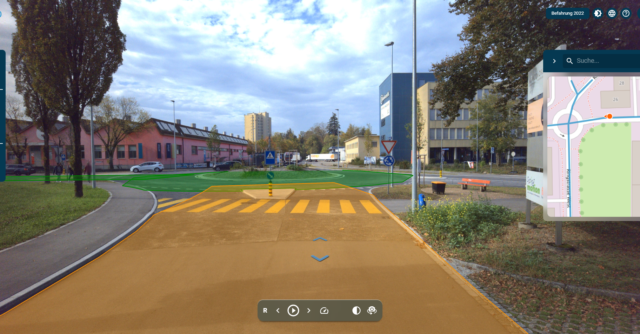
    Researchers at ZHdK and ZHAW have developed an innovative tool for participatory urban design. Using virtual reality (VR), residents and those responsible are given the opportunity to experience planned redesigns virtually. For example, the effects of traffic-calming measures on street noise, space conditions or bicycle and pedestrian traffic can be experienced through the senses of sight and hearing.

    In the Gestalte Zürich project, the researchers support the Zurich city administration in planning sustainable spaces in the city, explains the ZHdK in the project description. Gestalte Zürich is supported by the City of Zurich‘s Department of Urban Planning, the city’s Civil Engineering Department and the Zurich Transport Authority. Other practice partners are the organisations myclimate, umverkehR and Fussverkehr Schweiz. Prototypes of the VR tool could be tried out on 20 September at Zurich Park(ing) Day. The project, which will run until next year, is funded by the digitalisation initiative. Its aim is to strengthen cooperation between Zurich’s universities on the topic of digitalisation.

  • Switzerland Innovation launches digital networking platform

    Switzerland Innovation launches digital networking platform

    With the new platform, Switzerland Innovation aims to strengthen connections and collaboration within its network. Developed in collaboration with jointcreate.com, the platform offers users a simple and customised way to connect, communicate and explore new opportunities within Switzerland’s innovation ecosystem.

    Promoting innovation through collaboration
    Switzerland Innovation’s mission is to connect research and industry to develop ideas into marketable products. With over 650 resident companies as well as research and external partners, the platform enables seamless interactions and opens up new opportunities for collaboration.

    Complementing face-to-face interaction
    Although the platform promotes digital exchange, the importance of face-to-face interaction remains undisputed. It complements physical meetings and enables users to continue conversations beyond face-to-face exchanges to accelerate projects and promote innovation.

    Key features of the platform
    Inspiring events: Participate in digital and hybrid events around research and innovation.

    • Share and benefit from exclusive content and research results.
    • Network with researchers and companies across Switzerland.

    The success of the platform depends on the engagement of the community, and Switzerland Innovation supports users in exploring the platform and contributing to the growth of the innovation community.

  • EnBW acquires enersis to promote digital twins in the energy sector

    EnBW acquires enersis to promote digital twins in the energy sector

    Energie Baden-Württemberg AG(EnBW) has acquired the two sister companies enersis Suisse AG from Bern and enersis Europe GmbH from Kleinmachnow near Berlin, which specialize in digital twins in the energy sector, according to a press release. EnBW is thus strengthening its own technological and digital expertise, particularly with regard to digitalized distribution grids, so-called smart grids, according to the press release. “We identified smart grids early on as a field of innovation that is of strategic importance to us,” EnBW’s Head of Innovation Jürgen Stein is quoted as saying.

    For such smart grids, enersis offers its customers digital twins as a software-as-a-service solution. EnBW describes this as a central competence within the innovation field of smart grids. This is because such twins make it possible to create a digital image of distribution grids that is fed with various energy data in real time. Distribution grids will face additional challenges in the course of the energy transition if numerous small decentralized generation plants are integrated into the low-voltage grid. “An application like this helps us to expand and operate our infrastructure more intelligently,” says Stein.

    Enersis will continue to operate independently as a wholly-owned subsidiary of EnBW. The parties have agreed not to disclose the purchase price. All enersis employees will be taken over and both locations will be retained. The EnBW and enersis teams will work together over the next few months to ensure a successful integration.

  • Drone aviary at NEST: new test environment for sustainable robotics

    Drone aviary at NEST: new test environment for sustainable robotics

    Empa and EPFL are to work together in the future on the development of robotics for sustainability purposes, according to a press release. Empa will contribute its expertise in the areas of materials and development as well as its drone aviary, which will be opened in the modular research building NEST in Dübendorf in November. EPFL is contributing its expertise in environmental monitoring. In future, researchers and students from both institutions will also be able to work at the other institution, depending on the topic.

    Empa researcher Mirko Kovacs has also been teaching as Professor of Sustainability Robotics since the beginning of September. Kovacs has headed the Laboratory of Sustainability Robotics, which Empa runs jointly with Imperial College London, since 2018. His two teams in Dübendorf and London are now being joined by a third in Lausanne.

    The drone aviary at NEST allows test runs with robots and drones in the open air, but shielded from the outside world by a cage. One wall of the aviary will allow surface materials to be changed and different scenarios to be tested.

  • Three innovative start-ups that are shaping the future of energy and technology

    Three innovative start-ups that are shaping the future of energy and technology

    Digitisation of electrical circuit diagrams made easy
    The future of electrical documentation is paperless. cirQit replaces printed circuit diagrams with digital versions that can be called up directly on site using a QR code. Changes can be made flexibly via smartphone or tablet and automatically stored in the system. With its innovative solution, the company ensures that everyone involved – from planners to technicians – has access to the latest documentation at all times. Efficiency, flexibility and sustainability take centre stage.

    Intelligent heating control for maximum efficiency
    Cleantech start-up Yuon Control from Burgdorf has developed predictive heating control software that can increase the efficiency of thermal networks by up to 25%. By optimising heat generation and storage capacities and smoothing load peaks, the company reduces CO2 emissions and lowers operating costs at the same time. This solution is suitable for both new and existing district heating networks and makes the company a pioneer for sustainable energy in the heating industry.

    Automation for the solar energy sector
    SolarStream makes the management of solar projects much easier and more efficient. The end-to-end software solution automates data transfer between different systems, simplifies project and document management and saves valuable time for project managers and solar engineers. The company promotes the expansion of solar energy by seamlessly integrating existing software solutions, paving the way for a green future.

  • Innovative drone research

    Innovative drone research

    At the centre of this research is the “DroneHub”, a state-of-the-art laboratory that is being built on the Empa campus in Dübendorf. This unique research building makes it possible to test drones under real-life conditions – a significant development for both the construction industry and environmental sciences. In the future, drones could repair buildings before damage escalates or even save lives by monitoring dangerous areas before the fire brigade.

    The spirit of innovation driving this project is evident in the extraordinary combination of environmental monitoring and construction robotics. The new drone models can place sensors in trees or collect water samples from the depths of oceans and lakes – essential data to monitor the health of our ecosystems.

    However, Kovac and his international team are going even further. With aerial additive manufacturing (AAM) technology, drones could be able to print building materials from the air. This technology has the potential to fundamentally change the way buildings are maintained and constructed while utilising resources more efficiently.

    Redefining building maintenance
    The “DroneHub” provides a protected space for the development and testing of robots and drones that can autonomously perform tasks such as building maintenance and environmental monitoring. The DroneHub’s unique AAM wall simulates real building surfaces on which the drones demonstrate their repair and maintenance capabilities. These technologies are particularly relevant for the property sector, where safety and efficiency in maintenance are becoming increasingly important.

    This collaboration between Empa and EPFL not only opens up new perspectives for robotics, but also for the future of the property industry. Drones that carry out inspections and repairs autonomously could revolutionise the way buildings are maintained. For managers and professionals in the property and location development sector, this project offers an exciting look at the future of the industry – innovative, sustainable and with a clear focus on efficiency and safety.

  • Emergency management in the property sector

    Emergency management in the property sector

    Property inspections, recording defects, handing over keys and accepting flats are part of the everyday life of property experts. But behind these routine tasks lurk dangers such as assaults – verbal or physical – which are unfortunately a reality. The increasing housing shortage and the existential fears of tenants or buyers are leading to more and more threatening situations.

    It is essential for property professionals to be prepared for such emergencies. How can help be called quickly and reliably in a critical situation? In cooperation with e-emergency, SVIT Young Zurich has developed the “SVIT Emergency App” to assist employees in dangerous situations. This app bundles all the necessary alerting and communication options and provides clear instructions for various emergency scenarios.

    Modern technology for maximum safety
    The “SVIT Emergency App” offers property professionals extensive functions that are tailored to everyday working life. Relevant emergency services, colleagues or superiors can be alerted at the touch of a button. The current status is communicated in real time so that a quick and targeted response to the situation is possible. The app provides specific steps to be taken in an emergency situation.

    Property professionals are exposed to particular risks when working alone, for example when inspecting flats, recording defects or handing over keys. The motives for assaults are varied. They range from existential fears and power games to criminal instincts. It is therefore crucial to establish an effective emergency management system that provides employees with security and at the same time enables a rapid response.

    The four phases of emergency management – prevention and response
    Robust emergency management is divided into four phases. Each phase helps to ensure that companies and employees are optimally prepared for unexpected emergencies and can act quickly.

    1.Proactive measures for greater safety
    Prevention means identifying risks at an early stage and minimising them through targeted measures. Training and clear behavioural guidelines for employees are essential in order to identify potential hazards during property inspections or similar activities. The aim is to avoid dangerous situations before they escalate.

    2.Preparing for emergencies
    Emergency preparedness includes organisational and technical preparations to ensure that employees are able to act in emergency situations. This includes the establishment of communication plans and the definition of crisis teams. In the property sector, this means that employees can use the “SVIT Emergency App” as a central tool to react quickly and efficiently in an emergency.

    3.Immediate measures to contain risks
    If an emergency occurs, the third phase – hazard defence – is crucial. This is where emergency plans are used, which are stored directly in the “SVIT Emergency App”. They contain all the information needed to alert the emergency services, evacuate the building and ensure internal communication. Thanks to real-time communication in the app, colleagues and superiors can be informed immediately about the location and the situation in order to provide support quickly.

    4. Restore normal operations
    After an emergency has been dealt with, it is important to resume regular business operations as quickly as possible. The recovery phase also includes supporting the affected employees, for example by providing psychological support, and analysing the incident in order to minimise future risks. The “SVIT Emergency App” also plays an important role here by providing valuable data for the follow-up and improvement of emergency management.

    A decisive factor in future-proofing companies
    In a networked and dynamic world, comprehensive emergency management is an essential part of business continuity management. The “SVIT Emergency App” is a modern and efficient solution that not only ensures the safety of employees, but also strengthens the resilience of companies in crisis situations. Whether for property viewings, flat inspections or defect inspections – the app ensures that the right measures can be taken quickly and purposefully in an emergency.

    The future of security in the property sector
    Security risks in the property sector are increasing, and it is crucial that companies are prepared. The “SVIT Emergency App” provides property professionals with an innovative tool that covers all phases of emergency management and significantly increases security. Through a systematic approach to prevention, preparedness, hazard defence and recovery, the app helps companies remain capable of acting in any situation and optimally protect their employees.

    Link to the website: https://www.svit.ch/de/svit-zuerich/mitgliederinformation-sicherheit-bedeutet-vorbereitet-zu-sein

  • Breakthrough in quantum computing technology

    Breakthrough in quantum computing technology

    Quantum computers could fundamentally change our understanding of problem solving and calculations in the near future. However, the technology still faces a crucial hurdle – the error-proneness of quantum bits, which are the central building blocks of quantum computers. Google has now reached a significant milestone with its latest success in quantum error correction.

    Researchers at Google’s Quantum Artificial Intelligence Lab have managed to combine 97 error-prone quantum bits into one logical quantum bit that has a significantly lower error rate. This is an important step on the way to error-tolerant quantum computers that could perform complex calculations in the future.

    Challenges of quantum error correction
    The biggest challenge for quantum computers is the high probability of errors during computing operations. In current systems, the probability of error is between 0.01 and 1 per cent, depending on the operation. As quantum computers potentially require thousands of calculation steps, this means that the possibility of errors increases exponentially. Without effective error correction, the advantages of quantum computers would be almost impossible to utilise in practice.

    The Google researchers developed a method in which quantum information is distributed across several quantum bits. Measurement bits ensure the stability of the states without directly changing the information. This redundant approach, which is also used in classical computers, led to the formation of a more robust logical quantum bit.

    A decisive advance – but not yet the goal
    Google was able to achieve a critical error threshold by reducing the error rate of a 97-qubit quantum bit system to half that of a 49-qubit system. This progress is highly rated by experts and can be compared to the groundbreaking results of 2019, when Google demonstrated for the first time that quantum computers can outperform conventional computers in certain tasks.

    Despite this promising development, quantum research still faces huge challenges. The next step is to perform basic computing operations with the stabilised logical quantum bits. In the long term, these stable bits will be used to enable complex and fault-tolerant calculations.

    Fault-tolerant quantum computers and their application
    Although the progress made so far is impressive, there is still a long way to go before quantum computers are able to solve really complicated problems. It is estimated that around 1457 physical quantum bits are needed to achieve an error rate of 1 in 1,000,000 – a minimum requirement for solving simple problems.

    For complex challenges such as breaking modern encryption methods, even thousands of logical quantum bits are required. Therefore, further progress in quantum error correction and more efficient algorithms are urgently needed to reduce the required number of physical quantum bits.

    A clear path ahead
    The current results from Google and other research groups form a solid basis for the development of the quantum computers of the future. While many technical hurdles remain, recent advances are making the goal of a powerful, fault-tolerant quantum computer more tangible. Whether and how the technology will become established in practice remains to be seen, but the outlook is now clearer than ever before.

  • Study shows opportunities for façade greening and solar panels

    Study shows opportunities for façade greening and solar panels

    As part of the GreenPV project, a research team from Lucerne University of Applied Sciences and Arts has developed innovative solutions for the design of building façades. The aim was to explore the potential of photovoltaic systems (PV) and greenery in order to meet the increasing challenges posed by global warming. A brochure specially developed for planners and building owners summarises the findings and recommendations of the project.

    The importance of this research becomes clear when you look at the forecasts of the National Centre for Climate Services: The average annual temperature in Switzerland could rise by up to 5.4 degrees by the end of the 21st century. This will not only significantly increase energy requirements, particularly for cooling, but will also affect comfort levels in buildings. Photovoltaic systems can supply energy precisely when it is needed most, namely when the sun is shining intensely. At the same time, green façades offer a sensible alternative in urban areas where new green spaces are scarce.

    Façades as untapped potential
    “While the benefits of PV systems and greenery are already increasingly being used on roofs, façades have so far remained largely unused,” explains Dr Silvia Domingo, researcher at HSLU. Yet façades offer an excellent opportunity for energy generation and greening without taking up additional space. PV systems on south-facing façades are particularly efficient in the cold season, as they can make optimum use of the low angle of inclination of the sun.

    However, the study also shows that there are obstacles that stand in the way of a wider application of these technologies. These include financial challenges, a lack of guidelines and concerns about fire safety. These factors often cause uncertainty among building owners. To counteract this, the research team has produced a brochure with practical recommendations for the use of PV systems and greenery on façades.

    Visual aspects and functional synergies
    Another obstacle identified by Dr Domingo is the aesthetic perception of solar panels on building façades. Black solar panels often do not meet the visual expectations of building owners. However, research shows that solar panels in different colours and textures could also be available in the future without any significant loss of efficiency.

    In addition to PV systems, green façades offer numerous advantages that go far beyond the cooling effect. They contribute to biodiversity, improve air quality, reduce sound propagation and promote rainwater retention. These benefits are particularly important in densely built-up urban areas, where they can significantly improve the quality of life.

    The combination of greenery and PV systems
    The HSLU study shows that greenery and PV systems on façades can often be combined well in order to utilise synergies. While PV systems on unshaded, higher façade areas ensure maximum energy generation, green areas near the ground have a cooling and noise-absorbing effect. This combination contributes to a more pleasant neighbourhood climate and climate-friendly electricity production.

    Completion of the GreenPV project
    The GreenPV project, which started in December 2021 and ran until mid-2024, was funded by a broad network of supporters, including the Swiss Federal Office of Energy (SFOE) and various foundations. The project team, led by Gianrico Settembrini, gained valuable insights, which are recorded in a brochure and are now available to planners, building owners and interested parties.

    With the results of the GreenPV project, the HSLU is making an important contribution to sustainable development in the construction industry and demonstrating how greenery and solar panels on façades can be combined to effectively meet the challenges of climate change.

  • Fresh capital for the decarbonisation of real estate

    Fresh capital for the decarbonisation of real estate

    The software service provider Optiml has secured fresh capital totalling USD 4 million in a pre-seed financing round. According to a press release published on LinkedIn, the company intends to continue supporting the property market with software as it takes steps towards decarbonisation in the sector. As a service provider (Software-as-a-Service/SaaS), Optiml wants to develop programmes that facilitate data management and provide tools for asset and portfolio decisions. In doing so, the company takes into account constantly changing regulations and market conditions, according to the press release. With software supported by artificial intelligence, property companies and owners can plan their refurbishment and renovation work in line with the market and incorporate decarbonisation targets for their properties.

    The refurbishment and decarbonisation software from the spin-off of the Swiss Federal Institute of Technologyin Zurich(ETH), which was founded in 2022, is based on years of research in the ETH Sustainability and Technology Group (SusTec). It uses science-based optimisation algorithms.

  • No complex thinking skills with ChatGPT & Co.

    No complex thinking skills with ChatGPT & Co.

    The research, which will be presented at the annual meeting of the Association for Computational Linguistics in Bangkok, concludes that large language models such as ChatGPT show no evidence of the development of sophisticated or planned thinking. Instead, these models only demonstrate the ability to respond to simple instructions. This disproves the widespread assumption that AI models could exhibit increasingly intelligent behaviour through scaling.

    Background to the study
    The study, led by Prof Dr Iryna Gurevych from TU Darmstadt and Dr Harish Tayyar Madabushi from the University of Bath, investigated so-called “emergent capabilities” of AI models. These capabilities, which were observed with increasing model size and data volume, raised both hopes and fears regarding the future development of artificial intelligence. However, current research shows that these abilities are due to simple learning effects rather than complex, independent thinking.

    Implications for the future of AI use
    The results of the study have significant implications for the use of AI systems. Prof Gurevych warns against relying on the models to solve complex tasks without human support. She emphasises that users should provide explicit instructions and examples in order to use the systems effectively. In addition, the tendency of models to produce plausible-sounding but incorrect results remains a challenge.

    Focus on future risks
    Although the study shows that LLMs do not develop complex thinking skills, this does not mean that AI does not pose a threat. Prof Gurevych calls for research to focus on the real risks of AI models, particularly their potential to generate fake news. The findings of the study provide a valuable basis for better understanding the actual capabilities of AI models and making their use safer in practice.

  • Real Estate Award 2024: The property event of the year is coming up!

    Real Estate Award 2024: The property event of the year is coming up!

    The event menu for the Real Estate Award ceremony on 24 October 2024 is set: In addition to a meat-based 4-course feast, guests can also look forward to a delicious vegan option. Just one of many innovations, as the Managing Director of Real Estate Award AG, Mara Schlumpf, explains: “Our guests can look forward to an unforgettable evening. In addition to a delicious culinary experience, encounters with well-known personalities from Swiss business and politics also have a fixed place in the exciting evening programme.” Whether on the red carpet, at a cosy aperitif or at an upscale gala dinner: there is hardly a better opportunity for networking in the real estate industry this year.

    On 24 October 2024, this year’s winners will be chosen in the categories Digital, Project Development and Innovation, Marketing and, for the first time, in the newly created Sustainability category. You can currently vote for your favourites at www.realestateaward.ch. The contenders for the coveted crystal glass trophies are

    Digital: Backbone, Novalytica, QAECY

    Project Development & Innovation: Cham Group, Redvolution, Topik

    Marketing: Emonitor, Fairmarkter, Properti

    Sustainability: Zurich Airport, Vaudoise&HRS, Zindel United

    In addition, the Real Estate Personality of the Year will be chosen by the renowned Real Estate Award jury. A good atmosphere is also guaranteed at the event: comedy and music round off the varied programme. “I’m already looking forward to the Real Estate Award ceremony in October,” says Mara Schlumpf. “The evening will set a new benchmark in the history of the award.”
    Tickets for the award ceremony and gala dinner are available at www.realestateaward.ch.

  • Artificial intelligence makes real estate marketing more efficient

    Artificial intelligence makes real estate marketing more efficient

    The use of artificial intelligence (AI) is changing the way real estate is bought and sold. According to a press release from the Swiss Marketplace Group(SMG), real estate professionals see great potential in terms of efficiency and time savings.

    Casasoft, which specializes in tailor-made digital products for real estate marketing, has developed the Casaone real estate software in collaboration with real estate service provider IAZI, both based in Zurich. The aim of the cooperation is to provide employees in the real estate sector with a better and faster process. Casaone was specially tailored to the industry’s customer relationship management and offers a “database on residential properties that is unique in the Swiss real estate landscape”, according to the statement.

    The AI-based applications implemented in it and an extensively AI-trained chatbot make life easier for real estate managers and brokers, as analogue work steps such as the creation of the offer description based on the recorded property data will be AI-supported and process-optimized in the future. The elimination of previously analog “Sisyphean tasks”, such as manually filling out data masks before placing a listing, means that more time is available for direct communication with property sellers and buyers. “Real estate professionals will be able to create and list their properties more efficiently than ever,” it says.

    There are also advantages for property seekers. “Available properties will come onto the market faster and with higher data quality,” says Martin Waeber, Managing Director Real Estate at SMG. The SMG Swiss Marketplace Group unites the digital marketplaces of TX Group, Ringier and Mobiliar.

  • Revizto acquires investment from Summit Partners

    Revizto acquires investment from Summit Partners

    Revizto has secured a minority stake from global investor Summit Partners, based in Boston. According to a statement from the software provider for the construction industry, the fresh capital will be invested in expanding the team of employees, in product development and in the international growth of the company. Revizto offers cloud-based software for architects and civil engineers, in which projects are available in both 3D models and 2D plans and can be processed simultaneously. The company uses an app, virtual reality, construction plans supported by QR codes and other technological advances in the so-called AECO area (Architecture, Engineering, Construction, Operations). In June, the company received the Switzerland’s Best Managed Companies Award for its business ideas and management practices.

    “With Summit, we have found a partner that shares our commitment and enthusiasm for the digitalization of the AECO industry and aligns with our team’s DNA and people-oriented corporate culture,” said Arman Gukasyan, founder and CEO of Revizto, in the press release. “We are confident that this partnership will propel Revizto forward by providing us with perspectives and resources that will allow us to accelerate development and market expansion.”

    “With its innovative platform, Revizto has achieved enthusiastic user adoption across 80,000 projects worldwide and has achieved impressive, profitable growth,” said Antony Clavel, Managing Director of Summit Partners.

  • New partnership promotes regional networking in Eastern Switzerland

    New partnership promotes regional networking in Eastern Switzerland

    The St.Gallen-based association IT rockt! and collektiv AG will be working together in future. According to a press release, IT rockt! Will move into premises in the coworking space collektiv (st.gallen). This means that IT rockt! will be “at the centre of events”, which will also enable the Eastern Switzerland IT cluster to expand its offering for members and employees. From September, IT rockt! will also be more flexible than before when organising events at collektiv (st.gallen).

    According to the press release, the collaboration between the two organisations will promote local exchange. This will promote regional networking. “We are very much looking forward to working with collektiv (st.gallen)”, Eva De Salvatore, Managing Director of IT rockt!, is quoted as saying in the press release. “The stimulating atmosphere creates ideal conditions for our IT community, and the region will benefit from such an enriching programme.”

    “It’s great to have a partner like IT rockt! at our side,” adds Majid Parente, founder and CEO of collektiv AG.

  • SMG introduces AI label for visual content

    SMG introduces AI label for visual content

    The Group has introduced an AI label that will characterise all AI-generated visual representations in advertising. The aim of this label is to make the use of artificial intelligence in marketing transparent and at the same time increase the efficiency and creativity of campaigns. The label is now available licence-free on the SMG website and can be downloaded so that other companies can also use it for their AI-generated media.

    Internal guidelines for use
    Internal guidelines have been developed to ensure the correct use of the new AI label. These guidelines include the labelling of photorealistic AI-generated content and the use of platform-specific functions for labelling, such as native functions on Instagram. If such a function is not available, the company’s own label is used. A reduced icon is also available for smaller formats.

    Responsibility and efficiency
    The company presents this initiative as a valuable contribution to its role as a pioneer in the Swiss digital industry. The company uses AI to increase efficiency while acting responsibly and transparently. The AI label will be used for all SMG brands with immediate effect.

    Successful start with Homegate
    The first campaign that has already successfully integrated the new AI label is currently running for Homegate. This campaign shows how the label is used in practice and supports transparency towards customers.

    With this launch, SMG is setting an example for transparency and innovation in the use of artificial intelligence in advertising.

  • Knowledge of artificial intelligence and cyber-risks

    Knowledge of artificial intelligence and cyber-risks

    In a rapidly changing digital world, it is essential for managers to continually expand their knowledge to meet the demands of the modern business world. This is exactly what the new online training courses offered by the Geneva Cantonal Office for the Economy and Innovation offer.

    These online courses, also known as MOOCs (Massive Open Online Courses), enable managers to learn more about the potential, applications and limits of artificial intelligence in business. Topics such as data analysis, targeted advertising and copywriting are covered in three learning modules to give participants a comprehensive overview of the possibilities offered by AI.

    Another course deals with the impact of cyber risks on businesses. Participants learn the basics of an effective security risk management strategy so that they can take preventive measures to counter potential attacks. The course highlights the definitions of cyber risks and explains how they can impact on a company’s activities.

    These new courses will enable them to broaden their skills, strengthen their teams and protect their company in the best possible way. Investing in lifelong learning and addressing the opportunities offered by AI and the challenges posed by cyber risks are key success factors for innovative and competitive business management.

    In addition, digital training can help them develop innovative solutions and future-proof their business. By continually updating their knowledge and acquiring new skills, managers are better equipped to react to changes in the sector and to position their company successfully.

  • CDE market analysis 2024 with a focus on BIM functionalities

    CDE market analysis 2024 with a focus on BIM functionalities

    In the updated white paper, 17 project CDE solutions were analysed in detail. It was found that the user-friendliness of many tools has been improved compared to the previous year in order to support user groups without extensive BIM expertise. Nevertheless, the operation of most CDEs remains complex. Only three tools received full marks in the “usability” criterion, while six tools achieved four out of a possible five points. Almost half of the tools analysed were rated with three or fewer points on the five-point scale, which shows that the expected improvements in terms of usability were only partially achieved.

    Focus on BIM functionalities
    The expansion of BIM functionalities in most CDE solutions is particularly striking. A third of the tools analysed now offer comprehensive functions for complete BIM information management. Significant improvements were noted in BIM viewers in particular, which now offer better graphics and performance for large models. Geometric model checking has also been improved, particularly through the ability to perform clash checks directly in the CDE and visually analyse geometric changes in different project statuses.

    Integration capabilities can be expanded
    Despite this progress, there is still a need to optimise the integration and consistency of information management. The options for checking information are still rarely available and the use of artificial intelligence remains inadequate. The transfer of data between different parties and the integration of executing companies are also often rated as inadequate at present. Only one of the tools analysed allows data to be processed directly in the tool, which highlights the shortcomings in this area.

    About the market analysis
    The CDE market analysis has been conducted annually since spring 2023. In the first update, 17 project CDEs were analysed using around 40 evaluation indicators in the areas of usability, information management, interfaces, file storage, BIM functions and data protection. The analysis provides a comprehensive overview of the current status of technical developments and shows where there is still room for improvement.

  • PropTech start-up secures three prizes in June 2024

    PropTech start-up secures three prizes in June 2024

    Optiml has won three prestigious awards just over two months after launching its NetZero investment and renovation planning solution for the property industry in June 2024, according to its press release. The company, based in Technopark Zurich, was honoured in Berlin with the ZIA PropTech of the Year Award from the German Property Federation (ZIA), under the patronage of CBRE, the world’s largest real estate services and investment company based in Dallas, Texas. Optiml also received a W.A. De Vigier Award from the Solothurn foundation of the same name. And it came second in the ICT category of the Venture Startup Competition.

    “With its NetZero investment and renovation planning, Optiml offers a digital solution for one of the most pressing pains of our real estate decade,” said ZIA Awards jury chairwoman Prof. Dr Verena Rock at the award ceremony, according to a statement from the ZIA. “With this solution, budgets, cash flows and returns can finally be digitally mapped at asset and portfolio level during energy-efficient refurbishment.”

    The refurbishment and decarbonisation software from the spin-off of the Swiss Federal Institute of Technology in Zurich, founded in 2022, is based on years of research in the ETH Sustainability and Technology Group(SusTec). It uses science-based optimisation algorithms and artificial intelligence.

    According to Evan Petkov, CEO and co-founder of Optiml, the awards confirm “that the industry has never seen anything comparable for renovation or decarbonisation plans”. Optiml now wants to convince the DACH region and then Europe of its software.

  • Millions invested in expansion and development secured

    Millions invested in expansion and development secured

    Spacewise has received fresh capital to further invest in its product development and expansion in North America. According to a press release, an undisclosed seven-figure sum was raised in a post-seed financing round. The round was led by Zug-based investor Sandermoen with the participation of Zürcher Kantonalbank(ZKB) as well as several family offices and business angels.

    The Zurich-based proptech software-as-a-service company operates an award-winning platform for the temporary letting of retail properties. The Chairman of the Board of Directors, Brad Peppard, describes this platform as a “first-class solution for sales automation”. Spacewise is “well on its way to doing for short-term commercial lettings what online booking services have done for hotel reservations”.

    Customers can opt for either a comprehensive end-to-end solution or specific modules. This flexibility, says Spacewise, “increases effectiveness and efficiency in presenting property portfolios, managing space inventory and maximising revenue”.

    In Europe, Spacewise works with Migros, Swiss Post, Coop, Wincasa and SBB, among others, which handle thousands of rental contracts. In North America, it has partnerships with major players such as Regency Centres and Oxford Properties.

    “Spacewise has recognised a critical market need and has achieved impressive market momentum in Switzerland,” investment manager Yves Becker from ZKB is quoted as saying. “The company’s unique white labelling solution and strong network of partnerships positions it well for international expansion.”

  • Strategic cooperation improves property management processes

    Strategic cooperation improves property management processes

    Planon has announced a strategic partnership with PROMOS consult, a Berlin-based SAP partner specialising in residential and commercial real estate and facility management. The collaboration covers the DACH region. The globally active Dutch proptech company, which is represented in Switzerland with a branch in Technopark Zurich, also offers software solutions for property and facility management.

    According to Planon’s press release, the aim of this partnership is to optimise processes, simplify workflows and increase tenant satisfaction. Planon’s innovative solutions for facility management will be combined with PROMOS’ in-depth industry knowledge and broad portfolio of services for the core processes of property management.

    “We are convinced of the extensive opportunities that this partnership offers,” Planon COO Stephan Mau is quoted as saying. “Together, we will offer Promos SAP customers a forward-looking solution for property management.” PROMOS CIO Volker Schulz is “convinced that our customers will benefit from the combined expertise of both companies and that we will transform the German-speaking market in the long term”.

  • Planon software receives GEFMA certification

    Planon software receives GEFMA certification

    The GFMA has once again awarded Planon ‘s software for Integrated Workplace Management and Computer Aided Facility Management certification in accordance with Guideline 444, the company for intelligent and sustainable building management announced in a press release. The recertification also applied the new catalogue of criteria for IoT data management introduced in the guideline. The Internet of Things (IoT) now plays an important role in intelligent building management due to the automated networking of building technology, writes Planon.

    The two software functionalities Energy Management and Workplace Management have also been certified in accordance with the new GEFMA 445 guideline. It was developed by GEFMA’s digitalisation working group in response to technical developments in the proptech sector in order to be able to certify individual processes for building management, explains Planon. Compared to Guideline 444, more in-depth functionalities are required.

    “The renewed GEFMA 444 recertification and the new certification according to GEFMA 445 underlines our high quality standards and our innovative strength as market leader for intelligent and sustainable building management software,” Stephan Mau, COO Real Estate Management & General Manager EMEA Central at Planon, is quoted as saying in the press release. The globally active proptech with headquarters in the Netherlands is represented in Switzerland with a branch in Technopark Zurich.

  • Independent and self-determined: The initiative for a sovereign Swiss property industry

    Independent and self-determined: The initiative for a sovereign Swiss property industry

    Reaktion auf die digitale Revolution
    Die Initialzündung für die Initiative kam durch die Erschütterung anderer Branchen, die von der digitalen Revolution überrollt wurden, wie etwa die Hotellerie durch Booking.com. Hoteliers sind mittlerweile gezwungen, auf dieser Plattform zu diktierten Konditionen zu inserieren. Dieses Beispiel zeigt: Wenn Akteure die Kontrolle über ihre Kundenschnittstellen und Daten verlieren, werden sie leicht zum Spielball der Marktführer.

    Am Beispiel der Hotellerie wissen wir, dass selbst grosse international tätige Unternehmen zu klein sind, um im Wettbewerb um Daten und Kundenschnittstellen eine dominante Rolle einzunehmen. Daher braucht es strategische Zusammenschlüsse, damit Rahmenbedingungen geschaffen werden können, die die Existenz aller Akteure nachhaltig sichern. Mit der Next Property AG ist ein solcher Zusammenschluss für die Immobilienwirtschaft entstanden. Die Initiative umfasst, seit der Lancierung im 2016, über 500 Aktionäre, welche die aktuellen Marktentwicklungen als bedrohlich einstufen und die Vision der Brancheninitiative unterstützen.

    Selbstbestimmung durch Datenhoheit
    «Daten sind Schlüsselressourcen. Wer die Daten kontrolliert, kontrolliert die Zukunft.», sagt Mario Facchinetti, mandatierter Geschäftsführer der Next Property AG. Der Ansatz ist klar: Die Kontrolle über Daten und Kundenschnittstellen in der Branche zu behalten, damit diese auch in Zukunft unabhängig und selbstbestimmt bleibt. Im Rahmen dieser Vision hat die Next Property AG im 2017 die Gelegenheit genutzt, um sich an der Immobilienplattform newhome.ch zu beteiligen. Durch dieses strategische Investment kann die Branche den Wettbewerb fördern und die Bedingungen sowie Ausrichtung des branchenfreundlichen Immobilienmarktplatzes aktiv mitgestalten.

    Bestätigung der Initiative
    Im 2021 fusionierten die führenden Schweizer Immobilienmarktplätze, was die Befürchtungen der Initianten bestätigte und die Bedeutung der Next Property AG, die sich für einen Markt mit gesunden Alternativen einsetzt, unterstrich. Somit wurde es wichtiger denn je, Immobilieninserate vorzeitig oder exklusiv auf newhome.ch zu publizieren. Damit liegt das Insertions- und Suchverhalten in der Kontrolle der Aktionäre. Sie haben es selbst in der Hand, ihre Objekte mit Vorlauf oder exklusiv auf der branchenfreundlichen Immobilienplattform zu inserieren und somit das Suchverhalten für professionell vermarktet Immobilien zu ihren Gunsten zu steuern.

    Digitalisierung: Fair statt zentralisiert
    Die Digitalisierung ist zentral für die Organisation von Prozessen und ein wesentlicher Faktor für die Zukunftsfähigkeit von Unternehmen. Sie darf jedoch nicht auf Kosten etablierter Wirtschaftsstrukturen und regionaler Arbeitsplätze gehen. Branchenakteure müssen sich gemeinsam dafür einsetzen, dass die digitale Wertschöpfung nicht zu stark zentralisierte Strukturen entwickelt. Stattdessen sollten sie sicherstellen, dass Marktteilnehmer ihre Existenzgrundlage sichern können, damit eine nachhaltige Entwicklung möglich ist. Für die Branche ist es wichtig, die Digitalisierung mit langfristiger Perspektive voranzutreiben, um deren Chancen zu nutzen und Risiken zu minimieren.

    Dank der Aktionäre der Next Property AG und ihrem Investment in die newhome.ch AG haben Schweizer Immobilienakteure eine erfolgsversprechende Chance die Kontrolle über ihre Daten und die digitale Kundenschnittstelle zu behalten und die Marktbedingungen mitzubestimmen.

  • Digital next gen and AI usher in a new era

    Digital next gen and AI usher in a new era

    Like many other sectors, the construction and property industry is facing major challenges. Digitalisation is progressing inexorably, revolutionary technologies are emerging and sustainability requirements are constantly increasing. There is also a shortage of specialists with digital skills. “Our response to these challenges is the establishment of the ‘Digital Next Gen’ Expert Group,” says Genova. “Our aim is to bring together digital talent from across the industry and work together on innovative solutions for a sustainable and digitalised future.”

    Genova brings extensive expertise from his professional career and his studies. A trip to China was particularly formative, where he gained valuable insights into digital transformation. The Digital Next Gen initiative offers him a platform to use his skills and drive forward the digital transformation in the construction and property industry.

    Objectives of the “Digital Next Gen” Expert Group
    Establishing a centre of excellence for digital technologies and trends to effectively tackle the digital challenges facing the construction industry.

    Identify and promote innovative digital solutions and business models in Switzerland

    Creating bridges between research, business and practice in order to put innovative ideas and technologies into practice more quickly.

    “We aim to play a leading role in shaping the digital transformation in the construction industry,” emphasises Genova.

    Opportunities and challenges of the digital evolution
    Digitalisation offers significant opportunities for the construction industry, such as efficiency gains, cost reductions, more environmentally friendly construction practices and the development of new business models. However, there are also challenges such as high investment costs, data protection issues and a shortage of skilled labour. “We must tackle these challenges with determination in order to fully exploit the opportunities of digitalisation,” says Genova. “The future belongs to the brave and the pioneers, and we are ready to take on this role.”

    Upcoming digital technologies and trends
    The construction industry is at the beginning of a new era, characterised by groundbreaking digital technologies. Artificial intelligence (AI), robotics, blockchain, the Internet of Things (IoT) as well as augmented reality (AR) and virtual reality (VR) are some of the key technologies that will revolutionise the industry. “We are ready to pave the way for this digital revolution and face the challenges that lie ahead,” explains Genova.

    Talent sought for the Expert Group
    The Expert Group is looking for talented individuals with extensive expertise in digital technologies such as AI, IoT, blockchain, AR/VR and 3D printing. In addition to technological skills, an innovative spirit, experience in the construction industry, the ability to work in a team and an understanding of sustainable construction practices are important. “We are counting on a new generation of talent who are ready to take the lead in this technological revolution,” concludes Genova.

    Digitalisation is not only a challenge, but also an opportunity to fundamentally transform the construction and real estate industry. The “Digital Next Gen” Expert Group is ready to actively shape this transformation and create a sustainable, digitalised future.