Category: Sustainability

  • Subscription model provides flexible set-up solutions for companies

    Subscription model provides flexible set-up solutions for companies

    Skollektiv GmbH offers its furnishing solution as a subscription model on the new Settility.ch website. Under this name, the Bern-based creative network provides pieces of furniture for temporary use that are consistently designed according to the principles of the circular economy, from design and use to the return and reuse of materials. “With Settility, companies and institutions can furnish places to a high standard, even though many industries lack a long-term planning horizon,” reads a press release.

    According to the statement, the Settility design allows for maximum design freedom, as all components are compatible with each other. In addition, all modules are mobile and multifunctional, so that a lobby can be transformed into an event venue, a work zone into a workshop space or a catering environment into an exhibition and sales area with little effort.

    The annual subscription costs are gradually reduced over the first five years. From the sixth year onwards, only a small annual usage fee is charged. “Our subscription model is also extremely flexible in terms of the period of use,” says co-founder Reto Waser, who is also responsible for the concept and realisation. “Anything from two days to many years is possible and makes economic sense.” In addition, customers receive scenographic advice every year. The technical maintenance of the modules is also included in the subscription costs.

    One of Skollektiv’s first customers was the Bluefactory in Freiburg, which rents out modularly customisable spaces to commercial and scientific players. Its Hospitality & Services Manager, Fabio Burri, explains why his company opted for a Settility facility: “The Bluefactory will continue to develop over the coming years. That’s why we appreciate the flexibility and service that Settility offers us.”

  • Research project promotes circular economy in the construction industry

    Research project promotes circular economy in the construction industry

    Researchers at the Swiss Federal Institute of Technology in Zurich(ETH) are working on the reuse of old building materials, according to a press release. In a project-based interdisciplinary course developed by Prof Dr Catherine De Wolf, prospective engineering students from fields such as architecture and computer science are looking for ways to recycle materials in the construction industry in order to save resources and use materials for longer.

    They apply their knowledge during construction site visits, workshops or in the workshop. The ETH researchers spend around 70 per cent of their time in the field. “They learn how to carefully remove materials from existing buildings, document them digitally, integrate them into new designs and finally realise them,” they say. The experience of dismantling a building and reusing this demolition material, which would otherwise end up in landfill, for new construction processes demonstrates “how sustainable construction methods can be implemented in practice”. In the Digital Creativity for Circular Construction course, teams work on realisable projects for external clients and users. Laser scanning, artificial intelligence and augmented reality are used to record the building fabric.

    The students’ work has been exhibited at the Kunsthalle Zürich, the Art Genève art fair and the Architecture Biennale in Venice and has been used by external clients and users.

  • Renewable energies remain on course for growth despite difficult market conditions

    Renewable energies remain on course for growth despite difficult market conditions

    Aventron has announced its key financial figures for the 2025 financial year. In total, the producer of electricity from renewable energies generated around 1.3 billion kilowatt hours of electricity – around 15 per cent less than in the previous year (2024: 1.498 billion kilowatt hours). Aventron cites historically weak weather conditions and high price volatility, including negative electricity prices, as the reasons for this.

    Despite the decline in production, the result remains “solid” according to a statement. Net revenue amounted to 120.5 million Swiss francs (2024: 134.9 million Swiss francs), while the EBIT margin (earnings before interest and taxes) was around 21 per cent. Net profit after taxes reached CHF 10.3 million.

    In 2025, aventron continued its diversification strategy with solar, wind and hydro technologies and further developed its portfolio. In Switzerland, construction began on the Sedrun Solar (Grisons) and APV Sidenplangg (Uri) alpine photovoltaic projects. In Italy, realisation of the 25-megawatt Lazio 01 solar power plant began, while two wind farms are under construction in France and Germany. The company invested a total of CHF 67 million. At the end of the year, the portfolio comprised a consolidated total output of 819 megawatts (previous year: 797 MW) in operation or under construction.

    In the medium term, aventron intends to focus increasingly on successful electricity marketing and the expansion of data management and monitoring systems. The aim remains to build up a portfolio with a total output of 1000 megawatts. The Münchenstein-based company operates and develops power plants in the areas of hydro, solar and wind energy in Switzerland and selected European countries.

  • Regional butcher’s shop focuses on sustainability and short transport routes

    Regional butcher’s shop focuses on sustainability and short transport routes

    Metzgerhuus Stadt und Land AG in Füllinsdorf is working at almost full capacity. According to Managing Director Raffael Jenzer, the small regional butcher’s shop already processes around 30 cattle, 30 calves, 70 pigs and 20 sheep every week. The transport routes are short: the animals come from over 300 farms in the Basel region. The meat is used by 13 butchers in the region and over 125 direct-marketing farms.

    The Metzgerhuus, which opened in June 2025, also includes a self-service shop that is open every day. It offers 500 products from regional suppliers. In addition, the Metzgerstübli has already hosted around 80 events with over 1000 visitors. The first cookery courses have also been successfully launched.

    The Metzgerhuuse building itself is a power station. Thanks to its solar façade, solar modules on the roof, heat recovery and heavy insulation, it produces more energy than it consumes. It is therefore Minergie A-certified.

    The small regional butcher’s shop was founded by five butcher families from Baselland and Basel-Stadt, the Butchers’ Association of Basel and the Basel Butchers’ and Farmers’ Co-operative, who together raised CHF 4 million in capital. They no longer wanted to drive the region’s cattle to the Mittelland for slaughter.

    The two cantons of Basel supported the project with 2.5 million francs as part of the regional development project “Genuss aus Stadt und Land” (PRE). 120 lenders supported the Metzgerhuus with a total of almost 1 million francs. Anyone who still wants to support the Metzgerhuus financially today can buy so-called solar shopping vouchers: For 1,000 francs, interested parties can invest in solar modules; the proceeds are paid back in vouchers for meat.

  • Study shows high regional value creation by energy companies

    Study shows high regional value creation by energy companies

    Repower commissioned Hanser Consulting to analyse how much added value the Graubünden-based energy supplier generates compared to energy companies outside the canton. In its study, the consulting firm puts the additional added value of the Repower Group for the canton at around CHF 144 million for the year 2024. According to its press release, Repower presented the results to the Graubünden cantonal parliament at an information event on 23 April 2026.

    Hanser Consulting summarises the main findings as follows: Firstly, due to the Repower Group’s headquarters in Graubünden, more than twice the added value per kilowatt hour of electricity produced from Graubünden hydropower remains in Graubünden compared to companies outside the canton. Secondly, this would result in “many other advantages” for the Graubünden economy, particularly with regard to the diversity of the labour market, tax revenues for the canton and municipalities and the inclusion of local suppliers for headquarters activities.

    “Against the backdrop of the Graubünden hydropower strategy and the pending home cases in the coming years, the question of how the use of hydropower is organised in the long term and where the associated added value is generated is becoming increasingly important,” writes Repower. “The study aims to provide a factual basis for discussion.” As Repower emphasises, although the company paid for the study and provided the necessary basis, it had no influence on the methodology or results.

    Repower employs around 500 people in Graubünden and operates along the entire value chain, from production to the grid and supply to trading. The largest shareholders are Elektrizitätswerke des Kantons Zürich (38.49 per cent), the canton of Graubünden (27 per cent) and UBS’s Clean Energy Infrastructure Switzerland fund (23.04 per cent).
  • The grid becomes Switzerland’s bottleneck

    The grid becomes Switzerland’s bottleneck

    By 11 votes to 0 with 2 abstentions, the Energy Committee of the Council of States adopted the amendment to the law to speed up the expansion and conversion of the electricity grids. The committee has thus made it clear that the expansion of the grid infrastructure should no longer be treated as a political sideshow.

    This is more than just a technical step. The Commission expressly emphasises the outstanding importance of a domestic, renewable energy supply and demands that the legal framework conditions finally reflect this importance. The electricity grid is thus being transformed from a companion into the strategic backbone of energy policy.

    Overhead lines before underground cables
    The Commission emphasises one key point. Transmission grid lines should primarily be realised as overhead lines. Underground cables remain the exception and should only be considered in special cases. However, this principle should not apply in construction zones.

    The political priority is thus visibly shifting towards speed and feasibility. The more complex the balancing of interests, the longer procedures take. This is precisely where the bill wants to start and streamline planning processes.

    More room for manoeuvre when replacing
    The focus on existing buildings is particularly relevant. In the coming years, a large part of the grid infrastructure will reach the end of its service life. According to Swissgrid, structural bottlenecks are already noticeable today and two thirds of the 6,700 kilometre-long transmission grid is over 40 years old.

    The Commission therefore wants to facilitate the replacement of existing high-voltage and extra-high-voltage lines, including on existing or directly neighbouring routes. This principle should now also apply to parts of the distribution grid above 36 kV. This is a signal with an impact. Not every grid expansion begins on a greenfield site. Much is decided by replacing the existing grid more quickly.

    The silent hurdle of the energy transition
    There is also a detail with a major impact. In future, transformer stations will also be possible outside the building zone under certain conditions if no suitable location can be found within the building zone. This also shows where the energy transition gets stuck in everyday life. Often not because of the strategy, but because of the land.

    The proposal therefore hits a sore spot. Switzerland has accelerated the production of renewable energy, but the grid is threatening to become a bottleneck. If procedures continue to take years, it is not a lack of ideas that will slow down the turnaround, but a lack of lines.

  • Residential complex to be sustainably renovated and extended

    Residential complex to be sustainably renovated and extended

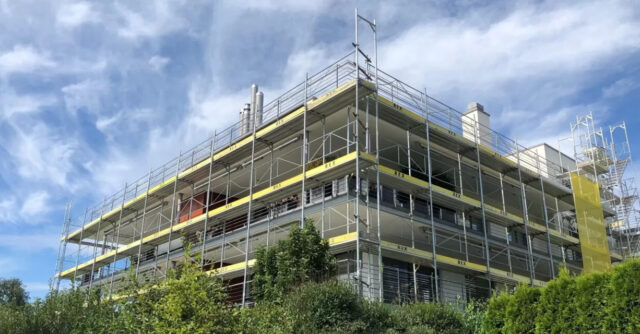
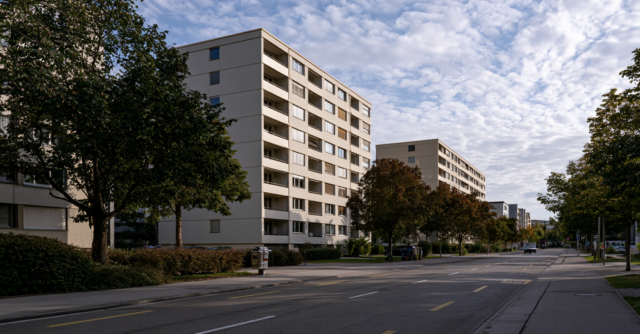
    The Schlieren-based real estate and construction company Halter is transforming the Clochettes site in the Champel district of Geneva. As part of the project, Halter was commissioned by Baloise to carry out the energy-efficient renovation, conversion and addition of storeys to three residential buildings from the 1970s. According to the press release, a total of 70 existing apartments will be modernized by January 2029 and 15 new apartments will be created by adding two more floors. The work will start in May and will take place while the apartments are occupied.

    As part of the refurbishment, Halter will replace the technical systems and refurbish the façades. Heat recovery and the installation of photovoltaic systems are also planned, according to the project description. The aim is to obtain a Minergie renovation label.

    The architectural design by the Grenier Coretra architecture firm maintains continuity with the existing buildings and harmonizes with the neighbouring residential complex. The new apartments will offer a variety of floor plans and room concepts tailored to modern living.

    New areas for residents and neighborhood-related uses will be created on the first floor of the buildings. The outdoor areas will also be enhanced with wooded areas to promote quality of life and biodiversity.

  • Research project promotes the reuse of concrete in construction

    Research project promotes the reuse of concrete in construction

    The Materials and Structures Group of the Institut du patrimoine construit, d’architecture, de la construction et du territoire(inPACT) at the Haute école du paysage, d’ingénierie et d’architecture de Genève(HEPIA) is leading the Concrete Upcycling Techniques(CUT) research project. The project, led by Professor Maléna Bastien Masse, aims to integrate the reuse of concrete slabs into construction practice, as detailed in a press release. The aim is to reduce the industry’s CO2 footprint. The project is supported by the Swiss National Science Foundation(SNSF) and is being carried out in collaboration with Professor Corentin Fivet’s Structural Xploration Lab at the Swiss Federal Institute of Technology Lausanne(EPFL).

    The project aims to preserve concrete slabs during the demolition of buildings. The slabs are sawn up on site and then analysed by HEPIA researchers. The aim is to find out whether these slabs can be reused. The panels approved for reuse are then used in new buildings. The project is also investigating how they can be joined together during reuse. Advanced techniques and materials such as high-performance fibre-reinforced cementitious composite (CFUP) will be used.

    “The construction industry loves concrete. It is an indispensable, versatile, adaptable and cost-effective material, but it is also extremely harmful to the environment. One solution is obvious: reuse,” reads the press release. “By recovering and reusing components from existing buildings for new construction projects, concrete consumption is reduced, resulting in a lower CO2 footprint.”

    HEPIA is a Geneva-based university that specialises in education and research in the fields of engineering, architecture and the environment, particularly in the areas of materials and sustainable construction. The university is part of the University of Applied Sciences Western Switzerland(HES-SO).

  • Takeover strengthens position in the European energy market

    Takeover strengthens position in the European energy market

    In a press release, BKW announced the acquisition of the French energy company Volterres SAS. Volterres SAS operates a network of over 100 solar, wind and hydroelectric power plants and enables the tracking of electricity flows in real time. Volterres supplies more than 2 terawatt hours of electricity annually to companies and public organisations.

    The acquisition fits seamlessly into BKW’s existing strategy for France. The company had already previously expanded its activities in the country, including a contract to optimise 200 megawatts of battery capacity. BKW also markets numerous third-party wind, solar and battery projects in France and manages an annual renewable production of over 1 terawatt. With Volterres, BKW now covers the entire energy value chain.

    Strategically, the acquisition is an important step within Solutions 2030, according to the press release. With this focus, BKW is concentrating on the Energy Solutions, Power Grid and Infrastructure & Buildings business areas and positioning itself along the entire value chain of the energy transition. The aim is to achieve EBIT (earnings before interest and taxes) of over CHF 1 billion by 2030. France plays a key role in this.

    “France is a strategically important market for us. With the integration of Volterres, we are strengthening our position not only there, but in the entire European market and are further developing our portfolio of flexible energy solutions,” said Stefan Sewckow, Executive Vice President Energy Markets.

    BKW, based in Bern, is an internationally active energy and infrastructure company. Its range of services extends from engineering and consulting to building technology and the construction and operation of energy and supply grids.

  • Management change in the energy division of a large utility company

    Management change in the energy division of a large utility company

    Vertina Investment Foundation invested a total of CHF 74.3 million in four new-build projects in the first quarter of 2026. The fresh capital comes from the capital increase in the fourth quarter of 2025, according to a press release.

    The construction projects are located on properties in Oberglatt ZH, Kloten ZH, Seon AG and Zurich. These selected locations are characterised by good infrastructure connections and a solid market environment, according to the press release. After completion, the market value of the four properties will amount to CHF 131 million. This will increase the value of the total portfolio of the Vertina Residential investment group to CHF 350 million.

    In total, Vertina’s property portfolio consists of 13 properties with varying degrees of construction progress. The start of construction on four further projects is planned for the current financial year. As recently announced, Vertina will raise new capital of between CHF 60 and 80 million for this purpose in the second quarter.

  • Fuel cells to support power grids

    Fuel cells to support power grids

    Researchers from the Swiss Federal Laboratories for Materials Science and Technology(Empa) have conducted a joint project on the effect of hydrogen fuel cells in collaboration with the Hälg Group from St.Gallen, the Osterwalder Group, also based in St.Gallen, and Zurich-based H2 Energy AG. The experiment at the Empa Center in Dübendorf showed that the electrical energy generated by the fuel cells could relieve the burden on local power grids in district centers, according to a press release.

    The core of the project was to reduce the electricity consumption of heat pumps by producing electrical energy from local district energy cells using hydrogen fuel cells. This energy is fed into the grid to operate the heat pumps, thus reducing the load on the grid. At the same time, the experiment tested using special heat exchangers to supply average temperatures of around 35 degrees Celsius to the heating network of the NEST innovation building and the Empa campus in Dübendorf. The test, which ran from October 2023 to September 2025, showed that the district energy cells were able to smooth out peaks in electricity consumption and reduce the overall cost of peak load by 10 percent.

    “Our trials showed that fuel cells can effectively balance electrical and thermal peak loads in buildings. This made it clear that hydrogen-based peak load shaving is technically feasible and provides valuable insights for the control of complex energy systems,” Binod Prasad Koirala, Deputy Head of Empa’s Urban Energy Systems research department, is quoted as saying in the press release. When using green hydrogen, the fuel cells also make a contribution to reducing CO2 emissions.

  • Canton of Bern plans major construction in the Bernese Seeland

    Canton of Bern plans major construction in the Bernese Seeland

    The Road Traffic and Navigation Office has had its headquarters on Schermenweg in Bern for decades. The buildings there have structural defects and are in a condition that makes it impossible to completely renovate them without interrupting operations. In addition, there is a second location in Ostermundigen, where the canton pays over one million francs a year in rent.

    Move three times or build once
    The decision was made in favor of a new building. All three locations will be closed and the approximately 400 employees brought together in a single location. The new building on the Buechlimatt in Münchenbuchsee offers space for offices, test centers and the entire customer operations on one site. Vehicle registrations, driving tests, administrative processes: everything under one roof for the first time in decades.

    One competition, one winner, one timber construction
    in 2021, the canton announced an open project competition. Thirty teams submitted designs, and the Zurich planning team from Studiomori Architektur and KNTXT Architekten won over the jury. Their project bears the programmatic name “One for all”. It is based on a low-maintenance timber construction that blends organically into the rural outskirts of Münchenbuchsee. Not a statement made of concrete and glass, but a building that makes the Canton of Bern’s climate strategy visible. Wood as a building material reduces the CO2 balance over the entire life cycle.

    The politicians decide
    In April 2026, the Bernese government applied to the Grand Council for a commitment credit of 132.9 million francs. The latter is expected to make its decision in autumn 2026. The fact that the amount has risen from around CHF 104 million at the time to CHF 132.9 million since the 2021 competition phase is likely to raise questions in parliament. Construction costs and increased planning requirements are the main reasons. If you offset the rental costs and the renovation backlog, the business case for the new building is clear.

    Move in 2031 at the earliest
    If the parliamentary deliberations go according to plan, the building application will be submitted in mid-2026 and construction will begin in 2028, with commissioning planned for 2030 to 2031. For Münchenbuchsee, this means a new workplace center with several hundred employees on the edge of the village. For the canton of Bern, it means the end of a long period of administrative restructuring. And for the Swiss construction industry, the project exemplifies a trend that will gain momentum in 2026. Public buildings made of wood, built for the next generation.

  • 11. May on which Switzerland crosses its borders

    11. May on which Switzerland crosses its borders

    Since the ecological footprint was first recorded in 1961, Switzerland’s Overshoot Day has moved forward by more than seven months, from the end of December to mid-May. If the entire world population lived like Switzerland, it would need the resources of 2.8 Earths in 2026. Switzerland’s ecological footprint is 4.15 global hectares per person, while the available biocapacity is just 1.48 hectares. The gap is growing.

    Housing as an underestimated driver
    Housing is one of the strongest drivers of the Swiss overshoot, alongside mobility, food and imported goods. Between 1990 and 2021, living space in Switzerland increased by 54%, while the population only grew by 31%. Individual changes in behavior can only achieve around 20 percent of the savings. The big levers lie elsewhere.

    Buildings as raw material stores
    The building sector is responsible for over 40 percent of global greenhouse gas emissions. In addition to the operating energy for heating, cooling and electricity, it is primarily gray energy that determines how large a building’s footprint really is. It includes all energy from the extraction of raw materials to processing and dismantling. As long as demolition is cheaper than recycling, the potential of the circular economy remains untapped.

    Regulation is tightening
    The legal framework is tightening. The Climate and Innovation Act has been in force since January 2025 and creates incentives for the replacement of fossil heating systems and energy efficiency measures. The MuKEn 2025, adopted in August 2025, define limit values for gray energy in new buildings for the first time and increase the requirements for photovoltaics and renewable heating systems. However, they will only become binding once the cantons incorporate them into their energy laws.

    System change instead of symbolic policy
    The message of Overshoot Day is clear: small adjustments are not enough. Scalable solutions are needed in energy, mobility, materials management and site development. As a cross-sector industry, the construction and real estate sector can have an impact in all of these areas if data is recorded precisely, materials are documented and circular processes are standardized. Buildings as raw material stores instead of landfill suppliers – that is the direction.

  • Swiss wood to become mandatory

    Swiss wood to become mandatory

    Swiss forests produce 10.4 million cubic meters of wood every year, of which just 5 million is consumed. However, a total of 10 million cubic meters of wood ends up on Swiss construction sites. The rest comes from abroad because it is much cheaper. A resource potential that is lying idle, although the demand is there.

    What the National Council is calling for
    National Councillor Daniel Ruch (FDP/VD), a forestry contractor from Vaud by profession, has submitted a motion to amend the Forest Act. In future, Swiss wood should be used in buildings that are subsidized with federal funds, without incurring additional costs for the building owners. The National Council has accepted the motion, now the ball is in the Council of States’ court.

    The Federal Council puts the brakes on
    Federal Councillor Martin Pfister, who represented the convalescing Environment Minister Albert Rösti in the debate, opposed direct subsidies. The federal government already promotes sustainable wood in its own buildings and facilities. There has been a legal basis for this since the 2017 revision of the Forest Act, and there is no scope for new subsidies in view of the tight federal finances, and distortions of competition should be avoided.

    Not a new topic, but new pressure
    Back in 2021, the National Council adopted a similar motion on the complete value chain of the timber industry by 151 votes to 29, also against the will of the Federal Council. Individual cantons such as Thurgau and Zug have already integrated wood promotion into their legislation at cantonal level. The pressure to act is growing.

    What is at stake
    Wood is the only completely renewable building material in Switzerland. Those who use it consistently strengthen regional value creation, reduce transport emissions and protect the forest from ageing. Whether the Council of States supports the motion or puts the brakes on it will determine whether this logic is finally enshrined in law.

  • Electric bus marks a new chapter in regional transport

    Electric bus marks a new chapter in regional transport

    STI Bus AG, based in Thun, has put its first electric bus into service. According to a press release, it has been operating in Grindelwald since 15 April.

    The company has thoroughly prepared its staff for the transition to electric mobility. Staff have been trained in the technical fundamentals, high-voltage systems and energy-efficient driving with electric buses. These training sessions are ongoing.

    STI Bus AG plans to put three more electric buses into service in Grindelwald and two in Thun before the end of this year. By November, all STI depots will also be equipped for depot charging. A further 16 electric buses will follow next year. By 2036, the entire fleet of over 100 regular service vehicles is set to be electrified.

    “The first electric bus is an important milestone – but above all a promise,” says Jürg Lehmann, Managing Director of STI Service AG and E-Mobility Project Manager, in the press release. The company promises employees, passengers and the region to “continue to develop mobility responsibly”.

    According to Patrick Fankhauser, the switch to electric mobility demonstrates how the company intends to shape the mobility of the future. “Electric mobility is a conscious investment in the environment and in the quality of life in our region for both current and future generations,” the Director of STI Holding AG is quoted as saying.

  • Modernised wastewater treatment plant enhances water protection and energy efficiency

    Modernised wastewater treatment plant enhances water protection and energy efficiency

    The refurbishment and expansion of the Basel Wastewater Treatment Plant have been completed. The wastewater treatment plant was officially inaugurated on 17 April. One of the region’s most important infrastructure facilities had been thoroughly modernised and expanded whilst remaining in operation since 2019. It is now one of the most modern facilities of its kind in Europe. Over the weekend of 18 and 19 April, the public can see it for themselves during the open days.

    According to a statement from the Canton of Basel-Stadt, the aim of the project was to significantly improve treatment performance, adapt the plant to future requirements and make a long-term contribution to water protection. It is now state-of-the-art and ensures legally compliant operation for several decades. It is designed to have a capacity sufficient for 520,000 residents until 2050. It can also receive pre-treated industrial wastewater from the ARA Chemie.

    Following the modernisation, the Basel WWTP is now also equipped for nitrogen removal and features a treatment stage for reducing micropollutants. This is complemented by sludge digestion and photovoltaic systems. Furthermore, biogas is produced from sewage sludge digestion and more waste heat is fed into the district heating network.

    The operator of the Basel wastewater treatment plant is Prorheno AG. The parliaments of the two Basel cantons approved CHF 325.1 million for the plant’s refurbishment. The final accounts are not yet available.

  • Cross-border heat supply moves closer to reality

    Cross-border heat supply moves closer to reality

    The Basel-based utility company IWB and Stadtwerke Weil am Rhein are examining the options for a joint, cross-border heat supply. A feasibility study has already demonstrated the technical feasibility of supplying the city in the German state of Baden-Württemberg with heat from Basel from mid-2028, according to a press release.

    The feasibility study has been running since May 2025 and the companies have been sounding out potential consumers for their interest in such a heating network since March 2026. The heat required in the area between the Rhine and the A5 motorway would be supplied by IWB, which should already be 80 percent CO2-neutral by the time of delivery. Once the results are available by the middle of the year, a decision will be made on realisation and possible investment plans, according to the press release.

  • Research project develops global corrosion index for construction applications

    Research project develops global corrosion index for construction applications

    Sky-Frame from Frauenfeld and the WITG are jointly investigating whether a global corrosion index can be developed on the basis of available weather and climate data. This project is being supported with an innovation cheque from Innosuisse. The maximum funding amount of CHF 15,000 from the Swiss Innovation Agency is a credit for a preliminary study. It enables ideas, idea studies and analyses of innovation and market potential to be commissioned from a Swiss research partner and collaboration with this partner to be tested.

    The WITG is contributing its expertise in corrosion and the evaluation of material properties to the project with Sky-Frame. According to a press release, the first step involves linking real project locations with available climate databases and systematically analysing existing empirical values from the application. Taking into account factors such as proximity to the sea, wind direction and project-specific microclimate conditions, this will result in an initial, scientifically sound approach to risk classification.

    “This project is an example of how innovation ideas do not have to be in the realm of ‘rocket science’ in order to be funded,” says the WITG. Instead, they should offer the company a sustainable benefit and future added value and include a risk component during implementation and thus the possibility of failure.

  • Rethinking building, Freiburg is looking for pioneers

    Rethinking building, Freiburg is looking for pioneers

    From 2029, new limits for greenhouse gas emissions and requirements for gray energy in the construction industry will apply in Switzerland. Defined by the revision of the cantons’ model regulations in the energy sector. The pressure on the construction industry is growing. Those who do not invest in new processes and materials today risk expensive adjustments under time pressure tomorrow. The canton of Fribourg has recognized this and is acting with foresight. As early as 2023, it adopted a roadmap for the circular economy that prioritizes structural changes in the construction industry.

    Innovation along the entire value chain
    The theme of this year’s call is “Rethinking construction, towards circular and environmentally friendly systems”. We are looking for projects that reduce the ecological footprint of buildings right from the planning phase, through local bio-based materials, deconstructable construction systems or digital tools for material tracking. The Swiss Charter for Circular Construction, which is supported by twelve leading organizations from the construction and real estate industry, clearly formulates the goal: “By 2030, the proportion of non-renewable primary raw materials should fall to 50 percent of the total mass.”

    Collaboration as a prerequisite
    Lone wolves have no chance here. Each project submitted must involve at least three companies, the majority of which must be based in the canton of Fribourg. Academic partners such as the School of Engineering and Architecture HTA-FR can be involved to ensure knowledge transfer and reproducibility of the solutions. Nicolas Huet from INNOSQUARE emphasizes that the challenges of circularity must be overcome and that innovation must take place jointly.

    Funding with personal responsibility
    The NRP funding covers a maximum of 65% of the total budget, the rest is covered by the participating companies, 10% in cash and 25% as personal contributions. This structure is not an obstacle, it is the program. It ensures that only projects that the companies really support are submitted. Alain Lunghi, Deputy Director of the WIF, sees foresight as the key to the competitiveness of Fribourg companies.

    Submit now
    Projects can be submitted individually or as part of a consortium via www.promfr.ch/de/nrp. The call is supported by the Economic Development Agency WIF, the Fribourg Chamber of Commerce and Industry, the HTA-FR and the INNOSQUARE innovation platform. The deadline is September 9, 2026. Anyone who sees the construction turnaround as an opportunity still has time to act.

  • Solar cells that camouflage themselves

    Solar cells that camouflage themselves

    Nature shows us how it’s done. The Morpho butterfly produces its intense blue wing sheen not through pigments, but through three-dimensional microstructures that refract and reflect light. Researchers at Fraunhofer ISE have transferred this principle to photovoltaic modules. A vacuum process applies a similar surface structure to the cover glass or flexible films. Depending on the fine structure, this produces modules in a wide range of colors, from brick red to anthracite. The result is called MorphoColor®.

    Patterns directly into the module
    New is the “ShadeCut” technology, which provides colored films with transparent cut-outs and thus integrates complex patterns and motifs directly into solar modules. A laser or a CAD-controlled cutting process applies the desired motif to the film, whether it is a brick structure, masonry or a company logo. The technology works with all standard photovoltaic and solar thermal modules and can be used both as a flexible embedding film and as a backsheet film. The colored modules achieve around 95 percent of the output of a comparable uncoated module.

    The end of the monument protection dilemma
    Until now, building-integrated photovoltaics has often failed due to aesthetic requirements. Listed buildings and conservation areas in Switzerland and Germany in particular posed major hurdles. In several German federal states, monument protection has already been relaxed, provided that modules match the color of the building envelope. Modules can imitate brickwork or roof tiles deceptively realistically and fit in perfectly in terms of color, says Dr. Martin Heinrich, group leader at Fraunhofer ISE. An Innosuisse project at HSLU in the Viscosi town of Emmenbrücke has already produced a demo façade in 78 shades of color.

    BIPV on the verge of a breakthrough
    The market for building-integrated photovoltaics is growing rapidly. Globally, it is estimated to be worth around 85.9 billion dollars by 2034, compared to 28.3 billion in 2026. In Switzerland, the registration procedure for façade systems has simplified the approval process since this year, which has given a clear boost to demand for aesthetic façade solutions. The first commercial tandem modules with a BIPV focus are expected in 2026 for niche markets. Fraunhofer ISE estimates the total potential of PV on buildings at around 1,000 GWp by 2045.

    What was created in the laboratory in Freiburg is now being applied to roofs and façades via a Swiss partner.

  • 300 apartments are being made fit – no one has to move out

    300 apartments are being made fit – no one has to move out

    Built in three stages between 1974 and 1990, the “Untere Bühl” still characterizes the old town center of Oberwinterthur today. The complex is considered worthy of protection and some of the buildings are still largely in their original condition. Some of them were already renovated in 2015, and the others are now being renovated. The planning application has been approved and construction is scheduled to start at the beginning of 2027.

    Nobody has to leave the field
    What makes the project stand out is its social consistency. As the asset manager of the AXA Investment Foundation, BNP Paribas designed the refurbishment from the outset in such a way that all tenants can remain in their apartments. The tenants were involved at an early stage, including workshops on outdoor space and design. “Our tenants have been an integral part of the development for years,” says Pascal Messmer, Asset Manager at BNP Paribas. This attitude runs through the entire project.

    Extensions that don’t impose themselves
    For the extension, AXA is relying on bernath widmer architects, who emerged victorious from a cooperative test planning process. The majority of the extensions and new buildings are made of wood and deliberately reflect the character of the existing buildings. Around 80 barrier-free apartments with 1 to 3 rooms will be created. An addition to the existing apartments, most of which are large today. Residential studios, communal areas and a commercial space are planned on the first floor.

    Park remains and becomes more lively
    The park-like outdoor space with communal gardens, playgrounds and the kindergarten from 1977 will be retained. The landscape architecture firm ghiggi paesaggi is taking Fred Eicher’s original open space concept and developing it further. New planting and green roof areas strengthen biodiversity and create habitats for small animals and insects. Greenery is planned on some of the roofs of the new buildings. The central pavilion is to be used by the public in future, for example as a daycare center.

    Into the future in stages
    The project will be implemented in stages, probably up to 2028, with the aim of creating a real estate portfolio with net-zero emissions by 2050. Winterthur is not only gaining refurbished existing buildings, but also 80 new apartments in a mature settlement that knows who it is.

  • Umwelt Arena presents new exhibition on micro-apartments

    Umwelt Arena presents new exhibition on micro-apartments

    According to an announcement, the Umwelt Arena in Spreitenbach is presenting a pioneering living concept with the new exhibition “Micro-apartment – 50 m2 for 4 people”. Sustainable, affordable living is one of the major challenges of our time, it continues. With a concrete example, the Umwelt Arena shows that intelligent spatial planning, multifunctionality and energy-efficient construction are not visions of the future, but reality.

    Visitors learn how the project is created, which solutions are implemented and what impact micro-apartments have on sustainability, it continues. The show flat demonstrates how space for a family of up to four people can be created on around 50 square metres without any loss of comfort. Through space planning and multifunctional furnishing, the living room can be transformed into a bedroom at the touch of a button and the children’s room can become an office or playroom if required.

    The 1:1 scale model flat can be viewed during short guided tours. They take place twice a day at 2 pm and 3.30 pm.

    Guided tours for companies, clubs and schools can be booked on request, according to the Umwelt Arena. The topic of micro-living can be chosen as the focus of the two guided tours Sustainability in Everyday Life and Building and Modernising.

  • Plane trees cool cities even in extreme heat

    Plane trees cool cities even in extreme heat

    Even in extreme heat of over 39 degrees, plane trees evaporate water and cool their surroundings. These are the findings of a study conducted by the Swiss Federal Institute for Forest, Snow and Landscape Research(WSL) based in Birmensdorf and the Swiss Federal Institute of Technology Lausanne(EPFL). According to a press release, the study was conducted in spring and summer 2023 in Lancy in the canton of Geneva. This experienced two heatwaves of up to almost 40 degrees during the measurement period.

    The researchers measured the sap flow on eight sycamore tree trunks. This allows conclusions to be drawn about the amount of water evaporated and thus the cooling capacity of the trees. The water flow increased despite increasing heat and dry air. The researchers assume that deep-lying water reserves in the soil enabled the increasing water flow.

    The study disproves the assumption that trees close their leaf pores from a temperature of 30 to 35 degrees in order to prevent water loss, meaning that the cooling effect is lost. Previous models used to determine the future distribution of heat in cities would therefore be inaccurate, according to the press release.

    The persistent cooling effect of the plane trees is good news for the urban climate. “Days with temperatures above 30 degrees Celsius are becoming more frequent,” explains study leader Dr Christoph Bachofen.

    “Obviously, we have not yet fully understood how trees react to extreme conditions,” says Bachofen. In future, the researchers want to measure the transpiration behaviour of other urban trees in extreme heat. In this way, they hope to find out which tree species are able to cope with heat and best fulfil their cooling function in cities.

  • New strategy pays off – more profit and green share of sales increases

    New strategy pays off – more profit and green share of sales increases

    Holcim achieved half-year sales of 7.87 billion Swiss francs, an increase of 1.8 per cent in local currency. In a press release, the company reported a disproportionately high increase in its recurring EBIT (recurring operating profit) of 10.8 per cent in local currency and 3 per cent in Swiss francs to CHF 1.44 billion. The recurring EBIT margin thus improved by 90 basis points to 18.3 per cent. Earnings per share also rose by 7.4 per cent year-on-year to CHF 1.57 before impairments and disposals.

    The building materials company also reported increased demand for sustainable solutions. ECOPact low-CO2 concrete accounted for 31 per cent of total sales of ready-mix concrete in the first half of the year, compared to 25 per cent in the previous year. Sustainable ECOPlanet cement accounted for 35 per cent of cement sales, compared to 32 per cent a year ago.

    “I would like to thank all of our 48,000 employees around the world for their contribution to our excellent half-year results. Holcim is the leading partner for sustainable construction and we are unlocking significant business opportunities through our new strategy ‘NextGen Growth 2030’ – which lays the foundation for a new era of growth and value creation,” CEO Miljan Gutovic is quoted as saying.

    For the full year, Holcim is forecasting 3 to 5 percent sales growth in local currency, 6 to 10 percent growth in recurring EBIT in local currency, a recurring EBIT margin of more than 18 percent, free cash flow before leases of around CHF 2 billion and over 20 percent growth in recycled construction and demolition materials.

  • A lack of clarity in legal requirements is holding back the circular economy

    A lack of clarity in legal requirements is holding back the circular economy

    The circular economy is still being held back by a number of obstacles. A report compiled by Basel-based ecos and Münsingen-based Rytec for the Building Department of the Canton of Zurich has identified 71 such barriers. Of these, 28 stem from legal requirements, whilst 43 arise only during the actual implementation of regulatory provisions. Often, they only emerge during the implementation of regulations.

    The construction and real estate sectors, with their high level of regulation, are particularly affected by regulatory barriers. Here, sustainability criteria are often not sufficiently binding or are given insufficient weight. Particularly when it comes to reuse, the scope for deviating from standards is not yet being utilised. Processes are still geared towards the linear rather than the circular economy.

    In retail and logistics, the infrastructure for returning used goods and incentives for developing the necessary logistics are often still lacking. Private collection initiatives are held back by unclear scope for implementation. The circular economy in commerce and industry suffers, among other things, from a lack of incentives for repairs and reuse.

    The report divides the barriers into four categories. The first three include those whose removal would have a significant impact. They are ranked according to the canton’s ability to influence them. The fourth category comprises measures with low impact and limited scope for influence.

    In the next steps, the canton intends to focus on the two categories of barriers whose removal would have a significant impact and over which the canton has considerable influence. This concerns 33 barriers. The barriers of least relevance will not be pursued further.

    The report is based on a survey of 122 people and workshops involving a total of 80 participants.

  • Innovation project to serve as a starting point for the new construction industry

    Innovation project to serve as a starting point for the new construction industry

    The BioHaus am Waldsee in the US state of Minnesota has turned 20. The building, located on the Waldsee campus of Concordia Language Villages, is the first building in America ever to be certified as a Passive House by the German Passive House Institute. The project was originally realised by Stephan Tanner and his team from Integrale Planung GmbH (Intep) in Zurich. It also served as the starting point for TANNER Building Products and its related ventures, according to a press release.

    The BioHaus is characterised by materials and technologies such as Passive House-certified windows and doors, high-performance ventilation systems, external shading elements and vacuum insulation panels, which were imported from Europe to the US for the project at the time. It was built at a time when the Passive House standard was still largely unknown in North America and the necessary materials, technologies and construction expertise were lacking locally.

    The project was supported by the German Federal Environmental Foundation and was intended to demonstrate that advanced environmental technologies can also be successful abroad. “BioHaus has not only proven that Passive Houses can work in America. It has also helped others to follow this example,” the statement reads.

    The project also gave rise to Stephan Tanner’s company, TANNER Building Products. Based in Watertown, Minnesota, the company started in 2006 as Peak Building Products and supplied the advanced materials for the BioHaus. “What began as a necessity – importing components that no one else had – sparked an entire industry,” the company explains in the press release.

  • New care home expands capacity in urban neighborhood

    New care home expands capacity in urban neighborhood

    Schlieremer Halter AG has handed over a new home for people in need of care in Bern’s Wyler district. The care home, which is operated by Domicil Bern as the general tenant, provides 112 new care rooms, according to a statement on LinkedIn.

    Each room has its own bathroom and balcony. The facility also has recreation and service rooms as well as publicly accessible areas. Employees have been provided with a modern working environment with optimal conditions. The completed facility was handed over to the Swiss Life Investment Foundation at the end of March.

    According to the press release, a further contract was agreed with Domicil Immobilien AG for the construction of a care home with 75 rooms, a dementia unit and a restaurant.

  • Digital platform simplifies analysis and development of building constructions

    Digital platform simplifies analysis and development of building constructions

    The ZHAW has put its dkon.ch platform online. Students, specialists and interested parties can use it to analyse, compare and develop building designs themselves. According to a statement from the university, this digital tool provides them with information on the impact of individual design decisions on the environment, costs and construction methods. Users can disassemble, rotate and reassemble components in virtual space.

    This makes it possible to visualise which materials a construction is made of and how they interact. By linking this with ecological assessment data, variants can be specifically compared with each other. According to the ZHAW, this opens up new possibilities in planning: “If you want to reduce the use of concrete or test alternative materials, for example, you can directly compare different solutions. Changes in the construction become immediately visible and their effects can be understood.”

    According to the information provided, a special feature of this platform is the integration of real reference buildings. Their designs, materials and construction processes can be analysed in detail. “dkon.ch creates a direct link between teaching and application,” says Andri Gerber, Project Manager and Co-Head of the ZHAW Institute of Structural Design. “Knowledge is not taught in isolation, but can be experienced in the context of real and concrete construction projects.”

    The platform is also helpful for specialists who have to integrate complex requirements and develop sustainable solutions, Gerber continues. That is why dkon.ch is “a tool that can be used both in training and in professional practice”.

  • Construction and Housing Fair in Wettingen attracts considerable interest

    Construction and Housing Fair in Wettingen attracts considerable interest

    From 16 to 19 April, Tägi Wettingen will host the region’s largest construction and housing exhibition, the Bauen Wohnen fair, for the 19th time. All signs point to success for this year’s edition, as Tägi explains in a press release. All exhibition spaces are sold out, and visitor numbers are expected to exceed last year’s figure, when 14,000 people attended the fair.

    “The fact that the exhibition space is sold out shows that there is a high level of interest in the fair and in the Tägi venue,” says Pascal Schelbert, deputy managing director and head of operations at Tägi. “For us, this is a wonderful confirmation that our infrastructure and flexibility are winning people over. At the same time, it is an incentive to continue developing even recurring events year on year.”

    During the event, visitors can look forward to specialist presentations, panel discussions and themed forums featuring experts. By offering insights into current building trends and sustainable housing concepts, the fair aims to provide inspiration as well as serve as a concrete basis for decision-making regarding construction and housing projects. According to a statement from Tägi, the timing of the fair is ideal, as it traditionally marks the start of the spring season – a time when a particularly large number of construction and renovation projects are planned or launched.

    The organisation of the fair is also seen as a clear example of the Tägi’s multifunctionality. The leisure, sports and events centre can utilise a wide variety of spaces simultaneously – from large halls for exhibitions to smaller rooms for specialist talks, explains Pascal Schelbert.

  • Where others park, you soon live

    Where others park, you soon live

    Christoph Schoop didn’t have to look far. The real estate investor from Baden looked out of his office window at the Dättwil industrial estate and recognized the obvious: huge flat roofs, completely unused. On the roof of the factory arcade at Mellingerstrasse 208, where McDonald’s, Spar and a bakery now provide for everyday life, eight so-called Wikkelhäuser are to be built from spring 2027.

    A new world on the roof
    The Wikkelhouse concept originated in Amsterdam and is now coming to Switzerland. Compact wooden housing units that are delivered ready-made by truck and erected with minimal effort. Each unit offers 30 to 35 square meters, its own terrace and ceiling heights of up to 3.5 meters. Architect Andreas Zehnder, who designed the project for Baden, clearly formulates the added value. Instead of adding another storey, an independent living space has been created on the roof.

    Swiss wood, Uri factory
    The houses are not produced on the building site, but in the company’s own factory in Flüelen UR on the shores of Lake Lucerne. The raw material is Swiss wood from sustainable forestry. Schoop is a co-founder and supporter of Wikkelhouse Switzerland and promotes the concept as a circular economy model. A unit costs from CHF 200,000 ex works; transportation and assembly are additional costs.

    Inexpensive, sunny, connected
    By Baden standards, rents should remain low. There is already a waiting list and, according to Schoop, inquiries have come from “a wide range of people”, including those of AHV age. And although the industrial area is not considered a residential location, the roof offers all-day sunshine and a direct public transport connection. The building itself provides noise protection.

    Pilot with scaling potential
    The project in Dättwil is explicitly designed as a pilot project. Schoop sees space for 50 to 70 Wikkel houses in the industrial area alone. The city of Baden is currently reviewing the suitability for planning permission. If everything goes according to plan, the first residents will move in in spring 2027. What sounds like a curiosity today could set a precedent tomorrow.