Category: Sustainability

  • Condensed, networked, liveable

    Condensed, networked, liveable

    Switzerland currently has over 9 million inhabitants and the population continues to grow. The pressure on the housing market is increasing, while building outside existing building zones has been severely restricted since the RPG revision of 2013. Cities and municipalities must develop inwards. According to Dita Leyh, Professor of Urban Development at the OST, there are sufficient reserves of space. Single-family home neighborhoods near train stations, brownfield sites or unused railroad areas offer great potential. A second revision of the RPG will further tighten the requirements.

    Densify where public transport is strong
    Inner development at public transport hubs makes particular sense. “Inner densification makes particular sense at public transport hubs,” says Dita Leyh. This is because optimal connections to the bus and rail network create more living space, but not automatically more traffic. Another key lies in the reorganization of stationary traffic. Collective garages on the edge of the neighborhood bundle car traffic, leaving the interior of the neighborhood largely car-free and thus gaining open space for people and nature. “The more densely you build, the more open spaces you have to create at the same time,” says Leyh.

    Mix of uses as a quality feature
    Densification is far more than just stacking up apartments. A diverse mix of uses, from bakeries and restaurants to green spaces, revitalizes neighbourhoods and creates added value. High-quality, interdisciplinary planning is needed to create this added value. Urban planning, transport planning and open space planning must sit together at the table from the outset, emphasizes Leyh. The updated Spatial Concept Switzerland 2050, which was adopted by the Federal Council in March 2026, confirms this approach and focuses on regional cooperation, landscape quality and climate-friendly mobility.

  • 270 reasons for Stans

    270 reasons for Stans

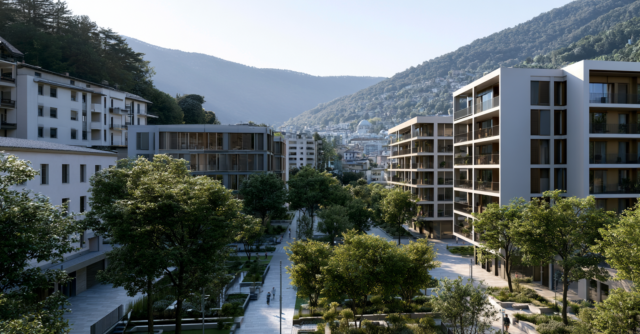
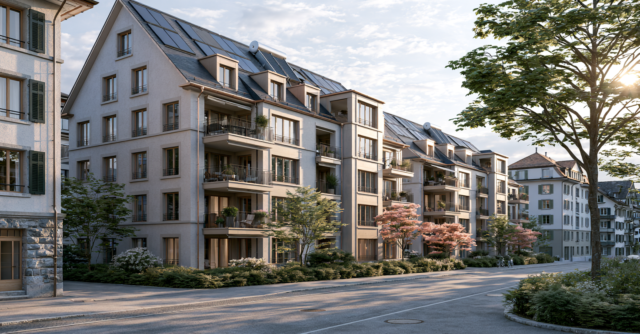
    The non-profit housing association Logis Suisse AG is planning a new housing estate in the west of Stans. Around 270 affordable apartments, around 1,000 m² of commercial space and two communal areas will be built by 2032 on a 12,700 m² site that the company acquired back in 2015. The study contract, in which seven general planning teams took part in 2025, was won by Studio Sintzel from Zurich and Uniola AG.

    Two buildings, eight courtyards
    The project, known internally as “Eight courtyards for Stans”, is based on two seven-storey buildings. Despite their volume, they appear from the outside as loosely placed point buildings. Head elements refer to existing buildings and structure the street fronts with front garden zones. Open courtyards with passageways structure the outdoor space and allow views of the surrounding mountains. A high-quality counterbalance to the adjacent highway. An existing old building in the center of the development will be retained and will serve as a social meeting point in the future.

    Mixed quarter with short distances
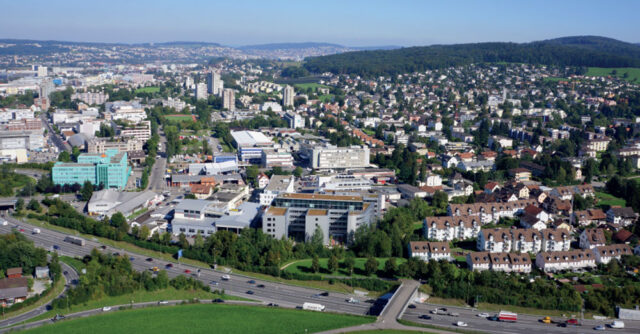
    The site is located opposite the Länderpark shopping center, on a multi-lane road and in the immediate vicinity of the freeway. Bicycle paths and footpaths should nevertheless link the new district well with Stans and Stansstad. With 0.8 parking spaces per apartment, Logis Suisse is below the usual standard, a clear commitment to sustainable mobility. The apartment mix ranges from compact 1.5-room apartments for singles and older people to spacious 5.5-room apartments for families and shared flats. On the first floor, studio apartments, care facilities and commercial space enliven the district.

    Built to conserve resources
    The client’s aim was to create a model project in terms of ecology, social space and economic efficiency. The load-bearing structure is designed to be material-efficient, the floor plans are compact and a photovoltaic system on the roofs covers a large part of the electricity requirements on site. A single-storey underground car park minimizes excavation work. Construction is scheduled to start in 2030 and be completed in 2032.

  • Check early, fail low

    Check early, fail low

    SSbD is a holistic innovation framework of the European Union. New chemicals, materials, products and technologies should be developed from the outset in such a way that they are safe for people and the environment – throughout their entire life cycle. There is a clear principle behind this: identify risks at an early stage and correct them cheaply, instead of reacting late and expensively. The EU aptly calls it “fail early and fail cheap”.

    64 percent compliance with EU law
    As part of the EU IRISS project, Empa examined 15 key EU regulations that are relevant to European industry along the entire value chain. These include the Chemicals, Batteries and Packaging Regulation and the Waste Framework Directive. 64 percent of these regulatory requirements are already covered by the SSbD framework. “In many cases, SSbD requires precisely the data and assessments that companies will later need for regulatory compliance anyway,” explains study author Akshat Sudheshwar from Empa.

    PFAS as a cautionary example
    The risks of the so-called perpetual chemicals PFAS were recognized by the majority when they were introduced, but ignored for decades. Today, they accumulate in organisms, are not degradable in the environment and cause enormous costs. With an SSbD approach, these risks could have been addressed early on. This example shows what is at stake when companies only plan for safety and sustainability retrospectively.

    Additional effort that pays off
    SSbD increases the effort in the early development phase, as Sudheshwar also admits. Investing early avoids later costs due to product bans, remediation obligations or market adjustments. The key success criterion for companies is the ability to think about safety and sustainability together at an early stage and to build up the necessary expertise in both areas.

    Limitations and need for political action
    Reliable data, toxicological information and robust methods are still lacking. The SSbD framework explicitly recognizes this gap and is adaptable. At a political level, the study recommends incentives for companies and regulatory relief as well as patent extensions or economic benefits could make it easier to get started. In the long term, SSbD should be included more frequently in EU regulations, not necessarily as an obligation, but as a strategic orientation.

  • Ground-breaking ceremony marks the start of a new residential development in Baden

    Ground-breaking ceremony marks the start of a new residential development in Baden

    The first five foundation stones were laid on the Brisgi site, marking the official start of the approximately three-year construction phase. According to a statement from the City of Baden, the site will see the creation of around 220 units of sustainable and affordable housing. The symbolic laying of the foundation stones was carried out by Baden’s Mayor Markus Schneider, representatives of the non-profit developers – the Baden Housing Foundation, Logis Suisse AG and the Graphis Building and Housing Cooperative – as well as members of the local community.

    “These five stones come from the excavation and represent the core values of the future Brisgi site: together we are shaping the future with sustainable and affordable housing,” explains the City of Baden in the statement.

    By 2028, affordable flats and flexible housing options for single people, couples and families are to be built on the site. In addition, community life will be enhanced by studios, green spaces, a neighbourhood square and a playground.

    The project will be built in accordance with the Swiss Sustainable Building Standard (SNBS). “The site focuses on hybrid construction, renewable energy, biodiversity and minimal soil sealing,” the press release states. “In this way, the project demonstrates that high-quality construction, sustainability and affordable housing go hand in hand.”

  • Smart building becomes a location factor

    Smart building becomes a location factor

    Smart buildings become a location factor when they first make ESG performance visible and controllable. Energy and resource consumption, CO² emissions, indoor climate and space efficiency can be measurably optimised through sensor technology, automation and data-based operation, and these key figures can be verified for green finance, ratings and regulatory purposes. Lighthouse projects such as The Edge in Amsterdam, Taipei 101, Roche Basel and The Crystal in London show how smart building technology can be linked to clear sustainability indicators and certifications and thus have an impact beyond the individual property.

    Smart building as a talent magnet
    Smart buildings are changing the working and innovation environment. User-centred buildings with high air quality, plenty of daylight, flexible spaces, apps and services are becoming a magnetic factor for talent and for companies that demand modern, healthy working environments. In such smart buildings, technology merges with workplace quality. From personalisable comfort parameters to intelligent space management, they directly strengthen employer branding and the attractiveness of a location for knowledge- and technology-intensive companies.

    From individual buildings to networked campuses
    Location and campus strategies are characterised by intelligent buildings. Data from many smart buildings is aggregated in neighbourhoods and campus structures. This creates controllable networks of energy, mobility and utilisation that position a city or region as an efficient, sustainable location, far beyond the individual building. This shifts the discussion. Smart buildings are no longer just a technical upgrade, but a strategic lever to make locations future-proof, regulation-proof and internationally competitive.

    edge

    The Edge in Amsterdam is regarded as a prototype of an intelligent office building in which architecture, technology and data were conceived as a digital system from the outset. Covering around 40,000 square metres, an extremely dense IoT infrastructure with around 28,000 inputs and outputs networks sensors, LED lights with their own IP address, building automation and a workplace app. Employees book their workstations based on activity in the 3D model, receive personalised lighting and comfort profiles and work in highly flexible, daylight-oriented spaces. Thanks to its efficient shell, geothermal energy, large photovoltaic surfaces, rainwater utilisation and e-mobility, The Edge achieves an energy-positive balance and reduces CO² emissions in the double-digit million kilogram range over ten years. The permanently collected usage, comfort and energy data forms the basis for predictive maintenance, cleaning and space optimisation and makes ESG performance in operation measurable and controllable instead of just being reported. As a BREEAM Outstanding property with international benchmark status, The Edge shows how a single smart building can characterise both the working environment and the location profile of Amsterdam as an innovative, sustainable economic area.
    Learn more

    Taipei 101 in Taipei shows how an iconic supertall can be transformed into a green and “healthy” skyscraper using smart building technology. An integrated building and energy management system monitors and controls lighting, HVAC, pumps and lifts, supplemented by cloud-based analytics to increase efficiency. Double façades, LED retrofits, optimised air treatment, water-efficient fittings, rainwater harvesting and an improved cooling water system significantly reduce energy and water consumption. The green retrofit made Taipei 101 a LEED Platinum pioneer for existing buildings. in 2025, the tower again achieved LEED v5 O M Platinum with the highest score and WELL v2 Core Platinum. Over several years, around 160 million kWh of electricity were saved and at the same time the air quality, comfort and health of the users were significantly improved. A global ESG lighthouse project for existing buildings.
    Learn more

    f. Hoffmann-La Roche AG

    Roche Campus Basel/Kaiseraugst is pursuing a smart building and smart campus strategy on the Basel/Kaiseraugst campus, in which a continuous IoT backbone connects existing and new buildings. Sensor technology, building automation and data platforms are used in such a way that energy efficiency, user experience and operational optimisation converge in a scalable digital infrastructure. Specific use cases include occupancy and presence measurement, indoor navigation, geo-referenced floor plans and smart logistics and material flows. Large new buildings such as Building 2, BSN8/11 and the pRED Centre will serve as supports in which sensor technology, automation and data architecture will be integrated from the outset. This makes the campus a strategic ESG lever. Energy monitoring, space and operational optimisation support decarbonisation, while user-centric working environments improve orientation and service quality. Consistent data and life cycle management creates transparency for FM and governance. At the same time, Roche is strengthening Basel as a life sciences location with internationally visible reference buildings and a clear systemic sustainability logic.
    Learn more

    archDaily

    The Crystal in London is a compact but consistently developed smart building lighthouse project with a clear ESG link. It was built in 2012 in the Royal Docks for Siemens as an exhibition and conference centre, covers around 6,300 square metres and is considered one of the most sustainable buildings in the world with LEED Platinum and BREEAM Outstanding. The fully glazed, two-storey building combines an all-electric concept without fossil fuels with a finely tuned glass façade and an integrated building management system. Photovoltaics on the roof, geothermal probes with heat pumps, LED lighting, rainwater and black water treatment and water-efficient fittings significantly reduce energy and water consumption. The BMS networks heating, cooling, ventilation, lighting and security, adapts operation to occupancy and weather in real time and makes all systems measurable, benchmarkable and finely adjustable. The result is a virtually self-optimising building that also serves as a publicly accessible learning space for urban sustainability and has become an international reference case for smart, ESG-oriented architecture with its transparent performance display.
    Learn more

  • Smart plant care is making its way into high street shops

    Smart plant care is making its way into high street shops

    The Bern-based Ecotec start-up Boum AG and the DIY and garden centre operator Hornbach have announced a partnership in a press release. Under the agreement, the Boum Core smart plant care system will be available in selected Swiss branches from this spring.

    Boum Core is a fully automatic, solar-powered plant care system that autonomously supplies plants with water over several weeks. Users can check the water level at any time via a dedicated app. The Ecotec start-up is firmly committed to sustainability: compared to conventional solutions, the Boum system reduces water consumption by up to 40 per cent and also acts as a rain collector for the efficient reuse of water.

    The partnership brings benefits for both companies. For Hornbach, it marks an entry into a new, innovative product segment. “With the Boum Core plant care system, we can expand our range with a unique product. We are convinced that this innovation will enable us to meet our customers’ needs for sustainable and smart solutions that offer real added value,” says Sorin Nasture, Head of Garden Hardware at Hornbach, in the press release.

    For Boum, availability in brick-and-mortar stores is being expanded. In a next step, the company is aiming to expand across Europe. “We have been working towards this moment for a long time. We are delighted about this partnership and see Hornbach as the ideal partner to bring Boum to the public,” says Dr Ludwig Auer, founder of Boum AG.

    Boum AG, a spin-off from the University of Bern, has set itself the goal of enabling everyone to successfully grow and enjoy plants through the combination of technology and ecology.

  • New open space concept enhances quality of life and biodiversity

    New open space concept enhances quality of life and biodiversity

    According to a press release, Spreitenbach Municipal Council has adopted the open space concept. This establishes a legally binding framework for the future development of open spaces within the municipality’s built-up area. The aim is to safeguard and improve the quality and use of open and green spaces.

    The plan’s objectives include strengthening the identity of neighbourhoods, promoting biodiversity and enhancing climate resilience based on the ‘sponge city’ principle – rainwater runoff should be absorbed locally wherever possible.

    The plan also includes a catalogue of 21 specific measures. The first measures include the planning and implementation of Neumatt Park, the further development of the Ziegelei site, and the creation of temporary open spaces. Immediate measures are intended to improve the quality of the environment, whilst better signage will indicate the route connections. By the end of 2026, responsibilities are to be clarified, priorities set and initial measures prepared.

    The municipal assembly approved the commitment credit for the open space concept, amounting to 170,000 Swiss francs, on 28 November 2023. An interdisciplinary planning team subsequently developed the concept in collaboration with a broadly based steering group.

  • Start-up is driving the scaling up of CO2-to-raw-material solutions

    Start-up is driving the scaling up of CO2-to-raw-material solutions

    The Zurich-based start-up DeltaSpark has received funding of 150,000 Swiss francs from Venture Kick. The company plans to use the fresh capital to scale up its technology and carbon dioxide capture process, according to a statement from the Schlieren-based start-up accelerator.

    In this process, an electrocatalytic process is used to process a mixture of absorbed carbon dioxide and added minerals in such a way that hydrogen, oxygen and green sulphuric acid are produced. Much of the CO2 remains bound in the minerals, which can be used as building materials.

    DeltaSpark, a spin-off from the Swiss Federal Institute of Technology in Lausanne (EPFL), offers this technology as a service to major emitters such as cement factories or waste incineration plants. The CHF 150,000 now secured is intended to accelerate paid pilot projects and prepare for an upcoming seed funding round.

    “Venture Kick is far more than just funding,” Luc Bondaz, CEO of DeltaSpark, is quoted as saying in the press release. “Through targeted coaching, the programme has helped us refine our business plan for our target customer segments. This has enabled us to better understand our customers’ needs, clarify our value proposition and develop a clear go-to-market strategy.”

  • Winter electricity from the Alps is performing above average

    Winter electricity from the Alps is performing above average

    The Madrisa Solar power plant generated around 1.5 gigawatt hours of electricity during the first winter half-year, from October to March. This means that production exceeded expectations, as Repower AG states in a press release. During its first winter of operation, around 3,600 solar modules were in operation, which corresponds to approximately 20 per cent of the planned total capacity.

    The plant, which was the first alpine solar power plant in Switzerland to feed electricity into the grid, is located above Klosters at around 2,000 metres above sea level and is specifically designed for winter electricity production. Following the first snowfall, output rose by around 15 per cent thanks to the so-called albedo effect. The bifacial modules also utilise light reflected from the snow cover.

    The electricity generated is used, amongst other things, directly to power the Klosters-Madrisa mountain railways. In combination with existing installations, more energy was produced during the first winter than was required to operate the winter season. With its output to date, Madrisa Solar has comfortably met the minimum production requirement of 500 kilowatt-hours per installed kilowatt of capacity stipulated under the national Solarexpress scheme.

    The second construction phase is scheduled to begin in early May. Once completed, around 70 per cent of the plant is expected to be connected to the grid. Full commissioning is planned for the end of 2027. The developer of the alpine plant is Madrisa Solar AG, in which Repower, the Zurich Cantonal Electricity Works (EKZ) and the municipality of Klosters hold stakes.

  • Investment supports expansion of decentralised energy infrastructure

    Investment supports expansion of decentralised energy infrastructure

    Youdera Group SA has secured a strategic investment from Amundi Energy Transition. According to a statement, the funds will support the company’s next phase of growth and an implementation plan of around 150 million euros for decentralised energy infrastructure in the European commercial and industrial sector.

    Youdera offers companies energy management, which involves the planning and development, financing, construction and operation of energy systems. The aim is to reduce dependence on the electricity grid, make energy costs more predictable and drive electrification. The offering includes photovoltaic systems, battery storage, building envelope refurbishments, heat pumps and other measures to increase energy efficiency.

    The investment by Amundi Energy Transition, a subsidiary of French asset manager Amundi S.A., offers the opportunity to scale the model across Europe, says Pedro Miranda, CEO and co-founder of Youdera. “In a more volatile world, European companies need to act decisively to remain competitive.”

    Youdera was founded in 2015, is based in Ecublens and has its main site in the EPFL Innovation Park in Lausanne. Its core markets are Switzerland, Spain and Portugal, but the company sees further growth potential in Europe. “As commercial and industrial customers are looking for more resilient and cost-efficient energy solutions, we are convinced that Youdera is ideally positioned to meet this growing market demand,” says Claire Chabrier, Head of Direct Investments – Private Markets at Amundi.

  • Railway station heating plant switched to wood pellets

    Railway station heating plant switched to wood pellets

    Industrielle Werke Basel(IWB) is making progress with the decarbonisation of district heating. According to a press release, they tested the two new boilers of the wood pellet plant at the Bahnhof heating plant in March. With an output of 30 megawatts, it is expected to generate around 95 gigawatt hours of district heating per year.

    The switch from natural gas to wood pellets will save around 23,000 tonnes of CO2 per year. This corresponds to a 9 per cent reduction in total CO2 emissions from district heating in Basel. “With the new wood pellet plant, IWB is making an important contribution to the decarbonisation of district heating and to achieving the net-zero target of the Canton of Basel-Stadt,” said Evelyn Rubli, Head of the Heating Division, in the press release.

    The area surrounding the heating plant will be open to the public as a green space in future. The city gardening department plans to start landscaping it in the autumn.

    IWB wants to have completely converted its district heating to waste heat and renewable energy sources by 2035. The next step is to convert the Volta district heating power plant. IWB will also rely on large heat pumps in future. ProRheno’s Basel wastewater treatment plant is a possible location.

  • DGNB certificate for deconstruction in Switzerland

    DGNB certificate for deconstruction in Switzerland

    The grain silo tower from 1939 was demolished, but its concrete was not disposed of. In the nearby concrete plant, the material was processed according to a specially developed formula and 75 to 95 percent of it was reused as recycled material in the new building. Around 60 percent of the new building consists of the old tower. The client is Gutgrün AG from Chur, which deliberately refrained from making short-term profits in order to consistently implement the sustainability concept.

    52 apartments, three certificates
    The project comprises 37 rental apartments on eleven floors in the new residential tower and 15 loft apartments in the renovated historic mill building. The architects from Ritter Schumacher have recorded all the materials used in a building resource passport. A forward-looking approach that makes future life cycles transparent today. The project was awarded three DGNB certificates for this achievement. DGNB Platinum for the demolition, DGNB Gold for the new tower and DGNB Gold for the refurbishment of the old building.

    Fire protection reinvented
    The 30-metre-high photovoltaic façade poses a problem for conventional fire protection regulations. They require partitions on every floor to prevent fire from spreading from floor to floor. This would have interrupted the façade and significantly reduced its efficiency.

    The PV surface is not interrupted anywhere by windows and is continuous from the floor to the roof. Specialist planners, contractors and the insurance company worked together to develop a tailor-made solution. Fire cannot reach the façade from the inside and the façade cannot reach the apartments.

    Alliance instead of conflict
    The project was built using the alliance model. The client, planners and contractors sat around the table together right from the start. Problems from construction practice were thus incorporated directly into the planning. The basic attitude was one of trust and fairness rather than pure risk hedging. One detail also testifies to the unconventional spirit: the graffiti that adorned the vacant building was retained as decorative elements in the stairwell.

    A signal for the industry
    There was not a single objection to the conversion project. This is unusual for a construction project of this size. Grüsch Mill shows that circular construction also works in a peripheral region and that sustainability is not a contradiction to economic viability.

  • The wood that protects itself

    The wood that protects itself

    Millions of tons of sawdust are produced worldwide every year. Most of it is burned, and the CO2 bound in the wood is released back into the atmosphere. This is precisely where the research team led by doctoral student Ronny Kürsteiner, under the direction of Ingo Bungert, Professor of Wood-based Materials at ETH Zurich, comes in. The aim is to keep the sawdust in the material cycle for longer.

    The trick with the watermelon seed
    The binding agent is struvite, a crystalline ammonium magnesium phosphate with known fire protection properties. The problem until now was that struvite was difficult to combine with sawdust due to its crystallization behaviour. The researchers found the solution in an enzyme from watermelon seeds. It controls crystallization in such a way that large struvite crystals are formed, which fill the cavities between the sawdust particles and bind them firmly together. The compressed material is then dried at room temperature.

    Three times longer than spruce
    The fire tests at the Turin Polytechnic speak for themselves. In a cone calorimeter, a standardized test method for heat exposure, untreated spruce wood caught fire after around 15 seconds. The struvite-sawdust composite took more than three times as long. Once burning, the material quickly forms a protective layer of inorganic material and carbon, which slows down the further spread of the fire. In addition, the struvite releases water vapor and ammonia under heat, which has a cooling effect and deprives the fire of oxygen.

    Lighter than cement, better for the climate
    Conventional cement-bonded chipboard, which is widely used in interior design today, consists of 60 to 70 percent cement by weight. They are heavy and climate-damaging to produce. The new struvite sawdust boards only require 40 percent binder. They are lighter, have a significantly better carbon footprint and do not end up in hazardous waste landfill after demolition.

    Recyclable and suitable for fertilizers
    The composite can be broken down into its components. Mechanically in the mill, then heated to just over 100 degrees, whereupon ammonia is released and the sawdust is sieved off. The mineral source material newberyite precipitates as a solid and can be reprocessed into struvite. If the material is not reused, it can be used as a long-term fertilizer. Struvite releases phosphorus, nitrogen and magnesium slowly and in a controlled manner into the soil.

    Sewage treatment plant as a source of raw materials
    Another cycle is emerging. Struvite is produced in large quantities as an unwanted by-product in sewage treatment plants, where it clogs pipes and is expensive to dispose of. “We could use these deposits as a base material for our building material,” says Kürsteiner. Whether the material will establish itself on the market depends primarily on the cost of the binder. A problem that could be solved with this source.

  • No longer a bonus, but mandatory

    No longer a bonus, but mandatory

    From ESG label to strategic reality
    Sustainability in the real estate industry has had its noisy years behind it. After gaining a certain reputation as a differentiating feature, it has now taken its place as a strategic core issue in the form of ESG criteria. However, this is precisely why the topic is in danger of becoming quiet between reporting obligations and day-to-day business. What becomes the norm disappears from the limelight. But routine is no protective shield. Especially not in an industry that thinks in decades but often makes decisions in years.

    Because while sustainability is being discarded as a done deal in many places, the structural challenges remain. Real estate thinks in cycles of 30, 40 or more years. Net zero by 2050 is therefore not a distant vision, but a real planning horizon. This also means that a large proportion of today’s existing properties can only be properly renovated or completely refurbished once.

    Uncertainty as the new planning reality
    The current geopolitical situation, volatile markets and unclear framework conditions are currently making it difficult to draw up reliable climate reduction paths. In practice, this often leads to decisions being postponed or reduced to the most favorable short-term solution. However, those who persist in linear thinking are limiting themselves in the long term. Climate protection roadmaps, gray energy, life cycle costs and climate risks must be an integral part of every decision in order to achieve climate neutrality in an economically viable way. And not at some point, but now.

    In practice, it is becoming clear that portfolio holders are taking an increasingly differentiated approach to sustainability. In addition to traditional CSR approaches, a clearly risk-oriented approach is becoming established. The focus is on reliable data on condition, consumption and emissions as well as building-specific risk profiles, which are incorporated into the portfolio strategy as control parameters. This makes sustainability a strategic decision-making factor that goes beyond reporting. The location in particular is taking center stage: Real estate must not only be efficient, but also resilient to heat, water, extreme events and social tensions. Those who systematically assess these risks can take targeted action. Everyone else reacts to the consequences later.

  • New partnership drives innovation in heat storage systems

    New partnership drives innovation in heat storage systems

    Cowa Thermal Solutions has announced its global partnership with Innova. Under the terms of the partnership, Innova, an Italian company based near Turin, will integrate Cowa’s phase-change material (PCM)-based thermal storage technology into its own heat pump systems. According to a statement from the spin-off of the Lucerne University of Applied Sciences and Arts, founded in 2019 and based at Technopark Lucerne, this collaboration enables “a new generation of solutions that combine compact design, high comfort and sustainable technology”.

    According to the information provided, this cooperation builds on technical validations and assessments that have confirmed the suitability of Cowa’s PCM for Innova’s heat pump systems. According to Cowa, the tests demonstrated the high performance and efficiency of the integrated solution.

    Innova, for its part, is responsible for the design, development and manufacture of the systems. The Piedmont-based company specialises in modern solutions for heating, cooling, hot water and indoor air quality, and supports its global clientele in replacing fossil fuel heating systems with sustainable alternatives.

  • Winterthur is turning to solar power from the local area

    Winterthur is turning to solar power from the local area

    Since the start of the year, residents of Winterthur have been able to sell their own solar power to their local community. To do so, they must register their solar installation with a local electricity community (LEG) run by Stadtwerk Winterthur. The municipal utility currently offers 155 such LEGs across the city, according to a statement from Winterthur City Council. This means that around seven in ten households in Winterthur have the opportunity to purchase solar power from their neighbourhood.

    Of the 2,500 photovoltaic systems installed across the city, 535 are currently registered with the 155 existing LEGs. Anyone wishing to register their own system or purchase electricity from an LEG can do so via the leghub.ch platform. It is also possible to set up your own LEG via the platform.

    The federal government is promoting the purchase of solar power from the neighbourhood by offering a discount on the grid usage component of the electricity price. The price of LEG solar power is therefore up to 15 per cent lower than the standard electricity price. In the press release, Stefan Fritschi, Head of Winterthur’s Department of Technical Services, highlights a further advantage of electricity communities: “LEGs also enable tenants and homeowners without their own system to access locally produced solar power”.

  • The City of Biel believes it is on track to meet its climate targets despite the obstacles

    The City of Biel believes it is on track to meet its climate targets despite the obstacles

    In light of ongoing global warming, the City of Biel has been pursuing a comprehensive climate strategy since 2020. At that time, the City Council adopted the relevant climate regulations. Now, for the first time, the city has published a report taking stock of developments to date – with data-related delays of around two years.

    The key finding from the Department of Construction, Energy and the Environment is that Biel is essentially on track to meet its targets. Greenhouse gas emissions have fallen steadily in recent years and are currently slightly below the reduction pathway set out in the climate regulations. According to emissions monitoring, emissions in 2023 amounted to around 174,000 tonnes of CO2 equivalents – a decrease of approximately 34 per cent compared to 2010. At the same time, the share of renewable energy in total energy consumption rose to 39 per cent.

    Looking to the future, however, it is emphasised that further reductions will be more challenging. Particular challenges exist in urban buildings as well as in the transport and heating sectors.

    Furthermore, emissions from transport and heating are falling only slowly. The share of electric vehicles, currently at 13 per cent, is set to rise. Moreover, many fossil fuel heating systems are still being installed, which, due to their long service life, jeopardise the achievement of climate neutrality by 2050.

    Against this backdrop, the city emphasises the central role of the public: the general consensus is that climate targets can only be achieved through their active engagement and the use of existing funding and advisory services.

  • Zurich Soft Robotics installs a Solskin façade on the KELLER Diamant building

    Zurich Soft Robotics installs a Solskin façade on the KELLER Diamant building

    Zurich Soft Robotics GmbH has deployed its Solskin technology on the KELLER Diamant building owned by KELLER Pressure AG in Winterthur, marking its largest façade project to date. A total of around 3,500 movable modules were installed, which adjust to the position of the sun. As Zurich Soft Robotics writes in a blog post, this can increase energy generation by up to 40 per cent compared to standard static solutions. At the same time, Solskin provides effective shading whilst maintaining natural light levels.

    The starting point for the project in Winterthur was the high level of solar radiation on the south-facing façade and the correspondingly increased cooling requirements within the building. The adaptive façade is designed to reduce energy consumption whilst improving working conditions.

    Installation was modular and relatively quick: individual units could be fitted in less than an hour. With this project, the company demonstrates that the technology can also be implemented on an industrial scale.

    Zurich Soft Robotics GmbH was founded in 2022 as a spin-off from the Swiss Federal Institute of Technology Zurich (ETH) and is based at Technopark Zurich.

  • Strategic reorientation with a focus on energy and technology

    Strategic reorientation with a focus on energy and technology

    BKW is announcing a change in its Group Executive Board: On 1 April this year, Margarita Aleksieva will take over from Philipp Hänggi as Head of the Energy Production business area, the Bern-based energy supplier announced in a press release. At the same time, Aleksieva will join the BKW Group Executive Board. The designated Head of Business Area is currently Head of the Wind & Solar business unit at BKW.

    “Renewable energy production is very close to my heart”, Aleksieva is quoted as saying in the press release. “I am therefore all the more pleased to be able to play an active role in shaping the energy transition on the BKW Group Executive Board.” Before joining BKW, Aleksieva held “various management positions at international energy companies”, including Alpiq, according to the press release.

    Philipp Hänggi, who joined BKW in 2014, is stepping down from the Group Executive Board after six years as Head of Energy Production. According to the press release, he intends to focus on strategic tasks in the future, particularly in the areas of nuclear energy and radioactive waste disposal, and “increasingly devote himself to topics relating to artificial intelligence”. Hänggi was already involved in the design and utilisation of artificial intelligence at BKW during his time on the Group Executive Board.

  • Hydrogen can do a lot, but not everything

    Hydrogen can do a lot, but not everything

    The Fraunhofer ISI analyzed 774 individual statements as part of a meta-fact check and condensed them into 77 core statements. The result was not a new opinion paper, but a synthesis of the current state of knowledge. The result is nuanced, but the key points are unambiguous. Lead author Nils Bittner puts it in a nutshell: hydrogen can have an enormous impact where there are no equivalent alternatives. Where such alternatives do exist, its use costs valuable resources and time.

    The efficiency bottleneck
    The basic problem lies in physics. Green hydrogen is produced by electrolysis. Depending on the process, this requires around 50 to 60 kWh of electricity per kilogram. Compression, transportation and reconversion swallow up further energy. In the end, often only a fraction of the kilowatt hours originally used remain. Heat pumps and battery-powered vehicles therefore use the same electricity many times more efficiently.

    Where H₂ remains indispensable
    Nevertheless, there are areas in which hydrogen has no viable alternative. The steel industry needs it to reduce iron ore, the chemical industry as a raw material for ammonia and methanol. Aviation, shipping and heavy goods transport can hardly be directly electrified. Hydrogen is the fuel of choice here. There is also currently no comparable alternative for the seasonal long-term storage of energy over weeks and months. In Switzerland, this assessment is in line with the federal government’s hydrogen strategy, which envisages H₂ primarily for high-temperature process heat and transport sectors that are difficult to decarbonize.

    The chicken-and-egg problem is slowing down the ramp-up
    A functioning hydrogen economy requires infrastructure such as pipelines, cavern storage facilities and electrolysis plants. However, companies only invest when the supply is secured and network operators only build when there is sufficient demand. This chicken-and-egg problem is slowing down the market ramp-up considerably. The Fraunhofer ISI therefore recommends concentrating on industrial clusters instead of a nationwide network extending into residential areas.

    Imports only solve half the problem
    Germany will have to import up to 80 percent of its hydrogen requirements. Transportation over long distances usually requires conversion into ammonia or liquid hydrogen, with further energy losses. This creates new global supply chains instead of fossil dependencies. Switzerland will not become self-sufficient in hydrogen either. The cantons of Basel-Stadt and Basel-Landschaft adopted a joint hydrogen strategy for the first time in February 2026 and calculate a demand of 0.4 to 3.4 percent of total energy requirements for 2050, concentrated on industry and heavy goods vehicles.

  • Five stones, 220 apartments, one future

    Five stones, 220 apartments, one future

    The Brisgi has roots. In the 1940s, the site was home to a shanty town for up to 1500 employees of the former BBC industrial group. Many of them were guest workers with their families. In the 1960s, a high-rise building and two apartment blocks followed, which still stand today and are carefully embedded in the new development. What was once a workers’ housing estate is now becoming a modern urban building block.

    Three sponsors, one goal
    The project is backed by three non-profit organizations that are jointly developing the 6.5-hectare site: Wohnbaustiftung Baden, Logis Suisse AG and Graphis Bau- und Wohngenossenschaft. Each will take over one of the three buildings and design them independently. The rents are calculated to cover costs. Profit is not the goal, but affordable living is.

    Wood, concrete and sun
    Nine five- to six-storey buildings, pergolas, green inner courtyards and a central square will characterize the future Brisgi. The hybrid construction method combines wood and concrete. Concrete only where it is really needed. Solar panels will produce electricity on around half of the roofs and the site will be connected to the district heating network of Regionalwerke Baden. The aim is to achieve the gold certificate of the Swiss Sustainable Building Standard.

    Values carved in stone
    Five stones, found during the excavation of the building pit and engraved by a stonemason, represent the self-image of the development. Common ground, the future, sustainability, affordability and living. City President Markus Schneider, who carried the stone with the inscription “Future”, summed up the 14 years of planning work: “Now the lively Kappi is becoming even livelier. A neighborhood within a neighborhood is being created here.” The five stones will be clearly visible in the development in future.

    Milestones on schedule
    After years of objections and a planning process since 2012, things are now picking up speed. The building permit for all three courtyard buildings was granted in April 2025 and construction started on schedule in the fall of 2025. Letting will start in the second half of 2027, with occupancy scheduled for the first half of 2028. The design architects are the Baden-based firm Meier Leder Architekten together with the Zurich firm Müller Sigrist, whose “Kandalama” project was chosen as the winning project in 2016.

  • Largest solar power plant in the canton of Zurich goes into operation

    Largest solar power plant in the canton of Zurich goes into operation

    According to EKZ, the largest solar power plant in the canton of Zurich has come into operation on the roofs of the Embraport logistics centre. Since mid-March, 9,500 solar panels have been generating electricity across a roof area of around 20,000 square metres, with a total output of up to 4.5 megawatts, EKZ states in a press release. The plant is expected to produce around 4 gigawatt hours of solar power annually.

    “We are proud that we have transformed unused roof space here into the largest solar power plant in the canton of Zurich within just a few months,” Paul Sidler, Head of Renewable Energy at EKZ, is quoted as saying in the press release. “This strengthens security of supply with local, sustainable electricity.” EKZ has realised the plant as part of its solar contracting model. Under this arrangement, Zürcher Freilager AG, as the owner and operator of Embraport, merely provides the roof space. EKZ is responsible for planning, financing, construction, operation and maintenance.

    Around half of the solar power generated at Embraport is to be consumed directly within the logistics centre itself. “Our tenants benefit from CO2-free energy, which they can purchase on attractive terms, thereby making their businesses more sustainable,” says Jean-Claude Maissen, CEO of Zürcher Freilager AG, in the press release. EKZ will offer the other half to its own customers.

    The system is also set to be expanded later this year. EKZ plans to install further modules with a total capacity of around 1 megawatt on the new buildings currently under construction on the site. A large-scale battery with a capacity of 2 megawatt-hours is also planned.

  • Aargau Verkehr is relying on its own electricity supply for its electric buses

    Aargau Verkehr is relying on its own electricity supply for its electric buses

    Aargau Verkehr AG (AVA), in collaboration with energy services provider AEW Energie AG (AEW), has installed a photovoltaic system on the site of the bus depot in Fahrwangen. According to a press release, the system was commissioned in March. From October, it is expected to be fully operational and to generate some of the charging power required for the electric buses that will be based there in future.

    The investment in the solar system itself amounts to around 100,000 Swiss francs. The electrical infrastructure and grid connection for the solar system and the charging infrastructure cost a further 60,000 Swiss francs.

    “The system is an important step towards self-sufficiency in electricity,” Mathias Grünenfelder is quoted as saying in the press release. “Even though we will only be able to make full use of the solar power with the new vehicles from 2026 onwards, the decision was clear: electricity demand is rising – and we want to meet it as sustainably as possible,” said the Deputy CEO and Head of Major Projects at Aargau Verkehr AG.

  • Lake Zurich to heat university campus

    Lake Zurich to heat university campus

    Energie 360° will implement the University Campus Energy Network. From 2037, the University Hospital of Zurich, the University of Zurich, the Swiss Federal Institute of Technology Zurich and Zurich Stadelhofen railway station are to be heated and cooled using energy from Lake Zurich, according to a statement from the Zurich-based energy supplier. According to the statement, Energie 360° is investing around 40 million Swiss francs in the energy network.

    The project involves the construction of a lake water plant in the Tiefenbrunnen area. Construction of the plant is scheduled to begin in summer 2034. From there, the lake water will be channelled via the planned second Riesbach tunnel of the SBB to Zurich Stadelhofen station and the university campus. The water will then flow into the Limmat.

    “The lake serves as an energy source for climate-friendly air conditioning and heating in the university district,” Energie 360° CEO Romeo Deplazes is quoted as saying in the press release. “In this way, we are making an important contribution to the transformation of the city of Zurich from fossil fuels to renewables.”

  • Expansion of the district heating network strengthens the energy supply in Baden and Ennetbaden

    Expansion of the district heating network strengthens the energy supply in Baden and Ennetbaden

    According to a press release, Regionalwerke AG Baden is set to expand its district heating network. Construction work is set to begin in the coming months. With targeted development between Sonnenbergstrasse, Postplatz and Schlösslistrasse, a further step towards a climate-friendly heating supply will be taken. The energy supplier and the local council aim to gradually replace fossil fuels and sustainably increase energy efficiency, thereby strengthening the local infrastructure and making Ennetbaden a more attractive, forward-looking place to live.

    The connection of the municipality is to take place in two construction phases. The first phase is scheduled from 20 April to 7 June and concerns the Schiefe Brücke and the bridgeheads in Baden and Ennetbaden. The second phase of development, expected to run from 8 June to 31 October, will take place along Sonnenbergstrasse. During the construction period, there may be temporary changes to traffic routing and diversions for bus services.

    The municipality of Ennetbaden, Regionalwerke AG Baden, Regionalen Verkehrsbetriebe Baden-Wettingen, and specialist departments of the City of Baden and the Canton of Aargau have collaborated on the planning of the construction works and the traffic management plan. The heat supply is scheduled to commence this coming winter.

  • District heating project boosts energy supply in Adligenswil

    District heating project boosts energy supply in Adligenswil

    On 17 March, EBL Energie Rigi broke ground on the first phase of the expanded district heating network. A new main pipeline will in future connect the Halti-kon energy centre with the existing district heating network in Adligenswil, Lucerne. This will enable the outdated heating plant in Adligenswil to be replaced. According to a press release, EBL Energie Rigi is thus laying the foundations for a long-term, reliable and renewable heat supply in the region. At the same time, this is intended to meet the growing demand for new district heating connections in Adligenswil and ensure long-term security of supply for all customers. According to current plans, the construction period will be around two years.

    Those attending the ground-breaking ceremony included the Vice-Chair of the Municipal Council, Felicitas Marbach, and members of the Board of Directors of EBL Fernwärme Rigi AG. “Today’s ground-breaking ceremony is far more than the start of a construction project – it is a visible sign of a shared energy future. With the new main pipeline between Haltikon and Adligenswil, we are laying the foundations for a reliable, renewable and regionally anchored heat supply,” said Philipp Zgraggen, Managing Director of EBL Energie Rigi, according to the press release.

    EBL Energie Rigi brings together the expertise of three subsidiaries of EBL (Genossenschaft Elektra Baselland), based in Liestal: EBL Fernwärme Rigi AG supplies Küssnacht am Rigi, Greppen and Adligenswil with CO2-neutral district heating. EBL Energiezentrum Rigi AG produces electricity and heat from regional waste wood and wood residues. EBL Pellets Rigi AG manufactures wood pellets from regional wood residues.

  • The Swiss market for battery storage is growing rapidly

    The Swiss market for battery storage is growing rapidly

    The roll-out of battery storage systems is accelerating. This is according to Swissolar’s Battery Monitor 2026. According to the report, 896 storage systems were installed in Switzerland by the end of 2024. The Swiss Solar Energy Association expects a further 555 storage systems to have been connected to the grid in 2025. This means that by the end of 2025, there are likely to have been 1,451 storage systems connected to the grid.

    For the current year, Swissolar even expects the number of new installations to double to 1,010. This would bring the total number of installed storage systems to 2,461.

    Currently, storage capacity is increasing particularly behind the grid connection point, i.e. in households and in agricultural and commercial enterprises. This is expected to rise to 2.5 gigawatt-hours by the end of 2026. At the end of 2025, the figure stood at just 1.5 gigawatt-hours.

    The expansion of battery storage within the electricity grid is also increasing. Companies have already announced an expansion of over 4 gigawatt-hours by 2030.

    Matthias Egli highlights the significance of this for the energy transition. “Battery storage makes an important contribution to an electricity system with a high proportion of renewable energy,” the Managing Director of Swissolar is quoted as saying in the press release on the Battery Monitor. “It helps to use solar power efficiently, relieve the strain on the electricity grids and reduce overall costs.”

  • Major contracts are boosting the building construction business both at home and abroad

    Major contracts are boosting the building construction business both at home and abroad

    In a press release, the property and construction services provider Implenia has announced that it has secured numerous building contracts in Switzerland and Germany. These contracts have a total value of 310 million Swiss francs and will be carried out between 2026 and 2028.

    In Vevey, Vaud, on the shores of Lake Geneva, Implenia is acting as the main contractor for the new Jardins en Ville district, building 182 owner-occupied flats. The project is complemented by commercial space, a two-storey car park and a central green space. The PEFC/FSC-certified timber structure is set to meet the Minergie-Eco and CECB A/B standards. Also in Switzerland, Implenia is building eight Minergie-certified apartment blocks in Payerne (VD) comprising 107 climate-friendly homes. The project was previously developed by Implenia and subsequently sold to investors.

    Implenia is also creating sustainable housing in Germany: in Frankfurt, twelve energy-efficient residential buildings with around 160 passive house units are being built in the city’s “first climate protection district”. In Munich, following a successful pre-construction phase, the company is building a multi-family residential building with 186 flats and complementary commercial uses as part of a joint venture. In Nuremberg, three buildings featuring 76 rental flats, as well as space for a nursery, commercial premises and an underground car park, are being constructed using a timber-hybrid construction method. In Jena, a further residential quarter is also being built using timber construction. In Mannheim, Implenia is constructing a turnkey residential complex using a timber-hybrid construction method at BUGA Park, comprising a total of 225 residential units.

    Further contracts relate to the justice sector as well as education, research and pharmaceuticals: Implenia is constructing operational and production buildings for the prison in Siegburg. In addition, the extended shell of an administration building using timber construction is being built for Flensburg University of Applied Sciences. In German-speaking Switzerland, Implenia is undertaking additional construction work, including the redevelopment of a former industrial site and projects for the pharmaceutical industry.

  • Sawdust is said to keep the fire at bay

    Sawdust is said to keep the fire at bay

    Researchers at the Swiss Federal Institute of Technology Zurich (ETH) and the Swiss Federal Laboratories for Materials Science and Technology (Empa) have developed an insulation material made from sawdust that can be used for fire-resistant interior fittings, according to a press release.

    The composite consists of sawdust and the mineral struvite, a crystalline, colourless ammonium magnesium phosphate. During their work, the researchers had to overcome the difficulty of binding the materials to the sawdust particles during the struvite crystallisation process. They succeeded in doing so using an enzyme extracted from watermelon seeds. The crystallised mineral fills the voids in the sawdust. The resulting material is pressed into boards and dried at room temperature.

    Initial tests show that the composition has similar fire-retardant properties to conventional cement-bonded chipboard. Tests carried out in collaboration with the Polytechnic University of Turin revealed that the struvite-sawdust boards take three times longer to catch fire than spruce wood. However, during the process, inorganic material forms which inhibits the spread of flames.

    To scale up the process and put the new material into use, it is important to reduce production costs. Currently, producing the binder from the mineral is more expensive than polymer binders or cement. This could change with the development of a further recycling loop: struvite accumulates in large quantities in sewage treatment plants. “We could use these deposits as a raw material for our building material,” says Ronny Kürsteiner, a researcher in the Wood-Based Materials group at ETH, in the press release.

    The study has been published in the journal Chem Circularity.

  • Renovation project focuses on the circular economy and reducing CO2 emissions

    Renovation project focuses on the circular economy and reducing CO2 emissions

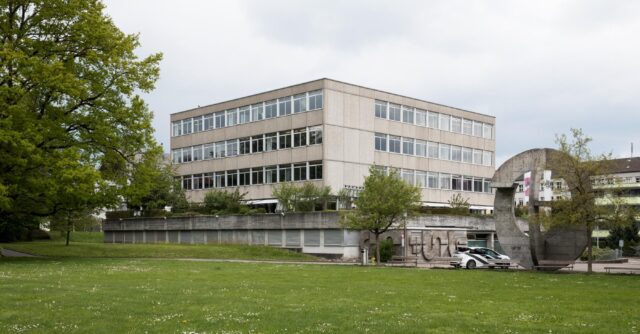
    According to its press release, Sika is participating as a funding partner in the three project phases – Exploration (2026), Synthesis (2027) and Transfer (2028) – of ETH’s Living Lab HIL. These phases will lay the groundwork for the refurbishment, energy-efficiency upgrade and extension of the teaching and research building for architecture and civil engineering (HIL) on the Hönggerberg campus. The major project is scheduled for completion by 2035.

    According to ETH, the need for renovation and the changed spatial requirements clearly called for a complete refurbishment involving demolition down to the load-bearing structure. Instead, the university intends to treat the existing building with greater care and focus on CO2 reduction, digitalisation and the circular economy. It is developing the construction project internally, drawing on knowledge and insights from its own teaching and research and working with industry partners.

    In this “globally unique flagship project”, as Sika describes it, the Baar-based specialty chemicals company for construction and industry is contributing more than just financial support. The project’s funding also encompasses an active and close technical exchange between Sika and the ETH project teams. This is facilitated through the ETH Foundation.

    Sika aims to help “drive the transformation towards sustainable construction methods”, says Patricia Heidtman, Head of Innovation and Sustainability. “The Living Lab HIL offers a unique platform that actively links research and practice and tangibly accelerates innovation.”

    Industry and science must act together to achieve climate targets, says Mathias Kohler, ETH Professor of Architecture and Digital Fabrication. “In cooperation with Sika, we are testing new solutions in the Living Lab HIL that will be implemented during the renovation phase of the ETH building from 2030 onwards.”