Tag: Arealentwicklung

  • Young adults help shape the future of a central area

    Young adults help shape the future of a central area

    In the municipality of Adelboden, young adults can contribute to the future use of the car park area. The municipality is organising a creative workshop in the Adelboden leisure and sports arena in cooperation with the Adelboden-Lenk-Kandersteg tourism organisation, Parkhaus AG and Hotel Adler AG to find ideas. On 19 June 2026, 80 young adults up to the age of 35 are invited to develop concrete proposals for a structural redesign. Interested parties can register until 5 June.

    According to a press release, approaches that go beyond the “classic planning logic” are in demand. The municipality is keen to make young people’s opinions on the future of their living environment visible. After all, “they make a valuable contribution to the long-term development of the village as a liveable residential and attractive tourist destination”. Before feasibility studies are commissioned, a “broad range of ideas” is required.

    Two options will be actively included and discussed in the “transparent, democratically supported” process: a panorama square with a view of the mountains and an adventure pool with existing development plans. There is also room for further and new concepts. The best project ideas will be professionally visualised, publicly exhibited and then examined in consultation with the local population and tourism stakeholders.

  • Bellinzona dares to undertake a major renovation

    Bellinzona dares to undertake a major renovation

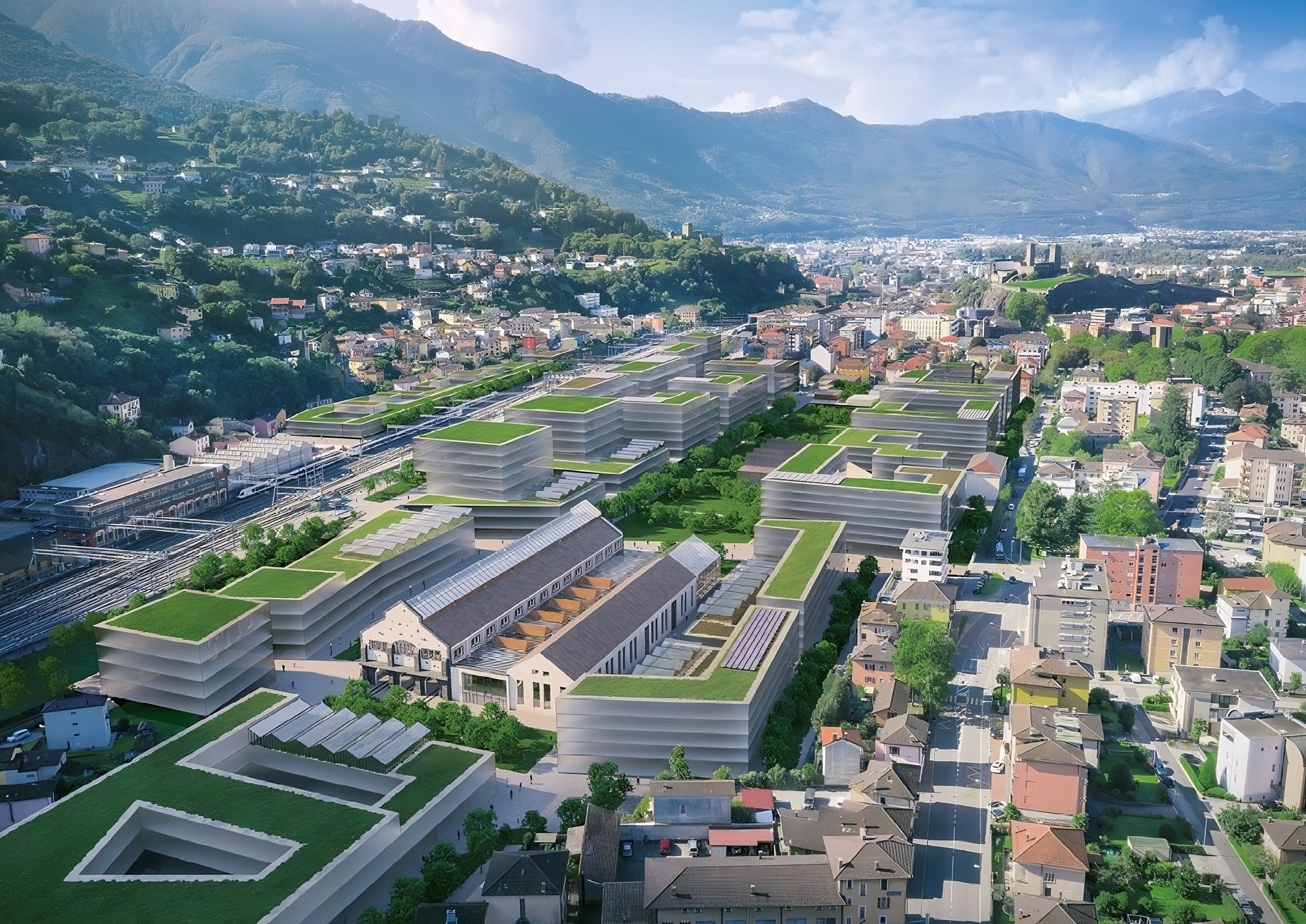
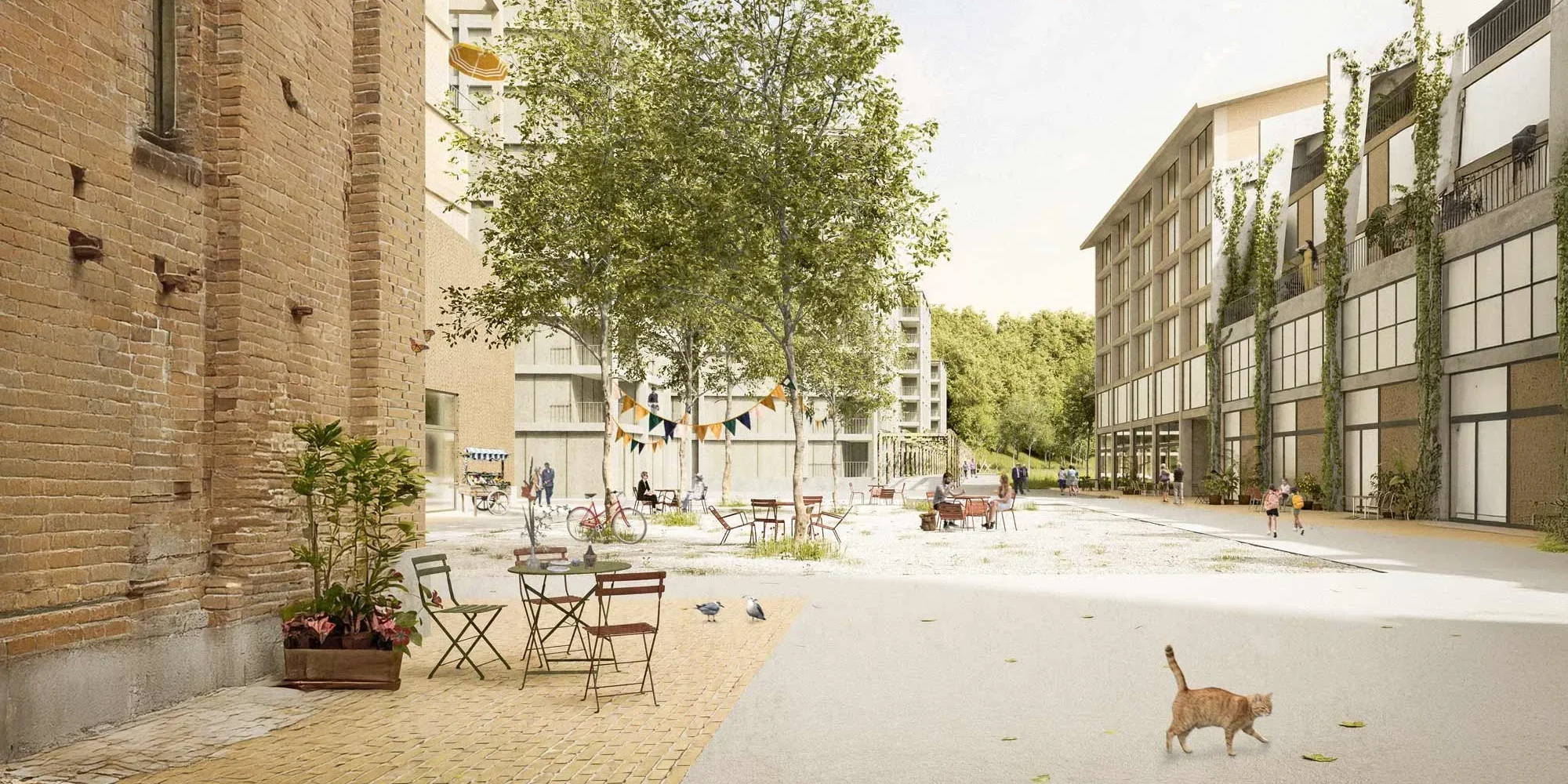
    There are hardly any inner-city transformation areas of this size in Switzerland. The FFS site in the heart of Bellinzona offers an opportunity that cities such as Zurich and Basel have long since lost. The new district will not be built on a greenfield site, but will interweave the historic city with the area around the railroad station and new development zones. Mixed use, biodiversity and generous open spaces are at the heart of the master plan.

    The international competition was won by the team sa_partners, TAMassociati and Franco Giorgetta. Their design breaks up the previously closed industrial area and organizes it around the “Almenda”. A 6.4 hectare central green space that structures the entire district as an ecological and social backbone. The listed “Cattedrale”, which has been a maintenance site for locomotives since 1919, will be retained as an identity-forming focal point and will become the anchor building of the new district.

    Innovation at the heart of
    The district will also be home to the Switzerland Innovation Park Ticino in future. The park was officially recognized as the location of the Switzerland Innovation Park Zurich in November 2024 and is supported by USI, SUPSI, BancaStato, the Ticino Chamber of Commerce and the employers’ association AITI. From 2032, the park and its headquarters will move to a 25,000 square meter area within the new quarter.

    Three competence centers are already active: Swiss Drone Base in Lodrino for drone technology, a hub in Bellinzona for life sciences and a location in Lugano for lifestyle tech. Together with postgraduate training courses offered by USI and SUPSI, an innovation cluster with supra-regional appeal is being created. Bellinzona is thus positioning itself as a location between administration, technology and urban quality of life and as a serious alternative to the major Swiss technology hubs.

    Setback in fall 2025
    The path is not clear. In October 2025, the cantonal administrative court annulled the municipal council’s detailed development plan from April 2023. The financial aspects were insufficiently explained, in particular the costs for the acquisition of public land and the remediation of contaminated sites, which are estimated at CHF 30 to 50 million. The planning process will have to start from scratch.

    At the same time, construction work is already underway on the new FFS plant in Arbedo-Castione, a major project costing CHF 755 million that is scheduled to open in 2028. The site will only become available once Officine has relocated. The first realization phase is expected to start between 2030 and 2035 at the earliest, and the overall transformation is likely to take 20 to 40 years. The time pressure is real and the complexity is high.

    Model for central Switzerland
    Porta del Ticino shows how medium-sized centers beyond the metropolitan areas can deal with large industrial sites. Not monofunctional overbuilding, but development as an urban transformation space with a long-term regional impact. What is being created in Bellinzona can be a benchmark for other cities of the same size. From Aarau to Chur, from Schaffhausen to Sion.

    The next few years will determine whether the planning quality can be secured for years to come, whether investments can be bundled and whether the vision can be translated into a resilient realization perspective. The real test has only just begun.

  • When architectural monuments pack their suitcases

    When architectural monuments pack their suitcases

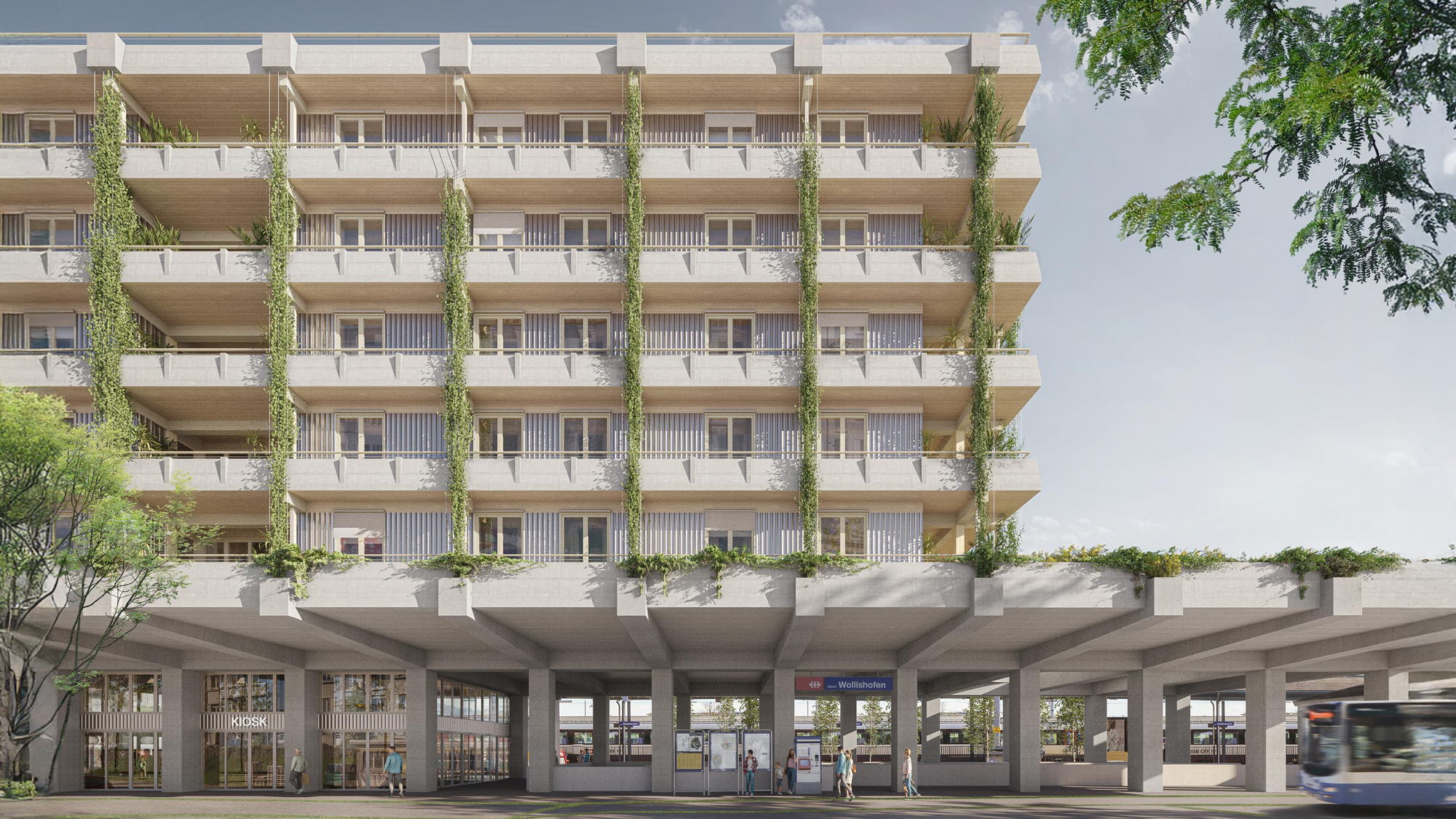
    Two apartment buildings with 57 apartments ranging in size from 2.5 to 5.5 rooms are being built on a 6500 square meter site to the north of the historic station building. Commercial and restaurant space is planned on the first floors, as well as a small commercial building and an underground garage with 59 car and 92 bicycle parking spaces. A park-like open space with a playground will be created between the two buildings.

    Less, but social
    The project has become smaller. SBB originally planned four buildings with 90 apartments, a third of which would be affordable. However, the signal box next to the station building must remain, which means that an entire building is no longer needed. Of the remaining 57 apartments, 20 are to be offered at affordable prices. This corresponds to 35 percent and is even slightly higher than the original quota.

    Switzerland’s last goods shed
    What residential construction demands requires space. Four existing buildings have to make way, including the goods shed from 1928, designed by Meinrad Lorenz, SBB’s chief architect at the time, one of only four buildings of this type in the whole of Switzerland. Following the demolition of the identical shed in Heerbrugg, the one in Wollishofen is the last remaining example of its kind. It is listed in the cantonal inventory of listed buildings.

    A wooden building packs its bags
    Nevertheless, the goods shed will not disappear. It will be dismantled into individual parts, professionally refurbished and rebuilt at the Zurich Oberland Steam Railway Association in Bauma an der Töss. There it will be made accessible to the public and given a museum function as part of the “Bauma 2020 depot area” project. The approval documents for the dismantling are already largely in place.

    History repeats itself
    This move is not the first in the history of Wollishofen station. The current station building was once the first station building in the city of Zug, built in 1864 and moved stone by stone to Lake Zurich in 1897. What was forced by the scarcity of building materials in the 19th century is now a deliberate act of preservation. Wollishofen is thus writing another chapter in an unusual building history.

  • Beer, concrete and living – Baden builds on its history

    Beer, concrete and living – Baden builds on its history

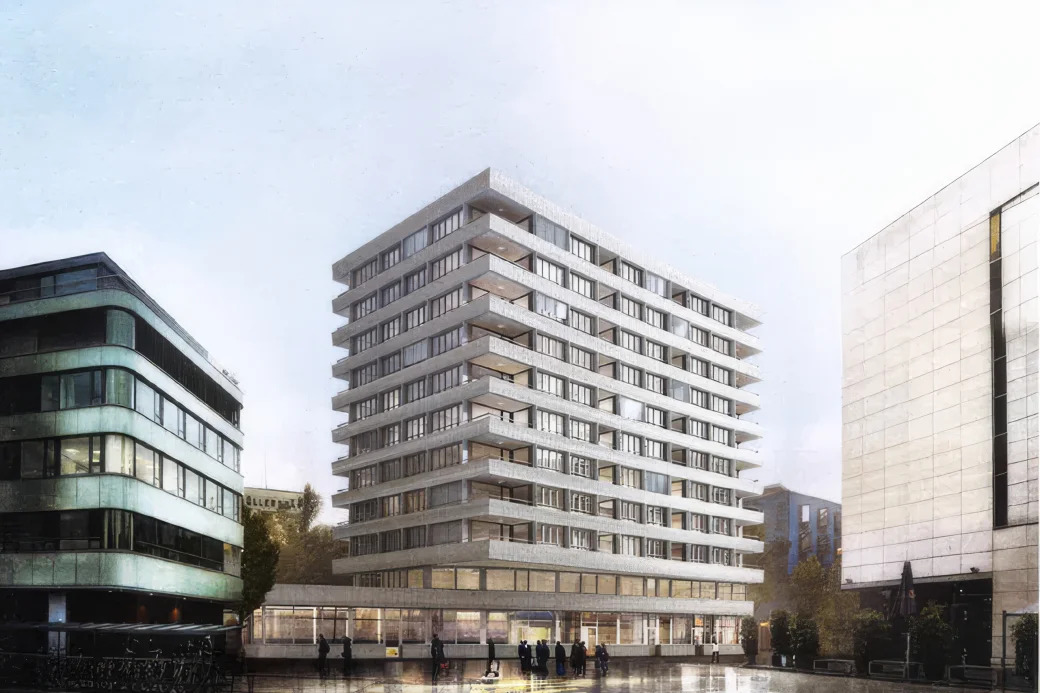
    Four new buildings are being constructed on around 8,000 square meters directly next to Baden train station, divided into two construction sites. Building site A is the responsibility of Frei Architekten AG from Aarau, building site B is the responsibility of the renowned Harry Gugger Studio from Basel. The volume is considerable: 81,888 cubic meters of enclosed space, 22,914 square meters of floor space and an investment of around 64.5 million Swiss francs. The general contractor is Gross AG from Brugg.

    Living where malt used to steam
    136 rental apartments with 1.5 to 4.5 rooms are being built in the heart of the city. On the first floor, a total of 2268 square meters of retail and restaurant space will characterize the quarter. In the inner courtyard, a 900 square meter beer garden invites you to linger. The motto of the building owner, the fourth-generation brewery H. Müller AG, sums it up: “brew – live – enjoy”.

    History remains visible
    Not everything makes way for the new building. The boiler house, brewhouse and malt silo remain as architectural witnesses to a brewing history that began in 1897. The Müllerbräu beer itself is now produced by the Falken brewery in Schaffhausen. However, there is still a specialty brewery on the site. The site’s past thus not only remains visible, it can still be experienced.

    Timetable and marketing
    The building permit dates from October 2023, with demolition starting in April 2024. The facades of the new high-rise buildings have been visible for the first time for a few days now. A milestone for the project. Marketing of the apartments is scheduled to start in summer 2026, with first occupancy planned for June 2027.

  • Intercantonal development project focuses on mobility and efficiency

    Intercantonal development project focuses on mobility and efficiency

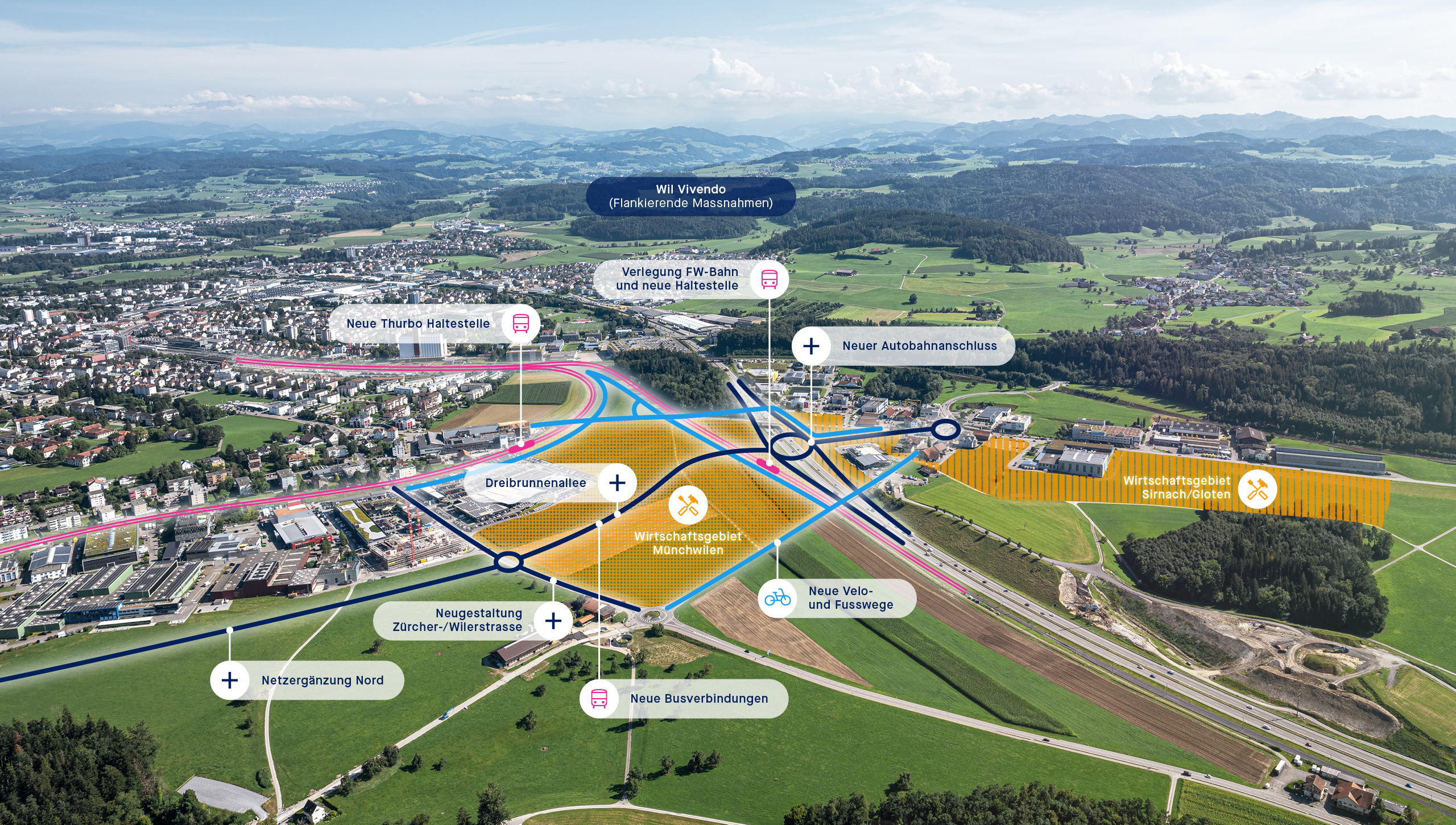
    Voters in St. Gallen have approved the sale of two plots of land owned by the Canton of St. Gallen to the Canton of Thurgau, as well as the provision of compensation in the form of crop rotation areas. According to a statement from Regio Wil, this is a “landmark decision” for the Wil region. The plots are to form the WILWEST development area, which is intended to combine environmentally friendly mobility, energy efficiency and regional cooperation as a sustainable economic zone. At the heart of the project is a new junction with the A1 motorway, complemented by improved bus, rail and cycle connections for the entire region.

    For the Wil region, the project creates prospects for new jobs, reduced traffic congestion and coordinated, sustainable spatial development, the statement says. The decision by St. Gallen’s voters is also a strong signal for intercantonal cooperation between St. Gallen and Thurgau, as well as for the 22 municipalities of Regio Wil.

    The St. Gallen electorate had initially rejected a special loan for the WILWEST project in September 2022. The project was subsequently comprehensively revised, particularly in the area of sustainability. Among other things, land use was optimised, soil sealing reduced, and car traffic and the number of parking spaces cut.

    The priority now is to ensure sustainable implementation, to develop the area in a land-conserving manner and in phases, and to continue to take the concerns of the public into account. Regio Wil intends to remain actively involved in the process in the future.

  • The way is clear for Wil West

    The way is clear for Wil West

    At the second attempt, the voters of St. Gallen say yes to Wil West. The decision is close, but clear enough to create planning security. The vote shows that the region wants to grow. Bundled, plannable and coordinated across cantonal borders.

    With the sale of the land, St. Gallen is handing over a former estate of the Wil psychiatric clinic to the canton of Thurgau. In future, the economic area will be located entirely on Thurgau soil, but will remain within the immediate sphere of influence of the Will region. This creates a clearer starting position for investments, infrastructure and long-term settlement strategies.

    Concentration instead of urban sprawl
    Wil West stands for a model that keeps many regions busy, enabling economic growth without further urban sprawl. Instead of constantly scattering new commercial zones on the outskirts of towns, the location will in future concentrate companies, services and productive jobs in a location with good transport links.

    The plan is not just any old industrial area, but a modern work location. The aim is to create high-quality businesses that generate added value and skilled jobs without taking up an excessive amount of space. The development potential of the region will thus be utilized. For spatial planning, the project is therefore also an instrument for channeling growth instead of leaving it to chance.

    Infrastructure as a driver of development
    Wil West has a particularly strong impact through its infrastructure. With the project, the federal government, cantons and region are linking the expansion of the highway, public transport and pedestrian and bicycle connections. The planned freeway link to the A1 and better rail and bus connections will make the area attractive for companies and at the same time relieve pressure on the existing town centers.

    Sustainability as a location factor
    The first version of Wil West failed due to concerns such as loss of cultural land, traffic and ecological impact. In the revised version, sustainability plays a much more visible role. More compact construction methods, more careful land use and more green and open spaces are intended to reduce the ecological footprint.
    This is precisely what is becoming a location factor for companies looking to relocate. When choosing a location, more and more companies are looking at energy and land consumption, accessibility without a car and an attractive environment for employees.
    Wil West has the opportunity to set a new standard for work zones if quality assurance, phasing and criteria for settlements are consistently implemented.

    Seize opportunities, manage expectations
    With the yes vote for the proposal, expectations are now also rising. Politics and administration must pick up the pace without falling into a hectic pace. The region needs clear guidelines: which sectors should come? What density is desired? How can development be managed over decades without having to change strategy every time the economy changes?

  • How Basel-Landschaft creates spaces for innovation and living

    How Basel-Landschaft creates spaces for innovation and living

    Basel-Landschaft is building for the future. Former industrial sites are being transformed into innovative campuses, flexible business parks and urban neighbourhoods. Dreispitz combines art, education and high-tech on the cantonal border and creates space for 4,000 jobs, research and sustainable architecture at the highest level. Uptown Basel in Arlesheim is positioning itself as a hotspot for Industry 4.0 and medtech with quantum computing pioneers and an ecological beacon character. New neighbourhoods in Muttenz, BusinessCity and AM SCHÄNZLI combine living and working spaces, green open spaces and climate-friendly mobility, further enhancing the location’s profile as a centre of knowledge and innovation.

    In Pratteln, Bredella, the Campus der Wirtschaft and Zentrale Pratteln are creating modern urban living spaces that focus on sustainable development, smart infrastructure and flexible usage concepts. In Allschwil, Bachgraben is developing into a leading life sciences location with the Switzerland Innovation Park Basel Area, where biotech, medtech and pharmaceutical companies are driving forward cutting-edge research and high-tech innovations. The Laufen Industrial Park and Ziegelei Ost in Allschwil are creating momentum for regional production, craftsmanship and community, with a focus on the circular economy and CO² reduction. GETEC PARK is a growth engine for chemistry and life sciences, driven by decarbonisation and ESG standards.

    Basel-Land thus demonstrates how diversity, sustainability and innovative strength are driving transformation.

    Dreispitz
    Dreispitz in Münchenstein (Basel-Landschaft) is one of the most diverse areas in the Basel region. It combines art, education and business. Over 380 companies and around 4,000 jobs characterise the Dreispitz business park, flanked by universities such as the FHNW and creative clusters. The intercantonal site offers space for innovative companies, start-ups, culture and modern educational institutions. A vital location for the future of the entire region.

    uptownBasel
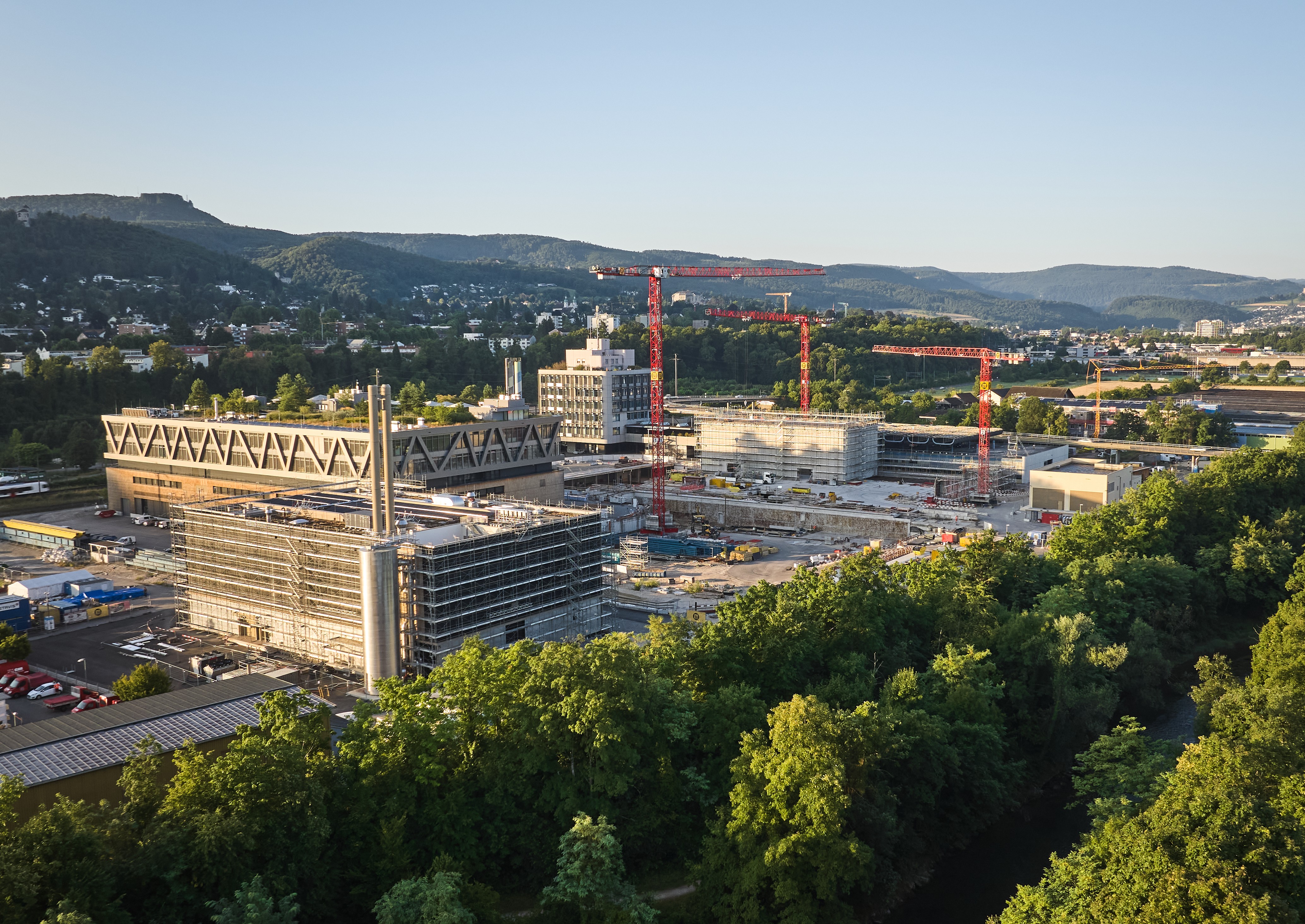
    uptownBasel is currently building the future. Since 2019, a state-of-the-art innovation campus has been under construction for the jobs of the coming decades. The world-renowned dental implant manufacturer Straumann will relocate a total of 1,000 jobs to the forward-looking development area by 2028. Arlesheim will thus become the most important hotspot for medical technology in Switzerland. The campus, which is being rapidly developed by the Staehelin family and Fankhauser Arealentwicklungen, features several buildings already under construction with sustainable architecture of the highest standard. The roof deck has attracted worldwide attention and, together with the seminar and event rooms, is helping to make the site the state-of-the-art centrepiece of the Baselland industrial location.

    Laufen Industrial Park
    The Laufen Industrial Park is located on the former tile factory site of Keramik Laufen AG on the south-eastern edge of the city and has been owned by the Abendrot Foundation since 2017. Following the major fire in 2020, which destroyed around 80% of the building, the commercial site will be rebuilt between 2025 and 2027 as single-storey timber frame buildings. The aim is to create a modern, affordable offering for small regional businesses, craftsmen and creative professionals, with flexible rental spaces and individual expansion options. A network of commercial streets ensures good access, lighting and promotes networking among users. Densification and multi-storey extensions are possible in order to respond flexibly to regional demand. The focus is on sustainability. The concept is characterised by the reuse of building components, wood instead of concrete and renewable energy. An area association is to strengthen cohesion. The overall result will be a regionally relevant, versatile and sustainable commercial centre.

    AM SCHÄNZLI
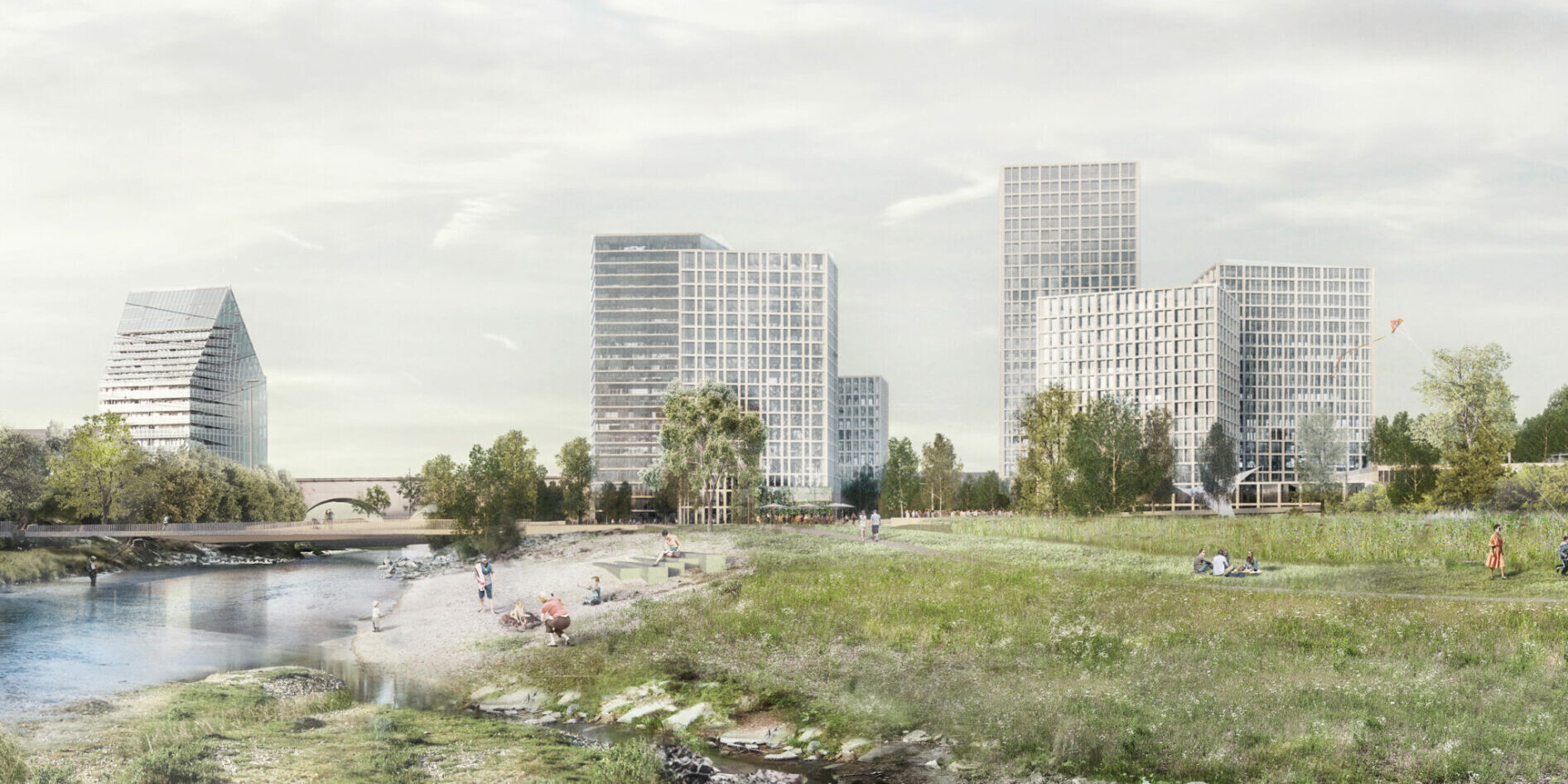
    The new AM SCHÄNZLI district in Muttenz marks an urban reinterpretation of living, working and leisure at the gateway to Basel. By 2029, three high-rise buildings with 385 apartments and 14,000 m² of commercial space will be built on the 74,000 m² “Hagnau Ost” site. A central square and intensive greening lend urban density a quality of life right next to the Birs recreation area. The focus is on resource-saving construction, energy efficiency (SNBS Gold), photovoltaics and optimised mobility for pedestrians and cyclists. AM SCHÄNZLI stands for modern location development and the sustainable integration of city and nature.

    BaseLink site
    The Bachgraben site in Allschwil has developed into a driver of innovation in Basel. The location combines international life science companies, state-of-the-art research and sustainable urban development. Projects such as the BaseLink site and new public transport and cycling initiatives are creating attractive jobs and an urban environment. Close cooperation between the canton, municipality and business community ensures dynamism and makes the area a showcase project in the tri-national region.

    Business campus
    The new business campus is located directly next to the railway station in Pratteln and is developing into one of the most important event and work locations in the Basel area. By 2028, the H² building will become a state-of-the-art centrepiece. Six floors offer over 10,000 m² of flexible laboratory, event and office space, complemented by a congress hall for up to 1,900 people and a total of more than 6,000 m² of event space. The campus is aimed at companies from industry, research and services, with sustainable architecture, optimal accessibility, infrastructure from a single source and synergies with the Bredella district. The development strengthens the region’s competitiveness and positions Pratteln as an international centre for innovation, exchange and major events.

    GETEC PARK.MUTTENZ
    GETEC PARK.MUTTENZ is the leading industrial cluster in north-western Switzerland for chemicals, pharmaceuticals and life sciences. It combines state-of-the-art infrastructure, secure laboratory and logistics space, and sustainable energy and resource concepts on 50 hectares. The park, which emerged from Infrapark Baselland and Schweizerhalle, is home to global corporations and numerous SMEs. Innovative solutions such as Waste2Value and ESG-based processes make GETEC a growth engine for the industry.

    Pratteln headquarters
    The Pratteln headquarters project is transforming the former Coop site north of the railway station into a lively, ecologically and socially oriented neighbourhood. By 2026, around 480 cooperative apartments for 1,200 people will be built, complemented by a new school, around 15,000 m² of commercial space and a variety of open spaces. Construction and planning are consistently focused on preserving existing structures, reusing building components and sustainable energy supply. Historic industrial buildings such as the sugar silo will be preserved. The cooperation of six developers and the innovative utilisation concept make Pratteln Headquarters a showcase project for non-profit and sustainable neighbourhood development in the Basel region.

    Bredella in Pratteln
    Bredella in Pratteln represents the large-scale transformation of a central industrial area into an innovative urban quarter. In the immediate vicinity of the railway station, 87,000 m² of diverse residential, work and leisure facilities are being created, interspersed with green spaces and renovated industrial buildings. The master plan and neighbourhood plans focus on gradual development, sustainable mobility and a high quality of life. With a perimeter block, high-rise buildings, commercial and studio space, car-free areas and lively ground floors, a model for urban living in the Basel area is being created. Bredella boldly combines modernity, history and sustainable development.

    Ziegelei Ost
    Ziegelei Ost in Allschwil is undergoing a comprehensive transformation into a lively, mixed-use neighbourhood. Historic buildings are being carefully preserved and combined with new uses for living, working and recreation. The neighbourhood is characterised by large green spaces, diverse public spaces and a finely meshed network of paths connecting three central squares: Kulturplatz, Quartierplatz and Lettenwiese. The industrial tradition remains evident through the preservation of the brickworks halls and their integration into modern structures. The project focuses on circularity, the reuse of building components and flexible new buildings to ensure climate protection, sustainability and a high quality of life.

  • How Basel-Landschaft creates spaces for innovation and living

    How Basel-Landschaft creates spaces for innovation and living

    Basel-Landschaft is building for the future. Former industrial sites are being transformed into innovative campuses, flexible business parks and urban neighbourhoods. The Dreispitz combines art, education and high-tech on the cantonal border and creates space for 4,000 jobs, research and sustainable architecture at the highest level. Uptown Basel in Arlesheim is positioning itself as a hotspot for Industry 4.0 and MedTech with quantum computing pioneers and ecological lighthouse character. New districts in Muttenz, BusinessCity and AM SCHÄNZLI combine living and working spaces, green open spaces and climate-friendly mobility, further raising the location’s profile as a centre of knowledge and innovation.

    In Pratteln, modern urban living spaces are being created with Bredella, the Campus der Wirtschaft and Zentrale Pratteln, which focus on sustainable development, smart infrastructure and flexible utilisation concepts. In Allschwil, Bachgraben is developing into a leading life sciences location with the Switzerland Innovation Park Basel Area, where biotech, medtech and pharmaceutical companies are driving forward cutting-edge research and high-tech innovations. The Laufen Industrial Park and Ziegelei Ost in Allschwil create impetus for regional production, craftsmanship and community, focussing on the circular economy and CO² reduction. GETEC PARK is a growth driver for chemistry and life sciences, driven by decarbonisation and ESG standards.

    Basel-Land demonstrates how diversity, sustainability and innovation are driving transformation.

    Dreispitz
    Dreispitz in Münchenstein (Basel-Landschaft) is one of the most diverse areas in the Basel region. Art, education and business come together here. Over 380 companies and around 4,000 jobs characterise the Dreispitz business park, flanked by universities such as the FHNW and creative clusters. The intercantonal area offers space for innovative companies, start-ups, culture and modern educational institutions. A vital future location for the entire region.
    www.dreispitz.ch

    uptownBasel
    uptownBasel is building the future. A state-of-the-art innovation campus for the jobs of the coming decades has been under construction since 2019. The world-famous dental implant manufacturer Straumann is relocating a total of 1,000 jobs to the future-oriented development site by 2028. Arlesheim will thus become the most important hotspot for medical technology in Switzerland. The campus, which is being realised at a rapid pace by the Staehelin family and Fankhauser Arealentwicklungen, is characterised by several buildings already under construction with sustainable architecture at the highest level. The Roofdeck has now attracted worldwide attention and, together with the seminar and event rooms, serves to make the site a state-of-the-art centrepiece for the industrial location of Baselland.
    uptownbasel.ch

    Laufen Industrial Park
    The Laufen Industrial Park is located on the former Keramik Laufen AG tile factory on the south-eastern edge of the city and has been owned by the Abendrot Foundation since 2017. Following the major fire in 2020, which destroyed around 80% of the substance, the industrial site will be rebuilt as a single-storey timber system building from 2025 to 2027. The aim is to provide modern, affordable accommodation for small regional businesses, tradespeople and creative professionals, with flexible rental space and customised expansion options. A network of commercial lanes ensures good access and lighting and promotes networking between users. Densification and multi-storey extensions are possible in order to respond flexibly to regional demand. The focus is on sustainability. Re-use of building components, wood instead of concrete and renewable energy characterise the concept. An area association is intended to strengthen cohesion. Overall, a regionally relevant, versatile and sustainable commercial centre is being created.
    www.abendrot.ch

    AM SCHÄNZLI
    The new AM SCHÄNZLI neighbourhood in Muttenz marks an urban reinterpretation of living, working and leisure at the gateway to Basel. Three high-rise buildings with 385 flats and 14,000 m² of commercial space will be built on the 74,000 m² “Hagnau Ost” site by 2029. A central square and intensive greening will lend urban density and quality of life directly on the Birs recreational area. The focus is on resource-conserving construction, energy efficiency (SNBS Gold), photovoltaics and optimised mobility for pedestrians and cyclists. AM SCHÄNZLI stands for modern site development and sustainable integration of city and nature.
    am-schaenzli.ch

    BaseLink site
    The Bachgraben site in Allschwil has developed into Basel’s innovation engine. The site combines international life science companies, cutting-edge research and sustainable urban development. Projects such as the BaseLink site and new public transport and cycling initiatives are creating attractive workplaces and an urban environment. Close cooperation between the canton, the municipality and the business community is creating momentum and making the area a showcase project in the tri-national region.
    sip-baselarea.com/maincampus/

    Campus of the economy
    The new Campus der Wirtschaft is located directly next to the railway station in Pratteln and is developing into one of the most important event and work locations in the Basel region. By 2028, the H² building will be a state-of-the-art centrepiece. Six storeys will offer over 10,000 m² of flexible laboratory, event and office space, supplemented by a congress hall for up to 1,900 people and a total of more than 6,000 m² of event space. The campus is aimed at companies from industry, research and services, with sustainable architecture, optimal accessibility, infrastructure from a single source and synergies with the Bredella neighbourhood. The development strengthens the region’s competitiveness and positions Pratteln as an international centre for innovation, exchange and major events.
    h2-pratteln.ch

    GETEC PARK.MUTTENZ
    GETEC PARK.MUTTENZ is the leading industrial cluster in north-west Switzerland for chemicals, pharmaceuticals and life sciences. State-of-the-art infrastructure, safe laboratory and logistics areas as well as sustainable energy and resource concepts are concentrated on 50 hectares. The park, created from Infrapark Baselland and Schweizerhalle, is home to global corporations and numerous SMEs. Innovative solutions such as Waste2Value and ESG-based processes make GETEC the growth engine of the industry.
    www.getec.swiss

    Pratteln headquarters
    The Zentrale Pratteln project is transforming the former Coop site north of the railway station into a lively, environmentally and socially oriented neighbourhood. By 2026, around 480 cooperative flats for 1,200 people will be built, supplemented by a new school, around 15,000 m² of commercial space and a variety of open spaces. Construction and planning consistently focus on preserving existing buildings, reusing building components and sustainable energy supply. Historic industrial buildings such as the sugar silo will be retained. The cooperation between six property developers and the innovative utilisation concept make Zentrale Pratteln a showcase project for non-profit and sustainable neighbourhood development in the Basel region.
    centralpratteln.ch

    Bredella in Pratteln
    Bredella in Pratteln stands for the large-scale transformation of a central industrial site into an innovative urban neighbourhood. In the immediate vicinity of the railway station, 87,000 m² of diverse living, working and leisure facilities are being created, interspersed with green squares and renovated industrial buildings. The masterplan and neighbourhood plans focus on gradual development, sustainable mobility and a high quality of stay. With perimeter blocks, high-rise buildings, commercial and studio spaces, car-free areas and lively ground floors, a model for urban living in the Basel region is being created. Bredella boldly combines modernity, history and sustainable development.
    bredella.ch

    Brickworks East
    Ziegelei Ost in Allschwil is undergoing a comprehensive transformation into a lively, mixed neighbourhood. Historic buildings are being carefully preserved and combined with new uses for living, working and recreation. Large green areas, diverse public spaces and a finely meshed network of paths connecting three central squares – Kulturplatz, Quartierplatz and Lettenwiese – are characteristic of the area. The industrial tradition remains tangible through the preservation of the brickworks and their integration into modern structures. The project emphasises circularity, the reuse of building components and flexible new buildings in order to ensure climate protection, sustainability and a high quality of life.
    www.ziegelei-ost.ch


  • Schlieren and Zurich cooperate on the expansion of Schlieren North-East

    Schlieren and Zurich cooperate on the expansion of Schlieren North-East

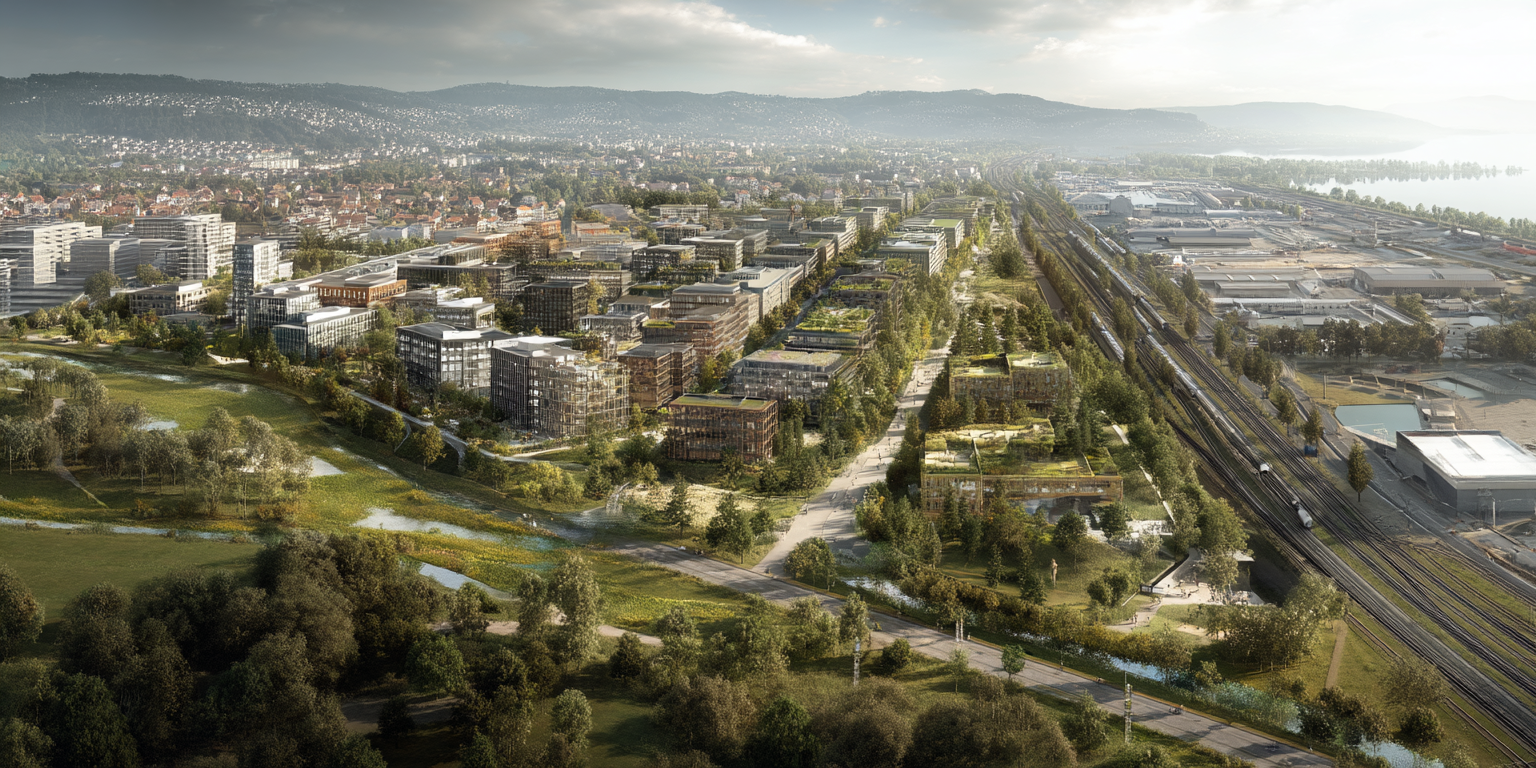
    The cities of Schlieren and Zurich have agreed in a letter of intent to jointly plan and develop Schlieren Nordost. According to a statement issued by the city administration, the agreement specifically concerns a 324,000 square metre area within the overall site. This area is located in Schlieren and belongs to the city of Zurich.

    The aim of the contracting parties is to establish a “binding mission statement by 2030”. This will set out strategic goals and framework conditions for the future urban development and use of the area.

    The area is of considerable benefit to both cities. For Zurich, it is “an important land reserve”, while for Schlieren it plays a role in future urban planning. The cooperation is therefore “a basis for further planning steps and decisions” for both cities.

    Zurich wants to use the cooperation to clarify the future approach to its site “at an early stage and on a solid planning basis”. Various building rights will expire there between 2043 and 2050.

    Schlieren has been working on the further development of several large sites for a number of years. “The north-east remains the largest contiguous development area in the municipality,” it says.

  • Return of the wild waters at Schänzli

    Return of the wild waters at Schänzli

    The Schänzli site marks the beginning of a new era in landscape planning along the River Birs. The winning project, “Aqua fera” by Berchtold.Lenzin Landscape Architects, Versaplan and Holinger, frees the river from its rigid form and gives it freedom of movement. Shallow water zones, low-water channels and near-natural banks create habitats for fish, birds and amphibians, strengthen groundwater protection and make the floodplain landscape accessible again.

    Visitor guidance via wooden walkways, piles of branches and defined paths protects sensitive areas, while a refreshment bar and small event areas at the northern entrance provide space for people to meet. Towards the south, the terrain becomes quieter, merging into the Vogelhölzli nature reserve and opening up new perspectives on a revitalised Birs. Noise barriers along the motorway shield the area and at the same time form a new connection to the Käppeli district.

    City on the river
    The new Am Schänzli quarter borders directly on the nature reserve. Three high-rise buildings with around 400 flats, offices, restaurants and leisure facilities, together with spacious open areas and commercial space, form a lively urban fragment at the gateway to Basel. The development meets the SNBS Gold Standard, focusing on photovoltaics, heat recovery, green roofs and a compact design with biodiversity zones between the buildings.

    The mobility strategy prioritises slow traffic. Cycle, foot and tram connections link the neighbourhood with Basel-Stadt, the Birspark recreational area and the Hagnau sites. The principle of “open space through density” demonstrates its power here: a better quality of life through compact, intelligently organised construction.

    Cooperation and implementation
    The site development is financed by value-added levies on landowners in Hagnau and through public-private cooperation with the municipality of Muttenz. The neighbourhood planning process, which was approved after intensive public participation, forms the basis for the coordinated overall development of Hagnau East, Hagnau West and the Schänzli site.

    Construction of the high-rise buildings began in spring 2025 and will be completed in stages by 2029. While Am Schänzli is growing, the southern river area remains undeveloped and is becoming the backbone of a coherent green network between the city and the countryside.

    A model for the future of cities and nature
    The Schänzli project is symbolic of the new generation of Swiss urban development: ecologically regenerative, architecturally precise, socially integrated. It proves that economic density and ecological diversity are not mutually exclusive, but can reinforce each other.

    With “Aqua fera”, the Birs is not only being renaturalised, it is being reintroduced into everyday urban life. Muttenz is thus demonstrating how forward-looking planning can harmonise open space, climate resilience and urban quality of life. The Schänzli is becoming a living transition between city and nature and a powerful symbol for the return of wild waters.

  • Relocation creates development opportunity with lake view

    Relocation creates development opportunity with lake view

    Because it no longer meets the current requirements for a modern health centre, Lucerne Cantonal Hospital will be relocated to Schenkon together with the Seeblick nursing home. According to a statement, the canton, as the owner, and the city of Sursee want to plan an attractive future for the 47,000 square metre site.

    Initial assessments indicate that the site is suitable for mixed-use development with residential and commercial premises. This would allow for the creation of residential facilities for families, couples, singles and senior citizens, with services and restaurants completing the site. The site, located above Lake Sempach, is in close proximity to the old town of Sursee and already has good access to various modes of transport.

    “The move opens up a unique opportunity to repurpose the previous location in Sursee,” said Reto Wyss, member of the cantonal government, in the announcement. “This attractive site with lake views in a good location is to be rezoned for this purpose. The next planning steps will show what is feasible and where.” The planning phase for the new neighbourhood is set to begin in spring 2026, when the hospital starts to move. Various meetings with the local population and interest groups are planned. The site is expected to be vacant from 2034 and could be redeveloped. The possibility of incorporating the existing building fabric is also being considered.

  • New high-rise project boosts housing supply near the station

    New high-rise project boosts housing supply near the station

    Pensimo Management AG, based in Zurich, has acquired a building site from ABB in Oerlikon through its investment foundations Turidomusand Pensimo. According to a press release, the company plans to build a complex with 500 apartments, including a high-rise building and commercial premises, on the north side of Oerlikon railway station on the newly designed Max-Frisch-Platz.

    “We are very pleased with the acquisition of this property,” said Stefanie Krautzig, transaction manager at Pensimo, in the press release. “This is a very rare investment opportunity for a development project of this size in such a central location.” The building regulations for Neu-Oerlikon, which were partially revised in 2022, provide a good basis for planning and developing the area. “In order to evaluate an architectural solution for this central and prominent location that is attractive to the public and future residents, we will launch a competition among teams of planners,” said Krautzig.

    Construction is expected to begin in 2029. The seller, ABB, is also pleased with the sale of the former industrial site and is convinced that “this will contribute to the further development of Zurich Oerlikon into a lively and diverse neighbourhood,” said Nora Teuwsen, Chair of the Executive Board of ABB Switzerland.

  • Co-operation to leverage the potential of the Silbern industrial estate

    Co-operation to leverage the potential of the Silbern industrial estate

    Today, Silbern is an important location for production, trade and shopping and contributes significantly to the economic strength of the region. At the same time, the area has hardly developed at all over the years in terms of urban development and urban space and lags behind the potential of other business locations in the region. This is precisely where the new alliance comes in. It wants to initiate qualitative further development instead of merely managing the existing utilisation.

    Integrative approach instead of individual interests
    In the Silbern Future Alliance, IG Silbern, Limeco, BirdLife, the city of Dietikon and the canton of Zurich are working together in a long-term, collaborative framework. The approach is clear: the economy, mobility, environment and nature are planned and managed together. The aim is to recognise conflicting objectives at an early stage and to develop solutions in a coordinated and transparent manner based on interests.

    Vision and charter as a binding framework
    The result of a two-year mediation process led by Joris Van Wezemael is a common vision, supplemented by a binding charter. Both create orientation, define guidelines and strengthen reliability in the cooperation. This gives companies and landowners a framework within which they can actively shape development. With more planning security and clear expectations regarding the compatibility of economic, ecological and social concerns.

    Sustainable economic and living space
    The alliance sees itself as a long-term cooperation with a clear ambition. Silbern is to develop into a location that offers attractive framework conditions for companies, improves accessibility and at the same time strengthens natural and living spaces. Infrastructure is seen as key, as part of the solution, for example by converting waste materials into energy and new resources.

    Common will as a success factor
    The next step requires concrete projects and the sustained will of all those involved to share responsibility. Entrepreneurs, property owners, the public sector, infrastructure operators and nature conservation organisations have already developed a better understanding of each other and mutual respect in the dialogue to date. This basis of trust is crucial if the shared vision is to be realised and Silbern is to make the leap from an underestimated working area to a future-oriented economic and living space.

  • From industrial heritage to innovation campus

    From industrial heritage to innovation campus

    Where textile machines and industrial production used to set the pace, a new focus for technology, trade and entrepreneurial development is now being created. The approximately 75,000 square meter site is not being conceived as an isolated business park, but as a networked innovation location with a direct link to the Töss district. Existing buildings, paths and spaces form the backbone of the transformation.

    Historical substance remains where it creates character and identity. At the same time, structures will be opened up, paths made more permeable and new places for encounters, collaboration and exchange created. The Vitus site will thus become a visible driver of Winterthur’s economic development.

    Mission statement and site strategy
    The guiding principle is both simple and ambitious. A tech and innovation cluster that brings together companies, start-ups, education and research in one place. The focus is on work, not living. Office and commercial space is planned for technology-oriented companies, research-related businesses, service providers and creative players. Co-working facilities, flexible spaces and space for young companies will also be added.

    At the same time, the site development focuses on atmosphere. Urban meeting zones, restaurants, cultural offerings and publicly accessible outdoor spaces are intended to ensure that the area also comes alive outside of traditional office hours. The planned Vitus Promenade connects the site with the Töss river and creates an identity-forming open space axis that enables movement, recreation and interaction.

    Development in stages
    The transformation is deliberately taking place in several stages. In the first phase, existing buildings will be activated, renovated or upgraded through targeted conversions. Interim uses, co-working, events and cultural formats will ensure that the area gains appeal even during the planning phase. The first companies from the fields of technology, sustainability and future mobility are already using the Vitus site as a place to work and develop.

    At the same time, structural foundations are being laid for the next steps, such as improved access, sharper utilization concepts, mobility and sustainability approaches. Individual construction projects, such as the new LANDI site, fit into this picture and strengthen the commercial character of the area. In a later stage, the eastern part of the site in particular will be redeveloped in greater depth. Additional, contemporary space for production, laboratories, offices and services will be created here – tailored to market needs and demand.

    Prospects for Töss and Winterthur
    The Vitus site will give Winterthur-Töss a strong economic anchor point. The site offers potential for several thousand jobs and thus strengthens the district’s role as a productive yet urban location. Open spaces, permeable paths and cooperation with local players should prevent the creation of an isolated commercial area.

  • ABB cashes in and Oerlikon builds

    ABB cashes in and Oerlikon builds

    ABB is selling a site of around 7,000 square meters near Zurich-Oerlikon railroad station to real estate service provider Pensimo. The sale will result in an operating gain on disposal of around CHF 290 million before taxes in the first quarter of 2026. ABB no longer needs the site as a strategic land reserve and is taking this step to enable the further development of the Neu-Oerlikon district.

    Around 500 apartments, a high-rise building and commercial space are planned for the site. Over the next few years, the former industrial area is to be transformed into a mixed-use district with housing, services, workplaces and cultural and commercial facilities. Due to high land prices, rents are expected to be rather high. At best, individual apartments at cost rents are conceivable, for example as part of a densified site development.

    New ABB headquarters in Oerlikon
    ABB is expanding its presence in Oerlikon at the same time as selling the land. The Group is planning a new headquarters in the immediate vicinity, into which around 500 employees are expected to move in 2031. The project comprises a renovated, listed existing building and a new six-storey timber composite construction designed by Christ & Gantenbein.

    With a gross floor area of around 10,800 square meters, modern working environments including an auditorium, lounge and cafeteria, foyer and exhibition area as well as recreation and fitness areas will be created. The investment volume is around 80 million Swiss francs. ABB CEO Morten Wierod emphasizes the company’s commitment to Switzerland and the city of Zurich. Mayor Corine Mauch speaks of an even more “colorful and lively” district around Oerlikon station in the future.

    Strong final quarter of 2025
    ABB made significant operational gains in the final quarter of 2025. Comparable sales rose by 9 percent to 9.05 billion US dollars. Order intake developed particularly dynamically, increasing by 32 percent on a comparable basis to USD 10.32 billion, exceeding the USD 10 billion mark in a quarter for the first time.

    The operating EBITA margin improved from 16.6% to 17.6%, while adjusted net profit rose by 29% to USD 1.27 billion. For the full year 2025, net profit increased to USD 4.73 billion, around 20% more than in the previous year. The dividend is to be increased from CHF 0.90 to CHF 0.94 per share; at the same time, ABB is announcing a further share buyback program.

    Outlook and new buyback program
    For the first quarter of 2026, ABB expects comparable sales growth of 7 to 10 percent and a further increase in the margin. For the year as a whole, management expects growth of 6 to 9 percent and slightly higher profitability. Analysts see particularly strong drivers in the data center business and in the Electrification division, where orders increased by around a third.

    In addition, ABB is launching a new share buyback program with a volume of up to USD 2 billion, which is scheduled to run until January 27, 2027. A previous program of up to 1.5 billion US dollars has expired. This strengthens the attractiveness of the share and signals confidence in the company’s own earning power.

    ABB share at record level
    The figures and outlook were rewarded with price gains on the stock market. ABB shares rose by 8.46 percent to 66.38 Swiss francs, reaching a new all-time high of 67.22 Swiss francs. The strong order intake, the improved margin, the increased dividend and the larger share buyback program clearly exceeded the previously cautious expectations.

    For the Zurich-Oerlikon site, the combination of the sale of land, the construction of the new Group headquarters and the planned development of the district means a significant structural change. From an industrial site to a dense, urban residential and working district, with high investments, but also with the prospect of further rising rents.

  • Roche site development Basel

    Roche site development Basel

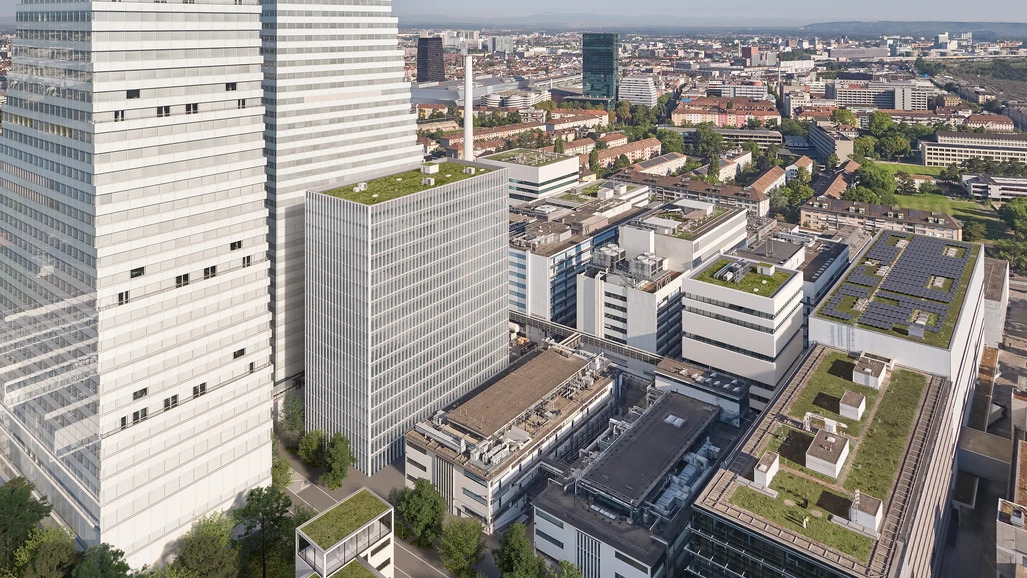
    The first development phase of the Roche site was completed at the end of 2023, and now a new stage follows. One of Europe’s most important research infrastructures will be built on the north site by 2030. The core project is Building 12, a 72-metre-high research and development building with space for around 450 researchers. The new building will replace the outdated infrastructure and create optimal conditions for developing novel active ingredients from basic research to production maturity. With an investment volume of around 500 million Swiss francs, Building 12 will become the central interface between research and clinical development.

    At the same time, the Institute of Human Biology in Building 92 will be expanded into a new center for biological model research. Around 100 million francs are being invested in the modernization and conversion. The aim is to link academic and industrial research in order to make complex human cell models usable for drug development.

    Production is also undergoing a fundamental overhaul. State-of-the-art facilities for the development and commercialization of synthetically produced active ingredients will be built in buildings 50 and 51 by 2028. A new era of pharmaceutical process innovation will be ushered in here with a modular design, digital control and high energy efficiency. The investment framework for these projects is around CHF 570 million.

    Sustainable urban development on the south site
    Parallel to the research on the north side, Roche is pursuing a long-term sustainable development strategy on the south site. The site on the Rhine is being redesigned in close consultation with Basel politicians. The revised development plan provides for generous green spaces, ecological networking along the banks of the Rhine and integration into Solitude Park. Old building structures will be gradually dismantled and building materials reused according to the principle of the circular economy.

    The Canton of Basel-Stadt is actively supporting this process. The cantonal government and the Grand Council support the approach of upgrading the southern area in terms of urban development without providing for public thoroughfares or expropriation. This means that the site will remain within the company’s own control, but will be opened up in the future through landscaping connections and new open space concepts.

    Signal for Switzerland as a business location
    Since 2015, Roche has invested around eight billion Swiss francs in its Swiss sites and over 33 billion in national research and development. In Basel alone, further facilities for research, production and infrastructure will be built by 2029, including a new underground heating and cooling center to ensure security of supply for the entire site. The construction work on the north and south sites is emblematic of sustainable, resource-conserving site development that combines business, the city and science.

    The next few years will be characterized by intensive construction phases, urban planning coordination and technological innovations. With the ongoing development of the site, Roche is not only strengthening Basel as a pharmaceutical location, but is also sending out a strong signal of its long-term commitment to Switzerland as a place for cutting-edge research, sustainable architecture and shaping the urban future.

  • New residential neighbourhood with a focus on families and community building

    New residential neighbourhood with a focus on families and community building

    According to a statement, the jury of the Canton of Basel-Stadt has decided that the design by the two Basel-based architectural firms Clauss Kahl Merz Atelier für Architektur Städtebau and Truwant Rodet will be implemented. The planned residential development at Riehenring 120 on the former site of Exhibition Hall 3 will comprise 170 affordable flats.

    Exhibition Hall 3 is currently used by Basler Verkehrs-Betriebe (BVB) as a garage for electric buses. This temporary use will end in 2028. After that, the canton plans to develop this centrally located area into a vibrant residential and living space by 2031. The plans primarily include large, family-friendly flats and a small number of small flats. In addition, a double kindergarten, a daycare centre and commercial premises are planned, as well as 200 parking spaces for tenants and other people from the neighbourhood.

    The winning project impressed the jury “with its high quality of living and its contribution to the surrounding neighbourhoods”. Part of the car park will be built above ground. This will create two additional outdoor areas on the roof for tenants, which can also be used as planting gardens.

    At the same time, according to the canton, this will make construction more resource-efficient: as less ground needs to be excavated, there will be “no energy-intensive excavation and less building material will be used. In addition, the project as a whole focuses on environmentally friendly construction by reusing various components from the existing Exhibition Hall 3 and the former BVB garage in Rank.”

  • Realignment of a former weapons range takes shape

    Realignment of a former weapons range takes shape

    With the signing of a letter of intent to cede the Moudon military base, the canton of Vaud can start its planning process for the future use of the site. As the Confederation confirmed in a press release, the army will vacate the site from the end of 2027 to make way for the Vaud Police Academy. The canton, armasuisse Real Estate as the real estate competence center of the Federal Department of Defence, Civil Protection and Sport(DDPS) and the State Secretariat for Migration(SEM) are involved in the declaration of intent. The basis for this step is the decision taken by the Vaud State Council in May 2022 to relocate the police academy from its current location in Savatan to Moudon.

    According to the press release, the area and infrastructure of the Moudon weapons range offers great potential for establishing an interdisciplinary training center. The canton is already examining whether the site could be used not only by the police academy, but also by other partners from the security sector. In particular, so-called blue light services, services in the area of environmental protection or in the area of the penal system are under discussion. A project planning loan should enable all options to be explored.

    It is already clear today that the area will be gradually redesigned after the withdrawal of the army. The 41 Hospital School Command stationed in Moudon will move to the Chamblon military base in stages from the second half of 2027. The emergency capacities of the SEM in Moudon will remain in place. This means that accommodation can be provided in the multi-purpose hall there in the event of an increase in asylum seekers. “If the project progresses according to plan, the first training courses could begin between 2030 and 2032,” says the federal government.

  • Strategic acquisition focuses on specialized commercial areas

    Strategic acquisition focuses on specialized commercial areas

    Swiss Life Asset Managers aims to strengthen its position in the life sciences sector with the acquisition of Schlieremer Gewerbe- und Handelszentrum AG(GHZ), as detailed in a press release. GHZ has developed the Wagi site that belongs to it. A total of around 250 companies and organizations from the life sciences sector are now based there on a rental area of 143,000 square meters, providing more than 2,400 jobs. The Bio-Technopark Schlieren is also located on the site.

    The GHZ site will be retained, the employees will be kept on and GHZ Managing Director Walter Krummenacher will continue to act as a contact person for the tenants and develop the site with his employees. “We are very happy to have found a reliable partner in Swiss Life Asset Managers that shares our values and our long-term commitment to real estate and life science as a contribution to society. In this way, the vision of our founder Leo Krummenacher will be carried into the future”, Walter Krummenacher is quoted as saying in the press release.

    With the acquisition of the “dynamic and fast-growing center with long-term value creation potential”, Swiss Life Asset Managers wants to underline its focus on investments in the Living, Logistics, Light Industrial and Life Science and Tech (“4L”) sectors. “We are delighted to continue the impressive development of the site with the experienced team at GHZ. Swiss Life Asset Managers is convinced of the attractiveness and future strength of life science real estate, as it is of great importance for our economy as well as for our society,” says Paolo Di Stefano, Head of Real Estate Switzerland at Swiss Life Asset Managers.

  • Basel is building the future with responsibility

    Basel is building the future with responsibility

    Mr. Hess, you have been involved in the Basel economic region for many years in various roles. What milestones or formative developments have you particularly remembered during this time?
    Today, politics and administration are much more interested in the needs of the economy than when I started working for the canton. Visible examples of mutual trust are the site developments by Novartis, Roche and Lonza and the multi-billion euro investments by these and other companies at the location. In addition to nurturing existing companies, Basel-Stadt has also massively increased its promotion of innovation. Since 2024, almost 68 million francs have been invested over eight years in nine programs in the areas of life sciences, digital innovation and the sustainable economy. The latest addition is the Basel location package. Depending on the budget situation, the canton is investing between 150 and 500 million francs per year in strengthening the attractiveness of the location. Almost all of the money goes to companies in Basel.

    Basel is considered one of the most dynamic business locations in Switzerland.
    How do you assess the current economic situation in the canton of Basel-Stadt?
    Thanks to our industry structure, Basel-Stadt is doing well economically. The erratic economic policy of the USA has hardly left any traces, even if it does pose challenges for our companies. The current position of the location can be seen, for example, in the cantonal competitiveness indicator of UBS, where Basel-Stadt is again in second place of all Swiss cantons this year. Or the triple A rating that the rating agency S&P has once again awarded the canton. Both encourage us to continue on our chosen path – as an innovative and reliable partner to the economy.

    What is the current focus of location promotion for urban areas and residential construction?
    The cantonal development plan envisages a population and employment target of 220,000 by 2035. People need living space, but also areas to work and ideally short distances between home and work. We strive to provide companies in the canton of Basel-Stadt with sufficient available high-quality space as a locational advantage. A particular focus here is on securing production space and an optimized supply of space for scale-ups.

    What are the challenges posed by a shortage of space and high demand? How is Basel-Stadt solving these?
    A major challenge in Basel-Stadt is the competition for space in the limited space available due to cantonal and national borders. We often hear from those involved in real estate project development that it is not a problem to build upwards in Basel. It is also important to make optimum use of the potential of the transformation sites in order to create more space for living and working areas.

    What are the most important findings from the Basel location package for site development?
    The Basel location package is attractive for site developers and investors, as taxable companies in Basel-Stadt that spend on research and development, parental leave, climate protection and energy efficiency can receive substantial subsidies. This facilitates the establishment and promotes the growth of companies on sites in the canton.

    How does the canton of Basel-Stadt accompany and support the transformation of industrial sites into modern residential and working quarters?
    Through an active and systematic exchange with companies and landowners. At the AWA, we not only know about a company’s confidential, potential development steps, but can also provide the company with the necessary development sites.

    What role do investors and developers play for Basel today?
    Both play an important role. They invest in underutilized, partially derelict land in order to develop it and generate substantial added value for Basel as a location. However, transformation sites are also in the public eye due to their size. All parties involved must take this responsibility into account.

    How does the promotion of start-ups and life sciences contribute to real estate development?
    A concrete example: the canton has been operating the Tech Park Basel for 14 years. We offer small-scale laboratory and office space there at attractive rental conditions. Start-ups that outgrow Tech Park Basel then look for larger spaces on commercial terms. We are therefore producing a pipeline of mature, well-financed startups (mostly biotechs) for the benefit of the private, unsubsidized real estate market.

    What future trends do you see for Basel up to 2030, particularly with regard to digitalization and new forms of work?
    Job quality is much more important today than it used to be. Digitalization could further drive the flexibilization of space rental. Our experience shows that some companies are looking for rental space where, for example, a meeting room can be booked flexibly via an app. Although Basel has a healthy supply of office space, it is still not so easy to find this type of space through real estate agencies.

    They will enter a well-deserved retirement in the next few years.
    What skills are particularly important for your succession?
    Skills are important. But personal qualities are even more important. These include entrepreneurial thinking, enthusiasm, a willingness to learn, perseverance and the joy of working together in a great team to develop the site every day. I have a bit of a problem with the term “retirement” anyway. I love my work as a “public entrepreneur” and would like to remain involved in areas that are important to me personally even after I leave my current position in May 2027.

  • Impetus for sustainable site development

    Impetus for sustainable site development

    Switzerland is one step ahead with the harmonisation of labels. Minergie-Areal focuses on energy efficiency, comfort and climate-friendly mobility and, with its streamlined certification process, is ideal for smaller, manageable sites. It sets clear specifications, for example for building quality and monitoring. SNBS-Areal is convincing for large, complex sites of 10,000 m² or more and covers social, economic and ecological aspects in equal measure. With 30 tested criteria and a broad sustainability assessment, it also serves as a basis for ESG reporting and special utilisation planning

    The example of Kraftwerk1 in Zurich
    Kraftwerk1 demonstrates the value of self-organisation, diversity and solidarity in urban areas. Democracy, low-car living, social rental models and flexible spaces ensure sustainability in practice. The cooperative structure combines individual appropriation with neighbourhood cohesion and strong environmental responsibility

    Life cycle, costs and sufficiency as levers
    Costs are reduced in the long term where product life cycles are extended, recycling is promoted and resources are optimally utilised. Beat Salzmann explains how life cycle management and the circular economy influence financial planning. Sustainable buildings are investments in the future. Sufficiency, as Boris Szélpal explains, means targeted reduction and conscious use of materials and energy. It expands the understanding of sustainability to include the aspect of voluntary renunciation, the development of resilient living spaces and social structures

    Sustainable site development is a coordinated process. Standards create clarity, cooperatives live values and sufficiency opens the way to resilient neighbourhoods with a high quality of life and low environmental impact. The future lies in the balance between comfort and indulgence and in the openness to consistently develop new models

  • Energy location with future potential

    Energy location with future potential

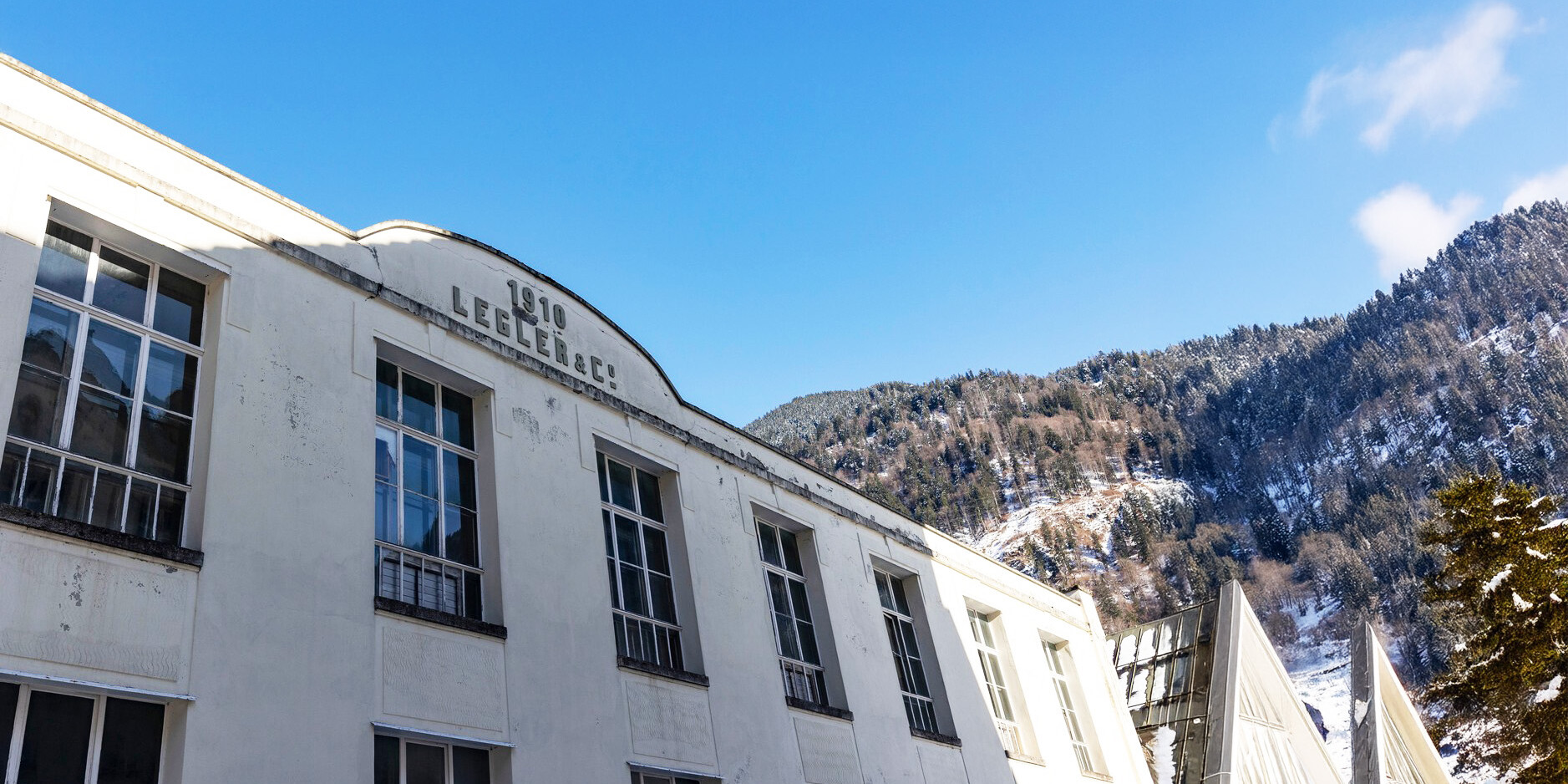
    With the purchase of the former Legler site by Hochdruckkraftwerk Diesbach AG and the simultaneous participation of the municipality of Glarus Süd, a new chapter has begun for the traditional factory site in Glarnerland. The operator of the local hydroelectric power plant has secured the site, including the power plant centre. At the same time, the municipality is acquiring agricultural land from the previous owner and will become the largest shareholder with a 40% stake.

    Energy meets site development
    The acquisition not only serves to preserve the historic power plant, but also opens up new opportunities for long-term site development. “We can offer areas ranging from 50 to several 1,000 square metres,” says Chairman of the Board of Directors Weber-Thedy.

    The municipality of Glarus Süd has secured two seats on the Board of Directors and an important land reserve of almost 30,000 square metres of agricultural land, which is earmarked for replacement measures or ecological compensation areas. The municipality is thus creating space for future developments.

    Long-term perspective with interim utilisation
    The potential of the Legler site is undisputed, but a new use takes time and requires careful planning. The aim is a mixed-use development with residential and office space that fits in with the landscape and the municipality. The first steps towards realisation are not expected before the next ten years.
    Until then, the site will be put to sensible interim use. The large halls will be rented out as storage space. They can be divided up flexibly, even if they are only suitable for certain purposes due to structural restrictions.

    Sustainability as a guiding principle
    The high-pressure power plant is focussing on environmentally friendly energy production and will renovate the plant to the latest standards in 2025. Earlier discussions about the expansion were postponed in favour of a sensitive approach to the landscape, but the roar of the Diesbach Falls is to be preserved.

    A boost for the Glarus region
    The acquisition of the Legler site is more than just a change of ownership. It is an example of forward-looking site development, supported by local energy production, public participation and a long-term perspective. The municipality of Glarus Süd is actively committed to the development of the site and at the same time minimises the risk of a prominent property falling into disrepair.

    The combination of energy infrastructure, property development and public involvement makes the project a beacon for the region and a role model for comparable sites in Switzerland.

  • Digital tool for site development

    Digital tool for site development

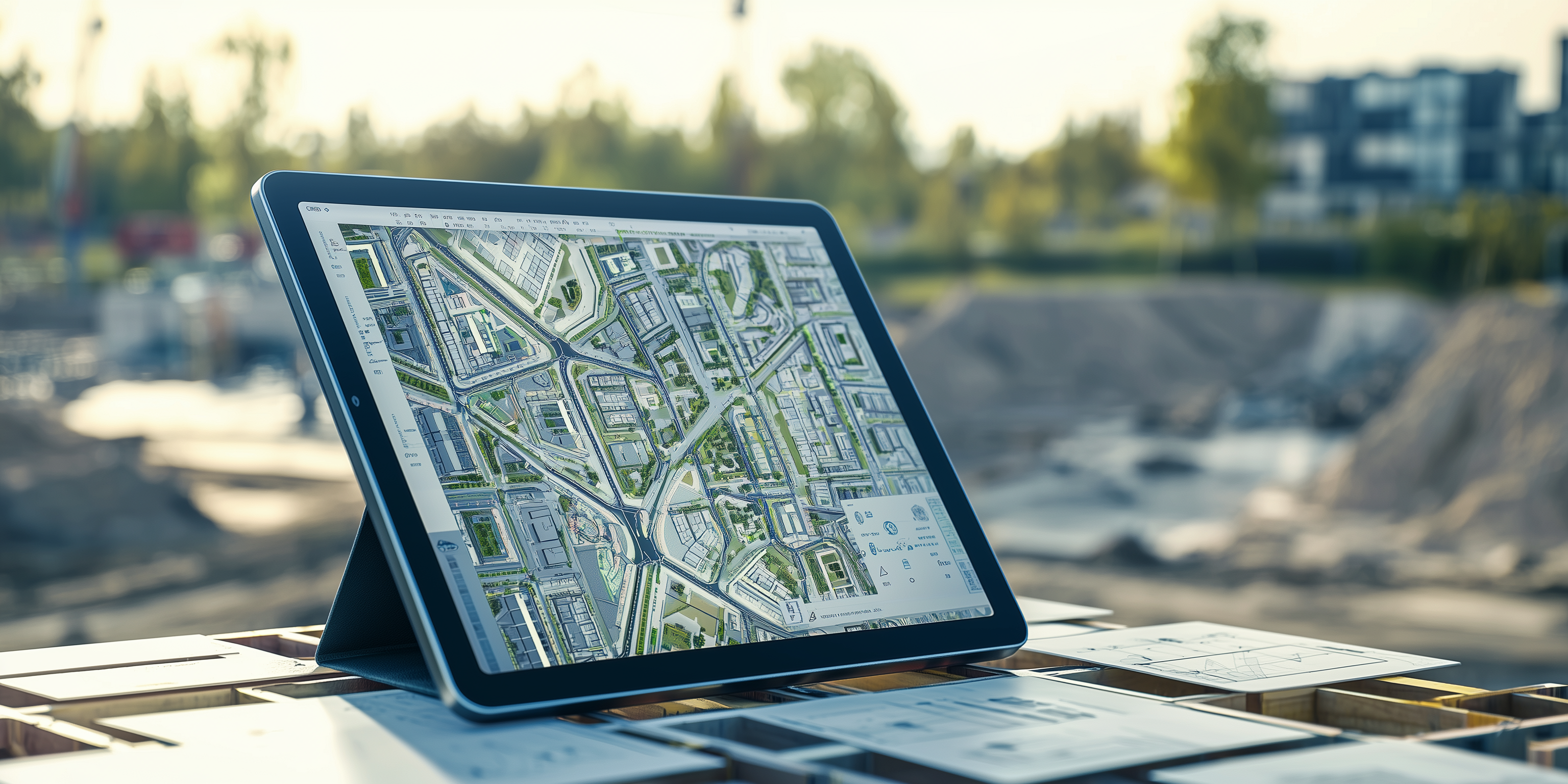
    Site development is one of the most challenging tasks in municipal planning. Smaller municipalities in particular face structural hurdles. There is a lack of resources, access to IT tools is limited and a lack of standards makes it difficult to make well-founded decisions. The digital guide is a modular, user-friendly and technically precise tool that closes this gap.

    Interplay of knowledge and technology
    The project combines the interdisciplinary know-how of the Institute for Spatial Development (IRAP) and the Institute for Information and Process Management (IPM). The centerpiece is a digitally supported guideline that systematically structures planning processes and enables automated analyses. Research, evaluation and variant development can thus be organized more efficiently. Municipalities receive a tool that improves planning quality, regardless of their size.

    Focus on employment areas
    While inner-city development has so far concentrated primarily on residential and mixed zones, this project focuses specifically on workplace areas. The strategic development of such areas is crucial to the future viability of companies and locations, especially in times of scarce space. The digital guideline provides a unique solution in Switzerland.

    Participation through echo chamber ensures quality
    An echo chamber was set up to guarantee practical application. This committee of experts from municipal administrations and planning offices contributes valuable expertise. At the first meeting on January 24, 2025 in St. Gallen, the participants discussed basic requirements and defined the next steps. The dialog between research and practice is thus established at an early stage.

    Efficient and sustainable planning and decision-making for the future
    The final software solution should be easy to use. It enables an objective and systematic evaluation of development scenarios according to relevant sustainability criteria, thereby promoting well-founded decisions in politics and administration. The creative design process is retained, supplemented by digital efficiency and reliable comparative values.

    Time horizon and outlook
    The project was launched in June 2024 and will run until May 2026. It is intended as a contribution to modern, digitally supported spatial planning. The vision is a national competence platform that makes site development tangible, scalable and of high quality.

  • New life on the Landolt site

    New life on the Landolt site

    Nestled between Mühlebach and Kleinlinthli, the Landolt site impresses with its central location. Accessible by rail and the A3 highway, the site offers an ideal starting point for future-oriented neighborhood development. Its proximity to historic ensembles and open spaces lends the project a special charm. The initial planning study shows a target image that provides for structural densification and develops open space sequences out of the landscape. An interior space is created from the west and east, characterized by waterscapes, green streetscapes and areas that can be used in a variety of ways.

    Participation and planning as a prelude to transformation

    The participatory planning study process was completed at the end of 2024 and a final report is to be produced by mid-2025. An indicative project is already planned for the end of 2025, which will be converted into a design plan from 2026. This process will be accompanied in collaboration with the spatial planning office and the design commission of the Canton of Glarus. The planning will take place in parallel with the renovation of the existing buildings, which will avoid vacancies and preserve existing “treasures”.

    Staged development with a clear strategy

    The project will be implemented in coordinated stages. Initially, the focus will be on the space that will become available in the medium term following the departure of the Landolt company. Existing buildings will be put to valuable interim use during this phase, for example as a mobility hub or as alternative space for the existing tenants. The phasing will take place with the involvement of the existing commercial tenants.

    In a further phase, the first new uses and solid, permanent open spaces will be created within the so-called talent zones. Materials that have been dismantled and defined for further use will be temporarily stored on site and reused in the subsequent construction phases.

    The final stage involves targeted densification along the cantonal road. This not only increases the quality of stay, but also creates a better network within the site thanks to the newly planned Fabrikgasse. The final stage is the innovation campus and the multi-talent at Chli Linthli, which will be developed independently of each other in line with demand.

    Space for innovation, identity and the future

    The Landolt site is not only being densified, but rethought. Historical substance meets flexible spatial structures. Squares and compact retreats create a lively, diverse quarter. The vision is a mixed-use, sustainably developed and identity-creating area for regional businesses and now also a small proportion of mixed-use housing.

  • Schlieren North East interest group founded for site development

    Schlieren North East interest group founded for site development

    The interest group (IG) Schlieren Nord Ost has been founded. According to a press release from the city of Schlieren, the aim of the association is to actively help shape the development of the area. The residential, industrial, commercial and innovation area on Rüti-/Ifangstrasse in Schlieren is one of the city’s largest development sites alongside the Wagiareal and Rietpark. The new interest group intends to pool the interests of the owners and clarify the zoning plan with the city of Schlieren and the future extension of the building lease agreements with the city of Zurich in partnership at an early stage, the statement continues.

    “I have maintained very good contacts with the City of Zurich for a quarter of a century, but – like many other things – these fell asleep during and after coronavirus. However, as the city of Zurich owns over 200,000 square metres of building land in the city of Schlieren, I would like to revive these contacts over the next 14 months,” Albert Schweizer, the city of Schlieren’s location promoter, is quoted as saying. The aim is to extend the building lease agreements, which run until around 2040, by 30 years in order to create planning security for future generations. There is the possibility of attracting more companies and creating new jobs.

    The planned membership of the regional location promotion organisation Limmatstadt AG is intended to further expand regional networking, according to the city press release. Joint events are also planned with other sites in Schlieren and the Limmat Valley, such as Silbern, Niderfeld in Dietikon and Kreuzäcker in Spreitenbach.

    According to the press release, building lease holders and property owners met on Wednesday, 5 March, at the Innovation and Young Entrepreneur Centre(IJZ) in Schlieren to found the interest group. As part of the foundation, representatives from the Canton of Zurich’s Civil Engineering Office and the energy company ewz presented plans for the cycle path and the district heating substation in the eastern part of the site.

  • A new landmark at the Rhine Falls with great potential

    A new landmark at the Rhine Falls with great potential

    The goal was clearly defined. A third of the 900,000 annual Rhine Falls tourists were to be lured to the other side of the river and attracted to the “Rhyfall Village” area. “Rhyfall Village”, or “RIVI” for short, is the name of the new neighbourhood. With a mix of gastronomy, art and shopping, the area will become a centre of attraction – not only for tourists, but also for the local population.

    The site and its future
    The “RIVI”, once the site of industrial production, is undergoing a reorganisation. The neighbourhood is characterised by two striking high-rise buildings, one of which was acquired by Helvetia. These offer living space with impressive views and space for catering, office and retail areas.

    Potential and challenges
    The visionary project met with broad approval in the region. Beat Hedinger, Managing Director of Schaffhauserland Tourismus, saw the village at the time as a “colourful mosaic piece” in the overall tourism picture. The rooftop restaurant with a view of the Alps in particular promised to be a special highlight. Hedinger also recognised the challenge of skilfully bridging the distance between the Rhine Falls basin and the site.

    Felix Tenger, Mayor of Neuhausen, is optimistic that the “RIVI” will revitalise the centre of Neuhausen and also strengthen the retail trade. Building director Martin Kessler also saw great potential to turn the site into a meeting place that creates synergies with existing facilities and increases the attractiveness of the entire region.

    Good connections and creative solutions
    The site’s location scored highly thanks to its proximity to the Rhine Falls and good public transport connections. The Badische Bahnhof Neuhausen railway station is located directly next to the site and numerous bus connections and over 200 parking spaces are available to visitors. Visitors can travel in comfort between the Rhine Falls basin and the Rhyfall Village on the Rhyfall Express tourist train.

    A project with vision
    Rhyfall Village is more than just another residential neighbourhood in Neuhausen. Whether rooftop restaurant, promenade or art gallery – the RhyTech site stands for a modern, versatile and vibrant future in the immediate vicinity of one of Switzerland’s most impressive natural wonders.

  • First stage Attisholz with UBS investment

    First stage Attisholz with UBS investment

    The Attisholz site in Riedholz is being given a new lease of life thanks to an investment by the UBS pension fund. The “Kocherei”, once a central location for cellulose production, is being extensively remodelled. The winning project by Burckhardt Architektur from Basel envisages around 150 rental flats and 4,000 m² of commercial space, which will breathe new life into the historic building.

    Collaboration between UBS and Halter AG
    The UBS pension fund, which acquired the 73,000 m² core site back in 2022, has now also confirmed its investment in the “Kocherei”. A work contract was signed between the UBS pension fund and Halter AG on 28 June 2024. While the UBS pension fund will act as investor and owner, Halter AG will be responsible for the planning and realisation of the project as overall provider.

    First stage of the site development
    The development of the Attisholz site, which is to be transformed into a sustainable living space over the next 25 years, begins with the first stage. In addition to the “Kocherei”, this also includes the “Lagerhaus” and publicly accessible open spaces. The design plan for this first stage is currently being drawn up in collaboration with the municipality of Riedholz and the canton of Solothurn and will soon be submitted for public consultation and approval.

    Sustainable and vibrant future
    The transformation of the Attisholz site into a vibrant and sustainable neighbourhood is an important project for the region. The revitalisation of the “Kocherei” and the creation of residential and commercial space are central components of this vision. The realisation of the projects is planned for the period 2025 to 2028 and will contribute significantly to the upgrading of the entire area.

    With the UBS pension fund as a strong partner and Halter AG as an experienced developer, the transformation of the Attisholz site will be driven forward swiftly and professionally in order to create a new, sustainable living space for the municipality of Riedholz.

  • Future-orientated living in the Bostudenzelg

    Future-orientated living in the Bostudenzelg

    Bostudenzelg is one of the last contiguous undeveloped building zones in the city of Thun. For the site, half of which is owned by the city and half by Frutiger AG and the Bernese Pension Fund (BPK), the owners have developed a joint vision for modern living. The innovative residential project creates urgently needed living space for all generations, realising the city’s development goals in an exemplary manner.

    Unique “open space” as a vision
    The basis of the site development is the indicative project, which is based on the winning “open space” project that emerged from the ideas competition (SIA 142). The centrepiece is a spacious park around which the buildings are arranged in a ring, which is intended to promote a communal feeling of living “in the countryside”. The residential project attaches great importance to careful integration into the neighbourhood as well as good networking and design of the outdoor spaces, which are freed from motorised traffic.

    High-quality internal development
    Great importance is attached to the interaction between the buildings and the open space as well as the economical use of the land. Different building heights will bring accents and dynamism to the neighbourhood design and highlight the entrances to the new area.

    An attractive and lively residential quarter
    The residential project focuses on versatile and socially mixed forms of housing for all needs. In addition, the project offers space for other possible uses such as a kindergarten or daycare centre, a retirement and nursing home as well as public spaces and a neighbourhood meeting point. Commercial space and non-profit housing are also part of the plans. This mix of uses will make the residential neighbourhood more attractive and revitalise it.

    Mobility and traffic concept
    Great attention is being paid to aspects of sustainability and future-oriented and environmentally friendly mobility. The new development regulations call for a mobility operating concept that offers solutions to reduce the volume of traffic and thus improve the quality of life in the neighbourhood.

    Involvement of the public
    The appropriate involvement of the neighbourhood population and other interest groups is a major concern for the planning partners throughout the entire process. To date, the public has had the opportunity to submit their opinions and suggestions on the new development plan as part of the public consultation process. At the same time, the focus is on early and close cooperation with potential non-profit building rights holders. Further participatory development formats for the site are planned in connection with the granting of building rights and based on the participation concept.

    Further steps
    Following the public consultation process and the preliminary review by the canton, the new development regulations will be published.the process for allocating the urban building plots under building rights has also been started. The next step is to prepare the architectural competitions. At the same time, Frutiger AG and the Bernese Pension Fund are pressing ahead with the development of their construction project. Implementation will take place in several stages.

    Conclusion
    This project in Thun is an example of how careful, partnership-based and integrated planning as well as future-oriented and innovative development of a residential construction site can bring concrete added value to the surrounding neighbourhoods by ensuring a high level of urban planning quality for the buildings and outdoor spaces and ensuring appropriate involvement of the population, interest groups and partners.

  • Site developments in the Thun region

    Site developments in the Thun region

    Cantonal
    Development focus areas (ESP)

    With the “ESP Thun Nord” and the “ESP Thun Bahnhof”, the city of Thun has two hotspots from the “Programme of Economic Development Focus Areas of the Canton of Bern”. With this initiative, the Canton of Bern aims to create favourable conditions for economic development at selected locations. By coordinating interests with a spatial impact, new jobs with regional or supra-regional appeal are made possible at attractive locations. In the city of Thun, the “ESP Thun Nord” is of the greatest importance, as around half of this 62-hectare site is a conversion area. The aim is to convert this land from military and military-related use to private use in the medium to long term. The short-term focus is on construction site B5, where the new research site of the Swiss Federal Laboratories for Materials Science and Technology (Empa) will be located, as well as the new “Thun Nord” railway station, which will ultimately serve as a local mobility hub. This project will create a new district in the north of Thun.

    Attractive site developments for industry and commerce
    The “Raum 5” site in Steffisburg is the second large area in the Thun economic region to be developed as a work zone. With an innovative concept, the project should fulfil the high demands of investors and users. In a very well-developed location, directly next to the BLS railway station and in close proximity to the A6 motorway feeder road, a high-density commercial development with optimal environmental design and aesthetic design is to be created. The project is a holistically conceived property project based on a clear sustainability concept. A business park is also being built in Spiez. In addition to the future depot for PostBus Bernese Oberland, various commercial enterprises will one day move into the Angolder site. In a very good location close to the A8 motorway, a commercial development is being built that is optimally integrated into the surrounding area and initially comprises two buildings. The project has been planned in such a way that the development can be expanded at a later date, thus creating opportunities for other companies to settle here.

    Residential space from urban to natural
    The majority of the construction projects described below include residential space. Almost the entire perimeter of the Thun economic area is covered by site developments of varying sizes. In the urban environment, attractive flats are being built on Bernstrasse in Thun in the immediate vicinity of Thun city centre. In addition, the Bostudenzelg, Freistatt and Siegenthalergut projects include various larger residential developments in Thun’s outer neighbourhoods. In other beautiful residential communities in the Thun economic region, such as Thierachern, Uetendorf, Heimberg, Steffisburg and Spiez, developments of around 30 residential units or more will be built over the next few years. These projects all have the great advantages of the Thun region in common. In addition to excellent transport links, residents can enjoy beautiful surroundings, diverse recreational areas, Lake Thun and the mountains in the immediate vicinity.

  • Preventing heat islands in the planning stage

    Preventing heat islands in the planning stage

    Climate change is causing problems for cities, especially in summer. “Heat island” has become a ubiquitous topic. However, those who plan larger neighbourhoods can avoid heat accumulation. The decisive factors here are the setting of the buildings in line with their surroundings, the choice of materials for façades and outdoor areas, green spaces and clever shading. The effects of these factors should actually be taken into account at an early planning stage. For this, however, architects would have to consult computer models that can calculate the impact of the decisive factors for a specific location. The problem with the existing models is that the calculation is time-consuming and costly. For this reason, they are usually not used at an early stage. The Lucerne University of Applied Sciences and Arts (HSLU) has now developed a new interactive neighbourhood climate modelling (QKM), which is limited to phase-specific information and delivers results in seconds. The project was financed by the Infinite Elements Foundation and the HSLU.

    Things have to move fast in the planning phase
    For large-scale construction projects, architectural firms usually apply in an elaborate competition procedure under high time pressure. “They have to consider a multitude of requirements in their design, one of which is the microclimate,” explains simulation expert Prof. Markus Koschenz from the Lucerne University of Applied Sciences and Arts. High costs and two-day waiting times would be out of the question for the architects in this creative work phase. But this is exactly what they would have had to accept up to now if they wanted to include the complex calculations. So what happens if you win a competition project and only then realise that the building placement was chosen in an unfortunate way? After all, the jury has decided in favour of the proposed solution; fundamental adjustments are no longer envisaged in the phase after the jury’s decision – even if the subsequent calculation of the microclimate would suggest this. In short, the dilemma cannot be solved this way. Now, warmer summer temperatures are already causing problems for people today. Warming in the coming years and decades will increase, which can be life-threatening, especially for older people. And buildings that are being planned now will still be standing in fifty years. Ignoring all this in the planning process seems negligent.

    Results in seconds
    “What is needed is an instrument for calculating the microclimate that is cheaper and, above all, can deliver results very quickly,” says Koschenz. His core team with Andrii Zakovorotnyi, Reto Marek and an external Revit specialist developed this instrument at the Lucerne University of Applied Sciences and Arts. He explains: “Existing methods use generally applicable computational fluid dynamics (CFD) instruments. These instruments can be used by specialists to develop machines, investigate flows on aircraft or determine the microclimate in neighbourhoods. They are powerful but also correspondingly complex. Our model concentrates on the aspect of the neighbourhood climate and we work with algorithms that calculate quickly,” says Koschenz, explaining the striking difference in calculation speed. It takes seconds or at most a few minutes to calculate the effects of a change. The tool can be used by the planners themselves from the first step in the planning process. With little effort, for example, one can compare two variants of façade design or the planting of trees in an inner courtyard. And not just for one summer day, but for an entire summer period.

    Checking the model with measurements
    The information on the planned buildings, their position, the materials used or the type and position of green spaces and trees is obtained by the interactive neighbourhood climate modelling from the planning tool Revit, which is already used in architecture and landscape planning offices. From this, the physical model calculates the effect of radiation, shade, heat storage properties of materials, air flow, vegetation and time of day on the neighbourhood climate. Images with colour scales show the results in an intuitively understandable way.

    Koschenz’s team proved that the model works correctly with measurements in the Suurstoffi district in Rotkreuz and also compared the results with those of existing commercial software. Koschenz is extremely satisfied with the results: “We can say that the agreement with both the measurements and the results of other software was high. This means that our tool is much faster with the same accuracy.