Tag: Bau

  • The symbiosis of steel and drywall

    The symbiosis of steel and drywall

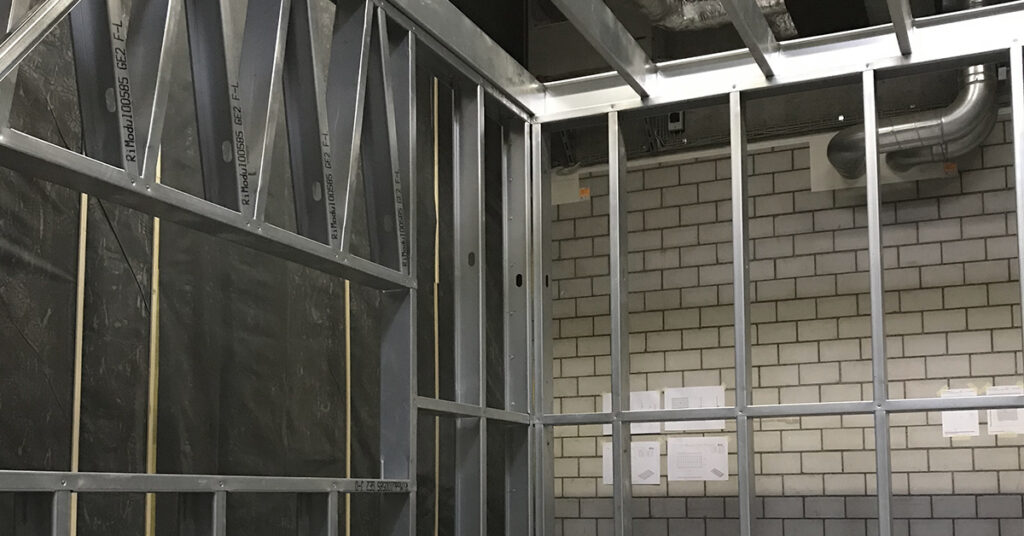
    The drywall builder was challenged: an extensive electrical and ventilation installation as well as a sprinkler system were to be integrated. A fire protection value of REI60 was also required. Since he had already completed product training at Rigips AG and knew the advantages of the new system, the case was clear: RiModul ® . The architect was also quickly convinced: "We had also checked the wood variant, but we reached the limits of the spans and would not have complied with fire protection," says Peter Fässler from MFW Architects. In addition, the slim wall constructions provide more usable space.

    Walk-in room-in-room solution
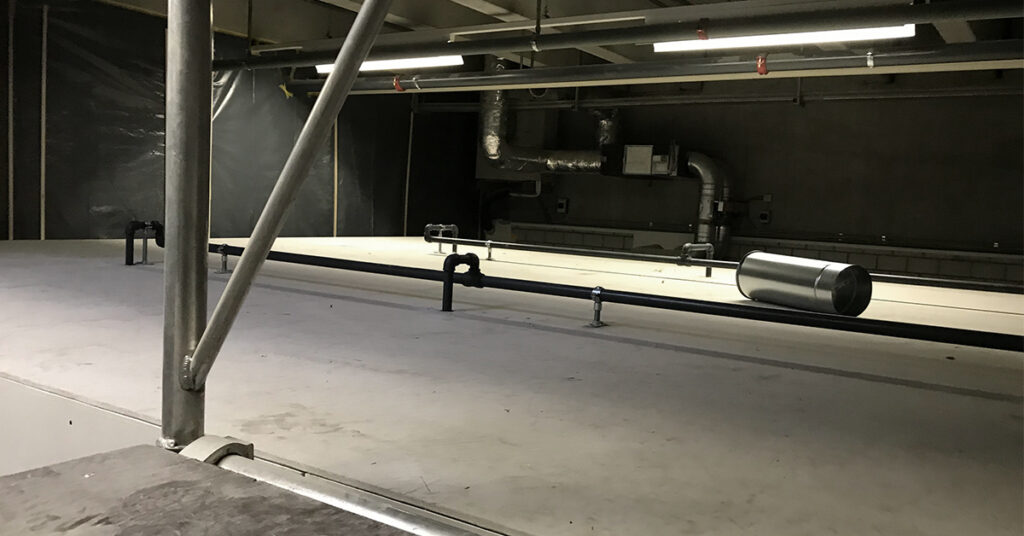
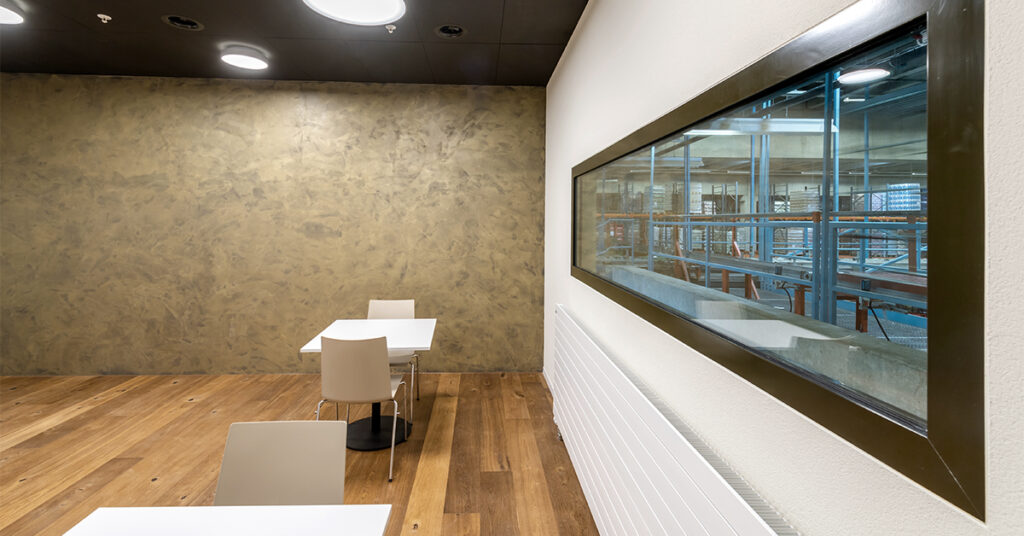
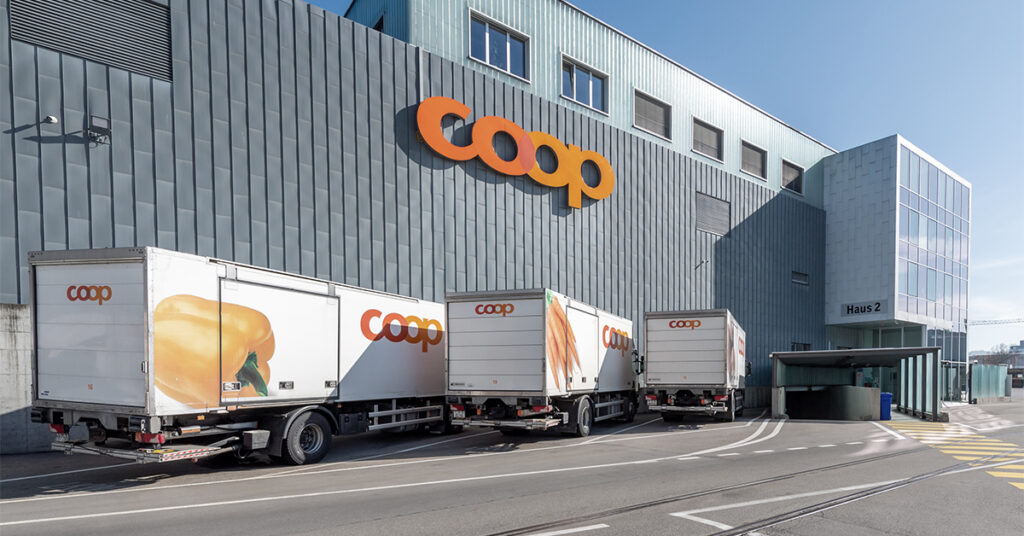
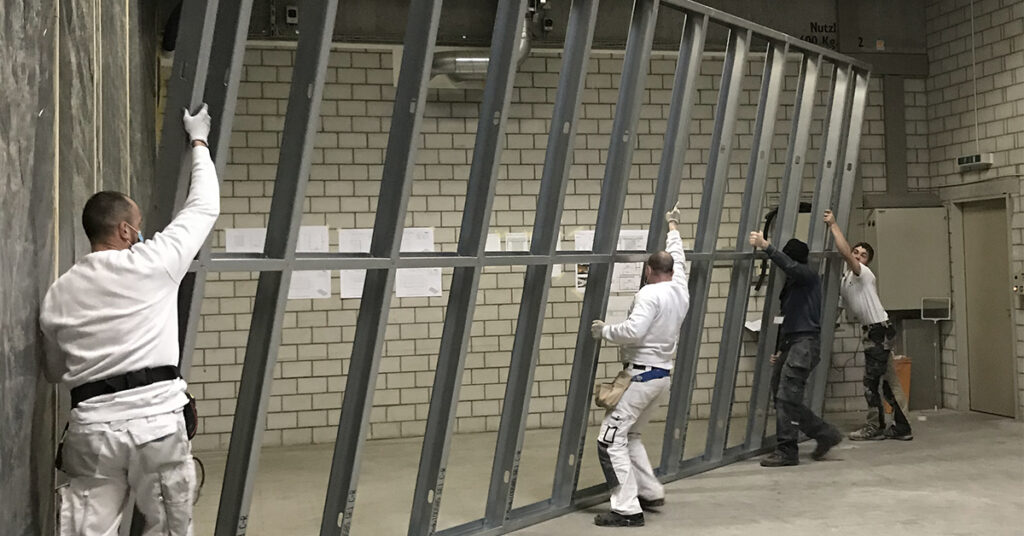
    Coop had been considering building a comfortable lounge for its employees for a long time. A good 5 meter high room, a kind of gallery, which is also adjacent to other rooms, was ideal for this purpose. But it would have been much too big, with its sand-lime brick walls, not comfortable and not heated. A room-in-room solution therefore offered itself, which could be implemented quickly, without a lot of dirt, but in compliance with all statics and fire protection requirements. Because the assembly took place while the high-bay warehouse was in operation, everything had to be well prepared and done quickly.

    Only half a day for the substructure
    As with all construction systems with a high degree of prefabrication, precise planning data and error-free transmission to the manufacturer were decisive. All steel profiles were cut to size and provided with the screw and punch holes to facilitate on-site assembly. The individual profiles could be efficiently screwed together using numbers and an assembly plan. Thanks to the corresponding planking, the entire construction has a fire protection rating of REI60. Plasterer Hansjörg Alder was enthusiastic: "The steel structure was in the distribution center in just half a day, and within three days it was planked and ready for expansion." You don't notice the stylish room and its quality of stay that it was delivered as a kit and set up within a very short time.

    Like lightweight construction, simply much more stable
    RiModul ® is actually nothing more than lightweight construction with stronger profiles. They achieve the best possible ratio of strength to weight, which among other things leads to dimensionally stable constructions – that is, walkable and resilient ceilings with additional usable area – and increased seismic resistance (earthquake security). And the system is based on the principle of prefabrication, which can reduce the overall construction time by up to 60%. RiModul ® lightweight steel construction systems also result in significantly lower loads on the foundations than conventional construction methods. Complex objects in new construction and renovation can thus be realized safely, economically and with almost unlimited design flexibility. The RiModul ® lightweight steel construction systems are particularly suitable for additional storeys, extensions and, as in the case of Coop, room-in-room constructions. It also makes sense to use it as an external wall system for infilling in hybrid buildings.

    In individual parts, prefabricated or pre-assembled
    Customers can choose from three pre-production stages according to which delivery should take place. You order RiModul ® flat if you want the individual parts and want to assemble them yourself. The profiles are numbered after processing and delivered bundled for each wall or ceiling element. With the help of an assembly plan, they can be easily assembled on the construction site or in an interim storage facility. With RiModul ® frame, the profiles are pre-assembled into frame elements in the production plant and delivered to the construction site. Planking and insulation are then carried out on site. Finally, with RiModul ® frameX, the frame elements are already planked with high-quality panels. It is advisable to make the choice of the degree of prefabrication specific to the property and already in the planning phase. Rigips designs the project in 3D based on the customer's plans and creates static dimensions and measurements. This includes, in particular, the definition of the connection and knot technology for the cold-formed steel structure. The plans for production in the factory are created on the basis of these documents.

    Find out more about RiModul ®

  • Tschopp Holzindustrie is making progress with the sawmill

    Tschopp Holzindustrie is making progress with the sawmill

    The Tschopp Holzindustrie AG is a milestone in the construction of its new sawmill at its headquarters in Buttisholz known . The civil engineering work in the saw hall area was thus completed. Now the building construction work is to begin. The building should have a length of 125 meters, a width of 50 meters and a height of 20 meters.

    The new sawmill is scheduled to start operations in spring 2023. Tschopp Holzindustrie is investing a total of 75 million francs in the expansion. It is the largest investment in the company's 100-year history to date.

    Tschopp Holzindustrie specializes in the production of formwork panels for the construction industry. Since 2005, pellets have been produced from the waste wood for the energy industry. After the new sawmill has gone into operation, timber construction companies will also be offered products that have not yet been manufactured at home or not industrially manufactured in Germany and therefore have to be imported from abroad, such as three-layer natural wood panels.

  • Drone conducts measurement flights in cement works

    Drone conducts measurement flights in cement works

    An important milestone was reached this week at the Holcim cement plant in Siggenthal. After several years of research, the special drone from the Zurich start-up Voliro carried out its first official measurement flight campaign there. According to a press release, important measurements were taken to determine the steel wall thicknesses of the cement kiln and the cyclone preheater.

    Voliro, a spin-off from the Swiss Federal Institute of Technology Zurich ( ETH ), specializes in the development of flying robots for the inspection and maintenance of industrial plants. Your drones can be equipped with different sensors and carry out visual as well as thermal and contact-based measurements. A special feature of the drones is that they can rotate around all axes thanks to a special rotor system, which allows them to maneuver in vertical positions and even upside down. Thanks to the 360-degree design, they are also suitable for use when taking measurements on curved and inclined surfaces.

    According to the press release, the use of such special drones at great heights is considered a world first. The method saved both time and money. The use of drones also increases work safety.

    According to the information, Holcim has been accompanying Voliro's product development since 2019. The global cement company from Zug is making its infrastructure in Siggenthal available to the start-up for test flights and supporting it with its specialist knowledge.

  • Student creates concept for Bündner Crotti

    Student creates concept for Bündner Crotti

    Lucas Buschauer has received recognition from the Swiss Association of Engineers and Architects ( SIA) for his semester thesis. This has the technical college Grisons now informed . The graduate of architecture studies at the University of Applied Sciences in Graubünden is planning a revival as a brewery for some unused Crotti in Bondo in Graubünden.

    The SIA specialist group for the preservation of buildings awards diploma and semester theses throughout Switzerland that present outstanding concepts for the exemplary handling of existing buildings and their preservation. This year a total of eleven works were selected.

    Buschauer's semester thesis provides for the renewed use of some Crotti that were spared from the landslide in 2017. These little houses on the shady hillside were once used as natural refrigerators. He wants to convert it into a brewery and a meeting place for the village. Different uses are planned for the individual Crotti. For example, the first crotto would catch the spring water flowing by, and two more would be converted into malthouses. Four of these crotti are intended for the brewing process. He has also planned an inn and a master brewer's apartment.

    "Lucas Buschauer's semester thesis impresses with its careful research, a captivating concept idea, which was implemented carefully and in detail and is presented convincingly," said the jury's explanation. As head of the study Christian Auer emphasizes, in addition to the architectural design, “the clarification of constructive and economic issues is one of the educational objectives of our architecture course. It was precisely this know-how that was required for this task. I am very pleased that the Graubünden University of Applied Sciences is competitive throughout Switzerland with its range of courses. "

  • Health center uses ecological heating center

    Health center uses ecological heating center

    The health center Dielsdorf relies on a sustainable heating technology solution. For this purpose, the Liechtenstein company Hoval has installed a heating center the size of a small single-family house on the roof of the facility , according to a press release . A solar system extends over the rest of the roof area.

    “The large area offered itself for the use of solar energy. The entire system was lifted onto the roof using a crane, ”explains Edgar Stutz, Head of Technical Service at the Dielsdorf Health Center, in the press release. According to Heinz Hitz, technical sales consultant at Hoval, only around 30 systems of this size are put into operation in Switzerland each year.

    The heart of the energy supply is a gas condensing boiler and the solar panels. There are two energy stores in the basement. When both storage tanks have reached the required temperature, the excess energy from the solar system is automatically transferred to an old part of the building. The system is supplemented by an oil condensing boiler, which is only used in the event of a fault.

    Compared to conventional heating systems, the health center can save 120,000 kilowatt hours of energy with the new system, says Björn Zittra, Head of Sales Support at Hoval. “That corresponds to around 12,000 cubic meters of natural gas – or around 29 tons of CO2 per year,” he explains.

  • City view of Bern is accessible in 3D

    City view of Bern is accessible in 3D

    Bern makes the three-dimensional view of the entire city publicly available. So far it has only been accessible to municipal offices and other interested parties. An Internet browser or a newer smartphone is sufficient for access.

    As the city of Bern informs , the city model includes all existing and planned buildings in the city. It also shows the most important bridges in detail. The vegetation can also be added as a 3D object or as a point cloud. The sub-municipalities were also supplemented using freely available data from the Federal Office of Topography.

    As a video shows, you can find out how high the Bern Minster is by zooming, sliding and rotating. In addition, it becomes clear which shadow course a building shows on a cloudless day. With the measuring tools control element, distances and building heights can be taken from the model. For example, the linear distance between two placemarks can also be determined. Much more information is also available via a link to the city map.

    Experts from urban planning, architecture and landscape design can also switch on official surveying data for their projects. For a processing fee, the city of Bern also offers to prepare and submit the data according to customer requirements.

  • KREIS house in Feldbach opens

    KREIS house in Feldbach opens

    An open day will take place on September 4th to mark the opening of the KREIS House . From 1 p.m. to 6 p.m., the Synergy Village in Feldbach, on which the research project of the Zurich University of Applied Sciences ( ZHAW ) is located, is accessible to all interested parties. You can try out the construction techniques of the KREIS house yourself. There will also be a market with sustainable local products.

    Efficient resource-to build the climate and sufficiency building was in May this year started . With this project, the ZHAW Department of Life Sciences and Facility Management ( LSFM ) wants to show how circular economy can be implemented on a reduced living space of 40 square meters. As the ZHAW writes in its invitation, everything in this house is in circulation – from the building materials to the nutrients from the wastewater for fertilizing the roof garden.

    Research is constantly developing new, recyclable technologies, materials and concepts for use in buildings, according to the LSFM project description. But the path from basic research to broad application is a long one. Therefore, the KREIS house is providing a room to try out these new technologies and materials. With their feedback, visitors contribute to improving it.

    In future, the ZHAW will be offering regular visits. They can be viewed online, as can dates for regular workshops on specific cycle issues. The overnight stays in the KREIS Haus are currently fully booked. The LSFM is also available for individual and cycle-oriented construction advice.

  • Holcim achieves record results

    Holcim achieves record results

    Holcim AG posted record results in the first half of 2021. The building materials manufacturer from Zug achieved an operating profit of 1.98 billion Swiss francs. That is 66 percent more than in the same period last year, according to a press release .

    Net sales of CHF 12.55 billion were also 17.4 percent, well above the previous year. Holcim had to accept major losses in the Corona crisis. “Around this time last year, I said that Holcim would emerge stronger from this crisis. These half-year results prove it ”, CEO Jan Jenisch is quoted in the media release.

    The acquisitions of seven companies by Holcim also contributed to the good result. The most recent takeover of roof and pond waterproofing system manufacturer Firestone Building Products saw a 21 percent increase in volume in demand. Due to this positive business development, the company is adjusting its expectations for adjusted operating profit in the current year to 18 percent.

  • Construction activity is declining

    Construction activity is declining

    According to the real estate barometer of Zürcher Kantonalbank ( ZKB ) for the second quarter of 2021, the number of projected apartments in planning applications has decreased by 23 percent compared to 2018. According to the ZKB analysts, this is related to high vacancy rates in peripheral regions, to which investors would have reacted accordingly. In urban centers with low vacancy rates, construction activity is picking up again in some cases, according to the barometer.

    Lausanne and Zurich are cited as examples. In the cantons of Geneva and Basel-Stadt, however, the analysts have observed a decline in construction activity. They attribute this to the high regulatory hurdles typical of urban areas and the scarcity of building land. Overall, however, the analysts state that “new apartments are increasingly being planned where the demand for living space is high”.

    In the canton of Zurich, the desire for one's own four walls, which has been intensified by the pandemic, is further explained in the barometer. According to him, house prices have increased by 5.5 percent over the previous year and 2.9 percent over the previous quarter. At the same time, the analysts see a shrinking of the offers advertised on real estate portals. They explain this with the fact that many properties are marketed by regional brokers or are already sold before construction begins. For this year and the following, the analysts are assuming excess demand in the residential property market across Switzerland.

  • Sika is growing at a double-digit rate

    Sika is growing at a double-digit rate

    According to a message from Sika , the Zug-based building materials group closed the first half of 2021 with new record values. In concrete terms, sales grew by 23.1 percent to 4.45 billion Swiss francs. The operating result at EBIT level rose by 67.2 percent year-on-year to 685.9 million francs. The EBIT margin reached a new record at 15.4 percent.

    "We asserted ourselves again in a market environment that remained challenging and achieved very good business results in the first half of 2021", Thomas Hasler is quoted in the press release. "COVID-19 will continue to challenge us," says the CEO. "But we are well positioned and have proven our resistance to crises under difficult economic conditions and created new growth platforms."

    All of Sika's business regions contributed to the positive development in the first half of 2021 with double-digit sales growth rates. In the EMEA region (Europe, Middle East, Africa), a year-on-year increase in sales of 25.2 percent to 2.04 billion Swiss francs was achieved. The Americas region grew by 15.8 percent to 1.10 billion Swiss francs. In the Asia / Pacific region, sales increased by 26.4 percent to 960.8 million francs. Business with the automotive industry (Global Business) grew by 26.4 percent to CHF 351.0 million.

    For the year as a whole, Sika expects sales growth of between 13 and 17 percent in local currencies. The operating result is to be increased disproportionately. Sika expects the EBIT margin to be at least 15.0 percent despite rising raw material prices.

  • Jaisli-Xamax is working on the Vechigen school complex

    Jaisli-Xamax is working on the Vechigen school complex

    The electrical company Jaisli-Xamax from Dietikon carries out all electrical installations for the overall renovation and expansion of the Stämpbach school complex in Vechigen. According to a report in the employee newspaper Brilli's News , the work will be carried out during the three implementation phases while the school is still running. “One of the challenges was to carry out the work while the school was still in operation,” the construction fitter Adrian Thürig is quoted as saying. Nevertheless, it was possible to "produce a clean performance".

    The work will be carried out in three stages. According to Jaisli-Xamax, the new construction of the kindergarten, the day school, the special wing and the intermediate wing as well as the renovation of the two gyms were realized in the first construction phase. The renovation of the east class wing and the expansion of the group rooms were implemented in the second construction phase. The work on the third construction phase is still ongoing. The West class wing will be renovated.

    According to project manager Luciano Matturro from Jaisli-Xamax, the cooperation with everyone involved in the construction and with the school went smoothly. Matturro was quoted as saying that he was proud that the on-site team did its job well while the school was in operation. Matturro: “We are now on the final spurt to successfully complete the third construction phase.” Two apprentices from Jaisli-Xamax also worked on the project in the canton of Bern.

  • Concrete 3D printed bridge unveiled in Venice

    Concrete 3D printed bridge unveiled in Venice

    The Striatus arch bridge was unveiled on Monday at the Venice Architecture Biennale. It was designed by the Block Research Group at the Institute for Technology in Architecture of the Eidgenössische Technische Hochschule Zürich ( ETH ), the Zaha Hadid Architecs Computation and Design Group and the Innsbruck specialists for additive manufacturing with concrete, incremetal3D . It was made possible by the building materials manufacturer Holcim Switzerland .

    Striatus is part of the “ Time Space Existence ” exhibition. It will be shown by the European Cultural Center as part of the Biennale. Its name (Latin: ribbed, grooved, striped) reflects the structural logic and the manufacturing process of the bridge, said Philippe Block from ETH in a press release from Holcim. “In arched and vaulted structures, the material is placed in such a way that the forces can be transferred to the supports in pure compression. The strength is generated by the geometry, whereby only a fraction of the materials are used that are used in conventional beams. ”This opens up a multitude of possibilities for building with lower strength and environmentally friendly.

    "Striatus stands on the shoulders of giants," says Shajay Bhooshan of Zaha Hadid Architects. “It revives ancient techniques of the past.” Its “tactile quality, aesthetics and strength” reflected the vision “that beauty is a promise of performance”. The joint work makes the striatus bridge "greater than the sum of its individual parts", says Johannes Megens, co-founder of incremental3D. According to Holcim CEO Jan Jenisch, the digital and circular design of the bridge uses "concrete at its best, with minimal use of materials and blocks that can be reassembled and reused infinitely".

    Holcim claims to be working on a range of 3D printing applications, from complex infrastructure to affordable housing for Africa. In Malawi, Holcim has put the world's first school made of 3D concrete printing into operation. The construction of the walls took only 18 hours and consumed 70 percent less material than with conventional construction methods.

  • New place and drinking fountain inaugurated at JED

    New place and drinking fountain inaugurated at JED

    The new place at the JED in Schlieren has been inaugurated. According to Gianfranco Basso from Swiss Prime Site Immobilien AG , after a three-year, intensive construction phase and a staggered commissioning of the new center, the essential work on the surrounding area has been completed. The construction fences have disappeared and the converted former printing center of the NZZ has now become an open area and thus part of the public space.

    The new square was officially opened on Thursday and the drinking fountain was inaugurated. The opening began with a speech from Basso. This was followed by a greeting from Stefano Kunz, City Councilor and Head of Construction and Planning. Then it was called “water march” for the drinking fountain and there was an aperitif at the fountain. This was followed by a joint lunch for representatives from politics, authorities, those involved in the project and those responsible for JED in the restaurant eve’s kitchen, right on the square.

    The owner Swiss Prime Site found the name JED for the old printing center that has been converted for today’s use. It stands for join. Explore. Dare – connect, discover, dare. The JED has good connections just outside Zurich. With a direct connection to the Limmattalbahn and 500 meters from Schlieren train station, the location is well connected to the public transport network.

  • Construction investments are falling slightly

    Construction investments are falling slightly

    Construction investments fell by 0.3 percent year-on-year in 2020, as the Federal Statistical Office ( FSO ) writes in a press release. This is understood to mean the construction expenses without public maintenance work. If these are also factored in, the total construction expenditure will be roughly at the level of the previous year.

    Investments in new construction projects have decreased by 0.6 percent year-on-year. In contrast, 0.1 percent more was invested in renovation projects. The federal government, cantons and municipalities invested more in both new construction and renovation projects than in 2019. In 2020, private clients were more cautious.

    According to the FSO, a positive development was observed in civil engineering investments. These increased by 3.2 percent in 2020. In contrast, investments in building construction projects decreased by 1.1 percent. While the federal government, cantons and municipalities have invested more in building construction as well as in civil engineering than in the previous year, the amount invested by the private sector only increased in civil engineering.

  • "We anticipate a trend towards urban living"

    "We anticipate a trend towards urban living"

    To person
    Stephan Attiger (FDP) has headed the Construction, Transport and Environment Department of the Canton of Aargau since 2013. At the national level, the 54-year-old represents the concerns of the canton as President of the Conference of Construction and Environment Directors (BPUK) and as a board member of the Conference of Energy Directors (ENDK). Born in Baden, he worked for a long time in the management of various Swiss companies before moving into politics. Among other things, he was Mayor of the City of Baden from 2006 to 2013 and Grand Councilor of the Canton of Aargau from 2009 to 2013.

    You are in charge of the Construction, Transport and Environment Department of the Canton of Aargau. How do you have to imagine a typical working day for you?
    In the last few months, my working days have been rather untypical due to covid: I was often in the home office, physical meetings were rare, and official events hardly took place at all. But not every day is the same, and the process depends heavily on the schedule. Basically, early in the morning I discuss the short-term issues and what is to come in the medium and long term with my closest employees. This is followed by meetings at various levels: government council, department, departments, bilateral discussions and meetings with external parties. In between I study files.

    What milestones have you reached in terms of construction so far?
    On the one hand, there are numerous larger and smaller buildings that I was allowed to inaugurate – not only in road construction, but also in the environmental sector, such as flood protection and renaturation projects. The latter also have a direct and positive effect on the residential and location attractiveness. In addition, we have created important foundations for the planning and subsequent implementation of mobility projects. With the last revision of the structure plan and the new cantonal mobility strategy mobilitätAARGAU, we want to coordinate settlement and traffic development. It therefore sets specific spatial accents and differentiated goals per room type for the individual means of transport. This in turn affects civil engineering and building construction. As a canton, we also act as a role model.

    In what way?
    For example, we are promoting more biodiversity and quality of stay in the outdoor spaces of our properties. We are looking for good solutions for how biodiversity issues can be taken into account in new buildings and in the maintenance of existing properties. Climate adaptation measures on buildings and in their surroundings make a contribution to achieving our climate policy goals. Another good example is the new building for the Office for Consumer Protection, in which we want to use wood from the Aargau forests as a sustainable building material.

    What are currently the most important construction projects in building construction?
    A major project currently underway in the area of cantonal real estate is the new construction of the police building in Telliquartier in Aarau. The units of the cantonal police, which are distributed across numerous locations, are to be brought together here. The building permit is already available. At the end of March, the canton also started the consultation process for the new location of a canton school in Fricktal. The hearings on the aforementioned new building for the Office for Consumer Protection and the project to merge the Aargau IT department into one building in Unterentfelden were concluded. All construction measures are implemented according to the principle of sustainability. During planning, special attention is paid to the gray energy bound in the building, and the time for new user requirements is coordinated with the time of repair.

    Aargau has a large number of development areas that could offer space for additional residents. What are the plans here?
    The cantonal structure plan designates 21 residential areas with areas that are predestined for high-quality settlement development. These should make a significant contribution to absorbing the expected population growth over the next 10 to 20 years in suitable, easily accessible locations. The areas should not only support the economical use of the soil with an appropriate density, but also become high-quality and attractive residential locations in the interests of sustainable development. This is the task of the municipalities, which determine the appropriate framework conditions and requirements in the land use planning. The canton supports them in this.

    Area developments often stumble over traffic problems. Are you actively helping to find a solution?
    It is effectively the case that high demands are placed on traffic planning, especially when it comes to site developments. This is because there are many unknowns about future claims. Here, traffic planning must provide a flexible framework in order to be able to react to the various requirements of investors. As far as the canton is concerned, it takes an active part or sets the framework conditions at the interfaces.

    The project to extend the Limmattalbahn from Killwangen-Spreitenbach to Baden is currently making waves. What are your arguments to try to change your mind against the opponents of extra time?
    The reporting in the media unfortunately gives a distorted picture of the general level of acceptance for this project. In the public hearing, the regional planning associations and all municipalities in the perimeter of the new tram route as well as most associations of the Limmattalbahn approved. The specifically proposed lines also received broad approval. We take the public's reservations that emerged from the hearing very seriously. For example, we have added additional variants for the lines. We will examine these and other objected points in more detail until they are determined in the structure plan and weigh them against the other cantonal interests and with the reservations mentioned.

    Urban sprawl is also a problem in Aargau. Did the municipalities make mistakes in spatial development?
    It is important to look to the future. In today's inventory, the potential that can be better used for sustainable development should be recognized. The revision of the Spatial Planning Act of 2013 has shown that the development needs of the next 20 years can be covered with the internal development of the settlement, i.e. the use of the existing reserves. We take the containment of urban sprawl very seriously. The 2015 structure plan finally defines the settlement area. The consumption of crop rotation areas has already fallen sharply.

    How well or badly does the cross-community cooperation in spatial development work?
    The regional planning associations play an important role in this cooperation. You also have to coordinate the municipal land use planning regionally in accordance with the building law. The coordination along the municipal boundaries works.

    What does an optimal use of land resources look like for you?
    The economical use of the soil is a central concern. Building upwards cannot, however, be unrestricted. The quality of the settlement and the townscape must always be taken into account. And in the case of underground structures, care must be taken to ensure that there is enough space left where large trees can be planted and water can seep away. This is crucial for avoiding heat islands in the settlement area and for the groundwater. Climate change poses great challenges for us. Optimal use of soil as a resource, sustainable settlement development and high-quality residential and workplace areas are not mutually exclusive.

    The canton of Aargau is already well positioned when it comes to digitization. What are the future plans in the construction sector?
    The digitization of construction projects with Building Information Modeling (BIM) is a big topic for us. We are currently working on around 20 BIM pilot projects. At the beginning of the year, the first master builder submission was put out to tender as part of a pilot project in the invitation process. Our goal is for BIM to be used as standard for project management in all new projects in the civil engineering department from 2025. Astra and SBB have the same “timetable”.

    Pandemics have had an impact on urban planning before. Will Corona present urban planners with new challenges in the future?
    Our villages and small towns are ideally suited for walking and cycling as places with short distances. This is a very good starting position, even in times of pandemic. In more and more places there is the possibility to work in co-working spaces. In this way, long travel times can be avoided, even if there is little space for home office. Attractive public spaces and easily accessible recreational opportunities are important. These are in great demand, and not just since Corona. I do not believe that this pandemic will completely turn city planning upside down.

    According to an analysis by Wüest & Partner, the canton of Aargau has the highest potential for new living space and development areas alongside Geneva, Vaud and Zurich. What will have changed in Aargau in 10 years?
    According to our forecast, we will get more attractive living space, especially in easily accessible locations, near train stations, in the centers of our villages and cities. Existing buildings are being converted, some of them are being built. We anticipate a trend towards urban living, not least because of the demographic development. More older people are drawn to central locations where they can benefit from services, short distances and cultural offerings. But living in the country will also remain attractive. Many of the around 100,000 single-family houses in Aargau are being renovated and brought up to date in terms of energy or even replaced by new buildings.

  • Swica and Steiner build in Aarau

    Swica and Steiner build in Aarau

    The health organization Swica from Winterthur and Steiner AG from Zurich want to realize a mixed-use development in the Aarau district of Scheibenschachen, Steiner informs in a press release . Three buildings with a total of around 90 rental and owner-occupied apartments as well as commercial space are to be erected on an area of around 4,000 square meters. A building worthy of protection that is already on the site will be integrated into the project, explains the Zurich-based project development, total and general contractor.

    In a first step, the two partner companies want to carry out a study contract for the development of a project plan. It should then be specified and submitted for approval. Construction is scheduled to start in 2023. The construction work should be completed by the end of 2025.

    The Scheibenschachen district, which is within walking distance of the historic center of Aarau, has developed "into a popular residential area" over the years, Steiner writes in the press release. According to her, the Zurich-based company has already built two more large residential developments in Scheibenschachen.

  • SV Hotel opens new Courtyard by Marriott hotel

    SV Hotel opens new Courtyard by Marriott hotel

    The catering and hotel management group SV Group , based in Dübendorf, has been operating a new hotel under the Courtyard by Marriott brand since July 5th. It is located in a new building designed by Hadi Teherani on Bismarckallee in Freiburg and will in future offer families, individual and business travelers overnight and stay opportunities on 5000 square meters, according to a media release .

    It is the first Courtyard by Marriott hotel in the Black Forest region and the fourth of this brand after hotels in Zurich, Basel and Munich. With an interior design inspired by the Black Forest region, the hotel differs from the others. "Starting with the lighting in the entrance, through the carpets in the hallways to wall wallpapers with subtle tree patterns, our guests keep coming across our topic", Johannes Frank, hotel manager at SV Hotel, is quoted in the press release.

    In the hotel's restaurant, international cuisine with seasonal and regional products from the Black Forest is served all day. There is also a fitness room and lobby that are open around the clock. The rooms have WiFi, flat-screen TVs, ergonomic work areas and Marriott beds.

    The SV Group has been working as a franchisee with Marriott International since 2004. She also teamed up with Volksbank Freiburg to run the hotel in the new building project on Bismarckallee. "With SV Hotel we have found an experienced and reliable partner with whom we can use the commercial space of the area attractively", Uwe Barth, spokesman for the board of Volksbank Freiburg, is quoted in the media release.

  • Zurich's Manufakt8048 business park is open

    Zurich's Manufakt8048 business park is open

    The Manufakt8048 business park has been completed. On Thursday, the building owner Swisscanto , the developer and general contractor Steiner AG , architects, project partners and future tenants celebrated the opening of the new modular building complex in Zurich-Altstetten. In a media release , Steiner AG also announced that in the coming years, with Manufakt8820 and Manufakt8409, two more industrial parks will be built in Wädenswil ZH and Winterthur based on the same concept.

    Steiner AG describes its special manufacturing concept as sustainable and multidimensional. It offers shared meeting rooms that can be used as required, as well as so-called flex offices and meeting areas. In order to make commercial rents affordable, especially for young companies, Steiner AG has improved space efficiency with areas that can be used jointly, for example. This can be "implemented well in reception areas, meeting rooms or lounges", says her Head Real Estate, Michael Schiltknecht. This is particularly interesting for start-ups, "who don't have to rent everything right away".

    As it is said, the Manufakt8048 commercial property benefits from the attractive environment in the “up-and-coming urban quarter” in the west of Zurich in the immediate vicinity of the Zurich-Altstetten train station. It thus offers "ideal conditions for companies from a wide variety of industries".

  • Model clarifies the cycle of building materials

    Model clarifies the cycle of building materials

    With his dissertation, industrial engineer Daniel Kliem wants to create the basis for the recycling of building materials at the OST – Ostschweizer Fachhochschule, across cantons. As it is said in a media release, the “cantonal spirit” is a hindrance in the political process. If, for example, the price for mining gravel and dumping demolition and excavation is raised in one canton in order to provide incentives for recycling, the problem would only shift to other regions: “Dismantling material and excavation would then be transported to other cantons and new material would then drive from further away, ”said Kliem.

    Now a participatively developed model wants to clarify the system dynamics. In addition to three OST institutes, experts from the Universities of St.Gallen and Bergen , the Zurich Office for Waste, Water, Energy and Air as well as Energy and Resource Management GmbH are involved in this four-year project. Despite the complex dynamics, it has already created a comprehensive understanding of the problem and has been able to identify actionable fields of action. For example, the processes and spatial planning measures would have to be redefined. In addition, construction-intensive cantons such as Zurich should be included and the taxation of resources should be regulated nationally.

    "The realization that even experts can learn new things with models and gain new perspectives and inputs was exciting," Kliem is quoted as saying. “The obvious measure to increase the price of gravel is good and works. But if the catchment areas are included, the cooperation between cantons serves as a key to prevent additional transport. "

  • Emmi lays the foundation stone for a new cheese dairy

    Emmi lays the foundation stone for a new cheese dairy

    Emmi is building a modern cheese factory at its location in Emmen for 50 million francs. It will replace the existing cheese dairy building, which is over 40 years old. As stated in a press release , this new building is one of the most important investment projects in Emmi's history. On Thursday, the milk processor celebrated the start of the new project phase with the laying of the foundation stone: the building construction is being tackled. In addition to representatives from Emmi and the project partners, Council of States Damian Müller and Lucerne Councilor Fabian Peter were also present.

    Preparatory work in the area began in November. The groundbreaking took place in January. The building should be ready by the end of the year. Commissioning – initially parallel to the existing cheese dairy – is planned for the end of 2022. The new dairy offers "space for highly professional and resource-saving cheese production," the message continues. In addition, it creates additional capacities in line with the long-term growth plans.

    The Emmi Group has 25 production facilities in Switzerland. The company also has 14 subsidiaries abroad. It is also represented with production facilities in eight of them. Emmi exports its products from Switzerland to around 60 countries. "With regional milk from Central Switzerland, we will be producing even more high-quality cheeses such as our Lucerne cream cheese for the whole world in the future," said CEO Marc Heim.

    "Emmi's investments show great confidence in the regional economy and in the canton of Lucerne as a location," government councilor Peter is quoted as saying. “As an important employer, she also serves as a role model in many ways. We are proud to have Emmi in our region. "

  • Vial industrial park in Domat / Ems is expanded

    Vial industrial park in Domat / Ems is expanded

    The former sawmill area in Domat / Ems has been expanded into an industrial park since 2017. Hamilton was the first company to settle there in 2017. The corner parcel in the northeast of the area is now to be sold to LJH Immo AG, the government of the canton of Graubünden informs in a message . It has already approved the draft of a corresponding sales contract for the Domat / Ems community for an area of 6,477 square meters.

    LJH Immo AG is preparing the plot for the settlement of a total of four companies. The real estate company will invest between CHF 12 million and CHF 15 million for this, according to the announcement. According to her, the companies not named are four export-oriented companies "which develop profitable, innovative high-tech products or systems".

    By settling on this parcel, the workforce of the four companies is to be increased from 85 to 140 in the medium to long term, thus creating around 55 full-time positions. "The direct and indirect added value generated by the project is of great economic importance for the canton of Graubünden," emphasizes the government in the communication.

  • Nüssli is building ten pavilions for the Expo

    Nüssli is building ten pavilions for the Expo

    The world exhibition, which is actually planned for 2020, begins in Dubai on October 1st. Nüssli is building ten of the total of 200 country pavilions for the Expo, according to a press release by the event builder from the St.GallenBodenseeArea. Despite strict compliance with the health measures, all work is on track, so that the pavilions of Baden-Württemberg, Germany, France, Luxembourg, Austria, Belarus, China, Japan, Kazakhstan and Monaco will be ready on time.

    The pavilions of France and Japan attracted particular attention. The trade journal “Architectural Digest” recently presented the eight pavilions that will be architecturally the most important at the Expo. With France and Japan, this also includes two of the pavilions built by Nüssli. The event organizer is implementing the motto Pavilion of Light for France and is focusing on sustainability and the connection between Japan and the Middle East for Japan.

    “We cultivate forward-looking planning, cultural understanding and constant exchange within and between the teams as important principles,” Harald Dosch is quoted in the message, COO Special Projects at Nüssli and responsible for all ten pavilions. His company also benefits from the experience. Because Nüssli built a pavilion for the world exhibition in Hanover 20 years ago. In the meantime, 35 more Expo projects have been added.

  • Researchers want to print tower

    Researchers want to print tower

    The Graubünden village of Mulegns on the Julier Pass is to receive a new cultural site: Giovanni Netzer, theater director and founder of the Origen cultural festival, wants to have a new white tower built. This should be 23 meters high and comprise four floors. At the very top, a stage for performances is to be built under a dome. The appearance of the tower should be reminiscent of the Graubünden confectioner tradition.

    Netzer wants to rely on digital construction technologies for the construction of the tower. To do this, he works with researchers from the Swiss Federal Institute of Technology in Zurich ( ETH ). The tower is designed and planned by ETH professor Benjamin Dillenburger and Michael Hansmeyer from the Digital Building Technologies research group together with the Origen Foundation by Netzer. In addition, with Robert Flatt, Walter Kaufmann and Andreas Wieser, three other ETH professors from the national research focus on digital fabrication are involved.

    The components of the tower are to be produced on site with a 3D printer. Interested parties can watch this process. Robots should then build the tower from these parts. According to an announcement from ETH, the tower will be one of the tallest structures ever to be 3D printed and built by robots. The construction using 3D printing enables complex geometries to be produced and raw materials to be used sparingly.

    When the project was presented on Tuesday, Federal President Guy Parmelin was also present. Construction is scheduled to start in April 2022. In addition, the dismantling is already planned. In this way, the concrete elements can be separated from each other again at a later point in time. Theoretically, the tower could then be rebuilt in another location.

  • Jansen and SFS secure jobs

    Jansen and SFS secure jobs

    The two companies based in the St.GallenBodenseeArea, Jansen and SFS, have agreed to work together in the window area, as can now be seen in a press release. Jansen will concentrate on the further development of the wood-metal window system Connex, while SFS will sell the Connex brand as the exclusive partner.

    As part of this collaboration, Jansen would like to continue to drive innovations, while SFS would like to expand its market position with the Connex portfolio. In addition, both companies see their cooperation as a commitment to Switzerland as a business location. By assuming their corporate responsibility, they would secure “jobs and training positions in the Rhine Valley”.

    In addition, customers should benefit from the partnership. On the one hand, both companies can concentrate on their complementary strengths and, on the other hand, the geographical proximity makes the cooperation a success.

  • Steiner AG builds new quarters in Fischbach-Göslikon

    Steiner AG builds new quarters in Fischbach-Göslikon

    When the building permit becomes legally binding, construction work for the Widacher project in Fischbach-Göslikon can begin in summer. The shares the project developer Steiner AG with now.

    As part of this construction project, a fallow industrial area will be converted into "a new place to live in the countryside". Listed buildings such as the barn and the Alte Post would be carefully integrated and revitalized for living and common areas.

    The start of construction on the first of three stages is scheduled for summer 2022. Initially, 16 terraced houses and 42 apartments will be built to the Minergie standard. A total of 165 residential units are to be built there in ten multi-family houses and 46 single-family houses.

  • HRS drives hotel project in Arbon

    HRS drives hotel project in Arbon

    HRS Real Estate AG from Frauenfeld would like to build a b_smart hotel on the SaurerWerk-Zwei site in Arbon, according to a media release . The real estate company has now submitted a planning application for the hotel and a neighboring building with 18 condominiums. The hotel is to have 63 hotel rooms, and catering with 70 seats, fitness and meeting rooms are also planned.

    The project is related to the closed Hotel Metropol. After its demolition, the Riva project will be implemented on the site. At a round table, an agreement was reached that Riva "with a restaurant, hall, bar, garden terrace and additional overnight accommodation is architecturally the right property in the right place," says the message. HRS has therefore decided to push ahead with the plans for the b_smart hotel. Originally, the company was of the opinion that the “economically necessary and necessary prerequisites for a new hotel would only be met with the construction of Riva”. But now it is making advance payments to create new overnight accommodations in Arbon.

    HRS works with the Liechtenstein company b_smart selection from Gamprin-Bendern. It already operates 16 hotels and motels in Liechtenstein and Switzerland. It relies on a so-called self-check-in concept, through which guests can book around the clock and check in on site. The Toni Hilti family trust and the Toni Hilti family from Liechtenstein are involved as investors in the hotel project.

  • Sulzer and Blue Planet are working on CO2-negative concrete

    Sulzer and Blue Planet are working on CO2-negative concrete

    Sulzer and Blue Planet want to work together to accelerate the transition to a sustainable cement industry. For this they have now entered into a partnership. The Californian specialist for CO2 capture and mineralization uses technologies from the Winterthur company to reduce CO2 in order to lower greenhouse gas emissions from industrial operations.

    According to a press release from Sulzer, Blue Planet has developed a profitable CO2 capture, use and storage system that captures CO2 from a variety of emission sources such as power plants, refineries, steel and cement plants. The CO2 is mineralized in solid, crystalline form and thus permanently bound. The granulate is added to concrete as a 70 to 90 percent main component. As usual, these aggregates are then bound by cement. With a share of 7 percent, cement makes a significant contribution to global CO2 emissions. But the CO2 footprint of the cement in the concrete is "more than compensated for" by the CO2 bound in the synthetic limestone aggregates, according to Sulzer.

    "We are pleased to be able to contribute our expertise in circular applications to such a future-oriented project," said Sulzer's Chemtech division manager, Torsten Wintergerste, quoted in the press release. "It will help reduce carbon emissions from industrial applications and the cement sector – a major concern of our customers."

  • Implenia hands over the Dialogplatz in Winterthur

    Implenia hands over the Dialogplatz in Winterthur

    Implenia ceremoniously handed over the dialogue space, which was completed in spring, to the city of Winterthur on June 8th, the real estate company informed in a message . The name of the approximately 5,800 square meter open space in the Lokstadt district of Winterthur goes back to a wage dispute at Sulzer that was settled in 1937. Implenia writes that in the future, the dialogue space should be a central place for meeting and exchanging ideas. "We are very pleased to be able to present the residents of Lokstadt and all Winterthur residents with a great town square and meeting place that can be used in many ways", Adrian Wyss, Head of Implenia's Real Estate Division, is quoted in the press release.

    Implenia developed the dialogue space, which is part of the 21,000 square meter open space in the Lokstadt district, in collaboration with the city of Winterthur. In the course of the takeover, the city will gradually be responsible for the operation and maintenance of the square. Implenia is contributing 6 million francs for future maintenance and renovation costs.

    The square, which is located in a new pedestrian zone, offers a variety of opportunities to stay, meet and play, is further explained in the communication. Specifically, Implenia lists a playground, shady trees, a system for roller sports equipment (pump track), a drinking fountain, seating and a catering area.

  • Construction trader HGC takes a stake in Urdorf start-up

    Construction trader HGC takes a stake in Urdorf start-up

    The trading cooperative of the Swiss Builders' Association ( HGC ) participates in Cloudworks AG , based in Urdorf. The company operates the PropTech start-up umbaumanager.ch, which was founded in 2019. The digital platform carries out the entire conversion process in digital form, according to the media release on the partnership. She leads the homeowner through the entire process of the construction project, from the first cost estimate, through the obtaining of offers, the award of contracts and construction management to any defect management.

    Umbaumanager.ch has been working with a network of qualified craftsmen and suppliers since the start. The HGC was one of the first partners of umbaumanager.ch and is now participating in the operating company Cloudworks, according to the announcement. "With the network and know-how of HGC as a service provider for everything to do with construction, our platform can be expanded further," the founders of Cloudworks AG and developers of umbaumanager.ch, Faton Mati and Christian Vogt, are quoted as saying:

    The HG Commerciale cooperative, founded in 1899, supplies the Swiss construction industry with materials. "We at HGC are further expanding our digital competence with our participation and can thus offer our craft customers a clear added value", Martin Tobler, CEO of HGC, is quoted in the announcement. The HGC has around 800 employees.

  • Cosmos construction project goes to real estate fund

    Cosmos construction project goes to real estate fund

    Mobimo is selling its building-approved Cosmos project in Dübendorf to a real estate fund managed by Credit Suisse , the Lucerne real estate company informed in apress release . In 2000, Mobimo acquired the corresponding property on Zürichstrasse. Instead of the commercial building that existed at the time, four new buildings with a total of around 170 apartments as well as areas that can be used for offices, businesses or sales are to be built.

    Construction work is scheduled to start this month. In the late summer of 2023, the buildings complying with the Sustainable Building Switzerland Standard (SNBS Gold) and the greenproperty seal of approval should be completed. Among other things, a photovoltaic system and a geothermal probe will be installed, explains Mobimo.

    “We have developed a convincing new building project from an investment property with potential,” Mobimo CEO Daniel Ducrey is quoted in the press release. "Cosmos is a good example of the interaction between active portfolio management and internal development competence."