Sika is buying up the Russian manufacturer of mortar products Kreps LLC, informs the Zug-based building materials group in a press release . The company, with annual sales of around 15 million francs, specializes in the production of tile adhesives, plasters and floor leveling compounds. The notification does not provide any information about the purchase price.
The new addition is intended to strengthen Sika's position in the region. "Kreps offers a broad product portfolio and an expanded geographic presence for mortar in the Russian Federation," Ivo Schädler, Regional Manager EMEA at Sika, is quoted in the press release. "Together with the improved access to the sales channel, we get a platform to further expand and strengthen our position in this market." The new acquisition has production sites in Saint Petersburg and Yekaterinburg, both regions in which Sika was previously not represented with its own locations.
With the takeover, a training center operated by Kreps and “well-equipped” production laboratories will also be owned by Sika, the press release explains. According to her, the transaction has yet to be approved by the local antitrust authorities.
Students in the master’s course in Advanced Studies in Architecture and Digital Fabrication at ETH have created a bamboo pavilion weighing just 200 kilograms and 40 square meters, the ETH informs in a message . For the design of the innovative pavilion, its creators developed their own digital design tools. In addition to the renewable raw material bamboo, recyclable plastic was also used in the production. All connecting pieces and shading elements were created using 3D printing.
"The building system developed for this project aims to reduce the logistical effort of building and at the same time to use the advantages of digital production for a more sustainable building culture", Marirena Kladeftira, doctoral student at the Professorship of Digital Building Technologies at ETH, is quoted in the communication . Despite their complicated geometry and their high tolerance requirements, the tailor-made connection pieces can be 3D printed anywhere in the world due to their small size, explains the ETH. The shading elements made of recyclable plastic and Lycra textile can also be produced using 3D printing.
“This construction method could therefore be used wherever bamboo is available and should be built inexpensively,” writes the ETH. In addition, the modular structure allows the building to be assembled and dismantled quickly. The students' bamboo pavilion was set up in Zurich within 48 hours and dismantled again in the same period of time.
The jury has decided: According to a statement, the new Center for Dentistry (ZZM) at the University of Zurich is to be built according to the plans of the Boltshauser Architects / Drees & Sommer consortium. 46 teams had applied for the architectural competition, 15 had been admitted. Now the winning project “Light Rack” is being further developed under the direction of the UZH together with the building department. A preliminary project that is eligible for approval is to be submitted to the government and cantonal council by 2023.
The five-storey new building will house the seven clinics and institutes of the ZZM. If everything goes as planned, the new building should be ready for occupancy in 2029. It will be located on what is now the children's hospital in Zurich (Kispi) in Hottingen. The Kispi is expected to move to a new building in Lengg in 2022. François Chapuis, Director of Real Estate and Operations at UZH, is quoted in the press release.
The new ZZM building is designed as a hybrid structure made of wood and concrete. "The UZH deliberately relies on wooden hybrid buildings in order to improve the CO2 balance," said Chapuis in the press release. The planning provides for a planted inner courtyard and an atrium in the entrance area. The facades and roof are to be equipped with photovoltaic elements and the roof is to be planted with a variety of species. A large part of the energy consumption is to be covered with renewable energies.
The Hirslanden Klinik St. Anna in Lucerne will start renovating its infrastructure in March. This emerges from a message from the clinic on LinkedIn. Initially, work is being carried out on an extension (wing G), which will be located in the area of today's inner courtyard between the car park and the clinic. Among other things, the Institute for Radiology and Nuclear Medicine will be located there.
From 2023, as part of a second phase, the demolition of two parts of the building is to start, some of which date from the early days of the clinic. These parts of the building will be replaced by a new building (wing A +). This is to become the new heart of future clinic operations.
The entire construction project should be completed in 2027. According to an article in the “Luzerner Zeitung”, Hirslanden is investing a total of more than 100 million francs in the renovation.
"With the construction project we are building a bridge to the future," said clinic director Martin Nufer in the article in the "Luzerner Zeitung". The investment also makes it possible to close supply gaps. “In oncology, for example, thanks to the renovation, we can finally also offer radiotherapy, which requires special equipment and facilities. We simply didn't have enough space in today's building, ”says Nufer.
The St. Anna Clinic in Lucerne was founded in 1911 by the St. Anna Sisters community and has been part of the Hirslanden Private Clinic Group since 2005.
Implenia is implementing the first stage of the new Empa campus in Dübendorf. According to its media release , the construction company will build a laboratory building, a multifunctional building and a multi-storey car park for the Federal Water Supply Agency (Eawag) from spring 2021. Completion is planned for autumn 2023. The order volume is around CHF 56 million.
This winning project by sam architects emerged from a two-stage overall performance competition. In the press release, Implenia describes its architectural language as “functionally elegant and elegantly reserved”. All new buildings are to receive a Minergie-P-Eco certification.
"We are very pleased that we are able to carry out another interesting project for Empa Eawag with the research campus", Jens Vollmar, Head Division Buildings at Implenia, is quoted in the press release. "We are thus building on the longstanding relationship that we were able to develop, for example, with the successful implementation of the Chriesbach Forum, also in Dübendorf."
Zurich's plans for Neu-Oerlikon: This is how the space around the train station should be designed. Red are buildings with a height of 80 meters, orange are those with a height of 54 and yellow are those with a height of 45 meters. Image: Master plan 07/10/2018
More apartments, more jobs, more shops, more culture. North of the Oerlikon train station, “an attractive, urban-planning center is to be created”, says structural engineering supervisor André Odermatt (SP). To this end, the city council approved a partial revision of the Neu-Oerlikon special building regulations from 1998.
The new regulations are a "huge opportunity" for Oerlikon, says Odermatt. "We are improving the plans from the 1990s and bringing them to a close."
The partial revision allows a clear consolidation. Two skyscrapers with heights of 80 and 54 meters are planned on Max-Frisch-Platz. A total of 400 to 500 new apartments are to be built between Binzmühlestrasse and Oerlikon train station. In around half of them, non-profit housing construction is possible, according to the Urban Development Office.
ABB cedes city property
The city developed the plans together with the three major landowners, the canton of Zurich and the companies ABB Immobilien AG and AXA Leben. The city can claim some of the profit generated by the rezoning.
The city receives money from the canton and AXA Leben – how much is not yet public. She would like to use the amount to improve the infrastructures in the neighborhood. ABB Immobilien will provide the city with the property on which Hall 550 is located. "In this way we can secure the existence of Hall 550," says Odermatt. This makes an important contribution to the cultural offerings in Oerlikon. The city is also taking over the property south of it. There she is planning charitable apartments.
The special building regulations guarantee that with Hall 550 and the former ABB brick building 87T, two buildings from the industrial past will remain. In addition, they should create a greener quarter. Max-Frisch-Platz and a pedestrian zone are being enlarged. Shops and restaurants on the ground floors should keep the streets busy.
Next, the local council will discuss the new building regulations. They will come into force in mid-2022 at the earliest. Then the owners can start planning their properties.
Implenia and the Hochtief construction group will jointly build the 2.2-kilometer-long Altona noise protection tunnel. According to a press release from Implenia, the project on the A7 motorway in Hamburg has an order value of around 580 million euros. Allotment gardens as well as green spaces and parks are to be created on the cover of this tunnel. In addition, the two neighboring districts of Othmarschen and Bahrenfeld will be connected to each other again.
The work between the A7 junctions Othmarschen and Volkspark is expected to begin in April 2021 and be completed by 2028. Implenia will manage the project commercially in a joint venture with Hochtief. Hochtief is the technical lead. Implenia's share of the total order volume is 35 percent.
As Christian Späth, Head of the Civil Engineering Division at Implenia, explains, his company was able to identify numerous optimization options in the bidding process that has been running since 2019. “Among other things, we brought forward parts of the implementation planning and gradually incorporated the results from more than 30 coordination dates into the calculation. In this way we were able to significantly minimize the project risks for everyone involved. "
Vantage Data Centers is a data center operator based in California. The company is currently expanding in Europe and is investing a total of 2 billion dollars, according to a media release . One of its European locations will be in Winterthur. The company has already started building its campus there.
The three hectare campus in Winterthur will house a total of four data centers with a total area of 37,000 square meters. It will have an output of 40 megawatts. The shell has already been completed. Vantage Data Centers relies on “highly efficient cooling with integrated free cooling and minimal water consumption,” it says. A photovoltaic facade and charging stations for electric vehicles will also be installed.
Vantage Data Centers started expanding in Europe this year. To this end, it has taken over the companies Etix Everywhere from Luxembourg and Next Generation Data from Great Britain, among others. The American company built its first campus in Offenbach near Frankfurt. The second European campus is now being built in Winterthur.
"Winterthur is the first location where we literally started out on the green field", Wolfgang Zepf, Managing Director Vantage Switzerland, is quoted in the press release. "We look forward to welcoming our customers to this highly secure location with the best connectivity in the autumn of next year."
Thommen Medical CEO Livio Marzo laid the foundation stone for his company's new production and customer center on Friday. "With the new building in Grenchen, we are pursuing two basic goals," he explains in a press release from the manufacturer of dental implants. In the modern training center, customers can have direct contact with experts. In addition, the expansion of the production center "leads to a further increase in the efficiency of our production".
The new building with its 2700 square meters of gross floor area enables automation in production and optimization of processes, according to the announcement. In addition, outsourced business areas would also be integrated there and space would be created for the training of customers, partners and employees. In the long term, 20 new jobs are to be created there.
The new building is scheduled to open for Thommen Medical's 20th anniversary in the fourth quarter of 2021. It will be realized by a real estate company that will lease it to the company.
Thommen Medical AG produces in its own factory in Grenchen. It has subsidiaries in Switzerland, Germany and North America. The company is represented by distributors in Europe, Asia and the Middle East.
The Circle has been the largest building construction site in Switzerland for years. The building complex next to the airport has been open to the public since Thursday, as the airport writes in a message .
The opening takes place gradually. The University Hospital Zurich has been represented in the Circle with a health center since October, and the Victoria Pharmacy has already opened. Stores like Avec and Bayard open in November. The Hyatt Regency Hotel with the Convention Hall for 2500 people opens in December, the Hyatt Place Hotel follows in the spring. Some office tenants have already moved in. Other tenants such as Abraxas, Microsoft, MSD, Novo Nordisk, SAP and Oracle are gradually following suit. A shared office from Westhive will follow in the spring.
Andreas Schmid, Chairman of the Board of Directors of Flughafen Zürich AG, emphasizes that construction costs have been kept under control and The Circle is almost fully let. “The decision to implement was a courageous step by the two co-owners,” he is quoted in the press release. "Today we can reap the benefits."
Rolf Dörig sees it similarly: "The Circle is a future-oriented development in every respect: compact and sustainable construction in the right location and a modern usage concept that is geared to the needs of current and future generations," said the Chairman of the Board of Directors of co-owner Swiss Life quoted.
Komitee und Bauherrschaft sind überzeugt, dass Baar mit der Annahme der Vorlage «Unterfeld Süd» gestern einen richtigen und wichtigen Entscheid für die künftige gesunde Entwicklung des Lebens- und Wirtschaftsraums Baar getroffen hat. Die Stimmbürgerinnen und Stimmbürger bekennen sich zu einem Konzept, welches unter Führung der Gemeinde Baar und gemeinsam mit Experten und Baarer Interessenskreisen entwickelt wurde.
Ein Quartier, das neue Massstäbe setzt Über die nächsten Jahre soll im Unterfeld Süd ein nachhaltiger Lebensraum mit einem zukunftsorientierten, vielfältigen und ergänzenden Angebot entstehen, der in Baar und in der Region Zug neue Massstäbe setzt. Der Bauherrschaft schwebt ein Quartier vor, das Dorf mit Kleinstadt, Tradition mit Zukunft, sowie Arbeiten und Wohnen zu einer Symbiose verbindet und einen vernetzten Raum mit neuen Lebens-, Wohn- und Arbeitsformen bildet.
Das Unterfeld Süd bietet vielfältige Entwicklungs- und Nutzungsmöglichkeiten. Neben den Wohnungen (Miete, Stockwerkeigentum, preisgünstiges Wohnen) sind weitere Nutzungen wie Büros und Dienstleistungen sowie publikumsorientierte Nutzungen in Teilen der Erdgeschosse vorgesehen.
Das Areal ist ein kantonales Verdichtungsgebiet und liegt als eine der letzten unbebauten Bauzonen der Region direkt auf der Gemeindegrenze zwischen Baar und Zug am Bahnhof Baar-Lindenpark und angrenzend an die Erholungszone Lorze.
Etappierte Umsetzung Die Bauherrschaft geht jetzt umgehend die nächsten Schritte an, um den Willen der Baarer Stimmbürger zeitnah umzusetzen. Anfang 2021 startet ein Architekturwettbewerb für die erste Bauetappe, dem die Richtlinien des Quartiergestaltungsplans zugrunde liegen. Nach der Auswahl des Siegerprojekts im Sommer 2021 wird ein entsprechender Bebauungsplan ausgearbeitet, welcher voraussichtlich im Sommer 2022 der Baarer Gemeindeversammlung vorgelegt werden kann. Anschliessend erfolgt die Baueingabe für die zwei Baufelder der ersten Bauetappe. Die weiteren Bauetappen werden voraussichtlich mit einer leichten zeitlichen Verschiebung parallel bearbeitet. Die ersten Bauarbeiten für die Erstellung der Gebäude auf dem Gelände beginnen frühestens im Sommer 2023. Implenia ist für die gesamte Arealentwicklung zuständig und entwickelt die Baufelder 1A und 4 (im Bild in Gelb markiert) als Eigentümer sowie die Baufelder 1B und 3 (im Bild in Grün markiert) im Auftrag von Ina Invest.
Wir danken der Gemeinde Baar, den aktiven Unterstützern aus Politik und Gesellschaft, sowie den Baarer Stimmbürgerinnen und Stimmbürgern für ihr Vertrauen und das klare Bekenntnis zur Entwicklung Unterfeld Süd.
Has too much been built in Switzerland? Maybe too much in the wrong place? It is true that one cannot speak of THE Swiss real estate market, as it is divided into different sub-markets, but the absorption time has generally lengthened, say the seven real estate developers who met in June for the HIG expert discussion. They assume that a basic set of apartments is always needed – just where and which, that is the question. A question that leads to rethinking quality.
“Quality before quantity” – this phrase was used fifty years ago. But while quality was then associated with luxury, today people think of needs-based, sustainable building. This may be more expensive to create, but it pays off in the long term. The fact that the market no longer absorbs everything is also a gain. After all, everyone benefits from better quality – residents and users as well as creators and investors.
“Perhaps too much has been built and the result is interchangeable apartment blocks. That is why we are now dealing more intensively with the issue of quality. That is the positive aspect of this development. "
Roland Thoma
The ABC of the situation – quality over quantity Around 75,400 apartments were vacant in Switzerland in 2019 * and the trend is rising. While two or three years ago the sales or letting rate when a property was completed was an average of 95 percent, today it is only 80 to 85 percent. The more peripheral the location, the longer the absorption time. In the urban centers there are up to 1000 inquiries for an apartment, and because the capacities are limited, the demand has to shift. There is also solid demand beyond the centers and A locations, for example for condominiums in the medium and low price segment. On the other hand, the once coveted luxury apartments are also among the slacks in the centers, while rental apartments in the low price segment are absorbed almost everywhere immediately.
So it's about the right location with a product for the right segment. Nevertheless: "In structurally weaker regions, even in the middle segment, we need longer than two to three years ago," says René Frauenknecht from Steiner AG, for example. “Today we are keeping our hands off places that already have high vacancies and are reluctant to develop in B and C locations”. The risk of doing so is due to the relatively high pressure to acquire: “There are still large pension funds that are very aggressive on the market and secure land. It is very important that the quality of the location comes before quantity. That is new. Up until a few years ago you couldn't go very wrong if you had acquired a plot of land in a bad location, ”says Frauenknecht. “The low interest rates can also lead to wrong decisions, as risks may not be properly assessed. The wrong product in the right position no longer works today, ”adds Tobias Rotermund from Odinga Picenoni Hagen AG.
The ratings from analysts such as Fahrländer or Wüest Partner are an important basis, say the developers, but these location analyzes have to be verified and interpreted on site in order not to simply repeat what has worked in the past. "Most of the location analyzes are data-based and digital," says Marc Lyon from Implenia Schweiz AG. «If we strictly followed the software's suggestions for our development strategies and product definition, we would always have the same without innovations. We would just make a copy of what has been built up over the past few years. These data-based foundations are indisputably important, but human interpretation is really necessary. We perceive a property in a completely different way and have a completely different reference when we get an idea of the location and not just look at the property via Google Maps and Street View ».
"If we were to strictly follow the software's suggestions for our development strategies and product definition, there would be no innovation."
Marc Lyon
As simple as it is convincing – new concepts Once the potential of a place has been determined, it is a matter of developing a future-oriented concept. How can this look?
Since an automatic price increase is no longer readily accepted by users today, space efficiency is the focus of the developers. It is achieved, for example, through a reduction in space, compact floor plans, prefabricated products, standardized construction processes and the elimination of gadgets. The result doesn't have to be zero-eight-fifteen. "You can achieve good quality even in difficult locations with simple but convincing architecture and inexpensive production with local companies", is Tobias Rotermund's experience. Large balconies are popular and not necessarily expensive, good furnishing makes up for the missing square meters and architecture can be as simple as it is convincing.
You can achieve good quality even in difficult locations with simple but convincing architecture and inexpensive production. "
Tobias Rotermund
As far as the variety of apartment typologies is concerned – it is more expensive to build, but it is useful for renting in the long term. Other components that affect the quality of living are accessibility, exterior design, sustainability, mobility and neighborhood. "There are a whole range of options for diversifying rental living and for setting yourself apart on the market," says Valentin Müller from UTO Real Estate Management AG. “These include residential typologies that focus on a specific target group as well as integrated mobility concepts that optimally network the apartments with their surroundings. And not to forget: the quality of the settlement. We are talking here of 'living space', of spaces with a high quality of stay. Concepts are required for this. With a good development, you can create a good micro-location that meets human needs ».
But what needs does the specific target group have at the specific location? Do people want representative architecture or identify with the place where they live? Do you value neighborly exchange or do you prefer privacy? Do you accept the lush, green outdoor space as compensation for the B or C location? … Who determines what quality is? The architecture elite? The users?
A central finding in real estate communication is that the involvement of those affected promotes the acceptance and quality of a project. In addition to the quality of the product, the quality of the development process becomes more important.
"Whether a project is accepted depends not least on the involvement of the population."
Claudia Siegle
"The early involvement of the population in the Mattenhof project in Lucerne South has paid off," says Claudia Siegle from Mobimo Management AG. “It is important that people can identify with the place where they live. In this case, this includes the creation of neighborhoods. In the Mattenhof, you don't just live in a residential building, but in a mixed-use area, where you can network with each other using apps, for example ». For Tobias Achermann, former CEO of Zug Estates AG, the dialogue with those affected has also proven its worth: “In the further development of the 'Metalli' district, we have had good experiences with involving the Zug population. Over a thousand people contributed their thoughts and suggestions. I see this procedure as the cornerstone for the further course of a project ».
Involving the population not only benefits the product and its future users, but also improves political acceptance. For example, the claim that too much is being built appears regularly in the media and is a difficult argument in referendum battles: “The construction industry is often perceived as a driver of growth that is not welcomed everywhere – especially in the peripheral and rural areas people get the impression that building is being done primarily because investors have to invest money and not because it meets a need. Allowing those affected to participate in a project and creating real needs-based justice not only increases the quality, but also the social and political acceptance of a project ”, is the experience of Werner Schaeppi, an expert in construction and real estate communication.
Innovation versus bureaucracy – problem child on the ground floor The development of the industry has meant that not only the real estate projects, but also their creators have to position themselves. For example through innovations such as a CO2-free energy system and building with wood in the “Suurstoffi” in Rotkreuz, which Tobias Achermann mentions as an example. Or through innovative mobility concepts that are developed and implemented by UTO Real Estate Management AG. In general, the company is committed to innovation, says Valentin Müller. This is a mind set that flows into the corporate culture and flows into the development projects. However, new concepts also need staying power, for example running the gauntlet through the density of regulations.
The number one problem child for the developers is ground floor usage. Bringing ground floors to life with commercial uses is difficult, and this will become even more acute with increasing online trade and changes in the retail sector. The hygiene measures in the context of new viruses such as Covid-19 are also difficult to assess; for example, long-term guidelines such as distance rules would increase the space requirement in the trade. Innovative concepts are required, especially for ground floor uses, but these often fail because of the long-lasting planning instruments. Because if a development plan is ten to fifteen years old, it may no longer meet the current requirements.
“Why should there be no residential use on the ground floor, for example?” Ask the developers. The fact that commercial ground floor uses per se generate a lot of foot traffic is a romantic notion. Ground floors must be appropriate to the situation and location and match the district infrastructure. “You have to ask yourself whether the development with a ground floor will be more attractive,” summarizes Roland Thoma from the HIG Immobilien Anlage Foundation. "A bookstore is not attractive in terms of returns and has to be cross-subsidized, but it can perhaps offer the neighborhood added value".
"Innovation is rooted in the corporate culture and flows into the projects."
Valentin Müller
Building construction and home office – a look into the crystal ball What's next Will the market be saturated twenty, thirty, fifty years from now, and will other investment activities be needed? According to the participants in the HIG expert discussion, there will be a shift in the area of building construction from new buildings to modernization, renovation, extension and conversion. The area of infrastructure will grow with public buildings such as hospitals and railway maintenance etc., and the topic of sustainability will also continue to establish itself. "Today, certain sustainability principles are part of the development of a project," says Tobias Achermann. In addition, age-appropriate building is a major issue: “By 2030, the 65+ age group will increase by 30 percent. As an investor and developer, you are betting on the right card if you position yourself in this segment with appropriate infrastructure and community concepts, ”says Achermann.
«If you position yourself today in the area of age-appropriate building, you have to sit down you as an investor and developer on the right card. "
Tobias Achermann
Opinions differ on the topic of home office. The developers report that the joint creative process suffered enormously during the corona lockdown. For example, study assignments had to be postponed because the architectural offices could not be as productive as usual in the virtual exchange. Other areas, on the other hand, work very well in the home office. They open up the potential for a future in which there may be new forms of work, but at least less commuting. How this potential will be used cannot be foreseen at the moment. On the one hand, many companies are bringing their employees back into their company premises, on the other hand, industries such as the New Economy are driving the home office trend. For the construction of the future, home office would require more space and flexibility of use in the living spaces, which, however, collides with efforts to build cost-effectively by reducing space.
Back to the ground floor once again: Would co-working spaces be conceivable here, for example, which expand the home office model? Perhaps as part of a sharing economy, or also non-commercially as an extension of the classic common room? Some developers have conceptual thoughts on this, but they stand and fall with whether it will be possible to get the authorities on board. As a developer, waiting for the development is seldom the right attitude. ■
* Federal Statistical Office FSO, Collected on June 1, 2019, www.bfs.admin.ch
Tobias Rotermund
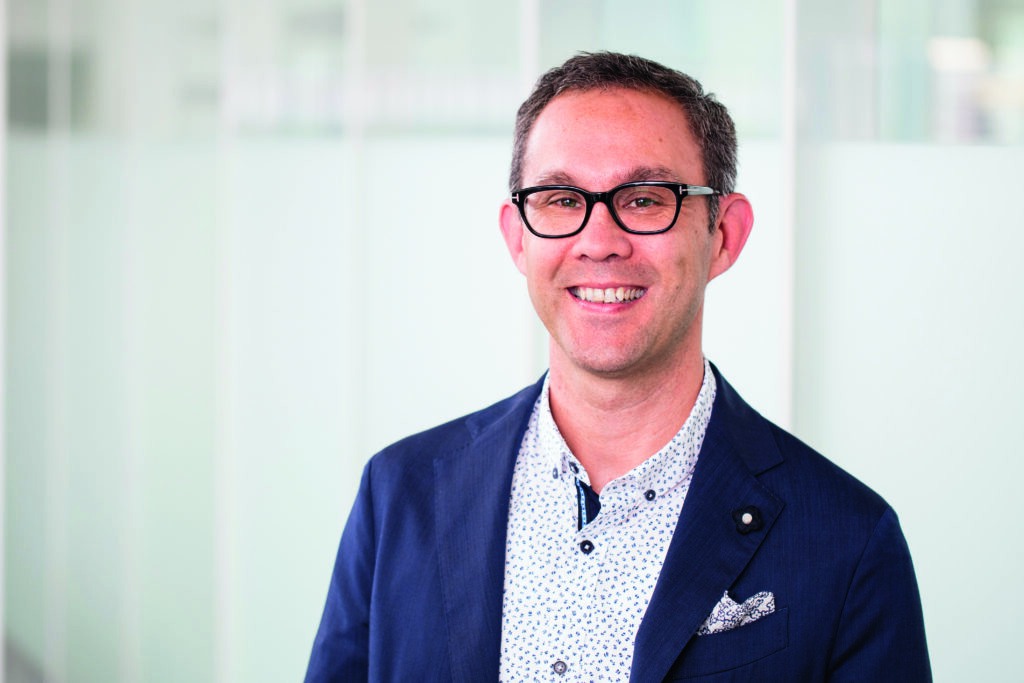
Tobias Rotermund has been a senior real estate consultant and member of the management board of Odinga Picenoni Hagen AG for six years, which as an independent project development and real estate consultancy is responsible, for example, for the overall project management of the first stage of the overall renovation of the University Hospital Zurich. Before that he worked as an architect in various offices. He studied architecture in Berlin and completed his Master of Advanced Studies in Real Estate (CUREM) at the University of Zurich.
Marc Lyon
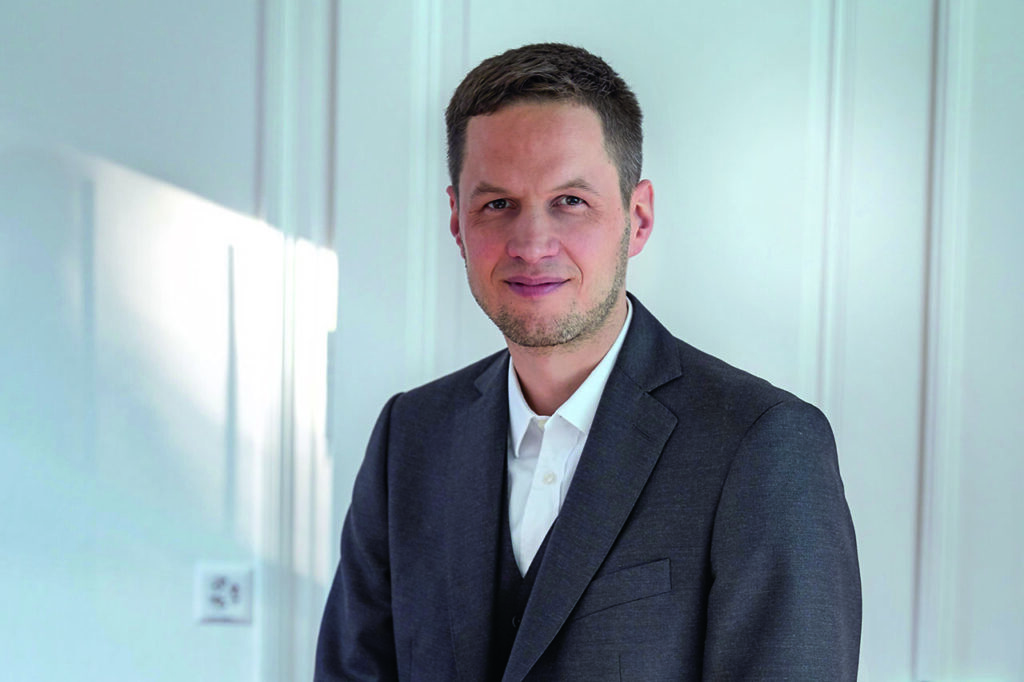
Marc Lyon is Head Real Estate Development Switzerland at Implenia Schweiz AG, where he was Head of Development in German-speaking Switzerland for the past three years. Before that, he worked at Swiss Prime Site AG in the Development and Construction division throughout Switzerland and at Credit Suisse in the Real Estate Investment Management division for the development and implementation of large projects in Germany and abroad. Marc Lyon studied architecture at the EPFL in Lausanne and has a bachelor's degree in business administration.
Claudia Siegle
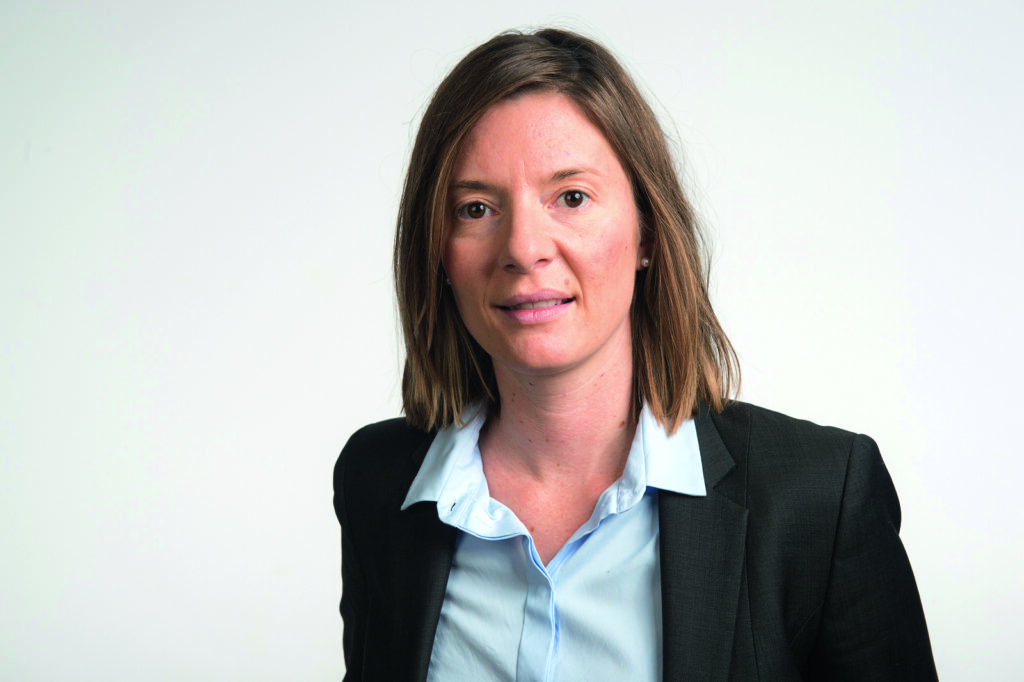
Claudia Siegle is a team leader in the development department at Mobimo Management AG. The graduate in business administration with a CAS in needs-based planning and construction as well as a master’s degree in community, urban and regional development is responsible for various site developments. For example for the Mattenhof area in Lucerne-South – a large development with 120 rental apartments, offices, restaurants and a Holiday Inn hotel, which opened in summer 2019.
Roland Thoma
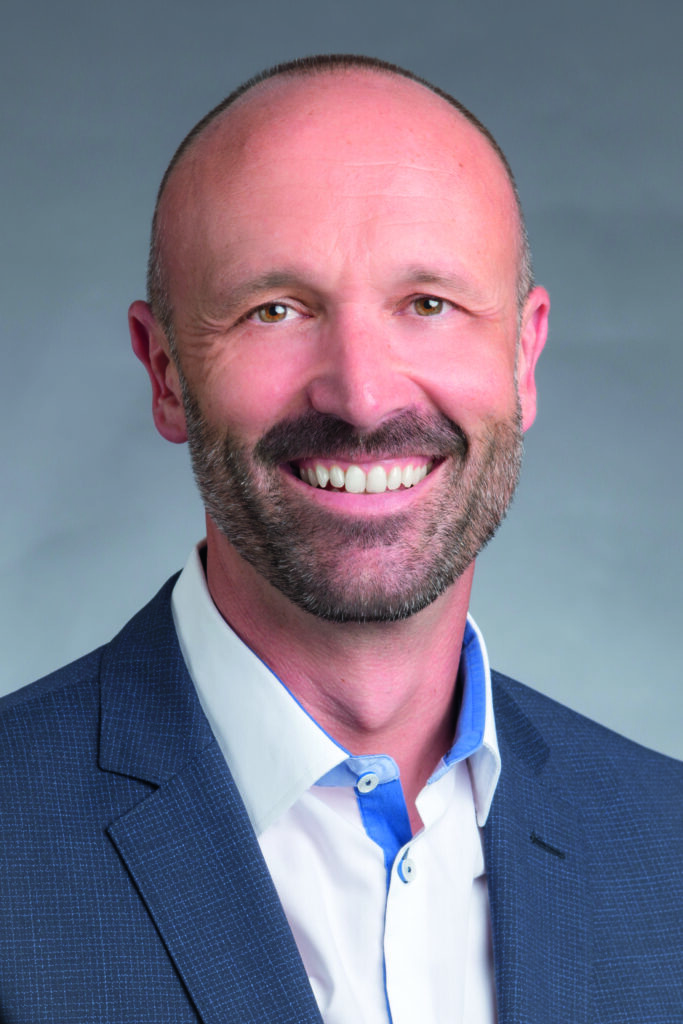
Roland Thoma has been managing director of the HIG Immobilien Anlage Foundation, which invests in Swiss real estate, for three years. Before joining HIG, Roland Thoma was a member of the management team and was responsible for the transactions of H&B Real Estate AG. Roland Thoma graduated from the Swiss Hotel Management School in Lucerne and completed further training at CUREM and the St. Gallen University of Applied Sciences in the areas of real estate management and real estate development.
René Frauenknecht
René Frauenknecht has been with Steiner AG for five years. In his role as Head Sale and Lease he is responsible for the sale and rental of all apartments and service areas developed by Steiner AG. Before that he was managing director of Intercity AG Zug / Luzern for over seven years. The federally certified real estate trustee studied business administration at the Kaderschule Zurich and completed the master’s course in Advanced Studies in Real Estate CUREM at the University of Zurich.
Tobias Achermann
Tobias Achermann was CEO of Zug Estates Holding AG from 2014 to May 2020. With the model area development Suurstoffi in Rotkreuz, the trained real estate Economist established as an expert in sustainable and innovative site development. Zug Estates aims to become the first listed real estate company with a portfolio without CO2 emissions. Since June 1, 2020 he has been managing director of Achermann Consulting GmbH, which pursues the purpose of taking on board mandates and carrying out economic advice.
Valentin Müller
Valentin Müller has been CEO of UTO Real Estate Management AG for two years, which specializes in the development and management of third-party real estate portfolios. Current projects include the Tiny Houses on Zollikerberg and the Performative House in Zurich Unterstrass. Before his current position, the qualified architect was Head of Real Estate and a member of the group management of AMAG Automobil- und Motoren AG.
Dr. Werner Schaeppi
Dr. Werner Schaeppi works as a communications researcher and consultant at the communications agency Creafactory AG and at the market research institute mrc research & consulting ag in Zug. He is co-owner of both companies that are leaders in real estate, capital goods and financial services. Werner Schaeppi studied at the University of Zurich. He has a licentiate in linguistics and a doctorate in social psychology.
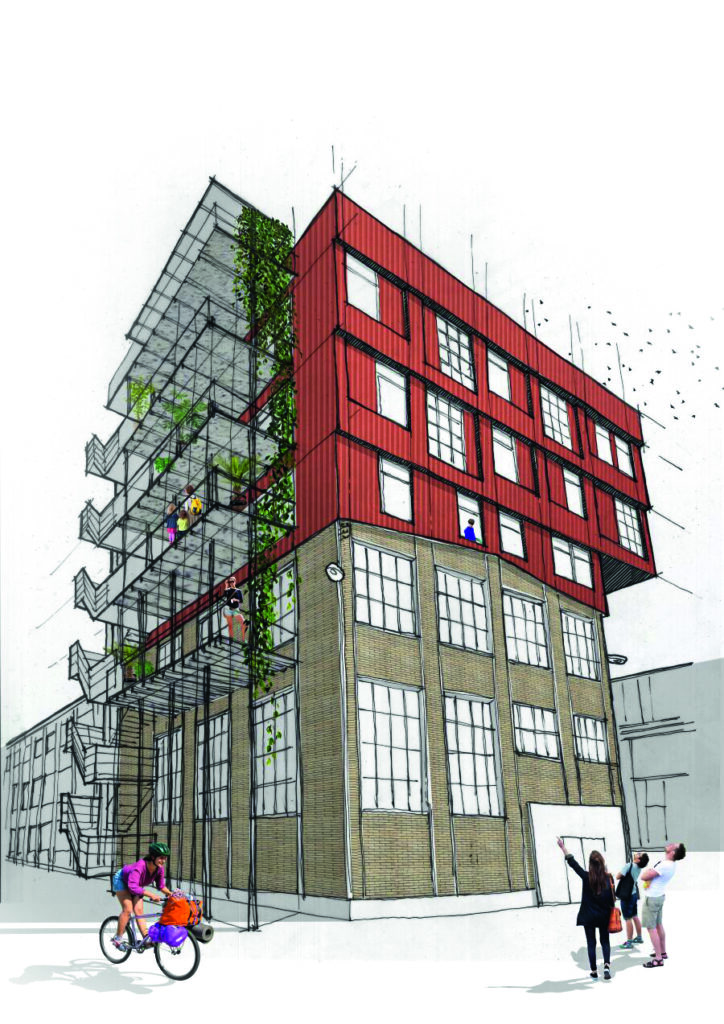
A project that could hardly be more sustainable: the extension of hall 118 on the storage area in Winterthur ZH was increased by five floors. And wherever possible with reusable building materials. The presence of such materials from demolitions in the region was decisive for the current appearance. The building is not yet completely finished: “The construction should be completed in early 2021,” says Benjamin Poignon, architect and civil engineer at “baubüro in situ”.
The Abendrot Foundation, based in Basel, bought the Lagerplatz area from Sulzer Immobilien AG in 2010. The direction of focus was quickly clear to the pension fund, which is committed to sustainability: the already existing mixed use should be further developed in cooperation with the tenants. Several new studios of up to 60 square meters for start-ups and small businesses are planned for each of the upper floors.
Although the buildings and their footprints were to be retained, they were to be further developed in terms of energy and in accordance with legal standards. The “construction office in situ” is responsible for the project. The project managers Marc Angst and Pascal Hentschel sum up the concept: «Repairing what can still be used. Remove what disturbs or is no longer suitable – and add what is new. "
Finding building materials is half the time The supporting framework consists of an used steel structure. Prefabricated facade elements made of wood, which are filled with straw insulation, are attached to this. Such simple ecological building materials as straw, excavated earth and wood accumulate in large quantities and can be processed and used with a minimal use of gray energy. They also ensure a pleasant room climate.
The slightly overhanging south facade in bright brick red-orange comes from the sheet metal facade of the former Ziegler print shop in Winterthur Grüze. The windows in the new recycling building are inconsistent, but overall they are consistent. In order for the insulation to meet today's standards, the glazing was doubled in nine windows, the others had sufficient insulation. The staircase on the east facade is over 30 years old and previously adorned the facade of the Orion office building in Zurich-West. 80 windows and facade panels made of granite, which are recycled for the balcony floors, also come from this building, which was erected in 1989. The respective components are not reprocessed – this differentiates the project from so-called downcycling, in which building materials are initially reworked in a energy-intensive manner.
The architects have already learned a lot from this unique pilot project: “It is the first time that we have reused a supporting structure. But we also noticed that there are components that are cheaper to buy than to reuse. For example, we have tried to reuse limestone sandstone. But the cleaning and preparation work was so high that we decided to buy a new one here, ”explains architect Poignon. The project also created a new job: component hunter. The “baubüro In situ” hired interns specifically for this purpose, who looked for suitable demolition objects and any reusable materials that might arise. But the architects, too, are always on the move with open eyes. Usable materials are dismantled and picked up by the architectural office with roots in Basel. The architects spend half of the time evaluating and procuring possible components. "In situ" did not have any problems finding the right material: of the approximately 7.5 million tons of construction waste that is generated in Switzerland every year, only 0.1 percent is directly reused, according to the Federal Office for the Environment (FOEN) has. «In situ» assumes that ten times more can be reused.
Book publication planned If you think about the costs at this point: 4.8 million Swiss francs have been budgeted for the project so far. One of the stated goals was to build in such a way that it does not cost more than a completely new building. “It is difficult to make direct comparisons,” says Benjamin Poignon.
In general, “in situ” always relies on the reuse of materials during construction – even if rarely on this large scale. With its uniqueness, K118 has definitely attracted interested parties: A research and teaching project at the ZHAW University of Applied Sciences in Winterthur and a case study in environmental systems science at ETH Zurich accompanied the planning. Among other things, the environmentally relevant (waste, resources, lifespan, etc.) and legal as well as those relating to the construction process are examined. A joint publication is planned in cooperation with the Federal Office for the Environment: The book is intended to comprehensively shed light on the reuse of components in building construction and to make the knowledge and experience gained publicly available. ■
This is what building K118 should look like after construction work is complete.
In December 2019, the excavators drove into the former industrial site in Burgdorf and the new Fischermätteli district should soon come to life: the first apartments will be ready for occupancy in summer 2021. By 2024, ten apartment buildings with 169 inexpensive 2.5 to 5.5 room apartments and living spaces between 52 and 140 square meters are to be built in a total of three construction phases. Located in an idyllic location in the immediate vicinity of the forest, the buildings are grouped around a central meeting zone with five differently designed outdoor spaces.
Largest Minergie-A-Eco quarter made with Swiss wood
The Fischermätteli settlement will one day be the largest development in Switzerland that will not only be built with Swiss wood, but also meet the Minergie-A-Eco standard. This requires a positive energy balance and the expenditure for space and water heating, air renewal as well as for all electrical devices and lighting must be covered by renewable energies. The addition Eco focuses on the issues of health and building ecology and ensures a high level of living comfort. "Based on the positive experiences we have made so far, it was the only right decision for us in terms of ecology and sustainability to build the Fischermätteli in the Minergie-A-Eco standard," explains Bruno Kälin. He is Head of Marketing and a member of the management team at Strüby Konzept AG. The Strüby companies act both as builders and as full service providers (project development, architecture, engineering, production, implementation, customer service, customer service) and are also responsible for sales.
For the Fischermätteli, the client relies on spruce and silver fir from Swiss forests: “There is no better building material than wood. It is available locally, is growing steadily, is CO 2 -neutral, creates jobs in the region and ensures a good and healthy indoor climate, ”explains Kälin. The wood required for construction is bought directly from the forest owners, sawn, glued and processed in the region. Long transport routes are eliminated, which means that the embodied energy is very low.
Sophisticated energy concept
The client had put out a tender for the energy concept, which ewz won. The energy service company is responsible for planning, financing, realizing and operating the energy supply. The contracts run until December 2044 and begin in stages according to construction stages. The ewz Energy Solutions division has developed an integral concept for the Fischermätteli district, which, in addition to a sophisticated heat and power supply, also includes ancillary costs accounting that covers all media.
All buildings on the site are connected to an area heating network. The heart of the heat supply is the heating center with an output of 550 kW. Wood pellets from the region are used as energy sources. The quality management system of the working group QM wood heating plants ensures efficient heat production. The energy service provider finances and implements the heating center and the lines for heat distribution to the house. The client, on the other hand, builds the installations for the domestic hot water and for the fine distribution of heat in the houses. A heat pump instead of wood heating could not be considered due to the geological conditions at the site.
100 percent renewable solar power
In addition to the heat supply contracts, ewz agrees electricity supply contracts with the owners. These regulate the supply of electricity to a total of seven floor and site owners. Since the Minergie-A building standard requires 100 percent coverage with renewable electricity, a photovoltaic system is installed on every house roof. The ten plants in the final stage will have an output of 722 kWp. According to project manager Christian Rolli from ewz Energielösungen, the challenge was to achieve the required solar power yield and still have enough space on the roofs for maintenance and servicing of the photovoltaic modules. The solution was to choose monocrystalline high-performance modules with a higher degree of efficiency, which produce more yield in less space, but this is reflected in a higher price. Around 3200 m 2 of photovoltaic modules are installed on the site. If, for example, there is such a high overproduction during the summer holidays that not all of the electricity can be fed into the grid, production can be reduced.
The overall concept worked out by ewz Energielösungen convinced the client: "Our specifications for an ecological and economical solution that can be implemented and maintained holistically by one partner were implemented very well by ewz," says Bruno Kälin.
According to a media release , Primeo Energie is building a new underground heating center for the existing heating network between the indoor swimming pool and the music school in Neuallschwil. The foundation stone was officially laid on Wednesday. The system is operated with two wood-burning boilers with an output of 840 kilowatts each. In addition, a heat pump uses the environmental heat and waste heat from the indoor pool. This generates 80 percent of the energy required. The plant will go into operation in early summer 2021.
"The community and Primeo Energie are setting another example for a renewable, CO2-neutral heating supply", said Nicole Nüssli-Kaiser, President of the City Council. "With this central heating system, we not only heat the school building, but also enable the entire district to rely on renewable thermal energy."
This new heating center is another piece of the puzzle in the heating network, the message goes on to say. It will be connected by a pipeline to the heating network, which is also primarily fired with wood chips, at the old people's center at Bachgraben. This enabled synergies to be used between the two district heating networks. Further properties are to be connected to the network. By merging several centers, security of supply will also be increased.
Patrick Heeb, Rector of the Education Center Lake Zurich ( BZZ ), inaugurated a new building at the BZZ in Horgen on Tuesday, together with District President and Education Director Silvia Steiner (ZH / CVP) as well as Government Council and Construction Director Martin Neukom (ZH / GPS). BZZ learners have already moved into the new school building.
The new building, which has now been inaugurated, is intended to cover the school's increasing space requirements, as stated in a media release . With it, the school has new classrooms as well as a new triple gymnasium. The sports hall is made available to the sports department of the municipality of Horgen outside of school hours.
After the completion of the new building, the renovation of the existing building will begin. After the construction work is completed, the BZZ will be able to benefit from its location on Lake Zurich. It will use the lake water to generate cold and heat.
Overall, the construction industry barely moved in 2019. According to the provisional figures from the Federal Statistical Office ( BFS ), an increase in construction investments in civil engineering of 3.9 percent offset a decline in building construction of 0.9 percent.
There was a change from new buildings to renovations and expansions. Investments in new civil engineering buildings fell by 6.9 percent, while investments in conversions and expansions rose by 13.2 percent. In building construction, too, investments in renovations and extensions rose by 1.6 percent, while investments in new buildings fell by 2.0 percent.
This switch to renovations was particularly pronounced among public clients: Last year they invested 8.8 percent more in renovations and extensions and 7.2 percent less in new buildings. Private clients invested 2.2 percent more in conversions and expansions than in 2018, but 1.4 percent less in new buildings.
Swiss Prime Site Solutions is developing a new “living space” for the Swiss Prime Investment Foundation, as stated in a press release by Swiss Prime Site Solutions . The foundation stone for the Riverside project was laid on July 10, 2020. The development is under the motto "Urban living – surrounded by nature". Construction work will begin in the northwest, where the area is located directly on the Aare and closest to the city of Solothurn. From there, the new quarter will develop in further construction stages to the south and east.
"Anyone who lives and works in the Riverside has, in addition to a chic apartment or a modern workplace with modern infrastructure, a multi-faceted quarter including local recreation on the Aare that meets the highest demands," explains Anastasius Tschopp, CEO of Swiss Prime Site Solutions. He speaks of a "lighthouse project for our client Swiss Prime Investment Foundation (SPA) and at the same time important for the entire Solothurn region".
Initially, 140 rental apartments are to be built directly on the banks of the Aare. The first tenants should be able to move in in winter 2021. More than 280 Swiss pension funds are both financiers and investors in the SPA. "We are currently carrying out the sixth emission for the SPA," said Tschopp. The subscription period lasts until July 22, 2020. The development program of the customer SPA currently amounts to around CHF 600 million and includes projects and real estate across Switzerland.
The new Porta Samedan shopping center is being realized by Migros Ostschweiz and Pfister Immobilien AG . During these days, the concreting of the floors of the new building is taking place, according to a media release . When it comes to building materials, the partners rely on the circular economy. Recycled products are used for both concrete and cement.
The one main component in concrete is cement. This comes by train from the Holcim plant in Untervaz GR to the Upper Engadin, where Montebello produces the recycled concrete on site. The Holcim product Susteno is used. According to the information, this is the only resource-saving cement in Europe in which the fine proportion of mixed granulate from demolished buildings is used as an additive, which cannot be used in concrete production. Holcim can completely close the building material cycle with Susteno, as this material would otherwise have to be dumped.
The other main component in concrete are the aggregates. "Here we rely on recycling: instead of natural gravel, we use demolition material from the region," explains Flurin Wieser from the Engadin construction company Montebello.
"The Porta Samedan development shows that the building materials industry, with innovative products and solutions, is playing an increasingly important role in the transition to the circular economy and is making a significant contribution to a sustainably built future," said Philippe Rey, Head of Cement Sales German-speaking Switzerland at Holcim Switzerland.
Porta Samedan is scheduled for completion in 2021. Among other things, it will house the first Migros supermarket in the Engadine.
The ten-year project for the conception, development and construction of the new campus for the Department of Health at the Zurich University of Applied Sciences ( ZHAW ) was completed on schedule on July 1st and is now ready for occupancy. Developer and general contractor Implenia has handed the new building over to the owner SISKA Immobilien AG. As the tenant of the house on Katharina-Sulzer-Platz in Winterthur, the ZHAW can now prepare the building, which Implenia has built in accordance with the Minergie standard, with a rental area of around 19,200 square meters for teaching and research.
The facility will remain closed to the public until the end of July 2020. The "Haus Adeline Favre", named after a midwife from the Val d'Anniviers, will accommodate over 2000 students and around 300 employees from August. The largest Swiss education and research center for occupational and physiotherapy, midwives and nursing will open its doors with an official ceremony on August 28, 2020. An open day will take place on September 26, 2020.
According to the media release , the building was designed by pool architects from Zurich. The area of the property was completely built over, there are six above and two underground floors with classrooms and practice rooms, employee offices, an outpatient clinic and simulation center as well as a cafeteria. Adrian Wyss, Head of Development Division at Implenia: “At the Adeline Favre house, Implenia successfully brought together its specialists from various disciplines, especially from the Development and Buildings Divisions, and the group's integrated business model was fully implemented. The clear ideas of the tenant Canton of Zurich and the good cooperation between the teams and the authorities also made the project a success. "
Around 600 employees from ASTRA and BFE will be able to move into the new seven-story building in Ittigen this month. The federal administrative center on the DETEC campus has housed various offices of the Federal Department of Environment, Transport, Energy and Communication (DETEC) since 2006. The new building takes into account the space requirements that have increased since then and brings together previously scattered departments.
According to a press release , the wood-concrete hybrid construction by the Zurich architects Berrel Berrel Kräutler , which is certified according to the Swiss Sustainable Building Standards (SNBS), relies on the potential available on site. For example, the waste heat from a nearby data center is used to heat the building, and spring water is used for cooling. The project, originally named “Fitzcarraldo” by the architects, uses 100 percent renewable energies and does not cause any CO2 emissions.
In this modern administration building on the DETEC campus, we can bring together departments that were previously located in two locations in Bern, ”says ASTRA Director Jürg Röthlisberger. "That will simplify the collaboration, improve the team spirit and it can accelerate processes."
The municipality of Ittigen wants to do everything possible in the future so that the federal government feels at home there, emphasizes municipality president Marco Rupp. In Ittigen they are proud to be able to host most of the DETEC offices.
Wir verwenden Cookies zur Unterstützung und Verbesserung unserer Dienste. Mit der Nutzung dieser Website erklären Sie sich mit der Verwendung von Cookies einverstanden. Weitere Informationen finden Sie in unserer Datenschutzerklärung.