Tag: Bauwirtschaft

  • New branch strengthens presence in Central Asia

    New branch strengthens presence in Central Asia

    Sika is expanding its presence in Central Asia with a new subsidiary in Bishkek, Kyrgyzstan. According to a press release, the aim of the new branch is to increase customer proximity in the region and improve regional market access for the company.

    One of the reasons for the expansion into Kyrgyzstan is the positive economic outlook for the former Soviet republic. Forecasts predict annual growth in gross domestic product of up to 7 per cent until 2030, according to the press release. Growth drivers in the construction sector include large-scale industrial construction projects as well as infrastructure and energy investments, which further emphasise the strategic importance of Central Asia for Sika.

    “The local organisation in Kyrgyzstan complements our existing activities in Kazakhstan and Uzbekistan and strengthens our regional network in Central Asia. This creates a basis for the targeted further development of our market position in the region and for further growth,” Christoph Ganz, Regional Head EMEA at Sika, is quoted as saying.

    The construction chemicals group Sika focuses on the development and production of systems and products for bonding, sealing, damping, reinforcing and protecting in construction and industry. With the opening of the Kyrgyz site, the company is expanding its global network to 103 national subsidiaries. The company generated sales of CHF 11.20 billion in 2025.

  • New balance of power in modular room solutions

    New balance of power in modular room solutions

    According to a statement, the Condecta Group is acquiring from the German ALHO Group based in Friesenhagen the entire Swiss FAGSI rental fleet as well as all associated Swiss activities. This also includes the location in Wikon in the canton of Lucerne. The Winterthur-based company is thus taking over the entire Swiss fleet of FAGSI rental containers. FAGSI is a brand of the ALHO Group that specialises in the sale and rental of temporary and modular container buildings for cities, municipalities and industry, particularly high-quality offices, schools, kindergartens and temporary accommodation.

    The Wikon site has around 12,000 square metres of production and storage space and a rental fleet of 1,150 FAGSI containers. It is to be expanded into a centre of excellence for high-quality mobile space solutions. According to Condecta, this “creates the basis for efficiently implementing even larger and more complex projects from a single source – a clear added value for customers in industry, administration, education and healthcare”. Existing customer relationships, ongoing projects and rental agreements will continue seamlessly, according to the information provided. Contact persons and processes will also remain the same.

    “The takeover of FAGSI’s Swiss activities is an important milestone in the further development of Condecta,” said Condecta CEO Olivier W. Annaheim. “We are strengthening our core business, expanding our premium offering and investing specifically in additional expertise. The Wikon site will play a central role in further expanding quality, performance and delivery reliability in Switzerland.”

  • Platform strategy strengthens construction and environmental expertise

    Platform strategy strengthens construction and environmental expertise

    TIC Holding Schweiz AG, based in Baar, has acquired HSE Conseils from Laténa. According to a press release, its managing director Marc Dutoit will remain in his position. TIC Holding is a construction and technology platform financed by Winterberg Investment X and managed by Winterberg Advisory GmbH in Munich.

    HSE Conseils is the leading specialist in the industrial, building materials, construction, environmental and occupational safety sectors in the canton of Neuchâtel and at six other locations in the cantons of Vaud, Valais, Geneva, Fribourg and Jura, the press release continues. It offers a comprehensive portfolio of services for construction companies, real estate managers, planners, businesses and public institutions. These include Swiss Accreditation Service (SAS) accredited pollutant diagnostics and analyses (including asbestos, polychlorinated biphenyls and lead), environmental and waste management, safety and health concepts, and indoor air quality measurements. Its remit also includes safety consulting, training and advice on construction safety, from risk assessment to remediation concepts.

    “With HSE, we now cover the industrial, building materials, construction, environmental and occupational safety sectors,” said Ralph Nowak, member of the board of directors of TIC Holding Switzerland and partner at Winterberg, in the announcement. “This is an important step in the further development of our TIC Holding Switzerland – the three platforms underline our position as the leading independent group in these areas throughout Switzerland.” Marc Dutoit is banking on strong growth for HSE Conseils and many synergies with other group members as a result of the merger. “Our structure, the entire team and all contact persons for our customers will remain in place, and we will continue to deliver the highest quality and reliability,” says Dutoit.

  • Swissbau 2026 creates new synergies

    Swissbau 2026 creates new synergies

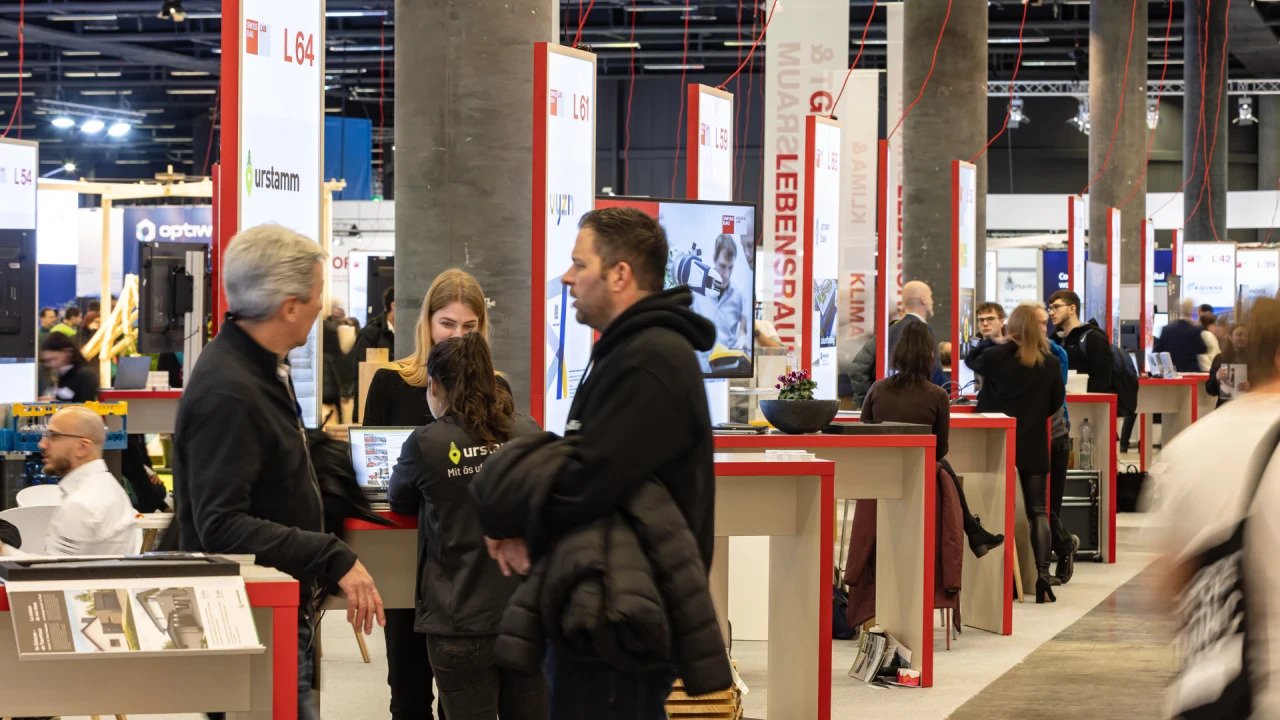
    Collaboration has always been the defining theme of Swissbau: meeting in person, acting together, helping each other move forward. For the next edition in January 2026, the trade fair organizer is increasingly focusing on positive synergies. Joint development is not only practiced in the Swissbau Focus & Lab collaboration platforms, the exhibition areas of the trade fair have also moved closer together both spatially and thematically. This is particularly evident in the newly staged Hall 1.2, which provides an atmospheric stage for the entire interior design sector.

    Trend world interior design for design enthusiasts
    Newly positioned in Hall 1.2, the Swissbau public will encounter a world of bathroom innovations, trendy surfaces, atmospheric lighting and high-quality contract furnishings. The shared level for interior design offers space for discoveries and an in-depth exchange with renowned manufacturers and new brands. The highlight: the new Trend World in Hall 1.2 is also open on Saturday. Thanks to the Swissbau Focus with partner lounges, info points and events, the weekend visit leads directly to the Trend World via escalators.

    Experience the trade up close
    Swissbau’s eye-catchers in Hall 1.0 on the first floor are undoubtedly two real construction projects that are being built and developed in parallel by various trade businesses. In a steel hall, metalworkers, electricians, gate and door builders demonstrate their skills. In the two-storey residential building, woodworkers, plasterers and tilers can be seen at work. Both buildings will be completed on the construction site after Swissbau. The “Treffpunkt Handwerk” has even more to offer: In addition to playful activity areas and a forum with practical topics, craft businesses and topic-specific exhibitors will be presenting themselves in the surrounding area. A spacious BauBeiz invites you to talk shop.

    Benefit from the exchange with experts
    Swissbau Focus in Hall 1.0 and Swissbau Lab in Hall 1.1 are the best examples of an interdisciplinary dialog on current challenges and future trends in the industry.
    Leading associations, institutions and universities will contribute their positions to the Swissbau Focus event platform. Trade visitors can discover and try out suitable products and market-ready solutions in the Swissbau Lab. Visitors will also benefit from an enlarged Swissbau Workshop, where they can scrutinize innovative applications in practice. Participation in the extensive program in the Swissbau Focus and Lab is included in the admission ticket. Event registrations are easy to complete on the Swissbau website and should not be missed in any trade fair preparation for an optimal gain in know-how.

    A colorful marketplace for plaster and paint
    A new-born cooperation with the Swiss Painting and Plastering Contractors’ Association SMGV offers insights into innovative techniques, high-quality materials and sustainable solutions in the creative sector in Hall 1.1. With its presence at the multi-industry trade fair, the association aims to position itself more strongly with architects, planners and other construction professionals. Highlights of the themed area include the “Swiss Prize for Plaster and Paint” exhibition and award ceremony on January 22 in the Swissbau Focus, live training sessions by two newly crowned Swiss champions for the WorldSkills in Shanghai, the “SMGV-Marktblitz Spezial” industry get-together on January 21 and 23 and a “Maler-Gipser-Stübli” for personal discussions. The SMGV training centers will present practical examples of their diverse industry sectors. In the painter-plasterer workshop, experienced craftsmen will show how facades are designed with decorative plaster structures.

    Valuable partnerships
    Before exhibitors and partners take command of the halls on Tuesday morning and unveil their innovations, Swissbau will be opened by Bauenschweiz, the umbrella organization of the Swiss construction industry. In discussions with people from politics and business, the core group of the finishing trade and building envelope, as the industry with the highest turnover, will focus on its importance, needs and further development at the opening ceremony. The continued relevance of Swissbau in 2026 is also demonstrated by renowned partnerships. The Swiss Society of Engineers and Architects (SIA), the Swiss brand LAUFEN and the new partner Abacus Business Solutions are making a major commitment and contributing their specialist expertise to the trade fair’s offering.

    Swissbau under new management
    Rudolf Pfander has been at the helm of Swissbau for 25 years and has successfully led it into the modern era. In order to take on new tasks for MCH Exhibitions & Events after the 2026 edition, he handed over the reins to his deputy Tobias Hofmeier in September. The 36-year-old from Lörrach has been in charge of Swissbau project management and the successful development of the Swissbau Focus and Lab collaboration platforms since 2020. Rudolf Pfander emphasizes: “Tobias is the perfect successor for Swissbau. He knows the needs of exhibitors, partners and visitors inside out and is also aware of the future development opportunities for the trade fair.”

    Swissbau 2026 – the leading platform for the construction and real estate industry in Switzerland

    Exhibition duration, opening hours
    20.- January 23/24, 2026
    Tuesday to Friday, 9 a.m. to 6 p.m
    Saturday additional day Interior Construction and Swissbau Focus, Hall 1.2 and Hall 1.0 South, 9 a.m. to 4 p.m

    Buy a ticket or redeem a voucher
    swissbau.ch/ticket

    Register for events
    swissbau.ch/events

    All information
    swissbau.ch

    Organizer
    MCH Exhibitions & Events GmbH, Swissbau, CH-4005 Basel

  • Working hours as the key to building in the mountains

    Working hours as the key to building in the mountains

    Experienced practitioners from various cantons emphasize that work in the mountains is subject to tight time constraints. Construction machinery and materials often have to be laboriously transported, while electricity and water supplies as well as access are limited and susceptible to weather conditions. Strong temperature fluctuations, long access routes and periodic freedom from construction work in winter require flexible, project-related time models – rigid working time specifications are practically impossible to implement here

    Planning, pride and AVOR
    For companies, this means careful work preparation and ongoing flexibility. Construction companies often organize special working time calendars for mountain projects, which are adjusted seasonally, by the week or even by the day. With the approval of the local Joint Professional Commission, the main construction industry can deviate from the normal weekly working hours in order to take geographical and climatic factors into account

    The construction workers’ wages follow the national regulations in accordance with the collective labor agreement for the construction industry. Forward-looking resource planning is becoming increasingly important. Sometimes the model of a four-day week or longer shifts over the summer helps to compensate for bottlenecks and offer skilled workers attractive prospects in a seasonal context

    Special features and motivation in mining
    Increased physical strain due to the thinner mountain air, challenging terrain and logistics that require autonomy demand experience and a pioneering spirit and, according to industry representatives, increase employee motivation. The changing backdrop of the mountains, team spirit and pride in what has been achieved contribute to the special identity of “building in the Champions League”. Flexible working time models, from forward-looking planning and locally coordinated time accounts to temporary staff contracts, are essential in order to give mining a professional, economically and socially balanced face

    If you want to build in the Swiss mountains, you have to calculate flexibly, adapt to the weather and geography and establish tailor-made time models together with planners, authorities and the workforce. The demand for flexibility is therefore not a fad, but a necessity for building culture and competitiveness in Switzerland.

  • The future of the Ticino real estate market at the heart of immoTable Ticino

    The future of the Ticino real estate market at the heart of immoTable Ticino

    Under the moderation of Natascia Valenta, Michele Bertini (La Mobiliare), Nicolas Daldini (SVIT Ticino), Gian-Luca Lardi (Swiss Association of Building Contractors) and Sandro Montorfani (Private Construction Department, City of Lugano) spoke.

    The debate touched on key issues such as the replanning and densification of the territory, the simplification of procedures for building permits and the need to streamline legislation in order to speed up decision-making processes.

    It was also emphasized that investments in Ticino are positive today, thanks to the decrease in vacancies, which are mainly concentrated in obsolete properties.

    Future challenges also included the issue of PPPs (public-private partnerships) and shrinking funds for renovation in the context of an ageing population and the building stock in need of renewal. This is an issue that will be of crucial importance in the coming years.

    The strategic role of Italy as an economic partner and source of skilled labor was also mentioned, as well as the effects of the recent votes on the imputed rental value, which will have a significant impact on the finances of the canton and the municipalities.

    Despite the challenges, the Sonnenstube remains a dynamic and attractive region for real estate investment, ready to take advantage of the opportunities offered by a changing market.

    [smartslider3 slider=”50″]
  • “The construction industry is more agile than many people think”

    “The construction industry is more agile than many people think”

    “I love what we do,” says Kull. “If you do it professionally, building is still economically attractive.” However, she emphasizes that legal requirements, objections and lengthy procedures slow down the construction process considerably. However, the pandemic has shown how adaptable the industry is: “We didn’t have to close any construction sites. That was resilience in action.”

    For Kull, the industry’s strength lies in its ability to adapt to new conditions. She points to the high level of legal certainty in Switzerland, but warns against the increasing “deceleration” caused by long procedures and appeals that tie up billions. This applies equally to companies, investors and public clients.

    Digitalization raises efficiency potential
    Kull describes the often-cited productivity crisis in the construction industry as outdated. Digitalization and building information modeling have revolutionized production and communication processes. “Today, we work with clear timeframes, just-in-time deliveries and digital coordination between all trades,” she explains.

    Projects based on the “BIM to Field” principle have led to efficiency gains of 10 to 15 percent at the company. “This has a direct impact on quality, deadlines and costs. It is the justified expectation of our customers,” says Kull. Complex projects in particular, such as the Circle at Zurich Airport, have accelerated the company’s digital transformation.

    New collaboration in the construction industry
    Kull has observed that general and total contractors have become more open to flexible contract models. Development Switzerland is specifically promoting integrated models in which planning and execution are more closely interlinked. “Many of the ironclad rules in the classic general contractor/total contractor contract are no longer sacrosanct,” she explains.

    The goal is a cooperative culture in which companies share risks and exploit opportunities together. “A provider is ill-advised if it insists on yesterday’s contracts.” Kull sees the diversity of models, from the alliance approach to overall responsibility models, as a response to the increasing complexity of projects.

    Generational change and new work culture
    Internal structures are also changing. The use of digital tools is a matter of course for younger generations. “Software solutions, AI and communication tools such as Teams have massively changed the way we work. Travel times have been reduced and decision-making paths have become shorter.” This also makes the industry more attractive as an employer.

    For Kull, the agility of JV/TU companies also includes the ability to attract and retain talent. “Our projects are our calling card,” she says. “Young people apply to us because they want to be involved in large, visible construction projects.”

    Political hurdles and responsibility
    In addition to technological and organizational innovation, Kull calls for political realism. According to her, the ever-longer approval procedures and the large number of objections are paralyzing residential construction. “We have projects that have been in preparation for over a decade. This ties up enormous resources and deters investors.”

    She describes the current spiral of regulation as “toxic”. The demand for more and cheaper apartments is justified, but is at odds with increasing regulations. “There needs to be a rethink in administration and politics. More cooperation, less mistrust.”

    Conclusion: Openness as a principle for success
    Rebecca Kull makes it clear that the construction industry must shape its own future, digitally, cooperatively and boldly. “BIM is a disruptive principle, similar to CAD in planning in the past. Those who open up will benefit. Those who stand still will be left behind.” The construction industry, she says, has long been a reflection of society, more agile, more demanding and more networked than ever.

  • How data is transforming construction

    How data is transforming construction

    “At first, I also thought it was an EU thing,” says Prof Dr Adrian Wildenauer, an expert in digital construction. “But the impact on the Swiss construction industry is enormous.”

    The product passport requires every construction product, from cement to wood to window profiles, to be digitally documented. Information on origin, composition, energy consumption and recyclability must be transparent and easy to find, usually via a QR code or data link.

    This change is affecting an industry in which material data has often been scattered. Anyone who produces without DPP in future will lose access to the European market. For Swiss manufacturers, this means no delivery and therefore no sales without data. The pressure to adapt is correspondingly high.

    Data quality is key
    Many companies already have valuable information, but in different systems and formats. Wildenauer sees this as the critical weak point: “I can see that manufacturers are increasingly becoming data traders. But not every small company can afford complete data storage.”

    He advocates a national coordination centre that bundles norms, tools and standards for the construction industry. “We need to helvetise this,” he says. “Quickly, pragmatically and jointly.” Only with a coordinated data strategy across Switzerland will it be possible to avoid fragmentation and duplication.

    Transparency creates trust
    The digital product passport is more than just a regulatory requirement. It creates market transparency and new quality standards. When Swiss products appear in the European databases, this strengthens visibility and credibility. This step can make a decisive difference, especially in a global environment that focuses on CO₂ reduction and the circular economy.

    By disclosing the entire life cycle of materials, from extraction to use to dismantling, resource efficiency takes centre stage. “The old principle of ‘make, take, waste’ has had its day,” explains Wildenauer. “If you reuse materials, you save resources and become more independent.”

    New skills are emerging
    The focus on data is changing professions and processes in the construction industry. Profiles such as data managers, material certifiers and traceability specialists will emerge. These new fields of activity combine technical and digital expertise with construction practice and sustainability.

    For companies, the change starts now. “Don’t run around like a headless chicken,” advises Wildenauer. “Just get started. What data do I have, what’s missing?” An initial inventory is enough to bring order to the system. Artificial intelligence can later help to recognise patterns and automate processes. But without clean basic data, the benefits are limited.

    Digitalisation as an opportunity
    The digital product passport marks a new era of transparency and efficiency in the construction industry. It requires a rethink, but offers enormous opportunities. Companies that act early secure a strong market position and gain the trust of investors, clients and end customers.

    Wildenauer puts it in a nutshell: “This is not a threat, but an invitation to create order and work together to make construction more resilient and sustainable.”

  • Master builders’ association remains confident

    Master builders’ association remains confident

    The SBC’s draft agreement is based on simple, realisable rules. Key points include an automatic inflation adjustment of minimum wages, the retention of annual working hours and new freedom in the organisation of working hours. There are plans for flexitime and long-term accounts, which offer employees more flexibility for further training or family commitments. Company holidays and bridging days are also to be communicated at an early stage.

    An important focus is on labour law protection in the event of illness and accidents. At the suggestion of the SBV, the trade unions are examining an adjustment to the Swiss Code of Obligations in order to avoid the disadvantages of previous regulations. At the same time, notice periods for older employees should be structured in such a way that reintegration into the labour market is not made more difficult.

    Both sides are endeavouring to find practical solutions to technical issues. For example, on the recognition of travelling time or Saturday work in the event of weather-related absences. The association points out that bonuses should only be adjusted in exceptional cases.

    Controversial view of the trade unions
    While the SBC describes the negotiations as “good and constructive”, there is growing resentment on the employee side. According to Unia and Syna, there is a threat of protests and strikes. In a nationwide poll, around 90 per cent of construction workers surveyed signalled their willingness to start work stoppages if no agreement is reached. The unions criticise in particular longer daily working hours, lower bonuses and a deterioration in the situation of older workers.

    The SBV counters this and emphasises that the annual working hours remain unchanged and that the minimum wages in the construction industry are among the highest in Europe. Since 2019, wages have risen by 7.5 per cent, with inflation at 6.5 per cent. According to the association, the new agreement should neither increase burdens nor reduce security, but rather strengthen the industry’s competitiveness.

    Last round to be decided
    The next and, for the time being, last round of negotiations is scheduled for 28 October. At the same time, technical working groups are meeting to prepare disputed details. Both sides are publicly emphasising their willingness to negotiate, but the differences are considerable.

    There is a lot at stake for the construction industry. The collective labour agreement regulates the working conditions of around 80,000 employees and forms the basis for stability and fairness in one of Switzerland’s most important industries.

  • Circularity as the key to a climate-friendly building future

    Circularity as the key to a climate-friendly building future

    CircularHub, knowledge and exchange platform for circular construction, invites you to the MasterClass Circularity in the construction and real estate sector on 2 October 2025, as detailed in an announcement. The aim is to support specialists and managers in actively transforming the resource-intensive construction sector and contribute to achieving Switzerland’s net-zero targets.

    During the event, the role of circularity in sustainability and the strengths of circular design strategies and business models, best practice examples and existing Swiss approaches will be discussed. Participants will receive individual preparation by means of a briefing document and an optional follow-up telephone call with CircularHub specialists. “Solutions for a circular turnaround have long been on the table. Now it’s a matter of putting the knowledge, skills and will into practice – and that’s exactly what the MasterClass is for,” says Marloes Fischer, CEO of CircularHub and keynote speaker at the event. In addition to the technical content, the MasterClass enables active networking between specialists and managers, who can exchange ideas with experts and decision-makers and gain inspiration.

    According to CircularHub, the Swiss construction and property industry, which has high CO2 emissions and high resource consumption, is facing profound changes. The platform is therefore endeavouring to support industry players with innovative solutions and transform the construction industry towards a circular economy.

  • Wood takes centre stage: 1500 guests at event in Worb

    Wood takes centre stage: 1500 guests at event in Worb

    OLWO, which claims to be the central production and trading service provider in the Swiss timber industry, welcomed around 1,500 guests to its sawmill in Worb on 12 and 13 September 2025. The company transformed the area with marquee and wrestling ground into a meeting place for families, experts and people interested in wood, according to a press release. Young wrestlers among those interested in wood were also delighted to receive a surprise visit from former wrestling king Christian Stucki.

    The Days of Swiss Wood 2025, during which the event took place, were organised by the umbrella organisation Lignum Holzwirtschaft Schweiz and its affiliated companies from the forestry and wood industry. The aim of the events was to promote Swiss wood and a sustainable construction industry that focusses on regional resources and sustainable value creation.

    OLWO, a fourth-generation family business, has a proprietary sawmill and planing mill and a comprehensive range of wood-based materials for craftsmen, architects and builders. At the company headquarters in Worb, customers are offered solution-orientated sales advice from around 30 wood specialists in addition to regional woods and materials.

  • Growth continues with office opening in Cologne

    Growth continues with office opening in Cologne

    VELLOWS is further expanding its network. Founded in 2023, the consulting firm for projects and organisational development in the construction and real estate industry has been operating a new location in Cologne since 1 September 2025, according to a press release. According to the statement, VELLOWS is continuing its growth trajectory with the opening of the new office. The company is based in Hergiswil and also operates from an address in Zurich, Basel and Berlin.

    “Cologne is a central location for us, both in terms of our customer structure and our service portfolio,” explains the new location manager Stephan Hintzen. The industrial engineer specialising in civil engineering has more than ten years of experience in project management, client representation and property consultancy.

    VELLOWS founder Prof Jürgen M. Volm speaks of an experienced and well-connected colleague: “As a partner and managing director, he will play a central role in further expanding our market presence in Germany.”

  • Fair, ecological procurement with Toolbox Sustainability

    Fair, ecological procurement with Toolbox Sustainability

    The development of the toolbox was triggered by the revision of the Federal Act on Public Procurement. The focus is no longer solely on costs, but increasingly on issues of sustainability, fair working conditions and resource and climate protection. As a result, the procurement procedure is shifting from a pure price competition to a quality competition. A paradigm shift with opportunities, but also challenges.

    The key question here is how sustainability criteria can be integrated into procurement processes in an objective, transparent and practicable manner

    Contents and functions of the toolbox
    The sustainability toolbox provides answers to precisely this question. It is web-based, trilingual and structured in such a way that it provides awarding authorities with concrete tools.

    • Catalogue of eleven award criteria covering topics such as materials management, climate targets and fair working conditions
    • Text modules, forms and evaluation tables for direct use in tenders
    • Legal and practical explanations for the safe application of the criteria
    • Practical examples that provide guidance in the tendering process

    More clarity and commitment
    The tool creates a common understanding between contracting authorities and subcontractors by formulating criteria in a measurable and verifiable way. This also makes participation in tenders more attractive for SMEs, as the framework conditions are clearer and fairer.

    The overarching goal is to further develop tendering practice in Switzerland in such a way that quality, sustainability and innovation are honoured. Instead of simply competing for the lowest price, as is the case today.

    Significance for the sector
    The sustainability toolbox makes it possible to standardise how sustainable criteria can be incorporated into construction projects. This not only strengthens the awarding authorities, but also creates trust among clients and companies. The project shows that sustainability is not an add-on, but an integral part of a sustainable construction industry.

  • Swissbau 2026 provides strong impetus

    Swissbau 2026 provides strong impetus

    Die Trendwelt Innenausbau in Halle 1.2 bleibt auch am Samstag geöffnet. Tobias Hofmeier begrüsst Ausstellerinnen und Fachpublikum als neuer Messeleiter.
    Aussteller der Swissbau 2026 erhalten in diesen Wochen ihren Platzierungsvorschlag. Keine einfache Aufgabe für die Messeverantwortlichen – gibt es doch sehr viel Neues an der nächsten Ausgabe. Das Team der Swissbau hat die beliebte Mehrbranchenmesse mit neuen Ideen gespickt, um grosse und kleine Marken für eine Teilnahme zu begeistern.

    Treffpunkt Handwerk mit «Swissness»
    In Halle 1.0 bietet ein lebendiger Treffpunkt für das Handwerk dem vielfältigen Wirtschaftszweig eine starke Lobby. Highlight der 2500 Quadratmeter grossen Fläche ist der Bau eines doppelstöckigen Holzhauses und einer modernen Stahlhalle von verschiedenen, parallel arbeitenden Gewerken. Zum Austausch und Fachsimpeln bietet die BauBeiz ausreichend Platz. Berufsstolz steht hier hoch im Kurs, genau wie auf den spielerischen Aktionsflächen daneben.

    Neue Kooperationen für mehr Vielfalt
    Nicht nur in Halle 1.1 führt eine neugeborene Kooperation mit dem Schweizerischen Maler- und Gipserunternehmer-Verband SMGV zu verschiedenen Inszenierungen. Live-Demos, Trainings, Veranstaltungen sowie Ausstellung und Auszeichnung des renommierten «Schweizer Preis für Putz und Farbe» mobilisieren die kreative Branche und bieten Herstellern ein attraktives Umfeld zur Produktpräsentation.

    Eine neue Plattform für den Innenausbau
    Die grösste Veränderung betrifft die designorientierte Trendwelt, die von Halle 2.2 in die modernere Halle 1.2 umzieht. Messeleiter Rudolf Pfander erzählt: «Die Trendwelt Bad wird auf den Innenausbau erweitert. Aussteller profitieren von einem hochwertigen Ambiente sowie neuen Synergien der Bereiche Bad, Boden/Wand/Decke, Licht, Büro- und Objekteinrichtung auf einer gemeinsamen Ebene.» Ein zusätzlicher Vorteil: Nur die Trendwelt hat am Samstag für unter der Woche ausgelastete Fachbesucher sowie private Eigentümerinnen und Bauherren geöffnet.

    Swissbau unter neuer Führung
    Seit 25 Jahren leitet Rudolf Pfander die Geschicke der Swissbau und führte sie erfolgreich in die Neuzeit. Um nach der Ausgabe 2026 neue Aufgaben bei MCH Exhibitions & Events zu übernehmen, übergibt er bereits diesen September die Nachfolge an seinen Stellvertreter Tobias Hofmeier. Der 36jährige Lörracher lenkt seit 2020 das Swissbau Projektmanagement sowie die erfolgreiche Entwicklung der Kollaborations-Plattformen Swissbau Focus und Lab.

    Breites Angebot an Präsenzen
    Vom Individualstand über die All-In-Theke bis zur Neuheiten-Demonstration im Swissbau Lab: Wer an der Swissbau 2026 präsent sein möchte, kann aus einer Vielzahl an Teilnahmemöglichkeiten wählen. Tobias Hofmeier und sein Team freuen sich über jede Kontaktaufnahme. Er präzisiert: «Unsere Kunden können sicher sein, dass wir ihre Bedürfnisse an erste Stelle setzen und gemeinsam eine passende Präsenzmöglichkeit finden».

    Unterstrichen wird die anhaltende Relevanz der Swissbau durch namhafte Partnerschaften. Der Schweizerische Ingenieur- und Architektenverein SIA, die Schweizer Marke LAUFEN sowie der neue Partner Abacus Business Solutions engagieren sich an der Swissbau 2026 in grossem Umfang und bringen ihre Expertisen ein.

    Swissbau 2026 – die führende Plattform der Bau- und Immobilienwirtschaft in der Schweiz

    Messedauer, Öffnungszeiten
    20.- 23./24. Januar 2026
    Dienstag bis Freitag, 9 bis 18 Uhr
    Samstag Zusatztag Innenausbau in Halle 1.2, 9 bis 16 Uhr

    Weitere Informationen
    swissbau.ch

  • Builders’ association welcomes EU negotiating mandate

    Builders’ association welcomes EU negotiating mandate

    The construction industry is highly dependent on stable political and economic conditions. The Swiss Federation of Master Builders therefore emphasizes the importance of the adopted negotiating mandate with the European Union. Orderly relations with the EU are a basic prerequisite for Switzerland as a business location, the association emphasizes. At the same time, it makes it clear that wage protection is not an obstacle in the upcoming negotiations.

    ISAB as a digital core instrument
    The Information System Alliance Construction (ISAB) has been in use since 2019. A digital enforcement tool that ensures wage protection throughout the construction industry. The system combines three central components such as the ISAB portal, the joint CLA certificate and the ISAB Card.

    ISAB is used to digitally check and monitor compliance with generally binding collective employment agreements. According to the SBC, the joint inspection alone carries out around 16,000 construction site inspections with ISAB every year. More than in almost any other sector. This means that wage and employee protection in the construction industry is particularly tightly meshed.

    Clear stance towards trade unions
    The SBC rejects the expansion of accompanying measures, as demanded by the trade unions. The current Posted Workers Act already offers a tried and tested instrument that prevents abusive undercutting of wage and working conditions. As this law is in line with the European Posting of Workers Directive, the association does not expect any resistance from the EU.

    Responsibility of building owners
    The SBC emphasizes that building owners, especially large public clients, bear a central responsibility. By consistently relying on the use of digital tools such as ISAB, they make a decisive contribution to combating undeclared work and ensuring fair working conditions. This sends out an important signal, especially in the current European political context.

    Expensesregulation as an open question
    While the SBC believes that wage protection is secured, the association still sees a need for clarification regarding the EU expenses regulation. The association is calling for an expenses regulation based on the place of performance principle, i.e. according to Swiss standards. This is the only way to prevent foreign companies from gaining an unjustified competitive advantage over Swiss providers through lower expense rates.

    The SBC sees the adopted negotiating mandate as an opportunity to put relations between Switzerland and the EU on a stable footing. With the digital enforcement instrument ISAB, wage protection is guaranteed. A further expansion of the accompanying measures is not necessary. It is now crucial that clients assume their responsibility and implement digital solutions across the board. The association is calling for a clear solution in favor of fair competition when it comes to expense regulations.

  • Heat protection on construction sites becomes a joint task

    Heat protection on construction sites becomes a joint task

    Switzerland is topographically diverse, from inner-city construction sites to alpine locations and large-scale infrastructure projects. Standardized measures therefore fall short. While earlier working hours are made possible in certain municipalities, other projects rely on mobile shading systems or adapted break regulations. The decisive factor is the adaptation to the respective region, the environment and the project type.

    Shared responsibility of the building owner
    Walz emphasizes that it is not only the task of construction companies to provide heat protection. Building owners and project authors can also implement effective measures through forward-looking planning and tendering. In doing so, they take responsibility for occupational safety and prevent discussions about additional costs. “If you address the issue at an early stage, you create clarity and commitment for everyone involved,” says Walz.

    Cooperation at all levels
    Close coordination between site management, foremen and employees is a key factor. Although employers have a legal duty to ensure health and safety, employees also have a role to play. They must actively use protective measures, seek out shady areas and use the aids provided. The Ordinance on Accident Prevention (VUV, Art. 11) obliges all parties to implement these measures.

    Legal framework and challenges
    Employers are already legally obliged to implement protective measures. Support is provided by Suva and SBV guidelines. Nevertheless, there are structural problems. If the work rhythm is adjusted due to a heatwave, delays occur that are not always covered by work contracts. The provisions of SIA standard 118, which provide for deadline extensions in the event of weather-related interruptions, are often waived. As a result, the risks end up with the construction companies and their employees. A practice that the SBC clearly criticizes.

    Round table sends out signals
    In order to develop viable solutions, the SBC joined forces with trade unions, client representatives such as KBOB, SBB, Astra and IPB as well as authorities and Suva at the “Heat Round Table”. In mid-May 2025, a consultative decision was taken to enshrine heat protection in the Construction Site Ordinance (BauAV), in KBOB and IPB recommendations and in the SIA 118 contract standard. This means that building owners and social partners are committed to taking health protection into account on a binding basis. It is now up to politicians to send a clear signal in the same direction.

    Heat protection on construction sites is not just a matter for the boss; it requires the shared responsibility of all those involved, from the client, companies, site managers and employees. Only if everyone pulls together can the growing risks posed by rising temperatures be managed effectively. In times of climate change, heat protection is thus becoming an integral part of modern building culture and a decisive factor for occupational safety and fair framework conditions.

  • Experts call for construction process reform

    Experts call for construction process reform

    A study conducted on behalf of the Federal Office for Spatial Development and the Federal Office for Housing puts it in a nutshell. Objections (60 %) and appeals (61 %) are considered to be the biggest obstacles to the realisation of new projects for Swiss housing developers. In the comprehensive survey of over 440 experts from the construction industry, architecture, law and administration, it became clear that the current system is largely too susceptible to delays and abuse.

    In particular, so-called abusive objections are a source of displeasure. These often do not serve to protect legitimate interests, but to deliberately block construction projects, sometimes with extortionate motives.

    Massive consequences for the market and society
    The impact on the housing market is far-reaching. Around 80 per cent of the construction managers surveyed stated that objections and appeals were delaying the market launch of flats. 71 per cent reported significant cost increases, which is ultimately reflected in higher rents and purchase prices.

    Especially in times of acute housing shortages, this development harbours political and social dynamite. Calls for decisive countermeasures are growing louder.

    Experts call for targeted intervention in the appeals process
    The authors of the study propose far-reaching measures that the federal government, cantons and municipalities should implement in order to speed up planning and approval processes. A key recommendation is that the right of appeal should be restricted to “directly and particularly affected persons”. Residents with a general interest would no longer be automatically legitimised.

    In addition, admissible objections should in future be limited to specific, individual interests. The abolition of the suspensive effect of building law appeals is also under discussion in order to counteract arbitrary delays.

    Systemic relief for the authorities
    Another lever relates to the structure of the appeal bodies. A reduction in the number of appeal stages, improved coordination between the relevant authorities and clearly defined deadlines could noticeably speed up procedures. It is also crucial that the authorisation offices are adequately staffed, particularly in cities with high levels of construction activity.

    Political decisions are imminent
    The study was conducted as part of the national action plan against housing shortages. The ARE and the BWO are now examining the proposed measures for forwarding to DETEC and the EAER. On this basis, the Federal Council will decide which proposals to recommend for implementation.

    One thing is certain: without far-reaching adjustments to the legal protection procedure, there is a risk of further years of deadlock. The political will for structural reform is now needed for sustainable housing development.

  • Building envelope as a living CO₂ filter

    Building envelope as a living CO₂ filter

    The construction sector is considered one of the biggest sources of CO₂ emissions worldwide. Researchers at ETH Zurich are now pursuing a radically different approach. They have developed a living, organic building material that actively binds carbon dioxide from the atmosphere during its lifetime. Inside this material live cyanobacteria, also known as blue-green algae, which produce biomass via photosynthesis and also form carbon-containing minerals.

    The innovation combines biology, material science and 3D printing to create a promising concept for climate-neutral construction. The material is not only functional, but also structurally customisable. It can be moulded into freely selectable shapes, is lightweight and only requires sunlight, CO₂ and artificial seawater to grow.

    3D printing with photosynthesis in the system
    The project is led by Mark Tibbitt, Professor of Macromolecular Engineering at ETH. Together with his interdisciplinary team, he has succeeded in developing a hydrogel that stably coats the sensitive cyanobacteria and makes them printable at the same time. The result is a biologically active system that is architecturally mouldable and at the same time continuously binds CO₂.

    The double binding effect is remarkable. The material stores carbon both in the growing biomass of the bacteria and in the form of stable minerals. This creates a permanent carbon store that can potentially significantly reduce the carbon footprint of buildings.

    From the laboratory to the built environment
    The researchers see the primary area of application in the future in the building sector, for example as a façade coating. In contrast to conventional building materials, which cause emissions, this material could absorb CO₂ throughout its entire life cycle.

    Its implementation in architectural formats has already been tested at renowned platforms such as the Venice Biennale and the Triennale in Milan. The experience gained there shows that the concept can prove itself not only in the laboratory, but also in an architectural context.

    Potential for urban cycles
    The material is more than just an ecological experiment. It could become part of future urban material cycles. By not only housing users, but also serving as biological CO₂ sinks, buildings open up a new chapter in climate-conscious architecture.

    The ETH researchers’ findings have been published in the journal Nature Communications. An indication of the scientific relevance and level of innovation of the development. Now it is time to take the next steps towards scalability and long-term stability.

  • The Glarus South residential park sets new standards

    The Glarus South residential park sets new standards

    In the centre of Glarnerland, nestled in the alpine landscape and with a direct S-Bahn connection to Zurich, a pioneering project is taking shape. The Glarus Süd residential park is ready for realisation. The building permit has been granted, the concept has been finalised and the surrounding area is ideally developed. The site is already home to an established health and prevention centre, a café, a hairdressing and beauty salon and versatile event spaces. Schools, shopping facilities, Spitex services and the railway to Braunwald are all within walking distance. The location combines living close to nature with urban connections.

    A pioneering project for new ways of living
    The project focuses on multi-generational living, supplemented by co-living and co-working facilities. The 51 flats are part of a holistic concept that is geared towards social mixing, encounters and shared use. The residential park is operated CO2-neutrally. The energy comes from its own production. The concept addresses key challenges such as demographic change, climate protection and the increasing need for flexible ways of living and working, while at the same time offering attractive prospects for investors who focus on valuable, socially relevant projects.

    Experience meets vision
    Hacontex AG from Zollikon is behind the project. The company, which has its roots in the textile industry, has consistently transformed itself over the last few decades. Today, Hacontex is active in sustainable energy production and property development. Managing Director Hans-Peter Keller and his team rely on entrepreneurial courage, regional roots and economic foresight. With projects in the Zurich agglomeration, in the canton of Schwyz and in Glarnerland, the company addresses future-oriented topics, always in the area of conflict between nature, technology and society.

    A project with a signalling effect
    The Glarus Süd residential park is more than just a property project. It is a stimulus for the region and a model for the sustainable transformation of rural areas. A place for all generations, for work, health, community and innovation is being created in the middle of the mountains. The combination of modern infrastructure, local roots and ecological responsibility makes the project an investment target with long-term added value.

    Now that construction is ready, the go-ahead is imminent. An investor is now being sought who shares the vision and has the courage to back a project that not only promises the future, but also builds it.

  • From industrial site to garden neighbourhood

    From industrial site to garden neighbourhood

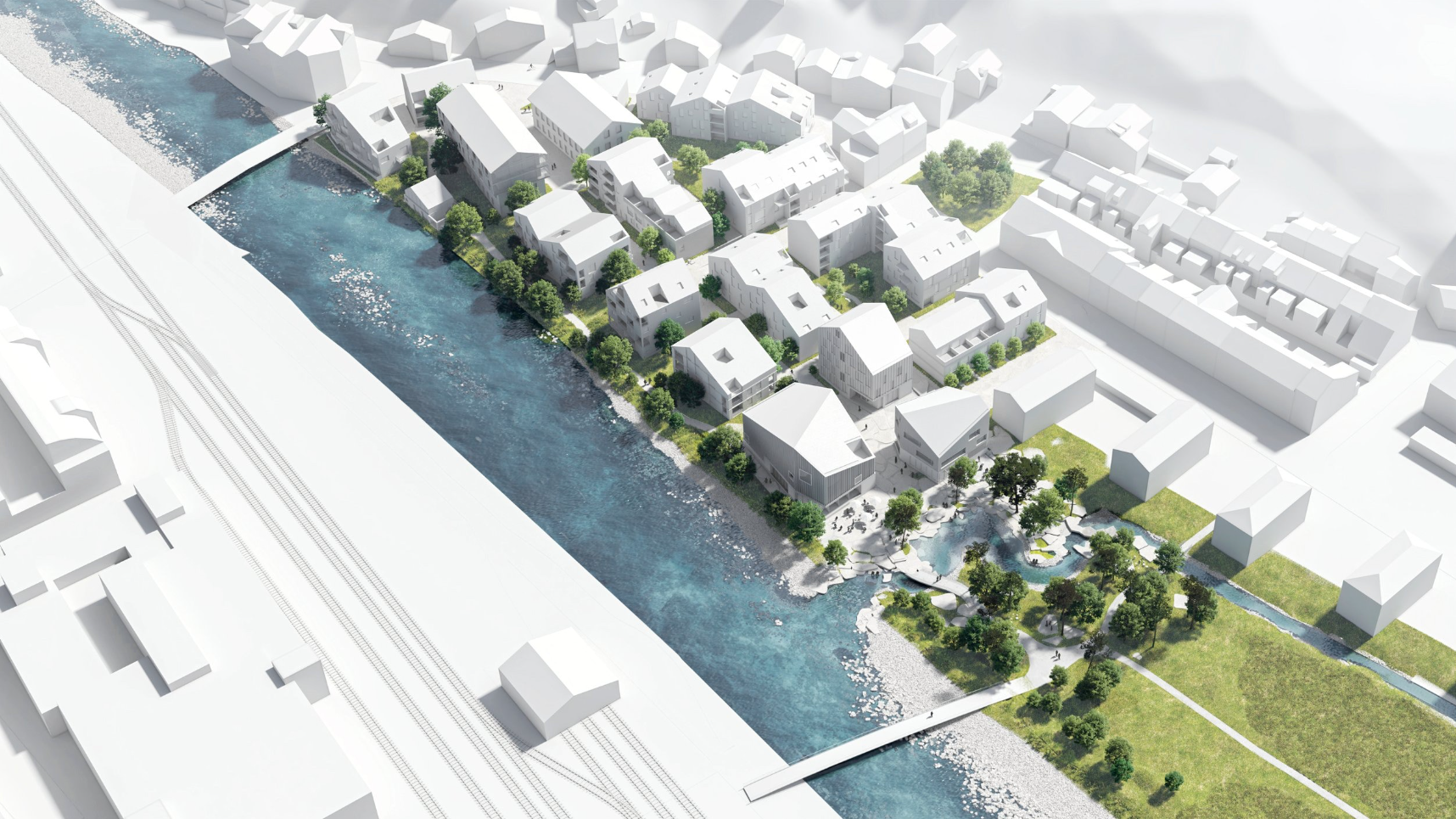
    The Kartoni neighbourhood shows how visionary urban development can succeed. On a former industrial site, a green residential neighbourhood with around 150 flats is being created, complemented by service and cultural facilities. What still exists as a planning sketch today will develop in several stages into a diverse living space that is open to all generations and lifestyles. The historical backdrop of Glarus will not only form the framework, but will also be further developed through modern architecture and sustainable construction methods.

    Town and country reconnected
    Glarus is more than just the canton’s capital, it is a way of life. Only an hour away from Zurich or St. Gallen, Glarus offers urban density and natural recreation at the same time. The Kartoni neighbourhood reinforces this quality. It builds a bridge between the district of Ennenda and the town centre, creating new paths and meeting places both spatially and socially. The municipal merger that took place in 2011 thus takes on a tangible architectural dimension.

    Water as a connecting element
    In future, the Linth will become the lifeline of the neighbourhood. Where previously sealed surfaces dominated, a public riverside space with direct access to the water is being created. The renaturalised canal interweaves with the river landscape and creates a playful counterpart to the structured design of the nearby Volksgarten. The area becomes a meeting place for walks, relaxation and shared experiences.

    Car-free garden neighbourhood
    The Kartoni neighbourhood relies on an underground solution for mobility. Directly after the Linth Bridge, an access road leads to a spacious underground car park, which means that the entire neighbourhood remains car-free above ground. The result is a garden neighbourhood that is open, green and criss-crossed by paths. The car-free design not only promotes peace and safety, but also sends out a strong signal in favour of a new way of living together in densely populated areas.

    The courage to take stages and a plan with a vision
    The development of the neighbourhood does not follow a rigid timetable, but reacts flexibly to political, economic and social conditions. Several planning strands are currently running in parallel: from the Hängg Tower to residential areas and the integration of a music school. The already approved development plan is being adapted to new requirements, particularly in relation to the neighbouring Dorfbach project in Ennenda.

  • Acquisition in North America strengthens portfolio for precast concrete parts

    Acquisition in North America strengthens portfolio for precast concrete parts

    Holcim has acquired the Canadian Langley Concrete Group Inc. Jaime Hill, Head of the North America region at Holcim, described this strategic step in a company statement as “a natural extension of our growth strategy”. This combines the technical expertise of the Langley Concrete Group in precast concrete parts with Holcim’s own activities. The enlarged portfolio also increases Holcim’s reach.

    The acquisition reportedly includes two state-of-the-art production facilities in the province of British Columbia, located in the cities of Chilliwack and Duncan. From there, the region will be supplied with dry and wet mix concrete products for above and below ground infrastructure applications, including manholes, pipes, boxes and other components for municipal, commercial and industrial applications.

    Langley Concrete President Mark Omelaniec says he is proud of what his family has built over 75 years. The family is “confident that Holcim is the right partner to take it forward as the growth opportunities in British Columbia continue. This transition offers long-term opportunities for our team and our customers.”

  • How the tenants’ association is sabotaging housing construction

    How the tenants’ association is sabotaging housing construction

    At first glance, the tenants’ association’s initiative, for which the collection of signatures began on June 3, 2025, sounds like a good thing: lower rents, more protection for tenants, more say. But if you don’t allow yourself to be dazzled by fine-sounding titles, you’ll realize that this initiative combats symptoms – and cements the causes.

    Of course, rising asking rents are a real burden, especially in urban centers. But the impression that this is a conspiracy on the part of landlords falls short of the mark. The figures are clear: according to the Federal Office for Housing, there is an annual shortage of up to 10,000 apartments – with a simultaneous increase in households of around 50,000 units. The fact that asking rents are rising is not surprising – it is the result of growing excess demand.

    And this is precisely the problem with the initiative. It wants to correct pricing administratively instead of eliminating the structural bottlenecks on the housing market. Capping yields may seem popular in the short term, but in the long term it deprives residential construction of important investment incentives. Private investors – including pension funds and insurance companies – are currently responsible for a large proportion of new construction activity. Curtailing their profitability scares off capital and risks a further shortage.

    The myth of the yield-hungry investor is a false one. More than half of rental apartments in Switzerland belong to pension funds, insurance companies or pension schemes – in other words, ultimately to the population itself. Anyone who cuts their returns is jeopardizing our retirement provision. The housing market is not a playground for socially romantic experiments, but a complex system that has to reconcile supply and demand. Anyone who undermines this mechanism is not solving any problems – they are exacerbating them.

    The right of first refusal for non-profit housing is also tricky. It effectively means expropriation with a bureaucratic detour – and a further step towards a state-controlled housing market. I warn against this: such an intervention may be ideologically motivated, but in practical terms it will mainly result in delays and inefficiency. Non-profit housing construction is justified, but it is no substitute for the market-driven volume that we urgently need.

    Instead, we need realistic solutions. SVIT Switzerland has formulated 20 specific demands in its housing agenda: faster and coordinated approval procedures, a reduction in objections, promotion of redensification and space-efficient housing. Tenancy law itself must also become more differentiated: It protects existing tenants too much and not enough those who are urgently looking for an apartment. This is neither fair nor efficient.

    In short: the housing shortage will not be solved by more regulation, but by more apartments. Anyone who hinders new construction, whether out of ideological conviction or a false sense of justice, ultimately only widens the gap between supply and demand – and thus harms the very people they claim to be protecting.

  • Investment plans weaken in 2025, record high in 2026

    Investment plans weaken in 2025, record high in 2026

    According to the latest KOF Investment Survey, Swiss companies are planning to increase their gross fixed capital formation by 2.9% in nominal terms in 2025 compared to the previous year. This means that the expected growth is not only below the historical average, but also below the forecasts of the last survey in autumn 2024. Construction investment in particular, which has been the main driver of Swiss investment activity to date, is expected to increase by 4.5%, but is showing a noticeable slowdown compared to expectations from the previous year. Equipment investment is expected to grow by 2.2% and research expenditure by 2.5%.

    In the services sector, optimism has dampened noticeably. Instead of the previously forecast growth of 4.7 percent, companies are only expecting an increase of 3.1 percent. In the construction industry, fixed asset investments are even forecast to fall by 1.1%, a significant correction compared to the previously expected stagnation. In manufacturing, on the other hand, the outlook remains largely stable, with a forecast increase of 1.4%.

    Tariff announcement weighs on investment security
    A key reason for the subdued expectations is the US tariff announcement from April 2025, which envisages a tariff rate of 31% for Swiss imports into the USA. With the help of a quasi-experimental analysis, the KOF was able to show that the announcement had a noticeable effect on investment decisions. Companies that completed their questionnaire after April 2 reported an increase in reduced investment plans. Before the announcement, around 30 percent of companies were planning to reduce their investment in equipment. After the announcement, this proportion rose to 35%, while the proportion of companies with unchanged plans fell from 40% to 36%.

    Similar patterns can be seen in construction investment, while research expenditure appears to have remained largely unaffected. Companies that were already planning expansion investments stuck to their plans. In contrast, many companies that had not previously planned any changes scaled back their plans, a clear indication of the increased uncertainty.

    Significant increase in investment uncertainty
    The certainty of investment realization also deteriorated following the customs announcement. The proportion of companies that rate their investment plans as more uncertain rose from 12% to 22%. At the same time, the proportion of those who did not notice any change in security fell from around two thirds to 56%. The proportion with an improved security assessment remained constant at around 21%.

    Focus on rationalization and climate investments
    The changed environment has influenced companies’ investment motives. Expansion investments, traditionally risky, are increasingly viewed with caution. Instead, the idea of rationalization is gaining in importance. The role of environmental and climate protection investments is also growing. While 60% of companies took corresponding measures last year, 69% intend to invest in climate protection and adaptation to extreme weather conditions over the next three years. This is despite the fact that almost a third of companies state that they are not currently directly affected by climate change. At the same time, the proportion of companies that see the transition to more climate-friendly standards as an opportunity has fallen from 42% to 39%. The proportion of those who see it as a risk, on the other hand, has risen to 28%.

    Optimistic forecasts for 2026
    The picture for 2026 is completely different. Never before since the KOF surveys began have so many companies planned to increase their investments. 28% of the companies surveyed are planning to invest more in equipment, while the figure for construction investment is as high as 29%. At the same time, the proportion of companies expecting a decline has fallen significantly to just 14%. Companies from the manufacturing and service sectors are particularly optimistic.

    Opportunities and risks at a glance
    The KOF analysis underlines the high adaptability of Swiss companies. While geopolitical risks such as US customs policy are leading to investment cuts and uncertainty in the short term, many companies are focusing on growth and climate investments in the long term.

  • Business opportunities in the Uri valley floor

    Business opportunities in the Uri valley floor

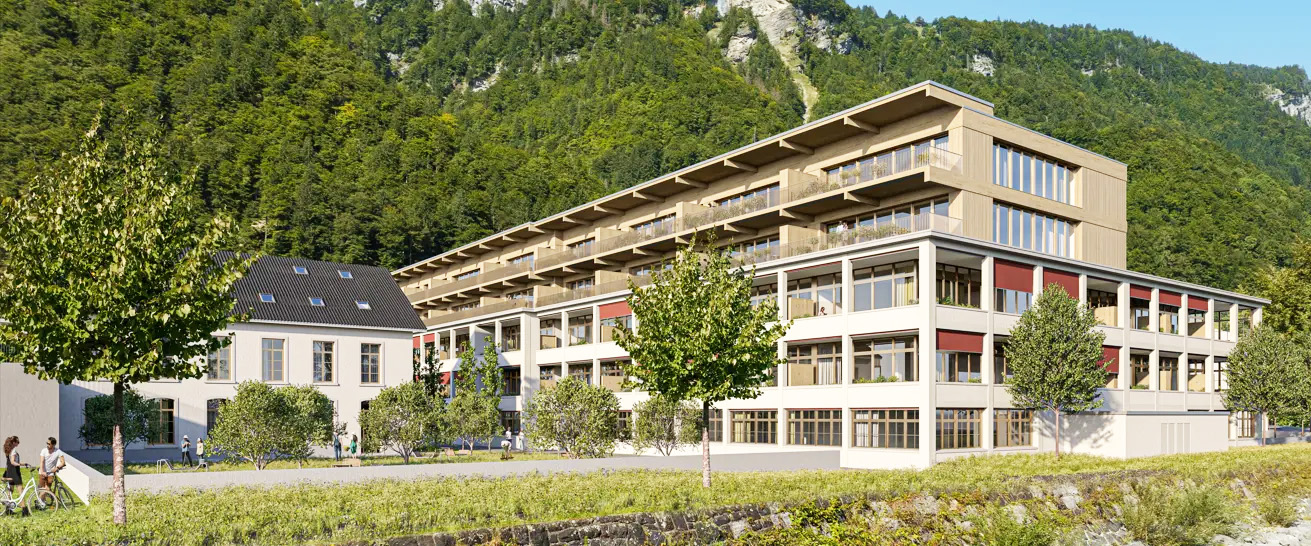
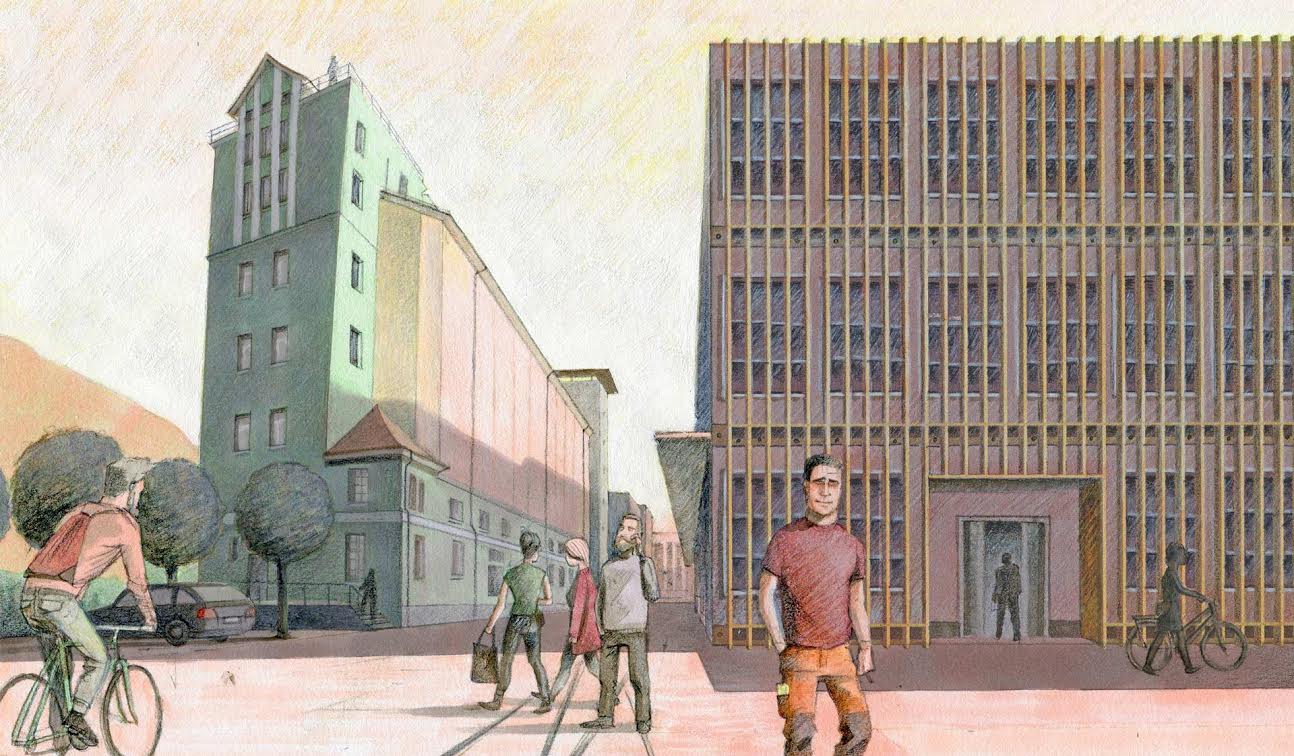
    Werkmatt Uri is one of the last large land reserves in the Uri valley floor. The first industrial uses with a direct railway connection were already established here during the First World War. The listed grain stores designed by architects Eduard Züblin and Robert Maillart in 1912/13 are particularly characteristic. These buildings will be preserved as landmarks and converted into an exhibition centre and art warehouse. The canton is investing in infrastructure to further develop the area between the new Altdorf cantonal railway station and the future Altdorf South motorway junction.

    Optimum location and economic impetus
    Uri is strategically located on the most important European north-south axis with the Gotthard Base Tunnel and the A2 motorway. The immediate proximity to the Altdorf intercity railway station and a modern bus concept promote the accessibility of Werkmatt. The improved accessibility provides impetus for economic and residential projects. With “Vena”, “Cubo” and “Strickermatte”, private investors have realised modern residential developments within walking distance.

    Development with vision
    Kässbohrer Schweiz AG has already recognised the added value of Werkmatt and relocated its headquarters to Altdorf in 2019. The new service building has created 30 qualified jobs in the areas of administration, sales, service, training, final assembly and production of special vehicles, mainly snow groomers. Werkmatt AG is also developing an innovative utilisation concept for building plots 9 and 13. The plans include a multifunctional centre with a business hotel with 80 rooms, co-working spaces, commercial and cultural spaces, restaurants and fitness and recreation areas.

    Targeted planning for sustainable growth
    As the owner, the canton of Uri is striving for a win-win situation with the future owners, users and investors in the area. The plots are to be sold and built on gradually over the next few years. The canton is developing the Werkmatt Uri site in a coordinated manner so that sustainable economic uses are created in the interests of the region as a whole. To this end, it is drawing up guidelines – including those relating to workplace density. The neighbourhood design plan serves as a planning instrument for investors and companies wishing to build on the site, which is binding on the owner and defines the parcel of land. It sets guidelines regarding utilisation, design and infrastructure.

    Success through co-operation
    Werkmatt Uri is an example of coordinated and sustainable site development. Companies benefit from a committed administration, short decision-making processes and needs-orientated solutions. The region expects the project to provide long-term economic impetus and create more than 1,000 jobs.
    Werkmatt Uri is therefore much more than just an industrial area, it is an economic driver and an attractive location for forward-looking companies.

  • Flying robots as construction machines of the future

    Flying robots as construction machines of the future

    While heavy, ground-based robotic systems have long since found their way onto construction sites, they quickly reach their limits in rough terrain or at great heights. An international research team led by Empa and EPFL is now investigating how flying robots can close these gaps. Their vision is of mobile, flexible and autonomous construction drones that transport materials, erect structures and supplement conventional machines in a targeted manner. For example, for repairs to high-rise facades or in the aftermath of natural disasters.

    Flexibility and precision from the air
    Current research is focusing on the development of so-called “aerial additive manufacturing” technologies. Three concepts are being pursued: construction with modular components, the tensioning of tensile structures and the layer-by-layer application of building materials. Initial tests at Empa’s “DroneHub” show how swarms of drones could take on construction tasks together. There are a number of advantages, such as no fixed construction site, shorter transportation routes, reduced material losses and increased safety on the construction site.

    Interplay between robotics, materials and design
    Several disciplines need to work together for the use of construction drones to become a reality. Robust and lightweight construction materials are just as crucial as intelligent construction designs that are adapted to the limited precision of drones. At the same time, the technology requires advances in flight autonomy. The spectrum of future capabilities ranges from programmed route flight to autonomous analysis and adaptation during the construction process.

    Supplementing rather than replacing
    Despite all the advances, drones remain a supplement to existing robotic systems. Their limited flight time and payload currently still restrict their use. The researchers therefore see hybrid concepts as the key. Conventional systems erect the lower areas of a structure, while drones take over from certain heights. This could allow structures to be built flexibly and efficiently in the future. Even in places where conventional construction is not possible today.

  • Swissbau Lab opens up new horizons

    Swissbau Lab opens up new horizons

    From January 20 to 23, 2026, Messe Basel will be the meeting place for the Swiss construction and real estate industry. The Swissbau Lab in Hall 1.1, a space for ideas, innovations and new partnerships, will take center stage. Topics such as the circular economy, digital planning opportunities, changing construction processes and climate protection will shape the discussions. The start of the program design on 6 May 2025 marks the beginning of an intensive phase of concept development to which companies, associations and institutions are invited.

    Workshop as a springboard for innovation
    The kick-off workshop on May 6, 2025 in Zurich marks the beginning. Both confirmed and interested companies will receive all the information they need about the concept and opportunities to participate in Swissbau Lab. Those responsible for the trade fair will coordinate the subsequent program development. First in plenary sessions, then in specific thematic groups. Short-term registrations for the workshop are possible until May 2, 2025.

    Networking as the key to progress
    Whether you are a start-up or an established company, the decisive factor is the motivation to actively shape the future of the construction industry. The Swissbau Lab is a dynamic innovation network supported by the Swiss Society of Engineers and Architects SIA as a leading partner. The platform promotes open exchange and focuses on cooperation rather than individual competition.

    Markus Weber, President of Bauen digital Schweiz and Co-Head of the Digital Construction course at Lucerne University of Applied Sciences and Arts, underlines the importance: “For us, Swissbau is a unique opportunity to focus on the principle of ‘together instead of every man for himself’. Setting impulses together for a networked, digital and sustainable construction and real estate industry.”

  • Roman Mayer takes over as Head of the Federal Office for Spatial Development

    Roman Mayer takes over as Head of the Federal Office for Spatial Development

    Roman Mayer will take over as Head of the Federal Office for Spatial Development (ARE) on 1 October 2025. The 51-year-old from Nidwalden brings with him in-depth knowledge from his previous role as Deputy Director at the Federal Office of Energy and is considered an expert in complex authorisation procedures, legislative processes and sectoral planning.

    With his legal training and his positions in various cantonal administrations, Lucerne, Basel-Landschaft and Bern, Mayer stands for a balanced combination of expertise, administrative practice and strategic foresight.

    Spatial development as the key to location attractiveness
    The ARE is at the centre of spatially relevant future issues such as overall transport, settlement development, sustainable use of resources, maintaining quality of life and promoting economic areas. Under the new management, it is expected that these challenges will be tackled in an even more networked manner – with coherent, forward-looking planning across sectors and spatial types.

    This is a key message for investors, project developers and location managers. The federal government is strengthening the planning framework and thus promoting stable and attractive investment areas in the long term.

    Generational change with vision
    Roman Mayer succeeds Maria Lezzi, who has headed the Federal Office since 2009 and will retire at the end of September. Her era was characterised by far-reaching impulses in spatial planning and the sustainable development of Switzerland. The Federal Council would like to thank her for her many years of service.

    In Mayer, a high-profile personality is now taking over who will continue to think about and shape spatial development in the context of social, ecological and economic transformation.

  • Comparison of differences in life cycle assessments for building products

    Comparison of differences in life cycle assessments for building products

    The company conspark has published a fact sheet that highlights the differences between the EU and Swiss accounting rules for construction products. It is now available for download in German and English and is intended to provide a compact guide for construction industry professionals involved in planning, production and sustainability. After all, the life cycle assessment results of building products form the basis for the future assessment of buildings.

    In Switzerland, the Coordination Conference of Building and Property Bodies of Public Building Owners (KBOB) specifies accounting rules for the life cycle assessment of construction products and publishes these results in the list of life cycle assessment data in the construction sector. In the EU, life cycle assessments are drawn up in accordance with EN 15804 A2 and their results are presented as environmental product declarations (EPDs).

    For comparison purposes, the life cycle assessment of different types of recycled concrete was prepared in accordance with the two standards. This showed that the greenhouse gas emissions and energy requirements of the same concrete vary greatly depending on the standard, with the KBOB life cycle assessment showing higher values in each case. According to conspark, this is due to the background data sets used: The EPD life cycle assessment is based on more up-to-date data, which already takes into account technological advances such as lower clinker content and the increased use of alternative fuels.

    “The comparability of life cycle assessment data plays a decisive role for future regulations and CO2 limits,” said the Managing Director and co-author of this factsheet, Florian Robineck, in a press release. Accordingly, the authors of the factsheet recommend: “A regular update of the KBOB background data sets and greater harmonisation of the two approaches would help to reduce existing differences and enable comparable sustainability assessments.”

  • Government council shortens deadlines in the building permit procedure?

    Government council shortens deadlines in the building permit procedure?

    The Zurich cantonal government wants to optimise the building permit procedure and has proposed shortening the processing period from four to three months. This measure is intended to make the authorisation process more efficient and reduce planning uncertainty for building owners. A key factor in this acceleration is the digitalisation of processes, which should reduce the administrative burden.

    Political background to the change in the law
    The initiative to shorten the time limit stems from a motion by the FDP, SVP and GLP, which was passed by the Cantonal Council by 96 votes to 73 in February 2023. The cantonal government sees this as an opportunity to optimise processing times without jeopardising the quality of the examination procedures.

    No reduction in the preliminary review period
    Contrary to the request in the motion, the preliminary review period will not be reduced from three to two weeks. In doing so, the Government Council is responding to the feedback from the consultation process, according to which a preliminary review that is too short could slow down the procedure overall instead of speeding it up. A thorough preliminary review is seen as crucial for the smooth processing of planning applications.

    More efficient procedures for a dynamic construction industry
    The planned amendment to the law is intended to make construction in the canton of Zurich more efficient and easier to plan. The digital transformation of approval procedures could not only save time, but also minimise bureaucracy. It is now up to the Cantonal Council to decide on the proposed amendment to the Planning and Building Act.

  • Higher margins through optimisation in the construction supply sector

    Higher margins through optimisation in the construction supply sector

    According to a press release, Arbonia, the Arbon-based building supplier, increased its turnover by 10.2 per cent to 556.3 million Swiss francs in the 2024 financial year despite a difficult situation, particularly in the German market. This includes the acquisitions of Dimoldura in Spain and Rozière in France as well as the Czech company Lignis. However, excluding currency and acquisition effects, a decline of minus 5.4 per cent was recorded, the report continues. This nevertheless represents an improvement on the previous year (minus 8.2 per cent).

    The decline was mainly due to a continued fall in volumes as a result of the ongoing decline in new residential construction activity combined with rising average labour costs and negative exchange rate effects.

    According to the press release accompanying the annual report, construction activity in Arbonia’s largest European markets did not yet recover noticeably in 2024. Instead, the second half of the year was weaker than expected in Germany, an important market for Arbonia: declining building permits and high financing costs are cited as problems here.

    EBITDA including special effects increased by 107.8 per cent to CHF 66.3 million in the financial year. This corresponds to an increase in the EBITDA margin from 6.3 to 11.9 per cent, according to the press release. This includes a profit of around 29 million Swiss francs from the sale of the Zelgstrasse site in Arbon. EBITDA excluding special effects increased by 22.1 per cent to 41.7 million Swiss francs. This corresponds to an increase in the EBITDA margin from 6.8 per cent to 7.5 per cent.