Living space design through the ages
The amount of space required per resident has increased from 25 m² in 1950 to around 46 m² today. As a result, room layouts have changed: What used to be a family flat is now a flat for singles and childless couples. Instead of two small WCs, a spacious bathroom is now preferred, and instead of a separate kitchen and dining room, an open-plan kitchen with a cooking island. In addition, personal demands and legal requirements in terms of building physics and ecology have increased. The question of basic services has evolved into the question of the appropriate quality of living space.
Cost savings through denser construction
In today’s housing estates of the economic upswing, there is an opportunity to achieve a more efficient use of building space through denser construction and taller buildings. Particularly in areas close to city centres with high building land values, refurbishment is often preferred to new builds. It is also important to consider the ecological significance of building decisions in view of Switzerland’s dwindling reserves of building land. The country’s settlement area has grown considerably in recent decades. Simple volumes, well thought-out spatial sequences and compact construction with high utilisation rates can save costs and counteract urban sprawl.
Thermal insulation of buildings in need of renovation
Energy-efficient modernisation of a building from the 1970s can reduce energy consumption by up to 90%. In order to optimise thermal insulation, external components such as exterior walls, roofs or the attic must be renovated. Sometimes heat is also lost undetected through an insufficiently insulated basement ceiling. The windows in particular represent weak points in the exterior walls in terms of heat and sound insulation. Building thermography with a thermal imaging camera can be carried out to assess the thermal insulation. In addition, the differential pressure measurement method (blower door test) can be used to test the airtightness of the building envelope.
Efficientexterior wall renovation with wood
Exterior walls are complex components that fulfil important building physics functions such as moisture protection, sound insulation and thermal insulation. When renovating façades, wood can be used as a substructure, formwork and thermal insulation. Insulation materials such as rock wool, glass wool, sheep’s wool or flax can also be used. The renovation of external walls is nowadays also carried out using prefabricated lightweight façades in frame construction. This concept of completely re-cladding a building and giving it a new appearance at the same time has proven to be extremely successful. As a result, new extensions and additions can also be architecturally combined with the existing building to form a new unit.
Optimisation of rooms
During interior renovations, rooms are redesigned to meet the new requirements. New partition walls, panelling and suspended ceilings are created. New sanitary and electrical installations are inserted into the wooden slats. The cavities are filled with insulating materials and then planked with gypsum, cement or wood-based panels to meet the requirements for fire protection, sound insulation and moisture resistance. Finally, the joints are filled by the plasterer and the surfaces are re-plastered. Perforated or slotted wooden materials are used as acoustic panels to improve room acoustics.
Tips for old floors
Unevenness in old floors can be levelled out using various measures. Fine filler or levelling screed are suitable for slight unevenness, while dry fills are usually used for larger unevenness. Flowing screeds made of anhydrite or cement are used for larger areas. Impact sound insulation is essential to reduce sound transmission to rooms below. In bathrooms and damp rooms, surfaces are provided with suitable sealing compounds and tapes to protect against water penetration. Designed outdoor areas such as wooden terraces and conservatories help to improve the quality of living. Balconies, terraces, loggias or conservatories can be added or extended as part of façade and interior renovations. Thanks to hard-wearing types of wood and treated timber, it is also possible to construct wooden structures that are subject to heavy use.
Wooden structures for living space extensions
The potential of a building can be fully utilised by taking local building regulations into account and selecting the appropriate building services. Additions or loft conversions offer the best opportunity to create more living space on the same floor area. Due to its low dead weight, construction engineers often opt for timber when adding storeys, as this usually means that the load-bearing structure and foundations do not have to be additionally reinforced. Prefabricated timber elements can be lifted to the top floor using a mobile crane. Choosing a construction method with a high degree of prefabrication reduces the workload on the construction site and the rooms can be occupied quickly. This means that residents and neighbours are hardly affected by noise and dust.
Tag: Bauwirtschaft
-

Evolution of living space design
-

Leading by example: circular building in the city of Zurich
The circular economy is an important lever for achieving the political net-zero targets. Like many other cities around the world, Zurich is also committed to the circular economy: in 2022, a strategy for the circular economy was adopted with “Circular Zurich”. in 2023, Zurich became the first Swiss city to sign the “Circular Cities Declaration”.
The intelligent use of resources is particularly important in construction. With the “Charter for Circular Construction”, politicians and businesses set an example in 2023 and made a joint commitment to conserving primary resources and landfill space and reducing CO2 emissions from their own construction activities.
Initial findings from two pilot projects
But how do the political commitments affect specific construction projects? What challenges does circular construction pose? And how are the planning and construction processes changing? The City of Zurich’s Office for Buildings is gaining answers to these questions through two pilot projects.
The city gained initial experience with the procurement, storage and processing of reused building components during the renovation of the Mööslistrasse 2023 kindergarten (Bischof Föhn Architekten, Zurich). Washbasins and toilets were dismantled, cleaned and refurbished on site. Plant troughs from the balconies were reused as outdoor space boundaries. Where possible, the built-in furniture was sourced from the city’s own stock. Thanks to component screening, steel beams, wooden pergolas, fire doors and kitchen elements from other buildings were identified, dismantled and reinstalled. So-called “component hunters” were deployed for everything that was not found in the city’s used parts warehouse.
The second pilot project, the new “Juch-Areal” recycling centre, is much more comprehensive. The Office for Buildings launched an architectural competition with re-use requirements for the project in 2022. The competition participants were able to use a digital catalogue of components or use other available components from non-urban sources for their designs. The buildings also had to be designed in such a way that they could later be used as a component mine themselves (design for disassembly).
The projects submitted show that it is possible: Yes, it is possible. The jury was particularly impressed by the high quality of the competition entries, which were created despite – or perhaps thanks to – the new specifications. The building material of the winning project by Graber Pulver Architekten AG (Zurich) dismantles the hall of the previous recycling centre and rebuilds it at the new location with only minor adjustments. Disposed books, magazines and clothes are used as insulation material. Sheets of recycled glass and aluminium, old kitchen covers, doors and table tops protect the façade from the weather. Discarded scaffolding is turned into storage shelves.
It is in the nature of things that pilot projects precede a standardised introduction on a broad scale. This is also the case with circular construction. The realisation of the two projects in Zurich shows that many questions still need to be clarified: How can components be catalogued? How can availability be checked? Where will they be stored? Who assumes legal liability?
The planning and construction processes will change as a result of cycle-orientated construction, because the component mines must be known as early as possible, preferably at the beginning of the planning phase. Building Information Modelling (BIM) facilitates the reuse of components, the planning of their dismantlability and the development of future component mines.
Significant savings in indirect greenhouse gas emissions in the pilot projects
The pilot projects show that this approach is worthwhile. According to a subsequent calculation, the consistent reuse of building components saved a good 30% of greenhouse gas emissions during the renovation of the Mööslistrasse kindergarten. Current calculations even predict a 40% saving in greenhouse gas emissions for the Juch-Areal recycling centre compared to a conventional new building. -

Redesign of the Schlössli Collab Lucerne
On 17 April, Axon Active Holding AG began the expansion and renovation of its headquarters in Schlössli Schönegg, high above Lucerne. Following the renovation, the Schlössli will operate under the name Schlössli Collab Luzern, according to an article in the “Luzerner Zeitung” on the ground-breaking ceremony. Axon co-founder and owner Stefan Muff is quoted as saying that the Axon Group wants to drive forward the digital transformation from here. To this end, Schlössli Collab Lucerne wants to offer innovators a home.
At the ground-breaking ceremony, Lucerne’s Director of Construction and Economic Affairs Fabian Peter (FDP) praised the commitment of the internationally active group of software companies to Lucerne as a location. According to the report, Axon Active will invest around CHF 15 million in the expansion and conversion of its headquarters. The work should be completed by autumn 2026. The group’s approximately 40 employees in the Schlössli are currently housed in a building belonging to the energy supplier EWL on Sternmattstrasse in Lucerne.
-

Increased efficiency in construction through negative emission technologies
In order to ensure a clear distinction between the greenhouse gas emissions of the building and the negative emissions, these should be reported separately. Offsetting at the building material and component level is not recommended. Although buildings with net-zero greenhouse gas emissions are not yet achievable, they could be within reach in the future if greenhouse gas emissions from the production of building materials such as cement, steel, brick or glass are massively reduced.
In order to significantly reduce urban emissions by 2035/2040, the implementation and accounting of negative emissions technologies (NET) in the building sector is essential. A recently completed study has developed methods for integrating NETs into urban carbon reporting and formulated clear recommendations for the building sector in Switzerland.
A key finding of the study is that biogenic CO² and CO² extracted directly from the atmosphere must be stored for thousands of years in order to have a lasting impact on global temperatures. Temporary storage is not enough, as it cancels out the positive effects of subsequent re-emissions. A binding guarantee of permanence is therefore essential to ensure recognised NET accounting.
The study recommends accounting for NET in accordance with the SIA 2032 and 2040 standards. To ensure transparent accounting, it is essential to distinguish between negative emissions and greenhouse gas emissions from the building. Offsetting at material and component level should be avoided. The SN EN 15804 standard has shortcomings, as it shows an even balance of biogenic CO² even with permanent sequestration. It is important to use clear and precise language to emphasise the credibility of the statements.
Timber construction offers the greatest potential for negative emissions. Other renewable raw materials such as straw or hemp lime are promising but not yet widely used. Research should focus on ensuring durability and increasing the contribution of forced carbonation in mineral building materials. Although a net-zero greenhouse gas balance for buildings is not currently achievable, an important step in this direction can be made by drastically reducing emissions in the production of building materials.
The study emphasises the need for increased efforts to reduce greenhouse gas emissions, particularly in the production of building materials. It is recommended that local authorities provide financial support for the development of NET in order to achieve the desired climate targets. -

Site development – strategies for a vibrant city
The city of Zurich is undergoing constant change, characterised by rising population growth and increasing demand for residential and commercial space. Balanced urban development that takes into account the needs of residents and incorporates ecological and social aspects is crucial.
The Office of Urban Development plays an important role in the planning and implementation of this development. By coordinating public and private interests and developing urban development projects, the Office helps to ensure that Zurich remains a vibrant and attractive city. In doing so, it preserves the architectural heritage and creates space for forward-looking construction projects.
The municipal structure plan is a key instrument for the long-term development of the city. It defines strategic goals and measures for sustainable site development and serves as a guideline for the coordination of various interests and stakeholders. In view of the projected population growth up to 2040, targeted planning and densification of existing areas is essential.
The municipal structure plan defines areas that are suitable for structural densification, as well as areas for public open spaces, municipal buildings and facilities. The focus here is on creating a liveable environment that meets the needs of residents and enables sustainable urban development.
Overall, site development and spatial planning in Zurich is a complex challenge that requires close cooperation between various stakeholders. The Office for Urban Development is committed to a balanced and future-orientated development of the city that preserves its identity and meets the need for living, working and recreational space. -

Viennese and German cities use new construction software
Two companies belonging to Wien Holding are working on the smino platform, according to a press release. According to the Rapperswil-Jona-based developer of construction software, Wiener Infrastruktur Projekt GmbH and Wiener Standort Entwicklung GmbH have used the app for two residential construction projects and the construction of a social centre. The reason for this is increasing cost pressure and the high demand for living space.
Several German cities also want to use the app to save resources, time and money in urban development. According to the press release, Essen and Darmstadt are among the users. Essen is using it for the construction of a new comprehensive school, while in Darmstadt the app is being used for several projects, including the construction of the North Fire Station.
The digital tool represents a solution in view of rising costs and the growing demand for living space, according to the press release. With smino, cities and municipalities can “successfully meet the challenges of modern urban development” and thus also make a sustainable contribution to the well-being of their residents.
According to the company, the smino app connects developers, authorities, planners and contractors to form an efficient unit. Thanks to its central availability, workflows can be optimised and projects can be realised in a time and cost-efficient manner. It also makes communication between project participants more transparent.
The Managing Partner of smino, Sandor Balogh, quoted in the press release, is delighted with the internationalisation. “The collaboration with local authorities underlines our endeavours to increase the efficiency and transparency of construction projects and promote sustainable, liveable cities.”
-

Extension to create more living space
The densification of Swiss cities should also be realised upwards. This is what the FDP is calling for together with FDP Urban, an initiative of FDP city parties. According to a press release, they propose increasing the permitted building height in all residential zones by one to two storeys. In addition, the maximum permitted height of existing buildings should be increased by at least three metres.
The increase in height would make it possible to build flats without building over existing green spaces. Areas with protected townscapes or listed buildings are to be excluded.
The FDP points out that similar proposals have already been implemented in Geneva since 2008. The FDP City of Zurich is currently collecting signatures for its municipal popular initiative “More living space by adding storeys – neighbourhood-friendly and sustainable”. The FDP Switzerland submitted a 6-point plan against the housing shortage in 2023. It also proposed increasing the utilisation rate by adding storeys to buildings, among other things.
-

Local wood as the key to CO2 reduction
Switzerland, with a forested land area of around 30 per cent, has a valuable natural resource pool, the forest. In addition to its ecological importance for flora and fauna, the forest is also an important carbon store. During its growth, a tree absorbs CO2 and binds the carbon in the wood. By using wood in buildings or other components, the carbon can be sequestered over long periods of time, which helps to reduce greenhouse gases and minimise global warming.
Martin Ziegler, Head of the Office for Forests and Game in the Canton of Zug, emphasises the need for demand for regional wood in order to fulfil the various tasks of the forest. Maintaining the forest is time-consuming and costly, so it is crucial that the wood produced finds local buyers.
A website initiated by the cantonal forestry offices of Central Switzerland, Lignum Zentralschweiz and WaldSchweiz, aims to illustrate the links between forest management and the utilisation of wood. The website waldnutzen.ch presents six projects from the region and shows how the local wood cycle works.
One example of the sustainable use of local wood is the “House of Wood” in Sursee, for which the builder Pirmin Jung deliberately chose to use local wood. The “Wood Tower” near the Goldau Animal and Nature Park in the canton of Schwyz also shows how wood from the region is used for sustainable construction projects.
The canton of Uri recognised the potential of its forests early on and implemented measures to promote the forestry and timber industry as part of its government programme. The “Holzkreislauf Uri” project brings together all players in the value chain to promote the sustainable use of wood in the canton.
Close cooperation between various interest groups, such as the Lucerne University of Applied Sciences and Arts, the cantonal forestry offices and the timber industry, is crucial to the success of such projects. The joint efforts promote the sustainable use of wood and support the reduction of CO2 in the atmosphere.
-

Bühler’s Grain Technology Centre nears completion
The Bühler Group ‘s new Grain Innovation Centre(GIC) at its headquarters in Uzwil is almost complete. The technology company based in the St.GallenBodenseeArea has announced that the building project has reached the final construction phase. Just over 18 months after the start of construction work, the installation of all machines and systems has begun. For Bühler AG, the modernisation represents a “milestone on the road to innovation in grain processing”, according to the statement.
According to the press release, the new GIC will replace the previous facility after almost 75 years, as it no longer met the changing market dynamics in the grain processing industry and in the development of future food products. A five-storey multi-purpose centre will now be built on an area of 2000 square metres, which can be used for tests and research on new products. Important questions can be clarified here, “such as how local raw materials can be used, how productivity can be increased, how safety can be improved and how the requirements for healthier and new products can be met,” it says.
The new Grain Technology Centre combines Bühler’s past and experience in milling with state-of-the-art technology. “By integrating the GIC into Bühler’s network of application and training centres, customers in Uzwil benefit from an ideal facility that enables them to turn challenges into opportunities,” says Christian Geser, Project Manager Grains & Food at Bühler. The structural concept also includes Bühler’s Milling Academy and the school for animal feed technology right next to the GIC.
-

Enable inward settlement development despite noise pollution
The UREK-S upholds the decision of the Council of States to build in areas subject to noise pollution, provided that controlled ventilation is installed and windows are used primarily for lighting purposes. In these cases, it is not necessary to comply with noise limits with open windows. The Commission is convinced that these regulations will favour the creation of living space in central locations and thus promote inward settlement development.
With regard to construction in the vicinity of airports, the Commission rejects a new specific aircraft noise limit, as proposed by the National Council. It favours the Federal Council’s regulation, which allows exceptions to the requirements for aircraft noise. In its opinion, this regulation allows denser construction despite aircraft noise.
The Commission proposes deleting the provision on maximum speeds on traffic-orientated roads from the law. Speed reductions should not be prohibited in principle, but should be implemented through measures that have already been adopted.
With regard to the remediation of contaminated playgrounds, the Commission confirms the decision of the Council of States on private children’s playgrounds and home gardens with pollutant contamination by a casting vote of the President. It rejects the idea that the federal government should be able to provide compensation from the VASA Contaminated Sites Fund for voluntary remediation. The Commission is in favour of the remediation of contaminated private playgrounds and gardens, but without using federal funds. Cantons can provide financial support for remediation if they so wish. Some members request that the National Council be followed, except with regard to the regulation that the owners must in principle pay for the remediation costs.
-

Stadtwerk Winterthur starts up four new photovoltaic systems
Stadtwerk Winterthur is ready to start building four more photovoltaic systems. They are to be installed on the roofs of the Winterthur theatre, the Wülflingen swimming pool, the Mattenbach primary school and the temporary Tössfeld gymnasium, the municipal energy and water supplier announced in a press release. Together, the four new systems are expected to generate around 254 megawatt hours of electricity per year.
Stadtwerk Winterthur is responsible for the construction and operation of the plants. They will be financed from the city of Winterthur‘s 90 million framework credit, which was approved by the Winterthur electorate in September 2012. The city council is providing a total of CHF 707,000 from this pot for the construction of the four specific plants. The expansion of solar energy serves the city of Winterthur’s goal of achieving net-zero CO2 emissions by 2040.
-

Beschleunigung der Baubewilligungsprozesse dringend erforderlich
Angesichts dieser Entwicklungen werden in verschiedenen Kantonen Massnahmen diskutiert, um die Baubewilligungsverfahren zu straffen. So plant der Kanton Luzern, das bestehende Bewilligungsverfahren durch ein einfacheres Meldeverfahren zu ersetzen, während im Kanton Freiburg Baugesuche automatisch als genehmigt gelten sollen, falls die Bearbeitungsfrist überschritten wird.
Der Schweizerische Baumeisterverband (SBV) setzt sich auf allen Regierungsebenen für eine Beschleunigung der Baubewilligungsprozesse ein. Als Lösungsansatz gilt unter anderem die Digitalisierung der gesamten Prozesskette, von der Planung bis zur Realisierung. Ebenso wichtig ist die Bekämpfung grundloser Einsprachen, die lediglich dem Ziel dienen, Bauvorhaben zu verzögern. Der SBV befürwortet eine Begrenzung der Einsprache Möglichkeiten auf relevante Aspekte und eine Einführung von Kostenbeteiligungen bei Einsprachen, um den Missbrauch des Systems einzudämmen.
Die Initiativen zur Vereinfachung der Baubewilligungsprozesse und zur Verhinderung missbräuchlicher Einsprachen sind entscheidend, um die dringend benötigte Schaffung von Wohnraum zu fördern und die Wohnungsknappheit effektiv zu bekämpfen. Mit diesen Massnahmen soll sichergestellt werden, dass Bauprojekte zügig und effizient realisiert werden können, ohne dass der rechtliche Schutz der Bürgerinnen und Bürger beeinträchtigt wird.
-

Green Building nimmt die graue Energie ins Visier: Eine branchenweite Analyse
The debate about energy consumption and environmental costs in the construction and disposal of buildings is intensifying. Against this backdrop, companies are being forced to scrutinise their approaches and explore sustainable alternatives. In order to understand the various approaches and reactions of players in the construction and property industry to these growing challenges, the Green Building Association is launching a comprehensive survey. The aim is to create a sound basis for discussion and promote the exchange of knowledge and strategies within the industry.
The online survey, which takes around 7 minutes to complete, aims to gain insights into the willingness of companies to adapt to the new requirements associated with reducing grey energy. With the results, Green Building hopes to shed light on the diverse strategies that companies are adopting to minimise the environmental footprint of their construction projects while remaining competitive in the market.
Taking part in the survey not only offers companies the opportunity to share their perspectives and measures, but also to learn from the insights and best practices of others. The Green Building Association therefore cordially invites all industry participants to take part in the survey and to forward the survey to other interested colleagues. The results will be a valuable resource for the industry to jointly pave the way to a more sustainable future.
The survey takes about 7 minutes to complete and can be found at the following link: https://www.soscisurvey.de/Ersatzneubau/
-

Successful spatial development in the canton of Neuchâtel
The latest data shows that the canton of Neuchâtel has experienced positive development in various areas of spatial planning. Population growth has stabilised and the number of jobs has risen steadily, indicating robust economic strength. The active involvement of the municipalities in revising their development plans to meet the requirements of the Federal Spatial Planning Act and the cantonal master plan is particularly noteworthy. By the end of 2023, 16 out of 27 municipalities had already submitted their revision files, a step that underlines the consistent adaptation to the prescribed density requirements and the reduction of underutilised building zones.
One notable aspect of the report is the progressive densification of economic zones, which leads to a more efficient use of available land without compromising the quality of life. Exemplary neighbourhoods illustrate the potential to combine densification with a high quality of life. The availability and quality of public transport has also improved, which supports the canton’s Mobility Strategy 2030. The introduction of new parking regulations and the promotion of soft mobility are further steps towards reducing private transport and promoting more environmentally friendly modes of transport.
These developments are particularly important for property experts, as they influence the framework conditions for investments and the development of new projects. Strategic densification and the promotion of sustainable mobility concepts offer new opportunities for the development of future-oriented property projects. In addition, measures to protect agricultural land and reduce energy consumption contribute to more sustainable development, which can increase the value of property in the long term.
In conclusion, the report notes that despite the encouraging developments, challenges remain, particularly with regard to the ageing population and the need to develop adapted forms of housing. The ongoing revision of local development plans and the focus on sustainable neighbourhoods and high-quality public spaces will be key issues in future spatial planning. For property management professionals, this report provides a sound basis for strategic decision-making and underlines the importance of forward-looking planning in the dynamic landscape of the property market.
-

Halter starts construction of ZenO in Oberdorf
The Schlieren-based construction and property company Halter AG is building 49 flats and a branch of the anchor tenant Aldi Suisse for the pension fund of the canton of Nidwalden. The investment volume for the ZenO project is estimated at CHF 30 million. According to a press release, a design by Mirlo Urbano Architekten GmbH from Zurich is being realised for ZenoO. The plan is to build a new centre on the former Landsgemeindeplatz in Oberdorf.
According to the project description, an area of 1,100 square metres is intended for commercial use, with a further 130 square metres for offices and small businesses. Apart from a small commercial space, the ground floor has already been let.
With retail and additional service areas on the ground floor, the project offers “optimal supply options for the small flats on the upper floors”. The target group is mainly employees from the surrounding Bürgenstock and Engelberg tourist regions, professionals from nearby companies such as Pilatus and SWISSINT, as well as singles and couples of all ages.
ZenO will make an important contribution to strengthening the community and will positively promote local development. “It will not only improve the townscape, but also create new living space and jobs,” says Judith Odermatt-Fallegger, Mayor of Oberdorf.
Planning permission was granted in December 2023, construction is due to start in July 2024 and completion is planned for spring 2026. In order to be able to start construction, the building lease agreement was signed in January 2024 between the municipality of Oberdorf, the Pension Fund of the Canton of Nidwalden as the investor and Halter AG as the overall provider. Halter was also awarded the contract for the initial letting of the project.
-

The winning project for the UZH Irchel campus has been chosen
The architectural competition for the UZH portal on the Irchel campus has been decided. According to a press release from the University of Zurich(UZH), the design by the consortium M2N Architekten and Jaeger Baumanagement from Zurich won over the jury the most. A total of 14 teams submitted their designs.
The planned new building plays a central role in the fundamental redevelopment of the site, where UZH has established natural sciences, human medicine and veterinary medicine departments with their specialised infrastructures for experimental research and teaching. According to the information provided, the campus is in great need of modernisation after 45 years of operation.
The jury judged that the winning project continues the DNA of the Irchel campus. It is “characterised by its outstanding internal qualities and successful integration into the existing Irchel campus. The team has not only understood the concerns of the University of Zurich, but has also taken them one step further,” said François Chapuis, Director of Real Estate and Operations.
The consortium is planning a six-storey timber-concrete hybrid building. This will be adjoined by a long laboratory wing that is one storey lower. The two parts of the building are connected by an entrance area with a green roof terrace. Technical and logistics facilities for the entire campus will be installed in the basement.
The winning project will now be developed further. an approvable construction project should be available in 2025. If it is approved, construction work could begin in 2029 or 2030. Those responsible estimate a period of 25 years for the refurbishment of the entire campus.
-
Switzerland Innovation Park Basel Area receives four new buildings
The Switzerland Innovation Park Basel Area in Allschwil will more than double in size in stages by 2028. The private investor Senn Resources from St.Gallen is investing around 350 million Swiss francs in the four new buildings planned. Together with the main building, which opened a year ago, they will form the Main Campus site. The Switzerland Innovation Park Basel Area also has two other sites: the Jura site in Courroux and the Novartis Campus in Basel.
As with the main building, three of the four new buildings will be designed by architects Herzog & de Meuron, according to a press release from the Innovation Park. The “radically sustainable” Hortus office building is already under construction and is scheduled for completion in 2025. The All and Cloud laboratory and office buildings are in the planning stage. The public-facing Hope building was developed in collaboration with the Swiss Tropical and Public Health Institute. Senn is building it with Basel architects Felippi Wyssen, who won the anonymous competition.
“It is extremely gratifying that the partnership of a public and private institution has made it possible to build an innovation district of this size,” said Raymond Cron, Managing Director of the national umbrella organisation Switzerland Innovation. “This means that not only the life sciences location of Basel, but also the nationwide network of Switzerland Innovation ‘s six parks is gaining in importance.” “With Senn,” says Christof Klöpper, CEO of Basel Area Business & Innovation and CEO of Switzerland Innovation Park Basel Area, “a private partner is making a major contribution to attracting innovative companies to the region and supporting the objectives of Switzerland Innovation.”
-

Conversion and modernisation of the former Swisscom building in Thun
The presented project for the conversion and extension of the property at Gewerbestrasse 15 is characterised by its uniqueness and versatility. It includes various forms of utilisation as well as residential models, and combines existing structures with new buildings. A special feature of the project is that, once planning permission has been granted, it will be realised while the remaining tenants (Swisscom) continue to operate.
In the first phase of the project, the building will be stripped of its current façade and the existing attic and two floors below it will be removed. These are to be replaced by three residential floors and a new parapet in timber construction. The remaining five floors of the building, from the 2nd basement to the 2nd upper floor, will remain largely unchanged and will continue to be used for commercial, storage and technical purposes. A newly added terrace to the south of the building, together with a ramp on the east façade, will bridge the difference in height between the ground floor and the street without barriers.
The project also emphasises the differences between the existing building and the extension in the façades: the lower floors will have a rear-ventilated stone façade, while the extension will be clad in rear-ventilated ceramic cladding. Towards the west, the building volume gives way to the railway tracks in order to meet acoustic challenges and create a terrace that serves as an open space for both the residents and the commercial tenants. Access to the flats is via arcades, bridges and greenery, which characterise the building in the western quarter. -

Future-orientated living in the Bostudenzelg
Bostudenzelg is one of the last contiguous undeveloped building zones in the city of Thun. For the site, half of which is owned by the city and half by Frutiger AG and the Bernese Pension Fund (BPK), the owners have developed a joint vision for modern living. The innovative residential project creates urgently needed living space for all generations, realising the city’s development goals in an exemplary manner.
Unique “open space” as a vision
The basis of the site development is the indicative project, which is based on the winning “open space” project that emerged from the ideas competition (SIA 142). The centrepiece is a spacious park around which the buildings are arranged in a ring, which is intended to promote a communal feeling of living “in the countryside”. The residential project attaches great importance to careful integration into the neighbourhood as well as good networking and design of the outdoor spaces, which are freed from motorised traffic.
High-quality internal development
Great importance is attached to the interaction between the buildings and the open space as well as the economical use of the land. Different building heights will bring accents and dynamism to the neighbourhood design and highlight the entrances to the new area.
An attractive and lively residential quarter
The residential project focuses on versatile and socially mixed forms of housing for all needs. In addition, the project offers space for other possible uses such as a kindergarten or daycare centre, a retirement and nursing home as well as public spaces and a neighbourhood meeting point. Commercial space and non-profit housing are also part of the plans. This mix of uses will make the residential neighbourhood more attractive and revitalise it.
Mobility and traffic concept
Great attention is being paid to aspects of sustainability and future-oriented and environmentally friendly mobility. The new development regulations call for a mobility operating concept that offers solutions to reduce the volume of traffic and thus improve the quality of life in the neighbourhood.
Involvement of the public
The appropriate involvement of the neighbourhood population and other interest groups is a major concern for the planning partners throughout the entire process. To date, the public has had the opportunity to submit their opinions and suggestions on the new development plan as part of the public consultation process. At the same time, the focus is on early and close cooperation with potential non-profit building rights holders. Further participatory development formats for the site are planned in connection with the granting of building rights and based on the participation concept.
Further steps
Following the public consultation process and the preliminary review by the canton, the new development regulations will be published.the process for allocating the urban building plots under building rights has also been started. The next step is to prepare the architectural competitions. At the same time, Frutiger AG and the Bernese Pension Fund are pressing ahead with the development of their construction project. Implementation will take place in several stages.
Conclusion
This project in Thun is an example of how careful, partnership-based and integrated planning as well as future-oriented and innovative development of a residential construction site can bring concrete added value to the surrounding neighbourhoods by ensuring a high level of urban planning quality for the buildings and outdoor spaces and ensuring appropriate involvement of the population, interest groups and partners. -

Frischknecht Holzbau-Team AG wins the Innovation Award Zürcher Unterland 2023
This year’s Innovation Award Zürcher Unterland has gone to Frischknecht Holzbau-Team AG. The company from Kloten “has shown a lot of courage with the introduction of a four-day week to combat the shortage of skilled workers and has gained new and valuable experience for the construction industry”, writes the association Standort Zürcher Unterland in a statement. It has organised the competition to honour innovations from the Unterland region every year since 2021.
Comtag AG from Wil ZH came in second with its innovative cleaning process for coffee grinders. Third place went to Green Datacenter AG from Lupfig AG. It was awarded for its Metro Campus Dielsdorf. The waste heat from the data centre in Unterland can be used by households and businesses in the surrounding area.
The prize money of 5000 Swiss francs for the first-placed company and 2500 Swiss francs each for the second and third-placed companies was donated by the sponsors Zürcher Kantonalbank and Vetropack. The award ceremony took place on 14 September as part of the innovation event at Vivi Kola in the premises of the former mineral springs in Eglisau. The 50 or so participants were also offered a programme of presentations and seminars as well as a tour of Vivi Kola’s factory facilities.
This year’s Innovation Award Zürcher Unterland went to Frischknecht Holzbau-Team AG. The company from Kloten “has shown a lot of courage with the introduction of a four-day week to combat the shortage of skilled workers and has gained new and valuable experience for the construction industry”, writes the association Standort Zürcher Unterland in a statement. It has organised the competition to honour innovations from the Unterland region every year since 2021.
Comtag AG from Wil ZH came in second with its innovative cleaning process for coffee grinders. Third place went to Green Datacenter AG from Lupfig AG. It was awarded for its Metro Campus Dielsdorf. The waste heat from the data centre in Unterland can be used by households and businesses in the surrounding area.
The prize money of 5000 Swiss francs for the first-placed company and 2500 Swiss francs each for the second and third-placed companies was donated by the sponsors Zürcher Kantonalbank and Vetropack. The award ceremony took place on 14 September as part of the innovation event at Vivi Kola in the premises of the former mineral springs in Eglisau. The 50 or so participants were also offered a programme of presentations and seminars as well as a tour of Vivi Kola’s factory facilities.
-

Holder companies increasingly act as a group
Schlierem-based real estate developer Halter AG is reorganising its management structure. According to a statement, an ecosystem of sister companies with different construction and real estate services has grown up around the company over the past ten years. This has resulted in the need for further development at the top. Halter Holding has so far hardly appeared in public as a “silent” holding company.
In future, they will position themselves more strongly in the market. The construction and real estate industry’s path to a circular economy can only be successfully implemented with integrated value-added processes and models of cooperation in planning, execution and operation. This is linked to the use of digitalisation and digital technologies.
In the course of the organisational development, there will be personnel changes from 1 January 2024, according to the company’s statement. Maik Neuhaus will take over from Markus Mettler as CEO of Halter AG. Mettler will now become Chairman of the Board of Directors of Halter AG and Delegate of the Board of Directors of Halter Group. Balz Halter remains Chairman of the Board of Directors of Halter Group. Alexandra Stamou joins the Board of Directors of Halter AG and becomes Head of Innovation and Products of Halter Group.
The business unit Total Services of Halter AG, which is the largest unit with more than 200 employees, will be split up. From January 2024, there will be Halter Total Services German-speaking Switzerland and Halter Total Services French-speaking Switzerland. The new managing directors will be Diego Frey for German-speaking Switzerland and Fréderic Boy for French-speaking Switzerland. Both will then be part of the Halter AG Executive Board.
-

Lack of understanding of project data
The CDE is the starting point for consistent data management. It is in the interest of the property owner to have access to the current project information at all times, to avoid incompatibilities and to be able to change access rights. It is all the more surprising that the value of data is still not fully understood. Too often, they are viewed solely from an IT perspective and reduced to their function as measuring instruments.
Themarket is changing rapidly
The market for CDE solutions is fast-moving and diverse. Overall, there is a trend towards specialisation, which requires a high level of integration. Independent tools are often bought up by large technology providers or built into existing solutions. This leads to problems when taking over projects that have already been completed. To ensure a smooth exchange of data, it is recommended to use a platform as consistently as possible.Rapid innovation unsettles users
Competition among providers is fierce. New tools are constantly entering the market and functionalities are constantly being developed. The result is a great deal of uncertainty among many building owners and operators, both in terms of selection and application. The rather slow construction and real estate industry meets the short innovation cycles of the technology sector here. Use cases, process flows and responsibilities must therefore be clearly defined before the system is selected in order to avoid disappointment.And who owns the data?
The question of data sovereignty is central: Who owns the data in the CDE and who is entitled to it when the construction project is finished and the building is handed over for operation? Current practice shows that this question is often neglected. It is therefore essential that the building owner specifies the set-up, orders the CDE according to his own ideas and regulates the ownership of the data at an early stage.User-friendliness leaves a lot to be desired
The project CDE solutions examined by pom+ can be roughly divided into two groups: Either they are expert tools with extensive functions or simple applications with limited possibilities. Common to both groups is a lack of usability. Almost 45 per cent of the tools examined were rated three or less on the five-point scale. The problem here is that CDEs are not only used by technology-savvy people – they have to address the whole team. Manufacturers should pay more attention to this in their further development. Joachim Baldegger, head of the study and Head of Service Unit Future Lab, summarises: “Modern construction means thinking about operations already in the construction project and ordering the right data. Common Data Environments play a central role in this. However, there is still a long way to go, because many tools have gaps in their functional scope and can only deal with data to a limited extent or record it in a structured way. Only when this is ensured can data from the project be efficiently transferred to the target systems of the property owners and added value generated.” -

New professions through the circular economy?
Prof. Dr. Stephen Wittkopf, how do you find a flat that is built according to the principles of the circular economy? That would be very difficult at the moment. In Switzerland, there are only a few residential buildings that have been built according to the principles of the circular economy, in Winterthur for example. In industry and office buildings, people are already a bit further ahead.
The idea of reuse is very plausible. Why is it only being implemented hesitantly? Because not everything that is built today is suitable for reuse. In many buildings there are so-called composite materials. This means that different materials such as concrete, wood or steel have been glued together. You can’t just separate them. This creates an enormous amount of construction waste. Of all the material that is imported into Switzerland, i.e. clothes, computers, food and other commodities, by far the largest part is destined for the construction sector. That is, for roads, bridges and buildings. All of this is enormously weight-intensive. The construction sector therefore clearly has the greatest potential for saving material and energy through reuse.
Is the circular economy only about reusing, or also about rebuilding or continuing to build? The concept of the circular economy can indeed be defined so broadly that it includes all reuse. The question of how to preserve and repurpose existing buildings is the first level of the circular economy. The second level is the reuse of building components and the third level is about recycling and reprocessing materials.
How would new buildings have to be designed so that the components can be reused decades later? The materials must be separable and the components repairable. This means that the purest possible materials are central, which are not glued together but provide stability with plugs and screws. Repairability is important for the longevity of the individual components. It must not be the case that you have to throw away an entire window just because the window handle no longer works. And last but not least, meticulous documentation is important so that it can be traced later which materials are where. At the moment, this is not yet sufficiently recorded.
Components are continuously being developed; my grandmother had front windows that could be removed, today there is triple glazing. Is it realistic to reuse them in 50 years? Many products are so good today that a noticeable improvement can only be achieved with much greater effort. And you don’t have to reuse components one to one. In the case of windows, there is a good example from the canton of Zurich: older, double-glazed windows were supplemented with a third glazing; as a result, the improved windows could be reused in a new building.
That sounds as if the reuse of materials completely changes the work for architects. Yes, it requires a radical change. Architects’ work no longer starts on a greenfield site. They have to incorporate existing materials and the availability of products into their concept. But this paradigm shift does not have to become a design or economic obstacle; it can lead to a new language of form.
So the client must also be on board. Exactly, they play at least as important a role. The client can shape the brief differently, and specify, for example, that only second-hand materials are to be sought and that planning is to be based on this. It will certainly be a complex puzzle – but other industries also work with complex and flexible supply chains. The construction industry is lagging behind.
What is the situation in terms of profitability? Can the circular economy in construction be profitable? It can, but not without effort and not overnight. It needs new business models, but also financial support, because it is currently a niche market. However, I am firmly convinced that this will change.
And what might the new business models look like? Maybe one day we will rent recyclable materials – windows, doors, wood or concrete – instead of buying them. Or we design a new building from the outset as a material store for later buildings. This results in a completely new basis for calculation, because the material costs do not have to be amortised in their entirety. The materials could be traded on material exchanges – by the way, this is already done in other countries like Denmark. Maybe even new professions will emerge, such as component hunters.
That sounds exciting. So it changes the whole concept of new buildings? Definitely. If the future of a building is taken into account, it will be built in such a way that it can be converted with as little effort as possible. Society is changing, and with it the needs for living space. A neighbourhood that was once designed for families may no longer fit the needs of the now older generation decades later. If the family flats can be converted into smaller ones with relatively little effort, money, materials and energy can be saved.
In which areas of the construction industry would you describe Switzerland as progressive? Switzerland is already quite advanced in the reuse of concrete. Today, natural stone or gravel is replaced by processed construction waste that would otherwise end up in landfill. In addition to reuse, this has the advantage of saving landfill fees. In large new construction projects, building concepts are also becoming more and more flexible. In general, I observe a growing interest in circular economy among building owners. In Switzerland, the canton of Zurich has a pioneering role. And we, as a university, are of course researching the topic and have the task of sensitising a young generation to the issue by giving high priority to used materials in our training and further education courses.
-

Master builders want to respond to the study on the shortage of skilled workers
“Our industry is doing well after three years of permanent crisis,” said Central President Gian-Luca Lardi, welcoming the more than 550 guests to the Construction Industry Day at the LAC Lugano Arte e Cultura cultural centre. “The master builders have learned to deal with the effects of the Ukraine war, just as they did before with the price increases and supply bottlenecks in the wake of the Corona pandemic.” And the future outlook is also quite positive in the medium to long term, according to Lardi. Construction activity should continue to grow, “albeit at a somewhat slower pace”. While strong growth is forecast for residential construction until 2040, mild growth to stagnation is expected in commercial construction, public building construction and public civil engineering. At the same time, builders can look forward to prices for building materials gradually falling again.
SBC study shows: Shortage of skilled workers endangers jobs
The focus of this year’s networking event was on the shortage of skilled workers and what mix of measures can be used to combat it. Today, the search for suitable employees at all levels is a major challenge for many tradespeople, including master builders. And it can be assumed that the situation will get even worse. With far-reaching consequences. “Without enough qualified craftsmen, important construction projects in our country can no longer be realised,” Lardi explained. To prevent such a scenario, the Swiss Association of Master Builders commissioned the Demographics Competence Centre to conduct a “Study on the Long-Term Development of the Economy and Skilled Workers in the Main Construction Industry”. Now the results of the study are public: while the demand for skilled workers in the main construction sector continues to rise, the supply is falling. By 2040, the shortage of skilled workers in the most important professions in the main construction industry – measured in terms of construction volume – is expected to reach 16 percent. Without countermeasures, there would be a shortage of about 30 percent of the required employees, i.e. about 2,500 skilled workers, among bricklayers and masons alone. This has an impact on turnover: If no measures were taken, the construction industry would lose up to 800 million Swiss francs annually due to the lack of skilled workers, or 13 billion Swiss francs in total over the next 20 years, adjusted for prices.Digitalisation and personnel recruitment as hopefuls
The study points to several solutions against the shortage of skilled workers. “If we increase turnover per capita by 0.5 per cent annually, we can make up for 50 per cent of the shortage of skilled workers,” Gian-Luca Lardi reassured, however. This increase in productivity is to be achieved mainly with the help of digitalisation and through innovations. At the same time, the industry must do everything it can to “train more apprentices, keep skilled workers in the profession longer and ultimately recruit more lateral entrants”. In this way, the other half of the skills gap could be closed. The study points out several levers that can be tightened. For foremen and forewomen, where the shortage will develop less precariously than in other construction professions, lateral entrants already play an important role today. With targeted career and junior staff planning and support, the number of people in management positions can be increased. In apprenticeship training, it is very important to motivate young people to successfully complete their bricklaying apprenticeship and also to stay in the main construction trade in the long term. The decisive factor is not only the management and company culture, but above all the many great, “cool” construction projects that the young people can actively shape. Then they see that their work offers meaning and creates sustainable values.Lardi ended his speech with an appeal to all project participants, i.e. builders, planners, specialists, construction companies and political decision-makers alike: “We will only be able to realise our future building park and infrastructures if we work together in true partnership and at eye level.”
Source: https://baumeister.swiss/
-

Circular economy in construction gains ground
About 120 experts from the construction industry, planning and building owners met in June at the second specialist conference on the circular economy in construction organised by Kästli Bau AG. Kästli Bau AG writes in a corresponding press release that the conference showed a great willingness on the part of companies, planners and building owners to approach each other. “The transformation is underway,” Ronald Flühmann, project manager for technology at Kästli Bau AG, is quoted as saying in his contribution to a panel discussion at the conference. “What is needed now is an end to silo thinking so that we can move forward together.”
Many examples of the end of this silo thinking could be found at the symposium. “If all sides insist on their point of view, there is no moving forward,” speaker and panel guest Urs Neuenschwander, Head of Marketing and Sales at Energie Thun AG, is quoted from his contribution. Panelist Michael Beyeler, vice-president of the suisse.ing regional group in Berne and co-owner of BSB+Partner Ingenieure und Planer AG, was convinced that the common optimum can be achieved through good communication and early input of specialist knowledge.
During the discussion, Sarah Weber, representing the Swiss Federal Railways (SBB), one of the largest clients in the Swiss construction industry, signalled her willingness to engage in dialogue, writes Kästli Bau AG. The practice-oriented expertise of the planning and construction experts “is valuable for us,” the deputy head of environment/sustainability at SBB Infrastructure is quoted as saying. “We want to walk the path to more sustainable projects together with our suppliers.”
-

Master Builders’ Association counters shortage of skilled workers
The Swiss Association of Master Builders(SBA) expects a growing shortage of skilled workers in the construction industry. It has therefore commissioned a “Study on the Long-Term Development of the Economy and Skilled Workers in the Main Construction Industry” from the Competence Centre for Demographics, the association informs in a press release. According to the study, which was presented at the end of June at the Construction Industry Day in Lugano, the shortage of skilled workers, measured in terms of construction volume, could reach about 16 percent by 2040. This would cause annual turnover losses of up to CHF 800 million and thus endanger jobs in the construction industry.
In Lugano, however, SBC Central President Gian-Luca Lardi also pointed out possible solutions. “If we increase turnover per capita by 0.5 per cent annually, we can make up for 50 per cent of the shortage of skilled workers,” Lardi is quoted as saying in the press release from his address at the industry’s traditional networking event. According to the association, this increase in productivity should mainly be achieved through digitalisation and innovation. At the same time, Lardi suggested “training more apprentices, keeping skilled workers in the profession longer and ultimately recruiting more lateral entrants”. In this way, the other half of the gap could be closed, according to the Central President.
-

“Charter for Circular Building” twelve big ones make headway
Despite great progress in recent years: Too many valuable, non-renewable raw materials are still irretrievably lost during construction. And the net zero target is still a long way off. The construction and operation of buildings and infrastructures are responsible for about 50 percent of the raw material demand, one third of the CO2 emissions and over 80 percent of the waste produced in Switzerland. If the construction industry is to become more sustainable and fit for the future, the consumption of non-renewable raw materials in construction must decrease and grey greenhouse gas emissions must fall.
Against this background, twelve of the largest public and private construction clients in Switzerland are setting out on the path towards a circular economy. Together, they are responsible for around CHF 4 billion of building construction investments per year. By signing the “Charter for Circular Construction”, they have committed themselves to a joint ambition to reduce the use of non-renewable primary raw materials to 50 percent of the total mass by 2030, to record and greatly reduce grey greenhouse gas emissions, and to measure and greatly improve the circularity of renovations and new buildings.
In the construction and maintenance of their properties, innovative solutions are to be developed to achieve these goals: refurbish instead of building new, build for the long term, reduce material use, reuse. The participating companies confirmed this today by signing the charter in NEST, Empa/Eawag’s modular research and innovation building in Dübendorf. They are determined to take decisive steps forward in the circular economy in the Swiss construction industry. They want to learn together and invite other building owners to join the charter.
With the Charter, a number of the most important Swiss construction clients have committed themselves to the circular economy. The Charter is open to other partners. The charter partners want to pool their knowledge and experience in order to promote the development of the circular economy in the Swiss construction industry, in the awareness of their great responsibility for sustainable, climate-friendly construction in Switzerland.
The focus is on voluntary cooperation and networking driven by a pioneering spirit, and on joint learning with the aim of triggering concrete steps towards circular construction.
The common ambition is to reduce the use of non-renewable primary raw materials to 50 percent of the total mass by 2030, to record and strongly reduce the emission of indirect greenhouse gas emissions, and to record and strongly improve the circularity of renovations and new buildings. The first signatories of the charter are: Allreal; AXA Investment Managers Schweiz AG, Baudirektion Kanton Zürich, Bundesamt für Bauten und Logistik BBL, Empa, Hochbaudepartement Stadt Zürich, Post Immobilien Management und Services AG, Swiss Prime Site, Swiss Life Asset Management AG, UBS Fund Management (Switzerland) AG, Zug Estates and Zurich Invest AG.
-

5. Global Real Estate Run- act locally, act globally
On 30 and 31 March 2023, the 5th Global Real Estate Run will take place, an event dedicated to promoting innovation, sustainability and energy efficiency in the real estate and construction industry. Participants can jog or walk a freely selectable distance of 6 km within a 48-hour time window. The organiser will plant a tree for every kilometre completed.
The event format is ideal as a fun team event and is aimed at tenants, owners and real estate professionals who want to get moving for a more generation-friendly real estate and construction industry.
“We believe that every individual has a contribution to make towards a more generationally friendly future. The Global Real Estate Run is an opportunity for the real estate and construction industry to come together and make a mark together,” says Mario Facchinetti, initiator of the event.
The participation fee for individuals is free, for teams it is CHF 37 per person. In return, the team receives a tree planting certificate for each tree that is walked in the team. The event now has over 4000 participants from around 57 countries and is supported by various companies that are committed to a more sustainable real estate and construction industry.
The event is an example of how tenants, owners and real estate professionals can play a part in reducing environmental impact and creating a more generation-friendly future.
Interested parties can register now at www.globalrealestaterun.com and look forward to a sporty and fun activity.
-

The future of the construction and real estate industry is called the circular economy
The construction industry produces the most waste in Switzerland with a share of 84 percent. This makes it all the more important to establish the so-called circular economy: the materials and products used in construction should be returned to the cycle after the life cycle of a building. The three “R’s” are decisive: reduce, reuse and recycle. In a functioning circular economy, as little waste as possible is produced. However, according to a study by the economic researchers at the Swiss Federal Institute of Technology (KOF) and the Bern University of Applied Sciences (BFH), only 8 to 12 per cent of Swiss companies are involved in the circular economy.
One company that has dedicated itself to precisely this endeavour is Madaster. in 2017, the company was founded in the Netherlands and expanded to Switzerland a year later as its first international location. Madaster sees itself as a cloud platform that enables users to transparently present the data of their construction projects. Users can create a material passport based on a BIM (IFC) or Excel document. This is possible for new buildings as well as for existing properties. Components and materials used are recorded – the system automatically supplements the data with information on recyclability, separability, sustainability as well as financial value, thus creating a valuable data source. Madaster thus enables the planning and use of buildings as raw material storage facilities. In the long term, this should drastically reduce the amount of waste and CO2 emissions during construction.
The industry recognised the added value of this service early on: “More and more builders and their service providers are using the material passport, creating best-practice examples from which the industry can learn. Because those who build circularly build for the future,” explains Marloes Fischer, CEO Madaster Services Switzerland. The company distinguishes between strategic partners, so-called Kennedys, who have supported the development, launch and implementation of the online platform financially and conceptually, and partners that include developers, architects, contractors, consultants, engineers or banks. “11 Kennedys have supported the launch of Madaster in Switzerland. Currently, Madaster has over 30 partners,” Fischer elaborates. In addition to the Federal Office for Energy and the Environment (Bafu), other well-known names such as Eberhard, Mobimo, Pirmin Jung, Integral Baumanagement AG and Swiss Prime Site are listed among Madaster’s partners and Kennedys.
Enormous potential of the circular economy
Holcim Switzerland is also one of Madaster’s well-known partners. By 2050, the company wants to produce exclusively climate-neutral and fully recyclable building materials. To achieve this transformation, Holcim is working with various levers and clearly defined interim targets for 2030. The company sees enormous potential in the circular economy to effectively address challenges such as climate change or resource scarcity. With innovative solutions, Holcim returns waste to the material cycle and reuses concrete again and again.
For example, Holcim produces the world’s first resource-efficient cement called Susteno 4. Industrially processed mixed granulate is used as a grinding material. In addition, a large part of the fossil fuels is replaced by alternative materials, such as waste or sewage sludge. Since its launch in 2018, cement has become the second-largest product in the Holcim portfolio with a share of 10 percent. The sustainable concrete Evopact is also based on Susteno cement and saves 10 percent CO2 compared to standard concrete. Holcim aims to generate a quarter of ready-mixed concrete sales with this by 2025. Bettina Kallenbach, Marketing Manager Holcim Central Europe West, is convinced: “Concrete will be difficult to replace in the near future. But concrete is a building material that makes sustainable construction possible on a wide variety of levels – as long as you face up to the challenges.”
Holcim has been dealing with topics such as the circular economy, decarbonisation and renewable energy for a long time. Kallenbach is convinced: “For net zero, Carbon Capture and Use and Storage (CCUS) will be an important lever. Holcim is working on scalable measures and solutions in this regard.” In addition, Holcim already operates several recycling processing plants throughout Switzerland. Together with partners, the company is thus pursuing the goal of processing high-quality new building materials for the respective local market from regional excavated material, concrete and mixed demolition waste. At the same time, this increases the use of alternative raw materials and fuels in cement production and saves primary resources and landfill space throughout Switzerland.
Holcim cites the renovation of the Aroser tunnel as an example: the large quantity of contaminated excavated material is processed at the Untervaz cement plant and made into cement, which is then used in the 300-metre-long tunnel. This closes the building material cycle. With its subsidiary “Geocycle”, the company also significantly reduces CO2. With “co-processing” in the plants, the company ensures the thermal utilisation of combustible waste and recycles mineral waste into new clinker and cement. This enabled the group to save around 150,000 tonnes of CO2 in 2021 by recycling 160,000 tonnes of combustible industrial waste in cement production.
Thanks to Madaster, building materials in existing buildings are given an identity and a value
The fact that the circular economy has great potential is also shown by the study mentioned above. According to this study, innovative Switzerland has advantages in creating the transformation and generating sustainable competitive advantages. At present, however, the possibilities and knowledge to adapt existing products and services to a circular economy are often still lacking. The parliamentary initiative “Strengthening the Swiss circular economy” aims to create new framework conditions for a modern and environmentally friendly circular economy. The consultation in October 2022 showed that a large majority welcomes the anchoring of resource conservation and the circular economy in the Environmental Protection Act.
In the construction industry, the focus is currently on recycling, one of several possible entries into circular construction. Fischer says: “The business activities of companies are likely to move increasingly in the direction of manufacturing recyclable products, circular tenders and competitions, and documenting materials and components used in buildings.” Madaster offers a sophisticated tool for the latter in particular. Bettina Kallenbach agrees: “A cadastre of installed materials is an important building block with regard to closing cycles. Future generations must have access to data that shows which building materials are used where and in what quality. This gives building materials in the inventory an identity and a value. Madaster provides the central digital platform for this.”
Considering that Switzerland aims to halve greenhouse gas emissions by 2030 and that emissions from transport, buildings and industry must be reduced by up to 90 per cent to achieve climate neutrality in 2050, sustainable and circular working becomes all the more important. The first companies like Holcim are setting a good example. But here the entire real estate and construction industry has the chance to take a pioneering role.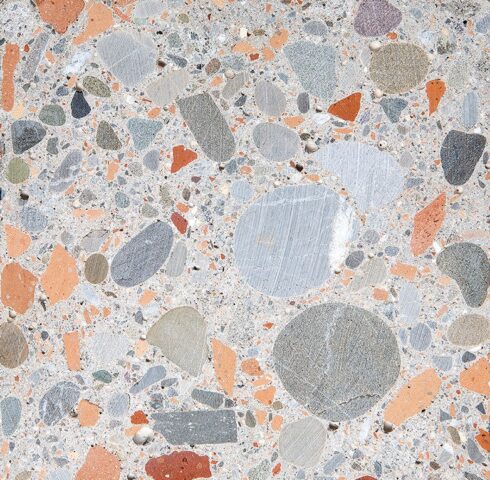
CO2-enriched recycled concrete EvopactRECARB, which Holcim supplied to V-Zug for the new “Zephyr Ost” building. -

Holcim partners with Madaster
Holcim Switzerland wants to do more for the circular economy in the construction industry. In this context, the building materials company has entered into a partnership with Madaster , according to a press release .
Madaster is working on so-called material passports for new and existing buildings. With these material passports, construction waste is given an identity and can be cataloged and reused as resources. The aim is to avoid waste and promote the circular economy in the construction and real estate sector.
The Madaster platform can also be used during the design phase of buildings to compare different construction methods and material options. Manufacturers of building materials – such as Holcim – can compare and present their products with the product databases on Madaster. They can also trace their products to enable reuse if necessary. Madaster’s services are marketed in Switzerland by Madaster Services Switzerland AG, based in Zurich.
Holcim Switzerland has set itself the goal of producing only climate-neutral and fully recyclable building materials by 2050. The new partnership should now help to achieve this goal. “By using Madaster when planning buildings, the right decisions for recyclable and resource-saving materials can already be made today,” says Christophe Berset, Team Lead New Solutions at Holcim Switzerland, in the press release. “The more transparency there is at the product level, the more future-proof buildings can be planned, built and dismantled, and materials and products can be used in further phases of use,” he adds.