Tag: Energieversorgung

  • Study shows high regional value creation by energy companies

    Study shows high regional value creation by energy companies

    Repower commissioned Hanser Consulting to analyse how much added value the Graubünden-based energy supplier generates compared to energy companies outside the canton. In its study, the consulting firm puts the additional added value of the Repower Group for the canton at around CHF 144 million for the year 2024. According to its press release, Repower presented the results to the Graubünden cantonal parliament at an information event on 23 April 2026.

    Hanser Consulting summarises the main findings as follows: Firstly, due to the Repower Group’s headquarters in Graubünden, more than twice the added value per kilowatt hour of electricity produced from Graubünden hydropower remains in Graubünden compared to companies outside the canton. Secondly, this would result in “many other advantages” for the Graubünden economy, particularly with regard to the diversity of the labour market, tax revenues for the canton and municipalities and the inclusion of local suppliers for headquarters activities.

    “Against the backdrop of the Graubünden hydropower strategy and the pending home cases in the coming years, the question of how the use of hydropower is organised in the long term and where the associated added value is generated is becoming increasingly important,” writes Repower. “The study aims to provide a factual basis for discussion.” As Repower emphasises, although the company paid for the study and provided the necessary basis, it had no influence on the methodology or results.

    Repower employs around 500 people in Graubünden and operates along the entire value chain, from production to the grid and supply to trading. The largest shareholders are Elektrizitätswerke des Kantons Zürich (38.49 per cent), the canton of Graubünden (27 per cent) and UBS’s Clean Energy Infrastructure Switzerland fund (23.04 per cent).
  • New director to drive the energy supplier’s strategic development

    New director to drive the energy supplier’s strategic development

    The Board of Directors of Regio Energie Solothurn has appointed Martin Bucher as Director, thereby confirming him in his role. According to a press release, Bucher had already taken over the operational management of the regional energy supplier in July 2025 and has successfully led the company. It was particularly his high level of technical expertise, his strategic clarity and his inclusive and goal-oriented leadership that enabled Bucher to stand out in a multi-stage selection process involving over 100 candidates.

    Before joining Regio Energie Solothurn last year, Bucher gained many years of management experience in the energy and finance sectors, including at energy supply companies and in management consultancy. The new director thus combines technical, regulatory and business management expertise, which enables him to further develop Regio Energie Solothurn in a sustainable manner, the statement said.

    Regio Energie Solothurn supplies the city of Solothurn and surrounding municipalities with electricity, gas, district heating and water. The public-law company is wholly owned by the city of Solothurn. The mayor, Stefanie Ingold, serves as chair of the board of directors by virtue of her office.

  • New president elected for regional energy supplier

    New president elected for regional energy supplier

    According to a statement issued on 25 February, Limeco’s Board of Directors has been reconstituted for the term of office until 2027. It has elected Rolf Schaeren as its new Chairman. Schaeren will take up his post on 1 May. Schaeren was Chief Financial Officer of the City of Dietikon from 2006 to 2022.

    He is a professor of accounting and financial management at the University of Applied Sciences and Arts Northwestern Switzerland. He has been a member of the Board of Directors of Elektrizitätswerke des Kantons Zürich (EKZ) since 2014 and has chaired it since 2021.

    Schaeren succeeds Stefano Kunz. The Schlieren building committee member served on the board of directors for twelve years.

    “Limeco plays a central role in the region’s energy and waste disposal supply,” Schaeren is quoted as saying in the announcement. “I am very much looking forward to continuing Limeco’s successful development together with my colleagues on the Board of Directors and tackling future challenges in the interests of the supporting municipalities.”

  • Energy sales vary from region to region

    Energy sales vary from region to region

    Industrielle Betriebe Interlaken AG (IBI) sold around 96 million kilowatt hours of electricity in its distribution network in 2025. This represents a slight decrease of 0.9 per cent compared to the previous year. At 13.2 million kilowatt hours, own production was 12 per cent below the previous year’s figure. According to a statement by the energy and water supplier in the Interlaken area, this was due to warranty work on the hydroelectric power plant on the shipping canal.

    The decline was more pronounced in the case of gas. Sales fell to 35.9 million kilowatt hours, which corresponds to a decrease of 19.7 per cent. According to IBI, large customers in particular had optimised their systems or switched to alternative heating systems.

    Water sales in 2025, on the other hand, were 1.1 per cent above the previous year’s figure at around 1.8 million cubic metres. The proportion of spring water was 97 per cent, compared with 99.4 per cent in the previous year. The reason for the decline was cleaning and inspection work on the infrastructure facilities in the Saxettal valley.

    IBI reduced electricity prices by around 24 per cent in the reporting year. This was because the company was able to purchase energy for 2025 at a lower price following the price increases from mid-2022 onwards. In addition, the national grid company Swissgrid also reduced the costs for system services and electricity reserves.

    IBI switched from a dual tariff to a single tariff at the beginning of 2026. The dual tariff, which had been in place since the 1960s, shifted part of electricity consumption to night-time. The strong expansion of photovoltaics has now changed the logic of electricity production and consumption, with solar power being fed into the grid during the day.

  • Heating network in Aargau to undergo strategic development

    Heating network in Aargau to undergo strategic development

    AEW will take over the Hägglingen Zinsmatten heating network from the municipality of Hägglingen on 1 May, according to a press release. “We are delighted to continue providing reliable heating to the customers of the Hägglingen Zinsmatten heating network and to work together to develop the plant in a sustainable manner,” said Daniel Wernli, Head of Heat Production at AEW.

    The heating network, which has been in operation since 2007, supplies heat to 30 properties. Wood chips are used as the primary energy source. The plant’s wood boiler has an output of 450 kilowatts, and an oil boiler is also available. AEW estimates the average annual energy consumption at around 1,100 megawatt hours.

    With the Hägglingen Zinsmatten heating network, AEW now operates a total of 78 such plants in the canton of Aargau and neighbouring regions. The production capacity is more than 240 gigawatt hours per year, supplying a total of 17,000 households.

  • New management confirmed for Stadtwerk Winterthur

    New management confirmed for Stadtwerk Winterthur

    The Winterthur City Council has confirmed Martin Emmenegger as the new Director of Stadtwerk Winterthur, according to a press release. Emmenegger is currently Head of the Networks Division and a member of the Executive Board of Elektrizitätswerk Zürich(ewz). He was previously Head of the Electricity and Telecommunications Division at Stadtwerk Winterthur for four years.

    Emmenegger has a degree in electrical engineering from the Zurich University of Applied Sciences. The 57-year-old succeeds Marco Gabathuler, who has managed the municipal utility since 2017 and will retire in January 2026.

    “With Martin Emmenegger, we have chosen a motivating personality who can successfully lead Stadtwerk Winterthur into the future,” said City Councillor Stefan Fritschi in the press release.

  • New heating network combines climate protection and regional value creation

    New heating network combines climate protection and regional value creation

    The Maisprach heating network in the canton of Basel-Landschaft and the Basel-based energy supplier IWB have launched a new project to supply heat from regional raw materials. Since the beginning of December, energy has been generated from a wood-fired boiler and a biochar plant and fed into the heating network, according to a press release.

    The municipality of Maisprach laid the foundations for this step in January 2025 with the construction of a new depot. IWB initially set up new wood heating systems there. This was followed in November by the construction of the biochar plant. Every year, 250 tonnes of biochar are to be produced here from landscape conservation wood and biomass through pyrolysis. The waste heat from the charcoal production will be fed into the district heating network. The operators anticipate 900 megawatt hours of heat energy for network customers, with a further expansion of the network on the horizon. The wood-fired boiler is also fuelled by regional biomass. The biochar produced is used in the region as an additive for composting, in soil substrates and in agriculture. IWB invested CHF 3.5 million in the project.

    “IWB has experience in the construction and operation of heating plants. As part of a pilot project in Basel, IWB tested the innovative approach of utilising waste heat from a biochar plant in a heating network. We can now benefit from this,” said Dorian Wernli, Mayor of Maisprach, in the press release.

  • Modern site project in Sittertobel focusses on renewable energies

    Modern site project in Sittertobel focusses on renewable energies

    Sitter Projekt AG and Mettler Entwickler AG are realising the Sitter Valley in St.Gallen’s Sittertobel. The two St.Gallen companies want to develop an area of 50,000 square metres here for offices, commerce and industry with up to 600 workplaces.

    St.Gallen’s public utility company will supply the site with energy for heating and cooling. According to a press release, they are relying on a combined energy supply with a wood pellet boiler and a reversible air/water heat pump. The pellet heating system will primarily be used in the winter months. The first heat supply is scheduled for winter 2026/2027.

    The Sitter Valley is also to be equipped with photovoltaic systems. These will contribute to the site’s electricity supply.

  • Hydrogen plant in Seewen suspended – market development remains crucial

    Hydrogen plant in Seewen suspended – market development remains crucial

    According to a press release, ebs Wasserstoff AG is suspending its project to produce hydrogen at the site of the surfacing plant in Seewen. The reason given for the decision is that sales and profitability are currently insufficient. However, the market situation is being monitored. Should demand increase, the project could be resumed.

    The Schwyz-based energy supplier ebs Energie AG holds a 60 per cent stake in ebs Wasserstoff AG, the road and civil engineering company A. Käppeli’s Söhne AG Schwyz holds a 25 per cent stake and the Basel-based energy supplier IWB holds a 15 per cent stake. Together, they submitted a planning application for a production plant in Seewen in 2022.

    According to a breakdown by ebs, the plant would produce hydrogen with a capacity of 5 to 6 megawatts for up to 100 lorries a day. This would have been sufficient for 11.1 million lorry kilometres per year and would have saved 7.8 million kilograms of CO2. The investment costs were estimated at CHF 16.8 million.

    Some of the hydrogen could also have been fed into the gas grid by ebs Erdgas Biogas AG. The waste heat from the electrolysis process could have been utilised in the surfacing plant.

  • Haute-Sorne pilot project demonstrates usable geothermal reservoir

    Haute-Sorne pilot project demonstrates usable geothermal reservoir

    According to a press release, Geo-Energie Jura SA has completed theexploration phase of the Haute-Sorne pilot project. A deep borehole has confirmed that the rock can be utilised as a geothermal reservoir. The seismic limit values are complied with when the permeability of the rock is increased.

    Independent experts commissioned by the canton of Jura will now examine the documents from a safety point of view. The canton will then decide whether to continue with the project.

    Geo-Energie Suisse will now evaluate further projects in Switzerland with an electrical output of between 10 and 30 megawatts. Based on experience abroad, the company assumes that production costs for the generation of electricity of 15 centimes per kilowatt hour are possible. If the production of electricity is combined with that of heat, the economic efficiency could be further improved.

    Geo-Energie Jura SA, based in Bassecourt, is a joint venture founded in 2015 by Geo-Energie Suisse SA and the energy suppliers of Baselland(ebl), Bern(ewb) and Zurich(ewz). The Haute-Sorne project aims to explore the use of heat at a depth of 5 kilometres for a geothermal power plant.

    The energy suppliers in Ticino(aet), western Switzerland(EOS) and Basel(iwb) as well as Gasverbund Mittelland are also involved in Geo-Energie Suisse SA, which is based in Zurich.

  • New wind measuring mast provides data for planned wind farm

    New wind measuring mast provides data for planned wind farm

    Axpo is embarking on the next phase of its wind power project on the Dreibündenstein. A 125-metre-high wind measuring mast will be erected on the Grisons hill south of Chur on 9 October, the Baden-based energy company announced in a press release. It will collect data on wind speed, wind direction, weather conditions and bat activity over the course of a year.

    The system, which was specially developed by Axpo subsidiary CKW for the project in Graubünden, does not require an external power supply. This is made possible by a battery that is charged by a photovoltaic system and two wind generators attached to the mast. The data collection system can be monitored remotely by Axpo and is housed in a special container that can even be heated if necessary. “This technological innovation enables us to carry out wind measurements at locations that were previously difficult to access,” said Cédric Aubert, Head of Wind Switzerland at Axpo, in the press release.

    The company plans to install up to eight wind turbines with a total output of around 40 megawatts at the Dreibündenstein. They are expected to supply over 65 gigawatt hours of electricity per year, around 60 per cent of which will be generated in winter. In parallel to the wind measurements that are now starting, Axpo wants to sound out the logistical requirements of the wind farm project in transport and grid studies.

  • Merger planned in the Zurich energy sector

    Merger planned in the Zurich energy sector

    According to a joint statement, the City of Zurich and EKZ have decided to endeavour to have Energie 360 Grad AG taken over by EKZ. The main shareholder of Energie 360 Grad is the City of Zurich with a 96 per cent stake. The remaining 4 per cent is held by 22 political municipalities.

    In a resolution dated 31 May 2023, the Zurich City Council decided that Elektrizitätswerk der Stadt Zürich(ewz) should be the sole municipal provider for large energy networks in the city. Energie 360 Grad’s large energy networks in the city were to be transferred to ewz.

    As a result, Energie 360 Grad increasingly focussed on activities outside the city area. As a result, municipal ownership was examined, as were possible partnerships for Energie 360 Grad. EKZ and the City of Zurich have now agreed to enter into exclusive talks regarding a takeover of Energie 360 Grad by EKZ.

    According to the press release, the energy infrastructure in the canton of Zurich could largely be operated from a single source if EKZ and Energie 360 Grad were to join forces. EKZ already supplies 100 per cent renewable electricity. EKZ would consistently pursue Energie 360 Grad’s strategy towards renewable gases and the installation of charging infrastructure for electric cars. “This would be a decisive step towards decarbonisation and achieving the climate targets,” said the two negotiating partners.

    The municipal council and the EKZ Board of Directors must now decide on the realisation of the sale of Energie 360 Grad to EKZ. According to the information provided, the aim is to finalise a possible transaction by the end of 2026.

  • Examination of geothermal potential in the Burgdorf area started

    Examination of geothermal potential in the Burgdorf area started

    According to a press release, Localnet AG and CKW want to examine the potential for utilising geothermal energy in the Burgdorf area. The local energy supplier will contribute its knowledge of Burgdorf, while the Lucerne-based Axpo subsidiary will contribute its experience from ongoing geothermal projects.

    If the review is positive, the two companies want to inform the population about the next steps before the end of the year. “It is very important to me that the population is informed transparently about this project right from the start,” said Mayor Stefan Berger in the press release. “In any case, it makes sense to carefully examine the geothermal potential in our region. This is also in line with the objectives of our ownership strategy of a sustainable energy supply and long-term security of supply.”

    Localnet supplies 11,500 customers in the region with electricity, 2,500 with gas and a further 350 with heat.

  • Zurich invests in large-scale battery storage for greater security of supply

    Zurich invests in large-scale battery storage for greater security of supply

    Zurich City Council has applied to the municipal council for a framework credit of CHF 20 million. According to a press release, the credit is to be used for the expansion of free-standing large-scale battery storage facilities operated by Elektrizitätswerk der Stadt Zürich(ewz).

    The independently operated systems are used to store large amounts of energy, such as that generated by renewable sources like solar or wind energy. In addition to the existing power plants, the large-scale storage facilities can feed energy into the grid at peak times and thus contribute to the stability of the energy system and security of supply. An important contribution can be made here, particularly in view of the requirements of increasing electrification, such as the switch to electric vehicles and heat pumps.

    According to the press release, the city council can approve ewz projects independently within this framework credit and thus significantly shorten decision-making processes. For ewz, this means that even larger projects in highly competitive business areas can be handled swiftly and remain competitive.

  • Profit increase thanks to favorable procurement and fewer reserve requirements

    Profit increase thanks to favorable procurement and fewer reserve requirements

    Stadtwerk Winterthur closed its 2024 financial year above expectations. According to its press release, the reasons for this are the lower market prices for the procurement of gas and lower expenses for the winter reserve prescribed by the federal government. This resulted in a turnover of CHF 311 million and a profit of CHF 26 million.

    There were fewer burst pipes in the water network and the operation of the waste recycling plant was largely uninterrupted. In district heating, significantly less oil and gas had to be purchased to cover consumption peaks. In addition, the number of customers connecting to the heating networks increased. As a result of the financing of the municipal pension fund approved by the Winterthur electorate, previous provisions were released.

    With regard to the challenges in the present and future, the municipal utility cites rising costs for operating resources and external services in all business areas and the increasing shortage of qualified staff. At the same time, the increasing self-production of solar power by private individuals and companies is reportedly a challenge, as this means that they are purchasing less electricity from Stadtwerk Winterthur. In addition, the quantities purchased are more difficult to predict, as they are more dependent on the weather.

    The energy supplier will incur high costs due to the renewal of the waste incineration plant as well as the conversion and expansion projects for the wastewater treatment plant and the heating networks. This will require a large framework credit, which is expected to be voted on at the end of next year. In addition, complex preparations for the legal and financial consolidation of the heating networks are underway. Stadtwerk Winterthur is also increasingly concerned with the costs of environmental regulations and measures to increase energy efficiency.

  • Clean energy from the summer for the winter

    Clean energy from the summer for the winter

    The growing amount of solar power in summer holds enormous potential that has so far remained untapped in the winter months. In the pilot project in Bassersdorf, surplus solar power is converted into methanol using Power-to-X and stored in the compact Hybridbox®. This innovative energy center reliably provides electricity and heat in winter, even when conventional heating systems reach their limits.

    Methanol as the key to a secure energy supply
    “Green methanol allows us to store surplus electricity locally and use it in winter with low emissions, a crucial component for a secure energy supply,” explains Boris Meier from OST. Methanol is liquid, easy to store and climate-friendly, making the Hybridbox® a flexible energy system that adapts intelligently to individual needs. Maximum efficiency is achieved by combining it with photovoltaics, battery storage and a heat pump.

    Emergency power supply and cost control
    The system is also impressive in the event of a power failure. The locally stored methanol guarantees an uninterrupted supply to the building. In addition, the high level of self-sufficiency ensures stable operating costs in the long term, a clear advantage over rising energy prices. Especially in areas without a gas or district heating connection, the system offers a real alternative to old oil or gas heating systems.

    Successful partnership for sustainable building
    The joint project shows how practical cooperation works. “The combination of energy efficiency, security of supply and CO2 reduction makes the Methanol-Hybridbox® a sustainable solution,” says Roger Balmer.

    Bringing sustainability to life
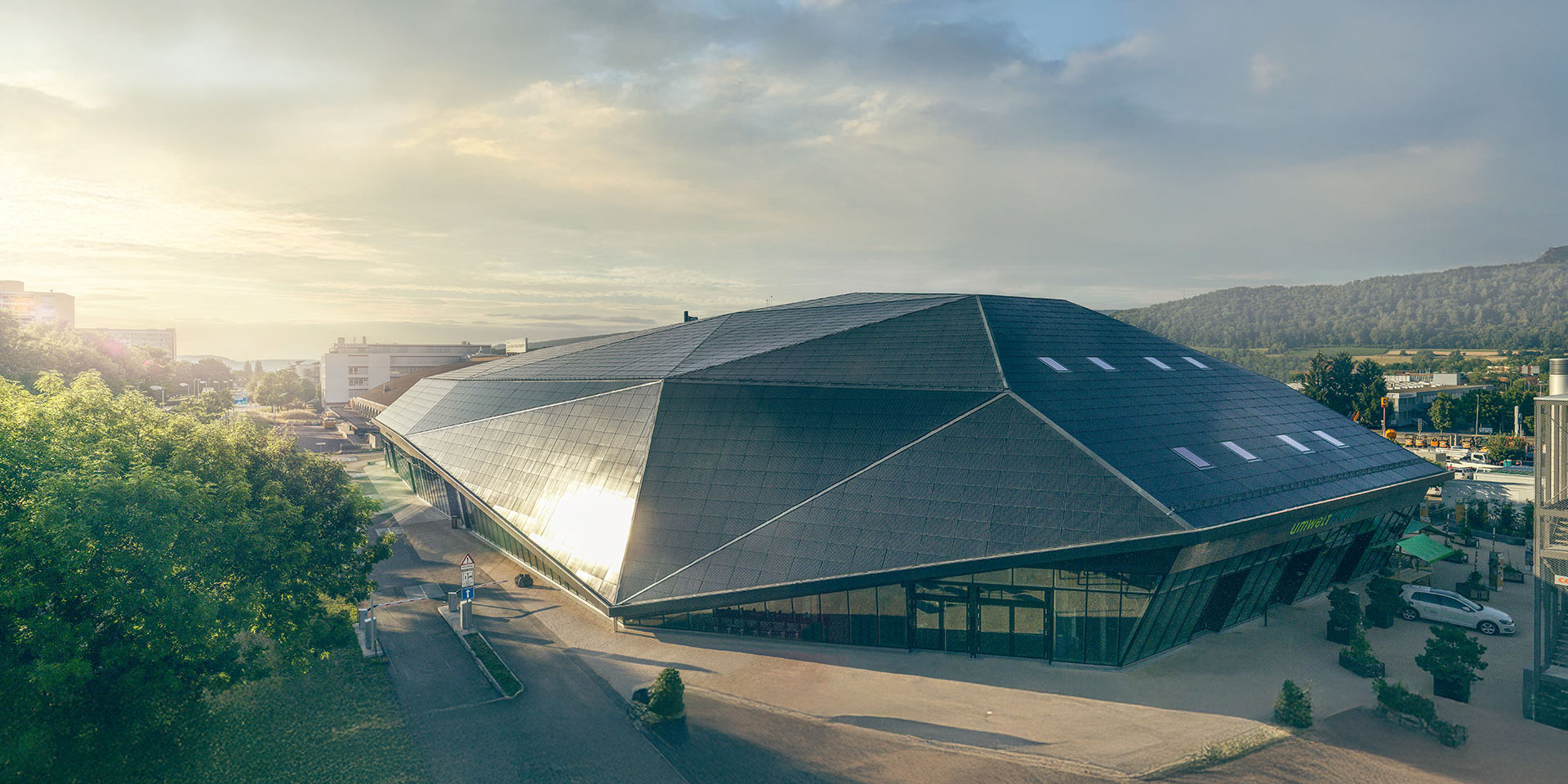
    Buildings are responsible for around a third of CO2 emissions in Switzerland. Reason enough to break new ground. The Bassersdorf project not only provides a convincing technical solution, but also makes the energy cycle tangible for visitors to the new “Sustainable Building” exhibition in the Umwelt Arena. Developers, investors and interested parties can experience how the climate-neutral living of tomorrow can be realized today. A model that can have an impact far beyond Bassersdorf.

  • Takeover strengthens charging infrastructure in the e-mobility market

    Takeover strengthens charging infrastructure in the e-mobility market

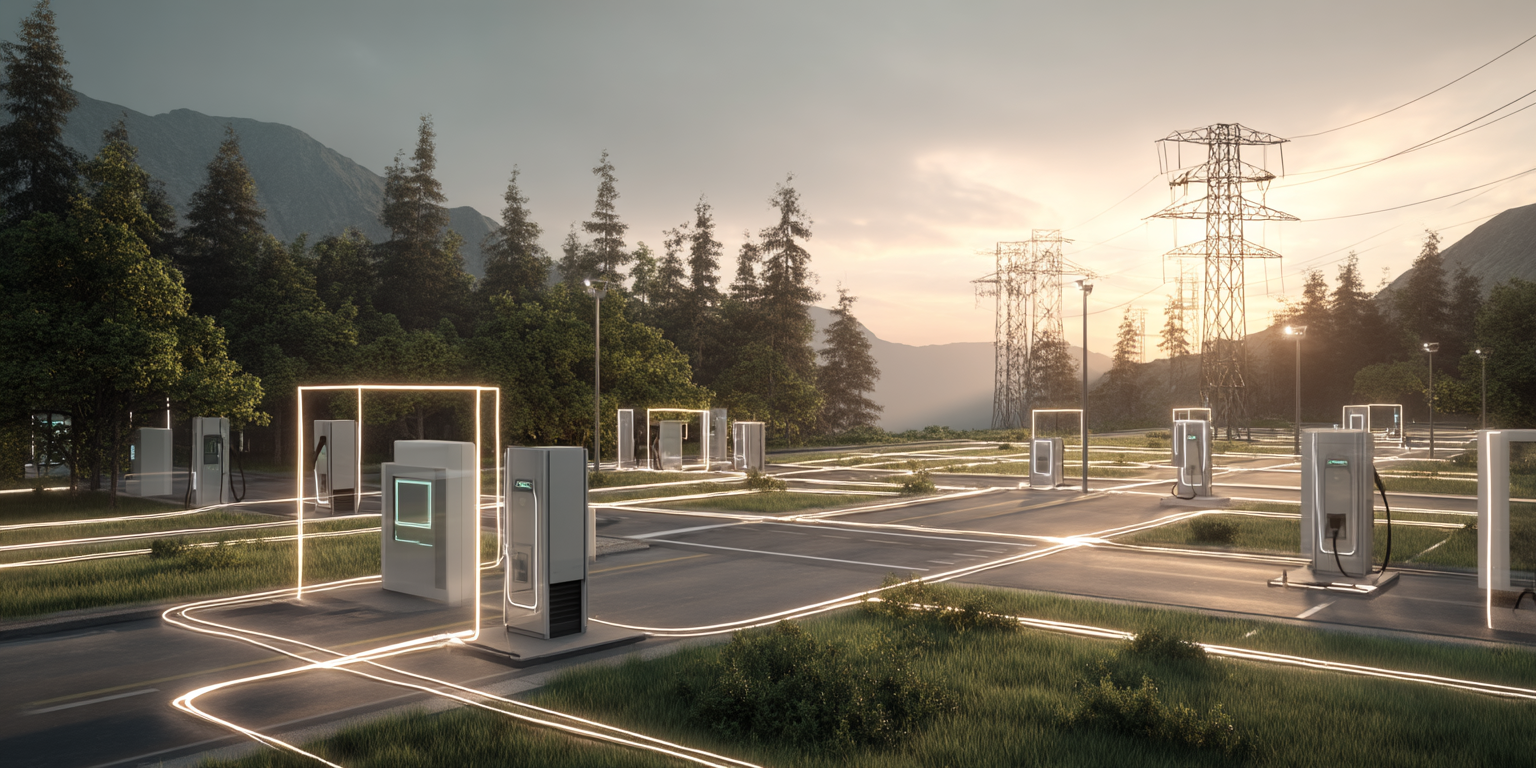
    AVIA VOLT Suisse AG acquires the charging infrastructure provider Plug’N Roll and expands its charging infrastructure by 2345 charging points. Plug’N Roll customers benefit from access to a Europe-wide network of over 850,000 charging points. Graubünden-based Repower AG, the previous owner of Plug’N Roll, is realigning its focus with Repower E-Mobility.

    According to a press release, AVIA VOLT is now reviewing Plug’N Roll’s contracts and business processes. Its 24,600 customers will be seamlessly integrated into the AVIA network. The takeover will enable integrated billing of electrical and fossil energy for Plug’N Roll fleet operators. According to the press release, AVIA VOLT’s system architecture offers compatibility with the software and hardware solutions of many manufacturers.

    AVIA VOLT, based in Frauenfeld, is a subsidiary of several Swiss AVIA companies. It sees the takeover as an important step towards establishing itself as a leading service provider in the field of electromobility. “For us, the takeover means a targeted strengthening of our position as a provider of reliable charging infrastructure in Switzerland,” said Martin Osterwalder, Chairman of the Board of Directors of AVIA VOLT.

    Plug’N Roll is the e-mobility division of Repower AG. The e-mobility provider has been developing charging infrastructure in public spaces, for company fleets and for real estate since 2012. The Plug’N Roll brand will be used by AVIA VOLT until the end of 2025. Three Plug’N Roll employees will be taken on by AVIA VOLT.

  • Airport tests water reservoir under glacial channel

    Airport tests water reservoir under glacial channel

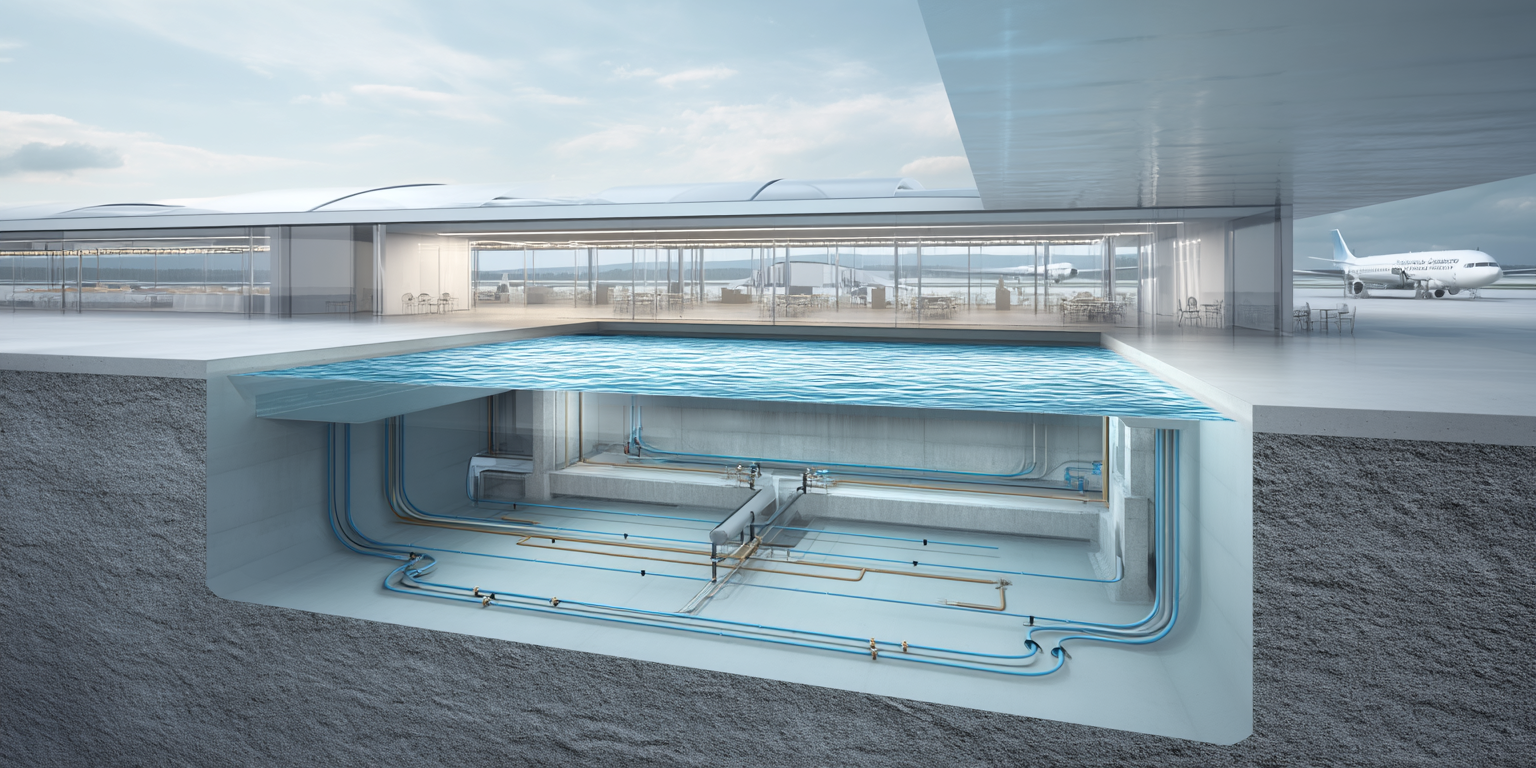
    Flughafen Zürich AG is starting the construction of a second test well in an ice-age channel located around 300 meters below the airport site, the airport operator announced in a press release. It plans to use the water-bearing channel as a heat and cold reservoir for emission-free heating and cooling of the airport building. A test well installed last fall had already delivered promising results.

    “The volumes of water that could be pumped and the flow rate of the water give us further confidence that the channel can be used to store heat and cold,” said Guido Hüni, Head of Energy and Decarbonization at Flughafen Zürich AG, in the press release. “Further tests are now needed to determine the extent to which this storage facility can be used.”

    A suitable location for the second well is currently being sought. Once installed, it will be connected to the first well for circulation tests. “This next step will allow us to test the efficiency of such a storage facility and, if the results are positive, we can then plan the actual expansion,” explains Hüni.

    The airport operator is counting on being able to cover the majority of the heating and cooling requirements for the airport building via the channel. Depending on the yield, the water reservoir could be combined with geothermal probe fields. The estimated cost of the investment is stated in the press release as around CHF 8 million. Flughafen Zürich AG can rely on financial support from the Swiss Federal Office of Energy.

  • Expansion of the district heating network in Ober- and Unterentfelden

    Expansion of the district heating network in Ober- and Unterentfelden

    With the heating network in Ober- and Unterentfelden, Eniwa AG will connect the next network to its grid, as detailed in a press release. The Buchs-based energy supplier has now received authorisation to build an energy centre and the first part of the network. From 2026, waste heat from the Buchs waste incineration plant(KVA Buchs) will supply CO2-neutral thermal energy to the first customers.

    The first stage is scheduled to go into operation in 2026. According to the press release, it will enable the supply of thermal energy for a demand of 20,000 megawatt hours. Fewag is expanding the pipeline network from Suhr to the energy centre in Unterentfelden to transport the waste heat from the waste recycling plant to Entfelden.

    The waste heat will be transported to the energy centre in the form of hot water and distributed to the buildings via the distribution network at 65 degrees Celsius. Aleksandar Dunjic, project manager for heating/cooling, uses the example of a central heating system to compare the cycle thus initiated. After being converted into thermal energy for heating and hot water preparation, the cooled water is transported back to the heat source.

    After the first realisation phase by 2028, Eniwa is aiming to increase the amount of energy generated by district heating to 60,000 megawatt hours by expanding the network in Oberentfelden and Unterentfelden, according to the press release. “The district heating projects offer customers a high level of supply security at stable prices in the long term,” CEO Hans-Kaspar Scherrer is quoted as saying. The expansion targets are 12 kilometres of lines over the next 15 to 20 years.

  • Renewables hold a high share of electricity and heat

    Renewables hold a high share of electricity and heat

    The conversion of the Swiss energy supply to renewable sources is only making slow progress. This is shown by the seventh benchmark study by the Swiss Federal Office of Energy(SFOE), in which 111 energy suppliers from all over Switzerland took part this time.

    According to the study, the share of renewables has stagnated compared to the sixth study in 2021/22 for the participating suppliers at just over 80 per cent for electricity, slightly below that for heat and just under 10 per cent for gas. Four suppliers have already met the targets for electricity with over 90 per cent, including Energie Wasser Bern(ewb) and Services Industriels de Genève with 95 per cent and Eniwa in Aarau and EWZ in Zurich with 94 per cent. In the heat sector, EWZ is ahead with 95 per cent and Energie Uster and Eniwa with 92 per cent target fulfilment each. In the gas supply sector, only ewb with 88 per cent and Technische Betriebe Glarus with 84 per cent are above 80 per cent target fulfilment.

    Digitalisation is a major challenge for small suppliers in particular. A quarter of them do not even have a strategy for this. Just under half have a strategy, but no specific targets.

    Energy efficiency measures are also lagging behind. Only 45 per cent of the participating electricity suppliers already have a strategy with quantified targets.

    According to a BfE press release on the study, the benchmarking itself has contributed to knowledge transfer in the sector with webinars, events and information material.

  • Cooperation for sustainable energy supply in Arlesheim, Münchenstein and Reinach

    Cooperation for sustainable energy supply in Arlesheim, Münchenstein and Reinach

    Primeo Energie and uptownBasel are intensifying their collaboration. The two Basel-based companies signed “two important contracts” at the end of December 2024, explained Primeo Energie in a press release. Among other things, they aim to use the waste heat generated on the site of the competence centre for Industry 4.0 in Arlesheim to heat thousands of flats in the surrounding municipalities of Arlesheim, Münchenstein and Reinach.

    To this end, uptownBasel partner Primeo Energie is making Building 4 available on a long-term basis. This is where the Münchenstein-based energy supplier will set up the transfer centre for the competence centre’s waste heat. The second contract concerns the site network. Under this contract, Primeo Energie is responsible for both the operational management and maintenance of the network on the 75,000 square metre site of the competence centre. The site grid includes high and medium-voltage lines for supplying energy to the site and its nine buildings.

  • Increasing value through global presence and technological innovation

    Increasing value through global presence and technological innovation

    Siemens Smart Infrastructure raises the bar. The Zug-based Siemens business unit increased its revenue by an average of 11 per cent annually between 2020 and 2024, Siemens announced in a press release. A record operating result margin of 17.3 per cent was achieved in 2024. This is well above the medium-term target of 11 to 16 per cent set in 2021.

    In the coming years, the company is aiming for sales growth of 6 to 9 per cent and an earnings margin of 17 to 18 per cent. “We have set ourselves ambitious targets and achieved them,” said Matthias Rebellius, member of the Managing Board of Siemens AG and CEO of Smart Infrastructure, in the press release. “Now we are raising the bar even higher to reach the next level of value creation.”

    In the coming years, SI intends to strengthen its global presence and expand local capacities. At the same time, it plans to promote talent in high-growth markets such as India and the USA. Both should lead to scalable results in SI’s established end markets, such as data centres, healthcare and energy utilities. The company expects the market it addresses to grow by 5 to 6 per cent annually in the medium term. According to the press release, SI has realised “above-market growth in all areas”.

  • Expansion of district heating in Münchenbuchsee

    Expansion of district heating in Münchenbuchsee

    The Schlieren-based construction company STRABAG is creating a modern energy supply for the municipality of Münchenbuchsee with district heating pipes. According to a press release, STRABAG is laying around three kilometres of new district heating pipes to expand the district heating network in the municipality in Bern-Mittelland. Work began on 9 September and the first of around 15 stages has already been completed, according to STRABAG. Two further stages will follow by the end of the year, according to the company press release.

    Regarding the progress of the work, the company says that as residents still need access to their homes and garages, the road cannot be completely closed for the construction work. To install the district heating pipes, just under a quarter of the road will be opened up and the pipes laid. After each construction phase, the trenches will be temporarily backfilled with earth and a temporary surface will be laid. Over the next few months, the earth will settle. Therefore, once all 15 stages have been completed, the temporary surface will be milled off again and a new asphalt layer will be applied.

    According to STRABAG, the construction work is expected to be completed by December 2025 by the STRABAG Traffic Route Construction (VWB) team in Bern. “We are well on schedule so far and should complete the project on time,” says Lena Wagner, construction manager at VWB Bern.

  • Expansion of the district heating network in Kaiseraugst for a better heat supply

    Expansion of the district heating network in Kaiseraugst for a better heat supply

    AEW Energie AG is opening up its heating network in Kaiseraugst to new customers. According to a press release, it will begin construction work on two branch lines of the “Ast Dorf” project on 4 November.

    These two branch lines are located at Lindenweg 11 and 13 and between Dorfstrasse, at property no. 36 and Heidemurweg. According to a press release, the work is expected to be completed by Christmas.

    Work on the main district heating line and the other sections along Dorfstrasse and Lindenweg will begin in January 2025. After deducting the municipality’s contribution to the costs, AEW is investing a total of around 3.2 million in the expansion of the Kaiseraugst district heating network.

    The Kaiseraugst heating network has been in operation since October 2021. It is one of the largest in the canton of Aargau. in 2023, additional customers were connected in the industrial area, in the south-east and with the branch to the Rinau retirement home. The large-scale project, which took over four years to build, currently supplies over 1,500 households and numerous industrial and commercial customers with heat from at least 80 per cent renewable energy.

  • Sursee makes solar systems and green roofs standard

    Sursee makes solar systems and green roofs standard

    In future, the roofs of new buildings or roof renovations in the municipality of Sursee are to be fitted with solar panels. For flat roofs, the aim is also to green them. This was decided by the Sursee municipal council on 14 October with the majority approval of a counter-proposal to the municipal initiative for an independent and ecological energy supply (solar initiative). The initiative committee had withdrawn the solar initiative after the city council had drafted the counter-proposal.

    The counter-proposal is in line with the new cantonal energy law, which will come into force on 1 March 2025, subject to a referendum. New buildings will then have to be equipped with 60 per cent solar panels, and 30 per cent for roof renovations. If the requirements are not met, a replacement levy of CHF 1,000 per kilowatt will be due. In deviation from cantonal law, this levy will only be possible in Sursee if the construction and operation of the solar system is economically unreasonable.

    The new cantonal energy law does not specify any requirements for the greening of roofs. However, Sursee wants to use green roofs to improve the urban climate and as a substitute habitat for plants and animals. For this reason, a combination of green roofs and solar panels is being sought as standard on flat roofs.

    The solar utilisation of façades called for in the solar initiative is not provided for in the counter-proposal. The city council feared that this would have a negative impact on the townscape. In addition, the cost-benefit ratio of façade systems is currently even worse than that of roof systems.

  • Switzerland’s first low-pressure turbine commissioned in Martigny-Bourg

    Switzerland’s first low-pressure turbine commissioned in Martigny-Bourg

    The Forces Motrices de Martigny-Bourg (FMMB) have commissioned Switzerland’s first low-pressure turbine. As Alpiq writes in a press release, 850,000 kilowatt hours of electricity can now be generated per year in the underwater channel of the river power plant on the Dranse. The power plant’s current three production units generate 89 million kilowatt hours per year.

    Depending on the flow rate, the low-pressure turbine can turbine between 1.25 and 10.2 cubic metres of water per second. It is designed for a head of up to 2.5 metres. It has no additional impact on the environment and does not affect existing electricity production. “The installation of this new low-pressure turbine makes it possible to make the best possible use of the available water resources while at the same time being considerate of the environment,” said power plant manager Georges-Alain Zuber in the press release.

    Planning for the plant began in 2011. It is being subsidised with funds from the cost-covering feed-in remuneration.

    The power plant was built in 1908 as an electricity generator for Electro-Chimie de Paris. Today, the municipalities of Bovernier with 23.04 per cent, Sembrancher with 18.72 per cent, Martigny with 17.22 per cent, Martigny-Combe with 15.58 per cent and Vollèges with 1.64 per cent as well as Alpiq with 18 per cent and the Valais energy supplier FMV with 5.8 per cent have a stake in FMMB.

  • Energy contract signed for sustainable neighbourhood in Romont

    Energy contract signed for sustainable neighbourhood in Romont

    Granges-Paccot-based energy supplier Groupe E and KAAB have signed an energy contract for the La Maillarde neighbourhood in Romont. According to a press release, the 40-year contract covers the supply and utilisation of internal waste heat, the provision of a microgrid infrastructure and the installation of solar modules. Groupe E will supply energy to the site on behalf of KAAB, which will ensure the operation, maintenance and financing of the systems.

    Heat is supplied via the district heating network of the municipality of Romont. The network managed by Groupe E is mainly fuelled by wood chips from local forestry and waste heat from the roasting systems at the Nespresso plant. A gas-fuelled auxiliary heating system is provided for long periods of cold weather.

    The electrical system is controlled by the neighbourhood’s own microgrid. This is fed by a photovoltaic system with an output of one megawatt. It generates around one gigawatt hour of electricity per year.

    The La Maillarde neighbourhood, which is owned by KAAB, was used by the multinational company Tetra Pak until 2016. From 2025, watch manufacturer Rolex will set up shop there, creating around 250 new jobs in the region. The final La Maillarde project envisages an area of 40,000 square metres. Currently, 19,000 square metres are in use.

  • New battery storage system for Gossau ensures grid stability

    New battery storage system for Gossau ensures grid stability

    Axpo has installed and commissioned a battery storage facility with a capacity of 2.5 megawatts on the site of the Gossau municipal utility. The municipal utility now has the largest battery storage facility in the region, explained the Aargau-based energy company in a press release. According to the press release, the storage facility is tailored to the specific needs of the municipality of Gossau and the region’s grid topography. The press release does not provide any information on the financial scope of the project.

    Stadtwerke Gossau intends to use the battery storage system to compensate for fluctuations in demand and power peaks. It will also process reactive power and contribute to maintaining the grid voltage in the region. It will also help to stabilise the grid in the region by providing system services for the national grid company Swissgrid.

    The new battery storage system is capable of stand-alone operation and black start. This means that in the event of a power outage, it can autonomously restore the power supply for units connected to island operation. Relevant companies for maintaining the supply to Gossau can take advantage of this. “What was initiated in 2019 with a parliamentary initiative can be demonstrated five years later,” says Claudia Martin, City Councillor and Head of the Supply Security Department of the City of Gossau, in the press release. “An energy storage facility that guarantees Gossau’s security of supply.”

  • District heating network in the canton of Aargau is growing

    District heating network in the canton of Aargau is growing

    Regionalwerke AG Baden(RWB) has acquired the shares of AEW Energie AG in Aarau in Fernwärme Siggenthal AG(FWS), according to an ad hoc announcement. In doing so, RWB intends to expand its commitment to sustainable energy supply in the region. AEW Energie specialises in solar power in the canton of Aargau. The sale price was not disclosed.

    RWB has reportedly been working successfully with FWS for many years. The acquisition of the 27.3 per cent stake in FWS is intended to deepen the partnership. FWS, which is based in Nussbaumen, is stable and financially independent and has developed very positively over the last few years since it was founded. It therefore describes RWB as an ideal partner.

    “The investment in Fernwärme Siggenthal AG fits in perfectly with RWB’s activities in the area of district heating,” Managing Director Michael Sarbach is quoted as saying. “Both companies attach great importance to the further expansion of district heating in the region.” Adrian Hitz, Chairman of the FWS Board of Directors, refers to the good cooperation with RWB to date: “Now that AEW has decided to sell its shares, we are relieved that we already know the future shareholder well, as we have already developed and realised a very good project together with the SIBANO connecting pipeline.” SIBANO is a 3.3 kilometre long district heating transport pipeline from the Turgi waste incineration plant to the Baden Nord heating centre.

  • New energy supplier for Uettligen

    New energy supplier for Uettligen

    CKW has taken over the Uettligen heating network with effect from 27 August 2024. According to a press release, the energy supplier from Central Switzerland, which is part of the Axpo Group, intends to expand its decarbonisation strategy. The plants of the heating network north of Bern will continue to be maintained on behalf of CKW by the previous operator and main shareholder a energie AG from Schüpfen BE. Due to an adjustment in a energie’s strategy and the pending further expansion of the heating network, a buyer for the heating network was reportedly being actively sought.

    The acquisition of the Uettligen heating network joins the existing CKW portfolio of district heating networks such as Schüpfheim LU and Meggen LU. According to the press release, CKW will focus on modernising the plants and expanding the district heating network.

    “CKW is looking forward to the collaboration and is proud to be able to continue and further develop the well-functioning Uettligen district heating network,” said Rafael Mesey, Head of New Energies at CKW. “With CKW AG, we will have a reliable and strong partner for our customers in the heating network in the future,” adds Christian Cappis, the outgoing Chairman of the Board of Directors of the Uettligen heating network.