Tag: erneuerbare Energie

  • Renewable energies remain on course for growth despite difficult market conditions

    Renewable energies remain on course for growth despite difficult market conditions

    Aventron has announced its key financial figures for the 2025 financial year. In total, the producer of electricity from renewable energies generated around 1.3 billion kilowatt hours of electricity – around 15 per cent less than in the previous year (2024: 1.498 billion kilowatt hours). Aventron cites historically weak weather conditions and high price volatility, including negative electricity prices, as the reasons for this.

    Despite the decline in production, the result remains “solid” according to a statement. Net revenue amounted to 120.5 million Swiss francs (2024: 134.9 million Swiss francs), while the EBIT margin (earnings before interest and taxes) was around 21 per cent. Net profit after taxes reached CHF 10.3 million.

    In 2025, aventron continued its diversification strategy with solar, wind and hydro technologies and further developed its portfolio. In Switzerland, construction began on the Sedrun Solar (Grisons) and APV Sidenplangg (Uri) alpine photovoltaic projects. In Italy, realisation of the 25-megawatt Lazio 01 solar power plant began, while two wind farms are under construction in France and Germany. The company invested a total of CHF 67 million. At the end of the year, the portfolio comprised a consolidated total output of 819 megawatts (previous year: 797 MW) in operation or under construction.

    In the medium term, aventron intends to focus increasingly on successful electricity marketing and the expansion of data management and monitoring systems. The aim remains to build up a portfolio with a total output of 1000 megawatts. The Münchenstein-based company operates and develops power plants in the areas of hydro, solar and wind energy in Switzerland and selected European countries.

  • Takeover strengthens position in the European energy market

    Takeover strengthens position in the European energy market

    In a press release, BKW announced the acquisition of the French energy company Volterres SAS. Volterres SAS operates a network of over 100 solar, wind and hydroelectric power plants and enables the tracking of electricity flows in real time. Volterres supplies more than 2 terawatt hours of electricity annually to companies and public organisations.

    The acquisition fits seamlessly into BKW’s existing strategy for France. The company had already previously expanded its activities in the country, including a contract to optimise 200 megawatts of battery capacity. BKW also markets numerous third-party wind, solar and battery projects in France and manages an annual renewable production of over 1 terawatt. With Volterres, BKW now covers the entire energy value chain.

    Strategically, the acquisition is an important step within Solutions 2030, according to the press release. With this focus, BKW is concentrating on the Energy Solutions, Power Grid and Infrastructure & Buildings business areas and positioning itself along the entire value chain of the energy transition. The aim is to achieve EBIT (earnings before interest and taxes) of over CHF 1 billion by 2030. France plays a key role in this.

    “France is a strategically important market for us. With the integration of Volterres, we are strengthening our position not only there, but in the entire European market and are further developing our portfolio of flexible energy solutions,” said Stefan Sewckow, Executive Vice President Energy Markets.

    BKW, based in Bern, is an internationally active energy and infrastructure company. Its range of services extends from engineering and consulting to building technology and the construction and operation of energy and supply grids.

  • Management change in the energy division of a large utility company

    Management change in the energy division of a large utility company

    Vertina Investment Foundation invested a total of CHF 74.3 million in four new-build projects in the first quarter of 2026. The fresh capital comes from the capital increase in the fourth quarter of 2025, according to a press release.

    The construction projects are located on properties in Oberglatt ZH, Kloten ZH, Seon AG and Zurich. These selected locations are characterised by good infrastructure connections and a solid market environment, according to the press release. After completion, the market value of the four properties will amount to CHF 131 million. This will increase the value of the total portfolio of the Vertina Residential investment group to CHF 350 million.

    In total, Vertina’s property portfolio consists of 13 properties with varying degrees of construction progress. The start of construction on four further projects is planned for the current financial year. As recently announced, Vertina will raise new capital of between CHF 60 and 80 million for this purpose in the second quarter.

  • Canton of Nidwalden triples funding for energy-efficient building renovation

    Canton of Nidwalden triples funding for energy-efficient building renovation

    In its 2026 energy promotion programme, the Nidwalden Cantonal Council has decided to increase subsidies for energy-efficient building renovations by 300 per cent to 2.9 million Swiss francs. Together with federal funds, this means that a record annual budget of CHF 6.3 million is available, according to a statement. This cantonal subsidy programme supports owners who optimise their building envelope, replace fossil fuel or electric heating systems with renewable energy systems, or construct energy-efficient new buildings.

    According to the information provided, demand for subsidies was “exceptionally high” in 2025. The canton expects a further sharp increase in applications in 2026, particularly due to the expansion of district heating networks. In addition, tax breaks will be abolished in the future, which is also likely to cause demand to rise further this year.

    According to the information provided, energy-efficient building renovation – a key pillar for achieving the canton’s emission targets by 2035 – will only succeed if owners are willing to invest in their properties. “In doing so, they are making a major contribution to reducing greenhouse gases and saving energy,” said Environment Director Joe Christen.

    Although the subsidy can only cover a small portion of the investment, these investments are worthwhile in the long term when combined with tax savings and lower heating costs. “On average,” says Christen, “one franc of funding triggers almost ten times that amount in investment. Most of this added value remains in the canton, strengthening local businesses and helping to reduce the outflow of money abroad thanks to renewable energies.”

    The canton of Nidwalden is one of the exhibitors at the SWISS Pavilion at the Singapore Airshow. The international aviation trade fair takes place from 3 to 8 February.

  • Basel-Landschaft awards licences for hydropower

    Basel-Landschaft awards licences for hydropower

    The canton of Basel-Landschaft has included six locations for new small hydropower plants on the Birs and Ergolz rivers in the cantonal structure plan, the Basel-Landschaft Department of Construction and Environmental Protection announced in a press release. The designation was made in accordance with a corresponding requirement of the Federal Department of the Environment, Transport, Energy and Communications. In Switzerland, small hydropower plants are defined as plants with an output of up to 10 megawatts that use the energy of small rivers for decentralised electricity generation.

    The Cantonal Office for Environmental Protection and Energy(AUE) is responsible for awarding licences. The exact locations of the planned hydropower plants can be found in the press release. Interested companies are invited to submit a request for information online. The AUE will then determine the award procedures for the individual sites.

    The canton of Basel-Landschaft has set itself the goal of covering 70 per cent of its energy consumption, excluding mobility, from renewable sources by 2030. The planned six small hydropower plants should contribute to the realisation of this goal.

  • Solar power plant above Klosters commences partial operation

    Solar power plant above Klosters commences partial operation

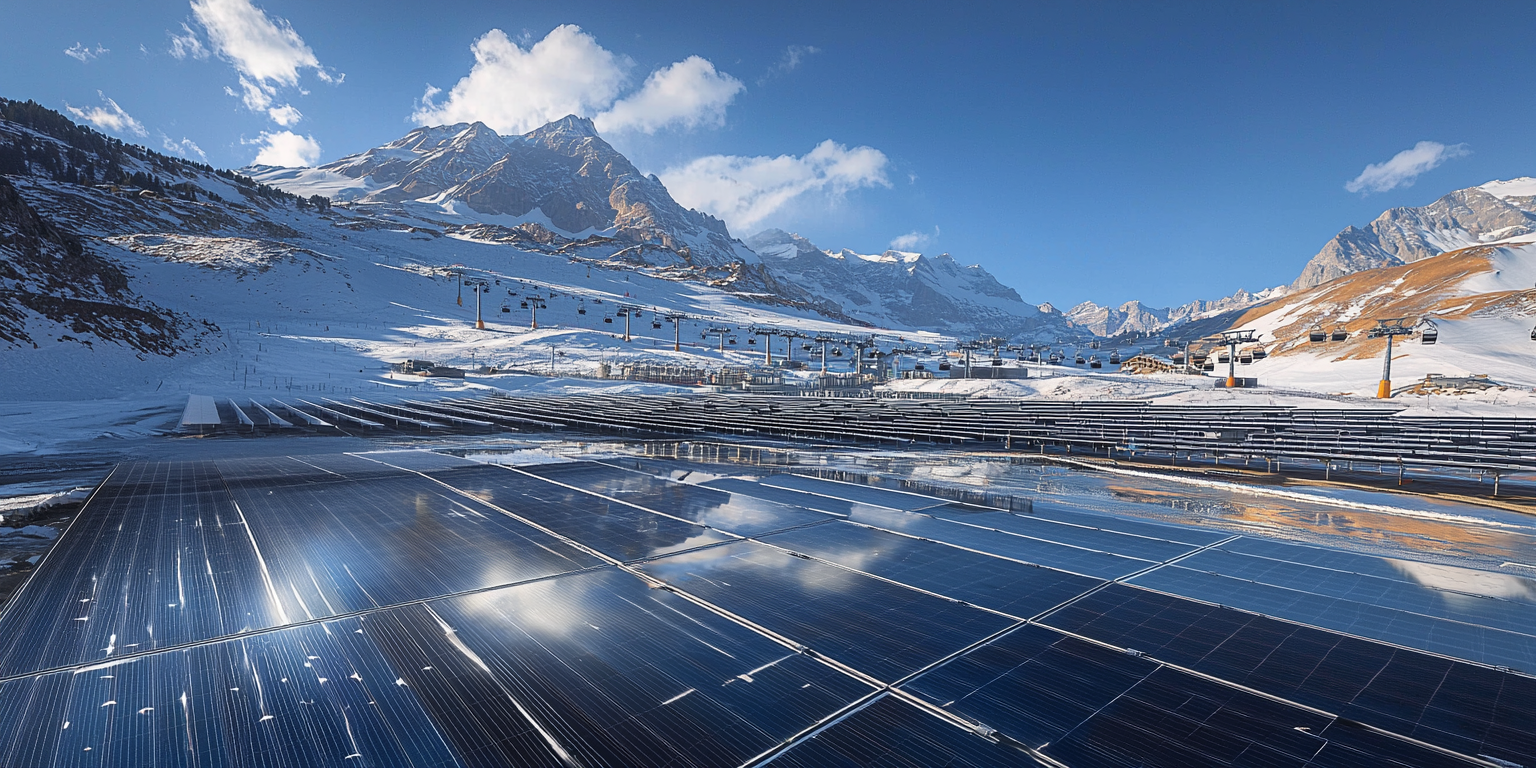
    The first 15 per cent of Madrisa Solar feeds electricity into the grid. According to a press release, the first 500 solar tables are fitted with 3,000 bifacial solar modules. The electricity will be used to power the neighbouring Klosters-Madrisa mountain railways.

    The solar power plant at 2,000 metres above Klosters Dorf is set to achieve an output of 11 megawatt peak when fully built on an area of 150,000 square metres with around 20,000 solar modules. Of the 17 gigawatt hours of electricity, 40 per cent will be generated in the winter months between October and March. Commissioning of the entire plant is scheduled for autumn 2027. By autumn 2026, 50 to 60 percent of the output should already be available.

    Madrisa Solar AG is a joint venture between Repower, EKZ and the municipality of Klosters, each of which holds a one-third stake. Madrisa Solar is the first solar power plant of the national solar express to feed electricity into the grid.

  • Köniz tests power supply with 100 per cent renewable energy

    Köniz tests power supply with 100 per cent renewable energy

    The Bernese energy supplier BKW is testing new solutions for supplying electricity from renewable energies. According to a press release, a three-year pilot project will provide real-time data on electricity demand and consumption in the Mittelhäusern district of the municipality of Köniz.

    The choice of test area was the result of a feasibility study commissioned by the municipality of Köniz. The test focussed on supplying electricity to the 950 residents of the municipality. In the contiguous supply area, the electricity supply is to be realised using renewable energies. After the test phase, all energy customers will have the opportunity to obtain 100 per cent renewable energy, which is more environmentally friendly and cheaper than before, according to the press release.

    Mittelhäusern could become the first Swiss village to cover its entire energy requirements, i.e. electricity, heat, mobility and processes, from renewable sources, according to BKW. However, a separate follow-up project is planned for the areas of heat and mobility.

    The central aim of the study is to provide BKW Power Grid with data and experience with real-time sensor and actuator technology in a practical experiment. The aim is to ensure a stable and efficient power supply at all times. As a result, the understanding of an intelligent overall electrical system (smart grid) should be improved.

  • Swiss start-up supports the development of digital energy communities

    Swiss start-up supports the development of digital energy communities

    The Zurich-based start-up Exnaton is teaming up with the German software manufacturer SAP, based in Walldorf, to operate the SAP Energy Community in the SAP Energy Park. The SAP Energy Community allows buildings and employees to produce, store and trade renewable energy with each other. The initiative focuses on the S.MART Shop, a space equipped with solar panels, EV chargers and a battery system that enables renewable energy trading on the SAP campus.

    Exnaton supports the programme with its energy sharing software solutions, which simplify registration with a user-friendly interface and enable users to manage, consume and trade energy together. Real-time data from SAP dashboards, combined with Exnaton software, enables energy to be sold when market conditions are favourable and stored for future use. The energy community dashboard, which provides real-time insights into consumption, production and energy trading and serves as a communication channel for sustainability programmes, is also operated by Exnaton. The SAP Energy Community leads to cost savings through optimised energy use, reduced CO2 emissions and increased resilience thanks to decentralised energy production and storage.

    In view of stricter German energy legislation from 2026, the project in Walldorf can serve as a model for other energy sharing projects. “The SAP Energy Community is central to establishing a standard model for energy sharing in Germany,” said Anselma Wörner, co-founder and COO of exnaton, in the press release. “With our experience from international energy communities, we are proud to support SAP in turning this vision into a scalable, practical solution.”

    Founded in 2020, exnaton AG is a spin-off of the Swiss Federal Institute of Technology in Zurich.

  • New solar system supplies solar power for sports and leisure activities

    New solar system supplies solar power for sports and leisure activities

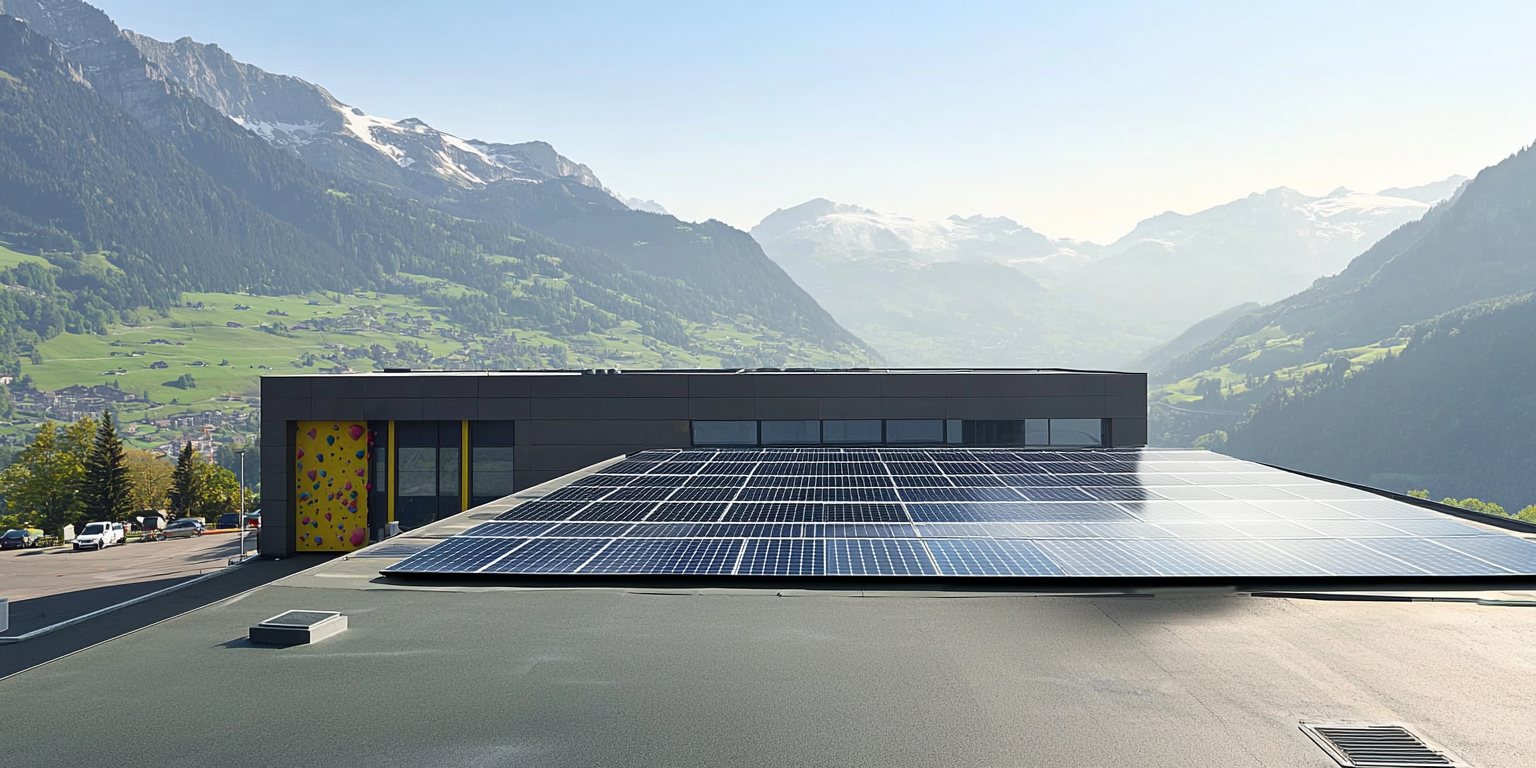
    The Münchenstein-based electricity producer aventron AG opened its new solar power plant in Näfels on March 27, according to a press release. The system is located on the roof of the bouldering hall, which is part of the Lintharena building complex. While the Verein Kletteranlagen Linthgebiet (VKL) has made the roof of the bouldering hall available for the solar system, the system itself is fully owned by aventron.

    The solar system has an area of 660 square meters and an output of 145 kilowatts. This means that around 124 megawatt hours of solar power can be generated each year, all of which will flow to Lintharena AG and cover around 10 percent of its electricity requirements. According to Samuel Leuzinger from VKL, the solar system has a double benefit for the association: “We receive additional income from the roof rental from aventron and are doing something for climate protection and the energy transition,” Leuzinger is quoted as saying in the press release.

    The construction of this and another solar installation in neighbouring Mollis was supported by the organizing committee of the Swiss Wrestling and Alpine Festival (ESAF) 2025. Aventron is an energy partner of the ESAF in Glarnerland. Through this partnership, the ESAF organizing committee put aventron in touch with suitable roof owners such as the VKL. “We are implementing this photovoltaic system in cooperation with our partners, the Lintharena, VKL and the ESAF in Glarnerland,” commented aventron CEO Eric Wagner on the new system, according to a press release. “This is an important step towards more Swiss solar power and the implementation of the Energy Strategy 2050.”

    Aventron generates its electricity exclusively from renewable sources. The company now has a nationwide solar capacity of around 65 megawatts. The aim is to increase this to an output of 100 megawatts by 2027.

  • Company building becomes the power plant of the future

    Company building becomes the power plant of the future

    Energie 360° has converted its headquarters in Zurich into a green power plant, the energy supplier, which is active throughout Switzerland, and the city of Zurich announced in a joint press release. During the now completed conversion and renovation work, a large-scale photovoltaic façade was installed. Its 1600 modules are expected to generate around 325 megawatt hours of electricity per year.

    “In future, Energie 360° will produce around half of its building’s annual energy requirements itself,” Michael Baumer, Head of Industrial Operations of the City of Zurich and Chairman of the Board of Directors of Energie 360°, is quoted as saying in the press release. The solar power generated will also be used to power the company’s own fleet of electric cars, among other things. To obtain approval for the system, Energie 360° had to prove that a fire in the modules could not spread over more than two storeys.

    Energie 360° wants to convert its direct sales exclusively to renewables by 2040. The company is on track to achieve the interim target of 30 percent set for the end of 2025, Energie 360° announced in a further press release. In the financial year ending September 30, 2024, a share of 27 percent was achieved. Specifically, 1238 of a total of 4590 gigawatt hours of energy sold came from renewable sources. “We feel the broad support and recognition for our transformation – among employees, partner companies and customers”, Energie 360° CEO Jörg Wild is quoted as saying in the press release.

  • Bern-Wabern heating network promotes energy transition and CO2 reduction

    Bern-Wabern heating network promotes energy transition and CO2 reduction

    The energy company Energie Wasser Bern(ewb) and the municipality of Köniz want to make a contribution to reducing CO2 emissions and achieving the climate policy goals of Köniz and Bern with the Bern-Wabern energy network, according to a press release.

    The ewb Board of Directors decided to build the Bern-Wabern heating network on March 7, 2025, based on the “great interest” of the population as determined by a survey. Construction of the production facilities is scheduled to start in 2027. The first heat supply is expected from 2028.

    Specifically, the heat production concept envisages using the energy from surplus water from the Schönau pumping station for thermal use. The production facilities will be installed in the existing heating center of the Morillon residential complex on Bondelistrasse.

    With the cooperation agreement that has now been signed, the heating and cooling supply in Wabern will be the responsibility of ewb, which is also responsible for the operational and financial responsibility for the construction.

    The heating network could help to promote the energy transition and climate protection. The sustainable energy project will create a replacement for many oil and gas heating systems in Wabern and the neighboring districts of Bern. “In densely built-up areas, a heating network is often the only solution for heating buildings with renewable energy in a CO2-free and economical way,” says Hansueli Pestalozzi, a local councillor in Köniz.

  • Rhine water and waste heat as an energy source for the heating network

    Rhine water and waste heat as an energy source for the heating network

    The electricity supplier AEW Energie AG, based in Aarau, is investing over 8 million Swiss francs in the new Augst BL heating network, according to a press release. This will replace the existing AEW contracting plant in Pratteln BL, which is fuelled by wood pellets and oil. The planning application for the heating network, which will run on 100 per cent renewable energy, has been submitted. The first heat supply is scheduled for the 2025/26 heating period.

    The heating centre will be built in the machine hall of the Augst power plant and will use the waste heat from the power plant generators and Rhine water as heat sources. The waste heat from the generators is currently discharged unutilised into the Rhine. With this combination, a reliable and sustainable heat supply can be guaranteed, according to AEW. Three heat storage tanks, each with a capacity of 16,000 litres, serve to compensate for fluctuations and ensure a constant supply.

    The heat is distributed to the connected buildings via a district heating network that is around 1.3 kilometres long. According to the press release, a total thermal output of 2 megawatts will be provided, with a planned annual heat output of 4,400 megawatt hours in the final stage of expansion. Compared to fossil heating systems, this corresponds to a reduction of around 1200 tonnes of CO2 per year.

    According to the press release, AEW began developing heat supply systems in the early 1990s. The first heating network was put into operation 30 years ago in the municipality of Möhlin. Today, AEW operates 75 heating networks and contracting plants for heating and cooling in the canton of Aargau and neighbouring cantons. The current production capacity is over 230 gigawatt hours per year and avoids the emission of around 55,000 tonnes of CO2 per year.

  • Cooperation in data centre optimisation

    Cooperation in data centre optimisation

    BKW and the start-up company K51 from Eschenz are working together on an innovative project for data centres. K51 places servers and data centres in locations such as greenhouses so that the waste heat from the computing power can be used for heating. “We deliver fossil-free heat free of charge and utilise computing power as an innovative fuel,” Benoît Stroelin, co-founder and CEO of K51, is quoted as saying in a press release from BKW. “Our goal is to significantly reduce energy waste in high-performance computing (HPC) and thus make a relevant contribution to decarbonisation.”

    In collaboration with BKW, K51’s first regular data centre has been awarded a customised power supply contract. The operation of the facility is controlled by a daily spot price forecast from BKW Energy so that the computing services are carried out during the most favourable hours.

    In addition, BKW connects the K51 data centres to the balancing energy market. In this way, the Bern-based energy supplier can switch the individual data centres on or off as required to maintain grid stability. “In terms of system control and flexibility, K51 fulfils exactly the requirements needed for such a model,” said Thomas Egli, Head of Business Enabling at BKW Energy, in the press release. “We are working closely together to realise additional potential, for example in the area of balancing energy.”

  • Thurgau bank opts for solar energy in Arbon

    Thurgau bank opts for solar energy in Arbon

    Thurgauer Kantonalbank(TKB) has installed a new photovoltaic system on the roof of its branch in Arbon. According to a press release, the new 500 square metre system is the largest that the bank has put into operation. It is expected to supply around 105,000 kilowatt hours of electricity per year. This corresponds to the annual consumption of 21 households.

    The electricity produced on the roof will primarily be used for the operation of the branch. Depending on demand, it will cover between 25 and 40 per cent of the bank branch’s energy requirements, according to the press release. The solar system will also supply three charging stations for electric cars in the neighbouring underground car park of the Novaseta shopping centre. Any surplus electricity generated will also be fed into the public grid.

    With the new system, TKB wants to emphasise its commitment to sustainable and renewable energy and reduce local CO2 emissions.

  • Municipality of Thalwil relies on district heating with new heat supply

    Municipality of Thalwil relies on district heating with new heat supply

    Wärme Thalwil AG was founded in February 2025 to provide the population with a climate-friendly district heating supply. According to a press release, the company is the result of a collaboration between the municipality of Thalwil and Elektrizitätswerke des Kantons Zürich(EKZ). Thalwil holds a 49 per cent stake in the new company and EKZ holds 51 per cent. The foundation was preceded by a referendum in September 2024, in which 79.8 per cent of voters voted in favour of the new company.

    “By founding Wärme Thalwil AG, we are sending a clear signal in favour of a resource-conserving and climate-friendly heat supply in our municipality,” said Andy Fellmann, municipal engineer of Thalwil, in the press release. “In addition, the collaboration between the municipality and EKZ allows synergies to be utilised and the existing infrastructure to be developed efficiently.”

    Martin Nicklas, Chairman of the Board of Directors of Wärme Thalwil AG and Head of Energy Solutions and Energy Contracting at EKZ, states that the aim of the new company is to supply 3,000 residents with sustainable heat. The next step is to create an additional heating network, a decision on which is to be made in 2026.

  • Lake Zurich heats properties in the Riesbach neighbourhood

    Lake Zurich heats properties in the Riesbach neighbourhood

    Since 26 February, the first 80 properties in the Riesbach district of Zurich have been heated with heat from the Tiefenbrunnen energy network, Energie 360° announced in a press release. When the energy network is completed in 2032, the number of properties heated with heat from the waters of Lake Zurich is expected to rise to around 400. Energie 360° has invested around 60 million Swiss francs in the project.

    “We have reached an important milestone with the commissioning of the main centre and are proud of our contribution to a sustainable heat supply in the Tiefenbrunnen area,” said overall project manager Andreas Abdon from Energie 360° in the press release. For Dženan Draganović from Liegenschaften Stadt Zürich, energy networks such as the one now in operation are crucial for the city’s own net-zero target: “We have set ourselves the goal of heating all properties without fossil fuels by 2035.”

    When completed, the Tiefenbrunnen energy network will be able to supply around 5,300 Tiefenbrunnen residents with renewable heat from Lake Zurich. By replacing fossil heating systems, 6500 tonnes of CO2 can be avoided each year, writes Energie 360°.

  • Sustainable energy supply for Frick

    Sustainable energy supply for Frick

    The Basel-based energy supplier IWB has announced the commissioning of the Frick heating network. In addition to the new heating centre with two wood-fired boilers and two heat storage tanks, a 2.1-kilometre-long heating network has also been put into operation, according to a press release. The expansion of the final sections in the first construction phase is to begin on 4 March.

    This will supply private households and businesses in some neighbourhoods of Frick with renewable district heating. The wood-fired boilers will be fuelled with regional wood chips from the Thiersteinberg forestry operation.

    Due to the high demand, IWB is already examining the expansion of the supply area in the Ob em Dorf and Chilmet districts. Both the current and future constructions are associated with a number of traffic restrictions, which will be adapted by the municipality and canton as required. IWB invites you to an open day on the site of the heating centre on 5 April 2025.

  • District heating network in the lower Wiggertal is getting closer

    District heating network in the lower Wiggertal is getting closer

    The energy companies Primeo Energie from Münchenstein and StWZ Energie AG are in the planning stages for the district heating network Fernwärme Unteres Wiggertal (FUWI). According to a press release, their solution envisages the integration of existing networks.

    “The project is an important contribution to the decarbonisation of the heat supply. StWZ and Primeo are convinced that the district heating network in the lower Wiggertal can be realised most effectively if we join forces in a joint company,” Michael Schneider, Managing Director of Primeo Wärme AG, is quoted as saying. The first step will be to expand the district heating network in Oftringen and Zofingen and to integrate the existing district heating networks of both municipalities. Wood combustion in the StWZ energy centres and waste heat from the waste incineration plant (KVA) of Erzo (Entsorgung Region Zofingen) are to be used as climate-neutral heat energy substitutes.

    In addition to StWZ Energie AG Zofingen, EW Oftringen AG and EW Rothrist AG were initially involved in the project. Contrary to the plans, the two regional energy suppliers have withdrawn their commitment to join the company for the time being for various reasons. However, according to the press release, both companies are behind the project for CO2-neutral district heating. Participation at a later date has not been ruled out.

    The question of a future increase in heat consumption from summer 2027 is also still open. The Oftringen electorate will be asked to vote on the construction of a new waste incineration plant and the additional land required for this in November 2025.

  • Saane water to heat Freiburg

    Saane water to heat Freiburg

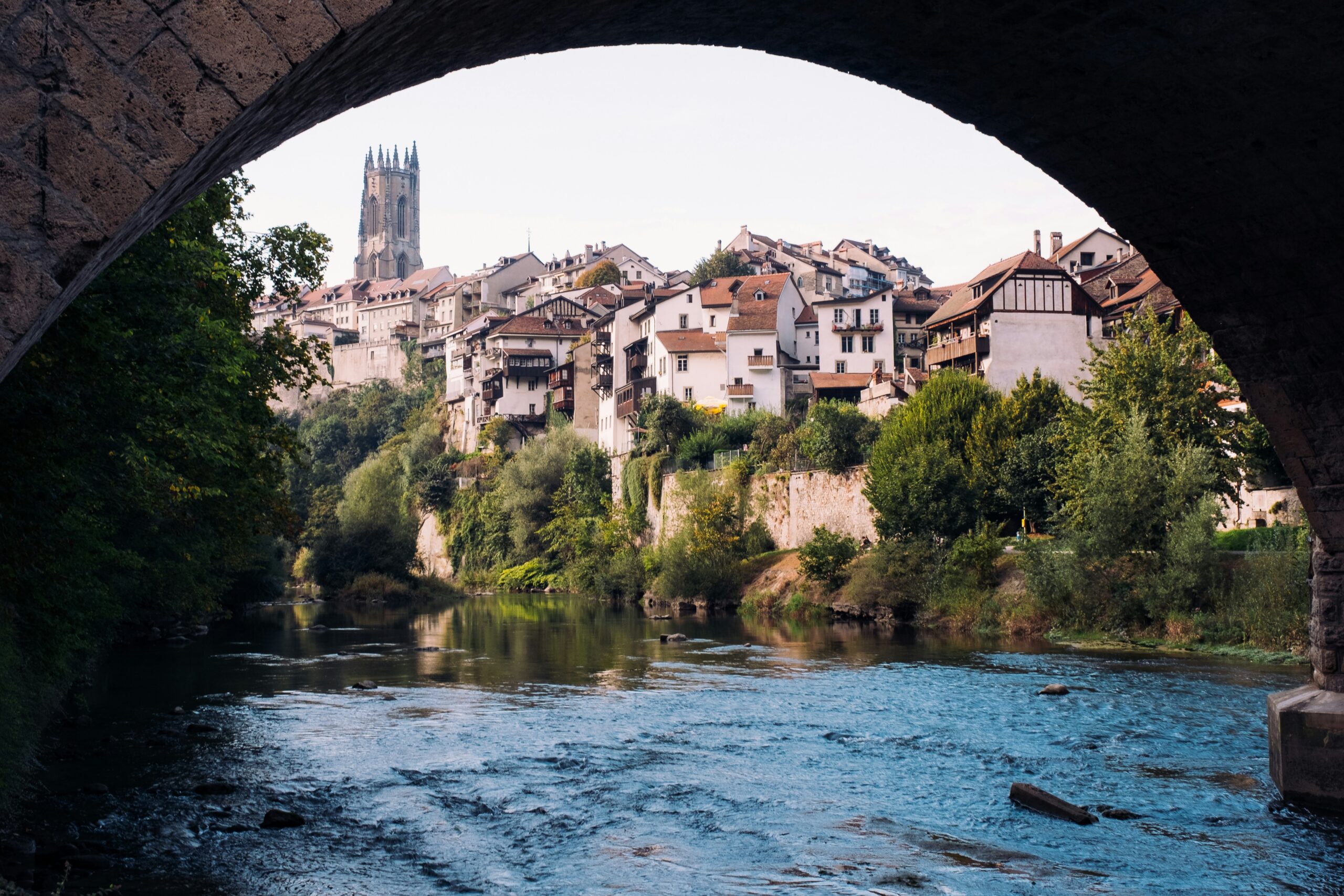
    By 2027 at the latest, water from the Saane will cover 10 per cent of the heat demand in the Fribourg area, Groupe E announced in a press release. The energy supplier from Granges-Paccot is planning to build a three-part infrastructure to generate around 60 gigawatt hours of renewable thermal energy per year. This is enough to cover the needs of around 7500 households.

    The PLACAD project provides for the expansion of the existing heating centre on the former Ritter site. In future, three water-to-water heat pumps will operate here. They will be supported by two gas boilers in winter or in an emergency.

    The associated pumping station is planned in the Magere Au dam building. The connection between the heating centre and the pumping station is via two parallel pipes, each 1.2 kilometres long. They run through the Perolles forest, under the tennis courts of the Heilig Kreuz college and across the Saane.

    The pipeline route will partly follow existing paths, but any environmental impact will be compensated for, Groupe E explains. This includes plans to extend the Lake Perolles nature reserve to include an island of old woodland. Groupe E will provide information online about any adverse effects on leisure activities in the Perolles forest. The corresponding website also provides an insight into the development of the project.

  • Disentis/Mustér gets large-scale photovoltaic system

    Disentis/Mustér gets large-scale photovoltaic system

    Axpo Solutions AG from Baden and Bergbahnen Disentis AG are planning to realise a large-scale photovoltaic plant with a capacity of over 10 megawatts peak in the Grisons municipality of Disentis/Mustér. The two partner companies are currently founding the power plant company Ovra Solara Magriel AG, based in Disentis/Mustér, to construct and operate the plant. The project, which is based on Article 71a of the Energy Act, the so-called Solar Express, has now received the approval of the government of the canton of Graubünden, the cantonal administration announced in a press release. The voters of Disentis/Mustér had already given the plan the green light in 2023.

    The plant is to be built on an area already used for tourism at an altitude of around 2100 metres above sea level. The plan is to install 20,750 solar panels on an area of around 13.5 hectares. The operators expect an annual electricity production of around 14.6 gigawatt hours, of which around 5.4 gigawatt hours will be generated in winter.

  • New solar plant approved on former landfill site

    New solar plant approved on former landfill site

    The Basel-based energy supplier IWB has received planning permission for the construction of a solar plant on the former Hinterm Chestel landfill site in Liesberg. The investment decision is expected to be made at the beginning of 2025, according to a press release. Following a swift start to construction, the first solar power, which can supply around 1,000 households, is expected to flow as early as spring 2026.

    7,600 solar modules are to be installed on an area of 25,000 square metres. This corresponds to an installed capacity of 3.4 megawatts. The system will be installed at a certain height so that green areas can continue to be cultivated below. This should also benefit local biodiversity.

    “It is important to us that the plant is realised in an environmentally friendly way. For this reason, we deliberately integrated existing natural objects during the planning phase in coordination with KELSAG,” Daniel Neuenschwander, Project Manager for large-scale photovoltaic systems at IWB, is quoted as saying in the press release. KELSAG (Kehrichtbeseitigung Laufental-Schwarzbubenland AG) is the owner of the landfill site and will make the area available for up to 50 years.

    The habitat of various animal species is also taken care of. “We closely involved nature and environmental organisations in this project right from the start. That was the recipe for success for a balanced project: the concerns of electricity production and biodiversity are given equal consideration,” says Neuenschwander.

  • Intelligent energy systems for residential buildings

    Intelligent energy systems for residential buildings

    Lynus has founded Enerfin AG. The Tuggen-based technology company, which specializes in energy systems for the optimal use of renewable energy, announced in a press release that the new subsidiary will be responsible for tenant electricity contracting. Specifically, Enerfin will plan, finance, set up and operate tenant electricity systems. Property owners will share in the profits. The new company already has 300 residential properties with around 2,400 residential units in its portfolio.

    Enerfin uses Lynus software and hardware to optimize energy systems in residential buildings. The technology company’s software uses machine learning “to predict and control the energy flows in the building – right through to the connection to our virtual power plant”, explains Paul Hauser, CEO of Enerfin and Lynus, in the press release. “In this way, renewable electricity is used optimally.”

    By connecting the properties’ energy systems to Lynus’ virtual power plant, property owners can realize a higher profit than with conventional tenant electricity contracting, writes Lynus. The background to this is the marketing of the flexibility that results from the forecast of energy generation and consumption created using machine learning. “Enerfin combines benefits for tenants and landlords with the advantages of intelligent tenant electricity solutions for the electricity grid and the climate and makes the whole thing as simple as possible for users on both the supplier and consumer side,” says Hauser.

  • Expansion of the district heating network in Kaiseraugst for a better heat supply

    Expansion of the district heating network in Kaiseraugst for a better heat supply

    AEW Energie AG is opening up its heating network in Kaiseraugst to new customers. According to a press release, it will begin construction work on two branch lines of the “Ast Dorf” project on 4 November.

    These two branch lines are located at Lindenweg 11 and 13 and between Dorfstrasse, at property no. 36 and Heidemurweg. According to a press release, the work is expected to be completed by Christmas.

    Work on the main district heating line and the other sections along Dorfstrasse and Lindenweg will begin in January 2025. After deducting the municipality’s contribution to the costs, AEW is investing a total of around 3.2 million in the expansion of the Kaiseraugst district heating network.

    The Kaiseraugst heating network has been in operation since October 2021. It is one of the largest in the canton of Aargau. in 2023, additional customers were connected in the industrial area, in the south-east and with the branch to the Rinau retirement home. The large-scale project, which took over four years to build, currently supplies over 1,500 households and numerous industrial and commercial customers with heat from at least 80 per cent renewable energy.

  • Lake Biel supplies energy for Nidau and Biel

    Lake Biel supplies energy for Nidau and Biel

    Energieverbund Bielersee AG is supplying energy to customers in Nidau and Biel for the first time, according to a press release. To this end, the intermediate circuit connecting the pumping station on Dr. Schneiderstrasse with the energy centre in the Alpha building in Nidau has been constructed in recent weeks.

    The lake water reaches the pumping station via two pipes at depths of 20 and 30 metres. In the energy centre, heat pumps are used to produce hot water for heating systems that are connected to the heating network. The cold, in turn, is channelled via a separate network to the Robert-Walser-Platz area near Biel railway station. A peak load boiler is available for cold days.

    The plans for the use of lake water date back to 2015. in 2020, Energie Service Biel/Bienne founded Energieverbund Bielersee AG, in which the city and the Burgergemeinde Nidau are now also shareholders. The lake pipelines were laid in March 2022 and the shell of the pumping station was completed the following May. In future, the energy centre is to be renovated and the heating network extended towards Ipsach.

  • Successful drilling of Haute-Sorne geothermal project completed

    Successful drilling of Haute-Sorne geothermal project completed

    A pilot project for deep geothermal energy is underway in Haute-Sorne. The initiators, Geo-Energie Suisse and Geo-Energie Jura, have announced that the first borehole has been drilled. According to a press release, it took less than three months to explore the subsurface at a depth of 4000 meters. The borehole ran completely through the sediments and penetrated deep into the crystalline bedrock.

    This provides geological data on the underground in the Swiss Jura arc between Geneva and Basel. “From a scientific point of view, this is a great opportunity to significantly improve our knowledge of the geology of the Jura. Until now, the deep underground has only been described in such detail at a very localized level at a national level.”

    Strict environmental safety precautions apply to the project. There has been no damage or water ingress during ongoing construction work, and noise pollution has been kept to a minimum.

    In the view of Geo-Energie Suisse and Geo-Energie Jura, this step paves the way for innovative future prospects for a sustainable energy supply. The data will provide geological insights into the use of geothermal energy to generate electricity and heat. The first success was celebrated on August 28, 2024. Employees, operational, technical and scientific partners and political representatives were invited to the event.

    The site is suspended while the data is evaluated and the project progress is planned. Tests in the borehole and a geophysical campaign are scheduled for early 2025. The exploration phase is scheduled until the end of 2025.

  • Umwelt Arena presents solar sunshades

    Umwelt Arena presents solar sunshades

    The Umwelt Arena is presenting two new photovoltaic sunshades in front of its restaurant in Spreitenbach. According to a press release, the parasols not only offer protection from the sun’s rays during the day, but can also generate electricity to charge electronic devices such as smartphones, laptops or tablets thanks to their extendable solar panels.

    Two Solaris 1000W models from Streetopia, a manufacturer of mobile photovoltaic solutions from Teufen, will be presented in Spreitenbach. They could be intended for use in restaurants or company buildings. The smaller Solaris 600W model could be used in the home garden and reduce the energy requirements of a two-person household by 30 to 50 percent, according to the press release. Both models are reportedly easy to install and work according to the plug-and-play principle.

  • Inauguration of a photovoltaic system at Limeco

    Inauguration of a photovoltaic system at Limeco

    According to a press release, the Limmattaler Regiowerk Limeco, based in Dietikon, has inaugurated a photovoltaic system on the roof of the wastewater treatment plant(ARA). According to the company, 624 solar panels with a capacity of 265.2 kilowatts peak generate as much solar power as 70 households with an annual consumption of 3,600 kilowatt hours.

    On an area of 1220 square metres, 252,000 kilowatt hours of green electricity are to be produced, primarily for the ARA’s own requirements and the waste recycling plant. Any surplus energy will be fed into the public grid and made available to the general public.

    The aim is to promote the expansion of renewable energy supply. Limeco plans to convert the supply of the entire Limmat Valley to CO2-neutral energy sources by 2050.

  • A step towards a fossil-free future

    A step towards a fossil-free future

    The city of Zurich’s energy planning envisages making better use of renewable energy sources in future. With an approval rate of 88 per cent, the voters of Zurich said yes to the CHF 128 million project loan for the Altstetten and Höngg energy network.
    The urban areas of Altstetten and Höngg offer ideal conditions for an energy network. They have a high heat consumption density and are close to the heat source, the Werdhölzli sewage treatment plant. The commissioning of the Altstetten and Höngg energy network makes it possible to utilise the previously unused heat potential of the Werdhölzli wastewater treatment plant.

    The temperature of the treated wastewater is between 11 degrees Celsius in winter and around 25 degrees Celsius in summer. Entsorgung + Recycling Zürich treats up to 80 million cubic metres of wastewater every year. Before the purified water flows into the Limmat, it passes through the waste heat utilisation building, where the heat is extracted. In the energy centre, heat pumps raise the temperature to the level required for useful heat.

    Another heat supplier is the sewage sludge utilisation plant, which is also located on the site. The waste heat generated during the incineration of the sewage sludge is a valuable source of energy. Verbund utilises both the direct excess heat from the sewage sludge utilisation plant and the condensation heat from the exhaust gases. As the sewage sludge utilisation plant has temperatures of 70 to 80 degrees Celsius, it can be fed directly into the system without having to go through a heat pump.

    In addition, the waste heat from ice production at the ZSC Lions’ new Swiss Life Arena is fed into the anergy network. From summer 2022, the Swiss Life Arena’s energy centre will produce cooling for the connected properties, which will be used to cool the offices and commercial premises. The cooling is produced using highly efficient heat pumps.

    The Altstetten and Höngg energy network consists of various sub-perimeters. The Höngg and Altstetten Nord areas are largely connected to the energy network. In the Höngg-Zentrum and Altstetten Ost areas, implementation will take place from 2023 to 2032.

  • World’s largest electric melting furnace for stone wool in operation

    World’s largest electric melting furnace for stone wool in operation

    After a two-year construction period, the world’s largest electric melting furnace for stone wool was inaugurated today in Flums. This milestone marks a significant development for the Swiss stone wool producer Flumroc and emphasises its commitment to pioneering technologies. The new furnace runs entirely on electrical energy from Swiss hydropower, reducing CO2 emissions from the melting process by 80 per cent. This corresponds to an annual saving of around 25,000 tonnes of CO2, comparable to the emissions of 5,500 oil-fired households.

    The opening ceremony was attended by more than 100 guests from the worlds of politics and business, including Federal Councillor Albert Rösti, who emphasised the importance of this investment for energy efficiency and environmental protection. He emphasised that such projects are crucial for reducing CO2 emissions and protecting the environment.

    The electric melting furnace customised for the production facilities in Flums positions Flumroc as a pioneer in the stone wool industry. Damian Gort, Managing Director of Flumroc, explained: “With the world’s largest electric melting furnace, we are realising a technological feat that significantly improves the eco-balance of our products and makes an important contribution to an energy-efficient and sustainable building stock.”

    The investment in the Flums site reinforces Flumroc’s commitment to regional production and ecological sustainability. “It is neither sensible nor ecologically justifiable to transport the voluminous product over hundreds of kilometres. Only through domestic production can we really guarantee a closed cycle,” says Gort. Flumroc has been producing stone wool in Flums for over 70 years and, with 225 employees, is one of the most important employers in the region.

    The use of the new electric melting furnace makes Flumroc’s production process much more sustainable. Compared to conventional insulation materials, Flumroc’s Swiss stone wool now has the lowest greenhouse gas emissions from production to disposal. This consolidates Flumroc’s position as an environmentally conscious producer in the building materials industry.

  • Would you like a little more perovskite solar cells?

    Would you like a little more perovskite solar cells?

    Roof tiles are a thing of the past: Today, you can see large black and blue rectangles on more and more Swiss roofs that convert sunlight into electricity. The black-blue colour comes from silicon crystals, as the majority of solar cells available today are based on this semiconductor material. However, silicon is not the only way to produce solar cells – and possibly not the best.

    Silicon-based photovoltaic cells are now so advanced that they are reaching the limits of their efficiency. Although a few more percentage points could be achieved, the theoretical upper limit for the efficiency of a single silicon cell is 33 per cent. In practice, it is somewhat lower, as small energy losses inevitably occur during the construction and operation of the cells.

    The reason for this limited efficiency is due to the material properties of silicon. The so-called band gap of the material means that only photons with a certain energy can be converted into electricity. If the energy of the photon is too high, it cannot be fully “utilised” by the solar cell.

    Two layers are better than one
    Solar cells made of other materials offer a way to circumvent this limitation, says Empa researcher Fan Fu. The group leader in the Laboratory for Thin Films and Photovoltaics is researching highly efficient solar cells made of perovskite. A perovskite single cell alone does not achieve a higher efficiency, because perovskite as a semiconductor also has a limited band gap. The real strength of this innovative material lies in the fact that this band gap – unlike silicon – can be controlled by varying the composition of the perovskite material.

    If two perovskites with different band gaps are processed into thin-film solar cells and “stacked” on top of each other, the result is a so-called tandem solar cell. One perovskite layer “catches” the photons with high energy, the other those with low energy. This theoretically allows efficiencies of up to 45 per cent to be achieved – significantly higher than the 33 per cent of single cells. Alternatively, a perovskite layer can also be combined with a silicon layer to create a highly efficient tandem cell.

    However, Fu and his team are currently mainly researching pure perovskite tandem cells, including as part of the EU research project “SuPerTandem”, in which a total of 15 leading European research institutions and companies are involved. The aim of the project is to develop flexible perovskite tandem modules with an efficiency of over 30 per cent, which can also be produced using scalable and cost-effective processes. This is another strength of perovskite solar cells: “Silicon solar cells usually require high-purity silicon monocrystals that are produced at high temperatures,” explains Fu. “Perovskite thin films, on the other hand, can be printed, vaporised or deposited from solution, with a correspondingly low CO2 footprint. Small defects that occur in the process have little impact on their optoelectronic properties.”

    The potential benefits of projects such as “SuPerTandem” are enormous, because the higher the efficiency, the cheaper the solar system will be at the end of the day. “The cell itself accounts for less than 20 per cent of the cost of a PV system,” says Fu. “The remaining 80 per cent is accounted for by the cabling, the inverters, the control system and, of course, the labour required for installation.” If the efficiency of the individual cells is increased, a smaller – and therefore cheaper – PV system is sufficient for the same electricity production. Thin-film cells made of perovskite can also be produced on lightweight flexible films instead of on heavy, rigid glass plates like silicon cells. This means they can also be used in more locations, for example on car roofs or on buildings with a low load-bearing capacity.

    From the lab to the roof
    This great potential of perovskite solar cells must now be utilised. In addition to “SuPerTandem”, Fan Fu’s team is also working on two Swiss projects. In a project funded by the Swiss National Science Foundation (SNSF), the Empa team is working to better understand the fundamental properties and challenges of perovskite solar cells, which contribute to their efficiency and stability. And in a project with the Swiss Federal Office of Energy (SFOE), they are immediately putting their existing knowledge into practice by scaling up the tandem cells developed at Empa.

    What else do we need to do to ensure that the black and blue squares on the roof are soon joined by reddish perovskite films? “First of all, we have to scale up the perovskite cells from the current prototypes of a few centimetres in size to industrial sizes,” says Fu. It is also important to effectively protect the still somewhat sensitive cells from the effects of the weather. The Empa researcher is optimistic that both will be achieved in the next five to ten years. “We are making good progress and there is a lot of interest from industry,” says the scientist. “Research has only been working on perovskite solar cells for just under 15 years. After all, research into silicon cells has been going on for almost 70 years.”