Tag: erneuerbare Energie

  • WSL takes social factors into account when choosing a location for renewables

    WSL takes social factors into account when choosing a location for renewables

    Researchers from the Swiss Federal Institute for Forest, Snow and Landscape Research(WSL), the Swiss Federal Institute of Technology in Zurich(ETH) and the Vienna University of Technology have developed an innovative approach to selecting sites for renewable energy plants. According to a WSL press release, they are moving away from traditional methods that primarily take technical and economic factors into account. The new approach was developed by lead author Boris Salak (WSL/Vienna University of Technology) and his colleagues Felix Kienast and Marcel Hunziker (WSL) as well as Adrienne Grêt-Regamey, Ulrike Wissen Hayek and Reto Spielhofer (ETH).

    The study shows that different planning priorities entail different spatial, environmental and social costs, lead author Boris Salak is quoted as saying. “We have found that there is no one ‘right’ planning priority, but that this is a process of weighing up priorities. We see that optimisation according to social aspects is a good compromise between the other two priorities.” This optimisation brings the highest acceptance and is spatially as effective as optimisation according to energy efficiency.

    In a representative survey throughout Switzerland, participants were shown two scenarios. The pictures showed wind turbines, photovoltaic systems on roofs or in open spaces and high-voltage power lines. Respondents were asked to decide which image was most appealing to them or whether none of the energy scenarios shown appealed to them.

    According to the WSL, the population clearly favours the agricultural Central Plateau over near-natural landscapes for the development of energy landscapes.

  • Freesuns receives 1 million francs

    Freesuns receives 1 million francs

    Freesuns SA, a Colombier-based start-up specialising in innovative solar tiles, has announced a capital increase of CHF 1 million. According to a press release, this includes a strategic investment by the Renens-based PHIDA Groupe. The collaboration opens up new perspectives for the future of renewable energies in French-speaking Switzerland. The family business PHIDA Groupe in Renens comprises 20 companies in four business areas: Construction, Events, Services and Investments.

    Freesuns believes in a world in which energy production is sustainable, environmentally friendly and aesthetic, according to the company’s website. For this reason, Freesuns has developed a range of special solar tiles that maximise the coverage of photovoltaic cells for every roof shape and style. To date, around 130 roofs in Switzerland have been covered in this way.

    “This capital injection will enable us to expand our business, push the boundaries of building-integrated photovoltaics and get closer to our vision: Solar roof tiles on every roof,” Deborah Learoyd, the managing director of Freesuns, is quoted as saying in an article on startupticker.ch. The start-up intends to use the capital to continue research and development in the area of software and hardware solutions and to expand its sales to new markets.

    “We are delighted to be working with Freesuns on its mission to revolutionise roofing materials with beautiful solar roof tiles. This will allow us to offer our customers the latest solar roof tile technologies and maintain our position as the market leader in the building envelope sector in French-speaking Switzerland,” said Bastien Sauve, CEO of PHIDA Groupe.

  • Energie 360° supplies district heating to Effretikon

    Energie 360° supplies district heating to Effretikon

    The town of Illnau-Effretikon has concluded a concession agreement with Energie 360° for the construction and operation of a district heating network in Effretikon. According to a press release, the 50-year contract provides for the supply of district heating to around 3,000 households in the Vogelbuck and Watt districts, the industrial area in Bietenholz and the areas to the east and west of Effretikon railway station.

    Energie 360° supplies the district heating via a four-kilometre-long transport pipeline from its energy centre in Volketswil. Construction of the pipeline has already begun. The first deliveries are scheduled for the 2027/28 heating period. Development of the entire area is planned by 2030. Energie 360° is investing an amount in the three-digit million range.

    According to Mayor Marco Nuzzo, the heating network is an important step towards a fossil-free energy supply. “We support a sustainable energy supply because it is a basis for our city’s development strategy,” he is quoted as saying in the press release. Councillor Rosmarie Quadranti adds: “The energy network offers the population of Illnau-Effretikon heat from a local, renewable source.”

  • CKW starts up new wood-fired heating centre in Schüpfheim

    CKW starts up new wood-fired heating centre in Schüpfheim

    CKW is replacing the old heating centre in Chlosterbüel in Schüpfheim with a new, high-performance wood-fired heating centre. The ground-breaking ceremony was held on 29 February, CKW announced in a press release. The new energy centre will be operated mainly with firewood from the region. A hybrid boiler system for oil and electricity is planned to cover peak loads.

    The centrepiece of the new plant is a combined heat and power plant with gasification technology. This will not only generate climate-neutral heat, but also climate-neutral electricity. “The greater the heat requirement, the higher the electricity production,” Rafael Mesey, Head of New Energies at CKW, is quoted as saying in the press release. “This means that we also produce valuable winter electricity at full load in winter.”

    Civil and structural engineering work for the new plant is due to be completed this year. The installation and commissioning of the technical equipment is planned for early 2025. The storage tank and chimney system will then also be installed.

    Parallel to the construction work for the plant, CKW is also tackling the construction of a new district heating pipeline. “Construction work will start on both sides so that the new heating centre can also be connected to the old network as quickly as possible,” explains Mesey. The construction work should be completed by August 2025. Mesey estimates that the first heat could then be supplied from the new centre.

  • ETH Zurich and EPFL launch green energy coalition

    ETH Zurich and EPFL launch green energy coalition

    Switzerland is facing a combined energy and climate crisis. In order to achieve the set net-zero target by 2050 and at the same time avoid an energy gap, the country is dependent on renewable energy sources, seasonal storage options and an efficient connection to the European electricity market. In addition to pumped storage power plants, batteries or heat storage, synthetic fuels and gases such as hydrogen in particular offer an interesting way to store, transport and trade cheap electricity from photovoltaic plants in the summer for the winter. There are numerous promising technologies that are currently under development but not yet fully operational. This is where the “Coalition for Green Energy and Storage” comes in, which was publicly presented on 8 June at the Swiss Economic Forum in Interlaken.

    “With the coalition, we want to quickly bring existing technologies for CO2 capture and for the production and storage of carbon neutral gases and fuels to market maturity and raise them to an industrial level,” ETH President Joël Mesot explains the plan. The goal is to enable a scalable, climate-neutral and flexible energy system within a reasonable period of time.

    Wanted: partners from politics, industry and science
    Achieving this goal will require a joint effort by science, politics and industry. “The two Federal Institutes of Technology alone have 150 research groups in the field of energy, as well as around 460 researchers and four successful spin-offs in the field of CO2 capture and energy storage. Together with other research groups from PSI and Empa, the ETH Domain has both the know-how and the size to respond to current challenges together with companies,” says EPFL President Martin Vetterli. Now the two universities are looking for technology and implementation partners, as well as donors and supporters from politics and society.

    Around 20 companies and organisations have already expressed their interest in working together: Alpiq, AMAG, BKW Energie, SBB / CFF, Carvolution AG, Cemsuisse, Emil Frey Group, Edelweiss, FIR Group AG, Gaznat, Genève aéroport, GE Vernova, Gruyère Hydrogen Power SA, Implenia, MAN Energy Systems, Migros Industry, Romande Energie, Rolex, Swissmem, SWISS International Air Lines, VBSA, Viteos SA, Verband der Schweizerischen Gasindustrie / Association Suisse de l’Industrie Gazière.

    With the airline Swiss International Air Lines (SWISS) and the energy service provider Alpiq – who were present at the SEF alongside the two presidents – two heavyweights of the Swiss economy have been on board from the start. “We are proud to be part of this energy coalition. Together, we are driving forward the production of synthetic fuels, which are one of the biggest levers for us to fly ever more sustainably in the future. At the same time, new possibilities for energy storage are being created, which increases Switzerland’s security of supply and serves society as a whole,” says Swiss CEO Dieter Vranckx. The airline needs economic solutions quickly in order to achieve its own climate goals. Synthetic fuels play an important role in this. Alpiq, for its part, has a broad portfolio of hydropower and storage plants in Switzerland and is one of the pioneers in Switzerland with the production of green hydrogen in Gösgen. With numerous projects for the addition and expansion of renewable energies and various storage technologies in Switzerland and neighbouring countries, Alpiq can make a significant contribution: “With a broad coalition of business, science and society, we can achieve the set net-zero target and a sustainable energy supply at the same time. In this way we can strengthen Switzerland as a business and science location,” says Alpiq CEO Antje Kanngiesser, explaining her company’s clear commitment. The well-known philanthropist Hansjörg Wyss has also already pledged his support to the coalition.

    Planned: Research platforms in the megawatt range
    With new technical solutions, the coalition wants to create additional opportunities to exploit the seasonal differences in electricity production by means of energy storage in Switzerland and Europe. This will improve Switzerland’s security of supply and diversify energy trade with European and international partners, creating new business areas and opportunities for technology start-ups and Swiss industry. The technical options will be analysed systemically in order to find and implement the best possible solutions in terms of supply security and costs.

    The coalition will be formally established by the end of 2023 in order to launch the first projects in early 2024. Demonstrators in the megawatt range will be built on the basis of existing technologies, which should be productive from 2028 and will serve as research platforms. A budget of around CHF 100 million is needed for this project in the first phase.

  • Population supports expansion of renewables

    Population supports expansion of renewables

    The energy crisis, electricity price increases and the risk of an energy shortage have not diminished the approval of the population, informs the Association of Swiss Electricity Companies(VSE) in a press release. According to a representative survey conducted on its behalf by gfs.bern, approval has even risen by 3 percentage points year-on-year to 59 percent. The domestic expansion of renewable energies plays a major role in the energy transition.

    Thus, 97 percent of respondents are in favour of solar installations on buildings and facades. Hydropower is supported by 89 percent and wind power by 76 percent. Large solar plants in the mountains and on open spaces, on the other hand, are viewed critically. Only a minority of 34 percent can imagine new nuclear power plants.

    For many of the respondents, the expansion of renewable energies offers solutions to a number of challenges of the energy transition. For example, it can strengthen security of supply and reduce dependence on imports from abroad. In addition, around 80 percent of those surveyed consider the promotion of renewable energies to be environmental protection in practice. According to the majority, nature and landscape should not be sacrificed without compromise, but six out of ten respondents are in favour of cutting back on environmental protection.

    For the VSE, the results of the survey show the necessity of pushing ahead with the expansion of renewables. “We all have to prove to the population that we can actually realise all the projects for the expansion of renewable energies that are currently blocked or in the pipeline, and the further development of the electricity grids that is necessary for this,” VSE President Michael Wider is quoted as saying in the statement.

  • Greenpower: Unique energy ecosystem in Dagmersellen

    Greenpower: Unique energy ecosystem in Dagmersellen

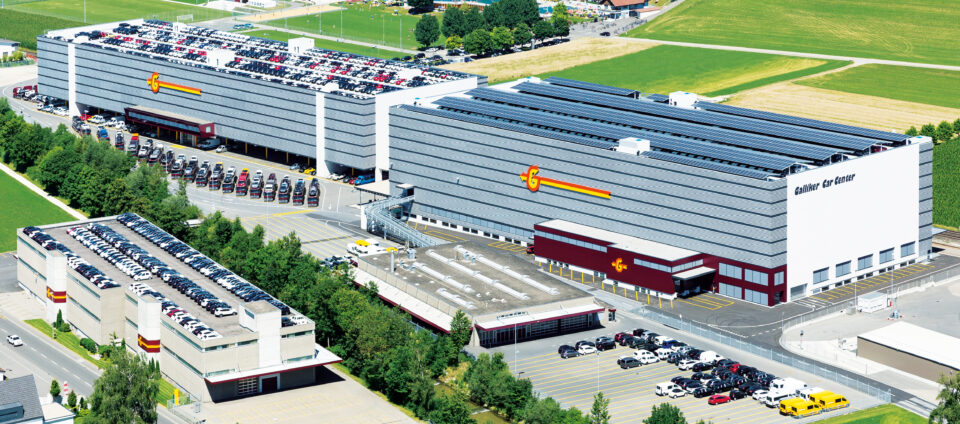
    An energy ecosystem unique in Switzerland is to be created in Dagmersellen over the next few years. The transport company Galliker, the milk processor Emmi, the producer of biogas PanGas and the energy supplier CKW have signed a joint declaration of intent at the end of 2022.

    For the partners, the project is an important step towards achieving the energy strategy goals of the companies involved and of Switzerland. “Together we want to drive forward the energy transition and make a significant contribution to the decarbonisation and diversification of the energy supply with the planned energy ecosystem,” explains Martin Schwab, CEO of CKW.

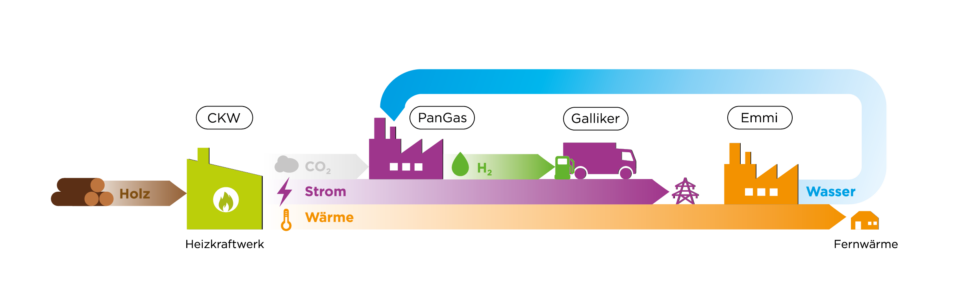
    The energy ecosystem will start with a wood-fired power plant operated by CKW to produce heat and electricity. PanGas will use part of the electricity to produce hydrogen to supply Galliker’s fleet of trucks. In addition, PanGas will extract green CO2 from the combustion process; for use in the food industry, for example.

    “At PanGas, we have always been involved with hydrogen. We are very pleased that we can make a significant contribution to CO2 reduction with this project and come a big step closer to the Swiss decarbonisation target”, says Roger Britschgi, Managing Director PanGas.

    With the renewable energy from the wood-fired power plant, Emmi covers part of the thermal energy required at the Dagmersellen production site for the production of fresh cheese specialities such as mozzarella or ricotta as well as milk powder. With a view to closing the loop, Emmi also supplies demineralised water from the production of dairy products for hydrogen production.

    The energy ecosystem is intended to function as a closed loop.

    “This unique energy ecosystem, designed in conjunction with three regionally based national partners, enables more sustainable production of our dairy products and reduces our dependence on fossil fuels,” says Marc Heim, Head of Emmi Switzerland.

    The wood-fired power plant will produce electricity and heat when fully operational. Emmi will use a good third of the heat. Other possible heat consumers are local industry and heating networks in the surrounding villages. As far as possible, the wood-fired power plant will be operated with regional forest chips and waste wood. This will require up to 200,000 tonnes of wood per year.

    The four companies plan to invest a total of about 200 million Swiss francs in the production, distribution and use of renewable energy. Before the energy ecosystem can be built, further planning and approval steps are needed. In the detailed planning, the entire value chain is to be organised. Before building applications can be submitted, the zoning plan of the municipality of Dagmersellen must also be adapted.

    The population will be regularly informed about the project status. The current planning anticipates commissioning in 2027 at the earliest.

  • Foundation stone for the international Renera Group

    Foundation stone for the international Renera Group

    Since its foundation, Energie Zukunft Schweiz has been committed to the rapid implementation of the energy transition. The company specialises in renewable energies and energy efficiency. in 2022, its Italian subsidiary sold a 375 MWp photovoltaic project pipeline to one of Europe’s largest energy suppliers. “The energy transition is a global project, so it was always clear that we wanted to take our energy transition know-how beyond our Swiss borders and into other countries,” says Managing Director Aeneas Wanner.

    In order to make better use of synergies between the national companies and to take better account of internationalisation, the companies are now reorganising as an internationally active group with headquarters in Switzerland under a common name. In line with the dawning era of renewables, the group of companies will be called “Renera”. The energy trading and biogas division is the first to change. For employees and customers, the reorganisation has positive consequences, says Aeneas Wanner: “All services will be continued and expanded in the usual quality. Due to the high demand, we will continue to create many new jobs and maintain all existing ones. “

    A single strong corporate brand for all operations in Europe will be built and maintained. The new brand strategy is intended to bring employees closer together, reduce complexity for customers and create synergies between national companies and business units. To support the positioning visually, a new logo and corporate design were developed in cooperation with a Spanish branding agency.

    Aeneas Wanner explains why the company is growing so successfully: “Our recipe for success is our talented and committed employees. Thanks to them, projects become reality that are profitable for clients and the environment at the same time.” The company is known for its hands-on mentality, and its employees describe themselves as “energy turnaround makers”. “Companies from the energy and real estate sectors appreciate our holistic approach and our diverse know-how. We can not only think up and plan complex energy projects, we can also accompany their implementation and subsequently monitor the results.” Aeneas Wanner is also very optimistic about the future. The demand for energy efficiency and renewable energies is enormous right now. The desire for clean, reliable energy and high energy prices have contributed to this. “We have now grown from 40 to 200 employees in just under four years, and we will probably create another 500 jobs in the next four years.” This is the only way the company can realise its vision of being a leading force on the path to a fully renewable energy world.

  • Federal Council wants more renewable electricity in winter

    Federal Council wants more renewable electricity in winter

    The Federal Council wants to strengthen the security of the electricity supply. To this end, it passed the message on the federal law on a secure electricity supply with renewable energies. According to a statement by the Federal Council, this provides, among other things, for promoting the expansion of domestic renewable energies more strongly than previously planned. In particular, he wants to strengthen security of supply in winter.

    According to the message, 17 terawatt hours of electricity are to be generated from renewable sources in 2035, 14 terawatt hours of which from photovoltaics. So far, the target value was 11.4 terawatt hours. In 2050, production is expected to be 39 terawatt hours; the previous target was 24.2 terawatt hours.

    In order to secure the supply in winter, 2 terawatt hours of climate-neutral electricity are to be generated by 2040 in addition to the previous target values, which must be safely available in winter. This is to be achieved primarily through large storage power plants, which are compensated through a winter surcharge. In addition, a strategic energy reserve is to be established that will also secure the power supply towards the end of winter.

    The Federal Council wants to extend the financing of the current funding instruments, which are limited to the end of 2022 and 2030, until 2035. The amount of the network surcharge should be 2.3 cents per kilowatt hour.

    In addition, the electricity market is to be opened up completely, thereby strengthening decentralized electricity production. A basic supply that continues to exist is intended to protect small end consumers.

  • Zürich erhält Goldauszeichnung als Energiestadt

    Zürich erhält Goldauszeichnung als Energiestadt

    Zürich ist im Rahmen des Hackathons Climathon Zürich erneut mit dem Energiestadt-Label in Gold ausgezeichnet worden. Damit fördert der Trägerverein Energiestadt die Umstellung auf erneuerbare Energien und Energieeffizienz. Laut einer Medienmitteilung der Stadt hätten der Ausbau der Photovoltaikanlagen auf stadteigenen Liegenschaften zu dieser Anerkennung ebenso beigetragen wie die Realisierung des Energieverbunds Altstetten und Höngg. Auch die neue Tramlinie Hardbrücke und die weitere Elektrifizierung des öffentlichen Verkehrs hätten ihren Anteil daran.

    Zum ersten Mal war Zürich die Auszeichnung als Energiestadt vor 20 Jahren verliehen worden. Seither seien die langfristigen Ziele der Stadt „kontinuierlich angepasst worden“. Dazu gehörten etwa die Verankerung der 2000-Watt-Gesellschaft in der Gemeindeordnung und die aktuellen Bestrebungen in Richtung Klimaneutralität. Grundlage dafür seien die im Masterplan Energie der Stadt Zürich definierten energiepolitischen Schwerpunkte.