Tag: Immoinvest

  • The circular economy often starts quietly

    The circular economy often starts quietly

    How much circularity is already part of everyday corporate life? A research team led by Prof André Podleisek from the University of Applied Sciences of Eastern Switzerland and Nicolas Hofer from the IPEK Institute asked themselves this question. Their findings from over ten analysed strategies: two thirds of companies are already implementing circular principles, often unconsciously.

    Repair services, reuse, take-back programmes and resource-conserving design are all building blocks of the circular economy. However, because terms such as “circular economy” are rarely used explicitly, the potential of these measures often remains unrecognised.

    Economic benefits clearly recognisable
    The study clearly shows that companies that strategically integrate circular principles into their core business are more likely to benefit from economic advantages. These include increases in turnover, higher margins and technological advances. This also has a particularly strong impact on their public image, with 86% of companies reporting a better image.

    While recycling was mentioned less frequently as a strategy in its own right, design customisation, repair models and reuse are particularly popular across all sectors.

    Getting started for SMEs
    For small and medium-sized enterprises or start-ups, the recommendation is to start pragmatically. The Rapperswil Circular Economy Model developed by the authors helps companies to determine their own location and plan their first steps in a targeted manner, be it in terms of processes, products or services.

    The modular approach lowers the barrier to entry. The circular economy does not have to be perfect, it can grow. A repair service, a new packaging solution or a take-back system are real approaches with a measurable impact.

    Acting circularly, consciously and successfully
    The circular economy is not only an ecological concept, but also an economic success factor. Companies that actively engage with circular strategies not only strengthen their competitiveness, but also their future viability, often by simple means.

  • KOF between crises, AI and a clear stance

    KOF between crises, AI and a clear stance

    2024 was a year of significant upheaval. The KOF Swiss Economic Institute at ETH Zurich responded with new formats, expanded methods and a clear positioning that is evidence-based, independent and relevant. The weakening German economy and geopolitical uncertainties, such as the election of Donald Trump, also influenced the forecasts for Switzerland. The KOF favoured scenarios over rigid forecasts and adapted its forecasting model to current requirements.

    Third-party funding, data and dynamism
    In the intensified competition for third-party funding, KOF is focussing on practical, data-oriented research. Projects are becoming larger and international co-operation is increasing. At the same time, the claim remains clear: KOF remains an independent voice with scientific depth. With the expansion of the KOF Lab, the institution is creating space for cross-sector analyses on monetary policy, health and social inequality and is specifically promoting young talent.

    Utilising potential with a sense of proportion
    Both Sturm and Gersbach see great opportunities in AI, but not an overnight revolution. Rather, it is about continuous productivity gains, flanked by smart regulation. The KOF itself uses modern methods, but remains cautious about hypes. Research that has an impact is the goal, not technology for technology’s sake.

    Open questions for 2025
    Looking ahead to the new year, the directors see key challenges in analysing tariffs, non-tariff trade barriers and geopolitical tensions. The lessons from the collapse of Credit Suisse have not yet been fully learnt and the future of banking regulation also remains an issue. The KOF observes, analyses and remains clear in its stance, fact-based, forward-looking and independent.

  • OST thinks AI ahead

    OST thinks AI ahead

    Artificial intelligence is more than just a trend at the OST. It is an integral part of teaching and research. Rector Daniel Seelhofer emphasised that the OST specifically builds bridges between scientific excellence and practical application. More than 20 OST research institutes are now working with AI, often in collaboration with companies, administrations or the healthcare sector. The topic has been part of all degree programmes since 2021.

    The importance of this focus was emphasised by Bettina Surber, member of the St. Gallen cantonal government. She praised the OST as a driving force for Eastern Switzerland and pledged the canton’s political support for the university.

    From concrete to care to children’s language
    Various short presentations and films demonstrated the wide range of applications for AI at OST.

    Sustainable construction
    AI helps to optimise concrete mixes with reduced cement content for specific requirements.

    Focus on ethics
    How can AI be used fairly?

    Self-determined handling of data
    A digital “data account” is intended to give citizens more control over their information.

    Sport and intelligence
    Exergames train the intelligence of professional ice hockey players under physical stress.

    Healthy eating with digital support
    A smart app creates personalised meal plans – taking allergies, preferences and health goals into account.

    Agriculture with robots
    Agricultural robots carry out maintenance work such as irrigation or pest control independently.

    Care advice via chatbot
    A digital assistance system for caring relatives was developed in collaboration with the city of St.Gallen.

    Understanding children’s language
    An AI supports professionals in interpreting children’s expressions.

    Two panel discussions focussed on the social dimensions of AI. SRF presenter Florian Inhauser led the discussions. Questions about data protection, responsibility and inclusion were addressed. The discussion showed that technological development alone is not enough. Clear ethical guidelines and social dialogue are needed.

    AI as a tool, not an end in itself
    The second OST University Day made it impressively clear that artificial intelligence is already present in many areas of life – and is making real improvements possible. The decisive factor is how responsibly it is used. The OST is positioning itself as a key player in combining innovation with social benefits.

  • Switzerland launches pipe recycling at national level

    Switzerland launches pipe recycling at national level

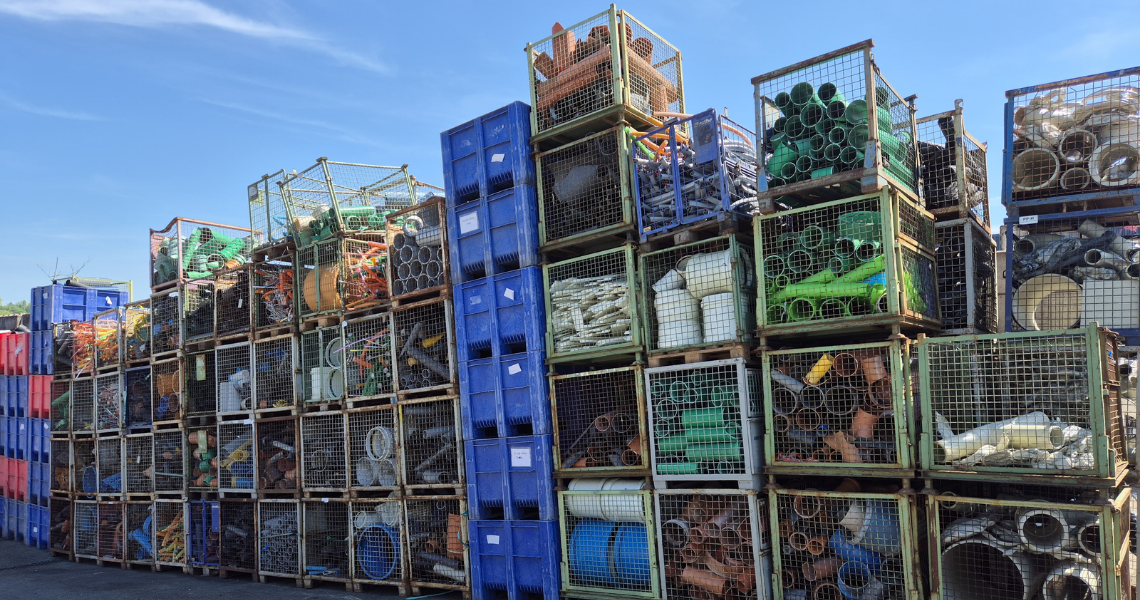
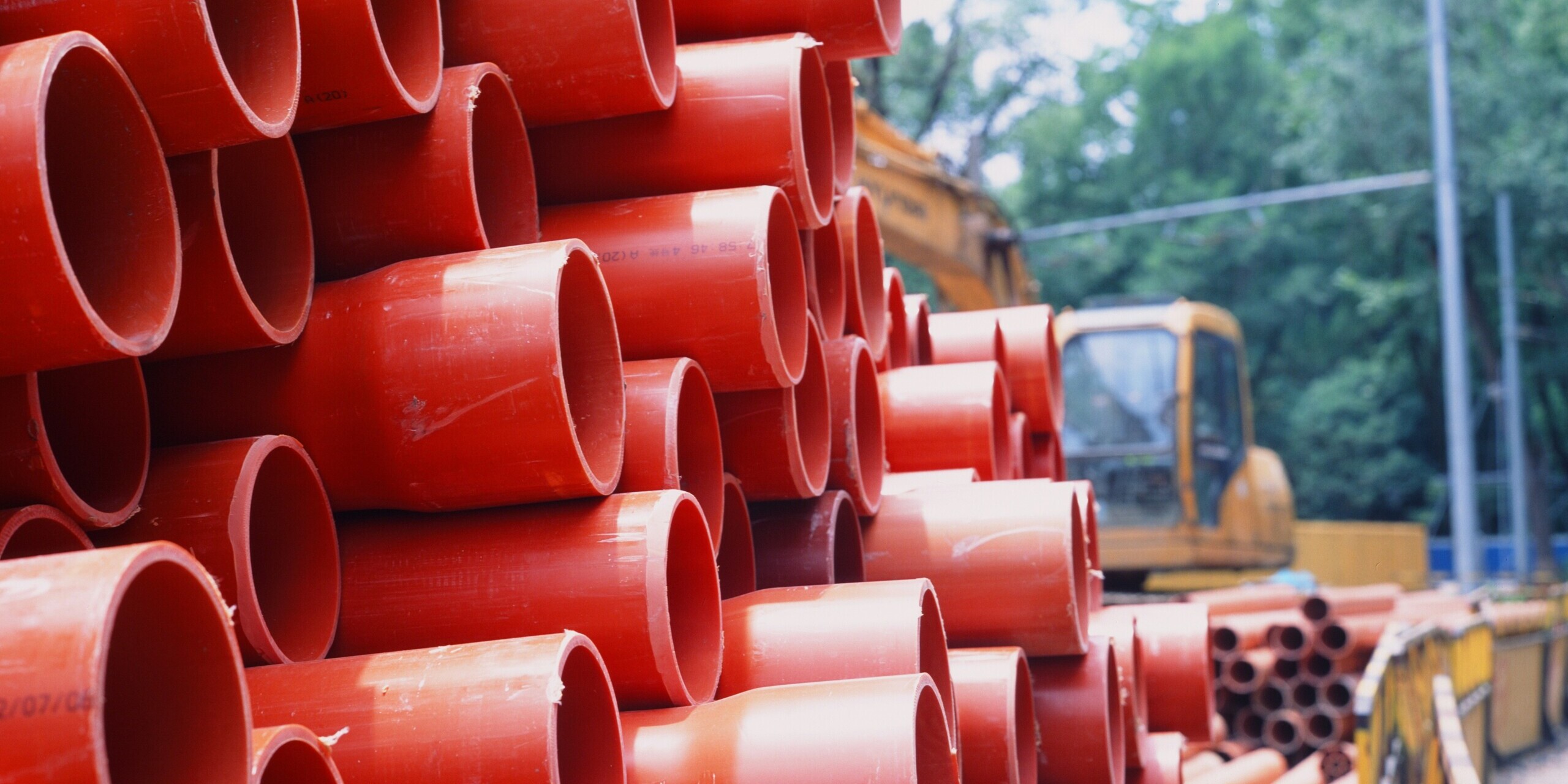
    Around 85,000 tonnes of plastic pipes are used in Switzerland every year, many of which have a service life of up to 100 years. Despite their material potential, a systematic take-back and recycling process has been lacking until now. This is precisely where the “Swiss Plastic Pipe Recycling” project comes in, which was initiated by the Association of Swiss Plastic Recyclers and the Association of Plastic Pipes and Pipe Components.

    The aim is to consistently return pipes from construction projects, pipeline work or dismantling to the recycling loop – with a standardised, practical system.

    Broad alliance from industry and construction practice
    The project is supported by a strong network. Companies from the construction, building technology, plastics processing and recycling sectors are working together to establish pipe recycling throughout Switzerland. The project partners include Burkhalter Group, Geberit, Georg Fischer, Meier Tobler, Debrunner Acifer, HakaGerodur, Eberhard, InnoRecycling and MCAM Symalit.

    They are all united by the goal of making the take-back system economically viable, ecologically sound and easily accessible for users.

    Clean material is a new source of recyclate
    While recycled packaging plastics have primarily been used to produce new plastic pipes in the past, SPPR is focussing on a material potential that has hardly been used to date: recycled pipes. These can be used as a high-quality source of raw materials, especially for cable protection and infrastructure pipes, if they are delivered in a single type.

    As packaging plastics will increasingly be turned back into packaging in the future, additional sources of technical recyclates are needed – a clear need for action in the industry.

    Over 40 collection points already in operation
    A centrepiece of the project is the establishment of a nationwide return network. Over 40 collection centres are already available in Switzerland. The current focus is on PE pipes from civil engineering, but expansion to other materials and applications is planned.

    Companies can quickly find their nearest collection centre using an interactive map on the project website. These centres accept defined pipe types, provided that the materials are delivered clean and sorted.

    Sustainability with a system
    With SPPR, VSPR, VKR and the participating companies are making a concrete contribution to Switzerland’s circular economy and climate strategy. The recycling of durable pipes reduces CO₂ emissions, reduces the use of primary plastics and promotes regional value creation.

    The project sustainably strengthens the Swiss recyclate market and shows how specific industry initiatives can have a systemic impact.

  • Basel SBB West sets new standards

    Basel SBB West sets new standards

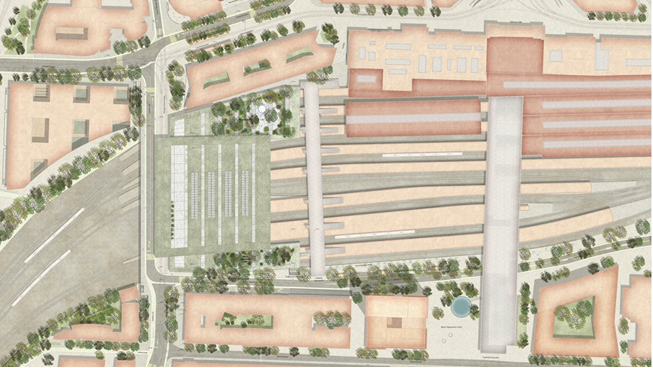
    Das gemeinsame Projekt von SBB, Bund und Kanton Basel-Stadt zielt auf einen Ausbau des Bahnhofs Basel SBB mit höherer Kapazität und verbesserten Verbindungen in Richtung Westen. Kernstücke sind zwei Grossprojekte, die neue Margarethenbrücke und der Perronzugang Margarethen. Ein interdisziplinäres Gremium hat Ende Mai 2025 das überzeugendste Konzept im Rahmen eines Studienauftrags gekürt.

    Das Siegerprojekt des Zürcher Teams Penzel Valier bringt eine innovative architektonische Lösung. Ein leichtes, ausgedehntes Dach überspannt künftig Tramhaltestelle und Perrons. Es schafft nicht nur eine neue Bahnhofshalle mit hoher Aufenthaltsqualität, sondern bietet auch Platz für Begrünung und Photovoltaik.

    Verbindung von Funktion und Gestaltung
    Die neue Brücke und der Perronzugang fügen sich harmonisch in das städtische Umfeld ein. Dank schlanker Tragwerke können die Anschlüsse zu den umliegenden Quartieren tief gehalten werden. Die Halle SNCF, ein denkmalgeschütztes Element, bleibt erhalten und wird sorgfältig in das neue Gefüge integriert.

    Ein differenziertes Wärmemanagement und die geplante Flexibilität bei späteren Erweiterungen zeigen, das Projekt denkt in Etappen und bietet langfristige Perspektiven für die Mobilität der Region.

    Umsetzung in Etappen, mit Fokus auf Qualität
    Die neue Infrastruktur wird frühestens ab 2034 realisiert. Grund dafür ist die komplexe Ausgangslage. Neben dem laufenden Bahn- und Stadtverkehr sind auch denkmalpflegerische Auflagen und ein möglicher zukünftiger Tiefbahnhof zu berücksichtigen.

    Beide Teilprojekte, die Brücke und der Zugang, können unabhängig gebaut werden, doch Bund, Kanton und SBB streben eine gemeinsame Umsetzung an. Die voraussichtlichen Kosten liegen je Projekt im dreistelligen Millionenbereich. Während der Zugang Margarethen bereits finanziert ist, steht die Finanzierung der Brücke noch aus.

    Neue Mobilitätsdrehscheibe mit Symbolkraft
    Mit Basel SBB West entsteht nicht nur zusätzliche Bahninfrastruktur, das Projekt schafft neue Räume für Stadtentwicklung, nachhaltige Mobilität und Aufenthaltsqualität. Es ist ein Musterbeispiel für die Integration von Verkehr, Architektur und Städtebau in einem historischen Kontext. Die öffentliche Ausstellung des Siegerprojekts findet vom 19. bis 28. Juni 2025 statt, ein öffentlicher Infoanlass folgt am 25. Juni.

  • Associations launch national pipe recycling project

    Associations launch national pipe recycling project

    The Association of Swiss Plastic Recyclers(VSPR), based in Batzenheid, and the Association of Plastic Pipes and Pipe Components(VKR), based in Aarau, have launched the Swiss Plastic Pipe Recycling(SPPR) project. The aim is to recycle plastic pipes across the board for the first time and return them to the material cycle. Stakeholders in the pipe value chain are supporting the project.

    According to a press release, the establishment of a nationwide network of collection centres is central to the project. There are currently already over 40 collection points. According to the initiators, the centralised collection of pipes improves the quality of the materials and enables efficient and transparent traceability along the recycling chain.

    Around 85,000 tonnes of plastic pipes are used in Switzerland every year. today, 30 per cent of these pipes are already made from recycled plastics, which mainly come from recycled plastic packaging. In future, however, these will be fed back into the production of new packaging, making new sources of raw materials necessary.

    Although plastic pipes are suitable for high-quality recycling, a nationwide take-back system has long been lacking. Swiss Plastic Pipe Recycling aims to tap into new material potential and urgently needed new raw material sources for high-quality recyclates through centralised pipe collection.

    Participating in the project are the Burkhalter Group in Zurich, Debrunner Acifer in St.Gallen, Eberhard in Kloten ZH, HakaGerodur in Gossau SG, InnoRecycling in Eschlikon TG, MCAM Symalit in Lenzburg, Meier Tobler in Schwerzenbach ZH, Geberit in Rapperswil-Jona and Georg Fischer in Schaffhausen. The VSPR also wants to support Swiss circular economy goals with the Swiss Plastic Pipe Recycling project. Recycling the plastic conserves primary resources and reduces CO2 emissions.

  • New plant in Dübendorf produces renewable methane

    New plant in Dübendorf produces renewable methane

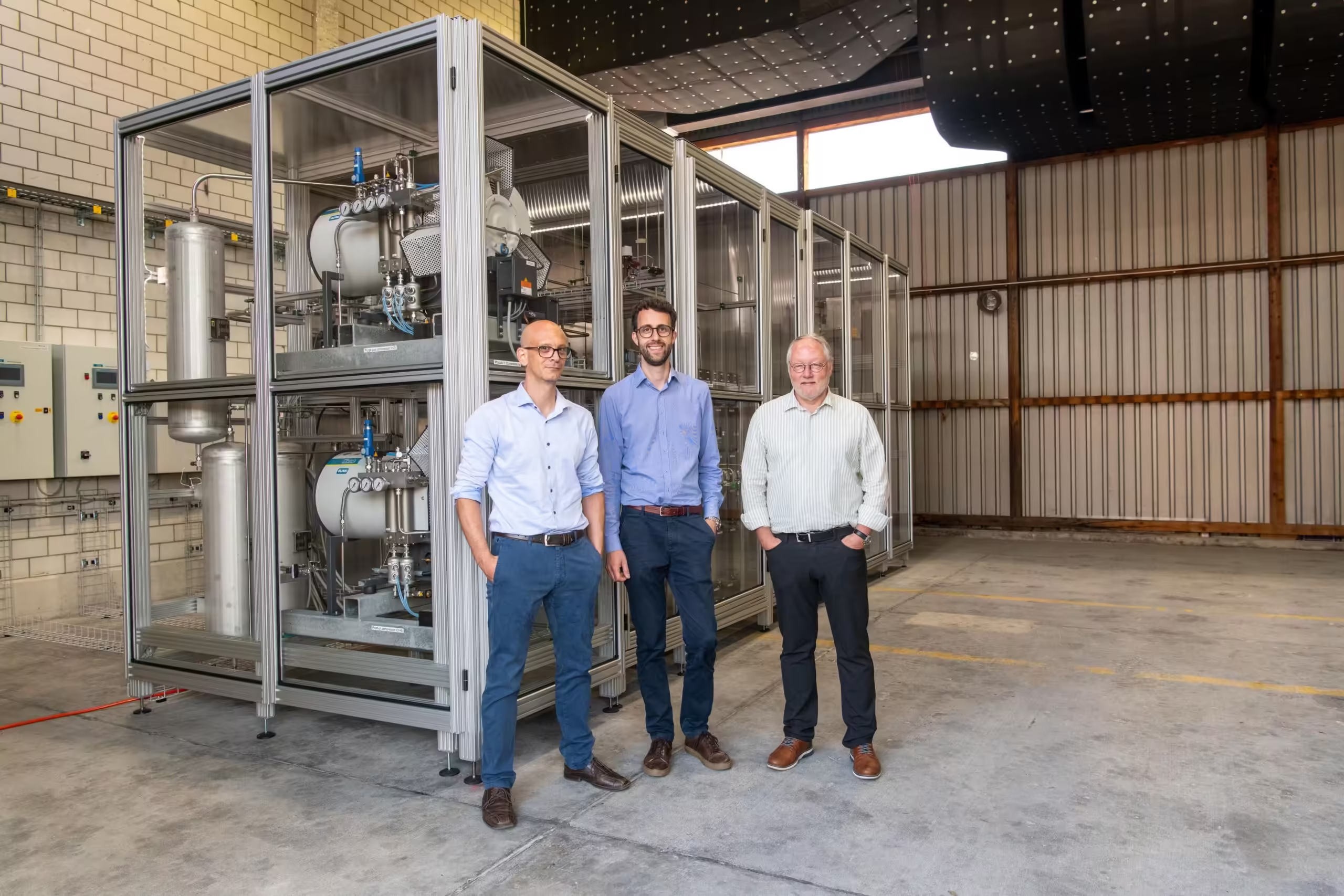
    Empa has commissioned the move-MEGA methanisation plant in Dübendorf. The project demonstrates the sorption-enhanced methanisation developed by Empa and is intended to improve the power-to-gas process, as detailed in a press release. The plant demonstrates how solar power is converted into hydrogen using electrolysis and then processed into methane by adding CO2. The synthetic methane can be fed directly into the gas grid and replace fossil natural gas.

    According to the press release, sorption-enhanced methanisation is central to the plant. Zeolite pellets absorb the water produced during the reaction and shift the chemical balance in favour of methane formation. As a result, the methane produced can be used directly or fed into the grid. “Thanks to sorption-enhanced methanisation and heat management, we achieve high sales and significantly greater load flexibility than with conventional processes. This makes the technology particularly attractive for direct coupling with photovoltaic or wind power plants,” explains move-MEGA project manager Florian Kiefer.

    The use of CO2 from the ambient air for methanisation enables negative CO2 emissions through methane pyrolysis. The synthetic methane can be broken down into solid carbon and hydrogen downstream. The carbon is used in concrete or asphalt.

    “Methanisation in conjunction with methane pyrolysis opens up a way to combine the supply of renewable energy with the permanent removal of CO2 from the atmosphere,” explains Christian Bach, initiator of the move-MEGA project and head of the Chemical Energy Carriers and Vehicle Systems department at Empa.

    In addition to methanisation, the focus of the move-MEGA project is also on the use of the waste heat generated. The project is supported by the ETH Board, the Canton of Zurich, Glattwerk, Avenergy Suisse, Migros, Lidl Switzerland, Armasuisse and Swisspower.

  • Switzerland is one of the laggards in wind and solar power

    Switzerland is one of the laggards in wind and solar power

    In a new study by the Swiss Energy Foundation (SES), Switzerland ranks at the bottom of the league table for electricity production from solar and wind energy. It produces 681 kilowatt hours of solar power per capita and 19 kilowatt hours of wind power. In total, the country produces 700 kilowatt hours per capita from solar and wind energy, putting it in 22nd place out of 28 EU member states.

    Sweden is the leader in wind power production with 3930 kilowatt hours per capita, followed by Denmark with 3448 kilowatt hours. Even neighbouring Austria comes in at 1004 kilowatt hours. In terms of solar production per capita, the Netherlands leads with 1206 kilowatt hours per capita, followed by Spain and Cyprus. However, even Austria has 941 kilowatt hours and Germany 888 kilowatt hours.

    Switzerland was able to increase its production of electricity from wind and solar from 7.2 per cent to 11 per cent within five years. However, other countries in Europe often achieved higher increases of up to 20 percentage points in the same period. In a European comparison, only Malta, Slovenia, Romania, the Czech Republic, Latvia and, bringing up the rear, Slovakia are behind Switzerland in the production of electricity from wind and solar per capita.

    In the view of the SES, wind energy in particular must be expanded in Switzerland, according to a press release. A total of 11 per cent of domestic electricity consumption is generated by wind and solar, 7.2 percentage points more than five years ago. European neighbours

    The new Electricity Act shows that the Swiss population wants to intensify sustainable electricity production in the future. Political instruments for implementing the law are already active or will be from 2026. Their impact will become apparent in the coming years, according to the SES.

    The exchange of electricity with neighbours also holds great potential for Switzerland. Switzerland is already integrated into the European electricity grid with over 40 cross-border transmission grids. European electricity trading is central to Switzerland’s ability to obtain winter electricity from its European neighbours’ wind turbines, according to the press release. The planned EU electricity agreement forms the basis for increased electricity trading.

  • New brochures promote the use of Bernese wood

    New brochures promote the use of Bernese wood

    The cantonal platform of the Bernese forestry and timber industry, Lignum Holzwirtschaft Bern, aims to promote awareness of the forest and encourage demand for local timber. To enable authorities and administrations to use forests sustainably, the association of Bernese forest owners, the Bernese Sawmill Association, the Swiss Timber Construction Section Bern and Bernese Oberland, the Master Carpenters’ Association Bern and Bernese Oberland and Holzenergie Canton Bern has published a series of brochures entitled “Forest and Wood Compass”. The practical documents were compiled with the support of the Wyss Academy for Nature, Lignum Holzwirtschaft Bern explains in a press release.

    The “Forest and Wood Compass” series is divided into an overview brochure and three topic-specific brochures. The overview brochure is entitled “Forest and Wood Compass for Bernese Regions”. The three topic-specific brochures deal with regional wood in public buildings, efficient forestry structures and financial incentives to secure certain forest services. All brochures can be downloaded at lignumbern.ch/wald-holz-kompass/.

    The mandate for Lignum Holzwirtschaft Bern is managed by Volkswirtschaft Berner Oberland.

  • Dietikon tackles construction of the stream adventure trail in Grunschen

    Dietikon tackles construction of the stream adventure trail in Grunschen

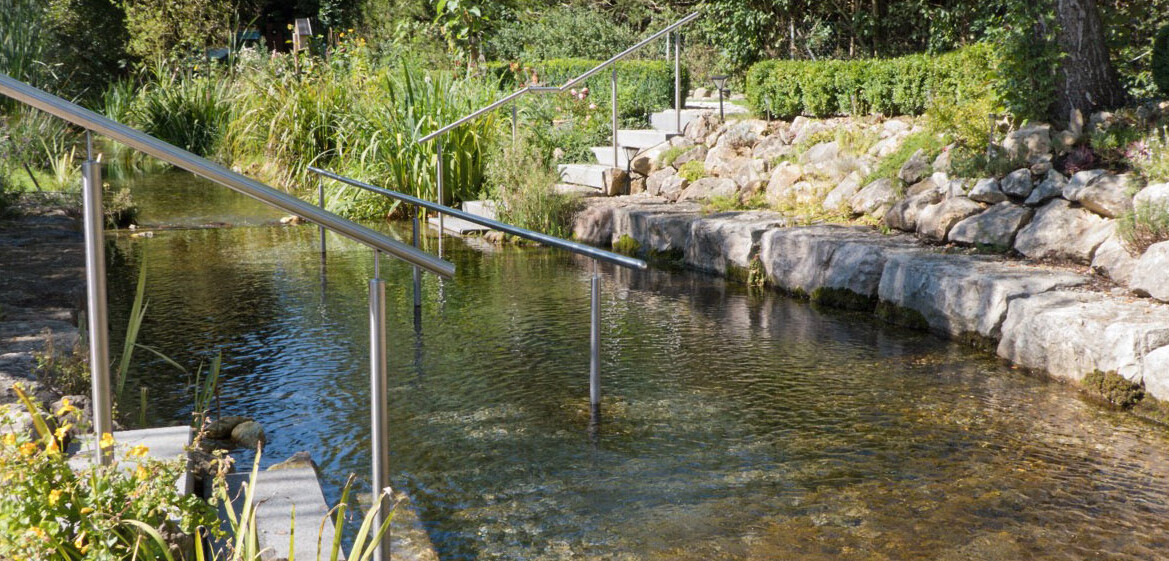
    The town of Dietikon is embarking on the construction of a stream adventure trail along the Reppisch watercourse in Grunschen Park. Construction work will begin on 7 July, the town council announced in a press release. The natural Kneipp facility with a maximum water depth of 20 centimetres should be completed by late summer.

    The construction costs are estimated at CHF 160,000 in the press release. Around 110,000 francs of this will be covered by the Canton of Zurich’s Office for Water, Energy and Air. The remaining 50,000 francs will be covered by the town of Dietikon.

    The stream adventure trail will have a stainless steel handrail and three entrances and exits for walking with or against the current. Rootstocks and boulders will form seating areas on the embankment. Boulders will also be placed in the water to create different currents. They can also serve as shelter for juvenile fish.

  • New recommendations for better protection of high-quality floors

    New recommendations for better protection of high-quality floors

    Durabilitas has worked with partners on a multi-year project to develop recommendations for better consideration of soils in spatial planning. They are aimed at actors at the three levels of government – federal, cantonal and municipal – according to a press release from the Foundation for Sustainable Development. They are based on the application of the Soil Quality Index(SoilQI), which has already been used in countries such as Germany, Austria and Belgium for several years.

    For the recommendations now presented, Durabilitas and its partners have analysed the application of the SoilQI in these countries. On the other hand, the application of the SoilQI in Swiss pilot projects was analysed. The project was supplemented by the evaluation of a national support group made up of experts from various disciplines.

    The SoilQI can be used to record and map the quality of soils. It thus offers “a simple planning aid, for example to direct construction activities to locations with lower soil quality wherever possible and to preserve high-quality soils”, according to the press release.

  • Solar facade combines energy generation with architecture

    Solar facade combines energy generation with architecture

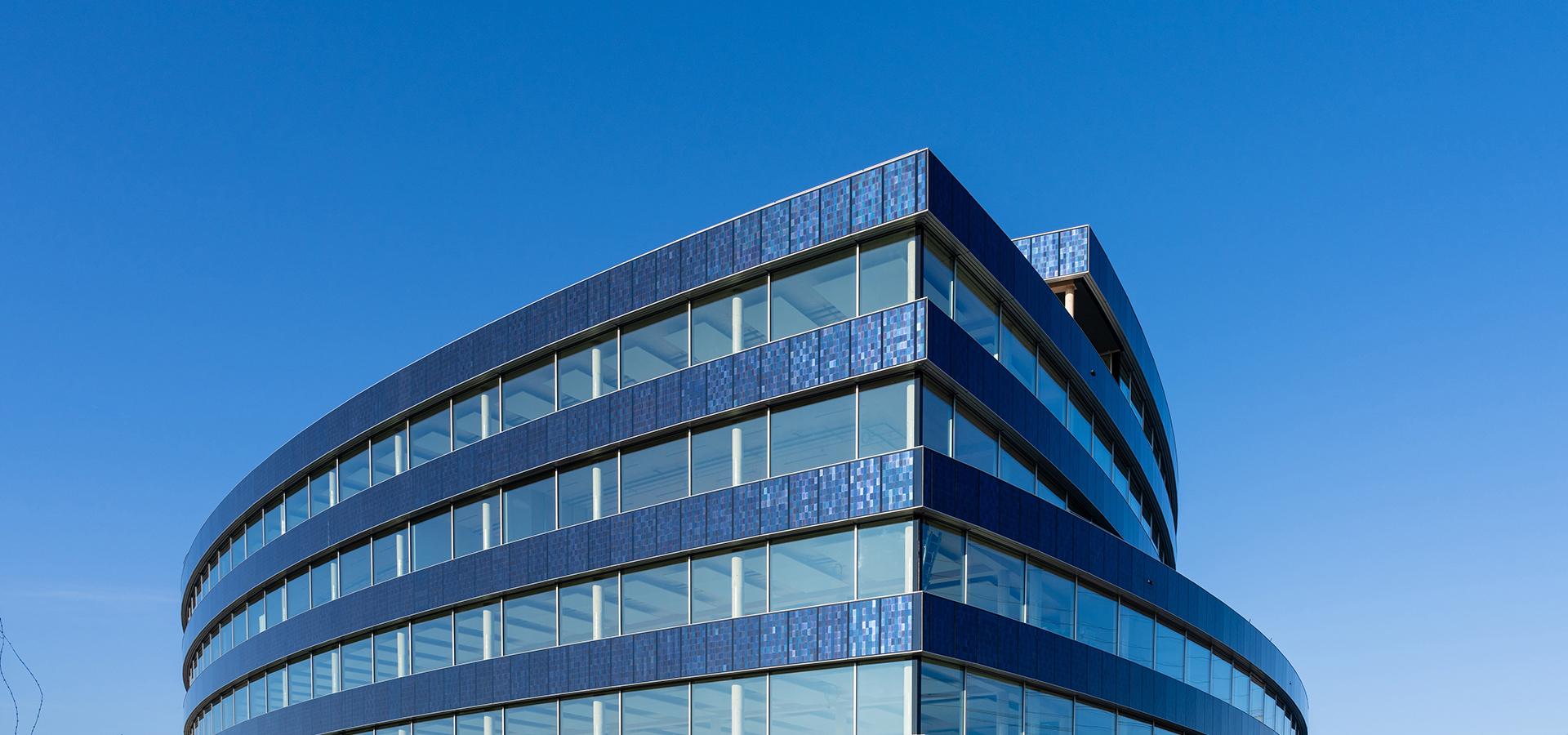
    Megasol Energie has developed the photovoltaic solution for the Bern 131 project, according to a press release . The 1605 customised modules shimmer blue thanks to the coloured rear glass, which is aligned with the sun. The front glass is transparent. Megasol developed the modules in collaboration with the Bern-based architecture firm Atelier 5, which designed the building.

    Megasol also supplied 468 standardised M450 modules for the roof area. The entire system has an output of 504 kilowatt peak. This will generate around 341,238 kilowatt hours of electricity per year. This corresponds to 88 per cent self-sufficiency for the building.

    Bern 131 at Stauffacherstrasse 131 was built by Atelier 5 as a hybrid of steel and wood. The wood comes 98 per cent from the canton of Bern. The building is SNBS Gold-certified.

    Florian Lünstedt, architect and partner at Atelier 5, praises the collaboration with Megasol. “The façade is not only an important architectural element that characterises the building, but also a functional component for energy generation,” he is quoted as saying in the press release. “The joint development of the PV modules with Megasol has made it possible to combine both aspects at a high level.”

  • May shows minimal increase in rents

    May shows minimal increase in rents

    The property platform homegate.ch has published its monthly rental index in collaboration with Zürcher Kantonalbank (ZKB ). According to a statement, the index rose by 0.1 per cent compared to the previous month to 130.5 points. This means that advertised rents “took a breather” in May.

    Compared to the previous year, advertised rents rose by 1.7 per cent across Switzerland. Depending on the region, an increase in advertised rents of more than 5 per cent was recorded.

    The results show clear differences between cantons and cities. At cantonal level, “consistently rising asking rents were observed for the first time in a long time” in a year-on-year comparison, according to the press release.

    The cantons of Zug (up 7.1 per cent) and Nidwalden (up 6.9 per cent) were the most affected by rising rents over the past twelve months. According to the press release, the values there are also higher compared to the previous month – in Zug by 1.4 per cent and in Nidwalden by 1.1 per cent. However, the month-on-month increase was highest in the canton of Graubünden and the two cantons of Appenzell (plus 1.5 per cent). In contrast, the canton of Schwyz recorded price reductions, as in the previous month. With a decrease of 2.1 per cent, asking rents there are returning to the level of December 2024, according to the report.

    Among the cities, the Greater Zurich Area is considered the most constant, as it was in May 2024. Asking rents have risen “relatively steadily” by a total of 4.4 per cent. In contrast, Geneva recorded a year-on-year decline – prices were 0.6 per cent lower than in the previous month of May. The highest price increase was recorded in the city of Lugano with a significant rise of 5.2 per cent. However, this development can be attributed to a selective decline in May 2024.

    Homegate is a division of SMG Swiss Marketplace Group AG. This combines the digital marketplaces of TX Group, Ringier and Mobiliar.

  • Schlieren station shines in new splendor

    Schlieren station shines in new splendor

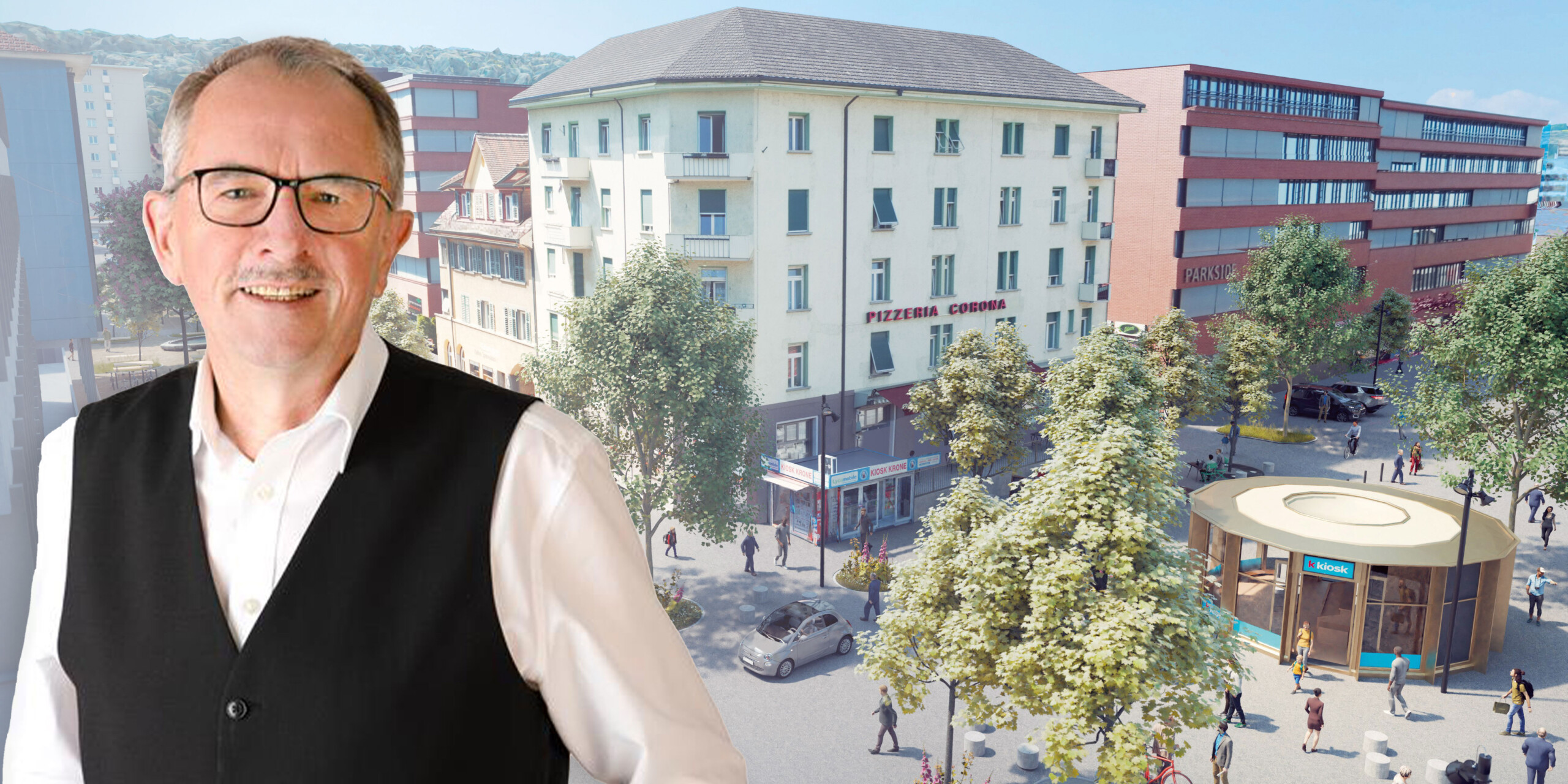
    The station square in Schlieren has been transformed into a modern meeting zone that creates space for recreation, encounters and visible mobility. In the center is a spacious square with a striking tree as a green landmark. In front of the city library, a fountain with benches invites people to linger, and new recreational areas have also been created by the SBB West underpass and in front of the restaurants.

    A central element is the clear right of way for pedestrians through the meeting zone. Sidewalks have become superfluous and the entire space belongs to public life. Almost 70 new bicycle parking spaces also encourage people to switch from bicycles to public transport.

    Green spaces for the urban climate
    An innovative approach to climate adaptation was chosen with the implementation of the sponge city principle. 1,200 m² were unsealed to allow rainwater to seep away better. Newly planted trees and around 500 m² of additional green space provide shade and evaporation for cooling, especially on hot summer days.

    The planting is not only ecologically valuable, but also aesthetically pleasing. The cityscape looks livelier and more inviting.

    Grand opening for the public
    The new meeting zone will be inaugurated with a two-day celebration on Friday and Saturday, June 20 and 21, 2025. The event will kick off with an official speech by City Councillor Stefano Kunz on Friday at 5.00 pm, accompanied by the Harmonie Schlieren band. This will be followed by the street festival with culinary delights and live music, including country artist Tobey Lucas.

    It continues on Saturday from 11.00 am. Local musicians will perform on the stage at Bahnhofsplatz, including the Schlieren music school teachers’ band, Patrick Harbor, the music school choir and Valerù with their band.

    Bahnhofstrasse will be closed to traffic during the festivities. The town belongs to the people this weekend.

    A project with a signal effect
    The pedestrian zone is an example of future-oriented urban development that combines quality of life, climate resilience and mobility. What was initiated by a referendum in 2021 now stands for a new chapter in urban design in Schlieren.

  • Digital tool for site development

    Digital tool for site development

    Site development is one of the most challenging tasks in municipal planning. Smaller municipalities in particular face structural hurdles. There is a lack of resources, access to IT tools is limited and a lack of standards makes it difficult to make well-founded decisions. The digital guide is a modular, user-friendly and technically precise tool that closes this gap.

    Interplay of knowledge and technology
    The project combines the interdisciplinary know-how of the Institute for Spatial Development (IRAP) and the Institute for Information and Process Management (IPM). The centerpiece is a digitally supported guideline that systematically structures planning processes and enables automated analyses. Research, evaluation and variant development can thus be organized more efficiently. Municipalities receive a tool that improves planning quality, regardless of their size.

    Focus on employment areas
    While inner-city development has so far concentrated primarily on residential and mixed zones, this project focuses specifically on workplace areas. The strategic development of such areas is crucial to the future viability of companies and locations, especially in times of scarce space. The digital guideline provides a unique solution in Switzerland.

    Participation through echo chamber ensures quality
    An echo chamber was set up to guarantee practical application. This committee of experts from municipal administrations and planning offices contributes valuable expertise. At the first meeting on January 24, 2025 in St. Gallen, the participants discussed basic requirements and defined the next steps. The dialog between research and practice is thus established at an early stage.

    Efficient and sustainable planning and decision-making for the future
    The final software solution should be easy to use. It enables an objective and systematic evaluation of development scenarios according to relevant sustainability criteria, thereby promoting well-founded decisions in politics and administration. The creative design process is retained, supplemented by digital efficiency and reliable comparative values.

    Time horizon and outlook
    The project was launched in June 2024 and will run until May 2026. It is intended as a contribution to modern, digitally supported spatial planning. The vision is a national competence platform that makes site development tangible, scalable and of high quality.

  • Owner participation “Ziegelbrückstrasse” in Glarus North

    Owner participation “Ziegelbrückstrasse” in Glarus North

    The municipality of Glarus Nord would like to motivate developers to carry out participatory processes for more complex construction projects. Its “Participation and communication guidelines for planning processes” outline how the needs of the population and future users can be anticipated at an early stage for various planning situations. To set a good example, the municipality initiated a participatory process for the “Ziegelbrückstrasse” development area between Ziegelbrücke railroad station, the Jennyareal and the village center of Niederurnen: between October 2024 and February 2025, it involved the affected owners in the development of a mission statement, which served as the basis for the development of an outline plan for the area.

    Shaping the framework conditions for development
    The mission statement was intended to define the structural dimensions and the mix of uses. As the area is one of the densification and upgrading areas that characterize the village, qualitative key points of a development that does justice to the character and history of the area were also up for discussion. The municipality also saw the public sector as having a duty and therefore set out its expectations regarding the design and upgrading of the cantonal road that runs through the area. This provided the municipality with a broad-based basis for discussions with the canton, which is responsible for the renovation of the road.

    The jointly developed model served the municipality as the basis for a binding framework plan. The framework plan in turn defines the guidelines for how buildings may be constructed along Ziegelbrückstrasse in future under the new owner-binding land-use plan. The owners involved helped to shape how and what they can build on their properties in the future by participating in the master plan.

    A streamlined participation process
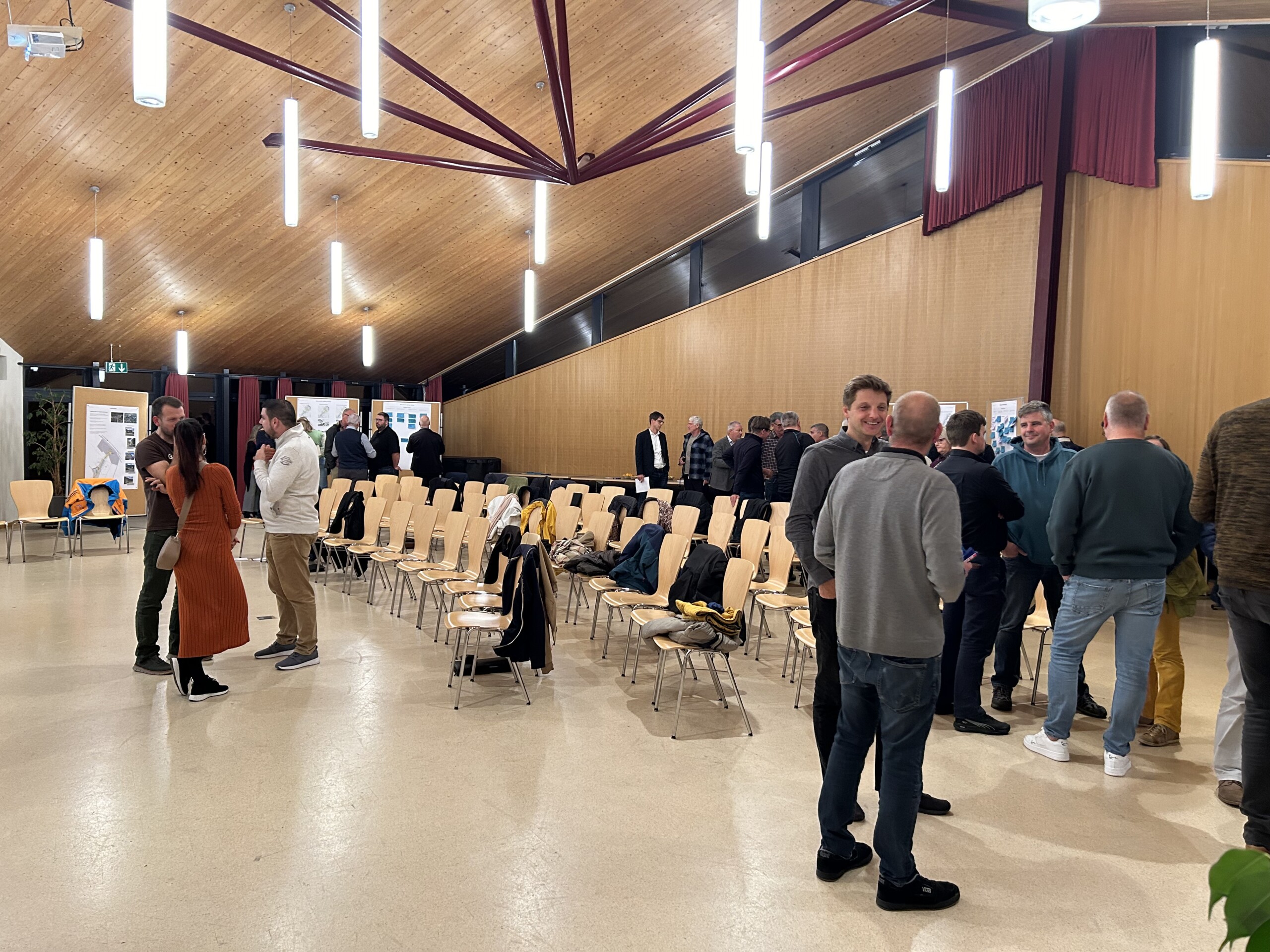
    The owners in the area were invited to take part in two evening events with the municipality. The first evening was for information and participation, the second for the presentation of the results. Over 56 owners of 127 plots took the opportunity to participate in the events themselves or with a representative.

    In the first workshop, they were given an insight into the planned planning instrument and were consulted on various options for future development possibilities. By prioritizing the options, they were able to influence the decision on the desired model. In the second workshop, the municipality presented the framework plan developed on the basis of the desired variant.

    A worthwhile effort for the municipality
    Participatory processes are complex and cost time, money and political capital. For the municipality, the time-consuming process was worthwhile because it increases the chances of owners becoming active: By being informed about more construction options at an early stage, they can adjust their investment planning and align any existing intentions with the municipality’s development plans.

    The discussion about the vision helps to orient owners towards a common vision of the future of the densification and development area and to convey to them that issues such as the addressing of buildings to the street, the granularity of the development, the design of the base storey or the materialization are not just private matters, but also have an effect on the image of the district and thus influence the attractiveness and value of the location for everyone.

    The participatory process offered the municipality the opportunity to draw attention to its building advice and increase the likelihood that landowners with investment intentions will discuss and coordinate their plans with the municipality at an early stage, before they have drawn up a preliminary or construction project that can hardly be adapted. In the best-case scenario, the process encourages some owners to think bigger and enter into cooperation with other landowners or jointly tackle issues such as the provision of parking spaces in construction projects.

    The municipality was also able to use the events to coordinate upgrades on public land with the needs and ideas of the owners and to test the acceptance of measures such as greened medians on the road or a speed reduction on certain road sections.

    More planning security for landowners
    Participatory processes also cost the participants time. In the case of Ziegelbrückstrasse, the effort was worthwhile for the property owners simply because they were able to influence decisions on issues that are binding for the property owners by participating in the framework plan that is binding for the authorities: the fundamental question of the design of the density and mix of uses possible with the new land use planning. The framework plan also offers owners more planning security, as it strengthens equal treatment in the approval process.

    As part of the process, the owners gained a better understanding of what the municipality expects from structural developments and were able to gain inspiration as to what contributions they can make to neighborhood upgrading in addition to structural developments – for example with the design of gardens and street front zones or smaller renovation projects. The opportunity to find out about their neighbors’ plans at the event ultimately gives owners more certainty that they are not alone in their investments.

  • Smart City Aarau networked, user-centered and environmentally friendly

    Smart City Aarau networked, user-centered and environmentally friendly

    Aarau is facing complex social and technological developments. In order to respond to this in a future-oriented manner, the city is pursuing a networked, creative and efficient approach with its Smart City strategy. The focus is on concrete benefits for the target groups and environmentally friendly processes. Digital technologies are only used where they create real added value.

    Five basic principles for smart impact
    Based on experience from the first strategy period from 2021 to 2025 and proven models from other cities, Aarau has defined five high-impact approaches.

    Networking: Projects interlock across departments and are implemented collaboratively.

    Meeting needs: Solutions that are actually needed are developed in dialog with the population.

    Testing: Innovation also means trying things out. Pilot tests help to minimize risks and make ideas practicable.

    Environmental protection: Sustainability is a must. All projects take environmental aspects into account and rely on renewable resources.

    Technology as a means to an end: Technology is used in a targeted manner and only if it contributes to the solution.

    Smart City Team as enabler
    The municipal Smart City Team supports employees in the idea and project phase. It helps to identify target groups, hone project ideas and develop testable solutions. Formats such as kick-off meetings, workshops or support for complex projects through to implementation are available. The motto: implement projects with real benefits for Aarau or consciously reject them.

    Targeted support and smart vessels
    The Smart City Team also works in the background. It monitors trends, networks stakeholders and promotes knowledge transfer via formats such as the “Smart City Newsroom”. It also supports projects financially via the Smart City Investment Loan and helps to create participatory vessels.

    Measuring impact and learning
    The strategy is based on the IOOI impact model and measures not only outputs but also outcomes and long-term impacts. The aim is for all municipal specialists to apply user-centered methods, plan their projects in a networked manner, implement them in a resource-efficient way and integrate digital technologies in a meaningful way by 2034.

    Smart City Aarau thinks ahead
    The city of Aarau is reinterpreting Smart City as a method for developing sustainable, liveable urbanity. The focus is on people, not technology. This turns complexity into innovation and ideas into concrete future solutions for Aarau.

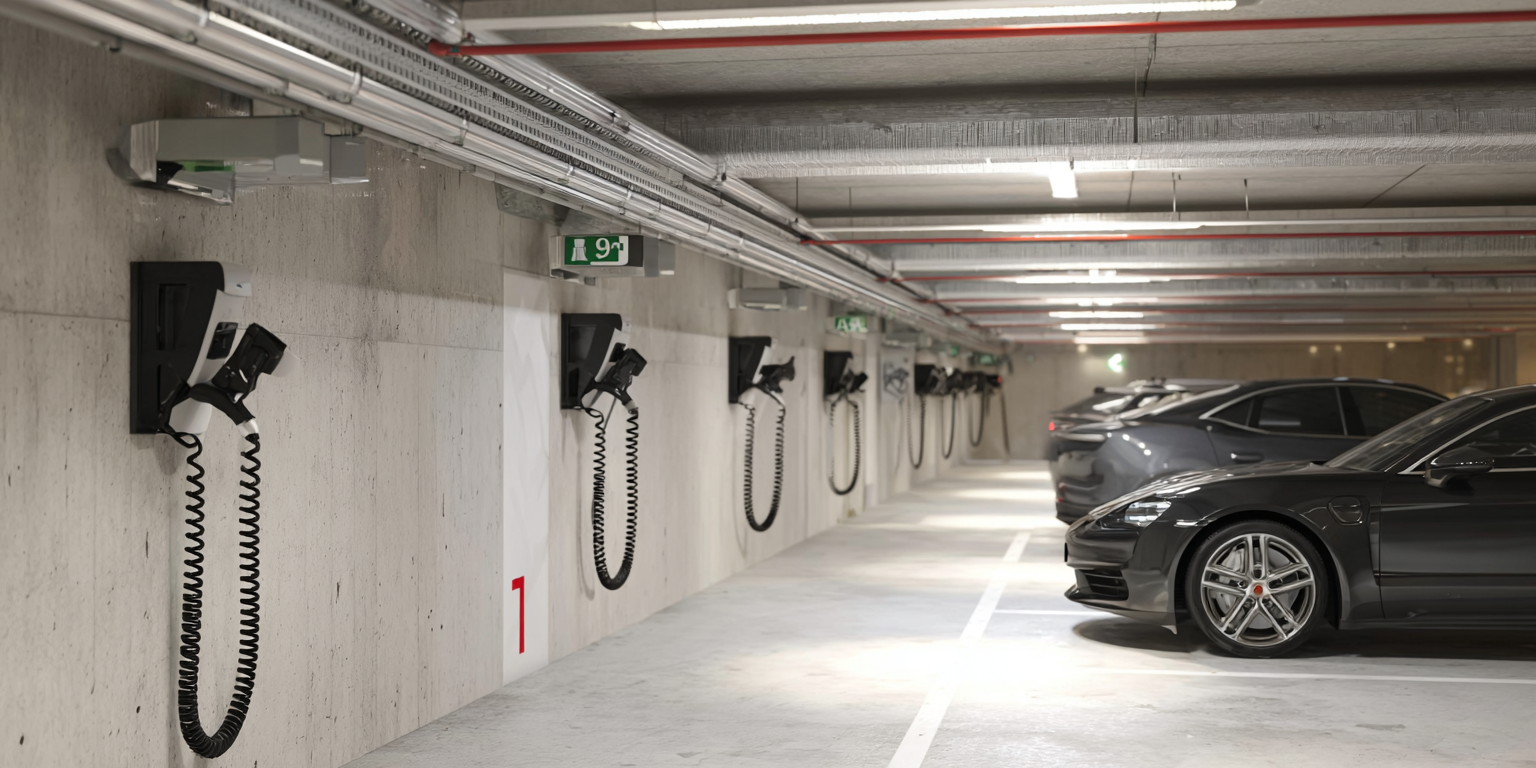
  • Councillors demand right to charging stations in residential buildings

    Councillors demand right to charging stations in residential buildings

    On Wednesday, the Council of States adopted a motion by National Councillor Jürg Grossen by 24 votes to 18. The Federal Council should create binding regulations to ensure access to private charging stations in rented and owner-occupied apartments. The proponents argued that slow charging stations are a key lever for the mobility and energy transition.

    Decarbonization needs infrastructure
    Flavia Wasserfallen emphasized that a lack of charging infrastructure is one of the main reasons for stagnating sales figures for electric vehicles. “Cars need to be charged where they are,” she said. Thierry Burkart also pleaded for a state framework, “combustion engines would never have caught on without charging stations.”

    Property rights versus climate target
    The majority of the Council of States Committee for the Environment, Spatial Planning and Energy opposed a legal obligation. They warned against too much interference in the guarantee of property rights and private autonomy. Daniel Fässler argued that the market should determine where charging infrastructure is created.

    Federal Council’s duty
    The Federal Council had also spoken out against the motion. According to the government, the situation is unclear in the current tenancy and condominium law. Nevertheless, it must now draw up proposals to implement the request.

    Past funding approaches failed
    As part of the last revision of the CO₂ Act, the Federal Council wanted to provide up to CHF 30 million annually for charging infrastructure in apartment buildings and public parking lots. However, this measure failed at the time due to opposition from parliament.

  • Zurich convinces as a business location

    Zurich convinces as a business location

    According to a survey of over 400 companies in the canton of Zurich conducted by the Office of Economic Affairs, 82% rate the location positively, with 22% rating it as “very satisfied” and 60% as “fairly satisfied”. This high level of approval is primarily based on three factors: the excellent transport infrastructure, the high quality of life and the availability of well-trained specialists. Economic stability and political reliability were also cited as locational advantages.

    Infrastructure impresses
    Of the 24 location factors assessed, infrastructure (71%) and quality of life (55%) were mentioned most frequently as plus points. The labor market followed with 43%. On the other hand, 90% of companies consider the cost environment, in particular rents, wages and regulations, to be a clear disadvantage. Similarly, 64% criticize the tax environment. Zurich ranks last in Switzerland in terms of corporate tax burden.

    One in four companies planning to relocate
    A quarter of the companies surveyed have thought about moving out of the canton of Zurich in the last five years or have concrete plans to do so. The main driver is the high tax burden. According to statistics, over one percent of Zurich companies relocate to other cantons every year. This trend is in line with the assessment of many companies.

    Well positioned in European comparison
    The results are also reflected in a comparative European study by the Office of Economic Affairs. In comparison with other European economic regions, Zurich is particularly impressive due to its educational landscape, economic performance and quality of life. The study sees a need for action in areas such as labor market dynamics, innovation promotion and regulatory density.

    Location with strengths – but under pressure
    The canton of Zurich remains a leading business location with excellent infrastructure, a high quality of life and a competent labor market. At the same time, feedback from companies clearly indicates that the cost and tax environment needs to be adjusted in order to stop migration trends and ensure long-term competitiveness. For decision-makers, this means actively developing location policy before the strengths are overshadowed by structural weaknesses.

  • Parliament approves new IOM headquarters in Geneva

    Parliament approves new IOM headquarters in Geneva

    On 14 June 2025, the National Council approved an interest-free federal loan for the renovation of the headquarters of the International Organization for Migration by 166 votes to 2. The decision followed a yes vote by the Council of States in March. The IOM, as part of the UN system, plays a leading role in global migration policy. The current site in Geneva’s Morillons district dates back to the early 1980s and does not meet energy, functional or security standards.

    Investment of strategic importance
    Parliament’s approval came despite the fact that the IOM recently announced that it would be cutting around 20 percent of the approximately 1,000 jobs in Geneva. The background to this is a freeze on aid from the USA, one of the organization’s main donors. However, Foreign Minister Ignazio Cassis emphasized in the Council that the construction project was sensibly dimensioned, even with a reduced workforce of around 600 employees in future. With this commitment, Switzerland is pursuing a clear host state policy strategy to strengthen International Geneva in the long term.

    Financing structure and timetable
    The loan of CHF 44.7 million granted by the federal government is interest-free and is to be repaid within 50 years. The funds will flow to the FIPOI (Real Estate Foundation for International Organizations), which is responsible for the project. The Canton of Geneva is contributing an additional CHF 21.6 million. This means that the federal government and the canton are covering around two thirds of the total costs. Parliament had already supported a preliminary project in 2022 with CHF 5.7 million for planning work. Construction is scheduled to start in January 2026 and the building is expected to be occupied in 2029.

    Geneva as a strategic location for international organizations
    The Confederation’s support is to be seen as part of the overarching host state policy. Geneva is currently home to more than 40 international organizations and is considered one of the most important multilateral locations worldwide. Switzerland aims to further consolidate this role. Not least in an increasingly competitive environment for international headquarters. Modernizing the infrastructure is a key means of retaining organizations such as the IOM in Geneva in the long term.

    Signal of continuity despite uncertainties
    By clearly approving the construction of the new IOM headquarters, Switzerland is once again acknowledging its role as a host state for international organizations. Despite geopolitical uncertainties and internal cutbacks at the IOM, the project sends a strong signal of Switzerland’s attractiveness as a location and its reliability. An aspect that is equally important for specialists and managers in diplomacy, international organizations and the construction industry.

  • World record solar fence realized in Basel

    World record solar fence realized in Basel

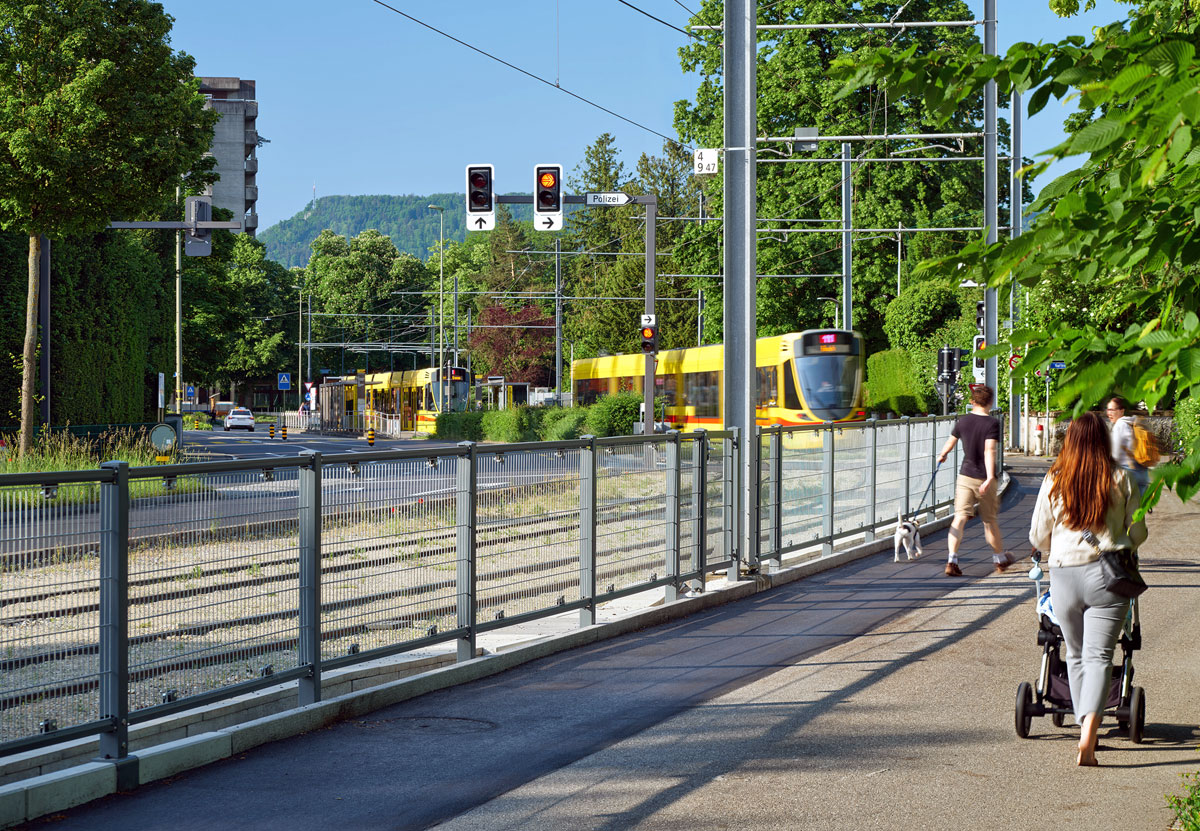
    A new safety fence was required as part of the BLT streetcar line route renewal. Instead of a conventional solution, the project focuses on functional added value. A vertically installed solar fence. The combination of safety infrastructure with bifacial photovoltaic modules makes double use of existing areas without additional land consumption, a decisive advantage in urban areas.

    High performance along the rail
    A total of over 400 high-performance bifacial modules will be installed, which can absorb solar radiation on both sides and convert it into electricity. The predicted maximum output is 194 kWp. The integration takes place on a specially developed frame system in basalt gray, which blends harmoniously into the cityscape. This system was developed in cooperation with the company Next2Sun, which specializes in vertical photovoltaic solutions.

    Sustainable energy from the fence
    The project is being implemented in stages. While the first construction phase of the fence has already been completed, the installation of the photovoltaic modules is now beginning. The project is being realized as part of a collaboration between Solarzaun GmbH, BLT and Alpsteinzaun Tor AG. The integration into the existing streetcar renovation construction site enabled smooth implementation.

    Research and prospects
    The project is also being supported by the scientific community. Professor Hartmut Nussbaumer from the ZHAW sees the solar fence as a pioneering model for urban energy solutions. Particularly noteworthy is the energy production at times of day when conventional PV systems, such as those on roofs, work less efficiently. The system therefore complements conventional photovoltaic strategies and improves the seasonal security of supply.

    Model with a signal effect for cities worldwide
    With the world’s longest solar fence, Basel is setting a strong example for the intelligent combination of mobility and energy infrastructure. The project combines technical innovation with urban integration and is expected to serve as a model for similar approaches in other regions. For specialists and managers in urban development, energy planning and infrastructure management, this model offers concrete suggestions for a sustainable future in urban areas.

  • Voters stop Locarno railroad station project

    Voters stop Locarno railroad station project

    The proposal to redesign the Locarno-Muralto train station was narrowly rejected with a voter turnout of 31%. 33,723 no votes were cast against 33,621 yes votes. The project was thus stopped by a wafer-thin margin of 102 votes. A result that shows how controversial urban planning interventions can be, even for regionally important infrastructure projects.

    Planned investments for greater clarity and mobility
    The project would have involved a comprehensive upgrade of the transport hub with a total volume of CHF 16 million. The canton of Ticino would have borne around CHF 7 million of this. The plan was to focus more strongly on pedestrian and bicycle traffic and to organize the bus bays more efficiently. The aim was to improve multimodal connections to the station and make public transport clearer and more accessible.

    Opposition from the business community
    The project faced particular opposition from businesses and restaurants around Viale Cattori. They feared that the increased bus frequency – more than 250 buses per day – would impair the quality of life on the lakeside promenade. The loss of direct access routes for motorized private transport to stores and restaurants was also seen as a significant disadvantage. Opponents argued that this could jeopardize the economic attractiveness of the zone.

    Infrastructure project with conflicting local objectives
    The rejection of the station redesign in Locarno is a good example of the tensions between the mobility turnaround, urban development and local economic interests. Despite clear advantages in terms of traffic and design, the project was not able to prevail. This was mainly due to the feared disadvantages for the existing business location. For future infrastructure projects with an impact on urban development, this will serve as a reminder to involve affected interest groups in the dialog early and comprehensively.

  • Shanghai relocates Shikumen complex with robots

    Shanghai relocates Shikumen complex with robots

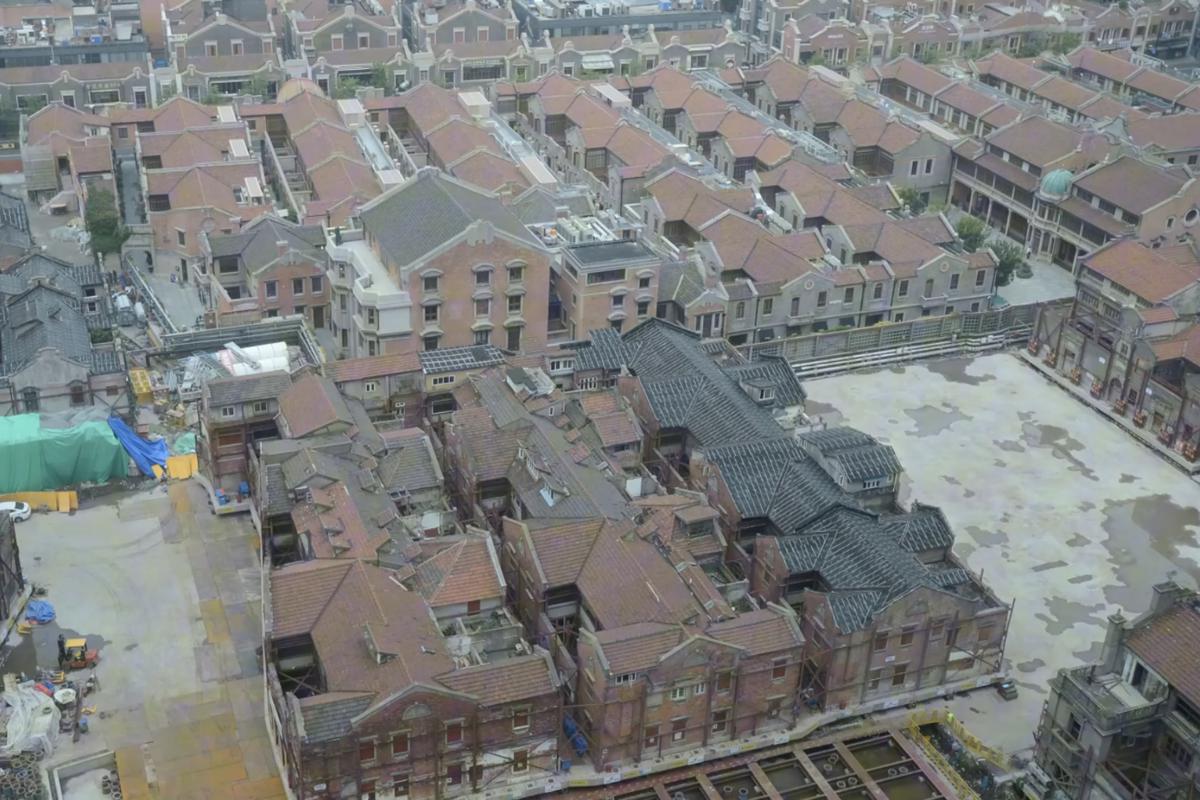
    With this project, the city of Shanghai is demonstrating its ability to combine heritage conservation and urban development. The Huayanli complex, built between 1920 and 1930, is part of the Zhangyuan district, which looks back on over 140 years of history. With a total area of 4,030 square meters and three brick and timber buildings, it is not only architecturally significant, but also an important testimony to urban identity.

    The temporary relocation is necessary in order to construct a three-storey underground facility of over 53,000 square meters. This will create cultural and commercial spaces, more than 100 parking spaces and connections to three subway lines. An ambitious project in a densely built-up historical environment.

    Robot-assisted precision work in the historic core
    Given the narrow alleyways and limited space, the construction team relied on a combination of advanced technologies and customized robotics. A total of 432 self-propelled robots move the ensemble at a speed of around 10 meters per day. A logistical masterpiece that enables minimal disruption with maximum precision.

    In addition, miniaturized robots were used for foundation work, which move through narrow doors and corridors thanks to remote control. Supported by BIM and point cloud scans, precise 3D models of the existing building were created to identify potential collisions and structural challenges at an early stage.

    Smart earthmoving and minimally invasive interventions
    Another technical innovation is the specially developed earthmoving robots with foldable gripper arms. These can move in spaces less than 1.2 meters wide and use deep learning algorithms to distinguish between clay and obstacles. As a result, the construction project is progressing with high efficiency and minimal risk to the historic building, despite the cramped conditions.

    Zhang Yi, General Manager of the Shanghai Construction No 2 subsidiary responsible for urban renewal, explains the approach: “We designed several curved transportation routes for the excavated earth and implemented a conveyor belt system like in a factory. This allows us to reduce disruption and achieve high working speeds at the same time.”

    Linking old and new
    The project is more than just a technical masterpiece. It exemplifies an urban vision that sees historical heritage not as an obstacle, but as a resource. Once the work is complete, the Huayanli complex will return to its original location. However, above a modern infrastructure that connects it to the surrounding high-rise buildings, shopping centers and residential districts. The integration of above-ground conservation measures with modern underground facilities offers a model for the sustainable revitalization of historic districts in growing metropolises. For Shanghai and for international urban planners and engineers, this project is a milestone. It shows how cultural identity and urban modernization can be combined to form a harmonious whole.

  • Federal government waives new financial incentives for building refurbishment

    Federal government waives new financial incentives for building refurbishment

    Energy-efficient building renovations do not need to be promoted through further financial incentives in addition to the existing financing options and funding programmes. This is the conclusion of the report on the postulate “Financing options for energy-efficient building renovations” adopted by the Federal Council on 6 June. In a press release, the Federal Council explains that it shows that energy-efficient building renovations do not primarily fail due to a lack of financial resources.

    Instead, the report recommends placing greater emphasis on information and advice, the quality of data on the condition of buildings, the sustainable structuring of mortgages and measures to combat the shortage of skilled labour in order to promote building renovations. In terms of information and advice, the Confederation and cantons are recognised as offering a good range of services. Transparency regarding the energy status of buildings should be improved by the CO2 Act, which has been in force since 2025. In addition, renovation behaviour could be influenced in future by the Climate and Innovation Act, the revised CO2 Act, further developments in cantonal legislation and greater transparency in mortgage lending.

  • Condominiums are more expensive than single-family homes

    Condominiums are more expensive than single-family homes

    ImmoScout24 introduces a press release on the current ImmoScout24 Purchase Index by stating that the trend towards home ownership is continuing. It is compiled monthly by the property marketplace, which belongs to SMG Swiss MarketplaceGroupAG, in collaboration with IAZI, a consultancy specialising in real estate. The current purchase index for May shows an increase in prices compared to April for both condominiums and single-family homes.

    At 0.8 per cent, prices for owner-occupied flats rose much more sharply across Switzerland than prices for single-family homes (0.3 per cent). However, the experts have identified significant differences within the individual regions. “The choice is currently particularly large in the Lake Geneva region,” Martin Waeber, Managing Director Real Estate at SMG Swiss Marketplace Group, is quoted as saying in the press release. “By contrast, supply is tightest in the greater Zurich region, one of the three most populous areas in Switzerland.”

    In the greater Zurich region, prices for single-family homes have risen particularly sharply by 3.9 per cent month-on-month. Eastern Switzerland is at the other end of the scale. Here, prices fell by 2.1 per cent compared to April. Eastern Switzerland, on the other hand, led the way with a 2.7 per cent increase in condominiums. The Mittelland brought up the rear here with a fall of 0.7 per cent.

    ImmoScout24 is a division of SMG Swiss Marketplace Group AG. This combines the digital marketplaces of TX Group, Ringier and Mobiliar.

  • Holiday apartment market in the Alpine region shows stable demand despite price decline

    Holiday apartment market in the Alpine region shows stable demand despite price decline

    The UBS Alpine Property Focus 2025 evaluates the development of the holiday apartment market in the Alpine region. Five Swiss destinations top the price ranking. Engadin/St.Moritz GR takes first place with at least 22,300 francs per square metre. The top 5 are completed by Verbier VS, Zermatt VS, Gstaad BE and Andermatt UR. Prices for Alpine holiday flats rose by 2.3 per cent last year amid high demand.

    The emergence of hybrid forms of work after 2020 triggered the current high demand, according to a press release from UBS. Alpine holiday flats have become around 30 per cent more expensive since 2020. The year 2024 saw subdued price increases in the Alpine region. Prices in French and Italian destinations rose by an average of 4 per cent and in Swiss locations by 3 per cent. In Austria, they fell by 3 per cent.

    “In the short term, the price trend in the Alpine region is likely to weaken further over the next few quarters,” says Maciej Skoczek, property economist at UBS and lead author of the study. Alpine holiday flats are in high demand, but the subdued economic outlook and inflation are weighing on households, says the economist.

    The study assesses the prospects for Swiss property positively. In the face of geopolitical turbulence, this property is very popular as a safe investment. Lower mortgage interest rates and a low supply of holiday flats are also supporting Swiss prices.

    The study sees risks for the holiday apartment market in regulatory intervention: The relaxation of the Second Homes Act is likely to ease the supply situation, while the planned tightening of the Lex Koller will regulate property purchases for foreigners more strictly, according to UBS. These interventions will dampen the price trend in the luxury segment.

  • Takeover strengthens market position for building installations

    Takeover strengthens market position for building installations

    The Debrunner Koenig Group is taking over Simfloc AG. The acquisition of the Frauenkappelen-based company, which specialises in fire protection, flocculation and insulation, should help the wholesale group for construction, industry and commerce to become Switzerland’s first full-service provider for building installations, writes Debrunner Koenig in a press release on the takeover. No details are given about the purchase price.

    “The Debrunner Koenig Group strives for innovation, which ensures continuous further development in prefabrication,” Simon Engler, Managing Director of Simfloc AG, is quoted as saying in the press release. “The takeover means new opportunities for us on the market.” Engler will continue to manage Simfloc AG under the umbrella of the Debrunner Koenig Group. The takeover will not change anything for customers and business partners, according to the press release. The company name and corporate identity will also remain unchanged.

  • How Glarus became an architectural jewel

    How Glarus became an architectural jewel

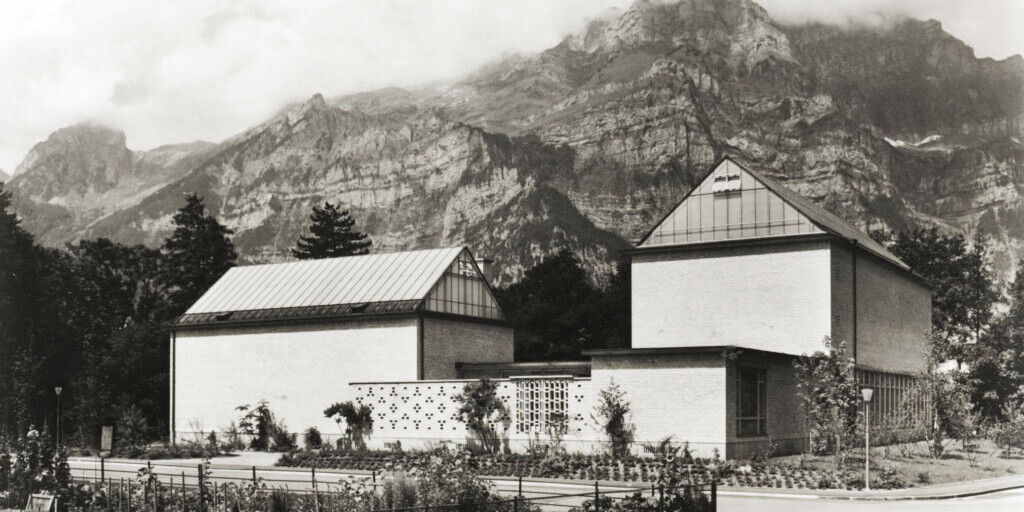
    When the art historian and diplomat Gustav Schneeli was looking for a location for his own museum in 1942, he found the perfect place in Glarus. The Glarus Art Association, which had been considering the idea of its own museum for decades, recognised the opportunity for collaboration. Schneeli made his Symbolist and Impressionist-influenced works available and promised 250,000 francs for a foundation. The foundation stone for today’s Kunsthaus.

    Architectural clarity with vision
    After Schneeli’s death in 1944, the architect Hans Leuzinger developed a project of remarkable consistency. The path led from classical approaches through numerous variations to a finely tuned lighting design. Scandinavian influences, careful site inspections and creative foresight formed a building that consciously distanced itself from monumental representational intentions and blended sensitively into the Glarus valley basin.

    Political hurdles, patient negotiations
    The realisation was anything but straightforward. Disputes over the location, delays caused by the war, critical voices from the administration and the community of heirs as well as the threat of the foundation’s withdrawal jeopardised the project on several occasions. It was only through diplomatic skill, architectural persuasion and tireless commitment that construction could begin on the last possible day, 15 July 1950.

    Art and architecture as a sign of the times
    The opening in 1952 was not only an architectural success, but also a strong signal for Glarus as a cultural centre. A cultural attitude manifested itself in a simple but expressive building that continues to have an impact today. Architect Reto Fuchs’ research reveals this masterpiece and its eventful construction history. The Kunsthaus Glarus stands for masterful architecture, the courage to take a stand and the idea of thinking big about culture in rural areas.

  • Mollis airfield on the upswing

    Mollis airfield on the upswing

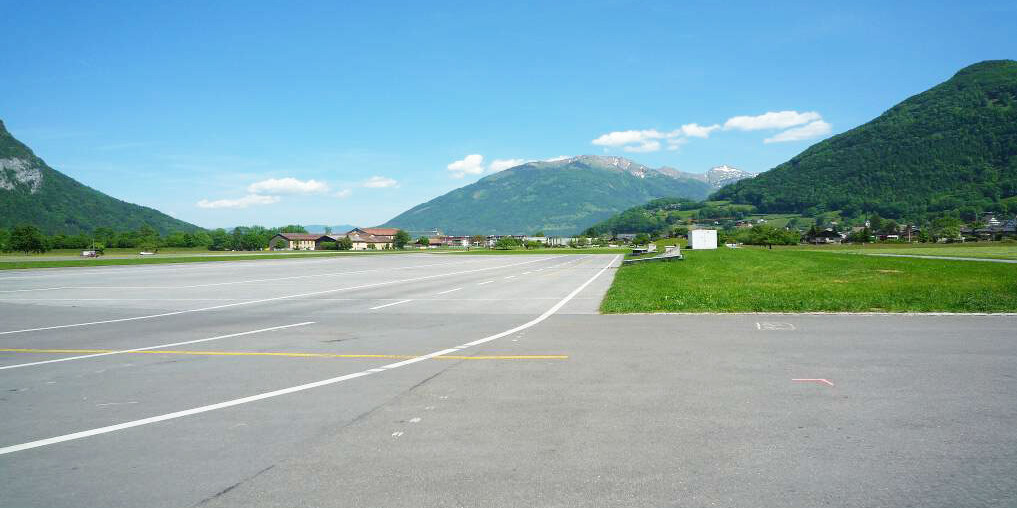
    Parcel no. 2487 at Mollis airfield is an undeveloped plot of land with an area of over 18,000 m². As part of the new utilisation planning, it was designated as work zone A. The Glarus North municipal council has commissioned a masterplan for this area, which is being drawn up by KCAP Architects and Planners in Zurich. The focus is on aviation-related businesses in particular, which should complement the existing ecosystem in a meaningful way.

    A site with a multifaceted identity
    Mollis airfield is much more than just an airfield. It is also a business location, home to innovative aviation companies, a meeting place for dedicated aviation clubs and an important local recreation area in the Glarus region. The six companies based there today, including Rega, Heli Linth and Kopter Group AG, provide over 150 jobs and stand for technological expertise in the field of aviation and rescue. This economic profile is complemented by the active use of the site by the Mollis motorised flight group, the Glarnerland gliding group and the model flying group.

    Past as a foundation for the future
    Mollis airfield can look back on over 100 years of history. Since the first landing in 1916, the site has repeatedly been the scene of significant developments – from Walter Mittelholzer’s pioneering flights to its use by the Swiss Air Force. Today, the site is used for civilian purposes and is committed to safe, balanced and economically viable operations. The history of the airfield creates an emotional bond and is an essential part of its identity.

    Sustainable development through a clear strategy
    The common goal of the municipality of Glarus Nord and Mollis Airport AG is to drive forward the development of the site while taking economic, ecological, agricultural and public interests into account. The masterplan takes into account both infrastructural requirements and potential for events, leisure use and security of supply. The well-connected location and the special combination of aviation, industry and recreational space make the Mollis site a promising development location in the canton of Glarus.

    A location with a signal effect for the region
    The Mollis Airfield Masterplan provides a strategic basis for attracting new companies, strengthening existing structures and harmonising usage interests in the long term. The close collaboration between the municipality, owners and MAAG is a prime example of co-operative regional development. Mollis airfield is not just a place for aviation, but a future-oriented location with charisma, diversity and responsibility – far beyond the canton.

  • Loss of rent in Zurich only a temporary burden

    Loss of rent in Zurich only a temporary burden

    The Swiss Life REF (CH) ESG Swiss Properties real estate fund generated net income of CHF 30.3 million in the first half of the 2024/25 financial year, which ended on March 31, 2025, Swiss Life Asset Management Ltd announced in a press release. Net income of CHF 27.4 million was reported. The net asset value per unit fell from CHF 113.73 at the end of the 2023/24 financial year to CHF 112.37.

    In addition to rental income, the sale of five properties with a market value of around 60 million francs also contributed to the solid result. A capital gain of around CHF 2.9 million was realized here. The fund also benefited from a residential portfolio acquired in July 2024, whose net profitability was around 0.4 percentage points higher than the profitability of the existing portfolio.

    However, the loss of a major tenant in Zurich had a negative impact on the result. Specifically, the rent loss rate rose to 3.8% as a result. However, the affected space has already been re-let with effect from October 2025.

    Swiss Life Asset Manager intends to further optimize the current income and expenses of its real estate fund in the second half of the current financial year. The asset manager, which is part of the Swiss Life Group, has no plans for major property sales or a capital increase.