Tag: immoNews

  • Building the future of energy

    Building the future of energy

    The property right at the entrance to the municipality is less than 10 kilometers away from the city of Winterthur and is still an idyllic piece of land, with a direct connection to the banks of the Töss and with a view of meadows and forest. The goals of the Energy Strategy 2050 are being built here. The Verde Blu development has been inhabited since autumn 2019. So far, so normal. It is noteworthy, however, that this development covers a large proportion of its energy requirements itself and that exclusively from renewable sources. “The specifications of the Energy Strategy 2050 are an opportunity for the real estate industry,” explains Dieter Stutz from Atlantis AG, which is active in the areas of environmental consulting, settlement planning and architecture and who developed the project. The heat supply via groundwater was the best and most convincing solution for the area. Atlantis planned and implemented this complex construction project together with EKZ.

    Sustainable living as a need
    The new construction project Verde Blu with nine residential and commercial buildings comprises 108 condominiums as well as various commercial areas that are used by a Migros branch, a community and a physiotherapy practice, among other things. An old, listed barn serves as a common room and provides rustic charm on the site. In contrast to this is the state-of-the-art technology that supplies the system with energy: groundwater is used as a heat source for the heating and hot water, which supplies the houses with decentralized heat pumps via a so-called anergiering. An anergiering is a cold local heating system that, in contrast to conventional local heating systems, works with transfer temperatures below 30 degrees Celsius. Anergy networks therefore have no heat losses in the lines, but even generate additional energy gains from the ambient heat. In summer, the buildings can be passively cooled with the groundwater via the anergy ring.

    A photovoltaic system, which is optimally designed to meet the needs of the building, provides the electrical energy for the building. The complex was only built after the apartments had already been occupied. Because they wanted to leave the decision for or against solar power to the owners. The fact that the system with a peak output of 100 kilowatts was approved by an overwhelming majority at the first owners’ meeting in winter 2019 speaks for itself. Martin Nicklas, who is responsible for modern energy solutions at EKZ, is not surprised: “In the real estate sector, we have long known the need to make a contribution to sustainability in the living area too.” A charging infrastructure for the 209 parking spaces was installed in the lower-level garage. Thanks to load curve management, it is possible to charge the cars in stages if a whole fleet of electric vehicles should one day populate the garage.

    Well-coordinated system
    In Kollbrunn, power generation as well as heating and cooling generation and electromobility are combined in an integrated energy system. The centerpiece is an intelligent control system that maximizes the self-consumption rate and takes over load management. In this way, what is actually the most important goal can be achieved: that the electricity produced by the PV system is also consumed as much as possible on site. The control uses weather forecasts from an external weather portal for this purpose. An algorithm in the control system evaluates this data and decides on the previous evening whether enough solar power will be produced the next day to charge the boiler and storage tank of the heating system. If the solar production is too low, the boilers are charged during the night at the low tariff, otherwise there is a wait until there is enough solar power available the next day to start the heat pump.

    On-site energy production
    The “Grand Chemin” development was built in Epalinges in western Switzerland, with some of the electricity required being produced on site by a photovoltaic system (PV). A new multi-family house is being built in Emmen (LU), which will be characterized by a heat pump with groundwater and a PV with ZEV. Two examples out of many that show that the future of energy has long since begun.

    Comprehensive energy systems for your property

  • 89. immoTable Ticino

    89. immoTable Ticino

    Finally, the well-known immoTable continues., On September 30, 2021, the 89th immoTable Ticino will take place in the Villa Negroni. Speakers will be Stefano Rizzi, Alberto Donada, Stefano Tibiletti, Mario Branda, Giovanna Bevilacqua, Luca Gazzaniga and Roberto Fantoni. You can find more information on our website.

  • Real estate platform immo-invest.ch now online in four languages

    Real estate platform immo-invest.ch now online in four languages

    The Swiss platform for locations and real estate www.immo-invest.ch has been online since April 2020. Since this Monday you can also read all Immo-News and Immo-Projects in English, French and Italian. The digitization of the established real estate magazine “immo! Nvest” is now entering the next phase. Click your way through.

  • The «complete success» continues

    The «complete success» continues

    According to co-organizer Marco Camenzind, the first SVIT Digital Day was a “complete success”. In addition to the SVIT Digital Compass, on which software manufacturers can present their latest tools live, the practice-oriented specialist presentations in particular met with great interest: “There was consistently positive feedback from the exhibitors. But the visits by the speakers were also very good, ”Camenzind sums up. This is reason enough for the organizers to make the second SVIT Digital Day on September 17th more attractive with hand-picked specialist speakers. There would be Mario Facchinetti, who with the Global Real Estate Run on October 29th at 12 o’clock wants to make people inside and outside the real estate industry aware of the importance of the industry for achieving the climate goals: “With the event we awaken a sense of community in us and provide a bit of variety in everyday Corona everyday life, which has become monotonous. “

    Real estate success factors
    At 1 p.m. Boris Grell will speak about electronic signatures in real estate practice. The independent lawyer specializes in construction and real estate law, company and commercial law as well as contract law. He is also a specialist lawyer for SAV construction and real estate law. At 2:15 pm, Casavi CEO Peter Schindlmeier will take over to talk about success factors for digital property management: “The interest in solutions for ‘digital management’ has increased significantly in recent months. But how do you go from traditional management to networked property management? ” And at 3:15 p.m. Rolf Truninger, Managing Director QualiCasa AG, will talk about the web-based app Visits, which is taking digitization in the real estate market a big step forward. Everything can be experienced live on Friday, September 17, 2021 from 11 a.m. to 5 p.m. in the Zurich Kulturhaus Kosmos. More information: https://svit-digital.ch/digital-day/

  • Major merger of Homegate, Ricardo, anibis.ch and Scout24

    Major merger of Homegate, Ricardo, anibis.ch and Scout24

    With the merger of the marketplaces, a monopoly arises in the categories of real estate, cars and classified ads. It’s going to be tight, very tight for the competition.

    The TX Group, the Ringier Verlag as well as the insurance company Mobiliar and General Atlantic, which supports the group with its international expertise in the field of digital marketplaces, are entering into a web joint venture.

    There is a lot involved in real estate. Because homegate.ch owns the marketplaces home.ch , alle-immobilien.ch ,immostreet.ch and now acheter-louer.ch . The immoscout24.ch network includes comparis.ch, HEV Switzerland, Zentralhome.ch, NZZdomizil.ch, osthome.ch and many more. The offer will certainly also be placed on the newspaper portals of various national newspapers. This is how you create a competitive Swiss marketplace offering and can act as a pioneer in the Swiss market. As a spokeswoman for TX announced, all 1000 jobs will remain.

    The TX-Group now holds 31 percent of the shares, Ringier and Mobiliar 29.5 each, and General Atlantic 10 percent. The four shareholders each have 25 percent of the voting rights and are pursuing the medium-term goal of an IPO.

    The CEO is to be Scout24 CEO Gilles Despas, the board of directors is to consist of Mobiliar boss Michèle Rodoni, Pietro Suppino, Mark Walder and Jörn Nikolay.

  • 7. Real Estate Summit at Samsung Hall

    7. Real Estate Summit at Samsung Hall

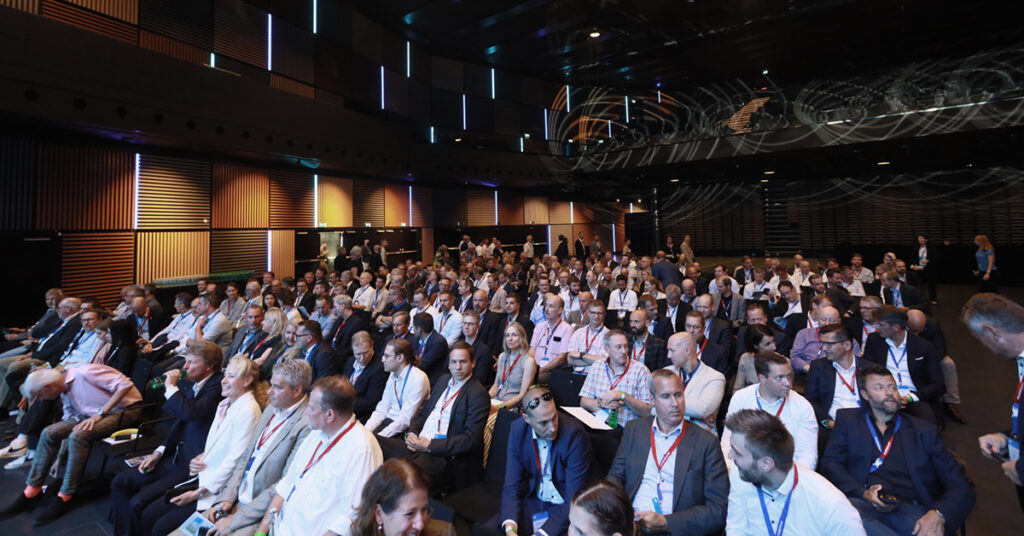
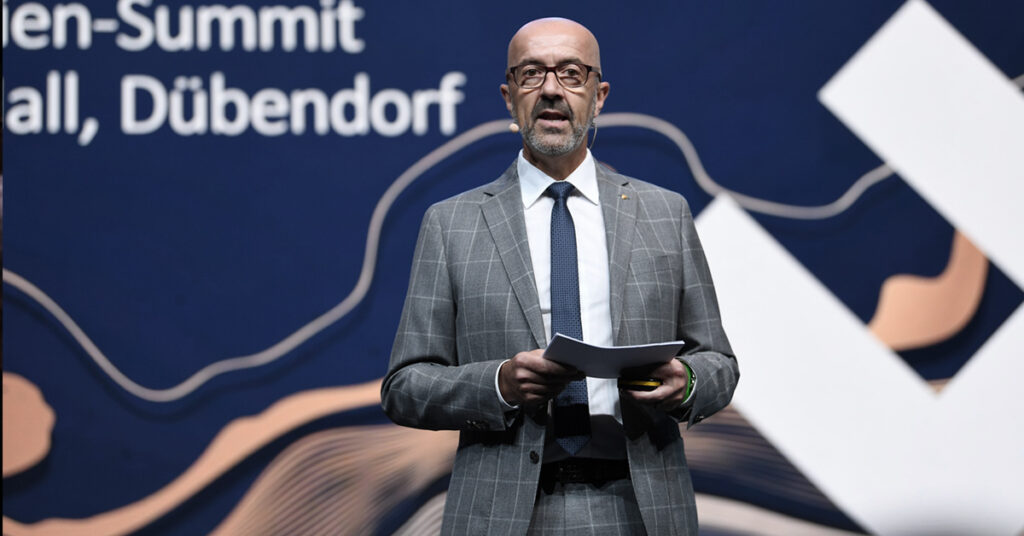
    At the beginning, FRZ President André Ingold gave an overview of the organization. The network continues to grow: 730 members are now part of the FRZ Zurich Airport Region – Business Network & Location Development.

    Ingold also gave an overview of the largest development projects. It is forecast that the airport region will grow by 20 percent in terms of both population and jobs by 2030. He specifically mentions the Dübendorf Innovation Park, which is intended to increase the attractiveness of the location considerably. The same applies to the Digital Health Center Bülach.

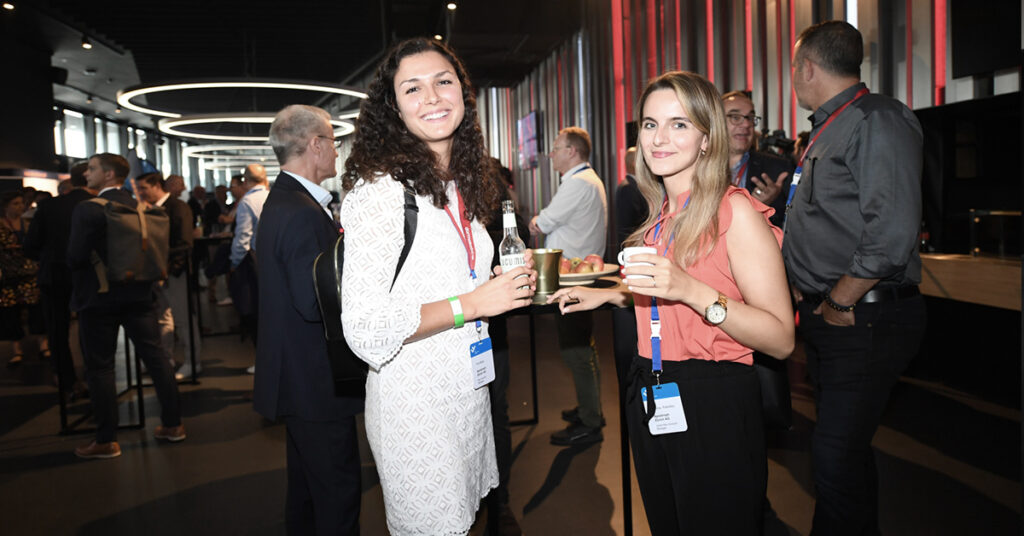
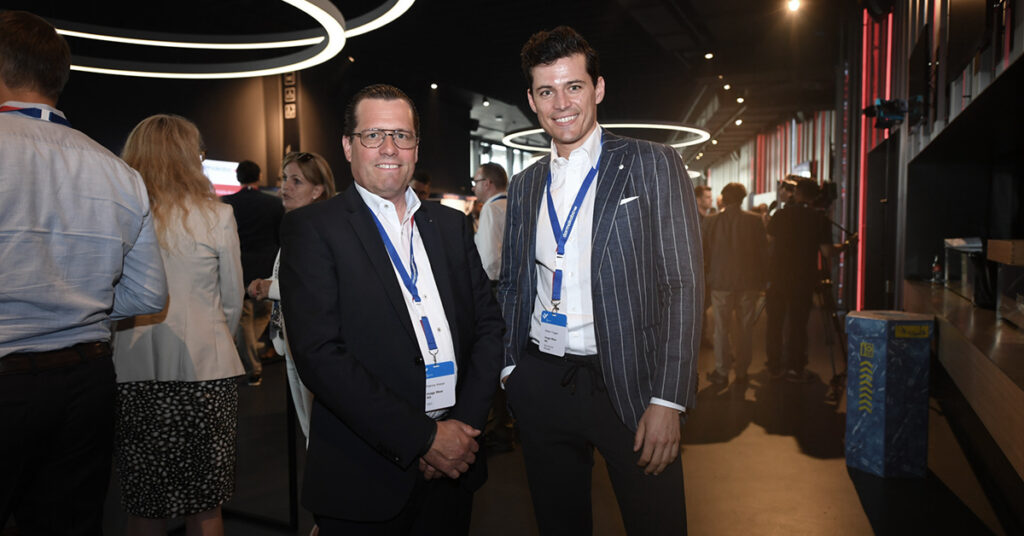
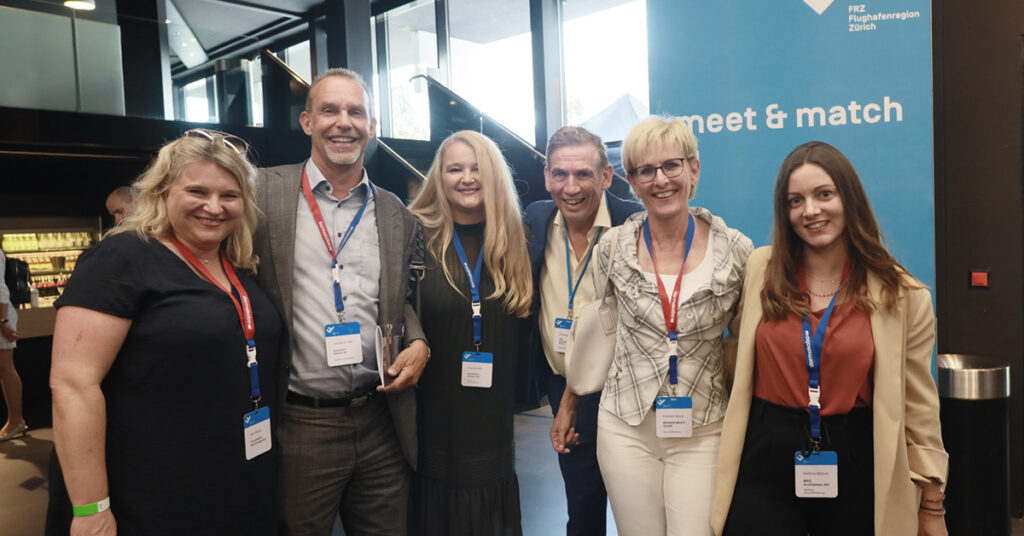
    There were numerous opportunities for small talk and informal discussions in the spacious rooms. The 320 targeted “meet & match” discussions with Internet support were actively used.

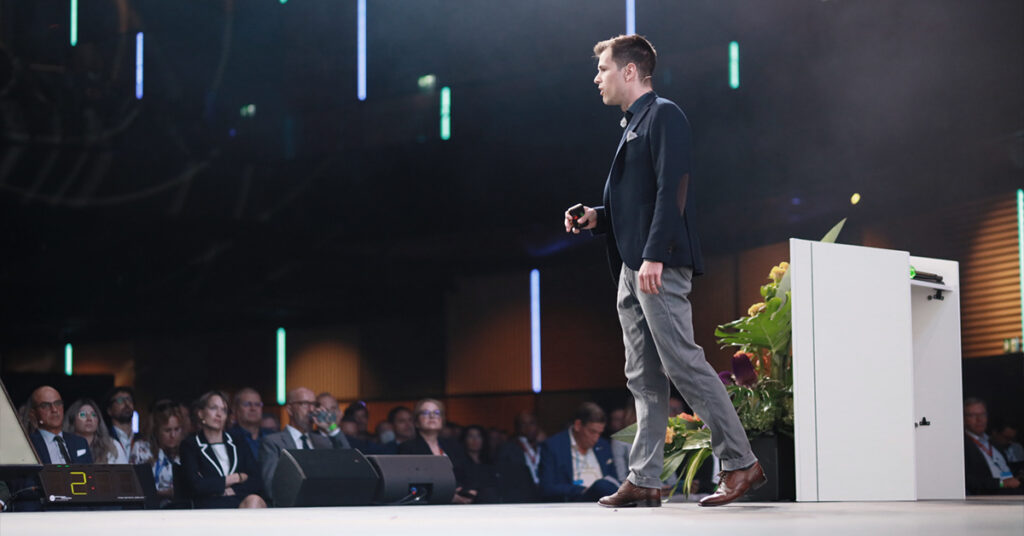
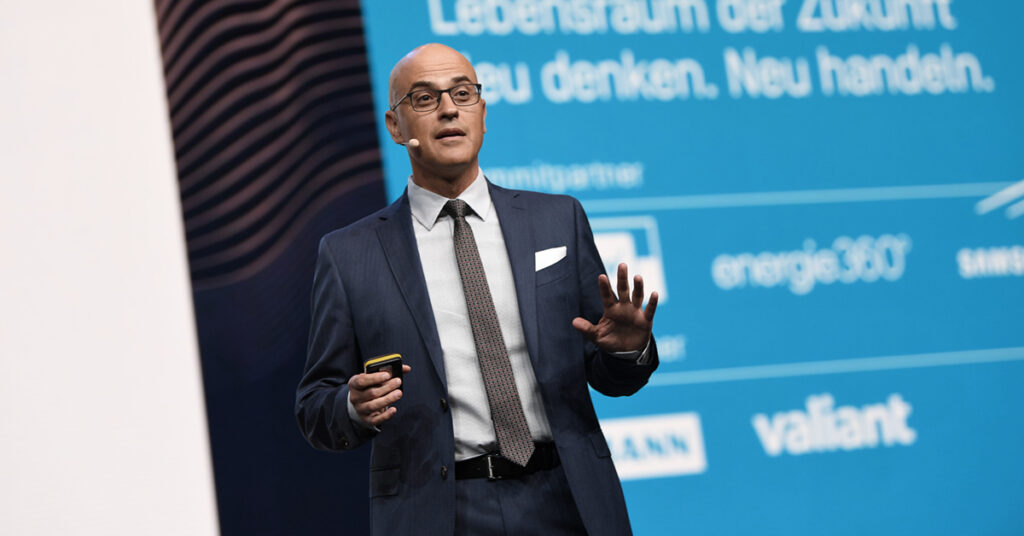
    Claudio Saputelli , UBS Switzerland AG, said he did not see a turnaround in the real estate market. In the lecture entitled: “Home office as a game changer in the real estate market?” The upward trend in prices on the housing market continues and the office market remains under pressure. Incidentally, working from home had already been identified as a megatrend 50 years ago, at that time under the term “teleworking”.

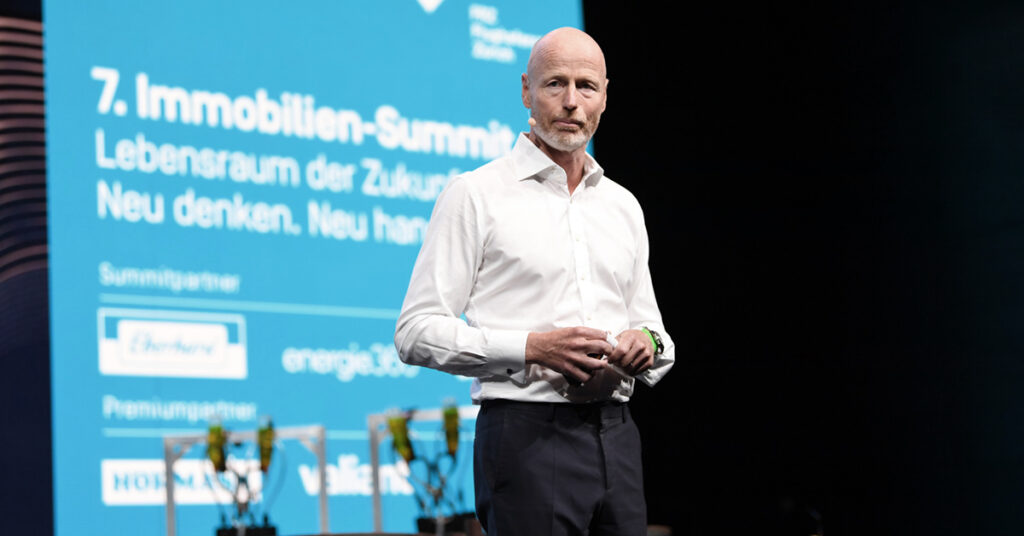
    Patrick Eberhard , Eberhard Enterprises, pleaded for sustainability in the lecture “Off to the circular age”. An important element of this is recycling with the help of robots.

    Marloes Fischer , Madaster Services AG, CEO Madaster Switzerland – “Madaster – giving materials an identity” sees considerable savings potential if the materials used in construction are inventoried.

    Marc Walder , CEO Ringier AG & Founder digitalswitzerland, spoke about digitization as an opportunity for business and society. The media company, founded in 1833, decided in 2007 to transform itself into a digital company. In the meantime, Ringier has invested over two billion francs in the digital transformation and increased the digital operating profit from 0 to 65 percent. His maxims include: Constantly improving, thinking long-term and with a clear focus.

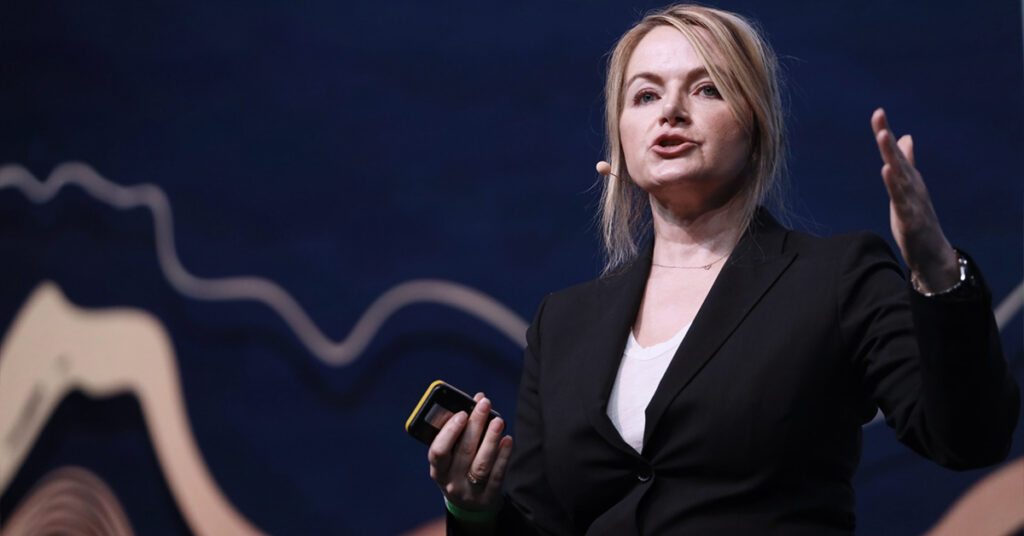
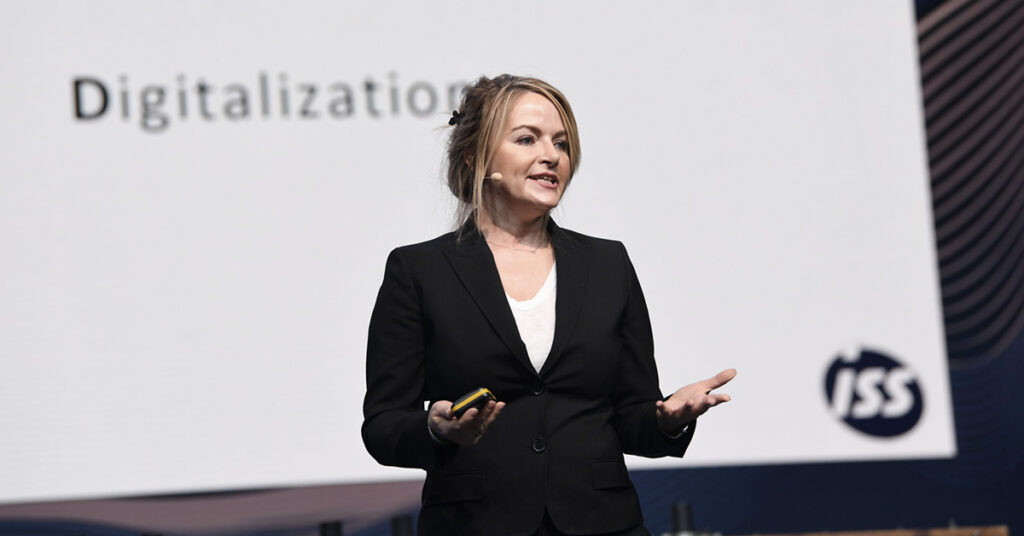
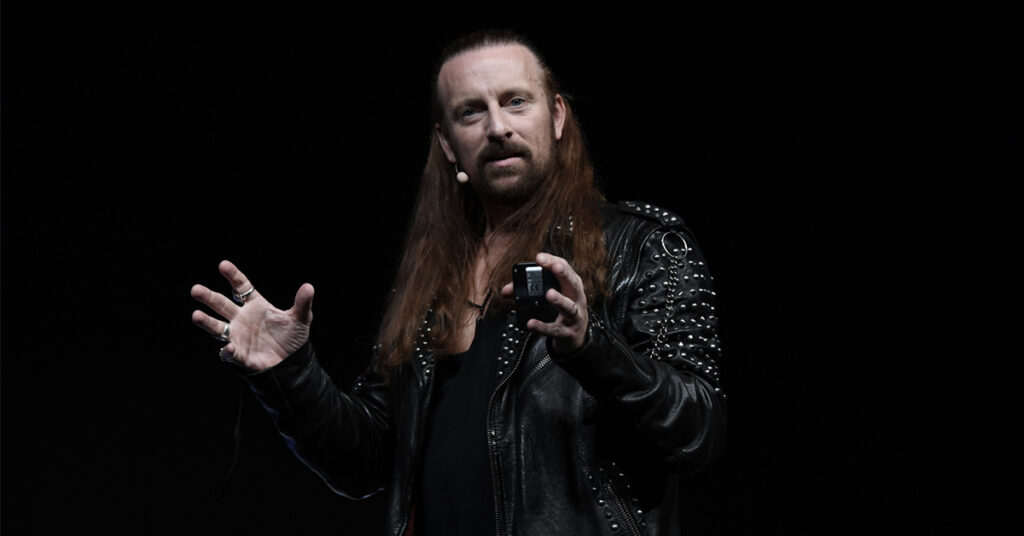
    “Creativity is the new currency – Startup and Corporate / SME Collaboration”. That was the title of Eva Wimmers , CEO ISS Facility Services Germany. She pointed out the different perspectives of startups and established companies. The environment brought her to the denominator VUCA: Volatility, Uncertainty, Complexity and Ambiguity. Anders Indset, economic philosopher, spoke about «The infected thinking – why we have to free ourselves from our old self-evident things». He amazed the guests with remarkable thoughts: Err dich happily. We need chaos and order. The art of being wrong. We should tell new stories. Anyone who is interested becomes interesting.

  • 2. Global Real Estate Run

    2. Global Real Estate Run

    Autumn is approaching with great strides and with it, unfortunately, the time of increasing corona case numbers again. A decentralized team event outdoors provides planning security and does not require a certificate or the associated organizational effort. Companies can register as an entire company or only participate with individual teams. An ideal opportunity for a strategy walk away from the hectic everyday life – or just for a nice chat among work colleagues.

    For this purpose, some companies used the event last spring for additional team building measures and spontaneously organized an aperitif reception, started their own slack channel to strengthen the (international) team spirit or decided to collect waste along the entire route Communicate this good deed through social media. Interested parties can find more impressions of the past event here .

    There are no special requirements for participation, only the will to complete 6 kilometers within 24 hours. Whether jogging or ambitious walking is up to each participant. After registering, the participant receives access to a geotagged app. The route can be chosen freely by the private persons / teams regardless of location.

    With this initiative, the organizers want to draw attention to innovation and sustainability in the real estate industry. Everyone can contribute to this. Because sustainability is not a local but a global issue. Just like the Global Real Estate Run . As a “green” sign, thanks to the main partners Unispace , Immo! Nvest and PropTechMarket , a tree is planted for every kilometer covered.

  • 2. Global Real Estate Run

    2. Global Real Estate Run

    Autumn is approaching with great strides and with it, unfortunately, the time of increasing corona case numbers again. A decentralized team event outdoors provides planning security and does not require a certificate or the associated organizational effort. Companies can register as an entire company or only participate with individual teams. An ideal opportunity for a strategy walk away from the hectic everyday life – or just for a nice chat among work colleagues.

    For this purpose, some companies used the event last spring for additional team building measures and spontaneously organized an aperitif reception, started their own slack channel to strengthen the (international) team spirit or decided to collect waste along the entire route Communicate this good deed through social media. Interested parties can find more impressions of the past event here .

    There are no special requirements for participation, only the will to complete 6 kilometers within 24 hours. Whether jogging or ambitious walking is up to each participant. After registering, the participant receives access to a geotagged app. The route can be chosen freely by the private persons / teams regardless of location.

    With this initiative, the organizers want to draw attention to innovation and sustainability in the real estate industry. Everyone can contribute to this. Because sustainability is not a local but a global issue. Just like the Global Real Estate Run . As a “green” sign, thanks to the main partners Unispace , Immo! Nvest and PropTechMarket , a tree is planted for every kilometer covered.

    Registration and more at: www.globalrealestaterun.com

  • Fundamenta Real Estate is growing at double digits

    Fundamenta Real Estate is growing at double digits

    According to a statement from Fundamenta Real Estate AG , the Zug-based real estate company generated net rental income totaling 17.9 million francs in the first half of 2021. In a year-on-year comparison, this corresponds to growth of 10.6 percent. The communication cites the completion of projects and the purchase of new properties as growth drivers. In addition, the company was able to reduce its vacancy rate year-on-year by 0.8 percentage points to 2.7 percent.

    The net profit in the reporting semester was 12.0 million francs, 36.7 percent more than in the first half of 2020. "The strong profit growth" is mainly due to the good operational development and a revaluation success of 5.3 million francs, writes Fundamenta Real estate. The company also points to a “disproportionate increase in operating expenses”.

    The balance sheet value of Fundamenta Real Estate's real estate portfolio exceeded the billion mark for the first time on June 30, 2021. Compared to the end of 2020, the value increased from CHF 991.9 million to a good CHF 1.06 billion. The company acquired three properties in the reporting semester and transferred two projects to the portfolio after completion. As of the reporting date, the portfolio comprised a total of 66 existing properties and two development projects. In July, Fundamenta Real Estate acquired another residential property with 13 residential units in Richterswil ZH.

  • open2work receives award from the travel industry

    open2work receives award from the travel industry

    The travel industry regularly honors the most interesting start-ups. Four young Swiss companies presented themselves at the fourth Travel Start-up Night organized by the Association of Internet Travel Sales (VIR) and the Travel Industry Club. According to a VIR announcement, open2work was able to convince the analog and digital participants. The Zurich start-up will be able to present itself to representatives of the travel industry in German-speaking countries in Frankfurt in December.

    The open2work platform enables companies with surplus office space to offer these interested parties for hourly or daily use. According to co-founder and CEO Lionel Ebener, the company, which was founded in 2020, already has 27 locations in Switzerland. There is also interest on the demand side. The platform recorded 30 bookings in the first week of September. "Our customers can now see that we are something special."

    The start-up is now looking for funding in the mid six-figure range. “We want to build a professional infrastructure and now make all steps scalable,” says Ebener. open2work wants to become the Airbnb for offices.

  • The renovation of the Baden district building is about to be completed

    The renovation of the Baden district building is about to be completed

    The district building in Baden has been refurbished since March with ongoing operations. According to the media release, all natural stone and artificial stone components are being restored and the facade base plaster partially replaced. The construction work will be completed in October 2021. Under the project management of the real estate department of the city of Baden as the client, the work is strictly based on the historical model. The construction project is being accompanied by Heiko Dobler, building consultant for the cantonal monument preservation department.

    The model for the renovation of the former schoolhouse, which was built in 1856/57, is the facade of the renovated Ochsen branch in the spa district. In the course of the renovation work, the existing plastic-contaminated plaster was completely milled off and a new lime plaster was applied based on the historical model. The facade was then given a new coat of paint and all 108 wooden windows were replaced. Both the planned construction time and the budget can presumably be adhered to, according to the statement from the city of Baden.

    During the renovation work, two special factors had to be taken into account. On the one hand, there are nesting sites for the protected swifts and alpine swifts. The upper part of the scaffolding was designed accordingly by mid-April. "This meant that suitable nesting sites were available to the birds returning from the south in good time," the city councilor in charge Philippe Ramseier is quoted as saying.

    Furthermore, special security requirements of the canton police and the district prison as tenants of the district building had to be met. For example, a three-meter-high board wall and a barbed wire at the end were installed.

  • Swissolar wants more sun in standard electricity

    Swissolar wants more sun in standard electricity

    Around 5 percent of annual electricity consumption in Switzerland is currently covered by domestically produced solar electricity, explains Swissolar in a press release . In the standard electricity products of the energy suppliers, however, the proportion of solar electricity is only 1.85 percent on average. The Association of the Swiss Solar Energy Industry is working together with the power comparison service myNewEnergy to increase the solar proportion of standard products to this 5 percent in a first step.

    “This value should be increased annually by at least the amount of additional construction in question,” Swissolar managing director David Stickelberger is quoted in the announcement. “Around 1 percent would correspond to the necessary expansion of photovoltaic systems.”

    The majority of households do not choose a special electricity product and therefore receive the standard offer from the respective energy supplier, explains Swissolar in the press release. If the proportion of solar power in the standard product is increased to the proportion of power consumption, the comparatively expensive power is divided among a large number of consumers, argues Swissolar. This keeps the product price low and opens up new sales markets for providers of solar power who have been “sitting on their clean electricity” up to now.

    “It is important that these certificates come exclusively from Swiss solar systems, because only such certificates make an effective contribution to a safe and clean power supply in our country,” explains Stickelberger. “To replace the nuclear power plant alone, we need 20 terawatt hours of solar power.”

  • Verena Rohrer will head Aargau Services

    Verena Rohrer will head Aargau Services

    The Aargau government council has appointed Verena Rohrer as the new head of the cantonal location promotion agency Aargau Services . She is the successor to Annelise Alig Anderhalden, who accepted a new challenge in the spring. Rohrer will take up her new position on January 1, 2022.

    According to a statement from the government council, Rohrer is very well anchored in the canton of Aargau. From 2011 to 2017 she was in charge of the regional Brugg Regio location promotion. In addition, the 40-year-old also has several years of experience in the private sector. For example, she is a member of the executive board of the wholesaler Bio Partner Switzerland based in Seon AG. Rohrer has been Head of Central Services at Caritas Aargau since 2019.

    “Due to her knowledge of location promotion, her networking in the canton and her professional experience, Verena Rohrer has the best prerequisites to decisively further develop the location promotion of the canton of Aargau together with the experienced employees of Aargau Services,” said government councilor Dieter Egli (SP), head of the department Economics and Home Affairs, quoted in the communication.

    The Aargau Services location promotion contributes to the continuous improvement of the business environment in Aargau. It also supports foreign companies wishing to settle in the canton. As part of the implementation of the new cantonal development model, Aargau Services will, according to its own information, also take on important tasks. The development model envisages further strengthening the business location and linking living and working in the canton more closely.

  • SUPSI starts a series of lectures on climate and environmental crises

    SUPSI starts a series of lectures on climate and environmental crises

    The Department of Environment, Building and Design of SUPSI starts its high-profile public lecture series on the climate and environmental crisis on September 22nd. According to a press release, this reflects “the challenges facing our entire knowledge”. It is entitled “Earth Emergency – Live, Build, Think a Sustainable Future”. A total of four events are planned in this context on the SUPSI campus in Mendrisio. They are not only aimed at students, but also for all citizens. Participation is free in each case, but registrations are required.

    Thomas Stocker from the University of Bern will play the first evening. In its announcement, SUPSI introduces him as “one of the most important protagonists of international climate research”. The professor for climate and environmental physics has been working on the climate for 30 years and was instrumental in drafting the UN reports on climate change. On September 22nd at 6:30 pm he will give a lecture entitled “Climate Crisis – Is There a Vaccine?”.

    On October 27, the geophysicist and former President of the Roman Institute for Geophysics and Volcanology , Domenico Giardini, will give a lecture on the subject of “On the way to Mars”. On December 9th, Telmo Pievani, Professor of the First Chair in Italy for Philosophy of Biological Sciences at the Faculty of Biology at the University of Padua, will give a lecture entitled “We are changing the world and the world is changing: An evolutionary look at the environmental crisis”.

    Finally, Francesca Bria, President of the National Innovation Fund of Italy and Honorary Professor at the Institute for Innovation and Public Affairs at London’s Global University , will speak on February 23, 2022 on “The Revolution of the City: Data Democracy, Participation and Ecological Change”.

  • The foundation stone for the Rieter Campus has been laid

    The foundation stone for the Rieter Campus has been laid

    With its construction project for the Rieter Campus, Rieter is committed to the Winterthur location and to Switzerland as a business location, according to a press release from the textile machine manufacturer. The foundation stone for the new customer and technology center as well as the administration building was laid on Wednesday. The company, which has been based in Winterthur for 225 years, is investing around 80 million francs in this

    From 2024, the Rieter campus is to offer space for around 700 workplaces on a floor area of over 30,000 square meters. To this end, the company developed an open room concept with a specialist in office architecture. With heat generation via geothermal probes and a 1,300 square meter photovoltaic system, Rieter is relying on renewable energies. “The entrepreneurial focus on sustainable and energy-efficient solutions for yarn production is thus reflected in the overall concept of the campus,” CEO Norbert Klapper is quoted as saying.

    In the course of its company history, Rieter has helped shape the city of Winterthur, said Chairman of the Board of Directors Bernhard Jucker. “Now, with the new campus, the foundation is being laid for the future as a leading technology company.”

  • A new solar community is emerging in Glarus

    A new solar community is emerging in Glarus

    The Technischen Betriebe Glarus ( tb.glarus ) are building a solar system on the roof of the gymnasium belonging to the Glarus Cantonal School. Private customers can buy their desired area of solar panels there and receive a fixed amount of solar power in return for 20 years.

    By participating in such a solar community, tenants without their own roof also have the opportunity to subsidize locally generated solar power. Another advantage is that you don’t have to worry about investment costs, planning or maintenance, according to tb.glarus in a press release .

    This emerging solar community is the third that tb.glarus is realizing. Two solar communities have already been successfully put into operation at the branch garden gym in Netstal GL. With its 666 square meters, the new facility will be almost twice as large as these two combined.

  • Empa achieves record for flexible solar cells

    Empa achieves record for flexible solar cells

    The Empa team from the Laboratory for Thin Films and Photovoltaics , headed by Ayodhya N. Tiwari, has set its seventh record for the efficiency of flexible CIGS (Copper Indium Gallium Diselenide) solar cells. After a record high efficiency of 12.8 percent in 1999, it has now reached 21.38 percent, according to a press release. This new record was confirmed by the independent Fraunhofer Institute for Solar Energy Systems in Freiburg, Germany.

    The value now measured is already close to the best efficiency of conventional, non-flexible solar cells made of crystalline silicon of 26.7 percent. The highly efficient flexible solar cells are particularly suitable for use on roofs and building facades, for greenhouses, transport vehicles, aircraft and portable electronics. Together with the Niederhasli ZH-based company Flisom , a spin-off from Empa and the Swiss Federal Institute of Technology Zurich ( ETH ), the researchers are developing roll-to-roll production of lightweight, flexible solar modules for such applications.

    These solar cells are produced on a polymer film using a low-temperature evaporation method. The light-absorbing semiconductor material lies on top as a wafer-thin film. Empa researcher Shiro Nishiwaki optimized their composition. In this way he was able to further increase the efficiency. According to the team’s measurements, the increase in photovoltaic output remained stable even after several months.

    Tiwari’s team works closely with the Kovalenko Lab for Functional Inorganic Materials at ETH Zurich. The research and development work was supported by the Federal Office of Energy .

  • BKW Building Solutions is strengthening itself with takeovers

    BKW Building Solutions is strengthening itself with takeovers

    BKW Building Solutions AG buys Aerovent Crissier SA and Aerovent Service SA. With the takeover, the subsidiary of the BKW Group is expanding its competencies in the areas of ventilation, air conditioning and service in western Switzerland, according to a media release .

    Aerovent Crissier SA is based in Crissier VD. Aerovent Service SA is based in Villars-Ste-Croix VD. With around 40 employees, they work in the fields of building and house technology. The owner of both companies, José del Castillo, as well as co-owner and co-manager Pascal Baudois will remain with the companies.

    “Thanks to their extensive know-how of building technology solutions for smaller conversions through to large administrative, industrial, commercial and school complexes, the two companies have great potential for further development – especially in the service area,” says in the press release.

    In addition to engineering and infrastructure services, BKW Building Solutions is one of three service groups of the energy services company BKW. BKW Building Solutions offers building technology, automation and IT services across the country.

  • Holcim wants to strengthen water resources and biodiversity

    Holcim wants to strengthen water resources and biodiversity

    According to its own statements, Holcim is the first company in the construction industry to commit itself to measurable positive effects on biodiversity and more ecological water management. At the same time, the group wants to bring more nature into the cities.

    According to a press release , Holcim aims to reduce the water intensity in all product lines by 2030. A reduction of 33 percent is to be achieved in the production of cement. It should be 20 percent for aggregates and 15 percent for ready-mixed concrete. The building materials company promises to replenish fresh water in water-endangered areas by 2030: 75 percent of the locations should be “water-positive” by then. In addition, Holcim intends to equip 100 percent of all locations with water recycling systems during the same period.

    Holcim also wants to achieve measurable positive effects on biodiversity. The group wants to orient itself on the reporting system for biodiversity indicators (Biodiversity Indicator and Reporting System, BIRS ) of the International Union for Conservation of Nature IUCN . Rehabilitation plans should be available for all quarries by around 2022. The BIRS principles for all cultivated areas should be fulfilled by 2024. In addition, the use of solutions such as the water-permeable Holcim concrete Hydromedia and green roof systems for more livable cities is to be accelerated.

    Eva Zabey, Executive Director at Business for Nature , praises Holcim for these ambitious goals. They could “lead to scalable changes both in the building materials sector and in industry as a whole.” All ecosystems and societies are dependent on such measures and obligations from companies.

  • Zurich is Switzerland's first green city

    Zurich is Switzerland's first green city

    The city of Zurich accepted the Green City Switzerland award in gold on Thursday evening. As city councilor Richard Wolff said on this occasion, according to a press release , this seal is “both recognition and incentive. We are on the right track and know where we need to improve further ”.

    In 2019, the city council commissioned the Green City Zurich service department of the civil engineering and waste disposal department to have the city of Zurich certified with the Green City Switzerland label. It is awarded by the Association of Swiss Urban Gardeners and Horticultural Offices according to uniform criteria. Not only core processes such as planning and construction, care and maintenance, but also management and support processes are assessed. Zurich received 451 out of a possible 500 points.

    “This is an excellent result and a role model,” says Markus Weibel from the Label Commission. It shows that it “sets high standards and is made for both urban communities and the largest city in Switzerland”.

    The team of experts particularly praised the “very good, long-term planning basis”, in which sustainable topics and biodiversity are given high priority. The binding basis for the near-natural maintenance and management of urban green and open spaces was also praised. In addition, the green spaces would be integrated to reduce heat.

  • Managing Director Audergon leaves arv Baustoffrecycling

    Managing Director Audergon leaves arv Baustoffrecycling

    After five years at the helm of the arv building materials recycling association, Laurent Audergon is leaving. He wants to face a new professional challenge, it says in a letter from association president Adrian Amstutz and the two vice presidents Stefan Eberhard and Laurent Steidle to all members and partners of the association arv Baustoffrecycling Schweiz.

    The board of directors agreed on an immediate end of work with Audergon. However, the departing managing director is available to arv for an orderly handover, according to the letter. The association is therefore looking for a new managing director.

    In the meantime, the deputy managing director Gregor Schguanin will take over the management of the association with the support of the board. He has extensive and longstanding expertise in the areas of inspectorate and environmental protection as well as in-depth experience in project and team management. Schguanin studied cultural engineering and surveying at the Swiss Federal Institute of Technology in Zurich (ETH) and is a graduate engineer and certified consultant for organizational development.

    Audergon is a graduate chemist and civil engineer at the ETH. In his five years as managing director he had a decisive influence on the repositioning and continuous development of arv, the presidents state in their letter. He led the association with great commitment.

    The association arv Baustoffrecycling Schweiz is based in Schlieren.

  • ImmoScout24 reports record price for condominiums

    ImmoScout24 reports record price for condominiums

    The prices for condominiums in Switzerland rose by 1.8 percent in August compared to the previous month. The prices for single-family houses have risen by only 0.1 percent. This is shown by the current Swiss Real Estate Offer Index , which is collected by ImmoScout24 in cooperation with the real estate consultancy IAZI AG.

    The market for condominiums is becoming more and more expensive , according to the press release. At the end of August, 7916 francs were charged per square meter, 1.8 percent more than a month earlier. A typical apartment with 100 square meters is advertised for an average of around 790,000 francs in Switzerland. That is a new record.

    The prices for single-family houses rose by only 0.1 percent in August, but according to ImmoScout24 they are “at a dizzying height”. The square meter price is 7048 francs. For a typical Swiss single-family home with around 160 square meters of living space, the average asking price is over 1.1 million francs. The prices can be significantly higher in better locations.

    The supply is scarce, the market has dried up. Martin Waeber, COO of Scout24 is quoted as saying that sellers were waiting in view of the rising prices. “Only a strong increase in construction activity or a decline in demand, for example due to rising mortgage interest rates, could reduce the price pressure on the residential property market,” Waeber continued. However, neither is currently foreseeable.

    According to the index, asking prices for rental apartments fell by an average of 0.5 percent in August, with significant regional differences.

  • Residential locations in the countryside are becoming more attractive

    Residential locations in the countryside are becoming more attractive

    Swiss people rarely move. And when they do, in half of all relocations the new place of residence is only five kilometers away from the old one. The average distance is 13 kilometers. This is shown by a representative survey of the house and living situation in Switzerland by Swiss Life .

    As the life insurance group explains in a press release , almost 60 percent of homeowners and 25 percent of tenants have been living in their current home for ten years or more. At the same time, however, for around 30 percent of those surveyed, the desire to live in the countryside or at least with a terrace increased during the pandemic.

    Around two thirds of homeowners have felt more quality of life and more self-determination since buying their own home. 37 percent said that they were completely satisfied with their current living situation, especially those who owned their own home. 15 percent are moderately or not at all satisfied. Most of them lack space or a garden, or they are bothered by noise and environmental pollution.

    Over 60 percent of those who can imagine buying their own home in the next five years expect that this would improve their quality of life. But only 21 percent of them are actively looking for a home of their own.

    Requirements for the ideal place to live in terms of costs, equipment and security vary depending on the language region. In addition, a garden is central in the country, and there is a connection to local public transport in the city. If this is perceived as good, the willingness of commuters to move decreases.

  • NEST office unit demonstrates potential for circulation

    NEST office unit demonstrates potential for circulation

    A new unit went into operation on Tuesday in the NEST research and innovation building of the Federal Materials Testing and Research Institute ( Empa ) and the ETH Domain's water research institute ( Eawag). As Empa in a message emphasized the office module called is Sprint was completed in just ten months. This demonstrates that building with reused materials and components is “a viable alternative to building with new material”. It “meets the market requirements for flexible and fast building”.

    The entire unit follows the so-called design for disassembly approach. If necessary, the flexible partitions could be dismantled. This enables flexible use of space and the recycling of built-in materials.

    The still existing skepticism of the construction industry about the reuse of materials is unjustified. Contrary to initial concerns about the tight schedule, "we were even able to find the re-use materials faster than new material," is quoted from Kerstin Müller, architect and business service member at the Basel construction office in situ , which planned the sprint unit.

    In addition, reuse is not yet cheaper given the current market situation. However, that will change as soon as a competitive market has developed, believes component hunter Oliver Seidel from in situ. In addition, there is a need for CO2 taxation, "which relieves the cost of new materials and used materials in order to be able to quantify the ecological added value."

  • Switzerland has great potential for geothermal energy

    Switzerland has great potential for geothermal energy

    Switzerland has considerable potential in the use of alternative energy sources such as geothermal energy and in the underground storage of CO2. This emerges from a press release from the Swiss Federal Institute of Technology in Lausanne ( EPFL ). Professor Lyesse Laloui from the Faculty of Architecture, Civil and Environmental Engineering ( ENAC ) at EPFL was head of the research group on geoenergy as part of the Innosuisse Energy funding program, which ran from 2013 to 2020. Eight competence centers have been set up. EPFL played a leading role in the field of geoenergy. Laloui is the author of the chapter on this in the final report of Innosuisse.

    Lyesse Laloui sees great potential for the use of geothermal energy. The Swiss government has set the target for 2035 of generating 11 percent of the energy used for heating and cooling buildings from geothermal energy. Laloui assumes over 20 percent. “The project results show that this share could easily be doubled,” he is quoted in the communication. The possibilities of using geothermal energy to generate electricity were also examined. Laloui points out problems such as drilling deep without triggering seismic movements. “One day we will surely make it, but we are not there yet.”

    According to the Lalouis report, there are good opportunities for the underground storage of CO2 emissions in Switzerland, especially in the Central Plateau from Friborg to Zurich. Professor Laloui is quoted as saying that of the around 40 million tonnes of CO2 equivalent that are emitted in Switzerland every year, around 12 million could be stored underground.

  • Hilcona creates a meadow on the roof

    Hilcona creates a meadow on the roof

    Hilcona has created a 1200 square meter roof meadow on the first completed new building at the company’s headquarters in Schaan. According to a press release, the roofs of the five-year expansion will also be planted in an “ecologically valuable” way. “The green areas provide more infiltration areas than concrete-sealed areas, relieve the sewage system and offer essential protection against heavy rain events,” says the Head of Technical Service, Peter Ritzer, in explanation.

    As Hilcona further explains, green roofs are able to hold back and store water. Therefore, when building the new company building, care was taken to seal as little area as possible. They also absorb pollutants such as CO2 and clean water and air. On the other hand, the water on sealed surfaces such as conventional roofs, tar and concrete surfaces immediately drains into the sewer system and onto open floors. That causes floods and floods. The green roofs could cushion this.

    In addition, they heat up less than gravel roofs, for example. They are also more durable and easy to care for. “With the roof meadow we want to give back as much as possible to nature,” says Ritzer.

  • Helbing models room air

    Helbing models room air

    The engineering and consulting company Helbling uses innovative technologies to design ventilation systems for interiors, among other things to increase the air quality at workplaces. Last but not least, the COVID19 pandemic has put the reliable quality of indoor air at the top of the agenda of companies and institutions. According to a specialist article by Helbling, ventilation systems are also becoming more important because more and more buildings are being built according to the energy-saving Minergie standard. Improved thermal insulation and less fresh air supply help to save energy. However, sources of foreign matter such as building materials in the interior also influence the air quality.

    The aim of well-designed ventilation systems is to eliminate gaseous substances such as odors as well as irritating substances and particles such as dust or viruses from the ambient air. This also includes carbon dioxide from human respiration and tiny liquid droplets, so-called aerosols. In the technical article, the authors Reto Wäger and Christian Seiler emphasize that the transport properties of aerosols are used for an efficient analysis. Since aerosols move with the expelled air, the concentration and distribution of carbon dioxide in the room can be measured and analyzed using sensors. If real measured values already flow into the planning phase, for example for workplaces or factories, “a certain air quality at the workplace can be achieved right from the start with targeted measures”, says the article.

    To do this, the company uses flow simulations, for example. They are created using suitable software tools such as Ansys or COMSOL. Typical movement scenarios are also taken into account during planning. In addition, according to Helbling, other innovative systems can be used to optimize the room air, such as UV photocatalysis or plasma cleaning.

  • The Dübendorf Innovation Park should focus on mobility

    The Dübendorf Innovation Park should focus on mobility

    A project group set up by the government council of the canton of Zurich has been creating an overview of the Dübendorf airfield area since September 2020. The state chancellery of the Canton of Zurich informs in a statement that the members of the delegation of authorities have now signed the synthesis report. The airfield area is to be used as an innovation park, airfield and for military purposes.

    “For reasons of economy and sustainability” and “with consideration for the population”, “only what is needed will be built in stages,” explains the State Chancellery. According to her, the project should become “a beacon for innovative urban development, especially in the areas of environmental compatibility, sustainability and careful use of resources”.

    Specifically, the overall view provides for the area to be subdivided into four sub-areas. The innovation park with a focus on mobility, robotics, aviation, space travel as well as modern production technology and materials research is to be built in sub-area A. In sub-area B, the innovation park and a research and works airfield will combine to form an aviation cluster. Area C is reserved for uses with high security requirements. The aviation infrastructures are located in sub-area D, in which nature conservation will play a central role. A circular airfield path is intended to make the area usable for recreation and leisure for the population.

    In the next step, planning rights are to be created for all sub-areas, according to the communication. Specifically, a cantonal and a regional structure plan as well as the communal structure and land use planning are named there. The cantonal structure plan will be made public from September 6th to November 5th.

    The Zurich Chamber of Commerce ( ZHK ) welcomes the commitment to triple use as an innovation park, civil and military airfield. The vision of an internationally leading location for research and development on mobility solutions is worth supporting, she writes in a press release . However, she regrets the renunciation of business aviation. This is important for the attractiveness of the economic area. Therefore, the doors should not be permanently closed for them.

  • Mountain cantons insist on imputed rental value

    Mountain cantons insist on imputed rental value

    The intergovernmental conference of the mountain cantons of Uri, Obwalden, Nidwalden, Glarus, Appenzell Innerrhoden, Graubünden, Ticino and Valais (RKGK) is against the Federal Council’s plan to abolish imputed rental value for second homes as well. It would result in a loss of income of around CHF 200 million a year, explains the RKGK in a press release. On the other hand, the RKGK has no objections to the planned abolition of the imputed rental value for main apartments.

    The mountain cantons have already been hit by the Second Home Act of decisive economic effects, writes the RKGK. In contrast to the Federal Council, the mountain cantons see further need for action here. Specifically, provisions are to be changed, “the application of which leads to objectively negative results or leaves insufficient scope for innovative solutions”.

    The RKGK is also calling for improvements to the message passed by the Federal Council on electricity supply with renewable energies. Among other things, the mountain cantons want to have extended the current maximum water rate. With electricity prices rising as a result of climate policy, the electricity companies are still “in a position to pay today’s water rates without any problems,” argues the RKGK.

    Furthermore, the RKGK criticizes the approach to the Postal Organization Act: Here the Federal Council has pushed ahead with a message without waiting for the results of an expert commission it has set up itself. However, the responsible commission in the Council of States has postponed its deliberations until the results have been presented. “Against this background, it cannot be tolerated in any way if Swiss Post continues to dismantle its services in the run-up to the political discussion,” says the RKGK.

  • Betterhomes Switzerland has over 22,000 referrals

    Betterhomes Switzerland has over 22,000 referrals

    In the first ten years of its existence until 2016, Betterhomes Switzerland brokered 10,000 properties. Now the brokerage company from Zurich, which is active in Switzerland, Germany and Austria, has cracked the 22,000 mark in Switzerland, informed Betterhomes in a message. This means that the number of referrals has more than doubled within five years.

    The company attributes this success to its hybrid business model. “When it comes to real estate brokerage, we at Betterhomes have been a pioneer in combining state-of-the-art technology and local expertise,” CEO Cyrill Lanz is quoted in the press release. Specifically, the company uses self-developed software and an interest database as well as access to all relevant real estate portals. This is supplemented by a network of local brokerage firms.

    In addition, Betterhomes does not charge a fixed price, but a success commission. Fixed-price models often contain hidden costs, explains Lanz. “Often, for example, visits are not included in these fixed prices and have to be paid for separately.” In addition, the company boss points out the function of technology as a supporting element. The focus of real estate brokerage by Betterhomes would continue to be “the human factor or sales competence”.