Mobiliar and Raiffeisen founded the Liiva joint venture at the beginning of the year. This is now starting with a digital home ownership platform of the same name. Users should be supported with all homeowner needs, according to a media release .
Specifically, Liiva offers various digital tools. For example, it helps when buying a home by clearly displaying suitable advertisements on the largest real estate marketplaces. The platform also offers homeowners, for example, support in assessing the market value, assessing the current condition of the building and in renovations. Functions related to the sale of real estate are also to be activated soon.
"We want to digitally mirror the customer proximity of our parent companies and make life noticeably easier for both existing and future homeowners," said Phil Lojacono, CEO of Liiva, in the press release. Lojacono is also the founder of the Zurich fintech company Advanon, which was taken over by CreditGate24.
The Mobiliar and Raiffeisen want to stir up the traditional real estate market with Liiva and drive the digitization of the industry, it is said. They each have a 50 percent stake in the Zurich-based joint venture. The Chairman of the Board of Directors is Philipp Ries, who also works as Head of EMEA Assistant Distribution Partnership at Google in Zurich. He is also Chairman of the Board of Directors of the holiday provider Hapimag.
Graubünden wants to increase the demand for recycled building materials. As the Canton now tells , he has to this end, together with the Association of Grisons concrete and gravel industry developed a brochure. It is intended to show project developers and building owners the possibilities of using recycled building materials.
Every year around 250,000 cubic meters of mineral construction waste are delivered to the 42 processing stations in the canton of Graubünden. That corresponds roughly to the volume of 1,300 single-family houses. As the canton further explains in its announcement, concrete demolition is already being recycled and used in new concrete structures.
However, mixed demolition and road pavement are often not returned to equivalent circular applications, but are used loosely, for example in foundations or deposited in landfills. That is neither ecologically nor economically sensible. That is why the message passed by the government on the Green Deal Action Plan provides for measures to close material cycles and to increase the recycling of building materials.
What is often missing is the demand for these recovered building materials. In terms of price, they would be on par with the primary materials. They also offer the added value of a sustainable use of resources. However, it is often overlooked that building materials are also polluted with CO2. The brochure now presented shows "for all conceivable applications in civil engineering which recycling products can be used".
The building permit for the new housing estate called Unity in the municipality of Menziken has become legally binding. Steiner AG can then start construction work.
As the Zurich developer as well as a total or general contractor notifies , six apartment buildings with 47 condominiums and 51 parking spaces will be created close to the station as a whole. The canton-protected Villa Zur Eintracht, which was built in 1811/12, will blend in harmoniously with the overall situation.
Steiner is thus making a contribution to the promotion of affordable housing. A functional design can be built in a cost-optimized manner. Among other things, uniform windows in all buildings, minimized living space and standardized wet rooms in all apartments contribute to this.
The study “Ready for Climate Change?” By the Lucerne University of Applied Sciences and Arts (HSLU) aims to sensitize building owners to building climate-friendly. But it should also help buyers and tenants to evaluate a property.
The study suggests that in the future not only heating, but also cooling concepts will have to be taken into account. "The architecture of Switzerland is still too focused on making apartments pleasant and energy-efficient in winter", Gianrico Settembrini from the Institute for Building Technology and Energy at the Lucerne University of Applied Sciences is quoted in a media release. The decisive factor, however, is that buildings are planned with future climate data and not, as is the case today, with data based on past values.
The building stock consumes around 40 percent of Switzerland's final energy requirements, the HSLU continues. This must be further reduced. However, if the increased use of air conditioning equipment were necessary, this value could instead increase even further. "The use of cooling or air conditioning devices should be avoided, technical solutions may only be used when the passive options have been exhausted," says Adrian Grossenbacher from the Federal Office of Energy . It provided financial support for this study.
In total, the study team identified eleven parameters that have an impact on energy consumption as well as the thermal and visual comfort of a living space. These parameters, such as the properties of the windows, sun protection and shading elements, were simulated in a reference building in Basel-Binningen, which is typical for the Mittelland.
The HSLU provides guidelines for planners online for download . In order to accelerate the precipitation of available knowledge in the new architecture, the university will bring experts up to date with the three-day advanced training course “Building in Climate Change – Effective Measures for Builders and Planners” in September.
According to a message from Implenia , the construction and real estate company from Dietlikon generated total sales of 1.88 billion francs in the first half of 2021. Compared to the same period in the previous year, this corresponds to a decrease of 2.2 percent. The focus on projects with higher margins is mentioned in the communication as a background. Despite the stricter criteria, Implenia's order backlog rose by 7.3 percent year-on-year to CHF 6.6 billion.
Implenia reports an operating result (EBIT) of 40.0 million francs in the reporting semester. Excluding the profit contribution generated by the spin-off Ina Invest, an EBIT of 3.7 million francs was achieved in the first half of the previous year. In 2020 as a whole, Implenia posted an operating loss of 146.8 million francs.
In the previous year, the company initiated a comprehensive transformation process. Business areas that are not part of the core business or are unprofitable are being cut back and risk management is being improved. Implenia has already implemented a number of adjustments to its portfolio. The announcement mentions, among other things, the divestments of business areas in Germany, Austria and Norway.
"The operational measures taken have the first positive effects on the results," André Wyss is quoted in the press release. The Implenia CEO sees his company "well positioned to become an integrated, multinational leading provider of construction and real estate services". Implenia is aiming for an EBIT of more than 100 million francs for the current year as a whole.
The Swiss real estate market continues to pick up. As reported by the Federal Statistical Office , the Swiss residential property index rose by 2.2 percent in the second quarter of 2021 compared to the previous quarter. At the end of June it stood at 105.3 points. The value of 100 was reached in the fourth quarter of 2019. Compared to the second quarter of the previous year, inflation was 4.7 percent.
In all types of municipalities nationwide, prices for both single-family houses and condominiums rose compared to the previous quarter, with single-family homes by 2.6 percent and condominiums by 1.8 percent. The increase in single-family houses with an increase of 4.6 percent was particularly pronounced in rural communities. Condominium prices rose the most in the intermediate communities, by 2.9 percent.
The design plan for the Obertor area was drawn up in a cooperative process with the participation of interest groups from the old town, representatives from the people's initiative for Obertor, the landowners, the city council and the city administration, the administration of the city of Winterthur informs in a message . According to her, the city council of Winterthur has now approved the design plan. Objections can be raised until October 12th.
Shops, offices and apartments are to be built on the approximately 6,500 square meter area in the old town. The design plan provides for different uses for the individual properties. Shops on the ground floor and apartments on the upper floors are planned for the buildings at Obertor 11 and 13. The historical inventory of the building at Obertor 17 is intended to be used to furnish offices. In the court properties Obertor 15 and 17a, the establishment of an innovative mixed use of residential and commercial is planned.
At Badgasse 6, the concept aims to use wellness based on what was once the so-called bathtub mosque, is further explained in the communication. If this turns out to be impractical in practice, renting a health center, for example, will be considered as an alternative. The inner courtyard between Obertor and Badgasse is to be made accessible to the public as a “green island”.
The Rheinfelden Solar project will shortly put its third solar system into operation, AEW Energie informs in a press release . The system with a peak output of 110 kilowatts is being built as part of a roof renovation on the works yard and fire department store in Stein. A total of 290 modules will be installed here.
In the Rheinfelden Solar project, interested parties can support solar energy without having to set up their own solar system. Instead, they finance a system installed by Rheinfelden Solar with a one-time contribution per module. In return, those involved are credited with the electricity they have produced with the modules they finance over a period of 20 years in their own electricity bills.
The modules of the system in Stein are sold at the same conditions as those of the considerably larger second system from Rheinfelden Solar on the roof of the Swisslos logistics center in Rheinfelden. Interested parties can now order the desired number of modules online at a price of 560 francs each, explains AEW Energie. From the beginning of 2022, 240 kilowatt hours of electricity per purchased module should be credited to the electricity bill.
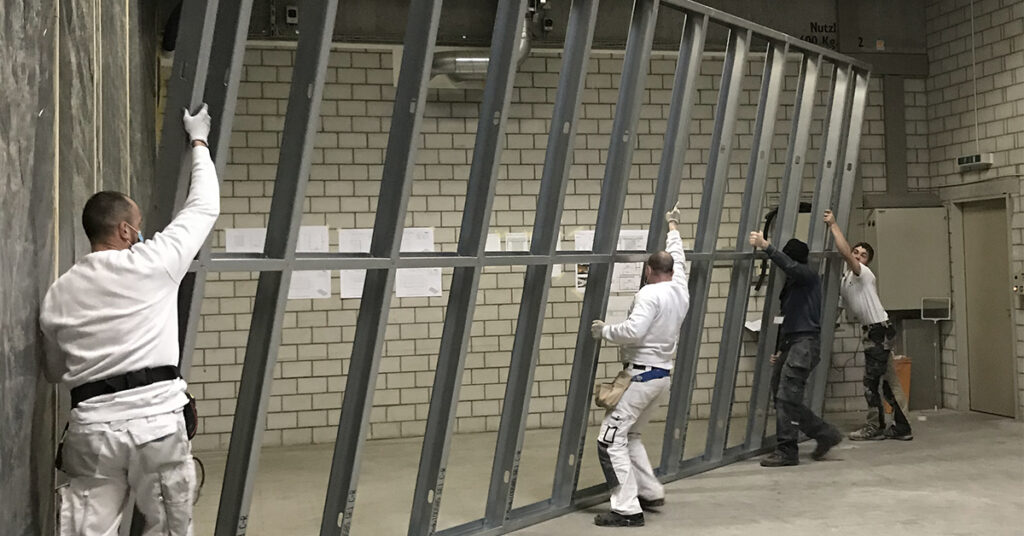
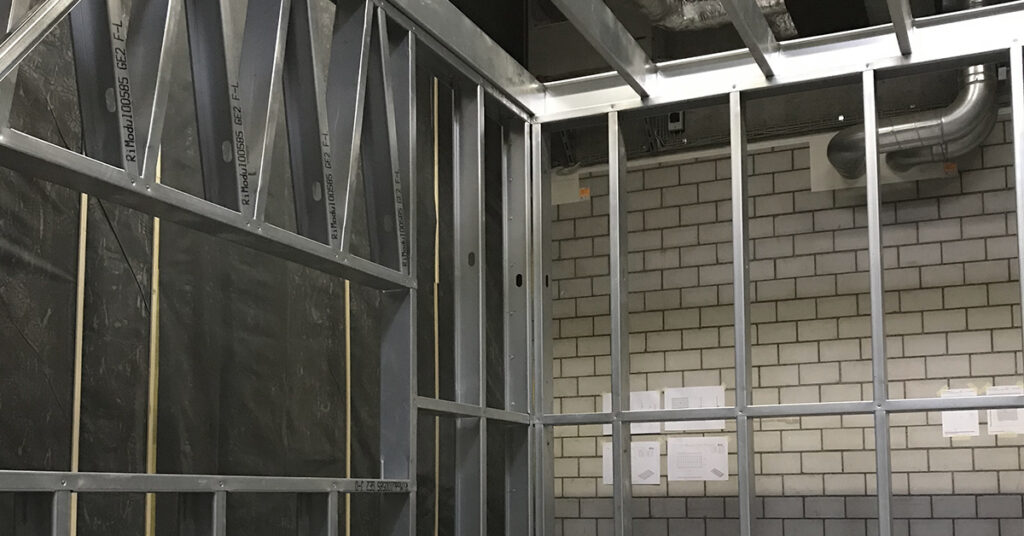
The made-to-measure and numbered steel profiles are assembled like a modular system.
Set up within a very short time: the substructure was up in just half a day.
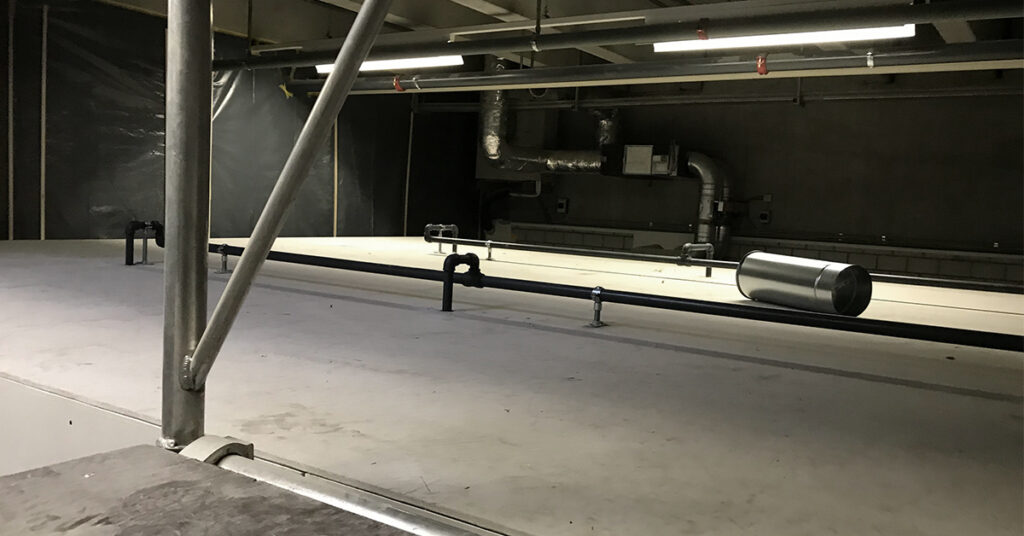
View of the walk-in ceiling of the lounge. Thanks to RiModul®, the area can also be used.
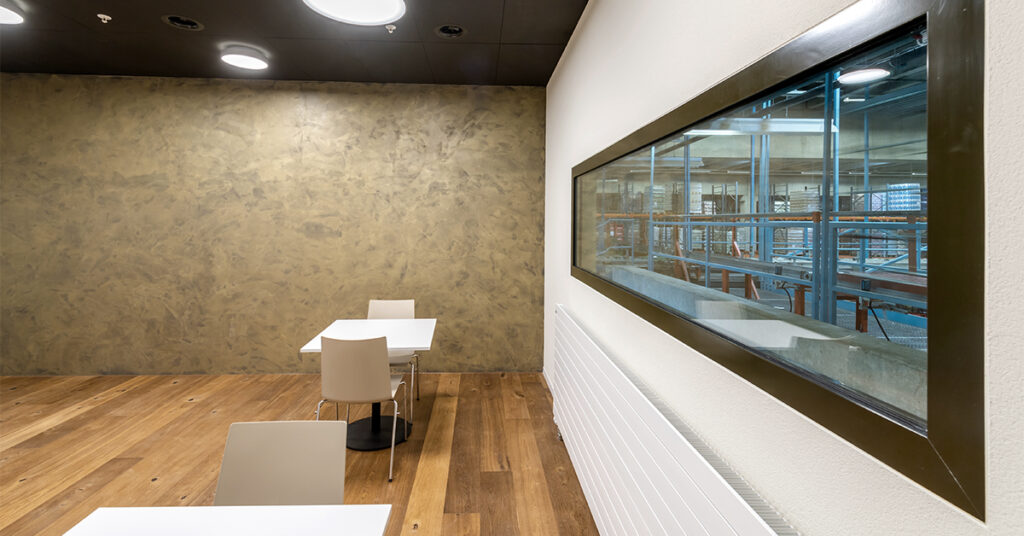
View from the new lounge into the high-bay warehouse.
In a short time, an optimally used room was created that meets the highest noise and fire protection requirements.
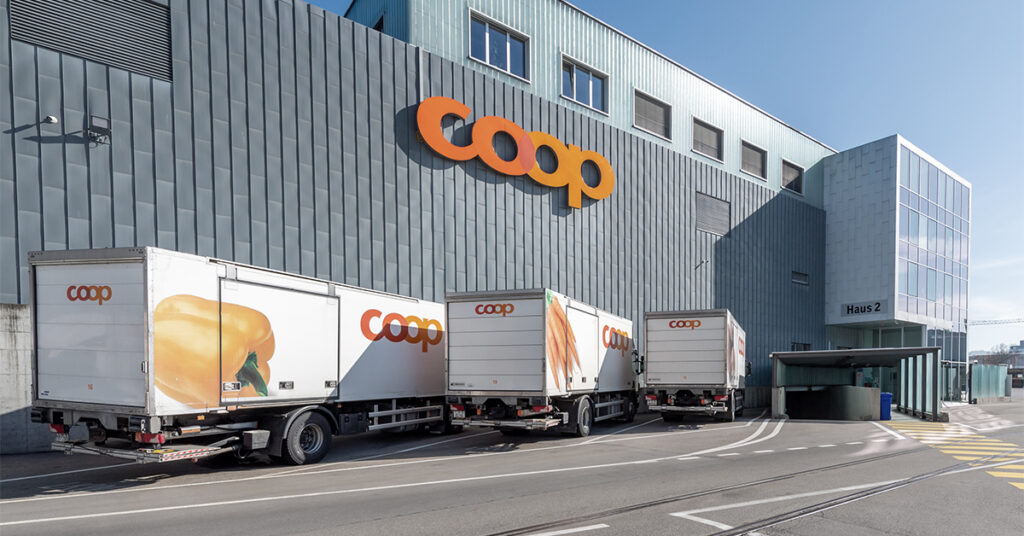
In the Coop distribution center in Gossau, employees now have a comfortable lounge.
The drywall builder was challenged: an extensive electrical and ventilation installation as well as a sprinkler system were to be integrated. A fire protection value of REI60 was also required. Since he had already completed product training at Rigips AG and knew the advantages of the new system, the case was clear: RiModul ® . The architect was also quickly convinced: "We had also checked the wood variant, but we reached the limits of the spans and would not have complied with fire protection," says Peter Fässler from MFW Architects. In addition, the slim wall constructions provide more usable space.
Walk-in room-in-room solution Coop had been considering building a comfortable lounge for its employees for a long time. A good 5 meter high room, a kind of gallery, which is also adjacent to other rooms, was ideal for this purpose. But it would have been much too big, with its sand-lime brick walls, not comfortable and not heated. A room-in-room solution therefore offered itself, which could be implemented quickly, without a lot of dirt, but in compliance with all statics and fire protection requirements. Because the assembly took place while the high-bay warehouse was in operation, everything had to be well prepared and done quickly.
Only half a day for the substructure As with all construction systems with a high degree of prefabrication, precise planning data and error-free transmission to the manufacturer were decisive. All steel profiles were cut to size and provided with the screw and punch holes to facilitate on-site assembly. The individual profiles could be efficiently screwed together using numbers and an assembly plan. Thanks to the corresponding planking, the entire construction has a fire protection rating of REI60. Plasterer Hansjörg Alder was enthusiastic: "The steel structure was in the distribution center in just half a day, and within three days it was planked and ready for expansion." You don't notice the stylish room and its quality of stay that it was delivered as a kit and set up within a very short time.
Like lightweight construction, simply much more stable RiModul ® is actually nothing more than lightweight construction with stronger profiles. They achieve the best possible ratio of strength to weight, which among other things leads to dimensionally stable constructions – that is, walkable and resilient ceilings with additional usable area – and increased seismic resistance (earthquake security). And the system is based on the principle of prefabrication, which can reduce the overall construction time by up to 60%. RiModul ® lightweight steel construction systems also result in significantly lower loads on the foundations than conventional construction methods. Complex objects in new construction and renovation can thus be realized safely, economically and with almost unlimited design flexibility. The RiModul ® lightweight steel construction systems are particularly suitable for additional storeys, extensions and, as in the case of Coop, room-in-room constructions. It also makes sense to use it as an external wall system for infilling in hybrid buildings.
In individual parts, prefabricated or pre-assembled Customers can choose from three pre-production stages according to which delivery should take place. You order RiModul ® flat if you want the individual parts and want to assemble them yourself. The profiles are numbered after processing and delivered bundled for each wall or ceiling element. With the help of an assembly plan, they can be easily assembled on the construction site or in an interim storage facility. With RiModul ® frame, the profiles are pre-assembled into frame elements in the production plant and delivered to the construction site. Planking and insulation are then carried out on site. Finally, with RiModul ® frameX, the frame elements are already planked with high-quality panels. It is advisable to make the choice of the degree of prefabrication specific to the property and already in the planning phase. Rigips designs the project in 3D based on the customer's plans and creates static dimensions and measurements. This includes, in particular, the definition of the connection and knot technology for the cold-formed steel structure. The plans for production in the factory are created on the basis of these documents.
An ecosystem is basically the interaction between different stakeholders in a defined area of a human need – for example mobility, health or living. The increasing trend towards ecosystems can be seen in different areas of life. Depending on their relationship with the end consumer, the various players in an ecosystem can assume three different roles: that of the “orchestrator”, that of the “implementer” or that of the “enabler”.
The orchestrator has direct contact with the end customer and takes over the management of the customer interface via a digital B2C platform. Well-known examples are Amazon or Airbnb. Put simply, these companies are responsible for identifying the needs of customers and matching them with the right products and services from companies. In this context, the latter are the implementers – in the “living” ecosystem, for example, providers of PropTech solutions or insurers and banks themselves with their respective products and services. The companies that act as supporters for the other two groups are enablers . These do not come into direct contact with the end consumer. In fact, most companies in an ecosystem are enablers – such as suppliers of product components or software. They form the backbone of the ecosystem, so to speak.
This interaction is essential in the increasing battle for market share. That is why more and more insurance companies and banks are also participating directly in PropTech companies – among other things, in order to be able to offer their services in a more user-friendly and cost-efficient manner by means of digitizing their own value chain. The extent to which insurers and banks will play the role of orchestrators in the future remains to be seen. What is certain is that you can secure customer interfaces through a functioning ecosystem – because many experts agree: In the future, the focus will be on digital ecosystems.
In the previous semester, a loss of just under 2 million francs was incurred. For 2020 as a whole, Ina Invest had already achieved a net profit of 3.9 million francs. With the result “again above expectations”, the company is building on “the successful previous year”, according to the announcement.
The revaluation of investment properties achieved a profit of 3.8 million francs in the half-year under review. The total value of the real estate portfolio increased by CHF 19 million to CHF 385 million. Ina Invest explains that all of the properties currently being realized are on schedule. In the announcement, the real estate company highlights the tender high-rise in Winterthur. Here, 31 of the 39 apartments have already been sold or reserved.
Ina Invest also acquired another property with a market value of more than 60 million francs in the six months under review. This means that the company has already exceeded its acquisition target for the year as a whole, the press release explains. Since the transfer of ownership will not take place until the current semester, the purchase will not yet affect the result in the half-year under review.
According to a notification from Novavest Real Estate AG , the value of the real estate company's real estate portfolio as of June 30th of this year was CHF 664.3 million. At the end of 2020, the value was 645.4 million francs. The growth was generated primarily through investments in investment properties and projects, explains Novavest. Revaluations contributed CHF 6.3 million to the portfolio's increase in value.
Rental entries increased by 8 percent year-on-year to CHF 12.6 million. Around 62 percent of rental income is currently generated by residential properties, informs Novavest. The net return on investment properties was unchanged at 3.7 percent in the reporting semester. Compared to the end of 2020, the vacancy rate increased by 0.3 percentage points to 4.3 percent.
The income was offset by direct expenses for rented properties amounting to CHF 2.0 million. Overall, Novavest's expenses increased by 6 percent year-on-year to CHF 4.4 million. The bottom line was an operating result at EBIT level of 14.5 million francs. In a year-on-year comparison, this corresponds to an increase of 29 percent. At 10.6 million francs, net profit including revaluations was 30 percent higher than in the same period of the previous year.
Raiffeisen Switzerland has examined the connection between inflation and the development of the real estate market. In their current report “ Real Estate Switzerland ”, the bank's economists come to the conclusion that the real value of real estate is a myth. The price development over the past 50 years shows that home prices do not automatically rise with inflation rates. "Only in the very long term does the home actually protect against inflation," Raiffeisen chief economist Martin Neff is quoted in a media release.
In contrast, even the biggest economic and social crisis in recent history, the COVID-19 pandemic, could not throw the Swiss rental housing market off course. “Even if inflation were to rise sharply in this country, we can still expect falling asking rents,” said Neff. In the opinion of the authors, any rising interest rates should not harm professional real estate investors.
Raiffeisen sees an accelerated structural change in the stationary retail trade. Because "it is rather unlikely that non-food retailers or restaurateurs will scramble for space that is becoming empty after the experience of the last few months".
The Raiffeisen economists paid particular attention to the “little-screened market” for building land. Buildable land is very scarce in Switzerland. At the same time, free parcels for homes and rental apartments are in great demand in the current low interest rate environment. That has caused prices to rise by almost 70 percent since 2016. Only in tourist communities have the large building land reserves and the law on second homes led to price declines. In contrast, construction prices rose only slightly.
According to a release from UBS , the UBS Swiss Real Estate Bubble Index, which is compiled every quarter by the Zurich-based bank, rose from 1.78 to 1.90 points in the second quarter of 2021 compared to the previous quarter. It remains in the risk zone between 1.0 and 2.0 points, explain the analysts of the Zurich big bank in the announcement. As drivers, they have seen sustained high price increases for home prices and accelerated growth in household debt for home purchase.
Specifically, house prices in the quarter under review were an average of 5.4 percent higher than in the same period of the previous year. Mortgage volumes rose by almost 3 percent over the same period. Here an acceleration of the increase "should be interpreted as a clear warning signal", the analysts write.
In contrast, the analysts recorded a year-on-year decline of 3.2 percent in asking rents. According to them, the unbroken high demand for residential property for the purpose of renting is primarily due to the expectation of further increases in prices on the residential property market. In individual regions in the cantons of Geneva and Zurich, the analysts have already identified a risk of overheating.
In general, "the imbalances in the home market" are likely to be "significantly higher than before the crisis" after the effects of the pandemic have been overcome, they predict in the press release. At the same time, they assume that the economic recovery will prevent the index from rising into the bubble zone starting at 2 points.
An important milestone was reached this week at the Holcim cement plant in Siggenthal. After several years of research, the special drone from the Zurich start-up Voliro carried out its first official measurement flight campaign there. According to a press release, important measurements were taken to determine the steel wall thicknesses of the cement kiln and the cyclone preheater.
Voliro, a spin-off from the Swiss Federal Institute of Technology Zurich ( ETH ), specializes in the development of flying robots for the inspection and maintenance of industrial plants. Your drones can be equipped with different sensors and carry out visual as well as thermal and contact-based measurements. A special feature of the drones is that they can rotate around all axes thanks to a special rotor system, which allows them to maneuver in vertical positions and even upside down. Thanks to the 360-degree design, they are also suitable for use when taking measurements on curved and inclined surfaces.
According to the press release, the use of such special drones at great heights is considered a world first. The method saved both time and money. The use of drones also increases work safety.
According to the information, Holcim has been accompanying Voliro's product development since 2019. The global cement company from Zug is making its infrastructure in Siggenthal available to the start-up for test flights and supporting it with its specialist knowledge.
Lucas Buschauer has received recognition from the Swiss Association of Engineers and Architects ( SIA) for his semester thesis. This has the technical college Grisons now informed . The graduate of architecture studies at the University of Applied Sciences in Graubünden is planning a revival as a brewery for some unused Crotti in Bondo in Graubünden.
The SIA specialist group for the preservation of buildings awards diploma and semester theses throughout Switzerland that present outstanding concepts for the exemplary handling of existing buildings and their preservation. This year a total of eleven works were selected.
Buschauer's semester thesis provides for the renewed use of some Crotti that were spared from the landslide in 2017. These little houses on the shady hillside were once used as natural refrigerators. He wants to convert it into a brewery and a meeting place for the village. Different uses are planned for the individual Crotti. For example, the first crotto would catch the spring water flowing by, and two more would be converted into malthouses. Four of these crotti are intended for the brewing process. He has also planned an inn and a master brewer's apartment.
"Lucas Buschauer's semester thesis impresses with its careful research, a captivating concept idea, which was implemented carefully and in detail and is presented convincingly," said the jury's explanation. As head of the study Christian Auer emphasizes, in addition to the architectural design, “the clarification of constructive and economic issues is one of the educational objectives of our architecture course. It was precisely this know-how that was required for this task. I am very pleased that the Graubünden University of Applied Sciences is competitive throughout Switzerland with its range of courses. "
“The large area offered itself for the use of solar energy. The entire system was lifted onto the roof using a crane, ”explains Edgar Stutz, Head of Technical Service at the Dielsdorf Health Center, in the press release. According to Heinz Hitz, technical sales consultant at Hoval, only around 30 systems of this size are put into operation in Switzerland each year.
The heart of the energy supply is a gas condensing boiler and the solar panels. There are two energy stores in the basement. When both storage tanks have reached the required temperature, the excess energy from the solar system is automatically transferred to an old part of the building. The system is supplemented by an oil condensing boiler, which is only used in the event of a fault.
Compared to conventional heating systems, the health center can save 120,000 kilowatt hours of energy with the new system, says Björn Zittra, Head of Sales Support at Hoval. “That corresponds to around 12,000 cubic meters of natural gas – or around 29 tons of CO2 per year,” he explains.
Bern makes the three-dimensional view of the entire city publicly available. So far it has only been accessible to municipal offices and other interested parties. An Internet browser or a newer smartphone is sufficient for access.
As the city of Bern informs , the city model includes all existing and planned buildings in the city. It also shows the most important bridges in detail. The vegetation can also be added as a 3D object or as a point cloud. The sub-municipalities were also supplemented using freely available data from the Federal Office of Topography.
As a video shows, you can find out how high the Bern Minster is by zooming, sliding and rotating. In addition, it becomes clear which shadow course a building shows on a cloudless day. With the measuring tools control element, distances and building heights can be taken from the model. For example, the linear distance between two placemarks can also be determined. Much more information is also available via a link to the city map.
Experts from urban planning, architecture and landscape design can also switch on official surveying data for their projects. For a processing fee, the city of Bern also offers to prepare and submit the data according to customer requirements.
The investment group SPA Real Estate Switzerland of the asset manager Swiss Prime Investment Foundation in Olten ( SPA ) closed the first half of 2021 with an investment return of 3.28 percent. In the same period of 2020, the return was 1.66 percent, according to a media release .
The market value of the real estate portfolio also increased significantly: from 2.31 billion francs in the first half of 2020 to over 2.8 billion francs in the first half of 2021. This is due to transactions and investments. SPA added four properties worth CHF 118 million to the investment group's portfolio, including a retirement center in Bern and five apartment buildings in Schüpfheim LU.
“The overall portfolio has shown a strong appreciation of CHF 33.8 million net due to the positive developments in new construction projects and marketing success,” the press release continues. The vacancy rate has also fallen from 4.17 to 3.34 percent.
The investment group SPA Living + Europe, which was launched in 2020, also closed the first six months of this year successfully with a 4.4 percent return after the first transaction. The profit results from the purchase of five retirement and care properties in Germany.
An open day will take place on September 4th to mark the opening of the KREIS House . From 1 p.m. to 6 p.m., the Synergy Village in Feldbach, on which the research project of the Zurich University of Applied Sciences ( ZHAW ) is located, is accessible to all interested parties. You can try out the construction techniques of the KREIS house yourself. There will also be a market with sustainable local products.
Efficient resource-to build the climate and sufficiency building was in May this year started . With this project, the ZHAW Department of Life Sciences and Facility Management ( LSFM ) wants to show how circular economy can be implemented on a reduced living space of 40 square meters. As the ZHAW writes in its invitation, everything in this house is in circulation – from the building materials to the nutrients from the wastewater for fertilizing the roof garden.
Research is constantly developing new, recyclable technologies, materials and concepts for use in buildings, according to the LSFM project description. But the path from basic research to broad application is a long one. Therefore, the KREIS house is providing a room to try out these new technologies and materials. With their feedback, visitors contribute to improving it.
In future, the ZHAW will be offering regular visits. They can be viewed online, as can dates for regular workshops on specific cycle issues. The overnight stays in the KREIS Haus are currently fully booked. The LSFM is also available for individual and cycle-oriented construction advice.
The Institute for Spatial Development (IRAP) of the OST – Ostschweizer Fachhochschule has published a free step-by-step guide for questions about redensification in small communities. It is intended to support communities with fewer than 10,000 inhabitants to prepare their own settlement strategy, according to a media release .
A total of 95 percent of the municipalities in Switzerland have fewer than 10,000 inhabitants. The correspondingly small administrations often do not employ any specialist staff for spatial planning. According to a press release, this means that nobody cares about high-quality settlement densification. Since the revision of the Spatial Planning Act 2014, however, localities have only been allowed to develop within their existing area in order to prevent urban sprawl.
The free guide of the IRAP is intended to give you a start. The paper comprises seven chapters on 40 pages and is intended to answer questions such as "how much growth can our community expect?", "Where in our building zones makes the most sense of densification?" And "how do we launch these projects?".
"With this methodology, qualified spatial planners should be able to work out an interior development strategy for the entire municipality within a maximum of 200 to 300 hours for communities with up to 10,000 inhabitants, and thus for less than CHF 50,000" -Professor Andreas Schneider quoted in the press release.
The complete method manual is available online for download free of charge.
Sika AG expands in Central America and takes over Bexel Internacional SA de CV . The acquisition of the family company will significantly increase the production capacity of the producer of construction chemical product systems and industrial sealants and adhesives, according to a media release . Bexel achieved sales of 35 million francs in 2020.
Bexel has five production sites, including Mexico City, and primarily supplies hardware stores and building materials dealers. The takeover is intended to strengthen Sika's market position in this rapidly growing metropolitan region. In addition, Sika hopes that the purchase of Bexel will generate sales synergies for its products.
“Thanks to Bexel, we can ideally expand our geographical presence and our range on the large Mexican market for mortar products in the building finishing sector. So we have together, not least because of the improved market access, an excellent basis for further growth and a strong position in this market. We warmly welcome all new Bexel employees to the Sika team and look forward to a successful future together, ”said Christoph Ganz, Regional Manager Americas at Sika, in the press release.
A research group from the University of Life Sciences ( HLS ) of the University of Applied Sciences Northwestern Switzerland (FHNW) gives the all-clear: their tests show that the lead contained in the new perovskite solar cells is just as little washed out as all other functional metals, even if there is any weather damage. The cells were able to withstand rainwater and hail tests without the metal concentration in the rainwater increasing noticeably.
The prerequisite for a low environmental risk is that the solar cells are packed according to commercial standards. But "even with poor packaging, only 5 to 10 percent of the total lead content in rainwater was measured over several months," HLS doctoral student Felix Schmidt is quoted in a report by the FHNW. “We currently see little cause for concern with regard to the possible environmental impacts of lead.” However, this sensitive topic must be communicated transparently with regard to the social acceptance of this technology.
Permoskite solar cells are considered to be the future of photovoltaics. Tremendous advances in research have increased their efficiency from initially 3 to almost 30 percent in the past few years. It is thus just above that of traditional silicon cells.
Perovskite is the collective term for new materials, the crystal structure of which is similar to the natural mineral, also known as perovskite. Perovskites absorb light particularly efficiently and conduct the electricity generated well. They are both inexpensive and easy to manufacture and process. Among other things, two national research programs are running in Switzerland. They are designed to encourage the rapid adoption of this disruptive technology.
Now you have to think about “what will happen to the solar cells at the end of their lifespan”, continues Schmidt. "That is why we are currently developing ways to completely extract lead from old cells and use it again in new cells."
The Zurich index of residential construction prices, which is collected annually, rose by 1.1 percent to 1057.7 points between April 2020 and April 2021, explains the building insurance of the Canton of Zurich ( GVZ ) in a message . The independent public company will nevertheless keep its insurance index based on the construction price level unchanged at 1025 points in 2022.
The GVZ last adjusted its insurance index to 1025 points in 2009, the communication further explains. At the same time, the insurance values of the buildings in the canton of Zurich were revised. “The long-term constancy of the index is desirable from an actuarial point of view because it has a positive impact on premium stability,” explains the company.
In general, the GVZ insures buildings at their new value, the message goes on to say. Property owners can, however, have a new appraisal carried out at any time. This is particularly useful after value-adding investments in order to avoid a possible underfunding of the insurance cover for the property.
The University of Basel is planning to build a new building for the Department of Biomedicine on the site of today's Biozentrum on the Life Science Campus Schällemätteli, the university informs in a message . The department's 70 research groups, which are currently spread across five locations, are to be brought together in the new research building.
Researchers from basic medical research and from university hospitals are active at the Department of Biomedicine. In the new research building, they will be provided with “the most modern infrastructure and the best framework conditions for high-performance research”, according to the announcement. In this way, the university wants to promote scientific and interdisciplinary exchange and strengthen its own competitiveness.
The planned building will have around 35,000 square meters of space on two basement and nine upper floors, writes the university. It will be directly adjacent to the pharmaceutical center and offer space for around 700 employees and 200 students. The close proximity to the new buildings for the Biozentrum of the University of Basel and the Department of Biosystems of the Swiss Federal Institute of Technology in Zurich also enables researchers on the Schällemätteli life science campus to “share complex and costly key technologies”.
The University of Basel will raise the funds for the new building on the financial market, the communication further explains. Construction is scheduled to start in 2023, and the building should be ready for occupancy in 2029. The building application was submitted to the building and transport department of the canton of Basel-Stadt on August 4th. The total contractor responsible for the new building will soon be determined via a public tender.
Wingtra , a spin-off from the Swiss Federal Institute of Technology Zurich ( ETH ), manufactures special drones for aerial photography and remote sensing. It combines the positive properties of multi-rotors and fixed-wing aircraft. The Wingtra drone takes off and lands vertically like a helicopter. At the same time, however, it flies forward as efficiently as an airplane. Thanks to its high payload, the drone can also carry a wide range of cameras.
Wingtra recently launched the WingtraOne GEN II. This drone enables a new, angled camera configuration for high-quality 3D drone mapping. In order to use the development immediately, Wingtra has created a digital twin of the city of Zurich.
According to a media release , the drone only needed six hours of flight for the 3D mapping of the city of Zurich. One pixel in the 3D model corresponds to 3 centimeters of information from the real world. It thus represents "a completely new level of detail".
According to Maximilian Boosfeld, co-founder and CEO of Wingtra, the new Dorohne is “the perfect choice for capturing infrastructure – from a single industrial plant to entire cities”. Detailed 3D data could help city administrations, town planners, engineers and architects, for example, to increase the quality of life in urban areas, to plan critical infrastructures and to simulate changes in the environment.
The monthly rent index compiled by the digital real estate marketplace homegate.ch from TX Group in cooperation with Zürcher Kantonalbank closed unchanged at 115.4 points in July compared to June, explains homegate.ch in a corresponding message . In contrast, an increase in rental prices of around 0.7 percent has been observed over the past twelve months. In the individual cantons and cities, the index analysts observed different developments on a monthly basis.
In the cantons of Geneva and Zug, asking rents in July were 2.5 and 3.5 percent lower than in June. In the cantons of Obwalden and Graubünden, however, they increased by around 1 percent each. “Given these fluctuations, when looking for a property it can be worthwhile to look outside the box and compare offers well over time,” said Fabian Korn from Homegate in the press release. In most of the other cantons, only minor changes in rental prices were observed.
In terms of cities, the analysts highlight the city of Geneva with a decline of 2.15 percent in July. At the other end of the scale is Lugano, with asking rents up 0.7 percent compared to June. The communication provides an interactive overview of developments in the cantons and metropolises.
When recording the rental price changes for the rental index, the rental prices are corrected for different quality, location and size of the apartments, is explained in the communication. This makes it possible to record the actual rental price development.
For the first time, Raiffeisen Bank is also presenting its entrepreneur award in the Espace Mittelland region. With this award it honors SMEs who are committed to “economically sustainable business development”, according to a media release . The six nominees have now been chosen.
Megasol Energie AG from Deitingen SO is one of them. According to Raiffeisen, the SME is one of the world's leading manufacturers of solar modules. In 2014 Megasol Energie presented a solar module that will be used as a building material for the building envelope – a world first at the time.
Puralpina ag , Wyssen Avalanche Control AG , Studersond AG and Stuberholz AG are among the nominees from the canton of Bern. Puralpina ag manufactures products for health in Switzerland, Wyssen Avalanche Control AG specializes in avalanche blasting systems, Studersond AG is a manufacturer of machines for soil digestion and Stuberholz AG specializes in timber construction.
Krummen Kerzers AG from the canton of Friborg is one of the nominees. The logistics company operates internationally and attaches great importance to sustainability.
The winning company will receive a trophy and prize money of CHF 10,000. In addition, an audience award worth CHF 5,000 will be awarded. The award ceremony will take place on September 9th.
With its Soil Strategy Switzerland, the Federal Council wants to counteract further soil loss through soil activity, erosion or pollutants. The main concern is that no more land is lost net in Switzerland by 2050. The booklet just published by the Federal Office for Spatial Development in the series “ Forum Spatial Development ” with the title “Dealing with the soil sustainably – the responsibility of spatial development” shows how it can be possible to preserve the soil in the long term.
It is no coincidence that this goes hand in hand with the also declared net zero target for CO2 emissions, according to Damian Jerjen, Director of the Association for Spatial Planning EspaceSuisse, in a press release by the Federal Office for Spatial Development: "Spatial planning is responsible for its instruments to use for climate protection and thus also to protect the soil. ”Because, on the one hand, these must make a maximum contribution to climate protection. On the other hand, they would help to adapt to the inevitable consequences of climate change.
In the booklet, Adèle Thorens Goumaz, Councilor of States (Greens / VD) and biodiversity expert, calls for greater specialist knowledge of soil quality to be developed. The decentralized decision-making structure represents an obstacle to sustainable soil management. In an interview, she suggests that we first come to an agreement on the agriculture of the future. "Only then should we start working on spatial planning, not the other way around."
A report also included in the booklet describes the renaturation work after the construction work on the Ceneri Base Tunnel has been completed. There, enormous masses of earth are returned to their original parcel. They are built into fertile soil and can be used for growing vegetables after a few years.
Outdated concrete structures have long been reinforced with carbon fiber reinforced plastics (CFRP), Empa explains in a press release . Empa researchers have now further developed this technology. Your CFRP lamellas can actively counteract the deflection of concrete beams.
To do this, the slats are glued to the beams with epoxy resin under tensile stress. After the connection has hardened, the tensile stress counteracts the deflection of the beams. The researchers have also improved the previous method for attaching the ends of the strips. Instead of glued and screwed aluminum plates, specially developed CFRP brackets are used.
"A solution made from a single material is always better than two that behave differently," Empa researcher Christoph Czaderski is quoted in the press release. “We made a lot of tests in the laboratory, especially for the anchoring.” According to the announcement, the new technology can increase the load-bearing capacity of a concrete slab by 77 percent compared to the classic method.
The next step is to bring the process to market maturity. To this end, Empa is working with S&P Clever Reinforcement Company in Seewen SZ as an industrial partner. An industrial process is currently being developed for the hangers that have previously been handcrafted, according to the announcement. Martin Hüppi believes the process is “justifiable in terms of price for building owners”. “I absolutely see a market for this,” explains the S&P project manager in the press release.
Wir verwenden Cookies zur Unterstützung und Verbesserung unserer Dienste. Mit der Nutzung dieser Website erklären Sie sich mit der Verwendung von Cookies einverstanden. Weitere Informationen finden Sie in unserer Datenschutzerklärung.