Sky-Frame from Frauenfeld and the WITG are jointly investigating whether a global corrosion index can be developed on the basis of available weather and climate data. This project is being supported with an innovation cheque from Innosuisse. The maximum funding amount of CHF 15,000 from the Swiss Innovation Agency is a credit for a preliminary study. It enables ideas, idea studies and analyses of innovation and market potential to be commissioned from a Swiss research partner and collaboration with this partner to be tested.
The WITG is contributing its expertise in corrosion and the evaluation of material properties to the project with Sky-Frame. According to a press release, the first step involves linking real project locations with available climate databases and systematically analysing existing empirical values from the application. Taking into account factors such as proximity to the sea, wind direction and project-specific microclimate conditions, this will result in an initial, scientifically sound approach to risk classification.
“This project is an example of how innovation ideas do not have to be in the realm of ‘rocket science’ in order to be funded,” says the WITG. Instead, they should offer the company a sustainable benefit and future added value and include a risk component during implementation and thus the possibility of failure.
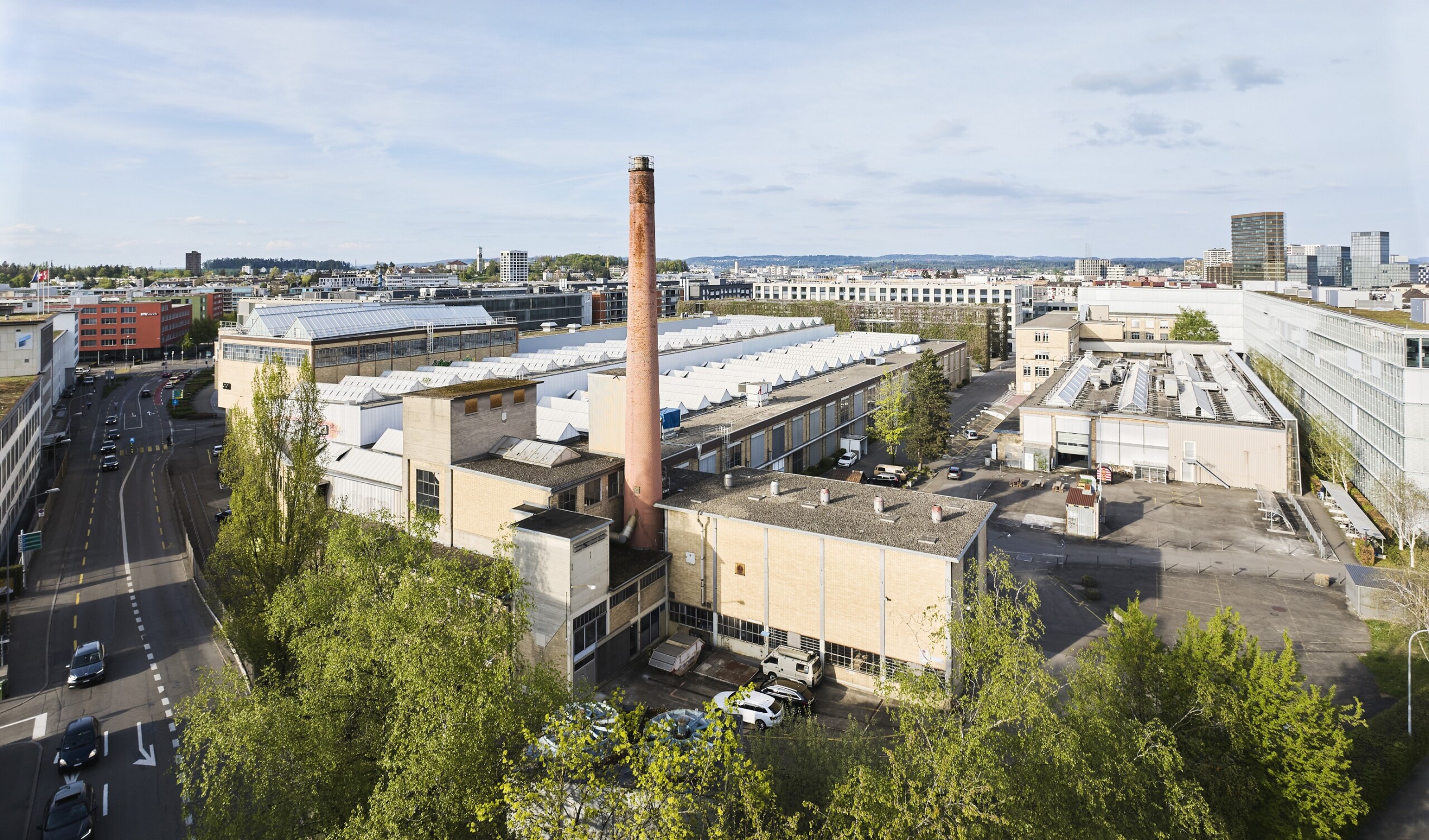
The Swiss Federal Institute of Technology Zurich (ETH) is planning to establish the ETH Learning Factory Zug within the Tech Cluster Zug – an industrial and innovation hub operated by Metall Zug AG. According to a press release, the Learning Factory will enable students, vocational trainees and experts from research and industry to work together on real-world challenges facing industry and society.
The project is supported by ETH, the Canton and City of Zug, and a total of nine Zug-based companies. The Learning Factory will focus on topics such as industrial automation and digitalisation, sustainable systems and digital learning. Around 20 full-time positions are planned on-site for operations, teaching and research. The new learning and working environment is set to include modern workshops, digital learning spaces and meeting areas for interdisciplinary collaboration.
The first phase is scheduled to last ten years and will cost a total of around 110 million Swiss francs. The Canton of Zug intends to contribute 55 million Swiss francs to the funding, and the City of Zug 27.5 million Swiss francs. Further contributions will come from business partners and from services provided by ETH.
Political decisions still need to be made before implementation can begin. In addition to resolutions by the Cantonal Council and the Grand Municipal Council, a referendum is planned in the city of Zug. If approved, the refurbishment could begin in 2027, with commissioning planned for 2029.
According to a press release, the family business impressed the jury with its combination of cross-generational business activities, international competitiveness and regional loyalty. With its patented sunshade frames, a high level of vertical integration, an in-house sewing workshop and uncompromising quality standards, GLATZ AG is a trendsetter in shade solutions – at a time when the international low-cost market is squeezing out many competitors. The large sunshades from Frauenfeld, which can withstand wind speeds of up to 115 kilometres per hour, are exported from Thurgau to over 50 countries.
“The company has been firmly rooted in Thurgau for over 130 years – and at the same time carries the quality and innovative spirit of Thurgau as a centre of industry out into the world,” says Thomas Koller, jury president of the Thurgau Business Award.
The move to the new headquarters on Langfeldstrasse in Frauenfeld in 2024 shows that GLATZ AG will remain rooted in Thurgau in the future. The new building, which combines research and development, production, administration and a modern training centre under one roof, was also built with a focus on sustainability. Photovoltaic systems, energy-efficient heating and cooling systems and shorter transport routes reduce the CO2 footprint.
The award ceremony will take place on 15 April 2026 at GLATZ AG in Frauenfeld.
Maulini SA was awarded the Prix SVC Genève 2025 on 27 November, according to a press release. Founded in 1910, the company employs around 270 people. It is active in the construction of new residential, industrial and administrative buildings as well as the renovation, transformation and insulation of listed and contemporary buildings in Geneva and the region. The company has also been offering services as a general contractor for ten years.
The jury of the Prix SVC was impressed by the history of the family business with its four generations and the commitment of the teams and management. “In a sector where it is not easy to anchor innovation in everyday life, we have been able to observe the development of a family business that consistently endeavours to ensure its impact and sustainability,” said jury president Sophie Dubuis in the press release. “This award recognises its strong local roots, its innovative spirit and its excellence.”
This is the third time that the Swiss Venture Club(SVC) has awarded the Prix SVC Genève. More than 700 guests from business, politics, society and the media attended the award ceremony at the Bâtiment des Forces Motrices in Geneva. The aim of the event was to “highlight the entrepreneurial diversity of the region”, according to the press release.
BaselCircular is not a traditional funding initiative, but forms the basis for a new innovation ecosystem in the region. As a public-private partnership, the initiative is working with the Basel business community to develop structures that combine knowledge, research and entrepreneurship. At the centre of this is the networking of established companies, start-ups and universities. They form a system that promotes innovation, shares knowledge and makes circular business models marketable – according to the principle of “enabling the enabler”.
Knowledge, technology and cooperation A central field of action is the creation of digital platforms for knowledge exchange and cooperation. Practical tools and expert systems are being developed in collaboration with the University of Applied Sciences Northwestern Switzerland and other scientific partners. AI-based tools are planned to make it easier for companies to adapt circular solutions. However, personal exchange remains crucial, as technology serves as an amplifier for human collaboration.
Inspiring the next generation The network aims to inspire young people to become entrepreneurs in the circular economy. Together with educational institutions, programmes are being developed to promote start-ups. Existing start-up support centres are supported in firmly integrating sustainability into their competitions and training courses.
Shaping the future A survey of companies in Basel has shown that knowledge and implementation levels in the circular economy vary greatly. BaselCircular is responding to this with customised offers and close collaborations, initially in the construction and life sciences sectors. Further areas will be added from 2025. This is a clear signal that Basel is actively strengthening its role as a centre of innovation and is resolutely driving forward the transformation towards a resource-efficient economy.
Renewable electricity can be stored in chemical energy carriers such as hydrogen, synthetic fuel and methane (Power-to-X). According to a press release from the Swiss Power-to-X Collaborative Innovation Network SPIN, more than 50 projects in this area are already underway in Switzerland.
Together with the Coalition for Green Energy & Storage(CGES), SPIN is therefore launching a tracker that provides an overview of known projects in Switzerland. The resulting map makes visible those projects that have gone beyond laboratory tests and have already become demonstration projects or even commercial applications. SPIN collects the data, CGES visualizes it.
“The tracker facilitates collaboration by providing a structured database that promotes synergies between stakeholders and supports decision-making,” Christoph Sutter and Antonello Nesci, co-directors of CGES, are quoted as saying in the press release.
Martin Bäumle sees power-to-X technologies as the key to defossilizing the economy. “With the tracker, we are creating transparency, strengthening collaboration and helping to turn promising ideas into scalable solutions,” said the National Councillor (Green Liberal/ZH) and Co-President of SPIN. “Reliable data can help policy makers to adapt regulations and investors to identify new opportunities.”
The map will be presented at the CGES annual event, which will take place on November 21 at Swissgrid in Aarau. CGES is a coalition of partners from business, academia and the public sector for green energy, founded by the ETH Domain.
Living and working in the Basel region means being part of one of the most dynamic metropolitan areas in Europe. Between the pharmaceutical campus, architectural icons and growing start-up ecosystem, the region is a powerful driving force in Switzerland. The Basel metropolitan region is one of the most powerful business locations in the country. With an exceptionally high export rate and internationally leading companies in the life sciences, medtech, chemicals and ICT sectors. Over 30,000 people work here in the research, development and production of future technologies.
A new era of value creation is emerging in the Basel region with sites such as uptownBasel and Klybeckplus, which are networked, climate-conscious and internationally oriented. Companies find short distances to research, talented people find new professional horizons and the location promotion programs of the cantons of Basel-Stadt and Basel-Landschaft, as well as Basel Area, accompany companies from the idea to expansion. Whether promoting innovation, developing skilled workers or ESG-compliant new construction projects, the region makes targeted investments in sustainable growth.
Did you know that..
an urban quarter is being created on the bi-cantonal Dreispitz site that combines working, living and culture in a new way?
the Klybeckplus site is being developed according to the SNBS standard and will provide space for 15,000 people to live and work?
the BaseLink site in Allschwil is attracting worldwide attention as a center for biomedical research?
Basel is one of the world’s top regions for life sciences?
innovative energy solutions from the region are contributing to the decarbonization of Switzerland?
start-ups from all over the world settle here because of the proximity to cutting-edge research and capital?
Where business and quality of life go hand in hand Basel is strong because of its cross-border thinking. The tri-national cooperation with Alsace and South Baden creates a cross-border economic area with a high level of innovation. The region benefits from international connections via EuroAirport, efficient rail logistics and links to the world’s oceans via the Swiss Rhine ports. Behind the scenes, there are dedicated location promotion agencies that assist companies with relocating, finding space, obtaining permits and networking. From start-ups to industrial groups – Basel offers everything from a single source. Basel is not an either-or. Basel is the whole. The future is being created here today.
The Basel economic area in figures
Basel-Stadt
ECONOMY – KEY FIGURES
Businesses
16’000
Leading sectors
Chemicals/pharmaceuticals, life sciences, financial services, trade, logistics, healthcare
Jobs / employees
200’000
Employees 1st sector (agriculture)
100
Employees 2nd sector (industry/construction)
34’000
Employees 3rd sector (services)
166’000
GDP per capita in CHF (2022)
209’782
Unemployment rate (2024)
3,7%
Start-ups founded
1’304 (2024)
REAL ESTATE – KEY FIGURES
Vacancy rate apartments
0,9%
Vacancy rate office/commercial properties
1%
Residential units in planning/construction
11’000
Office and commercial properties in planning/construction
10-15 projects per year
New construction projects
40-50
Average construction costs for commercial properties in CHF
3’000 – 4’800/m²
LOCATION – KEY FIGURES
Area in km²
37
Population (2024)
207’515
Population growth compared to previous year
0,58%
Districts Number
3
Municipalities Number
3
Housing units
138’000
Universities
4
Stops Regional and long-distance public transportation
Ticino has been part of the national Switzerland Innovation initiative since 2021. In November 2024, the park was officially recognised as the Zurich Park location. With the newly founded Switzerland Innovation Park Ticino SA, the canton, business and universities are joining forces to sustainably strengthen the region’s innovative power.
Synergies with Europe and the Greater Zurich Area The strategic location makes the park a bridge between two European economic centres, Zurich and Milan. As a member of the Greater Zurich Area, Ticino is gaining international visibility and attracting investment and companies from innovative sectors. At the same time, there are close links with the MIND Milano innovation district, which was created on the Expo site in Milan.
Competence centres for future technologies Three competence centres are currently being created in Park Ticino in areas with high potential: drone technologies, life sciences and applications in the leisure and healthcare sector. These centres promote research, development and knowledge exchange, creating an ecosystem that supports innovation from the idea to market maturity.
Future location NewOfficineDistrict Bellinzona The final headquarters of the park will open after 2032 in the New Officine District in Bellinzona. On 25,000 square metres, a platform for research and entrepreneurship will be created, embedded in a new urban quarter of 120,000 square metres with living space, companies, administration, culture and leisure. The site benefits from its location right next to Bellinzona railway station, as the northern gateway to Ticino after the Gotthard Base Tunnel.
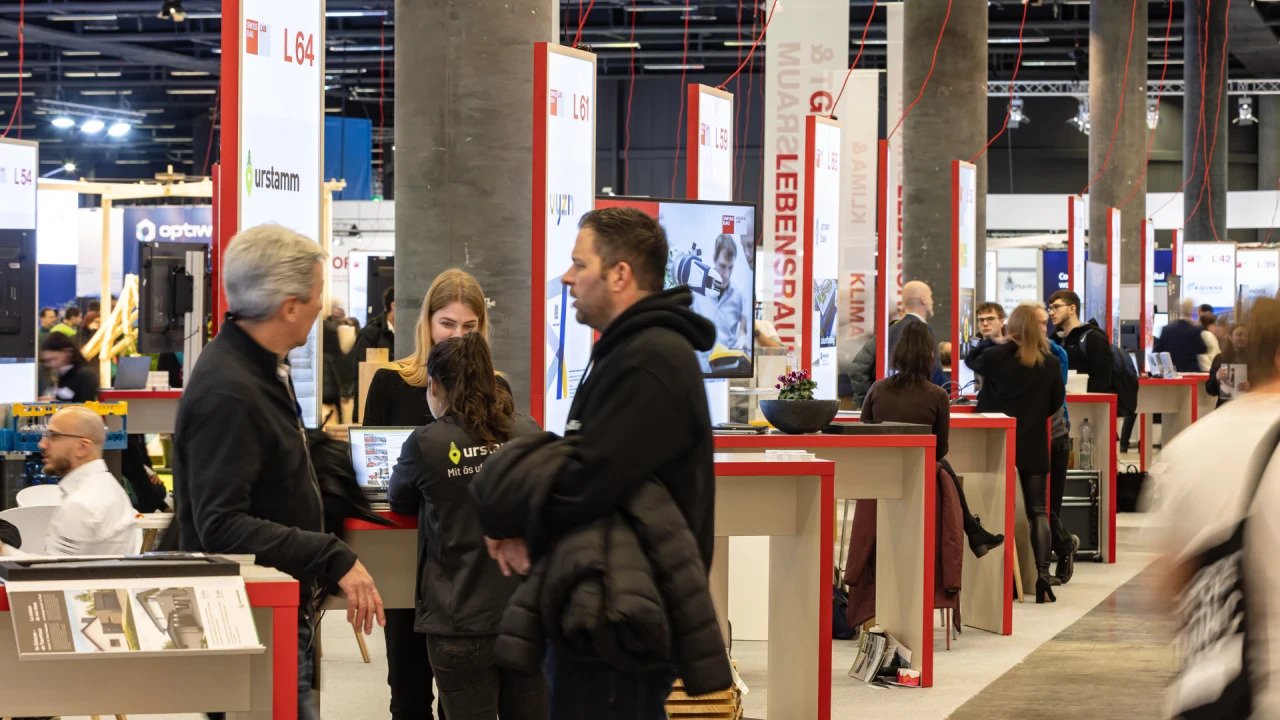
Collaboration has always been the defining theme of Swissbau: meeting in person, acting together, helping each other move forward. For the next edition in January 2026, the trade fair organizer is increasingly focusing on positive synergies. Joint development is not only practiced in the Swissbau Focus & Lab collaboration platforms, the exhibition areas of the trade fair have also moved closer together both spatially and thematically. This is particularly evident in the newly staged Hall 1.2, which provides an atmospheric stage for the entire interior design sector.
Trend world interior design for design enthusiasts Newly positioned in Hall 1.2, the Swissbau public will encounter a world of bathroom innovations, trendy surfaces, atmospheric lighting and high-quality contract furnishings. The shared level for interior design offers space for discoveries and an in-depth exchange with renowned manufacturers and new brands. The highlight: the new Trend World in Hall 1.2 is also open on Saturday. Thanks to the Swissbau Focus with partner lounges, info points and events, the weekend visit leads directly to the Trend World via escalators.
Experience the trade up close Swissbau’s eye-catchers in Hall 1.0 on the first floor are undoubtedly two real construction projects that are being built and developed in parallel by various trade businesses. In a steel hall, metalworkers, electricians, gate and door builders demonstrate their skills. In the two-storey residential building, woodworkers, plasterers and tilers can be seen at work. Both buildings will be completed on the construction site after Swissbau. The “Treffpunkt Handwerk” has even more to offer: In addition to playful activity areas and a forum with practical topics, craft businesses and topic-specific exhibitors will be presenting themselves in the surrounding area. A spacious BauBeiz invites you to talk shop.
Benefit from the exchange with experts Swissbau Focus in Hall 1.0 and Swissbau Lab in Hall 1.1 are the best examples of an interdisciplinary dialog on current challenges and future trends in the industry. Leading associations, institutions and universities will contribute their positions to the Swissbau Focus event platform. Trade visitors can discover and try out suitable products and market-ready solutions in the Swissbau Lab. Visitors will also benefit from an enlarged Swissbau Workshop, where they can scrutinize innovative applications in practice. Participation in the extensive program in the Swissbau Focus and Lab is included in the admission ticket. Event registrations are easy to complete on the Swissbau website and should not be missed in any trade fair preparation for an optimal gain in know-how.
A colorful marketplace for plaster and paint A new-born cooperation with the Swiss Painting and Plastering Contractors’ Association SMGV offers insights into innovative techniques, high-quality materials and sustainable solutions in the creative sector in Hall 1.1. With its presence at the multi-industry trade fair, the association aims to position itself more strongly with architects, planners and other construction professionals. Highlights of the themed area include the “Swiss Prize for Plaster and Paint” exhibition and award ceremony on January 22 in the Swissbau Focus, live training sessions by two newly crowned Swiss champions for the WorldSkills in Shanghai, the “SMGV-Marktblitz Spezial” industry get-together on January 21 and 23 and a “Maler-Gipser-Stübli” for personal discussions. The SMGV training centers will present practical examples of their diverse industry sectors. In the painter-plasterer workshop, experienced craftsmen will show how facades are designed with decorative plaster structures.
Valuable partnerships Before exhibitors and partners take command of the halls on Tuesday morning and unveil their innovations, Swissbau will be opened by Bauenschweiz, the umbrella organization of the Swiss construction industry. In discussions with people from politics and business, the core group of the finishing trade and building envelope, as the industry with the highest turnover, will focus on its importance, needs and further development at the opening ceremony. The continued relevance of Swissbau in 2026 is also demonstrated by renowned partnerships. The Swiss Society of Engineers and Architects (SIA), the Swiss brand LAUFEN and the new partner Abacus Business Solutions are making a major commitment and contributing their specialist expertise to the trade fair’s offering.
Swissbau under new management Rudolf Pfander has been at the helm of Swissbau for 25 years and has successfully led it into the modern era. In order to take on new tasks for MCH Exhibitions & Events after the 2026 edition, he handed over the reins to his deputy Tobias Hofmeier in September. The 36-year-old from Lörrach has been in charge of Swissbau project management and the successful development of the Swissbau Focus and Lab collaboration platforms since 2020. Rudolf Pfander emphasizes: “Tobias is the perfect successor for Swissbau. He knows the needs of exhibitors, partners and visitors inside out and is also aware of the future development opportunities for the trade fair.”
Swissbau 2026 – the leading platform for the construction and real estate industry in Switzerland
Exhibition duration, opening hours 20.- January 23/24, 2026 Tuesday to Friday, 9 a.m. to 6 p.m Saturday additional day Interior Construction and Swissbau Focus, Hall 1.2 and Hall 1.0 South, 9 a.m. to 4 p.m
Despite its supposed resilience, Switzerland is no longer an island where global industry impulses have no effect. Issues such as digitalization, housing shortages and climate pressure are increasing the pressure on market players to act. At the same time, regulation remains a key area of tension. How much state intervention is appropriate so that innovation does not come to a standstill, but undesirable developments are corrected? It is precisely this interplay that the Group of Fifteen symposium is dedicated to with positions and multi-perspective contributions
Positions from reputation to regulation This year’s panel brings together experts from a wide range of disciplines. Prof. Dr. Christian A. Schaltegger will focus on the balancing act between image, influence and innovation. For him, an environment of trust is essential if the industry is to develop sustainable and forward-looking investment models.
Prof. Dr. Christian Kraft uses empirical examples to shed light on the extent to which the use of AI can help to safeguard investment decisions despite regulatory uncertainties. His experience shows that data-based decision-making aids are becoming increasingly important. However, this creates both new opportunities and risks.
Use concepts and participation as levers Dr. Sibylle Wälty from ETH Zurich introduces a new urban planning perspective with the 10-minute neighborhood model. She shows how dense, heterogeneous neighborhoods strengthen urban qualities and achieve sustainable added value. The focus is on the aspect of social acceptance and the early involvement of local stakeholders.
Legal expert Dr. Wolfgang Müller describes the often underestimated influence of rights of objection and their effect on project sponsorship and time horizons, between democratic participation and a brake on innovation.
Transformative approaches and industry dialog It is important to look ahead. Paolo Di Stefano presents practical strategies to ensure that real estate portfolios remain resilient even under changing conditions. In the “Future Talk”, National Councillor Beat Walti and Government Councillor Esther Keller will discuss what the sector could look like in ten years’ time. In particular, how legislation, sustainability and social change should intertwine to enable progress instead of stagnation.
Platform for dialog and transformation The Group of Fifteen is more than just an industry network. It offers an independent platform for dialog that regularly brings together experts from the fields of real estate, law, politics and science to develop new approaches. They constructively support the industry’s transformation process, provide guidance and raise awareness and that, ultimately, collaboration, openness and commitment form the basis for genuine innovation.
The site extends over 115,000 square meters, structured around a central park that acts as a social and creative heartbeat, promoting communication and creating encounters. The striking main buildings, Main Campus HQ, HORTUS, ALL, SCALE, HOPE, Swiss TPH, ALBA Haus, Innovation Garage, Holiday Inn Express and the parking garages, create a visionary structure. Each building is more than just space. HORTUS is a prime example of the circular economy and sustainable urban development, ALL combines flexible working and laboratory landscapes in a new architectural idea, SCALE and HOPE are aimed at growing biotech and medtech industries, while Swiss TPH and ALBA Haus combine expertise in public health and research.
Sustainability and community The cluster offers more than just space. Radically sustainable construction, energy recovery from photovoltaics, green roof landscapes and a self-regenerating campus park set new standards for urban development. With coworking, intellectual exchange zones and gastronomy, innovations are created in everyday life. Up to 8,000 workplaces will be created on the site and supplemented with sports, educational and leisure facilities.
The Botnar Institute of Immune Engineering In 2027, the Botnar Institute of Immune Engineering (BIIE) will move into a new building on the campus. Endowed with one billion dollars by the Fondation Botnar, BIIE will focus on international immune-based research and therapies, especially for children and adolescents. As an anchor tenant in the ALL building, the institute will attract up to 300 researchers, putting Basel on the global map for cutting-edge research. The decision in favor of Basel was made against major international applicants from the USA, England, Israel and Singapore and underlines the importance of the research cluster in the region.
Innovation, networking and prospects More than 100 companies, universities and international teams from biotech, digital health and medtech are working here on the challenges of tomorrow. Accelerator programs such as BaseLaunch, open community platforms and physical proximity establish a dynamic workspace in which knowledge transfer is lived directly. One third of the usable space is reserved for start-ups and founders and the link between science and entrepreneurial practice is promoted.
The Switzerland Innovation Park Basel Area Main Campus brings a new quality of collaboration, spatial concept and scientific excellence. Basel’s vision of becoming a model city for circular innovation and applied research can become a reality here, internationally visible and locally rooted.
The Zurich School of Business(HWZ) has agreed partnerships with the Swiss Association of Industrial Engineers(VWI Switzerland) and the Swiss Chamber of Experts (STV). The collaboration is intended to bring science and practice closer together and open up new topics at the interface between business and technology, according to a press release.
The collaboration with the national platform for industrial engineering and the competence centre for expert opinions in technology, construction and business is to be reflected above all in the continuing education sector. As a first step, a CAS Future Engineering continuing education programme will be launched at the HWZ from spring 2026. The programme is aimed at industrial engineers, technology managers, executives and consultants who want to strategically implement technological innovations, apply agile methods in practice and actively shape change in companies, according to the press release.
“With the CAS Future Engineering HWZ, we are creating a continuing education programme that not only responds to today’s requirements in the technical environment, but also actively develops skills for tomorrow,” said Linard Barth, Head of the Department of Entrepreneurship, Innovation & Academy at the HWZ, in the press release. “The partnership with the VWI and the STV Chamber of Experts allows us to intelligently combine expertise from science, business and technology.”
Federal Councillor Guy Parmelin opened the event with a concise and motivating welcome message. He praised the innovative strength and courage of the players to take on challenges and emphasized how important the real estate industry is for the future of Switzerland, its prosperity and the quality of its location – especially in times of global change.
Visions and insights from Samih Sawiris Another highlight was the fireside chat with Samih Sawiris, the internationally renowned entrepreneur and urban developer. Sawiris provided exclusive insights into the complex tasks and visions of his projects, particularly in the Alpine tourism center of Andermatt. His sustainable and collaborative approach to the development of hotels, residential properties and infrastructure impressed the audience and highlighted the value of long-term investment for regional transformation.
Networking, entertainment and an inspiring atmosphere The event offered plenty of space for networking and knowledge sharing. Visitors enjoyed a varied supporting program with culinary highlights, musical accompaniment by the band “Three of a kind” and humorous performances by comedian Benjamin Delahaye. The mixture of professional exchange, social get-togethers and entertainment created a successful atmosphere for knowledge transfer and industry cohesion.
Discerning jury ensures objectivity and quality The winners were selected by a renowned jury of experienced industry professionals comprising André Robert Spathelf, Karin Aeberhard, Daniel Löhr, Anita Horner and Gaétan Kameni. The jury supplemented the public vote with a well-founded professional assessment to ensure a transparent and balanced result.
The 2025 award winners – innovation, sustainability and leadership The winners awarded with trophies reflect the diversity and future orientation of the industry.
Marketing: Avendo AG impressed with an innovative platform that digitally connects property owners, agents and tenants and optimizes the rental process.
Digital: Evorest AG earned the prize for a digital rental deposit solution with attractive investment options, which was also highly rated by the public.
Sustainability: Mobimo AG was recognized for its resource-saving renovation projects, exemplarily implemented in Zurich’s Friesenberg district.
Project development and innovation: Stiftung Umwelt Arena Spreitenbach was recognized for the development of a methanol hybrid box for summer electricity storage.
Real Estate Personality of the Year: Beatrice Bichsel, a leading strategic manager, received the crystal glass trophy for pioneering development at SBB and her commitment to modern urban development around railroad stations.
The Real Estate Award 2025 was much more than just an award ceremony. It consolidates its role as a beacon for innovation, sustainability and excellence in the Swiss real estate and construction industry. A spirit of innovation, social responsibility and professional expertise determine the successes of today and pave the way for a prosperous, sustainable construction industry of the future.
“Enkelfähig” is the order of the day. Hans-Jörg Fankhauser, host of the Swissbau Community Event at uptownBasel, emphasized: “It’s not about what we do today, but what we can achieve tomorrow.” The term “enkelfähig” stands for his responsible site development, in which digital technologies and sustainable strategies are used to enable long-term change and create an environment worth living in for future generations. When it comes to collaboration, he relies on “new work” with strong partners.
Quantum technology & AI: a new chapter in innovation AI has already changed reality. Hans-Jörg Fankhauser (uptownBasel) emphasized the disruptive opportunities offered by artificial intelligence and quantum computing. The technologies open up almost limitless possibilities for innovations in architecture, energy planning and building technology.
Re-use of building materials: trust as a success factor Kevin Rahner (Schnetzer Puskas Ingenieure AG) shed light on the challenges of reusing building materials. The central question: “On-site” or recycling? Without clear standardization, reuse will not prevail. Genuine innovation requires trust and structured processes.
Intelligent energy supply for sustainable buildings Sascha Wyss (Primeo Netz AG) explained that a stable transmission grid only works if production and consumption are in balance. Modern buildings require intelligent networking, redundancy and flexibility in order to ensure a sustainable energy supply.
Experience practice & networking After the presentations, participants were able to experience the uptownBasel building Pioneer and the uptownBasel substation live. A subsequent networking aperitif provided the perfect opportunity to exchange ideas with experts from the sector.
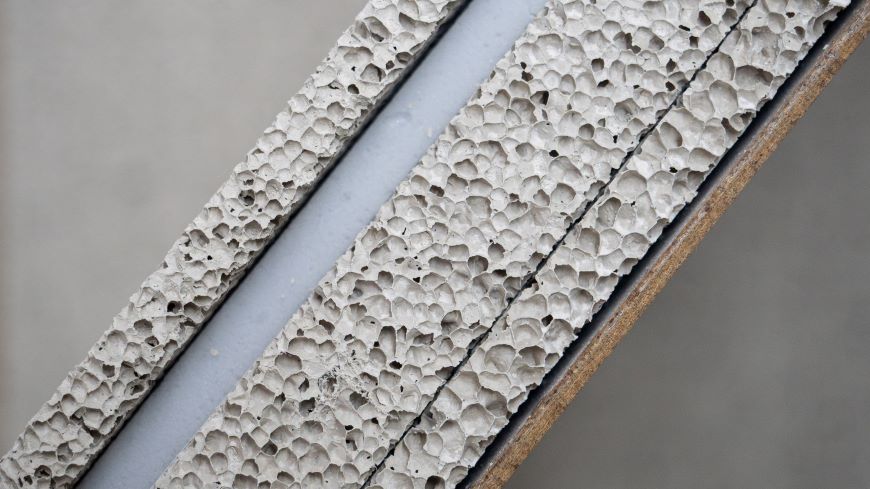
Every centimeter counts in the fight against noise. Traditional sound absorbers made from bulky materials such as rock wool or melamine foam are often too thick and restrictive in terms of design. The newly developed sound absorbers made of mineral gypsum or cement foams offer a convincing alternative. They are just as effective as conventional absorbers, but around four times thinner. This opens up completely new possibilities for integration into existing and new construction projects.
The varying pore structure of the mineral foams forces the air particles along a longer path, resulting in a high level of sound absorption despite the low thickness. This patented design makes it possible to tune the absorbers to specific frequency ranges. The foams are also fireproof, recyclable and do not release any harmful particles. Cement foams are also weatherproof, making them ideal for outdoor use.
Practical test in Zurich An initial prototype of the new sound absorbers has already been tested in a courtyard entrance in Zurich. The results are very promising. The noise level was reduced by up to 4 decibels, especially when cars drove past. The 72 panels with a total thickness of around 5.5 centimetres showed reliable attenuation of low frequencies and a significant reduction in sound transmission in the area of peak absorption.
Versatile applications The new sound absorbers are suitable for a wide range of applications. They can be integrated in driveways, under balconies, on facades, in stairwells or large indoor spaces such as offices, canteens or sports halls. They are particularly interesting for special applications where limited space, fire protection and design requirements have to be taken into account at the same time.
The future of noise reduction The idea for these innovative sound absorbers was conceived several years ago, but the breakthrough only came with the combination of material development and acoustic modeling as part of an Innosuisse project. Production is currently still partly carried out by hand, but the material is to be further developed and produced on a larger scale with a suitable industrial partner.
The mineral sound absorbers have the potential to revolutionize noise reduction in various environments. They offer an efficient, space-saving and design-flexible solution to the challenges of modern building acoustics.
With the strategic participation of an entrepreneurial investor, the company is setting the course for the next stage of growth. The new partnership combines capital strength with technological and operational expertise. The aim is to consolidate the company’s market presence in its home market and expand internationally, particularly in the key areas of digitalisation, sustainability and artificial intelligence.
Future-oriented strategy with a clear focus The new growth strategy focuses on three structural drivers: the digital transformation of the property sector, the industry’s growing role in climate protection and the increasing demand for sustainable, connected living spaces. At the same time, the proven corporate DNA remains intact, with the operational team and all partners staying on board and continuing to run the business.
Technological scaling and international expansion Internationalisation will begin with the existing presence in Germany and will be expanded through targeted acquisitions. At the same time, the digital service portfolio will be expanded through the development of proprietary products, the automation of customer processes with “Agentic AI” and the strengthening of the team. The strategic partnership creates the necessary room for manoeuvre in terms of technology, personnel and geography.
New opportunities for the German site There are also new opportunities for the team in Germany. As an agile location within the Group, it benefits from the stability of the company and the opportunities offered by a strategic growth partner. The combination of a proven structure and fresh dynamism should pave the way for successful expansion in a rapidly changing market environment.
Artificial intelligence has arrived in everyday life, from language models such as ChatGPT to personalised recommendations. But AI is not intelligent in the human sense. Manuel Kaufmann from the ETH AI Centre demonstrated this vividly. Computers process images as numbers, while humans interpret content contextually. The difference? “Humans think, computers calculate,” says Fabian Unteregger.
From the moon mission to a million users in 5 days AI systems have made a technological leap forward with enormous computing power. Stephan Sigrist from the think tank W.I.R.E sees AI as an evolutionary development with disruptive potential. His vision is a personal AI assistant that negotiates, plans and communicates with each other on our behalf. This will not only fundamentally change the internet, but also our everyday lives.
Innovation needs social benefits An AI-related productivity gain of 20 per cent is expected for Switzerland. But technology alone is not enough. “Innovation is what creates benefits,” says Sigrist. This is precisely why clear framework conditions are needed. Stephanie Gygax from Algorithm Watch calls for broad social participation in the design, particularly in view of ecological and ethical issues.
Switzerland as an AI nation with untapped potential Pascal Kaufmann, founder of AlpineAI, sees Switzerland as the origin and future location for AI. With SwissGPT, he wants to create a local response to global developments that is trustworthy, scientifically sound and technologically leading. For him, it is clear that AI can serve people if they actively shape it.
Dialogue with society The series of events entitled “The robot, our new friend and helper?” shows how important social dialogue on AI is. Because only if the fears, questions and expectations of the population are taken seriously will a technology emerge that serves people – and not the other way round.
The Zurich-based start-up Jua.ai has closed a Series A financing round totalling over 9 million Swiss francs, according to an article on startupticker.ch. The financing round was led by Ananda Impact Ventures and Future Energy Ventures and supported by existing investors such as 468 Capital and Promus Ventures. Jua plans to use the funding to accelerate the market launch of its Earth Intelligence Platform. This will enable more accurate weather forecasting to help energy traders make faster and more profitable decisions.
The platform is powered by Jua’s artificial intelligence (AI) model EPT-2.0 and is designed to significantly outperform the weather forecasting performance of conventional numerical weather models and AI models from large technology companies. Precise weather forecasts are particularly important for sectors such as energy, agriculture, aviation and shipping. The AI-based earth simulation is intended to provide a consistent and physically simulating platform to enable reliable decisions in various sectors in the face of increasing weather extremes and weather changes.
Jua 2024 has already secured around 13 million Swiss francs in its seed financing round. As part of this year’s capital increase, Marvin Gabler, co-founder and architect of EPT-2.0, has now been appointed as the new CEO. He succeeds Andreas Brenner, who has led Jua since its foundation in 2022. With Gabler at the helm, the company intends to focus on scaling its platform in the energy sector and expanding into new markets. “With our Earth Intelligence Platform, we have transformed the world’s most advanced Earth simulation into a real-world decision engine,” Gabler is quoted as saying in the article. “This is a fundamental step towards shaping our planetary future.”
OC Oerlikon Corporation AG, a thermal spray and coating solutions company headquartered in Pfäffikon, has invested CHF 40 million in its new innovation and production centre on the Reichhold campus in the canton of Aargau. The company is now celebrating the laying of the foundation stone for the new site, construction of which is due to begin shortly, according to a press release. Commissioning is scheduled for the first quarter of 2027. With 250 employees in future, the facility will bring together research and development, engineering, production and sales in one building complex.
Oerlikon plans to develop modern thermal spray technologies and laser-based technologies as well as provide various services at the Reichhold Campus. “The new Campus Reichhold will play a central role in the further development of our aerospace and general industry businesses by bringing together the entire value chain in a collaborative environment,” said Prof Dr Michael Süss, Executive Chairman of Oerlikon, in the press release.
The technology developed at the Reichhold campus is intended to improve heat resistance, durability and corrosion protection in industrial high-performance components. In future, it will be used primarily by customers in the aerospace, automotive and general industry sectors. A test rig for aerospace turbine components will also enable the validation of thermal spray coatings under real-life conditions.
In addition, Oerlikon plans to implement comprehensive measures to reduce the environmental impact in the areas of energy consumption, mobility and resource management at the new site.
Piezoelectric thin films are indispensable components in a wide range of electronic applications. They are used in frequency filters, sensors, actuators and tiny energy converters. Their ability to convert electrical voltage into mechanical movement and vice versa makes them a central component of modern communication technology. However, the production of these highly sensitive layers is a complex matter. Their quality determines the performance and durability of the end products.
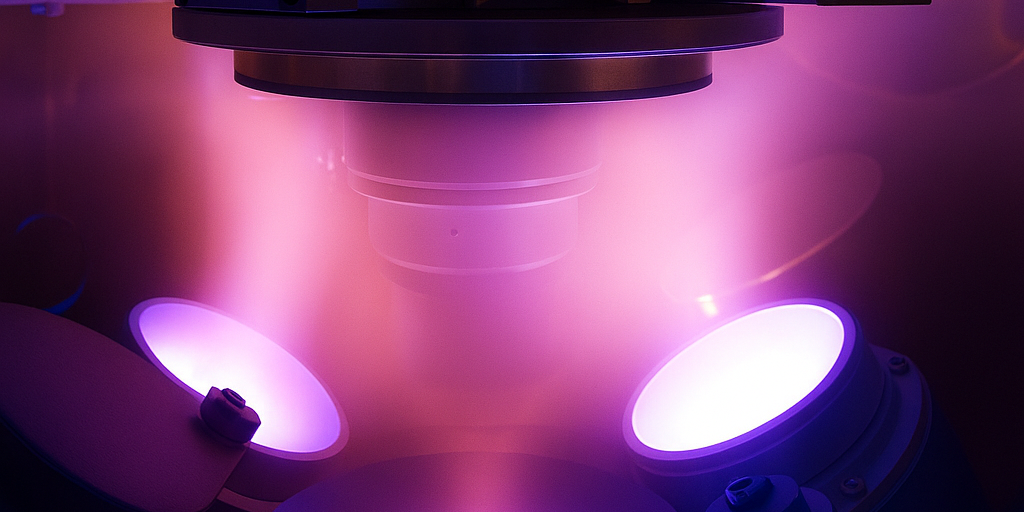
HiPIMS process with new possibilities High Power Impulse Magnetron Sputtering (HiPIMS) is a well-known process for coating substrates with high-density layers. High-energy pulses are generated in a vacuum chamber environment, which knock atoms out of the target material. These atoms are deposited as a thin film on the substrate. For piezoelectric applications, such as aluminium nitride coatings, the process has not yet offered an optimal solution. This is because along with the desired target ions, argon ions from the process gas also reach the substrate, which leads to undesirable inclusions.
Avoiding argon inclusions Argon, a common process gas in magnetron sputtering, is chemically inactive, but it can remain in the coatings in the form of inclusions. This is problematic for piezoelectric coatings as they are operated under high electrical voltages. Even small amounts of argon lead to an electrical breakdown and jeopardise the functionality of the components. In classic HiPIMS process control, however, it is difficult to eliminate the argon ions as they hit the substrate at the same time as the target ions.
Timing as a decisive factor Under the leadership of Sebastian Siol, the team led by PhD student Jyotish Patidar has developed precise timing in order to accelerate only the target ions and avoid argon inclusions. As the argon ions are faster and reach the substrate first, the accelerating voltage is applied to the substrate with a delay. At this point, the argon ions have already flown past and can no longer penetrate the growing layer. This results in piezoelectric layers of outstanding quality that were previously not possible with HiPIMS.
A new standard for sensitive substrates The researchers call this innovative process “Synchronised Floating Potential HiPIMS”. Particularly noteworthy is the possibility of creating layers on non-conductive substrates such as glass or sapphire. Normally, no electric fields for ion control can be applied to such substrates. By utilising the so-called “electron shower”, which is generated with the magnetron pulse, ions can nevertheless be accelerated at the right moment. The substrate is briefly negatively charged so that the desired ions are introduced in a targeted manner.
Practical relevance for semiconductor and quantum technologies Lower process temperatures protect the sensitive components in semiconductor production and enable the coating of temperature-sensitive components. At the same time, a high layer density and associated resistance is achieved, which is crucial for a long service life of the components. The possibility of depositing layers on insulating substrates also opens up completely new applications in photonics and quantum technologies that previous methods could not achieve.
Cooperations and next steps The Empa team has not reached the end of its research with these successes. The group is already working on optimising the process with machine learning and high-throughput experiments. At the same time, collaborations are being established with other research institutions and industrial partners in order to bring the technology into application. Research into ferroelectric thin films, which pose similar challenges in terms of precision and material purity, is already underway.
The canton of Glarus has a long industrial tradition. What impetus are you providing to strengthen economic competitiveness and create sustainable jobs? The canton of Glarus has always been extremely business-friendly. We were one of the first Swiss cantons to regulate economic development by law (1978). Glarus is also a Swiss pioneer in social legislation with the Factory Act (1864) and compulsory old-age insurance (1916). Against this background, Glarnerland is traditionally a modern business location with competitive advantages for employers and employees that may only become apparent at second glance. For example, the Glarnerland is large enough to offer companies sufficient space, but also small enough to make decisions quickly and unbureaucratically. The contact point for business provides pragmatic and reliable support to both company founders and existing companies or companies wishing to relocate. In our three large municipalities, which have merged in an exemplary manner throughout Switzerland, investors can find affordable real estate and employers can find well-trained, motivated employees who enjoy living in an intact environment with the advantages of a modern environment.
How does the Department of Economic Affairs promote innovative digital business ideas? On the one hand, the possibilities of digital transformation serve to redesign processes and products, but they also form the basis for the circular economy. This involves both greater resource efficiency and data management. As a result, tomorrow’s employees will know which materials were used in which processes. Supply chains are another opportunity: New digital processes enable a more robust, efficient and transparent supply chain. With this in mind, we are supporting the digital transformation in the Glarus economy with digitalization loans. The funding program has two million francs available until the end of 2027. Funding is available for innovative projects that incorporate new technologies in processes and production, create new products and business models and establish collaborations. Specifically, we carry out an analysis of the current situation in participating companies with the expertise of the Innovation Network Eastern Switzerland (INOS). The analysis is financed by the new regional policy (NRP) and includes an assessment of the current situation, including an action plan and roadmap for implementation. This basis is required for the application for financial support of up to CHF 100,000 for individual companies and CHF 300,000 for inter-company and/or industry-wide projects.
How do you think the real estate sector will develop in the industrial and commercial sector? The pressure from the agglomeration is noticeable in Glarnerland. However, population growth is moderate, which is conducive to sustainable development. The municipality of Glarus North has particularly high capacities in terms of industrial and commercial space, which are currently being used in several projects at the Bilten site. With active land management, we are focusing on sustainable development with high-quality industrial and commercial projects.
What trends do you see in the development of supply and demand in the residential sector? The majority of new residential construction projects are being implemented in the municipalities of Glarus and Glarus North. This also has to do with land use planning, which can take a holistic and progressive view thanks to the municipal merger. In Glarus South, land use planning is still undergoing a challenging political process, which is also being monitored by the canton.
How can you ensure that the development of the real estate market meets the needs of the population? Anyone who lives in one of our 29 villages, towns or districts appreciates the special features of their place of residence. These are reflected, for example, in the location or club life. Life is completely different in Elm or Braunwald than in the cantonal capital or in Näfels. And there again different from the Kerenzerberg or Lake Walen. This creates a sense of identity and solidarity, which keeps people here. This is consistent with the moderate pace of population growth and the comparatively stable real estate prices.
How can you ensure that your real estate market develops sustainably? With our unique combination of closeness to nature and urban proximity, with its manageable size and compact living and economic area, Glarnerland scores highly. Careful management of these advantages is therefore essential – they are our resources, our capital.
What infrastructure projects are planned by FEDRO and SBB and what potential for improvement do you see? Glarnerland is perceived as a rural region, but thanks to its location between Zurich and Chur, it has very good transport connections. The city of Zurich and the airport are only an hour away by car or train, one of the most important north-south axes runs through the canton, and private planes and helicopters can take off and land in Mollis.
Naturally, the canton of Glarus is also dealing with the increasing mobility requirements. In recent years, the canton has implemented three of four major road construction projects, in particular to provide future-oriented access to the Mollis airfield development focus. The fourth project to optimize access to the industrial area in the south of the municipality of Glarus is currently in the planning phase. The focus of our efforts is close cooperation with the federal government on the bypass projects to relieve congestion on the current main axis. We have received assurances from the federal government that the Netstal and Glarus bypasses will be combined into one overall project under the leadership of FEDRO. The aim is to relieve the canton of Glarus of all its road traffic problems.
In terms of public transport, we have had a new legal basis for future public transport services since the Landsgemeinde 2025. Our region is already well connected today with direct connections to Zurich and Rapperswil as well as transfer options in Ziegelbrücke to St. Gallen, Chur and Zurich. Our population and businesses depend on this convenience and the continuous half-hourly service agreed at the Landsgemeinde 2025. We are working hard to achieve this with the federal government and in cooperation with SBB and SOB. We are actively cooperating with companies to make commuting by public transport more attractive for employees – for example, the Bonus Pass creates incentives to switch from car to public transport.
Short distances within and between our localities also play a key role in mobility. For example, it only takes 20 minutes to cycle from Näfels, Glarus North, or from Schwanden, Glarus South, to the cantonal capital. The trend towards cycling is also reflected in the cantonal Cycle Path Act, which was passed by the Landsgemeinde 2024.
How does location promotion help to present Glarus as a liveable and future-oriented region? The canton of Glarus is the third most financially attractive place to live: in addition to low housing costs, we offer a moderate tax burden and comparatively low health insurance premiums. These are our major advantages in terms of financial factors. Added to this is the high quality of the living environment, which combines the advantages of the countryside with urban amenities. This is evident at first glance when you arrive in the canton of Glarus. Together with the impressive mountain scenery, the witnesses of early industrialization shape the landscape and life in our canton. The historic industrial areas, factory owners’ villas and workers’ settlements from the 19th century and the landscape are also the backdrop for films and TV series for good reason. In people’s everyday lives, this is reflected in a contrasting and lively environment with contemporary settlements for professionals and families who value living, working, culture and leisure in our modern communities. With this in mind, Glarus has been actively marketing the canton in a targeted manner for over ten years. This year, we are using our role as host of the Swiss Wrestling and Alpine Festival (ESAF) to put the spotlight on the canton of Glarus as a center of life. With the upcoming major event, the whole of Switzerland is turning its attention to the Glarus region. Under the motto “Really fabulous”, the focus is on working, living and leisure. The face of the campaign is the popular Glarus chef and influencer Noah Bachofen. He and his colleague are accompanied on their mission to create an authentic image film about the Glarus region. The campaign aims to make the unique Glarus lifestyle visible and tasty.
Why do skilled workers stay in the region and what does location promotion contribute to this? Of course, a good campaign alone is not enough. The municipal location promotion agencies make a major contribution to the high quality of life. They continue to develop their residential and leisure areas with new projects and in cooperation with investors – examples include the optimally developed development focal points at the Näfels/Mollis and Glarus railroad stations. The municipalities provide modern schools and supplementary family services, operate sports facilities and offer retail, gastronomy, medical care, industry, commerce and culture space for a lively and functioning everyday life. The canton ensures the operation of the cantonal school, the sports school, the vocational schools, the cantonal hospital, security and social services. The lean administrative structures enable an efficient and direct exchange between the cantonal specialist offices and those responsible at municipal level.
What is your long-term vision for Glarus as a business location? In the coming years, it is crucial for the canton of Glarus that the initiated development is implemented in a coordinated manner. It is important to support and accompany the private initiatives and at the same time create the right framework conditions for companies and skilled workers. If this succeeds, the canton of Glarus will be a secure, networked and economically strong canton with a strong middle class, surrounded by unspoiled nature.
Future-oriented and efficient structures are decisive for the success of a company. This also applies to the public sector. Glarus is the only canton that has consistently adapted its own structures to the new circumstances. With today’s highly efficient administration, we are fit for the future.
BeOne Medicines, formerly BeiGene, has officially relocated its headquarters to Switzerland. Already present in Basel since 2018, the global oncology company is now permanently anchored in the heart of one of Europe’s most innovative biotech hotspots. Basel not only boasts more than 30,000 highly qualified life sciences specialists, but also excellent conditions for regulatory cooperation and international networking.
Strategic impetus for research and development BeOne pursues a vertically integrated innovation strategy that combines basic research, clinical development and production under one roof. The company has one of the most extensive oncology pipelines in the world. With more than 50 investigational compounds, including a BTK inhibitor already approved in 75 countries, BeOne addresses both hematological diseases and solid tumors. Development is based on future technologies such as multispecific antibodies and protein degradation products.
Site selection as part of a global expansion strategy The Basel Area will thus become the European hub of BeOne’s clinical activities. As early as 2024, 13 new drug candidates were transferred to clinical trials. A peak value even compared to Big Pharma. More than 40 trials are currently underway in Europe, involving over 3,000 patients. BeOne employs more than 11,000 people worldwide on six continents, with a rapidly growing proportion in Switzerland.
A gain for the location and for investors For Basel as a location, BeOne’s decision means a clear gain in international visibility, jobs and investment momentum. For investors and project developers in the life sciences, there are new opportunities along the entire value chain, from laboratory space to clinical study centers and production. The proximity to science, talent and regulatory authorities creates ideal conditions for further growth.
The revision of the Swiss Spatial Concept was intended to provide a strategic compass for spatial development up to 2050. However, the document presented in December 2024 does not adequately address key issues such as densification, infrastructure and conflicts of use. Yet the demand for intelligently utilised space, resilient infrastructure and sustainable solutions for growing cities and regions is more urgent than ever before.
Densification remains unresolved The depiction of advanced inner-city development is at odds with reality. Replacement new builds, a key means of densified construction, are still fraught with uncertainties and hurdles. There is a lack of a pragmatic implementation concept that creates clear rules, facilitates investment and accelerates site development. This is an omission with consequences for housing construction and the competitiveness of urban areas.
Transport is blocked instead of facilitated A further deficit can be seen in the transport infrastructure. The spatial concept neglects the need for efficient transport routes and promotes a conflict between road and rail. However, sustainable location development requires networked mobility strategies that fulfil both economic and social requirements.
Without political backing, everything remains theory In addition to its substantive weaknesses, the concept lacks clear political legitimisation. Without broad-based governance structures, the paper will remain ineffective. The Swiss Federation of Master Builders has therefore submitted amendments and rejects the draft in its current form.
Conclusion for the property industry If you want to develop locations and help shape Switzerland as an attractive place to live and do business, you need solid framework conditions and a realistic planning policy. The current spatial concept offers neither. It is time for a practice-orientated model that creates planning security, facilitates investment and strengthens the attractiveness of locations in the long term.
The purchase of the 25,500 m² ABB site by the City of Zurich for a net CHF 106 million is more than just a land purchase. It is a strategic decision with a long-term impact. Thanks to the urban development contract concluded in 2021 and the special building regulations that come into force in 2025, Zurich can shape the future on a centrally located piece of the city. With high density, mixed uses and consistent citizen participation.
Transformation through participation A key success factor is the early and transparent involvement of residents, associations and neighbourhood organisations. The needs of the neighbourhood were directly incorporated into the participatory strategy process. This turned an industrial site into an urban development concept with a high level of social acceptance. Urban planning thus not only gains space, but also trust.
Mix of uses as a driver of innovation The utilisation concept envisages three new construction zones and three existing areas. A mix of non-profit housing, neighbourhood supply, creative commercial use and publicly accessible open spaces is planned. The House for Culture and Circular Economy is a flagship project for innovative urban utilisation. The combination of culture, sustainability and economic activity makes the site a catalyst for new value creation models in urban areas.
Temporary use as an impetus for location quality Before construction work begins, halls and open spaces are used temporarily in a targeted manner. A strategy that brings life to the neighbourhood, promotes social contacts and creates identity even before construction begins. Interim uses are increasingly recognised as a success factor for the attractiveness of locations and resilience in transformation areas.
Public-private partnership with a role model function ABB remains anchored in Oerlikon with 500 jobs and supports the development. The project shows how forward-looking urban development can work constructively with private owners. A model that can be transferred to other urban conversion sites. The combination of urban management and entrepreneurial willingness to co-operate points the way forward.
MFO-West is not an isolated case, but an exemplary model for the urban transformation of former industrial sites. Those who invest in such development areas can help shape new urban qualities. From social integration and innovative utilisation concepts to sustainable value creation. In times of housing shortages, climate targets and new forms of mobility, sites like MFO-West are the key to the city of tomorrow.
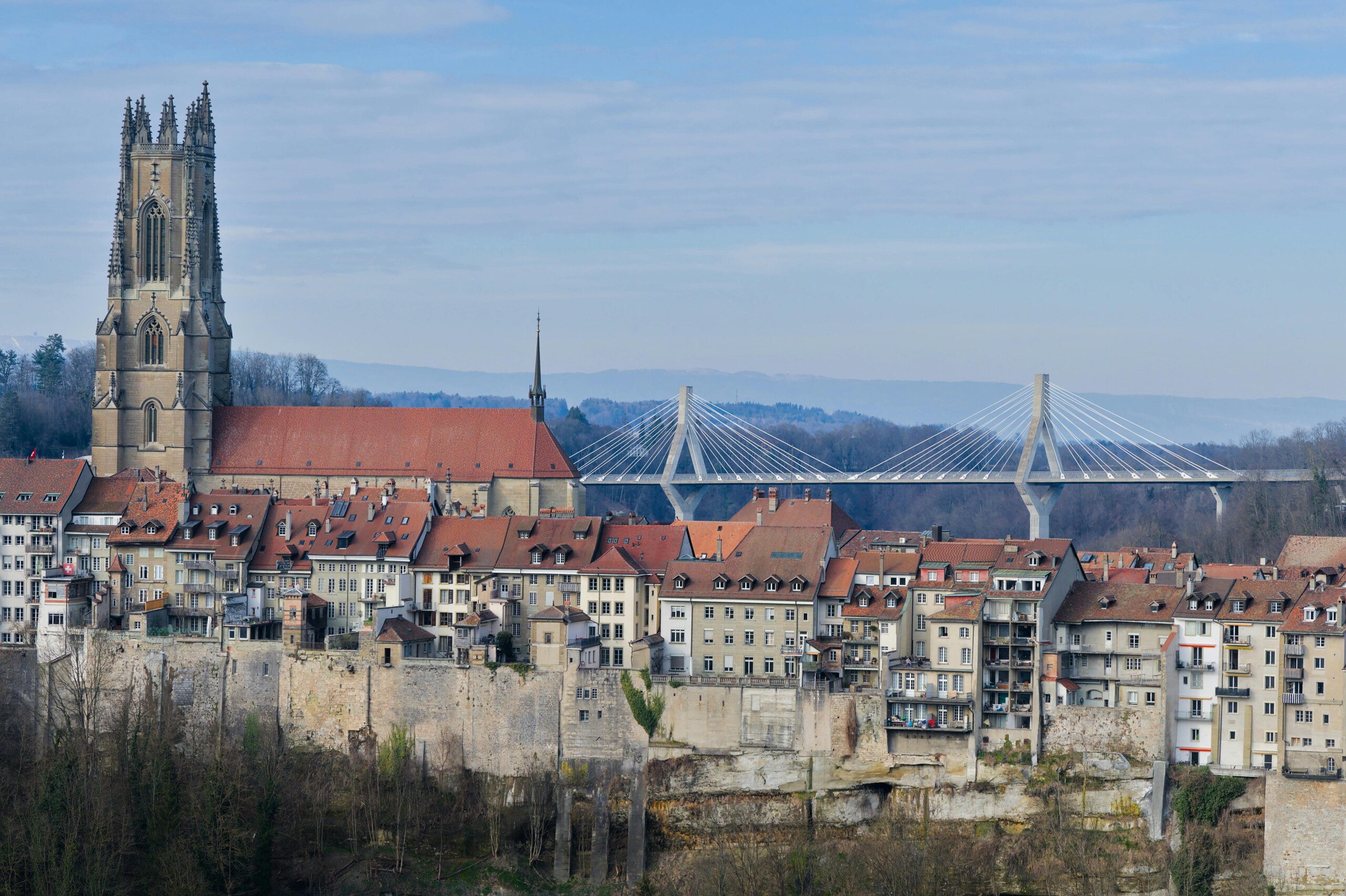
Despite global turbulence, increased protectionism and new tariffs imposed by the US government, Fribourg’s economy is holding its own with impressive stability. The Economic Development Agency of the Canton of Fribourg supported a total of 32 business projects in 2024, including 16 new relocations. These projects secure over 1,000 jobs and create 527 new jobs in the medium term, combined with investments of CHF 116 million.
Employment growth in the canton is now outstripping population growth. Fribourg’s gross domestic product rose by 27.5 % between 2011 and 2024. A clear sign of sustainable value creation despite global uncertainties.
Successful location development and investments The new settlements are equally divided between Swiss and international companies, including those from Belgium, Brazil, Germany, France, Ireland, Italy and the USA. At the same time, the new cantonal implementation program 2024-2027 of the new regional policy was launched, which sets strategic priorities in the bioeconomy, digital transformation, Industry 4.0, tourism and entrepreneurship with 19 funded projects.
For Olivier Curty, State Councillor and Director of Economic Affairs, these results underline the relevance of a consistently pursued economic strategy that strengthens Fribourg as a business location even in challenging times.
bluefactory and EPFL as engines of growth The bluefactory innovation quarter is developing rapidly. With the inauguration of Building B and its almost complete occupancy by 17 companies and 340 workplaces, Fribourg is being further strengthened as a technology hub. At the same time, EPFL is expanding its commitment – six new chairs in the field of sustainable construction are to be created by 2030. Construction of the new Smart Living Lab experimental building is scheduled to begin in 2025. This dynamic consolidates Fribourg’s position in the field of the built environment and underlines the canton’s commitment to sustainability and innovation.
Strategic successes in the life sciences sector A milestone in 2024 was the establishment of Cellap Laboratoire AG in Châtel-Saint-Denis. With more than 4000 m² of production space and ambitious growth targets in international markets, the company is providing new impetus in the cell cosmetics sector. The life sciences are becoming the mainstay of Fribourg’s economy and already account for 10% of the canton’s GDP – a result confirmed by a study by BAK Economics.
Jerry Krattiger, Director of the WIF, emphasizes that the bioeconomy and life sciences remain strategic priorities. At the same time, other key areas such as Industry 4.0 are being actively promoted in order to further expand the canton’s economic diversity and resilience.
Vigilance and adaptability as success factors The Department of Economic Affairs and Vocational Education and Training remains vigilant in the face of global uncertainties. With proven instruments such as short-time work compensation, Fribourg is able to react quickly to economic fluctuations and ensure the stability of the economic structure.
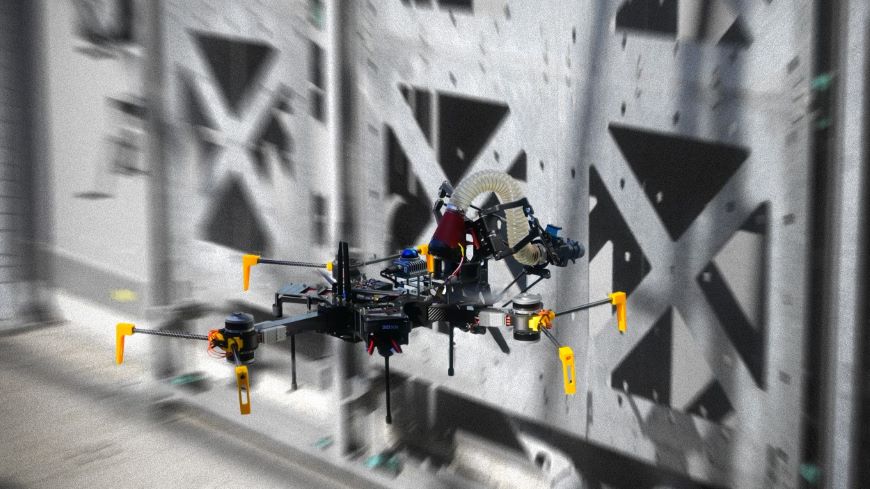
While heavy, ground-based robotic systems have long since found their way onto construction sites, they quickly reach their limits in rough terrain or at great heights. An international research team led by Empa and EPFL is now investigating how flying robots can close these gaps. Their vision is of mobile, flexible and autonomous construction drones that transport materials, erect structures and supplement conventional machines in a targeted manner. For example, for repairs to high-rise facades or in the aftermath of natural disasters.
Flexibility and precision from the air Current research is focusing on the development of so-called “aerial additive manufacturing” technologies. Three concepts are being pursued: construction with modular components, the tensioning of tensile structures and the layer-by-layer application of building materials. Initial tests at Empa’s “DroneHub” show how swarms of drones could take on construction tasks together. There are a number of advantages, such as no fixed construction site, shorter transportation routes, reduced material losses and increased safety on the construction site.
Interplay between robotics, materials and design Several disciplines need to work together for the use of construction drones to become a reality. Robust and lightweight construction materials are just as crucial as intelligent construction designs that are adapted to the limited precision of drones. At the same time, the technology requires advances in flight autonomy. The spectrum of future capabilities ranges from programmed route flight to autonomous analysis and adaptation during the construction process.
Supplementing rather than replacing Despite all the advances, drones remain a supplement to existing robotic systems. Their limited flight time and payload currently still restrict their use. The researchers therefore see hybrid concepts as the key. Conventional systems erect the lower areas of a structure, while drones take over from certain heights. This could allow structures to be built flexibly and efficiently in the future. Even in places where conventional construction is not possible today.
From January 20 to 23, 2026, Messe Basel will be the meeting place for the Swiss construction and real estate industry. The Swissbau Lab in Hall 1.1, a space for ideas, innovations and new partnerships, will take center stage. Topics such as the circular economy, digital planning opportunities, changing construction processes and climate protection will shape the discussions. The start of the program design on 6 May 2025 marks the beginning of an intensive phase of concept development to which companies, associations and institutions are invited.
Workshop as a springboard for innovation The kick-off workshop on May 6, 2025 in Zurich marks the beginning. Both confirmed and interested companies will receive all the information they need about the concept and opportunities to participate in Swissbau Lab. Those responsible for the trade fair will coordinate the subsequent program development. First in plenary sessions, then in specific thematic groups. Short-term registrations for the workshop are possible until May 2, 2025.
Networking as the key to progress Whether you are a start-up or an established company, the decisive factor is the motivation to actively shape the future of the construction industry. The Swissbau Lab is a dynamic innovation network supported by the Swiss Society of Engineers and Architects SIA as a leading partner. The platform promotes open exchange and focuses on cooperation rather than individual competition.
Markus Weber, President of Bauen digital Schweiz and Co-Head of the Digital Construction course at Lucerne University of Applied Sciences and Arts, underlines the importance: “For us, Swissbau is a unique opportunity to focus on the principle of ‘together instead of every man for himself’. Setting impulses together for a networked, digital and sustainable construction and real estate industry.”
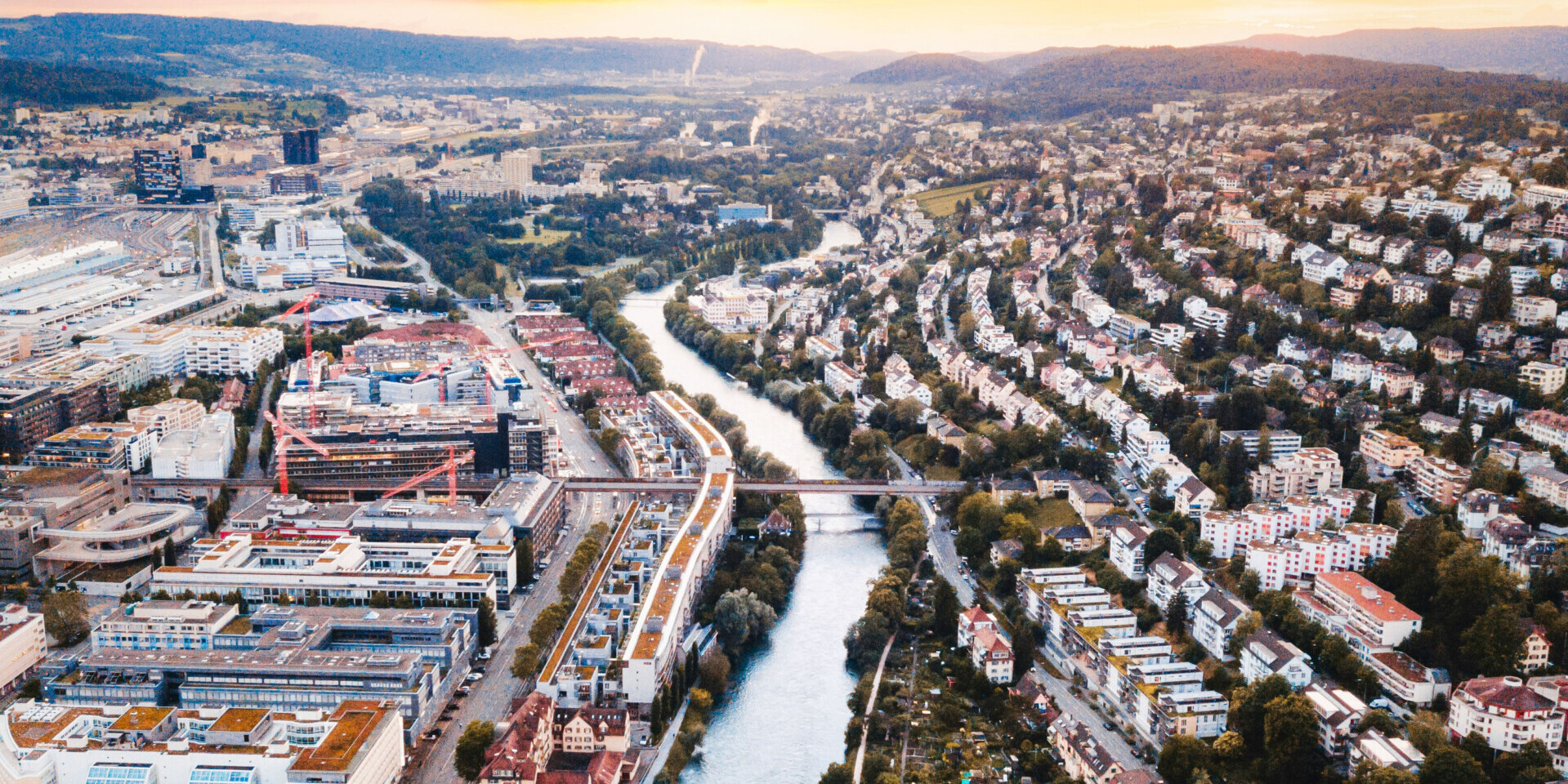
The economic area around Zurich spans several cantons and is a hotspot for future-oriented industries. In addition to its role as a global financial center with excellent FinTech expertise, the region offers a dynamic ecosystem for technology companies that benefit from stability, trust and an innovation-friendly environment.
Top scientific location with a global impact Research institutions such as ETH Zurich and the University of Zurich are drivers of scientific progress. They shape the region in areas such as life sciences, robotics and artificial intelligence. The close exchange between universities and companies promotes innovation and accelerates the implementation of marketable solutions, a decisive locational advantage in global competition.
Attractive for companies, convincing for skilled workers Clear political conditions, a transparent legal system and attractive tax conditions create an investment-friendly climate. Companies also appreciate the excellent infrastructure, short decision-making processes and access to a highly qualified workforce. The international orientation of the population also strengthens competitiveness.
Quality of life as a strategic success factor The region is not only convincing economically. It also offers an environment with a high quality of life. International rankings regularly place Zurich among the world’s most liveable cities. This environment attracts skilled workers and entrepreneurs and promotes long-term loyalty to the location.
Future-oriented, sustainable and digital The area makes targeted investments in sustainable development, digital infrastructure and technological topics of the future. Commitment in areas such as renewable energies, low-emission mobility and intelligent urban development make the region a pioneer of sustainable transformation, setting an example beyond the country’s borders.
SMEs as a pillar of economic strength In addition to global companies, the region is characterized by a strong SME sector. Highly specialized SMEs strengthen the diversity and innovative power of the economic area and complement the industrial ecosystem with flexibility and niche expertise.
A key component of this initiative is the new Alpine supercomputer, which was put into operation at the Swiss National Supercomputing Centre in Lugano in February 2024. With over 10,000 graphics processors, it is one of the most powerful computers in the world and offers Swiss scientists an infrastructure that was previously only available to the largest technology companies.
AI development with a focus on specialised industries Instead of developing general AI models, Switzerland is focussing on industry-specific solutions, particularly in the fields of robotics, medicine, climate science and diagnostics. EPF Lausanne has already published a medical AI model that is specifically tailored to the healthcare sector.
Open and transparent AI models The organisation deliberately focuses on transparency and open source. In contrast to the proprietary models of large corporations, Switzerland’s new large language models should be comprehensible to everyone. This applies to the data used as well as the training methods and results.
Research for digital sovereignty ETH Vice President for Research, Christian Wolfrum, emphasises the importance of Switzerland’s digital independence: “Science must take on a pioneering role so that AI is not left to multinational corporations alone. This is the only way we can guarantee independent research and digital sovereignty.”
Large computing volume for ambitious goals The plan is to utilise ten million GPU hours on the Alpine supercomputer within the next 12 months. This corresponds to an enormous computing power, as the same volume would have to work continuously for 1,100 years with one GPU. Switzerland is thus setting new standards in AI research.
AI for industry and administration The initiative is intended to benefit not only science, but also Swiss companies, start-ups and public administrations. Swisscom CTO Gerd Niehage sees the initiative as an important building block for Switzerland’s digital future: “It accelerates the digital transformation and creates new skills that our country needs to play a leading role in the field of generative AI.”
International collaboration and networking To drive their research forward, ETH Zurich and EPFL are working closely with the Swiss Data Science Centre and around a dozen other Swiss universities and research institutes. The initiative is also part of the European AI Excellence Network, which comprises around 40 leading AI research centres in Europe.
The initiative is thus sending out a clear signal. Switzerland is positioning itself as a leading global hub for the development of transparent and responsible AI technologies AI technologies.
The Canton of Zug is supporting the establishment of the “Blockchain Zug – Joint Research Initiative” with a financial commitment of around CHF 40 million. This innovative cooperation project between the University of Lucerne and Lucerne University of Applied Sciences and Arts aims to develop Crypto Valley into an international centre for blockchain research. The Cantonal Council gave the go-ahead for the project in February 2024.
New research institute at the University of Lucerne A central component of the initiative is the establishment of a Zug Institute for Blockchain Research at the University of Lucerne. With nine new chairs, an interdisciplinary research environment will be created to analyse the social, economic and legal aspects of blockchain technology. HSLU is contributing its expertise from the fields of computer science, finance and engineering, thus creating a unique synergy between technological innovation and a humanities perspective.
Lighthouse project with international appeal The aim of the initiative is to establish Zug as a global centre for blockchain research. Finance Director Heinz Tännler emphasises the importance of this project: “Blockchain has the potential to transform many areas of our lives. With this initiative, we are ensuring that we are at the forefront of this development.” This is not only an investment in the technology of the future, but also a strategic measure to strengthen Zug as a business location.
Technology meets society Unlike many purely technological research projects, the “Blockchain Zug – Joint Research Initiative” takes a broad approach. In addition to the technical foundations, the effects on the economy, politics and society are also being analysed. This emphasises the unique character of the project, which not only aims to drive innovation, but also to understand and shape social transformations.
Long-term perspective and sustainable funding The initiative is designed for the long term. After five years of start-up funding from the Canton of Zug, the research network is to be placed on a sustainable financial footing. An external evaluation after three years will determine the way forward.
Wir verwenden Cookies zur Unterstützung und Verbesserung unserer Dienste. Mit der Nutzung dieser Website erklären Sie sich mit der Verwendung von Cookies einverstanden. Weitere Informationen finden Sie in unserer Datenschutzerklärung.