Tag: Investition

  • New investor for Werkmatt Uri

    New investor for Werkmatt Uri

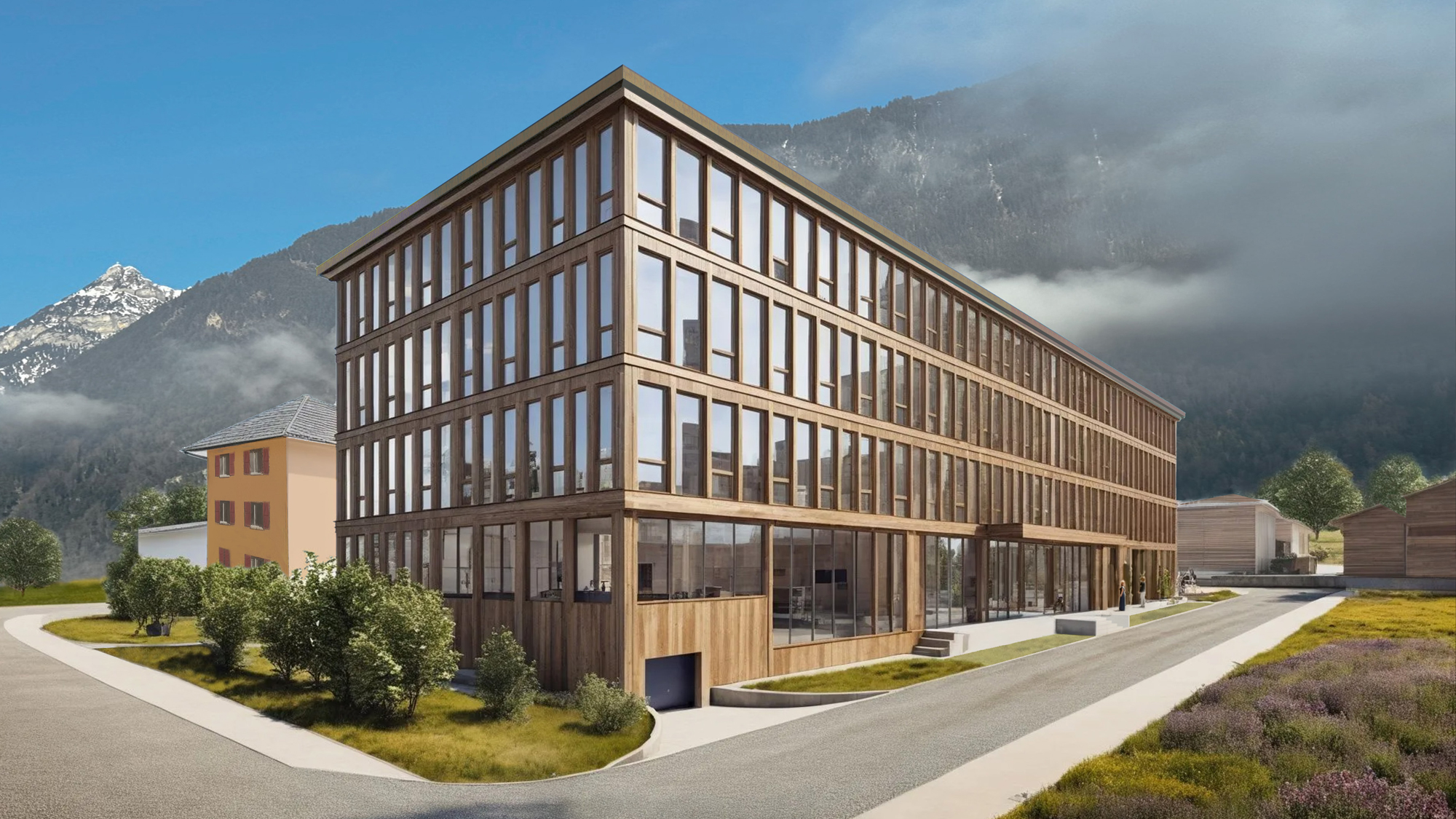
    On 25 February 2026, Director of Economic Affairs Urban Camenzind and Risa Immobilien SA signed the purchase agreement for construction site 11 on Werkmatt Uri. This is based on a purchase rights agreement concluded in 2024 between the Canton of Uri and IG Innovationspark Gotthard. In recent years, the IG has developed the project idea for a functional, sustainably built and architecturally impressive commercial and service building. In October 2025, the municipality of Altdorf granted planning permission for a four-storey building with around 4,000 square metres of floor space and room for around 140 workplaces.

    Marcus Weber backs the Uri location
    Risa Immobilien SA is backed by Marcus Weber, an investor with a high profile in Switzerland in the property, tourism and Alpine infrastructure sectors. He has been involved in Sedrun/Disentis for many years and, as Chairman of the Board of Directors and main shareholder of Bergbahnen Disentis AG, is involved in the expansion of the tourism offering there. Weber is also already present in the canton of Uri, for example with investments in the ski lift, mountain restaurant and accompanying infrastructure on the Brüsti in Attinghausen. By investing in Werkmatt Uri, he is expanding his involvement with another forward-looking project in the Alpine region.

    Project enters the implementation phase
    The planned office and commercial building is being built on the northern edge of Werkmatt Uri, within walking distance of the Altdorf cantonal railway station and close to the future A2 motorway junction. Construction is scheduled to start in autumn 2026, with occupation scheduled for 2028, and the investor wants to push ahead with the implementation quickly. This will create attractive, flexible space in a central location for companies that want to utilise Uri’s locational advantages.

    Werkmatt Uri offers further potential
    At around twelve hectares, Werkmatt Uri is the last large land reserve in the Uri valley floor and has excellent access between the cantonal railway station and the A2 motorway. The site is intended to provide over 1,000 jobs in the long term and be developed specifically for industrial, commercial and service companies. In addition to construction site 11, around eight hectares are still available for sale or the granting of building rights, handled by the canton of Uri. Companies interested in sites can find further information online on the Werkmatt Uri platform.

  • Billion-euro investment drives expansion of energy storage systems

    Billion-euro investment drives expansion of energy storage systems

    Energy Vault announces the foundation of its subsidiary Asset Vault. This is to be financed by a preferred equity investment of USD 300 million from an unnamed multi-billion dollar infrastructure fund. According to a press release, the Lugano and California-based developer of energy storage systems expects this to release more than 1 billion dollars in investment. The aim is to accelerate the deployment of energy storage projects with a newly installed capacity of 1.5 gigawatts in the USA, Europe and Australia.

    Asset Vault will reportedly be dedicated to developing, building, owning and operating energy storage assets in the world’s most attractive energy markets, either independently or in conjunction with generation assets. Crucially, Energy Vault will retain voting and operational control of Asset Vault. Energy Vault expects the transaction to close within the next 30 to 60 days. Asset Vault will then be established as a fully consolidated subsidiary. All energy storage facilities, which are secured by long-term purchase agreements and which guarantee the monetisation of the projects, are to be bundled in this subsidiary. Asset Vault is expected to generate recurring EBITDA of over 100 million dollars over the next three to four years, complementing Energy Vault’s existing energy storage business.

    This “unlocks the full potential of our own-and-operate strategy for storage IPP with immediate investment flexibility,” Robert Piconi, Chairman and CEO of Energy Vault, is quoted as saying. “By combining long-term contracted revenue with strategic capital and integrated, self-executed project delivery, we are well positioned to scale a resilient, mission-critical energy infrastructure to meet the current demands of renewable energy expansion and the massive increase in energy demand from data centre AI infrastructure.”

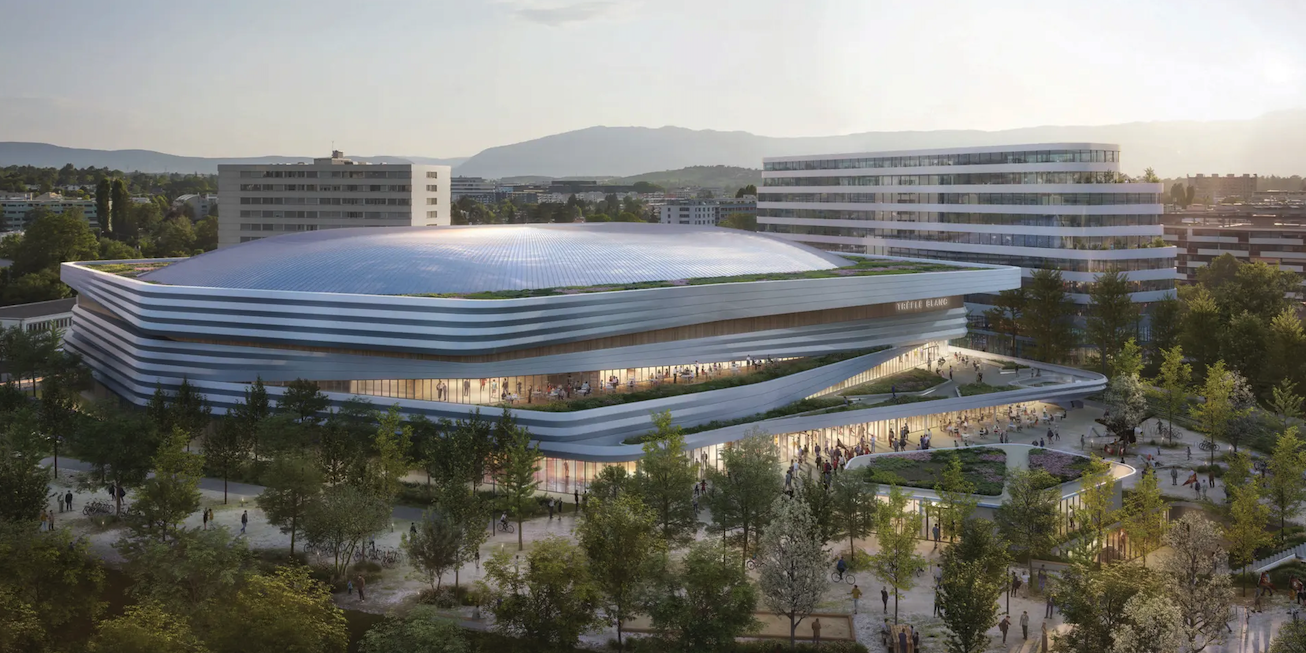
  • Trèfle-Blanc the 400 million euro project gets underway

    Trèfle-Blanc the 400 million euro project gets underway

    The question of the actual costs of the Trèfle Blanc project caused speculation in the run-up to the project. Estimates ranged from 275 to 400 million francs. Now the Geneva government is providing clarity with the submission of a comprehensive investment bill. The initial discrepancy is not the result of a change of plan or “salami-slicing”, but of the detailed breakdown of the various funding sources and project phases.

    Initially, a credit of CHF 275.5 million will be submitted to the Grand Council for approval. This sum primarily covers the construction of two ice rinks (232 million), supplemented by costs for outdoor facilities (7.9 million), the tram connection (over 9 million), contingencies (9.3 million) and inflation (8.3 million). If this loan is approved by parliament, it could still be subject to a referendum if necessary.

    However, this sum does not represent the total costs for the canton, as CHF 17 million has already been spent on preliminary studies. This means that the total costs borne by the state to date already amount to CHF 293 million.

    Why it is 400 million
    The confusion surrounding the CHF 400 million is cleared up when the park-and-ride car park is included. This car park, whose construction will begin before the rest of the infrastructure, will provide 928 parking spaces for cars and 244 for motorbikes. It will cost an estimated CHF 99 million, a sum that is not directly requested by parliament. It will be financed by the Car Park Foundation, an autonomous public-law institution, which will borrow 75 million francs with the approval of the state, while the rest will come from its own funds. The repayment of this loan is secured in the long term by the income from the P R.

    The financing architecture
    It is essential to add this CHF 99 million to the total cost of the Trèfle Blanc project. Regardless of the source of financing used, this is public money, as the car park foundation is part of the public sector, similar to the Geneva utilities or the Geneva University Hospitals. This can also be seen in the consolidated financial statements of the Canton of Geneva. As the Presidential Department of the State Council confirms, everything is interconnected. A successful referendum against the 275 million loan would bring the entire project, including the P R, to a halt.

    The transparency in the cost breakdown of the Trèfle-Blanc project now creates the basis for an informed debate and paves the way for the realisation of this important infrastructure project, which will have a significant impact on Geneva.

  • New court building for St.Gallen district court

    New court building for St.Gallen district court

    Since 1996, the district court of St. Gallen has been split between two locations. A solution that was never intended to last. While the offices are housed in the Bohl 1 property, the court sessions are held at Neugasse 3/5. This division not only makes work processes more difficult, but also no longer meets today’s requirements in terms of security and functionality. With the planned move to the Schützengasse 1 property, the court will finally have a modern and coherent home.

    A building for the future
    Schützengasse 1 is owned by the Canton of St. Gallen and will be extensively renovated and modernised for its new purpose. The feasibility study has confirmed that the building is ideally suited to the needs of modern court operations. By bringing all services together at one location, not only can work processes be simplified, but security requirements can also be implemented in line with the times. The current rental solution at Neugasse 3/5 will therefore become obsolete, which will bring long-term financial benefits for the canton.

    Financing and costs at a glance
    The total costs for the project amount to around CHF 27 million. This amount includes CHF 8.5 million for the transfer of the property from financial to administrative assets. The actual costs for the renovation and conversion of the building amount to CHF 19.5 million according to a rough cost estimate. This investment is supplemented by a one-off compensation payment of CHF 780,000 from the City of St. Gallen. The elimination of the rental costs for Neugasse 3/5 will also provide long-term relief for the canton’s finances.

    Start of construction and schedule
    The construction project is scheduled to start in 2027. Completion and occupation are planned for the end of 2028. In the foreseeable future, the District Court of St. Gallen will therefore have a building that not only meets current requirements, but also takes future developments in the justice sector into account.

    The largest district court in the canton
    With around 3,300 court cases a year, the district court of St. Gallen is the most important of the canton’s seven district courts. It deals with cases in the areas of civil and criminal law and has a well-established team of currently 43 permanent employees. These include district court judges, court clerks, clerical staff and auditors. In addition, 14 part-time district judges are involved in handling the cases. These extensive tasks require an infrastructure that fulfils today’s requirements for efficiency, security and flexibility.

    Security as an integral part
    In addition to merging the locations, the security system is a central element of the project. Court operations today must meet high standards in order to ensure the integrity of proceedings and the protection of all parties involved. The new property will be remodelled in such a way that these requirements are met and all security-relevant aspects can be taken into account.

    A win-win situation for everyone involved
    The planned relocation of the St. Gallen district court not only represents an upgrade for the judicial centre, but also a sustainable investment in the quality and future viability of the cantonal court system. The optimisation of processes, the modernisation of the infrastructure and the energy-efficient refurbishment are steps towards efficient and resource-saving operations. At the same time, the parties to the proceedings benefit from a modern environment that facilitates negotiations and processes within an appropriate framework.

  • Digital property platform receives growth capital

    Digital property platform receives growth capital

    According to a press release, the Zurich-based real estate company Properti has secured Series A financing totalling 1.85 million Swiss francs. The company, which specialises in digital real estate transactions, plans to use the fresh capital to expand its market position. Properti intends to expand its digital platform Propchain. The tool allows various functions to be integrated into one interface. This should offer both owners and users equal advantages.

    “The market is certainly challenging for young companies like Properti. Nevertheless, Properti has achieved considerable success even in a volatile economic environment,” said Levent Künzi, CEO of Properti, in the press release. “With an open growth strategy, we are working closely with partners to further expand our end-to-end platform. Our team is characterised by a game changer mentality that enables us to consistently realise Properti’s vision.”

  • Capital increase for healthcare properties and senior-friendly living

    Capital increase for healthcare properties and senior-friendly living

    The Swiss Life Investment Foundation wants to increase the capital of its Real Estate Switzerland Old Age and Health ESG investment group by a further CHF 200 million. The subscription period for the corresponding entitlements runs until 14 March, Swiss Life Asset Managers announced in a press release. According to the statement, the new funds will be used to acquire additional properties, invest in the portfolio and reduce debt financing.

    The Real Estate Switzerland Ageing and Health ESG investment group focuses on age-appropriate residential properties, care facilities and other healthcare properties as well as health promotion facilities. “With the opening of the investment group, we are offering a sustainable and future-oriented investment opportunity in real estate projects that addresses demographic trends and enables innovative living concepts for a self-determined life in old age,” said Stephan Thaler, Managing Director of the Swiss Life Investment Foundation, in the press release. The foundation, which is part of the Swiss Life Group ‘s asset manager, acquired two retirement centres in Frauenfeld and Ostermundigen BE in December 2024. At the end of 2024, the investment group comprised 18 properties with a total market value of around CHF 700 million.

  • Canton of Zug strengthens its property portfolio

    Canton of Zug strengthens its property portfolio

    The Building Directorate is legally responsible for the construction and maintenance of the canton’s own buildings. The financial framework conditions are carefully analysed in order to make targeted use of both the maintenance and investment budgets. Sound, long-term planning is becoming increasingly important in order to ensure that the buildings retain their value.

    Strategic guidelines for property management
    The Canton of Zug’s real estate strategy is based on the overarching objectives of the Cantonal Government and the specific guidelines of the Building Department. Priority is given to maintaining existing infrastructures rather than building new ones. The targeted use of resources ensures future-orientated buildings that meet the requirements of sustainability and efficiency.

    Cost and benefit efficiency as guiding principles
    The Building Directorate pursues a differentiated strategy that focuses on cost control and the fulfilment of public tasks.
    Properties that do not directly serve a public purpose are used for value creation or exchange transactions in order to optimise the management of the portfolio.

    Investment requirements and future developments
    The Building Department has further expanded the cantonal property portfolio. With the projects realised, the value of the portfolio has risen to CHF 1.06 billion by 2023. Further investments are planned for the coming years. Planned major projects in the education and administration sectors will contribute to the canton’s infrastructural development and strengthen the economic attractiveness of the region. A forward-looking real estate strategy ensures that the canton of Zug makes optimum use of its property portfolio and is equipped to meet future requirements.

  • Partners Group acquires Empira Group

    Partners Group acquires Empira Group

    The acquisition strengthens Partners Group’s position as a global property investor. Founded in 2014, Empira Group has a portfolio in the residential sector with a gross development value of around 14 billion euros. Its expertise ranges from project development and fund management to sustainable investment strategies aimed at decarbonisation and affordable housing. Following completion of the transaction, Empira will operate under its brand as a pan-European platform within Partners Group.

    Focus on transformative investing
    The acquisition comes at a pivotal time in the real estate industry, which is increasingly focused on operational excellence and transformative investing. With this acquisition, Partners Group continues its strategy to expand its vertical depth in key areas such as residential and logistics. The aim is to provide innovative solutions to the growing demand for sustainable and affordable rental housing.

    Together for a new era
    The partnership combines the expertise with the global platform of Partners Group. Karim Habra, Global Co-Head Real Estate at Partners Group, emphasises: “The operational capabilities enable us to go beyond traditional approaches and usher in a new era of asset transformation.” Lahcen Knapp, founder of Empira Group, adds: “Our shared vision will enable us to efficiently develop and manage residential property for a new era.”

    Sector-specific synergies
    The acquisition builds on the Group’s recent strategic investments in companies such as Trinity Investments and Citivale. Its property portfolio now has a gross asset value of USD 43 billion, supported by assets under management of USD 15.9 billion.

  • New indoor swimming pool for theKSS approved

    New indoor swimming pool for theKSS approved

    The decision of the Schaffhausen electorate paves the way for the construction of a new, modern indoor swimming pool on the KSS site. With an investment volume of CHF 80 million, this project represents an important milestone in the further development of the city’s infrastructure. The new building is not only a response to the ageing existing facility, but also a commitment to sustainable and future-oriented urban development.

    The new building will replace the existing indoor swimming pool from 1972, which is no longer up to modern-day standards due to its poor condition and outdated technology. The last refurbishment measures were carried out more than 30 years ago and the facility suffers from serious deficiencies such as water and heat losses, a lack of accessibility and outdated safety equipment. In addition, the current indoor pool can no longer cope with the increasing number of visitors, which leads to considerable conflicts of use.

    An indoor pool for all generations
    The planned new building will not only exceed the previous standard, but will also set new benchmarks. With a swimming pool comprising eight lanes of 25 metres each, as well as a teaching pool, a course pool with a lifting floor, a separate diving pool and a children’s paddling area, the range of facilities will be significantly expanded. There will also be an outdoor warm water pool and a state-of-the-art wellness centre with various saunas, a steam bath and a sauna garden. This facility will not only meet the sporting needs, but also the increasing demands of the population for wellness and relaxation.

    A central element of the new concept is the separation of the pools according to their main uses in order to avoid the current conflicts of use. The new structure makes it possible to use the various facilities simultaneously and without restrictions. The central entrance to the new building will ensure efficient access to all facilities and optimise operations.

    Sustainability as a guiding principle
    The new indoor swimming pool will be built to the “Minergie-P-ECO Standard”, one of the highest standards for energy-efficient and sustainable construction in Switzerland. The project’s energy concept provides for the extensive use of waste heat, in particular from the neighbouring ice rink, as well as a connection to a local heating network. These measures will help to significantly reduce the ecological footprint of the new building and position Schaffhausen as a pioneer in sustainable construction.

    New synergies and sources of income
    The new indoor pool will not only offer sports and health facilities, but will also be of economic importance. A publicly accessible restaurant with 130 indoor and 150 outdoor seats will generate additional income and establish the KSS facility as a meeting place for the entire population. In addition, an underground car park with 150 parking spaces will improve accessibility.
    Additional rental space for health and fitness facilities will round off the concept and contribute to the attractiveness and profitability of the overall project. These synergies between the various uses will strengthen the KSS site as a central focal point for sport, leisure and recreation in Schaffhausen.

    Competition and project management
    Following the approval of the population, the project competition will now begin with the aim of finding an innovative design for the new building that fulfils the high standards of architecture, functionality and sustainability. Twelve qualified teams will develop their proposals by summer 2025 and the winning project will be presented to the public. Construction is scheduled to start in 2027, with the new indoor pool opening in 2029/2030.

    The construction of the new indoor pool in Schaffhausen is more than just a building project – it is a strong signal of the city’s future viability and innovative strength. With state-of-the-art infrastructure, sustainable construction and an expanded range of facilities, the new indoor pool will make the KSS complex an even more attractive and contemporary leisure centre.

  • Opportunities and risks of property crowdfunding in Switzerland

    Opportunities and risks of property crowdfunding in Switzerland

    For many investors, entering the property market without their own large capital is a challenge. Property crowdfunding platforms such as Crowdhouse, Foxstone and Crowdli now make it possible to participate in income from investment properties with smaller amounts. Investors invest in residential and commercial properties via co-ownership shares and benefit from rental income and potential increases in value. However, despite the advantages – such as a lower entry hurdle and active property management – it is important to know your rights and obligations as a co-owner.

    Advantages and costs of crowdfunding
    Crowdfunding allows investors to invest from as little as CHF 20,000 to CHF 100,000 and thus gain access to high-yield properties. Platforms such as Crowdhouse and Foxstone take over property management, which means that the role of investors remains comparatively passive. However, the investment is not without costs: platform and management fees as well as taxes on rental income reduce the return. Interested parties should check all costs incurred in detail and compare offers from different platforms.

    Risks and challenges – what you should be aware of
    As with any investment, there are also risks with property crowdfunding. In addition to the usual market fluctuations, there are challenges due to possible conflicts of interest among co-owners, high acquisition costs and the long-term commitment to a property. Experts recommend carefully scrutinising providers and diversifying the portfolio in order to spread the risk and cushion potential losses. Property funds offer a more flexible alternative for investors who want to remain independent.

    Important selection criteria for successful crowd investments
    When selecting a crowdfunding platform, the reputation of the provider is crucial. Platforms with a stable corporate structure and a positive track record are clearly preferable. Furthermore, the location of the property should be carefully analysed – preferably in economically strong regions with low vacancy rates. Personal dialogue with other investors and a detailed look at the contractual conditions increase the chances of a successful investment.

    Property crowdfunding enables investors to enter the property market even with a smaller budget. Well-selected investments in high-growth regions can promise attractive returns, but costs, risks and long-term commitment should always be considered. With a diversified portfolio and a thorough examination of the platform and projects, a solid foundation for sustainable property income can be created.

  • Investment in low-CO2 cement promotes market launch

    Investment in low-CO2 cement promotes market launch

    Holcim is making a financial contribution to the scaling and rapid market launch of Sublime Systems‘ low-CO2 cement. The investment by the Zug-based company, one of the world’s largest producers of building materials, is driving forward the construction of Sublime’s first commercial production plant. The start-up had already received 87 million dollars from the US Department of Energy in March.

    According to a statement from Holcim, the Sublime Systems team has developed a “unique technology” for the decarbonisation of cement, which covers the entire production process from the use of clean electricity to carbon-free raw materials. “We are excited about the potential of this technology and look forward to jointly bringing it to market on a large scale,” Holcim’s Head of Sustainability Nollaig Forrest is quoted as saying.

    Holcim has secured a large proportion of the Sublime Cement produced there through a binding purchase agreement. Both partners have set up their own project team to jointly develop further plants.

    “In the cement industry, size is everything,” says Leah Ellis, CEO and co-founder of Sublime Systems. “By combining Sublime’s technology with Holcim’s advanced global operations, from manufacturing and logistics to commercial distribution, together we can increase our impact.”

    The company currently operates a pilot plant with a production capacity of up to 250 tonnes per year at its headquarters in Somerville, Massachusetts, and is developing its first commercial plant with an annual capacity of 30,000 tonnes, which is scheduled to open in Holyoke, also in Massachusetts, as early as 2026.

  • Roche opens new centre for pharmaceutical research

    Roche opens new centre for pharmaceutical research

    A significant milestone has been reached at Roche’s headquarters in Basel. The inauguration of the new Pharma Research and Early Development Centre (pRED). The centre, which offers 1,800 state-of-the-art workstations for laboratory and office work, brings together experts from various fields of research. The aim is to increase the efficiency of research and development through close collaboration. Federal Councillor Guy Parmelin also attended the opening ceremony, which emphasises the national importance of this project.

    With the new pRED Centre, Roche is pursuing a clear vision of pooling expertise from areas such as chemistry, biology and data science in order to drive forward pioneering innovations. Thomas Schinecker, CEO of the Roche Group, emphasised the central role of the centre in the company’s global innovation network. “This centre will not only improve the efficiency of our research, but also help us to achieve the greatest possible benefit for patients worldwide.”

    Investing billions in the future
    The investment in the pRED Centre is part of Roche’s long-term commitment to the Basel site. Since 2009, the company has invested 4.6 billion Swiss francs in the expansion of the site. With the new four buildings – including two high-rise laboratory buildings, an office complex and a congress centre – Roche is sending another strong signal for the future.

    And this is just the beginning: a further 1.2 billion Swiss francs are being invested in modernising and expanding the site, which will strengthen Basel’s role as a global centre for pharmaceutical research and development in the long term.

    With the opening of the new pRED Centre, Roche is not only investing in its own innovative strength, but also in strengthening Basel as a business location. This billion-euro investment is a clear signal that the pharmaceutical company intends to further expand its leading role in global research and development – a significant step both for the industry and for the region.

  • First stage Attisholz with UBS investment

    First stage Attisholz with UBS investment

    The Attisholz site in Riedholz is being given a new lease of life thanks to an investment by the UBS pension fund. The “Kocherei”, once a central location for cellulose production, is being extensively remodelled. The winning project by Burckhardt Architektur from Basel envisages around 150 rental flats and 4,000 m² of commercial space, which will breathe new life into the historic building.

    Collaboration between UBS and Halter AG
    The UBS pension fund, which acquired the 73,000 m² core site back in 2022, has now also confirmed its investment in the “Kocherei”. A work contract was signed between the UBS pension fund and Halter AG on 28 June 2024. While the UBS pension fund will act as investor and owner, Halter AG will be responsible for the planning and realisation of the project as overall provider.

    First stage of the site development
    The development of the Attisholz site, which is to be transformed into a sustainable living space over the next 25 years, begins with the first stage. In addition to the “Kocherei”, this also includes the “Lagerhaus” and publicly accessible open spaces. The design plan for this first stage is currently being drawn up in collaboration with the municipality of Riedholz and the canton of Solothurn and will soon be submitted for public consultation and approval.

    Sustainable and vibrant future
    The transformation of the Attisholz site into a vibrant and sustainable neighbourhood is an important project for the region. The revitalisation of the “Kocherei” and the creation of residential and commercial space are central components of this vision. The realisation of the projects is planned for the period 2025 to 2028 and will contribute significantly to the upgrading of the entire area.

    With the UBS pension fund as a strong partner and Halter AG as an experienced developer, the transformation of the Attisholz site will be driven forward swiftly and professionally in order to create a new, sustainable living space for the municipality of Riedholz.

  • Millions invested in expansion and development secured

    Millions invested in expansion and development secured

    Spacewise has received fresh capital to further invest in its product development and expansion in North America. According to a press release, an undisclosed seven-figure sum was raised in a post-seed financing round. The round was led by Zug-based investor Sandermoen with the participation of Zürcher Kantonalbank(ZKB) as well as several family offices and business angels.

    The Zurich-based proptech software-as-a-service company operates an award-winning platform for the temporary letting of retail properties. The Chairman of the Board of Directors, Brad Peppard, describes this platform as a “first-class solution for sales automation”. Spacewise is “well on its way to doing for short-term commercial lettings what online booking services have done for hotel reservations”.

    Customers can opt for either a comprehensive end-to-end solution or specific modules. This flexibility, says Spacewise, “increases effectiveness and efficiency in presenting property portfolios, managing space inventory and maximising revenue”.

    In Europe, Spacewise works with Migros, Swiss Post, Coop, Wincasa and SBB, among others, which handle thousands of rental contracts. In North America, it has partnerships with major players such as Regency Centres and Oxford Properties.

    “Spacewise has recognised a critical market need and has achieved impressive market momentum in Switzerland,” investment manager Yves Becker from ZKB is quoted as saying. “The company’s unique white labelling solution and strong network of partnerships positions it well for international expansion.”

  • Foundation stone laid for the modern swimming centre in Tenero

    Foundation stone laid for the modern swimming centre in Tenero

    The new swimming centre at CST, a renowned institution for youth sports, will revolutionise the centre of swimming in Switzerland. The existing outdoor facilities, including the 50-metre pool and diving towers, which have reached the end of their useful life, will be complemented by a state-of-the-art indoor swimming pool. This new centre will not only meet current needs, but will also set new standards in sports training and competition preparation.

    Laying of the foundation stone as a symbolic moment
    The ceremonial laying of the foundation stone on 15 May 2024 marks the start of construction work on the new indoor swimming pool. This event will be attended by important personalities such as Ticino Cantonal Councillor Marina Carobbio Guscetti, FOSPO Director Matthias Remund and BBL Deputy Director Martin Frösch. Also present will be Noè Ponti, an Olympic medallist, who will emphasise the importance of this new facility for the Swiss swimming community.

    The indoor swimming pool, which is scheduled for completion in mid-2027, will include an Olympic pool with a moving floor, a diving pool and a swimming channel. Additional facilities such as whirlpools, an ice bath and specialised areas for regeneration and strength training will complete the offer. Once the indoor swimming pool has been opened, the existing outdoor pool will also be renovated and extended to include a landing area for freestyle skiing.

    Visionary planning and long-term goals
    With an investment volume of CHF 91.8 million, approved by the Federal Assembly at the end of 2021, the swimming centre in Tenero will become a central hub for the development of swimming in Switzerland. The planned facilities are designed to optimally prepare athletes for national and international competitions while also supporting scientific research and performance diagnostics.

    The opening of the indoor swimming pool and the subsequent realisation of the outdoor facilities will transform the CST into a top destination for athletes and teams from all over the world, thus strengthening Switzerland’s position in the international sporting arena.

  • Continuation of the Basel region’s energy package planned until 2025

    Continuation of the Basel region’s energy package planned until 2025

    In order to ensure the continuity of the Basel-Landschaft energy package, the cantonal government has proposed an increase in the expenditure authorisation and a supplementary credit for 2024 to the cantonal parliament. This procedure is intended to ensure that the programme to promote energy-efficient building renovations and the use of renewable energies in the building sector can continue seamlessly. A supplementary credit of CHF 2.28 million has been requested for 2024, and the total expenditure authorisation until the end of 2025 is to be increased to CHF 42.16 million.

    The energy package has proven to be particularly effective thanks to the high willingness of building owners to invest. Despite demand stabilising at a high level after a record year in 2022, the subsidy programme remains very effective in an intercantonal comparison. These results were presented in detail in the latest interim report from the cantonal government to the cantonal council.

    Due to the current financial bottlenecks, the cantonal government is planning a moderate reduction in contribution rates from 1 January 2025. This adjustment reflects the above-average rates compared to other Swiss cantons and will be cushioned by the recently introduced energy premium, which offers income- and asset-based support. At the same time, the new national impulse programme, which will be launched at the beginning of 2025, will offer further financial support for the conversion of heating systems and comprehensive renovation of building envelopes.

    For the next planning periods from 2026 to 2030, the Government Council is preparing a separate bill based on the findings of the 2022 energy planning report and other parliamentary mandates. This initiative is intended to further strengthen the focus and effectiveness of the funding programme and adapt it to the dynamic needs of the energy market.

    Finally, based on the Cantonal Energy Act, the interim report emphasises the importance of regularly reviewing and adapting the support measures in order to effectively support CO2 reduction and meet legislative requirements. The cantonal government remains committed to a sustainable and energy-efficient future for Basel-Landschaft.

  • Ground-breaking ceremony for Bern’s first PlusEnergy neighbourhood

    Ground-breaking ceremony for Bern’s first PlusEnergy neighbourhood

    Today’s ground-breaking ceremony symbolically marked the start of the PlusEnergy Aarerain neighbourhood in Worblaufen. Following an extensive development phase, preparations for the construction site began in September 2023.

    The new development will offer 189 flats for up to 400 residents. In addition to the flats, a daycare centre and studio spaces are also planned on the ground floors, which will enliven the neighbourhood square. The project’s slope path will provide barrier-free access to the Aare area and the municipality of Ittigen’s new leisure and water sports centre. “Good things come to those who wait,” is a well-known saying,” says a delighted Marco Rupp, President of the municipality. “The Aarerain project completes the reorganisation of the Aare area in Worblaufen and fits in perfectly with our sustainable basic ideas of urban development.”

    PlusEnergy neighbourhood produces energy surplus
    Over the course of the year, the new housing estate will produce more energy than it consumes in accordance with the PlusEnergy neighbourhood energy standard based on weighted criteria. This will be achieved through the consistent use of photovoltaics on the roofs and façades of the six to eight-storey buildings. The PV panels on the façades will be realised in a green-blue colour and reflect the play of colours of the Aare and the surrounding area. Heat is generated by means of geothermal probes; the geothermal probes are regenerated in summer by cooling the flats via the underfloor heating.

    The “PlusEnergy neighbourhood” energy standard launched by the Swiss capital region promotes sustainable development in the building sector with a simple and clear definition, thereby contributing to the implementation of the Swiss government’s Energy Strategy 2050. The cantons and municipalities are working together with renowned infrastructure companies and investors. Cantonal Councillor Christoph Ammann adds: “PlusEnergy neighbourhoods enable sustainable development – without compromising on living comfort. I am delighted when such flagship projects shine beyond the capital region.”

    Close to nature and sustainable
    However, the development will not only score points in terms of its positive energy balance. The sustainable project is characterised by attractive flat layouts, a natural living environment with a view of the Aare and the greatest possible preservation of the green spaces on the banks of the Aare. Keeping the green spaces free is made possible by the compact construction of the site in the eastern part of the plot. Thanks to this skilful urban planning in the sense of economical use of the land, a good half of the plot remains undeveloped and natural. The car-free neighbourhood square between the buildings offers a high quality of stay and counteracts overheating in summer with its differentiated paving and greenery.

    The symbolic ground-breaking ceremony on 9 April 2024 marked the official start of the development of the Aarerain PlusEnergy district in Worblaufen, a project by Losinger Marazzi in collaboration with the CPV/CAP Coop pension fund and the municipality of Ittigen. The architecture was designed by Fischer Architekten AG. This ultra-modern residential development is scheduled for completion at the end of 2026 and will not only offer 189 flats, but also communal facilities such as a daycare centre and studios to enliven the neighbourhood.

  • Milestone at Basel railway station

    Milestone at Basel railway station

    Basel SBB railway station is facing a problem. It is reaching the limits of its capacity. The increasing number of trains and travellers, especially at peak times, requires urgent measures to avoid bottlenecks.

    From December 2025, it is planned that the S-Bahn trains between Basel and Liestal will run every quarter of an hour. This ambitious goal requires considerable investment in the railway facilities between Basel and Liestal, which the federal government is financing to the tune of around CHF 1 billion. SBB is responsible for realising these projects on behalf of the federal government, while the federal government and the cantons are jointly ordering and financing the additional S-Bahn connections.

    Most of the investments are included in the 2025 expansion phase, which is part of the “Financing and expansion of the railway infrastructure” (FABI) bill that was approved by the Swiss electorate in February 2014. These expansions not only enable the quarter-hourly S-Bahn service between Basel and Liestal, but also lay the foundation for further improvements in passenger and freight transport.

    Two main measures are required to create the capacity for the planned quarter-hourly service and the extended timetable.

    Additional stops for trains: The planned quarter-hourly frequency will increase the number of trains at Basel SBB station. Additional stopping points and platform edges are therefore required to ensure smooth operations. This is the main objective of the “Basel SBB performance enhancement” project.

    Additional crossing options for travellers: The increasing number of trains leads to more travellers and thus to higher utilisation of the Passerelle at Basel SBB station. In order to cope with this increase, the creation of additional crossing facilities is urgently required. The “Provisional Passerelle” project aims to realise this increase in capacity quickly until further crossings, such as the Margarethen platform access, can be built.

    The temporary pedestrian crossing is a temporary solution until long-term measures can be implemented. The planning and construction of further crossings are planned for the 2035 expansion phase and will also be financed by the federal government.

  • Swiss location strengthened by sustainable investments

    Swiss location strengthened by sustainable investments

    In a groundbreaking decision, 4B, the leading Swiss company for windows and façades, is investing heavily in the Hochdorf site in the canton of Lucerne. This investment of around CHF 35 million marks the beginning of a new era in the production of windows and façades. The focus is not only on modernising the production facilities, but also on a consistent focus on sustainability and future viability.

    The commitment to the Swiss economy and the Lucerne region is clearly reflected in this investment. For more than 125 years, 4B has established itself as a company with strong roots in Switzerland. With the expansion of the Hochdorf site, the company is sending a strong signal for further successful years in Switzerland.

    The planned investments include the construction of a new machining centre and the erection of four new halls. These measures form the basis for long-term optimisation of the production processes and will enable increased industrialisation of window production. By creating additional production capacity, outsourced parts of the value chain can be brought back to Hochdorf, which helps to strengthen the regional economy.

    4B is also paying particular attention to the energy supply at the Hochdorf site. With an investment of around four million Swiss francs in renewable energies, the company will be self-sufficient in electrical energy by mid-2025. By installing photovoltaic systems on the new and existing halls and utilising wood waste from production to generate thermal energy, 4B is demonstrating its commitment to a sustainable energy supply and the responsible use of resources.

    The expansion and modernisation of the Hochdorf site underlines 4B’s innovative strength and long-term commitment to the Swiss economy and the Lucerne region.

  • Zurich buys site for urban housing estate in Witikon

    Zurich buys site for urban housing estate in Witikon

    The city of Zurich has acquired a site for social housing in the Witikon neighbourhood. According to a press release, the city purchased the Harsplen site from the Swisscanto Investment Foundation for a sum of CHF 210 million. With the 30,300 square metre plot of land, Zurich acquired development plans for a residential area with 370 units. The costs totalled 211.28 million Swiss francs.

    The acquisition will be the first urban development on the eastern edge of Witikon. The housing development is in line with the goal of increasing the proportion of non-profit rental housing to one third by 2050. The construction project fulfils the requirements for urban housing construction and the corresponding sustainability requirements. According to the development plans for municipal housing construction, living space for around 700 people can be created here. The city council is regulating the associated building and zoning regulations in order to ensure optimal transport links to the site.

  • Swiss Prime Site takes over Fundamenta’s property division

    Swiss Prime Site takes over Fundamenta’s property division

    Swiss Prime Site is acquiring the property asset manager Fundamenta Group. Fundamenta Group (Schweiz) AG from Zug and Fundamenta Group Deutschland AG from Munich are to be integrated into the asset management division Swiss Prime Site Solutions, the Zug-based property company announced in a press release. The two companies have agreed not to disclose the purchase price. Asset manager Belvédère Asset Management AG, which also belongs to the Fundamenta Group, will remain unaffected by the takeover.

    The takeover will increase Swiss Prime Site’s property assets by CHF 4.2 billion to around CHF 13 billion. This will create “by far the largest independent Swiss property asset manager”, writes Swiss Prime Site. The Zug-based real estate company intends to finance 25 percent of the purchase with shares from authorised capital and 75 percent from freely available funds.

    With the acquisition, Swiss Prime Site aims to expand its own investor base, deepen its product offering, particularly in the residential sector, and open up access to the German property market for its Swiss clientele, explains CEO René Zahnd in the press release. “We are thus continuing to pursue our focussed real estate strategy and substantially strengthening the asset management arm of Swiss Prime Site Solutions,” said CEO Swiss Prime Site.

  • Romande Energie invests in the start-up Popety.io

    Romande Energie invests in the start-up Popety.io

    Romande Energie Group is investing in the start-up Popety.io from Plan-les-Ouates, which is active in property acquisition. The Group sees itself as an important player in the decarbonisation of French-speaking Switzerland. According to a press release, this commitment is intended to strengthen the BRM (Building Relationship Management) data processing tool that Romande Energie launched in March 2023 to support the renovation of its property portfolio.

    In a spirit of partnership and support for start-ups, energy supplier Romande Energie is acquiring a 6.45 per cent stake in the start-up Popety.io, which already counts Vaudoise Insurance among its investors. Through its Romande Energie Ventures unit, the Group analyses the market and invests in start-ups that also pursue the goal of contributing to the decarbonisation of French-speaking Switzerland. “We are convinced that data will simplify the decarbonisation of buildings. We are delighted to be driving these developments forward together with Popety.io,” said Géraud de Laval, Head of Strategy & Innovation – Real Estate at Romande Energie Ventures.

    Popety.io can now “count on the expertise of a committed energy provider like Romande Energie to accelerate the renovation of the building stock and accompany us in the development of our start-up”, founder and CEO Thibault Clément is quoted as saying.

    According to the press release, there are hundreds of thousands of buildings in Switzerland that are in need of renovation. Between 30 and 40 per cent of greenhouse gases come from buildings. The renovation rate of the Swiss building stock must therefore be drastically increased in order to fulfil the Energy Strategy 2050 and the Climate Act recently adopted by the Swiss people.

  • Innovation Park Innovaare is ready for occupancy

    Innovation Park Innovaare is ready for occupancy

    The overall contractor ERNE AG handed over the buildings of the Switzerland Innovation Park Innovaare to the investor CPV/CAP Pensionskasse Coop and the operating company innovAARE AG on 20 December. Completion of the innovation park has therefore been completed on budget and on schedule, innovAARE AG announced in a press release. “The lighthouse project Park Innovaare is a joint project and confirms the commitment of all partners involved in the canton of Aargau to invest in the innovative strength and competitiveness of our companies,” Christian Brönnimann, Chairman of the Board of Directors of innovAARE AG, is quoted as saying in his speech at the opening.

    In his speech, Daniel Erne, Chairman of the Board of Directors of ERNE AG, explained that the realisation of cleanrooms and laboratories had brought with it practically every conceivable challenge. Danilo Zampieri from the CPV/CAP Coop pension fund drew attention to the building’s façade made of wood and solar panels.

    The first tenants temporarily housed at the neighbouring Paul Scherrer Institute(PSI) and other companies are due to move into the Innovation Park buildings as early as January 2024. The PSI will occupy around two thirds of the space. The remaining space will be allocated to companies specialising in photonics and quantum technology, life sciences, advanced manufacturing and semiconductor technology as well as energy and the environment. With an occupancy rate of 85 per cent already achieved, the innovation park is “making very good progress”, explains Brönnimann.

  • Davos Dorf – future scenario with added value

    Davos Dorf – future scenario with added value

    Initial situation and partnership
    The municipality of Davos, the Rhaetian Railway, Davos Klosters Bergbahnen and the Konsum Davos property cooperative have joined forces in a project competition. The aim is to make the centre of Davos Dorf more modern, barrier-free and traffic-friendly.

    The winning project:
    “Davoser Schlitten

    The winner of the competition is the “Davoser Schlitten” design, which plans a relocation of the railway station, 550 public parking spaces in an underground car park and a barrier-free transport hub. This design is to serve as the basis for a masterplan.

    Infrastructure and living space
    The project includes a new railway station building, several bus stops, a taxi rank and space for bicycles. In the area of the current Parsenn car park, primary residences of a cooperative and warm guest beds are planned. The old railway station is to make way for residential and commercial buildings.

    Sustainability and quality of life
    The project places great emphasis on sustainability and aims to improve the quality of life of the local population by providing affordable living space. A park will be created in the area of Seehofseeli and St. Theodul Church.

    Timetable and public participation
    Further planning phases will follow based on the master plan. The people of Davos will vote on the project at the end of 2024. If the result is positive, the project planning work will continue and the sub-projects will be implemented.

    Statements and public participation
    Key stakeholders such as Reto Branschi, Davos Tourism Director, and Christian Florin, Head of RhB Infrastructure, are positive about the project. The local population is kept informed throughout the entire process and can have their needs incorporated into the planning.

  • Hamilton Bonaduz AG is making targeted investments in its future development

    Hamilton Bonaduz AG is making targeted investments in its future development

    The renowned Domenig Architekten have once again been commissioned to design and realise the project. Construction work is in full swing along the A13 motorway and in the immediate vicinity of the “1.0” building, which went into operation in 2018. The nine-storey building will be connected to the existing complex by a four-storey intermediate wing. The outstanding component of this new building is the 40 metre high-bay warehouse, which offers space for a total of 12,000 Euro pallets. The existing fully automated, rail-guided transport system will be expanded and the intralogistics will be seamlessly linked to the existing systems of building “1.0”.

    The modern appearance of this high-tech building is characterised by intelligent glass with an electrochromic coating. This glass, together with metal and photovoltaic panels, emphasises the vision of the Hamilton brand. The innovative glass façade darkens independently when exposed to direct or indirect sunlight and only allows 1% of the light energy to pass through when completely darkened. In order to generate and utilise electricity independently, a total of 5,400 m² of photovoltaic panels are installed on the roof and façade. In addition, heat energy and moisture from the ventilation system are recovered by a heat exchanger. The modern energy concept is rounded off by the use of a groundwater heat pump, which is operated by a heating network in Domat/Ems. The building will receive the coveted Minergie A certification.

    In keeping with the “Hamilton 1.0” project, the new building is being planned in detail from start to finish with the help of Building Information Modelling (BIM). BIM is a holistic working method for the integrated planning, construction and management of buildings. All relevant data is modelled digitally and all parties involved work synchronously with the same information.

    With “Hamilton 2.0 “, the BIM process is even continued consistently in the implementation phase: For the first time, the digital 3D BIM model is used exclusively, making conventional paper plans on the construction site obsolete.

  • ABB modernises Untersiggenthal site

    ABB modernises Untersiggenthal site

    The technology company ABB has opened a new multifunctional building in Untersiggenthal. According to a press release, there are 500 workstations for employees in the areas of research and development, sales and service, project management and engineering. The Emotion building took two years to construct. At a cost of around 45 million Swiss francs, this is ABB’s largest investment in Switzerland for over ten years. It was built using over 2,200 cubic metres of Zirkulit, a recycled concrete that also stores CO2.

    “With this investment, we are strengthening ABB’s presence in Switzerland and investing in high-growth technologies of the future. The new multifunctional building is an important step towards positioning ourselves as an employer of choice and attracting the best talent and experienced workers in an age of skills shortages,” said Nora Teuwsen, CEO of ABB Switzerland.

    “The ABB site in Untersiggenthal is an impressive success story of constructive interaction between politics, business, education and research,” said Stephan Attiger, Head of the Department of Construction, Transport and Environment of the Canton of Aargau. The location demonstrates that the high-tech canton of Aargau “offers the best ground for innovation and technological progress, and how regional origins can lead to global success”.

    In Untersiggenthal, ABB develops and manufactures efficient and sustainable technology solutions for drive technology in the areas of industrial processes, infrastructure and railways, as well as for applications in the field of renewable energy generation, for customers worldwide.

  • Lake Thun WWTP clarifier gets solar roof

    Lake Thun WWTP clarifier gets solar roof

    ARA Thunersee will also generate solar power in future. As decided by the delegates of the municipal association on 1 November, a solar folding roof is to be installed on the roof of the wastewater treatment basin. They decided to invest 12.4 million Swiss francs in the project, according to a press release. This should be amortised within 17 years.

    The folding roof from the manufacturer dhp technology, based in Zizers, will have a solar module surface area of 23,000 square metres. This will make it the largest photovoltaic system at a Swiss wastewater treatment plant and one of the largest in the canton of Bern. It will have an output of 3,000 kilowatts peak and generate 3 gigawatt hours of electricity per year.

    In addition, ARA Thunersee already produces 13 gigawatt hours of biomethane per year and feeds this into the natural gas grid of Energie Thun AG.

  • Burkhalter Group completes capital increase

    Burkhalter Group completes capital increase

    Burkhalter Group has successfully completed a capital increase for the acquisition of Solothurn-based Riggenbach AG, Lüftungs- und Klimatechnik, the Zurich-based specialist for building technology announced in a press release. Specifically, 148,774 new registered shares with a nominal value of 4 centimes each were issued from the existing capital band. The seller of Riggenbach AG will receive the new shares as part of the purchase price and has undertaken to hold two thirds of the registered shares for at least two years.

    With the capital increase, Burkhalter’s share capital has risen to just under CHF 425,000. It consists of a total of 10,622,130 registered shares with a nominal value of 4 centimes each. The new registered shares can be traded on the SIX Swiss Exchange as of 30 August.

    The acquisition of Riggenbach AG is intended to give Burkhalter additional market share. The company, which is headquartered in Olten and has branches in Solothurn and Brugg AG, generates annual sales of around CHF 40 million. In its strategy, Burkhalter reserves the right to acquire other building technology companies in order to expand its market share.

  • dhp brings its largest folding solar roof to Stuttgart

    dhp brings its largest folding solar roof to Stuttgart

    Zizers-based dhp Technology is building its largest folding solar roof to date for the main sewage treatment plant in Stuttgart-Mühlhausen. By spring 2026, 5280 modules are to be installed on an area of 17,000 square metres. According to a statement, the system with an output of 2745 kilowatts peak is the largest folding solar roof installed by dhp.

    With the Bündner technology, the sewage treatment plant in Baden-Württemberg’s state capital can generate up to 11 per cent of its annual consumption itself. In the medium term, a value of 18 percent is targeted.

    According to the plans of the Stuttgart municipal wastewater treatment plant(SES), solar modules will be installed not only in the aeration basin in the north of the 25-hectare plant, but also in the area to the south, which is of a similar size. According to SES, the investment will save more than 900 tonnes of carbon dioxide.

  • Implenia acquires stake in Norwegian wind power producer

    Implenia acquires stake in Norwegian wind power producer

    Construction and real estate company Implenia has signed an investment and shareholder agreement with wind power producer WindWorks Jelsa, based in Jelsa in Norway. Implenia and NorSea each hold a 41 per cent stake in WindWorks Jelsa as minority shareholders, according to a media release.

    The aim of the agreement is to develop a state-of-the-art facility for the production and assembly of large concrete and steel structures for floating wind turbines in the lakeside village of Jelsa. In addition to a production and assembly area of 800,000 square metres, warehouses, workshops and specially developed launching facilities and heavy-duty quays are to be built by 2032. Implenia is to contribute its experience in site design and planning, strategy and market development.

    For Norway, wind energy generated on the high seas is of great importance as a future source of energy and as an export commodity. Wind power is also “expected to become the most important form of energy” throughout Europe. WindWorks Jelsa wants to build floating wind turbines with a total capacity of 1 gigawatt per year. This capacity can cover the annual electricity consumption of up to 4 million households.

    With its commitment, Implenia aims to become a major player in this fast-growing market. “Floating offshore wind farms are an interesting new area in which Implenia can profitably apply its many years of experience and extensive expertise,” Christian Späth, Head Division Civil Engineering at Implenia, is quoted as saying in the media release. Implenia has committed to making two small investment tranches in 2023 and 2024.