Around 70 Aldi Suisse branches can use self-produced solar power either now or in the near future. According to a media release from Aldi, “one of the largest solar energy projects in Switzerland” is on the home straight. A total of 45,000 solar modules will then have been installed on the approximately 70 Aldi Suisse branch roofs. The photovoltaic systems are installed and operated by ewz .
The electricity generated from around 14 million kilowatt hours corresponds roughly to the annual consumption of 5,000 households. Together with the "largest connected solar system in Switzerland" on the roof of the Aldi Suisse distribution center in Perlen ZH, a total of over 22 million kilowatt hours of electricity would then be produced. This could supply around 8,400 households for a year.
Aldi Suisse uses the majority of this for lighting or cooling its own branches and for electric charging stations. So far, they have been built at 10 percent of the locations. Any surpluses would be fed into the grid by ewz. "We are proud", says Jérôme Meyer, Aldi Country Manager, "that with solar energy projects like this we are helping to further systematically reduce the company's own CO2 footprint".
Instead of concentrating on one region, the next state exhibition is to take place across the country until its climax in 2028: in all language regions, in cities, agglomerations and in the countryside. It should be sustainable and future-oriented. That is the vision of an initiative to which the ten largest cities in the country belong. Now, according to a media release , the specially founded association “ NEXPO – the new EXPO ” has given itself a new management. She should now promote a corresponding application to the federal government.
The new board of directors consists of Christina Hanke, Fredi Fischli and Niels Olsen. Hanke, who has been the commercial director of the Zurich Film Festival since 2019, will also take over the commercial management of the association. Fischli and Olsen direct the gta exhibitions at the Architecture Department of the Swiss Federal Institute of Technology in Zurich ( ETH ). You teach at the ETH as well as at the HEAD art academy in Geneva and the Zurich University of the Arts .
As stated on the initiative's website, the residents of Switzerland should use a digital NEXPO platform to develop new ideas and projects for living together in times of globalization, digitization, climate change and migration. "The best will be chosen as the new landmarks of Switzerland for the 21st century and should endure."
The new management will discuss these and other ideas with interested parties in an online conversation on May 10th at 5.30 p.m. It is broadcast from the vacant Le Plaza cinema in Geneva. Registrations are possible by email .
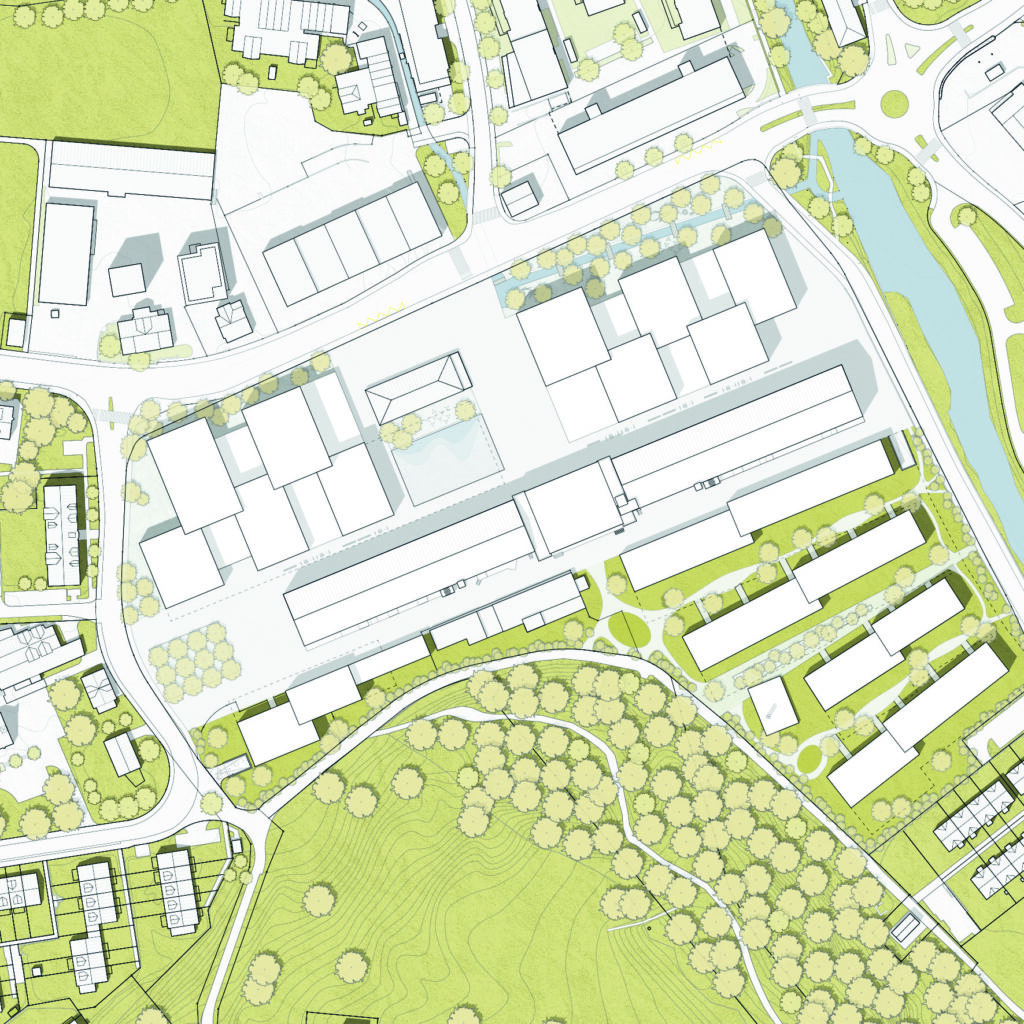
"The winning project was selected on the one hand because of the urban development strategy on the northern area, and on the other hand because of the respectful handling of the listed old buildings", says the lead architect Urs Oechslin from Zurich-based Lilin Architects. The two new building ensembles in the foreground of the spinning mill, which are intended for different uses, create a reference to the context through their urban planning anchored in place. The volumetric differentiation is derived from the existing settlement pattern of the urbanized village. The sub-volumes are staggered in terms of depth and height and allow different views of the spinning mill. The building typology thus mediates with great independence between the individual village buildings and the large-scale spinning mill building. In this way, the spinning mill area is given a new, urban face in which the various identities of the building history are superimposed.
Desired longevity Immediately after the study contract, the overall project was concretized, accompanied by the client, the building authorities, the preservation of monuments and representatives from the assessment committee and the neighborhood: "We are about to submit the draft of the development plan and the guideline project to a first round of official consultation" , so Oechslin. It is not easy to build a building park around the spinning mill that can keep up with the quality of the monument and whose beauty and benefits guarantee the desired longevity. In the immediate vicinity of such a monument, the demands on the architectural quality are very high. The cultural acceptance associated with aesthetics is more decisive for the value of the property than some technical innovations. What is no longer publicly pleasing will sooner or later be torn down. What, on the other hand, enjoys a social and cultural status, remains. The real meaning of a house ultimately lies in the contribution it makes to public life in the long term. Urs Oechslin: “If the population, the Baar community and the owners are successful in promising a place of great attraction, then the project will be approved by all authorities. It will have a political majority and will be supported by the broader population. "
Sustainable renewal For some time now, the «Spinni» has not served the purpose for which it was originally built. Since the end of production, a wide variety of uses have established themselves in the rooms. The clear and simple building structure of the spinning mill building is functionally sustainable because user extensions integrated in it can be easily adapted to changes. The high quality longevity of the basic structure achieved in this way is also aimed at for the new buildings. That is why it is being adapted for the new mixed-use buildings. As a result, the proposed building structure is not tied to a specific use and will survive future renovation processes.
A coherent whole The historically and structurally established strong identity of the area is a large fund from which any number of ideas can be realized. Time and again it is important to find suitable means to further develop, reinterpret and supplement this identity. In this way, the high level of social acceptance that the area enjoys today is to be further expanded. "Our motivation is to design a new, staggered part of the settlement with the intelligent combination of architectural, landscape-architectural and usage-specific interventions on the area of the old spinning mill on the Lorze", says Oechslin. And further: “This takes over the existing qualities and complements them adequately and respectfully. The demanding cultural, social, economic, ecological and building law requirements should be combined in a coherent whole in the interests of all those involved. "
The new use of «Spinni» needs to be carefully considered and planned.
“The construction progress of the five buildings of the first construction phase is on schedule despite the pandemic,” says the person responsible for communication, Kathrin Sonderegger. In the southernmost high-rise building with condominiums (Papieri-Suites), the shell is already up to the fifth floor. In the former PM1-4 paper machine halls, new staircases, floor ceilings and apartment partition walls are being installed, as well as the renovation of the facade for the spacious loft apartments and studios (Papieri-Lofts). The new building with 160 rental apartments running parallel to this – 30 of them in the inexpensive range – is also well advanced in terms of shell construction. The Maschinengasse that is emerging between the two buildings is also slowly becoming recognizable. This will be animated at the end of 2022 by the various users of the one or two-story adjoining studios. Underground car parks 1 and 2 are currently under construction, and their parking spaces can be equipped with charging stations for electric cars in a future-proof manner.
Planning of the second construction phase is well advanced The newly renovated and listed Lokremise was handed over to its new owner at the end of the year. Sonderegger says: "After the renovation of the workshop building, the second commercial conversion of a historic building on the site became a reality." At the end of the year, the construction of the new Ringstrasse (Papieri-Ring) began, which is part of the main development of the area and encircles the buildings of the second construction phase. As part of the second construction phase, in addition to the commercially used replacement building for the silo building, two high-rise residential buildings with 61 owner-occupied and 36 rental apartments will be built. Commercial space and a day-care center are planned on the ground floors. 64 micro-apartments complete the housing offer.
CO2-neutral energy system Those responsible for the site development pursue the goals of the 2000 Watt Society. It is worth mentioning the sustainable energy supply of the Papieri area with a self-sufficient, CO2-neutral heating and cooling supply. A significant amount of electricity is generated by the company's own river power plant and photovoltaic systems on the building roofs. The construction of the energy center has been completed and the installation of the technical systems is in full swing. Also as part of the energy system, around 100 geothermal probes have already been drilled and installed to a depth of 320 meters. The energy system will be put into operation in autumn 2021, so that the existing houses and the buildings under construction can already be supplied with sustainable heat this winter. “In addition to the building permit, the canton's concession for the operation of the run-of-river power plant is available, the renovation of which will start in early summer 2021. The area of the former wastewater treatment plant (ARA) will be completely renatured, landscaped and supplemented with a small river arm ”, says Sonderegger.
Huge interest The Cham Group is already seeing a great deal of interest from the population: "The residents find out what is happening on the site and we try to get updates accordingly," says Sonderegger. Unfortunately, the corona pandemic is currently making events such as the open construction site day in 2019 for residents and interested parties impossible. The reactions at the time were overwhelming. “The same thing can also be seen in sales: there is great confidence in our site development and the quarter that is being created here. The first apartments that came on the market at the end of 2019 were reserved within a week. Over 3000 people have subscribed to our newsletter. » One reason for the trust is that the Cham Group will be there as the owner and builder. The team has its offices on the site and is on the pulse of what's happening. Suggestions can be reacted to, feedback and inputs flow directly, and any reservations are defused.
On June 4, 2020, when the foundation stone was laid, a time capsule was filled with objects typical of the time and built into the foundation of the first construction phase. It should document the building project for future generations. What was the most special item? Sonderegger explains with a laugh: “In view of the fact that we can't even have lunch in a restaurant at the moment, and many people miss this time together in the team, the current menu cards from the surrounding restaurants are items of particular relevance. Who knows whether meat will still be eaten in 100 years' time – then minced meat tats might be part of a forgotten meal. "
The Metalli development is located in the core zone of Zug and is to be redesigned. Urban development projects are known to be protracted projects. Interventions in urban structures change the appearance of a city and affect many people accordingly. «We are aware of our responsibility. It is therefore important to find out what the needs of the population, residents and all other users of Metalli are, ”says Peter Wicki, Project Development Manager at Zug Estates. Politicians, interest groups and other groups or people also bring their concerns to the table. The aim is to create an intensely greened, sustainable and ecological metal. The building should have architectural and urban highlights. The current qualities and the wide range of products are to be retained. The interest groups advocate a meeting place where non-commercial activities are also possible. What is wanted is a new town square that will enliven the center near the train station between Zug and Baar, which has grown significantly in recent years. The existing glass passage is valued and should be retained in the same or a similar form. The aim is to expand non-motorized traffic – as well as affordable living space, more pop-up stores and other spontaneous or temporary uses of space.
Dialogue with everyone "This balancing act of involving the various interest groups and yet developing a clear and strong idea that supports this place, which is so important for Zug and makes the city even more livable, is a great challenge and will remain so until the end," says Wicki. Two other key questions particularly stimulate him in this project: “How can we continue to grow without using up more land and still maintaining or even increasing the quality of today's settlement areas? At its core, it is about sustainable, high-quality interior compression ”. Just as important to Wicki is how the inner cities change as shopping behavior changes. "In the new Metalli habitat, we have to find an answer to these two central questions." This is an extremely relevant and exciting task.
More sustainable and greener Nowadays, urban living spaces are designed differently than in the past. The Metalli was never developed as a pure shopping center, as the project development manager explains. Therefore, the area already brings numerous qualities of a modern living space with it. “Today it is already a lively quarter with a wide variety of uses and quality of stay. We want to further strengthen these qualities. " With the new Metalli-Platz, the district is being networked even further with the surrounding city. “The climatic conditions and awareness of sustainability have changed significantly in recent years. The new living space Metalli will become more sustainable and green. " Particular attention is paid to planting more trees and improving the quality of stay outdoors. The usage concept of the new living space should adapt to the current requirements of the Metalli visitors. «The trade will continue to change. The worlds of online and offline will merge. Companies have to find new ways to address consumers, ”summarizes Wicki. Metalli offers an ideal platform for this. In addition, they want to offer more products from the region.
Last autumn, the structural project by Hosoya Schaefer Architects with Nyx Architects and the landscape architect Lorenz Eugster was submitted to the city of Zug. This project emerged as the winner of the urban planning competition. The development plan is currently being drawn up. A period of two years is planned for this phase. At the same time, the tender for the project competition is being prepared. "If everything continues to go according to plan, we will be able to start construction work in 2025," says Wicki.
The "Libelle" project is being implemented on the hillside, in Vogelwinkel, below the Himmelrich in Baar. The Zurich Park Architects were able to win the architecture competition with their four trumpet-like structures. Your project impressed the jury with its four finely graduated, two- to four-story buildings, which are integrated in a star shape into the topography of the rising slope. Seen from above, the new building resembles the wings of a dragonfly.
The outside space opens up like a funnel into the center of the area. The new buildings are cubic so that they enter into dialogue with the existing buildings. The facade is striking: it should be kept in a brightly flamed shade of red. An underground car park connects the four buildings and offers 141 parking spaces. Instead of corridors, the 2.5 to 5.5 room rental apartments have a set of rooms that are offset at right angles. Construction is scheduled to start in early 2022. The first tenants are expected to move in in 2025.
Thanks to its topography and traffic situation, the Himmelrich district in Baar is a sought-after place to live as well as a much sought-after local recreation destination. For this reason, the integration of the landscape into the Vogelwinkel development was a major concern for the client. A sustainable energy strategy has also been taken into account: the heat is generated using geothermal probes and solar collectors. Only proven, durable and ecological materials are used throughout the construction process. All apartments are designed to be barrier-free.
The subfield is one of the last large contiguous building land reserves and has been declared a cantonal agglomeration area. The location directly on the municipal boundary between Baar and Zug is adjacent to the Lorze recreation zone and offers a lot of development potential. But sometimes such comprehensive concepts need more than one try. This is also the case with the Unterfeld area planning: After the population of Baar had spoken out against cross-border planning in spring 2017, the “Unterfeld Süd” project was waved through in September 2020 in the second attempt by the voters with 65 percent yes-votes.
The project was redeveloped under the leadership of the Baar municipality and in a team of 50. The team consisted of experts from the fields of urban development and landscape architecture, representatives of the authorities and landowners as well as residents, supporters and opponents of the earlier project, members of specialist committees and associations as well as local parties.
Building on the district design plan, the zoning plan and the building regulations have been coordinated. An agreement has been reached on the construction of a sustainable quarter that enables new ways of living, living and working. Four building sites are being built over in stages. Rental apartments and condominiums are planned. The creation of office and service areas as well as public-oriented uses on some of the ground floors are also planned. A neighborhood square, a spacious boulevard for non-motorized traffic and a lot of green space ensure sufficient open space. Three high-rise buildings with heights of 60, 50 and 40 meters are to be built.
The architecture competition for the first construction phase has already started. The Baar municipal assembly is expected to decide on the development plan in 2022. The first groundbreaking is unlikely to take place before summer 2023. First of all, the 60-meter high-rise near the Lindenpark S-Bahn station and the neighboring office building are to be built. The other construction areas are being developed further in parallel.
The owners are Implenia Immobilien AG, Ina Invest AG and the Stocker heirs. Implenia is responsible for the site development. The company is developing plots 1A and 4 as the owner and plots 1B and 3 on behalf of Ina Invest. The two local housing cooperatives, the Baar family and the Liberale Baar cooperative, continue to show interest. The Zug corporation is planning a project in the city of Zug independently of the other landowners. How this will look is still open.
As early as 2014, the Institute for Materials and Wood Technology (IWH) at the Bern University of Applied Sciences (BFH) started a research project in which inexpensive and sustainable building material based on coconut fibers was to be developed, the BFH informed in a message . The experience gained is being further developed by Michail Kyriazopoulos in a spin-off from the BFH. The former student and research assistant at the IWH founded the start-up NaturLoop together with Daniel Dinizo.
As the first product, NaturLoop has launched a building board made from coconut fibers. Crop waste from Filipino coconut farmers is used for their production. "With Cocoboard we offer a sustainable, cheap and local alternative to conventional building materials", Kyriazopoulos is quoted in the communication. The next thing on the NaturLoop program is the opening of a production facility in the Philippines.
The products of the young company from Bern are intended to reduce the Philippines' dependence on imported building materials. The sale of coconut fibers also offers local coconut farmers an additional source of income. "As a technology service provider, we want to offer complete solutions for the development of sustainable, natural biocomposites made from agricultural by-products," says NaturLoop CEO Dinizio. For him, sustainability means "taking into account the mutual dependence of nature and people."
The Circle building complex at Zurich Airport, which was inaugurated in November last year, is not only Minergie-certified, but also meets the LEED PLATINUM standard of the US Green Building Council, Siemens Switzerland informs in a press release . At the highest standard of the organization, seven areas are checked for sustainability, it says there. Products for building and energy technology from Siemens have made an active contribution to the sustainability of The Circle.
In total, over 30,000 Siemens components have been installed in the Circle, the company writes in the press release. "We are present with our products in every room", Felix von Rotz, Head of Building Products Switzerland, is quoted there. For the implementation of the order, Siemens Switzerland had "designed a unique logistics concept, with a warehouse at our Steinhausen location and a transport vehicle that is only on the road for The Circle," explains von Rotz.
When it comes to heating, ventilation and air conditioning systems, Siemens products create a healthy and optimal room climate. Other components regulate the communication of the controls of these systems with blinds and lights. All buildings can be fully automated using the KNX communication standard.
A further 7,000 Siemens components were installed in the power engineering systems. There are also voice alarm systems in private and public areas of the complex.
In an interview , the new Vice Chairman of the Board of Directors of Herzog Kull Group Holding AG ( HKG ) puts buildings, structural measures and sustainable building management in the focus of the discussion about reducing CO2 emissions. "With increasing penalties for CO2 emissions, owners of real estate portfolios are increasingly coming under pressure," Beat Huber is quoted as saying. Investors, but also tenants, would place higher demands on energy efficiency and ecological energy supply. Electricity from your own roof and ecological heat supply would be standard in many buildings in the future.
Huber, who is a proven energy specialist, expects that the new CO2 law will certainly accelerate development in Switzerland. Because of the lower energy costs here compared to other countries, cost savings were not a particular issue in the past. That has changed due to the pressure to save CO2. In Switzerland there are currently a lot of efforts, new services and companies around the topic of building technology.
In Huber's opinion, financial incentives or taxes in the event of excessively high CO2 values will mean that in the future a property with a solar system and ecological heat supply will no longer be a particularly attractive offer. Instead, you will be “punished by investors and tenants if you cannot offer or have implemented this,” Huber is quoted as saying. These expectations will trigger many investments in real estate and areas. “Large property portfolio owners are currently analyzing their properties with regard to reducing CO2 and making funds available.” He sees great potential for corresponding services, such as those already offered by HKG.
The large-scale solar system originally initiated by Axpo on the Muttsee dam is becoming the AlpinSolar joint project between Denner, Axpo and IWB . As everyone said in a press release of the same name, the energy suppliers Axpo and IWB will install and commission the largest alpine solar system in Switzerland in the summer. Almost 5,000 solar modules are to produce around 3.3 million kilowatt hours of electricity per year on the south-facing dam. Discounter Denner will take it off for 20 years.
At 2500 meters above sea level, a lot of renewable energy can be generated even in the winter months. Since the system is installed on an existing dam, it is particularly environmentally friendly. This is another reason why AlpinSolar is “a system that the energy transition needs”.
Nevertheless, “due to the lack of framework conditions, such systems are hardly economically feasible today”, regrets Axpo CEO Christoph Brand. “Nevertheless, we decided, together with strong partners, to implement this lighthouse project” and “to set an example”. "We see the project as an important contribution to the discussion for the upcoming legislative revisions."
IWB, the energy supplier for the canton of Basel-Stadt, has a 49 percent share in the project. It goes well with the company, says IWB CEO Claus Schmidt, because "the expansion of electricity production from solar energy also in Switzerland" is part of its own strategy.
Energie Zürichsee Linth introduced a proportion of biogas in its basic gas supply years ago, the utility company informed in a press release . Now EZL has increased this share to 20 percent biogas, it says there. For the customer, however, this is not associated with a price increase. He simply gets “an ecologically better product” with the same heat output.
In the catchment area of EZL, customers could also “drive in a particularly environmentally friendly way,” explains the utility company in the press release. All filling stations here offer 100 percent biogas. At a current price of CHF 1.05 per liter, customers would benefit “twice”, writes EZL. On the one hand, the price is around 30 percent below that of gasoline. And on the other hand, they are CO2-free on the road with biogas.
EZL operates its own plant for processing biogas at the Obersee wastewater treatment plant in Schmerikon SG. According to the company, the biogas produced there is enough for more than 500 vehicles with an annual mileage of around 15,000 kilometers a year.
Lidl has exceeded a self-imposed environmental target. By 2020, the company wanted to reduce its relative CO2 emissions by 35 percent compared to 2013, Lidl Switzerland explains in a press release . Ultimately, however, the CO2 emissions were reduced by 53 percent. Lidl emphasizes a change in its own transport area as a particularly effective measure. Here, the company plans to only use trucks powered by bio-liquefied petroleum gas by 2030.
Lidl Switzerland has introduced a CO2 management system in which the company’s annual CO2 emissions are recorded, the communication further explains. Building on this, the company derives measures to reduce emissions. The remaining emissions are offset.
This is the fifth time that Lidl Switzerland has met the conditions for certification with the Swiss Climate Label CO2-neutral, according to the announcement. According to her, Lidl Switzerland is the first company of its kind in Switzerland whose branches and goods distribution centers are all certified according to the ISO 50001 energy efficiency standard.
Riehen can continue with its planning for the expansion of another geothermal system. It would increase the number of residents supplied with climate-friendly thermal energy from the current 8,500 to 12,500. The referendum period expired at the end of October. The positive decision from the residents' council is now legally binding. This is now announced by Wärmeverbund Riehen AG ( WVR ).
In the next step, seismic surveys to explore the subsurface for the geo2riehen project are due in summer 2021. A suitable location for the boreholes is thus sought. If the feasibility of the plant is confirmed, drilling could begin in 2023. They should open up more naturally occurring thermal water for heat utilization.
An already existing feasibility study confirms that the project has “good prospects for success”. The drilling to promote the thermal water and the construction of the facility will cost around 20 million francs. The costs are shared between the two shareholders, the municipality of Riehen and the Basel energy supplier IWB . The Swiss Federal Office of Energy has promised a grant of 1.2 million francs and has announced a further 5.1 million francs.
IWB's stake has risen from initially 27 to 50 percent. According to the WVR, this not only makes financing easier. The operation of the systems and the growing supply network can also be better coordinated with IWB: "The gradual and partial shutdown of the gas supply is thus optimally coordinated with the growth of the Riehen heating network."
The transport company Eurobus , based in Bassersdorf ZH, is now using three fully electric articulated buses from Mercedes-Benz . The vehicles from the eCitaro G model series, which were presented just a few weeks ago, are used on the so-called ETH link between the two locations of the Swiss Federal Institute of Technology in Zurich. They are the first to run in regular service.
The 18.13 meter long, fully electric articulated buses run 100 percent on green Swiss water. Their capacity is 38 seated, 93 standing and two wheelchair places. They also offer public WiFi, USB charging sockets and air conditioning. With immediate effect, they will replace the previous diesel-powered shuttle buses between the center of Zurich and Hönggerberg. They fill up with new electricity at the Hönggerberg stop.
“In addition to their environmental friendliness, the new electric buses are characterized above all by their quiet driving style, comfortable low-floor entry and attractive interior and exterior design,” said the managing director of Eurobus welti-furrer AG, Patrick Nussbaumer, in a media release from Daimler. "With this, the ETH is sending a clear signal and strengthening its position as a future-oriented educational institute."
Armin Krieg, Head of Sales for City Buses at the Winterthur Daimler subsidiary EvoBus (Schweiz) AG , is satisfied “that with the introduction of the eCitaro G we are consistently continuing our announced timetable for e-mobility in city buses and Daimler Buses is the innovation and technology leader in the epicenter of technical and scientific research and teaching, of all places. "
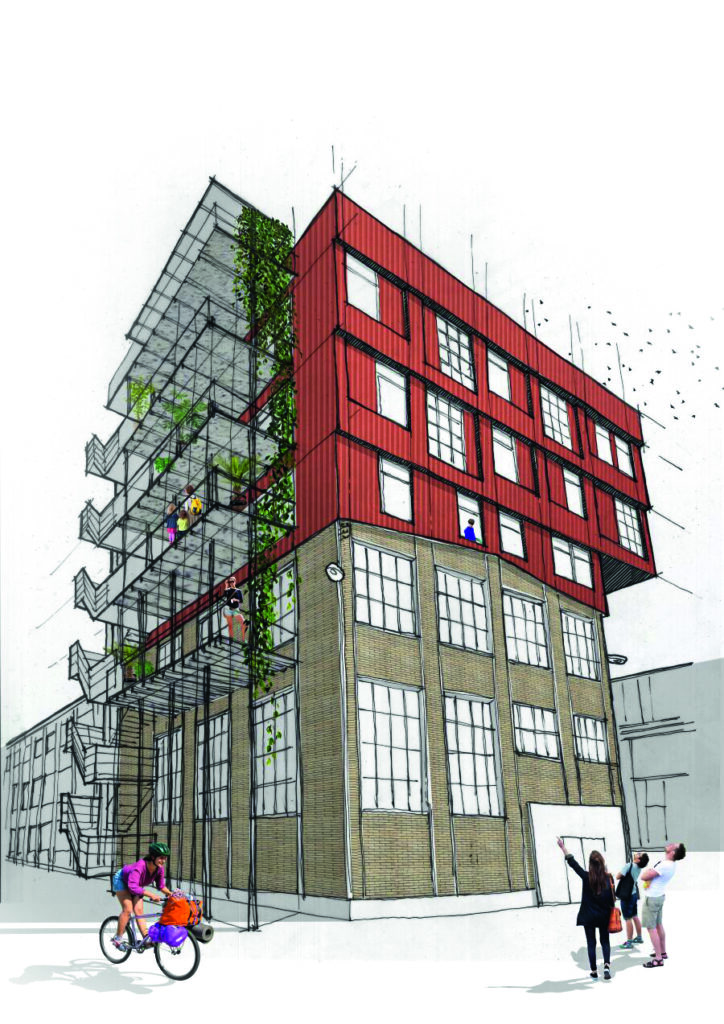
A project that could hardly be more sustainable: the extension of hall 118 on the storage area in Winterthur ZH was increased by five floors. And wherever possible with reusable building materials. The presence of such materials from demolitions in the region was decisive for the current appearance. The building is not yet completely finished: “The construction should be completed in early 2021,” says Benjamin Poignon, architect and civil engineer at “baubüro in situ”.
The Abendrot Foundation, based in Basel, bought the Lagerplatz area from Sulzer Immobilien AG in 2010. The direction of focus was quickly clear to the pension fund, which is committed to sustainability: the already existing mixed use should be further developed in cooperation with the tenants. Several new studios of up to 60 square meters for start-ups and small businesses are planned for each of the upper floors.
Although the buildings and their footprints were to be retained, they were to be further developed in terms of energy and in accordance with legal standards. The “construction office in situ” is responsible for the project. The project managers Marc Angst and Pascal Hentschel sum up the concept: «Repairing what can still be used. Remove what disturbs or is no longer suitable – and add what is new. "
Finding building materials is half the time The supporting framework consists of an used steel structure. Prefabricated facade elements made of wood, which are filled with straw insulation, are attached to this. Such simple ecological building materials as straw, excavated earth and wood accumulate in large quantities and can be processed and used with a minimal use of gray energy. They also ensure a pleasant room climate.
The slightly overhanging south facade in bright brick red-orange comes from the sheet metal facade of the former Ziegler print shop in Winterthur Grüze. The windows in the new recycling building are inconsistent, but overall they are consistent. In order for the insulation to meet today's standards, the glazing was doubled in nine windows, the others had sufficient insulation. The staircase on the east facade is over 30 years old and previously adorned the facade of the Orion office building in Zurich-West. 80 windows and facade panels made of granite, which are recycled for the balcony floors, also come from this building, which was erected in 1989. The respective components are not reprocessed – this differentiates the project from so-called downcycling, in which building materials are initially reworked in a energy-intensive manner.
The architects have already learned a lot from this unique pilot project: “It is the first time that we have reused a supporting structure. But we also noticed that there are components that are cheaper to buy than to reuse. For example, we have tried to reuse limestone sandstone. But the cleaning and preparation work was so high that we decided to buy a new one here, ”explains architect Poignon. The project also created a new job: component hunter. The “baubüro In situ” hired interns specifically for this purpose, who looked for suitable demolition objects and any reusable materials that might arise. But the architects, too, are always on the move with open eyes. Usable materials are dismantled and picked up by the architectural office with roots in Basel. The architects spend half of the time evaluating and procuring possible components. "In situ" did not have any problems finding the right material: of the approximately 7.5 million tons of construction waste that is generated in Switzerland every year, only 0.1 percent is directly reused, according to the Federal Office for the Environment (FOEN) has. «In situ» assumes that ten times more can be reused.
Book publication planned If you think about the costs at this point: 4.8 million Swiss francs have been budgeted for the project so far. One of the stated goals was to build in such a way that it does not cost more than a completely new building. “It is difficult to make direct comparisons,” says Benjamin Poignon.
In general, “in situ” always relies on the reuse of materials during construction – even if rarely on this large scale. With its uniqueness, K118 has definitely attracted interested parties: A research and teaching project at the ZHAW University of Applied Sciences in Winterthur and a case study in environmental systems science at ETH Zurich accompanied the planning. Among other things, the environmentally relevant (waste, resources, lifespan, etc.) and legal as well as those relating to the construction process are examined. A joint publication is planned in cooperation with the Federal Office for the Environment: The book is intended to comprehensively shed light on the reuse of components in building construction and to make the knowledge and experience gained publicly available. ■
This is what building K118 should look like after construction work is complete.
The non-profit housing developers in Switzerland have a portfolio of almost 170,000 apartments, the Federal Council informed in a message . Many of these apartments, which are mainly located in cities and agglomerations, are more than 30 years old and no longer meet today's energy requirements. A special federal program is intended to motivate non-profit housing developers to renovate their buildings sustainably.
The program drawn up by the Federal Council provides for loans of up to CHF 50,000 per apartment to be renovated. With a term of 25 years, no interest is charged for the first ten years. The prerequisite is that the renovation work improves the condition of the building envelope to level B of the building energy certificate of the cantons ( GEAK ) or meets the Minergie standard.
A similar program for rural areas is being launched by the Foundation for the Promotion of Home Ownership ( SFWE ), the Federal Council informs in the announcement. Here you can apply for CHF 90,000 per apartment for a maximum of three apartments. Applications for both programs can be submitted to the umbrella organizations for non-profit housing construction or the SFWE by mid-October 2023.
The Parco eolico del San Gottardo has been officially inaugurated on the Gotthard Pass. It is currently the only wind farm under construction in Switzerland. It will start its regular operation in November. According to a press release by the operator Azienda Elettrica Ticinese ( AET ), “numerous restoration and soil remediation measures” are planned for the coming summer months.
State Councilor Claudio Zali, Director of the Territorial Department, Airolo's Mayor Franco Pedrini, the General Director of Services Industriels de Genève ( SIG ), Christian Brunier, and the Director of AET, Roberto Pronini, symbolically put the plant into operation. There were also representatives from companies and institutions involved in the project.
The summer months of the past two years were used for the construction phase. Commissioning was planned as early as autumn 2009. However, according to an article in the “Luzerner Zeitung”, those responsible at the time “admitted that they underestimated the effort involved in the project”. As a justification, the then Chairman of the Board of Directors cited Switzerland's lack of experience with wind farms.
There are now five instead of the originally planned seven wind turbines on the Gotthard Pass. They were supplied by the German company Enercon . The annual production of these generators of 2.35 megawatts each is estimated at between 16 and 20 gigawatt hours, according to the announcement. They can cover the electricity demand in the Leventina valley between the south portals of the Gotthard tunnel near Airolo to Biasca.
The investment of 32 million francs was supported by the shareholders of the Gotthard wind farm: AET holds 70 percent, SIG 25 percent and the municipality of Airolo 5 percent. The system receives subsidies from the fund for the cost ceiling feed-in remuneration ( KEV ) for renewable energies for 20 years. This is a federal instrument to promote renewable energies. It is financed by a consumer levy on the electricity price.
In 2019, around 75 percent of the electricity from Swiss sockets came from renewable energies. This is evident from the data collected annually by the Federal Office of Energy ( SFOE ).
According to a media release , the data published on Monday show that 66 percent of the electricity consumed comes from large-scale hydropower. 8.4 percent is generated by solar and wind energy as well as from small hydropower and biomass. In 2019, their share rose from 7.85 percent in the previous year to 8.4 percent. Around 95 percent of this was produced in Switzerland and a good three quarters were funded by the feed-in tariff system ( ESV ).
Compared to the electricity actually supplied, the shares of renewable sources in Swiss electricity production are lower: 56 percent of the electricity produced in Switzerland comes from hydropower and 6 percent from new renewable energies. In this context, the SFOE points out that the Swiss Sockets not only supply electricity from Swiss production.
19.1 percent of the delivery mix comes from nuclear energy (2018: 17.3 percent). The share in Switzerland's production mix is significantly higher at 35 percent, some of which is exported. Almost 2 percent in the Swiss delivery mix is obtained from waste and fossil fuels.
The origin and composition of 4 percent of the electricity supplied cannot be verified. Since this so-called gray electricity is only permitted in exceptional cases from delivery year 2020, according to the SFOE, large consumers are apparently increasingly switching to domestic nuclear energy. Since most of the neighboring countries do not issue any guarantees of origin for electricity from conventional power plants, Switzerland has introduced replacement certificates. Coal electricity from abroad can be declared as such and no longer has to be summarized under gray electricity. This share of coal-fired electricity halved to half a percent between 2018 and 2019. However, electricity-intensive companies recently obtained replacement certificates for electricity from fossil and nuclear sources from European power plants.
The HSG Foundation is currently building the new HSG Learning Center on the premises of the University of St.Gallen ( HSG ). The general contractor HRS Real Estate AG has commissioned the Swiss Holcim AG with the delivery of the concretes. A new, more sustainable Holcim product, EvopactPLUS, is used in around half of the total of 6,000 cubic meters of concrete used.
"With EvopactPLUS we close the building material cycle, conserve natural resources and save CO2," said Roger Dällenbach, Regional Manager for German-speaking Switzerland and Ticino, in a press release from Holcim. The new type of concrete replaces natural gravel with a reclaimed aggregate from the region. It also includes Susteno, which, according to the company, is the "first and only resource-saving cement in Europe that uses mixed granulate from demolitions as an additive". This fine material is not used in conventional concrete production and must therefore be dumped.
"Compared to an already optimized mass cement, the use of Susteno saves 10 percent CO2," the press release said. Regionality also plays a role: the building material is delivered from the Holcim concrete plant in St.Gallen, just three kilometers from the construction site. "It was an experiment for us because we were working with the product for the first time," Holcim foreman Marcel Kunz is quoted as saying. He is very satisfied with it, "it's a wonderful concrete."
In the future, the modern building should focus less on technical learning than on learning the necessary skills such as critical thinking and self-reflection, according to the client, the HSG Foundation . It finances this project largely from donations from HSG alumni .
Four electric buses will be operating on RVBW Line 5 from March 2021. They will transport passengers between Baldegg via Baden train station to Ennetbaden. The new buses are equipped with innovative technology from ABB Switzerland. The canton of Aargau announced this in a media release as the customer for the public transport services.
The project will be carried out in close cooperation with ABB. The Federal Office of Energy has classified it as a flagship project worth supporting. The drive technology is developed at the ABB site in Turgi. The charging station is also from ABB. The batteries are produced in Baden.
A charging station will be installed at each of the two terminal stops. There buses can be charged in up to six minutes. The canton is contributing almost 1.5 million francs to the investment costs for the charging infrastructure.
RVBW line 8 between Neuenhof and Wettingen has been operated with an electric bus on a trial basis for two years since mid-December 2019. On these two lines, the RVBW wants to gain initial operational experience with the use of e-buses. In the future, RVBW intends to operate all city bus routes electrically. The switch from internal combustion to electric motors is to take place gradually.
Wir verwenden Cookies zur Unterstützung und Verbesserung unserer Dienste. Mit der Nutzung dieser Website erklären Sie sich mit der Verwendung von Cookies einverstanden. Weitere Informationen finden Sie in unserer Datenschutzerklärung.