Tag: News

  • Investors expect record prices for residential property

    Investors expect record prices for residential property

    The players in the real estate market are confident about the future. The mood has brightened significantly compared to the pandemic year 2020, writes KPMG in a message on the consulting company’s current Swiss Real Estate Sentiment Index. In the case of residential property in particular, the respondents assume that prices will rise sharply. The corresponding sub-index has reached a new high of 119.2 points, according to the announcement.

    KPMG analysts explain that the supply of residential real estate is becoming more and more scarce. Here the sub-index fell from 108.0 points in the previous year to 137.1 points. Price increases and shortages show that “market participants regard the residential segment as the clearly preferred real estate investment even more than before”.

    When it comes to prices for office space, the market players are expecting only a slight drop in prices. Compared to the previous year, the expected decline in prices has weakened, the announcement explains. “The users have already adjusted to the new conditions, which is why the focus is currently not on reducing space,” Beat Seger, partner and real estate expert at KPMG, is quoted there. Only in the case of retail space do the respondents continue to assume that prices will fall significantly.

    From a regional perspective, the market players for the Zurich and Lake Geneva regions are expecting significantly higher prices on the property market. Slight price drops are expected in Eastern Switzerland. As in previous years, expectations for Ticino remain clearly negative.

  • Halter AG realizes the VIVO Aesch project

    Halter AG realizes the VIVO Aesch project

    The Halter AG construction group is teaming up with the UBS Sima real estate fund as an investor and future builder to implement the VIVO Aesch project. According to the press release , the legally binding building permit for a new development with residential, commercial and commercial use at the northern entrance to the municipality of Aesch is available. The 15,188 square meter area was used by the previous landowner Victus Real Estate AG as a material storage and transshipment point.

    The new mixed-use development is to be built by 2024, with around 85 percent of the main area being intended for residential use. According to a press release, after the development phase was completed in July, Halter AG was able to win an investor in Balintra for VIVO Aesch. Balintra AG in Basel is a real estate company owned by the UBS Sima real estate fund.

    The new property owner will transfer the project with an investment volume of around 150 million Swiss francs as builder together with Halter as developer and overall provider into the first construction phase from this autumn.

    According to Halter, the project comprises four building units. The 40 meter high VIVOTower at the motorway turn marks the entrance to the municipality of Aesch. On the lower floors, the tower offers space for commercial use and the TowerCafe. In addition, 36 apartments and 80 rental apartments are planned.

    The VIVOHof is another building with mixed use, with areas for small businesses and 36 rental apartments on the upper floors. The VIVOKamm comprises 57 rental apartments with south-facing terraces as well as a common room with access to the neighborhood square. VIVOQube offers a further 55 rental apartments on six floors, mostly maisonette apartments.

    According to Halter AG, the start of marketing for the commercial space is in spring 2022, and for the apartments in spring 2023. Completion is planned for the third quarter of 2024.

  • Inventx can expand its headquarters in Chur

    Inventx can expand its headquarters in Chur

    Inventx has received the green light to expand its headquarters in Chur, according to a press release . The IT service provider wants to build a new building on the area of the old forestry workshop in the city center. This should offer space for more than 200 employees. In addition, there will be space in the new building for apartments, restaurants, a daycare center and the Chur city archive.
    Inventx has been planning to expand its headquarters for four years. However, the project was delayed due to “objections from the neighborhood”. Ultimately, the complaints landed before the federal court. But she rejected this.

    “We are pleased that the project can now finally be realized and that the fallow area in the city center is revitalized,” says Mayor Urs Marti (FDP) in the press release. “In addition, the project strengthens Chur as a business location in the long term and thus also strengthens the city’s position as an attractive ICT location,” he adds.

  • EPFL exhibits Design Brain in Seoul

    EPFL exhibits Design Brain in Seoul

    The Media x Design Laboratory of the Swiss Federal Institute of Technology in Lausanne ( EPFL ) is currently exhibiting a larger-than-life design brain in the South Korean capital. The exhibit called Artificial Swissness can be seen until October 31 at the Seoul Biennale for Architecture and Urbanism .

    According to a communication from EPFL, Artificial Swissness aims to extend the epistemology of computer science to the cultural field. “Our design brain is an experiment on the question of whether machines can design structures,” laboratory director Professor Jeffrey Huang is quoted as saying. “That means whether they can not only recommend music or drive cars, but also create meaningful cultural artefacts, such as architecture with distinctive Swiss characteristics.”

    As the message goes on to say, the exhibit should be a constantly changing spatial interface that represents the inner thoughts of an artificial intelligence machine that has been trained on 10,000 images of Swiss chalets and alpine architecture. “We make the visual interferences in these layers of the neural network visible,” say the two EPFL students Frederick Kim and Mikhael Johanes. “This gives us an insight into the inner workings of our generative artificial network that creates architectural images.” The two of them set up the installation in Seoul after a 14-day quarantine.

    The digital screens of the installation show the machine-generated images of typical Swiss architecture. At the same time, an LED projection reveals the constantly evolving learning process that the machines go through while they sift through thousands of images of alpine architecture in order to distill the essence of “Swissness”.

  • Baloise real estate fund goes to SIX

    Baloise real estate fund goes to SIX

    The Baloise Swiss Property Fund is expected to be traded on the Swiss stock exchange from November 1, 2021. According to a press release from Baloise Asset Management AG , the relevant listing application has been approved by the SIX Swiss Exchange . The fund is therefore also open to non-qualified investors from this date. The portfolio currently comprises 72 properties with an estimated market value of around CHF 811 million.

    According to the issuer, the investment objective of this real estate fund, launched in 2018, is “primarily to generate stable current income through direct investments in Swiss core / core plus properties that are in good locations and have a high level of income and value stability”. At least 50 percent residential properties and a maximum of 50 percent commercial properties would be aimed for. A further expansion with a focus on residential buildings is planned.

  • Halter breaks ground for development in Langnau

    Halter breaks ground for development in Langnau

    The groundbreaking ceremony for a new residential and commercial building was carried out on Wednesday afternoon on the area north of the Ilfiskreisel in Langnau iE. According to the media release , the construction company Halter AG from Schlieren will be realizing the development on behalf of the insurance company Visana Services AG as general contractor. In autumn 2023, Aldi Suisse is to move into its new retail space there, the first Aldi location in the upper Emmental. At the same time, the reference date for the rental apartments and other commercial space in the new building is.

    According to Halter, the overall project provides for a mixed use of a retail space on the ground floor rented to Aldi Suisse, rental apartments and a proportion of commercial and office space for third parties. In addition, there is a public outside space as a central access area to the building on the south side and on the east side an outside space with play and lounge area that can only be used by the tenants. The delivery area for the shop is on the west side and the entrance to the parking garage is on the north side.

    One floor has an Aldi staff room as well as nine rental apartments and a commercial unit. A further 16 rental apartments with their own loggia or terrace are being built on the two floors above. Cellar and technical rooms as well as an underground car park with around 80 parking spaces are planned for the two basement floors.
  • The risk of bubbles in homes in Zurich is high

    The risk of bubbles in homes in Zurich is high

    The global bubble risk for homes rose by 6 percent on average in the major cities analyzed last year. In all of the cities analyzed except Milan, Paris, New York and San Francisco, home prices have risen, in five cities even by double digits. The potential extent of a price correction has also increased. This is shown by the UBS Global Real Estate Bubble Index 2021 . This annual study is prepared by the Chief Investment Office of UBS Global Wealth Management .

    The current risk of the real estate bubble bursting is highest in Frankfurt, Toronto and Hong Kong. According to a comprehensive media release , there are also high risks in Munich and Zurich. Vancouver, Stockholm, Amsterdam and Paris are just as overrated, as are all five cities from the USA examined. UBS also sees major imbalances in Geneva, Tokyo, Sydney, London, Moscow, Tel Aviv and Singapore.
    Madrid, Milan and Warsaw, on the other hand, are still rated fairly. UBS names Dubai as the only undervalued market. He’s also the only one to be classified in a lower category than last year.
    According to UBS, the reasons for the global price increase lie in addition to the corona pandemic in the further improved financing conditions. In some cases, even the lending standards for homebuyers have been relaxed. In addition, higher savings rates and growing stock markets have released additional equity.

    At the same time, households would have to take out ever larger loans in order to keep up with rising prices. Even so, debt levels and credit growth are still well below their historical highs in many countries. UBS therefore does not expect any major disruptions on the global financial markets for the time being. The shift in demand towards non-urban areas, however, makes “a long dry spell for the urban housing markets” more likely.

  • Wincasa is a new partner of Madaster

    Wincasa is a new partner of Madaster

    Real estate service provider Wincasa has entered into a partnership with Madaster . According to a press release , Wincasa intends to facilitate the efficient use of materials throughout the life cycle of a property. Wincasa uses the Madaster material pass for this. It gives insight into the materials, components, products and quantities that were used to create a building. It also includes information about the quality of the materials, their locations, and their financial and circular value.

    “The exact knowledge of the built-in materials is an integral part of the holistic view of a property”, Beatrice Landolt, Head Construction & Facility Management at Wincasa AG, is quoted as saying. “On the basis of this data, we will in future be able to evaluate the circularity of the properties we manage and map this in a corresponding index.”

    As stated in the announcement, a detailed material pass for an existing building is being created for the first time in Switzerland in the Müllerstrasse 12 renovation project in Zurich. Wincasa is supporting this Swiss Prime Site Immobilien AG project with its client trust department. In this way, if one property is demolished, materials can be used specifically in another property, says Landolt. “This possibility means a new dimension of circularity in the real estate industry and closes the cycle in Cradle to Cradle construction projects.”

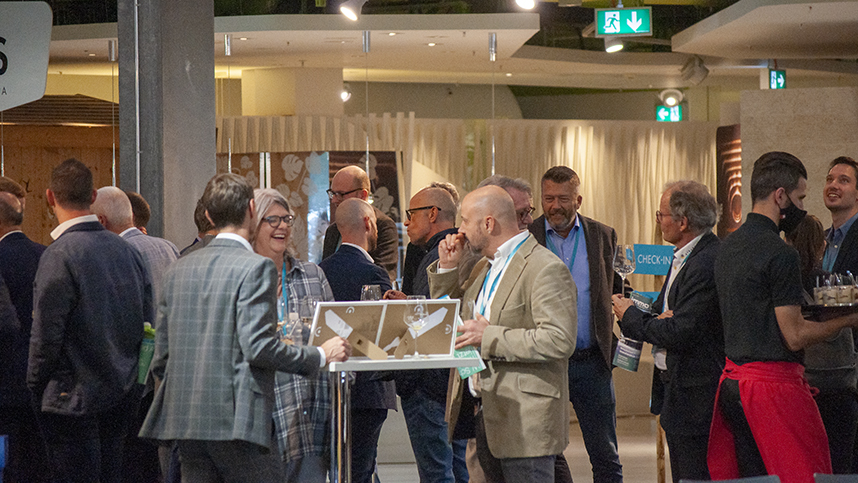
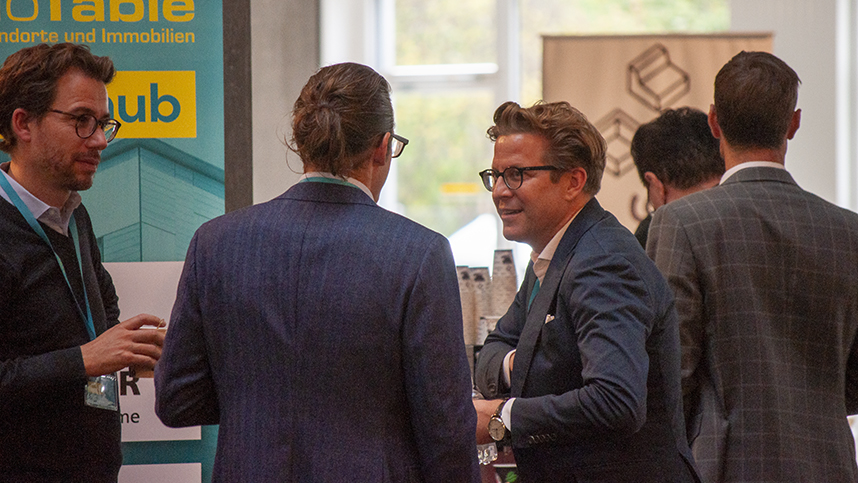
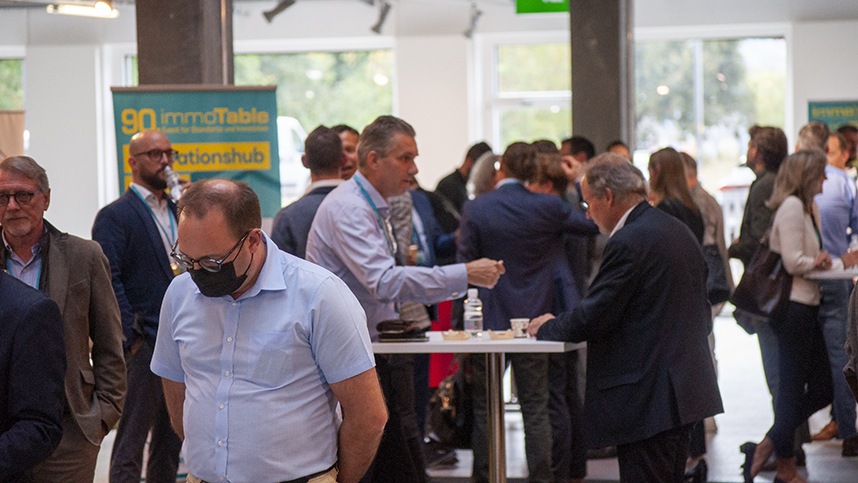
  • 90. immoTable in der Bauarena

    90. immoTable in der Bauarena

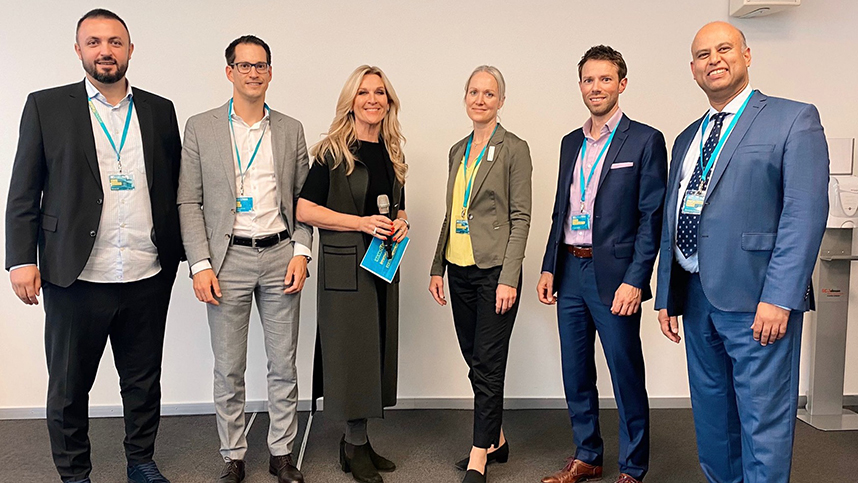
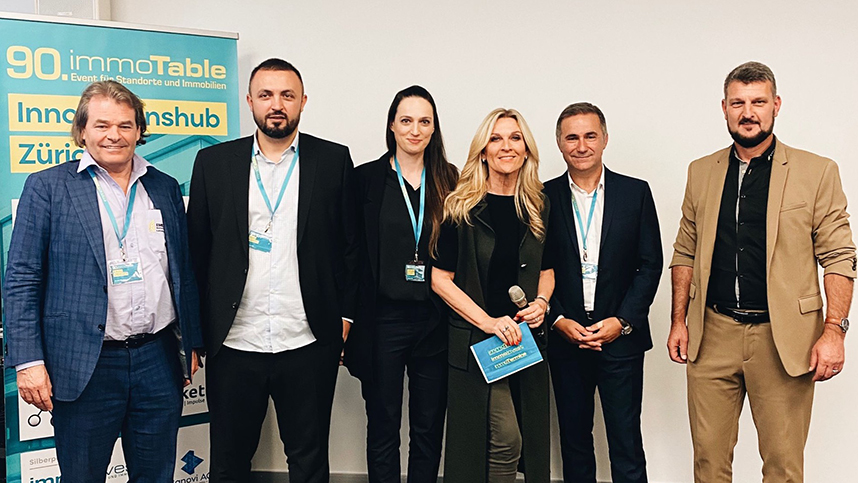
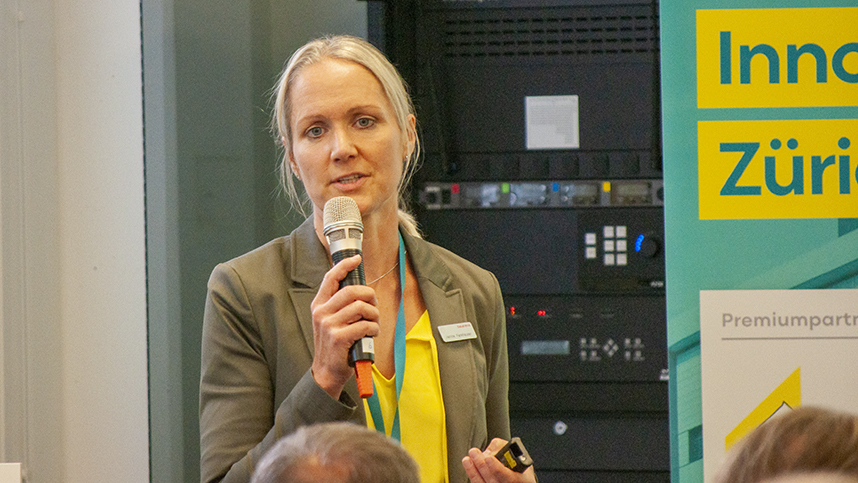
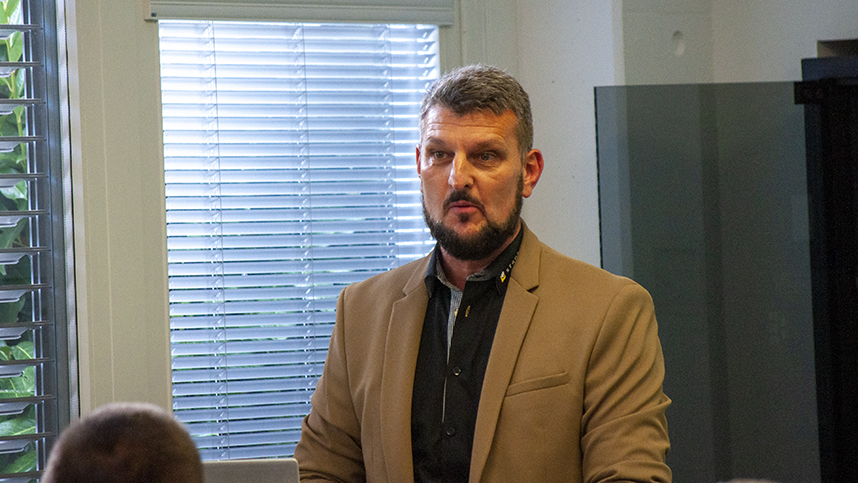
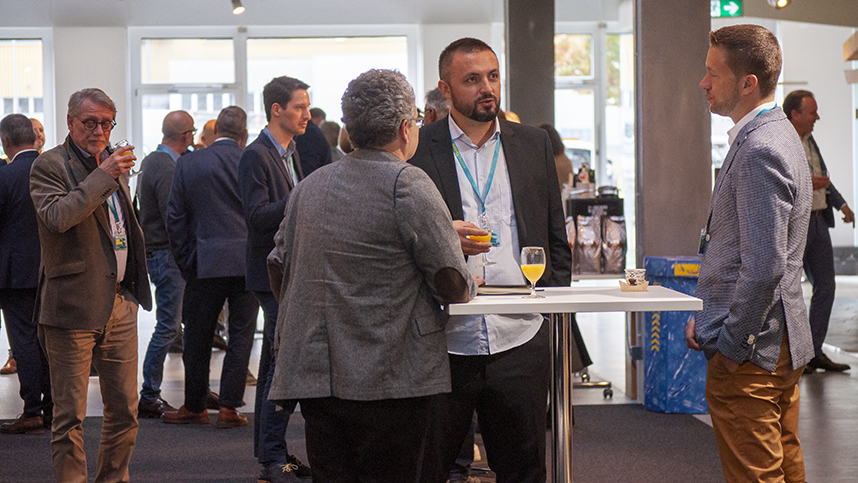
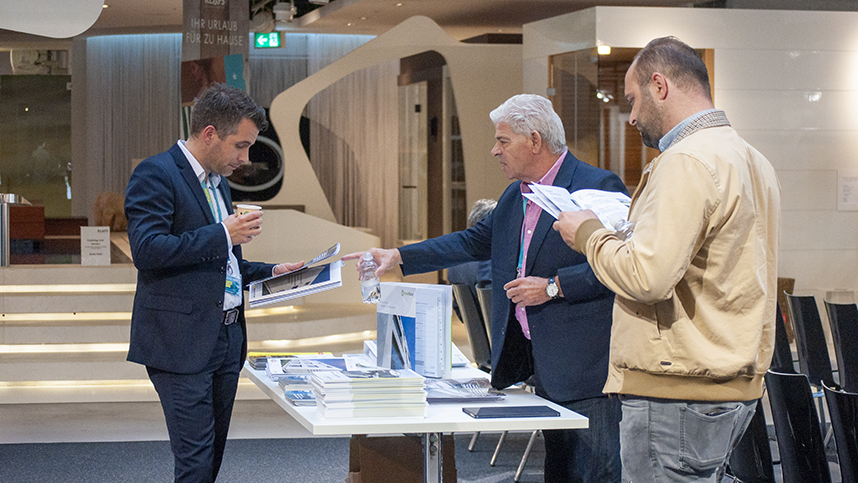
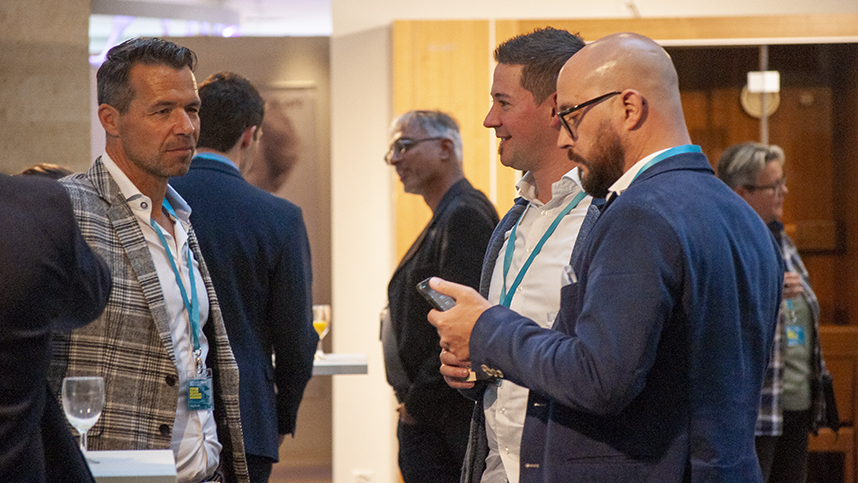
    Fabian Streiff ist seit Anfang 2021 Leiter des Bereichs Standortförderung im  Amt für Wirtschaft und Arbeit des Kantons Zürich. Der 37-Jährige war von 2018 bis 2020 bei der Basel Area Business & Innovation tätig. Dort leitete er die Healthcare-Initiative DayOne. Zuvor war er als Co-Leiter der Standortförderung von Basel-Stadt tätig. Streiff studierte Wirtschaftsgeographie und besitzt einen Master of Science. Mit seinem Beitrag, «Die Bedeutung von Innovationshubs für den Wirtschaftsstandort Zürich», zeigte er die Aktualität und Brisanz der Innovationsparks. Die Talente, die in den führenden Universitäten in der Region hervorgehen, ziehen wiederum globale Wirtschaftsunternehmen an.

    Als Impulsgeber wirkt Mario Facchinetti im Proptech Bereich. Er ermöglichte den etlichen Teilnehmern einen Einblick in die digitale Immobilienwelt und empfahl allen, nicht zu warten, da sich die Entwicklung exponentiell entfaltet. Mit seinem Referat konnte er aufzeigen, warum es sich lohnt in Innovation zu investieren.

    Der moderne Holzbau ist nachhaltig und effizient. Dieses Faktum präsentiert Pius Kneubühler, CEO der Strüby AG. An aktuellen Projekten legte er dar, wie sich die Entwicklung im modernen Holzbau in den Bereichen Architektur, Immobilien, Wohnbau, Gewerbebau, Umbau, und Innenausbau entfaltet.

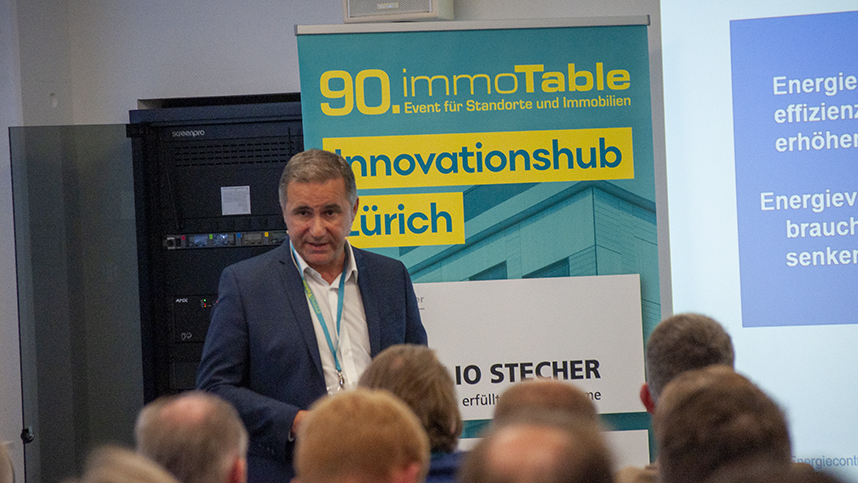
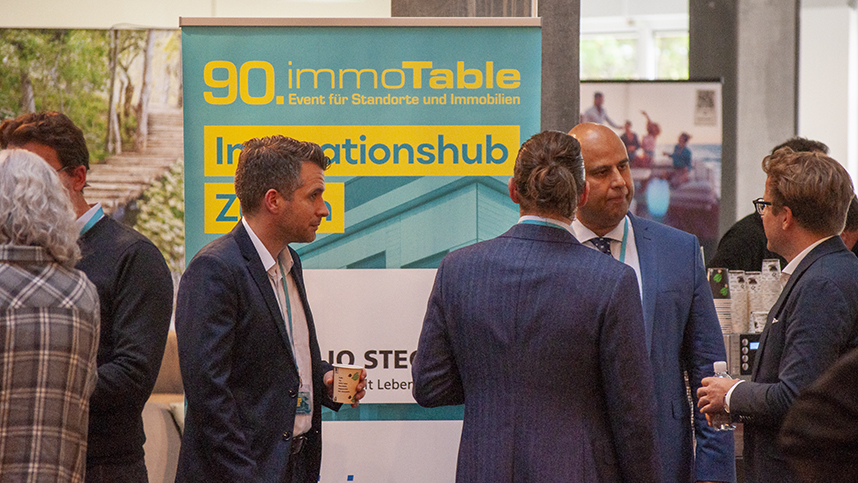
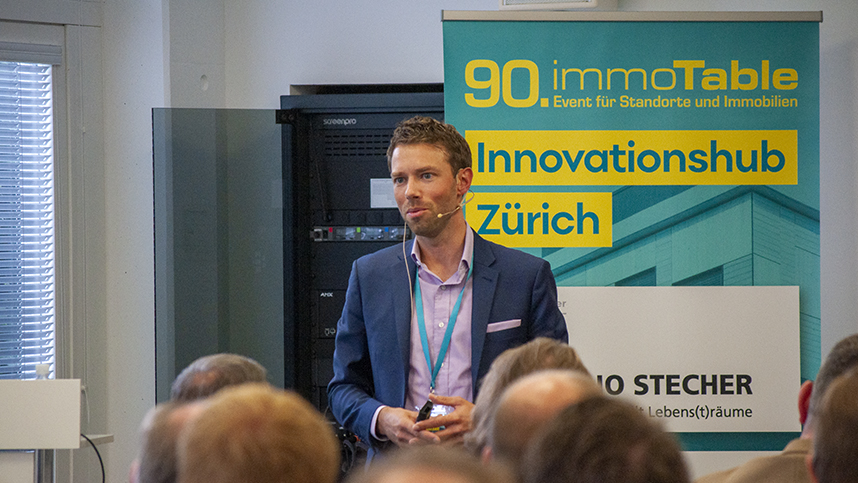
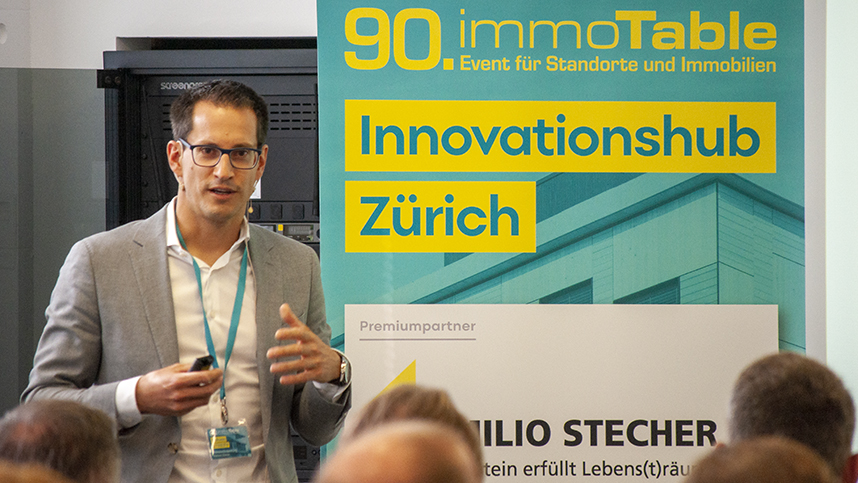
    Mit dem Urknall offenbarte Emilio Stecher CEO/VRP der gleichnamigen Firma, wie sich die Erde entwickelte und welche Steine heute in der Schweiz abgebaut werden. Mit einem eigenen Sandsteinbruch am Rooterberg, ist er in der Produktion und der Umsetzung von Projekten mit Herzblut dabei. Die Immobilien die er präsentiert, faszinieren in ihrer Natürlichkeit mit der Umgebung und zeigen die Eleganz und Pracht der millionenalten Steine.    

    Am Albis ist die Zukunft jetzt mit der ersten P2P-Anlage dieser Art. Mit diesem Thema offenbarte Tindaro Milone, von der EKZ wo die  Entwicklungen im Energiebereich hinsteuert. Mit innovativer Energieversorgung, vorwärts Richtung Energiewende 2050. Die Strategie der EKZ ist eine gesamtheitliche Betrachtung, die den steigenden Strombedarf, die Speicherung und Ausbau der Netze auf politischer und gesellschaftlicher Ebene. Die Power to Gas Anlage nutzt überschüssige elektrische Energie und lagert diese, zum Beispiel für den Winter, in Wasserstoff ein. Mit diesem Projekt zeigt sich, dass was bisher nur denkbar schien, heute Realität ist, zum Wohle der Umwelt und unserer Kinder.

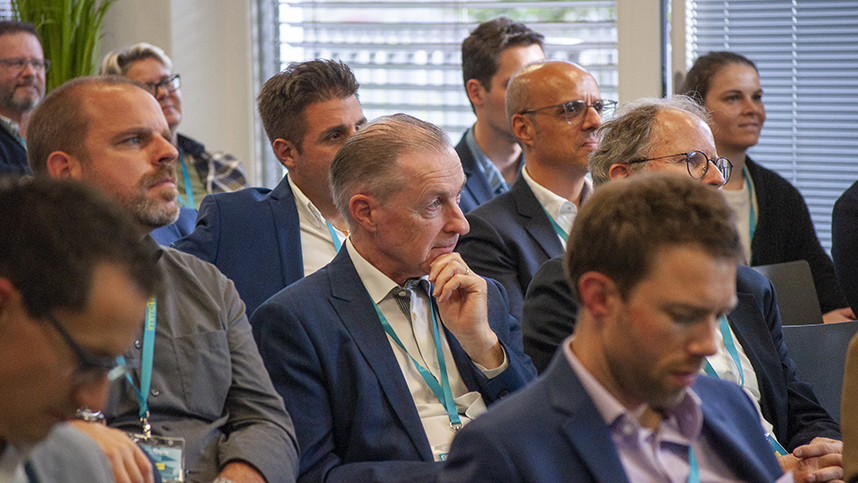
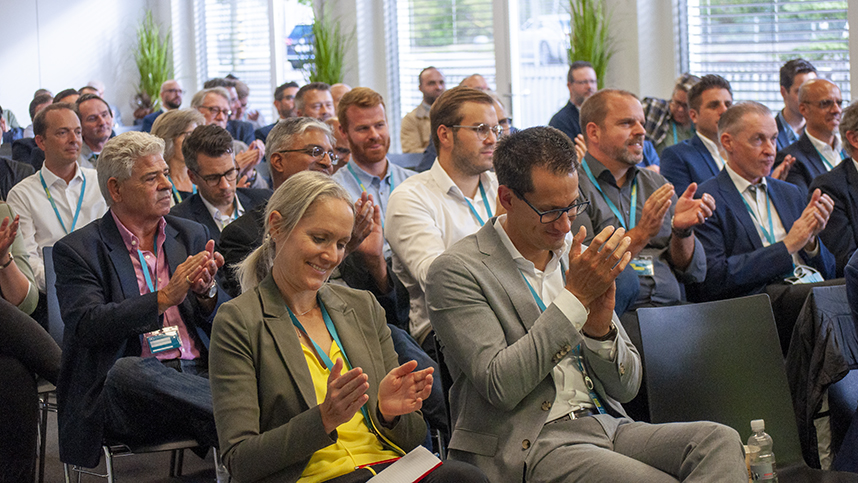
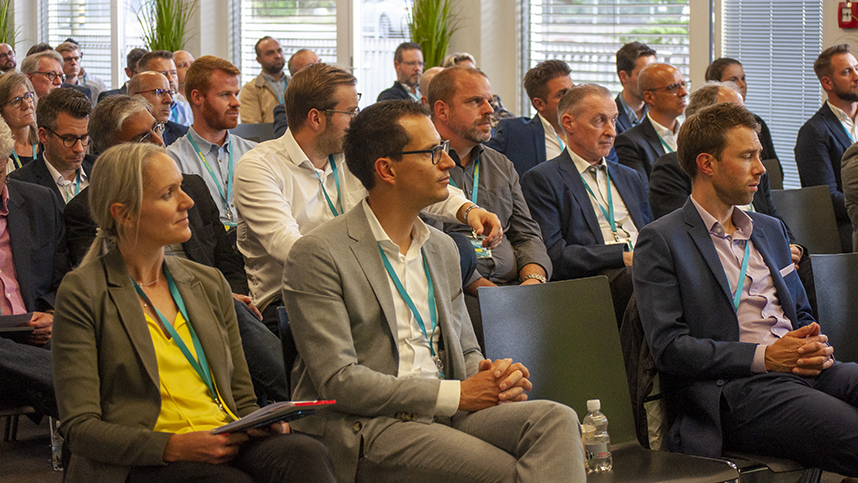
    Der immoTable in St. Gallen steht vor der Tür. Am 25. November moderiert erneut Patricia Boser den Anlass. Wiederum können interessante Einblicke  erworben werden in Teilbereiche der Immobilienwirtschaft.

  • Building the future of energy

    Building the future of energy

    The property right at the entrance of the municipality is less than 10 kilometers away from the city of Winterthur and is still an idyllic piece of land, with a direct connection to the banks of the Töss and with a view of meadows and forest. The goals of the Energy Strategy 2050 are being built here. The Verde Blu development has been inhabited since autumn 2019. So far, so normal. It is noteworthy, however, that this development covers a large proportion of its energy requirements itself and that exclusively from renewable sources. "The specifications of the Energy Strategy 2050 are an opportunity for the real estate industry," explains Dieter Stutz from Atlantis AG, which is active in the areas of environmental consulting, settlement planning and architecture and who developed the project. The heat supply via groundwater was the best and most convincing solution for the area. Atlantis planned and implemented this complex construction project together with EKZ.

    Sustainable living as a need
    The new construction project Verde Blu with nine residential and commercial buildings comprises 108 condominiums as well as various commercial areas that are used by a Migros branch, a community and a physiotherapy practice, among other things. An old, listed barn serves as a common room and provides rustic charm on the site. In contrast to this is the state-of-the-art technology that supplies the system with energy: groundwater is used as a heat source for the heating and hot water, which supplies the houses with decentralized heat pumps via a so-called anergiering. An anergy ring is a cold local heating system that, in contrast to conventional local heating systems, works with transfer temperatures below 30 degrees Celsius. Anergy networks therefore have no heat losses in the lines, but even achieve additional energy gains through the environmental heat. In summer, the buildings can be passively cooled with the groundwater via the anergy ring.

    A photovoltaic system that is optimally designed to meet the needs of the building provides the electrical energy for the building. The complex was only built after the apartments had already been occupied. Because they wanted to leave the decision for or against solar power to the owners. The fact that the system with a peak output of 100 kilowatts was approved by an overwhelming majority at the first owners' meeting in winter 2019 speaks for itself. Martin Nicklas, who is responsible for modern energy solutions at EKZ, is not surprised: "In the real estate sector, we have long known the need to make a contribution to sustainability in the living area as well." A charging infrastructure for the 209 parking spaces was installed in the lower-level garage. Thanks to load curve management, it is possible to charge the cars in stages if a whole fleet of electric vehicles should one day populate the garage.

    Well-coordinated system
    In Kollbrunn, power generation as well as heating and cooling generation and electromobility are combined in an integrated energy system. The centerpiece is an intelligent control system that maximizes the self-consumption rate and takes over load management. In this way, what is actually the most important goal can be achieved: that the electricity produced by the PV system is also consumed as much as possible on site. The controller uses weather forecasts from an external weather portal for this purpose. An algorithm in the control system evaluates this data and decides on the previous evening whether enough solar power will be produced the next day to charge the boiler and storage tank of the heating system. If the solar production is too low, the boilers are charged during the night at the low tariff, otherwise the system waits until enough solar power is available the next day to start the heat pump.

  • 2. Global Real Estate Run in Switzerland – Get on the move!

    2. Global Real Estate Run in Switzerland – Get on the move!

    After the endlessly long home office and shutdown time, the 1st Global Real Estate Run (impressions: https://globalrealestaterun.com/socialmediawall) came at the start of the year, in order to exchange ideas with like-minded people, and to do more than just active team building To do something good for oneself, but also for the environment: “Around 1400 participants from 46 countries modified the Global Run to meet their individual needs,” says the initiator Mario Facchinetti. “Once again, it is important to complete six kilometers in a time window of 24 hours: every participant is free to run, run or walk. Anyone can take part, free of charge – anywhere in the world. ” The run is of course 100 percent corona compliant. The six kilometers can be completed on a route of your choice, regardless of location. Registration on the Globalrealestaterun.com website is required to participate. Each participant then has access to a geotagged app that accompanies the event interactively.


    Promote sustainability
    Not only real estate professionals take part in the Global Real Estate Run, but also tenants and owners. The “team event of a different kind” is not only health-promoting, but also provides a topic of conversation. And by the way, you are also doing something good for the environment. Thanks to the collaboration with Unispace, Key4 by UBS, Immo! Invest, PropTechMarket, Schäppi Grundstücke and “There for Trees”, a tree is now being planted for every kilometer covered. Well: If these are not enough good reasons to be active to register for the next event and to make a contribution to more sustainability and innovation in the real estate industry.


    Registration and more information: https://globalrealestaterun.com
    Impressions:https://globalrealestaterun.com/socialmediawall
    Media kit: https://globalrealestaterun.com/mediakit
    Contact person: Mario Facchinetti, initiator, mail@globalrealestaterun.com

  • App facilitates energy planning for buildings

    App facilitates energy planning for buildings

    With Polysun, Vela Solaris AG from Winterthur has developed a solution that should facilitate the planning of energy systems for buildings and neighborhoods. It makes it possible to simulate energy systems in these environments. In this way, possible energy systems can be displayed for an initial examination and compared with one another.

    Based on Polysun, Vela Solaris and the building technology association suissetec set up the building technology calculator web app. The association is now making the solution available to its members and customers, as stated in a message .

    “With the building technology computer, we enable our customers to take the step towards the digital conception of energy systems”, Lars Kunath, responsible for digital solutions at suissetec, is quoted as saying. He also emphasizes the “reliability of the simulation results and the high level of professionalism of Vela Solaris as a development partner”.

    “The cooperation with associations as well as manufacturers and dealers represents a real enrichment for Vela Solaris”, says Angela Krainer, Managing Director of Vela Solaris. “We always strive to make our solutions available to as large a user group as possible”.

  • Adjusted asking rents rise slightly

    Adjusted asking rents rise slightly

    The monthly rent index compiled by the digital real estate marketplace homegate.ch from TX Group in cooperation with Zürcher Kantonalbank rose by 0.2 percent to 115.7 points across Switzerland in September compared to August, explains homegate.ch in a corresponding message . An increase of 0.8 percent has been observed over the past twelve months. In the individual cantons and cities, the index analysts observed different developments on a monthly basis.

    In some cantons, the changes compared to the previous month were stronger than usual, according to the announcement. The analysts observed the strongest increase in asking rents at 3.69 percent in Graubünden. But asking rents in Nidwalden and Uri also rose by a high 1.69 and 1.38 percent, respectively. In the cantons of Zug and Neuchâtel, on the other hand, asking rents were 1.25 and 1.21 percent lower than in August. With the exception of Lugano (+1.72 percent), the analysts recorded rather minor changes in the cities compared to the previous month.

    “The moving month of September was not only an active time for those moving, the asking rents also reflected this”, Fabian Korn from homegate.ch is quoted in the message. “It will be exciting to see how this will develop with the falling temperatures.”

    When recording the rental price changes for the rental index, the rental prices are corrected for different quality, location and size of the apartments, is explained in the communication. This makes it possible to record the actual rental price development.

  • ConReal wants to digitize interior design

    ConReal wants to digitize interior design

    ConReal Swiss has set itself the goal of breaking up “the old structures of the construction and real estate industry”, explains the proptech start-up from Winterthur in a press release . “We want to make the construction industry fairer, more transparent and more efficient,” said co-founder and board member Christoph Meili. “We would also like to give small and medium-sized companies access to data and digital tools.”

    In order to achieve this, ConReal relies on the networking of actors in the construction and real estate industry. The young company itself offers digital and analog services in the real estate sector. ConReal wants to build a comprehensive marketplace in interior design. In a first step, the company’s current marketplace for the bathroom will be repositioned, the company writes. Habitects is to appear under the ConReal brand.

    The transfer will create a digital marketplace for bathroom remodeling, explains ConReal. Homeowners can choose their style there and have an individual concept drawn up with a target price. As a result, a 3D model of the project is created and a craftsman is entrusted with a feasibility study and a final offer. The desired articles can also be ordered via the marketplace.

    ConReal believes that everyone involved could benefit from the combination of traditional handicrafts and physical products with new digital tools. The start-up plans to expand the platform to other categories. The communication mentions the kitchen and flooring.

  • Construction wages will remain stable

    Construction wages will remain stable

    Despite the pandemic burdening construction activity, wages in the construction industry have remained stable this year compared to 2020, the Swiss Master Builders Association ( SBV ) informs in a message . According to her, the construction industry continues to pay “the best wages for craftsmen”. The pay of building cadres is comparable to that of academics in industry.

    According to surveys by the SBV, the current remuneration for foremen and foremen is currently around 7800 francs a month. The rest of the construction personnel have an average of 13 monthly salaries of 5901 francs each. The monthly wage ranges from 4921 francs for an unskilled worker without qualifications or work experience to 6743 francs per month for a foreman.

    The SBV defines education as central to increasing income in construction. The leap from one wage class to the next is associated with a plus of around 500 francs, explains the association. Anyone who moves up from foreman to foreman earns around 1,000 francs more per month. In contrast, wage increases due to years of work were comparatively small due to the “high minimum wages”.

    Around a third of construction site personnel will retire in the next ten years, the communication further explains. The SBV intends to counter the worsening shortage of skilled workers with “individual wage prospects based on targeted training and further education”. To do this, however, the wage system must be converted from general wage increases to performance-related, individual adjustments, says the association.

  • Smino earns 3.1 million francs

    Smino earns 3.1 million francs

    Smino has won over a number of investors with its platform for digital building planning (Building Information Modeling / BIM). The start-up from the St.GallenBodenseeArea has successfully completed a series A financing round and raised CHF 3.1 million, according to a press release .

    Smino is an offer from BBC Systems AG. The platform acts as a data hub for construction projects. This platform is now to be further developed. “The smino team impressed us and our partners with its comprehensive software solution for construction project management”, Manfred Heid is quoted in the message, managing partner of the investor BitStone Capital. “We are very pleased to support the team together with our co-investors as they expand into new markets and develop into a digital project assistant.”

    BitStone Capital led the financing round. Other investors are EquityPitcher Ventures, Swiss Startup Capital, Session VC, Swiss Immo Lab, AXEPT Business Software AG and Conreal. “Smino has managed to generate rapid growth and become a key player in the construction industry,” says Guy Giuffredi from Swiss Startup Capital. “Now the expansion is pending and we are convinced that the excellently positioned team will master this quickly and successfully.”

    This expansion is to be realized first in Switzerland and Europe. In the future, smino also wants to rely on applications with artificial intelligence, as co-founder Sandor Balogh calls it. “The Series A round enables us to expand our market leadership in Switzerland and expand internationally. A further branch will be set up in Germany specifically for the European region. “

  • Second heating network for Steinhausen can be financed

    Second heating network for Steinhausen can be financed

    The construction and operation of a second heating network for the Steinhausen community are economically feasible. This is confirmed by a feasibility study that WWZ Energie and the municipality began a year ago. According to a media release by both actors, their results will be presented to the population on October 20th at 7.30 p.m. in the Steinhausen community hall.

    They show that in large parts of the municipality the prerequisites in terms of energy density and demand for the construction and economic operation of a second and larger network are in place. This is to be operated with regional wood as an energy source.

    The Steinhausen Zentrum heating network has been in operation since 2017. The new network could be linked to this in the medium term as well as to the Ennetsee heating network planned by WWZ. This increases the security of supply and allows efficient dimensioning of the heating center.

    "The heating network, as we are planning it with WWZ, makes a significant contribution to the implementation of the Energy Strategy 2050," said Mayor Hans Staub. In addition, it increases “the attractiveness and quality of life in our community”.

  • Avobis buys Rimaplan and Centerio

    Avobis buys Rimaplan and Centerio

    Avobis is taking over the real estate service provider Rimaplan and the start-up company Centerio, which specializes in the marketing and management of commercial real estate, Avobis informs in a press release . In addition to the headquarters in Zug, both new acquisitions have a branch in Regensdorf ZH and belong to the entrepreneur Martin Döbeli. The two partners have agreed not to disclose the price of the takeover, which is retroactive to January 1st.

    Rimaplan and Centerio are to complete Avobis' range of services in the development, planning, realization and marketing of commercially used properties and areas. "Rimaplan and Centerio enjoy an excellent reputation in the market as competent real estate service providers", Sandro Sulcis, Co-CEO of the Avobis Group, is quoted in the press release. "Your portfolio of services in the areas of development as well as the marketing and management of commercially used properties and areas ideally complements that of the Avobis Group."

    Martin Döbeli will step down from the operational management of his two companies, but will continue to serve as Chairman of the Board of Directors of Rimaplan and Centerio. In addition, Döbeli will participate as a shareholder in Avobis Group AG, according to the announcement. The two new subsidiaries are to operate independently under the existing names "until further notice".

  • Partners want to bring hydrogen into the building sector

    Partners want to bring hydrogen into the building sector

    Romande Energie , GreenGT as well as the Nomads Foundation and the Realstone Group are joining forces to use local hydrogen in the energy supply of the real estate sector. As part of a project called Aurora, the French-speaking partners want to develop the necessary solutions.

    Aurora is intended to cover various aspects of the production, distribution and use of hydrogen, according to a communication . The aim is to introduce integrated solutions such as water electrolysis or fuel cells into existing systems such as photovoltaics and battery storage.

    The joint project should take several years. First the modeling, then the installation of the developed systems in several buildings is planned. After that, the developments are to be marketed.

    The Nomads Foundation is a private, non-profit foundation that promotes multidisciplinary collaboration. GreenGT is active in hydrogen technology and also offers advice. The Realstone Group is a specialist in collective real estate investments. Romande Energie is an energy supplier that relies on renewable energies.

  • Tax deductions for eco-investments in new buildings should take effect more quickly

    Tax deductions for eco-investments in new buildings should take effect more quickly

    There is currently a waiting period for environmentally friendly investments in real estate. Such investments are only tax-deductible five years after the property has been built. Last December, Councilor of States Roberto Zanetti (SP / SO) submitted a motion calling for this waiting period to be shortened.

    In view of the high construction costs, the financial limits of especially younger builders for ecological measures in new buildings are understandable, writes Zanetti in his motion. If, after completion of the building, it turns out “that the corresponding ecologically desirable additional investments would be financially viable”, the owners will, however, in view of the five-year waiting period “be careful not to take these investments by hand immediately”. This is “regrettable from an ecological point of view,” says Zanetti.

    The shortening of the waiting period called for by the SP Council of States can now be implemented. After support from the Federal Council and the adoption of the motion by the Council of States, the National Council has now “accepted the proposal without discussion”, the parliamentary services inform in a message . Now it is the Federal Council’s turn. He must create the legal basis for shortening the waiting period. In addition, different procedures between the cantons are to be harmonized so far.

  • Megura gives Birchmeier Group a new look

    Megura gives Birchmeier Group a new look

    The Baden-based communications and advertising agency Megura has revised the Birchmeier Group’s public presentation. According to a media release, the new appearance under the motto Birchmeier enthusiastic is intended to clearly show the company’s development from the small construction company founded in 1940 to today’s large group with over 600 employees. The current range of services includes more than pure construction work. Birchmeier has developed from a pure construction company to a broad-based specialist within the construction world.

    This development should also be made visible and noticeable in the appearance of the brand, according to the announcement. Logo, design, photo style, imagery, tonality as well as information architecture and user experience on the website were rather down-to-earth. Megura introduced an iconic B in the logo in the so-called refresh of the brand, which enthusiastically depicts Birchmeier’s positioning. The new page captivates with a light and reduced design, direct and simple tonality and an authentic world of images.

    The Birchmeier Group presents itself on the redesigned page as a general contractor who takes full responsibility for the turnkey implementation of a construction project. Architects and specialist planners are integrated in the service contract. The customer has only one contact person.

  • Collabo wins further investors

    Collabo wins further investors

    Kollabo has raised a total of 2.4 million francs in a seed financing round, the Zurich start-up informs in a message on startupticker.ch. In addition to the already existing lead investor Wingman Ventures, Kollabo was also able to win PropTech1 Ventures from Berlin as well as other well-known business angels as investors. Roland Brack, Christian Wenger and Stéphane Pictet are named in the communication.

    Kollabo intends to use the established funds to expand the company’s own job platform for temporary work in the construction industry. Craftsmen can create their own profile at Kollabo and have their specialist knowledge certified in an evaluation system. The aim of the young company is to “become the dominant digital ecosystem for qualified craftsmen in the DACH region,” explains Kollabo in an entry on LinkedIn.

    “It is no secret that the shortage of skilled workers is the decisive bottleneck in the timely completion of construction projects”, Anja Rath is quoted in the message on startupticker.ch. The managing partner of PropTech1 Ventures sees the collaboration as “the right solution for this problem”. In addition, Rath points out that Kollabo’s sales are growing threefold every year. “Kollabo’s vision of offering additional products in the future, such as the possibility for craftsmen to book accommodation or insurance for individual orders, also opens up the opportunity for further synergies and growth potential,” says the manager of the young company’s new lead investor.

  • Westhive is planning a new location at Stettbach train station

    Westhive is planning a new location at Stettbach train station

    Westhive wants to open a new shared office in Stettbach Mitte, right next to the Stettbach S-Bahn station, as announced in a message on LinkedIn. More than 120 jobs are to be offered there as early as the first quarter of 2022. There will be six meeting rooms for conferences and seminars. The infrastructure should also include a restaurant and a fitness room.

    Stettbach Mitte is interesting for Westhive thanks to its “good traffic location”. The new office location will have a direct connection to public transport as well as a connection to the A1 motorway. “This results in a large catchment area that extends from the Glatttal via Zurich Oberland to Winterthur,” said a message from Stettbach Mitte about the new arrival.

    Weshtive was founded in 2017 and opened its first coworking location in Zurich in 2018. The company now offers offices and workplaces with a complete service infrastructure at five locations. Further locations are being planned.

  • Locatee takes 7.1 million euros

    Locatee takes 7.1 million euros

    Locatee was able to secure fresh capital in the amount of 7.1 million euros in a financing round, according to a media release . Venture capitalists such as SmartFin , Verve Ventures , FYRFLY Venture Partners , Tomahawk VC , Swiss Immo Lab and Zürcher Kantonalbank have invested.

    The Zurich start-up has developed software that can be used to optimize the use of space in office buildings. The software obtains the necessary data for the utilization from existing IT infrastructures, motion sensors or WLAN networks.

    The solution is intended to help real estate managers in large companies to make fact-based decisions about their office buildings. Employees can also benefit from the software. For example, you can see where free desks can be found.

    Locatee expects the occupancy analysis market size to grow to more than $ 5 billion by 2025. This is also related to the change in the role of offices, which the COVID-19 pandemic has accelerated significantly.

  • Artwork produces solar power

    Artwork produces solar power

    Solar cells can also decorate buildings as objects of art. This is shown by a project that has now been implemented at the NEST research building of the Eidgenössische Materialprüfungs- und Forschungsanstalt ( Empa ) and the EAWAG water research institute. The facades of the building have been fitted with photovoltaic modules, which together result in a work of art.

    To this end, Empa implemented the project called Glasklar, on which it worked together with Zug Estates and students and lecturers from the two departments of Design & Art and Technology & Architecture at the Lucerne University of Applied Sciences and Arts. The latter designed photovoltaic modules in a two-week block event, which visually match the NEST building as design objects. The design was implemented by textile design student Lynn Balli. It was selected for use in the NEST building in an interdisciplinary design competition.

    “If we can arouse the interest of designers in the design of building-integrated photovoltaic modules, we will make an important contribution to greater acceptance of photovoltaic facades and thus promote the expansion of renewable electricity production in Switzerland,” says Björn Niesen, NEST innovation manager Message from Empa quoted.

  • Demand for larger apartments is driving the construction industry

    Demand for larger apartments is driving the construction industry

    The construction industry has proven to be crisis-resistant during the corona pandemic. According to a press release, the economic research and consulting institute BAK Economics expects building construction to grow by 0.4 percent this year. An increase of 0.6 percent is expected for 2022.

    The prospects for construction activity vary between residential construction, commercial construction and infrastructure construction. While residential construction is increasing, commercial and public construction projects are recording slight losses. The demand for larger apartments is growing due to increased home work. In addition, the energetic renovations and the expected turnaround in interest rates are driving growth.

    In contrast, the pandemic-induced decline in the number of public-sector construction projects is having an impact on infrastructure construction. The number of commercial construction projects is also falling, as many companies postpone or stop planned construction projects. Thanks to the current economic upturn, according to BAK Economics, an upturn in both areas can be expected in 2022.

    Positive results in building construction are expected for the years 2023 to 2027. In commercial and infrastructure construction, the medium-term order situation should remain constant.

    There are regional differences in overall construction activity: According to BAK Economics, the regions of Zurich / Aargau, the Lake Geneva region and central Switzerland have the best forecasts. The institute expects the Basel region to stagnate in the medium term.

  • Delta School relies on LEDcity

    Delta School relies on LEDcity

    The Delta School in Zurich has brought the lighting in its classrooms up to date with the latest technology. The old luminaires were replaced by the energy-efficient, sensor-controlled lighting from LEDcity , informs LEDcity in a message .

    As part of the Eco Schools project carried out by the school, the pupils were also involved in retrofitting the lighting. Yves Jungo from LEDcity, on the other hand, had to prove himself as a teacher: the customer advisor for the Zurich start-up company introduced the children and young people to the basics of electricity and lighting in two teaching units.

    For LEDcity, the cooperation with the school is a role model, the message goes on to say. “If you can convey to children the importance of careful use of our resources – and especially of the ‘invisible’ resource of electricity – this contributes a lot to a greener future,” Jungo is quoted there as saying.

    According to the company, users of the innovative lighting system saved up to 93 percent of energy costs compared to conventional lighting. To this end, LEDcity uses algorithms optimized by artificial intelligence, which control the light sources autonomously and as required.

    In the Delta School, the students were able to calculate the actual energy savings themselves: the interaction of LED technology, algorithms and sensors reduces costs by 60 francs per year and lamp.

  • Construction company W. Schmid AG is now called WSG

    Construction company W. Schmid AG is now called WSG

    The construction company W. Schmid AG has carried out a rebranding. The company founded in Glattbrugg by Walter Schmid in 1966 now appears as WSG. According to a message on LinkedIn, this is seen as a milestone for the owner-managed SME. Due to the dynamic change caused by digitization, the business model, competencies and company culture have already been adjusted. Now follow the matching modern dress, it says in the message. In addition to the new WSG logo, the generously designed new logo in light green lettering bears the addition “See what will be.” This is intended to signal the “fresh wind” in the traditional company, according to LinkedIn.

    The development from the original construction company to today’s WSG is described on the company’s website. The company is active in German-speaking Switzerland, with three offices in Glattbrugg, Zug and Basel and employs around 70 people. WSG is active as an innovative real estate developer and is responsible for the construction of more than 10,000 apartments in the past 55 years.

    As a construction company directly at the airport, the airport region around Kloten shaped the orders and customers of W. Schmid AG. Swissair and the hotel chains with their airport hotels are named as regular customers. The company also paid attention to sustainability early on. The first solar facade was built in 1988 and the first apartment building with a Minergie certificate was completed in 1998. In 2016, the world’s first energy self-sufficient apartment building was built by W. Schmid AG.

  • Forster and ConReal Swiss join forces

    Forster and ConReal Swiss join forces

    Forster enters into a strategic partnership with the technology start-up ConReal Swiss AG . For this purpose, the kitchen builder is getting into the start-up company for the digitization of the construction and real estate industry from Winterthur through its investment company e-comm Beteiligungen AG, based in Baar, according to a media release. The companies do not disclose the investment amount.

    The collaboration will initially focus on household appliances. Existing partners from the trade are to be offered new services. In addition, the partnership supports the “ongoing development of the digital marketplace” for interior design.

    “With this partnership, we are able to combine Forster’s competencies and market knowledge with ConReal’s digitization capabilities in order to create a better offer and a unique shopping experience for both tradespeople and end consumers,” said Joachim Wallishauser, Managing Director of e-comm, quoted in the press release.

  • Baulink realizes the Marriot Hotel in Basel

    Baulink realizes the Marriot Hotel in Basel

    Munich Hotel Partners GmbH ( MHP ) has commissioned Baulink with the realization of a Marriot hotel in Basel, informs Baulink AG in a message . Specifically, the Invita division, which specializes in hotel interiors, is to renovate the former Swissôtel Basel. The hotel, which has been closed since November 2020, was bought by MHP and the American HIG Capital .

    Invita will act as the general contractor for the design of the hotel’s 125 rooms and public areas, the communication further explains. “With our experience from the first conversion phase, we offer the best prerequisites for successfully and efficiently carrying out the project for MHP,” Robert Diepenbrock is quoted there. The head of the Invita department at Baulink is convinced that “he can bring specialist knowledge of hospitality to a team of first-class partners”.

    For the execution of the project, Invita will work together with the architects Oana Rosen from Frankfurt. The notification does not provide any information about the financial scope of the contract.