Tag: News

  • Empa achieves record for flexible solar cells

    Empa achieves record for flexible solar cells

    The Empa team from the Laboratory for Thin Films and Photovoltaics , headed by Ayodhya N. Tiwari, has set its seventh record for the efficiency of flexible CIGS (Copper Indium Gallium Diselenide) solar cells. After a record high efficiency of 12.8 percent in 1999, it has now reached 21.38 percent, according to a press release. This new record was confirmed by the independent Fraunhofer Institute for Solar Energy Systems in Freiburg, Germany.

    The value now measured is already close to the best efficiency of conventional, non-flexible solar cells made of crystalline silicon of 26.7 percent. The highly efficient flexible solar cells are particularly suitable for use on roofs and building facades, for greenhouses, transport vehicles, aircraft and portable electronics. Together with the Niederhasli ZH-based company Flisom , a spin-off from Empa and the Swiss Federal Institute of Technology Zurich ( ETH ), the researchers are developing roll-to-roll production of lightweight, flexible solar modules for such applications.

    These solar cells are produced on a polymer film using a low-temperature evaporation method. The light-absorbing semiconductor material lies on top as a wafer-thin film. Empa researcher Shiro Nishiwaki optimized their composition. In this way he was able to further increase the efficiency. According to the team’s measurements, the increase in photovoltaic output remained stable even after several months.

    Tiwari’s team works closely with the Kovalenko Lab for Functional Inorganic Materials at ETH Zurich. The research and development work was supported by the Federal Office of Energy .

  • BKW Building Solutions is strengthening itself with takeovers

    BKW Building Solutions is strengthening itself with takeovers

    BKW Building Solutions AG buys Aerovent Crissier SA and Aerovent Service SA. With the takeover, the subsidiary of the BKW Group is expanding its competencies in the areas of ventilation, air conditioning and service in western Switzerland, according to a media release .

    Aerovent Crissier SA is based in Crissier VD. Aerovent Service SA is based in Villars-Ste-Croix VD. With around 40 employees, they work in the fields of building and house technology. The owner of both companies, José del Castillo, as well as co-owner and co-manager Pascal Baudois will remain with the companies.

    “Thanks to their extensive know-how of building technology solutions for smaller conversions through to large administrative, industrial, commercial and school complexes, the two companies have great potential for further development – especially in the service area,” says in the press release.

    In addition to engineering and infrastructure services, BKW Building Solutions is one of three service groups of the energy services company BKW. BKW Building Solutions offers building technology, automation and IT services across the country.

  • Holcim wants to strengthen water resources and biodiversity

    Holcim wants to strengthen water resources and biodiversity

    According to its own statements, Holcim is the first company in the construction industry to commit itself to measurable positive effects on biodiversity and more ecological water management. At the same time, the group wants to bring more nature into the cities.

    According to a press release , Holcim aims to reduce the water intensity in all product lines by 2030. A reduction of 33 percent is to be achieved in the production of cement. It should be 20 percent for aggregates and 15 percent for ready-mixed concrete. The building materials company promises to replenish fresh water in water-endangered areas by 2030: 75 percent of the locations should be “water-positive” by then. In addition, Holcim intends to equip 100 percent of all locations with water recycling systems during the same period.

    Holcim also wants to achieve measurable positive effects on biodiversity. The group wants to orient itself on the reporting system for biodiversity indicators (Biodiversity Indicator and Reporting System, BIRS ) of the International Union for Conservation of Nature IUCN . Rehabilitation plans should be available for all quarries by around 2022. The BIRS principles for all cultivated areas should be fulfilled by 2024. In addition, the use of solutions such as the water-permeable Holcim concrete Hydromedia and green roof systems for more livable cities is to be accelerated.

    Eva Zabey, Executive Director at Business for Nature , praises Holcim for these ambitious goals. They could “lead to scalable changes both in the building materials sector and in industry as a whole.” All ecosystems and societies are dependent on such measures and obligations from companies.

  • Zurich is Switzerland's first green city

    Zurich is Switzerland's first green city

    The city of Zurich accepted the Green City Switzerland award in gold on Thursday evening. As city councilor Richard Wolff said on this occasion, according to a press release , this seal is “both recognition and incentive. We are on the right track and know where we need to improve further ”.

    In 2019, the city council commissioned the Green City Zurich service department of the civil engineering and waste disposal department to have the city of Zurich certified with the Green City Switzerland label. It is awarded by the Association of Swiss Urban Gardeners and Horticultural Offices according to uniform criteria. Not only core processes such as planning and construction, care and maintenance, but also management and support processes are assessed. Zurich received 451 out of a possible 500 points.

    “This is an excellent result and a role model,” says Markus Weibel from the Label Commission. It shows that it “sets high standards and is made for both urban communities and the largest city in Switzerland”.

    The team of experts particularly praised the “very good, long-term planning basis”, in which sustainable topics and biodiversity are given high priority. The binding basis for the near-natural maintenance and management of urban green and open spaces was also praised. In addition, the green spaces would be integrated to reduce heat.

  • Managing Director Audergon leaves arv Baustoffrecycling

    Managing Director Audergon leaves arv Baustoffrecycling

    After five years at the helm of the arv building materials recycling association, Laurent Audergon is leaving. He wants to face a new professional challenge, it says in a letter from association president Adrian Amstutz and the two vice presidents Stefan Eberhard and Laurent Steidle to all members and partners of the association arv Baustoffrecycling Schweiz.

    The board of directors agreed on an immediate end of work with Audergon. However, the departing managing director is available to arv for an orderly handover, according to the letter. The association is therefore looking for a new managing director.

    In the meantime, the deputy managing director Gregor Schguanin will take over the management of the association with the support of the board. He has extensive and longstanding expertise in the areas of inspectorate and environmental protection as well as in-depth experience in project and team management. Schguanin studied cultural engineering and surveying at the Swiss Federal Institute of Technology in Zurich (ETH) and is a graduate engineer and certified consultant for organizational development.

    Audergon is a graduate chemist and civil engineer at the ETH. In his five years as managing director he had a decisive influence on the repositioning and continuous development of arv, the presidents state in their letter. He led the association with great commitment.

    The association arv Baustoffrecycling Schweiz is based in Schlieren.

  • ImmoScout24 reports record price for condominiums

    ImmoScout24 reports record price for condominiums

    The prices for condominiums in Switzerland rose by 1.8 percent in August compared to the previous month. The prices for single-family houses have risen by only 0.1 percent. This is shown by the current Swiss Real Estate Offer Index , which is collected by ImmoScout24 in cooperation with the real estate consultancy IAZI AG.

    The market for condominiums is becoming more and more expensive , according to the press release. At the end of August, 7916 francs were charged per square meter, 1.8 percent more than a month earlier. A typical apartment with 100 square meters is advertised for an average of around 790,000 francs in Switzerland. That is a new record.

    The prices for single-family houses rose by only 0.1 percent in August, but according to ImmoScout24 they are “at a dizzying height”. The square meter price is 7048 francs. For a typical Swiss single-family home with around 160 square meters of living space, the average asking price is over 1.1 million francs. The prices can be significantly higher in better locations.

    The supply is scarce, the market has dried up. Martin Waeber, COO of Scout24 is quoted as saying that sellers were waiting in view of the rising prices. “Only a strong increase in construction activity or a decline in demand, for example due to rising mortgage interest rates, could reduce the price pressure on the residential property market,” Waeber continued. However, neither is currently foreseeable.

    According to the index, asking prices for rental apartments fell by an average of 0.5 percent in August, with significant regional differences.

  • Residential locations in the countryside are becoming more attractive

    Residential locations in the countryside are becoming more attractive

    Swiss people rarely move. And when they do, in half of all relocations the new place of residence is only five kilometers away from the old one. The average distance is 13 kilometers. This is shown by a representative survey of the house and living situation in Switzerland by Swiss Life .

    As the life insurance group explains in a press release , almost 60 percent of homeowners and 25 percent of tenants have been living in their current home for ten years or more. At the same time, however, for around 30 percent of those surveyed, the desire to live in the countryside or at least with a terrace increased during the pandemic.

    Around two thirds of homeowners have felt more quality of life and more self-determination since buying their own home. 37 percent said that they were completely satisfied with their current living situation, especially those who owned their own home. 15 percent are moderately or not at all satisfied. Most of them lack space or a garden, or they are bothered by noise and environmental pollution.

    Over 60 percent of those who can imagine buying their own home in the next five years expect that this would improve their quality of life. But only 21 percent of them are actively looking for a home of their own.

    Requirements for the ideal place to live in terms of costs, equipment and security vary depending on the language region. In addition, a garden is central in the country, and there is a connection to local public transport in the city. If this is perceived as good, the willingness of commuters to move decreases.

  • NEST office unit demonstrates potential for circulation

    NEST office unit demonstrates potential for circulation

    A new unit went into operation on Tuesday in the NEST research and innovation building of the Federal Materials Testing and Research Institute ( Empa ) and the ETH Domain's water research institute ( Eawag). As Empa in a message emphasized the office module called is Sprint was completed in just ten months. This demonstrates that building with reused materials and components is “a viable alternative to building with new material”. It “meets the market requirements for flexible and fast building”.

    The entire unit follows the so-called design for disassembly approach. If necessary, the flexible partitions could be dismantled. This enables flexible use of space and the recycling of built-in materials.

    The still existing skepticism of the construction industry about the reuse of materials is unjustified. Contrary to initial concerns about the tight schedule, "we were even able to find the re-use materials faster than new material," is quoted from Kerstin Müller, architect and business service member at the Basel construction office in situ , which planned the sprint unit.

    In addition, reuse is not yet cheaper given the current market situation. However, that will change as soon as a competitive market has developed, believes component hunter Oliver Seidel from in situ. In addition, there is a need for CO2 taxation, "which relieves the cost of new materials and used materials in order to be able to quantify the ecological added value."

  • Switzerland has great potential for geothermal energy

    Switzerland has great potential for geothermal energy

    Switzerland has considerable potential in the use of alternative energy sources such as geothermal energy and in the underground storage of CO2. This emerges from a press release from the Swiss Federal Institute of Technology in Lausanne ( EPFL ). Professor Lyesse Laloui from the Faculty of Architecture, Civil and Environmental Engineering ( ENAC ) at EPFL was head of the research group on geoenergy as part of the Innosuisse Energy funding program, which ran from 2013 to 2020. Eight competence centers have been set up. EPFL played a leading role in the field of geoenergy. Laloui is the author of the chapter on this in the final report of Innosuisse.

    Lyesse Laloui sees great potential for the use of geothermal energy. The Swiss government has set the target for 2035 of generating 11 percent of the energy used for heating and cooling buildings from geothermal energy. Laloui assumes over 20 percent. “The project results show that this share could easily be doubled,” he is quoted in the communication. The possibilities of using geothermal energy to generate electricity were also examined. Laloui points out problems such as drilling deep without triggering seismic movements. “One day we will surely make it, but we are not there yet.”

    According to the Lalouis report, there are good opportunities for the underground storage of CO2 emissions in Switzerland, especially in the Central Plateau from Friborg to Zurich. Professor Laloui is quoted as saying that of the around 40 million tonnes of CO2 equivalent that are emitted in Switzerland every year, around 12 million could be stored underground.

  • Hilcona creates a meadow on the roof

    Hilcona creates a meadow on the roof

    Hilcona has created a 1200 square meter roof meadow on the first completed new building at the company’s headquarters in Schaan. According to a press release, the roofs of the five-year expansion will also be planted in an “ecologically valuable” way. “The green areas provide more infiltration areas than concrete-sealed areas, relieve the sewage system and offer essential protection against heavy rain events,” says the Head of Technical Service, Peter Ritzer, in explanation.

    As Hilcona further explains, green roofs are able to hold back and store water. Therefore, when building the new company building, care was taken to seal as little area as possible. They also absorb pollutants such as CO2 and clean water and air. On the other hand, the water on sealed surfaces such as conventional roofs, tar and concrete surfaces immediately drains into the sewer system and onto open floors. That causes floods and floods. The green roofs could cushion this.

    In addition, they heat up less than gravel roofs, for example. They are also more durable and easy to care for. “With the roof meadow we want to give back as much as possible to nature,” says Ritzer.

  • Helbing models room air

    Helbing models room air

    The engineering and consulting company Helbling uses innovative technologies to design ventilation systems for interiors, among other things to increase the air quality at workplaces. Last but not least, the COVID19 pandemic has put the reliable quality of indoor air at the top of the agenda of companies and institutions. According to a specialist article by Helbling, ventilation systems are also becoming more important because more and more buildings are being built according to the energy-saving Minergie standard. Improved thermal insulation and less fresh air supply help to save energy. However, sources of foreign matter such as building materials in the interior also influence the air quality.

    The aim of well-designed ventilation systems is to eliminate gaseous substances such as odors as well as irritating substances and particles such as dust or viruses from the ambient air. This also includes carbon dioxide from human respiration and tiny liquid droplets, so-called aerosols. In the technical article, the authors Reto Wäger and Christian Seiler emphasize that the transport properties of aerosols are used for an efficient analysis. Since aerosols move with the expelled air, the concentration and distribution of carbon dioxide in the room can be measured and analyzed using sensors. If real measured values already flow into the planning phase, for example for workplaces or factories, “a certain air quality at the workplace can be achieved right from the start with targeted measures”, says the article.

    To do this, the company uses flow simulations, for example. They are created using suitable software tools such as Ansys or COMSOL. Typical movement scenarios are also taken into account during planning. In addition, according to Helbling, other innovative systems can be used to optimize the room air, such as UV photocatalysis or plasma cleaning.

  • The Dübendorf Innovation Park should focus on mobility

    The Dübendorf Innovation Park should focus on mobility

    A project group set up by the government council of the canton of Zurich has been creating an overview of the Dübendorf airfield area since September 2020. The state chancellery of the Canton of Zurich informs in a statement that the members of the delegation of authorities have now signed the synthesis report. The airfield area is to be used as an innovation park, airfield and for military purposes.

    “For reasons of economy and sustainability” and “with consideration for the population”, “only what is needed will be built in stages,” explains the State Chancellery. According to her, the project should become “a beacon for innovative urban development, especially in the areas of environmental compatibility, sustainability and careful use of resources”.

    Specifically, the overall view provides for the area to be subdivided into four sub-areas. The innovation park with a focus on mobility, robotics, aviation, space travel as well as modern production technology and materials research is to be built in sub-area A. In sub-area B, the innovation park and a research and works airfield will combine to form an aviation cluster. Area C is reserved for uses with high security requirements. The aviation infrastructures are located in sub-area D, in which nature conservation will play a central role. A circular airfield path is intended to make the area usable for recreation and leisure for the population.

    In the next step, planning rights are to be created for all sub-areas, according to the communication. Specifically, a cantonal and a regional structure plan as well as the communal structure and land use planning are named there. The cantonal structure plan will be made public from September 6th to November 5th.

    The Zurich Chamber of Commerce ( ZHK ) welcomes the commitment to triple use as an innovation park, civil and military airfield. The vision of an internationally leading location for research and development on mobility solutions is worth supporting, she writes in a press release . However, she regrets the renunciation of business aviation. This is important for the attractiveness of the economic area. Therefore, the doors should not be permanently closed for them.

  • Mountain cantons insist on imputed rental value

    Mountain cantons insist on imputed rental value

    The intergovernmental conference of the mountain cantons of Uri, Obwalden, Nidwalden, Glarus, Appenzell Innerrhoden, Graubünden, Ticino and Valais (RKGK) is against the Federal Council’s plan to abolish imputed rental value for second homes as well. It would result in a loss of income of around CHF 200 million a year, explains the RKGK in a press release. On the other hand, the RKGK has no objections to the planned abolition of the imputed rental value for main apartments.

    The mountain cantons have already been hit by the Second Home Act of decisive economic effects, writes the RKGK. In contrast to the Federal Council, the mountain cantons see further need for action here. Specifically, provisions are to be changed, “the application of which leads to objectively negative results or leaves insufficient scope for innovative solutions”.

    The RKGK is also calling for improvements to the message passed by the Federal Council on electricity supply with renewable energies. Among other things, the mountain cantons want to have extended the current maximum water rate. With electricity prices rising as a result of climate policy, the electricity companies are still “in a position to pay today’s water rates without any problems,” argues the RKGK.

    Furthermore, the RKGK criticizes the approach to the Postal Organization Act: Here the Federal Council has pushed ahead with a message without waiting for the results of an expert commission it has set up itself. However, the responsible commission in the Council of States has postponed its deliberations until the results have been presented. “Against this background, it cannot be tolerated in any way if Swiss Post continues to dismantle its services in the run-up to the political discussion,” says the RKGK.

  • Betterhomes Switzerland has over 22,000 referrals

    Betterhomes Switzerland has over 22,000 referrals

    In the first ten years of its existence until 2016, Betterhomes Switzerland brokered 10,000 properties. Now the brokerage company from Zurich, which is active in Switzerland, Germany and Austria, has cracked the 22,000 mark in Switzerland, informed Betterhomes in a message. This means that the number of referrals has more than doubled within five years.

    The company attributes this success to its hybrid business model. “When it comes to real estate brokerage, we at Betterhomes have been a pioneer in combining state-of-the-art technology and local expertise,” CEO Cyrill Lanz is quoted in the press release. Specifically, the company uses self-developed software and an interest database as well as access to all relevant real estate portals. This is supplemented by a network of local brokerage firms.

    In addition, Betterhomes does not charge a fixed price, but a success commission. Fixed-price models often contain hidden costs, explains Lanz. “Often, for example, visits are not included in these fixed prices and have to be paid for separately.” In addition, the company boss points out the function of technology as a supporting element. The focus of real estate brokerage by Betterhomes would continue to be “the human factor or sales competence”.

  • Sto AG replaces crude oil with pine oil

    Sto AG replaces crude oil with pine oil

    Sto AG replaces a third of the binding agent in the coatings of its StoTherm AimS facade insulation system with a renewable raw material based on pine oil. This saves around 43 liters of crude oil in a single-family house with a facade area of 200 square meters, according to a press release.

    A complete replacement of crude oil with pine oil was not possible. This would have had a negative effect on quality and durability.

    According to a media release, StoTherm AimS is the only facade insulation system with under and top plasters and a facade paint that is partly based on renewable raw materials. It is certified with the German Blue Angel eco-label. In addition, it is crack and impact-proof and cannot burn. Therefore, it is also suitable for high-rise buildings.

  • Schilliger Holz AG plans a new plant in Perlen

    Schilliger Holz AG plans a new plant in Perlen

    Schilliger Holz AG from Küssnacht is planning to build a new production plant for wood fiber insulation panels in Perlen. According to a media release, this is to be built on the Perlen Papier AG factory site. The CPH Group , to which Perlen Papier AG belongs, will hand over a land area of 20,000 square meters to the wood processing company with building rights.

    Schilliger Holz AG is one of the main suppliers of wood chips to Perlen Papier AG. One of their sawmills is already located right next to the paper mill in Perlen. Thanks to the new plant, the two companies will work even more closely together: Perlen Papier AG will supply the new plant with electricity, process steam, fresh water and fully demineralized water. In addition, it will treat the waste water produced in the company’s own sewage treatment plant.

    “We are pleased to be able to realize synergies in industrial wood processing together with Schilliger Holz AG at the Perlen location. In this way, Perlen will become the center for sustainable recycling of the important resource wood in Switzerland ”, Peter Schildknecht, CEO of the CPH Group, is quoted in a press release from his company.

    According to Schilliger Holz AG, there has been “no more insulation board production in Switzerland for a long time”. With the implementation of the new plant, the company therefore wants to close a “large gap in the Swiss wood processing chain”. Wood fiber insulation boards are used, for example, for the thermal insulation of the outer shell surfaces of buildings.

    The project is currently in the planning phase. Commissioning is scheduled for 2023.

  • TTS Inova wins Schaffhauser innovation award

    TTS Inova wins Schaffhauser innovation award

    Every two years the Industry and Business Association Schaffhausen ( IVS ) and the ITS Industry and Techno Center Schaffhausen host the IVS Innovation Prize of the Schaffhauser Platzbanken . It is awarded to companies from the Schaffhausen economic area for developing and successfully placing an innovative product on the market. Criterion for awarding the prize are, among other things, the profitability and the economic potential of the innovation.

    This year 23 companies competed for the award. Among them, TTS Inova from Thayngen SH won the prize and a prize money of 10,000 francs, the IVS informed in a message. The family company, which specializes in trimmings and technical textiles, was awarded for an elastic geothermal probe. “Our product is food-compliant, so it can also be used in areas where you would otherwise not be able to install a geothermal heat pump,” owner Simon Bernath is quoted in the press release.

    The young company Imnoo from Buchberg SH came second with its artificial intelligence-based application for milled and turned parts. “Calculating technical parts is time-consuming and requires a great deal of specialist knowledge, which usually only a few people in the SME – and not infrequently only the managing director himself – has”, explains Inmo co-founder Jonas Albergatti.

    Savvy Telematic Systems AG took third place with its sensor for rail transport wagons. In the last competition in 2019, the company from the canton capital won first prize for a sensor for automatic flat spot detection in rail transport. The Tanne Schaffhausen restaurant received a special award for its ethical and ecological business model.

  • Recycling of building materials needs more acceptance

    Recycling of building materials needs more acceptance

    This year, the focus of the Blickpunkt conference organized by the arv Baustoffrecycling association was the quality assurance of the recycling and processing of building materials, even in smaller companies, as well as the requirements for the building products created with them. According to a press release , Blickpunkt 2021 took place digitally on Wednesday.

    National Councilor Isabelle Chevalley spoke at the French-speaking digital Blickpunkt, the “Point de Mire”, in a lecture on strengthening the circular economy with regard to building materials. The importance of recycling building materials to conserve natural resources and scarce landfill volumes has meanwhile also been recognized politically and included in the deliberations of parliament. The Commission for the Environment, Spatial Planning and Energy (UREK) is working on measures to promote the recycling of building materials, she is quoted as saying. Still, more efforts are needed, according to Chevalley. Companies should offer building owners such products in a targeted manner. Measures are also necessary in procurement.

    Quality assurance is central here. The lecturing experts provided information about the implementation of in-house production controls as well as the reuse of reclaimed asphalt. The standards for this are currently being revised. Here, the association arv Baustoffrecycling Switzerland is committed to promoting recycling and for greater acceptance by all stakeholders, according to the media release.

  • SVIT Digital Day 2021

    SVIT Digital Day 2021

    When it was first held in 2020, many interested members of the Swiss Real Estate Association (SVIT) and other visitors flocked to the popular event location on “Europaallee Zurich”. "Digitization has been a major topic in the real estate industry for many years," says Pascal Stutz, CEO of SVIT Zurich. “But a lot of smaller companies find it difficult to deal with the subject. We have been telling our members for a long time that digitization will simply come – regardless of whether they participate or not. " On the one hand there is the digital compass to check the digital fitness of a company. Trying out, watching, but also personal contact is in the foreground at the SVIT Digital Day.

    Meet & Greet
    Also this year, providers, users and interested parties can exchange ideas at the symposium and seek direct contact with various software developers for the digital offerings. The latest software applications for the real estate industry will be presented by around 40 exhibitors. In addition, the “SVIT Digital” commission is launching a “Meet and Greet” for all visitors on this day. Specific digital concerns and questions can be discussed intensively directly with proven professionals on site and other users in order to develop efficient solutions. The practice-oriented specialist presentations are an additional highlight on the “SVIT Digital Day”. And the best part: access to the symposium and the presentations is free for everyone.

    Date: Friday, September 17, 2021
    Time: 11 a.m. to 5 p.m.
    Announcement Flyer Location: KOSMOS, Lagerstrasse 104, 8004 Zurich Arrival plan KOSMOS

    Admission is free for visitors.

    Subject presentations 2021
    1 2.00 a.m.
    Global Real Estate Run
    Mario Facchinetti, initiator

    12.00 p.m.
    Global Real Estate Run
    Mario Facchinetti, initiator

    1 p.m.
    Electronic signature in real estate practice
    Dr. Boris Grell, LL.M., lawyer; LAW FIRM GRELL

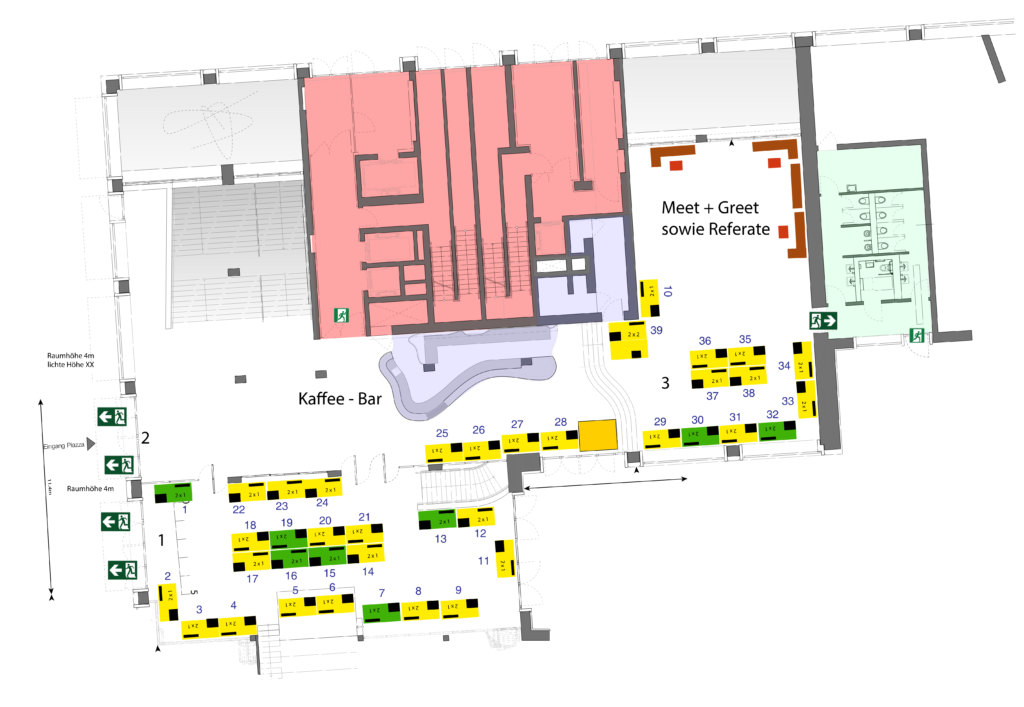
    Hall plan

    List of exhibitors 2021

    Stand Exhibitors
    number 1
    No. 2 Conreal Swiss AG
    No. 3 Schwyter Digital AG
    No. 4 FLOWFACT Schweiz AG
    No. 5 casavi GmbH
    No. 6 casavi GmbH
    No. 7
    No. 8 onOffice Swiss AG
    No. 9 Flatfox AG
    No. 10 GARAIO REM AG
    No. 11 Huperty AG
    No. 12 SVIT Digital
    No. 13
    No. 14 QualiCasa AG
    No. 15
    No. 16
    No. 17 immo! nvest
    No. 18 CreditTrust
    No. 19
    No. 20 Ormera AG
    No. 21 W&W Immo Informatik AG
    No. 22 WOONIG
    No. 23 WOONIG
    No. 24 goCaution AG
    No. 25 READY DATA
    No. 26 CreditTrust
    No. 27 NeoVac ATA AG
    No. 28 NeoVac ATA AG
    No. 29 Processfux AG
    No. 30
    No. 31 DesignRaum GmbH
    No. 32
    No. 33 Aandarta AG
    No. 34 Aandarta AG
    No. 35 ImmoScout24
    No. 36 eMonitor AG
    No. 37 eMonitor AG
    No. 38 ImmoScout24
    No. 39 immotrailer.ch – immotraffic.ch
  • Far superior to drones

    Far superior to drones

    New construction projects can be digitally modeled using drone recordings. With the help of software, the planned object is, so to speak, “inserted” into the property and surroundings images received by the drone. This Building Information Modeling (BIM) creates realistic visualizations of a new building project in two or three-dimensional views. Object-strategic statements can thus be made reliably, quickly and cheaply.

    Drones are also used for construction-related work themselves. One of the most recent applications is the computer-controlled use of drones for painting facades. The flying robotic helpers can be controlled very precisely and can fly very close to a wall. So it is possible to paint facades without work preparation and erection of scaffolding. In addition to saving time, this is also a step forward in terms of safety on the construction site.

    Another area of application is that for inspections and damage tests of buildings and structures – for example the use of drones for roof inspections. Due to the high altitudes and good stabilization in flight, drones can also be used in historic buildings, such as churches. But drones can also be used comfortably and safely to check building cracks, glass damage or hard-to-reach areas. Thanks to the high resolution of the images, even the finest damage can be detected and these images can be saved for later documentation purposes.

    You can find impulses around innovations in the real estate and construction industry here: https://hubs.li/H0RQl480

  • SUPSI examines air in schools

    SUPSI examines air in schools

    The research project called Quality of Air in School Buildings ( QAES ) aims to find concrete technological solutions to improve air quality in schools. The Institute for Applied Sustainability in the Built Environment of SUPSI is involved, as is the Logistics Section of the Ticino Finance and Economics Department, the Minergie Association and the communities of Bellinzona and Mendrisio. As part of an Interreg project of the European Regional Development Fund , Ticino research, industry and public institutions are working together with South Tyrolean partners.

    According to a press release , the aim of this study is to measure air quality in classrooms and to provide tools to improve it, which reduce pollution. The starting point was a study by the Federal Office of Public Health . Samples in 200 classrooms showed that the limit of 2000 ppm (parts per million) CO2 in the room air was exceeded in two thirds.

    This study showed that the concentration is lower in Minergie-certified buildings with systematic air exchange. During the measurements, cases were also found in which volatile organic and microbial compounds exceeded the safety limit or were very close to it. The recommendations of the study authors range from air monitoring systems in classrooms to the use of air purifiers and the replacement of windows and doors.

    On September 15 and 16, SUPSI is holding a further training course on the subject for specialists from the construction sector. Registration is required for this. There will also be a public conference on the subject on September 16.

  • Swiss Prime Site can look back on a successful half-year

    Swiss Prime Site can look back on a successful half-year

    According to a message from Swiss Prime Site , the Olten real estate company generated income totaling 362.8 million francs in the first half of 2021. Adjusted for the sale of the subsidiary Tertianum, which was completed in February of last year, this corresponds to growth of 6.3 percent, explains Swiss Prime Site. All of the real estate company’s divisions contributed to the “pleasing growth”.

    In the core real estate segment, the pandemic led to a drop in income of 5.5 million francs, the announcement further explains. In contrast, rental income adjusted for Tertianum effects increased by 2.2 percent to CHF 213.4 million. The income from investment management for third parties increased by 56 percent to CHF 7.5 million.

    In the half-year under review, Swiss Prime Site reported operating profit before interest and taxes to be CHF 355.6 million. Excluding revaluations and the Tertianum effects, the result rose by 36.6 percent to CHF 211.0 million, the company writes. The EBIT margin increased year-on-year from 45.3 percent to 58.2 percent. The net profit was 257.1 million francs, compared to 269.7 million francs in the first half of 2020. Without the sales proceeds for Tertianum, however, the profit in the previous semester would have been only 64.4 million francs.

    For the entire current year, Swiss Prime Site expects an increase in rental income and income in the area of services. In terms of services, the company is also striving to improve margins.

  • Model city Baden completes the first project phase

    Model city Baden completes the first project phase

    The results of the first working phase of the model city project were noted and discussed by the representatives of the 13 participating municipalities. According to a media release from the city of Baden , the municipalities' figures and data compiled in four working groups were analyzed and assessed. The further procedure in the 2nd project phase was also decided.

    The 13 municipalities of the model city include Baden, Birmenstorf, Ehrendingen, Ennetbaden, Fislisbach, Gibstorf, Mägenwil, Mellingen, Neuenhof, Oberrohrdorf, Obersiggenthal, Turgi and Wettingen.

    In the discussion on authorities, administration and organization, considerable differences between the municipalities were found, according to the press release. In the area of finance, it was determined, among other things, that the tax income per inhabitant in the model city in 2019 was 14 percent above the Aargau average. It is also assumed that the debt in the model city communities will increase significantly on average in the financial planning period up to 2025 due to high investments.

    In the case of health, society and social affairs, simple and immediate reorganization or reorganization are hardly possible due to the complexity. But cooperation is feasible. The analysis of settlement development, spatial planning and mobility showed that the consolidation of the municipalities would not contribute to a cost reduction overall. Increased efficiency is also possible today.

    For the second phase of the project, it was decided to continue working on three topics from phase 1. In cooperation with the University of Applied Sciences and Arts Northwestern Switzerland (FHNW), a “talent pool” is to be developed which enables learners to continue to be employed in one of the 13 model communities after completing their apprenticeship. The other projects are regionalization of tax offices and the development of a joint solution for refugee care. In the second phase, there will be a joint IT infrastructure, model planning for a sub-area of land use planning, and coordination of the development prognoses for the number of pupils as well as school space planning and school buildings.

  • The first Swiss hydrogen hub is being built in the Rhine ports

    The first Swiss hydrogen hub is being built in the Rhine ports

    The first Swiss hydrogen hub is to be built in the port areas of Birsfelden and Muttenz. According to a press release, four partner companies have agreed on this. Swiss Rhine ports , the energy company Varo , the filling station operator AVIA and the Basel energy supplier IWB have signed a joint declaration of intent for the construction of such a hydrogen node. As a green energy carrier, hydrogen will play an important role in the CO2-neutral future, according to the press release.

    The four partners from the energy industry and logistics see the ports of Muttenz and Birsfelden as ideal locations for a hydrogen hub, according to the joint media release published by Varo. The H2-Hub Schweiz project should include the production, distribution and use of hydrogen. The plans envisage not only distributing the hydrogen with the existing infrastructure, but also producing, storing and making available the green energy on site. The tank storage company AVIA AG and the energy company Varo Energy Holding AG are already active in the Rhine ports.

    IWB (Industrielle Werke Basel) produces and sells renewable and CO2-neutral energy as electricity, heating and cooling and for mobility. According to the announcement, IWB founded GreenH2 AG together with the petrol station operator and AVIA member company Fritz Meyer AG. The company is to build hydrogen production plants.

    Applications of hydrogen will soon be tested in the H2 hub Switzerland as a fuel for trucks, trains, other road vehicles and ships.

  • Federal Council advocates abolishing imputed rental value

    Federal Council advocates abolishing imputed rental value

    The Federal Council is in favor of abolishing the imputed rental value. He recommends Parliament to respond to a corresponding submission by the Commission for Economy and Taxes of the Council of States ( WAK-S ), informs the Federal Council in a communication . At the same time, however, the Federal Council advocates three changes to the bill.

    According to the Council of States commission, the imputed rental value should only be abolished for owner-occupied residential property at the place of residence. In return, expenses and in particular mortgage interest for real estate should no longer be tax-deductible.

    The Federal Council, on the other hand, also wants to abolish the imputed rental value on second properties. Expenses and debt interest should continue to be tax deductible if they are used on real estate used to generate income, such as renting. In addition, the Federal Council proposes that tax incentives for energy-efficient renovations be retained until 2050. In the proposal, this is linked to the CO2 law, which was rejected by the electorate.

    The Swiss Homeowners Association (HEV) agrees with two of the three demands of the Federal Council. He was “delighted” that the Federal Council “confirmed the urgent need for trade to abolish imputed rental value taxation,” writes the umbrella association of homeowners and landlords in a message . Like the Federal Council, the HEV is in favor of partially maintaining the debt interest deduction and linking the promotion of energy-efficient renovation to the 2050 climate target. However, the abolition of the imputed rental value of second properties has already met with strong rejection from the “tourism cantons” in the past, writes the HEV.

  • Lucerne location defies the pandemic

    Lucerne location defies the pandemic

    The canton of Lucerne was also able to attract new companies in the 2020 pandemic. According to a report by the Lucerne Economic Development Agency, a total of 19 companies have settled in the canton. Eight settlements came from abroad. The five immigrants from Great Britain stand out in particular. The other three foreign companies came from Germany, Poland and Slovakia. Overall, they want to create 329 jobs in the canton in the next three to five years, it is said.

    Even founders were not intimidated by the pandemic. If the whole of Switzerland is taken into account, the number of start-ups even rose to a record level in 2020. In the canton of Lucerne, too, the number of start-ups increased by 11.1 percent compared to the previous year, as the report shows. The Lucerne Economic Development Agency supports you in the initial phase, for example with start-up courses.

    Ivan Buck, Director of the Lucerne Economic Development Agency, speaks of an overall “challenging, but nevertheless successful” year. He is also pleased with the results of a satisfaction survey. This was carried out at over 200 companies as well as cantons and municipalities. Compared to the last survey three years ago, satisfaction could be increased at all levels. "A new record of 175 network partners rounds off this wonderful result," said Buck.

  • The federal government wants to strengthen Switzerland as a location for start-ups

    The federal government wants to strengthen Switzerland as a location for start-ups

    In the opinion of the Federal Council, Switzerland as a start-up location is generally well positioned. In some areas, however, there is still room for improvement. The Federal Departments of Economic Affairs, Education and Research and of Justice and Police are now to examine measures on behalf of the Federal Council with which the location could be further strengthened.

    According to a communication , the Federal Council sees potential for improvement in the areas of technology transfer, internationalization, access to skilled workers and financing. He also emphasizes that “numerous states have launched extensive programs to support start-ups in recent years”. He therefore also wants to have the advantages and disadvantages of a Swiss innovation fund examined comprehensively. In particular, it should be made clear to what extent such a fund could expand the risk capital market in Switzerland and thus improve the growth opportunities of innovative companies.

  • Central Switzerland remains an attractive company location

    Central Switzerland remains an attractive company location

    The cantons of central Switzerland also attracted many new companies during the pandemic, according to an article in the “Luzerner Zeitung”. Uri has helped 16 companies set up in the canton. As Stefan Büeler, Head of the Office for Economics and Public Transport at the canton of Uri, explains in the article, he sees the canton on track to be able to achieve a similar number again in 2021. The canton benefits from major projects such as the Altdorf cantonal railway station, the cantonal hospital, the construction of the second Gotthard tube and the tourist development in Andermatt.

    Meanwhile, the canton of Schwyz recorded a record number of start-ups last year. Urs Durrer, head of the office for economy of the canton Schwyz, attributes this in the article to successful settlements. The establishment of the American software company Palantir was a great success. Overall, there are currently more settlement projects to be managed than before the pandemic, said Durrer.

    The canton of Lucerne settled 19 companies last year. The canton of Zug sees itself back at pre-crisis level when it comes to settling in. The canton of Nidwalden did not experience any slump during the pandemic.

    During the pandemic, numerous settlement projects could be prepared, which are now being implemented, as several business promoters emphasize in the article. For example, many international companies had their settlement projects that they had to postpone due to the pandemic implemented in the first half of 2021, says Reto Sidler, media spokesman for the Greater Zurich Area . The location marketing organization and its member cantons – Schwyz, Zug, Uri and six other cantons – were able to relocate 55 companies from abroad last year.

  • Empa proposes a plan for building renovation

    Empa proposes a plan for building renovation

    The Dübendorfer Urban Energy Systems Laboratory of the Eidgenössische Materialprüfungs- und Forschungsanstalt ( Empa ) has developed measures to reduce the greenhouse gases of the 1.8 million buildings in the country. The laboratory wants to show what the appropriate steps are and in which order they should be taken, it says in a message . The goal is a decisive reduction in CO2 emissions for heating and cooling in order to achieve Switzerland's net zero target by 2050. If the ecological renovation of the building stock progressed at the current pace, it would take another 100 years, Empa calculates.

    Led by Kristine Orehounig, the researchers used data mining to divide all residential and commercial buildings in Switzerland into over 100 archetypes, depending on the year of construction, heating type, location and number of users. Then all of them were checked for their suitability for photovoltaics and connection to a heating network.

    According to Empa, this sorting work has shown that it is worthwhile to start renovating the roofs and windows of older buildings particularly quickly. This should be followed by the renovation of heating systems in almost all house types. It is important to replace fossil fuels as quickly as possible with photovoltaics on roofs and facades. The research team recommends generating heat using heat pumps and biomass heating. "If the proposed measures are taken," believes Kristine Orehounig, "the greenhouse emissions in Switzerland's existing building stock can be reduced by 60 to 80 percent".

  • 3S Solar Plus inaugurates a new production line

    3S Solar Plus inaugurates a new production line

    3S Solar Plus AG opened a new production line at its location in Thun on August 20th. Several guests from business and politics attended the celebration – among them the Mayor of Thun, Raphael Lanz.

    "With the ultra-modern line we are increasing our capacity and flexibility many times over", Patrick Hofer-Noser, owner and managing director of 3S Solar Plus, is quoted in a media release. The expansion is intended in particular to increase the delivery capability of various products for building-integrated photovoltaics. These are delivered to customers in Switzerland and other European countries.

    3S Solar Plus specializes in the manufacture of building products that generate energy thanks to integrated solar technology. The company separated from the solar company Meyer Burger in 2018. Since then it has more than doubled the number of its employees.