Tag: Photovoltaik

  • Renewable energies remain on course for growth despite difficult market conditions

    Renewable energies remain on course for growth despite difficult market conditions

    Aventron has announced its key financial figures for the 2025 financial year. In total, the producer of electricity from renewable energies generated around 1.3 billion kilowatt hours of electricity – around 15 per cent less than in the previous year (2024: 1.498 billion kilowatt hours). Aventron cites historically weak weather conditions and high price volatility, including negative electricity prices, as the reasons for this.

    Despite the decline in production, the result remains “solid” according to a statement. Net revenue amounted to 120.5 million Swiss francs (2024: 134.9 million Swiss francs), while the EBIT margin (earnings before interest and taxes) was around 21 per cent. Net profit after taxes reached CHF 10.3 million.

    In 2025, aventron continued its diversification strategy with solar, wind and hydro technologies and further developed its portfolio. In Switzerland, construction began on the Sedrun Solar (Grisons) and APV Sidenplangg (Uri) alpine photovoltaic projects. In Italy, realisation of the 25-megawatt Lazio 01 solar power plant began, while two wind farms are under construction in France and Germany. The company invested a total of CHF 67 million. At the end of the year, the portfolio comprised a consolidated total output of 819 megawatts (previous year: 797 MW) in operation or under construction.

    In the medium term, aventron intends to focus increasingly on successful electricity marketing and the expansion of data management and monitoring systems. The aim remains to build up a portfolio with a total output of 1000 megawatts. The Münchenstein-based company operates and develops power plants in the areas of hydro, solar and wind energy in Switzerland and selected European countries.

  • Residential complex to be sustainably renovated and extended

    Residential complex to be sustainably renovated and extended

    The Schlieren-based real estate and construction company Halter is transforming the Clochettes site in the Champel district of Geneva. As part of the project, Halter was commissioned by Baloise to carry out the energy-efficient renovation, conversion and addition of storeys to three residential buildings from the 1970s. According to the press release, a total of 70 existing apartments will be modernized by January 2029 and 15 new apartments will be created by adding two more floors. The work will start in May and will take place while the apartments are occupied.

    As part of the refurbishment, Halter will replace the technical systems and refurbish the façades. Heat recovery and the installation of photovoltaic systems are also planned, according to the project description. The aim is to obtain a Minergie renovation label.

    The architectural design by the Grenier Coretra architecture firm maintains continuity with the existing buildings and harmonizes with the neighbouring residential complex. The new apartments will offer a variety of floor plans and room concepts tailored to modern living.

    New areas for residents and neighborhood-related uses will be created on the first floor of the buildings. The outdoor areas will also be enhanced with wooded areas to promote quality of life and biodiversity.

  • Solar cells that camouflage themselves

    Solar cells that camouflage themselves

    Nature shows us how it’s done. The Morpho butterfly produces its intense blue wing sheen not through pigments, but through three-dimensional microstructures that refract and reflect light. Researchers at Fraunhofer ISE have transferred this principle to photovoltaic modules. A vacuum process applies a similar surface structure to the cover glass or flexible films. Depending on the fine structure, this produces modules in a wide range of colors, from brick red to anthracite. The result is called MorphoColor®.

    Patterns directly into the module
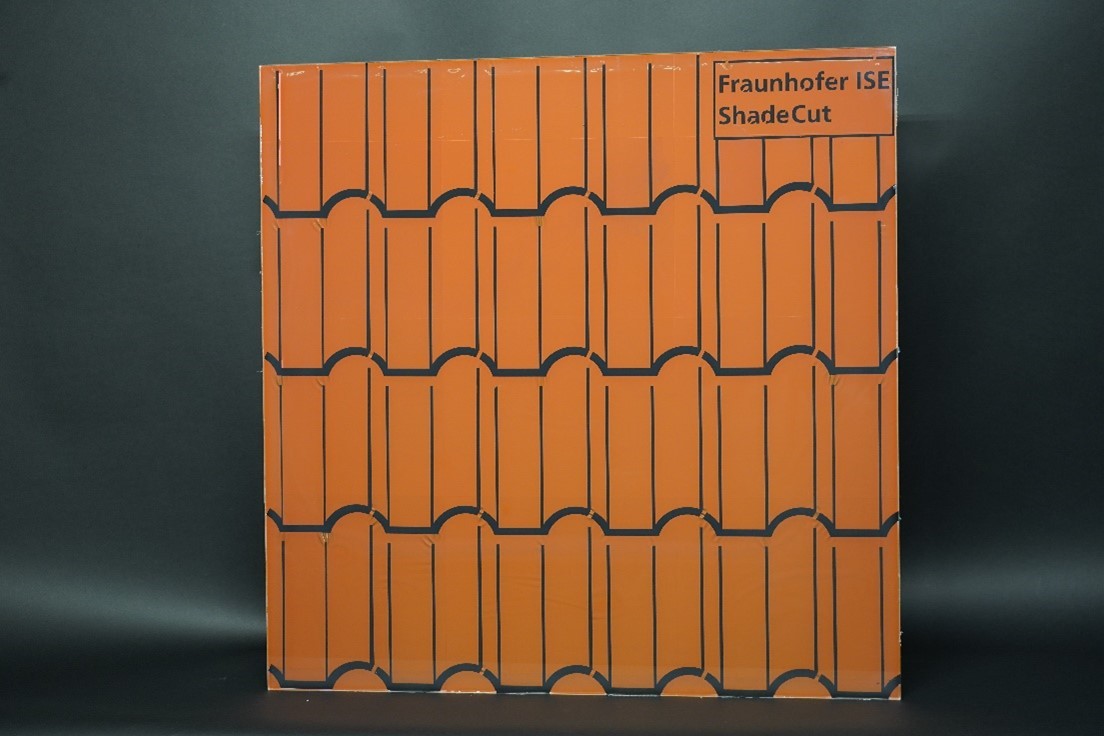
    New is the “ShadeCut” technology, which provides colored films with transparent cut-outs and thus integrates complex patterns and motifs directly into solar modules. A laser or a CAD-controlled cutting process applies the desired motif to the film, whether it is a brick structure, masonry or a company logo. The technology works with all standard photovoltaic and solar thermal modules and can be used both as a flexible embedding film and as a backsheet film. The colored modules achieve around 95 percent of the output of a comparable uncoated module.

    The end of the monument protection dilemma
    Until now, building-integrated photovoltaics has often failed due to aesthetic requirements. Listed buildings and conservation areas in Switzerland and Germany in particular posed major hurdles. In several German federal states, monument protection has already been relaxed, provided that modules match the color of the building envelope. Modules can imitate brickwork or roof tiles deceptively realistically and fit in perfectly in terms of color, says Dr. Martin Heinrich, group leader at Fraunhofer ISE. An Innosuisse project at HSLU in the Viscosi town of Emmenbrücke has already produced a demo façade in 78 shades of color.

    BIPV on the verge of a breakthrough
    The market for building-integrated photovoltaics is growing rapidly. Globally, it is estimated to be worth around 85.9 billion dollars by 2034, compared to 28.3 billion in 2026. In Switzerland, the registration procedure for façade systems has simplified the approval process since this year, which has given a clear boost to demand for aesthetic façade solutions. The first commercial tandem modules with a BIPV focus are expected in 2026 for niche markets. Fraunhofer ISE estimates the total potential of PV on buildings at around 1,000 GWp by 2045.

    What was created in the laboratory in Freiburg is now being applied to roofs and façades via a Swiss partner.

  • Local energy cooperatives are driving the expansion of solar energy

    Local energy cooperatives are driving the expansion of solar energy

    Since the start of the year, owners of solar panels have been able to sell their surplus electricity locally via local electricity communities (LEG). The City of Zurich’s electricity utility (ewz) offers a straightforward way to do this with its new product, ewz.solarquartier.

    According to a press release, 130 such electricity communities are already feeding their surplus electricity into the grid. In return, they receive a guaranteed purchase price of 14 centimes per kilowatt-hour. Already 6,000 customers are purchasing this electricity from ewz.

    The product is designed to promote the use of roof space for solar installations. “With our LEG product ewz.solarquartier, we have created a further economic incentive to ensure that solar installations are not simply built, but that high returns can be achieved in the long term,” Corinne Pellerin, Head of Market and Customers at ewz, is quoted as saying in the press release. The local use of the electricity also reduces the load on the grid.

    The Allgemeine Baugenossenschaft Zürich (ABZ) is already feeding in the surplus electricity from all its installations. “Thanks to the LEG solution from ewz.solarquartier, it was clear to us that we would register all 28 photovoltaic installations in our housing estates within the city limits,” says Eliane Hurni, Head of Buildings and Environment and a member of the Executive Board at ABZ.

    In total, there are currently almost 2,900 photovoltaic systems installed in the city, with a peak output of almost 100 megawatts. They produce around 80 gigawatt-hours of electricity per year. By 2040, production is set to rise to 500 gigawatt-hours.

  • Energy sales vary from region to region

    Energy sales vary from region to region

    Industrielle Betriebe Interlaken AG (IBI) sold around 96 million kilowatt hours of electricity in its distribution network in 2025. This represents a slight decrease of 0.9 per cent compared to the previous year. At 13.2 million kilowatt hours, own production was 12 per cent below the previous year’s figure. According to a statement by the energy and water supplier in the Interlaken area, this was due to warranty work on the hydroelectric power plant on the shipping canal.

    The decline was more pronounced in the case of gas. Sales fell to 35.9 million kilowatt hours, which corresponds to a decrease of 19.7 per cent. According to IBI, large customers in particular had optimised their systems or switched to alternative heating systems.

    Water sales in 2025, on the other hand, were 1.1 per cent above the previous year’s figure at around 1.8 million cubic metres. The proportion of spring water was 97 per cent, compared with 99.4 per cent in the previous year. The reason for the decline was cleaning and inspection work on the infrastructure facilities in the Saxettal valley.

    IBI reduced electricity prices by around 24 per cent in the reporting year. This was because the company was able to purchase energy for 2025 at a lower price following the price increases from mid-2022 onwards. In addition, the national grid company Swissgrid also reduced the costs for system services and electricity reserves.

    IBI switched from a dual tariff to a single tariff at the beginning of 2026. The dual tariff, which had been in place since the 1960s, shifted part of electricity consumption to night-time. The strong expansion of photovoltaics has now changed the logic of electricity production and consumption, with solar power being fed into the grid during the day.

  • New industrial building relies on modern energy and electrical engineering

    New industrial building relies on modern energy and electrical engineering

    Schlieremer Maneth Stiefel AG, with its branch in Pratteln, has taken on the project planning and construction of the electrical systems for a new high-bay warehouse at the Feldschlösschen brewery, according to a press release. The 30-metre-high building is to be constructed in the immediate vicinity of the motorway in Rheinfelden. Feldschlösschen AG, part of the Carlsberg Group, wants to use the new building to increase internal consolidation and create new storage space, the company reports.

    In addition to the lighting, low-voltage and low-current systems, Maneth Stiefel will also install the network infrastructure, including transformer stations and main distribution systems in the medium-voltage range, emergency and safety systems, and a photovoltaic system.

    Both companies emphasise that the new building represents a milestone in the development of the Rheinfelden site. Feldschlösschen is the largest employer in the town. The construction measures were planned in close consultation with the local population and will also be implemented with monument protection in mind. Feldschlösschen will celebrate its 150th anniversary in 2026.

  • Double use of space increases solar power production

    Double use of space increases solar power production

    According to a press release, ARA Thunersee has inaugurated HORIZON, the largest movable solar folding roof in the world. It was realized by the cleantech company dhp Technology from Zizers. With an installed capacity of 3.6 megawatts peak and around 3 gigawatt hours of electricity, the system will supply 700 households.

    According to ARA Thunersee, the more than 20,000 square meter plant is based on technology from dhp Technology. dhp CEO Gian Andri Diem sees great potential in generating energy on existing areas. “This is how we create progress without taking up additional space,” he is quoted as saying.

    According to dhp’s project description, efficient use of space is relevant in order to make progress with the energy transition through photovoltaics. Wastewater treatment plants, logistics areas, waterworks and parking areas are particularly suitable for solar power production due to their previously unused areas. According to Ingo Schoppe, Managing Director of ARA Thunersee, “intelligent land use makes an active contribution to security of supply, economic efficiency and climate protection”.

    The solar folding roof spans several clarifiers and makes double use of existing infrastructure areas – for wastewater treatment on the ground and for solar power generation above. The electricity generated there is intended for wastewater treatment and local supply.

    Based on Swiss cable car technology, the roof is able to react to extreme weather conditions. It folds up automatically in the event of storms, snow or hail. This allows operational safety and energy production to be achieved without having to intervene in ongoing processes.

  • Swiss solar technology sets new standards for aesthetics and performance

    Swiss solar technology sets new standards for aesthetics and performance

    Megasol Energie AG, Switzerland’s leading manufacturer of solar panels for roofs and façades, aims to set new standards for glare-reduced, high-performance and aesthetic solar technology with its new M450 solar module, according to a press release.

    The 450-watt peak M450 is the first solar module from Megasol to be equipped with ZRM surface technology, which significantly reduces mirror-like reflections thanks to micro-structured glass, special surface treatment and matt optics. The low luminance of the M450, which varies between 3000 and 9000 candela per square metre (cd/m2 – luminance) depending on the angle of incidence of the sun, remains well below international limits of around 20,000 cd/m2, which are prescribed in the vicinity of airports.

    With no disturbing glare for pilots, drivers or residents, the module is therefore suitable for use in sensitive areas such as airports or residential neighbourhoods. According to the manufacturer, the solar module also has an above-average product and performance guarantee of 30 years and is certified with hail resistance 5 (HW 5), currently the highest value available in the industry. The M450 module is now available for delivery.

    Megasol is a manufacturer of solar modules and system solutions for building-integrated photovoltaics. With its own production facilities in Switzerland and an international presence, Megasol develops solar roof and façade systems.

  • Solar modules put to the test

    Solar modules put to the test

    Increasing weather extremes such as heavy rain, thunderstorms and hail pose major challenges for photovoltaic systems. Hailstorms on rooftop and ground-mounted systems cause high levels of damage and operational downtime every year. The current certification standards for solar modules often do not meet the requirements of severe hailstorms, as they are limited to a few, uniform impacts.

    Practical tests with HRC protocol
    The HRC test goes beyond existing test procedures. It bombards solar modules with hailstones of different sizes and speeds until they break. This creates a load curve that corresponds to the real impact energies of a storm. Manufacturers and operators can identify the point at which the glass fails and which models are particularly resistant.

    Cherif Kedir from RETC emphasizes: “Our test closes the knowledge gap and provides usable data on the entire energy and size spectrum of real hail loads. The strict sample size ensures thorough characterization.” This means that hail resistance can be quantitatively assessed and compared for the first time.

    Consequences for development, operation and insurance
    The HRC protocol offers manufacturers the opportunity to optimize solar modules specifically against hail. Project developers are provided with a new basis for decision-making for the cost-benefit analysis of module types, mounting angles and tracking systems. The test also supports the “hail stow” strategy, in which modules are moved hydraulically into a low-risk position during storms.

    Insurance providers can now dimension cover and premiums based on empirical test results instead of relying on estimates. This reduces uncertainty and promotes the acceptance of PV systems in particularly exposed areas.

    More security through innovation
    The HRC test marks a step forward for the solar industry. Practical testing and transparent data increase the safety and value of solar installations. Manufacturers and operators gain planning security, insurers a solid basis for calculation. This paves the way for more resilient photovoltaic systems that can cope with the changing climate.

  • Photovoltaic system on company roofs in Aarau

    Photovoltaic system on company roofs in Aarau

    Over the next six weeks, HKG Engineering AG will be installing a photovoltaic system on the roofs of its own company buildings at the Aarau site. According to a press release, 184 high-efficiency modules are planned there, which will generate 93,000 kilowatt hours of electricity per year.

    The energy generated will be sufficient to cover the company’s own requirements in the offices and for charging electric vehicles. The system will also reduce the load on the neighboring Aarhof property, which is currently under construction.

    With this investment, HKG is sending out a clear signal for sustainable action. The aim is to reduce CO2 emissions in the building sector and reduce dependence on external energy.

  • Windows as power stations

    Windows as power stations

    One solution relies on special films that direct visible light specifically to the edge of the glass pane. There, PV strips, often made of high-performance material such as GaAs, absorb the light and convert it into electricity. Solar cells are only needed at the edge, which saves material and resources. The view is retained and the window remains transparent.

    Using cholesteric liquid crystals, a research team at Nanjing University has developed a prototype that achieves an optical efficiency of over 18% and delivers stable values under real conditions. For a typical window with a height of two meters, there is a strong concentration of light at the edge zone. The coating can be produced industrially and is suitable for large façades.

    Transparent tandem cells
    The EU project CitySolar presents another innovation. Two combined PV layers (halide perovskite at the top, organic at the bottom) extract energy from different light spectra while allowing visible light to pass through. This means that the room brightness and view remain unchanged, the window “looks like a window” but produces electricity.

    With an efficiency of 12.3% and 30% transparency, a new record has been set for transparent PV modules. The structure is suitable for office and residential buildings as well as high-rise buildings with large glass fronts.

    Future and potential
    Researchers and industry partners are working on even higher efficiencies and better production methods. Challenges exist in balancing transparency and efficiency and in integrating them into existing construction processes. However, projects such as those from ZEISS or the international CitySolar consortium clearly show how great the market potential is.

    Transparent solar cells and intelligent glass surfaces are paving the way for buildings that partially cover their own electricity requirements. Windows as power plants are within reach and will play a decisive role in shaping the energy transition in urban areas.

  • New solar plant boosts renewable energy production in the Alpine region

    New solar plant boosts renewable energy production in the Alpine region

    Swisspower AG has received approval from the canton of Graubünden for the construction of the Alpin Parsenn large-scale photovoltaic plant. According to a government press release, the decision is subject to conditions, although these are not specified.

    Swisspower AG is acting as the overall project manager. It represents Energie Wasser Bern(ewb), Industrielle Werke Basel(IWB) and Elektrizitätswerk Davos AG(EWD).

    The project, which until recently ran under the name Parsenn Solar, was approved by the Davos electorate on December 17, 2023. According to its press release from November 2024, Swisspower expected to receive the cantonal building permit before the end of last year; the ongoing work was fully geared towards the start of construction in summer 2025.

    According to the cantonal government, the solar plant will be built at an altitude of 2,500 meters in the Parsenn ski area, which already has an infrastructure and covers an area of almost 14 hectares. With 1493 module tables, it will produce around 12.1 gigawatt hours of electricity per year. In the earlier announcement, there was still talk of more than 10 gigawatt hours, which will supply around 2,200 four-person households in future. Logistical access will be provided via existing access roads. The use of helicopters and walking excavators for minimally invasive installation is also planned.

    Swisspower, based in Zurich, was founded in 2000 as a joint venture between Swiss municipal and public utilities that supply their areas with electricity, natural gas, heat and drinking water. The alliance is supported by 22 shareholder partners from all over Switzerland.

  • Small cities are increasingly interested in the smart city

    Small cities are increasingly interested in the smart city

    The Zurich University of Applied Sciences (ZHAW), based in Winterthur, has published the Swiss Smart City Survey 2024. The report shows that small cities in particular are investing in smart solutions, according to a press release. The ZHAW survey also recorded an increase in the number of respondents.

    A total of 403 smart city projects were reported by the participating cities and municipalities in the survey. Specifically, these include categories such as Smart Governance, Smart Environment, Smart Mobility, Smart People, Smart Living and Smart Economy. 97 projects fall into the Smart Environment category, most of them in the field of photovoltaics. This is twice as many as in 2022.

    However, the report still shows great potential for development. The topic of smart cities is being actively addressed in 29% of the cities surveyed, while 18% are still in the initial phase. “Many cities are not yet in a defined smart city development phase – a clear sign that there is enormous development potential here,” said Vicente Carabias, Head of Sustainable Energy Systems and Smart Cities at the ZHAW, in the press release. “At the same time, the survey shows that more and more cities are embracing the topic of smart cities. The data from the Swiss Smart City Survey highlights the high market potential for science and companies, which can play an active role in the development of smart infrastructures.”

  • Photovoltaic system combines culture with sustainability

    Photovoltaic system combines culture with sustainability

    In future, the Museum Langmatt will produce renewable solar power with a 40/45 kilowatt photovoltaic system, enough for the annual consumption of 15 to 20 flats. The grey in-roof modules were installed by Regionalwerke Baden. According to a statement from Regionalwerke, the modules were in keeping with the spirit of the museum, which was built by Sidney Brown, co-founder of the technology group ABB: “Contemporary technology is perfectly compatible with the historical spirit of the Langmatt,” says Markus Stegmann, Director of the Langmatt Museum.

    The PV system is installed on the roof of the newly installed glass pavilion in the park, which was built as part of the complete renovation and expansion of the complex. “The pavilion is intended for readings, concerts and aperitifs for group visits,” says Stegmann.

    While the PV modules have already been in operation for a month, the renovation work is not expected to be completed until next year. The art nouveau villa Langmatt, which now houses the museum, was built around 125 years ago on behalf of the art-loving industrialist couple Brown. The museum therefore houses an important collection of French Impressionists such as Claude Monet and Pierre-Auguste Renoir.

  • Local communities to promote solar expansion

    Local communities to promote solar expansion

    The city of Zurich is interested in expanding solar power production in the city as quickly as possible. To this end, the city’s own electricity utility(ewz) is launching a new offer via local electricity communities (LEG). In future, owners of large photovoltaic systems (PV systems) will be able to sell their surplus electricity directly to households in the neighbourhood, the city administration announced in a press release. Previously, it was only possible to feed surplus electricity into the ewz grid.

    With the ewz.solarquartier offer, ewz will take over the networking of interested producers and consumers of solar power as well as administration and billing. The owners receive a stable revenue of 12 centimes per kilowatt hour supplied. “This means that LEG can generate up to 10 per cent more revenue than with the return delivery alone,” explains ewz Director Benedikt Loepfe. Households purchase the electricity at the price of the standard ewz.natur product.

    “The installed capacity of PV systems in the city of Zurich has more than quadrupled in the last ten years or so,” explains City Councillor Michael Baumer. The city wants to further strengthen this growth trend wherever possible, explains the head of the Department of Industrial Operations, where ewz is based. “In addition to the various measures already underway, a good offer for LEG helps to make the realisation of solar installations in the city even more attractive.”

  • Alpine solar project launched over 2000 metres

    Alpine solar project launched over 2000 metres

    Axpo, based in Baden, has commissioned STRABAG to realise an alpine solar project next to the Lai da Nalps reservoir above the village of Serdun in Graubünden. Around 1,500 solar panels and a technology centre will be installed in the NalpSolar project at over 2,000 metres above sea level, the Schlieren-based construction company announced in a press release. The first 10 per cent of the plant is due to go into operation this December.

    “The construction work is technically demanding, logistically challenging and ecologically sensitive, but above all a milestone for the energy transition in Switzerland,” writes STRABAG. The individual solar tables and other components have to be transported along a narrow, single-lane mountain road. The road, which is normally closed, was built by Axpo in the 1960s as an access road for the reservoir.

    As there are no storage facilities on the construction site, only the material that is immediately needed is transported. “The logistics now run like clockwork,” explains construction foreman François Borner in the press release. “Instead of being stressful, it is now easy to plan.” In the press release, STRABAG cites the uneven ground and respect for the nature conservation zones in the construction area as further challenges in the project.

    Due to the altitude, NalpSolar will produce a lot of electricity, especially in the winter months, explains STRABAG. The construction company is aiming to complete the work in 2028. The electricity from NalpSolar is reserved for the SBB power grid for the next 20 years.

  • Switzerland continues to massively expand solar power

    Switzerland continues to massively expand solar power

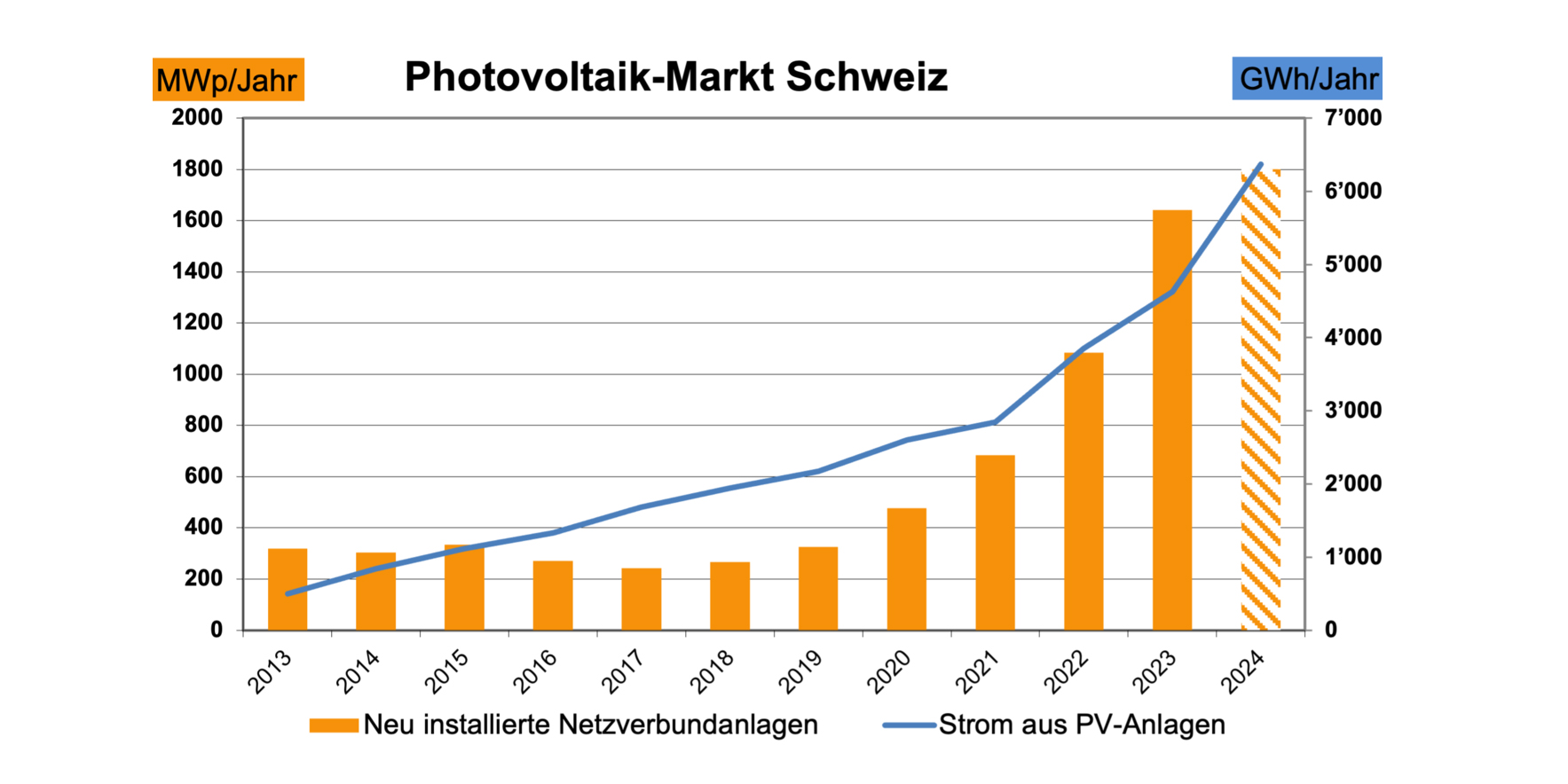
    The expansion of solar power reached a new record in 2024, according to a statement from Swissolar. According to the industry association, systems with a total output of 1,798 megawatts were installed, an increase of 10 per cent compared to the previous year. In total, 8170 megawatts were installed by the end of 2024. This generated 5961 gigawatt hours of electricity.

    Solar power accounted for 10.4 per cent of electricity demand in 2024. In the previous year, it was 8.25 per cent. Swissolar expects a share of 14 per cent by 2025. “Solar power is already a central component of our energy supply today and is well on its way to becoming the second mainstay of our electricity supply alongside hydropower,” said Matthias Egli, Managing Director of Swissolar, in the press release.

    Swissolar also emphasises the importance of solar power for the winter months. Around 2,400 gigawatt hours of solar power were generated between the beginning of October 2024 and mid-April 2025, around a third of annual production.

    The number of newly installed battery storage systems grew by 4 per cent in 2024. In single-family homes, 47 per cent of all solar installations were already equipped with battery storage systems, compared to just 42 per cent in the previous year. The total installed storage capacity at the end of 2024 was already 896 megawatt hours, enough to cover the consumption of 100,000 households for one day.

  • New building in Sursee for cycling team

    New building in Sursee for cycling team

    According to an article in the “Luzerner Zeitung”, the Tudor Pro Cycling Team, currently based in Schenkon, is about to move to Sursee. The team would like to invest 18 million Swiss francs in a new six-storey headquarters there. The initiator is Sette Immo AG, which runs not only the professional team but also a junior team through its Sette Sports Group. Fabian Cancellara, a former racing cyclist, is not only team manager of the Tudor Pro Cycling Team, but is also active at Sette Immo AG.

    The team’s new headquarters is due to be completed in September 2026 and will provide space for storage, workshops, training and meeting rooms. Offices for the administration and recreation rooms for the drivers will also be built, as well as a showroom for the team. A photovoltaic system will also be installed on the roof.

    The team, which is sponsored by watch manufacturer Tudor from Geneva, is currently taking part in the Tour de France until the end of the month.

  • Solar energy on track

    Solar energy on track

    In 2024, 1,798 megawatts of new photovoltaic capacity were installed in Switzerland, an increase of 10 % compared to the previous year. The total output rose to 8.2 gigawatts, which covered over 10 % of the national electricity demand. Despite below-average solar radiation and rising electricity consumption, the annual production corresponds to the consumption of around two million households.

    Security of supply through winter electricity
    Photovoltaics is not just a summer technology; from October 2024 to April 2025, 2.4 terawatt hours of solar power were generated, a third of annual production. This contribution significantly relieved the pressure on Switzerland’s reservoirs. Without solar energy, Switzerland would have had to import significantly more electricity.

    Decline in the single-family home segment
    While larger systems continued to grow strongly, the expansion on single-family homes fell by 3 %. This slowed overall growth, as around a third of installed capacity was previously based on this segment. According to Swissolar, the reason for this restraint is the uncertainty surrounding the new Electricity Act.

    Battery storage systems are gaining in importance
    The expansion of battery storage systems also increased by 4%. The commercial sector in particular is showing increased momentum. Today, 47% of PV systems on single-family homes are already equipped with battery storage. The total storage capacity is just under 900 MWh, enough for 100,000 households for one day.

    International momentum confirms global trend
    Around 597 GW of photovoltaic capacity was installed worldwide in 2024, an increase of 33%. With 908 watts per capita, Switzerland is in 10th place in an international comparison. Global solar power production rose to 2,000 TWh.

    Changing framework conditions
    The new Electricity Supply Act creates important foundations for local electricity consumption, but also leads to uncertainty. In particular, there is a lack of practicable solutions for local electricity communities and market-based purchase remuneration. Swissolar is calling for concrete improvements to better utilise the potential of local use and storage solutions.

    Slowdown with prospects
    Swissolar expects the market to decline by around 10% to 1600 MW in 2025 due to regulatory transition phases. Stabilisation is expected from 2026. The targets of 18.7 TWh of solar power by 2030 and 35 TWh from new renewable energies by 2035 are achievable with continuous expansion of between 1,800 and 2,000 MW per year.

  • Cooperation for more solar power in Zurich and eastern Switzerland

    Cooperation for more solar power in Zurich and eastern Switzerland

    The Basel-based energy supplier IWB has acquired the Winterthur-based solar specialist Senero AG. According to a press release, IWB intends to expand its position in the field of renewable energies. Senero’s position will therefore be significantly expanded with access to IWB’s structure, size and integrated range of solutions.

    In the cooperation, IWB intends to invest in its own and the expansion of decentralised solar power production and thus make a contribution to security of supply and the energy transition, according to the press release. The company plans to install 150 to 200 megawatts of photovoltaic capacity (megawatt peak/MWp) on roofs and façades for private and business customers by 2030. Currently, 55 MWp have already been installed. In addition, IWB offers its customers comprehensive services in connection with the connection for self-consumption (ZEV). Customers are supported in setting up, operating and managing ZEVs.

    Senero is contributing its expertise in the installation of photovoltaic systems (PV), batteries and charging stations for electric cars to the new partnership. The company installs 120 photovoltaic systems every year.

    “Together with our solar companies Planeco and Kunz Solartech, IWB can realise solar systems for companies and private customers throughout German-speaking Switzerland thanks to Senero. We can now strengthen our sales activities, particularly in the Zurich area and eastern Switzerland,” said Markus Balmer, Head of Sales at IWB, in the press release. “We expect continued strong growth in the solar industry, even though the current market environment has become more difficult. There are still far too many roofs without PV, and the legal framework for PV systems has improved with the new energy legislation.”

    Fabian Krämer, Co-Managing Director of Senero, sees security and a long-term perspective in the takeover by IWB. “IWB is a large and established partner that offers our employees secure prospects for the future. Together with IWB, we can continue our success story in the solar market and realise many more systems for our customers,” Krämer is quoted as saying.

  • Aircraft manufacturing headquarters to be extensively modernised and condensed

    Aircraft manufacturing headquarters to be extensively modernised and condensed

    The aircraft manufacturer Pilatus is planning to modernise its headquarters in Stans. According to a press release, the buildings, some of which are very outdated and energy inefficient, are to be comprehensively reconstructed. The production and administration areas will also be densified with new buildings. The architectural structure will be adapted to the landscape conditions. The vertical construction method will make better use of the space without the buildings exceeding heights of 32, 36 or 56 metres.

    According to the company, the buildings will follow the principles of sustainability and comply with international standards (LEED). Recycled concrete and local timber will be used. All buildings are subject to high energy standards. Large-scale photovoltaic systems will ensure that the building produces its own electricity.

    With this comprehensive renovation, Pilatus is showing its commitment to the Stans site and to the well-being of its 2,500 employees. Their environmentally friendly journey to work by public transport will be subsidised with financial support of up to CHF 1,000 per year, according to the press release.

    On 26 November 2025, the population of Stans will be able to decide on an amendment to the land use plan.

  • Europe’s electricity mix is changing

    Europe’s electricity mix is changing

    Germany produced around 40 terawatt hours of solar power between January and June 2025, an increase of 30 per cent compared to the same period last year. France, Belgium, Denmark and Poland also recorded growth in photovoltaics. The expansion is having an impact, but the parallel lull in wind power weighed on the overall balance. At 60.3 TWh, wind power generation was around 18% down on the previous year. As a result, the share of renewable energies in net public electricity generation in Germany fell slightly to 60.9% (2024: 65.1%).

    Europe-wide trend with regional differences
    Within the EU, combined electricity generation from wind and solar fell slightly to 344.4 TWh in the first half of 2025, compared to 358.1 TWh in the previous year. The figures from Fraunhofer ISE show that while solar expansion is bearing fruit in many countries, meteorological fluctuations such as wind lulls are having a greater impact.

    Electricity trading adapts to
    Germany imported 7.7 TWh of electricity in the first half of the year, primarily from Scandinavia, where wind and hydropower continue to offer favourable prices. These imports were more attractively priced than domestic electricity from fossil-fuelled power plants. Exports went to Austria, the Czech Republic and Poland, among others.

    Electricity prices rise slightly – customer prices stable
    After falling in recent years, the average exchange electricity price rose again to €86.64/MWh in the first half of 2025. The highest prices were recorded in January and February, when there was little wind. At an average of 27 cents per kilowatt hour in June, electricity prices for new customers were back at the 2021 level.

    CO2 costs and gas prices on the rise again
    In parallel with the electricity market, CO₂ certificate prices rose by 11 per cent compared to the previous year, and natural gas was also more expensive than in the first half of 2024. These developments illustrate how sensitively the energy market reacts to fluctuations in supply and political conditions and how important a sustainable, resilient energy infrastructure is.

  • Switzerland is one of the laggards in wind and solar power

    Switzerland is one of the laggards in wind and solar power

    In a new study by the Swiss Energy Foundation (SES), Switzerland ranks at the bottom of the league table for electricity production from solar and wind energy. It produces 681 kilowatt hours of solar power per capita and 19 kilowatt hours of wind power. In total, the country produces 700 kilowatt hours per capita from solar and wind energy, putting it in 22nd place out of 28 EU member states.

    Sweden is the leader in wind power production with 3930 kilowatt hours per capita, followed by Denmark with 3448 kilowatt hours. Even neighbouring Austria comes in at 1004 kilowatt hours. In terms of solar production per capita, the Netherlands leads with 1206 kilowatt hours per capita, followed by Spain and Cyprus. However, even Austria has 941 kilowatt hours and Germany 888 kilowatt hours.

    Switzerland was able to increase its production of electricity from wind and solar from 7.2 per cent to 11 per cent within five years. However, other countries in Europe often achieved higher increases of up to 20 percentage points in the same period. In a European comparison, only Malta, Slovenia, Romania, the Czech Republic, Latvia and, bringing up the rear, Slovakia are behind Switzerland in the production of electricity from wind and solar per capita.

    In the view of the SES, wind energy in particular must be expanded in Switzerland, according to a press release. A total of 11 per cent of domestic electricity consumption is generated by wind and solar, 7.2 percentage points more than five years ago. European neighbours

    The new Electricity Act shows that the Swiss population wants to intensify sustainable electricity production in the future. Political instruments for implementing the law are already active or will be from 2026. Their impact will become apparent in the coming years, according to the SES.

    The exchange of electricity with neighbours also holds great potential for Switzerland. Switzerland is already integrated into the European electricity grid with over 40 cross-border transmission grids. European electricity trading is central to Switzerland’s ability to obtain winter electricity from its European neighbours’ wind turbines, according to the press release. The planned EU electricity agreement forms the basis for increased electricity trading.

  • Solar facade combines energy generation with architecture

    Solar facade combines energy generation with architecture

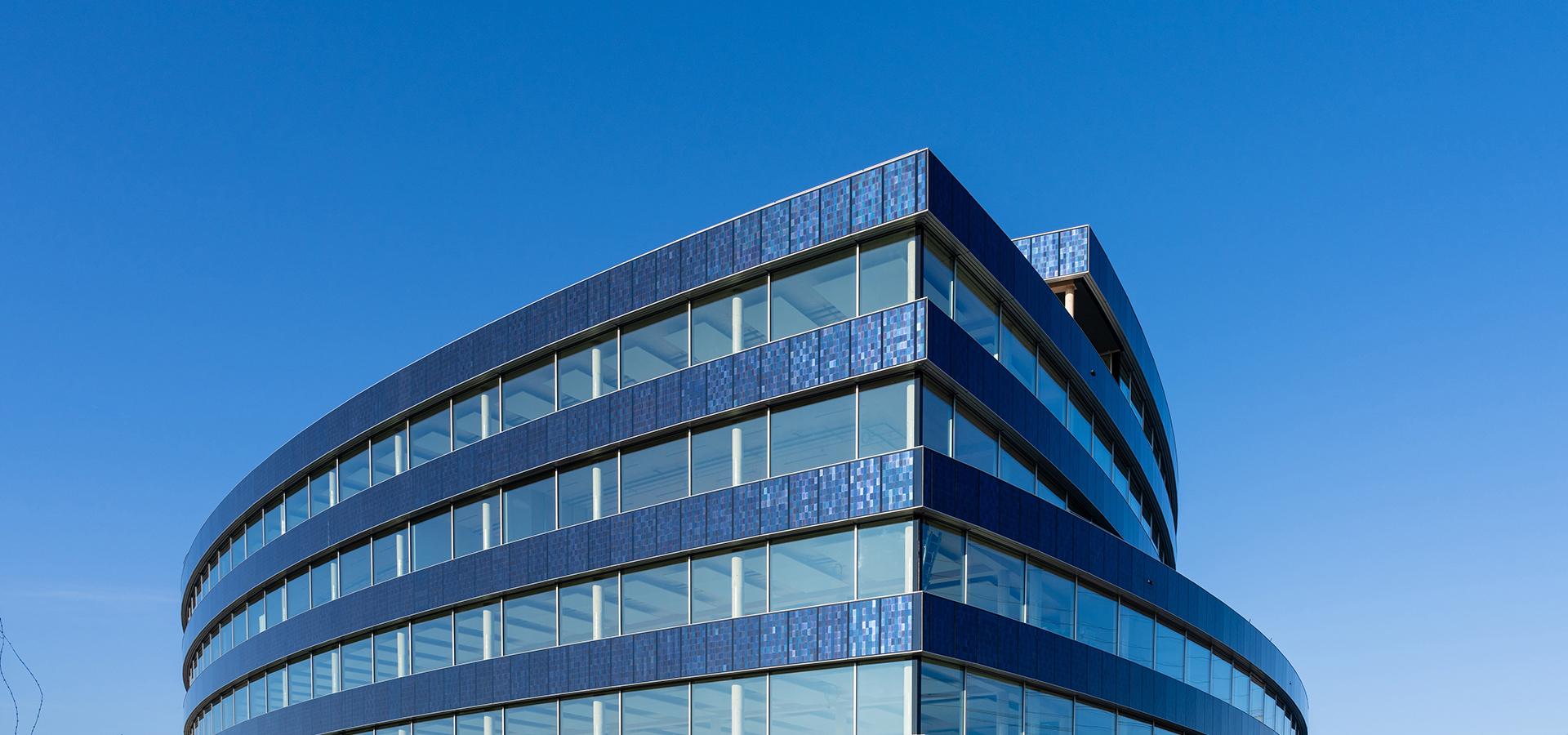
    Megasol Energie has developed the photovoltaic solution for the Bern 131 project, according to a press release . The 1605 customised modules shimmer blue thanks to the coloured rear glass, which is aligned with the sun. The front glass is transparent. Megasol developed the modules in collaboration with the Bern-based architecture firm Atelier 5, which designed the building.

    Megasol also supplied 468 standardised M450 modules for the roof area. The entire system has an output of 504 kilowatt peak. This will generate around 341,238 kilowatt hours of electricity per year. This corresponds to 88 per cent self-sufficiency for the building.

    Bern 131 at Stauffacherstrasse 131 was built by Atelier 5 as a hybrid of steel and wood. The wood comes 98 per cent from the canton of Bern. The building is SNBS Gold-certified.

    Florian Lünstedt, architect and partner at Atelier 5, praises the collaboration with Megasol. “The façade is not only an important architectural element that characterises the building, but also a functional component for energy generation,” he is quoted as saying in the press release. “The joint development of the PV modules with Megasol has made it possible to combine both aspects at a high level.”

  • World record solar fence realized in Basel

    World record solar fence realized in Basel

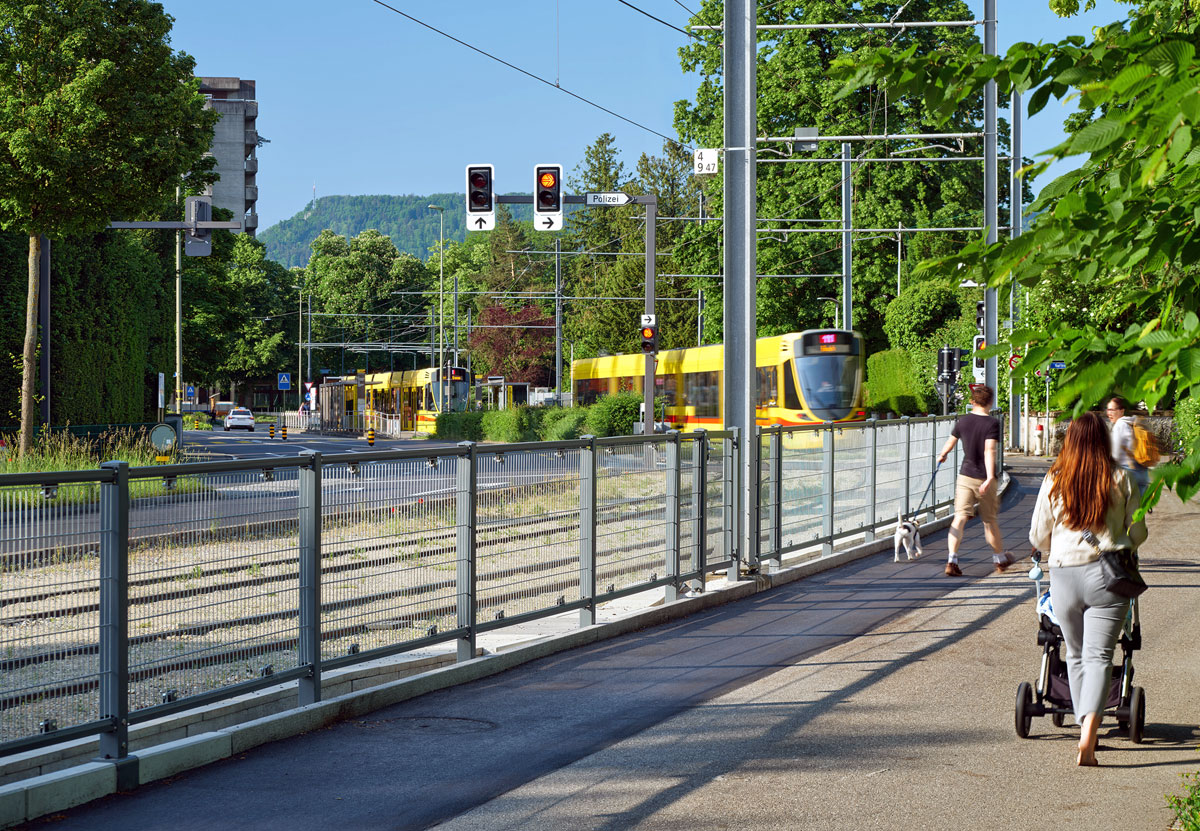
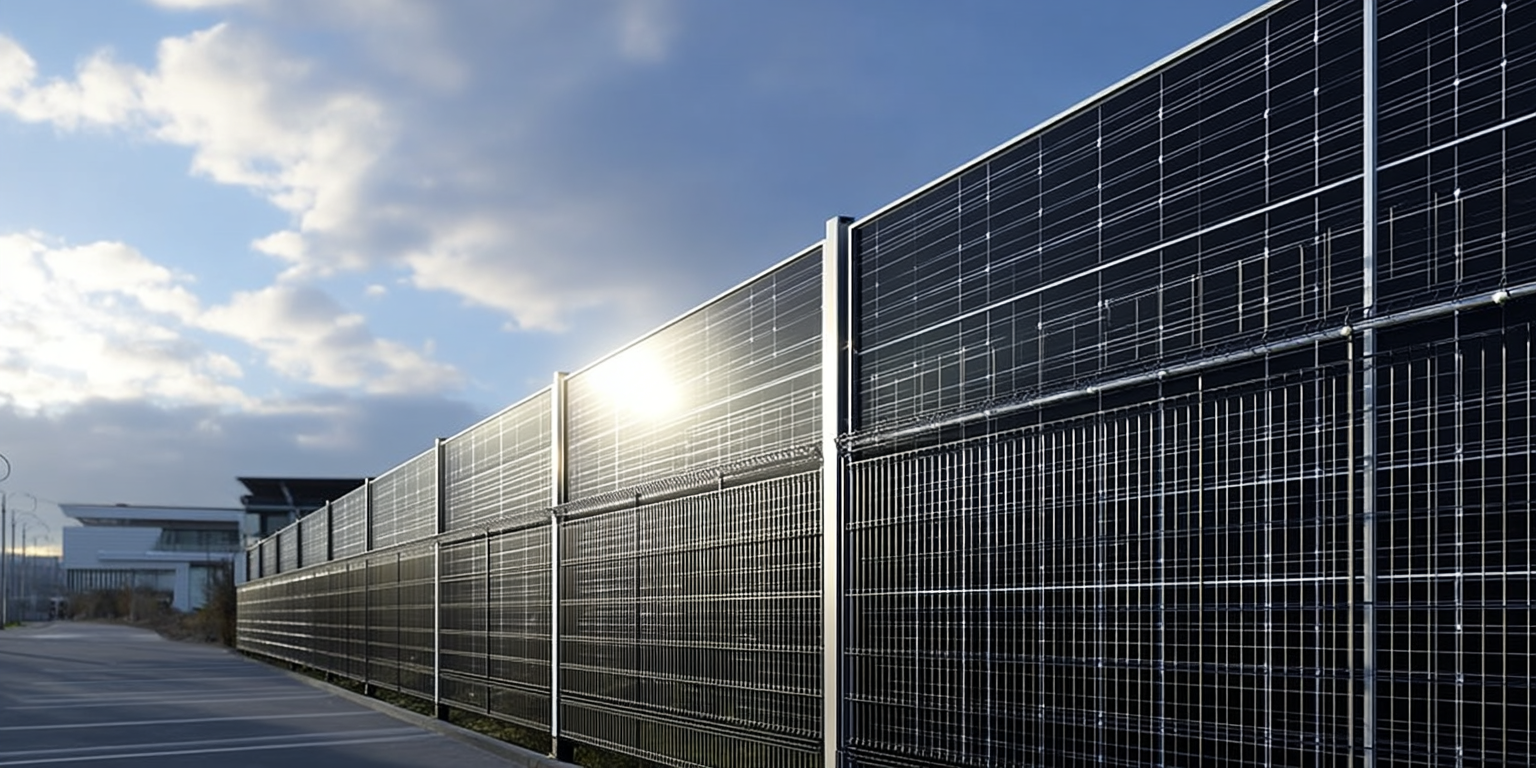
    A new safety fence was required as part of the BLT streetcar line route renewal. Instead of a conventional solution, the project focuses on functional added value. A vertically installed solar fence. The combination of safety infrastructure with bifacial photovoltaic modules makes double use of existing areas without additional land consumption, a decisive advantage in urban areas.

    High performance along the rail
    A total of over 400 high-performance bifacial modules will be installed, which can absorb solar radiation on both sides and convert it into electricity. The predicted maximum output is 194 kWp. The integration takes place on a specially developed frame system in basalt gray, which blends harmoniously into the cityscape. This system was developed in cooperation with the company Next2Sun, which specializes in vertical photovoltaic solutions.

    Sustainable energy from the fence
    The project is being implemented in stages. While the first construction phase of the fence has already been completed, the installation of the photovoltaic modules is now beginning. The project is being realized as part of a collaboration between Solarzaun GmbH, BLT and Alpsteinzaun Tor AG. The integration into the existing streetcar renovation construction site enabled smooth implementation.

    Research and prospects
    The project is also being supported by the scientific community. Professor Hartmut Nussbaumer from the ZHAW sees the solar fence as a pioneering model for urban energy solutions. Particularly noteworthy is the energy production at times of day when conventional PV systems, such as those on roofs, work less efficiently. The system therefore complements conventional photovoltaic strategies and improves the seasonal security of supply.

    Model with a signal effect for cities worldwide
    With the world’s longest solar fence, Basel is setting a strong example for the intelligent combination of mobility and energy infrastructure. The project combines technical innovation with urban integration and is expected to serve as a model for similar approaches in other regions. For specialists and managers in urban development, energy planning and infrastructure management, this model offers concrete suggestions for a sustainable future in urban areas.

  • Pioneering project: Greenhouse solar system utilises light twice

    Pioneering project: Greenhouse solar system utilises light twice

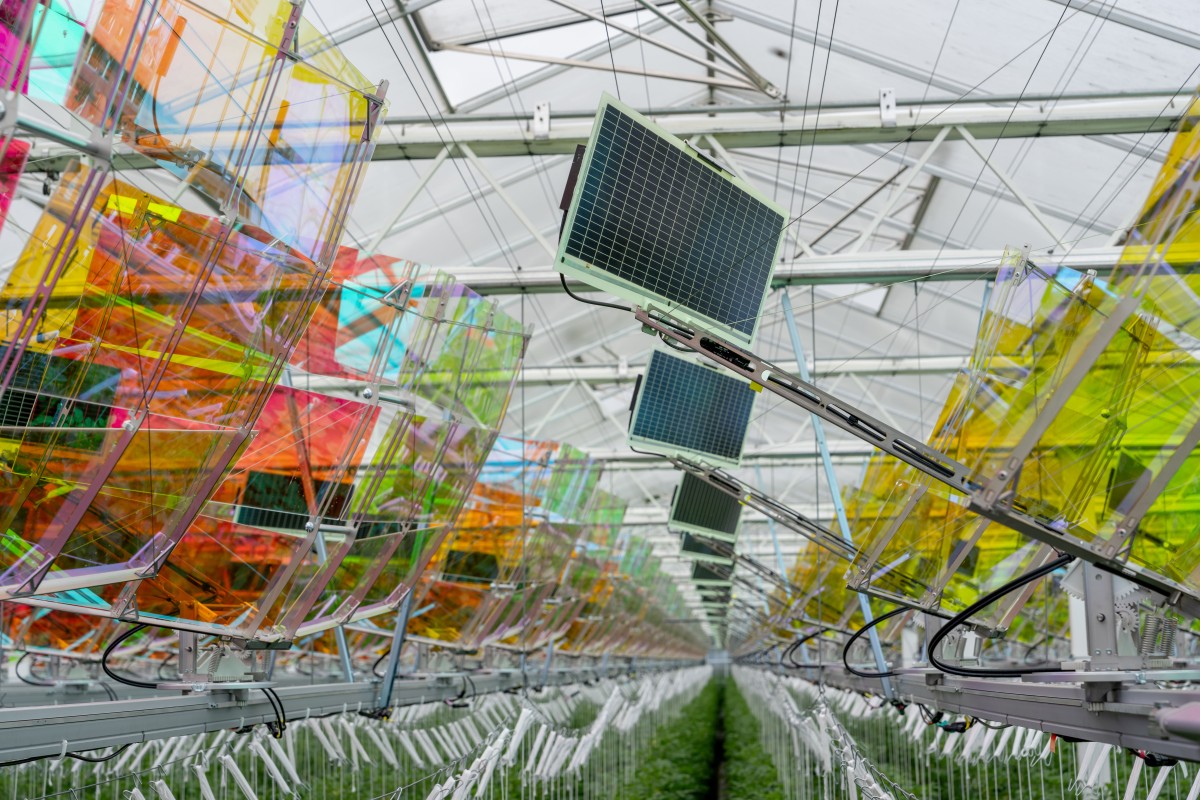
    The start-up Voltiris from Epalinges has installed its largest solar system to date on a greenhouse belonging to Meier Gemüse AG in Rütihof, according to a press release from the canton of Aargau. The solar system is based on a filter technology in which light waves used to generate electricity are filtered out and redirected to a solar panel, while the light required for photosynthesis can enter the greenhouse unhindered. In this way, plants can be grown without any loss of yield and renewable energy can be generated at the same time. The canton of Aargau subsidised the solar system with CHF 50,000.

    The solar plant in Rütihof covers an area of around one hectare and generates around 234 kilowatts of electricity with around 1,730 solar panels. “As a Swiss startup, we are proud that the first and world’s largest plant with our spectral AGRI-PV system has gone into operation here in the canton of Aargau,” said Dominik Blaser, Chief Product Engineer and co-founder of Voltiris, in the press release.

    Thanks to the filter technology, Voltiris’ photovoltaic modules can be used inside greenhouses without casting shadows, unlike conventional solar systems. The concave arrangement of the filter also concentrates the light, allowing it to hit the photovoltaic module with four times the intensity. In this way, a higher energy yield can be achieved than with conventional solar radiation.

    The solar installation is also in line with the cantonal energy strategy, which aims to achieve the net-zero target by 2050 and strengthen security of supply.

    “This plant is an example of how agriculture and energy production can be combined in a meaningful way,” Markus Dieth, member of the cantonal government and Director of Agriculture, is quoted as saying in the press release.

  • Photovoltaic system wins sustainability award

    Photovoltaic system wins sustainability award

    Solnow AG has received one of the three sustainability prizes awarded annually by the Beverin Nature Park, Viamala Tourism and the Viamala Region at this year’s MUMA, Viamala Tourism announced in a press release. Specifically, the young company from Zillis-Reischen was honoured with the prize in the Innovation category for its photovoltaic in-roof system at the exhibition of tradespeople from the Graubünden districts of Avers, Rheinwald and Schams. The prize for tourism and the audience award went to the Bachhuus project from Hinterrhein GR and the Val Schons pump track project in Andeer respectively.

    “Bricks off, Solnow on” is how Solnow AG describes its business model. The fully recyclable photovoltaic in-roof system is installed instead of tiles or other roof cladding and can also be operated in alpine conditions. It therefore makes an important contribution to a sustainable and regional energy supply, writes Viamala Tourism in the press release.

  • Researcher investigates solar reflection for better yields

    Researcher investigates solar reflection for better yields

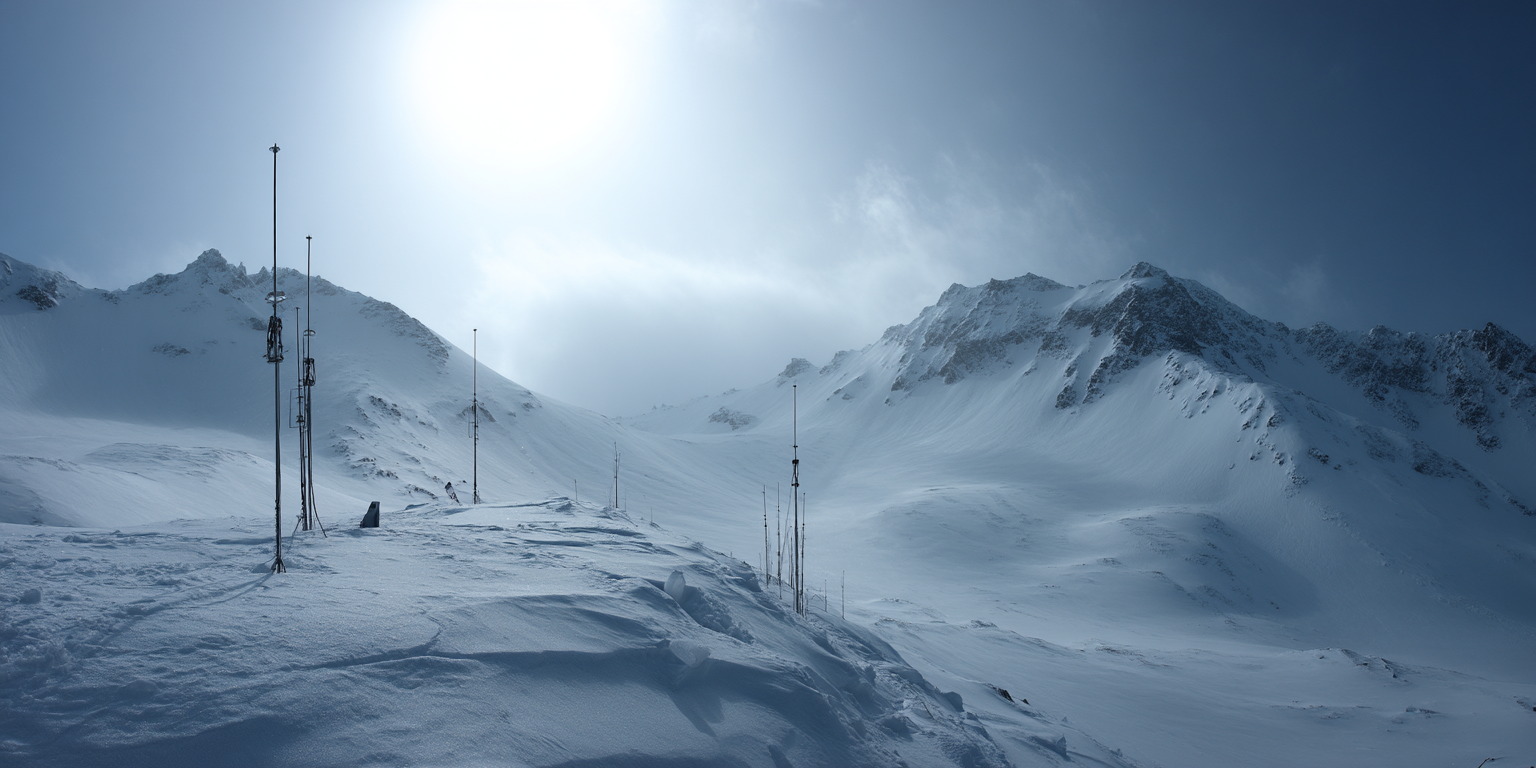
    SLF researcher Anja Mödl investigates how snow-covered terrain reflects sunlight. Her findings should make photovoltaic systems more efficient. The measurements take place in Meierhoftälli near Davos at around 2,400 meters above sea level.

    The researcher uses sensors to examine the sunlight reflected by the snow cover. According to the press release, the majority of sunlight is reflected by the snow in the direction of incidence. Sunlight is thus largely reflected in the direction of other mountain slopes.

    The snow surface reflects different wavelengths to different degrees. The intensity of certain wavelengths thus becomes stronger over time than in the originally incident light. Mödl is investigating how spectra differ at different locations.

    The measurements should enable photovoltaic systems to generate electricity even more effectively. Optimally positioned systems should then also be able to use the light reflected from neighboring slopes.

    The sensors measure wavelengths between 340 and 2500 nanometers. Photovoltaics only use the range between 500 and 1100 nanometers. According to Mödl, the larger spectrum makes it possible to gain further insights into rock warming and snow melting.

    Measurements are also planned for the coming season. “In order to make a well-founded statement, I need to record data under different conditions,” says the researcher.

  • Zurich Airport tests solar fences

    Zurich Airport tests solar fences

    Flughafen Zürich AG in Kloten wants to come closer to its net-zero target for company emissions by 2040 with a significant expansion of renewable energies. According to a press release, photovoltaic systems are to be significantly expanded. In addition to systems on roofs and facades, the airport is now testing the installation of solar fences. The first system has been installed next to the airport’s heating center.

    The vertically mounted panels offer several advantages. As they can be exposed to solar radiation on both sides, the electricity yield is increased by 10 to 30 percent. This means that electricity production can be extended throughout the day. At the same time, the solar panels serve as a security fence for the airport area.

    “As a first step, we want to gather experience with the vertical solar systems and check whether this technology could be considered for other locations. Parking lots, for example, are conceivable. The test phase will last at least a year in order to be able to map the seasonal effects,” Guido Hüni, Head of Energy and Decarbonization at Flughafen Zürich AG, is quoted as saying in the press release.

    Photovoltaic systems are currently installed on twelve building roofs. Further locations are being examined in a feasibility study. Among other things, glare safety for pilots and the tower must be guaranteed. By 2040, the airport’s photovoltaic systems should produce enough electricity to supply 5,000 households.

  • Lucerne wants to use transport infrastructure as solar power plants

    Lucerne wants to use transport infrastructure as solar power plants

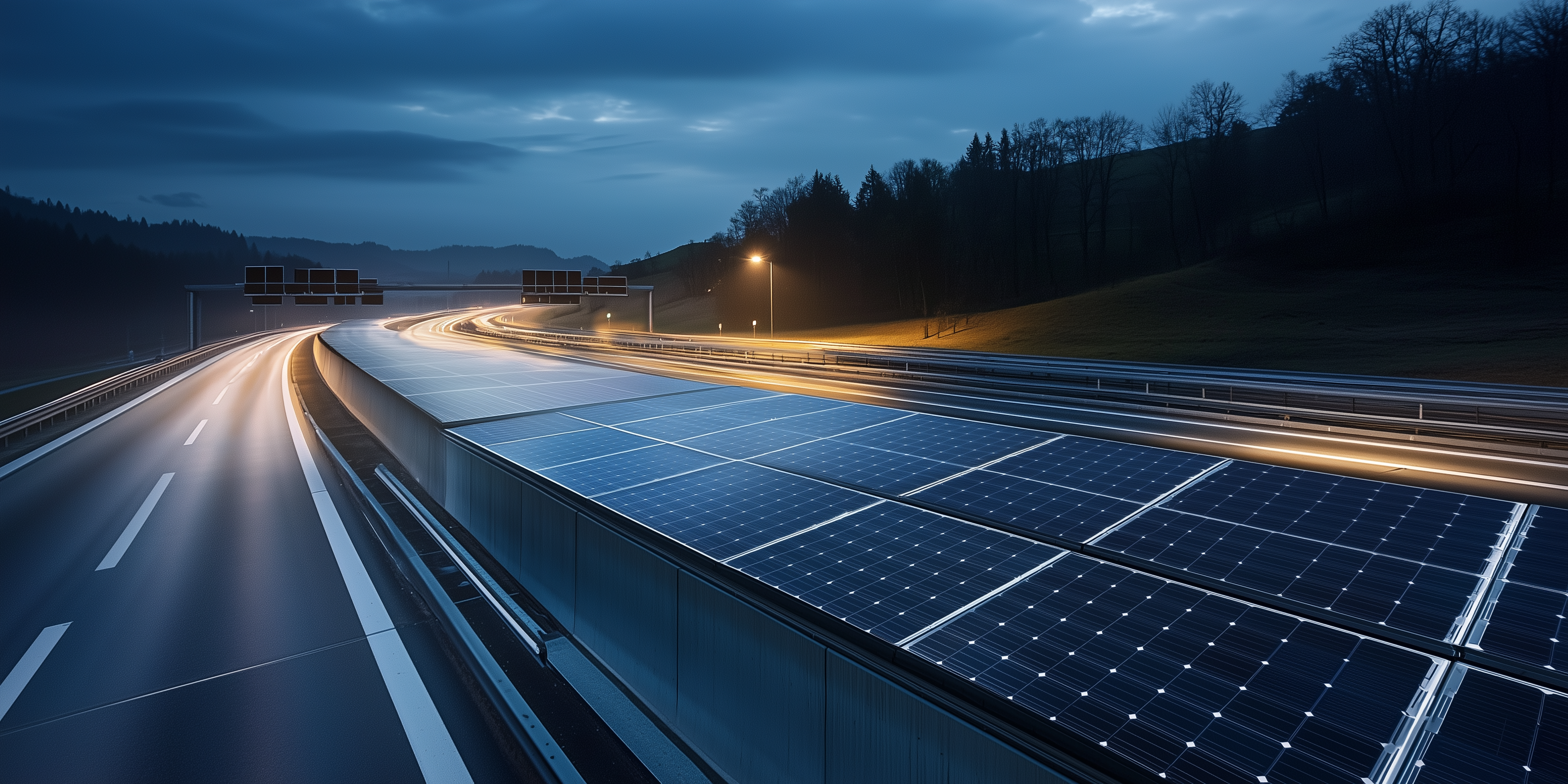
    The canton of Lucerne wants to use more solar energy to generate renewable electricity and heat and utilise additional areas of the canton’s own road infrastructure as solar power plants. The canton plans to equip bridges, tunnels, galleries, noise barriers, carriageways, embankments and retaining walls with photovoltaics.

    According to a press release, ten times more energy could be generated by utilising the sun at the most suitable locations than is currently the case. The photovoltaic potential on these areas could therefore be increased, according to the technical report “Potential for renewable energy production in the canton of Lucerne”, which was published in 2024.

    Two pilot projects should provide concrete figures on the electricity generation potential. Photovoltaic systems are to be installed on the noise protection gallery in Knutwil and at the Rontal bridge near Buchrain and Dierikon. According to the press release, 1 gigawatt hour of renewable electricity could be generated on these sites.

    The plant on the Rontal Bridge is due to go into operation in 2025 and is being realised by the canton, which plans to generate its own electricity there. The Knutwil noise protection gallery has the largest area of the properties analysed. It is the size of half a football pitch and the plant there is scheduled to supply solar power from 2026. Various renovation measures are due to be carried out on the noise protection gallery before the plant is built.