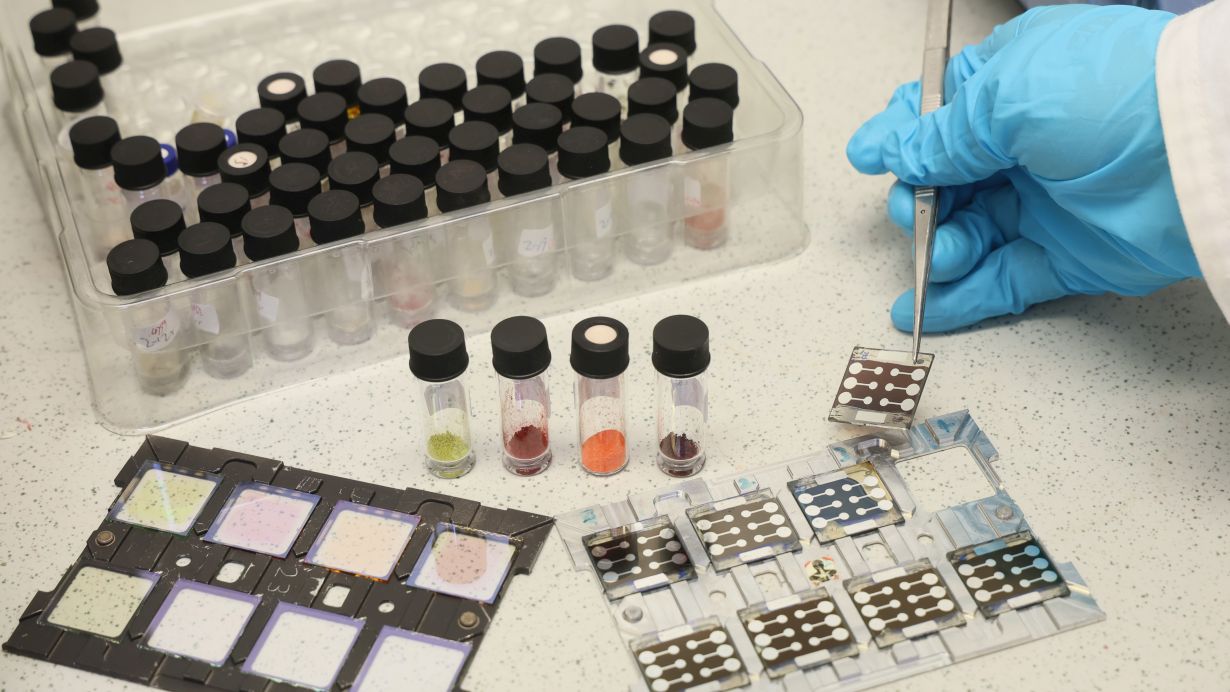
Researchers at EPFL have discovered a method for reducing the energy loss of perovskite solar cells, according to a press release. Perovskite solar cells are based on semiconductors with a wide bandgap, but they often suffer from phase separation, which causes a drop in performance over time. The integration of rubidium (Rb) is intended to stabilise the semiconductor material and at the same time improve the energy efficiency of the solar cell. By utilising the lattice voltage of the perovskite film, the researchers were also able to ensure that the Rb ions are fixed in the right place.
The researchers led by Lukas Pfeifer and Likai Zheng from Michael Grätzel’s group at EPFL also used the X-ray diffraction method to verify and analyse this effect. They discovered that, in addition to the lattice stress, the introduction of chloride ions also makes a decisive contribution to the stabilisation of the material. The chloride ions equalise the size differences between the incorporated elements and thus ensure a more uniform ion distribution. The result is a more uniform material with fewer defects and a more stable electronic structure.
The new perovskite composition reached 93.5 per cent of its theoretical limit with an open circuit voltage of 1.30 volts. This is one of the lowest energy losses ever measured in perovskite semiconductors. An improved photoluminescence quantum yield also indicates a more efficient conversion of sunlight into electricity.
Increasing the efficiency of perovskite solar cells could lead to more efficient and cost-effective solar modules and thus reduce dependence on fossil fuels. Perovskites could also be used for LEDs, sensors and other optoelectronic applications. The EPFL’s findings could therefore also accelerate the commercialisation of these technologies.
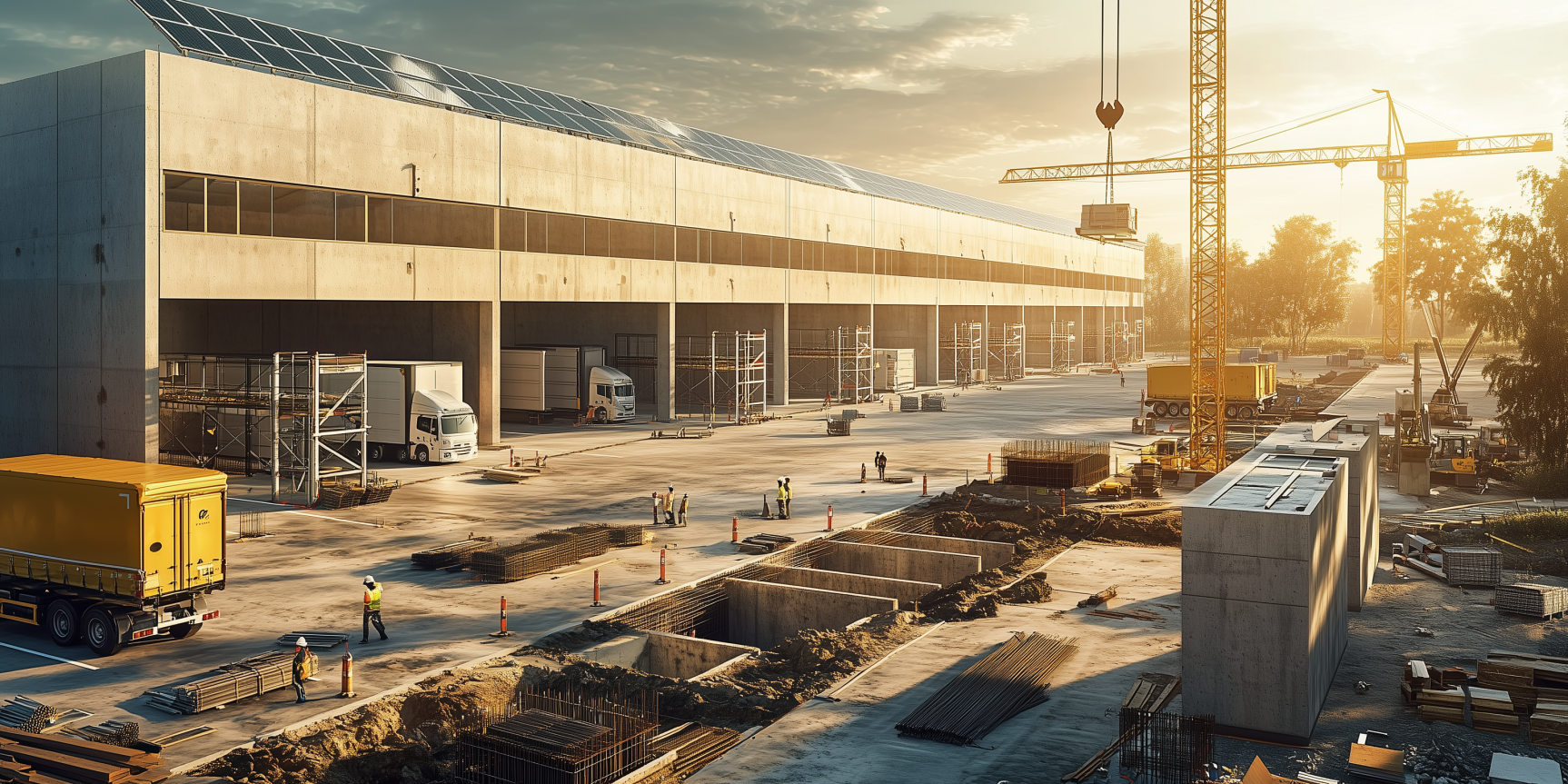
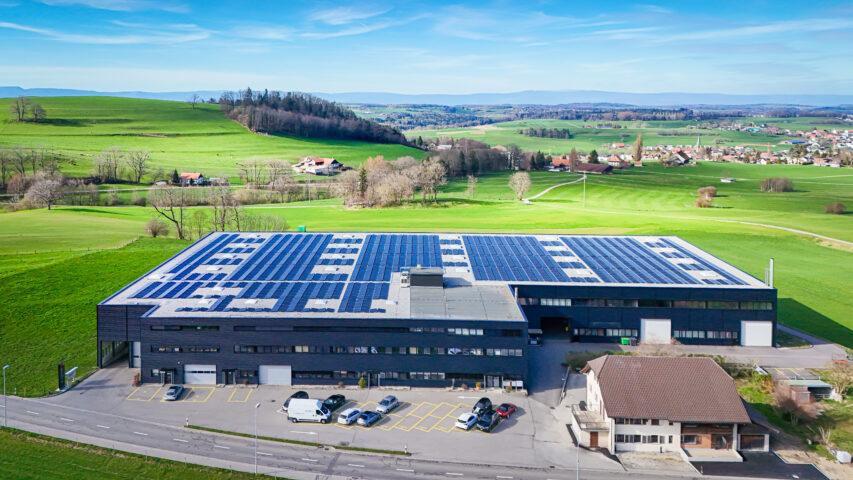
Schenker Schweiz AG broke ground for the expansion of the national transport terminal in Eiken on 1 April 2025. According to a press release, the terminal is to be expanded by 9800 square metres to 15,400 square metres. The new transshipment warehouse is planned with an underground car park on two levels of 4900 square metres each. An office wing with social facilities is also to be created on the upper floor.
A photovoltaic system will be installed on the roof of the new building, which is to be constructed in accordance with modern guidelines and will also supply charging stations for electric lorries. The main contractor for the building is Tierstein AG, which is responsible for the entire planning and execution.
“With the modern extension, Schenker has additional capacity to further expand its land transport network,” said Basaran Yildirim, Head of Land Transport at Schenker Schweiz AG, in the press release. “We would like to thank the municipality of Eiken for its trust and the cooperation with all those involved in the project.”
The Eiken site plays a central role for Schenker logistics for imports and exports by land due to its good transport connections on the north-west border of Switzerland.
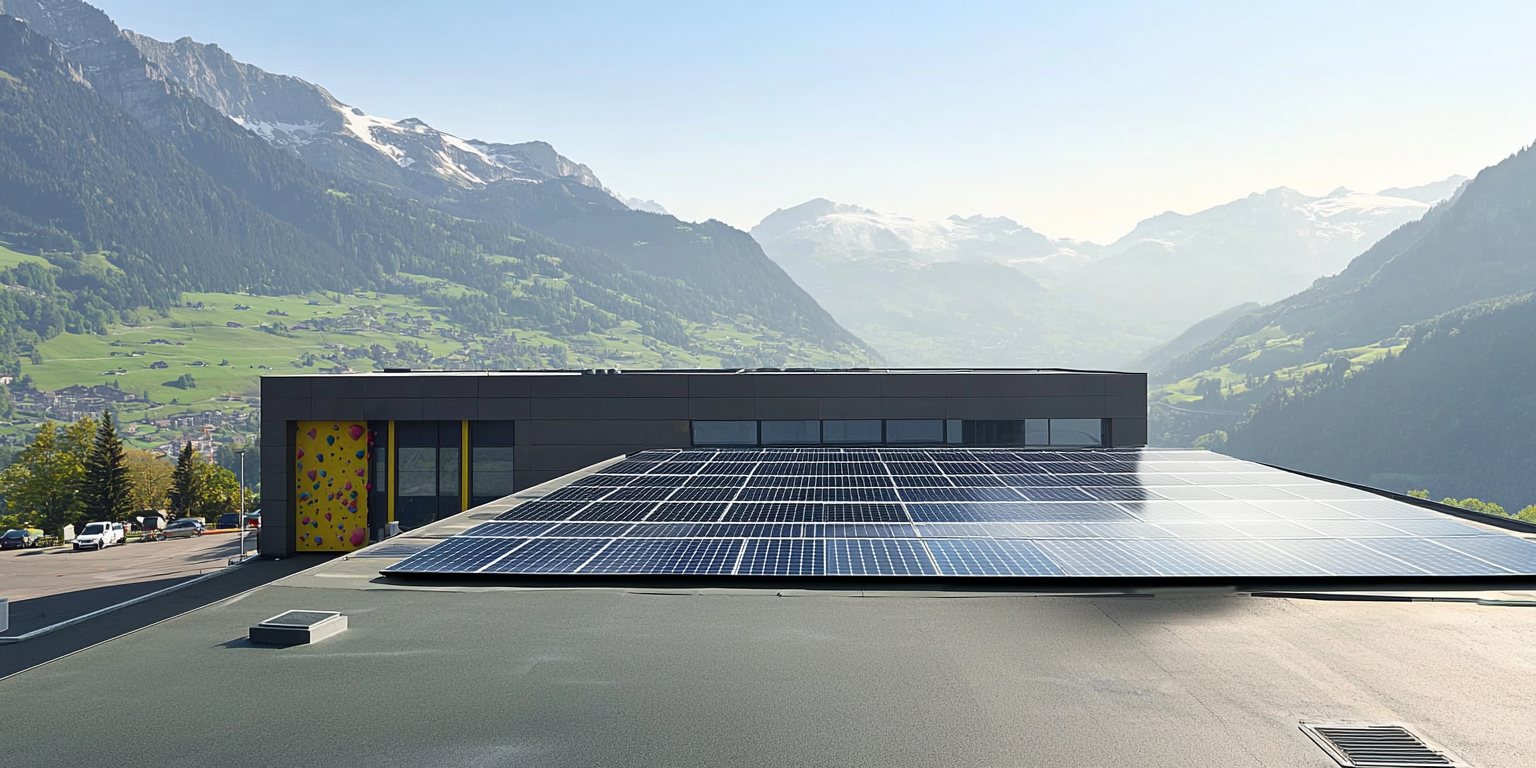
The Münchenstein-based electricity producer aventron AG opened its new solar power plant in Näfels on March 27, according to a press release. The system is located on the roof of the bouldering hall, which is part of the Lintharena building complex. While the Verein Kletteranlagen Linthgebiet (VKL) has made the roof of the bouldering hall available for the solar system, the system itself is fully owned by aventron.
The solar system has an area of 660 square meters and an output of 145 kilowatts. This means that around 124 megawatt hours of solar power can be generated each year, all of which will flow to Lintharena AG and cover around 10 percent of its electricity requirements. According to Samuel Leuzinger from VKL, the solar system has a double benefit for the association: “We receive additional income from the roof rental from aventron and are doing something for climate protection and the energy transition,” Leuzinger is quoted as saying in the press release.
The construction of this and another solar installation in neighbouring Mollis was supported by the organizing committee of the Swiss Wrestling and Alpine Festival (ESAF) 2025. Aventron is an energy partner of the ESAF in Glarnerland. Through this partnership, the ESAF organizing committee put aventron in touch with suitable roof owners such as the VKL. “We are implementing this photovoltaic system in cooperation with our partners, the Lintharena, VKL and the ESAF in Glarnerland,” commented aventron CEO Eric Wagner on the new system, according to a press release. “This is an important step towards more Swiss solar power and the implementation of the Energy Strategy 2050.”
Aventron generates its electricity exclusively from renewable sources. The company now has a nationwide solar capacity of around 65 megawatts. The aim is to increase this to an output of 100 megawatts by 2027.
The Limmattal cantonal school in Urdorf now has more space for teaching. On Tuesday, 1 April, two extension buildings were officially inaugurated, according to a press release from the Canton of Zurich Building Department. They offer modern rooms for science lessons, two double sports halls, an assembly hall and an outdoor area, according to the press release. According to population forecasts, the number of pupils at the cantonal school is set to increase significantly in the coming years. The new buildings will create the necessary space for the increasing number of pupils.
The new premises were inaugurated in the presence of the Director of Construction, Martin Neukom, the Director of Education, Silvia Steiner, and the Principal of the Limmattal Cantonal School, Andreas Messmer. The inauguration was accompanied by musical performances by around 90 pupils from the cantonal school, according to the press release.
One of the new buildings contains two double sports halls, classrooms for music and an auditorium with 500 seats. The second building houses four floors of rooms for physics, chemistry, computer science and biology as well as several classrooms. The new buildings were designed by PenzisBettini Architekten from Zurich.
Thermal energy for the new buildings is generated by geothermal probes. Photovoltaic systems have been installed on the roofs of the two extension wings to supply the cantonal school buildings with electricity.
On Saturday, 5 April, there will be an open day for school tours.
Energie 360° has converted its headquarters in Zurich into a green power plant, the energy supplier, which is active throughout Switzerland, and the city of Zurich announced in a joint press release. During the now completed conversion and renovation work, a large-scale photovoltaic façade was installed. Its 1600 modules are expected to generate around 325 megawatt hours of electricity per year.
“In future, Energie 360° will produce around half of its building’s annual energy requirements itself,” Michael Baumer, Head of Industrial Operations of the City of Zurich and Chairman of the Board of Directors of Energie 360°, is quoted as saying in the press release. The solar power generated will also be used to power the company’s own fleet of electric cars, among other things. To obtain approval for the system, Energie 360° had to prove that a fire in the modules could not spread over more than two storeys.
Energie 360° wants to convert its direct sales exclusively to renewables by 2040. The company is on track to achieve the interim target of 30 percent set for the end of 2025, Energie 360° announced in a further press release. In the financial year ending September 30, 2024, a share of 27 percent was achieved. Specifically, 1238 of a total of 4590 gigawatt hours of energy sold came from renewable sources. “We feel the broad support and recognition for our transformation – among employees, partner companies and customers”, Energie 360° CEO Jörg Wild is quoted as saying in the press release.
Thurgauer Kantonalbank(TKB) has installed a new photovoltaic system on the roof of its branch in Arbon. According to a press release, the new 500 square metre system is the largest that the bank has put into operation. It is expected to supply around 105,000 kilowatt hours of electricity per year. This corresponds to the annual consumption of 21 households.
The electricity produced on the roof will primarily be used for the operation of the branch. Depending on demand, it will cover between 25 and 40 per cent of the bank branch’s energy requirements, according to the press release. The solar system will also supply three charging stations for electric cars in the neighbouring underground car park of the Novaseta shopping centre. Any surplus electricity generated will also be fed into the public grid.
With the new system, TKB wants to emphasise its commitment to sustainable and renewable energy and reduce local CO2 emissions.
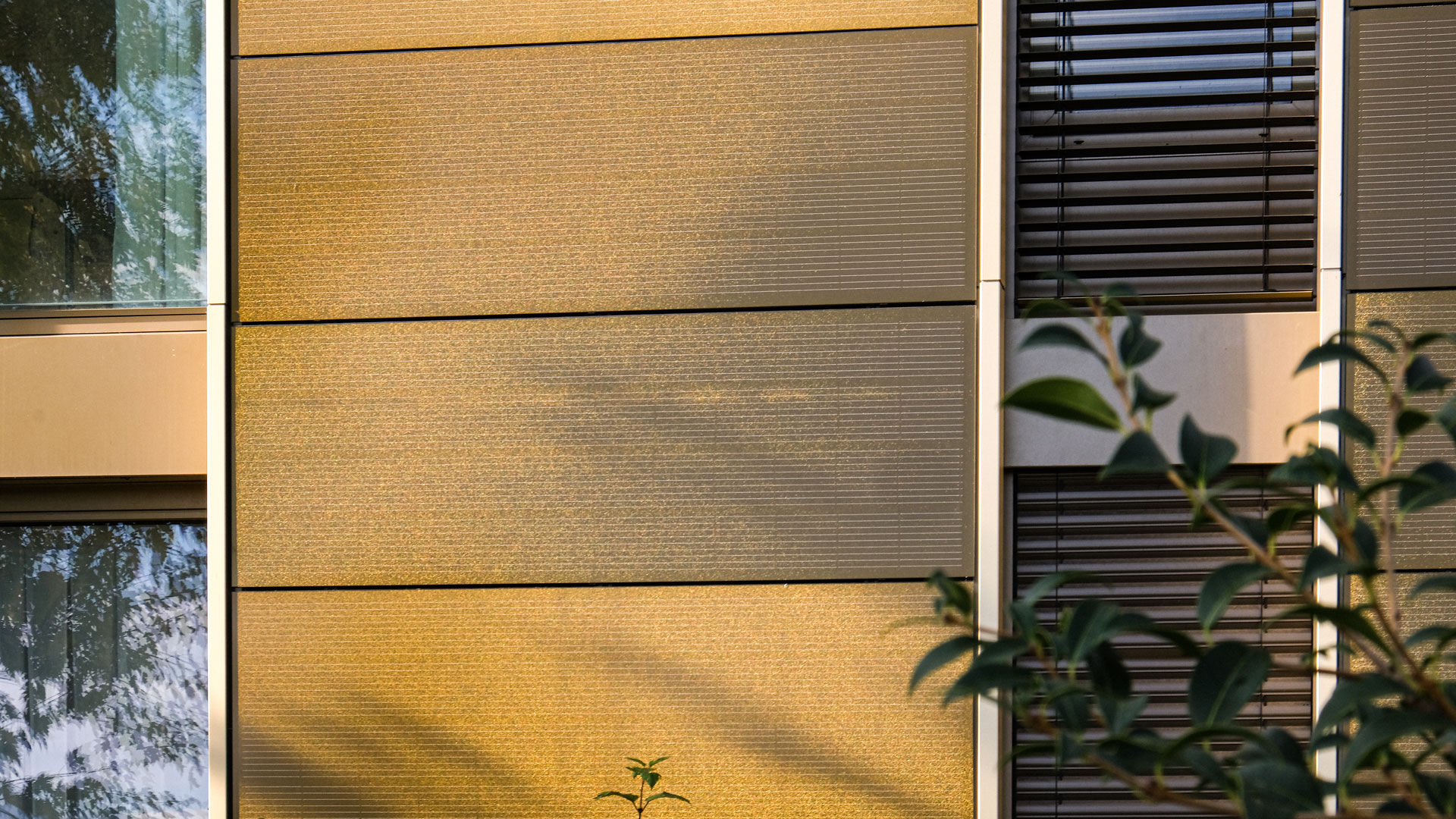
Megasol Energie AG, based in Deitingen, has launched a new coloured solar module on the market. According to a press release, the modules with their new colour design achieve around 94 percent of the efficiency of conventional black photovoltaic modules.
The panels under the name SOLARCOLOR Morpho are manufactured for installation as façade elements. For example, they have been installed on two new buildings in the Lacheren area of Schlieren. Depending on the incidence of light, the gold-coloured modules create a lively play of colours, according to the press release.
The two buildings in Lacheren comprise 36 flats. The roof is also covered with photovoltaic modules and generates peak values of 68 kilowatts with an annual yield of 59,900 kilowatt hours. The façade elements generate peaks of 17 kilowatts and an annual yield of around 16,200 kilowatt hours.
Megasol Energie AG is one of the five nominated finalists for the Prix SVC Espace Mittelland 2025 sponsored by the Swiss Venture Club (SVC), which will be awarded in Bern on 12 March 2025.
The meat processing company Ernst Sutter AG from Gossau operates its Ticino logistics centre at the Bedano site without the use of fossil fuels. According to a press release, 45 per cent of the power supply for all necessary systems is covered by solar energy and the remainder by hydropower. The solar power is generated by a photovoltaic system on the roof of the centre, where the 271 square metre system produces 55,000 kilowatt hours of electricity per year.
The heating system was switched from oil heating to an air-to-water heat pump system. The heat extracted from the cooling systems is used to produce hot water.
With the company sites in Gossau and Bazenheid SG, Bedano is now the company’s third site to be supplied with fossil-free energy. “We are setting ourselves ambitious goals to continuously reduce our ecological footprint and thus contribute to a more sustainable future,” Reto Sutter, CEO, is quoted as saying in the press release. “The expansion of renewable energies at our sites plays a central role in this.”
St.Galler Stadtwerke (SGSW) has expanded its photovoltaic system on the roof of the kybunpark football stadium, home to FC Gallen 1879, as detailed in a press release. A large proportion of the locally generated solar energy – around 440,000 kilowatt hours – will be used for events at the stadium. The symbolic inauguration of the system took place at FC St.Gallen 1879’s home match against FC Lausanne-Sport on 26 January.
The roof is now completely covered with solar modules. The additional capacity of 572 kilowatts of peak power will enable 560,000 kilowatt hours more electricity to be generated. The total output of the system is now 1,205 kilowatts at peak times, increasing annual electricity production to more than 1 million kilowatt hours. This could cover the annual electricity needs of 288 four-person households.
This increase in capacity, which will be implemented jointly by SGSW, Stadion St.Gallen AG and FC St.Gallen Event AG between September 2024 and January 2025, means that the system will retain its status as the “largest solar installation on a roof” in the city. The previous photovoltaic system was considered the largest when it was commissioned in 2015, with a peak output of 633 kilowatts and a production of 520,000 kilowatt hours per year.
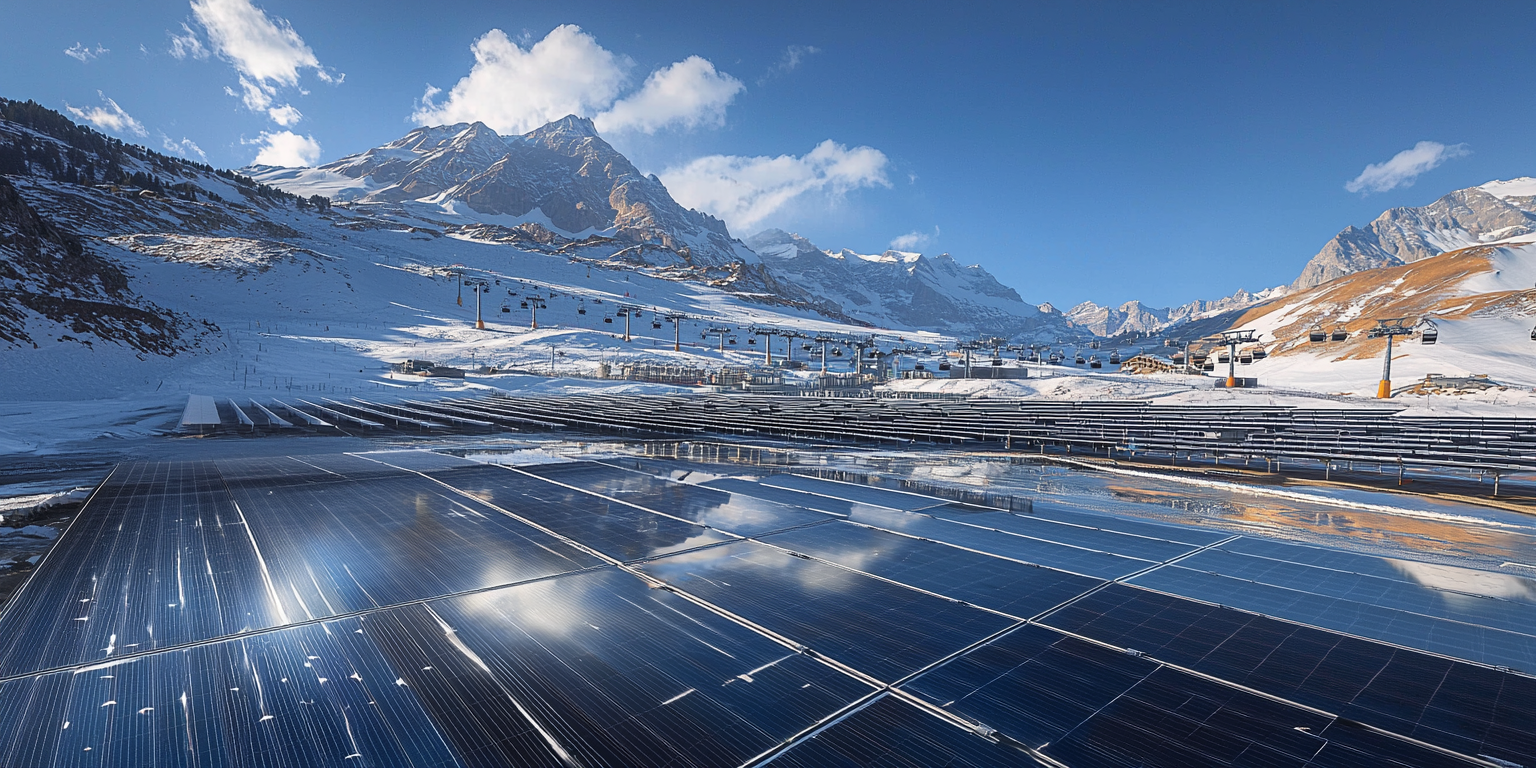
Axpo Solutions AG from Baden and Bergbahnen Disentis AG are planning to realise a large-scale photovoltaic plant with a capacity of over 10 megawatts peak in the Grisons municipality of Disentis/Mustér. The two partner companies are currently founding the power plant company Ovra Solara Magriel AG, based in Disentis/Mustér, to construct and operate the plant. The project, which is based on Article 71a of the Energy Act, the so-called Solar Express, has now received the approval of the government of the canton of Graubünden, the cantonal administration announced in a press release. The voters of Disentis/Mustér had already given the plan the green light in 2023.
The plant is to be built on an area already used for tourism at an altitude of around 2100 metres above sea level. The plan is to install 20,750 solar panels on an area of around 13.5 hectares. The operators expect an annual electricity production of around 14.6 gigawatt hours, of which around 5.4 gigawatt hours will be generated in winter.
Perovskite solar cells already achieve efficiencies of over 26% and are light, flexible and inexpensive to produce. They are considered a promising alternative to conventional silicon modules. However, challenges such as long-term stability and scalability still stand in the way of industrial utilisation.
AI as the key to optimising production The Karlsruhe Institute of Technology (KIT) is researching how machine learning can improve the manufacturing process for perovskite cells. Deep learning models analyse material properties in real time and optimise the parameters for maximum efficiency.
Detecting errors before they occur AI uses in-situ imaging techniques to monitor thin-film formation and detect errors at an early stage. This allows process deviations to be corrected immediately and expensive rejects to be avoided.
Simulations for maximum efficiency AI-supported simulations allow production conditions to be precisely adapted. The control of the vacuum quenching time in particular plays a decisive role. AI optimises this process to ensure the best possible material structure.
The path to market maturity The KIT study shows that AI is a key driver for the further development of perovskite photovoltaics. The technology could revolutionise the solar energy market and become industrially usable faster than ever with AI.
SmartHelio has developed a predictive diagnostics solution for photovoltaic systems based on artificial intelligence (AI) and launched it on the market in early 2024. It bears the name Autopilot. Since then, this platform for controlling, operating and maintaining solar power plants has optimised the efficiency of 218 such systems with more than 2 gigawatt peak, according to the manufacturer. Their output has been increased by an average of 8 per cent.
According to the information provided, the plug-in system with more than 50 proprietary algorithms delivers 95 per cent accuracy from day one in detecting faults before they affect performance. According to SmartHelio, the one-time diagnostics process identifies remediable energy losses of up to 7 per cent on average. Data quality is improved by over 98 per cent.
The service life is increased by eight years, solar energy production by 10 per cent and the return on investment by up to 600 per cent. Above all, Autopilot significantly reduces diagnosis times, says CEO and founder Govinda Upadhyay: “From 358 hours to just 3 hours – the technology is helping us to redefine diagnosis and save solar plant operators time.” The company plans to expand the areas of application to battery storage and energy trading, thereby driving forward the energy transition worldwide.
The cantonal structure plan regulates the main features of the desired spatial developments. It sets out in text and on maps how the cantons and municipalities should develop.
The need for more affordable living space is recognised by politicians and the canton: In addition to “conventional” flats, flats for families, affordable flats and flats for the elderly are also being built in the various areas.
A wide variety of site developments are taking place across almost the entire perimeter of the “valley communities”. In addition to the sites, the traffic situation is also being further developed and adapted to the increased utilisation: Examples range from the conversion of bus stops to bypasses to relieve the burden on Cham town centre. This also includes car-sharing concepts, such as at the Papieri site in cooperation with AMAG.
A lot is also happening in public transport. In future, the Papieri site in Cham is to receive an express bus via the bypass motorway and the Unterfeld Süd site will have a bus stop in the neighbourhood.
Sustainability plays a decisive role in new projects in particular. The Zug area plays a pioneering role in this respect. The Papieri site in Cham was honoured with the prestigious Watt d’Or award from the Swiss Federal Office of Energy. This emphasises the site’s initiative in the field of renewable energies. A climate-neutral district is being created here that relies entirely on renewable energy sources and covers 75% of its energy requirements on site. The innovative technologies contributing to the high level of energy self-sufficiency include hydroelectric power plants and photovoltaic systems. Geothermal energy is used for heating and cooling.
The sustainability certificate, awarded by the Swiss Sustainable Building Council to Suurstoffi in Rotkreuz, recognises the sustainable construction methods and holistic planning of the project. The award proves that the highest standards in terms of energy efficiency, mobility and biodiversity have been met. The projects show that Zug not only assumes ecological responsibility, but also serves as a model for forward-looking urban development in Switzerland. By utilising innovative concepts and technologies, the canton of Zug is positioning itself as a pioneer in the sustainable design of urban living spaces.
The other sites are also impressive. The construction of a high-rise building in timber construction is planned on the Tech Cluster site. The “lighthouse project” called “Project Pi” envisages the construction of an innovative residential tower block. With a height of 80 metres, the plan is to build one of the tallest timber high-rises in Switzerland with affordable flats.
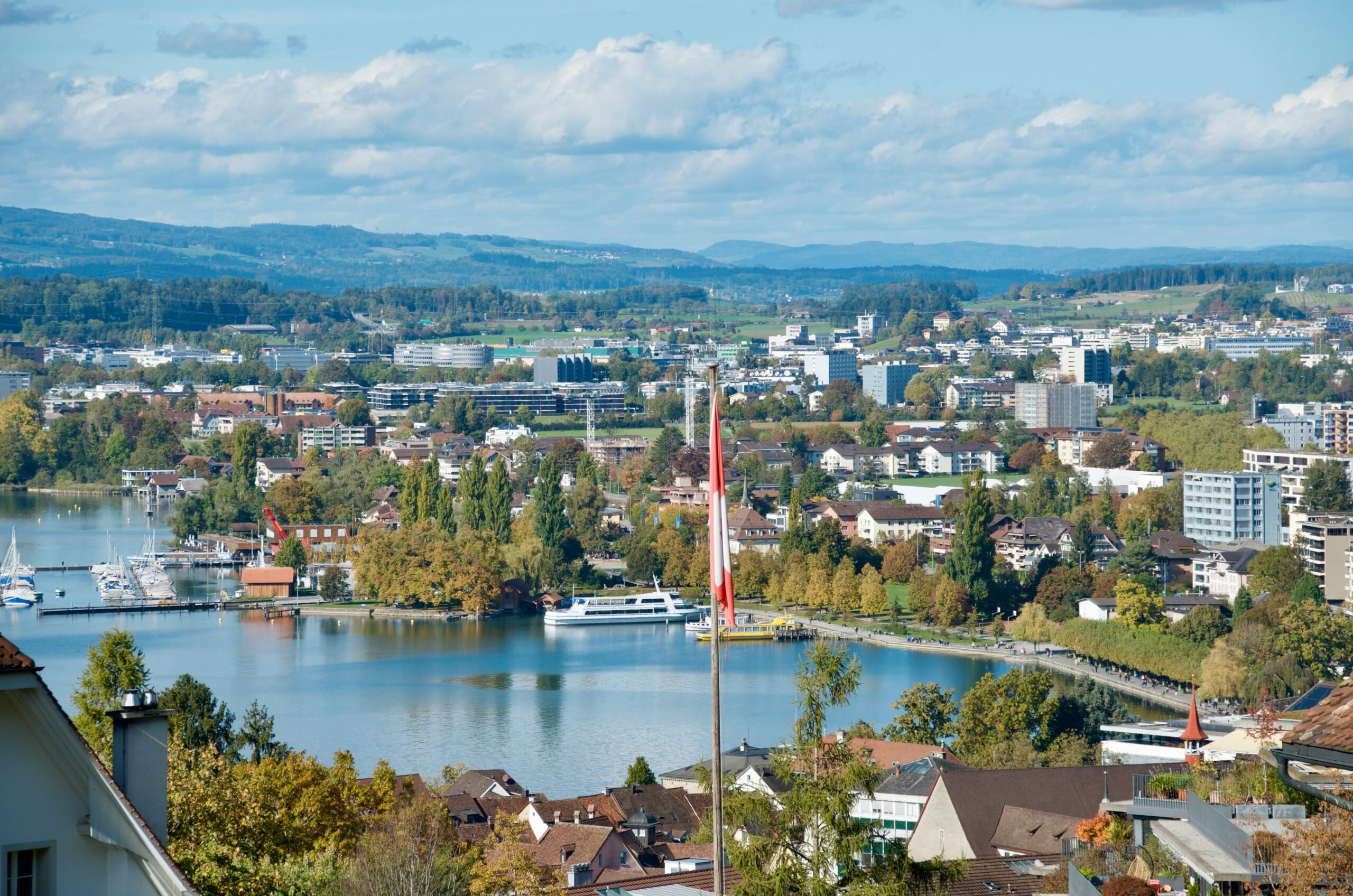
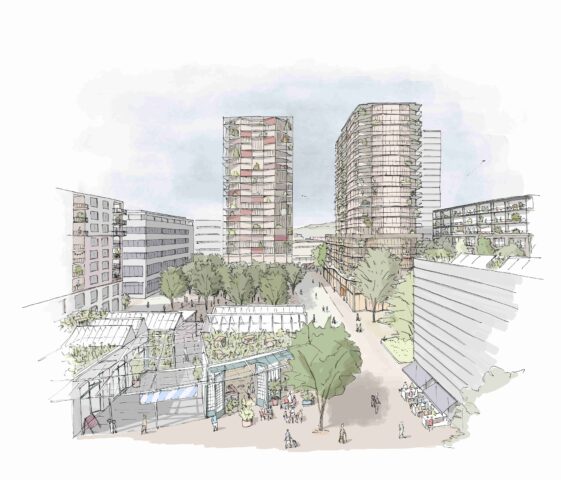
Baar – Unterfeld Süd A mixed-use neighbourhood with around 400 residential units and around 1,000 workplaces is planned for the Unterfeld Süd area. The basic structures were defined by representatives of the population of Baar together with experts under the leadership of the municipality. The development plan for the first of three construction phases was put to the people of Baar for a vote on 22 September 2024. The plan was approved with 74 per cent of votes in favour.
The realisation of the first stage includes the high-rise building at the Baar Lindenpark light rail station and the neighbouring commercial building. These will be transferred to a joint development plan. The earliest possible start of construction of the first stage is planned for 2025. The remaining building plots will be developed in parallel and realised in subsequent construction phases. According to current planning, Implenia’s project will be completed in 2029, provided the subsequent plans are approved by the relevant authorities and construction proceeds according to plan.
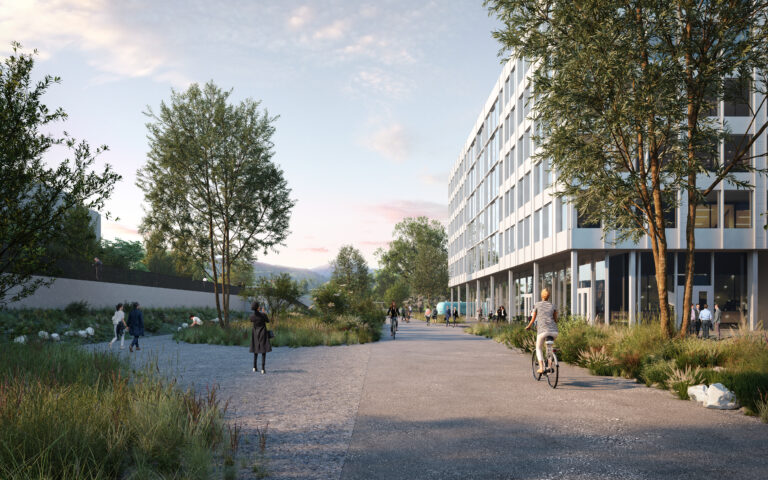
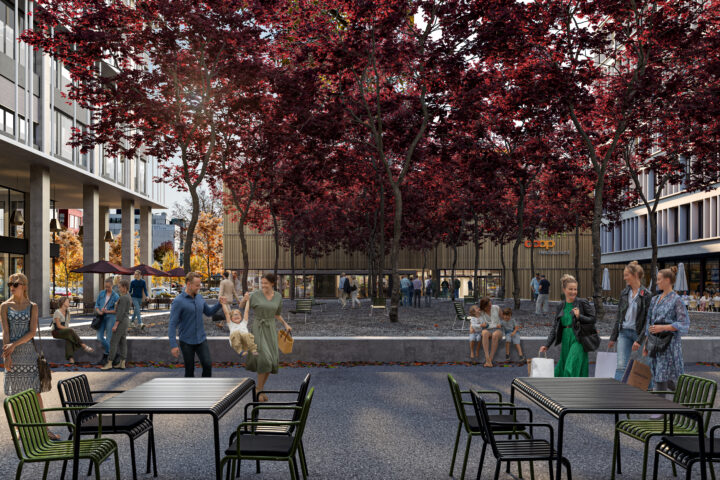
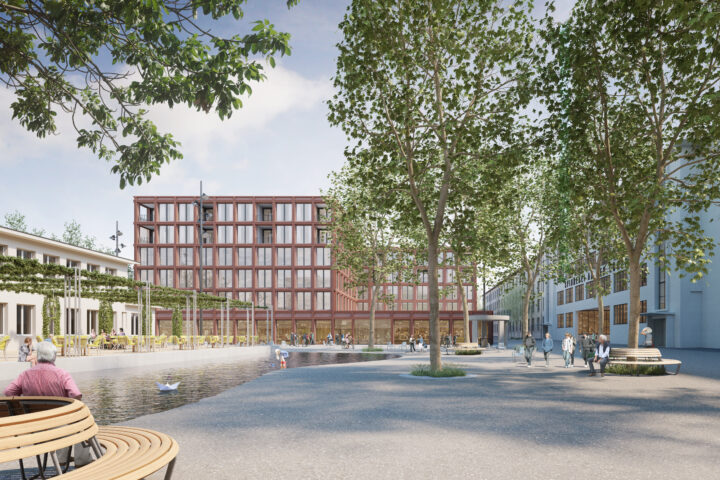
Hinterberg South (Städtler Allmend) The Hinterberg Süd site in the Städtler Allmend employment area in Cham will become a new, lively and easily accessible working and shopping centre for the local population. It offers attractive space for new companies to set up shop and ground-floor uses for the neighbourhood. The upper floors of the office buildings offer flexible spaces that can be customised to the individual needs of future companies.
Publicly accessible uses such as a restaurant, café or bakery are located on the ground floors. They offer workers, shoppers, visitors and passers-by various consumption options and contribute to the revitalisation of the area and the entire neighbourhood. The four buildings surround a public square – the actual centrepiece of the site, which is open to the general public as a place to meet and spend time.
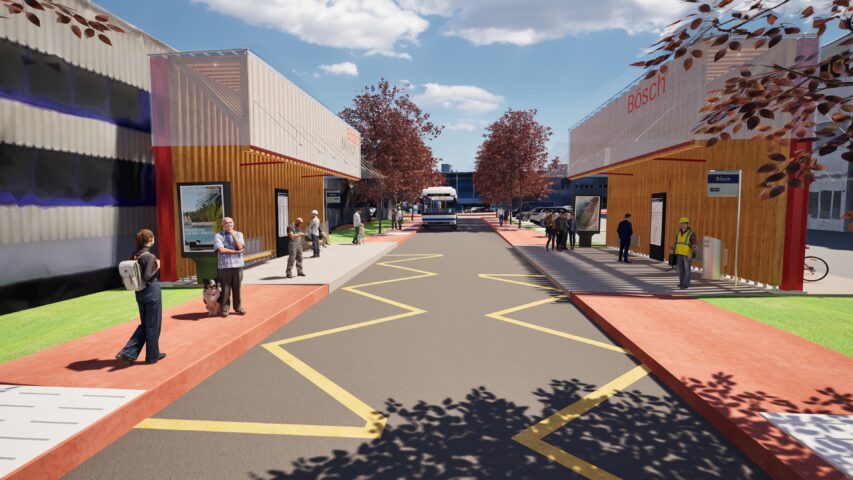
Bösch Hünenberg In order to meet the requirements of a growing service and commercial area, the infrastructure needs to be adapted. The Bösch area should become more attractive for workers and companies and offer space for 6,000 jobs in future. This densification is provided for in the cantonal structure plan. It is binding for the municipality of Hünenberg. The vision is for the Bösch area to develop into a modern and urban place of work that is attractive to investors. To this end, space is to be created through structural densification, which can also lead to an increase in jobs. A holistic landscape design and well-organised mobility will ensure a better quality of life in Bösch. New leisure, supply and catering facilities ideally complement everyday working life in Bösch. On 9 December 2024, the municipal assembly will decide on the road credit of CHF 2.9 million to finance the first stage of the implementation of the operating and design concept in Bösch.
LG Zug Due to its size and prominent location, the LG site is of central importance for the urban perception and urban character of Zug. A lively urban district with a convincing architectural design is to be created on the site of the former industrial area. With the necessary development plan, the planning and building law of the Canton of Zug ensures high-quality development and realisation.
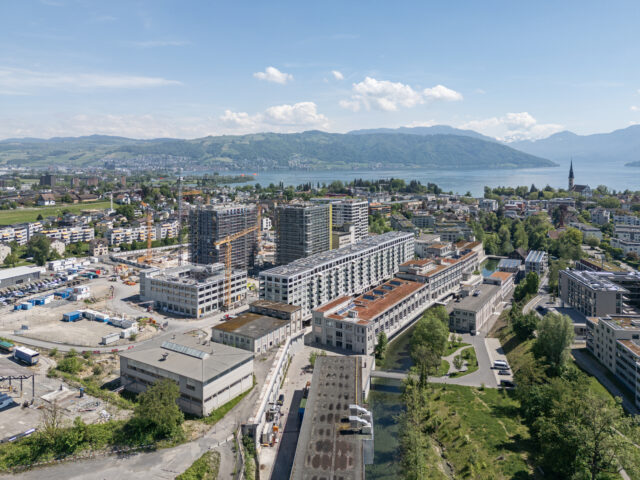
Papieri Cham The Cham Group is developing a new residential and working neighbourhood with industrial charm on the Papieri site. Directly on the River Lorze, the distinctive existing buildings of the former paper factory are being supplemented with striking new buildings and realised in a sustainable way. A new meeting place with supra-regional appeal is being created here, where past and present go hand in hand. A new urban district with around 1,000 flats and 1,000 jobs is being built in several stages over eleven hectares on the site of the former paper factory. It is not being built on a greenfield site, but in the midst of buildings steeped in history: The conversion of characteristic existing buildings preserves the connection to the past – the industrial roots of the neighbourhood remain tangible.
They are complemented by striking new buildings, including five tower blocks with impressive views. The new neighbourhood directly on the Lorze offers an attractive mix of commercial space, flats, lofts, workplaces, studios, open spaces and public-oriented uses. All of this on a sustainable and well-balanced site that maintains – and continues to write – its own history.
The Papieri site creates new foundations for an energy-efficient, climate-neutral and sustainable society. It is a pioneering project throughout Switzerland.
Spinning mill on the Lorze Many threads once ran together in the largest spinning mill in Switzerland. The construction of the spinning mill on the River Lorze shaped the development of Baar in the middle of the 19th century. A new, lively neighbourhood with shops, cafés and other local businesses is being created around the historic spinning mill building, which characterises the public pedestrian zone. In addition to family flats and affordable flats, there will also be flats for the elderly. These will be complemented by vegetable gardens, green façades and shady trees.
Suurstoffi The Suurstoffi site was the first site in Switzerland to be awarded the DGNB platinum certificate for sustainable neighbourhoods in planning and construction by the Swiss Sustainable Building Council (SGNI). The DGNB certification confirms that Zug Estates has realised a prime example of sustainable site development with the Suurstoffi site in Rotkreuz. It meets the comprehensive quality requirements of the DGNB certification system, which includes criteria such as energy efficiency, CO2 emissions, life cycle assessment, grey energy, flexibility of use and recyclability of the materials used. The Suurstoffi site is one of the first lighthouse projects of the last 10 years. This also includes the “XUND” health education centre, for which one of the last buildings is currently being completed.
Tech Cluster From June 2018 to May 2019, five renowned Swiss and one Austrian team took part in an overall performance study to explore how affordable living in a high-rise building can be made possible using state-of-the-art construction methods and sustainable materials. At the same time, a study contract was drawn up for an overall urban development concept for the surrounding area of the city of Zug between Baarerstrasse, Göblistrasse, Industriestrasse and Mattenstrasse.
The Tech Cluster Zug builds on the preliminary investments made by V-Zug and other companies in the Metall Zug Group. Its potential lies in the diverse relationships and synergies between the future users. These will transform the current factory site into an innovative and exciting part of the city of Zug.
In future,Thurplus will produce solar power on the roof of Signer Elektromotoren in Frauenfeld. According to a press release, the Frauenfeld-based energy supplier commissioned a photovoltaic system with 140 modules on an area of 280 square metres at the end of November. With an output of 62 kilowatt hours, it will generate around 62,000 kilowatt hours of electricity per year.
Thurplus financed the system, built it with regional craftsmen and will also operate it. Signer Elektromotoren is providing the roof and will receive the solar power at a heavily discounted rate. “We have been thinking about realising a photovoltaic system for a long time,” junior boss Dominik Signer is quoted as saying in the press release. “The collaboration with Thurplus was very good and we are pleased to be able to contribute to the promotion of solar energy.”
Founded in 1967, the family business repairs electric motors and builds customised motors.
Thurplus is looking for further roof areas for photovoltaics. “Such joint projects contribute to the energy transition and to achieving our urban sustainability goals,” said Fabrizio Hugentobler, city councillor and head of the Thurplus, Leisure and Sport department, in the press release. Frauenfeld aims to install an output of 8,000 kilowatt peak by 2027.
The Basel-based energy supplier IWB has received planning permission for the construction of a solar plant on the former Hinterm Chestel landfill site in Liesberg. The investment decision is expected to be made at the beginning of 2025, according to a press release. Following a swift start to construction, the first solar power, which can supply around 1,000 households, is expected to flow as early as spring 2026.
7,600 solar modules are to be installed on an area of 25,000 square metres. This corresponds to an installed capacity of 3.4 megawatts. The system will be installed at a certain height so that green areas can continue to be cultivated below. This should also benefit local biodiversity.
“It is important to us that the plant is realised in an environmentally friendly way. For this reason, we deliberately integrated existing natural objects during the planning phase in coordination with KELSAG,” Daniel Neuenschwander, Project Manager for large-scale photovoltaic systems at IWB, is quoted as saying in the press release. KELSAG (Kehrichtbeseitigung Laufental-Schwarzbubenland AG) is the owner of the landfill site and will make the area available for up to 50 years.
The habitat of various animal species is also taken care of. “We closely involved nature and environmental organisations in this project right from the start. That was the recipe for success for a balanced project: the concerns of electricity production and biodiversity are given equal consideration,” says Neuenschwander.
Energy supplier AEW has built a ground-mounted photovoltaic system in Spreitenbach. According to a press release, the newly built solar plant went into operation in September 2024 and was officially opened on November 26. Its installed capacity is 622 kilowatt peak. According to the press release, this could supply 140 households with solar power per year.
The project is AEW’s first ground-mounted system. The energy supplier is thus temporarily using a previously contaminated plot of land at the Spreitenbach site, which became an open space when the old open-air switchgear was dismantled. It was previously contaminated by foundations, shafts and cable systems, according to the statement. “Brownfield and previously contaminated areas can be used sensibly on a temporary basis to make a significant contribution to the Energy Strategy 2050,” René Wüst, Project Manager at AEW Energie AG, is quoted as saying.
The decision was also supported by the fact that the system, which comprises 1414 solar modules, requires less maintenance during operation and is less susceptible to faults. If the grid needs to be expanded in the future, for example to include a storage system, it can also “simply be reused, as the photovoltaic system is very easy to dismantle”.
The new installation of photovoltaic systems at the Buchenhof site in Aarau by the Canton of Aargau ‘s Real Estate Department(IMAG) is intended to make an important contribution to the canton’s sustainable electricity generation, according to a press release. In view of the upcoming renovation cycle for the flat roofs of the administrative site, the IMAG) has determined that Buchenhof offers good conditions for the expansion of photovoltaic systems on the flat roofs, it continues. In addition to the structural condition, the potential for sustainable electricity generation measures was also examined.
The expansion planned for 2025 is part of the cantonal energieAARGAU strategy and will help to reduce external energy consumption thanks to the defined optimum number of photovoltaic modules. Due to the high energy requirements of the cantonal data center, 100% of the electricity produced by the photovoltaic systems will be consumed internally.
“The fact that Buchenhof will be able to use the electricity generated by the photovoltaic system in future means that energy purchasing costs can be reduced. The system also makes an important contribution to the canton’s climate-neutral energy supply,” said Markus Dieth, Head of the Department of Finance and Resources.
“Immobilien Aargau has also taken biodiversity into account when expanding the photovoltaic systems,” continued Cantonal Councillor Dieth. In order to preserve the wild orchids on the roofs, the number of photovoltaic modules to be installed has been optimized.
From 14 to 17 November 2024, visitors to Bernexpo can expect a unique trade fair format: the Hausbau Energie Messe and Energy Future Days will once again join forces to present the largest Swiss event for construction, renovation and energy. Every year, this event attracts over 10,000 private homeowners, prospective builders, architects and planners and offers a varied programme for experts and interested parties.
Specialist events and innovations for energy and construction This year’s focus is on sustainable energy generation and utilisation. A wide range of specialist and public events offer exciting insights and valuable information on topics such as photovoltaics, storage systems, electromobility and refurbishment processes. For architects in particular, the Architecture Forum will be focussing on innovative solutions for modern construction projects under the motto “Liveable living and working spaces”.
Specialist day for experts and decision-makers Thursday is aimed specifically at experts from the construction and energy sector. Architects, planners, energy specialists, installers and decision-makers from the public sector and investors will find an ideal platform for professional dialogue and networking. The combination of trade fair and expert forum creates synergies that provide pioneering impetus for the future of construction and energy supply.
New platform for solar energy solutions: “BärnSOLAR 24“ Another highlight is the launch of “BärnSOLAR 24”, a platform dedicated entirely to the integration of solar energy in construction projects. It offers experts targeted answers and customised solutions for the use of solar energy in construction.
How does solar contracting work? Solar contracting is based on a simple principle: we install our own photovoltaic panels at your company’s site. Within this framework, we take over the complete planning and project realisation, as well as the financing and management of the system.
This offer not only enables you to upgrade your property, but also fulfils the legal requirements and the expectations of your investors and tenants. It also enables the creation of new rental space.
Your unused space as a capital investment As a property owner, you probably have areas that are suitable for the installation of photovoltaic panels. At Romande Energie, we offer installation on the following surfaces:
On a roof Turn unused space into a power plant – from 500m2.
On a car park Use your car park to generate electricity with a solar carport – from 2,000m2.
On a greenfield site Set up a ground-mounted solar power system on an unused plot of land – from 2,000m2.
Stoneweg: a concrete example
The Stoneweg Group, which specialises in real estate investment, turned to Romande Energie to equip several buildings with solar panels.
“We have realised several projects with Romande Energie and have always greatly appreciated their reliability and their solutions to specific challenges.” Diana Oblak, Managing Director at Stoneweg
Two graduates of the CAS Energy Digital at the OST – Eastern Switzerland University of Applied Sciences have developed a new tool that can accurately predict the energy yields of photovoltaic (PV) systems. In addition, the data from the systems can be easily and intuitively managed and clearly visualized, according to a press release from OST. This would enable both companies and private individuals to increase the efficiency and profitability of their systems.
One of the two, Lukas Loser, is quoted as saying that it is “extremely important” for energy suppliers in particular to know when which system is producing how much. This has an influence on the use of power plants and electricity schedules, among other things. This knowledge therefore serves to ensure grid stability and as an important basis for trading activities. “The more accurately you can forecast the portfolio of a PV system, the more optimally the aforementioned processes can be carried out. A good forecast therefore helps both electricity producers and end customers financially.”
The same applies to private individuals, adds Dimitri Gysin. He developed this tool together with Loser as part of a project. “Precise forecasts can be used to plan the use of appliances with increased energy consumption or to charge an electric car when a lot of energy is available.”
Both see room for improvement in the accuracy and variety of the meteorological data used. According to the OST, it is quite possible that the forecasting tool will soon be further developed by other students as part of a Bachelor’s or Master’s thesis.
Successes include the introduction of a procurement guideline for CO2-free vehicles in the cantonal administration and the creation of a legal basis for financial support for flood protection measures. Two measures that have been finalised, while a further 47 are currently being implemented. New administration vehicles must now have a CO2-free drive system, which represents an important step towards a more climate-friendly administration. In addition, the Water Management Act has created the basis for promoting flood protection projects, which are essential for adapting to climate change.
Public relations work as the key to raising awareness Another key aspect of the climate strategy is raising public awareness. Every year, a “climate walk” is organised on a climate-related topic to present projects to citizens. This year’s focus was on the energy-efficient refurbishment of an apartment block, which was upgraded from efficiency class G to class B. This shows how effective refurbishment measures can help to reduce energy consumption and CO2 emissions.
Challenges in the area of fossil fuels and renewable energies The latest climate figures show that the proportion of oil heating systems in residential and service buildings has fallen by 5 per cent, while the proportion of heat pumps has risen by the same amount over the same period. Nevertheless, the proportion of natural gas heating systems remains unchanged, which contradicts the climate policy goals. In order to achieve the goal of a climate-friendly energy supply, the transition from fossil fuels to renewable energies must be accelerated. On a positive note, electricity production from photovoltaic systems in the canton has more than doubled since 2015. This shows that the use of renewable energies is progressing, even if considerable efforts are still required to achieve the climate targets that have been set.
Potential for improvement in the cantonal administration The cantonal administration has set itself the goal of acting as a role model in climate protection. Despite initial progress, it is clear that energy consumption for heating and hot water in cantonal buildings has only been reduced by 2 per cent. More than half of the heating energy is still obtained from fossil fuels. CO2 emissions from the combustion of these fuels have remained virtually unchanged since 2016, indicating a need for additional action.
Adjustments to energy requirements and future steps The Government Council has submitted measures that can be implemented quickly for consultation in order to increase the use of renewable energies. Among other things, these relate to the replacement of heating systems and the generation of self-generated electricity in new buildings. One example is the requirement that a renewable energy system should always be used in future when replacing heating systems in canton-owned buildings. Overall, it is clear that the canton of Schaffhausen is on the right track, but that targeted measures are still required to accelerate the transition to a climate-neutral future.
Fashion Fish is investing in the expansion of solar energy, taking the next step towards greater sustainability. As the Schönenwerd-based outlet for designer items informs in a press release, the expansion of the photovoltaic (PV) system on the roofs of the six-storey former Bally production building includes a further 335 solar modules with an output of 140 kilowatt peak. In total, the area equipped with PV modules has increased by 664 square meters.
According to the press release, the company has been taking steps towards more sustainable energy use for years. According to Managing Director Robert Meier, heating energy is generated via district heating. Electricity requirements have been covered by PV systems since 2020.
The installation of the first system on the shed roofs has already achieved high peak outputs. An expansion to the east and west at the beginning of 2024 led to a balance in output throughout the day. By the end of August, energy production had amounted to more than 47 megawatt hours of electricity.
The aim of the investment is to ensure that the majority of stores cover their energy requirements with solar power. This is also to the benefit of customers, for example through cooling ventilation in the summer months. “Thanks to the measures we have taken, we have been able to drastically reduce Fashion Fish’s CO2 emissions in recent years and offset the energy consumption of our air conditioning and ventilation systems with our own solar power,” Robert Meier is quoted as saying. The decision to expand the plant coincides with the company’s 20th anniversary year.
The voters of the city of Zurich have clearly approved the ewz framework credit with a clear majority of 82.0% and a yes majority in all city districts. This means that the city of Zurich’s energy supplier can continue to expand renewable energies as proposed by the city council. The framework credit of CHF 300 million is intended to finance the expansion of existing hydropower plants and the relicensing of hydropower plants, alpine photovoltaic plants and wind farms, among other things. It should also enable the city to invest in companies that plan, build or operate renewable energy plants.
The funds are also to be used explicitly for investments by the city of Zurich’s energy supplier ewz in the expansion of renewable energies abroad. France, Germany, Norway and Sweden are currently the focus countries of ewz’s involvement abroad.
This is the fourth framework credit for the expansion of renewable energies since 2008 and is intended to enable ewz to remain competitive. The framework credit was approved by the municipal council with a majority of 97 votes to 14. Only the SVP spoke out against it.
The world’s first industrial plant for the production of solar fuels is up and running. In collaboration with Empa, the ETH spin-off developed an innovative material for high-temperature heat storage that enables the plant to operate around the clock – even without sunlight.
The plant uses the power of the sun to convert CO₂ and water into synthetic fuels such as paraffin, petrol and diesel. This closed CO₂ cycle is a pioneering model that could pave the way for a sustainable energy economy. Particularly impressive is the solar energy source and the fact that operation is also maintained at night thanks to innovative heat storage technology.
Heat storage at 1200 degrees The key to this innovation lies in the plant’s heat storage system. A large array of mirrors concentrates sunlight onto a single point, reaching temperatures of up to 1200 degrees Celsius. This heat drives the chemical process that produces fuels from CO₂ and water. Excess heat is stored in specially developed bricks, which keep the system running even at night.
The challenge in developing the material was to find bricks that could withstand the extreme temperatures and corrosive water vapour atmosphere. In a two-year project, Empa researchers worked closely with Synhelion to develop a ceramic material that meets the high requirements and can also be produced cost-effectively.
From research to practice For the Empa researchers, it was a unique experience to see their research realised on such a large scale. The material, which was tested in a specially developed high-temperature tube furnace, withstood the extreme conditions and is now installed in the “DAWN” plant. This technological achievement not only offers a sustainable solution for fuel production, but could also play a decisive role in the construction and property industry in the future.
Looking to the future While the “DAWN” plant is already in operation, Synhelion and Empa are planning further steps. From 2025, an even larger plant is to be built in Spain, which will utilise higher temperatures and greater storage capacities to further increase the efficiency of fuel production. This development underlines the potential of renewable energies and shows how innovations can lead the energy and property industry into a sustainable future.
HSLU researchers have explored the potential for greenery and solar panels on building façades in the GreenPV project. “While the benefits of PV systems and greenery are already being increasingly utilised on roofs, they have largely not been used on façades to date,” HSLU researcher Silvia Domingo is quoted as saying in a press release issued by the university about the project. However, they could contribute to closing the gap in winter electricity, among other things. This is because “the energy yield of a PV system is higher on a south-facing façade in the winter months than on a roof due to the low angle of inclination of the sun caused by the season”, explains Domingo.
In addition to their cooling effect, green façades also contribute to biodiversity and the reduction of sound propagation. Air quality is also improved through the binding of pollutants and the production of oxygen. According to the HSLU researchers, greenery and photovoltaics (PV) can be combined well on façades. “PV comes into its own where a high level of energy generation is possible, i.e. on an unshaded façade on the upper floors,” says Domingo. Greenery, on the other hand, should be installed on the lower storeys and in inner courtyards.
The authors have identified financing and a lack of guidelines and experience as obstacles for building owners. The appearance of a façade completely clad in black solar panels is also not to everyone’s taste. For this reason, the HSLU has already tested alternative colours and textures in another project.
The Federal Department of Defence, Civil Protection and Sport(DDPS) is having a new vehicle parking hangar and a multifunctional workshop extension built at the Alpnach military airfield. The DDPS is investing a total of CHF 18 million in this project. The ground-breaking ceremony on 21 August marked the start of the construction work, which is scheduled to last until the beginning of 2026, the DDPS reported in a press release. According to the press release, around two thirds of the contracts were awarded to companies from central Switzerland.
The single-storey vehicle hall will cover almost 2,000 square metres and will be built in the eastern part of the airfield. Specialised vehicles and emergency equipment will be housed here in future. The new building will obtain its heat energy from energy piles.
The new workshop hall will be built as an extension to an existing hall in the western part of the airfield. In future, large specialised vehicles will be maintained there. The new building, measuring around 1,400 square metres, will provide space for a workshop, a work yard and a car wash. Office workstations, cloakrooms and ancillary rooms for operating materials will also be set up there. The extension will be supplied with thermal energy via district heating from the Alpnach Corporation.
Both buildings will be constructed to “high ecological standards”, writes the DDPS. Plans include façades made of wooden louvres. Photovoltaic systems installed on both roofs will produce a total of around 324 megawatt hours of electricity per year.
As part of the GreenPV project, a research team from Lucerne University of Applied Sciences and Arts has developed innovative solutions for the design of building façades. The aim was to explore the potential of photovoltaic systems (PV) and greenery in order to meet the increasing challenges posed by global warming. A brochure specially developed for planners and building owners summarises the findings and recommendations of the project.
The importance of this research becomes clear when you look at the forecasts of the National Centre for Climate Services: The average annual temperature in Switzerland could rise by up to 5.4 degrees by the end of the 21st century. This will not only significantly increase energy requirements, particularly for cooling, but will also affect comfort levels in buildings. Photovoltaic systems can supply energy precisely when it is needed most, namely when the sun is shining intensely. At the same time, green façades offer a sensible alternative in urban areas where new green spaces are scarce.
Façades as untapped potential “While the benefits of PV systems and greenery are already increasingly being used on roofs, façades have so far remained largely unused,” explains Dr Silvia Domingo, researcher at HSLU. Yet façades offer an excellent opportunity for energy generation and greening without taking up additional space. PV systems on south-facing façades are particularly efficient in the cold season, as they can make optimum use of the low angle of inclination of the sun.
However, the study also shows that there are obstacles that stand in the way of a wider application of these technologies. These include financial challenges, a lack of guidelines and concerns about fire safety. These factors often cause uncertainty among building owners. To counteract this, the research team has produced a brochure with practical recommendations for the use of PV systems and greenery on façades.
Visual aspects and functional synergies Another obstacle identified by Dr Domingo is the aesthetic perception of solar panels on building façades. Black solar panels often do not meet the visual expectations of building owners. However, research shows that solar panels in different colours and textures could also be available in the future without any significant loss of efficiency.
In addition to PV systems, green façades offer numerous advantages that go far beyond the cooling effect. They contribute to biodiversity, improve air quality, reduce sound propagation and promote rainwater retention. These benefits are particularly important in densely built-up urban areas, where they can significantly improve the quality of life.
The combination of greenery and PV systems The HSLU study shows that greenery and PV systems on façades can often be combined well in order to utilise synergies. While PV systems on unshaded, higher façade areas ensure maximum energy generation, green areas near the ground have a cooling and noise-absorbing effect. This combination contributes to a more pleasant neighbourhood climate and climate-friendly electricity production.
Completion of the GreenPV project The GreenPV project, which started in December 2021 and ran until mid-2024, was funded by a broad network of supporters, including the Swiss Federal Office of Energy (SFOE) and various foundations. The project team, led by Gianrico Settembrini, gained valuable insights, which are recorded in a brochure and are now available to planners, building owners and interested parties.
With the results of the GreenPV project, the HSLU is making an important contribution to sustainable development in the construction industry and demonstrating how greenery and solar panels on façades can be combined to effectively meet the challenges of climate change.
In 2021, the people of Lucerne voted in favour of the construction of an administration building on Seetalplatz and approved a special loan of CHF 177.4 million. Due to staff growth and unexpected construction requirements, the cantonal government is now requesting an additional credit of CHF 14.25 million. In particular, the increased number of employees in the cantonal administration, especially in the Asylum and Refugee Service, requires an expansion of office space.
In addition to the increase in space, structural adjustments will be made in order to fulfil the ecological requirements of Lucerne’s climate policy. These include an extension of the photovoltaic system from the roof area to the building façade as well as a possible extension of the building in the inner courtyard, which will lead to an improved utilisation of the property. In addition, further cost increases will arise due to building permit requirements.
Central point of contact for the population Once completed in 2026, the administration building will house more than 2,000 cantonal employees and offer centralised services for the population at an easily accessible location in Lucerne North. The ground-breaking ceremony took place in September 2023 and construction work is progressing according to plan.
The Cantonal Council will decide on the additional loan in the October session.
In 2023, the expansion of photovoltaics in Switzerland grew by over 40% year-on-year for the fourth year in a row. In concrete terms, market growth even amounted to 51 percent. The new record total of 1641 megawatts (MW) corresponds to an area of 0.9 square meters per capita. The total installed capacity at the end of the year was 6374 MW. In terms of installed photovoltaic capacity per capita, Switzerland is in ninth place worldwide. These are the figures from the solar energy statistics for 2023 published by the Swiss Federal Office of Energy, which Swissolar summarizes and comments on in a press release.
Growth was particularly marked in industry and commerce (65%) and multi-family houses (59%). David Stickelberger, Head of Market and Policy at the Swiss Solar Energy Association, sees the trend towards larger systems as “very positive. Roofs are increasingly being fully utilized, which means that the price per kilowatt hour produced continues to fall.” The number of newly installed battery storage systems also rose by 73% compared to the previous year.
With regard to the new Electricity Act, Swissolar proposes that local electricity communities receive a higher discount on the grid fee. In addition, the minimum purchase remuneration must create more planning security for investors in view of falling electricity prices. And grid operators should be made more accountable by means of long-term purchase agreements for domestic electricity from new renewable energies.
The renewed fall in electricity prices and the shortage of skilled workers would also slow down growth. The apprenticeships for solar installers EFZ and solar technicians EBA starting in August 2024 would therefore come at the right time.
The conversion of the energy system requires considerable quantities of raw materials such as copper and aluminium. One promising approach to saving these resources is the transition from low voltage to medium voltage in renewable energy production. The Fraunhofer Institute for Solar Energy Systems ISE has identified enormous savings potential through higher system voltages, particularly for large-scale photovoltaic power plants, and is planning initial pilot projects and a broad market launch.
Advantages of higher system voltages Increasing the system voltage from 800 VAC to 1,500 VAC reduces the cable cross-section by around 75 per cent. This makes installation and connection easier, which reduces installation costs. Andreas Hensel, Group Manager “High Power Electronics and System Technology” at Fraunhofer ISE, emphasises the potential savings: “Now that PV module costs have fallen by 90 percent since 2010, installation and balance-of-system components now offer the greatest savings levers.”
In addition, the output of the subsystems can be increased by switching to medium voltage. At a voltage of 1,500 V, 10 to 12 MVA are already possible in one transformer instead of the 3 to 5 MVA that are common today. This reduces the number of transformers and switchgear required, which further reduces construction and installation costs.
Technological advances and initial successes Progress in medium-voltage technology has been made possible by the development of highly blocking silicon carbide components with high switching speeds. SiC components up to 3.3 kV are now ready for the market. In the “MS-LeiKra” project, Fraunhofer ISE developed and successfully commissioned the world’s first MS-PV string inverter in 2023. The inverter achieves an output voltage of 1,500 VAC with an output of 250 kVA. “Technologically, the course has been set and it is now a question of who will be the first players in this promising market,” says Christian Schöner, Project Manager “Medium Voltage” at Fraunhofer ISE. A first photovoltaic pilot system based on this inverter is already being planned.
Cooperation for the breakthrough In April, a European consortium was formed that brings together representatives from all trades involved in a large-scale PV power plant. The aim is to jointly investigate and overcome the technological and standardisation requirements for the leap to medium voltage. “As a powerful consortium, we can tackle the existing hurdles together and achieve optimisation for the entire power plant,” explains Christian Schöner.
Future prospects and areas of application Large-scale PV power plants are just the beginning. Medium-voltage technology also offers potential for charging infrastructures, industrial grids, large heat pumps, battery storage systems, electrolysers and wind turbines. In addition to considerable material, cost and space savings, higher system voltages also enable new system architectures for renewable hybrid power plants. These can be linked together via the medium voltage and thus ensure an efficient and sustainable energy supply.
Wir verwenden Cookies zur Unterstützung und Verbesserung unserer Dienste. Mit der Nutzung dieser Website erklären Sie sich mit der Verwendung von Cookies einverstanden. Weitere Informationen finden Sie in unserer Datenschutzerklärung.