Tag: Sanierung

  • Spreitenbach municipal council adopts property strategy

    Spreitenbach municipal council adopts property strategy

    The Spreitenbach municipal council has adopted a new strategy for municipal properties, as detailed in a press release. The property strategy is of central importance for both the residents’ and the local citizens’ municipality. The decision serves as the basis for the medium to long-term development of publicly owned properties.

    The aim is to manage the municipality’s own property portfolios holistically rather than in isolation according to individual properties. The municipality of Spreitenbach expects this to lead to better harmonisation of the long-term needs of the population, school, administration, associations and other users.

    According to the press release, the new strategy is particularly relevant for the municipality of Spreitenbach, which as a public corporation has a portfolio of 69 properties and five developed building rights plots, in view of upcoming investment decisions. In the coming years, the focus will be on the further development of the school and sports infrastructure, the renovation and expansion of existing facilities, securing additional space for school administration and day-care centres and the development of a municipal park, among other things.

    The local community should also benefit from the holistic approach. It manages a portfolio of 130 properties with a land area of around 2.77 million square metres and a building insurance value of around CHF 13.6 million. The strategy focuses on the areas of housing, the local museum, building rights in the industrial area, agriculture and forests.

    The property strategy is to be reviewed at least every five years and adjusted if necessary. The planning horizon currently extends to the year 2040.

  • Opening ceremony: Innovations in the finishing trade – Globus Basel flagship project

    Opening ceremony: Innovations in the finishing trade – Globus Basel flagship project

    Switzerland is being transformed in order to achieve the goals of energy, climate, circular economy and densification. The finishing and building envelope industry and its professions are crucial to this and are making the building stock fit. With a turnover of 36 billion, it is the strongest sector in the construction industry. Bauenschweiz’s core group for the finishing trade and building envelope would like to focus on this at the opening. This is exemplified by the completely renovated Globus Basel property, which will open at the end of 2025. In addition to a look at the project, guests will discuss the importance of the finishing trade, the further development of skilled workers and the needs of entrepreneurs and young professionals in the market.

    Program (as of 23.10.2025)

    10.15 a.m.Introduction with short clip on GAG at Globus Basel
    10.17 a.m.Welcome by moderator Sonja Hasler
    10.20 a.m.Discussion with Bauenschweiz President Hans Wicki, Member of the Council of States, and Home Group President Peter Meier
    10.30 a.m.Message of welcome from Cantonal Councillor Esther Keller, Head of the Building and Transport Department of the Canton of Basel-Stadt
    10.40 a.m.Moderated discussion with project managers “Globus Basel – from urban planning challenges to lighthouse project”
    Andrin Sennhauser, Confirm
    Jean-Luc von Aarburg, Miller & Maranta
    10.55 a.m.Panel discussion with Beat Hanselmann, President of Gebäudehüllenplaner, National Councillor Sandra Sollberger, entrepreneur and SMGV board member and sister duo Ladina and Alisa Oppliger, Gold and Silver Swisskills 2025 in façade construction
    11:30 a.m.Apéro riche

    Further information can be found here:
    LINK

  • Conserving resources and extending building life cycles

    Conserving resources and extending building life cycles

    ETH professors Catherine De Wolf and Maria Conen are advocating a radical change in the construction industry. Instead of sacrificing old, energy-inefficient buildings, they advocate their preservation, renovation and expansion. In addition to ecological aspects, the focus is on social and cultural factors. Buildings harbor identities and histories, the preservation of which is essential for city life. Sustainability thus becomes a link between the environment, society and architecture.

    Reuse of building materials
    A good example is the reuse of glass elements from the external escalators of the Centre Pompidou in Paris as office partitions. The time-consuming dismantling, sorting and reintegration is cost-intensive, but offers enormous ecological benefits through significant CO₂ savings and the avoidance of waste.

    Building materials such as wood and concrete have great, previously untapped potential for reuse. While wood is often simply burned, concrete slabs could be cut out and used as wall elements. Although steel beams are recycled, they are usually melted down in an energy-intensive process instead of being reused in a stable form. The challenges lie in technical feasibility, costs and complex planning.

    Digitalization and material passports for optimization
    Digital tools such as material passports should make it easier to gain an overview of the origin, composition and useful life of components in the future. This will make reuse and dismantling more efficient and transparent. The harmonization of such standards is the subject of research in order to create binding solutions in the industry.

    Legal and standardization barriers
    Another stumbling block is today’s prevailing standards, which are primarily designed for new buildings and take insufficient account of conversions and the context of existing buildings. This makes renovations and work on existing buildings more difficult from an energy perspective. Laws and regulations must be made more flexible in future in order to promote circular construction methods.

    Circular economy as a pioneer for CO₂ reduction
    The construction industry is responsible for around 50 percent of resource depletion and considerable amounts of CO₂ emissions. The circular economy significantly reduces these by cutting material costs, waste and energy consumption through reuse and modular construction. Deconstructability through bolted or plugged rather than glued connections is key here.

    Challenges and future prospects
    The biggest challenge lies in the effort involved in dismantling and reusing materials and finding buyers for reused materials. The lack of comprehensive market structures makes widespread implementation difficult. This is where initiatives such as digital marketplaces and the involvement of specialized engineering expertise come in.

    Modular construction and flexible usage concepts, such as the use of less well-insulated buildings as museums, show viable prospects for the future. The young generation of students and researchers at ETH and other institutes in particular are driving innovation, which gives hope for a more sustainable construction industry.

  • Renovation of the Pérolles Bridge near Fribourg underway

    Renovation of the Pérolles Bridge near Fribourg underway

    Walo Bertschinger AG is involved in the ongoing renovation of the Pérolles Bridge between Fribourg and Marly FR. The 550 metre long and up to 70 metre high road bridge over the Saane is being repaired following damage to the road surface. Walo Bertschinger’s team is currently taking on a range of the work involved, as the fourth-generation construction company from Dietikon explains in a post on Facebook.

    Specifically, Walo is replacing the carriageway joints and renewing around 10,000 square metres of asphalt. The Walo team is also repairing damaged concrete and providing the bridge with modern waterproofing. The Pérolles Bridge will remain open to cars, buses, bicycles and pedestrians throughout the construction work.

  • Renovation incentives secure energy targets and the construction industry

    Renovation incentives secure energy targets and the construction industry

    The building stock plays a key role in reducing emissions and closing the winter electricity gap. Energy modernization measures such as better insulation or the replacement of fossil fuel heating systems with heat pumps are key levers for achieving energy and climate targets. However, without targeted incentives, the necessary momentum to trigger investments on a large scale is lacking.

    Criticism of the imputed rental value bill
    The bill to be voted on on September 28 not only provides for the abolition of the imputed rental value, but also the elimination of deductions for building maintenance and energy-related investments. Bauenschweiz warns that this threatens to put a stop to renovations, with serious consequences for local SMEs in the construction and crafts sector and for climate protection. Instead of creating incentives, such a system change would prevent renovations, weaken the trade and place a burden on SMEs.

    Study shows enormous efficiency potential
    A recent study by Lucerne University of Applied Sciences and Arts and FLUMROC illustrates just how great the opportunities are. A combination of heat pumps and an optimized building envelope could reduce electricity consumption in Switzerland by 5.3 terawatt hours per year. This could cover almost ten percent of total consumption and practically close the winter electricity gap.

    Switzerland is at a turning point in its energy policy. Instead of creating barriers to investment, we need framework conditions that promote energy-efficient renovations, strengthen the construction industry and fully exploit the contribution of the building stock to the climate transition.

  • New findings from 45,000 building permits

    New findings from 45,000 building permits

    The white paper “Retrofitting the Future, The Costs, Timelines, and Strategies Shaping Swiss Real Estate”, which was produced in collaboration with E4S, combines comprehensive data analyses with practical recommendations for action. The aim is to paint a realistic picture of renovation activity in Switzerland. The researchers have systematically investigated the dynamics of renovations, both in terms of speed and costs as well as the type of projects.

    Findings from 45,000 building permits
    By analyzing more than 45,000 building permits issued, the report provides a detailed overview of the actual pace of renovation in Switzerland for the first time. The results show that positive trends are definitely emerging. At the same time, however, it is clear that only a small proportion of renovations are directly aimed at improving energy efficiency. This means that the transition to more climate-friendly buildings has so far remained incomplete.

    Strategic importance of real estate funds
    A central aspect of the report is the role of real estate investment vehicles (REIVs) in achieving the climate targets by 2050. In order to achieve these targets, REIVs must mobilize an average of 13 percent of their net assets, or CHF 28.3 billion, for energy improvements. However, the study points to major differences between the individual market players when it comes to implementing these investments. Some will have to go far beyond the average requirement.

    New tools for well-founded decisions
    The white paper is part of a series of CRML initiatives designed to provide decision-makers with a solid data basis.

    PRESS Scoresa comprehensive ESG rating system for over 126 Swiss real estate funds that takes environmental and social criteria into account.

    PRESS Index: The first sustainable stock market index based on ESG performance metrics, creating transparency in the real estate sector.

    ES Score Whitepaper: An in-depth analysis of 20,000 buildings managed by REIVs to identify regional differences and prioritize investments.

    These tools have a common goal, they make change in the real estate sector measurable and highlight areas for action that often remain hidden. This creates a basis on which decision-makers can not only react, but also proactively steer.

    Focus on future-oriented strategies
    “By combining current data and project typologies, we can move from a theoretical and retrospective view to a concrete and prospective reading of ongoing changes,” explains Dr. Nathan Delacrétaz, one of the authors of the report. Together with his colleagues, Professors Eric Jondeau and Fabio Alessandrini, he makes it clear that it is not enough to simply manage the status quo for existing buildings.

    The researchers emphasize that REIVs will have to focus more on three strategic approaches in future: adapting their portfolios through targeted acquisitions and sales, renovating existing buildings and developing new, energy-efficient properties. The targeted upgrading of underperforming properties will also play a key role in improving the sector’s energy balance in the long term.

    Quantitative basis for the real estate turnaround
    The white paper provides a rare insight into the actual dynamics of renovation and construction activities in Switzerland. It makes it clear that building permits are a key indicator of progress towards climate neutrality, but also a warning. Only if these renovations are specifically geared towards energy efficiency and climate neutrality can the targets set be achieved.
  • New court building for St.Gallen district court

    New court building for St.Gallen district court

    Since 1996, the district court of St. Gallen has been split between two locations. A solution that was never intended to last. While the offices are housed in the Bohl 1 property, the court sessions are held at Neugasse 3/5. This division not only makes work processes more difficult, but also no longer meets today’s requirements in terms of security and functionality. With the planned move to the Schützengasse 1 property, the court will finally have a modern and coherent home.

    A building for the future
    Schützengasse 1 is owned by the Canton of St. Gallen and will be extensively renovated and modernised for its new purpose. The feasibility study has confirmed that the building is ideally suited to the needs of modern court operations. By bringing all services together at one location, not only can work processes be simplified, but security requirements can also be implemented in line with the times. The current rental solution at Neugasse 3/5 will therefore become obsolete, which will bring long-term financial benefits for the canton.

    Financing and costs at a glance
    The total costs for the project amount to around CHF 27 million. This amount includes CHF 8.5 million for the transfer of the property from financial to administrative assets. The actual costs for the renovation and conversion of the building amount to CHF 19.5 million according to a rough cost estimate. This investment is supplemented by a one-off compensation payment of CHF 780,000 from the City of St. Gallen. The elimination of the rental costs for Neugasse 3/5 will also provide long-term relief for the canton’s finances.

    Start of construction and schedule
    The construction project is scheduled to start in 2027. Completion and occupation are planned for the end of 2028. In the foreseeable future, the District Court of St. Gallen will therefore have a building that not only meets current requirements, but also takes future developments in the justice sector into account.

    The largest district court in the canton
    With around 3,300 court cases a year, the district court of St. Gallen is the most important of the canton’s seven district courts. It deals with cases in the areas of civil and criminal law and has a well-established team of currently 43 permanent employees. These include district court judges, court clerks, clerical staff and auditors. In addition, 14 part-time district judges are involved in handling the cases. These extensive tasks require an infrastructure that fulfils today’s requirements for efficiency, security and flexibility.

    Security as an integral part
    In addition to merging the locations, the security system is a central element of the project. Court operations today must meet high standards in order to ensure the integrity of proceedings and the protection of all parties involved. The new property will be remodelled in such a way that these requirements are met and all security-relevant aspects can be taken into account.

    A win-win situation for everyone involved
    The planned relocation of the St. Gallen district court not only represents an upgrade for the judicial centre, but also a sustainable investment in the quality and future viability of the cantonal court system. The optimisation of processes, the modernisation of the infrastructure and the energy-efficient refurbishment are steps towards efficient and resource-saving operations. At the same time, the parties to the proceedings benefit from a modern environment that facilitates negotiations and processes within an appropriate framework.

  • Monument protection and technology in harmony

    Monument protection and technology in harmony

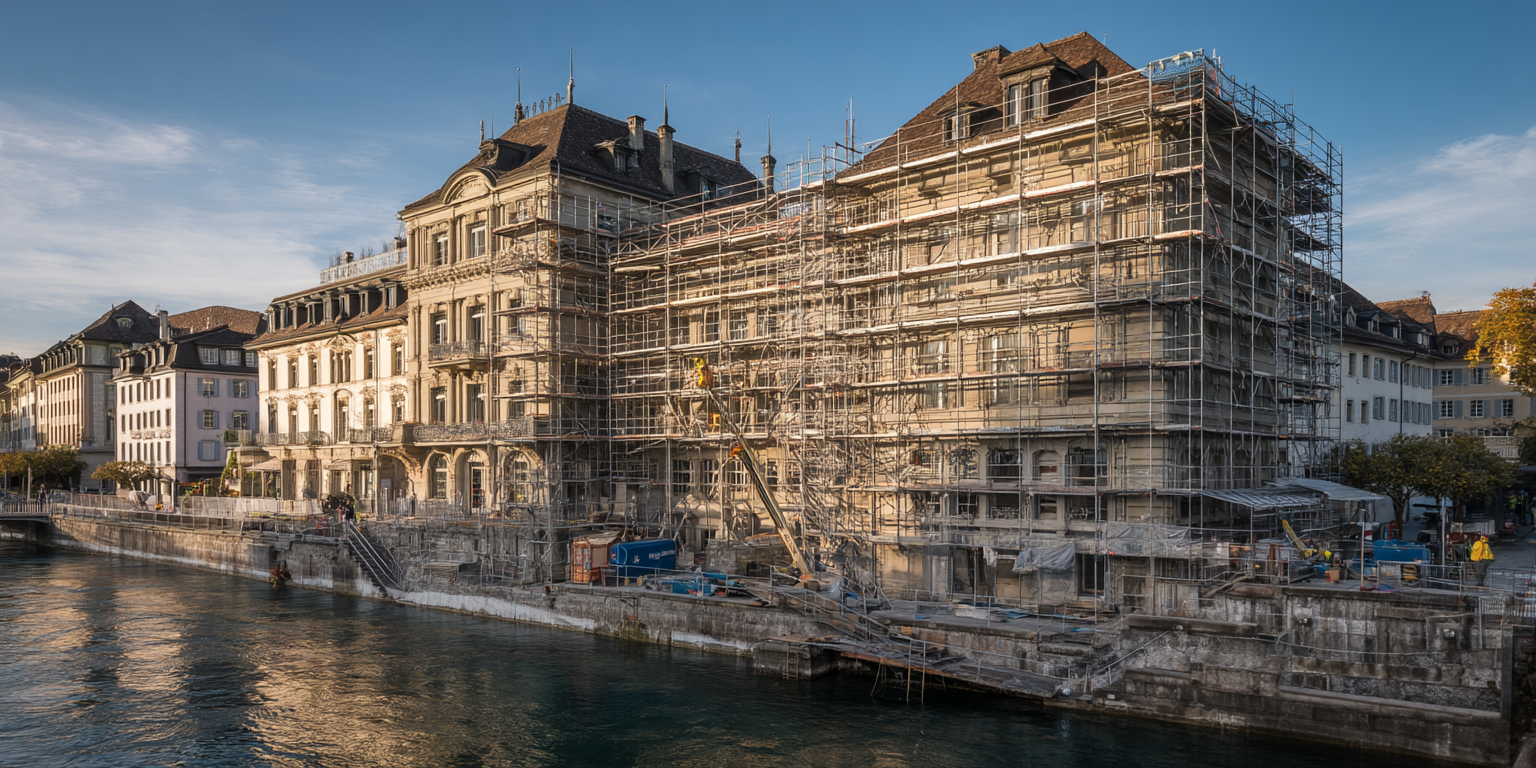
    According to a press release, the Schlieren-based construction company STRABAG AG and its building construction department are taking on “central tasks in the comprehensive renovation of the Landhaus Solothurn”. In addition to measures to modernize the building’s technical infrastructure, including plumbing, ventilation, lighting and stage technology, the focus is on modernizing the heating system.

    This will be converted to resource-saving energy generation by means of a heat pump. Water from the River Aare will be used as a heat source to supply both the Landhaus and adjacent public buildings such as the youth hostel, Kollegium school and municipal theater.

    The location between the old town and the River Aare requires logistical attention. Material deliveries and waste disposal had to take place in the morning so that the riverside promenade could be used as a promenade from midday.

    It was also necessary to take into account the stringent requirements of monument protection. The listed country house is like a “winding architectural work of art with six levels, each with its own renovation requirements”. The approach required “sensitivity” in order to preserve the historical character and the fabric of the building. In particular, the original Solothurn limestone staircases are to be preserved in their uniqueness, it is said. Special protective devices have been created for this purpose.

    Solothurn voters approved the renovation in October 2023. Construction work has been underway since January 2025. Construction is scheduled to end in October 2026. In January, construction site operations will be suspended in consideration of the Solothurn Film Festival 2026.

  • Historic site becomes new cultural and educational centre

    Historic site becomes new cultural and educational centre

    The city of Schaffhausen is pursuing an ambitious goal with the redevelopment of the Kammgarn site: to transform the historic area into an attractive location for culture, education and socialising. The Schaffhausen electorate approved this project back in August 2020.
    The comprehensive redesign not only creates a better connection to the urban fabric, but also new utilisation options. In addition to the existing entrances from Baumgartenstrasse, Rheinuferstrasse and Rheinstrasse, a new passageway will be created along Klosterstrasse. This strengthens the connection with the old town and increases the attractiveness of the neighbourhood. The Kammgarn area will become part of a “string of pearls” of meeting places along the banks of the Rhine, which will enhance the area in the long term.

    More quality of stay through new open spaces
    The redesign of the Kammgarnhof will transform the inner courtyard, which was previously used as a car park, into a car-free zone. Green spaces, seating and a water feature will increase the quality of stay and turn the courtyard into a central meeting place. The redesign will enable a variety of uses for events, culture and recreation.

    Another core element of the development is the construction of a single-storey underground car park with around 90 parking spaces under the courtyard. This will make the entire area above ground car-free and open up new possibilities for use. A pergola will be erected in front of the west wing, while a spacious terrace will be created in front of the north wing.

    Modern infrastructure for culture and education
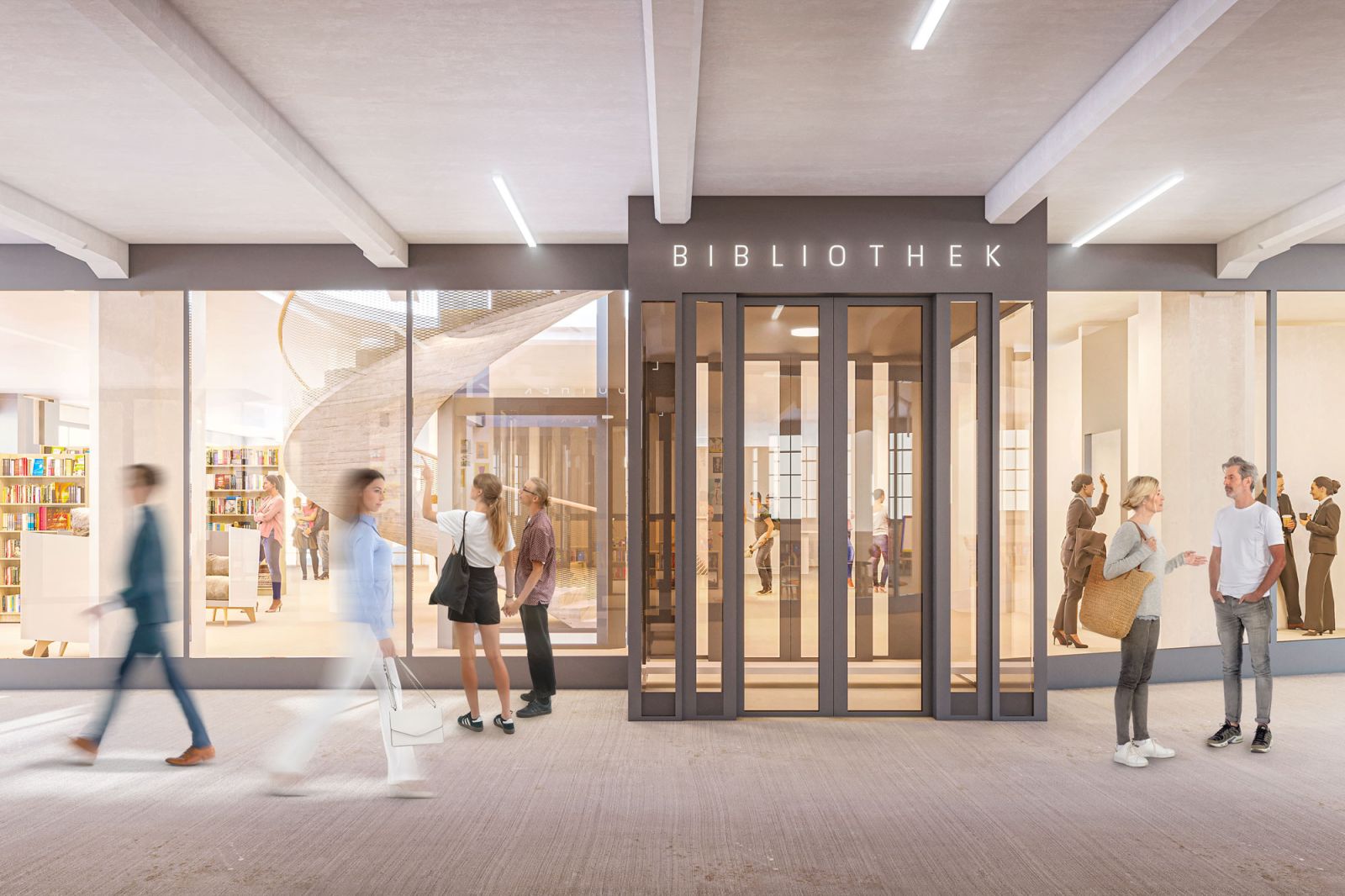
    The west wing of the Kammgarn site is being prepared for new uses as part of the refurbishment. The library and toy library will move into the ground floor and first floor. Glazed façades offer passers-by a glimpse into the world of books and games.
    The Schaffhausen University of Teacher Education will move into the second and third floors, while the fourth floor will be available for other tenants. The diverse use of the site reinforces its importance as an educational and cultural centre.

    Construction progress and archaeological work
    Construction officially began in September 2024 with the symbolic ground-breaking ceremony. Prior to this, archaeological rescue excavations were carried out, during which significant finds from the last 1000 years were discovered.

    Work is currently underway on the underground car park and the redesign of the courtyard. At the same time, the renovation of the west wing is progressing. In addition to structural measures, the façades and roof are being renovated and preparations are being made for the interior work.

    The first floor slab for the new courtyard was concreted in January 2025. To protect the valuable trees, a retaining wall (Rühlwand) is being erected around the large chestnut tree in the courtyard.

    A new meeting place for Schaffhausen
    After the remodelling, the Kammgarnhof will be an attractive place for locals and visitors to the city. Reading, meeting friends or enjoying concerts – all this will be possible in the redesigned surroundings.

    The construction of the underground car park is being financed jointly with IWC Schaffhausen, the direct neighbour of the site. This close collaboration will result in a sustainable solution that improves both the flow of traffic and the quality of life.

    A lively neighbourhood with a future
    The comprehensive renovation and redesign will transform the Kammgarn site into a modern cultural, educational and meeting centre. The connection to the old town and the Rhine will be strengthened, while new uses will enrich Schaffhausen’s cityscape. The project is scheduled for completion at the end of 2026 – a significant step for the long-term development of the city.

  • Listed building celebrates its opening on 8 March

    Listed building celebrates its opening on 8 March

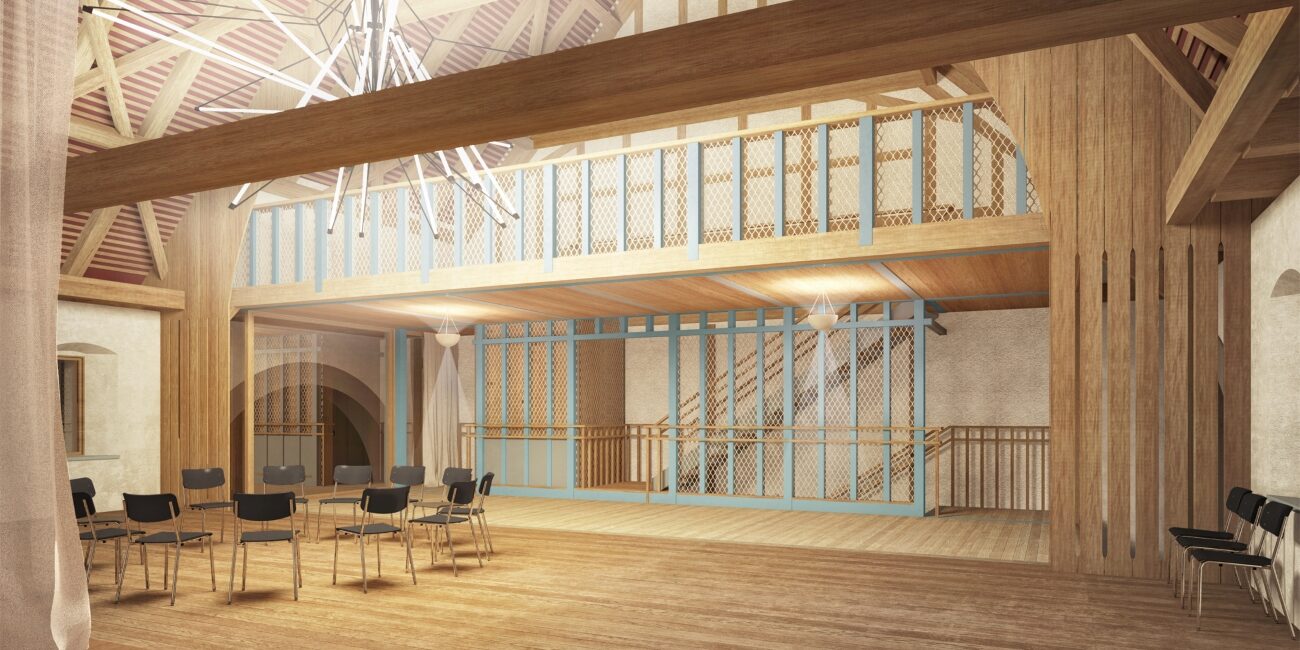
    The town of Dietikon invites you to the inauguration of the Haus der Bevölkerung on Saturday, 8 March. The Haus der Bevölkerung has been set up in the historic tithe barn. The listed building, which dates back to around 1600, will shine in new splendour following extensive renovation and will be available as a versatile event venue in future, according to a press release from the town of Dietikon. With a new digital booking system, reservations for cultural events, exhibitions and private functions will be possible from 1 June.

    On the open day, visitors will be able to view the new premises from 11 a.m. and see for themselves the wide range of possible uses for the building, according to the press release. Sibylle Baumann will be reciting various stories in dialect. At 3 p.m. she will talk about “The golden bird – funny animal stories” and at 4 p.m. she will present “About eating and being eaten – adventurous stories”.

    The Zehntenscheune is one of Dietikon’s oldest buildings. With a capacity of around 120 seats, a new grandstand and modern facilities, the large hall is suitable for events. A passenger lift also provides accessibility.

    The foyer on the ground floor has been redesigned. The massive plank wall, a relic from its original use as a stable or storage room, has been retained. A long bar is intended to turn the foyer into an attractive meeting place. An old archway leading into the garden area of the house was also uncovered.

  • Solar shading for historical architecture in Spain

    Solar shading for historical architecture in Spain

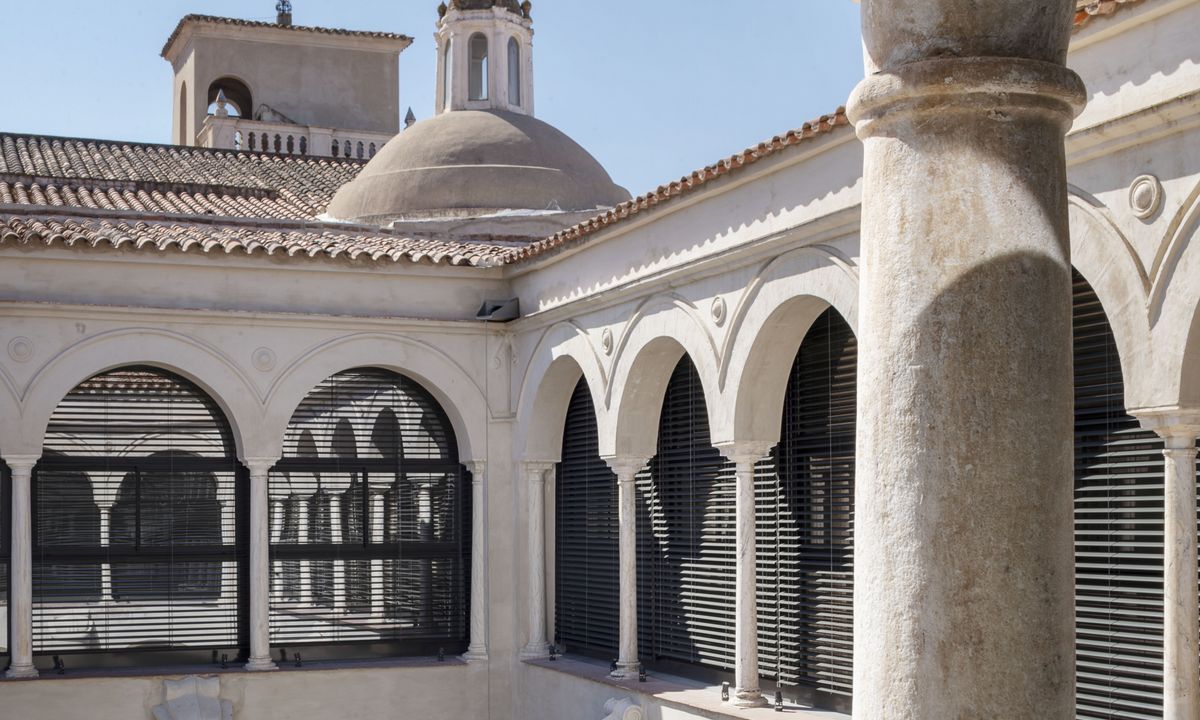
    Aadorf-based sun shading manufacturer Griesser is involved in the reconstruction and remodelling of the listed former San Agustín monastery in Badajoz, south-west Spain. This is being remodelled into a school of arts and crafts. According to a press release, the straight-lined building offers good conditions for an educational institution. In the past, the former monastery has been used as barracks, a courthouse and a school.

    The cloisters are also to be incorporated into the school during the current remodelling. Their arcades will be extensively glazed and require solar shading. Griesser is supplying its Solomatic 80 system for this purpose: the customised louvre blinds provide good shading on the one hand and a good supply of natural light on the other. Both the classic design of the slats and their colour scheme in RAL 7022, an almost anthracite grey shade, fit in with the historic appearance of the building.

    In addition, the incidence of daylight is controlled automatically. The resulting “harmonious atmosphere” is intended to increase “the students’ ability to concentrate and their sense of well-being”.

  • Digital solution makes building renovations easier for owners

    Digital solution makes building renovations easier for owners

    HEV cooperates with Scandens. Founded in 2021 as a spin-off of the Swiss Federal Institute of Technology in Zurich(ETH), the company launched software around a year and a half ago that makes it easier to plan and implement energy-efficient building renovations. Thanks to the cooperation with HEV Zurich, the Scandens software is now also available to private homeowners for the first time.

    Using the Scandens internet application, which is based on artificial intelligence, they can check whether and which renovation measures make economic and ecological sense. According to the company, the machine learning algorithms used were developed at ETH Zurich and the Massachusetts Institute of Technology. The software combines them with the latest energy modelling techniques for digital twins and official planning standards.

    According to a press release from Scandens, the software displays over 500 renovation combinations and creates a plan that serves as the basis for implementation. “Our mission is to increase renovation rates in Switzerland and actively support owners in increasing the value of their properties,” Scandens co-founder Diego Sigrist is quoted as saying.

    According to HEV Director Albert Leiser, the association wants to provide “a future-oriented and practical solution” with this offer: “With Scandens, we can offer our members a very well-founded digital planning aid that saves time and promotes sustainable decisions.”

  • Synergies for sustainable building and energy solutions

    Synergies for sustainable building and energy solutions

    From 14 to 17 November 2024, visitors to Bernexpo can expect a unique trade fair format: the Hausbau Energie Messe and Energy Future Days will once again join forces to present the largest Swiss event for construction, renovation and energy. Every year, this event attracts over 10,000 private homeowners, prospective builders, architects and planners and offers a varied programme for experts and interested parties.

    Specialist events and innovations for energy and construction
    This year’s focus is on sustainable energy generation and utilisation. A wide range of specialist and public events offer exciting insights and valuable information on topics such as photovoltaics, storage systems, electromobility and refurbishment processes. For architects in particular, the Architecture Forum will be focussing on innovative solutions for modern construction projects under the motto “Liveable living and working spaces”.

    Specialist day for experts and decision-makers
    Thursday is aimed specifically at experts from the construction and energy sector. Architects, planners, energy specialists, installers and decision-makers from the public sector and investors will find an ideal platform for professional dialogue and networking. The combination of trade fair and expert forum creates synergies that provide pioneering impetus for the future of construction and energy supply.

    New platform for solar energy solutions: “BärnSOLAR 24
    Another highlight is the launch of “BärnSOLAR 24”, a platform dedicated entirely to the integration of solar energy in construction projects. It offers experts targeted answers and customised solutions for the use of solar energy in construction.

  • Regulations make economic property investments more difficult

    Regulations make economic property investments more difficult

    According to the study, complex regulations, long processing times and tenant protection are increasingly burdensome for institutional investors. 92 per cent of the investors surveyed criticised the lengthy processes with authorities and objections. The increasing requirements mean that investments are increasingly being relocated to urban centres and rural areas, where the bureaucratic burden is lower.

    Refurbishment backlog and declining living comfort
    The stricter regulations are not only leading to a decline in new builds in cities, but also to delays in urgently needed refurbishments. This exacerbates the already existing housing shortage in urban regions and impairs the quality of life of residents by postponing renovation measures.

    Focus on sustainability, but social aspects take a back seat
    Despite the regulatory hurdles, around half of investors are prepared to forego returns in the short term in favour of sustainability. In the long term, however, they expect these investments to be amortised through higher returns and increases in value. However, the study shows that social sustainability lags behind ecological and economic aspects in the list of priorities.

    Outsourcing on the rise
    Another interesting development is the increase in the outsourcing of administrative tasks. The outsourcing of data sovereignty is particularly surprising, as this creates a high level of dependency on service providers. Portfolio and asset management functions are also increasingly being outsourced to external partners.

  • Customised processes support bridge renovation in Chur

    Customised processes support bridge renovation in Chur

    The AS Chur Süd consortium, consisting of METTLER PRADER AG and Cellere Bau AG, has commissioned STRABAG to replace the bridge edge beams as part of the renovation of the Sommerau subway in Chur. The timber construction department of the Schlieren-based construction company was tasked with developing a customised method for the formwork, explained STRABAG in a press release. “With our experience, we found the right solution,” Dominic Graf, timber construction foreman at STRABAG AG, is quoted as saying.

    Specifically, the work was made more difficult by the limited space available, which, among other things, did not allow for a conventional substructure for the formwork. The STRABAG timber construction team solved this problem by reinforcing the formwork panels with flat steel. Fire hoses were inserted into the gaps. The hoses, filled with compressed air, hold the panels in a stable position during concreting.

    According to the press release, the first bridge edges have now been completed to the complete satisfaction of the master builders on site. According to STRABAG, the other construction phases are currently being realised according to plan with the help of this technically demanding but ideally suited solution.

  • Museum Langmatt in Baden to be completely renovated by 2026

    Museum Langmatt in Baden to be completely renovated by 2026

    ERNE is involved in the complete renovation of the Langmatt Museum in Baden. Specifically, the construction company from Laufenburg is to take on part of the renovation of the villa. “The work includes the demolition of entire rooms inside the building and the subsequent reconstruction of floor slabs, walls and ceilings, the renewal of the sewerage system and the partial demolition of the exterior façade, including façade renovation,” explains ERNE in a post on LinkedIn. ERNE also moved benches and steel supports for the construction of a new glass pavilion.

    The overall refurbishment of the villa and the surrounding public park will take place this year and next. Meanwhile, the museum’s private collection of French Impressionism in Europe will be sent on a European tour. The Langmatt Museum is due to reopen in spring 2026.

  • Sustainable circular economy in the construction industry

    Sustainable circular economy in the construction industry

    One of the key challenges facing the construction industry is the reduction of CO2 emissions. By decarbonising processes and procedures in the gravel, concrete and recycling industry, companies can make an important contribution to sustainability. The autumn event offers an industry roadmap to help companies identify and implement sensible measures to reduce emissions.

    Optimising concrete as a building material for sustainable construction projects
    Concrete is still one of the most widely used building materials in the world. However, sustainability also plays a decisive role here. The autumn event will show how the sustainability properties of concrete can be optimised and used in a targeted manner. At the end of a building project, the question arises as to how materials can be reused. Options such as renovation, refurbishment or recycling offer sustainable solutions, which will be discussed at the event.

    Pollutant control and separation as the basis of the circular economy
    A successful circular economy requires the targeted separation and control of pollutants. This begins with the planning of a construction project and continues with material treatment and disposal. At the autumn event, the key aspects of pollutant separation will be explained, which are essential for achieving sustainable results in dismantling projects.

    Dealing with persistent substances such as PFAS
    Per- and polyfluorinated alkyl compounds (PFAS) are a group of persistent substances that are increasingly becoming the focus of environmental research. These substances are ubiquitous and pose a particular challenge in the circular economy. The autumn event will provide insights into the possibilities and limitations of dealing with PFAS and highlight solutions that can be implemented in practice.

    Innovative decarbonisation projects in practice
    A highlight of the autumn event is the presentation of the world’s largest electric melting furnace for rock wool. This innovative project shows how decarbonisation is implemented in practice and what potential lies in the production of stone wool. Experts will gain practical insights into the technical developments and their contribution to a sustainable circular economy.

  • Progress and outlook for the cantonal climate strategy

    Progress and outlook for the cantonal climate strategy

    Successes include the introduction of a procurement guideline for CO2-free vehicles in the cantonal administration and the creation of a legal basis for financial support for flood protection measures. Two measures that have been finalised, while a further 47 are currently being implemented. New administration vehicles must now have a CO2-free drive system, which represents an important step towards a more climate-friendly administration. In addition, the Water Management Act has created the basis for promoting flood protection projects, which are essential for adapting to climate change.

    Public relations work as the key to raising awareness
    Another key aspect of the climate strategy is raising public awareness. Every year, a “climate walk” is organised on a climate-related topic to present projects to citizens. This year’s focus was on the energy-efficient refurbishment of an apartment block, which was upgraded from efficiency class G to class B. This shows how effective refurbishment measures can help to reduce energy consumption and CO2 emissions.

    Challenges in the area of fossil fuels and renewable energies
    The latest climate figures show that the proportion of oil heating systems in residential and service buildings has fallen by 5 per cent, while the proportion of heat pumps has risen by the same amount over the same period. Nevertheless, the proportion of natural gas heating systems remains unchanged, which contradicts the climate policy goals. In order to achieve the goal of a climate-friendly energy supply, the transition from fossil fuels to renewable energies must be accelerated.
    On a positive note, electricity production from photovoltaic systems in the canton has more than doubled since 2015. This shows that the use of renewable energies is progressing, even if considerable efforts are still required to achieve the climate targets that have been set.

    Potential for improvement in the cantonal administration
    The cantonal administration has set itself the goal of acting as a role model in climate protection. Despite initial progress, it is clear that energy consumption for heating and hot water in cantonal buildings has only been reduced by 2 per cent. More than half of the heating energy is still obtained from fossil fuels. CO2 emissions from the combustion of these fuels have remained virtually unchanged since 2016, indicating a need for additional action.

    Adjustments to energy requirements and future steps
    The Government Council has submitted measures that can be implemented quickly for consultation in order to increase the use of renewable energies. Among other things, these relate to the replacement of heating systems and the generation of self-generated electricity in new buildings. One example is the requirement that a renewable energy system should always be used in future when replacing heating systems in canton-owned buildings.
    Overall, it is clear that the canton of Schaffhausen is on the right track, but that targeted measures are still required to accelerate the transition to a climate-neutral future.

  • National Council approves 280 million for construction projects

    National Council approves 280 million for construction projects

    On Wednesday, the National Council unanimously approved a bill that earmarks CHF 277.8 million for various renovation and conversion projects on civilian federal buildings. Particular priority will be given to projects that fulfil contractual obligations, prevent structural damage or provide long-term economic relief.

    Collection Centre and Jubilee Hall
    The largest share of the funds – CHF 92.4 million – is earmarked for the expansion of the Collection Centre in Affoltern am Albis. In addition, CHF 15.4 million is to be invested in the renovation of the Jubilee Hall at the Magglingen Sports Centre, which specialises in artistic gymnastics.

    Focus on other construction projects
    170 million francs have been reserved for smaller construction projects under 10 million francs. These funds can be used flexibly for urgent property projects or unforeseen property purchases.

    The Real Estate Dispatch 2024 specifically prioritises civil construction projects that should bring both economic benefits and long-term structural stability. The next step is for the Council of States to decide whether to approve the loans.

  • Fresh capital for the decarbonisation of real estate

    Fresh capital for the decarbonisation of real estate

    The software service provider Optiml has secured fresh capital totalling USD 4 million in a pre-seed financing round. According to a press release published on LinkedIn, the company intends to continue supporting the property market with software as it takes steps towards decarbonisation in the sector. As a service provider (Software-as-a-Service/SaaS), Optiml wants to develop programmes that facilitate data management and provide tools for asset and portfolio decisions. In doing so, the company takes into account constantly changing regulations and market conditions, according to the press release. With software supported by artificial intelligence, property companies and owners can plan their refurbishment and renovation work in line with the market and incorporate decarbonisation targets for their properties.

    The refurbishment and decarbonisation software from the spin-off of the Swiss Federal Institute of Technologyin Zurich(ETH), which was founded in 2022, is based on years of research in the ETH Sustainability and Technology Group (SusTec). It uses science-based optimisation algorithms.

  • Aerogel Architecture Award 2024 honors innovative projects

    Aerogel Architecture Award 2024 honors innovative projects

    This year’s “Aerogel Architecture Award” was looking for projects that demonstrate the potential of the high-performance insulating material aerogel in architecture and construction. The “Stringi-Stringi” renovation project from Livorno, Italy, came out on top in the “Realized Projects” category. The project, supervised by the architecture firm SB Ingegneria, optimized a poorly insulated building from 1939 by implementing five decisive measures: Roof insulation, façade renovation, conversion of the heating system to a heat pump, installation of a photovoltaic system and replacement of the windows with aerogel seals. The flexible use of aerogel made it possible to upgrade the energy efficiency of the façade without altering the historic appearance.

    Innovative renovation concepts
    Second place went to the Eversbuschstrasse kindergarten in Munich, whose 120-year-old building was converted into an integrated kindergarten using simple means and aerogel materials. The project focused on the reuse of existing structures and materials, with aerogel offering maximum thermal insulation and design freedom. Third place went to the Andreas Schubert building at the Technical University of Dresden. The listed building was fitted with 50 mm thick aerogel insulation and optimized for energy efficiency while retaining its characteristic façade.

    Visionary student projects
    In the “Student Projects” category, the Brazilian duo Amanda Sayuri Hashimoto and Guilherme Pinheiro e Silva won with their “Tassi Museum” project. They are planning to renovate the “Hotel Tassi” in Curitiba, which was damaged by fire, and turn it into a museum. Aerogel insulation on the façade and a roofing of the inner courtyard made of aerogel layers within glass panes improve energy efficiency without affecting the historical substance.

    Creative approaches to social architecture
    Patricia Malota from Poland took second place with her design for an urban mental health center in Krakow. Her concept uses translucent aerogel façades to create a bright, inviting atmosphere. Third place went to Michael Chang and Adrian Corbey from Harvard University with their “Aeroblock” project. They proposed a contemporary insulation for the glass façade of the Carpenter Center for Visual Arts without compromising the iconic look of the building.

    Further information on all submitted projects is available on the Empa website.

  • Nüssli builds a theater in Kassel

    Nüssli builds a theater in Kassel

    Kassel is one of the cities in Germany that has had a permanent theater building for some time. Now the Staatstheater’s main building needs to be renovated from the 2025/26 season. The state of Hesse and the city of Kassel have commissioned the Hüttwilen-based event and construction services provider Nüssli to build an interim venue for the theater. According to a press release, a versatile multifunctional building is to be constructed that can be adapted to different types of events. Nüssli will contribute its extensive experience to integrate state-of-the-art stage technology, acoustics and technical building equipment into the building, according to the press release.

    The client and investor of the project is the Gemeinnützige Wohnungsbaugesellschaft der Stadt Kassel mbH(GWG). GWG has commissioned NUSSLI as general contractor to build the interim venue. The outer shells and the supporting steel structures should be completed by the end of the year. Work on the interior will begin in January 2025. It is planned that the Staatstheater will be able to move into its new home in the fall of the 2025/26 season. The use of the temporary theater depends on the refurbishment of the main theater; a period of five years is currently planned.

  • Property fund raises 610 million francs

    Property fund raises 610 million francs

    Swiss Life Asset Managers has successfully completed a capital increase for its Swiss Life REF (CH) ESG Swiss Properties property fund. According to a statement from the asset manager of the Swiss Life Group, around CHF 610 million was raised in the largest capital increase of a listed Swiss real estate fund to date. This gives Swiss Life REF (CH) ESG Swiss Properties a market capitalisation of around CHF 2.5 billion and makes it one of the five largest listed real estate funds in Switzerland.

    Swiss Life Asset Managers intends to use the new funds to purchase a property portfolio worth around CHF 700 million. Another portion of the funds will be invested in the renovation and densification of existing residential buildings. The company also plans to reduce its debt ratio to around 23 per cent.

  • Start of construction for the extension and renovation of Hofwil High School

    Start of construction for the extension and renovation of Hofwil High School

    Hofwil High School is being expanded with the construction of a new school building and a triple sports hall to accommodate the increasing number of pupils. Originally designed for ten classes and 200 pupils, the school currently accommodates 21 classes with around 460 pupils. Temporary buildings that were erected in 2013 and 2017 are to be replaced by the new buildings. The new school building will include classrooms and practical rooms, including two chemistry laboratories. An outdoor cafeteria extension is also planned. The new triple sports hall will be equipped with cloakrooms, sanitary facilities, a workroom for teachers and a theory room.

    Move into the new buildings expected in summer 2026
    Completion of the new school building and the triple sports hall is planned for summer 2026. After completion, the focus will be on the structural refurbishment of the existing listed buildings, which should be completed by autumn 2027. These renovations include necessary room changes and maintenance measures in order to meet current educational standards. At the same time, the existing temporary school rooms are to be demolished and used for other purposes.

    Sustainable construction and energy concept
    Both new buildings will be constructed in accordance with the Minergie-P-ECO standard and equipped with photovoltaic systems to ensure sustainable and energy-efficient operation. This commitment to sustainability emphasises the future-oriented focus of Hofwil High School and sends out a strong signal of ecological responsibility in the education sector.

    Financing and total costs
    The total costs for the extension and refurbishment of Hofwil High School amount to CHF 65.63 million. This investment will not only cover current space requirements, but will also provide future generations with a modern and well-equipped learning environment. The financing of these extensive building measures is a sign of the canton’s commitment to education and infrastructural development in Münchenbuchsee.

    Historical significance and future prospects
    Hofwil High School, last renovated in the early 1980s, is an important part of the educational landscape in the region. The planned extensions and refurbishments are not only a response to current space requirements, but also an investment in the future. With the new infrastructure, the school will be able to cope with increasing pupil numbers and at the same time fulfil modern educational requirements.

    The remodelling and extension plans for Hofwil High School are an important step towards ensuring high-quality education in the region. With modern teaching and sports facilities, the school will be optimally prepared to meet the needs of the pupils and offer them a comprehensive, contemporary education.

  • Study on home ownership in Switzerland published

    Study on home ownership in Switzerland published

    Houzy, the Zurich-based platform for homeowners, has commissioned and published a recent study. According to a press release, the company wanted to collect data on the current and future behaviour of homeowners in Switzerland. Houzy surveyed 80,000 households online for the representative study. 1906 house and apartment owners answered the questionnaire from January to the end of March 2024. Three quarters of them were house owners and one quarter flat owners.

    The study focussed on the areas of renovation, heating and energy supply. It revealed that 69.4 per cent of all homeowners used tradesman services in the past year. The average order volume was CHF 15,000.

    In addition to renovations, the focus was also on alternative heating systems. 5 per cent of homeowners plan to modernise their heating systems and find alternatives to fossil fuels in 2024. At the same time, 33.5 per cent of households that still use oil and 8.85 per cent of those that use gas want to change their heating systems. One tenth of Swiss homeowners are planning to install solar panels this year in order to produce at least some of the electricity they need themselves.

    Another focus was on intentions to sell residential property. A seventh of the homeowners surveyed expressed such intentions. of these, 20 per cent would still like to sell their home in 2024. Extrapolated, this means that 3.2 per cent of all houses and flats in Switzerland will come onto the market this year, according to the press release.

  • Federal Council amends four key ordinances in the renovation and recycling process

    Federal Council amends four key ordinances in the renovation and recycling process

    There are around 38,000 sites in Switzerland containing environmentally hazardous substances, of which around 4,000 need to be remediated. The new Contaminated Sites Ordinance, which comes into force on 1 June 2024, allows treated excavated material to be reinstalled at the remediation site. This is ecologically more favourable than the previous practice, which required large-scale material transport and treatment. The reinstallation must ensure that no further remediation is necessary and the site is monitored in the long term.

    Chemical Risk Reduction Ordinance: adjustments for refrigerants and batteries
    A revised Chemical Risk Reduction Ordinance, which is based on EU standards and the latest technical developments, will come into force on 1 January 2025. This will restrict particularly climate-damaging refrigerants in new systems and appliances in order to achieve the goals of the Montreal Protocol and protect the ozone layer. From 1 July 2024, the ordinance will also regulate the return and disposal of significantly damaged batteries and the reimbursement of the advance disposal fee for exports. These amendments offer companies more legal certainty and contribute to sustainable disposal.

    Extension of the transitional provisions in the programme agreements
    Since 2008, the Confederation and cantons have jointly defined environmental targets and corresponding subsidies in programme agreements. For the period 2025-2028, the transitional provisions of the Water Protection and Forestry Ordinance will be extended by four years in order to continue and finalise projects that have already been started. These changes will come into force on 1 January 2025 and ensure the continuity of important environmental measures.

    The amendments adopted by the Federal Council strengthen environmental protection and optimise the regulatory framework. These measures emphasise Switzerland’s commitment to sustainable development and efficient resource management, while providing greater clarity and certainty for the industries concerned.

  • Continuation of the Basel region’s energy package planned until 2025

    Continuation of the Basel region’s energy package planned until 2025

    In order to ensure the continuity of the Basel-Landschaft energy package, the cantonal government has proposed an increase in the expenditure authorisation and a supplementary credit for 2024 to the cantonal parliament. This procedure is intended to ensure that the programme to promote energy-efficient building renovations and the use of renewable energies in the building sector can continue seamlessly. A supplementary credit of CHF 2.28 million has been requested for 2024, and the total expenditure authorisation until the end of 2025 is to be increased to CHF 42.16 million.

    The energy package has proven to be particularly effective thanks to the high willingness of building owners to invest. Despite demand stabilising at a high level after a record year in 2022, the subsidy programme remains very effective in an intercantonal comparison. These results were presented in detail in the latest interim report from the cantonal government to the cantonal council.

    Due to the current financial bottlenecks, the cantonal government is planning a moderate reduction in contribution rates from 1 January 2025. This adjustment reflects the above-average rates compared to other Swiss cantons and will be cushioned by the recently introduced energy premium, which offers income- and asset-based support. At the same time, the new national impulse programme, which will be launched at the beginning of 2025, will offer further financial support for the conversion of heating systems and comprehensive renovation of building envelopes.

    For the next planning periods from 2026 to 2030, the Government Council is preparing a separate bill based on the findings of the 2022 energy planning report and other parliamentary mandates. This initiative is intended to further strengthen the focus and effectiveness of the funding programme and adapt it to the dynamic needs of the energy market.

    Finally, based on the Cantonal Energy Act, the interim report emphasises the importance of regularly reviewing and adapting the support measures in order to effectively support CO2 reduction and meet legislative requirements. The cantonal government remains committed to a sustainable and energy-efficient future for Basel-Landschaft.

  • Strategische Entwicklung des Papierwerd-Areals

    Strategische Entwicklung des Papierwerd-Areals

    Das direkt an der Limmat gelegene Papierwerd-Areal ist ein architektonisches Erbe von Karl Egender und steht an einem Wendepunkt seiner Nutzungsdauer. Der Sanierungsbedarf des Areals und seiner Infrastrukturelemente erfordert eine strategische Neupositionierung. Diese beinhaltet eine Aufwertung des zentralen Raumes und eine Erweiterung der Freiflächen. Im Dialogverfahren «Forum Papierwerd» entwickelten Fachleute, Bewohnerinnen und Bewohner sowie Vertreterinnen und Vertreter der Stadtverwaltung Szenarien für die zukünftige Gestaltung des Papierwerds.
    Ziel der Umgestaltung ist es, das Papierwerd-Areal zu einem öffentlich zugänglichen Ort zu machen, der zum Verweilen und zur Interaktion einlädt. Dazu sind bauliche und nutzungsbezogene Anpassungen notwendig, um den Ort für die Allgemeinheit attraktiv zu gestalten. Die Wandelbarkeit und flexible Nutzbarkeit des Raumes ist dabei von zentraler Bedeutung.

    In einer Vertiefungsphase werden bis 2025 die bautechnischen Aspekte und die Schutzwürdigkeit des Bestandes weiter untersucht. Ebenso wird ein Nutzungskonzept erarbeitet, das im Rahmen eines Wettbewerbsverfahrens verschiedene Transformationsaspekte berücksichtigt. In einer anschliessenden Projektphase (bis 2026) sollen konkrete Vorschläge für das Areal erarbeitet werden.
    Der Dialogprozess, der eine breite Beteiligung ermöglichte und in elf Kernaussagen mündete, bildet die Grundlage für den künftigen Entwicklungsprozess. Bereits Ende Frühling 2024 sind erste Sofortmassnahmen zur Verbesserung der Aufenthaltsqualität des Stadtraums geplant.

  • ETH researches natural thermal insulators

    ETH researches natural thermal insulators

    Researchers at the Swiss Federal Institute of Technology in Zurich(ETH) have tested natural insulating materials in a project. According to an article, the group led by Guillaume Habert, Professor of Sustainable Construction, and Bruno Sudret, Professor of Risk, Safety and Quantification of Uncertainties, have found new approaches to this. They analysed six buildings in need of renovation that were built between 1911 and 1988. In addition to the core issue of replacing fossil-fuelled heating systems with sustainable ones such as heat pumps or solar-powered ones, the main focus of the investigations was on thermal insulation. Various traditional insulation materials such as EPS, glass wool, rock wool and cellulose fibres were compared with natural materials such as straw and hemp.

    “The CO2 emissions from the production of conventional insulation materials are sometimes very high, and their use in building renovations partially cancels out the positive effect achieved by reducing energy consumption,” Guillaume Habert is quoted as saying in the article. “Building materials made from renewable raw materials cause significantly fewer greenhouse gases. They also have the advantage that they bind CO2 from the atmosphere as they grow and this is then stored in the building in the long term.”

    Both heating conversions and appropriate thermal insulation with natural materials can reduce greenhouse gas emissions by 87 per cent, according to the study.

    The study was conducted in collaboration with the University of Applied Sciences Western Switzerland(HES-SO) in Yverdon-les-Bains VD and the Chalmers University of Technology in Gothenburg.

  • Enable inward settlement development despite noise pollution

    Enable inward settlement development despite noise pollution

    The UREK-S upholds the decision of the Council of States to build in areas subject to noise pollution, provided that controlled ventilation is installed and windows are used primarily for lighting purposes. In these cases, it is not necessary to comply with noise limits with open windows. The Commission is convinced that these regulations will favour the creation of living space in central locations and thus promote inward settlement development.

    With regard to construction in the vicinity of airports, the Commission rejects a new specific aircraft noise limit, as proposed by the National Council. It favours the Federal Council’s regulation, which allows exceptions to the requirements for aircraft noise. In its opinion, this regulation allows denser construction despite aircraft noise.

    The Commission proposes deleting the provision on maximum speeds on traffic-orientated roads from the law. Speed reductions should not be prohibited in principle, but should be implemented through measures that have already been adopted.

    With regard to the remediation of contaminated playgrounds, the Commission confirms the decision of the Council of States on private children’s playgrounds and home gardens with pollutant contamination by a casting vote of the President. It rejects the idea that the federal government should be able to provide compensation from the VASA Contaminated Sites Fund for voluntary remediation. The Commission is in favour of the remediation of contaminated private playgrounds and gardens, but without using federal funds. Cantons can provide financial support for remediation if they so wish. Some members request that the National Council be followed, except with regard to the regulation that the owners must in principle pay for the remediation costs.