Zurich gained two places in the European Thematic Cities Index (TCI) compared to the previous year and is now in second place. London is in first place and Stockholm is in third place. According to a press release , this index from Swiss Life Asset Managers measures 135 European cities in 28 countries. He evaluates them on five core themes that shape a city’s real estate market: Change and Disruption, Climate and Environment, Communities and Clusters, Consumers and Lifestyle, and Connectivity. He wants to offer a comparability for real estate investments.
The six Swiss cities in the ranking are all in the top 50 of the TCI. Among them, Zurich remains “the most dynamic and healthy city with the best networks”. Despite the lack of an international airport, Bern’s 9th place is now “the third most accessible city in the entire ranking”. Basel gains one place compared to the previous year and is in 7th place, Lausanne in 15th place. Geneva has gained the most with 16 places and is listed in 31st place. Due to its “less environmentally friendly mix of sectors and above-average car use”, Lucerne lost nine places and ended up in 41st place.
According to the TCI, all six Swiss cities promise little growth potential despite their stability and attractiveness. According to this analysis, they are all among the eleven worst European cities in terms of this criterion. And as in the TCI 2021, this year’s analysis rates health as the weakest issue in Swiss cities.
Yukon’s project management and consulting services focus on the implementation of collaborative project delivery models and lean management approaches in challenging construction projects. The company is currently supporting most of the projects in Germany that are carried out using the Integrated Project Management (IPA) model with multi-party contracts. Customers include well-known companies from industry and the real estate sector as well as public building owner organizations.
Yukon has also successfully completed its first orders in Switzerland. With the new branch, Yukon now offers customers in Switzerland the entire service portfolio in lean project management.
The new branch in Rotkreuz is represented by Thomas Hänggi. He brings over 20 years of experience in product and process development and project management in construction and other industries. We are pleased to have gained a proven expert in the field of integrated project management and lean management in construction for our commitment in Switzerland.
New Work has arrived in Switzerland and the nine-to-five model with an office presence has had its day. The demand of employees for more flexibility and work-life blending is constantly increasing and presents companies with new challenges such as empty office space and the loss of efficiency and creativity due to decentralized and isolated teams. So far, the question has always been “Working in the office or in the home office?” in the foreground. A flexibly bookable offer for external meeting rooms to shorten distances and boost creativity is rarely considered. This is exactly where Workspace2go comes in.
Flexible, varied and easy to book jobs
The Swiss start-up Workspace2go offers companies a simple and transparent way to rent their unused space by the hour or day to freelancers or employees of other companies who are looking for an external meeting room or workspace – even if they actually have their own offices. For example, field staff can spontaneously book a meeting room at Zurich main station for an upcoming call before boarding the next train, or combine a creative workshop with colleagues with a customer meeting in a beautiful old office building in Lucerne. Freelancers, on the other hand, have the opportunity to rent flexibly at their desired location as needed.
Turn vacant office space into capital
“The need for externally rented rooms is currently increasing, which we notice on our platform. On the one hand, our portfolio is constantly growing: more than 500 companies are now offering their vacant premises for rent. On the other hand, the demand is high: Hundreds of companies use what our customers have to offer every month,” says Manuele Fumagalli, founder and CEO of Workspace2go. One reason for this is the desire for creativity and motivation that a change of scenery brings with it, as well as the opportunity to plan one’s everyday life more efficiently and based on location. And empty and unused office and meeting rooms, conference rooms and workplaces are suddenly becoming lucrative again for companies. “Companies can capitalize on vacant spaces while at the same time meeting the demands of our modern working world,” says Manuele Fumagalli.
Since 1980, the Gotthard road tunnel has been the most important Swiss car corridor through the Alps. After more than 40 years of operation, this is in need of renovation. The Federal Roads Office (Astra) is building a second tube by 2029 so that the road connection can be used without interruption despite the repairs. In order to offer the teams involved in the construction optimal accommodation during their assignments, the Astra announced an architecture and investor competition. The contract was awarded to Swiss Property, which developed its project together with the engineering office Pirmin Jung. They convinced the jury with three buildings; two of them in element and one in modular construction as well as a digitized planning and construction with the Timber OS system developed by Swiss Property. This enabled the optimal balance between yield, costs and energy consumption to be calculated.
The three buildings are named Dammastock, Galenstock and Rhonestock. Your future residents are surrounded by rock, concrete, dust and noise every day. For this reason, the rooms were deliberately designed with a high feel-good factor and a warm atmosphere. A main component used in construction is local wood.
The Dammastock is the largest of the three buildings: in 2021, 102 single rooms, each with an area of around 14 square meters, as well as an underground car park were built here. The Dammastock has been ready for occupancy since December 2021. The facade consists of saw-grey spruce and fir wood. The building is to be dismantled in 2032: Thanks to the 105 individual wooden modules used, the Damma stock can be easily dismantled, transported and reassembled at another location. Possible conversions include a temporary school building, an asylum home or guest rooms.
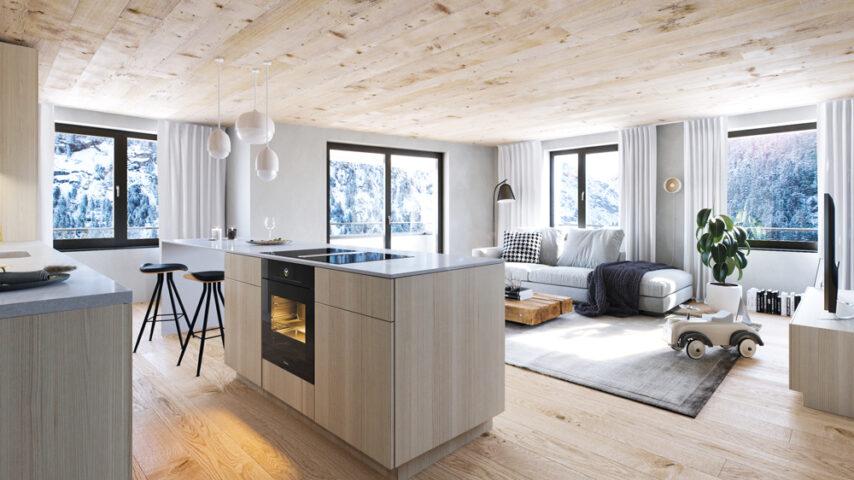
The other two buildings, Galenstock and Rhonestock, will be erected as hybrid structures with 72 single rooms of 14 square meters each. Both will have a staircase core made of reinforced concrete. The buildings consist of system timber construction elements made of spruce and fir wood and, thanks to the alpine architecture, harmonize perfectly with their surroundings. After the tunnel work, these buildings can be used on the spot in the long term: the interior design allows for an uncomplicated conversion into 16 apartments with areas of 40 to 110 square meters. The three buildings in Göschenen thus create a benefit that goes beyond the tunnel project.
The interior rendering shows what an apartment could look like after conversion.
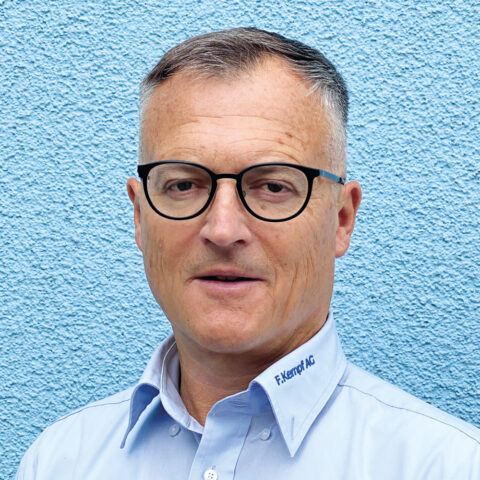
Franz Kempf AG wants to move its activities to a new building in Werkmatt Uri, which it intends to build. However, since she will only use a small part of the building on the 7,000 square meter plot, managing director and company owner Franz Kempf is looking for companies that have a need for property or rental space.
The company for plaster, stucco and panel work has too little space at its current location. Kempf also sees great potential in the new location. It is well developed and offers employees a workplace with a high quality of life close to nature. Cooperation with other companies also creates new jobs in the canton of Uri. In order to address interested parties from all over Switzerland, Kempf advertised in various media in Basel, Zurich, Central Switzerland, Aargau and Ticino. At the moment he is evaluating the interested parties who have contacted us. He doesn’t want to reveal what kind of company they are: “It’s very exciting, but for reasons of discretion I can’t give any information about it yet.”
The new building is to be developed according to the needs of the interested parties. Kempf hopes that the project will start soon and that the commercial space will be available from 2024. The plot in which Kempf would like to build its service and commercial arena is the southernmost one in the Werkmatt. It is located right next to the new motorway junction.
Franz Kempf, Managing Director and owner of Franz Kempf AG.
Many are still talking about whether she’s coming – but she’s already here. The turnaround in interest rates has also reached Switzerland. The word turning sounds a bit bigger than what actually happened. It is simply a matter of a change of sign: For the first time in many years, the yields on medium- and long-term Swiss franc bonds are again nominally in positive territory. The same trend can be observed in the euro area and spreads in the peripheral countries are also widening.
Is the real estate boom coming to an end? The reason for the nervousness on the interest rate markets is quickly found. Inflation is rising on both sides of the Atlantic – and now so fast that the US Federal Reserve is now clearly tightening the reins. That’s why everyone is now staring at the European Central Bank (ECB): Will it follow the USA and thus also burden the local economy with higher capital costs? And what would that mean for the Swiss National Bank (SNB)? Are we threatened with an end to the good economic environment and the long-standing real estate and material asset boom?
Neither nor. Because the situation in Europe is fundamentally different than in the USA. First of all, real interest rates and, in some cases, nominal interest rates have been negative in the euro area and in Switzerland for years. This has never happened in the USA. Negative interest rates, such as those demanded by the ECB and the SNB for deposits for many years, are also unknown in the USA. Just like the negative interest rates for larger sight deposits that are now common here from commercial banks. Second, growth in Europe is structurally weaker than in the US. The American gross domestic product grew by 5.7% last year and even increased by 6.9% in the fourth quarter. This even puts inflation into perspective, which at 7.5% recently reached its highest level in 40 years. Employment in the USA has risen sharply and unemployment is falling. And at the same time, after two years of the pandemic, US citizens are sitting on a lot of money. All of this enables the Fed to fight inflation vigorously.
Slow rate hikes The ECB, on the other hand, is stuck at low interest rates. Even if it did so to curb inflation, there’s no way it can raise rates as quickly and decisively as the Fed. Because the large amount of cheap money that they pumped into the market over the past ten years has increased the debt burden of the EU countries so massively that the central bank not only chokes off the upswing with a rise in interest rates, but also gives their own member states the air to breathe would take. Even the triple-A nation Germany is now stuck in the interest rate trap.
As a result, the hands of the SNB are largely tied. On the one hand, the franc is stronger against the euro than it has been since January 2015. On the other hand, inflation in Switzerland is currently contained. The economic research center Kof expects consumer prices to rise by 2.0% in 2022 and by 1.3% in 2023. Rising energy costs are having less of an impact on the Swiss economy than the economic areas of the USA and the euro zone, and the strong currency generally has a price-inhibiting effect. If the SNB does not want to take the risk of an even stronger currency, it will have to wait for the ECB’s first interest rate hikes before it can move its key interest rates closer to zero.
In other words, the monetary policy turnaround is here. But in Europe, including Switzerland, we do it in slow motion. The ECB will scale back its bond-buying programs; it doesn’t have the leeway for large rate hikes. The ECB must and will let inflation run its course for a while. The SNB is unlikely to be under pressure as inflation will remain moderate. It will proceed cautiously with regard to rate hikes.
Tangible assets remain trumps In such an environment, investors are dependent on real assets, the only investments that offer them protection against inflation and prospects for returns. Investments in real estate and other tangible assets are therefore becoming indispensable, and because investment pressure is increasing, prices in the segment are also continuing to rise. What we are witnessing here is not bubble formation. Normal market forces are at work here. Anyone who fears a bubble in the USA can also relax: There, the yield levels for most asset classes – especially on the real estate markets – are structurally higher than in the euro area. This in turn acts as a buffer against rising capital costs. If the Fed is now planning to return to interest rate normality, this is no cause for concern, but rather proof of economic strength.
We are a long way from that in Europe and in Switzerland. Instead, we must brace ourselves for a phase of persistently low real interest rates. In this environment, which penalizes holding cash and investments that pay nominal interest, equities, real estate and commodities continue to promise the greatest success. Against this background, securities of globally active real estate companies continue to show good prospects. In Switzerland, the real estate market has moved up sharply in terms of prices in recent years. From an economic perspective, however, there is little reason why prices should fall as long as negative real interest rates persist.
Shortly before the first lockdown in February 2020, the Institute for Alpine Cultures was officially opened. After several years of competitive selection procedures, an important beacon of the Uri government began to shine. With the new institute, university research was stationed in the canton itself for the first time in the history of Uri. A university institution was deliberately chosen because it guarantees every level of university qualification through to doctorate and habilitation thanks to the connection to the University of Lucerne.
The institute concentrates thematically on the entire arc of the Alps from Nice via Innsbruck to Ljubljana with a special anchoring in the Gotthard region. In this way, economic and social developments can be observed not only as a special case, but also in comparison. The aim is to learn from history in order to develop the best future scenarios. So it’s not just about navel gazing, but about a panoramic view in the middle of Switzerland, in the middle of Europe.
The canton has made the best choice with its cultural-historical anchoring: in dialogue with the local population, with economic and political decision-makers, the advantages of the region are specifically determined and further developed, which with the focus on the Alps are no longer on the supposed periphery, but in the epicenter of new developments. In view of the challenges in tourism, alpine and energy management, the institute has now found a reliable partner who guarantees scientific and objectivity.
It goes without saying that the Institute is not an ivory tower. On the contrary: the exchange between expert knowledge and experience is what really drives the institute’s work. As a result, cultural historians, legal scholars, energy economists, political scientists, philosophers, archaeologists – the list is not final – not only face a constant exchange between the disciplines, but also revise and specialize their theses thanks to local cooperation.
Showcases for this work are regular events and excursions – be it to the Urner Boden or to the Steingletscher – under expert guidance from all over Switzerland. And more and more commissioned studies end up in the Altdorf office, which, thanks to the institute’s unique network of experts from Germany and abroad, meet the highest scientific standards. The message has long since reached the research community: the lighthouse is shining.
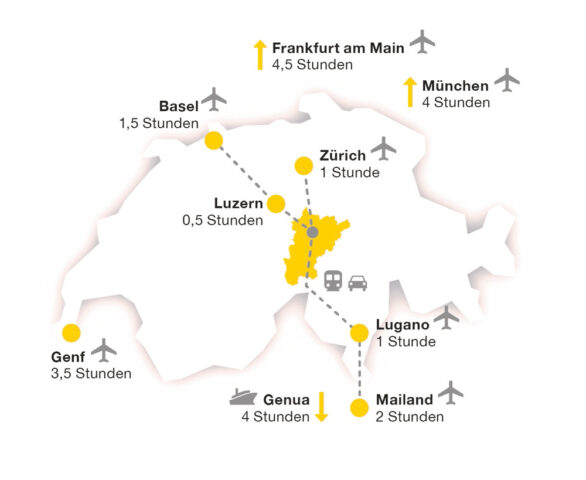
Best location directly on the European north-south axis The most direct connection between Europe’s south and north has always been through Uri, but no later than the construction of the legendary Devil’s Bridge in 1230. Since the opening of the Gotthard railway tunnel in 1882, fast transport of people and goods has also been guaranteed by rail. And in 2016, a new work of the century went into operation with the Gotthard base tunnel: since then, Uri has been connected to the south by the longest railway tunnel in the world (57 km).
With the commissioning of the cantonal train station in Altdorf in 2021, the south and north moved even closer to Uri: Lugano can now be easily reached in 50 minutes, Milan in two hours and Zurich in one hour with direct connections.
The central location of the Uri site with advantageous connections at a glance.
Optimal cost environment Uri not only impresses with its advantageous location, but also with an attractive cost environment. On the one hand, the Gotthard canton combines several financial advantages for the benefit of the resident population: the tax burden, health insurance premiums and housing costs are relatively low. The proportion of properties with at least four rooms that can be afforded with a household income of CHF 134,000 is 31 percent on average in Switzerland in 2021. In Uri, this value is 40 to 50 percent. This underlines the attractive real estate prices in Uri. At the same time, the tax deduction options for families are well above the Swiss average. In this way, the people of Uri can freely dispose of around 50 percent of every franc they earn in Uri. In terms of disposable income and the financial attractiveness of living, the canton of Uri is among the clear leaders in Switzerland.
In the same way, companies also benefit from relatively inexpensive land and real estate prices. But Uri also outperforms many cantons in corporate tax competition. Because the Gotthard canton has had a flat rate tax for years – for both natural and legal persons. The low corporate taxes are particularly beneficial for small and medium-sized companies. The profit tax is around 12.6 percent and the capital tax is 0.001 percent (cantonal and municipal taxes in the municipality of Altdorf). Both in the Swiss and in the international comparison, Uri thus occupies an absolute top position!
Fast and reliable realization of business ideas Decision-makers and reliable partners in authorities, business and society can be reached quickly in Uri. After all, a small canton also means short distances. The small size also means tailor-made solutions, so that business ideas can be implemented pragmatically. In addition, Uri can boast of committed and effective employees who are characterized by loyalty and a high degree of identification with the employer.
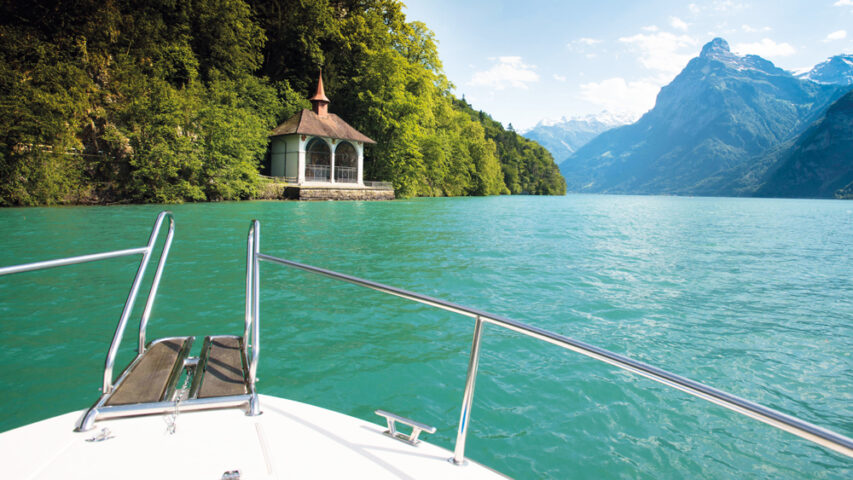
Uniquely simple combination of work and leisure Kayaking before starting work? Cross-country skiing during the lunch break? Short hike in the evening with the family? Embedded in an attractive mountain and lake landscape, the canton of Uri with its local recreation areas makes this unique combination of work and leisure possible. In Uri there is energy and quality of life – discover this added value at work, after work and on days off.
Good things are so close: a unique combination of free time and work in the canton of Uri. (Image: Angel Sanchez)
Numerous investments in a small space A lot is currently being built in the canton of Uri. Hardly any other place invests so much in such a small space. This results in significant impulses that contribute to the noticeable spirit of optimism in the canton of Uri. The development of the Uri housing market is exemplary for this. In the last 10 years it has grown by almost 3,000 new apartments – that means a remarkable increase of 16 percent.
The resident population of Uri, which has stagnated in recent decades, has also been growing significantly again for several years. All of this underscores the attractive framework conditions, but is also thanks to the well-known investments in the Uri location.
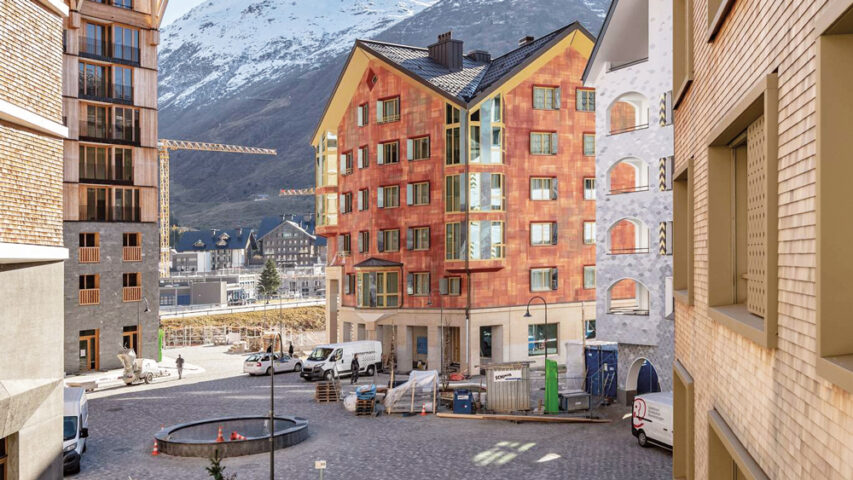
Promotion to the tourist champions league Tourism development in Andermatt in particular has contributed to this growth. Due to the partial withdrawal of the military, the mountain community was faced with major challenges. Egyptian investor Samih Sawiris brought the turning point. Since 2009 he has invested more than CHF 1.3 billion together with fellow investors, thereby catapulting Andermatt into the tourism champions league. CHF 130 million went into the modernization and expansion of the winter and summer sports facilities. Further investments were made in an ecologically operated 18-hole golf course and in a multifunctional concert hall for brilliant music experiences as well as conferences and exhibitions. With Andermatt Reuss, a completely new part of the village was created with hotels, apartment buildings, restaurants and businesses and its own village square, the Piazza Gottardo.
With more than 1000 employees, Andermatt Swiss Alps AG, which operates the tourist resort, is now the largest employer in Uri. Andermatt is an up-and-coming and attractive tourist destination. Further investments are already planned: on the one hand, the new village part of Andermatt Reuss will be expanded in stages by another 18,000 m2. On the other hand, Vail Ski Resorts will take over the majority of the mountain railway infrastructure in Andermatt and plans further investments of over CHF 100 million.
Newly created part of the Andermatt Reuss village with a view of the «Piazza Gottardo». (Image: Andermatt Swiss Alps)
More mobility and attractiveness in the Uri valley floor Despite the impressive development in the mountain village of Andermatt and its importance for Uri as a business location: around 80 percent of the population of Uri live in the valley floor, where most of the service, industrial and commercial companies are concentrated. This area has undergone substantial changes in recent years. With the development focus of the Urner valley floor around the cantonal train station in Altdorf, Uri is tackling a project for generations: Here, sustainable uses are created in the overall regional interest and the corresponding economic, settlement and transport infrastructures are carefully coordinated.
An important milestone was reached in December 2021 with the commissioning of the new cantonal railway station in Altdorf. Intercity trains now stop in Altdorf, which connects the station to the Gotthard base line. The regional and national bus concept is also geared towards the new hub. Impetus for economic and settlement projects should arise from better accessibility. The first effects are already visible: in the immediate vicinity of the train station, modern residential developments have already been realized with “Vena” and “Cubo”. Others, such as the “Strickermatt” development in the immediate vicinity of the cantonal railway station, are in the works. The Cantonal Bank of Uri is also actively involved in the development of the new Uri transport hub. With its newly erected service building at Bahnhofplatz 1, it is committed to the overall economic development of the canton and the bank itself. State-of-the-art office space has been created there in a prime location. The UKB itself claims a third as its new headquarters, and a further 3100 m2 are rented out. Exciting new companies from Germany and abroad have already settled here.
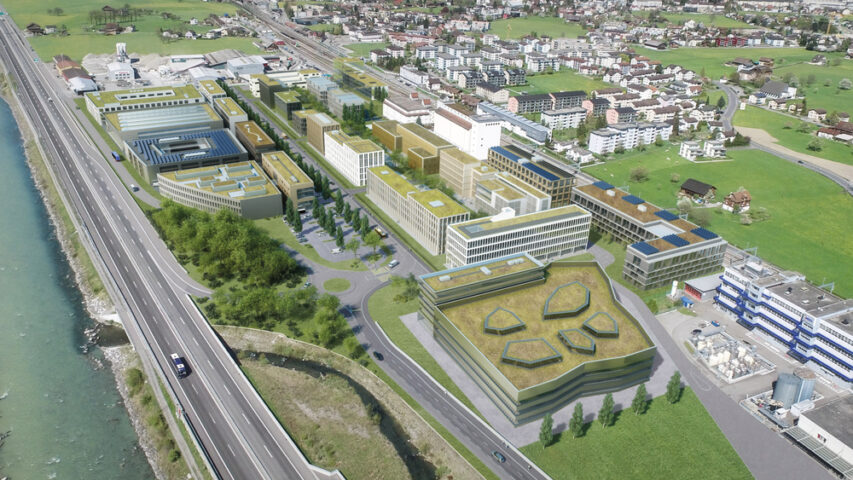
Werkmatt Uri – space for business ideas The Werkmatt Uri in Altdorf is the central piece of the puzzle for the focus of development. It is the largest contiguous land reserve in Uri. The canton of Uri, as the owner, invested millions in the area between the new canton train station and the future half-junction to the motorway. On around 120,000 m2, the area offers business opportunities for future-oriented industrial, commercial and service companies. More than 1,000 jobs are to be created on the site in the future. The aim is to develop the area in a coordinated manner so that sustainable economic uses can arise. The public sector as the provider is striving for a win-win situation with investors and the future owners and users of the area.
What the Werkmatt could look like in the future, including the Autobahn half connection.
Further promising developments are pending The canton of Uri has already implemented various generation projects, as described above. Other important development projects are pending. A new traffic hub in Göschenen is being planned. In addition to the station for trains and buses and a multi-storey car park, a cable car connection from Göschenen station to the Andermatt ski area is being planned.
In addition, there is the west-east bypass in the Urner valley floor, which will relieve the settlement areas of road traffic and thus upgrade them. In Altdorf, a new half-junction to the motorway is being built, which will open up the Urner valley floor even better. The federal government is already working on the construction of the second Gotthard road tunnel. Finally, new bike paths are being created, which should make Uri even more attractive for non-motorised traffic. In addition, investments in education and research are becoming even more important. The first approaches are already there: on the one hand with the Institute for Alpine Cultures, which is dedicated to the special features of the Alpine region – from prehistoric evidence to specific traditions to the challenges of the present. On the other hand with the Logistikum Schweiz in Altdorf, a research and innovation center for logistics and supply chain management.
Promotion of the Uri location – your effective partner Many exciting developments are underway in the canton of Uri. Location promotion is working on using this momentum in an economically sustainable manner and converting it into jobs and added value for the entire canton. How does the Uri location promotion work?
On the one hand, we make the advantages of the Gotthard canton and the exciting developments visible. Location communication and marketing takes place via the web, print, trade fair appearances and via the personal network. In particular, membership in the Greater Zurich Area is intended to ensure that the Uri location and its advantages are even better perceived. Those interested in settling, as well as existing companies and start-ups, are supported by the location promotion in consultations or during site visits or the search for building land. It is also the information and contact point of the administration for the economy of Uri. In addition, she establishes contact with the key people in business, education, innovation promotion and authorities.
Wide range of tools The Uri location promotion can fall back on a wide range of instruments to support companies. They are custom-defined for each individual case. Innovative start-ups, for example, benefit from this in the form of start-up aid. Another option is to support cross-company initiatives with the New Regional Policy (NRP), a funding instrument for rural and mountain areas. As a start-up aid or pioneer, she can help entrepreneurial initiatives to achieve a breakthrough.
With the Uri location promotion, you can count on quick, competent and binding reactions to your concerns.
Welcome to the living and business location Uri. Grab the bull by the horns with us!
Nowhere else is so much energy consumed as in the building sector. In Europe, around 40 percent of final energy consumption and 36 percent of greenhouse gas emissions are attributable to this sector. With its Smart Buildings technologies, Talkpool AG is helping to make buildings more energy-efficient. For example, via intelligent sensors that can be used to automatically control and optimize the indoor air and climate. “Our technology not only helps to significantly reduce the energy requirements of buildings, but also saves the corresponding costs,” says Aurelius Wosylus, Group Chief Commercial Officer at Talkpool AG. He refers to the rapidly increasing energy prices and advises building operators to tackle the problem now.
In Germany alone there are 21 million buildings, of which around 19 million are residential buildings and around 2 million non-residential buildings. Together they consumed around 865 terawatt hours (TWh) of energy in 2019. At 76 percent, by far the largest part is accounted for by space heating (658 TWh). Even back in 2019, i.e. before the energy price shock, the costs for space heating, hot water and lighting in buildings in Germany amounted to an estimated 73 billion euros. Although the final energy consumption in the building sector has fallen slightly in recent years, it is not to the extent that would be necessary to achieve the climate targets. This is also due to the fact that around a third of the buildings in Germany and Europe are more than 50 years old. Older buildings in particular often only have inadequate HVAC systems. HVAC stands for heating, ventilation and air conditioning and refers to the various systems in a building responsible for heat regulation, indoor comfort and air quality.
Convincing solutions for saving energy in buildings
The international company, headquartered in Chur, Switzerland, has developed solutions with which energy and cost savings of 10 to 25 percent can be achieved in existing HVAC systems. Aurelius Wosylus explains the technology behind it: “Our wireless room climate sensors form the basis. After they have been installed in the building, these monitor the various parameters such as room heat and air quality in real time.” This input goes to a self-learning control algorithm via an Internet gateway. According to Wosylus, the AI also accesses external data, such as the weather situation or the development of energy tariffs. “In this way, the AI controls the HVAC system in a constant improvement process to maximize indoor climate quality and optimize energy consumption.”
The system is already installed in buildings with a total area of more than one million square meters. With consistently good results. As an example, Wosylus cites a hotel and office project in Sweden with an area of around 25,000 square meters. “Our analysis shows that not only has the air quality and thus the feel-good factor improved significantly, but also the energy consumption for the heating and cooling systems has been reduced by between 20 and 25 percent.” It didn’t even take a year, he says Wosylus until the project has recouped its costs for the building operator.
Renggli Deutschland GmbH is a joint venture between the four shareholders Renggli AG, Saxovent Smart Eco Investments GmbH, Sächsische Ärzteversorgung (SAEV) and MQ Real Estate GmbH. Renggli AG is committed to providing know-how and expertise. The new plant is being built in Eberswalde (state of Brandenburg), around 40 kilometers from the Berlin city limits. In February 2022, the purchase contract for the land of the production facility was signed. Construction will start in the third quarter of 2022 and completion is scheduled for the end of 2023. From 2024, wooden modules for sustainable and climate-friendly, multi-storey buildings will be manufactured in the modern plant on a production area of around 20,000 square meters.
Great potential in Germany
In the greater Berlin area, there is great potential for serially and industrially manufactured wooden modules. In modular construction, entire room units are prefabricated in the production plant and assembled on the construction site. Today, modular buildings meet all the requirements of modern and sustainable real estate and offer a solution for the realization of attractive, affordable and climate-friendly living space. Samuel Renggli says: “We want to meet the high demand for timber construction capacities in the Berlin/Brandenburg area as needed and thus make a significant contribution to resource-friendly and climate-neutral construction. With the performance of this modern production plant, we meet the high standards of quality, efficiency and reliability.»
Market development in Germany – further development in Switzerland
The investment is the consistent strategic further development of activities in Germany and is based on Renggli AG’s long-term business plan. The commitment in Germany will not affect the activities in Switzerland. As planned, Renggli AG will continue to strengthen its market position in Switzerland and invest in the digitization and further development of the company in parallel to its expansion in Germany. In the production plant in Schötz (LU), Renggli AG continues to realize industrially manufactured, high-quality and climate-friendly buildings in element and modular construction. It thus serves the demand from Switzerland for architecturally sophisticated, multi-storey wooden buildings for housing developments, office and commercial buildings or kindergartens and schools.
Nanux AG designs real estate transactions fully digitally and therefore anonymously. According to a press release, the young company based in Spreitbach, founded in June 2021, offers a new digital platform and anonymously brings investment properties to real estate investors or private buyers. So far, such objects in Switzerland have only been sold via the owner’s networks. Buyers found the offers almost exclusively in this way. Nanux is now digitizing the entire process from the advertisement to the appointment with the notary. According to Nanux, this off-market area for real estate is a niche with a future.
Viviana Gujer, CEO and founder of Nanux, even speaks of the beginning of a new trading era in the Swiss economy. “Despite the exclusivity of this form of trading, thanks to digitization we are reaching more owners and are thus giving a new boost to the almost dried-up real estate market,” Gujer is quoted as saying. “Our trading partners are particularly impressed by the fact that they enjoy complete anonymity. We only show properties to pre-vetted buyers and therefore do not scatter the offers on the market.”
Nanux gives owners and investors access to a closed platform. According to the notification, your data will not be published. They also have no direct contact with buyers or sellers.
On the website www.myclimate.org/heizung , visitors only have to enter a few data for the calculation. The canton of residence, the previous heating (oil, natural gas), the planned new heating technology (heat pump or pellet heating) and the previous annual consumption are queried. Based on this information, the myclimate calculator provides an immediate overview of possible funding from the myclimate funding program for heating replacements in Switzerland.
In addition to this information, the website also provides a link to the respective cantonal building program. This allows homeowners to find out directly about the cheaper offer for heating replacement. The myclimate contributions are sometimes higher than those of the cantons and sometimes heating systems that are not covered by the canton can also be subsidised. A cantonal subsidy can only enjoy automatic priority for the smaller heat pumps. The new website also provides this information.
In order for owners to participate in the programs, certain criteria must be met. The subsidy program does not apply to new buildings. The new heating system must therefore replace an existing oil or gas heating system. There must still be no double funding. This means that no other financial aid from the federal government, canton, municipality or private individuals is required for the project. In addition, the order must not yet have been placed with an installation or planning company.
Important tool for reducing CO2 emissions in the building sector
In Switzerland, single and multi-family houses are still mostly heated with fossil fuels. They therefore make a significant contribution to Switzerland’s CO₂ emissions in the building sector. At the same time, in many properties – for example in around 70 percent of apartment buildings – gas or oil heating is still being replaced by a similar heating system, thus increasing dependence on fossil fuels. Technically, heat pump systems are now able to reliably and environmentally friendly not only provide the heat demand of individual houses but also of large buildings. Where the installation of a heat pump is not possible, wood pellet heating systems offer a climate-friendly alternative for single-family homes and apartment buildings.
With financial support, the myclimate programs for heating replacements reduce the hurdle of high investment costs.
These heating replacement programs can be implemented thanks to the contributions of the Foundation for Climate Protection and CO2 Compensation KliK and other partners.
Beijing, Singapore, Paris, Horgen – with immediate effect, an Innovation Hub is also open to customers, partners and interested trade visitors in Switzerland. A visit is worthwhile for anyone who would like to get a first-hand impression of the future-oriented products and solutions from the tech group Schneider Electric and Feller AG. The exhibits and audiovisual media convey everything worth knowing about modern living and working environments, which are right on the pulse of the times. Visitors have the opportunity to discover innovations at their own pace and to be inspired by the pioneering technologies.
One company, two brands: the best of both worlds
The Innovation Hub maps the entire spectrum of the energy and automation specialist Schneider Electric and its subsidiary, Feller AG. The innovations and technological developments at all levels, in the full breadth and depth of the portfolio, are presented on 500 square meters. In addition to intelligent products and solutions for industrial automation, the energy networks of the future, building automation and the connected home as a networked, digitized home also play a large role. Other topics such as energy efficiency in residential construction and e-mobility round off the diverse world of experience.
Innovation and technology impulses: A place of experience and knowledge transfer
Theoretical knowledge of modern digital technology is only one side of the coin. Nothing beats experiencing the advantages of future living and working environments under real conditions. “With our new Innovation Hub, a comprehensive world of experience has emerged. Here not only networked automation solutions are presented in an attractive environment, but also the networking of knowledge is promoted,” explains Tanja Vainio, Country President Schneider Electric Switzerland. The interdisciplinary competence center offers the ideal environment to hold training sessions or expert forums in the future.
Specialists from the main and ancillary construction trades can meet from January 13 to 16, 2022 at the 21st Baumag construction machinery trade fair in Lucerne. In the coming year it will be the only specialized trade fair in this sector in Switzerland, according to a press release .
After a three-year break, the exhibition space is already well booked. “This shows that Baumag is an important Swiss presentation platform for the industry,” Exhibition Director Andreas Hauenstein is quoted in the press release.
The exhibitor Baukader Schweiz takes part in a large part of the program. The management organization in the construction industry offers a keynote speech on every day of the fair, including topics such as machine control, sustainability, safety and ecology. In addition to the presentations, there should be a practical part.
The visitors expected a “well-functioning trade fair operation in a familiar environment”. Wearing masks is not necessary thanks to an obligation to show a certificate of vaccination against the coronavirus. Gastronomy offers could be used without restriction and exhibitors serve their visitors at their stands.
The fair takes place regularly every two years. This year, the already fully booked Baumag was canceled due to the corona pandemic.
Switzerland has considerable potential in the use of alternative energy sources such as geothermal energy and in the underground storage of CO2. This emerges from a press release from the Swiss Federal Institute of Technology in Lausanne ( EPFL ). Professor Lyesse Laloui from the Faculty of Architecture, Civil and Environmental Engineering ( ENAC ) at EPFL was head of the research group on geoenergy as part of the Innosuisse Energy funding program, which ran from 2013 to 2020. Eight competence centers have been set up. EPFL played a leading role in the field of geoenergy. Laloui is the author of the chapter on this in the final report of Innosuisse.
Lyesse Laloui sees great potential for the use of geothermal energy. The Swiss government has set the target for 2035 of generating 11 percent of the energy used for heating and cooling buildings from geothermal energy. Laloui assumes over 20 percent. “The project results show that this share could easily be doubled,” he is quoted in the communication. The possibilities of using geothermal energy to generate electricity were also examined. Laloui points out problems such as drilling deep without triggering seismic movements. “One day we will surely make it, but we are not there yet.”
According to the Lalouis report, there are good opportunities for the underground storage of CO2 emissions in Switzerland, especially in the Central Plateau from Friborg to Zurich. Professor Laloui is quoted as saying that of the around 40 million tonnes of CO2 equivalent that are emitted in Switzerland every year, around 12 million could be stored underground.
The location promotion by the federal government, regions and cantons can look back on a successful year, explains the Conference of Cantonal Economics Directors ( VDK ) in a press release . Once a year, it compiles statistics on the number of foreign companies relocating to Switzerland. According to the latest VDK survey, a total of 220 foreign companies settled in Switzerland in 2020.
Compared to the previous year, this corresponds to a decrease of 9 percent, explains the VDK in the announcement. The new settlements booked in the previous year would have created 1168 jobs but at the same time 11 percent more jobs than the settlements in the previous year. Even with the new jobs forecast for the next three years, the value of 2019 was exceeded by 21 percent with an expected 3,583 jobs.
As in the previous year, most of the settlements in the year under review came from the ICT and life sciences sectors. In terms of origin, French, American and Chinese companies in particular were drawn to Switzerland.
The national location promotion aims to advertise, above all, value-added and innovative companies, writes the VDK. The communication refers to the “successful cooperation” between the federal government, regions and cantons. In addition, the VDK emphasizes the role of the Swiss Business Hubs. These representations of the official Swiss organization for export promotion and location promotion, Switzerland Global Enterprise ( S-GE ), are active abroad as part of the Swiss embassies or consulates general.
The task of the Swiss Business Hubs is to “market Switzerland as a leading innovation and technology location” and to identify “companies with settlement potential”, explains the VDK. S-GE will present specific settlement projects to the regions and cantons, "which will then campaign for a settlement in their canton in a federal competition". Align Technology is mentioned in the announcement as an example of success. The American medtech company is run by former ABB boss Joe Hogan and relocated its European headquarters from the Netherlands to Rotkreuz ZG in the reporting year.
Roland Siegwart is Professor of Autonomous Systems at the Swiss Federal Institute of Technology in Zurich ( ETH ). He is also co-director of the Wyss Zurich funding program. In 2018 Siegwart co-founded the ETH spin-off Sevensense Robotics. The company, based in Zurich, develops technologies for robots that help them, for example, with independent orientation. Sevensense also works with Deutsche Bahn to develop technologies for the future of train travel.
In an interview published on the Sevensense blog page, Siegwart praised Switzerland as a location for robotics. All important specialist knowledge for robotics is available in the country. On the one hand, precision mechanics, which have a "long tradition in Switzerland", are particularly important. On the other hand, sensor technology plays an important role in the industry. This is less known worldwide, but Switzerland is already very advanced in this regard.
Siegwart also praises the ETH Zurich and the ETH Lausanne (EPFL). The two universities would provide the necessary control and intelligence to be able to make good use of the existing specialist knowledge, he emphasizes. They would also spawn a multitude of successful spin-offs – especially in the robotics area. Switzerland has also been able to attract a large pool of foreign talent who further strengthen the robotics scene.
Switzerland still has some catching up to do when it comes to major investments. Investors in Europe are generally more risk averse compared to those in the USA. However, this also helps European start-ups develop a sustainable, customer-oriented approach. Accordingly, the survival rate of start-ups – for example in Switzerland – is much higher than that of those in the USA. The long-term survival rate of the ETH spin-offs is 80 to 90 percent.
In terms of population, Switzerland already has an extremely high density of data centers, after the Netherlands it is even the second highest in Europe. The 93 colocation data centers identified in a current study by CBRE Switzerland have an area of at least 154,000 m2, which corresponds to around 22 football fields.
Zurich ranks sixth in Europe With 68 megawatts (MW), the Zurich region ranks sixth in Europe after London (711 MW), Frankfurt (510 MW), Amsterdam (365 MW), Paris (204 MW) and Dublin (94 MW), which is what the data center Capacities. An increase in output by a further 50 MW by 2022 is already assured, as illustrated by various construction projects in Glattbrugg (Interxion), Winterthur (Vantage Data Centers) or Dielsdorf (Green Datacenter). More data centers are already planned, and this will double capacity in a few years. The Swiss market currently consists of a mix of wholesale and retail providers. The major projects initiated in recent years are mostly so-called hyperscaler data centers, which are set up by Swiss or foreign operators and used by major international cloud providers such as Google, Oracle, Microsoft and Amazon.
Good economic conditions and sovereign data protection requirements New customer wins from financial service providers, a growing fintech sector and the ongoing migration of international companies to the cloud have encouraged providers to set up cloud regions in Switzerland. Switzerland has its own data protection requirements, which promote sovereignty, but allow international companies to operate on a European basis without having to meet the requirements of the European Union (e.g. General Data Protection Regulation). Problems with the provision of land and electricity, long planning processes and compliance with sustainability criteria remain the most important challenges.
Even if the market for data centers in Switzerland is considered a niche, private equity firms and increasingly infrastructure funds are discovering this growth market for themselves. The data center market requires specific know-how that is different from other types of property. While traditional real estate investors are not yet showing much interest in data centers, they should keep a close eye on this market over the long term as it offers rapidly growing potential for alternative real estate investments.
Switzerland ranks third worldwide in the current Bloomberg Innovation Index. This means that it has moved up one place compared to the previous year. Only South Korea and Singapore cut ahead of it. This makes Switzerland the most innovative country in Europe and overtakes Germany, which has fallen three places to fourth place compared to the previous year.
A total of 60 countries are listed in the index. They are assessed on the basis of topics such as research and development, production capability and the concentration of listed high-tech companies. The respective countries can achieve a maximum of 100 points.
Switzerland received an overall rating of 87.60 points this year. It did particularly well in the area of research and development. It ranks third for research intensity and fourth for concentration on researchers. Switzerland is also one of the top five countries in terms of manufacturing and value creation. She has some catching up to do with patents in particular.
The Parco eolico del San Gottardo has been officially inaugurated on the Gotthard Pass. It is currently the only wind farm under construction in Switzerland. It will start its regular operation in November. According to a press release by the operator Azienda Elettrica Ticinese ( AET ), “numerous restoration and soil remediation measures” are planned for the coming summer months.
State Councilor Claudio Zali, Director of the Territorial Department, Airolo's Mayor Franco Pedrini, the General Director of Services Industriels de Genève ( SIG ), Christian Brunier, and the Director of AET, Roberto Pronini, symbolically put the plant into operation. There were also representatives from companies and institutions involved in the project.
The summer months of the past two years were used for the construction phase. Commissioning was planned as early as autumn 2009. However, according to an article in the “Luzerner Zeitung”, those responsible at the time “admitted that they underestimated the effort involved in the project”. As a justification, the then Chairman of the Board of Directors cited Switzerland's lack of experience with wind farms.
There are now five instead of the originally planned seven wind turbines on the Gotthard Pass. They were supplied by the German company Enercon . The annual production of these generators of 2.35 megawatts each is estimated at between 16 and 20 gigawatt hours, according to the announcement. They can cover the electricity demand in the Leventina valley between the south portals of the Gotthard tunnel near Airolo to Biasca.
The investment of 32 million francs was supported by the shareholders of the Gotthard wind farm: AET holds 70 percent, SIG 25 percent and the municipality of Airolo 5 percent. The system receives subsidies from the fund for the cost ceiling feed-in remuneration ( KEV ) for renewable energies for 20 years. This is a federal instrument to promote renewable energies. It is financed by a consumer levy on the electricity price.
Taking into account the three criteria of energy security, equity and ecological sustainability, Switzerland has the most exemplary energy system in the world. As in the previous year, it thus achieved the top spot. That comes from the World Energy Trilemma Index 2020 of the World Energy Council. He created this together with the global strategy consulting firm Oliver Wyman .
As the World Energy Council writes in a press release , this index analyzes historical trends. They are designed to enable energy policy makers and stakeholders to track their performance over time and compare it with others.
Above all, its high share of hydropower gives Switzerland the top spot in this ranking of a total of 130 countries. It is also in the top 10 for affordability. This is thanks to the overall high level of prosperity. Only when it comes to security of supply does the country not make it into the top ten. The Swiss energy mix is not diversified enough for that. Canada holds this top position, followed by Finland and Romania. All three countries have large hydropower resources and invest heavily in solar and wind energy.
The three countries with the biggest leap up in the overall rating are Cambodia, Myanmar and Kenya. This is primarily due to their performance in providing universal access to energy. This criterion, which the World Energy Council calls energy justice, has seen the most significant improvements since 2000, especially in developing countries.
Instruments such as the World Energy Trilemma Index are more important than ever, according to the Secretary General of the World Energy Council, Dr. Angela Wilkinson: "The index enables individual countries to learn from each other what works and what doesn't when connecting the dots between people, planet and prosperity."
One thing is certain, says François Austin, Partner and Global Head of Energy at Oliver Wyman: "The top performing nations achieve their energy goals by balancing politics, entrepreneurship, national resource use and changes in individual behavior with environmental issues." Giving political decision-makers and business leaders the direction for shaping the future of energy ”.
The report Monitoring commercial rents comes to the following results:
Based on a structural analysis by Wüest Partner, there are around 390,000 business leases in Switzerland with a rental volume of an estimated two billion francs per month. Around CHF 900 million of this is for office space, CHF 500 million for trade and industry, CHF 400 million for retail space and CHF 200 million for hotel and restaurant use. In addition to the 390,000 leases, around 60 percent of the companies run their business in their own property. During the period of maximum restrictions between March 17 and April 26, 2020, around 113,000 tenancies were affected by the closings by the Federal Council. The cumulative rent of the commercial properties affected by closings amounts to 530 million francs per month. This corresponds to 27 percent of the rental volume.
A representative survey by gfs.bern came to the conclusion that the proportion of tenants who have difficulties paying their rent in connection with the mandatory closings has risen from 6 to 33 percent in the weeks of the lockdown. This is particularly true of western Switzerland and Ticino. The survey also showed that the majority of tenants (around 60%) sought relief solutions – and the majority have found them. Agreements were reached far more often than disagreements; for the tenant side the ratio of agreements to non-agreements is 3 to 2, for the landlord 9 to 1. The vast majority of the agreements came before the parliamentary decisions of June 2020. In almost three out of four cases, the agreements involved rent reductions.
The economic development so far points to a rapid and strong economic recovery. The number of company bankruptcies and the number of new requests in the statistics of the arbitration authorities are currently within the usual range or below the previous year's level.
An international comparison shows that most European countries – like Switzerland – rely on support measures to secure the liquidity of the businesses affected by closings. There were seldom interventions in terms of tenancy law, and if so, it was an extension of payment or notice periods. There are no statutory rent reductions in the eleven European countries examined.
On the basis of these results, the Federal Council comes to the conclusion that there is currently little evidence of comprehensive and area-wide difficulties in the area of commercial rents. However, this does not rule out the possibility that there may be unsatisfactory constellations in individual cases. Depending on how the pandemic develops, the situation can quickly worsen.
For this reason, the Federal Council is currently refraining from taking any measures (e.g. in the legislative area). However, it instructs the Federal Housing Office to continue the commercial rents working group and to discuss any support in the area of advice and information with the cantons. Because experience has shown that regional solutions are best suited to the local situation.
The Limmat Valley has changed like hardly any other region in Switzerland over the past few decades. Since the 1960s, the predominantly rural villages have been transformed into what is now a coherent urban landscape, embedded in a spacious landscape of forests, hills and recreational areas along the 36-kilometer-long Limmat.
From the Limmat Valley to the pulsating urban landscape The transformation started with the economic boom of the post-war years. In Zurich's Limmat Valley, the population doubled between 1950 and 1960. The enormous boom was also reflected in large infrastructure buildings: the A1 motorway including the “Fressbalken” – the world's largest motorway bridge restaurant at the time – and the first shopping temple in Switzerland, the Shoppi Tivoli in Spreitenbach.
The intensification of de-industrialization from the 1980s onwards led to major upheavals in the Limmat Valley: On the one hand, jobs were created in the service sector, especially in the cities, which further fueled population growth. At the same time, the region suffered from this transformation. Traditional industrial companies had to restructure or even give up. The resulting industrial wastelands were initially unpleasant contaminated sites. It was not until the 1990s that their potential as mixed urban areas was recognized. In another wave of urbanization, they were developed into new city quarters. Examples of this are the conversion of the Wagi or Färbi area in Schlieren or the Limmatfeld in Dietikon: where the Rapid company used to produce agricultural machinery, a new district has been created on an area of 89,000 m2.
An important piece of Switzerland Today the region has well over 200,000 inhabitants and 80,000 jobs, and the trend is rapidly increasing – also thanks to the preferred location at the gates of Zurich and the proximity to leading educational and research institutions. The present and future are shaped by the pioneering spirit of the industrial culture past, which is reviving in many traditional companies and in the enormously developing start-up scene. In addition, the emerging urban landscape and the rich industrial heritage leave a lot of space for design and development. At the same time, idyllic local recreation areas can be found in the immediate vicinity of pulsating urban spaces in the Limmat Valley. These include the Limmat or the green valley flanks, which can be reached within a very short time from anywhere in the Limmat Valley. All of this contributes significantly to the unique character and attractiveness of the region.
The future prospects are also extremely promising. On the one hand, the growth forecasts are intact. On the other hand, the region is once again experiencing a major upgrade thanks to the Limmattalbahn. The tram will connect Zurich, Schlieren, Urdorf, Dietikon, Spreitenbach and Killwangen with each other from December 2022. A continuation to Baden is being planned. The light rail network networks the region closely beyond the canton's borders and is the driving force behind numerous urban development projects.
Far-sighted development as a necessity With this in mind, foresight is now more important than ever. Only with a regional understanding and coordinated planning does growth lead to a better quality of life. How can that be achieved? The growth should concentrate on the new urban focal points in the valley floor, where urban life should pulsate with high density and intensity in attractive public urban spaces. As a result, local recreation areas along the Limmat and especially on the valley flanks on the right bank of the Limmat can be protected. Instead of a random collection of settlements and communities, the Limmatstadt is to develop into an attractive urban area with supra-regional charisma embedded in the local recreation area.
Limmatstadt AG: A powerful location promotion for a strong region Limmatstadt AG is consistently committed to networking the entire region and creating regional awareness. In particular, it wants to make their advantages and potentials better known both internally and beyond the region.
It is of central importance to join forces and strengthen the interaction between politics, business and society. This is the only way to ensure sustainable development and positioning. Until recently, there was no perspective on the region as a whole: Promotion of business locations ceased in the middle of the Limmat Valley, on the canton border. Only the creation of Limmatstadt AG in 2014 closed this gap.
The location promotion organization was created on a private initiative and is organized as a stock corporation. It is broadly anchored in the entire region with 160 corporate and public shareholders and is supported by 13 commissioned municipalities and the planning association of the Zurich planning group Limmattal. The network is growing and having an impact: It bundles strengths, promotes diversity, increases competitiveness and releases potential.
Limmatstadt AG is much more than a business network. It also provides a wide range of options for culture and society, always with the aim of creating awareness for the region. In addition, it addresses the urban development of the region and campaigns for sustainable development. ■
Representatives from Graubünden, South Tyrol, Tyrol and Lombardy have agreed to improve cross-border mobility in the triangle between Switzerland, Austria and Italy, especially by rail. At a meeting in Graun im Vinschgau, they signed a letter of intent to this effect, according to a press release from the Canton of Graubünden .
Accordingly, the four regions want to coordinate their measures to create an integrated mobility system in what is known as the Terra Raetica. With an attractive alpine railway hub and the connection to the international rail network, the transalpine road traffic is to be reduced. This also reduces the environmental impact, "which in turn brings a touristic upgrade with it", it says in the message.
"Today we are laying the foundation for intensive cooperation and a vision for the future, a rail-alpine cross between Austria, Italy and Switzerland", the Tyrolean governor Günther Platter is quoted as saying. "The mobility of the future needs a courageous approach and this must not stop at national borders." For years, the motto has been "Boundless mobility – and that is car-free", says his deputy and Tyrolean regional traffic councilor Ingrid Felipe.
According to the Vice President of the Graubünden government, Mario Cavigelli, this agreement will create a valuable platform for exchanging information on needs and measures in public transport across borders. In the interests of the population and the economy, transport chains and transfer options between the various public transport systems in the four neighboring regions could be coordinated “as best as possible”.
In November, a group of experts will start planning a rail link in the Terra Raetica. It is accompanied by a steering committee made up of government representatives from the four neighboring regions.
In 2019, around 75 percent of the electricity from Swiss sockets came from renewable energies. This is evident from the data collected annually by the Federal Office of Energy ( SFOE ).
According to a media release , the data published on Monday show that 66 percent of the electricity consumed comes from large-scale hydropower. 8.4 percent is generated by solar and wind energy as well as from small hydropower and biomass. In 2019, their share rose from 7.85 percent in the previous year to 8.4 percent. Around 95 percent of this was produced in Switzerland and a good three quarters were funded by the feed-in tariff system ( ESV ).
Compared to the electricity actually supplied, the shares of renewable sources in Swiss electricity production are lower: 56 percent of the electricity produced in Switzerland comes from hydropower and 6 percent from new renewable energies. In this context, the SFOE points out that the Swiss Sockets not only supply electricity from Swiss production.
19.1 percent of the delivery mix comes from nuclear energy (2018: 17.3 percent). The share in Switzerland's production mix is significantly higher at 35 percent, some of which is exported. Almost 2 percent in the Swiss delivery mix is obtained from waste and fossil fuels.
The origin and composition of 4 percent of the electricity supplied cannot be verified. Since this so-called gray electricity is only permitted in exceptional cases from delivery year 2020, according to the SFOE, large consumers are apparently increasingly switching to domestic nuclear energy. Since most of the neighboring countries do not issue any guarantees of origin for electricity from conventional power plants, Switzerland has introduced replacement certificates. Coal electricity from abroad can be declared as such and no longer has to be summarized under gray electricity. This share of coal-fired electricity halved to half a percent between 2018 and 2019. However, electricity-intensive companies recently obtained replacement certificates for electricity from fossil and nuclear sources from European power plants.
As a result of the corona pandemic, an escape from the cities to the countryside or to rural residential areas was expected in the real estate sector because of the supposedly lower risk of infection there compared to overcrowded cities. That has not happened so far. On the contrary, according to the press release on the half-year report prepared by homegate.ch in collaboration with Zürcher Kantonalbank ( ZKB ), cities in particular continue to be very attractive.
Throughout Switzerland, asking rents have risen by 0.4 percent since the beginning of the year. The slight downward trend of previous years has thus ended and was already broken in mid-2019. The higher rents are particularly evident in the cantons of Geneva with a plus of 4.5 percent, Jura with 1.7 and Uri with 1.5 percent. This trend can also be seen in most of the other cantons, with a few exceptions such as in the cantons of Obwalden and Nidwalden with minus 0.5 percent each, Graubünden and Basel-Land (-0.4 percent) and Ticino (-0.3 percent ). They are still suffering from the weakness in rent trends over the past few years. Vacancies are recorded in many rural cantons and municipalities.
The half-yearly balance points to the robust rental price development in the cities of Geneva (+3.8 percent) and Zurich (+1.4 percent). This contradicts the expectations regarding the effects of the Corona crisis. However, the report points out, the rental situation could change for another reason, but one caused by Corona. The influx from abroad is likely to decrease and this can lead to downward pressure on rental prices in the case of vacancies, especially in many rental apartment projects that have been started due to the high influx of people to date.
Wir verwenden Cookies zur Unterstützung und Verbesserung unserer Dienste. Mit der Nutzung dieser Website erklären Sie sich mit der Verwendung von Cookies einverstanden. Weitere Informationen finden Sie in unserer Datenschutzerklärung.