Tag: Stadtentwicklung

  • The Sonnenhof is to reinvent Bülach’s centre

    The Sonnenhof is to reinvent Bülach’s centre

    The Sonnenhof site is centrally located between Bahnhofstrasse and Schaffhauserstrasse and covers a good 20,000 square metres. Today, the site is dominated by a shopping centre from the 1970s, other commercial and residential buildings and a large sealed car park. It is precisely this structure that is now to be fundamentally changed.

    The plan is to create a new, mixed-use district with a public passageway, green courtyards and squares, businesses, restaurants and a cultural and meeting centre. The existing shopping centre will not disappear, but will be modernised and integrated into the new structure.

    Urban densification
    At the heart of the project are around 240 rental flats in various price categories and with different floor plans. In addition, there are around 12,000 square metres for commercial, cultural and public uses on the ground floors and in the passages.

    In terms of urban planning, the project focuses on density and orientation. Four taller buildings will mark the site and give it a clearly recognisable address. The design plan allows for a maximum building height of 55 metres on the north-eastern corner. This shows how clearly the Sonnenhof will stand out from the previous scale.

    Open space instead of tarmac
    The message is particularly strong in the outdoor space. Where heat-retaining pavement dominates today, unsealed surfaces, trees, courtyards and climate-resistant planting will improve the microclimate in future. Rainwater will be able to seep away and evaporate, roofs will be greened and supplemented with photovoltaics.

    The project also aims to reorganise traffic flows. Most of the above-ground parking spaces will be moved to the underground car park, while paths and squares will be designed primarily for pedestrians and cyclists. Nevertheless, around 450 car parking spaces will remain on the entire site.

    Culture as part of the development
    The combination of property development and public use is striking. The planned KUBEZ cultural and meeting centre at Sonnenhof will not only be built, but will also create a regional meeting place for culture, education and leisure. The project is being developed in collaboration with the town of Bülach and neighbouring municipalities.

    This is what makes the Sonnenhof more than just a classic development. The site should not only provide living space, but also create a new centre that expands the everyday life of the town and strengthens the connection between the railway station, town centre and neighbourhood.

    A long road to the new centre
    Sonnenhof is still a planning project. the private design plan is due to be submitted in 2026, with approval scheduled for 2027. The first stage could start in 2029 and be completed in 2031, with overall completion scheduled for 2034 according to the project status.

    This shows the true scale of such projects. The transformation of a central site requires not only capital and design power, but above all time, procedures and political coordination. If Sonnenhof succeeds, Bülach will not simply gain new flats. The town will gain a new piece of urbanity.

  • Spreitenbach municipal council adopts property strategy

    Spreitenbach municipal council adopts property strategy

    The Spreitenbach municipal council has adopted a new strategy for municipal properties, as detailed in a press release. The property strategy is of central importance for both the residents’ and the local citizens’ municipality. The decision serves as the basis for the medium to long-term development of publicly owned properties.

    The aim is to manage the municipality’s own property portfolios holistically rather than in isolation according to individual properties. The municipality of Spreitenbach expects this to lead to better harmonisation of the long-term needs of the population, school, administration, associations and other users.

    According to the press release, the new strategy is particularly relevant for the municipality of Spreitenbach, which as a public corporation has a portfolio of 69 properties and five developed building rights plots, in view of upcoming investment decisions. In the coming years, the focus will be on the further development of the school and sports infrastructure, the renovation and expansion of existing facilities, securing additional space for school administration and day-care centres and the development of a municipal park, among other things.

    The local community should also benefit from the holistic approach. It manages a portfolio of 130 properties with a land area of around 2.77 million square metres and a building insurance value of around CHF 13.6 million. The strategy focuses on the areas of housing, the local museum, building rights in the industrial area, agriculture and forests.

    The property strategy is to be reviewed at least every five years and adjusted if necessary. The planning horizon currently extends to the year 2040.

  • The city shapes the traffic and the traffic shapes the city

    The city shapes the traffic and the traffic shapes the city

    Researchers from ETH Zurich and the University of Wisconsin-Madison have correlated geoinformation data from 30 major cities worldwide with traffic congestion data. For the first time, they were able to demonstrate not just correlations, but genuine cause-and-effect relationships between urban changes and traffic flow. The study was published in April 2026 in the journal “Nature Communications”.

    Three factors, one traffic jam
    The research team led by first author Yatao Zhang distinguished three dimensions. The structure of the road network, the spatial form of the city and the function of individual areas, i.e. whether people live, shop or work there. Surprisingly, it is not only the road network that determines the flow of traffic. An urban sprawl structurally generates more traffic. The concentration of leisure activities in a neighborhood drives up weekend traffic. Mixed-use developments, on the other hand, bring living and working close together, shorten commuting distances and reduce the volume of traffic. “Traffic is created by what people do, not just by the existence of roads,” Zhang sums it up.

    Singapore versus Zurich
    An international comparison shows major differences. In Singapore, residential areas are clearly separated from the service center and structural changes have a direct impact on commuter flows. In Zurich, this link is much weaker because apartments are spread across the entire city and commutes are shorter and more diverse. Such differences can now be systematically measured and compared for the first time.

    What this means for planning
    ETH Professor Martin Raubal, who supervised the study, sees great potential for urban and transportation planning. The new method makes it possible to forecast how an intervention, such as the construction of a large shopping center, will affect traffic in the medium term. Cities could use it to better simulate measures before they are implemented. However, more in-depth detailed analyses are still needed before concrete recommendations can be made in Zurich or other cities.

    Data from open sources
    Open Street Map was the main source of data, supplemented by traffic congestion data from Here Technologies, which is updated every five minutes worldwide. For Los Angeles alone, the congestion values of over 18,000 road sections were included in the analysis. The fact that such a study is based on publicly accessible geodata makes the approach reproducible and scalable.

  • Zurich remains the world’s number one smart city

    Zurich remains the world’s number one smart city

    Zurich retains the top spot in the seventh edition of the IMD Smart City Index. Oslo is ranked second, ahead of Geneva, which, according to a statement, also occupies third place this year. Lausanne has climbed three places since 2025 to reach seventh place. For the index, the World Competitiveness Center (WCC) at IMD Business School surveyed citizens in a total of 148 cities.

    As the index showed, citizens also assess the quality of their city based on its political transparency and opportunities for participation. ‘Smartness’ therefore concerns not only the introduction of the latest technologies, but also a stronger perception of good urban governance and the implementation of digital services. According to the press release, cities where people feel they are being listened to perform significantly better.

    “The most progressive urban centres, where citizens feel happiest, are not necessarily those characterised by utopian skylines, visible sensor networks or pure technological sophistication,” Arturo Bris, Director of the WCC, is quoted as saying in the press release. “They are distinguished by how effectively they align administrative structures, sustainability priorities, decisions on public investment and – perhaps most importantly – citizens’ trust.”

    Behind Zurich, Oslo and Geneva, London, Copenhagen and Dubai rank fourth to sixth. Behind Lausanne, Canberra, Singapore and Abu Dhabi round off the top 10.

  • How digital systems are reorganizing urban development

    How digital systems are reorganizing urban development

    Modern cities must simultaneously manage transportation, energy supply, housing, infrastructure, administration and climate adaptation. This is despite a growing population and increasingly scarce resources. Smart city approaches see the city as an ecosystem in which mobility, energy, buildings, climate and governance are interlinked. Sensors, data rooms and digital platforms create transparency, provide real-time information and improve the basis for long-term decisions. The decisive factor is not the digitalization of individual silos, but the interaction of systems.

    Switzerland in the top international group
    Zurich has held a top position in the IMD Smart City Index for years and once again leads the global rankings in 2025. Geneva and Lausanne are also in the top 10, underlining the strength of the Swiss approach with high data quality, well-developed infrastructure and a strong research landscape. At the same time, medium-sized cities such as St. Gallen, Winterthur and Lugano are developing their own smart city strategies, data platforms and pilot projects. Often with a focus on mobility, administration and energy.

    International role models and different approaches
    Singapore is regarded as a reference for integrated national digital strategies in which mobility, energy, administration and health are linked via data and platforms. Copenhagen combines smart city technologies with a consistent sustainability policy and low-emission mobility, while Helsinki scores with extensive open data approaches and digital administration. Cities such as Dubai, London and Amsterdam have different priorities. From large infrastructure programs to data-driven mobility and data-ethical governance. What they have in common, however, is a clear political will and long-term strategies.

    Governance, data and federal reality
    Smart city is only partly a question of technology. Without resilient data spaces, clarified responsibilities, data protection rules and transparent decision-making processes, projects remain piecemeal. In federal Switzerland, municipalities, cities, cantons and the federal government also have to coordinate their roles. For many municipalities, Smart City therefore primarily means process modernization, cross-departmental cooperation and a new understanding of urban development. UrbanTech and PropTech combine administration, real estate management, energy and mobility systems. The closer these systems are linked, the greater the leverage for sustainable urban development.

    Technology as a means, not an end
    The most successful smart cities in the world are not characterized by the number of sensors they have, but by the way they deal with complexity. They use technology in a targeted way to improve quality of life, resilience and efficiency. They embed digital solutions in social and ecological goals. Smart City is therefore less an IT project than an urban development project in which technology remains a tool. The decisive factor is how cities use data and digital systems to make smarter, more inclusive and more sustainable decisions.

    What exactly is a smart city?
    Smart city – precisely defined:

    A smart city is a city that uses digital technologies, data and networked systems to improve quality of life, sustainability, efficiency and participation. It integrates energy, mobility, buildings, administration and the environment into a common data and organizational model and uses this information to intelligently manage services, infrastructure and urban planning.
    The decisive factor is not the technology itself, but the ability to use it responsibly, safely and purposefully in the interests of the entire population.

    Smart cities promise efficiency, sustainability and better urban services. At the same time, they harbor risks that need to be carefully addressed. The following areas are particularly critical:
    Data protection and surveillance

    Sensors, cameras, mobility data and networked infrastructures generate huge amounts of data about the population’s behavior, movements and usage. Without clear rules, this can lead to a risk of surveillance, whether by the state or the private sector.

    The power of algorithms
    When data-based systems control decisions, for example in transport, administration or energy use, there is a risk of non-transparent or difficult-to-understand processes. A lack of explainability or unverifiable models can weaken public trust.

    Democratic control
    Smart city decisions are often made at the interface between the administration, technology providers and infrastructure operators. Critics warn that important urban development decisions could increasingly be influenced by technical systems or private companies.

    Social inequality
    Digitalization is expensive. Cities with fewer resources run the risk of falling behind. A “digital divide” can also emerge within a city. Between those who can use all services and those who remain excluded. Be it for financial, technical or social reasons.

    Complexity and dependency
    The smarter a city, the more dependent it is on digital systems, platforms and external technology partners. Outages, cyberattacks or technical disruptions can have significant consequences for infrastructure, security or supply.

    Lack of standards and governance
    Without clear governance models, isolated solutions, incompatible systems and unclear responsibilities arise. This can negate efficiency gains and make long-term investments more difficult.

    International smart city gadgets that have made headlines
    Smart lamp posts, networked street lamps (Barcelona, Los Angeles, London)
    Smart lanterns with sensors for traffic, noise, weather, air quality and parking lot detection.
    They caused a stir because they are disguised as harmless infrastructure but collect large amounts of data.
    – Symbol for “visible invisible” smart city technology.

    “Quayside Project” Sidewalk Labs sensor masts (Toronto)
    Alphabet/Google planned a district with a fully sensorized environment.
    Temperature, movement, mobility, waste, energy – everything was to be measured in real time.
    – Stopped after criticism of data protection. Discussed worldwide.

    “Lampposts-as-a-Platform” (Singapore)
    Singapore equipped lampposts with cameras, microphones and IoT modules as infrastructure for autonomous driving and safety systems.
    – Internationally renowned for AI-based monitoring and efficiency.

    Smart waste bins, solar-powered waste containers (Bigbelly, New York, Berlin, Vienna)
    Compact waste, report fill levels and sometimes serve as Wi-Fi hotspots.
    – Was in the headlines because some models were able to secretly collect data (“WLAN tracking”).

    Intelligent parking spaces, sensor parking spaces (San Francisco, Amsterdam)
    Ground sensors report free parking spaces in real time.
    – Known for the SFpark project, which measurably reduced traffic.

    Autonomous delivery robots (London, Tallinn, San Francisco)
    Robots that transport food and parcels.
    – Media excitement because they are considered “new road users” on the sidewalks.

    AI-based traffic lights (Hangzhou, Tel Aviv, Los Angeles)
    Cameras and AI control traffic lights dynamically, reducing congestion times by up to 30 %.
    – The “City Brain” system from Alibaba in Hangzhou has become particularly well known.

    Drone programs for rescue and logistics (Rwanda, Dubai, Zurich)
    Drones deliver medicines, defibrillators and medical supplies.
    – Known for Zipline (Rwanda) and medical drone logistics in Switzerland.

    Smart benches with charging function and sensors (Prague, New York, Dubai)
    Solar modules charge smartphones, integrated sensors measure environmental values.
    – Viral because they combine design, energy and technology.

    Holographic citizen information and AR maps (Seoul, Tokyo, Shanghai)
    Interactive AR displays for navigation, participation or administration.
    – The first prototypes were celebrated at trade fairs and shared globally.

    Sound Traffic Light, noise radar systems (Paris)
    Cameras and microphones measure vehicles that are too loud and automatically trigger fines.
    – Great media coverage due to privacy vs. noise abatement.

    Robot police and autonomous security vehicles (Dubai)
    Dubai was one of the first cities to present “Robocop”-like surveillance robots.
    – Global media topic, futuristic and controversial at the same time.

    Top 20 Smart Cities 2025 – International ranking

    1.Zurich (Switzerland)
    Outstanding combination of quality of life, digital administration, mobility and energy efficiency.

    2.Oslo (Norway)
    Leading in climate protection, autonomous mobility solutions and digital governance.

    3.Singapore (Singapore)
    Smart nation as a guiding principle of the state, fully integrated mobility & administration.

    4.Geneva (Switzerland)
    International governance, smart mobility management, high urban service quality.

    5.Copenhagen (Denmark)
    World leader in sustainable urban development and networked mobility planning.

    6.Lausanne (Switzerland)
    Strong research (EPFL), innovative urban planning, mobility and energy data spaces.

    7.Helsinki (Finland)
    Open data, digital administration and one of the highest transparency standards in the world.

    8.London (United Kingdom)
    Mobility data, AI pilot zones, sharing economy and world-leading GovTech scene.

    9.Abu Dhabi (UAE)
    Massive digitization of administration, smart mobility & automated infrastructure.

    10.Amsterdam (Netherlands)
    Pioneer in data ethics, circular economy and citizen-oriented smart city projects.

    11.Stockholm (Sweden)
    Strong IoT infrastructure, energy efficiency, digital access to public services.

    12.Seoul (South Korea)
    Smart governance, AI traffic light systems, highly connected city infrastructure.

    13.Dubai (UAE)
    One of the most technology-driven cities in the world: autonomous transportation, 3D printing, GovTech.

    14.Vienna (Austria)
    Excellent administration, smart living, social innovation and urban resilience.

    15.Barcelona (Spain)
    Urban sensor technology, mobility platforms, open data movement and civic tech.

    16.Prague (Czech Republic)
    Rise in Europe: smart mobility, digital administration, open data initiatives.

    17.Tokyo (Japan)
    Autonomous mobility, robotics, smart infrastructure on a megacity scale.

    18.Tallinn (Estonia)
    E-government world champion, blockchain-based administration, digital identity.

    19.Canberra (Australia)
    Digital administration and mobility systems at a very high level.

    20.Vancouver (Canada)
    Sustainable urban planning, smart mobility, strong tech and innovation scene.
  • Three exceptions to planning security for Bremgarten

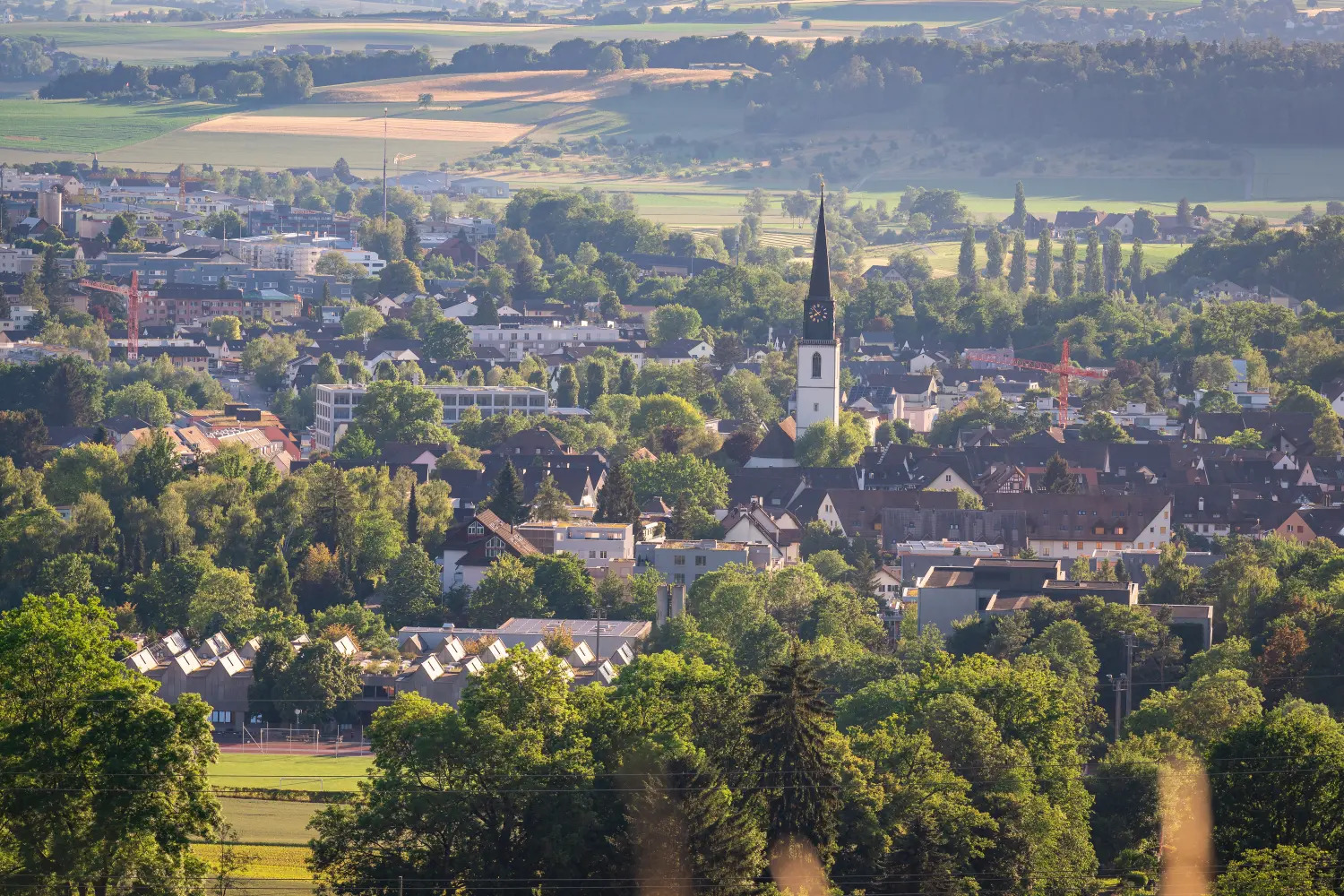
    Three exceptions to planning security for Bremgarten

    Bremgarten began the overall revision of its land use planning over seven years ago. Regulations and documents were revised in several stages, always with the involvement of the population. In October 2024, the municipal assembly approved the revision, followed by approval from the cantonal government in December 2025. Two appeals lodged against this were both rejected.

    Rezoning as the centerpiece
    The most important measure in the settlement area is the rezoning of the Oberebene area from a pure work zone to a new residential and work zone. At the same time, a core zone for the development of the station area will be established and the Oberebene work zone will be strengthened as an economic focus of regional importance. This creates scope for investment and urban development.

    New regulations for cultural land and the old town
    The cultural land plan establishes binding overarching open spaces and water areas. This includes the water and migratory bird reserve of national importance. The regulations for building in the old town were also reviewed and clarified. An important signal for property owners and investors who need planning security.

    Three points still open
    The government council sent back three amendments. The non-protection of two properties at Birrenbergstrasse 10 and Glärnischweg 5/7 and the proposed deletion without replacement of a paragraph on roof breakthroughs in the building and usage regulations. In November 2025, the city council had already secured a loan of 200,000 francs for the reprocessing.

    Municipality to decide in June
    The municipal assembly will meet again on June 11, 2026. This is when the three rejected items are to be finally resolved. Bremgarten is nearing the end of a long planning process and the start of a new phase of urban development.

  • What was considered a bargain becomes a billion-euro project

    What was considered a bargain becomes a billion-euro project

    When the city of Zurich announced the renovation of the armory on the barracks site in Zurich-Aussersihl, it still sounded like a manageable project. The initial cost estimate was around 55 million francs. Today, a figure of just under 200 million francs is on the table that makes even experienced city parliamentarians sit up and take notice. A multiplication that needs to be explained.

    Dilapidated fabric drives up costs
    The main driver is the fabric of the building itself. The historic arsenals are in a far worse condition than originally assumed. Pollutant remediation, structural interventions and monument conservation requirements add up to a cost that was simply underestimated in advance. Added to this are increased construction costs and an expanded usage concept that requires higher technical standards.

    Culture, commerce and community
    What is to be created after the renovation has substance. The city council is planning a mixture of cultural use, small businesses and publicly accessible spaces. A lively meeting place in the middle of Zurich-Aussersihl. The social mix is an explicit part of the concept. The aim is to enhance the barracks area as a whole, not just the arsenals themselves.

    Long road to opening
    The timetable is ambitious and the history of the project calls for caution. The renovated arsenals should be ready for occupation in 2034 at the earliest. Until then, the municipal council will need to approve a loan, an approved construction project and a smooth construction process. In Zurich, experience shows that these three factors rarely all work smoothly at the same time.

    Monument obliges
    The arsenals are part of the protected barracks area. An ensemble that makes the city’s history visible. Demolition is out of the question. If you want to preserve historic buildings, you have to be prepared to pay for them. The question is not whether, but how the city finances this task and communicates it transparently, comprehensibly and with clear added value for all Zurich residents.

  • 47 million for a new heart in the Bernese Oberland

    47 million for a new heart in the Bernese Oberland

    The overall project will cost 47 million francs. Financing is being provided by a newly established site development company in which four partners are participating. The city of Thun is granting a mortgage-backed, interest-free loan of 16 million francs and is also guaranteeing a cantonal loan of 10 million francs as part of the new regional policy. Empa itself is investing CHF 16 million in laboratories and a technical center, while Halter AG is contributing CHF 5 million as a development partner. Once the project is completed, the company will be transferred to investors.

    Building permit is available
    The way was not clear. Objections delayed the process by around a year. The building permit for construction site B5 in Thun North has now been granted, with construction set to begin in spring 2027 and completion scheduled for the end of 2029. The city parliament will decide on the loan on 30 April 2026. A clear yes is needed to keep to the schedule.

    Empa in Thun since 1994
    The Swiss Federal Laboratories for Materials Science and Technology has been conducting research in the field of high technology and materials in Thun since 1994. The new building is not a relocation, but an expansion. Mayor Raphael Lanz puts it in a nutshell. Empa secures highly qualified jobs in research and development in the long term, generates regional added value and strengthens Thun as a location for technology and innovation in the Canton of Bern.

    From barracks site to urban quarter
    Thun North is the largest urban development project in the Bernese Oberland. On the 60-hectare site, research companies, businesses and housing are replacing military use. in the long term, 6,500 jobs are to be created; around 2,300 are already located there today. A new Thun Nord S-Bahn stop is included in the federal parliament’s 2035 expansion plan and will connect the district directly to long-distance transport.

    Halter as a lever
    It is no coincidence that Halter AG is contributing CHF 5 million to the project as a development partner for construction site B5. The company won the project competition in 2022 together with Bauart Architekten and Balliana Schubert Landschaftsarchitekten. The composition shows the concept. Private capital and the public sector are pulling together, and the location is sharing the risk because it is thinking about the return.

    What counts now
    April 30 is the date that decides everything. If the city parliament approves the loan, planning gets underway. If the loan fails, the entire timetable is thrown into disarray. This would be a setback for Thun North and a location issue for Empa. The city has already paid its share of the bill. Now it’s up to parliament.

  • Partnership drives smart urban development in the region

    Partnership drives smart urban development in the region

    The City of Thun and the Smart Regio Thunersee association have signed a cooperation agreement. According to a press release, the collaboration will be guided by the Smart City Thun vision.

    “The partnership aims to drive innovation in a targeted manner, use resources efficiently and further develop the city of Thun and the Thunersee region as an attractive place to live and do business,” said Councillor Andrea de Meuron, Head of the Finance, Resources and Environment Department, in the press release.

    The Smart City project, developed as early as 2021/22, aims to make Thun “liveable, progressive and resource-efficient”. Digitalisation is to be used to increase the efficiency of services. At the same time, there is also a desire to bring together the various forces within society.

    The agreement now concluded is intended to strengthen selected innovation and networking formats. As concrete projects, Thun-based SMEs are planning to use cargo bikes for inner-city transport; an information day on this will take place on 2 June 2026. In the autumn, the focus will be on the circular economy in construction. “We don’t just want to discuss smart projects, but actually initiate and implement them, working closely with the city and the local community,” says Markus van Wijk, President of the Smart Regio Thunersee association.

  • Spatial planning is taught in a practical manner in the classroom.

    Spatial planning is taught in a practical manner in the classroom.

    Planning officials from Baden Regio initiated a spatial planning project with students from the Wettingen Cantonal School in autumn 2025. According to a recent announcement, the planners designed three lesson blocks in the specialised subject of humanities and social sciences. Working methods and planning tools were presented, and opportunities for public participation were explained.

    In practical projects, students analysed their immediate school environment and then developed proposals for the design of the western part of the monastery peninsula. In further lessons, the young people worked with their teachers to explore different housing concepts, housing needs and their influence on urban development. The focus was on social components.

    “The practical perspective and in-depth expertise of the speakers from Baden Regio opened up valuable new perspectives for both the pupils and the teachers,” said Oliver Schneider, a teacher at the Kantonsschule Wettingen, in the press release. “The lively interplay between theoretical principles and their direct application to a concrete example made the topic of spatial planning tangible and easy to understand. This aroused curiosity, promoted networked thinking and encouraged the students to look beyond their usual boundaries.”

    Those involved from Baden Regio and the teaching staff noted that it was striking how important the coexistence of people was to the pupils.

  • Urban change on the Wellis site

    Urban change on the Wellis site

    One of the region’s most exciting transformation areas is located between the railroad station and the old town. Halls, warehouses and work yards are being transformed into an urban quarter with its own character. The area thus plays a key role as the gateway to Willisau.

    The area is roughly the same size as the historic old town. The previously closed production site is being transformed into an open piece of town. Paths, squares and open spaces will connect the station, the old town and the district. The previous barrier will become an urban interface.

    Mixture instead of monofunction
    The development clearly focuses on a mixture of uses. Several hundred apartments of different sizes and typologies are planned, supplemented by areas for commerce, services and local amenities. Living, working, shopping and leisure are moving closer together.

    It creates frequency throughout the day, increases the utilization of the infrastructure and reduces dependency on a single type of use. At the same time, it opens up scope for new forms of work, small-scale service providers and local suppliers.

    Identity from the industrial past
    The Wellisareal remains recognizable as a place. Parts of the existing building fabric will be preserved and used for new purposes. The industrial character not only provides history, but also identity. It clearly distinguishes the district from green meadow developments on the outskirts of the town.

    New buildings complement the existing buildings without covering them up. A high point marks the area in the silhouette of Willisau. The decisive factor here is not the height alone, but the effect in the urban space. This creates an image that remains anchored in the perception of residents, visitors and investors.

    Open space as a location factor
    The project consistently combines density with open space. Generous green spaces, trees, squares and paths structure the quarter and ensure a quality of stay. Instead of the inner courtyard as a residual area, the open space is at the center of the concept.

    For future users, this is more than just a matter of comfort. Shaded recreational areas, well thought-out outdoor spaces and differentiated microclimates are becoming hard location factors. They influence rentability, image and long-term value development. A robust open space concept also supports the adaptability of the neighborhood over its life cycle.

    Rebalancing mobility
    The location directly next to the train station and close to the old town allows for a low-traffic approach. Priority is given to pedestrians and cyclists, with public transport services within walking distance. The project deliberately reduces the number of parking spaces and focuses on alternative forms of mobility.

    For local authorities and investors, this means less land consumption for cars, more space for value creation and quality of life. At the same time, there is increasing pressure to think of mobility as an integrated offer. From sharing solutions to logistics and neighborhood services.

  • Thun North is developing into a new district

    Thun North is developing into a new district

    The future new district of Thun North is one of the four most important cantonal development priorities and the most important in the Bernese Oberland, according to a statement from the city of Thun. A future-oriented urban quarter and a business location with supra-regional appeal is to be created here on a 60-hectare site. The area will be accessed via a new S-Bahn station.

    Half of the site belongs to Armasuisse Real Estateand half to RUAG Real Estate AG. In 2025, the city of Thun conducted a so-called workshop process with them and BLS for the core area around the planned railway station. Three interdisciplinary teams worked with experts and various stakeholders to develop proposals. From these, an advisory committee derived key parameters for further development.

    The basic framework of the new district is to be formed by open spaces. This will be characterised by the Aare river, the roads, the railway area and the townscape. The existing shed roof hall will form the backbone of the complex. The two landowners want to concentrate their closed industrial sites on the area west of the Alpine Bridge and on the grounds of the textile centre. Mixed uses are planned outside these areas. The Swiss Federal Laboratories for Materials Testing and Research (Empa) will also be one of the key players with its new campus.

    The results of the workshop process will be on display at Thun Town Hall until 6 March.

  • Klybeckquai and Westquai as a hinge between the city and the future

    Klybeckquai and Westquai as a hinge between the city and the future

    Klybeckquai and Westquai have been among the most vibrant places in Switzerland for over a hundred years. This is where the city meets the port, the Rhine, the river Wiese and three countries. The ongoing modernization of the port infrastructure, in particular the relocation of the port railroad to the Südquai, opens the door to the urban transformation of this striking urban area. This will create unique opportunities for the Klybeck and Kleinhüningen districts. They are gradually moving closer to the Rhine and the River Wiese and gaining in quality of life and amenity. Urban growth, social diversity and sustainable integration.

    At the heart of the new development concept is the consistent expansion of the Klybeck district towards the Rhine. The plans include a variety of affordable apartments, neighborhood-friendly uses and spacious perimeter block developments that strengthen the urban climate with green courtyards. The striking neighborhood park, which will develop from the Ackermätteli, and an extended, widened Rhine promenade will connect the neighborhood even more closely with the river and offer space for encounters, leisure, recreation and nature. The barrier of the former railroad tracks will disappear, but the traces of industrial history will be preserved as an identity. The focus on pedestrian and bicycle traffic as well as a new streetcar line promote sustainable, future-proof neighborhood mobility.

    Westquai space for the future
    Westquai will initially remain an industrial and commercial zone, but will gradually develop into a new urban hotspot from 2030. The innovation area between the port, the Rhine and the border triangle offers space for work, urban production, leisure, gastronomy, culture and a variety of green and open spaces. The future use should remain open in order to be able to react flexibly to social developments. Existing buildings will be preserved as far as possible in line with the net zero target for 2037.

    More greenery, more opportunities, more quality of life on the waterfront
    With the expansion of the natural and open spaces by 20,000 m², half of the site now comprises high-quality green areas. A substantial contribution to the biotope network and urban climate. The new district park and the two-kilometre-long Rhine promenade make the river a tangible experience for the city’s population. The strengthened open space fulfills central requirements of urban development and will become the social heart of Basel’s urban network.

    Klybeckquai and Westquai will create urban life on the waterfront. Basel is using the interface between past and future, industry and innovation to give the city a new face on the Rhine.

  • Wolf-Areal Basel affordable apartments

    Wolf-Areal Basel affordable apartments

    SBB is pressing ahead with the transformation of the former Wolf freight station into an urban living and working quarter. As with the Volta Nord project, former railroad areas are being opened up for living, working and leisure.

    from 2028, around 270 apartments will be built on two building plots in the heart of the site, specifically positioned in the affordable segment.

    low-cost rent and contemporary forms of housing
    The Basler Wohngenossenschaft is planning around 150 cooperative apartments, while Vivanta is planning around 120 additional affordable units. All apartments will be built according to the cost-rent principle, which allows for moderate rents in the long term.

    the concepts are based on contemporary forms of living for different phases of life, from families to singles to older people. Communal areas and meeting zones are intended to strengthen neighborhood life and promote social networking.

    Non-profit partners with a clear mission
    BWG and Vivanta pursue an explicitly non-profit mission. To secure affordable living space while maintaining high quality and sustainability standards. The projects should demonstrate that ecological construction methods are compatible with affordable rents.

    building rights as a development instrument
    Building plots are allocated on the basis of a partnership-based building rights agreement developed jointly by SBB, the Federal Office for Housing and the Swiss Housing Association. This model creates reliable conditions for non-profit developers and accelerates the realization of affordable housing in city centers.

    with the development of the Wolf site, SBB is continuing to pursue its strategy of opening up areas that are no longer required for operational purposes for modern urban use and making a substantial contribution to affordable housing.

  • Expansion of Basel SBB West station

    Expansion of Basel SBB West station

    Basel SBB station has long since reached its limits. Over 140,900 people use it every day, and the trend is rising. With the Basel SBB West project, the partners are preparing the station for this development. A comprehensive extension is planned in the west of the site, where the train stop will be moved further west in future and additional access to urban traffic will be created. Two closely linked sub-projects form the core, the Margarethen platform access and the new construction of the Margarethen Bridge.

    The new passenger bridge for the Margarethen platform access is to run parallel to the existing Margarethen Bridge. It will be around 16.5 meters wide, have stairs, escalators and lifts and provide access to all platforms. To make this possible, SBB is extending several platforms to the west and adapting the track layout. The project thus responds to the expected growth in rail traffic and at the same time relieves the existing passerelle at the main station.

    Linking rail and city
    In addition to rail planning, urban integration plays a central role. The canton of Basel-Stadt is planning a new multimodal transportation hub to the west of the station, at the Markthalle site. Here, the transfer between train, streetcar, bus and bicycle is to become even more efficient in future. This reorganization will relieve the overcrowded Centralbahnplatz and enable a more balanced traffic regime in the city center.

    The Margarethen platform access is more than just a bridge. It will become a link between the new urban traffic axes and the rail network. It offers space, light and orientation. Features that are particularly important in highly frequented traffic zones.

    A new Margarethen Bridge with a signal effect
    The second sub-project is dedicated to the renewal of the Margarethen Bridge. The existing bridge is owned by SBB and only meets current safety requirements for heavy goods traffic with restrictions. In addition, it does not meet the future requirements of SBB and the canton on both the rail and road sides. The new bridge will therefore not only be structurally more efficient, but also significantly wider – 27 meters compared to 16.3 meters today. This will create space for a barrier-free streetcar stop in the middle of the bridge as well as wider footpaths and cycle paths.

    A temporary auxiliary bridge is planned during the construction period. The possibility of integrating this temporary structure into the new building at a later date is being examined. This solution should minimize construction interruptions and ensure urban mobility during the entire implementation phase.

    The winning project by Penzel Valier
    In the spring of 2025, an assessment panel of independent experts and representatives from SBB and the canton evaluated the proposals of six interdisciplinary planning teams as part of a study commission. The contract was awarded to Penzel Valier. Their design impresses with a generous, flexibly expandable roof that spans both the new streetcar stop on Margarethenbrücke and the platforms. This creates a hall-like space that characterizes the western part of the station.

    The roof fulfills several functions at the same time. It brings daylight onto the platforms, protects against the weather and allows the installation of photovoltaic systems and greenery. In terms of urban planning, this creates a harmonious link between the SBB station, the listed SNCF hall and the adjacent Gundeldingen and St. Johann districts.

    The SNCF hall itself will be retained in the context of the French part of the station and in its function as a platform canopy. This was a key concern of the conservation authorities. The hall will be moved to the west to create space for the new track layout.

    Planning, financing and time horizon
    The Margarethen platform access is part of the 2035 national rail expansion phase. The federal government has already approved the planning and preliminary project planning. While the Margarethen platform access is financially secured, the funds for the implementation of the new Margarethen Bridge are still being decided. Both projects can be built technically independently of each other, but should be realized at the same time if possible.

    The planning requirements are high. They take into account ongoing rail operations, the protection of historic buildings and integration into the dense city traffic. Construction is currently scheduled to start in 2034 at the earliest. The project volume for both project elements (platform access and bridge) is estimated to be in the low to mid three-digit million range.

    More than infrastructure – a new entrance for Basel
    Basel SBB West will not only provide the city with a strategically important transportation hub, but also a new entrance to the city. The relocation of train traffic to the west will create space for clearer traffic routing, a better quality of stay and greater safety for cyclists and pedestrians. In future, travelers will experience shorter routes, generous spaces and intuitive orientation.

    The interaction between trains, streetcars, buses and bicycles will become more efficient, more sustainable and more pleasant. At the same time, the project forms the structural foundation for future expansions such as the possible Basel SBB underground station. In its entirety, Basel SBB West thus stands for a new generation of railroad stations – open, networked and future-proof.

  • Future area in the north of Basel creates living and working space

    Future area in the north of Basel creates living and working space

    The Klybeck site in the border triangle of Basel is to become a modern neighbourhood on the banks of the Rhine. According to a press release, the planning partners Canton Basel-Stadt, Swiss Life and Rhystadt have initiated the klybeckplus indicative project, which forms the basis for the utilisation planning.

    The approximately 30-hectare site is to become a mixed neighbourhood with residential complexes, commercial buildings and parks. The aim is to create living space for 8,500 people. According to the plans, a third of the flats will be made available to the public for rent at cost. In addition, 7500 jobs are to be created. The two owners, Swiss Life and Rhystadt, will invest 3 billion Swiss francs in the renovations, according to the press release.

    “The finalised indicative project, as it is now available, offers a good basis for realising the enormous potential of the site and creating significant and, above all, long-term added value for the population and the entire region,” Christian Mutschler from Rhystadt is quoted as saying in the press release. Jürgen Friedrichs from Swiss Life adds: “The indicative project shows how the diverse objectives from residential to open space can be combined while at the same time ensuring structural, spatial planning and economic feasibility.” District President Conradin Cramer is convinced that the project will create an “attractive new part of the city for the well-being of the population”.

  • Basel plans consistently climate-friendly and future-oriented

    Basel plans consistently climate-friendly and future-oriented

    Ms. Keller, how do you rate the progress made so far in sustainable urban development and what are your priorities for the coming years?
    We have already done a lot – but there is still a lot to do! We have set an important course with our urban climate master plan and climate protection strategy as well as the associated action plan. In particular, we are taking a comprehensive approach to greening and unsealing as well as reducing CO2 emissions. In addition to reducing direct emissions from operations, my department is also concerned with indirect emissions from the construction of buildings. We are currently examining new approaches here, such as an incentive tax on indirect emissions from construction. We are densifying and converting existing buildings and want to simplify the construction of existing buildings in future by amending the law. These are the guidelines for how we want to promote sustainability in urban development over the next few years.

    What measures are you taking to strengthen building culture in Basel and promote high-quality, sustainable construction?
    Building culture is very important to us: the people of Basel should feel comfortable in their city. Of course, this is also a key basis for achieving the climate targets, which is why a forward-looking building culture is extremely important. A high level of building culture creates identification and quality of life. Both the preservation and further development of existing buildings, the maintenance of traditional building methods and the use of sustainable technologies and buildings make a significant contribution to this. Building culture is sustainable and sustainable planning must become an integral part of building culture. Incidentally, this is also very well illustrated in our “Basel Compass”, where building culture is mentioned and addressed as one of the first points.

    What contribution can the Department of Construction and Transport make to the circular economy in order to achieve the goal of net zero by 2037?
    Basel-Stadt has an ambitious strategy to promote the circular economy in the construction sector. This means that we want to design buildings and construction products in such a way that they can be used for as long as possible and are made from reused or recycled materials. An important focus is on continuing to build and use existing buildings instead of demolishing and rebuilding them. This not only reduces waste, but also cuts the greenhouse gas emissions that are normally generated during the production of new building materials. New buildings should also increasingly be constructed in such a way that they can be dismantled and made available as building material for the next structure at the end of their useful life (design for disassembly). Basel-Stadt also promotes the use of recycled materials in the construction process, such as recycled asphalt for road surfaces. We are working to create a legal framework to facilitate circular construction and we are investing in the infrastructure needed for the reuse and recycling of building materials. For example, the canton has set up its own building materials warehouse: Cantonal deconstruction material is recorded in an online construction parts catalog and made available for reuse in other projects. With these measures, we not only want to improve our carbon footprint, but also promote innovation in the construction sector.

    What are the next steps in the “green asphalt” project and how do you assess the climate protection potential of this innovation?
    The use of green asphalt on road construction sites in Basel is developing well. Within the city, green asphalt has been used on at least eight larger and smaller construction sites. Examples include Burgfelderstrasse, Freiburgerstrasse and the Eselweg. Further projects are currently underway in which the use of green asphalt is planned. However, green asphalt does not directly reduce CO2 emissions. However, thanks to biochar, green asphalt binds more CO2 from the atmosphere than it releases during production. In this way, we can reduce the climate impact of road construction. However, it is not yet a sure-fire success. There are still critical manufacturers and associations. We must continue to seek dialog and highlight the opportunities.

    What are currently the biggest challenges in maintaining and modernizing the public infrastructure in Basel?
    The challenges are many and varied. One key aspect is the need to regularly renovate existing infrastructure such as roads, bridges and streetcar tracks in order to ensure a reliable supply of water and energy. At the same time, IWB is expanding the district heating network by a total of 60 kilometers by 2037 on behalf of the canton of Basel-Stadt. This requires close coordination with the other renovation work in order to minimize the impact on residents and at the same time take the opportunity to redesign the urban climate and active transport. After all, climate change is also a challenge. On the one hand, we need to prepare the city for heat waves and extreme weather events. To avoid heat islands, we need to unseal asphalt surfaces and create green and water areas in public spaces. On the other hand, the canton has set itself an ambitious climate protection target of net zero by 2037. We are therefore increasingly focusing on renovating buildings and converting existing buildings, for example, and are focusing on sufficiency, reducing grey energy and minimizing operating energy consumption.

    To what extent is digitalization, for example with new apps for passengers, part of your strategy to increase the attractiveness of public transport in Basel?
    Digitalization is very important for public transport. Passengers want to use the app to find out about timetables or any service disruptions and also buy their tickets conveniently. Digitalization is also key when it comes to sharing and combining different vehicles. Many of us combine our streetcar or bus journey with a rental vehicle: depending on where we live, we take a rented bike, scooter or car to the stop or from there to our destination. The majority of us already book or pay for these rental vehicles digitally. The aim must be to have digital solutions that conveniently connect all these services. The big breakthrough has not yet been achieved; there are many players and challenges along the way. But we are working on solutions.

    What are currently the biggest challenges in cross-border coordination with the canton of Baselland and neighboring countries with regard to public transport?
    In our region, we are all used to crossing cantonal or national borders every day. Accordingly, we also plan a lot of things together across borders in the region – especially when it comes to mobility. Many streetcar and bus lines operate both in the Basel region and in Basel. We also have two cross-border streetcar lines – one from Basel to St. Louis (F) and one from Basel to Weil am Rhein (D). These are very successful and are well used, but financing the maintenance and operation of the sections in the neighboring countries is a challenge. However, the biggest challenge at the moment is probably not so much coordination within the region, but the fact that we as a region are sometimes not sufficiently recognized by the federal government. The current discussions surrounding the urgently needed rail expansion in Basel demonstrate this. I am grateful that we in the region are all pulling together and fighting for a tri-national S-Bahn that is worthy of the name. A continuous S-Bahn system has great potential for shifting journeys from road to rail.

    What is your concrete timetable for converting the entire bus fleet to electric drive by 2027 and what challenges still remain?
    This conversion is in full swing and on track. Around half of BVB buses are already electric. Basler Verkehrs-Betriebe will convert its entire bus fleet to e-buses by 2027. BVB is thus making a significant contribution to helping Basel achieve its ambitious climate targets.

    You are heavily networked in national bodies. What trends or best practices from other cities and regions inspire you for Basel in particular?
    The exchange with other cities is always enriching. They all struggle with the same challenges, such as conflicting objectives in tight spaces. I am watching the pilot tests with autonomous public transport services in other cities with interest. As President of the Urban Mobility Conference, it is important to me that we set the right course in this area at an early stage and are equipped for new challenges such as autonomous vehicles. Such new developments should be a win-win situation for all sides. However, this requires certain framework conditions.

    Is there anything you would like to see in Basel? Something from other cities around the world that has impressed or inspired you?
    When you look at Asian cities, you are sometimes impressed by the speed at which projects are realized, especially in building construction and civil engineering. On the other hand, I am very grateful that we have democratic processes in Switzerland, which are lengthy but ensure that people are involved and can have an influence. I am convinced that this participation – whether via parliament or directly via the population – is a key to greater acceptance and therefore also to social cohesion.

  • From the depot to a climate-resilient urban district

    From the depot to a climate-resilient urban district

    The starting point for the development is the withdrawal of the CKW depot in the context of the large-scale transformation around Seetalplatz. Based on a two-stage study commissioned by CKW and the city of Lucerne, the “Habitat – Quartier im Hain” project was selected in 2022. The careful handling of existing buildings was decisive. In particular, the Shedhalle and the consistent integration of open spaces and rainwater management.

    The ideas of the winning project were then applied to the entire perimeter of the development plan and enshrined in planning law. The result is a coordinated overall figure that combines private properties and the former factory yard area into an urban development whole.

    Urban development, mixed use and sponge city
    For reasons of noise and urban space, the north-eastern part of the area is characterized by larger, mixed-use buildings in closed construction. Living, working, services and first floor uses are concentrated here along streets and squares. The western part focuses on open residential buildings, connected green spaces and paths that link the adjacent neighborhoods.

    The central element is a topographical depression in the west, a former floodplain. It serves as a retention area for rainwater and forms the basis of the “urban grove”, which characterizes the district with trees, infiltration areas and a cooling microclimate. Rainwater management, climate-adapted open space design and the sponge city principle thus become key components of the district’s identity.

    Social mix and diversity
    When completed, around 700 to 800 additional apartments are planned for Reussbühl West, at least 20 percent of which will be non-profit. They will be supplemented by multi-purpose rooms and around 15,000 to 18,000 square meters of work space for businesses and services. Short-term rentals will be limited to the areas already available today and are only permitted in construction site C9. This is a deliberate signal in favor of long-term residential and neighborhood structures.

    The existing shed hall will be opened up for public-oriented uses and will function as an address for culture, leisure or small-scale businesses. Together with the first floor uses of the new buildings, a mixed-use, all-day lively environment will be created that closely interlinks living, working and public facilities.

    Legal planning basis and timeline
    The “Reussbühl West” development plan sets out the main elements of the urban design and the distribution of uses in a way that is binding on the landowner and allows for staggered implementation. It is open to the public from November 24 to December 23, 2025. Objections and negotiations will be incorporated into further processing before the plan is submitted to the City Council.

    Together with the “Reussbühl Ost” development plan, which is already legally binding, this will create a legal planning framework for an upgraded, mixed-use district with a total of around 1,000 additional apartments and 15 to 20 percent commercial space. The densification will take place gradually. The first non-profit apartments and new commercial space are already under construction in Reussbühl Ost, marking the transition from an industrial area to the urban city building block of the next generation.

  • New urban quarter at Winterthur railroad station

    New urban quarter at Winterthur railroad station

    The Stellwerk 2 project is being built on a site of just 2,000 square meters right next to the train station, combining living, working and mobility in a small space. The new building comprises 66 city apartments and around 2,000 square meters of space for offices, education and healthcare. On the first floor, a spacious retail zone of 700 square meters will provide for public-oriented uses. The aim is to make optimum use of existing railroad land without additional sealing.

    Compact units with one to three and a half rooms will be created on the upper floors. Guest rooms and communal areas promote flexible forms of living and social interaction. An approach that responds to changing urban lifestyles. The project was developed by Zurich-based Esch Sintzel Architekten, which won the 2021 SBB competition in close cooperation with the city.

    Hub for two-wheelers and everyday life
    Stellwerk 2 is being built not only to live and work in, but also to facilitate movement. In the basement, 360 new bicycle parking spaces are being created with charging facilities for e-bikes, cargo bike zones and lockers. Together with 150 recently created spaces in the existing building, the capacity of the neighboring bike station will increase to around 510 units. The new building will be connected to the existing facility under Signal Box 1 via a new passageway.

    For city councillor Christa Meier, the project is emblematic of the transformation to a mobility city: the signal box will become Winterthur’s actual bicycle hub and strengthen the station’s role as a multimodal center.

    Realization in stages
    With Stellwerk 2, SBB Immobilien and the city of Winterthur are demonstrating how urban densification and the traffic turnaround can go hand in hand. A place where living, working and sustainable mobility merge into a new urban entity.

  • Bellinzona transformiert

    Bellinzona transformiert

    The historic SBB workshops, the centrepiece of Ticino’s industrial history, are making way for a district that serves as a model for sustainable urban development, an innovative mix of uses and high-quality living spaces. The political, economic and urban development significance of the project extends far beyond the borders of Bellinzona.

    Historical continuity
    The SBB offices have shaped the city centre for more than a century, providing thousands of jobs and an independent industrial identity. The relocation and replacement construction of the SBB industrial facilities in Arbedo-Castione by 2028 will create a rare development opportunity in the centre of Bellinzona. Over 100,000 square metres will be freed up for a comprehensive urban redevelopment, with a balance between tradition, innovation and strategic urban development.

    Participatory guiding process
    The redesign of the site is based entirely on participatory processes. The development process began with an international urban planning competition. Five European planning teams competed against each other, with the “Porta del Ticino – Urban Living Lab” project ultimately coming out on top thanks to its bold use of green space, multifunctionality and attractive density. Public consultations and a broad-based residents’ dialogue ensured broad acceptance and political backing. A representative survey showed that 65 per cent of the population supported the winning concept. Younger generations in particular have high expectations of innovation and quality of life.

    Urban structure, mix and development phases
    The masterplan concept envisages a clear linear tripartite structure for the site. Two peripheral zones combine flats, cooperatives, administrative and research uses, universities, commercial and hotel facilities. In the centre, the spacious Almenda will be a public green and meeting space that will serve as a social, cultural and ecological focus. The implementation period for the realisation of the district extends over several years in order to gradually create lively, resilient living, working and research landscapes. This guarantees flexible management of market dynamics and avoids vacancies or excessive property yield orientation.

    The striking “cathedral”, a listed building dating from 1919, will remain as a cultural magnet and will be transformed into a meeting and event venue. A worthy perspective for a landmark of industrial labour culture.

    A real laboratory of urban change
    The development plan commits to the highest sustainability standards, with the aim of achieving the Swiss Sustainable Building Standard (SNBS). Fossil fuels are excluded, and comprehensive photovoltaics and greenery, rainwater utilisation in the spirit of the “sponge city”, energy-efficient district heating and active promotion of electromobility are integral components. An energy plan supports the objective of covering a large part of the neighbourhood’s electricity requirements locally. Wide green spaces, biodiversity, urban gardening, resource-saving construction methods and low-emission mobility round off the ecological profile.

    Special attention is paid to intergenerational housing models, educational and research facilities, start-up promotion and the new innovation park, which will give Bellinzona a model character and regional appeal

    Model character and regional appeal
    The project combines socio-cultural values, sustainable infrastructure, entrepreneurial innovation and ambitious living and quality of life to create a new urban “engine” for the region. With its combination of participatory governance, versatile utilisation options and resilient open spaces, Bellinzona is setting exemplary standards for Swiss and European urban development in the coming decades.

  • St. Gallen modern urban development with double railway station

    St. Gallen modern urban development with double railway station

    The development model was developed jointly by urban planning, landowners and the neighbourhood association in a broad, cooperative process. Four workshops between June 2024 and May 2025 ensured broad participation and made it possible to identify specific opportunities for the nine sub-areas.

    Potential and spatial focus
    The structure plan identifies nine sub-areas, from Straubenzellstrasse to Debrunner Ost, which are to be developed individually and with a mix of uses. The area offers additional floor space potential of around 80,000 m², which can be used specifically for housing and workplaces. Better links between the neighbourhoods, more green and open spaces and new public squares are planned.

    Railway station as a driver of urban development
    The future relocation of Bruggen railway station to the east and its merger with Haggen railway station are one of the reasons for the project. They eliminate existing barriers and make large-scale accessibility possible. The planned passerelle creates new path connections and improves the integration of neighbouring districts such as Lerchenfeld. The railway station project influences the ongoing local planning revision and serves as a lever for sustainable, urban densification.

    Future prospects and planning security
    The development model provides the city and landowners with binding guidance for upcoming implementation projects in individual areas for the first time. The next steps concern the project planning for the railway station, including the Passerelle, and the transfer of the findings to the overall revision of local planning.

    Thanks to forward-looking planning and an integrative project structure, the Bruggen-Haggen area is on the verge of becoming an urban, mixed-use district with a high quality of life, better accessibility and targeted growth in area.

  • Forum Bauen digital Schweiz focuses on smart cities

    Forum Bauen digital Schweiz focuses on smart cities

    The next Forum Bauen digital Schweiz / buildingSMART Switzerland of the Zurich-based platform of the same name will take place on 21 October between 1.30 and 5 p.m. in Schlieren. The event will be hosted by property company Halter, as detailed in an announcement.

    The digital Switzerland / buildingSMART Switzerland platform is committed to the digital transformation of the Swiss construction and property industry and organises its forum twice a year in this context. At the event on 21 October, the focus will be on smart cities and sustainable urban development. The keynote speeches will be given by Sarah Schalles, Director of the Seed Next Generation Living initiative, and Ole Bühlmann from Halter AG. Further presentations will round off the event, which will end with a drinks reception.

    Registration for the forum can be made online.

  • Study shows enormous densification potential

    Study shows enormous densification potential

    Overall, there is sensible development potential in 30% of the existing settlement areas, which could provide space for 2 million new residents and 1.1 million jobs if a realization rate of 70% is achieved.

    The study, carried out by Sotomo on behalf of Urbanistica, suggests that sustainable inner-city development can only succeed if density and settlement quality are combined. Pure densification in locations with good traffic and infrastructure is not enough. Rather, improved local amenities, more green spaces, suitable quiet areas and a differentiated mix of uses must ensure quality of life and social acceptance.

    Agglomerations as focal points and areas of opportunity
    Although cities such as Bern and Zurich have the highest potential per area, the greatest absolute potential lies in the agglomerations. Up to 870,000 people could find new living space there through internal development alone. Municipalities such as Schwerzenbach, Opfikon and Vernier lead the ranking in terms of their development potential.

    Challenges in terms of settlement quality
    At the same time, the study reveals considerable quality deficits, particularly in agglomerations and cities. Problems include an unbalanced mix of uses, noise and insufficient greenery in urban areas as well as a lack of local amenities and access to recreational areas in peripheral zones. There are structural and social deficits, particularly in monofunctional commercial areas and parts of western Switzerland.

    Practical application and new business areas
    For investors and planners, the study offers a precise “treasure map” for identifying clearly usable properties and areas down to zone level. This facilitates strategic decisions and minimizes investment risks. In addition, the data supports the argumentation towards authorities and the population, which can accelerate the process of planning and approval procedures.

    The upgrading of existing sites opens up major opportunities for the construction and real estate industry. The transformation of monofunctional commercial areas into lively, mixed neighborhoods is considered a model for success and an important response to the housing shortage and rising construction costs.

    Internal development as the key to sustainable growth
    The study focuses on the fact that internal development is not just a question of space, but above all a question of quality. By concentrating on already developed areas, infrastructure costs can be reduced and urban sprawl curbed. The challenge remains to create social acceptance for redensification and to remove structural barriers. This is a prerequisite for sustainable and liveable urban development in Switzerland.

    This study therefore provides a promising, data-based foundation for future urban and regional development in line with the Swiss Spatial Planning Act.

  • Development site at Zofingen railway station gains a new perspective

    Development site at Zofingen railway station gains a new perspective

    Pensimo has acquired the western part of the former Swissprinter site near Zofingen railway station through its Turidomus real estate investment foundation. The 27,636 square metres of land was owned by Ringier Areal AG. Together with the town of Zofingen and the Basel-based architectural firm Christ & Gantenbein, Ringier Areal AG had developed a strategy for converting the site into a mixed residential and working neighbourhood and was looking for an investor.

    According to a press release issued by Pensimo, a study contract will be launched next year to clarify the urban planning ideas and sharpen up the housing offer. At present, over 300 flats are planned, which will be built from 2028 and could be ready for occupancy from 2030.

    Alexander Büchel, the portfolio manager responsible at Pensimo, describes the acquisition of this “unique and strategically ideal development site” as a special opportunity. “Zofingen has an attractive location quality, is a cantonal development centre and the micro-location of the site is excellent.”

    The five building plots of the Areal-West site are to have a diverse range of flats and be certified in accordance with the Swiss Sustainable Building Standard. “We want to build on the industrial past,” says Büchel, adding that the aim is to develop a “sustainable offering”.

    The Swissprinters printing plant, like Ringier Areal a joint subsidiary of Ringier and NZZ, was closed in September 2024. The entire site covers around 55,000 square metres in a central location. According to Ringier Areal AG, it is currently pressing ahead with a development project for the eastern part of the site with the historic main building.

  • City of Zurich honors best construction projects 2025

    City of Zurich honors best construction projects 2025

    The award-winning projects, which were realized between 2021 and 2024, contribute to the identity and quality of life of the city of Zurich with their architectural quality, responsible use of resources and strong social connection. From Friday, October 3, to November 9, 2025, the award-winning buildings will be on display in the themed exhibition at the Zentrum Architektur Zürich.

    One hundred projects, ten awards
    “The quality and diversity of the hundred or so projects submitted was impressive,” explained Mayor Corine Mauch. The works submitted create lively urban spaces with a high quality of stay, promote social interaction and shape the identity of the neighborhoods. An interdisciplinary jury of experts chaired by City Councillor André Odermatt selected the ten outstanding buildings from this broad spectrum.

    Socio-spatial and ecological responsibility
    The assessment went beyond pure architecture. Socio-spatial aspects such as inclusion, meeting opportunities and the responsible use of natural resources were also included in the decision-making process. “What all these projects have in common is that they take responsibility for people, nature and the identity of the city. They shape how we perceive Zurich and create lasting memories,” says André Odermatt.

    Open space as the key to urban quality of life
    City Councillor Simone Brander particularly emphasized the importance of even small and inconspicuous open spaces: “These in-between spaces significantly determine how a city and its districts function and how we experience them.”

    Audience award goes to the new building of the University Children’s Hospital
    The audience award was determined by an online vote and went to the new building project of the University Children’s Hospital Zurich with around 300 votes. With its modern wood and concrete architecture, the building creates a warm atmosphere and sets new architectural and functional standards in healthcare construction.

    Award-winning projects
    Office and commercial building Binzstrasse
    Client: Swiss Life Asset Management AG
    Architecture: EM2N Architekten AG
    Landscape architecture: Balliana Schubert Landschaftsarchitekten AG

    Complete refurbishment of the “Im Birkenhof” housing estate
    Client: City of Zurich
    Architecture: Romero Schaefle Partner Architekten AG
    Landscape architecture: Westpol Landschaftsarchitektur GmbH

    Complete refurbishment of Zurich main station south wing
    Client: SBB AG, Immobilien Development
    Architecture: Aebi & Vincent Architekten SIA AG

    Complete renovation of Building Q, Werkstadt Areal
    Client: SBB Immobilien AG
    Architecture: Baubüro in situ ag
    Transformation of use: denkstatt sàrl

    House in the garden
    Client: Irma Peter
    Architecture: Loeliger Strub Architecture
    Landscape architecture: Permatur

    High-rise ensemble WolkenWerk and Messeturm
    Client: Leutschenbach AG, Nyffenegger Immobilien AG
    Architecture: Staufer & Hasler Architekten AG, von Ballmoos Partner Architekten AG
    Landscape architecture: Mavo GmbH

    Kongresshaus and Tonhalle Zurich – renovation
    Client: Kongresshaus-Stiftung Zürich
    Architecture: ARGE Boesch Diener
    Landscape architecture: Vogt Landschaftsarchitekten AG

    New University Children’s Hospital Zurich (Audience Award)
    Client: Children’s Hospital Zurich – Eleonorenstiftung
    Architecture: Herzog & de Meuron
    Landscape architecture: August Margrith Künzel Landschaftsarchitekten AG

    Provisional sports buildings
    Client: Canton of Zurich, Department of Structural Engineering
    Architecture: pool architects
    Landscape architecture: Balliana Schubert Landschaftsarchitekten AG

    Allmend school complex
    Client: City of Zurich
    Architecture: Studio Burkhardt – Studio for Architecture ETH SIA
    Landscape architecture: Ganz Landscape Architects

    Temporary sports buildings and school buildings were also recognized for their use of wood and sustainable design.

    Exhibition and podium
    The exhibition at ZAZ Bellerive offers the opportunity to get to know all the award-winning building projects in detail. On November 5, 2025, there will also be a panel discussion on the topic of “Weiterbauen: Strategies for the existing building stock”. Leading experts from the fields of architecture, planning and real estate development will discuss perspectives for urban redensification and the sustainable use of existing buildings.

    A prize with tradition and a sense of the future
    The City of Zurich’s award for good buildings is only presented every five years and is the city’s most prestigious architecture prize. By consciously taking sustainable and social criteria into account, it promotes a building culture that not only shapes Zurich today, but also makes it worth living in for future generations.

  • Schadenmühle Ost project invites public participation

    Schadenmühle Ost project invites public participation

    A consortium of three private landowners and the city of Baden is planning to transform the Schadenmühle Ost site into a place for sustainable, dense and mixed-use living. The current use of the site, which consists of individual buildings, car parks and unused areas, does not meet today’s requirements or the current building and usage regulations, the consortium explains in a press release. The Schadenmühle Ost transformation project aims to create an urban area with around 100 flats, flexible commercial space, green areas and an underground car park.

    On 16 September, the consortium presented the project and its integration into the city’s urban development plans for Baden at an information event. This marked the start of a new phase for the flagship project, according to the press release: from 22 September to 21 October, interested parties can now submit comments and suggestions on or objections to the Schadenmühle Ost design plan. The consortium is providing detailed information on the project on an information portal.

    “We are rooted in Baden and it is important to us to make the Schadenmühle Ost site attractive for the city,” Beni Schmocker, one of the four landowners, is quoted as saying in the press release. “Involving the local population is a matter of course for the landowners.”

  • 170-metre tower sets the tone in the Quartier de l’Étoile

    170-metre tower sets the tone in the Quartier de l’Étoile

    Halter AG, based in Schlieren, and Fordinvest (Schweiz) Immobilien GmbH, based in Pfäffikon SZ, are realising the Tour de l’Étoile 3 in Geneva. According to a press release, the high-rise building will be located in the new Quartier de l’Étoile in Geneva and will offer more than 300 flats, spaces for public facilities, restaurants, shops and services as well as a top floor open to the public. With a height of 170 metres and an area of over 50,000 square metres, it is set to become an architectural landmark in Geneva.

    The background to the project is the Praille-Acacias-Vernets(PAV) spatial planning project in Geneva. As part of this project, nine new urban neighbourhoods with over 12,000 flats, 6,000 workplaces, public facilities and open and green spaces are to be built over an area of more than 140 hectares in the coming years. The signing of the planning agreement with the Fondation Praille-Acacias-Vernets and the Canton of Geneva has now paved the way for the development of two high-rise buildings.

    Together with the high-rise building planned by Rolex, Tour de l’Étoile 3 will form a central element of the PAV development project and contribute to the social and functional diversity of the l’Étoile neighbourhood. Fordinvest acquired the existing Tour de l’Étoile back in 2000 and initiated the development of the new tower block. Halter is assuming responsibility for the realisation of Tour de l’Étoile 3 as the overall provider. The company is also already present in the PAV project with one completed high-rise project and plans to build another in 2026.

  • Densification and residential construction over railway tracks

    Densification and residential construction over railway tracks

    Centrally located railroad station areas in particular have enormous untapped potential. The redevelopment of railway yards is an urban development strategy that is already being used successfully around the world, for example in major cities such as London, New York and Vienna. In Swiss cities, too, this option is increasingly becoming the focus of debates on sustainable densification and innovative urban development.

    Political initiatives and reactions
    Josef Dittli, a member of the Council of States, has submitted a motion calling on the Federal Council to examine concepts and processes for the use of space above railway tracks. The focus here is particularly on technical and legal feasibility as well as sustainable integration into the existing urban structure. The Federal Council responded positively and sees great potential for residential construction in central locations in the track areas. The business is now being discussed in the Council of States and promises new impetus for urban development projects.

    Similar initiatives are also being promoted at cantonal level, for example by the FDP in Zurich, with the aim of making better use of the space available in urban areas and improving the quality of life.

    Opportunities and challenges
    The realization of such construction projects requires innovative processes and interdisciplinary cooperation between authorities, rail transport companies, construction companies and urban planners.

    Central to this are

    • Ensuring the functionality and safety of rail traffic
    • Sustainable and energy-efficient construction methods
    • Integration with existing infrastructure and the cityscape
    • Legally clear and transparent processes for planning and planning permission

    The use of space above railway tracks offers a promising answer to the challenges of urban densification and the creation of living space. With political initiatives at various levels and the positive attitude of the Federal Council, this potential could be tapped in a meaningful way in the future and future-oriented urban development projects could be realized.

  • Students consider Food Factory in Basel

    Students consider Food Factory in Basel

    Under the theme Feed the city, students from the Institute of Architecture at the University of Applied Sciences and Arts Northwestern Switzerland(FHNW) have spent a year examining the issue of sustainable food supplies. They developed concepts for setting up a food factory on the Rosental Mitte site in Basel, Immobilien Basel-Stadt reported in a press release. The cantonal contact for property management wants to transform the former company site into a district for living, working, research, leisure and sport.

    According to the FHNW students, the eight-storey former dye packaging warehouse in Rosental Mitte is the ideal location for a food factory. The “robust structure with its large spans, high ceilings and high load-bearing capacity” is “very suitable for new utilisation ideas”, they write in the press release. Building 1055, which is worth preserving, could also “serve as a meeting point in the neighbourhood and at the same time impart knowledge about food production”.

    The planned Food Factory in the centre of Basel is intended to visualise the entire food cycle, from production to processing and consumption through to waste recycling. To this end, the students have developed concepts for production and distribution and investigated interfaces with catering and research. The potential of new foods such as algae has also been taken into consideration.

  • Green spaces as ecological capital for cities

    Green spaces as ecological capital for cities

    Studies show that in cities such as Bern, there are dozens of hectares of what is known as “distance green”. Lawns with no function that are merely mowed. These areas are a previously unused asset. They could store rainwater, cool the urban climate and create habitats for diverse species. Instead of being viewed in isolation, they need to be understood as an interconnected ecosystem.

    Planning beyond plot boundaries
    Climate change and biodiversity do not stop at plot boundaries. Nevertheless, the competence of property owners is limited to their plots. To realize the potential of urban green spaces for climate resilience and biodiversity, we need political guidelines, cooperative action and new professions that professionally maintain and develop urban green spaces. A systemic approach to urban development is essential.

    Landscape architecture with a claim to leadership
    Architecture shapes urban development with grand gestures, but the robustness and sustainability of urban systems lies in open spaces. This is where landscape architecture has its strength. It can create resilient, ecological structures with minimal resources. This requires more self-confidence in the discipline and a willingness to take a leading role in urban development.

    Education for the future
    In order to meet the growing demand for landscape architects, new training paths are needed. A Bachelor’s degree course at Bern University of Applied Sciences could close this gap and test innovative teaching models. Central content would be systemic approaches that combine ecological, social and spatial factors and translate them into sustainable concepts.

    The green space between buildings is not superfluous. It is the ecological capital of the future. Those who see it as an integral part of urban planning will create resilient, liveable cities that can withstand the challenges of climate and biodiversity.