Tag: Standortförderung

  • Location promotion is being strategically realigned

    Location promotion is being strategically realigned

    The Lucerne Cantonal Council supports the further development of location promotion. According to a statement, it passed the corresponding bill during its January session and amended the law on economic promotion and regional policy. It now provides for a package of measures for location promotion worth around CHF 300 million per year.

    This is the canton’s response to the OECD minimum tax, which will require large international companies to pay more tax in future. According to an earlier press release explaining the motivation behind the package of measures and its contents, this means that the canton will lose its competitive advantage of low corporate income tax and fears that tax revenues and jobs could be lost.

    Accordingly, the measures now approved in favour of the economy focus on promoting innovation, improving the tax burden and framework conditions with regard to digitalisation, the development of commercial space, the availability of commercial and residential space, and a “customer-oriented” administration. The measures in favour of the population concentrate on improvements in the tax burden, work-life balance, culture and digitalisation.

    In addition, the Cantonal Council has decided that self-service shops without sales staff and with a maximum area of 30 square metres may be open daily from 5 a.m. to 10 p.m. A restriction to farm shops was rejected by an extremely narrow margin. Shops with at least four charging stations for electric vehicles, each with a minimum of 150 kilowatts and a simultaneous minimum total charging capacity of 300 kilowatts, are treated in the same way as petrol station shops. The SVP and SP announced a referendum against the proposal.

  • Lucerne Economic Development Wermelinger takes over

    Lucerne Economic Development Wermelinger takes over

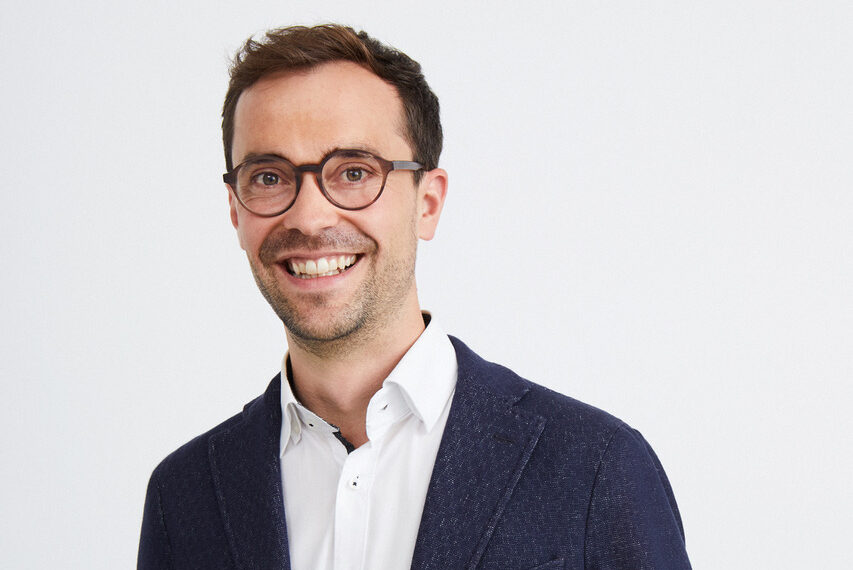
    The Board of Trustees of Lucerne Economic Development has elected 54-year-old Patrik Wermelinger from Lucerne as its new Director. He comes from the canton of Lucerne, lives with his wife in Meierskappel and has known the regional economy at close quarters for many years. He has a degree in business administration and an Executive MBA in General Management, which he completed at Lucerne University of Applied Sciences and Arts.

    Wermelinger is currently Chief Investment Promotion Officer and a member of the Executive Board at Switzerland Global Enterprise. In this role, he supports international companies in setting up operations in Switzerland and operates at the interface between location marketing, investment decisions and global competition for projects. This profile predestines him to position Lucerne visibly in the competition between business locations. With a clear understanding of the requirements of international investors.

    Familiar head with a return bonus
    Patrik Wermelinger is no stranger to Lucerne. From 2006 to 2016, he was head of location promotion and marketing at the Lucerne Economic Development Agency. During this time, he built up a broad network of companies, municipalities, institutions and partners in Switzerland and abroad. He knows the strengths, but also the challenges of the economic region from practical experience. From industry to tourism and knowledge-intensive services.

    This return with additional international experience is a strategic advantage for the organization. Wermelinger brings in-depth relocation and promotion experience from Switzerland as a whole, combined with a clear view of Lucerne as an independent brand in the competition between locations. This creates good conditions for maintaining existing relationships and attracting new companies. Especially in an environment in which location decisions are more competitive.

    Orderly transition at the top
    Patrik Wermelinger will take over as Director on June 1, 2026. The current Director, Ivan Buck, will retain operational responsibility until the end of February 2026. He will then set up his own company in the field of relationship management. For the transition phase between March and the end of May 2026, Deputy Director Andreas Zettel will take over management on an interim basis and ensure a smooth transition.

    Lucerne Economic Development thus relies on continuity in ongoing operations and a clear handover. The combination of temporal overlap, internal interim solution and succession communicated at an early stage strengthens planning security for partners, municipalities and companies that work with the organization.

    Trust in expertise and personality
    The Board of Trustees is convinced that it has made the right choice in Patrik Wermelinger. President Erwin Steiger emphasizes both the high level of expertise and the international experience of the designated Director. At the same time, he emphasizes his trustworthy and winning manner. A combination that is central to the work at the interface between politics, administration and business.

    With this personnel decision, Lucerne Economic Development is positioning itself for the coming years with regional roots, an international network and a director at the helm who already knows Lucerne as a location.

  • New alliance for international location marketing

    New alliance for international location marketing

    The canton of Aargau is preparing to rejoin the Greater Zurich Area. The canton first joined the location marketing organisation between 2007 and 2010, the cantonal administration explains in a press release. At that time, however, the canton of Aargau was hardly able to achieve any success in attracting new business, partly due to different focal points. Today, however, the strategic orientation of GZA and the business location of Aargau “fit together very well”, the press release explains. At the beginning of the year, the canton therefore applied for renewed membership of the GZA.

    Specifically, location promotion is currently focussing on innovative sectors that are also important for the canton of Aargau. The press release cites life sciences, automation and digital tech as examples. According to the press release, the canton of Aargau, which has hardly been active in foreign marketing to date, has decided to join the GZA as it is “more cost-efficient and less risky than setting up its own foreign marketing”.

    Funds totalling CHF 8.5 million are required for the first period of new membership in the GZA from 2027 to 2032. This will cover the membership fee and the costs of two additional positions required at the GZA. The canton also plans to invest a further CHF 4.5 million in the years 2028 to 2032 to promote the location of so-called potential areas. The aim here is to support associations of groups of municipalities with economic potential with joint professional location promotion.

  • New agenda to strengthen cooperation in the Limmat Valley

    New agenda to strengthen cooperation in the Limmat Valley

    At its Annual General Meeting on 28 August 2025, Limmatstadt AG acknowledged its role as a driving force in regional development. According to a press release, the conclusion of the reorganisation process has sharpened the future mandate for regional location promotion.

    A clear vision has been defined in collaboration with the region’s stakeholders. It is crystallised in the formulation “Together we are shaping a strong Limmat Valley and creating space for more”. Through close cooperation and a consistent focus on the needs of all stakeholder groups, interests can be bundled and projects can be initiated and supported to sustainably promote the successful development of the Limmat Valley.

    Against this background, Limmatstadt AG is taking on a more active role. The development of a joint regional and digital agenda and the Limmat Valley communication channels project are now being launched. Both are intended to increase the visibility of regional offerings and further promote cooperation in the Limmat Valley.

    As part of this realignment, the revised brand identity “Limmattal. Room for more.” was also presented. It is intended to strengthen the region’s identity as a dynamic living and economic area.

    Jasmina Ritz and Josef Bütler have stepped down from the Board of Directors for professional reasons. Roger Bachmann, the mayor of Dietikon, was newly elected. Limmatstadt AG expects his expertise and regional ties to provide valuable impetus.

  • The profession of location promoter requires explanation

    The profession of location promoter requires explanation

    It is not yet possible to learn the profession of location promoter. However, since the mid-1980s, there have been contact points for economic and commercial matters at local city and even municipal level – formerly known as economic development. In the 1990s, the Winterthur region was known as a pioneer, not least after the decline of industry there.

    So from 1998, as the first location promoter and head of building construction for the city of Schlieren – alongside the cities of Winterthur and Zurich – I was literally out there alone in the wind. However, the real estate backpack I had acquired since 1981 and my MAS Real Estate Management, which I was also one of the first to complete, enabled me to do the balancing act in the niche segment of location promotion. The classics in the job of a location promoter include company relocations, cluster and site development, “one-stop shopping” by the administration for building permits, portfolio management and startup promotion, as well as much more.

    In Switzerland today, primarily each of the 26 cantons has a location promotion program. Unfortunately, not all of the 172 cities and municipalities with more than 10,000 inhabitants have a location promotion office, let alone an economic strategy. There, an internally appointed person in the administration is responsible. In most cases, this is the town clerk or, at most, the president of the town or municipality, more or less voluntarily and not specifically trained for this purpose. However, this also means that I greatly appreciate these municipal management bodies, as well as those of the town of Schlieren, where I can now look back on 28 years of service. Schlieren’s key figures show a very successful picture that is recognized by many parties. The number of legal entities in the town has increased by 100% since 1998, from 650 to 1,388. This also means an increase in jobs from around 12,000 to 21,000. The number of inhabitants has risen by 70% from 12,000 to 20,100. Here I represent the 1:1 situation (inhabitants in relation to jobs) in contrast to other well-known large Swiss cities.

    I would be delighted if, after my retirement, more real estate experts chose the profession of location promoter and also became involved in associations, ERFAS and networks. What is needed is trust in the local location promoters.

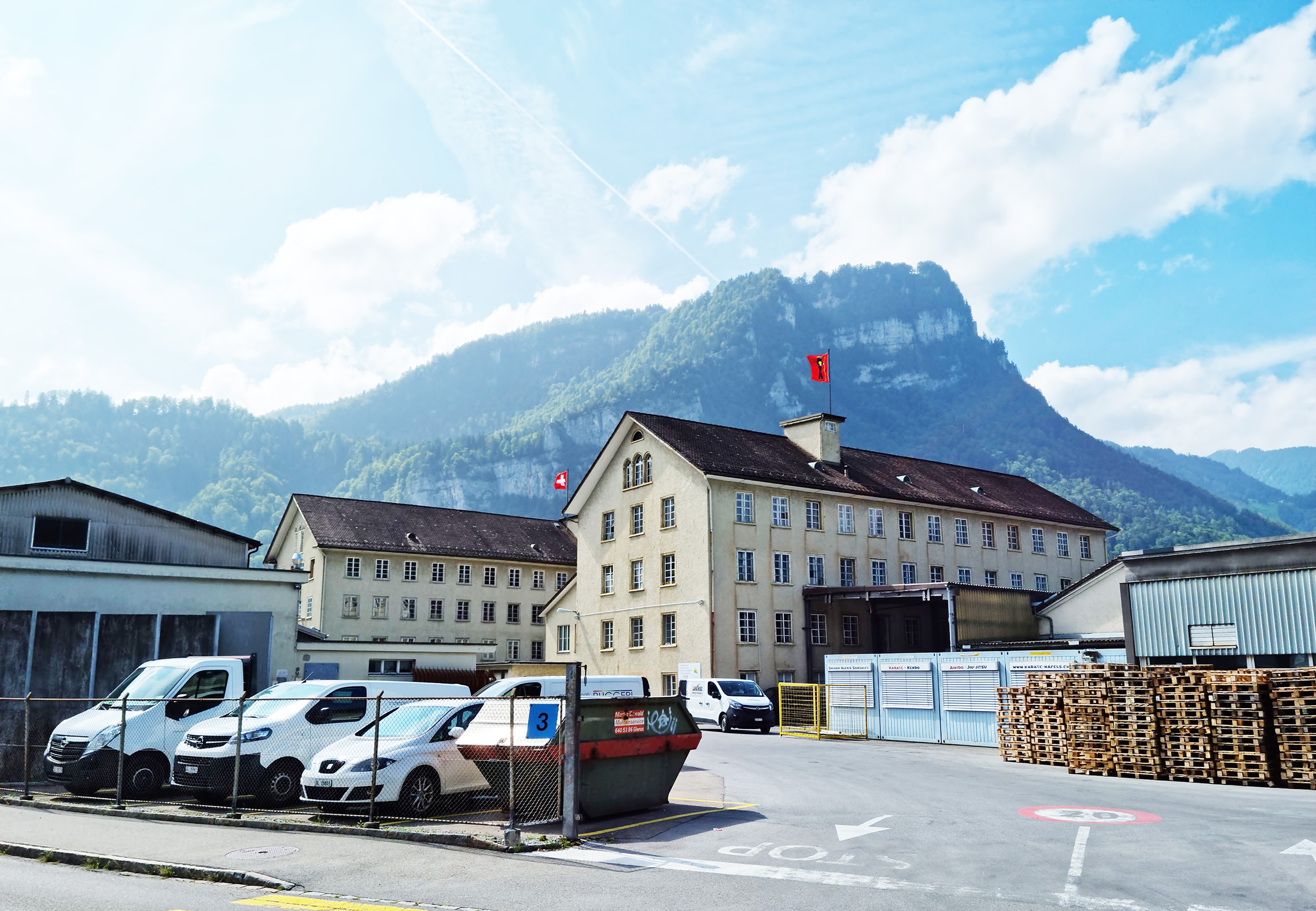
  • The Landolt site in transition

    The Landolt site in transition

    What significance does the development of the Landolt site have for Glarus as a business location? What specific impetus do you expect for the local economy and the creation of new jobs?
    The site is already well utilised with many different SMEs. When the Landolt company moves out in the medium term, the old stock will be freed up. The Shedhalle, which we have already renovated and equipped the roof with a large PV system, is particularly interesting. We are in the process of attracting new tenants and offer a very attractive location with optimal logistics connections. Attractive new jobs are being created here.

    Temporary uses such as the planned mobility hub are a central element of the concept. What opportunities do you see in these temporary uses to revitalise the site during the development phase?
    This is one of the most important parts of the transformation. We would like to keep all of the existing tenants if possible. We maintain direct contact with them so that they can continue to develop within the site. The buildings with interim uses are let cheaply but not for long, whether as storage, car parks or hubs, but without major investment on our part. There is also room for creativity here.

    How are the canton of Glarus and the location promotion organisation involved in the project? Is there strategic coordination with cantonal development goals?
    We are in regular dialogue with the location promotion agency and are confident that the good location and the size of the space on offer will also attract larger SMEs to the canton of Glarus. Several companies are already interested in setting up here.

    Participatory planning is emphasised. How were local residents and businesses able to get involved and what findings from this process will be incorporated into the next steps?
    With well-supported representation from the authorities and a specialist committee from the worlds of business and urban planning, as well as an international team of planners, the urban design, the relationships with the neighbours and the use and building distribution of the site were reworked. Many of the old spinning mill buildings are to be preserved and given a new lease of life.

    The current purely commercial area will be supplemented with various commercial offerings, and a small proportion of housing will also be possible. The very attractive location between the Chli Linthli and Mühlibach streams also invites walkers and residents to experience this beautiful and idyllic place.

    The planners are currently working with the design commission and the heritage conservation organisation to draw up the basic project. By the summer of 2025, it will be possible to show the future shape of the site, the expanded commercial offer and the variety of flats. We are very pleased with the excellent cooperation and are convinced that the careful handling of the existing buildings and the new buildings will create great added value for the users of the site, as well as for local residents.

    The development will take place in four stages. How will you ensure that the site remains lively, usable and attractive in the intermediate phases and does not become a long-term construction site?
    As already mentioned, part of the existing industrial buildings will be used for new purposes. The very old existing buildings, which will be vacant in the medium term after the Landolt company moves out, are to be rented out again quickly after conversion or modernisation. The various talent zones were defined for this purpose, and these form the stages. The development will be successively finalised with the completion of the respective zones.

    The innovation campus at Chli Linthli is intended to develop independently and in line with demand. Which target groups would you like to address here and which sectors could settle here?
    This site is already fully occupied with a wide range of businesses. The needs of the future will be accommodated here. The idea is to create a diverse range of businesses that require good networking within this area and function like a campus. However, we are also open to other ideas. Only time will tell what these are.

    How do you create long-term identity and loyalty on the site? What role do social, cultural or ecological offerings play for future users?
    The site already has a rich history. You can see this everywhere here. With a new use and the right approach, the culture will be preserved but also redefined. With our goal of sustainability, this process will also conserve resources. The use of natural building materials and simple architecture will create affordable working and living space that is healthy and worth living in. With its watercourses, green spaces, newly created neighbourhood squares, etc., the site offers a lot of spatial quality, but also a very attractive place to work, live and stay.

  • City of Winterthur extends agreement with location promotion organisation

    City of Winterthur extends agreement with location promotion organisation

    The new service agreement between the city of Winterthur and the House of Winterthur provides for an adjustment of the organisation’s tasks. The House of Winterthur should focus on strengthening the Winterthur Switzerland brand and on the strategic marketing of the location for business, education, culture and tourism, according to a statement from the city.

    This includes making the hidden champions among the companies and the diversity of the local business landscape visible. Innovation and knowledge transfer are to be strengthened through targeted networking and new event formats, among other things. The House of Winterthur will also actively support start-ups.

    Operational location promotion, on the other hand, will once again be the responsibility of the city. This includes company relocations, portfolio management and space brokerage.

    The city intends to support the House of Winterthur with CHF 760,000 per year between 2026 and 2029, CHF 100,000 per year less than before. The final say lies with the city parliament.

    In a statement, the House of Winterthur recalls that the city’s contribution was CHF 960,000 per year when the organisation was founded in 2017. Beat Schwab, President of the House of Winterthur, which is organised as an association, refers to the new management and other changes in personnel. “There is a spirit of optimism at House of Winterthur,” he is quoted as saying in the press release. “It would be a shame if excessive pressure to save money were to jeopardise this development and seriously impair the sustainable promotion of the location as well as the management of company relocations.”

    The association is supported by the city, the neighbouring municipalities and over 400 members.

  • Bernese Oberland economy records successful 2024

    Bernese Oberland economy records successful 2024

    In its recently published Annual Report 2024, the Bernese Oberland Economy looks back on a successful year in which the focus was on networking and projects. According to a press release, the association was able to provide impetus for the further development of the region “despite challenging conditions”.

    Events such as the community forum, the business meeting and the tourism forum contributed to this. At the same time, important projects continued. For example, the digital apprenticeship platform Lehre BeO was reportedly further professionalised and the consultation room model project for basic medical and neighbourhood care was expanded. In addition, initial clarifications have been made on promoting the circular economy in the Bernese Oberland.

    President Marianna Lehmann will lead through the agenda items for the last time at the 105th General Assembly on 8 May in Interlaken. The former mayor of Wilderswil BE has been a member of the Board of the Bernese Oberland Economy since 2019 and its head since 2021.

    The association’s board is proposing Thun councillor and entrepreneur Carlos Reinhard as her successor. He has held the 2nd Vice-Presidency since 2024. Interlaken entrepreneur Patrick Gurtner is to be elected as a new member of the Board of Directors and also take over the 2nd Vice-Presidency.

    “Our strength lies in our diversity,” says Reinhard. “I want to make this visible and develop it further together with all regions. “The Bernese Oberland should remain economically strong, attractive for tourism and a place worth living in – that’s what I’m committed to.”

  • Location promotion brings over 700 new jobs in the first year

    Location promotion brings over 700 new jobs in the first year

    The establishment of a total of 231 international companies in 2024 supported by the location promoters strengthens Switzerland as a location for innovation, according to the Conference of Cantonal Economic Directorates and Switzerland Global Enterprise, the national Swiss export and location promotion organization, in their press release. The committee particularly emphasizes that around two thirds of these companies are active in the five key technologies of healthcare, digital, automation, food and finance. They were defined by the federal government, cantons and regions in their joint strategy for the years 2024 to 2027 as particularly worthy of support.

    According to the press release, this strategy has brought the promotional activities of all stakeholders even closer together. Switzerland benefits from the fact that the various competencies of the promotion partners complement and reinforce each other.

    In the first year of operation, these 231 newly established companies in Switzerland created 716 new jobs. According to the information provided, they plan to create a total of 2135 jobs over the next three years.

    Around half of these companies come from the USA, Germany, France and the UK. As Cantonal Councillor Walter Schönholzer, Director of Economic Affairs of the Canton of Thurgau and Co-President of the steering body for national location promotion, emphasizes, the companies located here “also contribute to cross-cantonal value creation and to strengthening the local SME landscape with their innovative know-how and broad network”.

  • The future of location promotion in the canton of Zurich

    The future of location promotion in the canton of Zurich

    Together with Markus Müller, you have been co-heading the location promotion of the Canton of Zurich for over 15 months.
    What insights have you gained?
    Zurich stands out within Switzerland due to its economic size. This also means that we are not only heavily involved in cantonal issues, but are also active on the national and, in some cases, international stage. For example, we promote Switzerland as an AI location or share our findings on AI applications in the economy with international partners.

    At the same time, I find the close cooperation between business, science and administration as well as politics to be expedient when it comes to creating sustainably attractive framework conditions.

    Could you give us a brief overview of the current priorities of location promotion in the Canton of Zurich?
    The central focal points are:

    As just mentioned, the development of attractive, long-term location factors. Through close dialog with business and science, we identify trends at an early stage and provide targeted impetus for location development.

    Promoting innovation and strengthening our key sectors of finance, ICT, life science, food, clean and high-tech.

    Maintaining and strengthening the diversity of the industry structure. In this context, we also support companies that want to locate here – from the search for a location to obtaining permits.

    Our projects, programs and initiatives are based on these three pillars.

    What are the long-term visions of the cantonal location promotion department with regard to location development?
    The attractiveness of a business location depends on a number of different location factors. These range from target group-friendly regulations and digital government services to strong innovative power and the sustainable design of economic areas.we are pursuing the goal of being an attractive, leading and future-oriented innovation and business location with international appeal for companies and the population.

    Zurich is one of the most expensive places to live in the world. The high real estate prices and rents are also becoming an increasing burden for companies. What can location promotion do about this?
    We are committed at various levels not only to the attractiveness and prosperity of the economic area, but also to a high-quality and excellent quality of life. In this respect, the availability of living space also plays a role. One concrete application can be found, for example, in our Innovation Sandbox for artificial intelligence. In the current phase, we are supporting the use of AI in planning applications. We hope that the results will help us to find ways of reducing the building backlog and streamlining the building permit process.

    Housing subsidies are also located at official level. It promotes the provision of affordable rental apartments with attractive loans.

    The ageing population is affecting the real estate sector and the labor market. What significance does this fact have for the canton of Zurich and how can you respond to it?
    The topic of demographic shifts and the widening labor market gap has been on our minds for some time at various levels. Over the next few years, many experienced workers will retire – this will increase the competition for talent.

    On the one hand, we are working on various projects in the area of recruiting and retaining skilled workers and labor market participation. At the same time, we are currently developing new overarching approaches to demographics that will have a longer-term impact. One thing is clear: tackling the challenge of demography must be approached from a systemic perspective, meaning that many parties and stakeholders need to be brought to the table.

    How do you see the role of the canton in the Greater Zurich Area economic region?
    The Greater Zurich Area is one of the most innovative business locations in Europe – and the canton of Zurich plays a central role in this. As a leading innovation location, we create the framework conditions that companies need to develop successfully. Ultimately, the other cantons within the Greater Zurich Area also benefit from our strong position.

    As the economic engine of Switzerland, the Canton of Zurich is also the largest provider of funds for the Greater Zurich Area as a business location. At the same time, our Chief Executive Officer, Government Councillor Walker Späh, is President of the Board of Trustees of the Greater Zurich Area Business Location. The Canton of Zurich is also actively represented in the Greater Zurich Area economic region by the two cities of Winterthur and Zurich. This allows us to optimally represent our interests and coordinate the activities of the Greater Zurich Area as a business location with our own.

    How does the cooperation with other cantons within the Greater Zurich Area business location work?
    What joint projects are currently underway?
    Cooperation within the organization of the Greater Zurich Area business location focuses primarily on issues relating to relocation. We work very closely with other cantons in various other constellations and committees. For example, in the Zurich metropolitan area, but also on a smaller spatial level, such as in the Limmat Valley. However, not all cantons are always members of the Greater Zurich Area business location.

    Current cooperation projects include the 2nd phase of the Innovation Sandbox for Artificial Intelligence, which also includes the aforementioned building permit project, and the repositioning of the Limmatstadt regional location promotion program, in which we are thinking beyond the cantonal borders in functional areas and looking for solutions.

  • Lucerne responds to tax pressure with a billion-euro package

    Lucerne responds to tax pressure with a billion-euro package

    International tax competition is being readjusted by the OECD minimum taxation and is hitting Lucerne hard. The previous advantage of low corporate taxes for internationally active groups will no longer apply. This could result in companies moving away, a drop in investment and a massive loss of tax revenue. Over a billion francs are at stake for the federal government, canton and municipalities – a scenario that Lucerne is not prepared to accept without taking action.

    Strengthening the business location, ensuring quality of life
    The cantonal government is responding with a far-reaching location promotion programme, which comprises around CHF 300 million per year. Around two thirds of this is to flow directly into measures to promote innovation, digitalisation, economic areas and a business-friendly administration. This will also create new opportunities for property developers and investors. In particular in the planning and realisation of forward-looking commercial and infrastructure projects.

    The remaining third is dedicated to quality of life. The measures range from tax relief and family friendliness to the promotion of culture and digital participation, key location factors when it comes to retaining talent and attracting new workers.

    Participatory and forward-looking
    The programme was developed in close consultation with the business community, municipalities and social partners. The public consultation will run until 9 June 2025 via the “e-participation” tool. The final decision lies with the people. The package will be put to the vote in September 2026 and is scheduled to come into force on 1 October 2026.

    Lucerne is sending a strong signal with this proposal. Location promotion is no longer an optional extra, but a strategic duty – and it requires clear, long-term investment.

  • Schlieren North East interest group founded for site development

    Schlieren North East interest group founded for site development

    The interest group (IG) Schlieren Nord Ost has been founded. According to a press release from the city of Schlieren, the aim of the association is to actively help shape the development of the area. The residential, industrial, commercial and innovation area on Rüti-/Ifangstrasse in Schlieren is one of the city’s largest development sites alongside the Wagiareal and Rietpark. The new interest group intends to pool the interests of the owners and clarify the zoning plan with the city of Schlieren and the future extension of the building lease agreements with the city of Zurich in partnership at an early stage, the statement continues.

    “I have maintained very good contacts with the City of Zurich for a quarter of a century, but – like many other things – these fell asleep during and after coronavirus. However, as the city of Zurich owns over 200,000 square metres of building land in the city of Schlieren, I would like to revive these contacts over the next 14 months,” Albert Schweizer, the city of Schlieren’s location promoter, is quoted as saying. The aim is to extend the building lease agreements, which run until around 2040, by 30 years in order to create planning security for future generations. There is the possibility of attracting more companies and creating new jobs.

    The planned membership of the regional location promotion organisation Limmatstadt AG is intended to further expand regional networking, according to the city press release. Joint events are also planned with other sites in Schlieren and the Limmat Valley, such as Silbern, Niderfeld in Dietikon and Kreuzäcker in Spreitenbach.

    According to the press release, building lease holders and property owners met on Wednesday, 5 March, at the Innovation and Young Entrepreneur Centre(IJZ) in Schlieren to found the interest group. As part of the foundation, representatives from the Canton of Zurich’s Civil Engineering Office and the energy company ewz presented plans for the cycle path and the district heating substation in the eastern part of the site.

  • Aargau reapplies for membership of the GZA

    Aargau reapplies for membership of the GZA

    The canton of Aargau has applied for renewed membership of the GZA. According to the cantonal state chancellery in a press release, rejoining the regional marketing organisation would offer the best effect in terms of presenting Aargau as a business location abroad at the lowest risk. The alternatives considered were the establishment of an own presence abroad and the expansion of existing marketing activities.

    The canton of Aargau was already a member of the GZA from 2007 to 2010 as part of a trial membership. However, the membership was not extended as the regional location promotion “focused on tax-optimising companies at the time”, “for which the canton of Aargau was of no interest”, according to the press release. However, the GZA is now “focussing on innovative sectors that are already strongly represented in the canton of Aargau”. The canton of Aargau hopes to attract new companies from sectors such as life sciences, energy technology, mechanical engineering and digital technologies by rejoining the GZA.

    “We don’t want growth at any price, but rather to attract companies with high added value, good jobs and innovative products,” said Dieter Egli, Mayor of the Canton of Aargau, in the press release. “For this to succeed, we must be able to address companies directly in the foreign target markets.” To this end, the GZA aims to publicise Aargau as a business location abroad and find companies interested in setting up in Switzerland. The Canton of Aargau’s location promotion organisation will then suggest specific potential locations and clarify further questions.

  • New platform for Aargau as a business location

    New platform for Aargau as a business location

    The Canton of Aargau location promotion organisation is presenting Aargau as a business location on a new platform. At www.aargau.swiss, existing companies and companies interested in setting up a branch can find out about the advantages of the business location, explained the location promotion organisation in a press release. The Aargau cantonal government is pursuing the goal of increasing the economic strength of the location by attracting companies with high added value. The new website contributes to this by making the strengths of Aargau more visible.

    The new website provides information about the business location, programmes to promote innovation as well as advisory and support services offered by the cantonal location promotion agency and its partners. Separate sections are dedicated to company start-ups, relocations and the expansion of existing companies. In addition, news about the business location and its companies is published regularly. The news is produced by the Café Europe news agency based in Winterthur.

  • Location promotion with new management

    Location promotion with new management

    The handover in the management of Limmatstadt AG has been completed. Stephanie Kiener has taken over from long-time Managing Director Jasmina Ritz, the location promotion agency announced in a press release. Following her withdrawal from the operational business, Ritz will continue to be involved in Limmatstadt AG as Vice President of the Board of Directors.

    One of Kiener’s new tasks is to lead the process with which the location promotion agency intends to define its future direction. To this end, joint seminars with representatives from the Board of Directors and the Executive Board as well as the member municipalities and the Economic Advisory Board are planned from November. They will be supported by external consultants. “I am pleased to inform you about the results and the strategy for the coming years once the process has been completed,” Kiener is quoted as saying in the press release.

    In recent months, the location promotion team has created promising conditions for the future, according to Limmatstadt AG. The member municipalities want to make a greater financial commitment in future. The member municipalities of the Zurich Limmat Valley Planning Group are planning to increase their contributions as of 2025, while the four member municipalities in Aargau want to follow suit in 2026 and have approved a project contribution for the coming year.

    In addition, the number of members with annual contributions has been increased. This serves the objective of securing funding in the medium term in equal parts from the private and public sectors. The acquisition of new members will continue.

  • “We are constantly investing in our future”

    “We are constantly investing in our future”

    Mr Tamagni, since taking office in January 2021, you have further strengthened Schaffhausen’s position as an attractive place to live and do business. What specific measures have you taken to achieve this? What has worked well and what has worked less well?
    That’s right – the canton of Schaffhausen is developing very well! More and more people are discovering the advantages of Schaffhausen as a liveable alternative to the greater Zurich area and are moving here. This has long been the case for companies – the canton is particularly attractive for SMEs with a tax burden of 12 to 12.5%. Our framework conditions are excellent, the distances are short and we maintain close co-operation with companies in order to create new impetus together. The canton of Schaffhausen is a region whose environment and dynamism attracts committed people and companies. It is a region where you can put down roots because – despite all the hustle and bustle – it offers proximity and familiarity.

    What specific location promotion measures are you planning in your next term of office to make Schaffhausen even more attractive?
    The Government Council’s top priority remains to further strengthen Schaffhausen as a place to live and do business in the national and international competition for business locations. Tax relief measures are being developed in favour of the population and companies, and we are planning support measures for innovative companies and SMEs. The compatibility of family and career remains a high priority. The completion of the direct train connection to Basel and the dual carriageway expansion of the A4 motorway to Winterthur from around 2027 will be very important for investors in residential and commercial property.

    You want to push ahead with investments in strategic projects such as digitalisation and demographics. Can you tell us more about these projects and their significance for Schaffhausen?
    We drew up the first demographic strategy in Schaffhausen back in 2017 – one of the first cantons to do so. Our strategy is based on four key areas: Measures to maintain the labour pool, ensuring local care and healthcare services with forms of housing that support autonomy in old age. Furthermore, settlement and transport development will be aligned with demographic developments and the education system will be adapted to the increasingly diverse population.

    In terms of digitalisation, the cantonal government is focusing on overarching goals: Digital First for the population and the economy and complete end-to-end digitalisation of the administration. Every service and every process should be optimised and digitally available – to save resources and time.

    As Schaffhausen’s Director of Economic Affairs, how do you see the current property market in the canton and what trends do you expect to see in the coming years?
    Schaffhausen still has affordable living space and building land and therefore potential for residential development. The region will receive an additional boost from the expansion of the direct rail link to Basel and the removal of bottlenecks on the A4 motorway in the direction of Winterthur. This will make Schaffhausen a hub between Zurich, Winterthur and Basel, which will further increase its attractiveness as an economic and residential region.

    How does the canton of Schaffhausen strike a balance between the development of the urban centre and the preservation of Schaffhausen’s natural landscapes and historic architecture?
    Rural areas are a valuable part of the canton’s high quality of life. With regional and location development, the regional nature park and the promotion of tourism, Schaffhausen has specific programmes that take this balance into account and promote the strengthening of the countryside. Schaffhausen stands for proximity to nature and the diversity of gourmet products. The new tourism strategy pays particular attention to these aspects of Schaffhausen.

    With your focus on efficient, citizen-friendly and citizen-oriented public services, are there any plans to streamline processes relating to real estate transactions or building permits?
    With its digitalisation strategy, the cantonal government is laying out the cantonal administration’s path to the digital future. With the “Digital Administration Schaffhausen”, it is utilising the opportunity of digital transformation to expand user-friendly services for the population and the economy. Internal processes are being structured even more efficiently and employee collaboration is being restructured using agile methods and modern technologies. Digitalisation has already been an important topic in the canton of Schaffhausen for several years and individual services are well advanced. For example, the geoportal, where data is openly available. This benefits owners, buyers and also the administration.

    In your opinion, what role do sustainable and energy-efficient buildings play in future property development in Schaffhausen and in other economic sectors?
    The canton’s location policy takes global climate targets into account and has always pursued sustainable economic development. Schaffhausen companies are locally innovative, globally successful and make an important contribution to a sustainable economy with their investments, products and services. When it comes to energy-efficient and sustainable construction, the canton of Schaffhausen endeavours to act as a role model. An exciting regional initiative on this topic is the “Schaffhauser Haus”, which focuses on building with a regional focus. This strengthens the regional economy with craftsmanship, promotes young talent and sustainably closes material cycles.

    Given the growth of the city of Schaffhausen, what strategies are there to create adequate living space for all sections of the population?
    The canton of Schaffhausen has recorded moderate and sustainable population growth of less than one per cent over the last ten years – this is not comparable with other regions. If we take a look at the vacancy rates, it becomes clear that although the vacancy rate is also low, affordable living space is available. There are no queues like in Zurich. With further tax relief measures and investments in childcare, the canton is also improving the situation for families and high earners.

    As head of the Department of Economic Affairs, how do you see your role in implementing the canton’s economic policy goals?
    As Director of Economic Affairs, I am the top, direct point of contact. Short distances, quick decisions, a high level of service-orientation – that is our credo. I am a representative of the cantonal economic development agency, which functions as a “one-stop shop” as a contact point for questions from companies or people interested in relocating. Companies find open doors everywhere in Schaffhausen.

    What long-term effects do you expect your previous political measures to have on the canton of Schaffhausen?
    Looking back over the last 25 years, the effects are clear – the economic development of the region is a success story. The canton was in an economic crisis in the 1990s due to structural change. Today, Schaffhausen is an internationally recognised headquarters location with a strong industrial base. According to UBS, no other canton has improved as much as we have in terms of location factors. The financial situation with high tax revenues speaks for itself. Schaffhausen now belongs to the small group of payers in the national financial equalisation scheme.

    Schaffhausen is a border canton. What advantages and disadvantages does this bring for the canton in the property sector?
    Due to its special location between the Rhine and Germany, Schaffhausen has long been unjustly overshadowed by other cantons – for many, Switzerland ends at the Rhine. This view is changing more and more! Schaffhausen is now on the radar of many companies and investors who recognise its potential. For residents, the moderate development has its advantages: open countryside and nature have been preserved in the canton of Schaffhausen.

    What visions and concrete projects do you have for the future development of Schaffhausen as a place to live and do business?
    Pioneering spirit and industrial tradition characterise Schaffhausen as a business location. The Government Council’s top priority is to strengthen Schaffhausen as a place to live and do business. It is also important to secure, consolidate and strengthen the national and international competitiveness of Schaffhausen as a business location. Thanks to the very good financial situation in the canton, measures and projects in favour of the attractiveness of the location and the population can be developed and implemented. The compatibility of work and family life, the improvement of transport connections by road and rail within the canton and in particular to the Zurich and Basel regions, the implementation of energy and climate targets and the construction of important infrastructure projects are also priorities.

    Where do you see Schaffhausen in the next 20 years?
    In 2022, we developed projects and measures for a successful path into the future in the canton as part of the “next.” 2030 development strategy in a participatory process. The vision of Schaffhausen as a swarm and nest region now forms our overarching compass, from which the cantonal government has identified fields of action that are particularly central to utilising the region’s development potential. To improve the dynamics of the swarm region, for example, ecosystems of new technologies are to be established and the capacity for innovation strengthened. In order to maintain the quality of the nest region, the Government Council wants to ensure excellent location factors – from the training of skilled labour to production areas and framework conditions for companies – and harness social energy. For example, by providing a good range of basic services or strengthening tourism as part of the population’s quality of life. In this way, Schaffhausen can promote a pioneering spirit, be open and innovative and be a place where people want to put down roots and feel at home. With this basic attitude, Schaffhausen is a centre of attraction for companies and individuals who want to become involved in society and economic life.
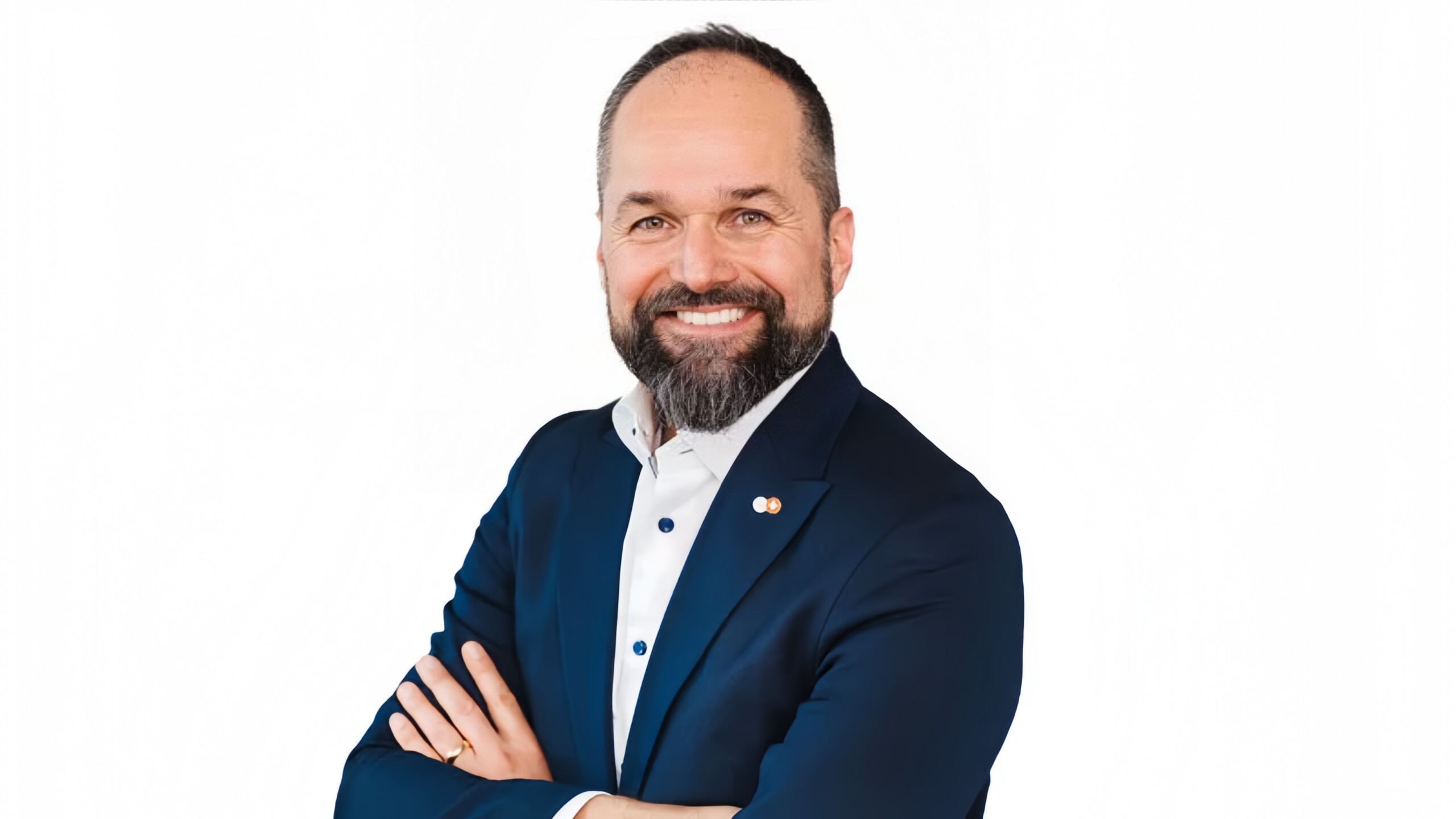
  • Andreas Bühler manages Zürioberland

    Andreas Bühler manages Zürioberland

    The Zürioberland location promotion organisation has a new president: At the 2nd General Assembly on 6 June, Andreas Bühler, Mayor of Hinwil, was elected to succeed Ruedi Rüfenacht, Zürioberland announced in a press release. Rüfenacht is relinquishing his office in accordance with the articles of association following his resignation as mayor of Wetzikon. The Zürioberland Board is convinced “that Andreas Bühler, as a successful bridge builder and thoroughbred Zürioberlander, is the ideal candidate for this office”, the press release states.

    The Zürioberland Forum took place after the Annual General Meeting. Here, Mikula Gehrig, the responsible site developer and Managing Director of The Valley in Kemptthal, presented the transformation of the former Maggi site into a research and service campus. According to the press release, Gehrig emphasised the importance of a long-term vision for a project of this kind.

    In an inspirational speech, neuroscientist and psychologist Lutz Jäcke called on the 150 or so participants at the forum to dare to change their perspective in order to gain new insights. Dominic Käslin, member of the advisory board of the Innovation Network Eastern Switzerland INOS and professor at the University of Applied Sciences Graubünden, led a workshop on the topic of negotiation. Here, negotiation styles were analysed, practical solutions discussed and strategies for successful negotiations tested.

  • Location promotion and labour market

    Location promotion and labour market

    According to a press release from the State Secretariat for Economic Affairs(SECO), State Secretary Helene Budliger Artieda has appointed Martin Saladin as the new Head of the Directorate for Economic Promotion. She has also confirmed Martin Godel as the new Head of the Labour Market and Unemployment Insurance Division. Both will take up their new positions on 1 September 2024 and will thus become members of SECO’s Executive Board.

    Martin Saladin will succeed Eric Jakob as Head of the Directorate for Location Promotion. Among other things, this supports Swiss companies that are facing increasingly global competition. According to the press release, Saladin has international experience and is familiar with the challenges faced by Swiss companies on international markets. For the past five years, he was Head of Operations South/East at SECO’s Economic Cooperation and Development Division, where he managed the project business with an annual investment volume of CHF 350 million.

    Martin Godel will take over from Oliver Schärli as Head of the Labour Market and Unemployment Insurance Division on 1 September. Godel has been Deputy Head of the Directorate for Location Promotion since 2014 and has been Head of SME Policy since 2011. He has extensive experience in the digitalisation of services. He has been responsible for the EasyGov.swiss service portal for the Confederation, cantons and communes since 2017.

  • Stephanie Kiener succeeds Jasmina Ritz at Limmatstadt AG

    Stephanie Kiener succeeds Jasmina Ritz at Limmatstadt AG

    The Limmatstadt AG location promotion organisation is getting a new managing director in Stephanie Kiener. According to a press release, Kiener will take over the operational management of the Limmatstadt regional location promotion office based at the JED in Schlieren ZH in August. The successor to Jasmina Ritz at Limmatstadt AG has thus been decided. Ritz will oversee the transition process until the end of the year and will then retire from operational activities. She will continue to fulfil her role as Vice President of the Board of Directors.

    Stephanie Kiener joined Limmatstadt AG in November 2023. She had previously worked for the city of Baden for eight years, where she held various positions in location marketing, including Head of Tourism. She actively supported the separation of the city’s tourism division into the new public-private partnership TourismusRegion Baden AG, of which she was most recently Deputy Managing Director. Kiener knows the Limmat Valley inside out. She was born in Schlieren.

    “The opportunity to work together with stakeholders from the entire region and the Board of Directors to shape regional location promotion in a future-oriented way is a great motivation for me,” Kiener is quoted as saying. She is counting on “taking this path together and further strengthening the Aargau and Zurich Limmat Valley region with innovative approaches, fresh ideas and combined forces”.

    “Stephanie Kiener is our preferred candidate. We are now ideally positioned for the transformation process that has already begun,” said Lara Albanesi, President of the Board of Directors.

    A public dialogue event will take place on Tuesday, 4 June, from 7.30 to 9 a.m. at the LAB coworking office in Spreitenbach.

  • Impulses for Zurich’s future: The first day of the location

    Impulses for Zurich’s future: The first day of the location

    The first “Location Day” in the canton of Zurich brought together leading figures from business, research and politics to shed light on the attractiveness and future viability of the location. The focus was on discussing current challenges and developing strategies to strengthen the business and innovation location. Panels and workshops on topics such as technology, skilled workers, entrepreneurship, mobility and sustainability provided important impetus to further improve Zurich’s position in international comparison.

    A prior study on the attractiveness of the location provided the basis for in-depth discussions and highlighted Zurich’s strengths in the areas of education, economic power and quality of life, as well as areas with potential for improvement such as the labour market, innovation and infrastructure. In particular, the relevance of artificial intelligence for the technology location and the need for a stronger digital focus in the healthcare sector were emphasised. In addition, the importance of promoting start-ups and integrating digital processes in the healthcare sector was emphasised in order to increase both the attractiveness for specialists and the efficiency of medical care.

    The “Location Day” underlined the urgency of utilising domestic potential and continuously improving the framework conditions for a digital and sustainable transformation. The results of the workshops and panels will now be followed up in order to develop and implement concrete measures. Due to the high level of interest and productive contributions, a repeat of the event is planned in order to evaluate progress and new approaches in the coming year.

  • Zug uses OECD minimum tax for location promotion

    Zug uses OECD minimum tax for location promotion

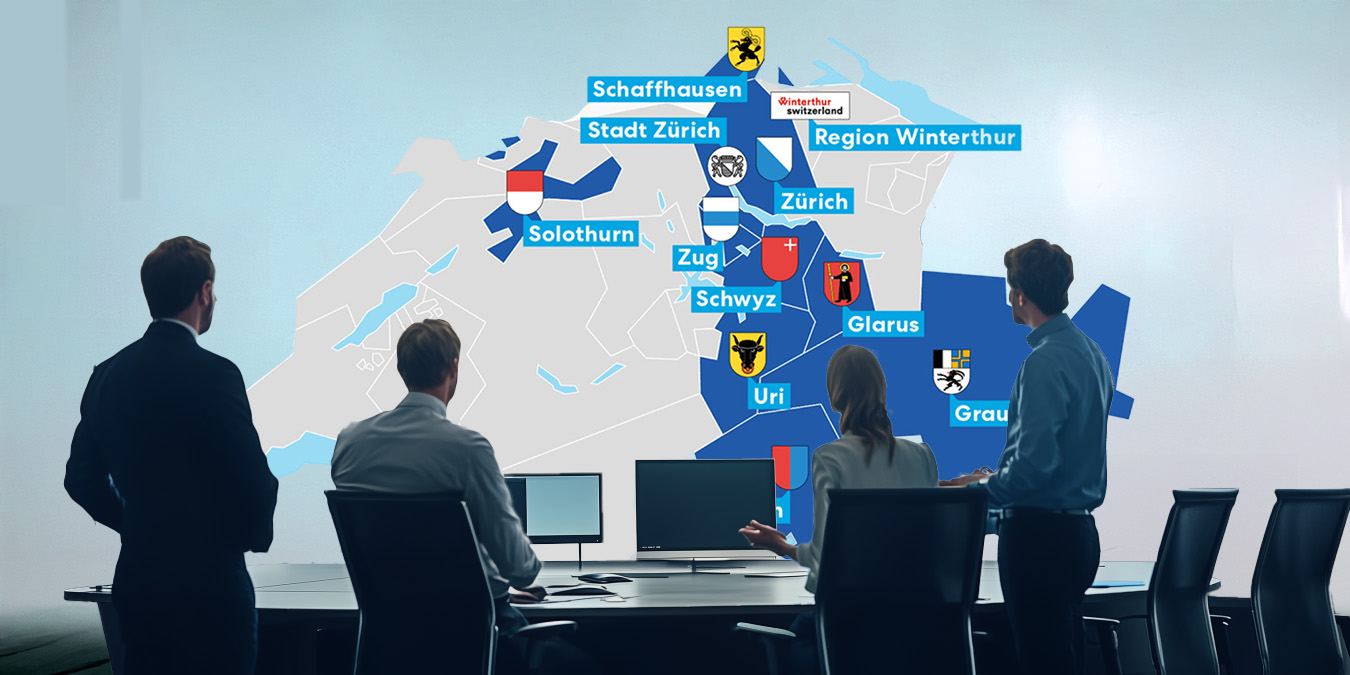
    In response to the imminent introduction of a global minimum tax for large international companies from 2024, which could potentially affect the canton’s competitiveness, the canton of Zug has developed plans to compensate for any locational disadvantages. The planned measures include the complete reinvestment of the expected additional revenue of around CHF 200 million per year in three priority areas: social infrastructure, innovative projects and sustainable development initiatives.

    Focus on social and innovative projects
    The planned social measures are aimed at making life more attractive for the population and the local economy. These include investments in needs-based childcare provision, higher contributions to public schools and measures to improve the living and working environment. In the area of infrastructure and innovation, the focus is on future-oriented projects. Initiatives such as the “Blockchain Zug Joint Research Initiative” and the “ETH Learning Factory Zug” are intended to increase competitiveness and quality of life in the canton by promoting sustainable energy supply and storage.

    Legal framework and financial planning
    In order to achieve these goals, the cantonal government is proposing a new “Location Development Act” that will introduce an efficient and flexible system of subsidies for sustainability and innovation. From 2026, CHF 150 million per year is earmarked for subsidies, with the maximum subsidy amount being approved annually by the Cantonal Council from 2029. This approach is intended to provide companies in the canton of Zug with planning and legal certainty.

    Finance Director Heinz Tännler emphasises that the planned measures are essential in order to maintain Zug as a preferred residential and business location. The public consultation on the new law will run until 15 September 2024 and the law is due to come into force on 1 January 2026. These strategic decisions demonstrate Zug’s commitment to maintaining its leading position despite global tax changes and remaining an attractive location for companies and skilled labour.

  • IFJ develops new offer for municipalities with start.swiss

    IFJ develops new offer for municipalities with start.swiss

    The IFJ Institute for Young Entrepreneurs is launching a new service with start.swiss. According to a press release, the service is aimed at municipalities, cities and economic regions and is designed to track the economic development of all Swiss regions and intensify location promotion. “start.swiss offers a unique welcome and promotion of new companies thanks to daily updated data, an automated hybrid process and local activities. For sustainable, profitable location development,” says the new start.swiss website.

    The Statistics+ service provides statistics on company start-ups, new arrivals, departures and cancellations as well as a breakdown of company start-ups by sector and access to detailed data records.

    The Welcome+ service includes everything from Statistics+, a mailing service of personal welcome letters to company start-ups and relocations as well as a personal welcome website for each company start-up and relocation and individualised lead management of regional offers.

    Activity+ is all about promoting local entrepreneurship. According to the start.swiss website, this involves events and offers, regional networking of people and organisations for sustainable, profitable location promotion.

  • Lara Albanesi is the new Chairman of the Board of Limmatstadt AG

    Lara Albanesi is the new Chairman of the Board of Limmatstadt AG

    The newly constituted Board of Directors of Limmatstadt AG following the Annual General Meeting on 12 March has held its first meeting. According to a press release, it elected Lara Albanesi, Administrative Director of the Kurtheater Baden, as President. Managing Director Jasmina Ritz was also elected as Vice-President and Mario Okle, Mayor of Weiningen and CTO of Weytec, as Delegate of the Board of Directors.

    “The Limmat Valley is an attractive place to live, work and spend leisure time. The population appreciates this and views the entire region beyond municipal and cantonal boundaries. This holistic perspective promotes value creation and strengthens networking. That is why I am committed to promoting Limmatstadt as a business location,” Albanesi is quoted as saying.

    In the coming months, the Board of Directors will explore ways and means of laying the foundations for the continued existence of regional location promotion beyond 2024, according to the press release. To this end, a dialogue will be held with the municipalities and the business community.

    The Zürcher Planungsgruppe Limmattal(ZPL) planning association and four business associations from the region – Industrie, Dienstleistung, Handel(IDH) Spreitenbach, Industrie- und Handelsverein Dietikon(IHV), KMU- und Gewerbeverband Limmattal and Wirtschaftskammer Schlieren – have already expressed their interest in a continuation and joint organisation, according to the press release.

  • Mellingen hires Hofer Kommunalmanagement for location promotion

    Mellingen hires Hofer Kommunalmanagement for location promotion

    The municipality of Mellingen wants to reorganise its location promotion and take a proactive approach. To this end, it has engaged Hofer Kommunalmanagement AG for location promotion, the municipal administration announced in a press release. The consultancy firm from Rinken will provide services for the establishment of new companies, economic and residential location promotion and location communication.

    Statistics show that Mellingen needs more jobs, writes the municipal administration. It wants to meet this need by attracting new, sustainable companies. In addition to the old town, the upstream neighbourhoods on both sides of the Reuss are also included in the corresponding reorganisation of location promotion.

    Hofer Kommunalmanagement AG uses its self-developed Systemic Municipal Management method for its services. The service contract now signed with the municipality of Mellingen was preceded by a seminar for the entire municipal council and meetings of a prepared working group.

  • FE Agentur AG takes over management of Work Life Aargau

    FE Agentur AG takes over management of Work Life Aargau

    According to a press release, the canton of Aargau wants to give Work Life Aargau(WLA) a new impetus with a service agreement between the canton and the WLA association and the handover of management to an external company. On 1 July, the cantonal location promotion agency will hand over management to FE Agentur AG in Baden.

    The canton of Aargau launched Work Life Aargau in 2019 to support companies in attracting skilled labour and to position Aargau as an attractive place to work beyond the canton’s borders, according to the press release. Around 60 Aargau companies are members of the association. WLA is also supported by the Aargau Chamber of Industry and Commerce(AIHK) and the Aargau Trade Association(AGV). During the development and establishment of WLA, the cantonal location promotion organisation was in charge and managed the office.

    “Work Life Aargau is an important measure by the canton to support companies in attracting skilled labour,” says Dieter Egli, State Governor and Head of the Department of Economic Affairs and Home Affairs. The commitment of the business community and of the AIHK and AGV confirms the need for and benefits of WLA for the business location, Egli continued. The canton will continue to co-operate with the association within the framework of a service agreement. Over a period of 4.5 years, WLA will be supported by the canton with almost CHF 1 million. The aim is for Work Life Aargau to be privately financed from 2029.

    WLA’s offering has developed steadily since 2019. In addition to the online platform, the offering has been supplemented with workshops to support member companies at various levels in the marketing of skilled labour.

  • Limmatstadt AG prepares for the next stage

    Limmatstadt AG prepares for the next stage

    As announced, Balz Halter has resigned as Chairman of the Board of Directors of Limmatstadt AG. Erika Fries, Peter Rauch and Franziska Schopp also stepped down at the Annual General Meeting on 12 March at JED Schlieren. “We want to make room for new forces,” says Halter. The shareholders of the regional location promoter unanimously elected Lara Albanesi (Administrative Director of the Kurtheater Baden), the Mayor of Weiningen and Weytec co-owner Mario Okle and Jasmina Ritz to the Board of Directors. They will join Josef Bütler and Jörg Krummenacher, who are currently on the Board. Jasmina Ritz announced her resignation as Managing Director of Limmatstadt at the end of 2024.

    The new Board of Directors will primarily have to deal with financing. According to Balz Halter, expenditure amounts to around CHF 600,000, a third of which is for staff. The municipalities and the two cantons pay 200,000 francs, the economy 150,000 francs. Halter AG will pay the remainder, most recently CHF 250,000. His company will do this one last time in 2024, said the initiator of Limmatstadt AG.

    Both politicians and the business community are called upon to provide future funding. “We need regional location promotion,” said Urdorf mayor Sandra Rottensteiner. “We need to divide the funding so that we can maintain the structures of Limmatstadt AG.” Urdorf is prepared to double its contribution.

    The Limmat Valley SME and Trade Association, the Spreitenbach Industry, Services and Trade Association(IDH), the Schlieren Chamber of Commerce and the Dietikon Industry and Trade Association support the further development of the regional location promoter. A joint vision, a performance mandate and a financial commitment from the new organisation are needed, they write in a parallel statement. The organisation should operate economic and location promotion, network the region internally and represent it externally.

    Patrick Stäuble, IDH President and Managing Director of Shoppi Tivoli, emphasised the importance of a cross-cantonal offering. “We need an institution that looks beyond borders. Then the economy will be prepared to give money,” he said on the podium.

    The members of the Board of Directors are confident. “I don’t have a recipe yet, but I have confidence that things will continue,” said the newly elected Mario Okle. Josef Bütler, one of the two incumbents and former mayor of Spreitenbach: “I am convinced that we will still be around in 2025.”

  • Arbon as a pioneer in location promotion

    Arbon as a pioneer in location promotion

    The “Initiative Zukunft Arbon” recently organised its first major network meeting, a gathering of innovators and decision-makers that focused on the wealth and potential of the region. Host Daniel Camen from Insel auf Rädern GmbH created an inspiring atmosphere for the exchange of ideas and visions. Mayor René Walther and SECO Ambassador Dr Eric Jakob emphasised the importance of regional networking and Arbon’s unique economic potential.

    Samuel Struhs, project manager of the initiative, emphasised the importance of collective commitment. According to Struhs, the initiative thrives on the active participation and commitment of its members, who are shaping the network of the future. A cosy evening with chestnuts and mulled wine provided the perfect setting for a lively exchange and making new contacts.

    Andy Suter from A.Vogel AG presented Phyto Valley, an example of successful cooperation in natural medicine that makes the Lake Constance region and Thurgau internationally visible. This cluster illustrates the strength of joint efforts and the global significance of local innovations.

    The “Initiative Zukunft Arbon” stands for a dynamic community characterised by diversity and the common will to shape a prosperous future. The event confirmed the path taken and motivated those involved to actively continue and support the regional development processes.

  • Councils agree on CHF 646 million for location promotion

    Councils agree on CHF 646 million for location promotion

    In the years 2024 to 2027, a total of around CHF 646 million is to flow into the promotion of the location. The two chambers of parliament have agreed on this, the parliamentary services inform in a press release. Specifically, the Council of States withdrew its vote for an increase in funding for tourism promotion and the contribution to the Regional Development Fund. Both areas are to receive the same amount of funding for the coming years as for the expiring period.

    The Federal Council had already set out the goals for location promotion for the years 2024 to 2027 in January. According to these, the framework conditions for SMEs are to be improved, the regions strengthened and the opportunities of digitalisation exploited. Furthermore, location promotion should contribute to sustainable development and strengthen the attractiveness of business and tourism.

    The Swiss Tourism Association(STV) has mixed feelings about the agreement of the councils. On the one hand, the stakeholders of the tourism sector were relieved “that the proposals of the Federal Council regarding the financial means for the tourism promotion instruments could be maintained”, according to a corresponding statement of the STV. On the other hand, it is feared that planned commitment to sustainability and digitalisation in particular will fall victim to the red pencil. Due to high inflation in some source markets, the unchanged funding level also means “a substantial reduction in funds for foreign marketing”, the association writes.

  • Strategy idea “Limmat Valley City” shows potential

    Strategy idea “Limmat Valley City” shows potential

    Thomas Sevcik entwickelte in den letzten Monaten eine Strategieidee für eine zukünftige Limmattalstadt. Er erkennt im Limmattal eine ausgeprägte Modernität und eine Stadt, die in erster Linie durch die Menschen geformt wird. Ausserdem hat er noch viele Vorschläge für eine der interessantesten und dynamischsten Regionen im Land. Denn: Was im Limmattal heute und morgen passiert, betrifft übermorgen die ganze Schweiz.

    Das Limmattal steht exemplarisch für den Wandel von Agglomerationen in der ganzen Schweiz und für die enormen planerischen Herausforderungen, welcher dieser mit sich bringt. Für eine umsichtige Raumentwicklung braucht es politischen Willen, eine breite Diskussion und vor allem ein gemeinsames regionales Verständnis.

    Den Wandel kreativ gestalten
    An der Generalversammlung der regionalen Standortförderung Limmatstadt vom 15. August 2023 stellte Thomas Sevcik den rund 200 Gästen seine Strategieidee erstmals vor. Der Autor hat viele mutige Ideen für die Region. Zu den Prägendsten gehören eine Hochschule, der Ausbau der Shopping-Raststätte Würenlos zu einem Mobilitäts- und Kommunikationshub sowie die Neuplanung des Rangierbahnhofs. Die Strategie zeigt auf, wie viel möglich ist – aber auch, wie viel noch getan werden muss.

  • Limmatstadt welcomes three new members

    Limmatstadt welcomes three new members

    Location Promotion Limmatstadt AG welcomes new members and has thus cracked the 50-member mark, according to a statement. Three companies and individuals have joined the more than 200 shareholders and members. Alvoso Pensionskasse, headquartered in Schlieren ZH, is now represented in the Limmat city by its managing director Thomas Schmidiger. The real estate company Alfred Müller AG, headquartered in Baar ZG, is a new member of the Limmat City Business Promotion Agency. It is represented by the head of the portfolio management department, Beat Furrer. And the total contractor and real estate developer Losinger Marazzi AG, headquartered in Bern, is a new member with Stefano Dazio, Head of Industry German-speaking Switzerland.

    The Alvoso pension fund is a collective foundation. According to the company’s website, its members are small and medium-sized companies for which it is not possible to run their own pension fund. It was founded over 35 years ago and its client base consists mainly of commercial enterprises in eastern and central Switzerland and the Zurich economic area. The collective foundation has been operating under the name Alvoso Pension Fund since 1 October 2020, instead of ALVOSO LLB Pension Fund before.

    Alfred Müller AG plans, builds, markets and manages residential and commercial real estate. The family business, now in its second generation, was founded by Alfred Müller in 1965. Headquartered in Baar and with branches in Fribourg and Camorino TI, the company says it employs over 200 people, has a real estate portfolio worth around 1.9 billion Swiss francs and generates sales of around 300 million Swiss francs per year.

    The real estate developer Losinger Marazzi AG was founded in 1917 by the two Bernese engineers Eugen and Oskar Losinger. It is a subsidiary of the international group Bouygues Construction. Losinger Marazzi was among the “Best Employers 2023” according to a survey commissioned for the “Handelszeitung” ranking.