Tag: Wachstum

  • PSP Swiss Property grows profitably

    PSP Swiss Property grows profitably

    According to a statement by PSP Swiss Property , the Zug-based real estate company generated property income totaling CHF 309.64 million in the 2021 financial year. Compared to the previous year, this corresponds to growth of 4.5 percent. The operating result (EBITDA) excluding property gains such as valuation differences amounted to CHF 278.76 million in 2021, which is 2.8 percent more than in 2020. PSP Swiss Property attributes the growth primarily to increased rental income year-on-year and higher profits on the sale of development projects and condominium back.

    A net profit of CHF 595.02 million was reported in the year under review, compared to CHF 292.09 million in the previous year. In addition to the factors relevant to the operating result, the appreciation of the portfolio by CHF 464.9 million played a decisive role here. As of the end of 2021, the real estate portfolio of PSP Swiss Property was valued at CHF 9.13 billion.

    In the course of the financial year, the real estate company completed a number of projects and added them to the investment portfolio. The announcement mentions, among other things, the new ATMOS building in Zurich-West with an area of 24,000 square meters. Four investment properties have been reclassified as development projects and a number of properties have been successfully sold, explains PSP Swiss Property. No new investment properties, areas or projects were acquired in 2021.

    For the current financial year, the company anticipates an EBITDA excluding real estate gains of CHF 285 million. The focus will remain unchanged on the modernization of selected properties, our own development projects and leasing. PSP Swiss Property intends to resell non-strategic real estate, while purchases are made dependent on the added value that is expected in the long term.

  • Availability of wood has stabilized

    Availability of wood has stabilized

    A major strength of building with wood is the great planning security. High quality and adherence to schedules are motivating more and more builders to implement extensive projects with wood. In 2021, however, price turbulence and long delivery times did not go unnoticed by the material wood.

    Market is returning to normal
    In the meantime, the warehouses at various retailers are full again. Suppliers can once again serve the Swiss market on schedule. "In Switzerland, the costs for the most common products such as glued laminated timber, construction timber C24 or multi-layer panels have stabilized at a slightly higher level than in the previous year," notes Hansjörg Steiner.

    inflation in construction
    «The changed material prices have only a minor impact on the total costs in construction. In the case of conversions, which require less material compared to new buildings, the price increase is not significant,” says Hansjörg Steiner. Building has basically become a little more expensive – caused by the price increase of almost all building materials.

    Regional use
    According to Florian Landolt from Wald Schweiz, the Swiss forestry industry is benefiting from the slightly higher prices, and is now able to cover its costs. The availability of Swiss wood products remains a major challenge. The Swiss timber construction companies are dependent on neighboring countries for 70% of the material. Targeted support for construction projects that use locally harvested wood would create efficient incentives to promote the entire Swiss wood chain and reduce dependency on other countries.

    Building with the renewable raw material wood
    Wood is the material of choice for energy-efficient and climate-friendly projects. Wood stores CO2 in the biomass – one ton of CO2 per cubic meter of wood used. Building with wood makes a significant contribution to achieving climate goals. In order to make the Swiss real estate park more climate-friendly, promoting timber construction is obvious, both for new buildings and conversions.

  • Sika opens a branch in Ghana

    Sika opens a branch in Ghana

    The Sika Group founds a new national company in the West African state of Ghana. This increases the number of branches of the Zug-based building materials group on the African continent to 18, according to a press release .

    So far, Sika has served its customers in Ghana from neighboring countries. In view of the expected economic growth of 4 percent this year as well as the announced government economic stimulus programs, it is now worthwhile for Sika to invest in its own national subsidiary. This allows the company to produce locally, offer direct technical support and contribute to the country's economic growth.

    “Due to the rapid increase in population in the cities and metropolitan regions of Ghana and other African countries, the demand for infrastructure projects is also growing rapidly. We therefore see great potential for Sika in the medium and long term ”, Ivo Schädler, regional manager for the economic area Europe, Middle East and Africa, is quoted in the media release.

  • "The city of Zug should become greener"

    "The city of Zug should become greener"

    To person
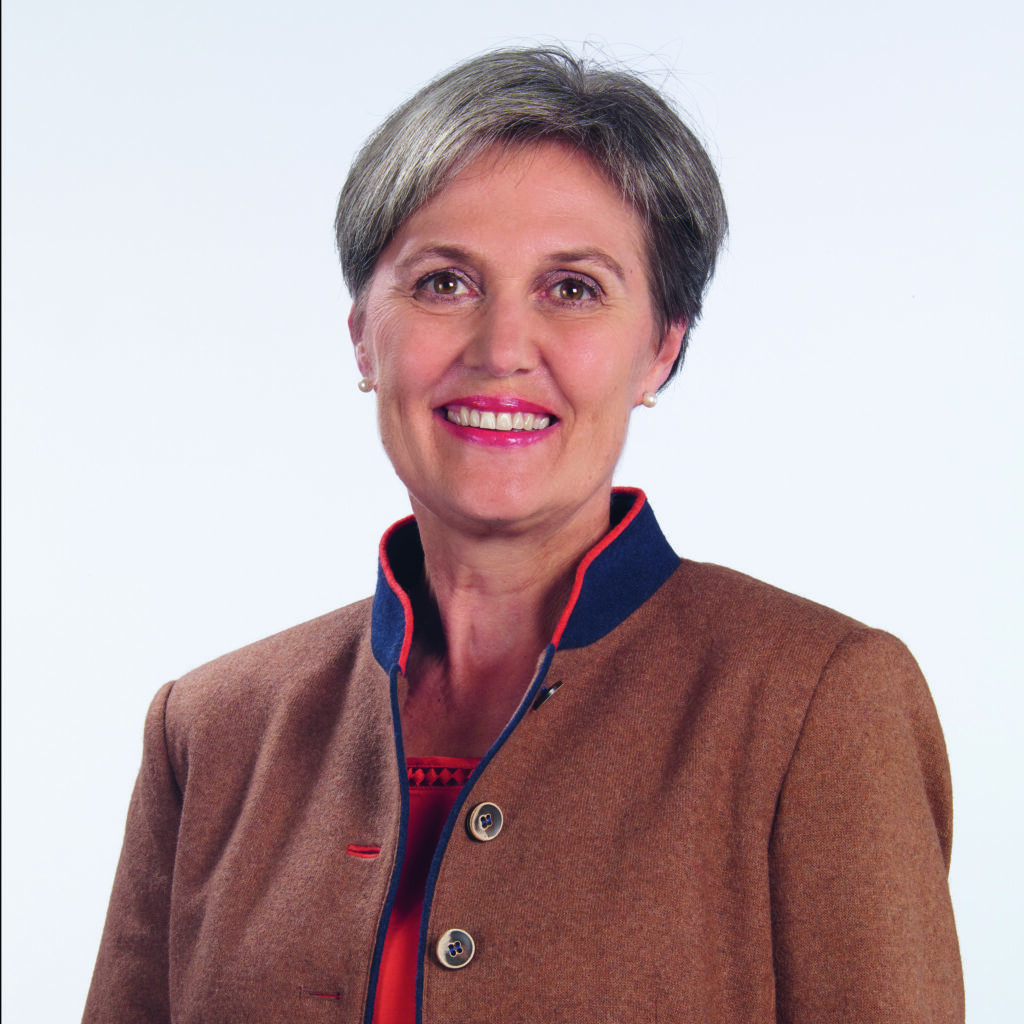
    Eliane Birchmeier (FDP) has been city councilor and head of the building department of the city of Zug since January 2019. The 58-year-old studied business administration and is federally certified. dipl. PR consultant and founded Birchmeier Communications AG based in Zug in 2005. She was a member of the Board of Directors of Kursaal-Casino AG from 2004 to 2017 and co-owner of C-Matrix Communications AG from 1992 to 2004.

    You are the head of the building department of the city of Zug. Where do you see your core tasks?
    Eliane Birchmeier: My core tasks include the classic areas of responsibility in construction: On the one hand, there are building permits and building projects for city-owned civil engineering and structural engineering projects. On the other hand, we deal with planning, design and legal aspects in town planning and urban planning. This is about the future development of the city of Zug in terms of urban development and spatial planning with settlement, landscape and traffic.

    The city of Zug is forecast to have around 10,000 population growth by 2040. What structural measures are planned to do justice to this development?
    The forecast growth depends on the development of the project by private owners and investors. We have already done our homework in many areas. For example, when it comes to infrastructure projects in the areas of drainage, energy and disposal. In education, we – like other communities in Switzerland – have a certain amount of catching up to do. Various plans are currently underway for expanded and new school facilities. But we also want to upgrade the green and open spaces and improve the network of footpaths and bike paths in the coming years.

    The economy should also continue to grow. Where do you see the greatest potential for new commercial buildings?
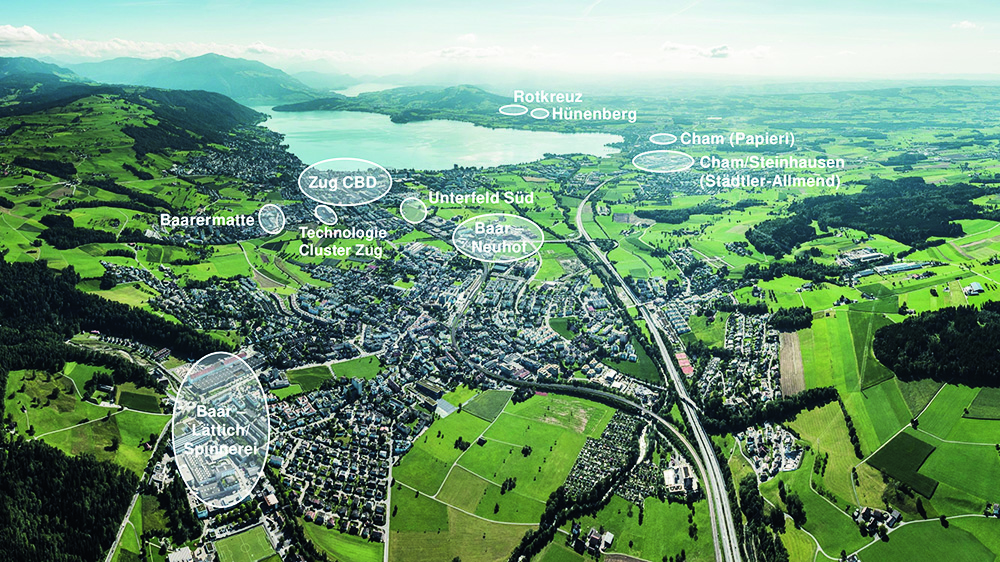
    There is still great potential for expansion for trade and services in various former industrial and urban areas. These include the technology cluster with the V-Zug area, urban areas east and west of the station such as Metalli, Baarerstrasse West and the LG area. Then there is the area on the Aa II, which is being developed by the Zuger Verkehrsbetriebe, the Hertizentrum and the outer Lorzenallmend. In the future, these areas will offer mixed, urban uses of living, leisure and work.

    Where in the canton can you find larger land reserves?
    As elsewhere in the canton, growth in the city of Zug will mainly take place in the interior through densification. In addition, there are a few construction areas that have not yet been built up, such as the outer Lorzenallmend, areas in the Herti and Unterfeld, in the Lüssi / Göbli and in a southerly direction in the Salesianum and in Oberwil. Actual zoning is not the focus of ongoing local planning.

    "We expect planning applications for the Lüssi / Göbli area and the area of the Salesianum country house soon"

    Which projects are planned there?
    In the outer Lorzenallmend, a development plan is being drawn up for a residential and work area and in Herti Süd one for a residential development. There are currently no plans in the Herti Nord, Unterfeld or Spielhof. In the Lüssi / Göbli and the Salesianum there are legally binding development plans for residential developments. We expect planning applications for this in the near future.

    What are currently the most important construction projects that you are involved in?
    City-owned projects are the construction of the recycling center and the Ökihof in the north of the city. School complexes are being planned and projected throughout the city. The project competition for the extension of the lido starts this year, and in summer the Zug population will be able to use the new emergency rooms in the Göbli district.

    The city of Zug is in the middle of the local plan revision process. Is there already an initial strategy for mobility and open space?
    The city's spatial development strategy will be drawn up in several stages and steps up to autumn 2021. The first thrusts based on the technical basis, the population survey and the first participation phase are clearly emerging: the city should become greener. In addition, a diverse and high-quality range of different open spaces should be available to the population.

    What does the population want?
    She would like the growth in mobility to be absorbed by expanding and promoting pedestrian and bicycle traffic as well as public transport. Traffic routing in the center is to be simplified and designed in a way that is compatible with settlement. Particular attention is paid to optimizing commuter traffic. In cooperation with the canton and neighboring communities, but also with employers, we are focusing on an increased shift towards public transport, which is already excellently developed, and non-motorized private transport.

  • Focus on qualitative development

    Focus on qualitative development

    Zug is one of the most popular economic and living areas. This is proven by numerous studies and rankings. The success is based on a long-term development strategy and attractive framework conditions. Zug offers a unique combination of excellent location factors such as the availability of skilled workers, stability, attractive taxation, central location, quality of life, level of education and economic friendliness.

    The Zug business center is dynamic, as evidenced by developments on the real estate market and in the transport infrastructure. The strong presence of value-added industries and service providers as well as a high concentration of high-growth sectors are important for the quality of economic development. The broadly diversified industry structure and the unique mix of small, large, local and international companies are an important driver for the innovative development of the canton. The focus of economic management by the Department of Economics is on the existing and established companies. Their growth makes the greatest contribution to the canton's economic development.

    Testimonials

    Silvia Thalmann-Gut, member of the government, economics director and governor of the canton of Zug

    The canton of Zug offers excellent location conditions for everyone. This includes the "Spirit of Zug" that is lived. The distances are short, the authorities work quickly and efficiently. Zug's success is based on a long-term strategy.

    Heini Schmid, lawyer, former Cantonal Councilor and long-time President of Zug Tourism

    Zug is in Switzerland what Switzerland is in Europe: small, surrounded by large neighbors and therefore open and adaptable. For us, changes are always an opportunity to do things differently and better. Zug is Switzerland to the power of two; it is the total package that counts.

    Matthias Rebellius, CEO Siemens Smart Infrastructure, Chairman of the Board of Directors Siemens Schweiz AG

    From Zug, we are driving digitalization at Siemens Smart Infrastructure. For us, Zug is an ideal location for our global headquarters, as we can attract and promote the best local and international talent here.

    Johanna Friedl-Naderer, President Europe, Canada & Partner Markets, Biogen

    Zug is the hub of our international headquarters. From here we coordinate our operational and administrative activities worldwide. The central location and high quality of life make Zug an attractive location for top talent.

    Contact point for the economy of the Canton of Zug
    Welcome to the canton of Zug. Our services are aimed directly at you as an entrepreneur. We are your partner and promote Zug as a business location.

    Business contact point, Aabachstrasse 5, 6300 Zug, T +41 41 728 55 04, economy@zg.ch

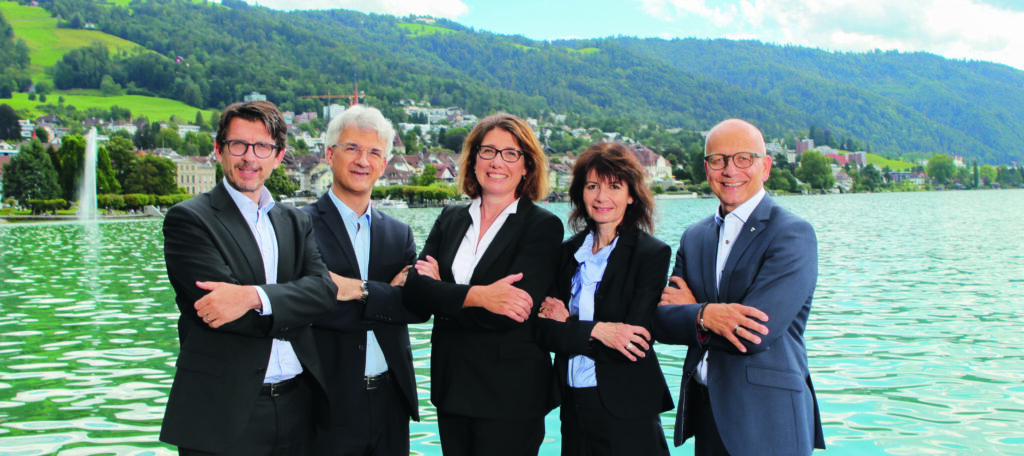
    Alberto Diaz, Deputy Ladder; Peter Müllhaupt, jur. Employee; Yvonne Valentino, assistant / back office manager; Ursula Kottmann Müller, Marketing / Communication; Beat Bachmann, Head (from left to right). Photographer: Peter Hofstetter
  • Energiedienst Group remains on course for growth

    Energiedienst Group remains on course for growth

    According to a communication from Energiedienst Holding AG , the Swiss-German Energiedienst group achieved operating income of 532 million euros in the first half of 2020. In the same period of the previous year, 49 million euros less had been generated. The company attributes the growth primarily to higher prices in the sales business and increased electricity trading volumes.

    Negative effects on the capital market, however, would have reduced the operating result (EBIT) year-on-year by 1 million euros to 12 million, said Energiedienst in the press release. Adjusted for non-operating effects, however, EBIT rose by 8 million to 24 million euros. "Operationally, the Energiedienst Group is doing better in the first half of 2020 than in the same period of the previous year", Jörg Reichert, CEO of Energiedienst Holding AG, is quoted in the announcement. "But the pandemic is not leaving the Energiedienst Group unaffected." The group expects that it will not be able to achieve its originally targeted operating result of 41 million euros for the year as a whole.

    In terms of profit for the period, a year-on-year decline of 6 million to 8 million euros had to be accepted. According to the announcement, the background to this is a negative performance of the company's securities. It reduced the financial result year-on-year by 5 million euros to a loss of 3 million euros.

    "The Energiedienst Group has been one of the first integrated energy companies in Germany and Switzerland to be climate-neutral since January 2020," explains Reichert. This climate neutrality is "the foundation of their business activities", it says in the announcement. According to her, the group was able to win several large business customers in the six months under review “thanks to its climate neutrality”.