Tag: Winterthur

  • Green light for railway extension between Zurich and Winterthur

    Green light for railway extension between Zurich and Winterthur

    According to a press release, the Federal Office of Transport has granted planning permission for the expansion of the link between Zurich and Winterthur. A nine-kilometre double-track tunnel is to be built for this purpose, which will be reached in the south with two access routes from Bassersdorf and Dietlikon. In the north, it ends at Tössmühle in Winterthur. At the same time, the railway stations in Winterthur-Töss, Dietlikon, Bassersdorf and Wallisellen are to be rebuilt and extended.

    The expansion will widen the current bottleneck through Effretikon and Kemptthal to four tracks throughout. This will shorten journey times and expand the range of regional connections in particular.

    The costs are estimated at CHF 3.3 billion in 2014 prices. The expansion is part of the 2035 railway expansion phase approved by the Federal Parliament in 2019.

    The planning approval can be appealed to the Federal Administrative Court within 30 days. Otherwise, SBB can determine the definitive expansion programme and start the preparatory work at the beginning of 2026.

  • Dwindling interest in electric cars in Switzerland

    Dwindling interest in electric cars in Switzerland

    Based on the results of the third AXA Mobility Survey,AXA Switzerland warns that dwindling interest in electric cars could jeopardise the mobility turnaround. According to a statement from the insurance company headquartered in Winterthur, the figures generally give reason to speak of a trend reversal for the automotive market: Between 2023 and 2025, the proportion of those planning to buy a car rose by 12 per cent to 34 per cent. At the same time, only 24 per cent are considering an electric car; in 2023, this was an option for 34 per cent. The underlying representative survey was conducted in May 2025 in cooperation with the Sotomo research institute in Zurich.

    According to the study, electric mobility is currently rejected by 30 per cent of respondents, compared to 25 per cent in 2023. The growing reservations relate to range, price and charging options. According to the press release, the used car market for e-cars continues to lag behind that for combustion engines. The reasons for this are concerns about the condition of the battery and the rapid pace of technological development. At the same time, the reputation of electric cars has fallen by 9 per cent in the past year. “Despite these obvious difficulties in getting electric cars accepted, only a minority of 38 per cent are still in favour of greater political support for the drive technology,” Sotomo Director Michael Hermann is quoted as saying.

    Regardless of the drive technology, AXA is observing that German makes are the undisputed leaders in the wake of the upturn in the automotive market; Chinese makes, particularly BYD, are catching up. Electric cars from the USA are losing popularity.

    The survey also asked what the population thinks of autonomous driving: Scepticism prevails here, mainly due to safety concerns and possible cyber attacks. The majority of car owners are concerned about the misuse of their vehicle data, according to the survey.

  • Office and practice space at Winterthur railway station fully let

    Office and practice space at Winterthur railway station fully let

    Colliers Switzerland has found tenants for the development in the Wartstrasse 2 shopping street in Winterthur. As the commercial property service provider announced in a press release, the Augenarztpraxis am Bahnhof, an architecture firm and the Ecap language school will move into the office property directly next to the railway station.

    Christine Hürzeler and Hans-Georg Geiger offer a full range of diagnostic and preventive examinations for the early detection of eye diseases at the ophthalmological practice at the railway station.

    The Ecap language school has been in existence since 1970, initially focussing on courses in metal and mechanical engineering professions to qualify skilled workers for industrial companies. Today, the focus is on further training for migrants.

    The office property at Wartstrasse 2 was created as part of the redesign of Rudolfstrasse and the new subway at the rear of the railway station. The municipal project aims to revitalise the neighbourhood streets and strengthen the character of the centre. The rental properties were offered in shell form. They extend over an area of 1860 square metres and five storeys. The smallest unit measures 62 square metres, while the largest offers 366 square metres of office and practice space.

  • Construction site safety and flood protection for major Winterthur project

    Construction site safety and flood protection for major Winterthur project

    Outsec AG has won the tender to provide security support for the construction of the new Campus T of the Zurich University of Applied Sciences in Winterthur, the security company from Dietikon announced in a press release. According to the statement, outsec will be responsible for construction site security and flood protection over the next four years. The security company was already involved in the interface coordination of the project during the planning phase.

    “The complexity of this project lies not only in the size or the construction phases, but also in the proximity to existing infrastructure and the crossing of a flowing body of water,” said Robin Hüttenmoser, operational manager at outsec, in the press release. “Flood protection must be guaranteed at all times, especially during the construction period – this is where we make an important contribution with targeted monitoring and early alerts.”

    Outsec’s tasks include access control, coordination of deliveries and area control along the changing construction site zones. For flood protection, the company monitors the water-bearing systems and is also responsible for triggering the alarm in the event of flooding. “With this campus, the ZHAW not only offers students and researchers new perspectives, but also gives us as a security provider the opportunity to demonstrate our digital and networked expertise,” says outsec Managing Director René Leuenberger. In addition to its headquarters in Dietikon, the company has locations in Winterthur, Baden AG and Wallisellen ZH.

  • Cham Swiss Properties optimizes “Rocket & Tigerli”

    Cham Swiss Properties optimizes “Rocket & Tigerli”

    Das Hochhaus „Rocket“ mit 100 Metern Höhe und die drei angrenzenden Wohngebäude „Tigerli“ sollen in der Lokstadt nicht nur Wohnen und Arbeiten ermöglichen, sondern auch städtebauliche Akzente setzen. Die Stadt Winterthur hat Anfang April 2025 die Baubewilligung erteilt. Allerdings mit strengen Auflagen, die vor allem die öffentliche Nutzung von Erd- und Dachgeschoss betreffen. Cham Swiss Properties AG, hervorgegangen aus der Fusion von Ina Invest und Cham Group, nimmt diese Auflagen ernst und will in enger Abstimmung mit den Behörden Optimierungen vornehmen.

    Formaler Rekurs als Zwischenschritt
    Obwohl es von externen Seiten keine Einsprachen gab, hat die Eigentümerin selbst einen Rekurs gegen die Baubewilligung eingelegt. Hintergrund ist die Notwendigkeit, die Detailvorgaben der Stadt zu präzisieren und in einem konstruktiven Dialog mit dem Amt für Städtebau und dem Amt für Baubewilligungen abzustimmen. CEO Thomas Aebischer erklärt: „Das ist eine Formalie. Entscheidend ist für uns der inhaltliche Austausch, damit Rocket & Tigerli der städtebaulichen Bedeutung vollauf gerecht werden.“

    Zentrale Punkte der Nachbesserung sind eine attraktive, öffentlich zugängliche Dachterrasse und publikumsorientierte Nutzungen im Erdgeschoss, wie Cafés und Gastronomieangebote am Dialogplatz. Diese Anpassungen sollen die Aufenthaltsqualität und die Einbindung in die Lokstadt fördern.Ein Ziel, das auch der Stadt Winterthur wichtig ist. Der Rekurs schafft die rechtliche Grundlage, um diese Punkte sorgfältig zu prüfen, ohne den laufenden Projektplan zu gefährden.

    Keine Verzögerung trotz Rekurs
    Cham Swiss Properties zeigt sich zuversichtlich, dass der Zeitplan eingehalten wird. Bereits jetzt ist klar; Rocket & Tigerli bleiben Meilensteine für den urbanen Holzbau in der Schweiz. Das Ensemble nutzt das Potenzial des zukunftsweisenden Holzhybridbaus und steht für nachhaltige Stadtentwicklung mit hoher architektonischer Qualität. Bis Ende 2028 soll das Projekt abgeschlossen sein, mit Wohnungen im Hochhaus und Hotelnutzungen in den unteren Geschossen.

    Bedeutung für Winterthur
    Für die Stadt Winterthur bedeutet das Projekt nicht nur ein neues Wahrzeichen, sondern auch zusätzliche Impulse für das Quartier Lokstadt. Als Teil einer umfassenden Transformation stärkt Rocket & Tigerli die Position der Stadt als attraktiver Wohn- und Wirtschaftsstandort und unterstreicht die Bedeutung nachhaltiger, innovativer Bauvorhaben.

  • City of Winterthur extends agreement with location promotion organisation

    City of Winterthur extends agreement with location promotion organisation

    The new service agreement between the city of Winterthur and the House of Winterthur provides for an adjustment of the organisation’s tasks. The House of Winterthur should focus on strengthening the Winterthur Switzerland brand and on the strategic marketing of the location for business, education, culture and tourism, according to a statement from the city.

    This includes making the hidden champions among the companies and the diversity of the local business landscape visible. Innovation and knowledge transfer are to be strengthened through targeted networking and new event formats, among other things. The House of Winterthur will also actively support start-ups.

    Operational location promotion, on the other hand, will once again be the responsibility of the city. This includes company relocations, portfolio management and space brokerage.

    The city intends to support the House of Winterthur with CHF 760,000 per year between 2026 and 2029, CHF 100,000 per year less than before. The final say lies with the city parliament.

    In a statement, the House of Winterthur recalls that the city’s contribution was CHF 960,000 per year when the organisation was founded in 2017. Beat Schwab, President of the House of Winterthur, which is organised as an association, refers to the new management and other changes in personnel. “There is a spirit of optimism at House of Winterthur,” he is quoted as saying in the press release. “It would be a shame if excessive pressure to save money were to jeopardise this development and seriously impair the sustainable promotion of the location as well as the management of company relocations.”

    The association is supported by the city, the neighbouring municipalities and over 400 members.

  • The new Lokstadt: urban, versatile, steeped in history

    The new Lokstadt: urban, versatile, steeped in history

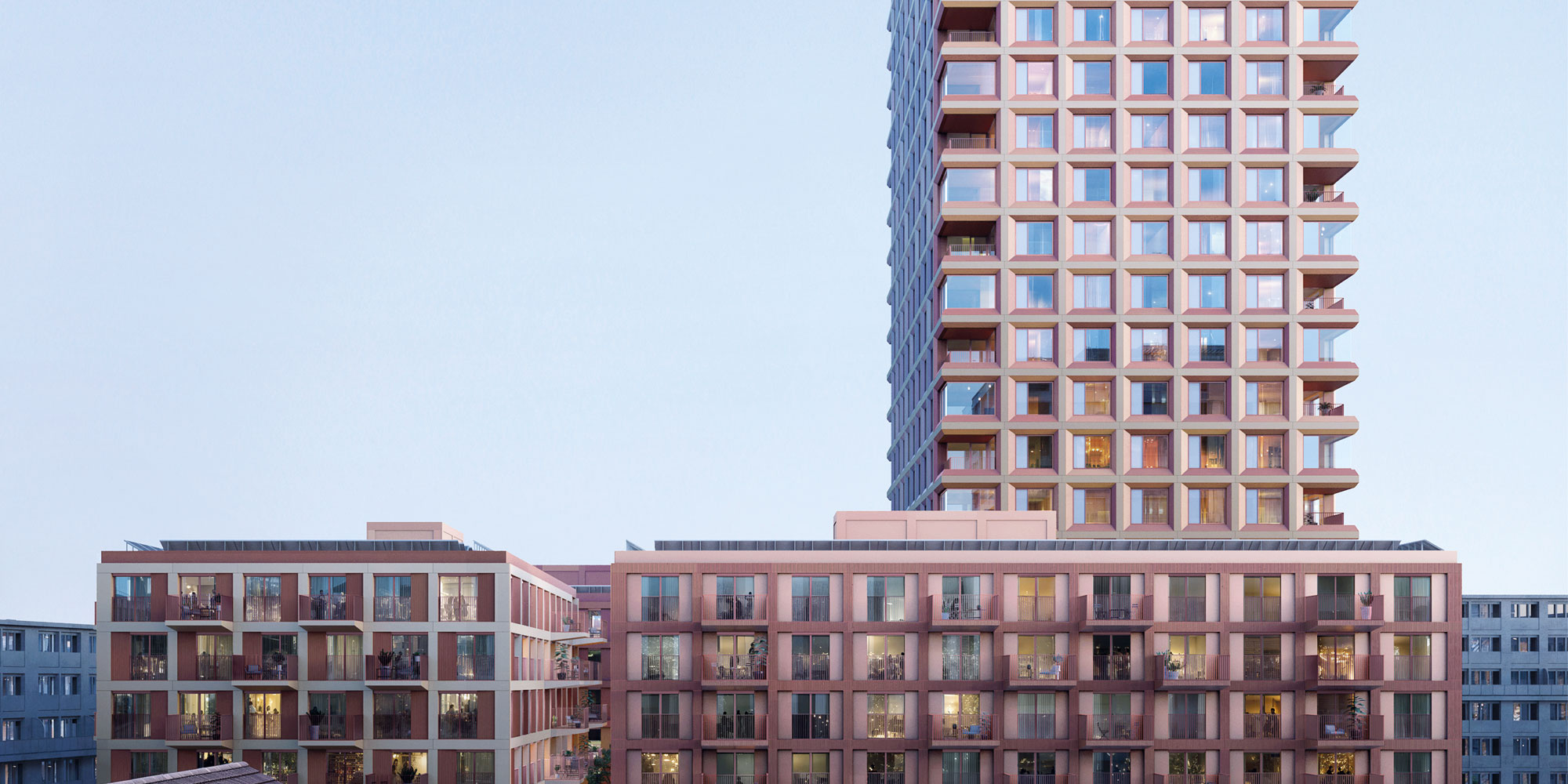
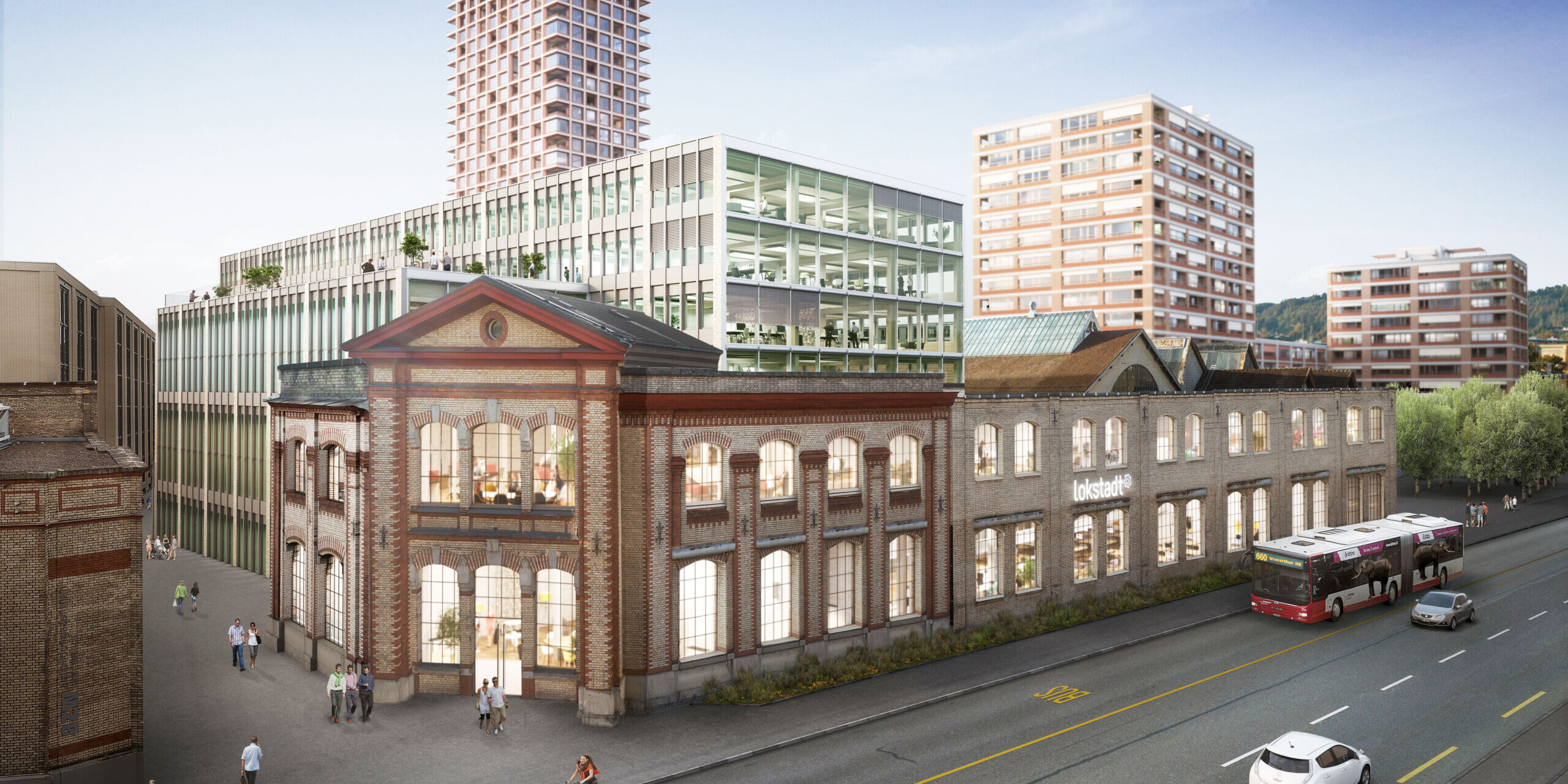
    The “Rocket” high-rise is one of the tallest timber residential buildings in planning. With Lokstadt, Implenia is developing a new, urban and diverse district with 750 apartments for around 1500 people. Lokstadt is located south-east of Winterthur railroad station. In the past, this area was home to the workshops of the Swiss Locomotive and Machine Factory (SLM) – the most important locomotive forge in Switzerland. The neighboring Sulzer factory took over SLM in the 1960s.

    Some of the locomotives produced by SLM bear the names of the various construction fields. For example, the “Tender”: condominiums were built here, which have been occupied since mid-2023, as well as commercial space. There were also 11 “townhouses” for sale: these are four- to five-storey maisonette apartments that have already been completed. In a second construction phase, six four-storey “townhouses” were built: these comprise a total of 24 apartments and have been ready for occupancy since spring 2023. The “Elefant” office building, which is located directly on Zürcherstrasse, has also been occupied since summer 2024.

    The central Dialogplatz will be framed by three buildings in future. The first is the “Krokodil” in timber construction. Here, 254 apartments have been created to meet the diverse housing needs of three cooperatives and individual homeowners. Vertical bands of windows are reminiscent of the former industrial halls and give the building a clear structure. BIGBOY” is located at the front of Dialogplatz. The 50 meter high building with 16 floors houses 125 rental apartments as well as office and commercial space between 55 and 370 square meters. The roof terrace offers a unique view over Lokstadt and the whole of Winterthur. The industrial past of the site is reflected in the brick façade. BIGBOY was ready for occupancy in summer 2023. The third building is still under development and is currently one of the tallest planned timber residential buildings: “Rocket”, developed and realized on behalf of Ina Invest, will be 100 meters high and with 33 floors will be the landmark of the new district and the Winterthur skyline. There are plans for 272 apartments. Charitable apartments are also planned in the “Tigerli” base building. A hotel is also planned. The move-in date is planned for 2028.

    Lokstadt stands for the sustainable use of resources, a carefully planned variety of uses and the innovative revitalization of listed buildings. These include the former factory buildings. Under the leadership of Implenia, these are being transformed into spaces that reflect local history and modern city life. The district is being developed step by step in accordance with the SIA Efficiency Path 2040. Despite the dense construction, emphasis is placed on sufficient open spaces and a high quality of stay. The site will be developed with an underground car park for motorized traffic across all building plots. Above ground, pedestrians and cyclists have priority thanks to a generously designed pedestrian zone.

    With Lokstadt, Winterthur connects the 19th century with the 21st century. Here, the city’s industrial history is brought together with Winterthur’s future as a residential and service city. The district is being built for people who love city life and care about sustainability.

  • Winterthur invests in six smart city projects for 2025

    Winterthur invests in six smart city projects for 2025

    Since 2018, Winterthur has been focussing on smart city projects that make the city more efficient, sustainable and liveable. Already 27 projects have been successfully implemented. In 2025, the city will continue to focus on innovative solutions for mobility, digitalisation and ecological urban development.

    The subsidised projects for 2025 are wide-ranging. From the sustainable reuse of building materials to digital registration systems for school sports and an AI-supported cultural calendar. All projects aim to solve existing challenges with creative technologies and new approaches.

    Six funded smart city projects for 2025

    • Sponge city in action: Extreme weather events such as heat and heavy rain are becoming more frequent. This project is testing how green roofs and permeable soils can help to cool the city and better absorb rainwater. The effect of the sponge city elements is visualised in the Grüze innovation laboratory.

    • Winti Re-Use: Construction projects often generate large quantities of recyclable material that has previously been disposed of. A new platform ensures that construction waste is reused sensibly in order to conserve resources and protect the environment.

    • Spitex mobility: Spitex employees are out and about in the city every day – often in their own cars. This project is testing sustainable alternatives such as e-bikes and e-scooters to promote lower-emission mobility and create more flexible transport solutions for care staff.

    • Smart registration for school sports: A digital platform aims to make registering for school sports easier, faster and error-free. Parents and administration benefit from an optimised process that reduces bureaucracy.

    • CulturAI: Winterthur is a lively cultural city, but smaller events often remain in the shadow of larger events. An artificial intelligence (AI) analyses preferences and suggests individually suitable cultural events – even for users with little time for research.

    • Winbib : Unattended opening hours make libraries more flexible to use, so that books and media can also be borrowed in the evenings or at weekends.

    Smart City Winterthur 2030
    The city of Winterthur is pushing ahead with its smart city development in a targeted manner. On 1 January 2025, the City Council adopted the “Smart City Winterthur 2030” strategy. The aim is to actively promote innovation, create new networks for collaboration and further develop the city’s digital transformation.

    By promoting these six projects, Winterthur is demonstrating how modern, sustainable urban development can be achieved through creative approaches and the targeted use of technology.

  • Winterthur adapts building and zoning regulations

    Winterthur adapts building and zoning regulations

    The aim of the IVHB is to standardise key construction terms and measurement methods throughout Switzerland. Although the canton of Zurich has not joined the concordat, it is implementing the harmonisation – a significant step towards simplifying planning and building law. Winterthur is now integrating these changes into the local building and zoning regulations.

    Significant changes to the building and zoning regulations
    The partial revision of the BZO includes numerous amendments that are mandatory in connection with the IVHB building concepts. For example, 24 paragraphs of the BZO were adapted on a one-to-one basis. The dimensions were reviewed and adjusted in 15 paragraphs. For example, the building height is now defined on the basis of the façade height, which replaces the previous practice of full storeys.

    Introduction of the green area ratio
    This new term replaces the open space ratio and defines the relationship between green and plot areas. The aim is to promote unsealed, planted areas and preserve near-natural characteristics.

    Effects on planning applications and procedures
    The new green space ratio is already subject to a “negative prior effect”. This means that planning applications will be assessed according to both the previous and the new regulations. Projects that are still in the approval phase must fulfil both criteria.

    No value-added tax required
    As the amendments do not result in any planning advantages, there is no obligation to pay compensation in accordance with the law on value-added compensation.

    Public consultation and participation
    The planning documents for the partial revision of the BZO will be open to the public from 27 November 2024 to 27 January 2025. Objections can be submitted to the Office for Urban Development during this period. Interested citizens are invited to actively participate and voice their concerns.

    Winterthur is showing foresight with the implementation of the IVHB building concepts. Standardised definitions and sustainable building regulations strengthen the legal framework and create a future-oriented basis for urban developments.

  • New padel center to be built at Green Spin Winterthur

    New padel center to be built at Green Spin Winterthur

    The start-up Padelta from Rothenburg LU will be the anchor tenant for the Green Spin service building in Winterthur, according to a press release. Padelta will build five courts, a fitness facility and a café on 3,200 square meters. The courts are due to open in 2027. Padelta operates 33 playgrounds at eight locations in Switzerland.

    “Padelta is a perfect fit for our targeted tenant mix,” Rahel and Peter Felix are quoted as saying. Both initiated and developed the Green Spin project with their office Felix Partner. With its range of sports, leisure activities and restaurants, the Padel Center appeals to exactly one of the building’s intended user groups.

    Green Spin is located in the Grüze district in the east of the city of Winterthur and offers 31,000 square meters of space for businesses, offices and services. The project is geared towards the ecological, economic and social aspects of sustainability and will be certified in accordance with the international sustainability standard for buildings, BREEAM. Construction of the building will start in 2025 – it will be occupied in 2027.

    “Being the first mover in a pioneering project in Europe has excited us,” says Yannick Moser from Padelta. According to the press release, the concept has also won over other sectors. Concrete negotiations are already underway with other anchor tenants for Green Spin.

  • Bernapark and Winterthur present themselves to location promoters

    Bernapark and Winterthur present themselves to location promoters

    The Swiss Association for Site Management(SVSM) is holding its traditional Dialogue Site Management conference on 12 March. According to a press release, this time the network for experts from location and business development and the property industry will focus on urban and site development.

    Bettina Furrer will provide insights into Winterthur’s integral site development. The head of the city’s Urban Development Office is responsible for economic and site development, housing policy and Winterthur’s Smart City programme. The former industrial city has developed into a location at the interface of industry, services, health and culture. With Smart Machines, Smart Energy and Smart Health, three clusters for the intelligent further development of the economy have been established on the basis of the location’s existing strengths.

    Caroline Forte presents the development of the site of the former cardboard factory in the Bernese suburb of Stettlen into the Bernapark area. The neighbourhood combines living and working, education and leisure, culture and innovation in historic buildings and new constructions. As a member of the management and board of directors of Bernapark AG, Caroline Forte is responsible for communication and project management.

    The symposium will take place in the Gleisarena Zurich, starts at 4 pm and is open to the public. It will be preceded by the SVSM Annual General Meeting. A decision will also be taken on the renaming of the organisation to Network Location Switzerland. The new name is intended to reflect the intended expansion of the association’s activities to the whole of Switzerland.

  • Kistler baut Smart Factory in Winterthur

    Kistler baut Smart Factory in Winterthur

    Kistler is investing in Winterthur. A smart factory is to be built on a plot of land adjacent to the existing main site, the globally active specialist in measurement technology and sensors announced in a press release. There, state-of-the-art production processes will be combined with a high level of automation. Kistler also wants to set up the world’s largest production facility for piezoelectric sensors in the new factory.

    “We believe in Switzerland as a place to work,” Group CEO Rolf Sonderegger is quoted as saying in the statement. “That’s why Kistler is investing in Winterthur and creating the conditions for future growth.” Once the Smart Factory is completed, the company plans to consolidate its employees, who are currently spread across three Winterthur locations, in one place. The move is planned for 2028.

    Kistler signed the contract for the purchase of the site on 30 August. No details are given in the announcement about the purchase price for the almost 20,000 square metres of space. However, it was important to the former owner “to sell the property to a local industrial company in order to strengthen the location of the Winterthur economic area”, writes Kistler.

  • Allreal acquires Rieter site in Winterthur

    Allreal acquires Rieter site in Winterthur

    The area in Winterthur Töss is a focal point in the 2040 development concept of the city of Winterthur. Thanks to the nearby railway and bus stations and a motorway connection, the area has excellent transport links. In view of the very good location quality in a changing area, the site has attractive long-term development potential.

    In a first step, Allreal will define the framework conditions for future development in dialogue with the city of Winterthur and the other responsible authorities. Over time, the current industrial site is to be further developed into a modern working and living space of supra-regional appeal, which also makes reference to the pioneering days of the textile industry.

    Rieter will remain closely linked to the site with its new campus, also built by Allreal, with its headquarters and research area. In addition, well-known companies from the technology and research sectors are to settle here. In this way, Allreal is helping to secure jobs in the long term and create new living space in the city of Winterthur. Allreal will take over the existing tenancy agreements and refurbish and successively re-let unrented space over the next few years.

  • ebw operates with new leadership

    ebw operates with new leadership

    The association Energie bewegt Winterthur said goodbye to its president Thomas Schumann, who has been in office since 2019, at its 2023 general meeting. Stève Mérillat was unanimously elected as successor to Schumann, who is stepping down for age reasons, ebw informs in a statement. Mérillat has also headed Technopark Winterthur, which specialises in intelligent energy technologies, since the beginning of June.

    “It is very important to me that we tackle the challenges in the field of energy here and now,” the new president of ebw is quoted as saying in the statement. “As the head of Technopark and the new president of this regional network, I am convinced that together we will form a positive force to move the region forward in a sustainable way.”

    With Stadtwerk Director Marco Gabathuler and Roger Graber, Head of Economic Development House of Winterthur, two other board members gave up their posts. Stefan Brägger, the new representative of Stadtwerk Winterthur, and Sven Corus, who has been Head of Economic Development at House of Winterthur since 1 February, succeeded them on the ebw board. Both were also unanimously elected to their new posts.

    The management of ebw was also placed in new hands at the general meeting. Since the founding of the association, Andreas Mächler of Taktform AG had managed the operational business of the association, first as part of a team and then alone. As of 1 July, David Peran and his team from the Winterthur-based start-up company Lumexus GmbH will take over the management of the ebw office.

  • “A big city with small-town charm”

    “A big city with small-town charm”

    Where do you currently see the biggest challenges for the city?
    Winterthur is experiencing strong growth. This brings opportunities, but also challenges. More and more people want to move to Winterthur. This requires a greater number of available jobs, because short commutes mean quality of life. In addition, we have to provide more transport and educational infrastructure. This entails costs – even if we generate more tax revenue due to the growing number of residents. Nevertheless, larger investments are necessary to absorb the growth. With “Winterthur 2040” we have defined where densification is to take place. We expect around 135,000 residents by 2040.


    You have already mentioned it: the city of Winterthur currently has over 120,000 inhabitants. Last year you recorded the strongest population growth in decades. Why is that?

    Winterthur is simply a great city! We are excellently located. We offer a lot of green spaces, a high quality of life and a wide range of cultural activities. Our educational institutions also attract young people in particular. This brings well-trained professionals to the regional labour market. Of course, we also benefit from our affiliation with the Zurich economic region.
    And we are a modern technology city, which is interesting for companies. In short: Winterthur is a big city that offers everything, but still retains its small-town charm.

    How is the city’s housing market doing in view of the sharp rise in the number of inhabitants?
    Like all cities, we are struggling with a very low vacancy rate. But we still have a few municipal and some private building reserves to fall back on. The current building and zoning regulations still allow for a lot. There is a lot of building going on, as we can see from the number of building permits. Basically, we are striving for a well-mixed city. That’s why we try to offer both affordable housing and housing for higher incomes. In my opinion, however, the housing market should not be regulated by the city, it should function as independently as possible.


    You have set up the Smart City office. What does it deal with and how does it work?

    We were the first city in Switzerland to have a Smart City strategy at the city council level. The Smart City uses social and technological innovations in a targeted way to ensure quality of life, conserve resources and promote sustainable development. In other words, it is about using modern technologies to simplify everyday life for the population and to make the city well connected. For this purpose, we have founded the Smart City Winterthur office. In addition, the city of Winterthur is positioning itself as a Living Lab (WinLab), a real laboratory or test city, in which social and technological innovations for the benefit of sustainable urban development can be tried out, systematically tested and, if successful, scaled up. Partners from research and development, business and civil society are invited to actively participate.


    Sustainability is an important keyword in this context.
    True. Researchers from a wide range of disciplines agree that the city of the future must be a sustainable city. This means that the city must be designed in such a way that it can adapt to changing conditions. This concerns not only the “hardware” such as infrastructure, buildings and open spaces, but also the “software”, i.e. the social and economic structures. A sustainable city is therefore economically successful, ecologically compatible, socially stable and thus: resilient. The sustainable Winterthur should therefore also be an ecological city, in the sense of quality of life for its inhabitants. This includes as few emissions as possible, sufficient green spaces, open space and flexible and diverse mobility. With regard to social resilience, it is important for us to strengthen networks and address existing disadvantages.


    What has been done specifically in the area of digital transformation of the city administration and what is still planned?
    In order to be able to approach the digital transformation in a targeted and holistic manner, the city is currently developing a digitalisation strategy. This is geared to the needs of the various stakeholders and is based on the available means and resources. Our goal is to create a faster and as low-threshold contact to the population as possible. Currently, the city offers over 90 e-services that can be accessed via a central portal. We also want to make our internal work processes even more efficient. The highest priority is not only ease of use, but also data protection and data security. The greatest challenge, however, is and remains the speed at which digitalisation is advancing. It is important to keep pace here. We have not yet reached our goal, but we are well on our way.


    In 2017 you initiated the merger of the associations Winterthur Tourism and Location Promotion Winterthur Region. The result is the new organisation House of Winterthur. What is your conclusion some six years later?
    With House of Winterthur we have founded an association that allows us to conduct integrated location marketing. At the time, we were the first city to try this. We want to do marketing for the city and the region of Winterthur from a single source, so to speak, and generate a higher added value. We got off to a good start with a very broad sponsorship. The sponsorship is very broad with the canton, municipalities, companies, hotels, restaurants, cultural institutions and the city; meeting the different demands was a very big challenge. We certainly haven’t done everything optimally here. We have had a new director for a year and a half and are in the process of reorganising the board. I am still convinced of the idea, but we still have to optimise and adjust it.

  • Winterthur Economic Region – From Industry to Service and Education Stronghold

    Winterthur Economic Region – From Industry to Service and Education Stronghold

    At the 97th immoTable Winterthur, we show what moves the region in cooperation with the City Development and House of Winterthur.

    We shed light on this innovative economic area with speakers from business and politics.

    Take advantage of the opportunity for networking afterwards. Present your company and services to influential guests.

    The 97th immoTable will take place on 1 June 2023, starting at 1.30 pm. Be there and secure your ticket now. We look forward to seeing you.

  • Schoch Vögtli moves to the center of Winterthur

    Schoch Vögtli moves to the center of Winterthur

    Office supplies retailer Schoch Vögtli AG is giving up its previous location in Oberohringen near Winterthur and is moving to the city centre. According to a press release from the company belonging to Competec , new and modern offices in the heart of Winterthur will be available from May 2023. The new office is in the Gertrud & Paul building near the main train station.

    The former insurance building is currently being completely renovated and brought up to modern energy efficiency standards. The Competec Group will move into 450 square meters of office space from the residential and commercial space planned there.

    “The new location allows us to get closer to our growing Winterthur customer base and to be able to look after them with the same people as before. For existing and future employees who live in north-eastern Switzerland, we are creating an even more attractive working environment than it is now,” says Markus Bossart, Managing Director of Schoch Vögtli.

    In February, the Competec Group took over 100 percent of the shares in Schoch Vögtli AG. Their business was integrated into Competec's Brack.ch department. Since 2009, the group has organized its sales activities to commercial and institutional end customers in its own Brack.ch Business department.

    Schoch Vögtli continues to deliver mainly with its own fleet of delivery vehicles. The logistics location will also be relocated from Oberohringen when moving to the new offices. The new location is Pfungen.

  • Steiner enters into partnership with House of Lab Science

    Steiner enters into partnership with House of Lab Science

    «Wir freuen uns sehr über die Partnerschaft mit Steiner, um unser bestehendes Flächenangebot für Life Sciences–Firmen um weitere Standorte erweitern zu können. Mit dem Standbein in Basel leisten wir einen Beitrag zu einem der beiden wichtigsten Life Science-Clustern der Schweiz, wodurch wir von bedeutenden Synergieeffekten dieser Ökosysteme profitieren. In Winterthur hingegen demonstrieren wir unsere Kernkompetenz, ein neues Zentrum auch bei vergleichsweise geringen Netzwerkeffekten erfolgreich aufbauen zu können», so Dr. Christian Hugo Hoffmann, CEO von House of Lab Science. 

    Bei der Entwicklung von Immobilienprojekten berücksichtigt Steiner stets gesellschaftliche Trends und antwortet mit innovativen Lösungen auf die Herausforderungen der Zukunft. Im Büro- und Gewerbebereich hat das Unternehmen bereits vor längerer Zeit das nachhaltige und mehrdimensionale Konzept «Manufakt» entwickelt, das nebst modular nutzbaren Räumlichkeiten ein Angebot an geteilten und nach Bedarf benötigten Flächen bietet. Das erste Manufakt-Gebäude konnte im Sommer 2021 nach knapp anderthalbjähriger Bauzeit feierlich eröffnet werden. 

    Steiner und das House of Lab Science verfügen zusammen über das notwendige Know-how, um mit innovativen Gebäudekonzepten auf den wachsenden Flächenbedarf im Bereich Life Sciences, einer Schlüsselindustrie der Schweiz, zu antworten. Während das House of Lab Science unter anderem seine innovative Community-Plattform sowie die exzellenten Kontakte in die Branche und Startup-Welt beisteuert, liefert die Steiner AG das erforderliche Know-How in der Immobilienentwicklung und die dazugehörigen Ressourcen. 

  • Steiner and House of Lab Science are planning new innovation parks

    Steiner and House of Lab Science are planning new innovation parks

    Steiner is collaborating with the young company House of Lab Science , which specializes in offering and operating innovation parks for life sciences companies. As a first step, the two partners have planned the establishment of two new innovation parks in Basel and Winterthur. Steiner AG contributes its expertise in real estate development and its corresponding resources. House of Lab Science contributes its community platform and its contacts in the life sciences industry and start-up scene.

    “With the base in Basel, we are making a contribution to one of the two most important life science clusters in Switzerland, which means that we benefit from significant synergy effects of these ecosystems,” Christian Hugo Hoffmann, CEO of House of Lab Science, is quoted in the press release. “In Winterthur, on the other hand, we are demonstrating our core competence of being able to successfully set up a new center even with comparatively few network effects.”

    The Manufakt concept developed by Steiner is to be used in the construction of the innovation park. These are modular rooms with which areas can be divided as required. The first manufactory building was opened last summer after almost a year and a half of construction, explains Steiner in the press release.

  • Effretikon has big plans

    Effretikon has big plans

    The town of Illnau-Effretikon, which is located on the Zurich-Winterthur transport axis and has around 17,500 inhabitants, has big plans: after a planning phase lasting several years, the groundbreaking ceremony for the development of the center in Effretikon took place in 2022.

    The basis for this is formed by the master plans “Central development of the West Station” and “Area development of the East Station”. These provide for a densification through the mixed use of apartments and commercial space and are intended to strengthen Effretikon’s function as a regional center.

    With around 750 new residential units and 20,000 square meters for offices and public-facing businesses, living space and work space are being created in the immediate vicinity of the easily accessible and highly frequented train station. Among other things, this is intended to achieve the goals set out in the urban development model for increasing the number of jobs and the population. The private development projects are supplemented with public buildings such as the new city garden and smaller squares and contribute to increasing the quality of life in the center. In addition, local public transport will be optimized with the relocation and new construction of the bus station.

    In a first stage, the concretely planned or already approved construction projects Rütlihof, Rütlistrasse, Rosenhof, Rosenweg including bus station, station square and city garden will be realized by 2027. In a second stage, the conversion of the Effimärt shopping center and the development of the Hinterbüel area are to take place. Most of the center development is expected to be completed by 2030.

    The builders include the Bereuter Group, Mettler2Invest, R. Fuchs Partner AG / Trade Tool AG, the OASE Group, the Zurich Investment Foundation, Habitat 8000 AG and the city of Illnau-Effretikon. Siska Immobilien AG is responsible for the Effimärt shopping center.

    Parallel to the structural development, the city intends to revitalize the center in Effretikon with various measures. An attractive offer of the public-oriented trade should, in connection with the above-mentioned public lounge areas, also encourage more people from outside to spend their time in Effretikon. Together with the new residential and commercial areas, the shops are likely to benefit from higher consumer potential in the future.

    This is what the center of Effretikon could look like in a few years: after several years of planning, the first construction work has begun.
  • Zurich remains at the top of the Swiss city ranking

    Zurich remains at the top of the Swiss city ranking

    The magazine “ Bilanz ” has published this year’s ranking of the quality of life in Swiss cities. Zurich took first place again and, according to the report , has been the undisputed leader for eleven years. The cities of Zug and Bern took second and third place, followed by Winterthur, Basel and Geneva.

    The city ranking was created by the real estate experts from Wüest Partner for the business magazine “Bilanz” based on several indicators for the quality of life in cities, for example in the areas of the job market, education, leisure and shopping. A total of 162 cities were rated in this way.

    According to the article by “Bilanz”, it hardly seems possible for other cities to break into the absolute top group. In the top 10, only the canton’s capital, Aarau, lost two places and fell from 6th to 8th place. When asked whether other cities even had a chance of making it into the top group, Patrick Schnorf from Wüest Partner was quoted as saying: “It’s impossible It doesn’t.” For example, St.Gallen, which currently ranks 11th, has a chance if the city could increase its educational and cultural offerings as well as its population growth.

    According to Schnorf, Bassersdorf ZH is a counter-example, which has slipped back eleven places. “Compared to other cities, Bassersdorf has not developed as quickly, for example in terms of education and culture,” Schnorf is quoted as saying. According to the ranking, the two economic regions of Zurich and Lake Geneva are the most liveable.

    Since there are only four cities in the top 30 from western Switzerland and Lugano, one in Ticino, it must be said that the overall quality of life in German-speaking Switzerland is higher.

  • Sulzer area gets new signage

    Sulzer area gets new signage

    The transformation of the Sulzer area, initiated more than 20 years ago, has turned the former “forbidden industrial city” into a lively district “with many new residents, workers and numerous uses for customers”, writes the Winterthur city administration in a statement . This transformation is now almost complete, it says there. The work in the last sub-area Lockstadt should also be completed in the next few years.

    The new district is now to be given uniform signage. It is based on “a simple signage concept appropriate to the area” and is intended to “ensure good orientation for visitors and customers,” explains the city administration. Street signs and house numbers are rust red, taken from the color palette of the former industrial area. The signposts in and through the area are also designed in rust red.

    The area-specific signage should not only simplify orientation, but also “maintain and strengthen the identity of this special part of the city”, according to the statement. The concept and corresponding adjustments to the ordinance on street naming and the guidelines for building labeling in the area have already been approved by the city council.

  • Forest dominates land use in cities

    Forest dominates land use in cities

    The current study on the use of land in Swiss cities is astonishing, writes the Swiss Association of Cities in a statement on the ” Statistics of Swiss Cities 2022 ” drawn up jointly with the Federal Statistical Office . According to the analysts’ surveys, in 2018 settlement areas accounted for just 23.5 percent or 95,000 hectares of the total area of the 170 Swiss cities surveyed. Most of the urban soil, specifically 32.3 percent, was covered with forest at the end of the study period from 1985 to 2018. At 30.9 percent, the proportion of agricultural land in 2018 was also significantly larger than the settlement area.

    In the six largest cities in Switzerland (Basel, Bern, Geneva, Lausanne, Winterthur and Zurich), the proportion of settlement area in 2018, at 54.2 percent, was significantly higher than in the overall calculation, the statement explains further. Forest and agricultural land accounted for 29.6 and 14.3 percent, respectively.

    The analysts observed growth in the reporting period, above all in residential areas. Between 1985 and 2018 it increased by almost 10,000 hectares to 35,000 hectares. The areas used for traffic and built up with recreational and green areas also grew in the reporting period. In contrast, the area used by industry in cities with more than 100,000 inhabitants fell by 26 percent between 1985 and 2018.

  • The world's tallest residential building made of wood is being built in Lokstadt

    The world's tallest residential building made of wood is being built in Lokstadt

    [smartslider3 slider=”7″]

    The study contract for the construction of the Rocket and Tigerli houses has been completed, as informed by Ina Invest in a press release . A jury made up of representatives from the city of Winterthur and architects selected the concept by the architecture offices of Cometti Truffer Hodel Architects from Lucerne and Schmidt Hammer Lassen Architects from Copenhagen from nine designs.

    The winning design shows an “outstanding architectural completion” of the former industrial site. As can be seen in the media release, the decision is based on a “non-anonymous study order in the form of a digital, one-step process with pre-qualification and interim discussion”. In addition to urban planning and architectural aspects, the focus was on sustainability and innovation. At the heart of Lokstadt, on Dialogplatz, the Rocket high-rise with a terracotta facade is to reach a height of 100 meters into the sky.

    Mixed use is planned for the entire residential area. In the Rocket high-rise, a diverse range of residential properties is to be created over 32 floors. According to the Lokstadt development team, the architectural concept is characterized by flexible planning.

    The base building Tigerli is intended for student apartments and non-profit housing. A Radisson Red Hotel is to be housed on part of the area, including the listed industrial halls.

  • Steinfels Swiss lays the foundation stone for a new factory

    Steinfels Swiss lays the foundation stone for a new factory

    Steinfels Swiss laid the foundation stone for its new building in Winterthur on March 30, the Coop subsidiary, which specializes in the production of sustainable cosmetic and hygiene products for the retail trade, hospitals and gastronomy, informed in a statement. “With the new building, we are investing in the Winterthur production site and expanding our range of cosmetic products,” Christian Koch, CEO of Steinfels Swiss, is quoted as saying. “In this way we can meet the increasing demand for cosmetic products, especially for sustainable alternatives.”

    In the new production building, the company wants to renew its cosmetics production and realign the production of detergents, the press release explains further. The internal flow of goods should be automated. The end of the construction work is scheduled for the end of 2023. The new production premises offer space for 150 employees.

    Steinfels Swiss had the old production building demolished for the new building project worth CHF 35 million. The new building is intended to set “standards in terms of sustainability”, the company explains in the press release. On the one hand, it is built according to the Minergie standard. On the other hand, a large part of the required electrical energy is to be produced with the company’s own photovoltaic systems. Steinfels Swiss will obtain the thermal energy required for production from Stadtwerke Winterthur in the form of waste heat.

  • ADEV takes a stake in Fleco Power

    ADEV takes a stake in Fleco Power

    Fleco Power AG , based in Winterthur, has a new shareholder. The ADEV energy cooperative now also holds a 17 percent stake in the subsidiary founded in 2015 by the Ökostrom Schweiz cooperative and MBRSolar , she writes in a statement . She will also be represented on the Fleco Power Board of Directors with her Managing Director Thomas Tribelhorn.

    Fleco Power supports small, decentralized producers of renewable energies in selling their electricity directly. It also offers solutions for end customers, for example helping them to procure renewable electricity on the market in purchasing cooperatives.

    ADEV and Fleco Power want to develop new services and innovation projects together. The long-term goal is to create an independent energy supplier for renewables.

    Founded in 1985, ADEV operates solar power systems, small hydroelectric power plants, wind turbines, central heating systems and local heating networks throughout Switzerland. She also wants to use the cooperation to strengthen her own competitiveness. This makes it possible “to offer our customers tailor-made services that set us apart from the competition,” Thomas Tribelhorn is quoted as saying in the statement.

  • Allreal starts construction work for the new Rieter campus

    Allreal starts construction work for the new Rieter campus

    According to a press release , Allreal has started construction work on Rieter ‘s new campus in Winterthur. The real estate company from Opfikon is responsible for the project as general contractor. She works with the BDE Architects from Winterthur, among others.

    Rieter is investing around 80 million francs in its new campus. This is to include a customer and technology center and an administration building on an area of 30,000 square meters. The textile machine manufacturer will be able to employ around 700 people there from 2024.

    Rieter relies on renewable energies for the new campus. The heat is to be generated with geothermal probes, for example. In addition, a 1300 square meter photovoltaic system will be installed. According to Allreal, the project is “very complex, especially with regard to the building services”. In product and technology development, different climate zones are required that can be set differently.

  • Ina Invest brings Radisson RED Hotel to Switzerland

    Ina Invest brings Radisson RED Hotel to Switzerland

    “Radisson RED is a new, urban-upscale hotel concept with an unconventional design and an exceptional atmosphere for the modern traveler”, Ina Invest writes in a press release . The real estate company on Opfikon ZH is bringing Radisson RED to Switzerland: After destinations such as Dubai, London, Brussels and Cape Town, a Radisson RED hotel is to move into the Lokstadt halls in Winterthur. Ina Invest informs that a corresponding rental agreement with the Success Hotel Group franchisee was signed at the end of September.

    “We are pleased to have Ina Invest and the Radisson Hotel Group at our side as strong partners for our further international expansion,” said hotel group boss Michael Friedrich in the message. “As a hotel operator, we can hardly imagine a better location than the Lokstadt-Hallen, whose industrial style expresses the flair of the Radisson RED.”

    Two primary school and two kindergarten classes are moving in in the immediate vicinity of the hotel. You could not only enjoy the ambience of the former locomotive factory, but also a roof terrace of around 300 square meters, writes Ina Invest. Here, too, a lease has already been signed with the City of Winterthur.

    In total, the real estate company has already allocated 5100 of the 8200 square meters of usable space in the Lokstadt halls, the announcement further explains. Negotiations are being held with another anchor tenant for the remaining space. Ina Invest wants to bring together “versatile, high-profile uses under one roof” in the halls, explains company boss Marc Pointet.

  • Building the future of energy

    Building the future of energy

    The property right at the entrance to the municipality is less than 10 kilometers away from the city of Winterthur and is still an idyllic piece of land, with a direct connection to the banks of the Töss and with a view of meadows and forest. The goals of the Energy Strategy 2050 are being built here. The Verde Blu development has been inhabited since autumn 2019. So far, so normal. It is noteworthy, however, that this development covers a large proportion of its energy requirements itself and that exclusively from renewable sources. “The specifications of the Energy Strategy 2050 are an opportunity for the real estate industry,” explains Dieter Stutz from Atlantis AG, which is active in the areas of environmental consulting, settlement planning and architecture and who developed the project. The heat supply via groundwater was the best and most convincing solution for the area. Atlantis planned and implemented this complex construction project together with EKZ.

    Sustainable living as a need
    The new construction project Verde Blu with nine residential and commercial buildings comprises 108 condominiums as well as various commercial areas that are used by a Migros branch, a community and a physiotherapy practice, among other things. An old, listed barn serves as a common room and provides rustic charm on the site. In contrast to this is the state-of-the-art technology that supplies the system with energy: groundwater is used as a heat source for the heating and hot water, which supplies the houses with decentralized heat pumps via a so-called anergiering. An anergiering is a cold local heating system that, in contrast to conventional local heating systems, works with transfer temperatures below 30 degrees Celsius. Anergy networks therefore have no heat losses in the lines, but even generate additional energy gains from the ambient heat. In summer, the buildings can be passively cooled with the groundwater via the anergy ring.

    A photovoltaic system, which is optimally designed to meet the needs of the building, provides the electrical energy for the building. The complex was only built after the apartments had already been occupied. Because they wanted to leave the decision for or against solar power to the owners. The fact that the system with a peak output of 100 kilowatts was approved by an overwhelming majority at the first owners’ meeting in winter 2019 speaks for itself. Martin Nicklas, who is responsible for modern energy solutions at EKZ, is not surprised: “In the real estate sector, we have long known the need to make a contribution to sustainability in the living area too.” A charging infrastructure for the 209 parking spaces was installed in the lower-level garage. Thanks to load curve management, it is possible to charge the cars in stages if a whole fleet of electric vehicles should one day populate the garage.

    Well-coordinated system
    In Kollbrunn, power generation as well as heating and cooling generation and electromobility are combined in an integrated energy system. The centerpiece is an intelligent control system that maximizes the self-consumption rate and takes over load management. In this way, what is actually the most important goal can be achieved: that the electricity produced by the PV system is also consumed as much as possible on site. The control uses weather forecasts from an external weather portal for this purpose. An algorithm in the control system evaluates this data and decides on the previous evening whether enough solar power will be produced the next day to charge the boiler and storage tank of the heating system. If the solar production is too low, the boilers are charged during the night at the low tariff, otherwise there is a wait until there is enough solar power available the next day to start the heat pump.

    On-site energy production
    The “Grand Chemin” development was built in Epalinges in western Switzerland, with some of the electricity required being produced on site by a photovoltaic system (PV). A new multi-family house is being built in Emmen (LU), which will be characterized by a heat pump with groundwater and a PV with ZEV. Two examples out of many that show that the future of energy has long since begun.

    Comprehensive energy systems for your property

  • City council approves design plan for Obertor

    City council approves design plan for Obertor

    The design plan for the Obertor area was drawn up in a cooperative process with the participation of interest groups from the old town, representatives from the people's initiative for Obertor, the landowners, the city council and the city administration, the administration of the city of Winterthur informs in a message . According to her, the city council of Winterthur has now approved the design plan. Objections can be raised until October 12th.

    Shops, offices and apartments are to be built on the approximately 6,500 square meter area in the old town. The design plan provides for different uses for the individual properties. Shops on the ground floor and apartments on the upper floors are planned for the buildings at Obertor 11 and 13. The historical inventory of the building at Obertor 17 is intended to be used to furnish offices. In the court properties Obertor 15 and 17a, the establishment of an innovative mixed use of residential and commercial is planned.

    At Badgasse 6, the concept aims to use wellness based on what was once the so-called bathtub mosque, is further explained in the communication. If this turns out to be impractical in practice, renting a health center, for example, will be considered as an alternative. The inner courtyard between Obertor and Badgasse is to be made accessible to the public as a “green island”.