Tag: Zürich

  • Green light for railway extension between Zurich and Winterthur

    Green light for railway extension between Zurich and Winterthur

    According to a press release, the Federal Office of Transport has granted planning permission for the expansion of the link between Zurich and Winterthur. A nine-kilometre double-track tunnel is to be built for this purpose, which will be reached in the south with two access routes from Bassersdorf and Dietlikon. In the north, it ends at Tössmühle in Winterthur. At the same time, the railway stations in Winterthur-Töss, Dietlikon, Bassersdorf and Wallisellen are to be rebuilt and extended.

    The expansion will widen the current bottleneck through Effretikon and Kemptthal to four tracks throughout. This will shorten journey times and expand the range of regional connections in particular.

    The costs are estimated at CHF 3.3 billion in 2014 prices. The expansion is part of the 2035 railway expansion phase approved by the Federal Parliament in 2019.

    The planning approval can be appealed to the Federal Administrative Court within 30 days. Otherwise, SBB can determine the definitive expansion programme and start the preparatory work at the beginning of 2026.

  • Merger planned in the Zurich energy sector

    Merger planned in the Zurich energy sector

    According to a joint statement, the City of Zurich and EKZ have decided to endeavour to have Energie 360 Grad AG taken over by EKZ. The main shareholder of Energie 360 Grad is the City of Zurich with a 96 per cent stake. The remaining 4 per cent is held by 22 political municipalities.

    In a resolution dated 31 May 2023, the Zurich City Council decided that Elektrizitätswerk der Stadt Zürich(ewz) should be the sole municipal provider for large energy networks in the city. Energie 360 Grad’s large energy networks in the city were to be transferred to ewz.

    As a result, Energie 360 Grad increasingly focussed on activities outside the city area. As a result, municipal ownership was examined, as were possible partnerships for Energie 360 Grad. EKZ and the City of Zurich have now agreed to enter into exclusive talks regarding a takeover of Energie 360 Grad by EKZ.

    According to the press release, the energy infrastructure in the canton of Zurich could largely be operated from a single source if EKZ and Energie 360 Grad were to join forces. EKZ already supplies 100 per cent renewable electricity. EKZ would consistently pursue Energie 360 Grad’s strategy towards renewable gases and the installation of charging infrastructure for electric cars. “This would be a decisive step towards decarbonisation and achieving the climate targets,” said the two negotiating partners.

    The municipal council and the EKZ Board of Directors must now decide on the realisation of the sale of Energie 360 Grad to EKZ. According to the information provided, the aim is to finalise a possible transaction by the end of 2026.

  • The big living showdown

    The big living showdown

    The housing protection initiative aims to prevent rents from rising disproportionately after conversions or demolitions. Investors should have future rents approved with the building permit, and yields should also be capped. A majority in the Cantonal Council (including the SVP, FDP and GLP) rejects this as too much interference in property rights and warns of barriers to investment. Instead, the majority of the committee is proposing a counter-proposal that would protect tenants in particular from abusive terminations. With information and support periods of 12 months in the event of restructuring. Critics see this as a placebo that does little to protect tenants and leaves the interests of yields untouched.

    HEV start-up aid initiative
    This initiative aims to facilitate access to home ownership. The homeowners’ association is calling for the canton to guarantee up to 15 percent of the purchase price for owner-occupiers by reducing the equity from 20 to 5 percent. The government supports the proposal as it could make it easier for middle-income families to buy. However, left-wing parties are warning of rising demand and higher land prices without a sustainable increase in housing supply. A close decision is looming in the cantonal council.

    Home ownership initiative of the HEV
    This initiative demands that at least an equal number of owner-occupied homes be built alongside affordable rental apartments in state-subsidized housing projects. It has not yet found a majority, as critics do not consider the one-sided promotion of rental apartments to be in line with the constitution. A counter-proposal aimed at addressing problems with the calculation of the imputed rental value also has little chance of success.

    Housing initiative of the Greens
    The Greens are calling for the establishment of a public housing agency with start-up capital of at least CHF 500 million in order to create affordable, non-profit housing and promote non-profit developers. The majority in the cantonal council rejects this and instead proposes a framework for accelerated housing construction. The initiators want to force a referendum if the proposal is rejected.

    Outlook and political tensions
    The debate in the cantonal council opens a politically hot autumn. Another point of contention will be the SP’s right of first refusal initiative, which aims to give municipalities more scope to intervene in land purchases in order to limit speculation. Its counter-proposal has mainly economic and legal opponents.

    The positions of the stakeholders show the dilemma between protecting housing, promoting property ownership and concerns about investment incentives. The outcome of the votes will have a decisive influence on future housing policy in the canton of Zurich and is also likely to send a signal to other Swiss cantons.

  • Zurich agglomeration needs new buildings

    Zurich agglomeration needs new buildings

    The Zurich agglomeration is the only one in Switzerland where the population is growing faster than the housing stock. This was revealed by a study conducted by the Zurich research institute Sotomo on behalf of Fürschi Züri.

    The housing stock in the Lausanne conurbation has grown by 10.0 per cent since 2016, in Geneva by 8.9 per cent and even in Winterthur by 8.5 per cent. In Zurich, the figure was only 7.8 per cent. Within the Zurich agglomeration, the labour market region of Kloten saw above-average growth of 10.9 percent, Uster-Dübendorf 8.6 percent and Limmattal 8.4 percent.

    The agglomeration is lagging behind, particularly in terms of new builds, with growth of 3.8 per cent. Only the Basel agglomeration is lower at 2.7 per cent. Lausanne has 5.5 per cent more new builds and Winterthur 5.3 per cent.

    Zurich, on the other hand, is ahead with an increase of 4.5 per cent in replacement new builds. However, Zurich is also the agglomeration in which replacement new builds create the lowest number of new flats with a factor of 2.8 and the smallest new living space with a factor of 3.4. Even Winterthur achieves a factor of 3.4 for the number of flats and 3.7 for floor space. Lausanne leads the field with a factor of 6.5 for the number of apartments and 5.9 for floor space, followed by Geneva with 6.1 for the number of apartments and 5.6 for floor space.

    There are considerable differences within the Zurich agglomeration. The labour market region of Kloten has a factor of 4.3 for the number of flats. The fewest new flats are being created in Küsnacht-Meilen with a factor of 2.2. In the city of Zurich, the factor for the number of flats is 2.3.

    Young people and families are the main direct beneficiaries of new builds. The majority of residents of new builds come from the municipality (Zurich agglomeration 41 per cent, Winterthur 50 per cent) or from the agglomeration (Zurich 39 per cent, Winterthur 11 per cent). Newcomers from abroad mainly move into existing flats; in the agglomeration, they make up 23 per cent of all newcomers to existing flats.

    Completely renovated flats are generally more expensive than new builds. Newly occupied existing flats in sought-after locations are just as expensive as new builds, and even more expensive in Geneva. New builds do not drive up the prices of neighbouring existing flats either.

    The Zurich conurbation is dependent on new construction, concludes study author Michael Hermann. “New buildings are the key to ensuring that Zurich remains an attractive place to live for everyone,” he is quoted as saying in a press release from Fürschi Züri.

    “Blocking renovations and new builds is counterproductive,” adds Raphaël Tschanz, Director of the Zurich Chamber of Commerce(ZHK). “Without new builds, young adults and families will be displaced.”

    Fürschi Züri is an initiative of the ZHK and like-minded organisations and individuals.

  • Local communities to promote solar expansion

    Local communities to promote solar expansion

    The city of Zurich is interested in expanding solar power production in the city as quickly as possible. To this end, the city’s own electricity utility(ewz) is launching a new offer via local electricity communities (LEG). In future, owners of large photovoltaic systems (PV systems) will be able to sell their surplus electricity directly to households in the neighbourhood, the city administration announced in a press release. Previously, it was only possible to feed surplus electricity into the ewz grid.

    With the ewz.solarquartier offer, ewz will take over the networking of interested producers and consumers of solar power as well as administration and billing. The owners receive a stable revenue of 12 centimes per kilowatt hour supplied. “This means that LEG can generate up to 10 per cent more revenue than with the return delivery alone,” explains ewz Director Benedikt Loepfe. Households purchase the electricity at the price of the standard ewz.natur product.

    “The installed capacity of PV systems in the city of Zurich has more than quadrupled in the last ten years or so,” explains City Councillor Michael Baumer. The city wants to further strengthen this growth trend wherever possible, explains the head of the Department of Industrial Operations, where ewz is based. “In addition to the various measures already underway, a good offer for LEG helps to make the realisation of solar installations in the city even more attractive.”

  • Zurich and Aargau plan mobile network

    Zurich and Aargau plan mobile network

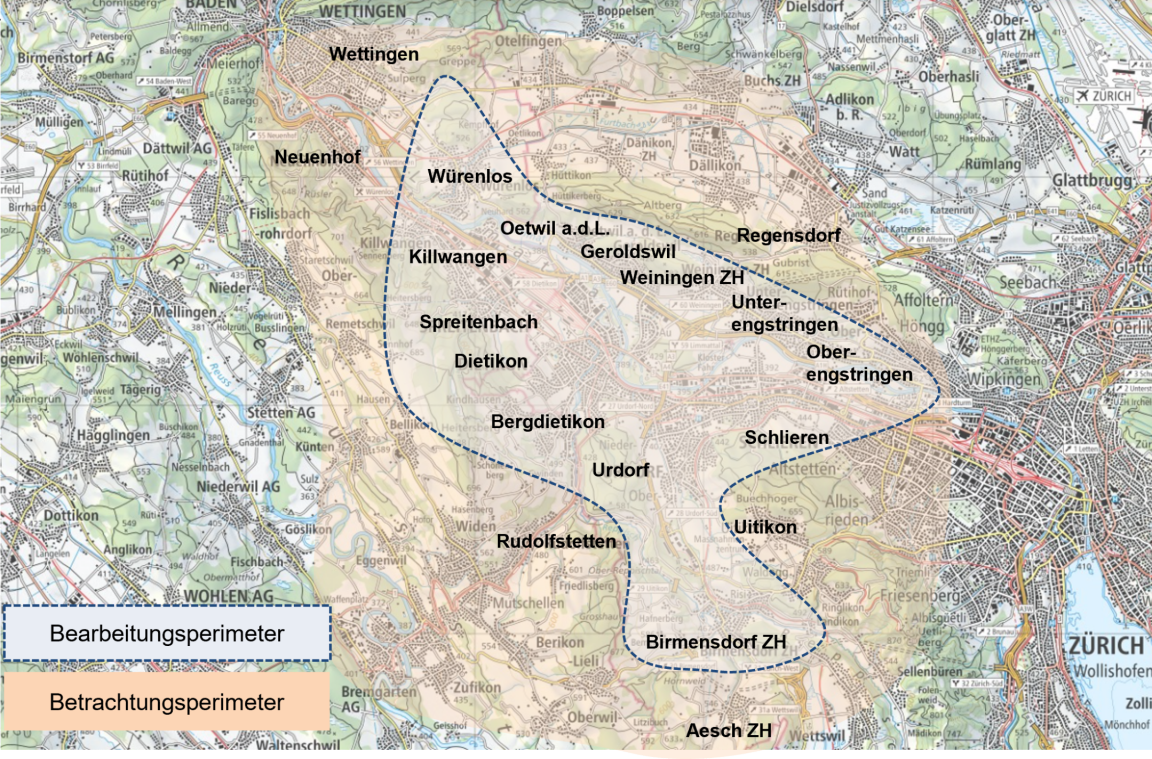
    The Limmat Valley is developing rapidly, not least thanks to new transport projects. In order to strategically address this dynamic, the cantons of Zurich and Aargau, together with three regional planning associations, are launching a cross-cantonal planning instrument:. The Limmattal regional overall transport concept.

    The concept follows the guiding principle “The Limmat Valley is fit for the future” and aims to create a sustainable, efficient and environmentally friendly balance between settlement and transport development. The planning horizon extends to the year 2050.

    Multimodal networking as a guideline
    The focus is on improving regional networking, promoting multimodal solutions and integrating logistics concepts. Neighbouring regions such as the Furttal or the city of Zurich are also included.

    The results of the concept will form the basis for future agglomeration programmes and will flow into concrete implementation in the municipalities and cantons from 2027/2028. Objectives, strategies and measures will be developed in several phases by the end of 2026.

    Structured process with regional participation
    The project will be managed by a steering group with representatives from the cantons and regional planning associations. Broad participation by the municipalities and public information events ensure transparency and acceptance.

    Project manager Sarah Hug (Canton of Zurich) and project manager Dominik Kramer (Canton of Aargau) are coordinating the participatory process. Public information events are planned on 5 November 2025 and 13 May 2026, among other dates.

    Mobility strategy with a signalling effect
    The rGVK Limmattal is a model project for intercantonal cooperation in one of Switzerland’s most economically significant development areas. It shows how regional and supra-regional interests can be united in a joint strategy for sustainable mobility.

  • Zurich convinces as a business location

    Zurich convinces as a business location

    According to a survey of over 400 companies in the canton of Zurich conducted by the Office of Economic Affairs, 82% rate the location positively, with 22% rating it as “very satisfied” and 60% as “fairly satisfied”. This high level of approval is primarily based on three factors: the excellent transport infrastructure, the high quality of life and the availability of well-trained specialists. Economic stability and political reliability were also cited as locational advantages.

    Infrastructure impresses
    Of the 24 location factors assessed, infrastructure (71%) and quality of life (55%) were mentioned most frequently as plus points. The labor market followed with 43%. On the other hand, 90% of companies consider the cost environment, in particular rents, wages and regulations, to be a clear disadvantage. Similarly, 64% criticize the tax environment. Zurich ranks last in Switzerland in terms of corporate tax burden.

    One in four companies planning to relocate
    A quarter of the companies surveyed have thought about moving out of the canton of Zurich in the last five years or have concrete plans to do so. The main driver is the high tax burden. According to statistics, over one percent of Zurich companies relocate to other cantons every year. This trend is in line with the assessment of many companies.

    Well positioned in European comparison
    The results are also reflected in a comparative European study by the Office of Economic Affairs. In comparison with other European economic regions, Zurich is particularly impressive due to its educational landscape, economic performance and quality of life. The study sees a need for action in areas such as labor market dynamics, innovation promotion and regulatory density.

    Location with strengths – but under pressure
    The canton of Zurich remains a leading business location with excellent infrastructure, a high quality of life and a competent labor market. At the same time, feedback from companies clearly indicates that the cost and tax environment needs to be adjusted in order to stop migration trends and ensure long-term competitiveness. For decision-makers, this means actively developing location policy before the strengths are overshadowed by structural weaknesses.

  • Lift refurbishment with a focus on comfort and safety

    Lift refurbishment with a focus on comfort and safety

    KONE has replaced the outdated lifts of a competitor in the Im Tiergarten neighbourhood of Zurich for 466 occupied rental flats. Within 18 months, the lift manufacturer from Brüttisellen installed a total of 46 of its MonoSpace 500DX lifts in one of Zurich’s largest residential complexes.

    According to a company statement, this model adapts flexibly and with millimetre precision to the existing shaft. The payload of most of the passenger lifts has been increased from 320 to 480 kilograms. The new cabins are also significantly larger. According to KONE, they are monitored around the clock via the company’s digital asset management system and serviced proactively. This should lead to around 30 per cent fewer breakdowns.

    The owners had decided to forego vacancy notices and to carry out further refurbishment measures while the building was occupied. According to KONE, it was able to adhere to the tight schedule thanks to a special logistics concept with overnight delivery and close coordination with the owners and residents.

    The successful complete replacement in the Im Tiergarten development is one of KONE’s largest lift modernisation projects in Europe to date. According to Christian Herbst, KONES Director of Modernisation for Germany, Austria and Switzerland, “it shows that we are well positioned to meet an increasingly important demand in the market: the efficient modernisation of even a large number of installations, in close coordination with partners and under difficult conditions such as renovating while the building is occupied”.

  • Recovery despite noise pollution

    Recovery despite noise pollution

    Cities are growing, noise levels are rising and natural recreational areas are shrinking at the same time. A comprehensive study by Empa and the Swiss Federal Institute for Forest, Snow and Landscape Research has now shown for the first time in Switzerland how crucial green environments are for coping with stress in noisy cities. Physical and mental recovery processes are significantly promoted by access to green spaces, and this effect can even be measured in the long term.

    Virtual realities prove real effect
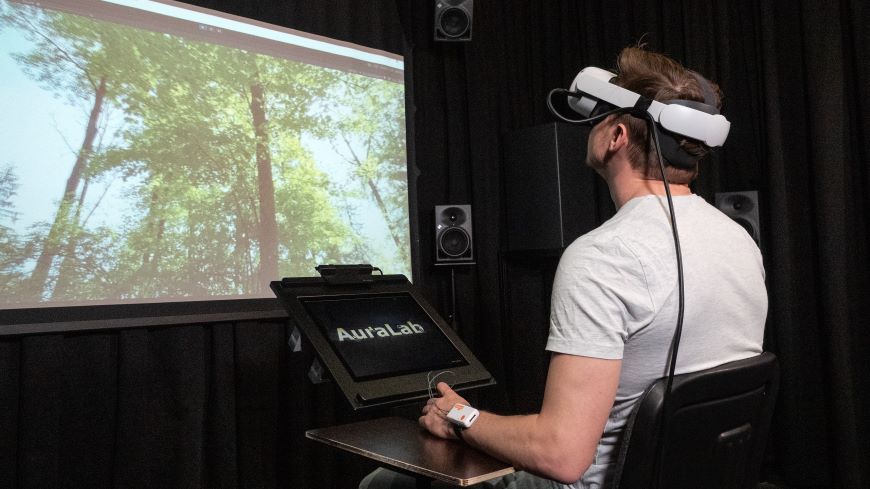
    In Empa’s Auralab, test subjects were immersed in various environments using virtual reality, from quiet urban landscapes to near-natural scenarios. After a targeted stress phase, triggered by cognitive tasks under traffic noise, a clear trend emerged. Natural soundscapes such as forests or lakes reduced physiological stress more than urban settings. Sweat production on the fingers and cortisol concentrations in saliva clearly demonstrated the effect on the body.

    Long-term study confirms sustainable recovery
    The findings from the laboratory were also confirmed in field research. A study with over 230 participants in Zurich showed that green spaces in the neighborhood reduce chronic stress levels. Hair samples showed a lower concentration of the stress hormone cortisol in people living in green and quieter environments. Even moderately greened urban spaces can therefore make a significant contribution to long-term stress management.

    Guide to healthy cities of the future
    The RESTORE project (“Restorative green spaces in noise-polluted areas”) summarizes the results of the four sub-studies and provides an important basis for policy, urban planning and health protection. In particular, the findings should influence the further development of Swiss noise legislation as well as spatial and environmental planning. At a time when three quarters of the European urban population is affected by noise pollution, the integration of green spaces opens up new perspectives for a resilient, liveable urban future.

  • Municipality of Thalwil relies on district heating with new heat supply

    Municipality of Thalwil relies on district heating with new heat supply

    Wärme Thalwil AG was founded in February 2025 to provide the population with a climate-friendly district heating supply. According to a press release, the company is the result of a collaboration between the municipality of Thalwil and Elektrizitätswerke des Kantons Zürich(EKZ). Thalwil holds a 49 per cent stake in the new company and EKZ holds 51 per cent. The foundation was preceded by a referendum in September 2024, in which 79.8 per cent of voters voted in favour of the new company.

    “By founding Wärme Thalwil AG, we are sending a clear signal in favour of a resource-conserving and climate-friendly heat supply in our municipality,” said Andy Fellmann, municipal engineer of Thalwil, in the press release. “In addition, the collaboration between the municipality and EKZ allows synergies to be utilised and the existing infrastructure to be developed efficiently.”

    Martin Nicklas, Chairman of the Board of Directors of Wärme Thalwil AG and Head of Energy Solutions and Energy Contracting at EKZ, states that the aim of the new company is to supply 3,000 residents with sustainable heat. The next step is to create an additional heating network, a decision on which is to be made in 2026.

  • Lake Zurich heats properties in the Riesbach neighbourhood

    Lake Zurich heats properties in the Riesbach neighbourhood

    Since 26 February, the first 80 properties in the Riesbach district of Zurich have been heated with heat from the Tiefenbrunnen energy network, Energie 360° announced in a press release. When the energy network is completed in 2032, the number of properties heated with heat from the waters of Lake Zurich is expected to rise to around 400. Energie 360° has invested around 60 million Swiss francs in the project.

    “We have reached an important milestone with the commissioning of the main centre and are proud of our contribution to a sustainable heat supply in the Tiefenbrunnen area,” said overall project manager Andreas Abdon from Energie 360° in the press release. For Dženan Draganović from Liegenschaften Stadt Zürich, energy networks such as the one now in operation are crucial for the city’s own net-zero target: “We have set ourselves the goal of heating all properties without fossil fuels by 2035.”

    When completed, the Tiefenbrunnen energy network will be able to supply around 5,300 Tiefenbrunnen residents with renewable heat from Lake Zurich. By replacing fossil heating systems, 6500 tonnes of CO2 can be avoided each year, writes Energie 360°.

  • Zurich Airport region sets up an advisory board for sustainability

    Zurich Airport region sets up an advisory board for sustainability

    The FRZ Zurich Airport Region is strengthening its commitment to sustainability. It founded a sustainability advisory board on 6 February, the business network announced in a press release. “Sustainability is not a trend, but a decisive success factor for companies and society,” it says, explaining the background to the decision.

    The new advisory board will act as a “leading competence centre” for sustainable innovations in the region. Specifically, its aim is to support companies, cities and municipalities in the introduction of sustainable business models. To this end, best practices are to be promoted and stakeholders from business, science and politics are to be brought together.

    The tasks of the new advisory board will also include the presentation of the FRZ Excellence Award. Each year, it will recognise outstanding achievements in ecology, social responsibility and innovation by member companies of the FRZ Zurich Airport Region.

    The members of the Sustainability Advisory Board include Mario Angst from the University of Zurich, Willi Gärtner from Planzer, Thomas Meier from the Swiss Safety Centre and the former Managing Director of the Greater Zurich Area, Sonja Wollkopf. In total, four women and nine men from business, science and politics are represented on the advisory board. The full list of members, including links to their LinkedIn profiles, can be found in the press release from the FRZ Zurich Airport Region.

  • Civil engineering work for power grid at Stadelhofen railway station started

    Civil engineering work for power grid at Stadelhofen railway station started

    According to a press release, the Dietikon-based construction company Walo Bertschinger is starting civil engineering work on the cable systems of the Elektrizitätswerk der Stadt Zürich(ewz) directly at Zurich-Stadelhofen railway station. Walo has been awarded an annual contract by ewz from 2024 to 2028. This makes Walo one of four companies involved in important infrastructure projects. Walo Bertschinger will start civil engineering work on ewz’s cable systems directly at Stadelhofen station in February.

    ewz is responsible for the secure and efficient operation of the distribution grid in the city of Zurich and parts of the canton of Graubünden, ewz says. ewz’s modern and intelligent metering and grid infrastructure ensures security of supply in the city of Zurich. In the long term, this infrastructure supports Zurich’s net-zero target for 2040 and the preservation of quality of life in the city. At the same time, it is a prerequisite for further networking and digitalisation.

  • Private investors drive innovation in Zurich

    Private investors drive innovation in Zurich

    The Zurich financial centre is not only an important centre for banks and insurance companies, but also a key factor for the development of young companies. Private investors such as private equity and venture capital companies, multi and single family offices as well as foundations support start-ups with targeted investments that promote innovation and economic growth.

    According to the new study “Zurich Financial Centre 2025/2026”, which was commissioned by the cantonal Office of Economic Affairs and the city’s Urban Development Department, 208 private equity and venture capital companies and over 2,800 foundations are active in the Zurich region. They employ a total of around 3800 people and have made a significant contribution to the development of Zurich as a centre of innovation over the last ten years.

    Growth and financing gaps in the start-up ecosystem
    Between 2014 and 2024, over 900 start-ups were founded in the Zurich region, raising a total of CHF 9.6 billion in various financing rounds. Almost half of the total financing volume of start-ups in Switzerland. In the case of companies whose investor structure is known, around one third of the funds come from regional investors.

    However, the study shows that many start-ups encounter financing hurdles in the next growth phase after initial support from accelerators, incubators and foundations. While private equity and venture capital companies are increasingly getting involved in expansion financing, a financing gap remains. This can lead to young companies moving abroad in order to secure capital for scaling up.

    Zurich as an attractive location for venture capital
    The Zurich region offers ideal conditions for investors thanks to its strong market environment, international network and the availability of highly qualified specialists. Single family offices in particular are playing a growing role, as they enable long-term investments in innovative projects. Swiss single family offices invest an average of 12 per cent of their assets under management in venture capital, of which around CHF 24 billion flows into projects within Switzerland.

    According to Michael Grass from BAK Economics, which conducted the study, it is crucial to close the financing gap in the growth phase of start-ups. This would not only secure the region’s innovative strength, but also reduce the risk of emigration.

    “Strengthening the investor location” initiative launched
    Based on the results of the study, the canton of Zurich is launching the “Strengthening the investor location” sub-project as part of the “Innovation Location 2030” initiative. The Department of Economic Affairs has been tasked with developing targeted measures to improve the attractiveness of the location for venture capitalists. The aim is to optimise the investment conditions for start-ups and scale-ups and expand financing opportunities in the region.

    Concrete strategies are to be developed through dialogue between politics, business and investors in order to further strengthen Zurich as a leading location for venture capital. The city of Zurich is already actively involved in promoting start-ups, including with incubators such as BlueLion and Startzentrum Zürich as well as the city’s KlimUp programme for sustainable innovations.

    The results of the initiative should help to further develop Zurich as a dynamic and competitive investment location and secure the business centre in the long term.

  • Rising prices and a tight rental market

    Rising prices and a tight rental market

    Zürcher Kantonalbank (ZKB) has published its annual market analysis and confirms the further rise in property prices. Following growth of 3.7% in 2023, prices rose by 3.3% in 2024. Even if the pace has slowed slightly, the trend remains clear: residential property prices in Zurich have risen 2.5-fold in 20 years.

    It is interesting to note that despite lower interest rates, the expected stronger price increase failed to materialise. Demand was more subdued, particularly for new-build properties, which take longer to sell. Nevertheless, ZKB registered an increase in transactions in the second half of 2024, which indicates that demand is picking up again.

    Increasing shortage on the rental flat market
    The tense situation for rental flats continued in 2024. For the first time, the ZKB found that the number of sales advertisements was slightly higher than the number of rental offers – a sign of the continuing dwindling capacity on the Zurich rental market.

    Although the shortage was not quite as drastic as feared, ZKB anticipates a further decline in vacancies in 2025.

    Rents are also rising for existing tenants
    Rents in Zurich rose by an average of 4.5% in 2024 – a significant increase compared to the Swiss average of 3.3%. It is particularly noteworthy that not only new lettings but also existing tenancies were affected by increases.

    This trend is directly attributable to the reference interest rate increases from 2023, which had a delayed impact on rents. In the third quarter of 2024, existing rents in Zurich were 5.4 % higher than in the previous year, while they only rose by 3.3 % across Switzerland. The increase was even higher in the Lake Geneva region.

    Institutional landlords utilised their scope for rent increases more intensively than private owners. However, there are signs of a trend reversal: as the reference interest rate will fall in March 2025, many tenants are likely to demand a reduction in their rent.

    The Zurich property market therefore remains a dynamic field with rising prices for owners and increasing challenges for tenants.

  • Rental prices in Switzerland rise slightly again

    Rental prices in Switzerland rise slightly again

    The monthly rental index compiled by the digital property marketplace Homegate in collaboration with Zürcher Kantonalbank closed at 128.1 points in November. Compared to the previous month, the index rose by 0.3 per cent, Homegate reported in a press release. This means that “the brief decline in October has levelled out again and the advertised rental prices are once again at the level of September 2024”. A year-on-year increase in advertised rents of 3.1 per cent was observed across Switzerland.

    Within the cantons, Homegate’s experts only identified major changes compared to September in individual cases. The canton of Graubünden stands out the most with a 4.4 per cent decline in asking rents. However, “such outliers” are mostly short-term changes, according to the press release. Only the canton of Nidewalden reported an increase in rents of more than 2 per cent month-on-month at 2.1 per cent.

    The experts attest that the eight Swiss cities included in the index are returning “to the expected normality”. They attribute this primarily to the 1.6 per cent growth in asking rents in Zurich and Lausanne. The other six cities analysed showed only marginal changes compared to September. In a year-on-year comparison, however, significant growth was observed in all eight cities. This was strongest in the city of Lucerne at 7 per cent.

    Homegate is a division of SMG Swiss Marketplace Group AG. This combines the digital marketplaces of TX Group, Ringier and Mobiliar.

  • Milestone for the second stage of the innovation park

    Milestone for the second stage of the innovation park

    The Zurich Innovation Park combines research, development and aviation utilisation in a unique way. An area for the innovation park and for a research, test and industrial airfield will be created in the south-western part of the Dübendorf airfield. This vision includes not only modern infrastructure, but also publicly accessible green and open spaces. The project is of central importance for the region, the canton of Zurich and Switzerland as a whole.

    Design plan as the basis for sustainable development
    The newly established design plan for sub-area B creates a binding framework. It regulates the utilisation, the location of the building areas as well as design, ecological and traffic requirements. At the same time, the impact on the regional transport network is analysed in depth and green spaces are optimally integrated.

    Progress through participation and planning security
    Following a public consultation phase and the consideration of objections received, the design plan was revised and approved. It will come into force on 22 November 2024 and form the basis for future construction projects. This marks another important step towards the realisation of the Zurich Innovation Park.

  • New solutions for hinged and folding-sliding doors

    New solutions for hinged and folding-sliding doors

    Hawa Sliding Solutions has expanded its range with a new generation of fittings for swing and folding sliding doors. The new Hawa Concepta III turn-and-slide fitting extends the wide range of variants of the Hawa Folding Concepta III, explains the Mettmenstetten-based company, which specialises in sliding solutions for rooms, furniture and façades, in a press release. When closed, the hinged and folding sliding doors from Hawa look like a wall. With Hawa Concepta III, they can be rotated by 90 degrees, folded and inserted into a recess at the side.

    They can be opened and closed using a handle or a few touch points. “Everyone will get it right from the start,” explains Matthias Rothbrust from the Hawa innovation team in the press release. The doors are guided into and out of the side recesses without play using magnets.

    Hawa also acquired the Barcelona-based Klein Group in mid-October. The internationally active specialist for sliding solutions will strengthen Hawa’s portfolio and market position, Hawa writes in a corresponding press release. Klein’s locations and brands will also be retained under the Hawa umbrella.

    Hawa Sliding Solutions is one of five companies nominated for this year’s Prix SVC Wirtschaftsraum Zürich. The prize from the Swiss Venture Club(SVC) honours innovative companies in the region for outstanding achievements with great economic potential. It will be awarded on 26 November.

  • Virtual reality for urban planning

    Virtual reality for urban planning

    Researchers at ZHdK and ZHAW have developed an innovative tool for participatory urban design. Using virtual reality (VR), residents and those responsible are given the opportunity to experience planned redesigns virtually. For example, the effects of traffic-calming measures on street noise, space conditions or bicycle and pedestrian traffic can be experienced through the senses of sight and hearing.

    In the Gestalte Zürich project, the researchers support the Zurich city administration in planning sustainable spaces in the city, explains the ZHdK in the project description. Gestalte Zürich is supported by the City of Zurich‘s Department of Urban Planning, the city’s Civil Engineering Department and the Zurich Transport Authority. Other practice partners are the organisations myclimate, umverkehR and Fussverkehr Schweiz. Prototypes of the VR tool could be tried out on 20 September at Zurich Park(ing) Day. The project, which will run until next year, is funded by the digitalisation initiative. Its aim is to strengthen cooperation between Zurich’s universities on the topic of digitalisation.

  • Taxes above the national average

    Taxes above the national average

    The Tax Burden Monitor 2024 confirms once again that the canton of Zurich is a high-tax canton when it comes to corporate taxes. Only the canton of Bern taxes corporate profits more heavily. This makes Zurich less attractive for companies, especially in comparison to neighbouring cantons with lower taxes, such as Schwyz and Zug, which also benefit from their geographical proximity to Zurich.

    Attractive tax policy
    In contrast to corporate taxes, the canton of Zurich performs significantly better in terms of income and wealth taxes for private individuals. Medium incomes of between CHF 60,000 and CHF 200,000 are taxed moderately in a cantonal and municipal comparison. Zurich’s municipalities occupy top places in this category. Middle-income couples and families in particular benefit from the tax structure.

    Around a third of Zurich’s municipalities recently lowered their tax rates. Nevertheless, the canton lost one place in the national comparison and is now in 13th place. Property taxes remain stable and rank 10th in the national comparison – below the Swiss average.

    Zurich has lost tax attractiveness for companies since 2006
    Since 2006, the canton of Zurich has dropped twelve places in the ranking of corporate tax burdens. While other cantons have lowered taxes for legal entities, in some cases significantly, Zurich has remained relatively rigid. As a result, competitor locations Basel-Stadt and Geneva, which are traditionally attractive for international companies, now have significantly lower tax burdens. A direct comparison with the cantons of Schwyz and Zug is also particularly critical for Zurich, which, unlike Zurich, benefit greatly from their proximity to the business centre without having to bear its tax burden.

    Zurich remains internationally attractive
    The situation is different in an international comparison. Despite the high national tax burden, Zurich remains competitive in the global competition to attract companies. Countries such as the USA and many Western European states (with the exception of Ireland) impose a much higher tax burden on their companies. Switzerland has been able to maintain this competitiveness even in times of economic crisis, although many OECD countries have increased their tax pressure in recent years.

  • Canton of Zurich wants to make solar systems mandatory on large roofs

    Canton of Zurich wants to make solar systems mandatory on large roofs

    “To ensure a secure electricity supply in Switzerland and to achieve the goal of net-zero greenhouse gas emissions, electricity production from local renewable energies must be rapidly and significantly expanded,” says the State Chancellery of the Canton of Zurich in a press release on a planned partial revision of the Energy Act. Specifically, the canton of Zurich wants to make the installation of solar systems on suitable roofs with an area of 300 square metres or more mandatory. The canton estimates that this would allow around 60 per cent of a total annual potential of 6 terawatt hours of solar power from roofs to be exploited.

    The installation of solar systems on large roofs should be mandatory for both new and existing buildings. Existing buildings may be retrofitted when the roof is renovated, but by 2040 at the latest. The requirement should also only apply “if the solar installation is economical over its entire service life”. The corresponding bill has been submitted for consultation until the end of November.

    In addition to the obligation for solar systems, the partial revision provides for the promotion of technologies for seasonal energy storage. This is to be funded by a subsidy fund managed by the electricity grid operators, which will be financed by a levy of a maximum of 0.5 centimes per kilowatt hour of electricity. Competitive tenders are planned, from which projects with the most winter electricity per subsidised franc will benefit, as well as support for seasonal storage technologies that are still under development.

  • Construction work for Forum UZH has begun

    Construction work for Forum UZH has begun

    The UZH campus in Zurich is being expanded: construction work has started on the Wässerwies site for the Forum UZH education and research center. It is designed to meet the demands of modern forms of teaching and learning. According to a statement from the university, the Forum UZH will create “urgently needed space for teaching and research in the city of Zurich”. It will help the university to maintain its position in the scientific competition.

    “The Forum UZH is more than just a building,” François Chapuis, Director of Real Estate and Operations at UZH, is quoted as saying. “It connects people and space, science and society, inspires the unique university area in the heart of Zurich and stands for the continuous development of the university with a view to future generations.”

    The construction site has been fenced off and set up since August 20, 2024. After various dismantling measures, excavation work will start in November 2024 and work on the shell will begin in November 2025. Construction of the façade is scheduled to begin in spring 2028. The new building is scheduled to be occupied by mid-2030.

    The area surrounding the Forum UZH, with its publicly accessible cafeteria and canteen, library and sports areas as well as commercial space for third-party tenants, is to be embedded in the urban ensemble of the university area. A spacious town square planted with trees will help to minimize the heat island effect in summer. An online information event will be held on September 18 to inform residents about the construction project. The link will be published on the UZH website dedicated to its construction measures.

  • A key to combating the housing shortage in the city of Zurich

    A key to combating the housing shortage in the city of Zurich

    The housing shortage in the city of Zurich is alarming. With a vacancy rate of just 0.06%, there is a massive need for new living space. This is precisely where a non-partisan initiative comes in, calling for the building regulations to be amended so that existing buildings can be extended across the board. This measure could help to quickly create additional living space and counteract the enormous pressure on the Zurich housing market.

    Timber construction as an ideal solution for adding storeys
    Timber construction is particularly suitable for adding storeys due to its low dead weight. Compared to solid building materials, timber allows existing buildings to be extended without putting a significant strain on the structures below. This means that even multi-storey extensions can be realised without the need for extensive structural reinforcements. Wood also scores highly thanks to its outstanding energy properties, which leads to significant savings in heating costs.

    Synergy of space gain and energy efficiency
    Storey extensions not only offer additional living space, but also the opportunity to renovate the entire building envelope and optimise its energy efficiency. This improves the energy efficiency of the entire building, which leads to lower operating costs in the long term. The newly created space, which is generally of high quality and therefore easy to let, helps to amortise the investment in the extension and energy-efficient refurbishment.

    Initiative meets with broad support
    The initiative “More living space by adding storeys – neighbourhood-friendly and sustainable” has already met with broad support. More than 4,000 signatures were submitted before the collection deadline, which emphasises the great interest of the population in this solution. The implementation of this initiative could be an important step towards effectively counteracting the housing shortage in Zurich and at the same time promoting sustainable building practices.

  • Marketplace for commercial property

    Marketplace for commercial property

    Maison (Schweiz) AG has raised a “substantial six-figure sum” in a financing round, the company specialising in the marketing of office and commercial space announced in a post on LinkedIn. The financing of the maison.work marketplace has thus been secured, it continues. The funds raised will be channelled into “technological advances, marketing initiatives and the expansion of the core team”.

    Maison (Schweiz) AG, based in Zurich, has been active in the marketing of office and commercial space for five years . The maison.work marketplace was launched in August last year. Commercial properties ranging from offices, coworking spaces and shared offices to production facilities, warehouses and retail space are offered here.

  • Canton of Zurich proposes areas for the utilisation of wind power

    Canton of Zurich proposes areas for the utilisation of wind power

    The Zurich cantonal government wants to create the planning basis for increased utilisation of wind power in the canton. According to a press release, it has now submitted 20 highly suitable and 15 well-suited areas for consultation. The highly suitable areas are mainly located in the north-east of the canton between Cholfirst, Stammerberg, Zünikon and Bergbuck. Other areas in the south of the Knonauer Amts, on the Pfannenstiel and in the Oberland are considered to be well suited. The canton looked at a total of 52 potential areas.

    The consultation will last until 31 October. The cantonal government will then prepare the corresponding proposal for the cantonal council. Wind turbines can only be erected in areas that are listed as suitable in the structure plan.

    The cantonal government is also proposing measures to involve the municipalities and the population in the construction of the turbines. For example, municipalities and private individuals should be able to participate voluntarily in the investments. Conversely, plant operators should voluntarily allow municipalities to share in the profits.

    In contrast, the cantonal government sees little potential for the expansion of hydropower in the canton. Only at the Rhine Falls could 20 per cent of the water be used for an underground power plant. It proposes a corresponding entry in the structure plan.

  • New career opportunities for career changers in the property industry

    New career opportunities for career changers in the property industry

    A career change opens up exciting opportunities for many career changers. Claudio Kuhn, an experienced business administrator with a Master of Science in Business Administration from HSLU, sees the property industry as his new challenge. Motivated by the prospect of intensive customer contact and diverse marketing activities, he is focusing on a career in property sales, particularly in the Zurich economic area and the Lucerne region.

    Targeted further training for entry
    Despite his extensive specialist knowledge, Kuhn realised that specific basic knowledge was essential for property sales. He therefore decided to enrol on the intensive course for career changers at SVIT Zurich, which he successfully completed. The course provides essential knowledge and skills to gain a foothold in the dynamic property sector.

    Support from SVIT Zurich
    In addition to specialist training, SVIT Zurich offers comprehensive support for professional integration into the property industry. Pascal Stutz, CEO of SVIT Zurich, supports course participants in developing successful job search strategies. As a result, graduates not only acquire in-depth knowledge, but also valuable skills for a successful job application.

    Networking and practical experience
    Kuhn and other course graduates also have the opportunity to present themselves to potential employers via dossiers and personal references such as skills. These documents, which can also be requested by non-SVIT members, enable companies to access qualified candidates directly (mail to: pascal.stutz@svit.ch).

    Outlook for interested lateral entrants
    SVIT Zurich’s current range of courses for lateral entrants in the fields of property management or property sales can be viewed on the svit-bildung.ch website. With targeted programmes and supportive guidance, the SVIT offers ambitious career changers like Claudio Kuhn a solid basis for a successful career start in the real estate sector.

    The intensive training and close support provided by SVIT Zurich offer a promising opportunity to increase the attractiveness of the property industry for career changers and pave the way for a successful career.

  • New pipeline cadastre portal creates transparency and added value in the construction industry

    New pipeline cadastre portal creates transparency and added value in the construction industry

    Since 1 May 2024, the canton of Zurich’s new pipeline register has mapped all supply and disposal lines, both above and below ground. The previously time-consuming procurement of plans for existing pipelines has been considerably simplified by the new central portal. This comprehensive source of information is now available to the public free of charge and offers significant added value for planning, construction and maintenance work.

    Easy access to pipeline information
    Until recently, it was time-consuming and complicated to obtain information on pipelines in a specific area or on a plot of land, as this had to be requested individually from the owners or the respective utilities. The canton of Zurich’s new centralised pipeline register now integrates the pipeline information of over five hundred utilities operating in the canton into a single system. These pipelines include water, wastewater, electricity, district heating, gas and communications. The data is regularly updated by the utilities themselves.

    Wide range of benefits for various user groups
    The pipeline cadastre portal offers numerous benefits for various interest groups, including utilities, administrations, construction companies, rescue and security services and private users. Reliable information on the type and location of pipelines is essential for the planning and coordination of construction projects as well as for the maintenance and expansion of pipelines. Transparent documentation considerably reduces the risk of damage. However, it should be noted that the pipeline register may not be used as a basis for excavation work. Detailed information must still be obtained directly from the responsible utility.

    User-friendliness and comprehensive data provision
    The portal is designed to be user-friendly. Users can search for municipalities, plots or roads and select the desired medium. The corresponding pipes are then displayed in the map section. The data can be easily downloaded in the most common formats. In addition, information such as owner details and contact information for the works is provided.

    The pipeline cadastre portal can be accessed at https://leitungskataster.zh.ch. Prior registration is required to use the portal. Further information on the cantonal pipeline cadastre can be found on the website zh.ch/leitungskataster.

    With this new portal, the canton of Zurich is taking a significant step towards more efficient and safer construction and planning processes.

  • Winning project for the first new building on the Werkstadt site in Zurich

    Winning project for the first new building on the Werkstadt site in Zurich

    Used rails as supporting structure
    The winning project “GLEIS X”, which was developed by Leuthard AG Baumanagement and Gigon/Guyer Architekten AG, impresses with its consistent reuse strategy. The concept uses 12 kilometres of used rails from the SBB ReSale as supports and ceiling beams for the main floors. The building envelope also consists of reused windows and corrugated fibre cement panels. This innovative use of used components was particularly recognised by the jury, as it picks up on the history of the site and continues it architecturally. For SBB, which attaches great importance to the preservation and further development of its architectural and railway heritage, this approach was decisive.

    Six commercial floors and one city floor
    The planned new building comprises seven floors, six of which are to be used as commercial space. These areas are intended for small to medium-sized businesses and offer a mix of traditional and innovative commercial space. The first floor, the so-called “city floor”, will house services or cultural offerings and thus promote interaction with the neighbourhood. The ground floor will initially be used for car parking and goods handling, but will also be converted into a commercial floor at a later stage.

    Public project exhibition
    Interested parties can view the competition entries on the mezzanine floor of Building U, Hohlstrasse 400, 8084 Zurich. The exhibition is open until 19 June 2024 from Monday to Friday from 5pm to 7pm and at weekends from 12pm to 4pm.

    Werkstadt Zürich – a place for urban production
    An innovative centre for urban production and commerce is being built on the approximately 43,000 square metre “Werkstadt Zürich” site. SBB is refurbishing the existing buildings and creating jobs close to the neighbourhood for trades, services and highly specialised professionals. The transformation of the site is being carried out in close cooperation with the City of Zurich and the cantonal monument preservation authorities. Around 35 companies currently provide jobs on the site and contribute to the lively development of the neighbourhood.

  • Avobis Invest launches first real estate fund

    Avobis Invest launches first real estate fund

    With Avobis Real Estate Funds SICAV, Avobis Invest AG is beginning the exploratory phase for the launch of its first own real estate fund. Within this framework, the Avobis Swiss Residential Fund sub-fund invests in fully let, as-new residential properties in Switzerland that offer a guarantee of stable and sustainable distributions. The Swiss Financial Market Supervisory Authority(FINMA)-regulated part of Avobis Group AG, a real estate and mortgage services provider, made the announcement in a media release.

    “The aim of the investment strategy is to achieve a stable and sustainable distribution for the investor with maximum value stability,” Ramon Scussel, Head of Investment Products, is quoted as saying. “Particular emphasis is placed on current and expected regulations regarding building efficiency and CO2 emissions. We are convinced that our fund is an ideal complement to the existing products on the market.”

    The Avobis Swiss Residential Fund sub-fund is aimed at qualified investors. An issue volume of around CHF 50 million is targeted. The subscription period runs from 30 October to 24 November 2023, with an option to extend and planned payment on 1 December 2023.

  • Zurich is developing into a circular city

    Zurich is developing into a circular city

    Holcim, one of the world’s largest producers and recyclers of building materials, and Bloomberg Media see Zurich in a good position in their second Circular Cities Barometer. Among the 30 largest cities in the world, the city is making the transition from a linear to a circular economy at the fifth fastest pace. London leads the 2023 ranking, followed by Seattle, Copenhagen, Paris and Zurich.

    “This barometer aims to drive the circular economy by providing unique insights into the world’s most innovative circular cities,” Holcim CEO Jan Jenisch is quoted as saying in a Holcim media release. And it aims to “inspire city leaders around the world”.

    The barometer rates cities based on a proprietary algorithm according to the circularity of their buildings, systems, lifestyles and leadership. Broken down by indicators, Zurich tops the barometer for circular living. Montreal and Seattle are the top performers for circular systems. London leads the two categories of circular economy and circular buildings.

    Among the key findings of this year’s Barometer is that cities in the Global South such as Bogotá, Buenos Aires and Quezon City are increasingly joining city organisations to participate in the international discussion. And when financial incentives are available, such as from the World Bank, cities are more willing to participate in circular initiatives and partnerships.