Tag: Zug

  • “Zug Mar-a-Lago”

    “Zug Mar-a-Lago”

    At 5,500 square meters, the property is the largest private lakeside property and a one-off in Zug. The luxury villa with an asking price of around 50 million francs has been on the market since the end of June. Due to its splendor and location, it is already being referred to as the “Zug Mar-a-Lago”, alluding to Donald Trump’s famous estate in Florida. According to estate agent Robert Ferfecki, the buyer of this villa is considered the “King of Zug”.

    City with strategic interest
    The deadline for bids has now expired and the city of Zug is officially one of the contenders. City councillor and finance director Urs Raschle confirmed that the owner family had already contacted the city in the spring. The promise of an offer by the end of September was kept, although details of the amount remain secret.

    Personal approach as a trump card
    Raschle has gone one step further than just making a bid. He has written a personal letter to the owner family. Although contact is generally made via the estate agents, this letter is intended to emphasize the importance of the purchase project. Raschle emphasizes that even the Zug parliament has instructed the city council to examine the purchase. An emphatic message intended to convey credibility and negotiating strength.

    Future prospects for Zug
    A property acquisition of this magnitude could give new impetus to the public space. There are plans to expand the Seebad and Theater Casino. Projects that would bring added social and cultural value to the city. The decision on the purchase will be groundbreaking for the future development of Lake Zug and offers Zug the opportunity to make a statement as a modern and innovative location.

  • LG site becomes an urban neighbourhood

    LG site becomes an urban neighbourhood

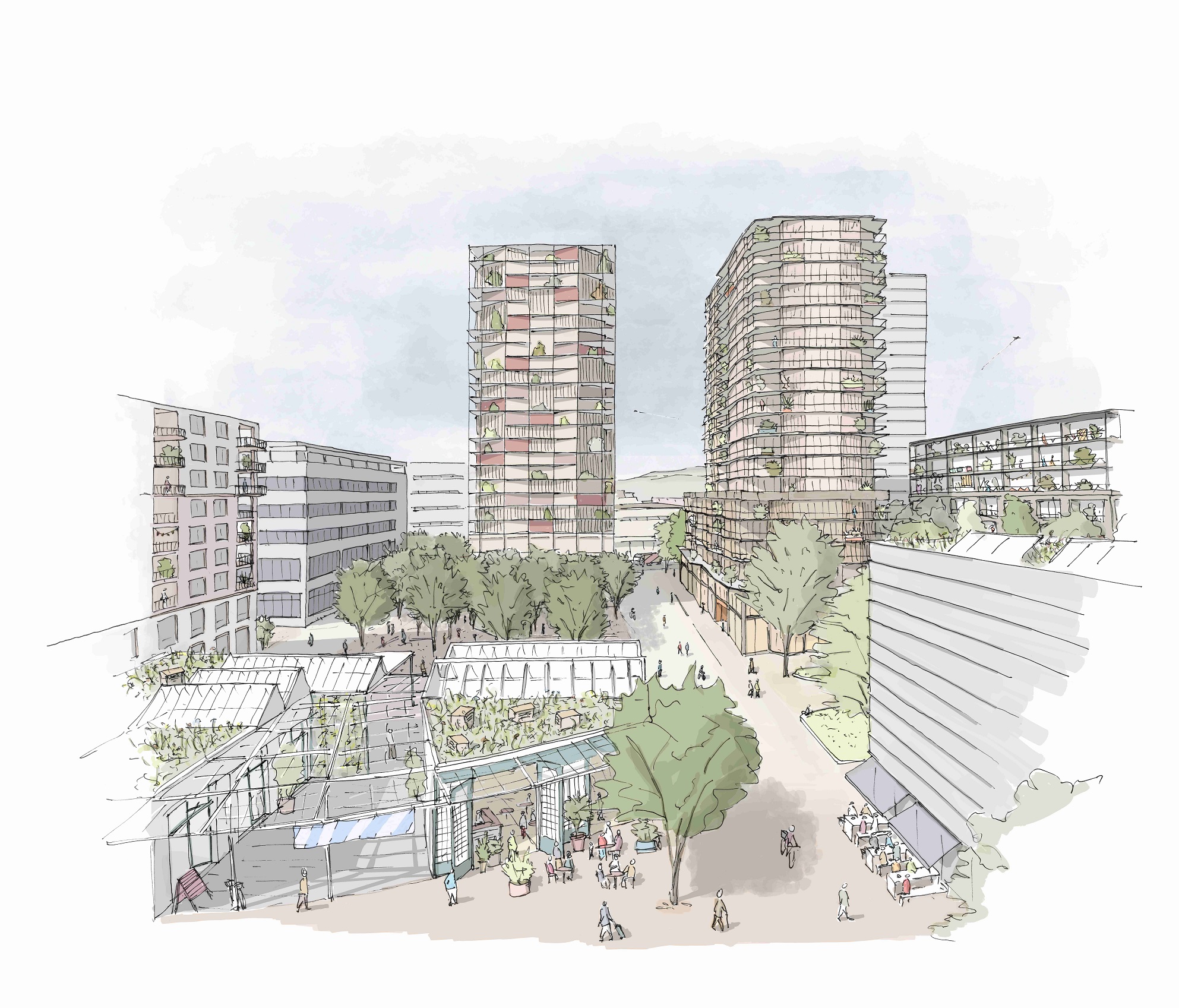
    The transformation of the LG site aims to create a lively, open district characterised by architectural quality and urban flair. The project is based on a development plan that ensures that urban development and architectural standards as well as social and ecological aspects are incorporated into the planning. In a study process, the team Salewski Nater Kretz, pool Architekten, Studio Vulkan Landschaftsarchitektur and mrs partner were selected as the winners, whose concept forms the basis for the neighbourhood development.

    Purchase of land by the city of Zug
    In order to influence the urban use and price development on the LG site in the long term, the city of Zug is planning to purchase a central plot of land on Theilerplatz. The cost of the plot amounts to CHF 65 million. This transaction will soon be dealt with by the Grand Municipal Council. This acquisition will enable the city of Zug to influence the design of the neighbourhood and ensure that affordable living space is created in the heart of Zug in the near future, as demanded by the people of Zug in June 2023 when they approved the 2000-apartment initiative.

    Remodelling work on the LG site
    While the long-term development plans for the upgrading of the LG site are in the political planning process, two existing buildings on the UBS Fund Management (Switzerland) AG site are currently being renovated. These are Gartenstadt 2a and the brick building at Zählerweg 3-9, both of which are adjacent to the Shedhalle with the “Freiruum”. This renovation is being carried out by property developer and total contractor Losinger Marazzi AG outside of the ordinary development plan procedure on the LGAreal and is being implemented in stages.

    Occupation by 2027
    The building at Gartenstadt 2a should be completed by mid-2026 and provide space for new commercial tenants. The 60 or so flats at Zählerweg 3-9, on the other hand, are expected to be ready for occupation in early 2027. If everything goes according to plan, the “Freiruum” will move into the ground floor of the 200-metre-long building at this time. Once the LG-Areal development plan comes into force, the Shedhalle can be renovated in a further stage in order to offer the “Freiruum” its long-term premises from 2029.
    New urban neighbourhood
    By 2032, the once “forbidden city” will become an open and mixed neighbourhood with an industrial character and urban flair. Around 1,200 flats and 2,300 jobs will one day be on offer. Theilerplatz, the heart of the new urban quarter, will be transformed into a central meeting place for neighbourhood residents and the city’s population with inviting places to spend time and green open spaces.

  • Start of construction for the Bern West performance upgrade

    Start of construction for the Bern West performance upgrade

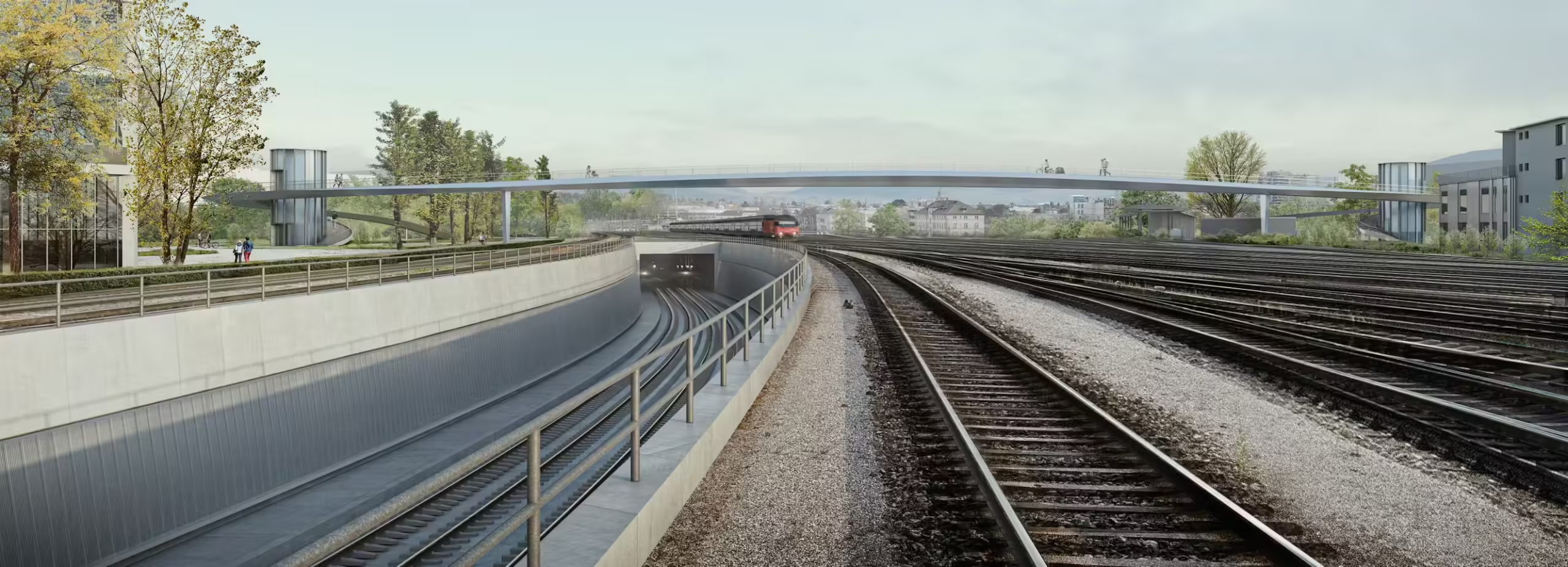
    SBB, in cooperation with the City of Bern and BLS, is launching one of the region’s most important infrastructure projects, the “Bern West performance upgrade”. The aim is to make the Bern railway junction more flexible, more stable and more efficient. The major project comprises five sub-projects, including the new Holligentunnel, the Europaplatz Nord railway station and the Steigerhubel overpass.

    A milestone for the Bern railway junction
    A particular focus is on improving regional transport. The new Holligen tunnel will allow regional trains to run without crossings, enabling stable and more frequent connections, such as the quarter-hourly service between Münsingen and Flamatt. The urban Europaplatz neighbourhood will also have a direct connection to public transport thanks to the new station and a larger subway.

    Challenges for travellers and residents
    Rail operations will be maintained during the construction period, which will last until at least 2036. Nevertheless, travellers will have to be prepared for timetable changes and replacement buses. Stöckacker station will close in December 2025 and will be replaced by tram line 8 until Europaplatz Nord opens in 2027.

    For local residents, the work will result in restrictions due to construction noise, dust and logistics traffic. However, the builders promise to minimise emissions as far as possible and to carry out replacement planting for felled trees.

    Sustainable future and financing
    The total cost of the project is around 900 million Swiss francs and will be financed by the federal government’s 2025 expansion programme. The new pedestrian subway at Europaplatz Nord, a contribution from the City of Bern, will be covered by a framework credit of CHF 60 million.

    With the completion of the “Bern West performance upgrade”, Bern’s railway infrastructure will meet the requirements of modern, sustainable mobility – a benefit for the entire region.

  • Zug remains Zug – liveable, visionary, vibrant

    Zug remains Zug – liveable, visionary, vibrant

    How is the Zug economy doing?
    Zug is praised in numerous specialist publications and in the media for its diversified economy – services, trade, manufacturing industry and commerce. Growth is still above the Swiss economic average of 1.2% and has so far proved resilient to global or technical upheavals. Thanks to the positive financial results, the city of Zug, together with private households and the flourishing economy, is an important pillar for further growth in the coming years.

    How does the city of Zug plan to ensure its economic growth is sustainable in the coming years, especially given the strong focus on the financial and crypto industries?
    Sustainability also means that we look after the companies based here and are reliable partners and employers. It is therefore important that we continue to have strong legal certainty in Switzerland and Zug. We offer a strong education system, have short distances to the city and canton, maintain great local recreational areas and have good road and rail connections to Lucerne and Zurich.

    Zug is experiencing high demand for residential and commercial space. What long-term solutions does the city see to promote residential construction while maintaining the quality of life?
    Many years ago, we demanded the framework conditions for the V-Zug site/technology cluster development plan and the LG site development plan with a letter of intent. In both of these cases, we defined 10,000 m2 of affordable housing and affordable commercial space. We have also been working closely with Zug’s building cooperatives for over 10 years. We also recently purchased an area right next to the railway station for 65 million. This is to be used for the construction of affordable housing. The mix of flats still needs to be defined and will ultimately be put to a referendum. Here, too, it is to be sold under building rights. This is because the building cooperatives know what the people of Zug need in terms of housing. In addition, the city of Zug is working closely with landowners to develop development plans in cantonal densification areas that permit high densities. The municipal high-rise building regulations form an important legal basis for this. As part of these measures, increased attention is paid to the quality of the open spaces on the sites themselves, as well as the other public open spaces. In the spirit of a “city of short distances”, the inner-city open spaces and leisure infrastructure, as well as the natural and landscape areas, should be easily accessible, especially by public transport, on foot and by bike.

    What new projects and initiatives is the city of Zug planning to promote sustainable urban development?
    There are many new projects in the city of Zug. They all have to take equal account of social, economic and ecological aspects. In this respect, each of our projects should already support sustainable urban development. Perhaps you will allow me to give you two examples in which we are also playing a pioneering role. For example, an internal strategy project is underway to check whether we are well organised and sufficiently fit to master the future challenges of sustainable development. Or in the area of climate adaptation: we are currently installing temperature sensors throughout the city to identify heat islands and take targeted measures.

    The issue of affordable housing is becoming increasingly important. What measures is the city taking to ensure that Zug remains attractive for less affluent people?
    The city council is already calling for affordable housing to be created on at least 20% of the additional eligible floor area in residential and mixed zones when issuing ordinary development plans. Following the adoption of the “2000 flats for Zug’s middle class” initiative, affordable housing of at least 40% of the newly constructed living space must be created in residential and mixed zones located in densely populated areas when issuing ordinary development plans and in the case of rezoning and upzoning. To be honest, however, this has also halted construction projects. We are currently working on solutions.

    How important is citizen participation in municipal projects to you, and what opportunities do the residents of Zug have to contribute their ideas and opinions?
    The city of Zug has a strong and long-standing culture of participation. Public participation projects on various topics have been held regularly since the 1990s. The online participation portal “mitwirken-zug.ch” has also been available since 2020.

    Traffic in and around Zug is increasing. What is the city’s plan to bring the transport infrastructure in line with growth and strengthen public transport at the same time?
    Unfortunately, the city tunnel was rejected and solutions must be found nonetheless. The city of Zug is working closely with the cantonal civil engineering office to develop a joint transport plan for the vibrant centre of Zug. The city’s aim is to ensure that the existing road space is available to all road users equally and efficiently: Cars, public transport, bicycles and pedestrians. Fortunately, the city of Zug is small-scale, so many things can be done on foot or by bike.

    What plans are there to further expand public transport in order to relieve commuters and reduce traffic in the city?
    The next major expansion step is planned for the opening of the Zimmerberg tunnel. This will be around 2035 to 2037. Until then, public transport will continue on the current routes and the frequency will be adapted to demand. The public transport system will thus be adapted to the needs of the municipalities on a “small scale”. According to GöV, the municipalities have the option of purchasing additional services over and above those ordered by the canton. The city of Zug does this with the Zugerberg railway and on bus route 5, where it purchases additional cable cars and courses. This additional service, which is decided by the city parliament, gives the city of Zug flexibility over and above the service determined by the canton. However, it is clear that the service ordered by the canton is excellent and that the municipalities hardly need to make any improvements. The city of Zug already has excellent public transport connections in all neighbourhoods. Additional courses significantly reduce the cost recovery ratio. The cost recovery ratio to be achieved according to the GöV is 40%. Personally, I would like the S-Bahn to offer double-decker trains.

    How does the city of Zug support the expansion of educational facilities in order to address the shortage of skilled labour and at the same time strengthen Zug as a location for education?
    Education is our only resource and this is where the city of Zug invests the most money. The design of attractive school buildings as places to work and learn, with the involvement and participation of pupils and teachers in the planning process, are key concerns. In addition, there are attractive childcare and leisure facilities for children and families as well as a modern ICT infrastructure. In addition, forward-looking and innovative projects and collaborations such as the school portal – where parents can communicate online with teaching and support staff and the school administration – the DigiWerkstatt and the inclusion of AI in lessons are being driven forward. However, it is also important that we meet the needs of companies and actively support the dual education system. A great project is underway here!

    What role does the promotion of innovation play in Zug and how is the city planning to establish itself as a centre for pioneering technologies and companies?
    The promotion of innovation plays a central role in the city and canton of Zug in positioning the city as a centre for pioneering technologies and companies. One important point is: we try things out. For example, following a presentation by a student, we decided to accept Bitcoin as a means of payment in the city of Zug, which caused a worldwide furore. Today, the city of Zug is THE Crypto Valley worldwide with over 4000 employees in over 800 companies. True to the motto: “no risk, no fun”. We will continue to be innovative! Targeted measures and programmes are designed to strengthen the innovative power of the city of Zug so that the environment becomes even more attractive and motivating for companies and, above all, for employees. You can move mountains with innovative projects and motivated people. The framework for this is provided by the development strategy for the city of Zug adopted by the City Council in autumn 2021: “Zug remains Zug – liveable, visionary, vibrant”. It is an overarching management tool with a long-term perspective to help shape the future of the city of Zug. Innovative economy, green city, strong community, healthy finances – these are our credos for the future.

    What is your long-term vision for the city of Zug? What goals are you determined to achieve in the coming years?
    As a growing business location with excellent conditions for companies and skilled workers from near and far, we cultivate our economic diversity and position ourselves specifically through future-oriented industry clusters. We are developing Zug as a green city in a sustainable and resource-conserving manner and are planning mobility, space and energy in a visionary way.

    In the tension between tradition and modernity, we promote dialogue and create an inspiring framework for a vital, diverse and cosmopolitan urban community. And to maintain our healthy finances, it is important to ensure competitive framework conditions, make future-oriented investments and secure our tax base in the long term. In addition to all impact targets, we promote lifelong learning, utilise the potential of diversity in the population, economy and culture for pioneering lighthouse projects for change and use incentives to steer change.

    Zug is committed to more climate protection. Can you give us an overview of the most important measures that are currently being implemented to reduce CO2 and increase sustainability in the city?
    When it comes to climate protection, the focus is on moving away from fossil fuels. All heating systems must be able to run on local renewable energy in the medium term. Compliance with modern building standards and, together with Wasserwerke Zug (WWZ), the expansion of district heating are at the forefront here. We have brought Circulago into being. We take cold and heat from the lake and thus have a “battery” on our doorstep. At the same time, we also want to upgrade our own properties, produce our own electricity and get rid of fossil-fuelled heating systems. The introduction of CO2 monitoring and many larger and smaller measures as part of the “Energy City” programme, where we have also been certified with the “Gold” label for 2023, will help us achieve this. I am convinced that we can supply ourselves with energy. We have innovative companies such as Siemens, Landis & Gyr, V-Zug, the technology cluster and many more companies in Zug that all offer these technologies and innovations. It’s certainly been 10 years since Siemens showed us that the technology for local self-sufficiency already exists, so let’s do it!

    Where do you see the city of Zug in 20 years’ time?
    In 20 years’ time, the city of Zug should be a liveable, innovative and sustainable place that offers both economic dynamism and a high quality of life. In other words, we will have made Zug even more attractive for companies and skilled workers, while at the same time creating space for a strong community. Zug’s role as an international business and financial centre has been strengthened, particularly in the area of digitalisation and new technologies such as blockchain and AI applications. Thanks to sustainable urban planning and environmentally friendly infrastructure, the city of Zug is climate-neutral. We have attractive places to live and work, green recreational areas, attractive cultural offerings and a diverse infrastructure for education, leisure and health. Zug has made a name for itself as a centre of education and innovation that is networked with tertiary education institutions and research facilities. We have intelligent traffic management and an efficient infrastructure that meets the needs of a growing population and is designed to be sustainable. Progress is being made step by step – I am delighted!

  • Zug Economic Area – Facts and Figures Zug

    Zug Economic Area – Facts and Figures Zug

    Located within the Greater Zurich Area (GZA), Zug is one of the world’s leading economic regions. The location boasts an excellent infrastructure, great potential for young talent and political and economic stability.

    Both the municipalities and the canton of Zug are constantly evolving and adapting to the requirements. With innovative projects, such as a bypass to relieve congestion in the centre of Cham, lake water that will regulate the temperature in the houses in residential areas in the future and exciting projects, such as the Association for Decarbonisation or the Climate Charter Zug, the canton is shaping a modern image with ambition.

    Numerous areas of historical significance are being renovated and converted to create attractive mixed-use developments comprising residential, work and commercial space.

    As a result, Zug remains a canton worth living in, which is also reflected in a high level of life satisfaction.

    Zug is not only appreciated by its 133,000 residents, numerous independent ratings and studies also confirm Zug’s outstanding position. For example, Zug has been ranked first among the Swiss cantons in the Credit Suisse and UBS rankings for 24 years. The basic principles of business friendliness, service orientation and a culture of innovation make the canton of Zug an ideal partner for companies, educational institutions and research institutes.

    Testimonials

    Andreas Klopp
    General Manager Roche Diagnostics International AG

    “Rotkreuz is located in the Zurich-Zug life sciences cluster and offers ideal conditions for driving innovation thanks to its excellent infrastructure and high quality of life. For over 50 years, Roche in Rotkreuz has been contributing to the health of patients worldwide with diagnostic solutions.”

    Dr Katja Buller
    Vice President, Head of Corporate Affairs International, Biogen

    “Local and international specialists,
    “Local and international specialists, a multi-layered infrastructure and professional cooperation with the authorities have made the canton of Zug the ideal location for our international headquarters for more than 20 years”

    Katharina Gasser
    President of the Zug Chamber of Commerce

    “Our members appreciate the business-friendly conditions in the dynamic and innovative Canton of Zug. The authorities are service-orientated, make decisions quickly and work efficiently; the unique “spirit of Zug” is palpable.”

    Hanspeter Rhyner
    Chairman of the Executive Board, Zuger Kantonalbank

    “Zuger Kantonalbank combines tradition and modernity. This is precisely the DNA of the attractive location of the Canton of Zug. Digital AND personal –
    this is how we meet the needs of our customers in line with this DNA. And we can fulfil all needs and accompany you through life.”

  • The former cantonal hospital becomes an urban oasis

    The former cantonal hospital becomes an urban oasis

    The winning project by Credit Suisse Investment Foundation and HRS Real Estate AG was selected as part of a two-stage competition process. It combines public space, commerce, gastronomy and various forms of housing to create a neighbourhood that will be lively around the clock.

    Living, working and recreation combined
    The development plan allows for a balanced mix of uses, making the neighbourhood attractive for different target groups. There are plans for 272 flats, 50% of which will be affordable, as well as a boutique hotel in the listed south wing of the old hospital. Additional areas for catering, commerce and public services will create a diverse offering. The “Süd-See Hub” construction area in particular is geared towards public uses and is set to become a popular meeting place.

    Open space design takes centre stage
    The “Süd-See Zug – für üs alli” concept focuses on open spaces to make the neighbourhood more attractive. The “Stadthof” as a central square opens up to the lake and connects the old town with the water. A public roof garden, green courtyards and squares offer additional space for recreation and quality of stay. The lakeside terrace and the park promote biodiversity and create a connection to nature.

    A well thought-out process
    The detailed development phase begins once the building lease has been signed. The Credit Suisse Investment Foundation, together with HRS Real Estate AG, will assume responsibility for the realisation of the architectural competition. This exciting project illustrates how a historic site can be transformed into a lively and inviting environment through innovative solutions and planning. The transformation of the former Zug Cantonal Hospital will not only enrich the architectural landscape of the city, but will also make an essential contribution to the quality of life of the population and further strengthen Zug’s position as a sought-after place to live and work.

  • A historical heritage in new splendour

    A historical heritage in new splendour

    in 1896, Richard Theiler laid the foundation stone for the Electrotechnical Institute, which later became world-famous as Landis Gyr, with the construction of the Theilerhaus. The importance of the Theilerhaus for the people of Zug cannot be denied and its preservation became a priority in 1989 when the Canton of Zug acquired the site in order to preserve it for future generations.

    Preservation of historical substance
    The Canton of Zug has developed a comprehensive concept entitled “The Theilerhaus and its spirit”. This outline of ideas aims to preserve the “spirit” of the buildings and to bring together aspects of economy, technology, architecture and culture in a holistic framework.

    Refurbishment in keeping with the heritage
    The maintenance measures extend to all existing old buildings, focussing on earthquake safety, fire protection and accessibility. The renewal of windows, sun protection and roof cladding as well as the insulation of the Shedhalle are important steps towards meeting the requirements. The new building in the eastern area respects the historical substance and creates an appealing overall urban structure.

    A new urban accent
    The planned new building complements the urban ensemble and consists of a five-storey head building and a four-storey intermediate building. This design, which is connected to the high-rise building by a modern stair tower, blends harmoniously into the existing surroundings and strengthens the identity of the site.

    The Shedhalle as a cultural, creative space
    Once the renovation work has been completed, the Shedhalle will not only function as a place of remembrance of the past, but also as a lively space for cultural and artistic events. This use offers added value for the people of Zug and emphasises the versatility of the site and its relevance in today’s world.

    Forward-looking project
    Overall, this project represents a significant step in the urban development of the Canton of Zug and should benefit future generations. The planned measures emphasise how important it is to view historical heritage as part of a living, constantly evolving society and to shape it accordingly.

  • Future prospects at the 103rd immoTable Zug

    Future prospects at the 103rd immoTable Zug

    Mayor André Wicki opened the event with an inspiring look at the economic future of the city of Zug. Under the motto “Zug remains Zug – liveable, visionary, vibrant”, he emphasised the challenges associated with sustainable growth, affordable housing and climate protection. His visions emphasise the aspiration to further develop Zug as an innovative and attractive place to live and do business.

    Sustainable strategies and economic success
    Beat Bachmann presented the “Spirit of Zug” long-term strategy, which strikes a balance between growth and resource consumption. Regional cooperation and attractive conditions for companies will strengthen the region as a leading business location. The innovation platforms, such as HSLU and the Tech Cluster Zug, promote technological advances in areas such as energy, mobility and decarbonisation.

    Successful projects for modern living and commerce
    Lukas Fehr presented the award-winning “Papieri Cham” project. The neighbourhood combines historical substance with modern new buildings, sustainable architecture and green open spaces. With around 1,000 flats and 40,000 square metres of commercial space, the Papieri site sets new standards for sustainable living and working.

    Material innovation in timber construction
    Pius Kneubühler spoke about the advantages of board stack constructions made with Swiss timber and minimal glue. This technology promotes sustainable cascade utilisation and combines high load-bearing capacity with an excellent carbon footprint. Material identity is at the centre of sustainable construction.

    Water treatment and infrastructure safety
    André Spathelf rounded off the event with a comparison of the Swiss market leaders in water treatment. He emphasised the importance of a proactive approach to monitoring and maintaining water networks. This approach ensures the quality and sustainability of vital infrastructure.

    The 103rd immoTable Zug once again demonstrated the importance of dialogue between business, science and politics in shaping a sustainable future. Visionary projects, technological innovations and economic strategies strengthen Zug as a leading region in Switzerland.

  • Housing policy strategy 2030 in the canton of Zug

    Housing policy strategy 2030 in the canton of Zug

    The housing market in the canton of Zug is under severe pressure. The canton’s high level of attractiveness has led to an increase in demand, while the supply of housing is declining. This is leading to rising rents and property prices, making it particularly difficult for the middle classes and low-income earners to find affordable housing. Young families are also facing difficulties in finding suitable housing.

    Objectives of the 2030 housing policy strategy
    In order to alleviate the tight housing situation, the cantonal government has defined three main objectives: firstly, more living space, secondly, more affordable housing and thirdly, more housing options for the local population. These goals are to be achieved through simplified building regulations, optimized building permit processes and financial incentives.

    Measures for more living space
    The strategy provides for various measures to increase the supply of housing. Relaxations in building regulations, such as adding storeys and high-rise regulations, should enable the construction of more apartments. In addition, non-profit developers are to be given easier access to loans in order to promote the construction of affordable housing.

    The path to implementation
    In the next steps, the municipalities will be informed about the planned measures. With the involvement of all relevant stakeholders such as municipalities, political parties and organizations, the amendments to the Planning and Construction Act and the Housing Promotion Act will be implemented swiftly. The cantonal government will report on progress every two years.

    The Housing Policy Strategy 2030 is a comprehensive approach aimed at relieving pressure on the housing market and safeguarding the quality of life in the canton of Zug. The focus is on long-term and sustainable solutions.

  • Trinational S-Bahn: 33 new Flirt Evo France trains for the Basel area

    Trinational S-Bahn: 33 new Flirt Evo France trains for the Basel area

    New S-Bahn connections for the Basel area
    Every day, 60,000 people commute in the border triangle of Switzerland, France and Germany – including 30,000 commuters between Alsace and north-west Switzerland. Around 90 per cent of them currently use the car. This is set to change: From the end of 2030, a direct S-Bahn connection will be introduced between north-west Switzerland and Alsace. The aim is to get as many commuters as possible onto the railway, including the more than 6,000 employees in the EuroAirport catchment area and the approximately eight million air passengers a year.

    Introduction in stages
    The new cross-border S-Bahn lines will be introduced in stages:

    • From December 2030: Commissioning of the S2 (Olten-Basel-Mulhouse) and S4 (Laufen-Basel-St. Louis) lines every 30 minutes.
    • From 2034/35: Connection of EuroAirport to both lines, together with the French regional express line Strasbourg-Mulhouse-Basel (TER200) every 10 minutes between EuroAirport and Basel SBB.

    Procurement of the new trains
    SBB is procuring 33 Flirt Evo France trains from Stadler to operate the new railway service. These vehicles are characterised by two special features:

    • A standardised fleet:
      The trains can be used in both countries, which reduces complexity and increases operational flexibility. The vehicles can be efficiently coupled as single or multiple traction and replace the previous vehicles on the Mulhouse-Basel line (TEROmnibus).
    • Two systems:
      The trains are technically equipped to be authorised in Switzerland and France. They have two integrated traction current and railway safety systems to ensure smooth cross-border operation.

    Investment and project management
    The investment for the procurement of the 33 trains amounts to around 320 million Swiss francs. SBB and SNCF Voyageurs jointly founded EuroBasilea AG in July 2023 to ensure efficient preparation and timely commissioning of the new service. Further information is available at www.eurobasilea.com

  • Zug uses OECD minimum tax for location promotion

    Zug uses OECD minimum tax for location promotion

    In response to the imminent introduction of a global minimum tax for large international companies from 2024, which could potentially affect the canton’s competitiveness, the canton of Zug has developed plans to compensate for any locational disadvantages. The planned measures include the complete reinvestment of the expected additional revenue of around CHF 200 million per year in three priority areas: social infrastructure, innovative projects and sustainable development initiatives.

    Focus on social and innovative projects
    The planned social measures are aimed at making life more attractive for the population and the local economy. These include investments in needs-based childcare provision, higher contributions to public schools and measures to improve the living and working environment. In the area of infrastructure and innovation, the focus is on future-oriented projects. Initiatives such as the “Blockchain Zug Joint Research Initiative” and the “ETH Learning Factory Zug” are intended to increase competitiveness and quality of life in the canton by promoting sustainable energy supply and storage.

    Legal framework and financial planning
    In order to achieve these goals, the cantonal government is proposing a new “Location Development Act” that will introduce an efficient and flexible system of subsidies for sustainability and innovation. From 2026, CHF 150 million per year is earmarked for subsidies, with the maximum subsidy amount being approved annually by the Cantonal Council from 2029. This approach is intended to provide companies in the canton of Zug with planning and legal certainty.

    Finance Director Heinz Tännler emphasises that the planned measures are essential in order to maintain Zug as a preferred residential and business location. The public consultation on the new law will run until 15 September 2024 and the law is due to come into force on 1 January 2026. These strategic decisions demonstrate Zug’s commitment to maintaining its leading position despite global tax changes and remaining an attractive location for companies and skilled labour.

  • Milestone at Basel railway station

    Milestone at Basel railway station

    Basel SBB railway station is facing a problem. It is reaching the limits of its capacity. The increasing number of trains and travellers, especially at peak times, requires urgent measures to avoid bottlenecks.

    From December 2025, it is planned that the S-Bahn trains between Basel and Liestal will run every quarter of an hour. This ambitious goal requires considerable investment in the railway facilities between Basel and Liestal, which the federal government is financing to the tune of around CHF 1 billion. SBB is responsible for realising these projects on behalf of the federal government, while the federal government and the cantons are jointly ordering and financing the additional S-Bahn connections.

    Most of the investments are included in the 2025 expansion phase, which is part of the “Financing and expansion of the railway infrastructure” (FABI) bill that was approved by the Swiss electorate in February 2014. These expansions not only enable the quarter-hourly S-Bahn service between Basel and Liestal, but also lay the foundation for further improvements in passenger and freight transport.

    Two main measures are required to create the capacity for the planned quarter-hourly service and the extended timetable.

    Additional stops for trains: The planned quarter-hourly frequency will increase the number of trains at Basel SBB station. Additional stopping points and platform edges are therefore required to ensure smooth operations. This is the main objective of the “Basel SBB performance enhancement” project.

    Additional crossing options for travellers: The increasing number of trains leads to more travellers and thus to higher utilisation of the Passerelle at Basel SBB station. In order to cope with this increase, the creation of additional crossing facilities is urgently required. The “Provisional Passerelle” project aims to realise this increase in capacity quickly until further crossings, such as the Margarethen platform access, can be built.

    The temporary pedestrian crossing is a temporary solution until long-term measures can be implemented. The planning and construction of further crossings are planned for the 2035 expansion phase and will also be financed by the federal government.

  • Zug Cantonal Bank promotes young companies in Central Switzerland

    Zug Cantonal Bank promotes young companies in Central Switzerland

    The Zug Cantonal Bank wants to support young Central Swiss companies with sustainable product innovations. To this end, it is participating in the establishment of buildify.earth, the cantonal bank says in a statement. The newly founded public limited company plans to invest in young companies in the Switzerland Innovation Park Central.

    The innovation park, located in the Suurstoffi in Rotkreuz, focuses on sustainable product innovations in the building and energy sectors as well as mobility. The investments of buildify.earth are intended in particular to attract appropriate young companies in early stages, so-called early-stage start-ups, to the innovation park and keep them in the region. The Zug Cantonal Bank will initially contribute one third of the share capital of buildify.earth. It is represented on the board of directors by Martin Neuhaus, head of corporate client consulting.

    “Zuger Kantonalbank is the bank of entrepreneurs in the region,” Hanspeter Rhyner, CEO of Zuger Kantonalbank, is quoted as saying in the statement. “With our commitment to buildify.earth AG, we are advocating for the best possible framework conditions so that start-ups can develop successfully locally and bring sustainable product innovations from Zug out into the world.”

  • Ecopark Tivoli opens roof garden

    Ecopark Tivoli opens roof garden

    KIRKBI AG, based in Baar ZG, provides both office and commercial space with Ecopark Tivoli. The building in Spreitenbach has been planned sustainably from the very beginning. District heating and solar energy, for example, ensure the CO2-neutral operation of the building. And now the roof garden has also been opened on an area of 2500 square metres, according to a media release.

    The tenants can use the roof garden for recreation. In addition to numerous seating areas, there is also a barbecue area and a sports field. But beyond that, the roof garden is also intended to be “our contribution against species loss and insect mortality in Switzerland”, according to the real estate company. Wild bees and butterflies have already been attracted. And for the coming year, those involved hope for the use of a nesting box by a pair of kestrels.

  • Switzerland Innovation Park East offers jobs for travellers

    Switzerland Innovation Park East offers jobs for travellers

    In a pilot project, SBB and the Switzerland Innovation Park Ost are providing commuters with specially equipped workstations at St.Gallen station, according to a media release. Eight tables were built for this purpose by Agosti Meier AG from Waldkirch SG and equipped with electrical systems and wireless internet. Since 14 August, they have offered travellers the opportunity to creatively bridge waiting times.

    They meet “a great customer need” for work at the station as well, Michael Disch of SBB’s real estate management is quoted as saying. “With this initiative, we are turning St.Gallen station into a productive workplace.” In addition to the existing co-working spaces on the Innovation Park Ost campus in the west of the city, the spaces set up in the St.Gallen station concourse now also represent an opportunity for exchange and networking.

    The project is initially planned for three months. It is intended to provide food for thought for other similar projects. “Because with work and new ideas, it’s like travelling – if you never start, you can’t get anywhere,” Peter Frischknecht, Head of Campus at Switzerland Innovation Park East, is quoted as saying.

  • Annual General Meeting of Zug Estates Holding AG

    Annual General Meeting of Zug Estates Holding AG

    The Annual General Meeting decided to distribute a total of CHF 20.9 million to the shareholders for the financial year 2022. The ordinary gross dividend subject to withholding tax per class A registered share amounts to CHF 4.10 and CHF 41.00 per class B registered share. After payment of the Swiss withholding tax of 35%, a net dividend of CHF 2.67 per class A registered share and CHF 26.65 per class B registered share remains.

    All members of the Board of Directors proposed for re-election were confirmed for another year of office. Armin Meier did not stand for re-election. Joëlle Zimmerli, owner and managing director of Zimraum GmbH, a social science planning office, was elected as a new member of the Board of Directors.

    Joëlle Zimmerli

    Dr Beat Schwab was also confirmed as Chairman of the Board of Directors. Johannes Stöckli (previously) and Annelies Häcki Buhofer (newly) were elected to the Personnel and Compensation Committee. In a consultative vote, the General Assembly declared itself in agreement with the Compensation Report and approved the compensation paid to the members of the Board of Directors and the Executive Board.

    The General Meeting also approved all amendments to the Articles of Association, i.e. the anchoring of sustainability in the Articles of Association, the use of electronic tools for communication with shareholders, the possibility of holding General Meetings virtually, the additional amounts for new Executive Board members, the reduction of the maximum permissible additional mandates of members of the Board of Directors as well as various formal adjustments to the new law.

  • EU funds two Holcim cleantech projects

    EU funds two Holcim cleantech projects

    The building materials producer Holcim , based in Zug, is receiving investments from the European Union’s innovation fund for two of its cleantech projects. The company did not provide any information in its press release about the amount of the subsidy. The funds are to flow into two measures for the capture, use and storage of carbon dioxide (CO2) in Germany and Poland.

    Accordingly, the EU is participating in Carbon2Business, part of the West Coast 100 project in Schleswig-Holstein. At the Holcim plant in Lägerdorf, separated carbon is converted into synthetic fuels for the mobility sector and as a feedstock for the chemical industry.

    The EU is also supporting Holcim’s Go4ECOPlanet project in Poland. It aims to create a continuous carbon capture and storage chain, ranging from the capture of CO2 at the Kujawien (Kujawy) site to its storage in the seabed of the North Sea. The vision for Go4ECOPlanet is to be a net-zero carbon footprint facility by 2027.

    “Holcim is committed to playing a leading role in the decarbonization of our sector. As the recipient of two cement decarbonisation grants, I am delighted with this clear commitment from the EU,” Miljan Gutovic, head of the Europe, Middle East and Africa region, is quoted as saying in the media release.

    Both projects are part of Holcim’s net zero strategy, which aims, among other things, to operate at least one climate-neutral cement plant by 2030.

  • Swiss Prime Site selects four start-up ideas

    Swiss Prime Site selects four start-up ideas

    Swiss Prime Site , a listed real estate company based in Zug, has identified and promoted four start-ups in its accelerator program that are rethinking existing business models in the industry: DuraMon from Zurich, Novalytica with offices in Bern and Zurich, Proximi from Helsinki and Spotr from Den Hague.

    The participants had to develop relevant use cases for the real estate company and its subsidiaries, which lead to sustainable processes , improved efficiency and sustainable growth. Finally, the jury selected these four start-ups that were able to present themselves to the board of directors. The aim is a sustainable cooperation.

    DuraMon believes in safer, more affordable and sustainable construction and repair solutions that reduce concrete infrastructure maintenance costs and carbon emissions. Novalytica supports companies in the development of clearly defined data strategies in order to generate business-relevant insights and tools.

    Capable of relating any application to a specific location, Proximi’s platform provides tools for geofencing, delivers mobile content, automates IoT devices and integrates third-party interfaces. The start-up Spotr uses numerous image sources from people to satellites to analyze entire building portfolios in minutes.

    “The Swiss Prime Site Accelerator is very well designed,” Yurena Seguí Femenias is quoted as saying by DuraMon. The experts asked the right questions and gave “informative and tailor-made advice”.

  • Swiss Prime Site Immobilien reports success in the first half of the year

    Swiss Prime Site Immobilien reports success in the first half of the year

    In the first half of 2022, Swiss Prime Site Immobilien doubled its lettings compared to the same period of the previous year. According to a press release from the Zurich-based company, 90,000 square meters have been newly let or re-let across the entire portfolio and across all regions. In the first half of 2021 it was 47,000 square meters.

    Swiss Prime Site Immobilien AG, which belongs to the Swiss Prime Site Group based in Zug, attributes this success to the good market conditions and the associated demand for commercial space. Despite the global economic slowdown, the signals for development in Switzerland remain mostly positive, according to the statement. In the service sector, for example, 105,000 new jobs were created in the past twelve months, an increase of 2.6 percent. The 114,000 vacancies also testified to a robust Swiss labor market.

    The real estate company noticed a particularly positive development in Basel, Zurich and Geneva. According to Swiss Prime Site, the two development projects currently under construction, JED in Schlieren and Stücki Park in Basel, are also enjoying brisk demand. Pre-letting rates of around 90 percent are expected there by the end of the year.

    “With the strong performance of re-lettings and new leases within our portfolio and the still intact economic prospects, we are also optimistic about the low vacancy rate and positive rental income development at the end of the year,” says Martin Kaleja, CEO of Swiss Prime Site Immobilien.

    Swiss Prime Site announces that it will publish the detailed half-year results for 2022 on Thursday, August 25.

  • Zurich remains at the top of the Swiss city ranking

    Zurich remains at the top of the Swiss city ranking

    The magazine “ Bilanz ” has published this year’s ranking of the quality of life in Swiss cities. Zurich took first place again and, according to the report , has been the undisputed leader for eleven years. The cities of Zug and Bern took second and third place, followed by Winterthur, Basel and Geneva.

    The city ranking was created by the real estate experts from Wüest Partner for the business magazine “Bilanz” based on several indicators for the quality of life in cities, for example in the areas of the job market, education, leisure and shopping. A total of 162 cities were rated in this way.

    According to the article by “Bilanz”, it hardly seems possible for other cities to break into the absolute top group. In the top 10, only the canton’s capital, Aarau, lost two places and fell from 6th to 8th place. When asked whether other cities even had a chance of making it into the top group, Patrick Schnorf from Wüest Partner was quoted as saying: “It’s impossible It doesn’t.” For example, St.Gallen, which currently ranks 11th, has a chance if the city could increase its educational and cultural offerings as well as its population growth.

    According to Schnorf, Bassersdorf ZH is a counter-example, which has slipped back eleven places. “Compared to other cities, Bassersdorf has not developed as quickly, for example in terms of education and culture,” Schnorf is quoted as saying. According to the ranking, the two economic regions of Zurich and Lake Geneva are the most liveable.

    Since there are only four cities in the top 30 from western Switzerland and Lugano, one in Ticino, it must be said that the overall quality of life in German-speaking Switzerland is higher.

  • Konnex Baden wins two more tenants

    Konnex Baden wins two more tenants

    On behalf of the co-ownership, SPGI Zurich AG has rented two additional areas in the Baden connection . The Konnex building complex in the center of Baden is currently being completely renovated. According to themedia release , a “city in a city” offer will be available there by mid-2023. A total of around 35,000 square meters of space will be rented for this purpose.

    According to the press release, the new tenants are Casino Davos AG and SkySale. Casino Davos has already moved in as an interim tenant and will move into its new 495 square meter space once the refurbishment is complete. SkySale Schweiz GmbH, better known under its apple box brand, is also a new tenant. It will move into around 814 square meters of space in early summer 2023.

    The interest in the innovative multi-tenant concept of the Konnex is great and negotiations are currently taking place for many other areas. The city-in-city concept envisages a range of services and amenities, including restaurants, convenience stores, fitness, childcare and co-working.

    SPGI Zurich AG, based in Zollikon, is a subsidiary of the Intercity Group , an independent real estate service provider with group companies in Zurich, Lucerne, Bern, Basel, St.Gallen, Olten SO and Zug. Since 1993, SPGI Zurich AG has been an alliance partner of Cushman & Wakefield , a leading global provider of real estate services with headquarters in Chicago and 53,000 employees in 60 countries worldwide.

  • Asking rents are developing differently

    Asking rents are developing differently

    The rental index, which is collected monthly by the digital real estate marketplace Homegate in cooperation with the Zürcher Kantonalbank , closed in May at 117.6 points, Homegate informs in a press release . Compared to the previous month, advertised rents increased by an average of 0.2 percent across Switzerland. The analysts of the index have observed different developments within the individual cantons.

    Rents have remained relatively stable in most cantons. In the canton of Geneva, asking rents in May were 1 percent lower than in April. In the cantons of Zug, Graubünden, Appenzell Innerrhoden and Appenzell Ausserrhoden, on the other hand, the analysts identified significant increases of between 1.1 and 4.1 percent. However, they mainly attribute the jump of 4.1 percent in the canton of Zug to a decline in the previous month.

    In the eight cities examined in the index, the analysts identified an increase in asking rents of 0.7 percent in St.Gallen and a decrease of the same amount in Geneva and Lausanne. The two cities in western Switzerland are also the only ones where analysts have observed a drop in asking rents year-on-year.

    When recording rental price changes for the rental index, the rental prices are corrected for different quality, location and size of the apartments, explains Homegate. This makes it possible to record the actual rental price development.

    Homegate is a division of SMG Swiss Marketplace Group AG . This combines the digital marketplaces of TX Group , Ringier and Mobiliar .

  • Yukon also in Switzerland in the future

    Yukon also in Switzerland in the future

    Yukon’s project management and consulting services focus on the implementation of collaborative project delivery models and lean management approaches in challenging construction projects. The company is currently supporting most of the projects in Germany that are carried out using the Integrated Project Management (IPA) model with multi-party contracts. Customers include well-known companies from industry and the real estate sector as well as public building owner organizations.

    Yukon has also successfully completed its first orders in Switzerland. With the new branch, Yukon now offers customers in Switzerland the entire service portfolio in lean project management.

    The new branch in Rotkreuz is represented by Thomas Hänggi. He brings over 20 years of experience in product and process development and project management in construction and other industries. We are pleased to have gained a proven expert in the field of integrated project management and lean management in construction for our commitment in Switzerland.

  • CKW takes over Elektro Camenzind + Partner AG

    CKW takes over Elektro Camenzind + Partner AG

    CKW Gebäudetechnik is expanding its position in the electrical installation sector in the canton of Zug with the purchase of Elektro Camenzind + Partner AG. The takeover took place on June 1, 2022 and as part of a succession plan. «I am very pleased to be able to pass my life’s work on to CKW and I am very happy that all employees have good prospects for their future. Thanks to the strong partner CKW, the company will be able to develop further for our customers,” says Alfred Camenzind on the sale to CKW Gebäudetechnik.

    Optimal addition to the CKW portfolio
    Elektro Camenzind + Partner AG has made a very good name for itself nationwide as a holistic building services engineer. Be it in the installation area, but also in building automation, e-mobility etc. – from planning to implementation to maintenance. «Electro Camenzind + Partner AG is a perfect fit for us, both geographically and in terms of the service portfolio. We are very pleased to welcome this well-established team to the CKW family,” says Thomas Gisler, Head of the Electronics Division at CKW. Elektro Camenzind + Partner AG employs 52 people, including 21 apprentices. For the customers, the previous contact persons with the three management members Urs Lang, Cornel Räber and Ruedi Felder will remain and guarantee the customer base continuity.

  • New initiative to strengthen Switzerland as a blockchain location

    New initiative to strengthen Switzerland as a blockchain location

    The Zug-based Swiss Blockchain Federation plans to launch the Home of Blockchain.swiss initiative on May 24 at the World Economic Forum in Davos. According to a media release , this is a public-private partnership under the patronage of Federal Councilor Ueli Maurer. It is also supported by the foreign trade promoter Switzerland Global Enterprise ( S-GE ), several cantons and CV Labs .

    The aim of the initiative is to show the advantages of Switzerland as a blockchain location abroad. For example, Swiss appearances at international conferences are to be organised. A media campaign is also planned.

    According to the initiators, Switzerland offers good breeding ground for blockchain companies. The “business-friendly framework conditions” are emphasized here. In addition, the Crypto Valley is a good example of success. A number of blockchain companies have already settled in the region, the heart of which is in Zug, such as Sygnum Bank and 21Shares .

    “The possibilities of blockchain technology are endless and Crypto Valley in Switzerland is at the forefront of this revolution. Now is the time to seize that opportunity. With Home of Blockchain.swiss, Switzerland’s good reputation will be carried out into the world,” Heinz Tännler, President of the Swiss Blockchain Federation and Finance Director of the Canton of Zug (SVP), is quoted as saying.

    The initiators also want to present the Swiss Digital Asset Market Report 2022 as part of the World Economic Forum. Among other things, providers of digital assets in Switzerland were surveyed for the report.

  • Asking rents remain stable in April

    Asking rents remain stable in April

    The monthly rental index collected by the digital real estate marketplace Homegate in cooperation with the Zürcher Kantonalbank ( ZKB ) was stable in April. According to the media release , asking rents in Switzerland rose minimally by 0.2 percent. The index now stands at 117.4 points. Asking rents rose the most in the last month, at around 1.7 percent, in the canton of Nidwalden. They have fallen significantly in the canton of Zug by around 2 percent. In the other cantons, asking rents also remained stable in April, with fluctuations of less than 1 percent.

    In the cities surveyed, too, the development of asking rents was similarly stable as at the cantonal level. According to the announcement, the biggest change was in Zurich, where asking rents rose by 1 percent. This continues a development of the last five months, in which asking rents there increased by 4.3 percent. Lugano reports the lowest value among the cities at 0.5 percent. Despite the decline in April, Lugano still recorded an increase of 2.1 percent compared to the previous year. However, Homegate reports that it is a long way from the peak in July 2016.

    When recording the rental price changes for the rental index, the rental prices are corrected for different quality, location and size of the apartments, the communication explains. This makes it possible to record the actual rental price development.

    Homegate was founded in 2001 and is a division of SMG Swiss Marketplace Group AG .

  • Holcim buys Polish company Izolbet

    Holcim buys Polish company Izolbet

    According to a press release , Holcim is taking over the Izolbet company, which is headquartered in the Polish city of Gostynin. This offers special construction solutions and has four production sites in Poland. Over the past three years, Izolbet has reportedly achieved double-digit growth in revenue and earnings before interest, taxes, depreciation and amortization (EBIDTA).

    With the takeover, the Zug-based cement group intends to strengthen its presence in the areas of renovation and thermal insulation, among other things. The acquisition also complements Holcim’s recent investment in a new dry mortar production facility in Kraków.

    “Construction solutions are a key focus for Solutions & Products expansion in Europe, particularly with the recent acquisitions of PRB Group in France and PTB-Compaktuna in Belgium,” says Miljan Gutovic, Head of Region Europe, Middle East and Africa at Holcim , quote. “I am delighted to welcome all Izolbet employees to the Holcim family to start our next growth chapter together,” he added.

  • Construction of the energy center for Circulago begins

    Construction of the energy center for Circulago begins

    The construction of the Unterfeld energy center symbolically began on May 3rd with the ground-breaking ceremony. The energy center forms the core and at the same time the only above-ground part of the Circulago energy network. In the future, this will supply the districts of Altgass, Unterfeld, Schleifi, Gartenstadt and Herti in Zug and Baar with heating and cooling from Lake Zug.

    The energy center is to be fully completed in autumn 2024, but the first properties will already be supplied from autumn 2023. The projected thermal energy would be enough for 1,500 standard single-family houses, project manager Benjamin Kälin is quoted as saying in a statement from the energy supplier WWZ .

    The energy network also reduces the region’s dependency on the gas supply, the Mayor of Zug, Karl Kobelt, is quoted as saying in the statement. “The importance of the Circulago energy network for the city of Zug is immense.”

  • Zurich is at the forefront of the circular economy

    Zurich is at the forefront of the circular economy

    The Zug-based building materials producer Holcim and the New York media company Bloomberg are launching the Circular Cities Barometer. The Circular Economy Barometer highlights the top 25 cities leading the shift towards circular living. According to the current status, the cities of Seattle, Copenhagen and Zurich are currently in first to third place in the four categories of buildings, municipal systems, municipal facilities and strategies.

    “The circular economy is a key element to respecting the limits of our planet and taking serious action on climate change. With the rapid urbanization of our world, cities are at the center of this shift from a linear ‘take-make-waste’ economy to a circular ‘reduce-reuse-recycle’ economy,” said Jan Jenisch, CEO of Holcim. This barometer gives unique insights into the most innovative circular cities around the world.

    Created in collaboration with Holcim, the barometer aims to “draw attention to what is making cities around the world circular. We hope that with these insights we can inspire other cities to take action to enable change,” said Lauren Kiel, general manager for Bloomberg Green at Bloomberg Media.

    The Circular Cities Barometer uses its own algorithm to measure the transition of 25 cities from a linear to a circular economy, according to the media release on the method. All regions of the world are represented.

  • Settlements reach pre-corona level

    Settlements reach pre-corona level

    Company settlements are increasing again after the Corona dip. The Greater Zurich Area AG (GZA), as the location marketing organization for nine cantons, was able to settle a total of 125 companies in 2021, an increase of 36 companies compared to the first Corona year 2020. According to a statement by the GZA, 42 companies came from the USA (+20 ), 19 from Germany (+4), ten from Italy (+5) and five each from China (-6), Great Britain and Singapore.

    Overall, the companies created 582 jobs in the economic area, an increase of 11 percent compared to the previous year. In the next five years there should be a total of 1843 jobs.

    The ICT sectors are most strongly represented with 42 companies, followed by the life sciences with 25 companies and the machine industry with 18 and financial services with 13 companies. The life sciences companies created 235 jobs, followed by the ICT companies with 154 jobs.

    However, the importance of the companies for the location goes beyond the number of new jobs. “We specifically address those companies that achieve high added value and strengthen the existing ecosystem,” said GZA Managing Director Sonja Wollkopf Walt at a digital media conference.

    One of the newly settled companies is Benchling . The American provider of cloud solutions for life sciences wants to create up to 150 jobs in the Circle at Zurich Airport. The Chinese pharmaceutical company Hengrui already has its European headquarters in Basel and is now setting up a research and development site in Zurich.

    The German RegTech company targens will sell its software for compliance solutions to banks in Switzerland and Liechtenstein from Schwanden GL. Ruedi Becker, the Swiss head of the Landesbank Baden-Württemberg subsidiary, was able to convince his superiors of the advantages of Glarus together with the GZA.

    That pleases the Glarner location promoter Christian Zehnder. So far, Glarus has been strong in manufacturing and food production. “We want to get away from our traditional image,” he said. “When companies settle here, however, we depend on the strong partner GZA, who markets the location internationally.”

    Sonja Wollkopf Walt sees it similarly: the settlement of targens strengthens the ecosystem as a whole and sends the signal that the economic area extends beyond Zurich and Zug. “In the Greater Zurich Area there is the ideal location for every company.”

    The Greater Zurich Area includes the cantons of Glarus, Graubünden, Schaffhausen, Schwyz, Solothurn, Ticino, Uri, Zug and Zurich.