Since 2019, Swiss cities, municipalities, companies and organizations have been sending out a clear signal for the 17 Sustainable Development Goals every autumn. Raising the SDG flag stands for the commitment to the 2030 Agenda and the will to tackle global challenges together. In Lugano, Federal Councillor Ignazio Cassis opened the event with a video message and emphasized Switzerland’s key role in sustainable development at national and global level. A special feature of this year, the SDG Flag Day was used as a platform for metropolitan exchange, from administration to innovation promotion
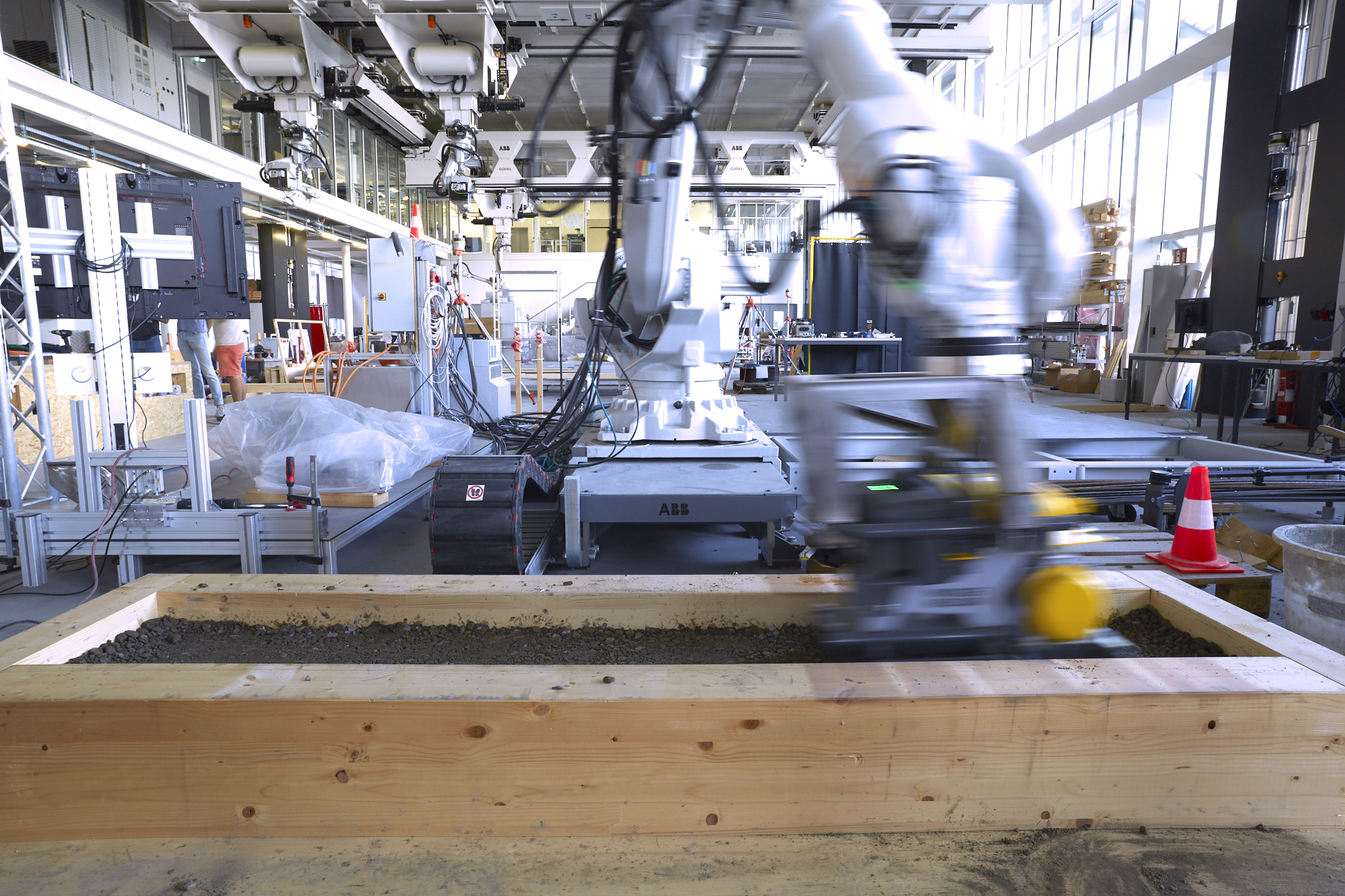
Exchange, practical examples and youth visions The dialog revolved around the status of the 2030 Agenda in cities, best practices and the role of international networks for urban transformation. The delegations discussed challenges ranging from climate change to biodiversity, but also opportunities arising from cooperation between science, business, politics and civil society. The presentations by high school students from Lugano, who presented their visions for urban development in 2030 in the “Laboratori di cultura urbana – Mediazione Giovani”, were particularly impressive. Their “Summer Islands” project was implemented together with the city and the Institute of Architecture and stands for youth engagement and participatory urban development
Framework and principles of the 2030 Agenda With its 17 SDGs, the 2030 Agenda, which was adopted by the UN member states in 2015, defines the international framework for action to tackle challenges such as climate change, resource consumption and social inequality. Their aim is to reconcile prosperity and the planet through partnership, peace and progress and to create sustainable living realities worldwide. Flag Day is part of the UN Global Compact and is used in Switzerland and internationally as a symbol of commitment and exchange
The SDG Flag Day in Lugano was the starting signal for more intensive and networked cooperation between cities in the area of sustainable development. The lived practice of dialog, exchange and participation at several levels makes it clear. The implementation of the SDGs is not a competition, but a joint project for the future of society throughout Switzerland and beyond its borders.
OC Oerlikon Corporation AG, a thermal spray and coating solutions company headquartered in Pfäffikon, has invested CHF 40 million in its new innovation and production centre on the Reichhold campus in the canton of Aargau. The company is now celebrating the laying of the foundation stone for the new site, construction of which is due to begin shortly, according to a press release. Commissioning is scheduled for the first quarter of 2027. With 250 employees in future, the facility will bring together research and development, engineering, production and sales in one building complex.
Oerlikon plans to develop modern thermal spray technologies and laser-based technologies as well as provide various services at the Reichhold Campus. “The new Campus Reichhold will play a central role in the further development of our aerospace and general industry businesses by bringing together the entire value chain in a collaborative environment,” said Prof Dr Michael Süss, Executive Chairman of Oerlikon, in the press release.
The technology developed at the Reichhold campus is intended to improve heat resistance, durability and corrosion protection in industrial high-performance components. In future, it will be used primarily by customers in the aerospace, automotive and general industry sectors. A test rig for aerospace turbine components will also enable the validation of thermal spray coatings under real-life conditions.
In addition, Oerlikon plans to implement comprehensive measures to reduce the environmental impact in the areas of energy consumption, mobility and resource management at the new site.
At Suurstoffi in Rotkreuz, the SIPC offers an inspiring environment that promotes dialogue and collaboration between over 120 partners from business, science and society. A vibrant innovation ecosystem is created here that efficiently translates new ideas into marketable solutions in the construction sector.
Diverse formats to promote innovation In order to drive innovation, the SIPC works in five thematically focussed Future Labs, which specifically address current challenges such as the transformation to a circular economy in construction or new processing models in construction or new processing models. These labs are hybrid working environments with structured processes and formats that promote collaborative innovation. A variety of event and workshop formats as well as the digital community platform Jointcreate – a kind of “LinkedIn for innovation” – provide inspiration, empower participants and support the innovation process. The focus is always on implementation to achieve real impact. Financing and start-up advice as well as office and project space are available for this purpose. The SIPC also manages various programmes, such as the Circular Building Charter, an association of major real estate investors who are increasingly focusing on circular procurement and construction methods. The SIPC imparts knowledge in regular experience workshops. The open sharing of experiences in pioneering projects promotes dialogue within the industry.
A contribution to the construction industry of tomorrow With its clear values – openness, fairness and professionalism – the SIPC makes a decisive contribution to the transformation of the construction industry. As a non-profit organisation, it pursues the motto “Building Excellence” and invites all interested parties to become part of this movement. Switzerland Innovation Park Central shows how innovation in the construction industry can promote not only technological progress but also social responsibility. By combining vision and practice, the SIPC is shaping a sustainable future and is an indispensable partner for anyone who wants to contribute to the construction industry of tomorrow.
With the new platform, Switzerland Innovation aims to strengthen connections and collaboration within its network. Developed in collaboration with jointcreate.com, the platform offers users a simple and customised way to connect, communicate and explore new opportunities within Switzerland’s innovation ecosystem.
Promoting innovation through collaboration Switzerland Innovation’s mission is to connect research and industry to develop ideas into marketable products. With over 650 resident companies as well as research and external partners, the platform enables seamless interactions and opens up new opportunities for collaboration.
Complementing face-to-face interaction Although the platform promotes digital exchange, the importance of face-to-face interaction remains undisputed. It complements physical meetings and enables users to continue conversations beyond face-to-face exchanges to accelerate projects and promote innovation.
Key features of the platform Inspiring events: Participate in digital and hybrid events around research and innovation.
Share and benefit from exclusive content and research results.
Network with researchers and companies across Switzerland.
The success of the platform depends on the engagement of the community, and Switzerland Innovation supports users in exploring the platform and contributing to the growth of the innovation community.
Government representatives from the cantons of Appenzell Ausserrhoden and Innerrhoden, St.Gallen, Thurgau and Zurich have taken up the cudgels for wind energy at a joint media conference in Winterthur. It should “become a mainstay of our future supply of domestic energy – especially to cover the winter electricity gap”, according to a corresponding press release from the canton of Zurich on the conference. To this end, the five neighboring cantons want to create a “new pioneering spirit”.
At the media conference, the responsible members of the government presented the respective approaches of their cantons. Dölf Biasotto from the canton of Appenzell Ausserrhoden spoke about the impact of wind turbines on the landscape. In the canton of Appenzell Innerrhoden, the construction of wind turbines is to be accompanied by further development of the landscape. In the canton of Zurich, the planning requirements for the use of wind energy are currently being created.
In their contributions, the representatives of the cantons of St.Gallen and Thurgau emphasized the importance of cooperation with the affected population. In the canton of St.Gallen, the special utilization plan stipulates that all affected municipalities and their inhabitants can have a say in the approval process. In the canton of Thurgau, a legal basis for local participation has been prepared. In an ongoing project in Thundorf TG, the electorate will decide on the construction of a wind farm on November 24.
On July 4, 2024, the governments of the cantons of St.Gallen, Appenzell Ausserrhoden, Appenzell Innerrhoden and Thurgau signed a declaration on closer strategic cooperation. This step marks the start of an intensive cooperation process aimed at strengthening and networking Eastern Switzerland. The joint declaration underlines the commitment of the four cantons to work together to find and implement solutions to common challenges.
Joint commitment to the Lake Constance region The four cantons had previously announced that they would work together to establish the international Lake Constance region at a national level as part of the Swiss Spatial Concept. This project was positively received by the economy and the public and highlighted the potential of closer cooperation to strengthen Eastern Switzerland as a whole.
Strategic fields of action and annual discussions The declaration raises cooperation to a strategic level. The governments of the four cantons will discuss fields of action for cooperation on an annual basis and evaluate the potential for cooperation. Employees of the administrations are invited to submit proposals and participate in the selection of areas for action.
Possible strategic fields of action include spatial development, transport, education and culture, innovation and digitalization, natural hazard prevention, crisis management and security. The cantons hope that strategic cooperation will lead to more efficient and effective solutions in these areas.
Flexible cooperation models Cooperation can take different forms depending on the needs and situation. Solutions can either be implemented jointly by all four cantons or by two or three cantons. Other cantons, particularly from Eastern Switzerland, can also participate in projects. Each canton decides individually whether a joint solution makes sense for it and offers added value.
Institutionalization of cooperation A central concern of the governments is to start the process of strategic cooperation and then institutionalize it. By taking this step, the four cantons are sending out a strong signal for closer cooperation and a networked future for Eastern Switzerland.
The signing of the declaration on closer cooperation marks an important milestone on the way to a stronger and more efficient Eastern Switzerland. Together, the cantons want to overcome challenges and develop the region sustainably.
BKW has increased its stake in the HelveticWind cooperation to 60 per cent. The remaining 40 per cent will remain with Elektrizitätswerke des Kantons Zürich (EKZ). This strategic decision, which was signed on 5 July 2024, marks a significant realignment of the cooperation between the energy supply companies. Previously, BKW held 29 per cent and EKZ 20.2 per cent of the shares in HelveticWind.
Successful cooperation in Germany and Italy HelveticWind operates a total of six wind farms, four of them in Germany with an installed capacity of 67 megawatts (MW) and two in Italy with 52 MW. BKW, which is already active as a service provider for the plants, has extensive expertise in the maintenance and optimisation of these wind farms. With the acquisition of the majority stake, BKW can further expand its existing portfolio of renewable energy generation plants.
Future-oriented planning and CO2 neutrality by 2040 Margarita Aleksieva, Head of Wind & Solar at BKW, is enthusiastic about the majority acquisition: “We want to help shape the energy transition in the coming decades and be CO2-neutral in the energy business by 2040. In this context, we are also examining the repowering potential of the six wind farms. Our aim is to optimise the existing sites in the future and increase our energy yield thanks to the latest technology.”
Thanks to long-standing partners and outlook BKW would like to thank its departing partners Energie Wasser Bern, Genossenschaft Elektra Baselland and SN Erneuerbare Energie for their many years of collaboration. The reorganisation of the cooperation will enable BKW and EKZ to continue their partnership successfully and drive the energy transition forward together.
History and objectives of the HelveticWind cooperation The HelveticWind cooperation was founded in March 2010 by Energie Wasser Bern and BKW. The original aim was to realise a wind power portfolio with an installed capacity of over 100 MW, which has since been exceeded. The German wind farms include Gross Welle, Lüdersdorf-Parstein, Sendenhorst and Wulkow, while the Ventisei and Eolo wind farms in Italy are part of the portfolio.
With its majority stake in HelveticWind, BKW is strengthening its position in the field of renewable energies and taking an important step towards a sustainable energy future.
As the current service contract with Generis AG expires at the end of 2024, the Schaffhausen government decided to put the mandate to manage the economic promotion and regional and location development office out to public tender at an early stage. Generis AG prevailed over its competitors in the two-stage tendering process.
Extension of the mandate until 2032 The new service contract comes into force on 1 January 2025 and ends on 31 December 2032, ensuring continuity and stability in location development in the canton of Schaffhausen.
Future-oriented measures Generis AG will continue its successful work, with a particular focus on digitalisation and demographic challenges. Close collaboration with local and regional partners remains central to this.
Trust and stability The Schaffhausen cantonal government sees the renewed award of the mandate to Generis AG as a confirmation of its previous successes and expects it to further strengthen Schaffhausen as a business location.
A visionary residential project is being built in the south of Zurich that offers older people a lively and safe environment. The development on construction site B6 in Greencity combines private and municipal involvement. Losinger Marazzi AG is developing the project for the investment foundations of Pensimo Management AG, which are providing a total of 179 flats for older people. Of these, the City of Zurich Retirement Homes Foundation (SAW) will take over 60 flats, while the remaining 119 flats will be let by Pensimo to tenants aged 55 and over. This collaboration represents a new partnership and gives all tenants access to SAW’s services.
A green centrepiece for Greencity Construction site B6 is the latest chapter in the sustainable development of the Greencity district. Since 2014, Losinger Marazzi has been transforming the site of the former Sihl paper factory into Switzerland’s first 2000-watt site. The inner courtyard of the new building will feature green areas, trees and seating, inviting people to linger. Arcades on the ground floor create sheltered access areas to commercial spaces, which could offer facilities such as a medical centre, a fitness studio, a bakery or a café on 3,500 square metres, says René Büchi, the portfolio manager responsible at Pensimo.
Comprehensive services from SAW The City of Zurich Retirement Homes Foundation provides all tenants with a comprehensive service package. This includes a 24-hour emergency call service, extended caretaking, laundry service, social services and various events on the estate. If required, tenants can also take advantage of home help and outpatient care services. Andrea Martin-Fischer, Director of SAW, emphasises: “Our aim is to enable tenants to live independently and safely well into old age.”
Focus on sustainability Greencity’s sustainability goals are consistently applied to the new retirement housing project. Herbert Heinen, Project Manager at Losinger Marazzi, explains: “An optimised load-bearing structure, lightweight walls, a wooden façade and an energy concept with 100 percent renewable energy significantly reduce CO2 emissions and bring the building close to the net-zero target in operation.” Pensimo and Losinger Marazzi are also aiming for certification with the SNBS Gold label. Construction started in March 2024 and the building, designed by JSWD Architekten from Cologne, is scheduled for completion at the end of 2026.
With this pioneering project, Greencity is setting new standards for sustainable, age-appropriate living and demonstrating how private and public partnerships can create forward-looking solutions.
The conversion of the energy system requires considerable quantities of raw materials such as copper and aluminium. One promising approach to saving these resources is the transition from low voltage to medium voltage in renewable energy production. The Fraunhofer Institute for Solar Energy Systems ISE has identified enormous savings potential through higher system voltages, particularly for large-scale photovoltaic power plants, and is planning initial pilot projects and a broad market launch.
Advantages of higher system voltages Increasing the system voltage from 800 VAC to 1,500 VAC reduces the cable cross-section by around 75 per cent. This makes installation and connection easier, which reduces installation costs. Andreas Hensel, Group Manager “High Power Electronics and System Technology” at Fraunhofer ISE, emphasises the potential savings: “Now that PV module costs have fallen by 90 percent since 2010, installation and balance-of-system components now offer the greatest savings levers.”
In addition, the output of the subsystems can be increased by switching to medium voltage. At a voltage of 1,500 V, 10 to 12 MVA are already possible in one transformer instead of the 3 to 5 MVA that are common today. This reduces the number of transformers and switchgear required, which further reduces construction and installation costs.
Technological advances and initial successes Progress in medium-voltage technology has been made possible by the development of highly blocking silicon carbide components with high switching speeds. SiC components up to 3.3 kV are now ready for the market. In the “MS-LeiKra” project, Fraunhofer ISE developed and successfully commissioned the world’s first MS-PV string inverter in 2023. The inverter achieves an output voltage of 1,500 VAC with an output of 250 kVA. “Technologically, the course has been set and it is now a question of who will be the first players in this promising market,” says Christian Schöner, Project Manager “Medium Voltage” at Fraunhofer ISE. A first photovoltaic pilot system based on this inverter is already being planned.
Cooperation for the breakthrough In April, a European consortium was formed that brings together representatives from all trades involved in a large-scale PV power plant. The aim is to jointly investigate and overcome the technological and standardisation requirements for the leap to medium voltage. “As a powerful consortium, we can tackle the existing hurdles together and achieve optimisation for the entire power plant,” explains Christian Schöner.
Future prospects and areas of application Large-scale PV power plants are just the beginning. Medium-voltage technology also offers potential for charging infrastructures, industrial grids, large heat pumps, battery storage systems, electrolysers and wind turbines. In addition to considerable material, cost and space savings, higher system voltages also enable new system architectures for renewable hybrid power plants. These can be linked together via the medium voltage and thus ensure an efficient and sustainable energy supply.
As part of the collaboration, “immobilienjobs.ch” creates exciting career opportunities for jobseekers by providing access to job offers in the property industry. This includes not only traditional jobs, but also innovative positions that arise as a result of changing industry requirements. The platform thus ensures that jobseekers and companies find each other in a modern, efficient and targeted way.
SVIT Zurich members benefit from this co-operation. The job portal enables them to find qualified specialists more efficiently. In this way, staff shortages can be optimally and quickly eliminated, which in turn promotes the productivity and innovative strength of companies. It should be emphasised that “immobilienjobs.ch” is also an ideal platform for well-trained career changers who want to start their career with sound training and personal job coaching from SVIT Zurich. This allows them to present their skills and knowledge in the best possible way and facilitate their entry into the industry.
A special offer for all SVIT Zurich members – “immobilienjobs.ch” offers them two job advertisements for the price of one. This exclusive offer ensures that the association’s members achieve maximum visibility and reach for their job offers, while at the same time reducing recruitment costs.
Overall, this partnership offers clear advantages: it creates new career opportunities, promotes the recruitment of qualified specialists and efficiently integrates career changers into the property sector. The cooperation between SVIT Zurich and “immobilienjobs.ch” therefore represents a significant step towards more efficient and innovative personnel development in the property sector.
The new Convention on Artificial Intelligence was officially adopted at the 133rd session of the Committee of Ministers of the Council of Europe, which took place in Biel/Bienne. Swiss Federal Councillor Ignazio Cassis, Head of the Federal Department of Foreign Affairs, was present at this historic moment. Switzerland, known for its precise and prudent approach in international negotiations, played a decisive role in the one and a half years of intensive discussions and development work.
The agreement not only emphasises the importance of AI in our future society, but also establishes a solid, legally binding framework to ensure that AI systems are developed according to the highest ethical standards. The core principles include transparency, robustness, non-discrimination and the protection of privacy. These measures are crucial to strengthening public trust in the new technology while safeguarding the rights of every individual.
Promoting international cooperation The timing of the adoption coincides with the 75th anniversary of the Council of Europe, which further emphasises the importance of this convention. From September 2024, the document will be submitted to all member states for signature. Once ratified by Switzerland, which requires its transposition into national law, it will serve as a key component of international AI governance.
In practice, the Convention will serve as a guide that promotes a harmonised approach to the responsible development and use of AI systems not only in Europe, but also worldwide. By creating this framework, the Council of Europe is making a significant contribution to ensuring that AI is used as a force for good, strengthening and advancing the foundations of our democratic societies.
The first Swiss Hydrogen Congress took place in Yverdon-les-Bains on 28 March. The event brought together entrepreneurs, experts from science and industry as well as political decision-makers. The diversity of the speakers made it possible to cover the topic from numerous angles. The first Swiss Hydrogen Congress was organised in collaboration with Planair, CleanTech Alps and the Western Switzerland H2 Network and was a complete success.
Hydrogen is not a panacea for solving all of Switzerland’s energy problems, but it does offer numerous opportunities. The first Swiss Hydrogen Congress saw fruitful dialogue and strong collaboration. This demonstrates the importance of the topic for Switzerland, and everyone involved is willing to work together to strengthen the country’s competitiveness and build a sustainable energy future.
What needs to be remembered from this day Representatives from the energy, gas and industrial sectors, entrepreneurs and politicians all agree that it is essential for Switzerland to be connected to the European grid. It is crucial that our country does not miss out on this opportunity.
Another important point is the demand for a clear strategy and suitable framework conditions on the part of the federal government in order to drive the market forward.
Despite the existing operational challenges, the congress was able to draw positive conclusions from ongoing projects such as Green Gaz in Aigle and Hydrospider. Participants were given an insight into the development of hydrogen projects such as H2 Bois, Gruyère Hydrogène Power and Prhysm.
In addition, aeesuisse presented its positioning on the topic of hydrogen with the publication of the brochure “10 points on hydrogen”.
A passion that transcends our borders Hydrogen is a hot topic now more than ever. It is moving experts and politicians beyond Switzerland’s borders. In Europe, discussions about its opportunities and risks are accelerating and are in full swing. Switzerland and its pool of expertise have a key role to play here. “We are currently experiencing a strong enthusiasm for hydrogen, with major announcements at international level. Switzerland is a leader in innovation in many areas, such as compression and storage. We must therefore consolidate our leading position and not allow ourselves to be overtaken by our European competitors,” says Laurent Scacchi, Director of Western Switzerland at aeesuisse.
In consultation with the canton of Aargau, the city of Baden is launching a cooperative workshop process to review the development guideline plan (ERP) for the Galgenbuck area in Baden-Dättwil, according to a press release. The ERP, which was drawn up in 2008, defines planning parameters and strategic objectives for the development of the plot and was revised in 2019. To date, it has not been possible to reach agreement on the development of Galgenbuck in the subsequent procedures. As a result, the zoning procedure has been blocked. At 15 hectares, the Galgenbuck site in Dättwil is the last large and contiguous settlement reserve in the city of Baden.
“The workshop process allows for an open discussion. We are conducting it with the aim of jointly setting the right course for one of the last settlement reserves,” says Karin Bächli, Co-Head of Urban Development and Environment. The city of Baden, Baden Regio, the canton and experts are now to test the future viability of the Galgenbuck development plan on an interdisciplinary basis and reach a consensus on how to proceed.
“This modern review of the ERP will provide the necessary certainty for future investors and users,” says Markus Schneider, Mayor of the city. The process, which has now been presented to those directly affected, should provide clarity on the next steps by 2024.
According to the press release, the review of the ERP is running in parallel with the overall revision of Baden’s building and utilisation regulations. The master plan for the cantonal development centre in Dättwil is also being drawn up.
The cantonal Department of Construction, Transport and Environment (BVU) has suspended the project for Mellingerstrasse, which was developed jointly with the city, until the results of the urban planning processes are available.
Clara Millard Dereudre has been Director of Smart City at Service Industriels de Genève (SIG) and a member of the General Management since 2021. Her team works on engineering projects, shared services and solutions for smart cities. She is also responsible for IT and data management at SIG.
Clara Millard Dereudre (52) has excellent knowledge and experience in the areas of operational and strategic marketing, sustainability strategy, innovation, digitalisation, cybersecurity and energy. She is French and has lived in Switzerland for 18 years, currently in Prangins (VD).
After graduating from the École des hautes études commerciales du Nord Lille (EDHEC, FR) in 1994, Clara Millard Dereudre worked for the Dow Chemical Company for 25 years, including in Zurich as Global Senior Director Marketing, Strategy & Sustainability and in Indianapolis, USA, as Global Director Corporate Strategy and North America Director Sales & Marketing Operations. During her last position at Dow Chemical, she was appointed Senior Corporate Marketing Fellow and received several awards for innovation and sustainability.
The Federal Council today approved the SBB Board of Directors’ nomination. Clara Millard Dereudre will be elected at the SBB Annual General Meeting on 24 April 2024 and will take office upon her election.
She succeeds Alexandra Post, who has been a member of the SBB Board of Directors since 2012 and cannot stand for re-election due to the twelve-year term limit.
The SBB Board of Directors would like to thank Alexandra Post for her great commitment and valuable collaboration over the past few years.
The collaboration between Zimmermann and Ackermann aims to explore innovative ways of utilising the atmosphere as a resource. Empa and Eawag are working together to develop technologies that effectively bind CO2 and thus contribute to decarbonisation. Despite the high expectations and pressure to deliver solutions, both recognise an urgent need to act and are optimistic that they can make a significant contribution.
Research and cooperation as the key to success The research institutions rely not only on their internal expertise, but also on cooperation within the entire ETH Domain and with international partners. The aim is to develop practicable solutions to the climate crisis by pooling knowledge and resources. Eawag, which specialises in water research, and Empa, which focuses on materials science, complement each other perfectly in their efforts to promote both climate adaptation and climate protection.
Future-oriented projects and technologies From the development of negative emission technologies to the exploitation of new energy sources from CO2, researchers are working on projects that will enable a long-term change towards a sustainable society. The initiatives include both the improvement of existing technologies and research into innovative approaches to reducing CO2 from the atmosphere.
The various “pillars” of the concept are currently being developed, such as the extraction of CO2, its chemical conversion and, finally, technologies to produce value-adding materials in which the carbon is bound in the long term. The first projects for negative emission technologies are already under development at Empa, such as insulation materials made from biochar and types of cement that absorb CO2 during the setting process instead of releasing it. Further initiatives are to be launched next year. Ms Zimmermann herself would like to launch a wood topic based on her research background. Initial discussions between various stakeholders have begun.
Funding and support for the research initiatives Funding for the ambitious projects is secured from various sources, including grants and contributions from the participating institutions. The aim is to use the research work to support not only Switzerland but also the global community in the fight against climate change.
Switzerland as a pioneer in climate protection Thanks to its favourable framework conditions, Switzerland continues to be an international leader. It is ideally positioned to develop technologies and concepts and to apply and market them internationally. This increases the competitiveness of Swiss industry and makes a valuable contribution to global climate protection.
Precision instrument manufacturer Leica Geosystems and construction equipment manufacturer John Deere from the US state of Illinois have signed a strategic agreement for the digital transformation of major construction projects. According to a press release, Leica Geosystems’ positioning and sensor technology will be integrated into John Deere’s construction equipment and systems. Both companies hope that this collaboration will increase production on large construction projects. At the same time, material consumption and logistics times inherent in the process are to be reduced.
“We are excited to partner with John Deere, a company that shares a similar culture and commitment to innovation, quality and customer satisfaction,” said Troy Dahlin, Vice President Heavy Construction, US/CAN at Leica Geosystems, in the press release. “Together, we will achieve new levels of accuracy and productivity and accelerate the implementation of safe and sustainable workflows in the construction industry. This will help our customers compete in today’s competitive market and improve their resilience for the future.” The John Deere construction machines equipped with Leica software will be available later this year, according to the press release from the St.GallenBodenseeArea-based company.
“The collaboration with Leica Geosystems is a great opportunity because the company’s advanced technology solutions, coupled with the power and performance of John Deere construction equipment, enable our customers to have a highly productive, efficient and seamless jobsite,” said Mark Colvin, Senior Product Manager, Grade Management at John Deere.
The IT services and trading company CANCOM Switzerland has installed the latest WiFi6 network infrastructure from Huawei at the Grand Resort Bad Ragaz. According to a press release from CANCOM, the old network of the 5-star hotel, which covers over 400,000 square metres, was replaced during ongoing operations with 80 switches, 500 access points, two physical firewalls from Palo Alto Networks and five virtual instances. In addition, two high-performance WLAN controllers and four highly functional management servers were implemented.
The introduction of WiFi6 technology enables fast Internet and smooth communication across the entire site with its various buildings. According to CANCOM, the Grand Resort can also make its guests’ stay even more pleasant, for example with checkout terminals.
The new network also reportedly gives the hotel’s IT team significantly greater flexibility and autonomy: “When guests brought their own IT equipment or needed their own separate network, it was always a major challenge,” says Reto Schwengeler, Head of Infrastructure and Security at the hotel. “With the old network environment, such adjustments involved a lot of effort and we were reliant on external support.” Now the in-house team benefits from a clearly organised iMaster management solution.
Thanks to the “excellent collaboration” with CANCOM Switzerland, the project was successfully completed within a very short time. “In the past,” says Schwengeler, “we used to receive complaints almost every week. Today I hear nothing more.”
The Servetia initiative from BASE – Basel Agency for Sustainable Energy aims to help Swiss companies achieve greater energy efficiency and has launched the Servitisation model for this purpose, according to a press release. For companies, energy costs have a significant impact on profitability, which makes energy efficiency an important opportunity, the press release continues. By optimising energy consumption, companies can not only reduce their costs, but also lower their CO2 emissions, achieve their sustainability goals and prepare for future energy regulations.
Servetia presents an innovative approach to overcoming these challenges through servitisation. The underlying model, also known as Energy Efficiency-as-a-Service (EaaS), shifts the focus from owning energy systems to utilising the services they provide, such as heating or cooling, without the need for capital investment. The solution providers retain ownership of the systems and take care of implementation, operation, maintenance and upgrades.
By working with BASE, the Enterprise for Society Centre(E4S) and the Fondation Valery, Servetia provides access to these cutting-edge technologies. Using BASE’s extensive experience, tools such as standardised contracts and financial analyses have been developed to support the introduction of the model.
Over the past year, Servetia has built up a partner network that includes solution providers from energy technologies to metering and digitalisation, financiers, public institutions and companies in order to exploit the full potential of servitisation in Switzerland, according to the press release.
MAG is set to realise its first international project in Switzerland. The Dubai-based luxury property developer is planning the Stabio Garden Living by Keturah project in the municipality of Stabio in the Ticino district of Mendrisio. MAG will be working with the globally active A++ Group, based in Massagno TI, which MAG describes in a press release as a “recognised market leader in real estate design and development”.
The project, estimated at 185 million Swiss francs, will comprise 180 units in 14 buildings to Minergie standard, including a fitness area, children’s playground and co-working space. Completion is planned for 2026.
“We are combining our extensive engineering and property experience with the Group’s excellence in design and development,” MAG CEO Talal Moafaq Al Gaddah is quoted as saying. This collaboration will produce “remarkable results and innovative solutions” that will “elevate the lifestyle of residents and redefine the property sector worldwide”.
The new Keturah project follows the launch of The Ritz-Carlton Residences, Dubai, Creekside, which is part of the Keturah Resort, the luxury residential building Keturah Reserve and the soon-to-be-built urban residential complex Keturah Downtown. All are located in the urban area of Dubai.
Wintgra and SITECH France, a digital construction and digital solutions company owned by Trimble, have entered into a partnership. According to an announcement from Wingtra, this collaboration brings together its own mapping drones as a supplier of valuable geodata with SITECH’s expertise in the use of digital technologies for earthworks, road and linear projects, topographical measures, quarries and technical landfills. The French company is based in the Île-de-France region.
As SITECH enables the seamless integration of Wingtra’s reliable data acquisition, this partnership will advance the industry with improved geodata. This will serve to model construction sites more efficiently, improve project planning and optimise processes.
According to the press release, both partners are supporting proactive companies in building smarter. This emphasises their commitment to innovation, productivity and reducing the carbon footprint in the construction industry.
GA-Werkstatt.ch (GAW) is now owned equally by AEW Energie AG and the previous sole owner, Rotkreuz-based Herzog Kull Group Holding(HKG). With their new joint venture, the partners want to meet the increased demand in the field of building management for commercial properties. As stated in a joint press release, they aim to take a holistic approach and assume the project management role of a general energy company or total energy company.
Both companies are convinced that a building will be an increasingly relevant element in the future energy system as a consumer, producer and store of energy. By working more closely together, they want to offer integrated energy solutions from a single source throughout the country.
The competences of the new partners will complement each other: HKG will gain expertise in the planning of medium and high-voltage systems, according to the press release. The collaboration will enable a holistic view of buildings and grids in all areas of target grid planning. By acquiring a stake in GAW, AEW is expanding its portfolio of grid and energy-related services to include building technology, thereby strengthening its position as a provider of integrated energy services for its customers. Its associated company Virtual Global Trading AG is contributing its digitalisation expertise.
Implenia has landed two major building construction projects in Germany, the Opfikon-based construction and real estate company announced in a press release. Implenia will be realising two further sections of the BERLIN DECKS city campus in Berlin-Moabit in cooperation with Dressler Bau GmbH. In Essen, developer TÜV NORD Immobilien GmbH & Ko. KG has commissioned Implenia to construct an office building in Essen. The volume of the contracts for Implenia is estimated at EUR 100 million.
BEOS AG is realising a research and media quarter in Berlin. Implenia has already been awarded the contract for the first two construction phases. According to Implenia, sustainability plays a major role in the realisation of the project. Among other things, the company uses Lean Construction to optimise the construction process and use of resources.
“We would like to thank BEOS for the long-standing partnership and the new contract,” Matthias Jacob, Country President Germany at Implenia, is quoted as saying in the press release. “The trusting cooperation is characterised by a shared entrepreneurial spirit and the commitment to continue to drive forward and successfully realise a demanding and forward-looking project such as the BERLIN DECKS, even in challenging times.”
The office building with adjoining workshop and high-rise car park in Essen will be realised as part of the further development of the Technologiepark Nord in Essen-Frillendorf. Implenia is also focusing on sustainability here. The buildings will be designed for energy efficiency and connected to a district heating network. Photovoltaic systems will be installed on the roofs.
SISKA Immobilien plans to replace the existing property with a building with public-oriented uses on the ground floors and flats above. The next step will be to adopt the urban development model this autumn. Based on this, a private partial design plan will be drawn up as a basis for the project planning of the centre superstructure over two plots. Completion of the residential and commercial building at the western gateway to the city centre is planned for around 2029.
The Unterwetzikon district of Wetzikon is undergoing a dynamic transformation and growth phase and is developing into an attractive location for housing, utilities, commerce and services.
Wetzikon is an attractive place to live thanks to its good S-Bahn connections to Zurich and Rapperswil and the surrounding unique recreational area of the Zurich Oberland. The planned development will further enhance the attractiveness of the neighbourhood around Wetzikon railway station and become part of a new, diverse urban district with a high quality of life.
In his role as CFO of the fund management company, Reto Schnabel will in future concentrate fully on the financial management of Swiss Finance & Property Funds AG and its products and mandates.
Alexander Vögele, Chairman of the Board of Directors of SF Urban Properties AG: “I would like to thank Reto for his valued and conscientious cooperation. With the help of his financial leadership, we were able to further expand a profitable portfolio. With Sascha Küng, we can fill the position ideally and with foresight.”
Sascha Küng (38) joined Swiss Finance & Property Funds AG as Finance Manager in March 2021. He is a qualified auditor, holds an MSc in business informatics and a CAS in real estate valuation
As CEO of the WWZ Group, Esther Denzler has driven the consistent focus on sustainability, but also the improvement of internal processes and systems with great commitment over the past one and a half years. Different ideas regarding the management of the company have now led to the joint decision to part company, which is being taken by mutual agreement. The Board of Directors would like to thank
Esther Denzler for her valuable contribution to WWZ and wishes her all the best for her personal and professional future all the best for her personal and professional future.
Andreas Ronchetti elected as new CEO The Board of Directors has elected the current Chief Financial Officer, Andreas Ronchetti, as the new CEO. With this election, the Board of Directors is counting on continuity and stability in the company. Andreas Ronchetti has a long track record in the strategic financial management of medium-sized, industry-related companies, since 2019 as CFO of
WWZ. Under the leadership of the new CEO, the implementation of the strategy will be consistently pursued. Andreas Ronchetti will take over the new function with immediate effect.
The Zurich-based innovation partner for the digitalisation of construction product information, buildup, has agreed on a strategic cooperation with the Zug-based company smartconext, which specialises in digital order acquisition. Together, the two partners want to promote the digitalisation of the construction industry and here in particular the supplier industry, buildup explains in a statement. To this end, a joint offer will be created for manufacturers in the Swiss market.
Specifically, product information from buildup’s database will be integrated into smartconext’s automated order acquisition. For Dominik Mahn, founder and CEO of smartconext, this is a logical and consistent step in the further development of the company’s technology, according to the statement. The redirection to the products on the buildup platform creates “an intuitive customer journey with significant added value for architects and planners, as well as for the construction industry itself”. For buildup, in turn, the cooperation with smartconext will “strongly concretise the connection to various sales channels in order to open up further digital touchpoints for the manufacturer partners in addition to established partnerships”.
The Economic and Location Promotion FRZ Airport Region Zurich, based in Glattbrugg, invites you to the 9th Real Estate Summit in Dübendorf. On 4 July, speakers from the construction and real estate industry will deal with new forms of cooperation, sustainability, energy and mobility, according to a media release.
Accordingly, Ursina Kubli, head of real estate analytics at the Zürcher Kantonalbank, will speak from 1.30 p.m. about the development from abundance to scarcity on the real estate market and how the demand for office space is shaping up in times of home office. Afterwards, Marco Faiss, co-founder at em2, will show new ways of cooperation in construction projects.
Bernd Hofer, CEO of Freo Switzerland, and Sophie Stigliano, Director at Urban Standards, will address sustainable building and the question of climate-friendly mobility as an integral part in their presentation “Green Only Development and the Leverage of Neighbourhood Mobility”.
After a coffee break and opportunities for networking, the second part of the programme continues at 4.30 pm. Here Hannes Pichler, Director of Real Estate at the Swiss Federal Institute of Technology Zurich(ETH), will speak about integrated project management against the background of the circular economy and digitalisation.
Jens-Uwe Meyer, management mastermind, book author and digital entrepreneur, will address the audience with the last paper of the day, “Reset! Strategies for the Decade of Radical Change”, he looks to the future. The evening will conclude with an aperitif and the opportunity to network.
Admission to The Hall is from 11 am. Registration for participation is possible online.
Credit Suisse and UBS entered into a merger agreement on Sunday under which UBS will be the continuing entity. Following the negotiations that took place over the weekend and led to the signing of the merger agreement, UBS and Credit Suisse have concluded that a merger is in the best interests of their shareholders and stakeholders. The Federal Department of Finance, the Swiss National Bank and FINMA had previously required the two companies to complete this transaction in order to restore the necessary confidence in the stability of the Swiss economy and the Swiss financial centre.
The merger is subject to the following material conditions:
All Credit Suisse shareholders will receive 1 UBS share for 22.48 Credit Suisse shares in exchange for the merger. This exchange ratio corresponds to an acquisition price of CHF 3 billion for all Credit Suisse shares.
The merger is subject to customary closing conditions. Both parties are confident that all conditions can be fulfilled. The merger is expected to be completed, if possible, by the end of 2023.
The Swiss National Bank will provide Credit Suisse with access to facilities through which it will receive substantial additional liquidity.
It is expected that, in order to ensure a smooth integration of Credit Suisse into UBS, UBS will appoint employees to key positions at Credit Suisse as soon as legally possible.
Credit Suisse will continue its business as usual and implement its restructuring measures in cooperation with UBS.
UBS has expressed confidence that Credit Suisse employees can continue to be employed.
Credit Suisse was informed on Sunday by FINMA of its decision that Credit Suisse’s Additional Tier 1 capital (arising from the issuance of Tier 1 capital notes) in the aggregate principal amount of approximately CHF 16 billion will be written down to zero.
Taking into account the special circumstances affecting the Swiss economy as a whole, the Federal Council issues an emergency ordinance tailored to this specific transaction. It should be noted that the merger is being carried out without the otherwise required approval of the shareholders of UBS and Credit Suisse in order to increase transaction security.
Axel P. Lehmann, Chairman of the Board of Directors of Credit Suisse, said: “The announced merger represents the best possible outcome given the extraordinary and unprecedented circumstances. Credit Suisse has been through an extremely difficult period. Although the team has worked tirelessly to clean up many significant legacy issues and implement the new strategy, today we are forced to adopt a solution that will deliver a sustainable outcome.”
The Branch was founded in 2020. What exactly is the association and what does it do? W.S. Seidel: The Branch is a non-profit association that develops new processes and solutions for the further development and increased productivity of the construction and real estate industry and thus promotes the transformation of the industry. The association is broadly based: on the one hand, among its members – organisations from the entire sector, private and public building owners, entrepreneurs, planners, logistics experts and IT specialists. On the other hand, at the level of federal policy: The Branch aims to contribute to the implementation of the goals set by the Federal Council in its 2030 Agenda for Sustainable Development and in its 2050 Energy Strategy.
What are the goals of The Branch? Y.Körber: The Branch is committed to process-related and integrated cooperation within the construction industry. The industry today is very discipline-based, sometimes almost with blinkers. People think mainly in phases, and there is a conspicuous separation between planning and execution. However, cross-disciplinary cooperation would be enormously important. By this we mean, for example, that the different players work together much more closely from the beginning, and that the execution is already taken into account much earlier in the planning. We are working intensively to establish integrated models in the market and to develop basic principles, solutions and answers. Ultimately, this should also lead to more productivity and innovation as well as better results.
St. Zanetti: We want to use concrete projects to show that new models work. We want to build up a rich inventory of tried and tested instruments. In addition, we organise events where we discuss practice-related questions with the participants.
How does the cooperation within the association work? St. Zanetti: The association is currently organised in eight working groups, which are composed dynamically and deal with different assignments in different subject areas. One of the working groups, for example, deals with the question of how to improve the handling of data in construction projects. We are currently in the process of creating templates, for example for the legally compliant exchange of data. Such templates can save a lot of effort because not every company has to reinvent the wheel.
How will the success of The Branch be measured in the long term? Y. Körber: In the changes that take place in the construction industry.Körber: By the changes we can create in the industry: more innovation, more sustainability, a very concrete change in culture. We can also see that our idea is well received from the growth of the association – in the first three years we have gained over 500 members in German-speaking and French-speaking Switzerland and our board of directors comprises almost 20 people. This also shows that the industry is hungry for change.
The topic of grey energy and the circular economy is currently very present. What role does it play at The Branch? W.S. Seidel: This is one of our core topics. Finding a better way of dealing with grey energy and making building projects more sustainable is only possible through innovation. And innovation needs collective know-how – and thus the cooperation of different disciplines at an early stage.
St. Zanetti: In the end, you will only be able to achieve a sustainable real estate industry if you think in integrated cycles. Because only then will we know what has happened, what has been built and what emissions are produced. The sustainability goals of the Federal Council can also only be achieved with an integrated view.
What significance does digitalisation have for The Branch? St. Zanetti: Only when we are on the move in an integrated way can we as an industry optimally use and exploit technologies. Digitalisation then in turn supports integrated cooperation. When using technologies, the compatibility of different software and technologies is central. For example, we are dealing with the question of how the interfaces of the systems of different players and in different phases look and how companies must select their software so that data continuity is guaranteed. We also want to set standards for the industry in this area. The criticism of proptech companies is often that they do not know the needs of the industry and only provide individual pieces of the puzzle.
Y. Körber: One of the big challenges for young proptech companies is precisely this fragmented and non-integrated process view in the construction industry. This makes it difficult for start-ups to develop scalable solutions. They develop a solution for one project – and everything is supposed to look different again for the next one. The work of The Branch will also lead to standardisation in this area and make it easier for young companies to develop suitable solutions.
One question in conclusion: Why are you personally on the board? St.Zanetti: I find it exciting to advance topics in a pragmatic format with people from the most diverse companies using very concrete practical examples.
Y.Körber: I am fascinated by the fact that The Branch shapes innovation and makes it accessible to everyone. The real estate industry is an important pillar of the Swiss economy – our approach therefore serves not only at industry level, but also at national level. That’s what I like to be involved in.
W.S.Seidel: I am on the board in order to further develop the conflict-laden situation between the various players in the construction industry, as a result of which a lot of added value is lost, into a proactive production and cooperation-promoting culture in the long term, from which everyone benefits.
Wolf S. Seidel is a lawyer and a proven expert in construction, planning and real estate law. The practical, legal design of integrated project development models is a focus of his current studies and work. He is involved in various committees and organisations that make collaborative and process-optimised forms of realisation available in practice, particularly for Swiss building owners – both public and private.
Yvette Körber is co-founder of several companies, including Amberg Loglay AG. She has been working successfully in the construction industry for several years and helps the industry to become more efficient with smart and digital construction logistics. She is involved in “The Branch” with the Design Build and Ordering Competence groups.
Stefan Zanetti has spun off several spin-offs from ETH Zurich; most recently Allthings Technologies AG, an integration and orchestration platform for the real estate industry that seamlessly links numerous systems. He is involved in various committees for a permeable and seamlessly networkable software landscape in the real estate industry in Switzerland and Europe, and is also a regular lecturer on various CAS and MAS training courses.
Wir verwenden Cookies zur Unterstützung und Verbesserung unserer Dienste. Mit der Nutzung dieser Website erklären Sie sich mit der Verwendung von Cookies einverstanden. Weitere Informationen finden Sie in unserer Datenschutzerklärung.