Category: Energy

  • Solar project combines own electricity and regional investment

    Solar project combines own electricity and regional investment

    According to a press release, the Schloss Turbenthal Foundation is enabling private individuals and companies to participate in its new solar power plant. This plant is being built on the roofs of the village for the deaf. With 150 solar modules, it is expected to generate 66,000 kilowatt hours of electricity per year. Half of the electricity will be consumed by the foundation itself.

    A large battery with a capacity of 100 kilowatts will allow electricity to be stored on days when there is plenty of sun and little demand. This electricity can then be accessed later by both the foundation and the grid company Swissgrid as balancing energy.

    Private individuals and companies can participate in the plant via the solarify.ch platform. They receive quarterly payments on their investment. “With this project, we are making a concrete contribution to sustainability and enabling the participation of the population from the region,” Marc Basler, general manager of the Schloss Turbenthal Foundation, is quoted in the press release.

    Solarify GmbH, based in Bern, is also responsible for project management, operation, insurance and maintenance of the plant, as well as electricity marketing.

  • Research project focuses on seasonal energy storage

    Research project focuses on seasonal energy storage

    According to a LinkedIn post, the University of Applied Sciences and Arts of Western Switzerland (HEIG-VD) and the engineering firmPlanairhave launched the BIG4HEAT project. BIG4HEAT will run for two years and is supported by the Swiss Federal Office of Energy (SFOE). Services Industriels de Genève (SIG), Groupe EausGranges-Paccot FR and Cadcime, based in Eclépens VD, are also industrial partners in the project.

    The main objective of the project is to develop an underground seasonal heat storage facility (Chemical Thermal Energy Storage, CTES). The heat energy is to be stored in summer and then used in winter. HEIG-VD and Planair want to use old cisterns for this purpose, which will be converted into heat storage facilities in line with the principles of the circular economy and retrofitting, i.e. the conversion of older facilities. According to HEIG-VD, “seasonal storage could reduce the electricity deficit in winter by almost 20 per cent”. With this project, HEIG-VD and Planair aim to reduce CO2 emissions and create space in urban areas from 2030 onwards by using underground storage facilities.

    Founded in 1956 and based in Yverdon, HEIG-VD conducts research in collaboration with companies, local authorities and national and international partners in various fields such as energy and sustainable development. Planair, based in La Sagne NE, is active in the fields of energy transition and renewable energies.

  • Energy sales vary from region to region

    Energy sales vary from region to region

    Industrielle Betriebe Interlaken AG (IBI) sold around 96 million kilowatt hours of electricity in its distribution network in 2025. This represents a slight decrease of 0.9 per cent compared to the previous year. At 13.2 million kilowatt hours, own production was 12 per cent below the previous year’s figure. According to a statement by the energy and water supplier in the Interlaken area, this was due to warranty work on the hydroelectric power plant on the shipping canal.

    The decline was more pronounced in the case of gas. Sales fell to 35.9 million kilowatt hours, which corresponds to a decrease of 19.7 per cent. According to IBI, large customers in particular had optimised their systems or switched to alternative heating systems.

    Water sales in 2025, on the other hand, were 1.1 per cent above the previous year’s figure at around 1.8 million cubic metres. The proportion of spring water was 97 per cent, compared with 99.4 per cent in the previous year. The reason for the decline was cleaning and inspection work on the infrastructure facilities in the Saxettal valley.

    IBI reduced electricity prices by around 24 per cent in the reporting year. This was because the company was able to purchase energy for 2025 at a lower price following the price increases from mid-2022 onwards. In addition, the national grid company Swissgrid also reduced the costs for system services and electricity reserves.

    IBI switched from a dual tariff to a single tariff at the beginning of 2026. The dual tariff, which had been in place since the 1960s, shifted part of electricity consumption to night-time. The strong expansion of photovoltaics has now changed the logic of electricity production and consumption, with solar power being fed into the grid during the day.

  • Biogas plant to be converted to biomethane production

    Biogas plant to be converted to biomethane production

    Axpo Biomasse AG now operates a biogas processing plant in Aarberg instead of the previous combined heat and power plant. The fermentation plant in Aarberg processes around 20,000 tonnes of regional biomass into electricity and natural fertiliser every year. The biogas produced in this process is now processed into biomethane and fed directly into the existing gas network.

    Previously, the biogas was used to generate electricity and heat. The changeover is intended to make more efficient use of the energy content of the biomass used. “In this way, we are making another important contribution to the decarbonisation of the energy supply and to regional value creation,” says Daniel Gobbo, Head of Axpo’s Biomass Business Unit.

    The biomethane produced is purchased by Energie Wasser Bern (ewb), the energy supplier for the city of Bern. According to the announcement, ewb has signed a contract for the complete purchase of the production. Transport will be via the Seelandgas AG network. For possible surplus quantities, Gasverbund Mittelland (GVM) is also building a pressure boosting station so that the gas can be fed into the Gasverbund Mittelland high-pressure network.

    By purchasing the gas, Energie Wasser Bern is contributing to the promotion of biogas production in Switzerland. “By purchasing gas from the Aarberg plant, ewb is consistently pursuing its strategy for a CO2-neutral energy future and strengthening sustainable security of supply,” says Marcel Ottenkamp, Head of Energy Management at ewb.

  • Heating network in Aargau to undergo strategic development

    Heating network in Aargau to undergo strategic development

    AEW will take over the Hägglingen Zinsmatten heating network from the municipality of Hägglingen on 1 May, according to a press release. “We are delighted to continue providing reliable heating to the customers of the Hägglingen Zinsmatten heating network and to work together to develop the plant in a sustainable manner,” said Daniel Wernli, Head of Heat Production at AEW.

    The heating network, which has been in operation since 2007, supplies heat to 30 properties. Wood chips are used as the primary energy source. The plant’s wood boiler has an output of 450 kilowatts, and an oil boiler is also available. AEW estimates the average annual energy consumption at around 1,100 megawatt hours.

    With the Hägglingen Zinsmatten heating network, AEW now operates a total of 78 such plants in the canton of Aargau and neighbouring regions. The production capacity is more than 240 gigawatt hours per year, supplying a total of 17,000 households.

  • Industrial company once again ranks among the most sustainable worldwide

    Industrial company once again ranks among the most sustainable worldwide

    KONE has made it onto the A list in the sustainability ratings for companies just published by CDP, known as the CDP Scores 2025. This list comprises the top 4 per cent of the more than 22,100 companies from around the world that were assessed. The ratings range from D to A and show how ambitious and effective companies are in terms of climate, water security and forests.

    According to a press release, the lift manufacturer has been disclosing its data via CDP since 2009 and has now achieved a CDP rating of A or A- for the 13th consecutive time. At the end of January, KONE was ranked 54th in this year’s Global 100 Most Sustainable Corporations in the World list by Corporate Knights, placing it second among engineering companies.

    “This recognition reflects our systematic efforts to integrate sustainability into everything we do – from our products and services to our operations and partnerships,” said Kirsi Simola-Laaksonen. He is KONE’s Senior Vice President and responsible for sustainability and the environment.

    He goes on to explain that the proportion of renewable drives in KONE lifts will have increased significantly by 2025. This has improved the energy efficiency of the products and reduced both the company’s own CO2 emissions and those of its customers. As over 99 per cent of emissions come from the product and value chain, the company is “actively working with suppliers to identify opportunities to reduce emissions from the materials used in our products”.

    KONE has been headquartered in Espoo, Finland, since 1910. KONE (Switzerland) AG has been operating in Switzerland since 1996. The company employs over 60,000 people in more than 70 countries.

  • Both Basel cantons want to support the ramp-up of hydrogen

    Both Basel cantons want to support the ramp-up of hydrogen

    The cantons of Basel-Stadt and Basel-Landschaft have presented their first joint hydrogen strategy. It aims to build on the region’s role as Switzerland’s energy hub and support the ramp-up of the hydrogen economy. According to a statement on the strategy, the region is well positioned to do so thanks to its trimodal transport infrastructure, the Rhine ports and large tank farms.

    The region intends to rely exclusively on hydrogen produced from renewable energies. This is mainly needed where high energy densities are required. The two cantons commissioned a study by the Zurich-based planning office EBP Switzerland to determine demand. According to the study, hydrogen demand in industry, heavy goods transport and shipping could account for between 0.4 and 3.4 per cent of the energy demand of both cantons in 2025.

    The regional infrastructure for green hydrogen and its derivatives, such as methanol, is to cover all stages of the value chain, from production to use. The strategy focuses on both hydrogen clusters and energy hubs in order to create industrial ecosystems.

    Economically, the production of green hydrogen makes sense above all in close proximity to the production of renewable energies. The municipal utility company IWB and Fritz Meyer AG are currently planning Switzerland’s largest electrolyser in the port of Birsfelden. It will have a capacity of 15 megawatts and will draw its electricity from the Birsfelden run-of-river power plant.  The hydrogen could be consumed by industry in the immediate vicinity. IWB also wants to offer the planned cluster to projects in Germany and France. However, the final investment decision has not yet been made. Part of the hydrogen pipeline is already under construction along the Rhine.

  • Tandem modules shift solar boundaries

    Tandem modules shift solar boundaries

    Silicon modules established on the market today achieve an efficiency of around 20 to 24% and are therefore already close to the material-specific limit of 29.4%. This limit is a consequence of the so-called Shockley-Queisser limit, which describes a maximum efficiency of 33.2% under ideal conditions for solar cells with only one semiconductor layer.

    The reason for this lies in the band gap of the material: it determines which wavelengths of light can be converted into electricity. If the band gap is too large, long-wave photons are lost; if it is too small, some of the energy is lost as heat. Silicon does not exactly meet this theoretical optimum, which is why only limited increases in efficiency are possible with conventional silicon technology.

    Tandem principle
    Instead of just one semiconductor layer, several layers with different band gaps are combined. Each of these layers utilises a different part of the solar spectrum, from short to long wavelengths. This allows significantly more of the irradiated energy to be converted into electricity, effectively overcoming the classic single-layer limit.

    Theoretically, efficiency levels of over 60% are possible with tandem cells, depending on the material combination and structure. The technical challenge lies not only in the choice of materials, but also in transforming them into a stable module that works reliably under real conditions.

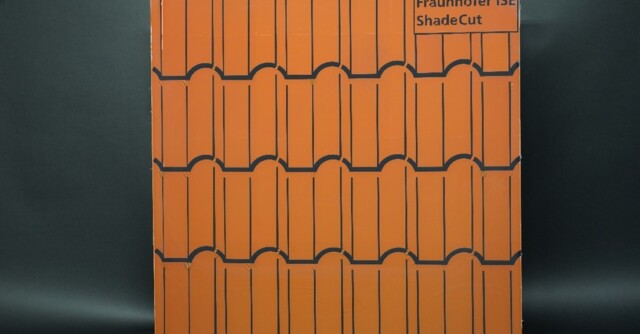
    In the “Vorfahrt” project, a tandem module was created which, according to Fraunhofer ISE, achieves an efficiency of 34.2%, currently the most efficient solar module in the world. It is based on a triple-stacked III-V semiconductor structure on a germanium substrate, an architecture that was originally developed for space solar cells.

    Project partner Azur Space has adapted its space cells to the terrestrial solar spectrum and scaled them up for module production. The company Temicon is contributing a nanostructure on the glass surface that minimises reflection losses and thus opens up additional efficiency percentage points.

    The second record module comes from the “Mod30plus” project. Here, the researchers combined a III-V semiconductor with the more cost-effective silicon instead of germanium, achieving a module efficiency of 31.3%. The basis is III-V/silicon tandem cells with a cell efficiency of 36.1%, which were manufactured and interconnected for the first time in a small series at the institute.

    III-V/silicon technology is moving away from pure laboratory status and towards industrially scalable processes. Both modules clearly exceed the physical limit of classic silicon modules of 29.4%. A value that was long considered almost impossible to achieve.

    Module values for practical use
    In photovoltaics, a distinction is made between cells and modules. Cells are measured under idealised laboratory conditions, while modules consist of many interconnected cells embedded in glass and frames. Inactive surfaces, conductor paths and reflections cause unavoidable losses.

    Accordingly, module efficiencies are always lower than the cell efficiencies, even in the case of Freiburg’s record-breaking technology. Module values are therefore crucial for real applications, as modules are always installed on roofs, façades or vehicles, never individual cells.

    When every square centimetre counts
    High-performance modules become exciting where space is scarce and expensive. For example, in building-integrated photovoltaics, where modules act as façade or roof elements, or on vehicles. The project partners include Audi, which emphasises the potential for vehicle applications.

    Efficiency for the mass market
    Fraunhofer ISE is also pursuing another tandem route. Perovskite silicon modules, developed jointly with Oxford PV, among others. A full-format module with a surface area of 1.68 m² already achieves 25% efficiency and has been produced on production lines that are also suitable for mass production. This technology is aimed less at absolute records than at broad market penetration with comparatively cheap materials and should be suitable for standard roofs in the future. Research groups, including in Hong Kong, are also reporting perovskite-based cells with efficiencies of up to 40%, which illustrates the dynamism in this segment.

  • Renewable energies drive long-term strategy

    Renewable energies drive long-term strategy

    The Zurich Cantonal Electricity Works (EKZ) has had a challenging financial year in 2024/25. According to the annual report, total output fell by only 4.2 per cent to 1,176.4 million Swiss francs. However, operating profit before interest and taxes fell by 64.9 per cent to 18.8 million.

    Nevertheless, profits rose by 24.9 per cent to CHF 186.3 million. According to astatement, this is a result of the company’s investments in the electricity producer Axpo and the Graubünden cantonal utility Repower. The canton and the municipalities with a stake in EKZ will receive a distribution of CHF 46.6 million, around CHF 9 million more than in the previous year.

    The decline in operating income is partly due to the drop in electricity production in Germany and France. Wind power production fell by 14.9 per cent to 517.9 gigawatt hours, while solar power production from photovoltaics fell by 11.5 per cent to 253.2 gigawatt hours.

    EKZ has continued to invest in the expansion of renewable energies in Switzerland. The Madrisa Solar plant in Klosters GR was partially connected to the grid. In Embrach ZH, construction began on the solar plant on the roofs of Embraport. In addition, 4,886 new private solar plants with a total output of 100.5 megawatts were connected to the grid. In the previous year, there were 3,839 systems with 77.7 megawatts. In addition, around 17,500 parking spaces in underground car parks were equipped with EKZ’s charging management system.

    Urs Rengel speaks of a strong annual result. “Uncontrollable fluctuations due to weather, prices, demand and market developments are part of today’s energy system and are likely to continue to increase significantly, both to the benefit and detriment of EKZ,” the EKZ CEO is quoted as saying in the press release. “Investments in production facilities have a long time horizon and we are convinced that they will make a valuable contribution in the long term.”

  • Solar diesel to make construction machinery more climate-friendly

    Solar diesel to make construction machinery more climate-friendly

    The construction company Eberhard Bau from Kloten will in future operate its machinery with solar diesel from the Zurich-based cleantech company Synhelion. The long-term purchase agreement, which has now been announced in a press release, provides for the use of renewable diesel from 2027 onwards. According to Synhelion, this will reduce net CO2 emissions by up to 100 per cent compared to fossil fuels. The sustainable fuels can be used in all existing combustion engines.

    Eberhard Bau is Synhelion’s first customer in the construction industry, which has had little leverage to defossilise construction machinery and construction sites. Until now, solar diesel has been used by companies in the aviation, shipping and road transport sectors. Construction machinery, however, is heavy, is used in undeveloped terrain and is difficult to electrify due to its high power requirements. Solar diesel provides a sustainable solution for CO2 reduction “where there was previously no viable alternative,” says Silvan Eberhard, Head of Logistics at Eberhard Unternehmungen.

    According to its own information, Synhelion has been operating the world’s first industrial plant for the production of solar fuels since 2024 with DAWN, which manufactures in Germany. The construction of the first commercial plant is in the planning stage and is scheduled to go into operation in 2027.

    In addition to Eberhard Bau AG, Swiss International Air Lines, Pilatus Aircraft, Zurich Airport, AMAG Group and the Lake Lucerne Shipping Company have signed purchase agreements for renewable fuel with Synhelion.

  • Riet II makes the supply more crisis-proof

    Riet II makes the supply more crisis-proof

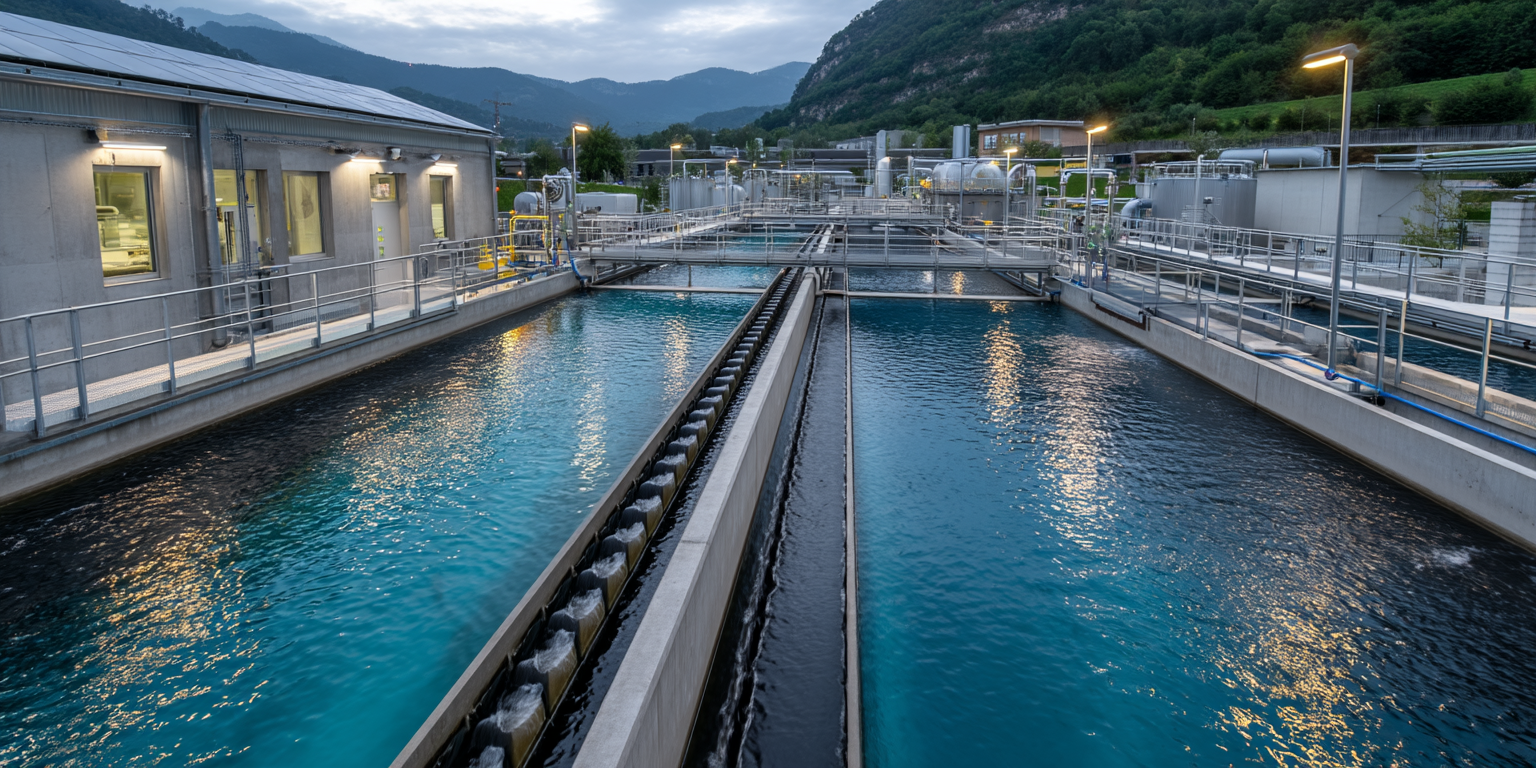
    The St.Gallen region is making its drinking water supply fit for the coming decades. With the decision in favour of the new Riet II lake water plant in Goldach, the existing plant in Frasnacht is being given a second pillar of equal value. Today, the supply of the twelve participating municipalities in Eastern Switzerland depends largely on this one source of supply in the event of an emergency. A risk that no longer fulfils the federal requirements for severe shortages. Riet II is intended to close precisely this gap and ensure supplies even if a plant fails or Lake Constance can only be used to a limited extent at times.

    The new plant will be realised on the site of the existing Riet high-pressure pumping station in Goldach. Around 60 million Swiss francs have been budgeted for construction and equipment. The costs will be borne by the twelve shareholder partners of RWSG Regionale Wasserversorgung St.Gallen AG in accordance with a new distribution model, which will be passed on to end customers via the water prices in future. The fact that all partner municipalities are unanimously in favour of the project and financing shows the high strategic importance: drinking water is treated as a critical infrastructure that must function just as robustly in the event of a crisis as it does in everyday life.

    With Riet II, the RWSG is expanding its role as the backbone of the regional water infrastructure. It is responsible for collecting raw water, treating it and transporting it to the municipal networks and supplies more than 150,000 people with drinking, process and extinguishing water. In future, it will operate two lake water works, Frasnacht and Goldach, as well as the Riet high-pressure pumping station and the associated transport pipelines. This will benefit urban centres such as St.Gallen and Arbon as well as smaller partner communities from Abtwil-St.Josefen to Teufen. The new plant is therefore more than just a construction project: it is a long-term promise of security for an entire region.

  • Spatial planning for municipalities since 1 January 2026

    Spatial planning for municipalities since 1 January 2026

    Federal framework, cantonal rules
    Parliament has reorganised the roles with regard to value-added compensation. One thing is clear: the obligation under federal law to pay value-added tax now only applies to individual zoning; the cantons are responsible for other significant planning advantages such as upzoning and rezoning. In the canton of Aargau, the equalisation of such advantages takes place within the framework of administrative contracts – not by means of decrees. For the municipalities, this means that they must actively negotiate, document properly and align their practices closely with cantonal law.

    Solar on façades
    Solar installations on façades are now generally not subject to authorisation in building and agricultural zones, provided they are deemed to be sufficiently adapted. The notification is made via the cantonal platform; the formal building permit procedure is no longer required. Art. 32abis RPV defines how adaptation is to be understood in concrete terms and at the same time opens up a certain amount of leeway for municipal design regulations. Municipalities can issue area-specific regulations, but may not excessively restrict the use of solar energy. Installations on cultural and natural monuments of cantonal or national importance as well as on buildings with substance protection or in sensitive local and landscape zones remain subject to authorisation.

    Solar above car parks
    In building zones, support structures for solar installations above or on the edge of car parks with 15 or more parking spaces are now considered directly compliant with zoning regulations. However, the municipalities can specify these basic regulations. They may designate areas where such structures are excluded or only permitted subject to conditions, or conversely declare smaller car parks to be zoning-compliant. This turns the car park into a strategic energy area. Provided that the municipalities utilise their autonomy and define clear objectives for townscape, climate protection and energy production.

    New planning principles
    RPG 2 introduces a new planning principle for the utilisation of underground space. In future, underground uses must be harmonised with above-ground uses and the affected interests at an early stage. At the same time, the priority of agriculture in the agricultural zone is expressly enshrined in the law. Agricultural uses are to be weighted more heavily than non-agricultural concerns, for example by easing immission control requirements if the agricultural interest prevails. For the practice of land use planning, this means less of a change of course than a shift in emphasis: the familiar balancing of interests in accordance with Art. 3 RPV remains, but is given clearer guidelines, which must be made visible in the planning report.

    Zoning-compliant and without planning obligation
    Installations for the production and transport of energy from biomass can be zoning-compliant in the agricultural zone under simplified conditions. It is now expressly stated that such zone-compliant biomass plants are not subject to planning requirements, even if they have a spatial impact. This is the legislator’s response to previous case law, which in some cases assumed a planning obligation for biomass-based energy plants. For municipalities and cantons, the discussion is thus shifting more in the direction of authorisation and requirement practice instead of land use planning.

    Building outside of building zones
    RPG 2 also brings noticeable changes outside of building zones. In principle, building applications can only be authorised with the approval of the canton. For municipal authorities, the main changes are in the material criteria against which projects are assessed. The priority given to agriculture will be strengthened and should also have an impact on the easing of odour and noise protection requirements.

    At the same time, the new law improves the framework conditions for plants that utilise renewable energies. Biomass plants in the agricultural zone are deemed to conform to zoning if they fulfil certain requirements and do not require prior planning, even if they are no longer subordinate to the agricultural operation but are merely part of it. For installations for the use of renewable energy and for thermal networks that do not conform to zoning regulations, the requirements for exceptional authorisations are relaxed, provided they contribute to the reduction of fossil fuels.

    Infrastructure, mobile radio and dismantling
    For infrastructure installations outside of building zones, the principle of bundling in locations that are as insensitive as possible now applies. Mobile radio installations can also be explicitly authorised outside the building zone if the location there offers significant advantages over a location within the building zone. Finally, the statute of limitations for dismantling orders will be standardised. Unlawful buildings and installations can generally no longer be demolished after 30 years, regardless of whether they are located inside or outside the building zone. Constellations in which police assets such as public order, peace, safety or health are jeopardised remain exempt.

    For the municipalities, the revised spatial planning law opens up new scope for solar energy, biomass, infrastructure and the prioritisation of agricultural interests. It will be crucial to actively shape this freedom, to anchor it in land use planning and authorisation practice and to document the new principles transparently.

  • Without materials research, there would be no progress

    Without materials research, there would be no progress

    For Tanja Zimmermann, materials research is the backbone of technological progress. Around two thirds of all innovations are based directly on new or improved materials, from batteries and medical sensors to building materials. Empa’s approach, which develops materials for construction, energy and health as a national competence centre, is correspondingly broad. This ranges from basic projects in the laboratory to feasibility studies with industrial partners. These include more efficient energy storage systems, new photovoltaic technologies and two-dimensional nanomaterials such as MXene, which could make electronics and sensor technology more compact and powerful in the future.

    applications for energy, health and construction
    In the health sector, Empa is working on textile sensors that enable long-term ECGs without traditional gel electrodes and thus avoid skin irritation. Other projects focus on intelligent materials in operating theatres, such as adhesives that seal leaks in the abdominal cavity and provide early warning of leaks thanks to integrated sensors.

    In construction, the focus is on the circular economy and resource efficiency. New concretes and composite materials should achieve the same load-bearing capacity with significantly less cement and steel, thus noticeably reducing the carbon footprint of buildings. At the same time, Empa is developing highly temperature-resistant materials for drones that can fly directly into sources of fire, as well as carbon fibre-reinforced plastics, which are increasingly making bridges and large structures lighter and more durable.

    CO₂ as a raw material
    Empa is going one step further with its “Mining the Atmosphere” initiative. The aim is not only to save CO₂, but to specifically extract it from the atmosphere and utilise it as a raw material. Researchers are investigating how carbon from CO₂ can be incorporated into ceramic materials such as silicon carbide or building materials such as concrete so that buildings themselves become carbon sinks. In the long term, such approaches should help to offset some of the historical emissions and make the transition from a CO₂-emitting to a CO₂-binding society. A “project of the century” that requires enormous amounts of renewable energy and close collaboration between research and industry.

    High-tech from nature
    Zimmermann also relies on a combination of natural principles and high-tech in wood research. She sees wood as Switzerland’s only large, indigenous, renewable resource that is light, stable and can be modified in many ways. The spectrum ranges from fire-retardant mineralised wood to antimicrobial surfaces and the use of fibrillated cellulose, whose nanofibres can form transparent gels, highly porous sponges or barrier films for food packaging. Such cellulose sponges can selectively absorb oil from water or bind CO₂ from the air. As a spray coating, they extend the shelf life of fruit and vegetables without the need for plastic film. More recent projects are creating “living materials”, such as printed structures made of nanocellulose and diatoms, which are intended to monitor water quality as biological sensors.

    Long-term projects such as “CarboQuant
    With “CarboQuant”, the Werner Siemens Foundation is supporting another long-term project at Empa. A laboratory that investigates carbon nanostructures for quantum technologies. The aim is to design graphene nanoribbons and nano-graphenes so precisely that their quantum effects can be utilised for electronic components at room temperature. For example, for sensors, communication or future quantum computers. Such projects show why foundations and public sponsors are central to Empa. Many material innovations take years or even decades before they can be scaled up and utilised commercially. For Zimmermann, however, it remains clear that without this staying power and without materials research, neither the technologies that make the energy transition possible nor many of the solutions that already make our everyday lives seem more natural than they are today would exist.

  • New role for H₂ heat

    New role for H₂ heat

    In a production hall, an inconspicuous device is making heating technology history. The first catalytic hydrogen air heating system has been put into operation at a customer. The 10 kW system provides peak load heat for a production area of around 1,000 cubic metres for the pump manufacturer Flusys, using hydrogen from regional supplies. For the young company from Wiesbaden, this is more than just a field test. It is a practical test for a technology that is intended to replace fossil fuels in the heating sector in the future.

    Commercial and industrial buildings
    The company is deliberately targeting commercial and industrial buildings rather than single-family homes. This is where high heat demand, limited electrical connected load and increasing pressure to decarbonise come together directly. A purely electrical solution using large heat pumps often fails due to expensive grid connections or simply a lack of capacity. The hydrogen heating system covers the peak load, while a heat pump or another heat source takes over the base load.

    In Offenbach, the 10 kW unit works in a hybrid network with a heat pump. The heat pump supplies the production area during normal operation, while the H₂ heating system kicks in on particularly cold days or when capacity utilisation is high. This division of tasks allows the heat pump to be dimensioned smaller and reduces the required electrical connected load, a noticeable lever for investment and output prices. For locations with an existing or planned hydrogen infrastructure, the system thus becomes an economical component of the energy supply.

    The flameless hydrogen heating system
    Technologically, the company differs significantly from conventional condensing boilers or H₂ burners. The system works with a flameless, catalytic process. Hydrogen is mixed with ambient air, remains below the lower explosion limit and only reacts with the oxygen in the catalyser. Heat is generated, but no visible flame, as the process is based on controlled oxidation rather than combustion.

    The lower process temperatures mean that neither CO₂, NOx nor particulate matter are produced; the only by-product is water in the form of humidity. At the same time, flammable hydrogen concentrations are never used in the appliance, making the technology inherently safe. HYTING sees this as a kind of “plug-and-play heating” with hydrogen that utilises existing air ducts or ventilation systems and can be scaled in a modular design.

    Practical test, endurance test and approval
    The system is not the first endurance test for the young technology. A leading engineering service provider had previously accompanied a 2,500-hour endurance test that simulated around ten years of real operation. During the test, there were neither failures nor measurable wear and tear on safety-critical components. Continuous emission measurements confirmed the absence of CO₂, NOx and particulate matter emissions.

    The first customer system now marks the transition from the laboratory to industrial reality. Further systems are to follow in the course of the first quarter of 2026, also in commercial applications with existing hydrogen expertise.

    Where does the technology make sense
    Despite the attention, catalytic hydrogen heating is no substitute for gas heating or heat pumps in the broad market. Hydrogen is currently expensive, the infrastructure is limited and a comprehensive H₂ network for residential neighbourhoods is not in sight. For the foreseeable future, there is therefore no basis for economical use in single-family homes.

    The situation is different in industrial clusters, harbour regions or chemical parks, where hydrogen is already being produced or the hydrogen core network is being set up. This is where it can play to its strengths. As peak load heating in combination with heat pumps, as a supplement to industrial waste heat or as a flexible option in logistics properties with their own hydrogen production from PV surpluses. The role is thus clearly defined, not as a competitor to heat pumps, but as a building block in hybrid systems for companies that can utilise H₂ without major additional expense.

    Whether the niche becomes more will ultimately be decided outside the technology room. The price of hydrogen, the pace of grid expansion and political decisions will determine whether flameless H₂ heaters will be used more frequently in commercial buildings in the future or remain a specialised tool that is primarily used in places where hydrogen is already part of the energy mix.

  • Generational change strengthens commitment to energy transition

    Generational change strengthens commitment to energy transition

    Reto Trittibach is the new owner and managing director of INES Energieplanung GmbH. According to a statement, André Joosten will be his deputy. With this new appointment, the Bern-based provider of energy supply solutions, founded 14 years ago, aims to maintain continuity.

    The aim of INES Energieplanung is to “support the energy transition with expertise and to the best of its ability”. Energy concepts for sites and district heating projects are developed. According to the company, INES contributes its expertise not only to the planning and construction of energy plants, but also to plant concepts. INES also acts as an energy consultant for the city of Bern.

    INES operates in the city and metropolitan area of Bern. Its main customers and cooperation partners include Marzili Wärmeverbund AG and the city of Bern.

    Founder Bruno Liesch shaped INES with a focus on sustainable energy solutions, heating networks and future-oriented energy planning. According to the announcement, he will continue to contribute his experience in project development on a part-time basis until the end of 2026.

  • Portfolio approach drives electric mobility in residential properties

    Portfolio approach drives electric mobility in residential properties

    According to a press release, Helvetia Baloise Holding AG, the insurance company formed in December 2025 from a merger between Helvetia and Baloise, is promoting e-mobility together with its partner Energie 360°. The energy and e-mobility company, which is 96 per cent owned by the City of Zurich, has already taken over more than 150 charging stations in 13 properties, mainly in western Switzerland, the Mittelland and Basel.

    As Reto Baschera, head of the mobility group at Energie 360°, emphasises, the expansion is “demand-driven and geared to the requirements of the tenants”. According to the information provided, six further properties are currently in the planning stage, with more to follow gradually. The focus is on a harmonised portfolio approach with a hardware-independent billing solution that takes into account different building types and product characteristics. Helvetia Baloise has a total of around 845 properties in Switzerland with approximately 30,000 apartments.

    “For me in strategic procurement at Helvetia Baloise, it was crucial to find a partner who sees electromobility not as a single product, but as an integrated part of a large real estate portfolio,” says Karin Hauser of Baloise Asset Management AG. “In our collaboration with Energie 360°, we particularly appreciate the structured approach, the reliable implementation and the ability to pragmatically map different starting points in our properties.”

  • Technology fund supports AI-based energy optimisation

    Technology fund supports AI-based energy optimisation

    Scandens can finance upcoming business developments with a guarantee from the technology fund. According to a statement by Dominik Bucher, co-founder and CCO of the Zurich-based cleantech company, receiving this guarantee confirms its approach: “Enabling the right investment decisions for real estate portfolios – economically sound and future-proof” while making the best possible decisions for the climate and the environment. “We are delighted to be part of the technology fund,” said Bucher.

    Founded in 2021 as a spin-off from the Swiss Federal Institute of Technology Zurich, the company launched software in 2023 that makes it easier to plan and implement energy-efficient building renovations. With this artificial intelligence-based internet application, owners of real estate portfolios as well as private homeowners can check whether and which renovation measures make economic and ecological sense.

    According to a statement from Scandens, the software displays over 500 renovation combinations and creates a plan that serves as a basis for implementation. This is intended to save time and promote sustainable decisions.

    With the technology fund, the federal government promotes innovations that reduce greenhouse gases or resource consumption, favour the use of renewable energies and increase energy efficiency. Guarantees make it easier for innovative companies to take out loans. The guarantee is granted to banks or other suitable lenders. To cover guarantee losses, a maximum of CHF 25 million per year from the proceeds of the CO2 levy is paid into a technology fund.

  • New technology paves the way for virtually CO2-free cement

    New technology paves the way for virtually CO2-free cement

    Holcim has agreed to acquire a strategic stake in Capsol Technologies, a specialist in post-combustion carbon capture solutions based in Oslo. This was announced in a statement by the building materials supplier. The focus is on HPC (hot potassium carbonate) technology, an energy-efficient chemical absorption process for capturing CO2 from gas streams, combined with an integrated heat recovery system. Holcim intends to use this technology to promote the large-scale production of virtually CO2-free cement and meet growing customer demand for climate-friendly building materials.

    “By combining Holcim’s expertise in cement production and on-site CO2 capture with Capsol’s safe and efficient technology, we have an additional lever to drive decarbonisation and achieve profitable growth,” said Ram Muthu, Head of Operational Excellence at Holcim. “This strategic investment brings us one step closer to large-scale production of virtually CO2-free cement.”

    The investment was preceded by a CapsolGo demonstration project at Holcim’s Dotternhausen plant in Germany in 2025, where Capsol successfully tested its technology in an industrial environment. The investment expands Holcim’s portfolio of decarbonisation technologies within its open innovation ecosystem. Through Holcim MAQER Ventures, the Group’s corporate venture capital unit, Holcim has made 19 investments to date and reviews more than 500 start-ups in the field of sustainable construction solutions each year.

  • Robots bring new efficiency to underground pipeline construction

    Robots bring new efficiency to underground pipeline construction

    Schlieren-based start-up promoter Venture Kick is supporting the deep tech start-up Under Industries from Dübendorf with CHF 150,000. According to a press release, the funding will support the development of Under Industries’ Micro Tunnel Boring Robots (MTBRs). The MTBRs are designed to enable faster and cleaner laying of underground utility lines while reducing road closures, noise emissions and surface damage.

    Under Industries was founded as a spin-off of Swissloop Tunneling, an engineering student initiative at the Swiss Federal Institute of Technology Zurich (ETH). Under Industries’ MTBRs are designed for use in a wide variety of soil conditions. Compared to conventional pipe jacking methods, they minimise surface disruption, shorten construction times and improve adaptability. This could promote more sustainable and flexible development of urban infrastructure.

    Venture Kick’s funding will support the completion of Under Industries’ minimum viable product (MVP). According to the press release, this is an “industrial-grade MTBR that will be used for the first demonstrator and commercial pilot projects and will strengthen the industry’s confidence in the technology”.

    The start-up is initially focusing on the Swiss electricity distribution market. It is working with distribution network operators who are responsible for expanding the electricity grids and transitioning from overhead lines to underground cables. Expansion in Europe and the development of further supply lines are to follow. According to Venture Kick, the realistically achievable market for Under Industries in Switzerland and Europe amounts to around CHF 150 million per year for electricity grids alone.

  • Canton of Nidwalden triples funding for energy-efficient building renovation

    Canton of Nidwalden triples funding for energy-efficient building renovation

    In its 2026 energy promotion programme, the Nidwalden Cantonal Council has decided to increase subsidies for energy-efficient building renovations by 300 per cent to 2.9 million Swiss francs. Together with federal funds, this means that a record annual budget of CHF 6.3 million is available, according to a statement. This cantonal subsidy programme supports owners who optimise their building envelope, replace fossil fuel or electric heating systems with renewable energy systems, or construct energy-efficient new buildings.

    According to the information provided, demand for subsidies was “exceptionally high” in 2025. The canton expects a further sharp increase in applications in 2026, particularly due to the expansion of district heating networks. In addition, tax breaks will be abolished in the future, which is also likely to cause demand to rise further this year.

    According to the information provided, energy-efficient building renovation – a key pillar for achieving the canton’s emission targets by 2035 – will only succeed if owners are willing to invest in their properties. “In doing so, they are making a major contribution to reducing greenhouse gases and saving energy,” said Environment Director Joe Christen.

    Although the subsidy can only cover a small portion of the investment, these investments are worthwhile in the long term when combined with tax savings and lower heating costs. “On average,” says Christen, “one franc of funding triggers almost ten times that amount in investment. Most of this added value remains in the canton, strengthening local businesses and helping to reduce the outflow of money abroad thanks to renewable energies.”

    The canton of Nidwalden is one of the exhibitors at the SWISS Pavilion at the Singapore Airshow. The international aviation trade fair takes place from 3 to 8 February.

  • Infrastructure project replaces overhead lines with modern networks

    Infrastructure project replaces overhead lines with modern networks

    The Aargau municipalities of Bellikon, Remetschwil and parts of Oberrohrdorf are no longer supplied via wooden pole lines from the valley, but via a new cable line. According to a statement, AEW Energie AG has completed and commissioned a central infrastructure project on the Rohrdorferberg with this cable. As a result, 1.6 kilometres of existing wooden pole lines have been dismantled – “a contribution to a more robust, low-maintenance network and an improvement to the landscape,” according to the Aargau energy supplier.

    The Rohrdorferberg line between Künten and Fislisbach has a total length of 11.2 kilometres. A total of eight transformer stations were connected to the new line. According to the information provided, this will particularly benefit businesses “with increased requirements for security of supply”.

    AEW invested a total of CHF 3 million in the project. “By consistently expanding and cabling our grid infrastructure, we are not only increasing security of supply for the population, but also creating the conditions for a flexible and sustainable energy system,” says Christoph Fischer, who heads the Networks division at AEW.

  • New industrial building relies on modern energy and electrical engineering

    New industrial building relies on modern energy and electrical engineering

    Schlieremer Maneth Stiefel AG, with its branch in Pratteln, has taken on the project planning and construction of the electrical systems for a new high-bay warehouse at the Feldschlösschen brewery, according to a press release. The 30-metre-high building is to be constructed in the immediate vicinity of the motorway in Rheinfelden. Feldschlösschen AG, part of the Carlsberg Group, wants to use the new building to increase internal consolidation and create new storage space, the company reports.

    In addition to the lighting, low-voltage and low-current systems, Maneth Stiefel will also install the network infrastructure, including transformer stations and main distribution systems in the medium-voltage range, emergency and safety systems, and a photovoltaic system.

    Both companies emphasise that the new building represents a milestone in the development of the Rheinfelden site. Feldschlösschen is the largest employer in the town. The construction measures were planned in close consultation with the local population and will also be implemented with monument protection in mind. Feldschlösschen will celebrate its 150th anniversary in 2026.

  • Crowdfunding drives flexible solar energy forward

    Crowdfunding drives flexible solar energy forward

    Solarify GmbH is further expanding its range of investment opportunities for private investors in the energy transition. According to a press release, the Wabern-based company now offers crowdfunding for a new generation of solar power plants connected to battery storage systems. These enable solar power to be delivered at a later time.

    Solarify.ch is thus also responding to a change in the remuneration of solar power. In future, feed-in tariffs will be based on hourly rates. In addition, market prices will be recalculated on a quarterly basis. The storage facilities allow for a flexible response to prices.

    The company is already using solar systems with battery storage, for example at the Tannental asylum accommodation in the municipality of Muri near Bern and on the roof of Condecta AG in Bern.

    “With this new generation, we can operate solar systems in a way that benefits the grid and the system,” CEO Roger Langenegger is quoted as saying in the press release. “Instead of putting strain on the grids at midday, the electricity is consumed locally or sold at times of higher demand.”

    Solarify.ch enables private individuals to invest in the energy transition. Founded in 2016, the company has implemented 160 solar projects throughout Switzerland and invested 26 million Swiss francs.

  • Electricity industry warns of declining security of electricity supply

    Electricity industry warns of declining security of electricity supply

    According to a press release, the Association of Swiss Electricity Companies (VSE) has presented the Swiss Electricity Supply Index for the first time. The index rates Switzerland’s electricity supply at 82 points for 2035 and only 69 points for 2050.

    The index assesses the electricity supply in five categories. Per capita electricity demand is set to rise further, mainly due to electromobility and data centres; the index gives a score of 86 points for 2050. The expansion of renewable energies is too slow, especially for winter supply. Solar panels on roofs are not sufficient for this, and projects in wind and hydroelectric power production are being delayed or cancelled. The index gives 83 points for 2050. The flexibility of the electricity system is rated at only 52 points for 2050. The federal target for the expansion of seasonal storage will be significantly missed. The expansion of electricity production receives 63 points. The phasing out of domestic nuclear power from 2040 onwards will increase demand. The expansion of the grids is rated at only 57 points.

    In its statement, the VSE points out that imports cannot be increased at will and do not offer any security in times of shortage. “Switzerland is at a decisive crossroads: without decisive energy policy decisions, concrete investments in new production capacities and a significant acceleration of the approval process, we are putting our security of supply at risk,” VSE President Martin Schwab is quoted as saying in the statement.

  • Canton of Zurich presents design plan for Limmattal Energy Centre

    Canton of Zurich presents design plan for Limmattal Energy Centre

    According to a statement, the canton of Zurich will make the design plan documents for Limeco’s planned Limmattaler Energiezentrum (LEZ) available to the public from 20 January. Interested parties can view the documents for 60 days at the municipal office, the cantonal office for spatial development and online, and comment on the plan. Those responsible for the regional utility company and the canton will also be available to answer questions during a public information event on 21 January at Heimstrasse 46 in Dietikon.

    Limeco will have to rebuild its waste incineration plant (KVA) and wastewater treatment plant (ARA) in the coming years. The regional utility company wants to combine both facilities in the new energy centre on the site of the current KVA. The LEZ will also produce energy in the form of electricity, district heating and gas. The current WWTP in Antoniloch must be decommissioned by 2050 because it is located in a nature and bird sanctuary of national importance.

    The Zurich-based architectural firmPenzel Valier was awarded the contract for the overall concept of the energy centre in January 2025.

  • Joining forces to expand renewable electricity production

    Joining forces to expand renewable electricity production

    Swiss Renewables AG, based in Zug, and aventron AG, based in Münchenstein, want to move closer together. According to a statement, the two renewable energy producers are exploring the possibility of closer cooperation. Their aim is to exploit synergies and better tap into the potential for further expansion of renewable electricity generation.

    Both companies are subsidiaries of Swiss municipal and regional utilities. Aventron was founded in 2005 by the former Elektra Birseck Münchenstein, now Primeo Energie. In 2010, Energie Wasser Bern (ewb) acquired a stake in the company, followed by the city of Winterthur in 2013 through its municipal utility. Together, they now hold 63.3 per cent of the company. Aventron has interests in hydro, wind and solar power plants with an installed capacity of 826 megawatts in Switzerland, France, Italy, Germany, Spain and Norway.

    Swisspower Renewables, founded in 2011, is a subsidiary of Swisspower. Eleven members of Swisspower, including ewb and Stadtwerk Winterthur, as well as UBS Clean Energy Infrastructure Switzerland 2 as a strategic financial investor, hold stakes in the company. Swisspower is an association of 20 municipal utilities. Swisspower Renewables has hydro, wind and solar power plants in Germany and Italy with an installed capacity of 311 megawatts.

  • Farewell to an energy price with a signal effect for the future

    Farewell to an energy price with a signal effect for the future

    The Swiss Federal Office of Energy is awarding the non-monetary Swiss Energy Prize Watt d’Or for the 19th and last time. The aim is to raise awareness of exceptional achievements in the energy sector and the advantages of innovative energy technologies. According to a press release, winners in the categories of energy technologies, renewable energies, energy-efficient mobility, and buildings and space will be honoured at the award ceremony.

    The Rigitrac SKE 40 e-direct electric tractor, which is ready for series production and has European type approval, impressed in the energy-efficient mobility category. Rigitrac Traktorenbau AGfrom Küssnacht am Rigi SZ developed the vehicle specifically for work where exhaust fumes and noise are undesirable, such as maintenance work for municipal utilities, in vegetable tunnels or at indoor sporting events.

    The winner in the energy technologies category is the Innovation Lab from Gaznatin Aigle VD, which is working with researchers from the Swiss Federal Institute of Technology Lausanne (EPFL) and start-ups to bring technologies for sector coupling, decarbonisation and seasonal storage to market maturity. The project is based on the GreenGas concept, which combines combined heat and power, photovoltaics, electrolysis, hydrogen storage, CO2 capture, methanisation and Gaznat’s gas network in Aigle.

    An alpine façade solar power system from endigo Holding AGin Fiesch VS secured victory in the renewable energies category. The lightweight timber construction with a slatted façade, which is installed in Fiesch, represents the values of the endigo group of companies: close to nature, future-oriented, system-oriented and technically competent.

    In the buildings and space category, the jury selected the Hobelwerk site in Oberwinterthur, which was developed by the building cooperative mehr als wohnen,Lemon Consult AG and Low-Tech Lab, all from Zurich. The partners created an energy-efficient, sustainable and socially well-thought-out residential and commercial quarter that will serve as a model for non-profit housing construction in Switzerland in the future.

    A total of 55 entries were submitted for the Watt d’Or, with 17 entries nominated for the final round.

  • Real-time data against heat stress in construction and energy

    Real-time data against heat stress in construction and energy

    TrueWindSpeed is targeting the construction and energy industries in the Gulf region at Abu Dhabi Sustainability Week. As one of the exhibitors at the SWISS Pavilion, the Geneva-based start-up will be presenting its Heatector from 11 to 15 January 2026. The networked environmental measuring station provides fully automated, location-specific data for extreme climatic conditions. The high-precision sensor measures the WBGT index (wet bulb globe temperature) at the site of use in order to accurately assess the thermal load. By providing real-time data and automated alerts, it is designed to help companies comply with safety regulations and optimise their productivity.

    TrueWindSpeed has developed Heatector so that the measuring station can be deployed quickly and easily. The battery life is designed to allow the station to operate autonomously for five years. Heatector is now ready for the industrialisation phase.

    Extreme heat is a major occupational hazard recognised by the International Labour Organisation and the World Health Organisation, TrueWindSpeed argues in a statement. Beyond the health risks, heat stress is expected to reduce global working hours by 2.2 per cent in 2030 and cost the global economy $2.4 trillion. Heatector aims to convert this risk into manageable, verifiable data for ESG reporting. ESG stands for environmental, social and good corporate governance. In addition, the technology “protects the dignity of workers, prevents serious accidents and ensures social justice in the face of climate change,” according to TrueWindSpeed.

    “In a warming world, it is no longer enough to rely on general weather apps to ensure safety,” says company founder Guillaume Locher, who trained as an engineer at the Swiss Federal Institute of Technology in Lausanne (EPFL), in the press release. “We provide the accurate on-site data needed to transform heat hazards into measurable safety and resilience for workers.”

  • Energy future in the Limmat Valley

    Energy future in the Limmat Valley

    The Limeco regional plant in the Limmat valley is facing a project of the century. A new waste recycling plant is to be built by 2034, followed by the reorganization of wastewater treatment by 2050. This will ensure that waste and wastewater from the Limmat Valley will continue to be processed in an environmentally friendly manner and used as a source of energy.

    The existing waste incineration plant will be replaced by a new building further to the west. A larger WWTP is to be built at the existing site to meet the needs of the growing Limmat Valley in the long term. The current WWTP will be decommissioned by 2050. It is located in a nationally protected nature and bird sanctuary.

    A project with vision
    The Limmattal Energy Center is a prime example of the transformation in the waste disposal and energy sector. From pure waste recycling, a multifunctional energy hub is being created that provides heat, electricity and gas – resource-conserving, locally anchored and climate-neutral.

    Design plan sets out framework
    A cantonal design plan forms the basis for planning law. It defines in a binding manner how the plants are to be phased, developed and embedded. Specifications on building plots, environmental and water protection, natural areas and public green spaces create planning security.

    An environmental impact assessment is being carried out in parallel. It examines the impact of the construction and operating phases on the environment, local residents and ecosystems. The aim is to create an energy center that combines climate and resource conservation. This includes electricity, district heating and gas production from renewable sources as well as concepts for the direct capture of CO₂ emissions.

    Participation and information
    The design plan will be open to the public for 60 days from January 20, 2026. Citizens, associations and authorities can comment on the draft during this time. The submissions will be examined by the cantonal authorities and documented in an objection report.

    On Wednesday, January 21, Limeco is hosting a public information event at which representatives of the canton and the company will present details of the project and answer questions. Information about the event can be found at www.lez.ch/gestaltungsplan.

    The complete documents are available at www.zh.ch/raumplanung and can also be viewed at the municipality of Dietikon and the Cantonal Office for Spatial Development.

  • Zurich strengthens energy transition with 60 million program

    Zurich strengthens energy transition with 60 million program

    Buildings are among the biggest energy consumers in the canton of Zurich. Around 40 percent of energy requirements and a third of CO₂ emissions are attributable to this area. However, a lot has changed in recent years. Technical innovations, the CO₂ levy and cantonal regulations are having an impact.

    With the energy subsidy programme, the canton is creating additional incentives to replace fossil fuel heating systems, insulate building shells or modernize heat distribution systems. Demand for subsidies remains high, fueled by the revised Energy Act of 2022.

    Financial framework until 2029
    The cantonal government is now requesting CHF 60 million from the cantonal council to continue the program. These funds are to be supplemented with shares from the CO₂ levy and from the national impulse program. Provided the federal benefits are not reduced, this will result in a total budget of up to CHF 286 million for the years 2026 to 2029.

    The focus is on measures in the building sector. Advice and information services will also be supported, particularly for owners who want to renovate their properties to make them more energy efficient or are looking for alternatives before the statutory ban on electric heating systems from 2030.

    Focus on innovation and biogas
    In addition to traditional building renovations, the canton will increasingly promote innovation in future. One million francs per year is available for pilot projects that test new technologies and processes for efficient energy use or storage. A further CHF 250,000 per year will go towards the promotion of biogas from agricultural facilities. A promising energy source for industrial high-temperature processes.

    In this way, the energy promotion program combines climate protection with regional value creation. It strengthens innovation and at the same time acts as a lever on the way to net zero in Zurich’s building stock.