Category: Energy

  • Largest solar power plant in the canton of Zurich goes into operation

    Largest solar power plant in the canton of Zurich goes into operation

    According to EKZ, the largest solar power plant in the canton of Zurich has come into operation on the roofs of the Embraport logistics centre. Since mid-March, 9,500 solar panels have been generating electricity across a roof area of around 20,000 square metres, with a total output of up to 4.5 megawatts, EKZ states in a press release. The plant is expected to produce around 4 gigawatt hours of solar power annually.

    “We are proud that we have transformed unused roof space here into the largest solar power plant in the canton of Zurich within just a few months,” Paul Sidler, Head of Renewable Energy at EKZ, is quoted as saying in the press release. “This strengthens security of supply with local, sustainable electricity.” EKZ has realised the plant as part of its solar contracting model. Under this arrangement, Zürcher Freilager AG, as the owner and operator of Embraport, merely provides the roof space. EKZ is responsible for planning, financing, construction, operation and maintenance.

    Around half of the solar power generated at Embraport is to be consumed directly within the logistics centre itself. “Our tenants benefit from CO2-free energy, which they can purchase on attractive terms, thereby making their businesses more sustainable,” says Jean-Claude Maissen, CEO of Zürcher Freilager AG, in the press release. EKZ will offer the other half to its own customers.

    The system is also set to be expanded later this year. EKZ plans to install further modules with a total capacity of around 1 megawatt on the new buildings currently under construction on the site. A large-scale battery with a capacity of 2 megawatt-hours is also planned.

  • New CEO to drive strategic development

    New CEO to drive strategic development

    The Board of Directors of Repower AG, based in Brusio, Graubünden, has appointed Michael Roth as its new CEO. According to a press release, he will take up the post on 1 June 2026, succeeding Roland Leuenberger, who is moving to the energy producer Axpo.

    Roth has headed Repower’s Production & Grid division since 2022. Prior to this, the 51-year-old spent nine years as Director of Engadiner Kraftwerke and ten years at the City of Zurich Electricity Works (ewz). “In recent years, he has demonstrated leadership, strategic insight and strong operational expertise at Repower,” said Barbara Janom Steiner, Chair of the Board of Directors.

    The CEO-designate lives in the Engadin, holds a degree in electrical engineering from ETH Zurich and has a Master’s degree in business law from the University of St. Gallen. “I look forward to further developing Repower together with our employees during this important phase,” he is quoted as saying.

    A successor is being sought to head the Production & Grid division; the process has already been initiated.

  • Aargau Verkehr is relying on its own electricity supply for its electric buses

    Aargau Verkehr is relying on its own electricity supply for its electric buses

    Aargau Verkehr AG (AVA), in collaboration with energy services provider AEW Energie AG (AEW), has installed a photovoltaic system on the site of the bus depot in Fahrwangen. According to a press release, the system was commissioned in March. From October, it is expected to be fully operational and to generate some of the charging power required for the electric buses that will be based there in future.

    The investment in the solar system itself amounts to around 100,000 Swiss francs. The electrical infrastructure and grid connection for the solar system and the charging infrastructure cost a further 60,000 Swiss francs.

    “The system is an important step towards self-sufficiency in electricity,” Mathias Grünenfelder is quoted as saying in the press release. “Even though we will only be able to make full use of the solar power with the new vehicles from 2026 onwards, the decision was clear: electricity demand is rising – and we want to meet it as sustainably as possible,” said the Deputy CEO and Head of Major Projects at Aargau Verkehr AG.

  • Lake Zurich to heat university campus

    Lake Zurich to heat university campus

    Energie 360° will implement the University Campus Energy Network. From 2037, the University Hospital of Zurich, the University of Zurich, the Swiss Federal Institute of Technology Zurich and Zurich Stadelhofen railway station are to be heated and cooled using energy from Lake Zurich, according to a statement from the Zurich-based energy supplier. According to the statement, Energie 360° is investing around 40 million Swiss francs in the energy network.

    The project involves the construction of a lake water plant in the Tiefenbrunnen area. Construction of the plant is scheduled to begin in summer 2034. From there, the lake water will be channelled via the planned second Riesbach tunnel of the SBB to Zurich Stadelhofen station and the university campus. The water will then flow into the Limmat.

    “The lake serves as an energy source for climate-friendly air conditioning and heating in the university district,” Energie 360° CEO Romeo Deplazes is quoted as saying in the press release. “In this way, we are making an important contribution to the transformation of the city of Zurich from fossil fuels to renewables.”

  • Expansion of the district heating network strengthens the energy supply in Baden and Ennetbaden

    Expansion of the district heating network strengthens the energy supply in Baden and Ennetbaden

    According to a press release, Regionalwerke AG Baden is set to expand its district heating network. Construction work is set to begin in the coming months. With targeted development between Sonnenbergstrasse, Postplatz and Schlösslistrasse, a further step towards a climate-friendly heating supply will be taken. The energy supplier and the local council aim to gradually replace fossil fuels and sustainably increase energy efficiency, thereby strengthening the local infrastructure and making Ennetbaden a more attractive, forward-looking place to live.

    The connection of the municipality is to take place in two construction phases. The first phase is scheduled from 20 April to 7 June and concerns the Schiefe Brücke and the bridgeheads in Baden and Ennetbaden. The second phase of development, expected to run from 8 June to 31 October, will take place along Sonnenbergstrasse. During the construction period, there may be temporary changes to traffic routing and diversions for bus services.

    The municipality of Ennetbaden, Regionalwerke AG Baden, Regionalen Verkehrsbetriebe Baden-Wettingen, and specialist departments of the City of Baden and the Canton of Aargau have collaborated on the planning of the construction works and the traffic management plan. The heat supply is scheduled to commence this coming winter.

  • District heating project boosts energy supply in Adligenswil

    District heating project boosts energy supply in Adligenswil

    On 17 March, EBL Energie Rigi broke ground on the first phase of the expanded district heating network. A new main pipeline will in future connect the Halti-kon energy centre with the existing district heating network in Adligenswil, Lucerne. This will enable the outdated heating plant in Adligenswil to be replaced. According to a press release, EBL Energie Rigi is thus laying the foundations for a long-term, reliable and renewable heat supply in the region. At the same time, this is intended to meet the growing demand for new district heating connections in Adligenswil and ensure long-term security of supply for all customers. According to current plans, the construction period will be around two years.

    Those attending the ground-breaking ceremony included the Vice-Chair of the Municipal Council, Felicitas Marbach, and members of the Board of Directors of EBL Fernwärme Rigi AG. “Today’s ground-breaking ceremony is far more than the start of a construction project – it is a visible sign of a shared energy future. With the new main pipeline between Haltikon and Adligenswil, we are laying the foundations for a reliable, renewable and regionally anchored heat supply,” said Philipp Zgraggen, Managing Director of EBL Energie Rigi, according to the press release.

    EBL Energie Rigi brings together the expertise of three subsidiaries of EBL (Genossenschaft Elektra Baselland), based in Liestal: EBL Fernwärme Rigi AG supplies Küssnacht am Rigi, Greppen and Adligenswil with CO2-neutral district heating. EBL Energiezentrum Rigi AG produces electricity and heat from regional waste wood and wood residues. EBL Pellets Rigi AG manufactures wood pellets from regional wood residues.

  • The Swiss market for battery storage is growing rapidly

    The Swiss market for battery storage is growing rapidly

    The roll-out of battery storage systems is accelerating. This is according to Swissolar’s Battery Monitor 2026. According to the report, 896 storage systems were installed in Switzerland by the end of 2024. The Swiss Solar Energy Association expects a further 555 storage systems to have been connected to the grid in 2025. This means that by the end of 2025, there are likely to have been 1,451 storage systems connected to the grid.

    For the current year, Swissolar even expects the number of new installations to double to 1,010. This would bring the total number of installed storage systems to 2,461.

    Currently, storage capacity is increasing particularly behind the grid connection point, i.e. in households and in agricultural and commercial enterprises. This is expected to rise to 2.5 gigawatt-hours by the end of 2026. At the end of 2025, the figure stood at just 1.5 gigawatt-hours.

    The expansion of battery storage within the electricity grid is also increasing. Companies have already announced an expansion of over 4 gigawatt-hours by 2030.

    Matthias Egli highlights the significance of this for the energy transition. “Battery storage makes an important contribution to an electricity system with a high proportion of renewable energy,” the Managing Director of Swissolar is quoted as saying in the press release on the Battery Monitor. “It helps to use solar power efficiently, relieve the strain on the electricity grids and reduce overall costs.”

  • The energy sector remains stable despite structural change

    The energy sector remains stable despite structural change

    According to a press release, Primeo Energie AG achieved a generally positive result in 2025. The Basel-Landschaft-based energy supplier, headquartered in Münchenstein, generated turnover of 1.8 billion Swiss francs. This is 392 million less than in the previous year. Profit rose from 91 million to 109 million Swiss francs.

    The Energy Solutions division made a significant contribution to this profit growth. In France, Primeo Energie acquired 120,000 new private customers. The Swiss electricity business returned to a slight profit for the first time in years.

    In the Grid and Services division, Primeo Energie is feeling the impact of the decline in electricity consumption in industry and private households, as well as the rise in decentralised self-generation. Consequently, less electricity was transmitted.

    The Heating and Industrial Solutions division was expanded with new and extended district heating networks, for example in the Lower Wiggertal, Muttenz, Aesch and the Birstal. However, the mild weather put pressure on sales.

    The Production division remained stable thanks to diversification into hydro, solar and wind power and its presence across six countries.

    In 2025, Primeo Energie divested itself of activities lacking critical mass or with low profitability. These included wind farms in Norway and the electric mobility division in Switzerland.

    In the current year, the company intends to expand its electricity business in Switzerland and its activities abroad.

  • Sawdust is said to keep the fire at bay

    Sawdust is said to keep the fire at bay

    Researchers at the Swiss Federal Institute of Technology Zurich (ETH) and the Swiss Federal Laboratories for Materials Science and Technology (Empa) have developed an insulation material made from sawdust that can be used for fire-resistant interior fittings, according to a press release.

    The composite consists of sawdust and the mineral struvite, a crystalline, colourless ammonium magnesium phosphate. During their work, the researchers had to overcome the difficulty of binding the materials to the sawdust particles during the struvite crystallisation process. They succeeded in doing so using an enzyme extracted from watermelon seeds. The crystallised mineral fills the voids in the sawdust. The resulting material is pressed into boards and dried at room temperature.

    Initial tests show that the composition has similar fire-retardant properties to conventional cement-bonded chipboard. Tests carried out in collaboration with the Polytechnic University of Turin revealed that the struvite-sawdust boards take three times longer to catch fire than spruce wood. However, during the process, inorganic material forms which inhibits the spread of flames.

    To scale up the process and put the new material into use, it is important to reduce production costs. Currently, producing the binder from the mineral is more expensive than polymer binders or cement. This could change with the development of a further recycling loop: struvite accumulates in large quantities in sewage treatment plants. “We could use these deposits as a raw material for our building material,” says Ronny Kürsteiner, a researcher in the Wood-Based Materials group at ETH, in the press release.

    The study has been published in the journal Chem Circularity.

  • 3D-printed concrete stores CO2 and reduces resource consumption

    3D-printed concrete stores CO2 and reduces resource consumption

    Researchers at the Structural Engineering Laboratory of the Swiss Federal Laboratories for Materials Science and Technology (Empa) are working on the development of concrete elements produced using a 3D printer. According to a press release, the building elements are stable without traditional steel reinforcement and are virtually cement-free. The material is designed to store carbon dioxide as it cures.

    The research is being carried out as part of the European CARBCOMN project (Carbon-negative compression dominant structures for decarbonised and de-constructable concrete buildings). Alongside Empa, researchers from the Swiss Federal Institute of Technology Zurich (ETH) and the Empa spin-off re-fer in Seewen, as well as other European partners, are involved in the development.

    The material for 3D printing is derived from recycled industrial waste, such as steel slag. Geometrically optimised shapes are produced using a special process. Iron-based shape memory alloys (Fe-SMA) from re-fer are used as reinforcement. To cure this concrete, carbon dioxide is injected into a combustion chamber, where it chemically bonds with the concrete mixture. “We are combining unique expertise here – 3D printing, structural performance and our speciality: iron-based shape memory alloys,” Empa researcher Moslem Shahverdi is quoted as saying in the press release. “On the one hand, we use digital manufacturing methods to build in a resource-efficient manner. On the other hand, we are replacing conventional cement with binders that have a lower carbon footprint.” The concrete components are also designed so that they can be dismantled after use and reused elsewhere.

    Launched in 2024, the four-year project is funded under Horizon Europe and brings together eleven leading research institutions and architectural firms from across Europe. According to the press release, these include Ghent University, Darmstadt Technical University, the University of Patras in Greece, as well as Zaha Hadid Architects from London, Mario Cucinella Architects from Bologna, and the companies Tesis from Penta di Fisciano in Italy, orbix from Genk, and incremental 3D from Innsbruck.

  • New district heating network makes efficient use of waste heat and water from the Rhine

    New district heating network makes efficient use of waste heat and water from the Rhine

    According to a press release, energy supplier AEW Energie AG is investing 8 million Swiss francs in the construction of a district heating network in Augst, in the canton of Basel-Landschaft. According to the company, this sends “a clear signal regarding the implementation of the energy strategy and the consistent expansion of renewable heating solutions”.

    Waste heat from the generators at the existing Augst hydroelectric power station and water from the Rhine are to be used for district heating. It is stated that, via a 1.3-kilometre-long district heating network, the connected buildings will receive CO2-free energy from the start of the 2026/2027 heating season.

    Three heat storage tanks, each with a capacity of 15,000 litres, will ensure a secure supply and reliable, stable operation even during peak loads. According to the press release, the plant’s thermal output is 2 megawatts and is expected to deliver a heat output of 4,400 megawatt-hours once fully operational. This is expected to save 1,200 tonnes of CO2 annually.

    At the start of the construction project with the ground-breaking ceremony on 16 March 2026, the company announced that it was creating a replacement for the AEW Contracting plant in Pratteln, which had been operated using wood pellets and oil. “With the Augst heating network, we are making optimal use of existing energy sources from our own infrastructure and making an important contribution to the decarbonisation of the region’s heat supply,” said Dr Raffael Schubiger, Chairman of the Board of Directors of AEW Energie AG and Kraftwerk Augst AG.

    According to David Gautschi, Head of Production at AEW, the Augst heating network exemplifies how existing energy infrastructure and natural resources can be efficiently combined.

  • District heating networks are becoming increasingly important for urban energy supply

    District heating networks are becoming increasingly important for urban energy supply

    Researchers at Lucerne University of Applied Sciences and Arts (HSLU) are working on the development of seasonal thermal energy storage systems. In an era of global warming, thermal networks are becoming increasingly important for cooling densely built-up cities. This involves circulating water from lakes or rivers through pipe systems to cool buildings; these same systems are then used for district heating in winter. To drive the development of such systems forward, the university organised an event to share experiences. According to a press release, the 22nd IGE Seminar of the Institute for Building Technology and Energy (IGE) took place on 11 March 2026. Representatives from Thermische Netze Schweiz,WWZ Energie AG (Zug), Wien Energie GmbH and the City of Zurich, with their CoolCity Zurich project, also took part in the presentations and discussions.

    At HSLU, flexible heat storage systems are being developed that adapt to changing conditions. Researchers led by Timotheus Zehnder demonstrated how firewood can be used more efficiently in wood-fired systems thanks to flue gas cooling and condensation. Three speakers presented thermal networks for heating and cooling supply in Zug, Zurich and Vienna.

    Dieter Kissling from the ifa Institute for Occupational Medicine raised an interesting point: office temperatures were adjusted in the 1960s to suit the needs of men (21 to 22 degrees Celsius). However, it has been shown that women are more productive at 26 to 27 degrees Celsius. With a higher proportion of women in the workforce, it is worth considering whether room temperatures should be adjusted.

    The diversity of topics demonstrated that climate change poses further challenges. The 23rd IGE Seminar has already been scheduled for 10 March 2027.

  • Climate project establishes CO2 storage within the building materials cycle

    Climate project establishes CO2 storage within the building materials cycle

    According to a press release, the climate protection programme run by zirkulit Beton AG in Kloten has now been officially registered as a project aimed at increasing carbon sequestration capacity. This makes it the first project for CO2 storage in circular concrete to be approved by the FOEN in Switzerland. The programme comprises several CO2 storage facilities operated in partnership with concrete manufacturers at various locations across Switzerland.

    As part of the programme, biogenic CO2 is captured from Swiss biogas plants, transported to recycled concrete plants and, there, brought into contact with granulate from demolition concrete in the storage facilities developed by zirkulit. The CO2 reacts with the cement paste contained in the concrete aggregate to form calcium carbonate and is thereby permanently bound in a mineral form. This aggregate is then used to produce circular concrete.

    “This creates a permanent carbon sink within a durable building material,” says zirkulit Beton AG, “a key lever on the path to net-zero in the building sector.” This underscores its commitment to actively contributing to the transformation towards a circular and climate-friendly construction industry.

    The programme is financially supported by the Klimarappen Foundation. Together with the partners of zirkulit Beton AG, it is funding the project as one of five national pilot projects for negative emission technologies and carbon capture and storage. Klimarappen is providing a total of 50 million Swiss francs for this purpose. Funding is provided under a multi-year supply contract for the CO₂ removals achieved through the programme.

  • New building standard defines climate neutrality across the entire life cycle

    New building standard defines climate neutrality across the entire life cycle

    The Minergie Association, based in Basel, has introduced the Minergie Net Zero Standard for new builds and building renovations. It has now presented the standard at an event in Zurich.

    Until now, there have been no specific guidelines for building owners, planners, local authorities and companies on “constructing buildings whose carbon footprint is truly zero over their entire life cycle”, says Fabian Peter, Lucerne cantonal councillor and president of Minergie, in a press release. Minergie Net Zero offers a transparent and credible framework.

    According to the press release, Minergie Net Zero buildings generate “very low greenhouse gas emissions over their defined 60-year life cycle”. Regarding the procedure, it states that once the life-cycle emissions have been determined, the carbon stored in the building is deducted from the remaining emissions. This improves the carbon footprint in line with the Climate Act. For the remaining emissions, a balance is created using negative emission certificates.

    To achieve net-zero by 2050 as a country, “avoidance” alone does not go far enough as a measure. With Minergie Net-Zero, this could be achieved as early as 2026, albeit “with very high requirements”, says Andreas Meyer Primavesi, Managing Director of the Minergie Association. “We factor in grey emissions. And are therefore significantly stricter than the laws coming into force in the next few years,” he is quoted as saying. The canton of Basel-Stadt is aiming for net-zero by 2037, whilst many institutions want to be there by 2040.

    According to the information provided, Minergie is the Swiss building standard for comfort, efficiency and climate protection for new builds and renovations. The three well-known building standards – Minergie, Minergie-P and Minergie-A – can be extended to include the ECO designation.

  • Start of construction marks an important step for renewable electricity generation

    Start of construction marks an important step for renewable electricity generation

    According to a press release, Kraftwerk Meiental AG celebrated the start of construction of the Meiental power station in the municipality of Wassen with an official ground-breaking ceremony on 11 March. The actual construction work began back in September. Work is currently underway on the penstock and the new power station control centre.

    The power station utilises water from the Meienreuss. This is collected at an altitude of 1,317 metres and channelled through a 3,250-metre-long penstock to the new hydroelectric power station, which is situated at an altitude of 1,100 metres in Fedenbrügg. With a capacity of 10 megawatts, the power station is expected to generate around 34 gigawatt-hours of electricity per year. It is scheduled to come into operation at the end of 2028.

    A total of 40 million Swiss francs is being invested. The canton of Uri and the municipality of Wassen anticipate additional tax revenue, whilst the canton and the Corporation of Uri expect water rights fees of half a million Swiss francs per year. “We are utilising our local hydropower, strengthening regional value creation and, at the same time, making an important contribution to a climate-friendly energy supply,” Uri State Councillor and Director of Public Works Hermann Epp is quoted as saying in the press release.

    Kraftwerk Meiental AG is owned by the cantonal energy supplier energieUri AG, the canton and the Corporation of Uri, as well as the municipality of Wassen.

  • Local energy cooperatives are driving the expansion of solar energy

    Local energy cooperatives are driving the expansion of solar energy

    Since the start of the year, owners of solar panels have been able to sell their surplus electricity locally via local electricity communities (LEG). The City of Zurich’s electricity utility (ewz) offers a straightforward way to do this with its new product, ewz.solarquartier.

    According to a press release, 130 such electricity communities are already feeding their surplus electricity into the grid. In return, they receive a guaranteed purchase price of 14 centimes per kilowatt-hour. Already 6,000 customers are purchasing this electricity from ewz.

    The product is designed to promote the use of roof space for solar installations. “With our LEG product ewz.solarquartier, we have created a further economic incentive to ensure that solar installations are not simply built, but that high returns can be achieved in the long term,” Corinne Pellerin, Head of Market and Customers at ewz, is quoted as saying in the press release. The local use of the electricity also reduces the load on the grid.

    The Allgemeine Baugenossenschaft Zürich (ABZ) is already feeding in the surplus electricity from all its installations. “Thanks to the LEG solution from ewz.solarquartier, it was clear to us that we would register all 28 photovoltaic installations in our housing estates within the city limits,” says Eliane Hurni, Head of Buildings and Environment and a member of the Executive Board at ABZ.
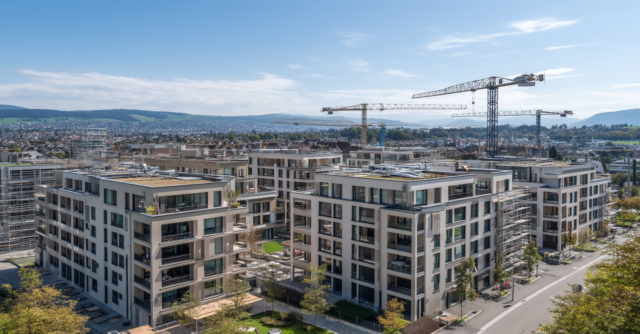
    In total, there are currently almost 2,900 photovoltaic systems installed in the city, with a peak output of almost 100 megawatts. They produce around 80 gigawatt-hours of electricity per year. By 2040, production is set to rise to 500 gigawatt-hours.

  • Weather conditions and impairment charges are weighing on business performance

    Weather conditions and impairment charges are weighing on business performance

    According to a press release, BKW generated revenue of CHF 4,543.6 million in 2025. In the previous year, the figure stood at CHF 4,772.3 million, representing a decline of 4.8 per cent. The decline in operating profit before interest and taxes was significantly more pronounced. In 2025, BKW posted a profit of CHF 561.0 million, compared with CHF 789.9 million the previous year. Net operating profit fell from CHF 550.4 million the previous year to CHF 351.1 million in 2025.

    BKW attributes the decline partly to a value adjustment on its stake in the Wilhelmshaven coal-fired power station on the North Sea coast of Lower Saxony. This adjustment amounts to CHF 113.7 million at the operating profit level and CHF 90.9 million at the net profit level. BKW holds a 33 per cent stake in the power station.

    Secondly, the weather-related decline in electricity generation from hydro and wind power weighed on the result in the Energy Solutions business segment. Even before the impairment charge, this was down 18.6 per cent on the previous year. The result of the Power Grid business segment, at CHF 130.6 million, was 7.0 per cent below that of the previous year.

    In contrast, the result of the Infrastructure & Buildings business segment rose significantly by 40.6 per cent to CHF 80.0 million. Revenue for the business segment remained constant at CHF 1.98 billion.

    BKW expects earnings of between CHF 650 million and CHF 750 million for 2026.

  • Wind measurements provide the basis for new energy projects

    Wind measurements provide the basis for new energy projects

    According to a press release,Zürich Wind will begin wind measurements in Zünikon, in the municipality of Wiesendangen, during the week of 16 March. The 125-metre-high mast does not need to be connected to the electricity grid. It is powered entirely by solar panels and a battery storage system. Two further measurement masts are to be erected in Ossingen and Rickenbach after the Easter holidays.

    The masts are to collect data on wind conditions and bat activity at their locations for at least one year. This data will form the basis for a yield forecast. If this indicates that the use of wind energy at this location is economically viable, Zürich Wind will commission an environmental impact assessment as the next step.

    Zürich Wind publishes the measurement data on its website. “Zürich Wind is one of the first project developers in the Swiss wind energy sector to publish wind measurement data as early as the data collection phase,” says Pascal Müller of Zürich Wind in the press release.

    Zürich Wind is a joint venture between the electricity utilities of the canton and the city of Zurich, EKZ and ewz, and the municipal utility of Winterthur.

  • Consumer cooperatives are becoming increasingly important

    Consumer cooperatives are becoming increasingly important

    Following the acquisition of Blockstrom AG, ista swiss ag is now also able to offer billing solutions for self-consumption groups (ZEV). According to a press release, the company acquired the energy service provider Blockstrom on 4 March 2026. The co-managing directors Claudio Wyss, Marcel Lack and Urs Martin Springer will continue to work for the company. The Bern office will remain in place.

    Springer founded Blockstrom in 2017 together with Marcel Lack. The company has developed solutions for communities that generate their own electricity locally and can supply it both to end consumers and to the distribution grid. Springer sees the acquisition primarily as an opportunity for further growth: “The ZEV market has come of age,” he is quoted as saying. “Over the next few years, high volume will be more important than rapid product development. Ista swiss ag is the ideal partner for us to establish our solutions more broadly in the market and scale them further.”

    Blockstrom is committed to a consistently digital approach. According to the company’s own description, this “delivers efficient processes and minimal error rates: all energy consumption is recorded using smart meters, transmitted via the internet, visualised in real time and stored in the cloud.” Blockstrom customers now also have access to ista swiss’s range of services, including billing for water and heating consumption.

    With the acquisition of Blockstrom, ista swiss is further expanding its expertise as a full-service provider of modern integrated energy solutions, according to ista swiss Managing Director Guillaume Dubois. “Property owners and managers gain a single point of contact for all energy-related matters – from metering, billing, monitoring and energy data management to ZEV and electric mobility.”

  • Swiss energy consumption has risen slightly

    Swiss energy consumption has risen slightly

    According to an initial estimate by the Swiss Federal Office of Energy (SFOE), energy consumption in Switzerland in 2025 was slightly higher than in the previous year. Consumption rose to 778,630 terajoules. In the previous year, it had stood at 776,220 terajoules.

    Energy from petroleum products again accounted for the largest share in 2025. This supplied 351,420 terajoules. In the previous year, the figure had been 354,810 terajoules. Electricity consumption rose to 209,340 terajoules, compared with 207,040 terajoules in the previous year. Gas consumption fell from 95,480 to 93,840 terajoules. Consumption of biogenic fuels, biogas, solar energy and geothermal heat rose from 38,390 to 40,090 terajoules.

    The SFOE points out that the estimate is provisional. The final figures for final energy consumption are due to be published on 18 June.

  • Wind and solar power ensure a stable electricity supply in the regional energy system

    Wind and solar power ensure a stable electricity supply in the regional energy system

    According to a statement from the operator BKW, the Swiss Energypark in the supply area of the Société des Forces électriques de La Goule generated a total of 134.45 gigawatt-hours of electricity in 2025. This represents 81 per cent of the region’s total consumption of 166.96 gigawatt-hours. In the previous year, the Energypark had generated 139.6 gigawatt hours.

    Wind energy once again contributed the largest share to electricity production, with a total of 86.50 gigawatt hours. The Juvent wind farm alone generated 72.6 gigawatt hours. Although this is less than the 91.1 gigawatt hours of the strong previous year due to low wind speeds, wind energy remains a reliable source of electricity, particularly during the winter months.

    The La Goule hydroelectric power station supplied 16.29 gigawatt hours, its worst result in decades. In the previous year, the figure had been 17.6 gigawatt hours.

    Solar energy, by contrast, grew significantly. In 2025, it supplied a total of 31.66 gigawatt hours, accounting for 24 per cent of total production. In the poor year of 2024, the figure had been just 13.6 gigawatt hours.

    The Swiss Energypark covers an area of 251 square kilometres between the cantons of Bern and Jura. 21,000 people live here.

  • How researchers are turning concrete into a climate saver

    How researchers are turning concrete into a climate saver

    The EU project CARBCOMN, launched in 2024 and funded by Horizon Europe with around six million euros, is taking a radical approach. Instead of using more material, the researchers are optimizing the shape. The principle is called “compression dominant structures”: concrete components are designed in such a way that they are almost exclusively subjected to compression, similar to the arches of historic stone bridges. Concrete can withstand compression well, but hardly any tensile forces. If you make consistent use of this, you need less material and less reinforcement.

    Printed, not poured
    Digital production makes shapes possible that would be unthinkable with traditional formwork. The robot prints the concrete layer by layer and leaves cavities where no reinforcement is required, directly controlled by the digital model. This not only saves material, but also reduces the seismic load in proportion to the weight loss. This is a decisive advantage in earthquake-prone regions.

    No cement, no problem
    The concrete used in the CARBCOMN project contains no cement. Steel slag, a by-product of the steel industry, is used as a binding agent. After printing, the components are placed in a chamber in which CO₂ is injected. The reaction with the slag mixture hardens the concrete and permanently binds the greenhouse gas. The result is a building material with a negative CO₂ balance that is made exclusively from industrial waste.

    Metal with memory
    This concrete does not manage entirely without reinforcement, but with a specialty that Empa has been using for around 20 years: iron-based shape memory alloys (Fe-SMA). These pre-stretched metal rods contract during heating instead of expanding, thus subsequently pre-stressing the component. They are only inserted after printing, do not interfere with the automated process and can be separated from the concrete later. The Empa spin-off re-fer contributes this technology directly to the consortium.

    Built for dismantling
    What is built should also be able to be dismantled again. The individual concrete modules are designed as discrete blocks that can be detached, transported and reassembled elsewhere. Zaha Hadid Architects and Mario Cucinella Architects are working with the engineering teams to develop free-form structures that express this circular principle architecturally. By 2028, a real prototype will prove that concrete construction can also look like this.

  • New Head of Market and Policy at the Solar Association

    New Head of Market and Policy at the Solar Association

    According to a statement, Wieland Hintz has been head of market and policy at Swissolar since 1 March and is also its deputy managing director. The 45-year-old was previously responsible for solar energy at the Federal Office of Energy.

    Hintz studied physics at the Swiss Federal Institute of Technology in Zurich and earned his doctorate at the CERN nuclear research centre in Geneva. He has worked for Alpiq and the Association of Swiss Electricity Companies, among others. Together with his family, he operates six wind turbines and a solar park with a capacity of 1.2 megawatts in Germany.

    Hintz replaces David Stickelberger. Now 65, Stickelberger was the first managing director of swissolar from 1998 to 2023. Since 2023, he has been deputy to his successor Matthias Egli. In future, he will support the association as senior policy advisor.

    “Over the past ten years, photovoltaics has become a mainstay of Switzerland’s electricity supply, now covering over 15 per cent of electricity consumption,” Hintz is quoted as saying in the press release. “In my new role at Swissolar, I will devote all my energy to ensuring that photovoltaics is optimally integrated into the Swiss energy system and to driving forward the decarbonisation of buildings and transport.”

    Swissolar has created a new position of Director for French-speaking Switzerland. This will be filled by Anne Plancherel. She has been working since 2024, both as a strategic project manager and in setting up vocational training in western Switzerland. Plancherel will represent Swissolar in western Switzerland and further expand the regional network.

    The 44-year-old environmental engineer studied at the Swiss Federal Institute of Technology in Lausanne and continued her education in project management at the University of Geneva. “I am very much looking forward to working with our members, partners and authorities to further expand the potential of solar energy in French-speaking Switzerland and to strengthen the industry in the long term,” she is quoted as saying in the press release.

  • New factory site combines energy and network expertise

    New factory site combines energy and network expertise

    CKW AG plans to relocate business divisions from the Reussbühl district of Lucerne to Reussinsel in Emmen, where it will also establish the company’s new headquarters, according to a press release. The Axpo subsidiary intends to use this move to consolidate its activities.

    At the heart of the project, known as EnergiePark Emmen, is the construction of a new building for the Networks and Building Technology divisions. CKW’s network base, which will be built there, will be responsible for the construction, operation and maintenance of the electricity grid in the greater Lucerne area. The new building will provide modern workplaces for employees. After several years of planning, the Compact project by Penzel Valier AG from Zurich and Maurus Schifferli Landscape Architects from Bern was awarded the contract to build the new company headquarters.

    Reuss Island is the historical birthplace of CKW, where the first power plant supplied electricity to the region in 1894. “With the planned relocation of our headquarters to Emmen, we are building on these roots and committing ourselves to Emmen as a location in the long term,” said Martin Schwab, CEO of CKW, in the press release. The relocation of the business divisions and headquarters to Emmen will mean that 1,000 employees will work on Reuss Island in future, instead of the previous 600.

    In the coming years, a development plan based on the draft project will be drawn up by the municipality of Emmen. “Together with the municipalities of Emmen and Ebikon, we want to further develop the Reuss island in the interests of all parties involved,” Schwab continued. According to the current status, construction projects could be approved and implemented from 2030, according to the press release.

  • Power generator continues to invest in flexible energy production

    Power generator continues to invest in flexible energy production

    According to a statement,Alpiq achieved net sales of CHF 5,920 million in 2025. In the previous year, this figure was CHF 6,366 million. Adjusted earnings before interest, taxes and depreciation amounted to CHF 572 million, CHF 310 million less than in the previous year.

    The Lausanne-based electricity producer attributes the significant decline primarily to the unplanned outage of the Gösgen nuclear power plant, in which it holds a 40 per cent stake. The nuclear power plant has been off the grid since May 2025 due to the modernisation of its water supply system. Energy trading generated a negative result of CHF 35 million in 2025. In the previous year, it had achieved a positive result of CHF 30.1 million.

    Alpiq’s financial position is strong, with an equity ratio of 61 per cent. The company is therefore focusing on further investments in its growth areas and is paying a dividend of CHF 230 million.

    “We are positioning Alpiq for the future: our strategy is focused on flexibility, modernising power plants and customer-oriented energy solutions,” CEO Antje Kanngiesser is quoted as saying in the press release. “This will consolidate our contribution to the future of energy in Europe.”

  • Decarbonisation will rely on heat pumps in the future

    Decarbonisation will rely on heat pumps in the future

    The National Sports Centre in Magglingen will not be heated with heat from deep underground in future. According to a statement, the Federal Office for Buildings and Logistics (BBL) is discontinuing the project. The subsoil proved to be too complex. Deep drilling would therefore incur higher costs than forecast.

    The FBL launched the geothermal project in 2018. Studies had identified potential for hot water at a depth of 1,500 to 2,000 metres in 2023. The intention was to exploit this potential as early as 2029.

    However, the BBL is sticking to its intention to decarbonise the sports centre’s heat supply. To this end, it plans to use geothermal energy closer to the surface and heat pumps. These are to replace natural gas and wood pellets as the main heat suppliers. However, this is not likely to be possible until 2031 at the earliest, according to the press release.

  • Transformation into an indoor climate specialist is proving effective

    Transformation into an indoor climate specialist is proving effective

    According to a statement, the Zehnder Group increased its turnover by 8 per cent to €760.7 million in the 2025 financial year. The ventilation segment in particular recorded strong demand, while turnover in the radiator segment continued to decline. The Group’s EBIT (earnings before interest and taxes) grew by 348 per cent to €63.4 million. In the previous year, one-off effects amounting to €35.9 million as a result of targeted portfolio adjustments and production relocations had weighed on earnings. Net profit in 2025 was €47.8 million, following a net loss of €2.4 million in the previous year. Operating cash flow also improved significantly to €80.0 million.

    The ventilation segment was a particular growth driver. Its sales rose by 18 per cent to €501.7 million in 2025. The acquisition of Siber in 2024 contributed around 5 per cent to growth in the segment. The ventilation segment’s share of total sales thus increased to 66 per cent, up from 60 per cent in the previous year. In regional terms, sales in the EMEA region (Europe, Middle East, Africa) rose by 23 per cent to €403.3 million, and in North America by 7 per cent to €76.1 million. In Asia-Pacific, however, sales fell by 10 per cent to €22.3 million.

    The radiator segment, on the other hand, recorded an 8 per cent decline in sales to €259.0 million. Its share of total sales fell from 40 to 34 per cent. The main reasons for this were weaker renovation activity in Europe and a trend towards cheaper radiator models.

    Zehnder expects demand for energy-efficient indoor climate solutions to continue to grow in the current financial year. Following its accelerated transformation from a radiator manufacturer to a leading provider of indoor climate solutions, the company intends to consistently exploit opportunities in the ventilation market, according to the announcement. In the medium term, Zehnder expects average annual sales growth of around 5 per cent and an EBIT margin before one-off effects of 9 to 11 per cent.

  • New white paper: ‘’Cooling buildings efficiently’

    New white paper: ‘’Cooling buildings efficiently’

    Although the impact of climatic changes differs depending on the location and use of the building, in future almost every residential and office building will require cooling. Anyone planning a new build is well advised to carry out an analysis of exterior and interior comfort levels, define summer heat insulation requirements and maximum acceptable interior temperatures, and request proof of thermal comfort. For existing buildings that don’t meet current or future requirements in summer, there are other viable measures that can be implemented.

    With comfortable indoor temperatures increasingly considered a criterion for rentability, it makes sense for property owners to invest in climate control for their properties. Buildings with a high level of climate comfort are future-proof, their market value increases and they usually attract higher rental income.

    The new white paper, ‘Cooling buildings efficiently’ (23 pages), shows how we can build or renovate properties today to ensure they continue to offer a high level of comfort in the climate of the future.

  • New CKW headquarters strengthens Emmen

    New CKW headquarters strengthens Emmen

    With the “EnergiePark Emmen” project, CKW intends to further develop its existing site on the Reussinsel. The centerpiece is a new plant building for the Grids and Building Technology divisions, including a grid base for the construction, operation and maintenance of the electricity grid in the greater Lucerne area. The employees previously based in Reussbühl will thus have modern workplaces in Emmen, and processes will be bundled in terms of space and organization.

    Commitment to Emmen and more jobs
    The Reussinsel is CKW’s historic place of origin, where the first power plant went into operation in 1894. With the planned relocation of its headquarters, CKW is building on these roots and making a long-term commitment to the Emmen site. The number of employees on the Reussinsel will increase from around 600 today to around 1,000, which will generate additional tax revenue and strengthen the economic development of the municipality.

    Careful planning and inward densification
    The guideline project was developed in a planning process lasting several years with the municipality of Emmen and a study contract with five planning teams. The “Compakt” project by Penzel Valier AG with Maurus Schifferli Landschaftsarchitekten was selected for its urban planning quality and sensitive integration into the landscape. The project consistently focuses on inward densification. The valuable natural space on the Reussinsel remains untouched and additional buildings are only planned as a long-term reserve.

    Traffic, development and next steps
    An important part of the project is the development and traffic management. Mobility measures are planned together with Emmen and Ebikon, including a new bus stop in the Rathausen area, adjustments to the road infrastructure and mobility management with trip caps and balanced traffic distribution. Based on the indicative project, the municipality of Emmen is now drawing up the development plan with the active involvement of the local population. According to the current timetable, concrete construction projects could be approved and implemented from 2030.

  • New president elected for regional energy supplier

    New president elected for regional energy supplier

    According to a statement issued on 25 February, Limeco’s Board of Directors has been reconstituted for the term of office until 2027. It has elected Rolf Schaeren as its new Chairman. Schaeren will take up his post on 1 May. Schaeren was Chief Financial Officer of the City of Dietikon from 2006 to 2022.

    He is a professor of accounting and financial management at the University of Applied Sciences and Arts Northwestern Switzerland. He has been a member of the Board of Directors of Elektrizitätswerke des Kantons Zürich (EKZ) since 2014 and has chaired it since 2021.

    Schaeren succeeds Stefano Kunz. The Schlieren building committee member served on the board of directors for twelve years.

    “Limeco plays a central role in the region’s energy and waste disposal supply,” Schaeren is quoted as saying in the announcement. “I am very much looking forward to continuing Limeco’s successful development together with my colleagues on the Board of Directors and tackling future challenges in the interests of the supporting municipalities.”