Category: Energy

  • Kilchberg awards contract for lake water heat network

    Kilchberg awards contract for lake water heat network

    AEW Energie AG from Aarau has been awarded the contract by the municipality of Kilchberg for the project development of the Kilchberg lake water heating network, AEW announced in a press release. The contract was awarded as part of a tender process. The Aargau-based energy company will be responsible for the construction, operation and financing of the heat network.

    As a first step, AEW will now review the existing project scope and contact key customers. Based on this, the profitability calculation will be analysed again. At the same time, AEW wants to acquire customers. Only then will the company make the final implementation decision.

    “The final investment decision is expected in summer 2025,” writes AEW. If everything goes according to plan, the first heat deliveries could take place in spring 2027. Until then, the municipality and company want to keep the population informed about important project steps.

  • Reorganisation of solar cell production

    Reorganisation of solar cell production

    Meyer Burger is initiating comprehensive restructuring measures. The plan communicated in the spring to relocate the entire solar cell production to the USA in the medium term appears to be off the table. In an ad hoc release, the company announced that the construction of a solar cell production facility in Colorado Springs in the US state of Colorado has been cancelled. This has proved to be unfinanceable at present.

    It had been announced in July that it would be opened as soon as possible. Meyer Burger had secured a former semiconductor factory as a location and concluded a long-term lease agreement. Production machines that were intended for the expansion of the solar cell factory at the Thalheim site in Bitterfeld-Wolfen, Saxony, were to be redirected to Colorado Springs.

    Instead, the largest Swiss manufacturer of solar modules is now reportedly focussing on the operation of the plant in Goodyear in the US state of Arizona with a capacity of 1.4 gigawatts, which is currently being ramped up. However, its planned expansion by 0.7 gigawatts has been suspended for the time being, but remains an option.

    In contrast to previous plans, the existing cell production site in Thalheim will remain in full operation and will continue to form the backbone of Meyer Burger’s solar cell supply in the future. According to the press release, these solar cells are the most economical option for supplying module production in Goodyear under the current market conditions. Due to the poor operating result in 2023, Meyer Burger announced the closure of the plant in Freiberg, Saxony, which according to Meyer Burger is the largest operating solar module production facility in Europe with around 500 employees, in January 2024 and implemented it in mid-March.

    The Board of Directors assumes that, as a result of this reorganisation, the company’s financing requirements as well as the medium-term EBITDA level and the Group’s gearing ratio will be significantly lower than previously expected. The Board has instructed the Executive Board to draw up a comprehensive restructuring and cost-cutting programme.

    Board member Mark Kerekes has announced his resignation. The restructuring of the company requires a reorganisation of the Board of Directors.

  • New white paper: ‘Energy storage systems for properties: Using renewable energy efficiently’

    New white paper: ‘Energy storage systems for properties: Using renewable energy efficiently’

    Link to the whitepaper

    Switzerland is aiming for a target of net zero by 2050. This means replacing fossil-based energies with renewables. However, the output from systems is dependent on weather conditions, the time of day, and the season. Getting supply and demand in sync calls for storage solutions. This also improves the property’s carbon footprint, because it requires less oil or gas to cover peak loads.

    Electricity storage systems: battery-powered flexibility
    Battery storage systems can temporarily store surplus solar power locally and supply household consumers, electric vehicles or the heat pump later on. This significantly increases the level of self-consumption and with it the cost-efficiency of solar power plants. Not only the operator benefits from a storage system – the electricity grid does as well. This means, for example, that when a solar power plant produces a surplus, it doesn’t have to be shut off for fear of overloading the grid. And in the reverse scenario – when demand outstrips supply – locally stored energy can help cover peak loads, which stabilises the grid and keeps costs low. Currently the standard means of electricity storage is the lithium-ion battery, while alternatives such as sodium-ion batteries and salt batteries have yet to become established. This also applies to bidirectional charging, in which the battery of an electric vehicle is used for local electricity storage.

    Heat storage units: geothermal probes and containers
    One alternative to storing surplus solar power is to transform it into thermal energy. Heat can be stored over weeks or months and used later for heating and hot water supply as required. This makes heat storage a great fit with renewable heating systems such as heat pumps and thermal networks. And some types of storage system can be used as heat sinks in summer to cool buildings with minimal use of energy. The most common storage types in Switzerland are geothermal heat storage units and container heat storage units. One interesting variant that requires less space is ice storage.

    Hydrogen and methane: seasonal storage
    Another way to store surplus solar power seasonally is to transform it into a carbon-neutral gas like hydrogen or methane (‘power-to-gas’). If required, the gas can be used either to produce heat and electricity or as a fuel for vehicles. Hydrogen is produced through the electrolysis of water, and the degree of efficiency in this transformation is up to 80 per cent. Transforming it further into methane has the advantage that it can be stored in the natural gas grid, so it doesn’t require separate infrastructure. The overall degree of efficiency depends on the method used, but with a current best-case result of 50 to 70 per cent, it is not yet cost-effective.

    You can find much more information and real-life examples in the new ewz white paper ‘Energy storage systems for properties: Using renewable energy efficiently’.

  • Population supports sustainable electricity production

    Population supports sustainable electricity production

    On 18 August, the voters of Spiringen clearly approved the Sidenplangg solar installation with 68.8 percent. The voter turnout was 55.3 per cent. With their approval, the voters have seized a great opportunity and shown that they are in favour of sustainable electricity production, writes the municipal council in a press release.

    EWA-energieUri is also delighted with the yes vote. He is “grateful that the people of Spiringen are so clearly in favour of our project”, Werner Jauch, CEO of the Uri-based energy producer, is quoted as saying in a separate press release. As the landowner, the Uri Corporation must now approve the project. The planning application can then be submitted.

    The plant is to be built in the Schächental valley on 12 hectares at an altitude of 1,800 to 2,000 metres above sea level in an area that is already used for avalanche barriers. With a capacity of 8 megawatts, around 12.5 gigawatt hours are to be generated annually, up to 45 per cent of which in winter. The investment amounts to around CHF 39 million. The first part of the plant is due to be connected to the grid at the end of 2025.

    In addition to EWA-energieUri and the municipality, aventron AG, a joint venture of Swiss regional utilities based in Münchenstein BL, is also involved in the project.

  • Canton of Zurich wants to make solar systems mandatory on large roofs

    Canton of Zurich wants to make solar systems mandatory on large roofs

    “To ensure a secure electricity supply in Switzerland and to achieve the goal of net-zero greenhouse gas emissions, electricity production from local renewable energies must be rapidly and significantly expanded,” says the State Chancellery of the Canton of Zurich in a press release on a planned partial revision of the Energy Act. Specifically, the canton of Zurich wants to make the installation of solar systems on suitable roofs with an area of 300 square metres or more mandatory. The canton estimates that this would allow around 60 per cent of a total annual potential of 6 terawatt hours of solar power from roofs to be exploited.

    The installation of solar systems on large roofs should be mandatory for both new and existing buildings. Existing buildings may be retrofitted when the roof is renovated, but by 2040 at the latest. The requirement should also only apply “if the solar installation is economical over its entire service life”. The corresponding bill has been submitted for consultation until the end of November.

    In addition to the obligation for solar systems, the partial revision provides for the promotion of technologies for seasonal energy storage. This is to be funded by a subsidy fund managed by the electricity grid operators, which will be financed by a levy of a maximum of 0.5 centimes per kilowatt hour of electricity. Competitive tenders are planned, from which projects with the most winter electricity per subsidised franc will benefit, as well as support for seasonal storage technologies that are still under development.

  • Schaffhausen rejects new Axpo contract

    Schaffhausen rejects new Axpo contract

    On August 18, a majority of 53.4 percent of Schaffhausen voters rejected the replacement of the old founding agreement of Nordostschweizer Kraftwerke (NOK) with a new Axpo shareholders’ agreement. The proposal failed in 16 of the 26 municipalities, including the city of Schaffhausen, Neuhausen, Beringen and Stein am Rhein.

    The voters thus went against their government and the cantonal council, which approved the new agreement by 52 votes to one, according to the voting magazine in January. They argued that the old NOK contract from 1914 was no longer appropriate for an internationally active group with around 7,000 employees.

    Opponents warned of a possible privatization of the energy producer. A majority of five contracting parties could decide on the sale of the company, provided they also held a majority of the voting rights. The canton of Schaffhausen currently holds 7.9 percent.

    The approval of all shareholders is required for the new shareholders’ agreement to be accepted. The other shareholders have already approved the agreement. The canton of Zurich and its cantonal utility EKZ are the largest shareholders with 18.3 and 18.4 percent respectively, followed by Aargau and its cantonal utility AEW with 14 percent each. St.Gallen and the two cantons of Appenzell hold a 12.5 percent stake via St.Gallisch-Appenzellische Kraftwerke(SAK), Thurgau holds 12.3 percent via EKT, Glarus 1.7 percent and Zug 0.9 percent.

  • Green hydrogen: Study identifies Canada as a top location

    Green hydrogen: Study identifies Canada as a top location

    Researchers at the Paul Scherrer Institute(PSI) have focussed on the question of where hydrogen can be produced efficiently and cost-effectively with the aim of stopping climate change and emitting no more greenhouse gases in the future. According to a press release, the researchers have compiled geographical and economic data and forecasts to describe the development of a hydrogen economy. To do so, they analysed four scenarios with a hydrogen demand of between 111 and 614 megatonnes per year. The study can currently be read in the scientific journal “Nature Communications“.

    There are various technologies for producing hydrogen. In polymer electrolyte membrane electrolysis (PEM), hydrogen is extracted from water in an electrolyser. The great advantage of this process is that the energy for the conversion can be obtained from green electricity. The question to be resolved is where the high demand for green electricity can best be met.

    “We primarily applied economic criteria,” says Tom Terlouw, PhD student at PSI and lead author of the study, quoted in the press release. “In other words, where is production most favourable?” Two focal points crystallised: Where is there enough wind or sun to cover the enormous demand for green electricity? And where is there enough free space to set up the plants required for production? Canada proved to be ideal here. “There are many open areas there that are very windy and therefore ideal for setting up wind turbines,” adds Terlouw. The central USA, parts of Australia, the Sahara, northern China and north-west Europe are also ideal locations. Central European countries such as Switzerland, on the other hand, are less suitable as there is neither open space nor sufficient sunlight. The researchers also point out that the production of green hydrogen still generates residual greenhouse gas emissions from the production and transport of the required materials. In order to compensate for these residual emissions, corresponding quantities of carbon dioxide would have to be filtered out of the atmosphere, according to the study.

  • Green light for alpine solar plant

    Green light for alpine solar plant

    The Graubünden-based energy supplier Repower, the municipality of Klosters and Klosters-Madrisa Bergbahnen AG want to jointly construct an alpine solar power plant at the mountain railway. Voters in the municipality of Klosters approved the project on 22 October 2023.

    According to a press release, the Graubünden government has now also approved the construction of the system by Madrisa Solar AG. The site is already well developed thanks to the existing tourist infrastructure and is connected to the power grid.

    The plant in the Züg area is to comprise 25,000 solar modules at an altitude of around 2,000 metres and an area of 156,821 square metres, with a total output of 10.8 megawatt peak. Electricity production is expected to exceed 15,000 megawatt hours.

    The mountain railways already operate five solar installations with an annual output of 294 megawatt hours. These cover up to 20 per cent of their own electricity requirements.

  • Purchasing organisation generates its own electricity in St.Gallen

    Purchasing organisation generates its own electricity in St.Gallen

    The purchasing organisation of the Swiss automotive and motor vehicle industry(ESA) has completed its own power supply network with a third system, according to a press release. On Thursday, 15 August, a photovoltaic system was put into operation at the ESA site in St.Gallen. ESA launched the first two systems at its headquarters in Burgdorf four months ago and in Giubiasco a month ago.

    With around 1,800 modules and around 3,500 square metres, the photovoltaic system in St.Gallen is currently ESA’s second-largest system. The amount of electricity generated in future will roughly cover the annual consumption of 150 households. The plant in Burgdorf covers 200 households, the one in Giubiasco around 25 households.

    The ESA purchasing organisation was founded in 1930. As a co-operative, it is owned by around 7000 co-owners from the automotive and motor vehicle industry. Around 670 employees, including around 60 apprentices, work at eleven locations throughout Switzerland.

  • Disused borehole in Trüllikon: potential for CO2 storage is being examined

    Disused borehole in Trüllikon: potential for CO2 storage is being examined

    The disused Trüllikon-1 deep borehole is being transferred from Nagra to swisstopo, according to a statement from the Swiss Federal Office of Energy(SFOE). The Federal Office of Topography intends to investigate the potential and challenges of injecting CO2 underground.

    The borehole was drilled by Nagra as part of the search for a suitable repository for radioactive waste. According to a study carried out by swisstopo in 2023 together with the Swiss Federal Institute of Technology in Zurich and the University of Bern, it is in very good condition and suitable for safely carrying out a CO2 injection test.

    The feed-in test could last from 2025 to 2030 at the latest as part of a pilot project. According to the SFOE, however, it is still unclear whether the test will be carried out. However, swisstopo is already in contact with the municipal council of Trüllikon and the landowner, according to the press release. Furthermore, the potential pilot project does not represent a preliminary decision as to whether CO2 should be stored underground in Switzerland at all.

  • Thurgau agrivoltaics and energy storage projects receive funding

    Thurgau agrivoltaics and energy storage projects receive funding

    Four projects will receive support from the EKT Energy Foundation. According to a press release, 20 applications were submitted to the foundation board for consideration in the second round of awards. All of the projects are working towards a secure, sustainable energy supply and the realisation of climate targets. They were convincing due to their high practical orientation and their connection to the canton of Thurgau. They are also “good examples of how both the Thurgau economy and Thurgau agriculture can benefit from the EKT”, according to Foundation Board President Fabian Etter.

    One of the research projects is in the field of agrivoltaics. Ways of dual utilisation of agricultural land are being investigated, both for the production of crops and solar power. A test plant with semi-transparent photovoltaic modules from the Arenenberg Agricultural Competence Centre is intended to provide insights into the suitability of varieties, weather protection, irrigation and light management.

    Two other projects relating to energy storage are also being funded, as these are central to the restructuring of the energy supply. One is being carried out at the animal carcass collection centre in the city of Frauenfeld, which is involved in the pilot project. The prototype of a sorption heat pump is being investigated. This will allow the waste heat generated during cooling to be stored thermochemically together with the electrical energy from the photovoltaic system during the summer months. The second energy storage project is a preliminary study investigating the opportunities and framework conditions for using modular sand batteries as heat storage systems.

    The EKT Energy Foundation sees further innovative approaches for the energy transition in the Thurgau Energy Utilisation from Underground 2023 project. The funding will be awarded in combination with a loan and is intended to support the basic research and planning work required to apply for funding from the canton and the federal government. The aim of the research is to gain insights into the utilisation of geothermal energy sources.

  • Containment of HFC-23 emissions

    Containment of HFC-23 emissions

    Hydrofluorocarbons (HFCs) are among the most potent greenhouse gases, and HFC-23 is the most potent of them all. One kilogram of HFC-23 causes the same warming in the atmosphere as 12,000 kilograms of CO₂ and remains in the atmosphere for around 200 years. As part of the Kigali Amendment to the Montreal Protocol, over 150 countries have committed to drastically reducing emissions of HFC-23. The main sources of this gas are the industrial production of coolants and polytetrafluoroethene (PTFE), better known as Teflon.

    Since 2020, Teflon manufacturers have been required to destroy HFC-23 before it can be released into the atmosphere. The reported emissions show progress. according to official figures, only 2,000 tons of HFC-23 were released worldwide in 2020. However, actual measurements indicate around 16,000 tons, which shows a significant discrepancy.

    New findings from tracer gas measurements
    In order to explain this difference, researchers from Empa, the University of Bristol and TNO investigated HFC-23 emissions from a Teflon factory in the Netherlands. Their results, which were published in the scientific journal Nature, are based on an innovative method. The researchers released a tracer gas that does not occur in the atmosphere and is rapidly degraded. They recorded the concentrations of HFC-23 at a distance of 25 kilometers and compared them with the tracer values. In this way, they were able to precisely calculate the actual emissions from the factory.

    The results show that the factory’s emissions are higher than the reported figures, but still low. “The containment measures are working well, but there is potential for optimization,” explains Martin Vollmer from Empa. Co-author Kieran Stanley from the University of Bristol summarizes: “The results are encouraging and show that emissions of HFC-23 can be significantly reduced with the right measures.”

    Global challenges in the reduction of HFC-23
    The study makes it clear that the containment of HFC-23 is technically possible, but is not consistently implemented everywhere. “The high emissions measured in the atmosphere indicate that the measures reported do not always correspond to reality,” warns Vollmer. The researchers are calling for independent reviews of emissions from the production of fluoropolymers and refrigerants in order to close the gaps in our understanding of the sources of emissions and ensure that international climate agreements are adhered to.

    Next steps in research
    In October 2024, a further study will be carried out in Seoul to measure emissions of halogenated substances in the South Korean capital. This method could also be useful for monitoring other greenhouse gases. “Through continuous monitoring and precise measurements, we can better identify the sources of emissions and make emission reduction measures more effective,” says Arnoud Frumau from TNO.

  • Innovations for the Swiss energy system

    Innovations for the Swiss energy system

    The RECIPE consortium has been awarded the contract for the 2023 round of the SWiss Energy Research for the Energy Transition(SWEET) funding program, the Swiss Federal Office of Energy(SFOE) announced in a press release. The call for proposals was entitled Critical Infrastructures, Climate Change and Resilience of the Swiss Energy System and was launched by the SFOE in collaboration with the National Center for Climate Services(NCCS). RECIPE is made up of the Swiss Federal Institutes of Technologyin Zurich(ETH) and Lausanne(EPFL), the University of Applied Sciences and Arts Northwestern Switzerland(FHNW) and the Lucerne University of Applied Sciencesand Arts (HSLU) as well as the business partners Swisscom, Infras and Zoï. The ETH is in charge of the project.

    As part of SWEET, RECIPE will analyze the dangers that threaten the Swiss energy infrastructure as a result of the restructuring of the energy system and climate change. At the same time, the associated risks for the economy, society, resources and the ecosystem will be examined. Based on this, RECIPE intends to develop measures to increase resilience and draw up specific recommendations for stakeholders.

    SWEET was set up to promote innovations that can make a significant contribution to implementing the Energy Strategy 2050 and achieving Switzerland’s climate targets. The program, which runs until 2032, is managed by the SFOE and carries out rolling calls for proposals on key topics of the energy strategy and long-term climate strategy. Only projects from consortia are funded. In the case of RECIPE, the funding program covers CHF 8 million of the total budget of CHF 10.5 million.

  • New plans for technology centre in Laufenburg

    New plans for technology centre in Laufenburg

    The FlexBase Group has decided to withdraw its planning application for a technology centre on the former Swissgrid site in Laufenburg. According to a press release, a total of around 350 jobs are to be created there. FlexBase expects to employ 100 to 150 people by the end of 2027 alone.

    The centrepiece of the centre, which is to be built in collaboration with universities and companies, will be one of the largest large-scale battery storage facilities in the world with a capacity of at least 500 megawatts. It is to be built in a strategically favourable location directly next to the world’s largest electricity grid, the Laufenburg Star, and will contribute to the security of supply in Switzerland and parts of Europe. The technology centre will also house a data centre for artificial intelligence and a wind tunnel for research and development in the sports industry.

    According to the press release, the company is now submitting an updated planning application. According to the information, it now respects the maximum height defined in the current building and utilisation regulations, “which is sufficient for the start of construction”. However, in view of the significance of the project, the applicant is requesting an increase in the permitted building height to 30 metres. In consultation with the Laufenburg town council, a partial amendment to the existing building and utilisation regulations for this construction perimeter, coordinated with the overall revision, has already been initiated.

    “Despite the necessary step of updating our planning application, we remain confident that we will be able to realise our project within the planned timeframe,” says CEO and co-founder Marcel Aumer. He assumes that the overall revision will take into account the importance of such forward-looking projects for the region.

  • Largest charging park for electric cars with 18 new fast-charging stations

    Largest charging park for electric cars with 18 new fast-charging stations

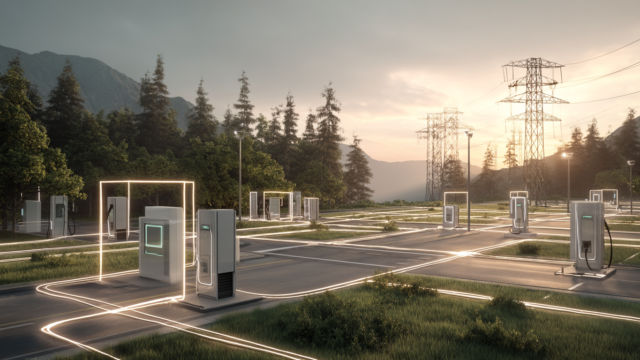
    Energie 360° has opened the largest charging park for electric cars in the canton of Ticino at the Serfontana shopping centre. The park comprises a total of 38 charging points, 18 of which are newly added fast-charging points. These allow electric car drivers to charge their vehicles from 10% to 80% within 20 to 40 minutes while they shop or take a break. With this expansion, Energie 360° is setting another milestone in the promotion of electromobility in the region.

    Fast charging with green electricity
    The new fast charging stations at Centro Shopping offer an impressive charging capacity of up to 400 kilowatts, powered by 100% green electricity. Jörg Wild, CEO and Head of Mobility at Energie 360°, emphasises the importance of this expansion: “Our aim is to rapidly promote electromobility throughout Switzerland. With the new charging park, we are offering our customers one of the largest and most efficient charging parks in Switzerland.”

    Over 300 charging locations in Switzerland
    Energie 360° already operates over 300 charging locations throughout Switzerland and plans, builds and maintains them in collaboration with partners such as Coop, SBB and the Swiss Finance & Property Group. The company pursues the goal of creating sustainable energy and mobility solutions and making electromobility available nationwide. With the new charging park in Chiasso, Energie 360° is sending a clear signal in favour of the future of mobility and the expansion of the charging infrastructure in Switzerland.

  • A cost-effective alternative to conventional power plants

    A cost-effective alternative to conventional power plants

    According to the Fraunhofer ISE study, ground-mounted PV systems and onshore wind turbines are currently the most cost-effective technologies for generating electricity in Germany. The electricity generation costs for these systems are between 4.1 and 9.2 cents per kilowatt hour, undercutting not only other renewable energies but also all conventional power plant types.

    Battery storage as a valuable addition
    Photovoltaic battery systems have electricity production costs that vary between 6.0 and 22.5 cents per kilowatt hour, depending on the location and battery system. This shows the enormous potential of this technology, especially in combination with ground-mounted PV systems and wind farms. Dr Christoph Kost from Fraunhofer ISE emphasises the advantages of such combinations: “The combination allows grid capacities to be better utilised.”

    Cost reductions expected by 2045
    The study also provides a forecast for cost developments up to 2045. Small rooftop PV systems could then supply electricity for 4.9 to 10.4 cents per kilowatt hour, while ground-mounted PV systems could reach 3.1 to 5.0 cents per kilowatt hour. Significant cost reductions to between 7 and 19 cents per kilowatt hour are also expected for small PV battery systems, provided that storage prices fall as forecast.

    Flexible power plants remain necessary
    Despite the positive developments in renewable energies, flexibly controllable power plants remain indispensable as a back-up. Biogas and biomass power plants could take on this role to some extent, but at significantly higher costs. For example, the electricity generation costs for biogas are between 20.2 and 32.5 cents per kilowatt hour and for biomass plants between 11.5 and 23.5 cents per kilowatt hour.

    Hydrogen power plants as a supplement
    The study also shows the costs for hydrogen-fuelled gas and steam turbine power plants in 2030: they amount to between 23.6 and 43.3 cents per kilowatt hour. These costs result from the high expenses for CO2 and hydrogen procurement. Paul Müller from Fraunhofer ISE emphasises the necessity of these technologies as a supplement: “We need them as an important addition. However, their operation will be limited to the bare minimum.”

    The results of the Fraunhofer study make it clear that photovoltaic systems with battery storage are not only a cost-efficient alternative to conventional power plants, but also a future-proof one. The expected cost reductions by 2045 make renewable energies an increasingly attractive option for power generation.

  • StWZ Energie announces halfway point in smart meter rollout

    StWZ Energie announces halfway point in smart meter rollout

    StWZ Energie AG has been switching to smart electricity meters in its supply area since the beginning of 2022. The Aargau-based energy supplier has now installed more than 5,700 smart meters, equipping half of its electricity customers in Zofingen and Strengelbach with modern meters, StWZ Energie reported in a press release. A law stipulates that at least 80 percent of electricity meters in Switzerland must be smart meters by 2027.

    The intelligent meters serve to increase the efficiency of electricity consumption and at the same time simplify the billing process. Grid operators will find it easier to identify and smooth out peak loads. Customers benefit from the electronic measurement of consumption data. They can be viewed on the StWZ customer portal on the following day. This means, for example, that “electricity guzzlers in your own household can be identified”, writes StWZ Energie. There is also no need for on-site meter reading.

  • Energy supplier invests in climate-friendly switchgear and earthquake safety

    Energy supplier invests in climate-friendly switchgear and earthquake safety

    According to a press release, the Basel-based energy supplier IWB is strengthening the most important hub of the Basel electricity grid in the Volta substation. One of the largest switchgears in a Swiss distribution grid is being replaced there, the press release continues. IWB will replace all electrical systems in the Volta substation by 2029 and also make the building earthquake-proof. The new switchgear will be operated with a climate-friendly insulating gas and the power grid will be reinforced with additional transformers. By investing in the renovation of the building and systems, IWB is making an important contribution to the high reliability of Basel’s electricity supply, the statement continues.

    The Volta substation is the largest of IWB’s seven substations and is almost 100 years old. It was put into operation in 1932. Around a fifth of Basel’s electricity flows through the substation every day, an average of 600,000 kilowatt hours.

    A new switchgear is currently being installed. It is replacing the switchgear for the 145-kilovolt grid, which dates back to 1976. It will consist of eleven switch panels and will be 16 metres long when completed. IWB will then also replace the switchgear for the 12-kilovolt grid. It will consist of 78 switch panels and be around 60 metres long. According to IWB, these will be the largest switchgears ever installed in a Swiss supply network. Both switchgears will also be equipped with climate-friendly insulating gas.

    There are three transformers in the Volta substation that will be overhauled as part of the project. IWB will also install two additional transformers. The overall renovation of the substation will take place during ongoing operations.

  • Photovoltaic output increased tenfold in the last seven years

    Photovoltaic output increased tenfold in the last seven years

    Thurplus takes positive stock of PV expansion over the past seven years. Between 2016 and 2023, Frauenfeld’s municipal energy supplier was able to increase its output more than tenfold from 144 to around 1500 kilowatt peak. In 2023 alone, over 700 kilowatt peak were added, according to a press release.

    In total, these solar systems produce around 1.5 million kilowatt hours of electricity per year. This corresponds to the average consumption of around 330 households. Between 2016 and 2023, the number of shareholders in the PV citizen participation models also increased from 50 to 240, according to the press release.

    “By actively shaping and successfully implementing many sustainable PV projects, Thurplus has managed to achieve this”, says Fabrizio Hugentobler, City Councillor and Head of the Thurplus, Leisure and Sport Department. “Thurplus is well positioned with its solar power, SolarInvest, PV contracting and other solutions.”

    According to the municipal PV strategy for Thurplus, an additional 5 per cent of the total electricity consumption of around 150 gigawatt hours is to be added annually by 2027. This corresponds to a total installed PV capacity of 8 megawatt peak or an electricity production of around 7.5 gigawatt hours per year. Thurplus is looking for suitable roofs from companies and institutions. “Together, we want to make progress and do our bit to ensure that the PV expansion targets are achieved,” says Thurplus Managing Director Peter Wieland.

  • Bosch strengthens Home Comfort through mega-acquisition

    Bosch strengthens Home Comfort through mega-acquisition

    The Bosch Group has taken a significant step towards implementing its 2030 corporate strategy with the acquisition of Johnson Controls’ global heating, ventilation and air conditioning solutions business and the Johnson Controls-Hitachi Air Conditioning joint venture. The acquisition, which is expected to close in twelve months, includes 16 production and 12 development sites in over 30 countries. The purchase price is eight billion US dollars.

    Strengthening the Home Comfort Group
    With the acquisition, the Bosch Home Comfort Group will increase its turnover from around five billion euros to nine billion euros and increase the number of employees to over 26,000. This expansion will enable Bosch to benefit significantly from economies of scale and a complementary portfolio at the interface of heating and cooling. “The new units will become part of Bosch’s core business and strengthen our position in the heating, ventilation and air-conditioning market worldwide,” emphasizes Christian Fischer, Deputy Chairman of the Board of Management of Robert Bosch GmbH.

    Innovative and energy-efficient solutions
    The acquisition supports Bosch in its mission to provide innovative and energy-efficient solutions for climate protection and the energy transition. The focus on heat pumps and air conditioning technology fits perfectly with the company’s strategic focus on sustainability and energy efficiency. Frank Meyer, Member of the Board of Management for the Energy and Building Technology business sector at Bosch, explains: “Our aim is to actively shape the market for energy and building technology and take a leading global position.”

    Expanding global market presence
    The acquisition significantly strengthens Bosch’s presence in the USA and Asia. In the USA, the focus is on Ducted solutions, which enable centralized air distribution, while in Asia, Ductless solutions and VRF systems are preferred. These technologies offer flexible and efficient heating and cooling options for different types of buildings, from small commercial spaces to large projects such as hotels or hospitals.

    Future prospects and strategic integration
    With this acquisition, Bosch is ideally positioned to benefit from the projected growth opportunities in the global market for heating, ventilation and air conditioning solutions. Jan Brockmann, President of the Bosch Home Comfort Group, sees a bright future: “The demand for climate control solutions is growing rapidly. We look forward to shaping the future of the Bosch Home Comfort Group together with our new colleagues.”

    Focus on sustainability and comfort
    Bosch is sending a clear signal for the future with this strategic acquisition. By integrating energy-efficient technologies and expanding its product portfolio, the company will be able to provide even better support to its customers worldwide. The investment in innovative solutions and the strong market position should not only contribute to the energy transition, but also improve the comfort and quality of life of many people.

  • Helion realizes major solar project at Tensol Rail

    Helion realizes major solar project at Tensol Rail

    Tensol Rail SA has put a photovoltaic system with 3082.18 kilowatt peak into operation. It was installed by the Cham-based company Helion, which describes itself as the Swiss market leader for photovoltaics, heat pumps, electricity storage and charging stations for electric cars. The order was placed by Energie Pool Schweiz(EPS).

    According to a statement from Helion, this installation is both one of the company’s largest projects and one of the largest in the region. A total of 8111 modules and 18 inverters were installed on two different transformer stations. This will reportedly save 350 tons of CO2 emissions per year. All of the electricity generated by the photovoltaic system on the roof of Tensol Rail is used for internal production.

    The management of the Ticino-based manufacturer of railroad superstructure materials and racks for rack-and-pinion railroads reportedly decided to make this extensive investment because the significant increase in energy prices in 2023 has had a negative impact on business results. CEO Roberto Ballina is convinced that the new plant will soon show results, “certainly thanks to the excellent work of Helion and our partner EPS. We are very happy to have invested in this project, which we hope will offer us a promising perspective for the future.”

  • Further development of the district heating pipeline between Constance and Kreuzlingen

    Further development of the district heating pipeline between Constance and Kreuzlingen

    In summer 2022, Energie Kreuzlingen, KVA Thurgau and Stadtwerke Kon stanz announced their plans to build a cross-border district heating pipeline. The project is now entering the next phase, Stadtwerke Konstanz announced in a press release. The three partners have agreed to define the key points of the project and to draw up a preliminary project. The realisation decision will then be made on this basis.

    The planned district heating pipeline will run from the future waste incineration plant in Weinfelden to Kreuzlingen and on to Constance. In a memorandum of understanding, the partners have defined the roles and distribution of tasks in the planning process. KVA Thurgau will then take over the financing and realisation of the work required for the project planning. Energie Kreuzlingen and Stadtwerke Konstanz will contribute the technical and planning fundamentals.

    KVA Thurgau is to update the feasibility study already carried out on the basis of the specified technical and operational parameters and initiate the planning of the route. At the same time, the partners want to hold talks with potential partners for financing the project. In a second stage, the basis for obtaining a realisation credit is to be developed. According to current planning, the replacement waste incineration plant could supply its first heat by the end of 2031. The district heating pipeline should also be in place by this time if possible.

  • New charging stations for property funds

    New charging stations for property funds

    The Akara Swiss Diversity Property PK(ADPK) property fund managed by Swiss Prime Site Solutions from Zug invests in existing properties and development and construction projects throughout Switzerland. According to a press release, the fund’s apartment buildings are to be equipped with a new charging concept for electromobility. AEW Energie AG, based in Aarau, has assumed responsibility for the planning and operation of the new charging infrastructure under the contracting model. The on-site installations will be carried out by regional specialist partners, according to the press release. The charging stations will be customised to the various properties and local requirements. The first projects have already been launched.

    “We are proud to have a strong partner at our side in the ADPK fund management, which, like us, recognises and promotes the importance of sustainable mobility solutions,” said Arian Rohs, Head of Mobility Solutions at AEW Energie AG, in the press release. “This cooperation enables us to further expand our commitment to electromobility and make an important contribution to reducing CO2 emissions.”

  • Solar energy market to grow by 51 percent in 2023

    Solar energy market to grow by 51 percent in 2023

    In 2023, the expansion of photovoltaics in Switzerland grew by over 40% year-on-year for the fourth year in a row. In concrete terms, market growth even amounted to 51 percent. The new record total of 1641 megawatts (MW) corresponds to an area of 0.9 square meters per capita. The total installed capacity at the end of the year was 6374 MW. In terms of installed photovoltaic capacity per capita, Switzerland is in ninth place worldwide. These are the figures from the solar energy statistics for 2023 published by the Swiss Federal Office of Energy, which Swissolar summarizes and comments on in a press release.

    Growth was particularly marked in industry and commerce (65%) and multi-family houses (59%). David Stickelberger, Head of Market and Policy at the Swiss Solar Energy Association, sees the trend towards larger systems as “very positive. Roofs are increasingly being fully utilized, which means that the price per kilowatt hour produced continues to fall.” The number of newly installed battery storage systems also rose by 73% compared to the previous year.

    With regard to the new Electricity Act, Swissolar proposes that local electricity communities receive a higher discount on the grid fee. In addition, the minimum purchase remuneration must create more planning security for investors in view of falling electricity prices. And grid operators should be made more accountable by means of long-term purchase agreements for domestic electricity from new renewable energies.

    The renewed fall in electricity prices and the shortage of skilled workers would also slow down growth. The apprenticeships for solar installers EFZ and solar technicians EBA starting in August 2024 would therefore come at the right time.

  • Swisspower launches platform for local electricity communities

    Swisspower launches platform for local electricity communities

    The municipal utility alliance Swisspower AG is launching a platform for local electricity communities (LEG). “With the Swisspower LEGhub , we are offering municipal utilities and energy suppliers an elegant solution for the administrative processing of local electricity communities, which would otherwise tie up a lot of time and resources,” said Orlando Gehrig, Head of Cooperation & Innovation at Swisspower, in a press release. Energie Thun AG, Eniwa AG, IWB, Regio Energie Solothurn and Stadtwerk Winterthur are participating in the project. LEGhub is to be integrated into the systems of energy suppliers. The resulting automation and digitalization of processes will significantly reduce the additional administrative workload for energy suppliers.

    The LEGhub takes up the idea of bringing electricity producers and consumers closer together in order to cooperate in the mutual supply of electricity. “For us at Stadtwerk Winterthur, the Swisspower LEGhub is the ideal solution for efficient LEG processing and simple support for our customers,” says Pascal Berchtold, Head of Metering Services at Stadtwerk Winterthur.

  • Snow melting and economic efficiency in practice for PVT modules

    Snow melting and economic efficiency in practice for PVT modules

    In their award-winning bachelor’s thesis at the Zurich University of Applied Sciences, Fabian Maag and Marc Willi investigate the potential of photovoltaic thermal modules to increase winter electricity production. The PVT modules from Sunmaxx PVT GmbH use liquid heating to melt snow off the modules and thus increase the electricity yield. Their measurements show that the targeted melting of snow can increase electricity production in winter by an average of 34%.

    Efficiency through snow melting
    The study showed that the combination of a higher inlet temperature and continuous melting during snowfall is particularly effective in minimising snow cover. This method proves particularly effective in snowy regions and also at lower altitudes, as the additional electricity yield always exceeds the required melting energy.

    Economic profitability
    The profitability analysis shows that the additional costs for installing a PVT system through snow melting are amortised from an electricity price of CHF 0.39/kWh. PVT modules are therefore not only technically but also economically attractive, particularly in regions with high snowfall.

    Recognising and promoting young talent
    Maag and Willi were honoured with the regional Siemens Excellence Award for their practice-oriented and forward-looking work and have been nominated for the national Siemens Excellence Award 2025. Gerd Scheller, Country CEO of Siemens Switzerland, emphasises the importance of promoting young talent: “With the Excellence Award, we want to motivate young people to work on scientific topics that can be put into practice.”

    Future prospects in STEM
    The Siemens Excellence Award is part of the “Future Creators” programme, which promotes dialogue with the next generation and supports young talent in STEM (science, technology, engineering and mathematics). Gerd Scheller emphasises: “With this commitment, we support young people in their development and training and help them to make the most of their future opportunities.”

    Maag and Willi’s work provides valuable insights into the use of PVT modules to increase the efficiency of winter electricity production. Their findings not only contribute to the scientific debate, but also offer practical solutions to the challenges of the energy transition.

  • City Council approves CHF 300 million for CoolCity

    City Council approves CHF 300 million for CoolCity

    On 10 July 2024, the Zurich City Council approved expenditure of CHF 303.7 million from the “Thermal grids” framework credit for the realisation of the CoolCity energy network. This will heat and cool Zurich’s city centre with renewable energy from Lake Zurich and thus represents a significant step towards reducing the city’s CO2 emissions to net zero by 2040.

    Expansion of thermal grids
    The expansion of thermal grids is one of the greatest levers that the city of Zurich has to reduce CO2 emissions. Fossil-fuelled heating systems can be replaced by connecting to district heating and the local gas distribution network can be replaced in stages. The CoolCity energy network, which runs on 100 per cent renewable energy, should make a major contribution to this.

    Network area and utilisation of lake water
    The network area extends from the main railway station to Bürkliplatz, bordered by the Limmat, Sihl and Schanzengraben rivers. It includes the City, Fraumünster Energy Network and Old Town perimeters. In future, the properties there are to be heated and cooled with Zurich lake water, which will enable the greenhouse gas emissions of the connected properties to be reduced to net zero.

    Lake water and energy centres at the heart of the network
    The construction of a lake water and energy centre is necessary to realise the network. Lake water will be collected at a depth of 28 metres at the Zürichhorn and transported to the lake water centre in the Kurt Guggenheim complex via a two-kilometre-long pipeline. There, energy is extracted from the lake water using heat exchangers, which is then channelled to the ewz Selnau substation. The cooled lake water is then returned to the Limmat.

    The heart of the energy network will be the energy centre in the former ewz Selnau substation. Here, the heat and cold obtained from the lake water will be brought to the required temperature using heat pumps and chillers. Following extensive investigations, the ewz Selnau substation has proven to be the ideal location to fulfil the technical and economic requirements.

    Staged construction between 2025 and 2039
    The energy network will be realised in stages between 2025 and 2039 and will be implemented in coordination with the civil engineering department’s road and utility projects. The first energy supply is planned for 2031, whereby the continuous expansion will have largely covered the supply area (excluding the perimeter of the old town) by 2035. The connection of the old town is planned for 2035 to 2039.

    The city council already approved CHF 8.5 million for preliminary investments from the framework credit in 2023. Ewz has started the initial construction work and is building a connecting structure between the CoolCity and Fraumünster energy networks, which will be completed in spring 2025.

    An important step towards climate neutrality
    The CoolCity energy network is a key building block on the path to climate neutrality in the city of Zurich. By using 100 per cent renewable energy from Lake Zurich, the city centre is supplied with sustainable and environmentally friendly heating and cooling, making a significant contribution to reducing greenhouse gas emissions.

  • CKW activates minimum remuneration for solar power

    CKW activates minimum remuneration for solar power

    CKW wants to protect operators of small solar plants from very low market prices, especially in summer, and help them to amortise the plant. To this end, the Axpo subsidiary is already applying the minimum remuneration for solar power planned by the federal government from the billing for the second quarter of 2024, CKW announced in a press release. Operators of solar plants with an output of up to 150 kilowatts are expected to receive a minimum price for their solar power from the beginning of 2025 if the reference market price set by the Swiss Federal Office of Energy is particularly low.

    CKW is basing the amount of the minimum remuneration currently paid on the draft ordinance. It provides for different minimum remuneration per kilowatt hour depending on the size of the plant. In addition, the Lucerne-based energy service provider also voluntarily acquires a guarantee of origin for solar power. This amounts to 2 centimes per kilowatt hour for small solar plants and 1 centime per kilowatt hour for plants with an output of 100 kilowatts or more.

    In the press release, CKW also advises operators of photovoltaic systems to optimise their own consumption. This is particularly worthwhile in phases with low reimbursements. In addition to its own energy management solutions and battery storage systems, CKW also recommends joining forces with neighbours to optimise self-consumption. The new Electricity Act, which was approved by voters on 9 July, also opens up further options such as the formation of local electricity communities or virtual associations for self-consumption.

  • ZHAW validates yield calculations for alpine solar systems

    ZHAW validates yield calculations for alpine solar systems

    Researchers at the ZHAW have verified the accuracy of the PVSyst software’s calculations on the yield of alpine solar plants. The Swiss Federal Office of Energy recommends this software as part of the expansion of alpine solar plants, the ZHAW explains in a press release. The results of the research showed “that the approach proposed by the federal government makes sense and that the yields tend to be underestimated”, the press release explains.

    For the validation, the ZHAW researchers carried out a large number of measurements on the Totalp in Davos GR in the winter months of 2023/24 using a flexible, multi-row miniature system. The measurement data largely matched the data collected at the same time from the existing test facility at the same location. In contrast, the yields calculated using the PVSyst simulation tended to be lower across the board.

    The researchers attribute this to the albedo values from Meteonorm used by the software. Albedo is a value for the proportion of sunlight reflected from the ground. At the same time, the research was able to show that backside irradiation on a bifacial solar panel increases the yield by around 25 to 35 per cent.

  • BKW acquires majority stake in HelveticWind

    BKW acquires majority stake in HelveticWind

    BKW has increased its stake in the HelveticWind cooperation to 60 per cent. The remaining 40 per cent will remain with Elektrizitätswerke des Kantons Zürich (EKZ). This strategic decision, which was signed on 5 July 2024, marks a significant realignment of the cooperation between the energy supply companies. Previously, BKW held 29 per cent and EKZ 20.2 per cent of the shares in HelveticWind.

    Successful cooperation in Germany and Italy
    HelveticWind operates a total of six wind farms, four of them in Germany with an installed capacity of 67 megawatts (MW) and two in Italy with 52 MW. BKW, which is already active as a service provider for the plants, has extensive expertise in the maintenance and optimisation of these wind farms. With the acquisition of the majority stake, BKW can further expand its existing portfolio of renewable energy generation plants.

    Future-oriented planning and CO2 neutrality by 2040
    Margarita Aleksieva, Head of Wind & Solar at BKW, is enthusiastic about the majority acquisition: “We want to help shape the energy transition in the coming decades and be CO2-neutral in the energy business by 2040. In this context, we are also examining the repowering potential of the six wind farms. Our aim is to optimise the existing sites in the future and increase our energy yield thanks to the latest technology.”

    Thanks to long-standing partners and outlook
    BKW would like to thank its departing partners Energie Wasser Bern, Genossenschaft Elektra Baselland and SN Erneuerbare Energie for their many years of collaboration. The reorganisation of the cooperation will enable BKW and EKZ to continue their partnership successfully and drive the energy transition forward together.

    History and objectives of the HelveticWind cooperation
    The HelveticWind cooperation was founded in March 2010 by Energie Wasser Bern and BKW. The original aim was to realise a wind power portfolio with an installed capacity of over 100 MW, which has since been exceeded. The German wind farms include Gross Welle, Lüdersdorf-Parstein, Sendenhorst and Wulkow, while the Ventisei and Eolo wind farms in Italy are part of the portfolio.

    With its majority stake in HelveticWind, BKW is strengthening its position in the field of renewable energies and taking an important step towards a sustainable energy future.