Category: Energy

  • Emissions from heating oil and gas are falling

    Emissions from heating oil and gas are falling

    In Switzerland, emissions from fuels fell significantly in 2023 compared to the previous year, namely by 8.8 per cent. The different cold winter months were converted to average weather conditions. Compared to 1990, these emissions were 41.7 per cent lower. This is shown in the recently published CO2 statistics for 2023, which are published annually by the Federal Office for the Environment(FOEN).

    According to its press release, this decrease is mainly due to the improved energy efficiency of buildings and the increased use of renewable energies for heating. In particular, gas consumption has fallen significantly for the second year in a row.

    In contrast, CO2 emissions caused by fuels such as petrol and diesel remained the same as in the previous year. Compared to 1990, emissions have fallen by 5.2 per cent. According to the data, the fact that they did not rise again after the pandemic, i.e. after 2022, is partly due to the change in mobility behaviour that began at that time: more working from home and fewer business trips. On the other hand, the FOEN also cites the growing share of electromobility as a reason for this. The share of biogenic fuels in total fuel consumption has risen slightly from 3.4 per cent to 3.6 per cent.

  • Sustainable solar shading in the Olympic Village

    Sustainable solar shading in the Olympic Village

    The French architecture firm KOZ is one of the main architects commissioned to build the Olympic Village in Paris. For the shading in the Belvédères neighbourhood of the village, KOZ relied on the Thurgau-based company Griesser. The internationally active developer of solar shading products for buildings has equipped various buildings in Belvédères with three different solar shading solutions.

    On the one hand, 265 slat blinds of the Lamisol 70 model were used, explained Griesser in a press release. A total of seven units of the Grinotex III slat blind model were installed. The sun protection was completed by 108 Tradi PUR roller shutters. Together, the sun shading solutions create a pleasant indoor climate and help to save heating and cooling energy.

    “Griesser has prevailed with its quality products,” the architectural firm KOZ is quoted as saying in the press release. “In addition, the solar shading products have already proven their worth in other projects.” For the Olympic Village, KOZ decided in favour of a metallic pink shade of slat blinds and roller shutters specially developed by Griesser for the project.

  • Canton of Zurich proposes areas for the utilisation of wind power

    Canton of Zurich proposes areas for the utilisation of wind power

    The Zurich cantonal government wants to create the planning basis for increased utilisation of wind power in the canton. According to a press release, it has now submitted 20 highly suitable and 15 well-suited areas for consultation. The highly suitable areas are mainly located in the north-east of the canton between Cholfirst, Stammerberg, Zünikon and Bergbuck. Other areas in the south of the Knonauer Amts, on the Pfannenstiel and in the Oberland are considered to be well suited. The canton looked at a total of 52 potential areas.

    The consultation will last until 31 October. The cantonal government will then prepare the corresponding proposal for the cantonal council. Wind turbines can only be erected in areas that are listed as suitable in the structure plan.

    The cantonal government is also proposing measures to involve the municipalities and the population in the construction of the turbines. For example, municipalities and private individuals should be able to participate voluntarily in the investments. Conversely, plant operators should voluntarily allow municipalities to share in the profits.

    In contrast, the cantonal government sees little potential for the expansion of hydropower in the canton. Only at the Rhine Falls could 20 per cent of the water be used for an underground power plant. It proposes a corresponding entry in the structure plan.

  • Energie Wasser Bern plans to expand the heating networks in Köniz

    Energie Wasser Bern plans to expand the heating networks in Köniz

    Energie Wasser Bern is planning to expand its existing network of heating networks in the municipality of Köniz. The two new thermal networks in the Köniz districts of Niederwangen and Wabern near Bern will also supply parts of the city of Bern with climate-friendly heat. The conditions for realisation are currently being examined. A final decision on realisation is expected to be made next year, ewb announced in a press release.

    The new Niederwangen heating network will be supplied by the existing ewb Forsthaus and Rehhag energy centres in Bern. Independent heat generation using energy from surplus water is planned for the Bern-Wabern heating network. The expansion of the climate-friendly heat supply supports the plans of the city of Bern and the municipality of Köniz to reduce their own greenhouse gas emissions to net zero by 2045 at the latest.

    The Bernese energy supplier is assuming operational and financial responsibility for the project. The municipality of Köniz is supporting the project by creating the best possible conditions. In particular, the municipal administration is responsible for coordinating construction and spatial planning activities and informing the residents of Köniz. A corresponding cooperation agreement is to be signed at the end of this year.

  • Galliker puts superlative charging station from Designwerk into operation

    Galliker puts superlative charging station from Designwerk into operation

    Galliker Transport AG now has a charging station of superlatives: as part of the Innovation Day by Galliker, the logistics company from Altishofen has put the first Stationary Battery Backed Mega Charger from Designwerk into operation, Designwerk Technologies AG announced in a press release. The pilot system of the battery-backed fast charging system has a total capacity of 1 megawatt hour and is powered by solar energy produced by Galliker itself.

    “By using the battery-buffered charging station, we can utilise the solar power produced during the day to efficiently charge our electric commercial vehicles around the clock,” said Felix Felder, Head of Fleet Management at Galliker Transport AG, in the press release. “The Mega Charger can contribute to the stability of our site network by smoothing out peak loads.”

    The charging station is the size of a standard container. The pilot system at Galliker is equipped with two charging points, each with an output of 420 kilowatts of direct current. The maximum version of the Mega Charger can accommodate a total capacity of up to 2 megawatt hours.

    “The commissioning of the Mega Charger at Galliker is an important milestone in the development of future-proof charging infrastructure for heavy commercial vehicles,” explains Thorben Maier, Head of Sales and Customer Service Charging Technology at Designwerk Technologies AG. “Our technology enables logistics companies to cover a wide range of charging scenarios sustainably, with the buffer storage relieving the load on the power grid.”

  • Commercial use and solar energy: development of the Papieri site is progressing

    Commercial use and solar energy: development of the Papieri site is progressing

    Property developer HIAG is expanding the transitional use of the Papieri site in Biberist. By the end of the year, around 6,000 square metres of space in the western section will be prepared for commercial use, as HIAG project developer Dominik Ulrich explained at an event organised by the Standort Schweiz network. Padelta AG is one of the users of the additional space. The company plans to operate eight modern courts there for the sport of padel, the Mexican version of tennis. The leisure facilities will be complemented by the Jump Factory trampoline park. Speed-E GmbH moved into the site in February with its workshop and showroom for electric bikes.

    In the industrial eastern part of the site, HIAG Solar AG, a joint venture between HIAG and aventron, installed a solar power system with a capacity of 620 kilowatt peak on the roof of a new building due for completion at the end of 2023 in mid-April. The electricity generated there will be used on site by the start-up Librec, which intends to recycle lithium-ion batteries here on an industrial scale. The second photovoltaic system on the site is already being planned.

    The approximately 270,000 square metre site on the River Aare was used as a paper mill from 1862 to 2011. HIAG took over the site in 2012 and the 2015 master plan envisages mixed use with a residential component in the western part of the site and commercial/industrial use in the eastern part. The property developer is currently working on the partial zoning plan, which covers the entire perimeter of the site. Temporary uses already occupy around 30 per cent of the site. The major users include Sieber Transport and Vigier.

  • Winner of the architectural competition for the Confignon school

    Winner of the architectural competition for the Confignon school

    The winning “Cé Qu’É Lainô” project stands out for its innovative strategy of fragmenting the vast school programme. This approach allows great flexibility in the future use of classrooms, gymnasiums and the youth area. The clever layout of the buildings makes it easier to access the various activities planned for the school and contributes to the liveliness of the future central square in the neighbourhood, which will serve as a social meeting place.

    Integration and site conditions
    The project takes full account of the various site constraints, including the need to create a striking architectural presence at the heart of the neighbourhood. The participating offices had to take into account aspects such as the internal organisation of the programme, construction choices, integration into the future Cherpines district and dialogue with the main public spaces. Mobility management and landscaping were also particularly important. In addition, the school had to accommodate a large number of pupils and teachers, and offer them a living environment conducive to the transmission of knowledge.

    Ambitious energy targets and sustainability
    The programme for the new school is part of an ambitious energy concept, based on connection to district heating, supplied by renewable energy sources. Natural ventilation and a large-scale photovoltaic solar installation on the roof, combined with vegetation, should make it possible to meet the very high energy performance standard (THPE). These measures support the sustainable development of the project as a whole.

    A full competition
    In accordance with the SIA 142 standard, the architectural competition was organised as part of a two-stage open procedure. In the first stage, the focus was on the development concept for the perimeter, in particular the definition of the external spaces, the principles of sustainability and the functional organisation of the programme components. The second stage defined the architectural project for the educational and sports programme, as well as for the outdoor facilities. A total of 46 projects were submitted.

    Future prospects for the Cherpines district
    Following the first phase of construction at Rolliet and the arrival of the first companies in the Cherpines eco-park, Confignon secondary school II will lay the foundation stone for the second phase of the Cherpines project. The school will give shape to the Place des Cherpines and bring the area to life as soon as it opens, welcoming 1,400 students and teachers. The construction of the school will form the first building face of this public space, while the other blocks of the residential district will be built gradually.

    Continuous development
    The competition was held at the same time as the draft Local Plan for the neighbourhood, located between the industrial ecopark and the sports fields, was being drawn up. The PLQ is due to be submitted to the Council of State by early 2025.

  • Tréfle Blanc ice rink by architects from the Chabanne agency

    Tréfle Blanc ice rink by architects from the Chabanne agency

    The Tréfle Blanc ice rink was selected as an outstanding project in the international architecture competition. Chabanne architects worked on this ambitious project in collaboration with partners such as Architech SA, WSP-BG Ingénieurs Conseils, Ingeni, Oxalis and RR-A.
    The “Tréfle Blanc” project comprises a multitude of attractions, including a main rink with seating for over 8,600, an additional ice rink and extensive VIP, catering and exhibition areas, covering a total surface area of 2,700 m². The design of the outdoor spaces and surrounding areas has also been carefully planned to ensure seamless integration.

    Particular attention has been paid to the aesthetics of the building, including the sculptural facades that emphasise the dynamic volume of the construction. The architecture of the project also reflects the identity of the Geneva-Servette Hockey Club, which has been symbolically included as the club of the Nid des Aigles.

    Sustainability also plays a crucial role. The project relies on the use of environmentally-friendly materials, such as wood, which is used not only for the construction of the main rink, but also for the frames of the ice rinks. In addition, energy is generated from renewable sources, such as the use of ground energy and photovoltaic panels, to cover a large part of the project’s energy needs.

    The project has also been enriched by the integration of green spaces and 150 planted trees, which not only improve the atmosphere, but also contribute to the promotion of biodiversity and the creation of pleasant public spaces around the rink.
    With “Trèfle blanc”, the architects at Chabanne have set an impressive milestone in the world of ice rinks, offering an exceptional experience for sportspeople and visitors alike.

  • The Geneva Natural History Museum unveils its energy vision

    The Geneva Natural History Museum unveils its energy vision

    The new extension for the collections, designed by MAK Architecture, will complement the existing wings dating from the 1960s. With over 15 million objects on display, including animals, rocks and minerals from all over the world, the MHNG is the largest natural history museum in Switzerland and one of the ten largest in Europe. This extension will not only enable the collections to be better organised and presented, but will also create new workspaces, improve visitor reception areas and create a new space for temporary exhibitions.

    Energy efficiency as a key element
    One of the central aims of the project is to improve the museum’s energy efficiency. The historic part of the building already underwent an energy-efficiency renovation in 2012, and the new extension will be built to the very high energy-efficiency standard. This is in line with the City of Geneva’s strategy of using 100% renewable energy and eliminating CO² emissions by 2050.

    Photovoltaic installation and sustainable lighting
    One of the highlights of the renovation is the installation of the second largest photovoltaic system in the city of Geneva. In addition, the entire building will be fitted with high-efficiency LED lights and will use natural lighting to further reduce energy consumption.

    Heating and air-conditioning systems
    The heating needs of the new extension will be met entirely by renewable energies, and the total share of renewable energies on the entire site will gradually rise to 80%. A heat pump will be the main source of heating energy, saving 70 tonnes of CO² emissions per year compared with conventional systems. In an emergency, gas heating will be available as a back-up solution.

    Optimised ventilation and air conditioning
    Particular attention has been paid to ventilation and air conditioning in order to protect the fragile collections from harmful variations in humidity. This will enable the museum to receive valuable loans from other institutions that require high conservation standards.

  • Geneva on the road to Smart City 3.0

    Geneva on the road to Smart City 3.0

    With the “Smart Geneva” initiative, the canton of Geneva aims to become a Smart City 3.0, following the example of Scandinavian countries. Unlike top-down approaches, the aim here is to achieve sustainable, intelligent change through networking and the promotion of concrete projects. Patrick Montier, Smart City Manager for the canton of Geneva, stresses the importance of a participatory approach: “It’s about creating an ecosystem that stimulates innovation by encouraging innovative projects and facilitating access to resources and funding”.

    Coordination and networking of projects
    Until now, smart city projects in Geneva have been promising, but scattered and uncoordinated. This must now change. Private, state and scientific players will be networked via an online platform and various events to form a living community. A central database will collect and make accessible information on Smart City experiences and experiments.

    Promotion by the canton and integration of the community
    For the launch of the initiative, the canton of Geneva has selected nine projects that will receive particular support in terms of communication. These include an urban agriculture project, a crowdfunding platform and a route planner for cycling commuters. A telemedicine platform at HUG University Hospital and pilot projects with networked bus stops are also included.

    Using technology to protect the climate
    The Smart City 3.0 vision puts technology at the service of the region to meet the challenges of urbanisation and global warming. “Our vision uses digital technologies wisely, taking care to use sensors sparingly, for example, as they can be very energy-hungry,” explains Montier. It aims to maximise the benefits for the environment, mobility, health, the circular economy and the well-being of residents.

    Future prospects and regional integration
    One of the long-term objectives of the initiative is to integrate the French border area into the Smart City strategy. Those responsible promise that Geneva will be a fully-fledged Smart City by 2030. The implementation of the “Smart Geneva” initiative represents an important step towards sustainable and innovative urban development that meets the needs of residents while addressing the challenges of climate change.

  • Alpiq sells seven photovoltaic systems to Panneaux Solaires

    Alpiq sells seven photovoltaic systems to Panneaux Solaires

    Alpiq has announced the sale of seven rooftop photovoltaic plants to PS Panneaux Solaires SA. The Lausanne-based electricity provider wants to bring more solar energy into the energy grid, which is why the power plants are being sold as a unit, according to a press release. At their locations in the cantons of Fribourg, Solothurn and Vaud, the plants have a total capacity of 5.5 megawatts peak.

    Alpiq would like to concentrate more on its core business of highly flexible power plant solutions, according to the press release. The planning, construction and operation of photovoltaic plants “that are not closely related to the core business” will therefore be discontinued. “The challenge is to integrate weather-dependent electricity production from wind and solar energy into the energy system,” said Amédée Murisier, Head of the Switzerland business division and member of the Alpiq Executive Board. PS Panneaux Solaires SA, the operating company of the Gefiswiss Energy Transition Fund, is the ideal “buyer to continue operating the seven plants, which will continue to produce solar power for many years to come”, it says.

    The energy transition requires flexible solutions for greater security of supply. Alpiq wants to use its portfolio to promote the use of renewable energies as well as the expansion of storage solutions and the generation of winter electricity. With its portfolio of highly flexible power plants, the company says it sees itself as a “pioneer of the energy transition”.

    Alpiq is primarily involved in hydropower plants, such as the Nant de Drance and FMHL pumped storage power plants. Their efficient large-scale batteries with a capacity of 1,400 megawatts are an ideal means of feeding the growing proportion of photovoltaic electricity into the grids as short-term daily or weekly storage.

  • Deep geothermal energy has great potential in Baselland

    Deep geothermal energy has great potential in Baselland

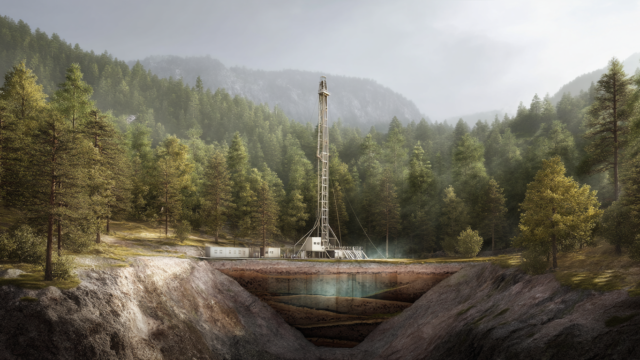
    Deep geothermal energy could potentially supply between 200 and 1800 gigawatt hours of usable heat potential per year in the canton of Basel-Landschaft. This corresponds to between 10 and 100 per cent of future energy requirements for space heating and hot water. This is the conclusion of the study Report on the potential of deep geothermal energy in the canton of Basel-Landschaft. It was commissioned by the Office for Environmental Protection and Energy and is based on Rolf Blatter’s postulate 2022/346.

    According to a press release from the canton, the actual potential depends on various technical and economic conditions and can therefore only be quantified more precisely with further exploration. Because Baselland is one of the most geologically diverse cantons, the number of situations that are suitable for geothermal utilisation is correspondingly large.

    No estimates of the potential of deep geothermal energy in the canton have been available to date. According to the information, the widespread use of near-surface geothermal energy with geothermal probes contributes around 100 gigawatt hours to the environmental heat utilised. With the new CO2 Act, the federal government will promote hydrothermal geothermal energy for heat supply from 1 January 2025.

  • Neuchâtel equips three historic buildings with 33,300 solar roof tiles

    Neuchâtel equips three historic buildings with 33,300 solar roof tiles

    According to a press release, roof surfaces on three listed buildings in the city of Neuchâtel will be used for sustainable energy generation in future. The city’s Collège des Parcs and the cantonal school and university buildings Beaux-Arts and A.-L. Breguet will be equipped with a total of 33,300 solar tiles from Freesuns. The renovation project is supported by the CSEM research and development centre. For the city and canton, it represents a further step towards the energy transition.

    According to the press release, the college can generate 150,000 kilowatt hours of electricity itself each year, which is equivalent to the consumption of 50 Swiss households. The installed capacity on the cantonal buildings is 130 kilowatts peak for A.-L. Breguet and 95 kilowatts peak for Beaux-Arts.

    Architectural conditions required special solutions: At the Collège des Parcs, the tiles had to be installed in such a way that they followed the curved lines of the roof without damaging it.

    The conversion of historic buildings to solar energy could provide an inspiring model for other cantons and municipalities. The tiles could “enable the balance between cultural preservation and sustainable development”, Deborah Learoyd, General Manager at Freesuns, is quoted as saying.

    The renovation projects are “an example of how we can combine roof tiles, photovoltaics, energy transition and preservation of architectural heritage”, Matthieu Despeisse, Group Leader Solar Modules at CSEM, is quoted as saying.

    The work should be completed between September and November 2024. CSEM and Freesuns are considering continuing their collaboration.

  • Resource efficiency through medium voltage in photovoltaics

    Resource efficiency through medium voltage in photovoltaics

    The conversion of the energy system requires considerable quantities of raw materials such as copper and aluminium. One promising approach to saving these resources is the transition from low voltage to medium voltage in renewable energy production. The Fraunhofer Institute for Solar Energy Systems ISE has identified enormous savings potential through higher system voltages, particularly for large-scale photovoltaic power plants, and is planning initial pilot projects and a broad market launch.

    Advantages of higher system voltages
    Increasing the system voltage from 800 VAC to 1,500 VAC reduces the cable cross-section by around 75 per cent. This makes installation and connection easier, which reduces installation costs. Andreas Hensel, Group Manager “High Power Electronics and System Technology” at Fraunhofer ISE, emphasises the potential savings: “Now that PV module costs have fallen by 90 percent since 2010, installation and balance-of-system components now offer the greatest savings levers.”

    In addition, the output of the subsystems can be increased by switching to medium voltage. At a voltage of 1,500 V, 10 to 12 MVA are already possible in one transformer instead of the 3 to 5 MVA that are common today. This reduces the number of transformers and switchgear required, which further reduces construction and installation costs.

    Technological advances and initial successes
    Progress in medium-voltage technology has been made possible by the development of highly blocking silicon carbide components with high switching speeds. SiC components up to 3.3 kV are now ready for the market. In the “MS-LeiKra” project, Fraunhofer ISE developed and successfully commissioned the world’s first MS-PV string inverter in 2023. The inverter achieves an output voltage of 1,500 VAC with an output of 250 kVA. “Technologically, the course has been set and it is now a question of who will be the first players in this promising market,” says Christian Schöner, Project Manager “Medium Voltage” at Fraunhofer ISE. A first photovoltaic pilot system based on this inverter is already being planned.

    Cooperation for the breakthrough
    In April, a European consortium was formed that brings together representatives from all trades involved in a large-scale PV power plant. The aim is to jointly investigate and overcome the technological and standardisation requirements for the leap to medium voltage. “As a powerful consortium, we can tackle the existing hurdles together and achieve optimisation for the entire power plant,” explains Christian Schöner.

    Future prospects and areas of application
    Large-scale PV power plants are just the beginning. Medium-voltage technology also offers potential for charging infrastructures, industrial grids, large heat pumps, battery storage systems, electrolysers and wind turbines. In addition to considerable material, cost and space savings, higher system voltages also enable new system architectures for renewable hybrid power plants. These can be linked together via the medium voltage and thus ensure an efficient and sustainable energy supply.

  • Easier building in noisy areas

    Easier building in noisy areas

    As part of the revision of the Environmental Protection Act, the UREK-N would like to simplify building in noise-polluted areas. In principle, at least half of the noise-sensitive rooms in new homes should have a window that complies with the noise limits. Relaxations are possible if controlled ventilation systems are installed or a quiet, private outdoor space is available. These regulations are intended to create a balance between densification and noise protection.

    Positions of the National Council and the Council of States
    The Council of States proposes that the limit values no longer have to be complied with at any open window in flats with controlled ventilation. However, the UREK-N considers the National Council’s version to be more balanced, as it offers a pragmatic solution to the housing shortage. The committee emphasises that building permits will only be granted if the buildings meet stricter noise protection requirements and measures to limit noise emissions are still prescribed.

    No reduction in noise protection regulations in aircraft noise areas
    The UREK-N dispenses with specific aircraft noise limits and agrees with the Council of States. This means that no further legal amendments should be necessary to allow construction near airports. The Commission does not envisage any additional restrictions for municipalities with regard to lowering the speed limit.

    Remediation of contaminated sites and VOC steering levy
    In the area of remediation of contaminated sites, the UREK-N maintains that owners must pay for the costs of investigating and remediating private playgrounds and gardens. The committee also requests that alternatives to the VOC incentive tax be examined and calls for an in-depth analysis by the Federal Council.

    Geoinformation Act and energy research
    The UREK-N has decided to refer the draft amendment to the Geoinformation Act back to the Federal Council for a thorough review. In the area of energy research, the aim is to harmonise the credit period of the SWEETER programme with the four-year period of validity of the ERI Dispatch.

    Approval of the electricity reserve
    The Commission supports the amendment to the Electricity Supply Act without a dissenting vote and emphasises the importance of a secure electricity supply even in extreme situations. It will examine the concept of the electricity reserve in depth and analyse various options in order to guarantee security of supply while minimising the environmental impact and costs.

    The UREK-N also recommends that the Federal Council provide stronger incentives for the formation of local electricity communities and relieve them of grid utilisation fees. The meeting took place under the chairmanship of National Councillor Christian Imark and partly in the presence of Federal Councillor Albert Rösti.

  • Researchers call for a paradigm shift in building and energy planning

    Researchers call for a paradigm shift in building and energy planning

    Matthias Sulzer from the Swiss Federal Laboratories for Materials Science and Technology(Empa) and his colleague Michael Wetter from the Lawrence Berkeley National Laboratory in California are advocating a paradigm shift in the planning of building and energy systems. “Due to the complexity and required flexibility of future energy systems and the urgency of change, today’s planning processes are not suitable,” explains Sulzer, who heads Empa’s Urban Energy Systems department and is also a researcher at the Lawrence Berkeley National Laboratory, in an Empa press release. “There is little to no interaction between the disciplines in order to design buildings or energy infrastructures as a holistic system.”

    Sulzer and Wetter are in favour of transferring the so-called platform-based design developed for the automation of chip production to the planning of building and energy systems. The methodology is based on various levels of abstraction on which mutually influencing systems are holistically analysed and optimised. Generally valid models are created at each level, which specify how a system is to be defined and built. The individual models can then be individually combined in practice. Such a paradigm shift could “revolutionise our planning, construction and operating processes and promote the digitalisation and automation that are essential for achieving our ambitious decarbonisation goals,” says Sulzer.

  • SAK and Tisca put photovoltaic system into operation

    SAK and Tisca put photovoltaic system into operation

    St.Gallisch-Appenzellische Kraftwerke AG(SAK) from St.Gallen and the textile manufacturer Tisca from Bühler AR have put a large photovoltaic system into operation. According to a press release, SAK has installed solar panels covering an area of 4,250 square metres on the reconstructed roofs of the Tisca production halls at the Urnäsch site. The construction and maintenance of the solar system was free of charge for Tisca, but the company is tied to the refinancing with a photovoltaic contracting agreement. Tisca receives solar power from the electrical energy produced on its own property at a fixed price. Both companies are contributing to the implementation of Energy Strategy 2050.

    “With photovoltaic contracting, a commercial or industrial building owner makes their roof available for photovoltaic expansion. SAK finances and is responsible for the planning, construction and maintenance,” Ralph Egeter, Head of Project Development at SAK, is quoted as saying in the press release. “Once the project is completed, the companies can use the solar power produced by the system for their own consumption at a fixed price. As compensation for the use of the roof, the companies receive a defined amount of solar energy at zero cost, depending on the size of the system. With this commitment, we are giving trade and industry a simple and cost-effective opportunity to invest in the energy future of Eastern Switzerland.”

    SAK has installed a total of three photovoltaic systems at Tisca. The one now in operation is currently the largest in the canton of Appenzell Ausserrhoden.

  • KVA Linth receives special prize for CO2 capture project

    KVA Linth receives special prize for CO2 capture project

    The Linth waste incineration plant(KVA Linth) has been honoured with a special award from InfraWatt. The association for the utilisation of energy from wastewater, waste, waste heat and drinking water, which is based in the canton of Vaud, recognised the Linth waste incineration plant’s project to build a large-scale plant for the capture and storage of carbon dioxide by 2029, according to a press release.

    Such CCS (carbon capture and storage) plants are suitable for filtering carbon dioxide from the combustion air and channeling it into specially constructed storage facilities. The CO2 captured in the Linth waste incineration plant is compressed and liquefied at low temperatures and transported away in tank wagons. An output of 90 percent is forecast for the capture plant at KVA Linth, which would correspond to around 15.5 tonnes of captured CO2 per hour. When the plant is completed in 2029, 120,000 tonnes of carbon dioxide can thus be captured and stored annually with 8,000 operating hours.

    The project is being developed together with KVA Linth and the Centre for Sustainable Waste and Resource Utilisation. All development steps will be made transparently available to all MSWI plants in Switzerland, which will then be able to implement the corresponding technologies.

  • Paradigm shift in energy planning

    Paradigm shift in energy planning

    Numerous countries have committed to being climate-neutral by 2050. For building and energy systems, this requires a rapid transition from fossil fuels to renewable energies and greater networking of different sectors. Buildings, mobility, industry, electricity, heat and synthetic fuels must interact and be planned in an integrated manner. Matthias Sulzer from Empa and Michael Wetter from the Lawrence Berkeley National Laboratory argue that the current planning processes do not do justice to this complexity and that a paradigm shift is therefore necessary.

    Current planning process – a silo mentality
    Today’s planning processes are organised by discipline, which leads to inefficient and suboptimal results. Engineers and architects work one after the other instead of collaborating across disciplines. This linear, “waterfall” approach leaves little room for iteration and optimisation in the overall system. Sulzer emphasises that this approach is no longer sufficient to meet the requirements of future, flexible energy systems.

    Inspiration from the chip industry
    Sulzer and Wetter propose a planning approach inspired by the chip industry. The electronics and computer scientist Alberto Sangiovanni-Vincentelli has revolutionised chip manufacturing with his “platform-based design”. This concept uses different levels of abstraction for the holistic analysis and optimisation of systems and creates universally valid, modularly combinable models. This model could also be applied to building and energy systems in order to automate and modularise planning.

    Advantages of a model-based planning process
    A model-based planning process would mean that models are used not only to analyse, but also to specify and build systems. These blueprints could be combined in a modular way to clearly define the design and functionality of a system. This would revolutionise planning, construction and operating processes and promote the necessary digitalisation and automation to achieve the ambitious decarbonisation targets.

    Pilot project at Empa
    The EU project GOES, led by Empa, is a first step towards the application of platform-based design in the energy sector. A pilot plant with 144 geothermal probes is being developed on the Empa campus in Dübendorf as the first application of this concept. The aim is to define the various abstraction levels of decision-making and to standardise the interfaces.

    The implementation of an automated and modular planning process is crucial for achieving climate neutrality by 2050, and Sulzer and Wetter are convinced that this paradigm shift will significantly increase the flexibility and efficiency of energy systems. The approach offers a promising solution to meet the challenges of decarbonisation and ensure security of supply.

  • Study on home ownership in Switzerland published

    Study on home ownership in Switzerland published

    Houzy, the Zurich-based platform for homeowners, has commissioned and published a recent study. According to a press release, the company wanted to collect data on the current and future behaviour of homeowners in Switzerland. Houzy surveyed 80,000 households online for the representative study. 1906 house and apartment owners answered the questionnaire from January to the end of March 2024. Three quarters of them were house owners and one quarter flat owners.

    The study focussed on the areas of renovation, heating and energy supply. It revealed that 69.4 per cent of all homeowners used tradesman services in the past year. The average order volume was CHF 15,000.

    In addition to renovations, the focus was also on alternative heating systems. 5 per cent of homeowners plan to modernise their heating systems and find alternatives to fossil fuels in 2024. At the same time, 33.5 per cent of households that still use oil and 8.85 per cent of those that use gas want to change their heating systems. One tenth of Swiss homeowners are planning to install solar panels this year in order to produce at least some of the electricity they need themselves.

    Another focus was on intentions to sell residential property. A seventh of the homeowners surveyed expressed such intentions. of these, 20 per cent would still like to sell their home in 2024. Extrapolated, this means that 3.2 per cent of all houses and flats in Switzerland will come onto the market this year, according to the press release.

  • Determining solar energy potential from space

    Determining solar energy potential from space

    The question of which roofs are suitable for solar installations and what output can be achieved there is answered by the new solar atlas from the German Aerospace Center (Deutsches Zentrum für Luft- und Raumfahrt – DLR). This map, which was presented at the ILA 2024 in Berlin, uses current aerial images and basic geodata, processed using machine learning methods. This made it possible to determine the solar energy potential for around 20 million buildings in cities such as Berlin, Dresden, Düsseldorf, Frankfurt and Hamburg. The results are publicly available at eosolar.dlr.de.

    Technology meets sustainability
    Anke Kaysser-Pyzalla, Chairwoman of the DLR Executive Board, emphasizes the importance of the Solar Atlas for the energy transition: “In order to develop and implement effective strategies and instruments for the expansion of rooftop solar installations, decision-makers need precise information on the current stock and expansion potential. The satellite-based information provided by DLR supports the energy transition and becomes a driver for innovative products and business models.” The Solar Atlas shows how successfully earth observation can be used for climate protection and the sustainable expansion of energy generation.

    Data evaluation and methodology
    In the EO Solar project, scientists at the DLR Earth Observation Center are combining several terabytes of data. This includes digital, distortion-free aerial images with a resolution of 20 centimetres and high-resolution surface models provided by the Federal Agency for Cartography and Geodesy. “In order to describe the current expansion potential for solar energy, we calculate the possible electrical output based on the hours of sunshine, the radiation intensity, the orientation of the roof surfaces and the shading from neighboring buildings or vegetation,” explains Annekatrin Metz-Marconcini, head of the EO Solar project.

    Artificial intelligence and practical applications
    DLR has developed a process that uses artificial intelligence to identify roofs with installed solar panels worldwide from high-resolution remote sensing data. In Germany, the market master data register, which records all registered solar installations on a daily basis, is also included. This method uses digital surface models of the terrain, which automatically takes into account shading from trees and the surrounding terrain. This means that even countries without detailed building models can calculate their solar energy potential and include it in their planning.

    Support for political decision-makers
    In contrast to existing solar atlases of federal states, districts or municipalities, the DLR Solar Atlas systematically maps the entire country in an up-to-date manner. This provides political decision-makers and planners with a sound basis for promoting the expansion of solar installations in a targeted manner. A similar map has already been created for Austria as part of an ESA project. For data protection reasons, solar expansion in Germany is shown at municipal, district or federal state level.

    Forward-looking energy planning
    With the new solar atlas, DLR is creating a valuable resource for the planning and implementation of sustainable energy projects. It enables a precise assessment of solar energy potential and thus supports the transition to a climate-friendly energy supply.

  • New player in the UK recycling market

    New player in the UK recycling market

    Holcim is acquiring the ballast recycling company Land Recovery, based in the British county of Cheshire. With its 85 employees, it uses railway ballast and demolition material for the production of ready-mix concrete, precast elements and asphalt.

    According to a press release, this acquisition expands Holcim’s access to construction waste. Land Recovery processed 300,000 tonnes of this material last year.

    “Land Recovery strengthens Holcim’s leading position in circular construction,” Holcim CEO Miljan Gutovic is quoted as saying. “This brings us closer to our Group target of recycling 10 million tonnes of construction waste in 2024.”

    Land Recovery was founded in 1982 by the Beecroft family. With four sites in the UK, the company’s services include the supply of primary ballast for rail transport, the handling and processing of spent ballast and its recycling into new construction solutions.

    The transaction follows Holcim’s acquisition last year of Sivyer Logistics, a manufacturer of recycled demolition materials for the London construction market.

  • Swiss Climate Foundation supports ten projects

    Swiss Climate Foundation supports ten projects

    In its first funding round in 2024, the Swiss Climate Foundation has selected ten innovative climate-relevant projects for funding from a large number of submissions. They will be supported with a total of over 1.3 million Swiss francs, the foundation announced in a press release. “We are registering an increased number of high-quality enquiries with real potential for climate protection,” said Managing Director Vincent Eckert.

    In the press release, the Climate Foundation provides a brief profile of five of the projects. For example, the Grabowski project from Borobotics GmbH in Winterthur is being supported. It has developed a drilling robot for geothermal drilling in confined spaces.

    VentoStream AG from Liestal is being supported in the development of its mini wind turbine. “Our technology is three times more effective and economical than conventional wind turbines,” says VentoStream CEO Manuel Bernsau. The innovative design also prevents shadow, bird and ice impact.

    HILLBOT GmbH from Risch ZG has developed a lightweight mower. The project initiator Amadeo Knüsel is quoted in the press release as saying that “an average farm could save 4 tonnes of CO2 per year”.

    SolidWatts from Pully VD is being supported in the development of microwave generators that produce microwaves on an industrial scale. They can efficiently produce heat in materials used in industrial processes.

    Terrabloc SA develops innovative clay blocks for ceiling production. The Geneva-based company has already received support from the Climate Foundation in 2019 and 2020.

  • Considerable economic growth. Increasing quality of life

    Considerable economic growth. Increasing quality of life

    The economic development of the Canton of Zurich is impressive. In the last 40 years, the inflation-adjusted gross domestic product (GDP) has more than doubled from CHF 74 billion to CHF 159 billion. Per capita economic output has risen from CHF 65,000 to CHF 101,000, with this growth in value added being largely translated into higher wages. In addition, average working hours have decreased by almost half an afternoon per week since 1991, which has led to a continuous increase in the prosperity of the people of Zurich. Technological progress and innovation have been the driving forces behind this.

    Rising quality of life – differentiated developments
    Economic growth brings with it more than just higher incomes and leisure time. Tax revenues increased, which improved the quality of life in the canton of Zurich in many areas. The OECD uses the “Regional Well-Being Indicators” and the “Better Life Index” to measure quality of life based on eleven different categories. Zurich recorded improvements in education, employment, work-life balance, health and technology. In the areas of safety and housing, the results were mixed, while subjective life satisfaction remained consistently high.

    Decline in environmental pollution despite growth
    Contrary to the traditional correlation between economic growth and resource consumption, the last 30 years have shown a decoupling in rich regions. In the canton of Zurich, real GDP has risen by 69 per cent since 1990, while environmental quality has improved in most areas. Material consumption, recycling rates, air and water quality and the environmental footprint improved. A relative decoupling can be observed in waste quantities, soil sealing and biodiversity. Greenhouse gas emissions in particular have been significantly reduced by 17 per cent since 1990, despite steady economic growth.

    Thought experiment on the effects of zero growth
    In its economic monitoring, the INFRAS research office modelled the possible effects of a scenario without economic growth by 2050. This scenario shows that zero growth would lead to significantly lower incomes and an increased risk of poverty. At the same time, financial challenges would increase as there would be less tax revenue and less money available for social insurance, which would result in distribution conflicts. Although environmental quality would benefit in some areas, the costs would be high and fewer financial resources would be available for environmental protection.

    The canton of Zurich demonstrates that economic growth, quality of life and environmental protection can be successfully combined. The continuous improvement in various areas of life shows that technological progress and sustainable development can go hand in hand. The thought experiment on zero growth illustrates the importance of balanced growth in order to achieve economic, social and environmental goals.

  • Inauguration of a photovoltaic system at Limeco

    Inauguration of a photovoltaic system at Limeco

    According to a press release, the Limmattaler Regiowerk Limeco, based in Dietikon, has inaugurated a photovoltaic system on the roof of the wastewater treatment plant(ARA). According to the company, 624 solar panels with a capacity of 265.2 kilowatts peak generate as much solar power as 70 households with an annual consumption of 3,600 kilowatt hours.

    On an area of 1220 square metres, 252,000 kilowatt hours of green electricity are to be produced, primarily for the ARA’s own requirements and the waste recycling plant. Any surplus energy will be fed into the public grid and made available to the general public.

    The aim is to promote the expansion of renewable energy supply. Limeco plans to convert the supply of the entire Limmat Valley to CO2-neutral energy sources by 2050.

  • Expansion of solar installations in Zurich

    Expansion of solar installations in Zurich

    ewz, the energy supplier to the city of Zurich, is pressing ahead with its expansion of solar installations. As detailed in a press release, the company has published 14 new locations on its website in which citizens can participate. For CHF 250 per square metre, you can acquire a stake in the additional 11,000 square metres. Participants receive 80 kilowatt hours of Zurich solar power per year on their ewz bill. With the areas now connected, ewz now has 55 solar installations in the city of Zurich. The newly added areas are expected to produce 1,246,000 kilowatt hours of electricity per year. This corresponds to the electricity consumption of 500 average households.

    “With the solar strategy, we in the city of Zurich have the ambitious goal of producing more solar power,” said City Councillor Michael Baumer, Head of Industrial Operations, in the press release. “I have therefore taken the opportunity to acquire a solar stake myself. Only together can we make Zurich a solar city – every square metre counts!”

    Ewz also offers homeowners solar solutions for their own roofs. For example, 950 solar modules will be installed on four residential buildings in Guggach by July. The system is expected to produce 423,000 kilowatt hours and supply the 197 households with solar power.

  • Career prospects in Swiss timber construction

    Career prospects in Swiss timber construction

    The importance of the timber construction industry
    The timber construction industry plays a key role in Switzerland, particularly in the area of sustainable construction and energy-efficient building refurbishment. Building with wood is an environmentally friendly and climate-neutral method that ensures minimal energy consumption both during the construction phase (grey energy) and during the subsequent operation of the building. The timber construction industry makes a significant contribution to shaping Switzerland’s future.

    Career prospects and further training options
    Once they have completed their basic training, trained carpenters have numerous options open to them: They can work as highly qualified specialists in the company, gain experience on the mill or abroad or continue their education to become a foreman, foreman, technician or engineer, all the way up to master craftsman. If the vocational baccalaureate has not already been completed during the basic training programme, it can be completed as a full-time course of study within a year of completing the basic training programme. This enables a seamless transition to a higher technical college or university of applied sciences without examinations. The career plan for timber construction in Switzerland offers the opportunity for lifelong learning, individual further training and specialisation as well as various advanced training courses. Training as an energy consultant, project manager for solar systems or craftsman in monument preservation are just a few examples. A career in timber construction thus offers the opportunity to develop and orientate yourself individually according to your own wishes and needs.

    Carpenter EFZ
    Carpenters at EFZ level mainly work with wood and are proficient in timber construction activities. They work as generalists in operations as well as in shell construction and finishing. They are familiar with the requirements of the building trade and work with other tradespeople involved in construction.

    WoodworkerEBA
    Your career start with good prospects. The profession of woodworker EBA (Federal Vocational Certificate) is an independent, two-year basic training programme in the wood industry. It covers a wide range of activities in the woodworking industry as well as in timber construction.

    Certified technician
    HF Holztechnik

    HF timber construction technicians plan timber constructions independently on the basis of project plans and manage their realisation. They take on management tasks within the company or manage a department. As a team leader on the construction site, they coordinate the work with the other tradespeople.

    Vocationalbaccalaureate and business administration/entrepreneurship degree programme
    The vocational baccalaureate and the business administration degree programme NDS are industry-independent training courses. While the vocational baccalaureate primarily deepens general knowledge, the business administration programme imparts knowledge for entrepreneurial activities in higher management positions.

    Master timber construction technician with a federal diploma
    Master timber construction technicians manage a timber construction company or a larger department. They have overall responsibility for the technical, economic and personnel management, organisation and further development of the company. They liaise closely with customers, suppliers and architects.

    Dipl. Techniker/in
    HF Baufführung Holzbau

    Graduates work as a designer or operations manager in a timber company. Thanks to their extensive skills, they are “generalists for modern timber construction”: from preparing quotations, planning and realisation to execution control and invoicing.

    Master of Science in Wood Technology
    This degree programme, which is unique in Europe, combines practical relevance with research and development. The programme enables students to work in timber construction and in all processing stages of the timber industry from a technical, business and ecological perspective.

    Bachelor of Science in Wood Technology
    The training concept covers a broad spectrum – from raw materials and semi-finished products to supporting structures, furniture and energy-efficient buildings. The focus is on intelligent and innovative solutions for modern timber construction as well as sustainable products and processes using wood.

  • Microbes as power stations

    Microbes as power stations

    In an unprecedented approach, Professor Boghossian’s team has transferred the properties of exotic microbes that live under anaerobic conditions and produce electricity as a by-product of their metabolism to the widespread and well-researched bacterium E. coli. This innovation could open the door to innovative applications in various industries.

    From nature to the lab
    The natural models of research, anaerobic microbes, utilise unique metabolic pathways to donate electrons to metals and thereby generate electricity. This mechanism was successfully implemented in E. coli, which predestines the bacterium for a wide range of technological applications. The transfer was complex and required the insertion of special proteins from the electrically active microbes in E. coli, which brought the ability to produce electricity into the laboratory.

    Possible applications and practical benefits
    The modified E. coli could be used in fuel cells, in wastewater treatment or as a biosensor. Of particular interest is the potential application in wastewater treatment, where the bacteria would not only help to purify the water, but could also generate electricity as a by-product. These dual benefits represent an attractive option for a circular economy where waste products are put to valuable use.

    Innovative research and industry collaboration
    Supported by EPFL’s innovative environment and the opportunity to work across disciplines, Professor Boghossian’s team continues to explore the practical applications of “electric” bacteria. The development of a prototype for the food industry in collaboration with a newly founded start-up demonstrates the commercial potential of this technology. This commitment offers not only scientific but also sustainable industrial solutions that can contribute to reducing the carbon footprint.

    Outlook and global interest
    While the technology is still in the development phase, there is already growing interest from both academia and industry. The work of Professor Boghossian and her team is a shining example of how innovative basic research can have a transformative impact on our energy future.

  • Future-oriented heat supply in Zurich’s inner-city neighbourhoods

    Future-oriented heat supply in Zurich’s inner-city neighbourhoods

    In a strategic initiative to decarbonise the energy supply, the city of Zurich is identifying key districts in which the conventional heat supply is to be replaced by sustainable alternatives. Despite the challenge that locally available, renewable energy sources such as heat pumps are not sufficient to meet demand, a comprehensive study has identified possible solutions.

    Concept for densely built-up urban areas
    The Hard, Wiedikon and Sihlfeld-Werd neighbourhoods in particular are the focus of energy planning. These areas, which cover around seven per cent of the city’s settlement area, require an innovative approach due to their dense perimeter block development. The supply concept developed envisages the construction of thermal networks, which will account for around a quarter of the city’s new installations by 2040.

    New combined heat and power plants required
    To cover the calculated heat demand of 282 GWh/year, high-performance heating plants are required, comparable to the capacity of the existing Hagenholz waste incineration plant. Additional boilers are used to cover the peak load, which is particularly necessary on extremely cold days.

    Modular expansion and innovative heat sources
    The concept includes the use of diversified energy sources such as wastewater heat, river water, wood biomass and waste heat from computer centres, which is generated outside the supply area and fed into the neighbourhoods via a new main network. Implementation will be carried out in modular steps, with independent distribution centres being built in a timely manner to ensure that end consumers are connected quickly.

    The planning and implementation of this forward-looking project is now required in order to connect the first properties to the grid early in the 2030s. The replacement of the current 1,500 fossil-fuelled heating systems in these areas will make a decisive contribution to achieving Zurich’s climate targets.

  • Energy crisis 2022 leaves its mark on the financial year

    Energy crisis 2022 leaves its mark on the financial year

    Region Energie Solothurn also felt the consequences of the 2022 energy crisis in 2023. According to a press release, the regional supplier posted a loss of CHF 760,374. It blames this on record-high purchase prices, which have a delayed effect until 2024. It has not passed these on to customers in full.

    Gas sales to business and small customers fell by 4.6 per cent to 334 gigawatt hours in 2022. Sales to large customers even fell by 19.4 per cent to 394 gigawatt hours. Regio Energie Solothurn refers to the measures taken by the federal government, under which the industry was required to switch from gas to oil.

    Electricity sales increased by 11.1 per cent to 130 gigawatt hours. The company points out that it has also been supplying the municipalities of Lommiswil SO and Nennigkofen SO since January 2023. On the other hand, the grid levy has fallen because more solar power is being produced for the company’s own consumption instead of being fed into the grid.

    Regio Energie has also completed the biogas pipeline between Utzenstorf BE and Gerlafingen SO. This means that the planned biogas plants in Utzenstorf can be realised.