Category: Location Promotion

  • First consultation on location promotion

    First consultation on location promotion

    For the first time, the dispatch on location promotion will be submitted to a consultation procedure, which will run until 1 June 2026. For the years 2028-2031, the Federal Council is requesting five financing decisions amounting to CHF 392.21 million, compared to CHF 428.83 million in the period 2024-2027. The instruments remain the same: SME policy, tourism policy, regional policy, export promotion and location promotion. The bottom line is that the budget, adjusted for special Covid payments and the 2027 relief package, will fall by around 5.2 percent.

    Easing the digital burden on SMEs
    One focus is on easing the administrative burden on SMEs by expanding digital government services. The core component is Easy-Gov.swiss, which is to be further developed into a marketplace for digital services from the federal government and cantons and positioned as a standard infrastructure for a “digital government” for companies. The aim is to simplify procedures, reduce duplication and ensure more efficient cooperation between the administration and business.

    Access to international markets
    Export promotion should provide SMEs with targeted support when entering new foreign markets and expanding existing ones. In an environment with increasing export hurdles and volatile framework conditions, there is a greater focus on information, advice, risk diversification and export risk insurance. At the same time, SMEs should be able to make better use of the opportunities offered by new and existing trade agreements.

    Strengthening regions as economic and living spaces
    The federal government wants to support economic development in all parts of the country with its location promotion. It promotes tourism destinations and economically oriented projects in rural and border regions. This enables them to remain attractive places to live and work. In this way, the Federal Council combines growth impulses for SMEs with balanced regional development.

  • New CKW headquarters strengthens Emmen

    New CKW headquarters strengthens Emmen

    With the “EnergiePark Emmen” project, CKW intends to further develop its existing site on the Reussinsel. The centerpiece is a new plant building for the Grids and Building Technology divisions, including a grid base for the construction, operation and maintenance of the electricity grid in the greater Lucerne area. The employees previously based in Reussbühl will thus have modern workplaces in Emmen, and processes will be bundled in terms of space and organization.

    Commitment to Emmen and more jobs
    The Reussinsel is CKW’s historic place of origin, where the first power plant went into operation in 1894. With the planned relocation of its headquarters, CKW is building on these roots and making a long-term commitment to the Emmen site. The number of employees on the Reussinsel will increase from around 600 today to around 1,000, which will generate additional tax revenue and strengthen the economic development of the municipality.

    Careful planning and inward densification
    The guideline project was developed in a planning process lasting several years with the municipality of Emmen and a study contract with five planning teams. The “Compakt” project by Penzel Valier AG with Maurus Schifferli Landschaftsarchitekten was selected for its urban planning quality and sensitive integration into the landscape. The project consistently focuses on inward densification. The valuable natural space on the Reussinsel remains untouched and additional buildings are only planned as a long-term reserve.

    Traffic, development and next steps
    An important part of the project is the development and traffic management. Mobility measures are planned together with Emmen and Ebikon, including a new bus stop in the Rathausen area, adjustments to the road infrastructure and mobility management with trip caps and balanced traffic distribution. Based on the indicative project, the municipality of Emmen is now drawing up the development plan with the active involvement of the local population. According to the current timetable, concrete construction projects could be approved and implemented from 2030.

  • Thun North is developing into a new district

    Thun North is developing into a new district

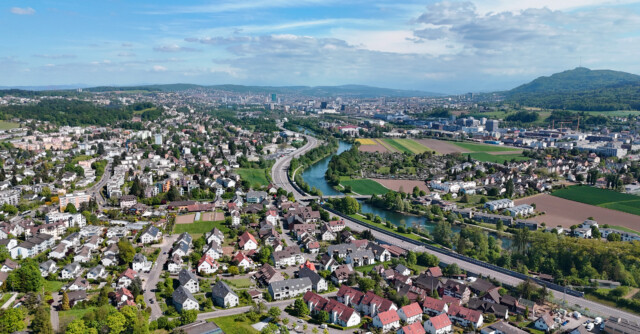
    The future new district of Thun North is one of the four most important cantonal development priorities and the most important in the Bernese Oberland, according to a statement from the city of Thun. A future-oriented urban quarter and a business location with supra-regional appeal is to be created here on a 60-hectare site. The area will be accessed via a new S-Bahn station.

    Half of the site belongs to Armasuisse Real Estateand half to RUAG Real Estate AG. In 2025, the city of Thun conducted a so-called workshop process with them and BLS for the core area around the planned railway station. Three interdisciplinary teams worked with experts and various stakeholders to develop proposals. From these, an advisory committee derived key parameters for further development.

    The basic framework of the new district is to be formed by open spaces. This will be characterised by the Aare river, the roads, the railway area and the townscape. The existing shed roof hall will form the backbone of the complex. The two landowners want to concentrate their closed industrial sites on the area west of the Alpine Bridge and on the grounds of the textile centre. Mixed uses are planned outside these areas. The Swiss Federal Laboratories for Materials Testing and Research (Empa) will also be one of the key players with its new campus.

    The results of the workshop process will be on display at Thun Town Hall until 6 March.

  • Communities on Lake Zurich strengthen economic networking

    Communities on Lake Zurich strengthen economic networking

    The Gold Coast location promotion agency has published its first annual programme. The association was founded in September 2025 by the eleven municipalities of the Meilen district and the Office for Economic Affairs of the Canton of Zurich.

    According to a press release, members benefit from free participation in events, excursions and background discussions, direct access to decision-makers and increased visibility. The first general meeting will take place on 15 April in Stäfa, Zurich. Dr Moritz Lechner, co-founder and co-chairman of the board of directors of Sensirion, will speak as a guest speaker.

    The press release also mentions a members’ lunch with a workshop visit to Micro Mobility Systems AG in Küsnacht and a members’ morning snack at the Zumikon municipal administration. This will be followed in August by an after-work excursion to Seepark Uetikon, where apartments for around 600 people are being built on the site of a former chemical factory. An excursion to the Zurich Cantonal Council is also planned.

  • Construction site for retirement home in Schlieren to be set up in March

    Construction site for retirement home in Schlieren to be set up in March

    From the beginning of March 2026, the construction site for the new Schlieren retirement home “Wohnen am Stadtpark”will be visible to the public. Preparatory work will then begin there. Two appeals had led to a one-year delay, but these were withdrawn in December 2025. The legal proceedings have now been concluded. According to a statement from the city of Schlieren, the construction site can now be set up and the initial construction and preparatory work can begin. The official ground-breaking ceremony is scheduled for April 2026. Construction work is expected to be completed by the end of 2028.

    As construction begins, the playground on the western edge of the city park will also be dismantled starting in early March. According to the city, a new municipal playground is already being built at Stürmeierhuus. It is scheduled to be completed in April.

    In the referendum on 12 March 2023, a loan of CHF 44.32 million for the construction of the new retirement home was clearly approved with 76.6 per cent voting in favour. As the city emphasises, it makes “an important contribution to ensuring modern, needs-based care and nursing for the elderly close to their homes”.

  • Cooperation aims to secure landfill capacity in the long term

    Cooperation aims to secure landfill capacity in the long term

    The cantons of St. Gallen, Thurgau and Schaffhausen are working together to plan new landfills for slag from waste incineration plants, according to a statement from the Department of Construction and Environmentof the Canton of St. Gallen. Over the next two years, the waste management authorities of the three cantons will develop a coordinated plan that identifies the need for landfill volume and landfill sites. The aim is to ensure secure waste disposal for the next 30 years and to exploit economic and ecological advantages.

    The starting point for the collaboration is the foreseeable shortage of suitable landfill volume. The incineration of waste in waste incineration plants produces waste incineration plant slag that cannot be further recycled and must be stored in specially secured type D landfills. Such facilities are in short supply both in the participating cantons and throughout Switzerland. Without additional capacity, there is a risk of bottlenecks in waste disposal in the medium term.

    Coordinated planning aims to optimise existing cantonal waste streams, exploit economic and ecological advantages and enable the rational use of individual sites. In this way, the three cantons want to offer long-term planning and disposal security for waste producers as well as waste incineration plants and landfills.

    With this project, the cantons are fulfilling their legal mandate for waste planning. This includes determining future landfill requirements and identifying suitable locations. The jointly developed planning basis will then serve as the foundation for cantonal planning instruments such as structure plans and other procedures.

  • Canton Zurich creates interface with innovation park

    Canton Zurich creates interface with innovation park

    According to a statement, the canton of Zurich has created the Zurich Innovation Park specialist unit. This implements a decision by the cantonal government in April 2025 to transform the coordination unit, which was previously managed by an external mandate, into a regular organisation. The specialist unit is based in the Office for Economic Affairs and began operations at the start of the year.

    The centre is responsible for ensuring the division of tasks between the Department of Economic Affairs, the Innovation Park Foundation, IPZ Property AG and IPZ Operations AG. It coordinates cantonal projects and involves various stakeholders in the local communities, the federal government, the business community and other partners.

    In addition to the Innovation Park as the most important area development project in the canton, the specialist unit will also focus on the active development of commercial space as a key location factor. This involves space for the growth, transformation and establishment of companies, particularly in or around the Innovation Park, but also throughout the canton.

    Benjamin Grimm is the first head of the specialist unit. The geographer has a Master’s degree in Spatial Development and Infrastructure Systems from the Swiss Federal Institute of Technology Zurich and a Master of Advanced Studies in Real Estate from the University of Zurich. He has worked for the Federal Office for Spatial Development and the Office for Spatial Development of the Canton of Zurich, among others.

  • Research project focuses on seasonal energy storage

    Research project focuses on seasonal energy storage

    According to a LinkedIn post, the University of Applied Sciences and Arts of Western Switzerland (HEIG-VD) and the engineering firmPlanairhave launched the BIG4HEAT project. BIG4HEAT will run for two years and is supported by the Swiss Federal Office of Energy (SFOE). Services Industriels de Genève (SIG), Groupe EausGranges-Paccot FR and Cadcime, based in Eclépens VD, are also industrial partners in the project.

    The main objective of the project is to develop an underground seasonal heat storage facility (Chemical Thermal Energy Storage, CTES). The heat energy is to be stored in summer and then used in winter. HEIG-VD and Planair want to use old cisterns for this purpose, which will be converted into heat storage facilities in line with the principles of the circular economy and retrofitting, i.e. the conversion of older facilities. According to HEIG-VD, “seasonal storage could reduce the electricity deficit in winter by almost 20 per cent”. With this project, HEIG-VD and Planair aim to reduce CO2 emissions and create space in urban areas from 2030 onwards by using underground storage facilities.

    Founded in 1956 and based in Yverdon, HEIG-VD conducts research in collaboration with companies, local authorities and national and international partners in various fields such as energy and sustainable development. Planair, based in La Sagne NE, is active in the fields of energy transition and renewable energies.

  • Valais municipalities launch online.vs.ch

    Valais municipalities launch online.vs.ch

    In four pilot municipalities in Valais, the confirmation of residence is available as a digital service, simply, regardless of location and around the clock. The service is provided via the online.vs.ch portal, which has been set up since January 2025 as a joint access point for digital services from the canton, municipalities and semi-public institutions. By the end of the year, all 122 municipalities in Valais should offer this online service, taking their residents’ services a further step towards end-to-end digital processes.

    A portal for modern government services
    By launching this service, the canton and municipalities are responding to the growing expectations of the population and businesses for simple, accessible contact with the authorities at any time. As the project organiser, the canton of Valais is responsible for financing the project and is working closely with the pilot municipalities to design and introduce the services. The aim is to consistently simplify administrative procedures, avoid media disruptions and make digital interaction the preferred option for contact with the administration.

    Electronic identification increases security
    Until now, many online applications have been based on web forms with subsequent manual identity checks. Identification is now carried out electronically via online.vs.ch, which simplifies the completion of forms, speeds up processing and increases data security. Users can choose between two types of connection, including the AGOV public authority login provided by the federal government, which does not require a password and is based on modern authentication technologies. This provides better protection for personal information and at the same time makes access to digital administrative services more convenient.

    Expansion of the offering
    Since going live at the beginning of 2025, over 40 cantonal administration services have already been integrated. Further services from the canton, municipalities and semi-public organisations will follow step by step. In the long term, the portal should become the central access point for all digital services of the Valais authorities and thus bring the cantonal digitalisation strategy to life.

  • Thun North forms a new urban neighbourhood

    Thun North forms a new urban neighbourhood

    The cantonal development centre Thun North is considered the most important business location in the Bernese Oberland and is one of the four premium locations in the canton of Bern. The area between Selve and Lerchenfeld, which is still heavily characterised by military use, is to be gradually opened up for new uses. This will create space for working, living and mobility, linked by a new public access route.

    Workshop process as a milestone
    In 2025, the city of Thun conducted a workshop process together with Armasuisse Immobilien, Ruag Real Estate AG and BLS. It marked an important milestone in the transformation of the area. The task was to identify ways in which the site could develop into a modern, networked urban district. In addition to the future Thun Nord S-Bahn station, the creation of a lively urban environment is at the centre of the project.

    Open spaces as a basic framework
    The planning considerations focus on open spaces as a connecting element between the closed military areas to the south of the site. The three interdisciplinary teams developed several approaches in dialogue with experts, owners and interest groups. Despite different concepts, a common core emerged. The open space, Aare, Alpenbrücke and Allmendstrasse form the supporting framework to which future neighbourhood structures will connect. The new railway station also makes reference to the existing buildings. The striking shed roof hall will serve as the backbone and identity carrier.

    From idea to realisation
    The next phase is now starting. In a so-called synthesis, the city, owners and project partners are working on further refining the open space and neighbourhood structure. This forms the basis for the next, harmonised plans, such as infrastructure projects or the necessary planning instruments. Thun North is thus taking shape as a forward-looking neighbourhood that combines economic strength and spatial quality.

  • New investor for Werkmatt Uri

    New investor for Werkmatt Uri

    On 25 February 2026, Director of Economic Affairs Urban Camenzind and Risa Immobilien SA signed the purchase agreement for construction site 11 on Werkmatt Uri. This is based on a purchase rights agreement concluded in 2024 between the Canton of Uri and IG Innovationspark Gotthard. In recent years, the IG has developed the project idea for a functional, sustainably built and architecturally impressive commercial and service building. In October 2025, the municipality of Altdorf granted planning permission for a four-storey building with around 4,000 square metres of floor space and room for around 140 workplaces.

    Marcus Weber backs the Uri location
    Risa Immobilien SA is backed by Marcus Weber, an investor with a high profile in Switzerland in the property, tourism and Alpine infrastructure sectors. He has been involved in Sedrun/Disentis for many years and, as Chairman of the Board of Directors and main shareholder of Bergbahnen Disentis AG, is involved in the expansion of the tourism offering there. Weber is also already present in the canton of Uri, for example with investments in the ski lift, mountain restaurant and accompanying infrastructure on the Brüsti in Attinghausen. By investing in Werkmatt Uri, he is expanding his involvement with another forward-looking project in the Alpine region.

    Project enters the implementation phase
    The planned office and commercial building is being built on the northern edge of Werkmatt Uri, within walking distance of the Altdorf cantonal railway station and close to the future A2 motorway junction. Construction is scheduled to start in autumn 2026, with occupation scheduled for 2028, and the investor wants to push ahead with the implementation quickly. This will create attractive, flexible space in a central location for companies that want to utilise Uri’s locational advantages.

    Werkmatt Uri offers further potential
    At around twelve hectares, Werkmatt Uri is the last large land reserve in the Uri valley floor and has excellent access between the cantonal railway station and the A2 motorway. The site is intended to provide over 1,000 jobs in the long term and be developed specifically for industrial, commercial and service companies. In addition to construction site 11, around eight hectares are still available for sale or the granting of building rights, handled by the canton of Uri. Companies interested in sites can find further information online on the Werkmatt Uri platform.

  • European network opens up new opportunities for Baden in health tourism

    European network opens up new opportunities for Baden in health tourism

    The city of Baden has become a new member of the European Historic Thermal Towns Association (EHTTA). According to a statement, its aim is not only to raise awareness of the importance of Baden’s thermal springs, which date back to Roman times, at a European level, but also to foster exchanges with other spas.

    Membership facilitates joint projects in cultural, health and medical tourism. With its membership, Baden is positioning itself “clearly as a modern cultural and spa town with international appeal,” Mayor Markus Schneider is quoted as saying in the press release.

    TourismusRegion Baden AG is responsible for the operational implementation. “EHTTA membership is much more than just a label for Baden,” Andrea Portmann is quoted as saying. “It is a strategic tool for further developing our positioning in the international market and establishing new partnerships in the field of medical and health tourism,” says the managing director of TourismusRegion Baden.

    The EHTTA is delighted to welcome Baden as a new member. “Baden is an important spa town with a strong history and a clear vision for the future,” says Riccardo Mortandello, EHTTA President and Mayor of Montegrotto Terme.

    The more than 50EHTTA members in 20 countries now include Baden-Baden and Baden bei Wien, as well as Budapest, Karlsbad, Spa, Vichy and Viterbo.

  • Parahotellerie drives overnight stays in Spiez to new record high

    Parahotellerie drives overnight stays in Spiez to new record high

    Tourism in Spiez reached a new record in 2025 with 198,000 overnight stays. However, according to a statement by Spiez Marketing AG (SMAG), this is solely attributable to growth in the non-hotel sector. This sector increased its overnight stays by 35 per cent to 63,000. At the same time, overnight stays in hotels fell by 2.5 per cent to 135,000.

    More than half of the overnight stays were attributable to visitors from Switzerland. China followed with a share of 9 per cent, Germany with 7 per cent and the USA with 5 per cent. Visitors from Switzerland accounted for 15 per cent of the non-hotel sector, followed by China with 11 per cent, the USA with 10 per cent and Germany with 9 per cent.

    The increase in overnight stays brings with it challenges. Last spring, the municipal council commissioned the local location promoter SMAG to set up a working group. Representatives from politics, the population, the hotel industry and para-hotels, as well as retailers and other tourism professionals, were tasked with identifying these challenges and finding solutions. The resulting 2026 action plan is now to be implemented.

    “It is not our goal to chase overnight stay records,” said Stefan Seger, managing director of Spiez Marketing AG, in the press release. The promotion of tourism should not be at the expense of residents. “We are committed to tourism that is as sustainable as possible.”

  • New innovation programme strengthens the canton of Jura

    New innovation programme strengthens the canton of Jura

    According to its announcement, the location and investment promoter Basel Area Business & Innovation is launching a comprehensive innovation programme for the canton of Jura. It is called InnoJura and expands the agency’s activities. In addition to the Switzerland Innovation Park in Allschwil and the one on the Novartis Campus in Basel, it has also been managing the Switzerland Innovation Park Basel Area – Jura in Courroux since 2019. Since 2022, Courroux has been hosting the Medtech Congress, the Accelerators i4Challenge and DayOne Tech, all of which promote the establishment and development of start-ups.

    According to the information provided, InnoJura builds on the experience gained in this process. The new programme is divided into three parts. It includes the InnoJura Accelerator, the entry point for start-ups. Young companies from industry-intensive sectors are prepared for partnerships with SMEs through coaching, group sessions and seminars.

    The programme also includes the InnoJura Academy. This is the entry point for SMEs. It is aimed at industrial companies that want to benefit from external innovations and collaborate with start-ups in expert-led workshops and practical modules. Finally, the InnoJura platform is the third element that brings start-ups and SMEs together. Sébastien Meunier, Director of SME Innovation at Basel Area Business & Innovation, has no doubt: “I am convinced that InnoJura will be met with great interest among companies in the Jura.”

  • Schlieren and Zurich cooperate on the expansion of Schlieren North-East

    Schlieren and Zurich cooperate on the expansion of Schlieren North-East

    The cities of Schlieren and Zurich have agreed in a letter of intent to jointly plan and develop Schlieren Nordost. According to a statement issued by the city administration, the agreement specifically concerns a 324,000 square metre area within the overall site. This area is located in Schlieren and belongs to the city of Zurich.

    The aim of the contracting parties is to establish a “binding mission statement by 2030”. This will set out strategic goals and framework conditions for the future urban development and use of the area.

    The area is of considerable benefit to both cities. For Zurich, it is “an important land reserve”, while for Schlieren it plays a role in future urban planning. The cooperation is therefore “a basis for further planning steps and decisions” for both cities.

    Zurich wants to use the cooperation to clarify the future approach to its site “at an early stage and on a solid planning basis”. Various building rights will expire there between 2043 and 2050.

    Schlieren has been working on the further development of several large sites for a number of years. “The north-east remains the largest contiguous development area in the municipality,” it says.

  • Location promotion is being strategically realigned

    Location promotion is being strategically realigned

    The Lucerne Cantonal Council supports the further development of location promotion. According to a statement, it passed the corresponding bill during its January session and amended the law on economic promotion and regional policy. It now provides for a package of measures for location promotion worth around CHF 300 million per year.

    This is the canton’s response to the OECD minimum tax, which will require large international companies to pay more tax in future. According to an earlier press release explaining the motivation behind the package of measures and its contents, this means that the canton will lose its competitive advantage of low corporate income tax and fears that tax revenues and jobs could be lost.

    Accordingly, the measures now approved in favour of the economy focus on promoting innovation, improving the tax burden and framework conditions with regard to digitalisation, the development of commercial space, the availability of commercial and residential space, and a “customer-oriented” administration. The measures in favour of the population concentrate on improvements in the tax burden, work-life balance, culture and digitalisation.

    In addition, the Cantonal Council has decided that self-service shops without sales staff and with a maximum area of 30 square metres may be open daily from 5 a.m. to 10 p.m. A restriction to farm shops was rejected by an extremely narrow margin. Shops with at least four charging stations for electric vehicles, each with a minimum of 150 kilowatts and a simultaneous minimum total charging capacity of 300 kilowatts, are treated in the same way as petrol station shops. The SVP and SP announced a referendum against the proposal.

  • Lucerne invests 300 million in its location

    Lucerne invests 300 million in its location

    The starting point for the proposal is the concern that the previous locational advantage of low corporate profit taxes will be lost as a result of the OECD minimum taxation. International corporations will have to pay more tax in future, which means there is a risk that top taxpayers and jobs will move away. The adopted package is intended to cushion these effects and keep Lucerne attractive as a business location through other levers.

    The Cantonal Council has amended the law on economic development and regional policy for this purpose. An annual volume of measures of around CHF 300 million has now been anchored in favor of location promotion. The canton is thus creating a predictable framework for the targeted financing of strategic projects and structural improvements.

    Innovation, taxes, land, administration
    The measures in favor of the economy are concentrated on several axes. At the center is the promotion of innovation. This means supporting companies, projects and structures that increase value creation and future viability. This is complemented by an improvement in the tax burden in other areas in order to partially compensate for the loss of the profit tax advantage.

    Another focus is on the development and availability of commercial and residential space. Lucerne wants to ensure that sufficient suitable space is available for businesses, services and housing. Equally important is a “customer-oriented” administration. Processes should become faster, more transparent and more business-oriented so that investments do not fail due to bureaucratic hurdles. For the population, additional measures are aimed at easing the tax burden, improving work-life balance, culture and digitalization.

    New rules for micro-shops and shop-fronts
    The bill also includes changes to the retail sector. Self-service stores without sales staff with a maximum area of 30 square meters will be allowed to open daily from 5 a.m. to 10 p.m. in future. A restriction to farm stores was narrowly rejected. The regulation thus applies more broadly and facilitates new, automated store concepts.

    In addition, stores with fast charging stations will in some cases be treated in the same way as petrol station stores. Anyone who operates at least four charging stations with 150 kilowatts each and a simultaneous total charging capacity of at least 300 kilowatts can benefit from extended opening hours. In this way, the canton is supporting the expansion of e-mobility and linking charging infrastructure with local service offerings.

    Political controversy is inevitable
    The bill is politically controversial. The SVP and SP have announced a referendum. Both because of the fundamental direction of the package and because of the extended store opening hours and the location policy in favor of large companies. This means that the thrust of Lucerne’s location strategy is likely to be the subject of public debate.

    In practice, this means that companies, investors and municipalities will receive a clear signal that the canton is prepared to invest substantial funds in location development. However, whether and in what form the package of measures will definitely come into force will also depend on the political debate and a possible referendum.

  • Political decision strengthens international location marketing

    Political decision strengthens international location marketing

    The canton of Aargau will rejoin the Greater Zurich Area (GZA) on 1 January 2027. This was decided by the Grand Council at its meeting on 13 January. It is providing CHF 5.5 million for membership of the location marketing organisation for the first four years. In its proposal, the cantonal government had requested CHF 8.5 million for six years.

    In its deliberations in November, the preliminary consultation committee pointed out that, compared to the rest of Switzerland, the canton’s population is growing at an above-average rate, but its economy is growing at a below-average rate. Joining the location marketing organisation was a “clear opportunity to attract new value-added jobs to the canton,” it wrote in a statement at the time. It justified its request to reduce the initial period from six to four years by citing concerns about competition among the member cantons. The shorter period would allow for careful assessment of the effectiveness of membership.

    The Greater Zurich Area includes the cantons of Glarus, Graubünden, Schaffhausen, Schwyz, Solothurn, Ticino, Uri, Zug and Zurich. It promotes the Zurich economic area in the USA and China in particular, with the aim of attracting high value-added companies to settle there. Aargau was a member of the GZA between 2007 and 2010.

    On 13 January, the Grand Council also approved economic development in areas with potential. This will allow groups of municipalities with economic potential to join forces to promote their location professionally. The focus will be on establishing business contacts and brokering sites and land. The canton will cover 50 per cent of the costs. The Grand Council has now approved CHF 4.5 million for this purpose.

  • Lucerne Economic Development Wermelinger takes over

    Lucerne Economic Development Wermelinger takes over

    The Board of Trustees of Lucerne Economic Development has elected 54-year-old Patrik Wermelinger from Lucerne as its new Director. He comes from the canton of Lucerne, lives with his wife in Meierskappel and has known the regional economy at close quarters for many years. He has a degree in business administration and an Executive MBA in General Management, which he completed at Lucerne University of Applied Sciences and Arts.

    Wermelinger is currently Chief Investment Promotion Officer and a member of the Executive Board at Switzerland Global Enterprise. In this role, he supports international companies in setting up operations in Switzerland and operates at the interface between location marketing, investment decisions and global competition for projects. This profile predestines him to position Lucerne visibly in the competition between business locations. With a clear understanding of the requirements of international investors.

    Familiar head with a return bonus
    Patrik Wermelinger is no stranger to Lucerne. From 2006 to 2016, he was head of location promotion and marketing at the Lucerne Economic Development Agency. During this time, he built up a broad network of companies, municipalities, institutions and partners in Switzerland and abroad. He knows the strengths, but also the challenges of the economic region from practical experience. From industry to tourism and knowledge-intensive services.

    This return with additional international experience is a strategic advantage for the organization. Wermelinger brings in-depth relocation and promotion experience from Switzerland as a whole, combined with a clear view of Lucerne as an independent brand in the competition between locations. This creates good conditions for maintaining existing relationships and attracting new companies. Especially in an environment in which location decisions are more competitive.

    Orderly transition at the top
    Patrik Wermelinger will take over as Director on June 1, 2026. The current Director, Ivan Buck, will retain operational responsibility until the end of February 2026. He will then set up his own company in the field of relationship management. For the transition phase between March and the end of May 2026, Deputy Director Andreas Zettel will take over management on an interim basis and ensure a smooth transition.

    Lucerne Economic Development thus relies on continuity in ongoing operations and a clear handover. The combination of temporal overlap, internal interim solution and succession communicated at an early stage strengthens planning security for partners, municipalities and companies that work with the organization.

    Trust in expertise and personality
    The Board of Trustees is convinced that it has made the right choice in Patrik Wermelinger. President Erwin Steiger emphasizes both the high level of expertise and the international experience of the designated Director. At the same time, he emphasizes his trustworthy and winning manner. A combination that is central to the work at the interface between politics, administration and business.

    With this personnel decision, Lucerne Economic Development is positioning itself for the coming years with regional roots, an international network and a director at the helm who already knows Lucerne as a location.

  • Joint development for the Silbern working area

    Joint development for the Silbern working area

    According to a statement issued on 14 January 2026, representatives from politics, business, Regiowerk and nature conservation launched the Zukunft Silbern alliance. Together, the alliance aims to develop the Silbern area into a sustainable, easily accessible and ecologically responsible business location.

    The conceptual basis for this innovative cooperation was developed over two years by the interest groups Regiowerk fürs Limmattal (Limeco),Natur- und Vogelschutzverein Dietikon, IG Silbern, the city of Dietikon and the canton of Zurich in a mediation process led by private lecturer Dr Joris Van Wezemael. He is an architectural sociologist and teaches at the Institute for Spatial and Landscape Development at the Swiss Federal Institute of Technology Zurich. His scientific contributions have helped shape new concepts for collective decision-making in spatial planning and urban development.

    Before the alliance was founded, the various interest groups agreed in their analysis: the Silbern area is an important location for production, trade and shopping. However, in terms of urban development and urban space, it has hardly developed for many years and has fallen short of its potential. Now the alliance wants to develop the area in such a way that companies find attractive conditions, accessibility is improved and, at the same time, nature and living spaces are strengthened.

    According to the information provided, the partners developed a better understanding of each other and built mutual respect in the process of establishing the Zukunft Silbern alliance. “This,” the statement says, “has created an important foundation for successfully implementing projects and advancing Silbern as a whole.”

  • Nidwalden pools its blue light forces

    Nidwalden pools its blue light forces

    The 33,000 square meter site on Kreuzstrasse is now completely built over. Many of the buildings are in need of considerable renovation, including the cantonal police and prison buildings. In addition, there are operational deficiencies such as a lack of escape routes or inadequate separation between public and staff entrances.

    On the basis of a broad-based investigation, the cantonal government has decided to completely reorganize the site and build new replacement buildings. The aim is to create a modern security competence center that improves functional processes, increases security and is more economical in the long term than selective renovations.

    Bundled blue-light organizations
    The site is currently home to the police, prison, road safety center, road inspectorate, justice department and public prosecutor’s office. Due to the central location, the possibility of relocating additional emergency services, in particular the fire department and ambulance service, to Kreuzstrasse is being examined. The aim is to create a location with short distances, coordinated processes and clear responsibilities.

    Test planning has shown that this bundling on the existing site is realistic. It confirms that the spatial requirements of the current uses and additional organizations can be implemented on the site without obstructing the site’s development potential.

    Prison with a view to future needs
    The future direction of the cantonal prison was also analyzed in depth as part of the test planning. The demand for prison places in Switzerland is high, particularly for inmates in need of care in the penal system. Against this background, Nidwalden is examining how the new prison facilities should be dimensioned and functionally aligned in order to meet demand in the long term.

    Design plan and indicative project
    The District Council has approved a planning credit of CHF 1.63 million for the design plan and indicative project. The planning will be continued with a clearly defined group of users – the cantonal police, rescue service, fire department, justice department, public prosecutor’s office, prison, road inspectorate, road safety center and selected administrative units.

    The design plan is intended to create the legally binding framework for the next planning steps. It specifies which uses are permitted where, how development, open spaces and urban planning are to be designed and which stages are possible.

    Adjustments to the process and open sub-projects
    Several planning teams were initially involved in the study commission for the design plan and indicative project. In the course of 2025, however, it became apparent that the development with a moderate expansion of the existing traffic circle would not be sufficient in view of new traffic forecasts. At the same time, a new option for the road safety center came into play. Obwalden is planning a new building in Sarnen and synergies of a shared location with test halls and test tracks are being examined.

    In order to be able to react more flexibly to these changes, it was decided to terminate the study contract in its previous form and to continue working on the indicative project with just one planning team. In October 2025, the District Council also requested more planning certainty, particularly for the two sub-projects “Road Safety Center” and “Prison”, before the design plan and indicative project are definitively completed.

    Next steps and timetable
    The design plan will cover the three local municipalities of Stans, Buochs and Oberdorf. The corresponding municipal assemblies or ballots for decision-making are currently scheduled for 2027.

    The first loan applications for architectural competitions for individual buildings of the security competence center are expected from 2028 at the earliest. Until then, it will be a matter of clarifying the unresolved issues relating to development, the prison layout and the traffic safety center.

  • Winterthur introduces new guidelines for sustainable procurement

    Winterthur introduces new guidelines for sustainable procurement

    New guidelines for the procurement of goods and services will apply in Winterthur from 1 July 2026. As the city states in a press release, in addition to legal requirements and existing social and economic principles, ecological and social criteria will be given significant weight in future purchases of CHF 50,000 or more in all municipal departments. These criteria are to be “reviewed as concretely and comprehensively as possible” on the basis of 13 categories.

    In concrete terms, this means that decisions on which procurements are awarded will be made based on their impact on the climate, energy efficiency, resource conservation, pollutant avoidance and the circular economy. The reason for this is the energy and climate concept of the 2022 legislative period.

    The procurement of goods and services in particular has a significant impact on the carbon footprint. This means that negative effects on the climate and environment can be reduced particularly significantly in this sector.

    The city expects the anticipated positive effects on climate and resource protection to also increase its economic efficiency in the long term. With a volume of CHF 400 million in 2024, Winterthur is “one of the most important regional clients for the private sector” in terms of procurement.

    The shift from suitability and award criteria to life cycle costs, quality and durability creates greater commitment and transparency. “In this way, we are making an important contribution to achieving climate targets and promoting a sustainable economy,” says Katrin Cometta, city councillor and head of the Department of Security and Environment.

  • Official surveying in Switzerland gets a new strategy until 2040

    Official surveying in Switzerland gets a new strategy until 2040

    The institutions involved in Switzerland’s official surveying have defined a new strategic direction for the period up to 2040. According to a statement by the Federal Office of Topography swisstopo, the federal government, cantons, municipalities and the institutions responsible for updating the data are placing users at the heart of the system. Swisstopo will coordinate the implementation of the new strategy.

    According to the information provided, it aims to ensure a “more transparent, up-to-date and usable official surveying system for society as a whole”. This will create legal certainty, for example in decisions relating to spatial planning. In addition, the new system is intended to guarantee and improve the protection of property rights through the land register and to support innovation and sound planning in the future.

    The strategic vision also envisages the integration of new technologies, in particular artificial intelligence and three-dimensional modelling. For example, 3D views can replace two-dimensional division plans for condominiums. Height restrictions can also be taken into account more reliably when it comes to rights of way or passage, for example.

    In addition, these technologies also allow the documentation of past events. This can be crucial in disputes or when assessing the legal situation. “The new vision,” according to swisstopo, “aims to facilitate the exchange of knowledge and the use of data by all stakeholders – citizens, surveyors, GIS specialists, public administrations, companies and research institutions.” GIS refers to geographic information systems.

  • Basel region calls for rapid implementation of cross-city rail link

    Basel region calls for rapid implementation of cross-city rail link

    The underground rail link between the SBB railway station and Badischer Bahnhof in Basel is essential for the expansion of the S-Bahn in the border triangle. This is stated in a declaration by the cantons of Basel-Stadt and Basel-Landschaft and the Basel Chamber of Commerce (HKBB). They are calling for the rapid implementation of this so-called cross-city line, which will make the current turning movements of trains in both stations superfluous. In return, they see potential for reductions in further rail expansion in Basel.

    The two cantons and the Chamber of Commerce refer specifically to Ulrich Weidmann, who described the new connection as undisputed and absolutely necessary for the S-Bahn system. The professor at the Swiss Federal Institute of Technology Zurich had prepared the Transport 2045 report. On the basis of this report, the Federal Council decided in October to deprioritise the Basel SBB underground station and the cross-city line.

    “The cross-city link represents a quantum leap in suburban rail services for the region,” said Esther Keller, member of the cantonal government, in the press release. “In our view, it can be realised within the next 20 to 30 years,” said the head of Basel’s Department of Construction and Transport.

    Martin Dätwyler points out the importance of eliminating bottlenecks on the roads. “With the rapid implementation of the diameter line, we will be able to make both modes of transport – road and rail – fit for the future,” the HKBB director is quoted as saying. “This will not only strengthen the Basel economic region, but also the Swiss economy as a whole, and is essential for the country’s supply.”

    Government Councillor Isaac Reber also emphasises the importance for the whole country. “The region is the gateway to Switzerland,” says the head of the Basel-Landschaft Department of Construction and Environmental Protection. “Without the construction of the cross-city link, the region will become a bottleneck. We cannot afford that – and neither can Switzerland.”

  • Innovative energy technology combines summer surplus with winter warmth

    Innovative energy technology combines summer surplus with winter warmth

    According to a press release, Matica AG from Wagenhausen and Lucerne University of Applied Sciences and Arts have founded SeasON Energy AG. The aim is to industrialise and commercialise the SeasON sorption heat pump technology, which was jointly developed by the two partners over the past three years. It stores surplus renewable energy in summer using a thermochemical process and provides heating energy in winter with almost no additional electricity.

    “The founding of the spin-off SeasON Energy AG marks another important step in the further development of this pioneering technology and its market launch,” said Matica CEO Marc Lüthi. He will take over the operational management of the Zurich-based green tech start-up.

    “The first pilot plant, which has been in operation for a year at the animal carcass collection point in Frauenfeld, has proven that the technology works,” explains Benjamin Fumey, member of the board of directors of SeasON Energy and head of the CC Thermal Energy Systems and Process Engineering research group at the Institute of Mechanical and Energy Engineering at the Lucerne University of Applied Sciences and Arts – Technology & Architecture.

    A second pilot plant is located at the postal delivery point in Kaltenbach TG and a third in a residential building in the German state of North Rhine-Westphalia. SeasON Energy plans to implement around a dozen further pilot projects over the next 12 to 18 months. The aim is to demonstrate the performance and economic efficiency of the technology.

    In 2025, the SeasON project was awarded the Prix Watt d’OR and the Greenovation Award. SeasON was also one of the three finalists in the Industry Innovation category ofthe Swiss Technology Award.

  • Change in leadership provides impetus for the business location

    Change in leadership provides impetus for the business location

    According to a statement, the Board of Trustees of Lucerne Economic Developmenthas appointed Patrik Wermelinger as its new director. The 54-year-old Lucerne native succeeds Ivan Buck, who, after eight years in office, will now focus on his own company in the field of relationship management. Wermelinger, who holds a degree in business administration and an Executive MBA, previously worked as Head of Location Promotion and Marketing at Lucerne Economic Development Agency from 2006 to 2016. Since 2016, he has been Chief Investment Promotion Officer and a member of the Executive Board at Switzerland Global Enterprise.

    According to the announcement, his ten years of experience in economic development, his knowledge and network in the Lucerne area, and his expertise in the needs of foreign companies make him the ideal candidate. “Patrik Wermelinger impresses not only with his high level of expertise and extensive international experience, but also with his trustworthy and profitable manner,” said Dr Erwin Steiger, President of the Foundation Board. Ivan Buck will remain employed by Lucerne Economic Development Agency as acting director until the end of February 2026. Andreas Zettel will then take over as acting deputy director until Patrik Wermelinger takes up his post on 1 June 2026.

    Lucerne Economic Development is the central point of contact for companies in Lucerne as a business and residential location. Its service portfolio includes location promotion, business development, start-up support, and the expansion and maintenance of the network with the canton, municipalities and business community.

  • Realignment of a former weapons range takes shape

    Realignment of a former weapons range takes shape

    With the signing of a letter of intent to cede the Moudon military base, the canton of Vaud can start its planning process for the future use of the site. As the Confederation confirmed in a press release, the army will vacate the site from the end of 2027 to make way for the Vaud Police Academy. The canton, armasuisse Real Estate as the real estate competence center of the Federal Department of Defence, Civil Protection and Sport(DDPS) and the State Secretariat for Migration(SEM) are involved in the declaration of intent. The basis for this step is the decision taken by the Vaud State Council in May 2022 to relocate the police academy from its current location in Savatan to Moudon.

    According to the press release, the area and infrastructure of the Moudon weapons range offers great potential for establishing an interdisciplinary training center. The canton is already examining whether the site could be used not only by the police academy, but also by other partners from the security sector. In particular, so-called blue light services, services in the area of environmental protection or in the area of the penal system are under discussion. A project planning loan should enable all options to be explored.

    It is already clear today that the area will be gradually redesigned after the withdrawal of the army. The 41 Hospital School Command stationed in Moudon will move to the Chamblon military base in stages from the second half of 2027. The emergency capacities of the SEM in Moudon will remain in place. This means that accommodation can be provided in the multi-purpose hall there in the event of an increase in asylum seekers. “If the project progresses according to plan, the first training courses could begin between 2030 and 2032,” says the federal government.

  • St.Gallen prevents planning standstill in municipalities

    St.Gallen prevents planning standstill in municipalities

    In many St.Gallen municipalities, comprehensive revisions of structure and framework land use planning are currently underway, while in some cases the 1972 Building Act is still in force. As a result, no new planning principles could be implemented for years between the publication and approval of new land use plans, and important projects remained blocked. The IV. Amendment to the Planning and Building Act closes this gap and implements the motion to avoid a planning standstill. The aim is to ensure the municipalities’ ability to develop and at the same time create legal clarity.

    Two approaches for greater planning certainty
    The government is pursuing two approaches to achieve this. On the one hand, special land use plans that are still materially based on the old law can continue to be approved until the new framework land use plan has been approved by the Office for Spatial Development and Geoinformation. If such a plan is compatible with the future regulations, it can be converted into a PBG-compliant special use plan without having to restart the procedure. On the other hand, under the new law, special land-use plans may be published and approved as soon as the revised framework land-use plan has been published. Depending on their compatibility with the old law, they enter into force either immediately or only when the new plan comes into force.

    Extended deadline for local planning revisions
    In addition, the government is proposing to extend the deadline for adapting the municipal framework land use plan to the new Planning and Building Act from 2027 to 2030 across the board. Experience to date has shown that many municipalities are unable to complete their extensive planning work within ten years. The deadline can also be extended further on an individual basis upon justified request. The new provisions combine legal certainty with flexibility and thus form an important basis for orderly settlement development, reliable investment decisions and the implementation of the canton’s spatial planning objectives.

  • Zug promotes sustainability and innovation

    Zug promotes sustainability and innovation

    On November 30, 2025, the Zug electorate clearly approved the Site Development Act. The cantonal government has now passed the implementation ordinance, meaning that the law and ordinance will come into force on January 1, 2026. The canton is investing the expected annual net additional revenue of around CHF 200 million from the OECD minimum tax in three areas. In social measures such as childcare, education and housing, infrastructure and innovative projects, such as blockchain and ETH collaborations or energy projects, as well as targeted subsidies to companies for sustainability and innovation.

    Impact-oriented sustainability promotion
    The central element of SEVO is impact-oriented promotion of climate protection in companies. Support is provided for projects that substantially reduce greenhouse gas emissions in the supply chain. The prerequisite is a saving of at least 50,000 tons of CO₂ equivalents; 30 francs are paid per ton saved. In this way, the canton rewards measurable, verifiable emission reductions instead of purely declarative climate promises and provides a clear incentive for large decarbonization projects.

    Stimulus for research and development
    In addition to sustainability, the program specifically addresses the innovative strength of Zug’s economy. The expenditure-based innovation promotion supports research and development activities with a contribution rate of 25% on qualifying personnel expenses, supplemented by a flat-rate infrastructure supplement of 35%. Funding is also provided for clinical studies conducted in Switzerland. In this way, the canton of Zug is strengthening both technology-oriented companies and research-intensive sectors such as pharma, medtech and deeptech.

    Flexible system in the shadow of the minimum tax
    The ordinance is deliberately designed to be flexible in order to be able to react to a dynamic international tax environment. The background to this is the OECD minimum tax, which affects around 400 companies in the canton. The new support system is intended to compensate for impending locational disadvantages and ensure Zug’s attractiveness as an international business location. Companies can submit applications for the first time from March 1, 2026, based on the figures for the 2024 financial year. The Directorate of Finance is responsible for implementation. The aim is an unbureaucratic, efficient system that rewards clearly measurable achievements in sustainability and innovation and positions Zug in global competition in the long term.

  • Federal government supports 33 model projects for tomorrow’s spatial planning

    Federal government supports 33 model projects for tomorrow’s spatial planning

    The model projects are seen as a field of experimentation for municipalities, regions and private organizations that want to tackle current challenges with new methods. These include an ageing population, housing shortages, a lack of space for sport and exercise, the decline in biodiversity and gaps in basic services in rural areas. What is needed are bold, directly implementable projects whose experiences can serve as a model for other regions. This funding instrument has been in existence for 25 years and is now supported by nine federal agencies from four departments under the leadership of the Federal Office for Spatial Development ARE.

    33 projects, six thematic priorities
    33 projects were selected for the 2025-2030 program generation and allocated a total of CHF 4.274 million. In addition to financial support, the projects will receive technical support and assistance with knowledge transfer, especially if solutions prove successful. The projects are divided into six thematic priorities.

    • Strengthening central functions in rural and mountain regions
    • Improving the quality of life through biodiversity and attractive landscapes
    • sport and exercise-friendly settlement planning
    • more sustainable regional food systems
    • sustainable housing through conversion and transformation of existing buildings
    • Co-creation of local services

    Broad federal sponsorship
    In addition to the ARE, the Federal Roads Office, the Federal Office for the Environment, the Federal Office of Public Health, the Federal Office of Culture, the Federal Office of Sport, the Federal Office for Agriculture, the Federal Office for Housing and the State Secretariat for Economic Affairs are involved. These federal agencies contribute their expertise and ensure that successful model projects also have an impact on other regions and programs. Some earlier projects have already been recognized with prestigious awards such as the Wakker Prize. The new projects will start at the beginning of 2026 and are intended to show how sustainable spatial development can be shaped on the ground.