Category: People

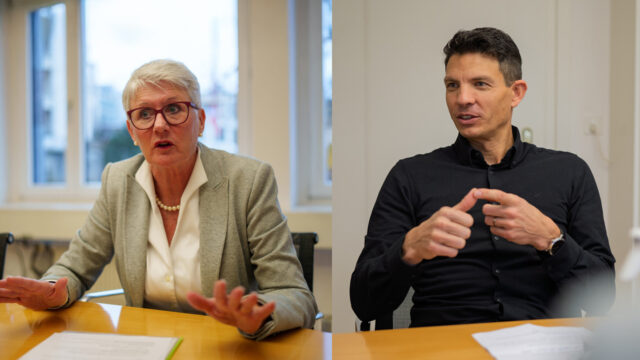
  • Why Next Property AG?

    Why Next Property AG?

    Why does the property industry need Next Property AG?
    To create favourable framework conditions that enable industry players to operate as independently and self-determinedly as possible in a digital world without becoming a pawn in the hands of dominant companies.

    What is Next Property AG’s vision and how do you achieve it?
    We are committed to fair competition in the Swiss property industry on behalf of our shareholders. This includes the monitoring and risk assessment of technological developments and co-determination in the design of customer interfaces as well as the processing and monetisation of data generated by our shareholders in their day-to-day business.

    To realise this vision, we primarily need industry players who are willing to invest in their entrepreneurial future and share the idea that effective alliances are needed to have a say in a digital world. This is not about short-term success, but about ensuring that the provision of professional real estate services as we know them today remains attractive in the future.

    Doreal estate agents and managers have to fear for their business model?
    If we look at developments outside the real estate industry, digitalisation is undoubtedly leading to radical changes to long-established business models. In other words, digitalisation offers new opportunities to meet the current needs of employees, employers and customers. This realisation is not new, but we are finding that the maturity of the development is now such that the changes are increasingly being felt by companies in the property industry. Companies that adapt to the dynamics of the digital world need not worry about their business model.

    How can the property industry prepare for the challenges of the digital future?
    It has become clear that even large established industry players are too small to play a significant role in the digital developments of an industry. We therefore recommend that property companies join forces in a powerful interest group such as Next Property AG in order to work together for favourable framework conditions.

    Is there an example of this?
    A current example of this is the promotion of the property marketplace newhome, which adheres to agreed industry principles and in which the more than 500 Next Property AG shareholders are indirectly involved. Together, early or exclusive advertisements and targeted marketing campaigns are used to ensure that newhome becomes a regionally competitive marketplace alternative for professionally marketed properties. We recommend “newhome first”.

  • Losinger Marazzi implements climate strategy in its projects

    Losinger Marazzi implements climate strategy in its projects

    What climate strategy is Losinger Marazzi pursuing?
    Lennart Rogenhofer: With our climate strategy, we are pursuing the goal of reducing our CO² emissions by 30 per cent by 2030 compared to 2021. We will achieve this by focussing more on timber construction and renovation projects and by treating sustainability as a key issue in all projects. We are pursuing a scientific approach in accordance with the Science Based Targets Initiative, which also audits our target achievement, among other things.

    How is the strategy being implemented in practice?
    We have been fully integrating sustainability into our corporate strategy for years. Examples of this include the major projects Greencity in Zurich (Switzerland’s first 2000-watt site under development in 2012), Erlenmatt West in Basel (Switzerland’s first 2000-watt site in operation in 2013) and the sustainable Églantine neighbourhood in Morges in 2019.

    Following further in-depth steps in recent years, we are systematically implementing our climate strategy. Since 2019, we have been consistently preparing a carbon footprint for the construction and operation of buildings for each project – i.e. over the entire life cycle of a project and regardless of the environmental labels we are aiming for. This has enabled us to build up a database of experience that makes it possible to estimate and reduce the emissions of future projects.

    What goals is Losinger Marazzi pursuing with regard to timber construction?
    Timber construction is a focal point of Losinger Marazzi’s climate strategy. This involves focussing more on building materials with low CO2 emissions, such as wood. Our climate strategy aims to minimise the life cycle emissions of a building during its construction and operation from the design stage onwards. The increased use of wood is naturally an important element here, always according to the principle of “the right material in the right place”. This means focussing on local, lightweight, bio-based materials where they are best suited in terms of their technical properties and have the greatest impact on sustainability. In addition to a reduction in CO2 emissions, this can also mean better deconstructability or a contribution to a pleasant indoor climate, for example. We are already implementing this strategy in projects such as the Greencity construction site B6 (Vergé), the administrative building of the Canton of Lucerne and the BERN 131 service building.

    Current projects:
    Greencity Baufeld B6 (Vergé)
    In Zurich with an optimised energy concept (100 % renewable) and a materialisation fully geared towards sustainability (timber façade, lightweight interior walls, slim supporting structure, etc.)

    Administrative building of the Canton of Lucerne
    For around 1500 employees at Seetalplatz in Emmenbrücke (LU), including a timber atrium, SNBS Gold and Minergie-P-ECO certification

    Service building BERN 131
    In Wankdorf Bern with photovoltaic modules on the roof and façades, timber construction and SNBS Gold certification

    Côté Parc
    urban regeneration projects in Geneva and Spenglerpark in Münchenstein (BL), in which the focus was actively on utilising and upgrading the existing buildings instead of demolishing new ones

  • Market position strengthened through company takeover

    Market position strengthened through company takeover

    GammaRenax AG is moving under the umbrella of ISS Facility Services AG in Zurich. The Dübendorf-based company will operate under the ISS brand in future, the Swiss subsidiary of the globally active ISS Group for property management and facility management, headquartered in Copenhagen, announced in a press release. No details of the purchase price are provided in the press release.

    “The acquisition of gammaRenax AG represents an important expansion of our competences and a strengthening of our market position”, André Nauer, CEO of ISS Switzerland, is quoted as saying in the press release. “Like ISS Switzerland, gammaRenax stands for quality, customer focus and professionalism.” The new acquisition is intended to expand ISS Facility Services AG’s range of services for hotels and hygiene management for spa and wellness areas, as well as training and further education.

    Severin Gallo, former owner and Managing Director of gammaRenax AG, will join the Board of Directors of ISS Facility Services AG as part of the takeover. “Severin Gallo is a recognised expert within our industry and one of the leading figures who has shaped the facility services sector over the last 27 years,” explains Nauer. “By joining our Board of Directors, he will also be strategically committed to professional integration and will also provide strategic consulting services.”

  • Historic election at the Swiss Association of Engineers and Architects

    Historic election at the Swiss Association of Engineers and Architects

    Susanne Zenker has been elected as the new President of the Swiss Society of Engineers and Architects(SIA) by the Assembly of Delegates. According to a press release, this is the first time in the approximately 190-year history of the professional association that a woman has been elected to the top position. The Swedish-born architect, who trained at the Swiss Federal Institute of Technology in Lausanne(EPFL), brings many years of experience in the construction sector and in the design of sustainable living spaces to the post, the press release explains. Susanne Zenker is currently Head of Development and a member of the Executive Board of SBB Real Estate. She is also a trustee of the Swiss Building Culture Foundation.

    “With its members, the SIA brings together an enormous amount of knowledge and commitment under one roof,” Zenker is quoted as saying in her speech in the press release. “The sustainable design of living space is a challenging and diverse task. In the SIA, we therefore need to network our knowledge even more in order to remain effective. This is what I would like to do as President”. Susanne Zenker will take office on 1 July 2024 and will leave SBB Real Estate at the end of June.

    “The election of a woman to head the association is a historic moment. In Susanne Zenker, the SIA is gaining an experienced bridge builder. I am convinced that she will be able to align the diverse interests in the association towards common goals,” explains Alain Ouveley, one of the interim Co-Presidents.

    The delegates also elected Sarah Kristin Schalles to the Board.

  • Helvetica strengthens management team to realise strategic goals

    Helvetica strengthens management team to realise strategic goals

    As part of its long-term corporate strategy, important personnel decisions have been made to strengthen its management team and optimise the company’s competitive position. The latest additions to the team include Dirk Adriaenssen as Head of Asset Management, Mauro Golinelli as Investor Relations Specialist and Ruedi Voegeli, who takes over the Finance, Controlling and Accounting department.

    Dirk Adriaenssen has more than 25 years of industry experience in the retail, office and residential property sectors. He has been active in various European markets, including ten years in Switzerland. Most recently, he supported the integration of Credit Suisse’s property portfolios into the UBS portfolio and previously led the management of commercial property portfolios in Switzerland and Central Europe as Country Managing Director at Redevco. Adriaenssen, who holds a Master’s degree in law from the University of Brussels and is MRICS certified, will be responsible for asset management and strategic property management at Helvetica.

    Mauro Golinelli, who will start on 1 June 2024, will act as Client Relationship Manager, fostering relationships with investors and strengthening the company’s presence in French-speaking Switzerland in particular. With over ten years of experience at the Swiss Finance & Property Group, he has in-depth knowledge of property investment sales and is a federally certified finance and investment expert.

    Ruedi Voegeli, who has been part of the team since January 2024, will take over as Head of the Finance, Controlling and Accounting departments. Voegeli was CFO of PFS Pension Fund Services and previously worked at Edelweiss Air. He has extensive experience in financial management and is a business economist FH as well as a federally certified expert in accounting and controlling.

    These strategic appointments are part of the endeavour to manage its funds effectively and offer innovative solutions that meet changing market conditions. The expansion of the team should contribute to the efficient implementation of the funds’ objectives and consolidate the company’s position as a leader in the property investment sector.

  • Beatrice Lifart tritt als neue CEO an

    Beatrice Lifart tritt als neue CEO an

    Since joining the company in 2000 as Head of Human Resources, Beatrice Lifart has steadily developed her career. She has filled her most recent position as Deputy CEO with her deep understanding of the organisation and her exceptional management skills. Under her leadership, Human Resources has focused heavily on driving employee development and advancement, which in turn has been the foundation for high customer satisfaction.

    As a member of the Executive Board and in her role as Deputy CEO, Lifart has made a decisive contribution to the company’s success. She has also demonstrated her ability to combine strategic foresight with a strong focus on customer orientation in various interim management positions, including as head of construction management. This experience makes her the ideal manager to continue positioning Livit successfully in a rapidly changing industry.

    Hermann Inglin, Chairman of the Board of Directors, emphasises Lifart’s significant influence on the company’s image: “Beatrice Lifart has made a significant contribution to Livit being perceived today as an innovative and future-oriented company. Her outstanding customer focus and strategic vision have set new standards in the industry.” With Beatrice Lifart at the helm, the Board of Directors is relying on an experienced manager who will ensure stability and quality in the further development of Livit. Her vision for the company, coupled with her commitment to innovation and customer satisfaction, promises a dynamic future for Livit.

  • Successes, prospects and highlights of the 100th immoTable in Zurich

    Successes, prospects and highlights of the 100th immoTable in Zurich

    As part of the 100th immoTable at Ambassador House, one of the top events for the real estate industry, not only was progress celebrated, but topics such as sustainable urban development and the shortage of skilled workers were also addressed. Sabine Billeter briefly summarized the developments of the last five years. Arun Banovi then presented the new industry-specific job platform, which is an important resource for skilled workers. ImmoMedia is responsible for several media vehicles, such as the immoNewsletter, www.immo-invest.ch, immobilienJobs.ch, immoTermine.ch, the magazine immo!nvest a platform for locations and real estate.

    The focus of the event was the discussion on Zurich’s development strategies, which were presented by Fabian Streiff, Head of the Canton of Zurich’s Department of Economic Affairs. He emphasized Zurich’s strong position compared to other European cities and outlined innovative projects such as the research being carried out by universities, colleges and ETH on topics such as drone infrastructure, regulating the last mile and connecting with co-working and meeting zones for pedestrians and cyclists as well as the public transport network. The increasing shortage of skilled workers and demographic challenges were also the focus of the discussion.

    Martin Schneider, Deputy Director of the City of Zurich’s Office for Urban Development, highlighted the need to create living space for the city’s predicted growth. He referred to the importance of flexible housing concepts and the need to adapt land use to noise protection and climate targets. He also spoke about urban expansion and densification in the context of ISOS, which illustrates the complexity of urban development.

    Sustainable construction was also discussed, represented by Jura Cement-Fabriken AG, which has set itself the goal of building sustainably with concrete by 2030. Reducing CO2 emissions by changing material compositions was highlighted as an important factor in future construction practice. EWZ has also set itself the goal of 100% climate-neutral heating and cooling. The approach was illustrated to the participants using the Guggach and Greencity projects.

    Finally, Stefan Fahrländer, owner of Fahrländer Partner Raumentwicklung, emphasized the need for political measures to speed up the construction process and thus improve responsiveness to market needs. His comments underlined the need for faster and more efficient implementation of construction projects in Switzerland.

    The event was rounded off with a performance by rapper and beatboxer Knackeboul, who summarized the content of the event in a dynamic rap. In this way, the combination of specialist knowledge and cultural integration was illustrated in an entertaining way.

  • App revolutionises asbestos control in buildings

    App revolutionises asbestos control in buildings

    Asbestos remains a major problem in the construction industry, even decades after it was banned. Improper renovation or demolition work on affected buildings can release dangerous asbestos fibres that pose a significant health risk. The latest VDI standard DIN 6202 Sheet 3 sets new standards for precise pollutant analyses, which can be efficiently implemented using the “IK Report App”.

    The app presented by Robin Krepp, Managing Director and co-founder of IK-Report GmbH, enables direct data acquisition on mobile devices, which reduces the need for subsequent digitisation and considerably simplifies the process of pollutant testing. The intuitive user interface and instant processing of data allows professionals to act quickly and accurately, without time-consuming manual steps.

    The app integrates advanced functions such as the linking of findings and the automatic calculation of the certainty of results in accordance with VDI 6202 Sheet 3. These functions allow precise planning of sampling and adaptation to new findings during the inspection. A further advantage is the avoidance of transmission errors through direct digital recording, which improves the accuracy of the data and the allocation of photos and site plans.

    In addition to recording asbestos, the app can also be used for other pollutants and supports the documentation and evaluation of air measurements and fire dampers containing asbestos. The range of applications of the IK Report app makes it an essential tool for the modern construction industry, which not only increases efficiency but also significantly improves health safety in construction.

  • Glarner Kantonalbank seeks projects for sustainability award

    Glarner Kantonalbank seeks projects for sustainability award

    The Glarner Kantonalbank(GLKB) awards the Glarus Sustainability Prize once a year. With this award, GLKB aims to promote projects and initiatives by Glarus residents that contribute to sustainable development in the canton. The prize is endowed with CHF 10,000. According to GLKB, applications for the third edition of the prize can be submitted from now until 30 June.

    Projects that deal with at least one of the three pillars of environment, society and economy can be submitted. The environment includes the reduction of greenhouse gases and renewable energies, energy efficiency, conservation of resources, reduction of harmful substances or biodiversity. In the area of society, the projects should deal with fairness and justice, social commitment or the promotion of Glarus culture. For economic development, ideas are sought that contribute to the creation of local jobs or include sustainable business models with development potential and innovative technologies.

    Private individuals and legal entities such as associations can take part. Research projects and applications for scientific work are also eligible, provided they “have a clear sustainability impact on the canton of Glarus” or, in the case of supra-regional impact, the designated prize winners have a direct connection to the canton of Glarus, according to the press release.

    Last year, the Obstalden heating network won the prize. The heating network is fuelled solely by local and renewable energies and secures jobs. The project was selected from a total of 21 entries.

  • Mischa Bosshard manages Haupt + Studer AG

    Mischa Bosshard manages Haupt + Studer AG

    Mischa Bosshard took over the management of Haupt + Studer AG on 1 April. According to a company press release, the former project manager places particular importance on a partnership-based relationship with customers, sustainability and the development of employees and apprentices. “Sound expertise is essential in our industry, and young people are our future,” Bosshard is quoted as saying in the press release. “What we teach them, they can continue and build on.”

    Bosshard takes the place of René Hasler. The long-standing Managing Director was able to set another milestone in the history of Haupt + Studer with the anniversary celebrations at the end of March to mark the company’s 100th birthday.

    Haupt + Studer is active in the fields of electrical installations, building technology and telematics. It employs 41 specialists and ten apprentices. It has been part of the Baumann Koelliker Group since 2007.

  • Corentin Fivet becomes the new head of the Smart Living Labs

    Corentin Fivet becomes the new head of the Smart Living Labs

    Corentin Fivet will take over as head of the Smart Living Lab at the Fribourg branch of the Swiss Federal Institute of Technology Lausanne(EPFL) in spring. He has been a professor at EPFL since 2016 and, according to a press release, has developed pioneering methods for the reuse of concrete slabs, walls and beams made of wood or steel. The Smart Living Lab celebrates its tenth anniversary in 2024.

    When Fivet took up an assistant professorship at the EPFL in Fribourg, his field of research was still in its infancy, according to the press release. “It was easy to review the literature, as hardly anything had been published,” he is quoted as saying. At that time, the reuse of load-bearing structures was not as widespread as it is today. And the Smart Living Lab itself was also in its early stages. The Smart Living Lab is a joint initiative of three Swiss universities – EPFL, the School of Engineering and Architecture Fribourg(HEIA-FR) and the University of Fribourg.

    “We now have around a dozen research groups that have achieved numerous successes – including some that have been recognised internationally. My appointment as academic director of the centre marks the beginning of the next phase,” Fivet is quoted as saying.

    Fivet will take over as Academic Director of the Smart Living Lab on 1 April 2024 and will work alongside Martin Gonzenbach, who will continue as Operational Director. Fivet will continue to pursue the Smart Living Lab’s goal of serving as a catalyst for sustainability and well-being in the built environment, according to the press release. One of its first goals will be to expand the centre’s training courses for architects, civil engineers, construction managers and property managers.

  • Stefan Walter new Director of FINMA

    Stefan Walter new Director of FINMA

    Following his election by FINMA’s Board of Directors, Stefan Walter’s appointment as Director of the authority has now been approved by the Federal Council. Mr Walter’s impressive career includes significant experience in financial market regulation, including leading the development of supervision for global systemically important banks at the European Central Bank. In his previous role as Secretary General of the Basel Committee, he played a key role in coordinating global regulatory reform negotiations following the global financial crisis.

    A German national with a Master’s degree in International Banking and Finance from Columbia University, Stefan Walter, 59, brings a deep understanding and extensive knowledge of financial market supervision. He succeeds Urban Angehrn, who stepped down in September 2023 for health reasons. Birgit Rutishauser will continue in the role of FINMA Director on an interim basis until Walter takes office on 1 April.

    Walter’s appointment is seen as an important step for FINMA to strengthen its position as the leading regulator in the financial sector. His extensive experience will help to further develop Swiss financial market regulation and establish it at an international level.

  • UBS ernennt neuen Leiter für globale Immobilien-Investments

    UBS ernennt neuen Leiter für globale Immobilien-Investments

    Die Schweizer Großbank UBS hat eine Neubesetzung in ihrem Asset Management Bereich bekannt gegeben. Jon Hollick wurde zum neuen Leiter der weltweiten Immobilien-Investments ernannt, eine Position, die alle Märkte außerhalb der Schweiz, Deutschlands und Österreichs (DACH) umfasst. Diese Änderung folgt auf die Integration des Geschäfts der Credit Suisse (CSAM) in die Strukturen der UBS, was zu einer Neustrukturierung des Immobilienteams geführt hat.

    Hollick, der bisher das Immobiliengeschäft der UBS in der Marktregion Europa, Naher Osten und Afrika (EMEA) leitete, mit Ausnahme der DACH-Region, bleibt in seiner neuen Rolle Joe Azelby, dem Leiter des Bereichs Real Estate & Private Markets, unterstellt. Mit der Übernahme der Geschäfte der Credit Suisse hat UBS ihre Position als einer der weltweit führenden Immobilienmanager weiter gefestigt und plant, die sich daraus ergebenden Wachstumschancen auf ihrer erweiterten globalen Plattform zu nutzen.

    Neben der Ernennung von Hollick gibt es auch Berichte über Mitarbeiterwechsel von der übernommenen Credit Suisse zu Konkurrenzunternehmen. Trotz dieser Veränderungen bleibt die Leitung der DACH-Region unter der Verantwortung von Daniel Brüllmann unverändert.

    In seiner neuen globalen Rolle wird Hollick die Wachstumsziele im Immobilienbereich der UBS weiterentwickeln und ausbauen. Bis ein Nachfolger für die Leitung der EMEA-Region gefunden wird, wird Hollick diese Märkte weiterhin betreuen.

  • Dr. Tanja Pohle tritt als neue Partnerin in die Geschäftsleitung von pom+Consulting AG ein

    Dr. Tanja Pohle tritt als neue Partnerin in die Geschäftsleitung von pom+Consulting AG ein

    Die Berufung von Dr. Tanja Pohle in die Geschäftsleitung, repräsentiert einen wichtigen strategischen Schritt. Dr. Pohle, die bereits seit 2013 im Unternehmen tätig ist, hat sich durch ihre Arbeit im Bereich der Organisationsentwicklung und Prozessgestaltung, insbesondere in der Immobilienwirtschaft, einen Namen gemacht.

    Ihre Rolle als Head of Service Unit Organisation & Processes ermöglichte es ihr, signifikante Fortschritte im Bereich der Workplace Solutions zu erzielen. Dies beinhaltete die Einführung neuer Beratungsansätze, die sich an den sich verändernden Bedürfnissen einer modernen Arbeitswelt orientieren. Besonders hervorzuheben ist dabei ihr Engagement für Smart Office- und New-Work-Konzepte, die durch die Corona-Pandemie an Bedeutung gewonnen haben.

    Der akademische Hintergrund, mit einem Diplom in Bauingenieurwesen von der Technischen Universität Berlin, einem Doktorat in Baubetriebswissenschaften von der ETH Zürich und einem MBA im Business Engineering von der Universität St. Gallen, bildet die Grundlage für ihre umfassende Expertise. Ihre Fähigkeiten in der Organisationsentwicklung, verbunden mit ihrem Verständnis für technische und betriebswirtschaftliche Aspekte, haben maßgeblich zur Entwicklung des Unternehmens beigetragen.

    Mit Dr. Pohles Ernennung zur Partnerin soll ihre Expertise und Erfahrung nun auch in strategische Entscheidungen einfließen. Ihre bisherige Laufbahn, die durch vielseitige Kompetenzen und innovative Ansätze gekennzeichnet ist, passt hervorragend zur Unternehmensphilosophie Sie wird in ihrer neuen Rolle in der Geschäftsleitung maßgeblich dazu beitragen, die zukünftige Richtung mit zu gestalten und die Prinzipien des New Work in der Immobilienwirtschaft weiter zu verankern.

  • Susanne Szentkuti, urban planner

    Susanne Szentkuti, urban planner

    You are an urban planner and co-head of the City of Thun’s planning department.
    What are your core tasks?

    Urban planning lays the foundations for high-quality inner-city development in the city of Thun. In doing so, we want to further strengthen the existing qualities of Thun as a place to live and work and preserve specific identities. At the same time, space is to be created for new uses so that Thun can continue to position itself as an attractive place to live and work in the future. In addition to carefully coordinating settlement development with current and future mobility, it is particularly important to preserve and connect our valuable landscape areas and qualities.

    What are your biggest challenges at the moment?
    We are required to harmonise the diverse and numerous demands on the limited space available as well as possible while always keeping the public interest in mind. It is not always possible to fulfil all individual interests to the maximum. One of the greatest challenges today is to sound out and communicate the diverse needs within the framework of carefully designed processes and with the appropriate involvement of stakeholders and the population. At the same time, this makes urban planning incredibly exciting. Equally important is a strong focus on high-quality public spaces and open spaces that can be used in a variety of ways. These are becoming increasingly important as inner city development progresses and we should learn to think about the city from the open spaces and not primarily from the buildings.

    What are you doing for site development?
    With the local planning revision (revision of the building and zoning regulations), which should soon be approved by the canton, we are creating the basis for a more efficient use of land, whether in residential, mixed or working areas. Mixed-use areas in particular should increasingly be able to accommodate an attractive mix of living, working, services, amenities and leisure. By strengthening other central, well-developed locations (in addition to Thun city centre) such as Thun South, Thun North or along Gwattstrasse, additional and attractive space can be created for existing and new companies. The two cantonal development centres ESP Bahnhof and ESP Thun Nord should also not be forgotten. Thanks to their location, their current and future function as multimodal transport hubs and the areas that can be transformed, both areas have enormous potential for jobs and contemporary housing.

    What are currently the most important construction projects in Thun?
    The list is – fortunately – long! We are working together with various landowners and external partners on very exciting projects that are important for Thun’s development. Some of these are profiled in this issue of immoinvest. To name just a few, some of them are significant;

    • the Thun railway station ESP
    • the Thun North ESP
    • the Siegenthalergut
    • the Hoffmatte
    • the Bostudenzelg
    • the Freistatt
    • the Bernstrasse project
    • the Gewerbestrasse project

    These attractive and lively new urban building blocks make an important contribution to the urgently needed housing supply.

    Do you still have development sites available for the future?
    With Siegenthalergut and Bostudenzelg, we will be able to develop two of the last remaining undeveloped areas in the settlement area in the foreseeable future. Further developments will increasingly focus on the transformation and further development of existing areas, which will be developed as part of special utilisation planning. In addition to those already mentioned, the Bahnhof West area and Gwattstrasse are particularly worthy of mention here. The Schönau West area, which is mainly characterised by cooperative housing estates, is also worth mentioning.

    Where does Thun stand in terms of mobility?
    Thun railway station is the region’s transport hub. Thanks to the further development and redesign of the railway station ESP, we are ensuring the efficiency of this hub for the next generation. At the same time, a new S-Bahn stop will be opened in the Thun North ESP in 2032, which, as a new mobility hub, will not only provide optimal access to this new part of the city but, together with a new tangential bus route, will optimally connect the Steffisburg – Thun North – Thun West and Thun South areas and thus also relieve the station. The city of Thun already has a dense bus network, which will be further optimised in the coming years. In addition, new attractive connections for cyclists and pedestrians will be created over the next few years based on the city’s overall transport concept.

    What makes Thun an attractive place to live?
    The quality of life is very high and you can find everything you need in a small area. The city centre and residential areas are within easy reach. Thun is therefore already very close to the so-called 15-minute city centre. Thun offers a very diverse range of cultural, leisure and amenities. The town is very green and surrounded by attractive recreational areas. And from Thun, you can be in Bern, the Oberland, Valais or even Italy in no time at all!
    With the local planning revision and the various ongoing site developments, we are also creating the basis for a diverse, attractive and contemporary residential offering over the next few years. This will ensure that everyone who wants to stay in Thun or come to Thun will find a suitable place to live in our attractive town.

    What is the situation regarding vacant housing in Thun?
    Thun has one of the lowest vacancy rates in Switzerland (0.09). This shows that Thun is a very attractive place to live. At the same time, we need to expand the housing supply as quickly as possible. With the local planning revision and projects such as Hoffmatte, Siegenthalergut and Bostudenzelg, we are making good progress together with our external partners. The municipal council’s Housing Strategy 2030 and the STEK 2035 urban development concept form the strategic basis for this. The aim is to create a diverse range of housing that appeals to all generations and includes a wide variety of housing types.

    Is there affordable housing in Thun?
    Thun has a long tradition of cooperative housing construction. Co-operatives and other non-profit housing developers make an important contribution to a diverse and affordable housing supply by being committed to the principle of cost-based renting. Currently, the proportion of cooperative flats is 10.4 %. This is set to increase continuously over the next few years. With projects such as Freistatt, Bostudenzelg and Siegenthalergut, the city can directly promote these forms of housing by granting building rights for land to non-profit housing developers. It also supports the cooperatives in the renovation and further development of their existing housing estates.

    Where do you see Thun in 30 years’ time?
    Thun will still be recognisable as Thun. With its different neighbourhood identities, the strong greenery and its lively city centre, which is directly connected to the centrally located railway station district – a diverse, attractive place where a wide variety of uses come together. In the north of the city, people get off the S-Bahn and find themselves in a new urban quarter that combines living, working, leisure, culture and local recreation. All of this is still surrounded by an intact and biodiverse landscape. A city that is worth living and working in.

  • “Thun should develop without losing the city’s identity”

    “Thun should develop without losing the city’s identity”

    Mr Lanz, you have been Mayor of Thun since 2011. What have been your greatest successes and failures during this time?
    During my term of office as Mayor of Thun since 2011, we have achieved many successes. Thun has generally developed very well, which is reflected in rising tax revenues, above-average income growth and record overnight stays, for example. Our town is characterised by a very high quality of life. However, it is difficult to name specific high and low points, as politics is the result of many joint endeavours. The well-being of the citizens is at the centre of my concerns and I believe that they enjoy living in Thun.

    How is the town of Thun doing economically?
    Thun’s economic situation has changed over the years; we were once heavily dependent on military operations and the army. Today, we have a diversified SME economy, with 96% of businesses employing fewer than 50 people. This ensures a robust, constant and stable economy without major fluctuations. In terms of tourism, we are at an all-time record, which shows that Thun is very popular with tourists.

    What are the city’s economic drivers and how dependent is the city on them?
    In Thun, we are fortunately no longer dependent on individual economic drivers. Large employers such as Thun Hospital or construction companies such as Frutiger AG are important, but their performance does not influence the entire economic area. Our strength lies in our broad diversification, with a particular focus on mechanical engineering. Even if individual prominent companies relocate, the impact on our economy is moderate and we are well able to compensate for such changes.

    How has the city of Thun developed in recent years?
    Thun has developed very positively in recent years, which is also reflected in its growing tax capacity. We have one of the lowest vacancy rates in Switzerland, which on the one hand emphasises our attractiveness, but on the other hand also poses challenges, especially for young families looking for living space. To counteract this, we are focussing on various area developments. We also emphasise the recreational qualities of our city on the water and in the mountains, for example through the Lake Thun Games or the Thun Water Magic.

    What are Thun’s advantages as a business location?
    One of Thun’s key advantages for companies is its attractiveness for skilled workers, as they are drawn by the outstanding leisure facilities and its location on the water. This attractive environment makes it easier for companies to attract and retain qualified employees. We endeavour to create optimal framework conditions, including short distances to politics and effective business development. This creates a business environment that contributes to prosperity.

    How does the city administration co-operate with local, regional and cantonal business associations to promote the location?
    We maintain close relationships both in the local and regional economic area as well as with the cantonal economic development organisation. Constant dialogue with the business associations is very important to us. If concerns arise, we can contribute our expertise or request support. Overall, this co-operation works extremely well.

    What have been the most important urban development projects in recent years?
    A central project in Thun’s urban development is the recently approved revision of the entire local planning, which includes the basic building regulations and has spanned several legislative periods. In addition to local planning, we are placing particular emphasis on site developments, with the railway station and the former military site in Thun North considered to be premium development priorities. A new S-Bahn station is also planned in the Thun North area. The Thun development area is responsible for regional planning, whereby the cantonal structure plan is broken down to the individual municipalities. This regional planning organisation coordinates settlement and transport planning to ensure that everything is developed in a coordinated and not contradictory manner.

    What are the city’s long-term goals in terms of economic growth and location promotion?
    We certainly need a certain amount of economic growth. I am convinced that this growth will materialise if we succeed in offering the local economy good framework conditions. The greatest opportunity for us are the companies that are already here. We want to support them with development opportunities, which will also ensure that growth is sustainable. I realise that growth must always be compatible with the population, otherwise there will be resistance, which can sometimes turn into blockades.

    Have you experienced such resistance from the population in the last 15 years?
    In the last 15 years, there has of course been resistance from the population to certain projects. As politicians, it is our job to anticipate such resistance and convince the population. By providing transparent information and taking concerns into account, we have been able to successfully overcome every vote on development projects to date.

    Let’s move on to property. What are currently the city’s most important property projects
    ?

    Thun is currently focussing on several real estate projects. One of these projects is “Hoffmatte”, which has been held up by legal delays despite a favourable referendum. Another key project is “Freistatt”, a new housing development by a housing cooperative, for which a referendum is planned soon. In addition, the “Siegenthalergut” will close a gap in the housing estate and transform it into a new neighbourhood. The city attaches great importance to informing the population transparently about such projects and convincing them of the added value.

    Do you still have sites available for the future?
    The city of Thun only has a few sites available for future development. On the one hand, there is potential at the “Siegenthalergut” and opposite the football arena in Thun Süd, where a work zone is planned. I see the greatest development potential in the “Thun North” area, which offers good transport links, a planned railway station and open spaces. However, these areas are army conversion sites, which means that their civilian use harbours a certain degree of complexity.

    How do you see the development of the property market in Thun?
    The property market in Thun has been characterised by rising prices in the past, although a phase of consolidation is currently being observed. Thun is particularly sought after due to its attractiveness, which leads to an illiquid property market with few available and affordable properties. To counteract this, the city is endeavouring to provide adequate living space for all sections of the population, including young families and older people, through various site developments.

    Is there currently a housing shortage in Thun? If so, how are you dealing with it?
    There are currently housing challenges in Thun. Two main approaches to tackling this problem are site development and building regulations. The local planning revision will enable increased internal development so that more can be built than before. This should incentivise landowners to make better use of their property and thus reduce the housing shortage.

    There is a shortage of skilled labour throughout Switzerland. What is the situation in Thun?
    The shortage of skilled labour is just as prevalent in Thun as it is throughout the country. The city is focussing on creating an attractive environment for potential skilled workers and their families, as this increases the likelihood that they will decide to work in Thun. We know from feedback from companies that an attractive residential and living environment is very important for attracting skilled labour.

    What is your vision for the future development of the city?
    Thun has developed very positively, which is why we don’t want to make any fundamental changes. My main aim is to ensure that residents enjoy living in Thun. We are paying particular attention to the development of Thun North, inner city development, various site developments and the associated creation of open and green spaces. Despite growth, we are endeavouring to preserve Thun’s characteristic qualities and not expand at all costs. For example, we have built a ring of multi-storey car parks around the city centre to reduce traffic in the city centre and improve the quality of life. We always try to create win-win situations and not play individual measures off against each other.

  • Erfolgreiche Bilanz trotz herausforderndem Markt

    Erfolgreiche Bilanz trotz herausforderndem Markt

    In den ersten neun Monaten des Jahres 2023 verzeichnete die Unternehmensgruppe einen Umsatzrückgang von 12,3% auf CHF 2’390 Mio. Der Rückgang ist teilweise auf negative Währungseffekte in Höhe von CHF 119 Mio. zurückzuführen, die durch den erstarkten Schweizer Franken verursacht wurden. In lokalen Währungen betrug der Rückgang 7,9%. Trotz dieser Herausforderungen gelang es, die EBITDA-Marge um 320 Basispunkte auf 31,3% zu steigern und das Gewinnwachstum pro Aktie in lokalen Währungen um 5,2% zu erhöhen.

    Der Nettoumsatz im dritten Quartal belief sich auf CHF 728 Mio., was einem Rückgang von 7,9% im Vergleich zum Vorjahresquartal entspricht. Währungsbereinigt ergab sich eine Abnahme von 4,8%, getrieben durch Volumenrückgänge und einen positiven Preiseffekt von etwa 6%.

    Die europäischen Märkte waren besonders von den schwierigen Bedingungen betroffen, mit einem währungsbereinigten Umsatzrückgang von 9,2% nach neun Monaten. Insbesondere Österreich, Deutschland und Osteuropa verzeichneten zweistellige Rückgänge, während die Region Nahost/Afrika ein Wachstum von 11,5% erzielte.

    Der währungsbereinigte Nettoumsatz sank bei Rohrleitungssystemen um 5,4%, bei Badezimmersystemen um 7,9% und bei Installations- und Spülsystemen um 10,1%.

    Trotz des herausfordernden Marktumfelds gibt es positive Aspekte wie den Bedarf an Renovierungen, den Trend zu höherwertigen Sanitärstandards und das günstige Marktumfeld in Ländern wie Indien und der Golfregion. Die Unternehmensgruppe hat sich für 2023 auf strategische Stabilität und operative Flexibilität fokussiert, um die Herausforderungen zu meistern und das mittelfristige Potenzial nicht zu beeinträchtigen.

    Für das Gesamtjahr 2023 erwartet die Unternehmensleitung einen Rückgang des Nettoumsatzwachstums in lokalen Währungen im mittleren einstelligen Bereich und eine EBITDA-Marge von 29 bis 30%. Die Unternehmensleitung ist überzeugt, dass das Unternehmen aus der aktuellen Marktsituation gestärkt hervorgehen wird. Diese Überzeugung stützt sich auf die stabile Strategie, starke Kundenbeziehungen und die finanzielle Stabilität des Unternehmens.

  • Beatrice Bichsel becomes new Head of SBB Real Estate

    Beatrice Bichsel becomes new Head of SBB Real Estate

    Beatrice Bichsel has worked in various functions at SBB Real Estate for twelve years. During this time, she has become familiar with the various facets of the business and has played a decisive role in shaping the division. Beatrice Bichsel has been Head of Facility Management as a member of the Management Board since June 2020 and has been interim Head of SBB Real Estate since Alexander Muhm took over at SBB Freight Traffic. As Head of Facility Management, she has strategically realigned the department, standardised service provision throughout Switzerland and further developed the business processes and organisation.

    Beatrice Bichsel will take over as Head of SBB Real Estate on 1 September 2023. Beatrice Bichsel holds a Bachelor’s and Master’s degree in law from the University of Berne and was admitted to the bar of the Canton of Berne in 2008. Most recently she completed an Executive MBA at the University of St. Gallen. She is 41 years old and lives in Gümligen.

    “I am delighted that with Beatrice Bichsel we have been able to attract a dynamic, committed and competent leader as part of our internal succession planning. She is very familiar with SBB, the real estate industry and our current challenges,” says SBB CEO Vincent Ducrot.

    The Board of Directors and the Management Board wish Beatrice Bichsel much pleasure and success in her new tasks

  • Energy Cluster invites to one-day course on photovoltaic façades

    Energy Cluster invites to one-day course on photovoltaic façades

    The Energy Cluster network based in Bern invites interested parties to a day course on photovoltaic facades (PV facades) at the Lucerne University of Applied Sciences and Arts(HSLU) on 12 September. From 8.30 a.m. to 5 p.m., speakers will shed light on various aspects of house facades for the production of solar energy, according to a media release.

    Accordingly, David Stickelberger, Head of Market and Policy at Swissolar, will discuss the political framework conditions for PV façades from 9 a.m. onwards. From 9.30 a.m., Christoph Wangler, Product Owner PV Systems at 3S Swiss Solar Solutions, will address the question of how sustainable solar modules are.

    From 10.40 a.m., Roger Buser, lecturer in building technology and energy at the HSLU, will discuss the process steps from a rough estimate to the construction project. Pierre-Olivier Cuche, Managing Director at Solarwall, will then talk about the architecture and design of PV façades. From 11.40 a.m. Andreas Haller, Head of Innovation Solar Systems at Ernst Schweizer AG, will talk about implementation planning and installation.

    After the lunch break, the talk will continue with the topic of fire protection in a presentation by Christian Renken, Managing Director of CREnergie GmbH. From 2 p.m. Renken will be devoting himself to the topic of performance and economic efficiency.

    He will be followed by Stefan Gränicher, Project Manager Real Estate Development at Frutiger AG, with his impulse on profitability from the perspective of a real estate developer. Robin Bergamin, Consulting & Sales at Invisia AG, will then talk about energy management and the best possible use of electricity.

    The last lecture of the day is by Sina Büttner, research associate at the Institute for Building Technology and Energy at the Lucerne University of Applied Sciences and Arts, on optimal façade design with solar systems and greening in view of climate change.

  • Until the chemistry is right

    Until the chemistry is right

    The fact that she has mastered her field from A to Z is, as she points out, also thanks to know-how built up by colleagues at Empa – such as engineer Gabor Kovac. He pushed the production of stack actuators with expandable silicone discs for many years and developed them to operational maturity with his partner Lukas Düring until their spin-off “CTsystems” was recently taken over by the Daetwyler Group.

    “The devices for measuring how actuators stretch in different electric fields were developed by them,” Opris says, “we were early on this topic, and that helped me enormously.” Unlike her colleagues, however, the chemist is working less on the technology for printing such components, but one “floor below” – on the synthesis of novel polymers that are suitable as non-conductive layers for stacked transistors, elastic films for power generation and other elements.

    The desired profile: as thin as possible, with the long-term goal of many layers only ten micrometres thick; easily stretchable, sensitive to low current voltage and robust at the same time. And above all: printable, i.e. without solvents for the conductive layers between which the polymers lie. “Solvents can damage the polymer layers. Besides, the material would have to dry for a long time in order not to give off harmful vapours,” explains Opris, “so we try to do without them – with the right chemistry.”

    There are many different requirements that researchers all over the world are dealing with. Suitable compounds that raise hopes are polysiloxanes, which the Empa specialist is also working on. An important advantage of these polymers: they are relatively easy to synthesise; the “backbone” of their strands is very mobile – and they can be specifically manipulated with polar groups, i.e. plus-minus charged molecules.

    Snake-like molecules
    What is difficult for laypeople to understand, Dorina Opris explains with a vivid image: “You can imagine these polysiloxanes like a pot full of snakes that want to move all the time.” The polar groups have a twofold effect on them. On the one hand, they make the molecular snakes more sensitive to electric fields so that they respond to low voltages. On the other hand, they act like a kind of glue between the molecules; this “stiffens” them and thus reduces the important elasticity. It is necessary to fine-tune both effects to achieve maximum success. For a practical application, the transition from the solid to the elastic state at low temperatures is important so that the technology can later be used at room temperature. In addition, such polymer structures still have to be chemically “cross-linked” so that they can become elastic layers – for example by UV light and with the help of so-called end groups: quasi molecular “hats” that the snakes wear at their ends. But in laboratory practice, it has so far proved tricky to reliably provide these polymers with defined end groups. “That annoys me already!” admits Opris with a smile.

    Healthy ambition is needed for the TRANS project, which the chemist herself calls “very, very ambitious”. The team is optimistic because earlier work has already produced encouraging results; for example, a polysiloxane compound that reacted to a voltage of only 300 volts and deformed strongly – an extremely low value. Printing capacitor layers without solvents has also already been achieved. And a doctoral student recently developed a piezo-electric elastomer that, when stretched, shows a significantly higher electrical response than other compounds currently in use.

    Creativity and team spirit for success
    Of course, many more steps are needed to achieve usable successes – and those qualities that have brought Dorina Opris to Empa and ETH Zurich. Not only stamina and the ability to turn failed attempts into progress, but also to create an inspiring environment for employees that allows open debate and also mistakes so that good ideas emerge.

    And above all: optimism. The boss believes that young researchers should be given exciting and challenging projects and then be allowed to work independently so that they remain motivated. Her advice to talented women based on her own biography: “Don’t wait until someone pushes you to do research. You have to be self-motivated and strong, and go for it! And also take a risk sometimes.”

  • Fabian Streiff becomes Head of the Office for Economic Affairs – Hans Rupp Head of the Office for Employment

    Fabian Streiff becomes Head of the Office for Economic Affairs – Hans Rupp Head of the Office for Employment

    In the coming years, the economic challenges will continue to increase. Competition among locations is intensifying, while the world of work is changing rapidly. The digital transformation, more flexible and location-independent working models, as well as the labour shortage pose major challenges for companies, the labour market and the entire economy. In order to be prepared for these in the best possible way, the existing economic and labour market policy competences in the currently broadly structured Office of Economic Affairs and Labour (AWA) will be strengthened organisationally. Therefore, at the request of the Department of Economic Affairs, the Government Council decided last year to transfer the AWA into two independent offices as of 1 January 2024: an Office for Economic Affairs (AWI) and an Office for Labour (AFA).

    The AWI will be responsible for location promotion, economic policy, work permits, working conditions, housing promotion and national economic supply. The AFA will be responsible for the labour market, unemployment insurance and the unemployment fund.

    Hans Rupp with many years of operational and strategic leadership
    Hans Rupp will be the new head of the Labour Office. After studying at the University of Zurich, the 57-year-old gained professional experience in various organisations and companies. Most recently he was managing director of building and housing cooperatives and in the real estate sector. In addition to these operational tasks, Hans Rupp has held various mandates in the area of strategic management. He has many years of experience in operational and strategic management. Among other degrees, Hans Rupp holds an Executive MBA from the University of Zurich.

    Fabian Streiff: From Head of Location Promotion to Head of the Office of Economic Affairs
    Dr. Fabian Streiff will be Head of the Office of Economic Affairs. After completing his studies in geography and economics at the University of Zurich, the 39-year-old first worked as a consultant in the fields of strategy development, sustainability issues and economic promotion before earning his doctorate in economic geography and regional development at the University of Bern. He then headed up location promotion in Basel-Stadt before becoming Director of Healthcare Innovation / DayOne at BaselArea.swiss. Since December 2020, Dr Fabian Streiff has been head of location promotion for the Canton of Zurich at the Office of Economic Affairs and Employment.

    Dr Fabian Streiff and Hans Rupp will take up their posts on 1 January 2024.

    Source: zh.ch

  • Andrea Wegmüller appointed new Head of Property Management at Zug Estates

    Andrea Wegmüller appointed new Head of Property Management at Zug Estates

    Andrea Wegmüller has worked for PRIVERA AG since 2016, initially as Regional Head of Property Management East and since the beginning of 2022 in the role of COO / Head of Property Management Switzerland. Prior to that, he worked for Livit AG for five years in various functions. Andrea Wegmüller is a qualified real estate trustee and holds a Master of Advanced Studies (MAS) in Real Estate Management from the Hochschule für Wirtschaft Zürich (HWZ). Andrea Wegmüller takes over as Head of Property Management from Pascal Arnold, who has decided to take on a new professional challenge after nine successful years with Zug Estates. The Board of Directors of Zug Estates Holding AG thanks Pascal Arnold for his great and professional commitment and wishes him every success for the future.

    Source: Zug Estates

  • Relevance of social sustainability in institutional real estate portfolios

    Relevance of social sustainability in institutional real estate portfolios

    Ms Zimmerli, you are developing criteria for assessing the social sustainability of institutional real estate portfolios. What are your motives?
    In recent years, many institutional owners have set climate targets that go beyond the legal requirements as part of their ESG strategies. After the “E”, the “S” is now slowly coming into focus. The problem is that nobody really knows what constitutes social sustainability. We observe that a lot is projected into the “S”, and the big social contexts are often pushed into the background. We have therefore decided to test with partners from academia, real estate associations and institutional investors on the basis of various portfolios what an operationalisation of social sustainability might look like. Our goal is to define a few clear, easily interpretable and comparable key figures for social performance, to create short checklists to complement them, and thus to give more room to competition for good ideas.

    Many portfolio and asset managers are currently busy preparing reliable energy and emissions data. What prompts you to develop key figures for social sustainability right now?
    It is true that the focus of the real estate industry is still on the collection of climate key figures at the moment. Thanks to the REIDA CO2 benchmark and the environmentally relevant AMAS key figures, there is now a clear orientation framework and good instruments. We want to take both the momentum and the focus on the essentials of these instruments with us, because we are convinced that the real estate industry simply cannot afford to reduce sustainability to environmental issues. The heated debates on the reference interest rate, housing protection and major development projects show that the public and politicians also expect sustainable real estate portfolios to provide answers to social questions.

    In the industry, there is currently no consensus on what is meant by the “S” or how societal-social sustainability should be measured. How do you see it?
    Against the background of the current political discussions, the “S” is not complicated: At the societal level, it is about providing housing to broad segments of the population, about socially mixed living environments and about well-functioning neighbourhoods and districts. For institutional owners, it is about how property portfolios are structured and how the available living space is distributed. For new construction and renewal projects, the question is what happens to existing tenants, for which target groups additional living space is created and how neighbourhoods and districts can be strengthened. Of course, there are countless other needs. However, we believe that key figures should refer to the major social levers and that the market should play a role in individual needs.

    How can and should the “social performance” of a real estate portfolio be effectively measured or assessed?
    We are guided by the philosophy of the environmentally relevant key figures of AMAS and REIDA: “Keep it simple”. In essence, social performance can be measured simply with hard-testable key figures: We are currently testing how data on the portfolio structure and on first-time lettings and re-letting can be collected and evaluated as simply as possible. In addition, we are developing questionnaires that owners can use in their tenant surveys to obtain reliable findings on satisfaction with the neighbourhood, flat or property management. Finally, we use classic key figures on fluctuations and vacancies, which are usually already collected and evaluated.

    The optimisation of ecological criteria often requires high investments. This creates incentives to sell properties with a poor ecological balance. Do properties with poor social ratings face the same fate?

    No, from our point of view there is no danger of stranded assets in terms of social sustainability. We are convinced that basically every property can be transformed in a socially sustainable way with reasonable effort. The most important levers here are renewal planning and management. Renewal planning determines when which properties are to be adapted to current needs and market prices. In management, decisions are made as to who will receive affordable or barrier-free living space. We have selected key figures that can be directly influenced by portfolio and asset managers. We understand social sustainability as the result of far-sighted portfolio and asset management and consistent marketing and management, and not as a property or location attribute. We are also convinced that properties with strong social qualities can compensate for environmental weaknesses.

    Many owners find it difficult that innovative ideas and approaches with which they want to stand out from competitors disappear in extensive checklists and indicator sets of sustainability labels. How can this be prevented?
    By separating obligation from freestyle. We pursue the same goal with social sustainability as REIDA does with ecological aspects: A few uniform key figures should make it visible and comparable how well a portfolio fulfils the mandatory programme. In addition, there are topics for which there are no standardised specifications. Fund management companies and asset managers should be free to decide and communicate how they want to ensure, for example, good neighbourhood care, good cohabitation or good tenant management. We see the “how” as a freestyle; this is where competition, creativity and innovation should play a role. In other words, we want more goal orientation and less micromanagement. In a highly regulated world, ESG should not be a tighter corset, but a springboard with which the real estate industry can prove what it can achieve with yield-oriented portfolios.

    Where do you stand with the key performance indicator set?
    We are currently working on concretising and validating our approach on the basis of four funds of our partners. We will present the findings and a first consolidated draft on 28 September 2023 at the symposium “Measuring social sustainability in ESG – what is it all about?” and discuss it with owners, managers and experts. Interested readers can register here . I would be pleased if we could welcome you at the HWZ in Zurich.

    Source: ssrei.ch

  • “Sustainable and smart city with a high quality of life”

    “Sustainable and smart city with a high quality of life”

    Ms Furrer, what is the task of urban development?
    We deal with the four topics of economy, housing, smart city and social urban development. We contribute our topics to various development processes. In doing so, we rely on trend and potential analyses and data, among other things. We provide information, advice and support projects and services related to these core topics.

    What tasks do you take on with regard to location development?
    We deal with this topic holistically and proactively. Housing and the economy, for example, cannot be considered individually, they influence each other. Location development is a joint task.

    Currently, we are primarily concerned with the business location, including the following two aspects: The first point is the profiling of workplace areas. To this end, we are pursuing the approach of innovation ecosystems and are developing the corresponding foundations. Here we still have some development work ahead of us. Secondly, the companies that are already here, but also other actors, should be able to bring in their concerns and interests and develop further. In this regard, we are in the process of setting up a so-called business service desk.

    What are the concrete goals of Winterthur’s urban development?
    Winterthur should be a sustainable and smart city with a high quality of life, characterised by respectful coexistence and good conditions for business. The population participates in social development, new technologies are promoted. Winterthur continues to develop its good reputation as a liveable city – not least thanks to a diverse range of housing for a wide variety of needs. In the future, however, we also want to position ourselves as a location for technology and innovation. The city should also see itself as a real laboratory (WinLab) for the promotion of innovations and use the competences gained from this. Another goal is data monitoring for our core topics. And we would like to promote Open Government Data.

    What are the biggest challenges for Winterthur at the moment?
    As everywhere, the big issues in Winterthur are the net zero target or digitalisation. And Winterthur is growing. We need more space for housing, jobs, schools, sports and other needs. At the same time, land is in short supply.

    With the “Spatial Development Perspective Winterthur 2040”, the city shows where the greatest potential for densification lies and how it wants to use it: it is about areas with a variety of uses and about workplace areas. Investors and private landowners are showing great interest. This opens up opportunities for the business location, but also challenges us.

    What are the most popular locations for companies?
    That depends entirely on the needs of the companies. Depending on the needs of the company, the accessibility, the zoning, the development potential, the surroundings or the land and rental prices play a greater or lesser role. I would venture to say that demand is generally increasing in the direction of central and well-supplied locations. Of course, there are also companies that prefer a peripheral location because of land consumption or noise emissions. In general, it is important to preserve industrial and commercial zones for the future.

    How doesWinterthur score as a location for companies?
    Firstly, Winterthur is excellently connected: Zurich Airport can be reached in a few minutes, the train connections to Zurich and Eastern Switzerland are optimal. And with the planned Brüttener Tunnel and the expansion of the A1 motorway, transport access will be even better in the future. Secondly, we can score points with successful technology companies that are well equipped for the future. These include large, partly listed companies such as Rieter, Sulzer, Burckhardt Compression and Kistler, as well as a large number of innovative start-ups. The latter are specifically promoted, for example by Technopark Winterthur, the Home of Innovation and the Entrepreneur Club Winterthur. A third plus point is the Zurich University of Applied Sciences (ZHAW). Through its research and development, it ensures the transfer of knowledge, contributes to local innovation and, as a university, produces valuable specialists. In addition, the ETH and the University of Zurich are also not far away.

    What makes Winterthur attractive as a place to live?
    The already mentioned high quality of life and its own charm. The large number of gardens, an intact, historic old town and the wide range of cultural activities contribute to this. In my opinion, there is another, underestimated quality: From almost anywhere in the city, you can reach the countryside in about ten minutes. Last but not least, the moderate prices compared to nearby Zurich and the good transport connections to eastern Switzerland make Winterthur a very attractive place to live.
    What is the situation with free housing in Winterthur?
    Free housing has been rare in growing Winterthur for some time: the vacancy rate last year was 0.37 per cent, which corresponds to just 212 flats. There is a lot of building going on, now and in the near future, as far as we can estimate today. We are concerned with the topic of housing, but we are not alone in this: affordable housing is generally a big issue in Swiss cities.

    Personal details
    Bettina Furrer has been Head of the Office for Urban Development of the City of Winterthur since December 2020. She studied environmental sciences at ETH Zurich and received her doctorate in 2010. From 2004 to 2018 she worked for the ZHAW School of Engineering, first as a lecturer and later as a professor and head of the Institute for Sustainable Development. Bettina Furrer grew up in Winterthur and still lives in the city with her family.

  • Outlook with the Innovation Park in Dübendorf

    Outlook with the Innovation Park in Dübendorf

    Mr Thöny, where does the structural development stand?
    We are currently in development stage 1, the peripheral zone of the airfield site, where we are meeting the space requirements of our research partners ETH Zurich and the University of Zurich as well as initial users from business and industry. In addition, there are test and meeting areas as well as flexible and temporary facilities in front of the hangars. At the same time, we are working intensively on the development and planning of stage 2, i.e. the first stage of new buildings.

    How will the Innovation Park become an inspiring place for researchers?
    We are working on the vision of this “research city of the future”. When you enter the Innovation Park Zurich in the near future, you will immediately feel and see that this is an exceptional place for research and development. We are creating a unique environment for researchers. The companies and research partners will have the opportunity to bring their employees into a context that otherwise only very large tech companies like Apple can offer. At the same time, the historical heritage, the former military airfield, remains recognisable as such and can be experienced.
    We see the Innovation Park as a “Cognitive City”, a digitally highly networked urban space with outstanding and sustainable architecture and landscape architecture and an attractive range of different campus uses that will grow over the years, where people can work, do research, meet and exchange ideas, eat and drink, relax and do sports. In other words, a place with a high quality of stay and life, where the focus is always on people. At the same time, a new, diverse range of services, leisure and recreation facilities is being created for the population of the surrounding communities and the entire region.

    What is the next milestone on the way to realising this vision?
    Last year we launched an architectural competition in which renowned national and international offices as well as three up-and-coming firms participated. From the 28 designs submitted, we will select seven projects together with a jury, which will then be developed as part of the first major new building phase. In the second half of the year we will be able to show a concrete picture of the future Innovation Park site for the first time.

    New premises are being built on the site.
    What does the development & realisation phase look like?

    We are working on an “Industrial Hub” with ETH Zurich and a “Space Hub” with the University of Zurich. Both are very exciting projects and in themselves “small innovation parks” in the Innovation Park. In addition, various smaller buildings and projects are being planned for the start and the first tenants.

    About the person
    Andrea Claudio Thöny is an architect ETH. After working as an architect and in real estate consulting, he joined HRS in 2018 and has been Head of Real Estate Development since 2020. His focus is on the development of special projects in the areas of research and development, commercial and special uses, as well as business development, M&A and restructuring. Since 2019, he has been responsible for the Innovation Park Zurich as overall project manager, and since 2023 additionally as managing director of IPZ Property AG.

  • “The city of Winterthur is often underestimated”

    “The city of Winterthur is often underestimated”

    Mr Roth, you are qualified to practise law, were head of department at the Financial Intelligence Unit of the Principality of Liechtenstein in Vaduz and managed the Musikkollegium Winterthur. What prompted you to accept the position of Director of the House of Winterthur in 2020?
    Samuel Roth: I found it very exciting to be working at the interface between business, education, tourism and culture and to be so committed to the Winterthur region.

    What have you been able to achieve in the almost three years since you took office?
    Roth: It was important to me to focus our activities on our core competences of communication and networking. This enables us to raise the region’s profile as a technology location, education centre and cultural city. To this end, we have put together an attractive programme of around 40 events per year. The “Tech Lunches” are particularly popular: our guests can visit production companies or attend the events on the topic of “House Culture”, where we visit the Winterthur Music Festival with our members, for example.

    Ms Lomoro, House of Winterthur was created in 2017 from the two associations Winterthur Tourismus and Standortförderung Region Winterthur. The city is thus operating a special model: topics such as business, tourism, education and culture are united under one roof. What are the advantages?
    Antonietta Lomoro: The various stakeholders now only have one point of contact for location promotion issues instead of two, as was previously the case. Marketing for the region now comes from a single source. We also promote mutual networking between the various stakeholder groups.

    What synergies have been achieved through the joint presence?
    Lomoro: Today’s workforce attaches more importance to a good work-life balance. They appreciate the great leisure and cultural activities on offer in the Winterthur region. Employers make sure that their employees can work in an attractive location where the quality of life is right as well as the economic conditions. It therefore makes sense to promote these locational advantages from a single source.

    How many people does House of Winterthur employ? What is the budget?
    Lomoro: House of Winterthur currently employs 20 people in full-time equivalents. The budget is CHF 3.5 million.

    Winterthur has a diverse economy, a lively old town, a high-calibre cultural offering and a prestigious university of applied sciences. Why is it necessary to market a city that has so much to offer?
    Roth: Winterthur may be the sixth largest city in Switzerland, but it is often underestimated. It is therefore important that House of Winterthur showcases the region’s qualities as an outstanding technology location, practice-oriented education centre and great cultural city.

    How is House of Winterthur being received by the population and companies?
    Lomoro: The population of Winterthur approved the establishment of House of Winterthur by a clear majority in 2017. After the original subsidy agreement with the city expired, the city parliament extended the agreement for a further five years without a dissenting vote. The activities of House of Winterthur have met with a positive response from companies, as evidenced by the lively participation in our events.

    How have House of Winterthur’s membership figures developed over the last three years?
    Lomoro: Since the beginning of 2020, the number of members has risen by 20 per cent to a total of 420.

    “Tourism has recovered almost completely since corona

    How attractive is Winterthur as a business location?
    Roth: Every year, we conduct a business survey in which over 300 companies take part. The last survey showed that almost 87 per cent of companies are fairly or very satisfied with the general conditions in Winterthur. This is due to the proximity to universities and the good availability of skilled labour. the city is also attractive for start-ups. For example, the “Start-up Nights”, Switzerland’s largest start-up event, takes place in Winterthur every year.
    What measures are you taking to further increase its attractiveness?
    Lomoro: With “Winterthur 2040”, the city council has defined how it wants to make Winterthur fit for the future. Our task is to emphasise the advantages and opportunities of the entire region.

    Which sites, properties and locations are currently most sought after by companies?
    Lomoro: We have received many enquiries – namely for the Sulzer site in the city centre and The Valley in Kemptthal. We are currently seeing a strong increase in interest in space in Neuhegi and in the centre of Effretikon.

    Which regulations are in urgent need of adjustment?
    Roth: For the economy, any regulation is one too many. Sometimes, however, regulations are needed to promote the interaction between living and working, to enable short distances and to revitalise public spaces and achieve a high level of diversity of use.

    How do you expect Winterthur as a business location to develop over the next 10 years?
    Roth: The number of jobs has developed in proportion to the population growth of around one per cent per year in recent years. We therefore assume that not only construction activity will contribute to further economic growth, but also that new technology companies will settle in Winterthur. In addition, our company survey has shown that almost half of the companies surveyed are planning to invest in the coming years. The Winterthur region can therefore look forward to rosy times.

    How is the city positioned in terms of tourism and where is it today?
    Lomoro: Tourism has almost completely recovered since coronavirus and – measured by the number of overnight stays – is only 15 per cent below the record year of 2019. The most important tourist attractions in the region include the Rhine Falls and Technorama, followed surprisingly by the Skills Park in third place. FC Winterthur and Pfadi Winterthur are also crowd-pullers. The city of culture scores with the international appeal of its museums, the wide variety of festivals and the International Short Film Festival, as well as the Casino Theatre and the Musikkollegium Winterthur.

    Last year, House of Winterthur reduced the number of board members. What were the reasons for this?
    Roth: With the previous 15 to 16 board members, the board was too large. This meant that the individual Board members were not able to contribute enough. According to the Articles of Association, the Board may now only have a maximum of 9 members, which greatly increases the efficiency of the Board’s activities.

    Are further internal changes planned in the coming years?
    Roth: House of Winterthur is basically on track. The Annual General Meeting will elect a new Board of Directors on 25 May. It will review the strategy and make any necessary adjustments.

  • Reto Zeidler becomes Head of Cyber Security at Inventx

    Reto Zeidler becomes Head of Cyber Security at Inventx

    As an IT and digitalisation partner for Swiss banks and insurance companies, Inventx addresses the steadily growing customer demand for security expertise with a comprehensive solution portfolio. The company advises customers in the areas of information security, cyber crime, cyber risks, secure enterprise architectures and zone concepts as well as future-oriented risk management. Thanks to its independent Cyber Resilience Centre with highly trained analysts, it keeps its finger on the pulse of current cyber-crime trends around the clock.

    Reto Zeidler joins Inventx from process and digitalisation consultant Pragmatica, where as Head of Information and Cyber Security he was responsible for the company’s consulting expertise in these areas and led security projects as Principal Consultant. Before that, Reto Zeidler was Chief Managed Services Officer and a member of the executive board at the IT security service provider ISPIN. Other stations in his career included Associate Partner / Executive Advisor for IBM Security and Head of Cloud Security Services at Swisscom.

    As an active member of the cyber security community, he is involved in the Information Security Society Switzerland (ISSS) and the Cloud Security Alliance. He is also a lecturer and expert in information security at the Lucerne University of Applied Sciences and Arts.

    At Inventx, Reto Zeidler is responsible for the entire cyber security cluster, ensures sustainable and high-quality service provision and strategically aligns it with customer needs. He continuously develops the area and expands it in terms of personnel and technology.

    Fabio Cortesi, CTO and Member of the Executive Board of Inventx AG, welcomes the new Head of Cyber Security: “We are pleased to have gained an experienced and highly competent security expert. Reto combines technical and leadership expertise at the highest level, always with a clear view of current and future customer needs.”

    Reto Zeidler on his new role: “I am very much looking forward to taking the Cyber Security Cluster even further forward for our customers together with my team. We can build on an excellent foundation. Now we want to take the next development step.”

    Source www.inventx.ch

  • “A big city with small-town charm”

    “A big city with small-town charm”

    Where do you currently see the biggest challenges for the city?
    Winterthur is experiencing strong growth. This brings opportunities, but also challenges. More and more people want to move to Winterthur. This requires a greater number of available jobs, because short commutes mean quality of life. In addition, we have to provide more transport and educational infrastructure. This entails costs – even if we generate more tax revenue due to the growing number of residents. Nevertheless, larger investments are necessary to absorb the growth. With “Winterthur 2040” we have defined where densification is to take place. We expect around 135,000 residents by 2040.


    You have already mentioned it: the city of Winterthur currently has over 120,000 inhabitants. Last year you recorded the strongest population growth in decades. Why is that?

    Winterthur is simply a great city! We are excellently located. We offer a lot of green spaces, a high quality of life and a wide range of cultural activities. Our educational institutions also attract young people in particular. This brings well-trained professionals to the regional labour market. Of course, we also benefit from our affiliation with the Zurich economic region.
    And we are a modern technology city, which is interesting for companies. In short: Winterthur is a big city that offers everything, but still retains its small-town charm.

    How is the city’s housing market doing in view of the sharp rise in the number of inhabitants?
    Like all cities, we are struggling with a very low vacancy rate. But we still have a few municipal and some private building reserves to fall back on. The current building and zoning regulations still allow for a lot. There is a lot of building going on, as we can see from the number of building permits. Basically, we are striving for a well-mixed city. That’s why we try to offer both affordable housing and housing for higher incomes. In my opinion, however, the housing market should not be regulated by the city, it should function as independently as possible.


    You have set up the Smart City office. What does it deal with and how does it work?

    We were the first city in Switzerland to have a Smart City strategy at the city council level. The Smart City uses social and technological innovations in a targeted way to ensure quality of life, conserve resources and promote sustainable development. In other words, it is about using modern technologies to simplify everyday life for the population and to make the city well connected. For this purpose, we have founded the Smart City Winterthur office. In addition, the city of Winterthur is positioning itself as a Living Lab (WinLab), a real laboratory or test city, in which social and technological innovations for the benefit of sustainable urban development can be tried out, systematically tested and, if successful, scaled up. Partners from research and development, business and civil society are invited to actively participate.


    Sustainability is an important keyword in this context.
    True. Researchers from a wide range of disciplines agree that the city of the future must be a sustainable city. This means that the city must be designed in such a way that it can adapt to changing conditions. This concerns not only the “hardware” such as infrastructure, buildings and open spaces, but also the “software”, i.e. the social and economic structures. A sustainable city is therefore economically successful, ecologically compatible, socially stable and thus: resilient. The sustainable Winterthur should therefore also be an ecological city, in the sense of quality of life for its inhabitants. This includes as few emissions as possible, sufficient green spaces, open space and flexible and diverse mobility. With regard to social resilience, it is important for us to strengthen networks and address existing disadvantages.


    What has been done specifically in the area of digital transformation of the city administration and what is still planned?
    In order to be able to approach the digital transformation in a targeted and holistic manner, the city is currently developing a digitalisation strategy. This is geared to the needs of the various stakeholders and is based on the available means and resources. Our goal is to create a faster and as low-threshold contact to the population as possible. Currently, the city offers over 90 e-services that can be accessed via a central portal. We also want to make our internal work processes even more efficient. The highest priority is not only ease of use, but also data protection and data security. The greatest challenge, however, is and remains the speed at which digitalisation is advancing. It is important to keep pace here. We have not yet reached our goal, but we are well on our way.


    In 2017 you initiated the merger of the associations Winterthur Tourism and Location Promotion Winterthur Region. The result is the new organisation House of Winterthur. What is your conclusion some six years later?
    With House of Winterthur we have founded an association that allows us to conduct integrated location marketing. At the time, we were the first city to try this. We want to do marketing for the city and the region of Winterthur from a single source, so to speak, and generate a higher added value. We got off to a good start with a very broad sponsorship. The sponsorship is very broad with the canton, municipalities, companies, hotels, restaurants, cultural institutions and the city; meeting the different demands was a very big challenge. We certainly haven’t done everything optimally here. We have had a new director for a year and a half and are in the process of reorganising the board. I am still convinced of the idea, but we still have to optimise and adjust it.

  • Data protection and real estate – more topical than ever before

    Data protection and real estate – more topical than ever before

    What is data protection and what is not?
    There is no regulation on the handling of factual data, such as the use of defined data formats or specifications on data consistency in construction projects. Unfortunately, such a regulation is largely lacking today, ultimately to the detriment of property owners. The Data Protection Act (DSG) regulates the processing of personal data by private individuals and companies, among others. In principle, every person should be able to determine the use of their data themselves. Swiss data protection law is designed in such a way that the processing of personal data by private individuals is generally permitted, provided that the principles laid down in the FADP (e.g. purpose limitation, data minimisation) are observed. The revised FADP will enter into force on 1 September 2023. In a real estate cycle, there are numerous starting points for handling personal data. Some areas are highlighted below:

    Marketing by estate agents
    Through their activities, estate agents come into contact with interested parties whose customer and personal data they process. Brokers are therefore now legally obliged to draw up a data protection declaration. In it, they must inform the data subject, among other things, about what data is collected or processed for what purpose, what the processing modalities are and what rights he or she is entitled to. The declaration can be published on the website or in the GTC. If tenant profiles are used for the sales process, caution is required. Either personal data must be blacked out or the tenants must explicitly agree to the disclosure to prospective buyers or the tenancy agreements contain clauses that allow the disclosure in the sales process.

    Management data
    Data is often processed as part of the management process: Tenant checks before conclusion of the contract, user data on the operation of a property, data from access controls (outside the property or to the tenant unit), network data, electronic concierge or smart solutions offered by the landlord (such as tablets in rented rooms, smart homes, etc.). The DPA creates an obligation for every service provider to account for the data they process and to ensure that it is handled in accordance with the law. It is therefore recommended to conduct an individualised data protection analysis. Such an analysis must take into account, among other things, the specific circumstances and data flows, the type of data and service provision, as well as the storage locations. The tenants must be informed of all processing of their personal data, unless there is a corresponding basis in the tenancy agreement.

    Offer abroad
    If offers for sale are also made to persons in the EU area, the provisions of the European Data Protection Regulation (GDPR) must be observed. These are much stricter in some points than the regulations of the DSG. If necessary, the use of geo-blockers should be examined.

    Seidel & Partner Rechtsanwälte AG specialises in legal issues for construction, planning and real estate. Our focus is on value-added and solution-oriented support for SMEs, investors, cooperatives and authorities. We strive for economically sensible solutions; litigation typical of lawyers is only a last resort for us.

    Contact
    Dr. Wolf S. Seidel &
    Lic. iur. Simon Kohler
    Seidel & Partner Rechtsanwälte AG
    Balz-Zimmermann-Strasse 7
    8302 Kloten
    Phone 044 590 20 12
    info@seidelpartner.ch
    www.seidelpartner.ch

  • “The central location is a big plus”

    “The central location is a big plus”

    Mr. Zettel, what are the goals of the Lucerne Economic Development Agency?

    We pursue three main goals. The first is exciting and good jobs for our population. The second is to generate tax revenue for the services provided by the canton and municipalities. And the third is the positive perception of Lucerne as a business location, both internally and externally.

    What are your responsibilities as Head of Corporate Development?

    As Head of Corporate Development, my main focus is on the existing companies of the Canton of Lucerne. We have just over 30,000 companies and support them in developing positively. Most of our projects with companies revolve around their location. For example, when a company grows, its needs change. In this context, questions about expansions or a change of location may arise. What are currently the biggest challenges facing companies? Issues around limited resources such as building land and commercial space often pose challenges to businesses. Another major issue is currently the shortage of skilled workers and labour. There are currently major uncertainties, such as the Ukraine war or inflation. This also includes issues such as energy prices and supply bottlenecks. These challenges show us once again how dependent we are on what happens outside Switzerland.

    What are currently the most important construction projects in the canton of Lucerne?

    The entire canton of Lucerne has a high level of construction dynamism. A lot is currently going on in the two development focal points of Lucerne North and Lucerne South. The new central cantonal administration is being built in the Smart City Lucerne North. In Lucerne South, many projects are already underway, such as the Nidfeld site or the Pilatus Arena with the Pilatus Tower, Lucerne’s tallest skyscraper. The Horw campus of the Lucerne University of Applied Sciences and Arts will be expanded and renovated by the end of this decade.

    What makes Canton Lucerne an attractive place to live?

    In Canton Lucerne there is something for everyone. We have great places to live and very different regions and landscapes. We have a great city with a wonderful cultural offer. We have lakes, mountains and a tourist offer that is also available to the population. All this makes Lucerne an attractive overall package. Moreover, Lucerne is a manageable place in terms of size. You can integrate well here, we have many clubs and great events. Overall, the quality of life in Lucerne is outstanding.

    What about free and affordable housing in the
    Canton of Lucerne?

    Housing is also an issue in Lucerne. We have a vacancy rate of just under one percent. That is an average value: some communities have practically no vacant flats, in others there are definitely offers. It’s the same with prices: while housing in the city of Lucerne, for example, is relatively expensive, there are also municipalities where there are cheaper offers. At the same time, a lot is being built. That is also the most important thing at the moment: that construction projects are realised and new flats come onto the market quickly.

    Besides the city of Lucerne, which municipalities are particularly popular with companies?

    We have 80 great municipalities in the canton of Lucerne, and each municipality has its own strengths. In terms of the number of companies, the large municipalities in the agglomeration such as Emmen, Kriens, Horw and Ebikon are important locations in addition to the city of Lucerne. Sursee, the second centre of the canton, is also attractive for companies due to its location. But there are also many great companies in regions such as Willisau or Hochdorf, especially in industry. This broad and diverse economic structure is one of Lucerne’s strengths.

    Why should a company come to Lucerne instead of Zurich, Bern or Basel?

    The central location in the middle of Switzerland is a big plus. You can get to Basel or Zurich quickly, but also to Italy or Germany. In addition, we have very attractive corporate taxes, a broad educational landscape and a good skilled workforce.

    Where does Canton Lucerne stand in terms of digitalisation?

    I look at the topic primarily from the perspective of the economic structure. For example, we have many IT service providers who specialise in digitalisation. For most companies, the topic has been around for a long time. But digitisation doesn’t stop there. The transformation into a digital business model is ongoing, and new topics are constantly being added. We also take up these topics. Last year, for example, we co-founded a hub for artificial intelligence. This makes the topic of AI visible and helps companies in its application. We also support companies in networking with suitable partners for digitalisation projects.

    As an economic developer, you have a relatively young profession. What distinguishes this profession for you?

    I come into contact with an incredible number of interesting people – be it from companies, from politics or from the administration. In addition, we are at the source of new ideas and projects. Professionally, this job also has many facets: from business administration to spatial planning and real estate to politics and communication. For me, it is a privilege to be able to do this work.