Category: Projects

  • Young adults help shape the future of a central area

    Young adults help shape the future of a central area

    In the municipality of Adelboden, young adults can contribute to the future use of the car park area. The municipality is organising a creative workshop in the Adelboden leisure and sports arena in cooperation with the Adelboden-Lenk-Kandersteg tourism organisation, Parkhaus AG and Hotel Adler AG to find ideas. On 19 June 2026, 80 young adults up to the age of 35 are invited to develop concrete proposals for a structural redesign. Interested parties can register until 5 June.

    According to a press release, approaches that go beyond the “classic planning logic” are in demand. The municipality is keen to make young people’s opinions on the future of their living environment visible. After all, “they make a valuable contribution to the long-term development of the village as a liveable residential and attractive tourist destination”. Before feasibility studies are commissioned, a “broad range of ideas” is required.

    Two options will be actively included and discussed in the “transparent, democratically supported” process: a panorama square with a view of the mountains and an adventure pool with existing development plans. There is also room for further and new concepts. The best project ideas will be professionally visualised, publicly exhibited and then examined in consultation with the local population and tourism stakeholders.

  • Renovation of the airport runway takes place during ongoing flight operations

    Renovation of the airport runway takes place during ongoing flight operations

    Walo Bertschinger AG, based in Dietikon, is participating in the renovation of the main runway at EuroAirport Basel-Mulhouse together with its partner TRBA from Péruwelz in Belgium. The large-scale project involves the dismantling and restoration of parts of the runway, according to a Facebook post.

    The work is being carried out at high intensity. Within 29 hours, 38,000 square metres of runway were dismantled. Over 15,000 cubic metres of concrete had to be demolished and replaced. At the same time, 500 people are working on the project at peak times. The work is being carried out in parallel with flight operations on the secondary runway 07/25. According to the airport, flight movements with larger A319 and A320 aircraft, which normally use the main runway, will also take place there. Work has been underway since 15 April and will continue until 20 May 2026, with the new runway due to reopen on 21 May.

  • Regional butcher’s shop focuses on sustainability and short transport routes

    Regional butcher’s shop focuses on sustainability and short transport routes

    Metzgerhuus Stadt und Land AG in Füllinsdorf is working at almost full capacity. According to Managing Director Raffael Jenzer, the small regional butcher’s shop already processes around 30 cattle, 30 calves, 70 pigs and 20 sheep every week. The transport routes are short: the animals come from over 300 farms in the Basel region. The meat is used by 13 butchers in the region and over 125 direct-marketing farms.

    The Metzgerhuus, which opened in June 2025, also includes a self-service shop that is open every day. It offers 500 products from regional suppliers. In addition, the Metzgerstübli has already hosted around 80 events with over 1000 visitors. The first cookery courses have also been successfully launched.

    The Metzgerhuuse building itself is a power station. Thanks to its solar façade, solar modules on the roof, heat recovery and heavy insulation, it produces more energy than it consumes. It is therefore Minergie A-certified.

    The small regional butcher’s shop was founded by five butcher families from Baselland and Basel-Stadt, the Butchers’ Association of Basel and the Basel Butchers’ and Farmers’ Co-operative, who together raised CHF 4 million in capital. They no longer wanted to drive the region’s cattle to the Mittelland for slaughter.

    The two cantons of Basel supported the project with 2.5 million francs as part of the regional development project “Genuss aus Stadt und Land” (PRE). 120 lenders supported the Metzgerhuus with a total of almost 1 million francs. Anyone who still wants to support the Metzgerhuus financially today can buy so-called solar shopping vouchers: For 1,000 francs, interested parties can invest in solar modules; the proceeds are paid back in vouchers for meat.

  • Federal Council wants to accelerate residential construction

    Federal Council wants to accelerate residential construction

    According to its communication, the Federal Council is examining measures to accelerate residential construction. With its report of 22 April 2026, it is responding to five postulates from the National Council and Council of States. It is part of the federal government’s housing shortage action plan. The Federal Council has instructed the Federal Department of the Environment, Transport, Energy and Communications to submit a consultation draft by the end of 2026.

    One of these measures should create the legal basis for a national interest in housing construction. Such a legal basis would then take precedence over, for example, the protection of the townscape or listed buildings. The Federal Council is also having the restriction of the right of appeal for private individuals and the admissible complaints examined. In addition, the procedural costs for objections that are proven to be an abuse of rights could be imposed on the objectors, namely if the objection is clearly aimed solely at preventing or delaying a project.

    However, the sovereignty for planning and building authorisation procedures lies with the cantons. The Federal Council can therefore only recommend that they introduce a digital authorisation procedure and set binding deadlines in order to speed up the process. The Federal Council also recommends that planning applications should only be published once they are complete. It also points out that many licensing authorities do not have sufficient staff or expertise to process complex dossiers.

  • One cape, one vision, 100 million francs

    One cape, one vision, 100 million francs

    Capo San Martino is one of the most spectacular lakeside locations in Switzerland. The headland south of Paradiso lies between two municipalities, has an eventful history and had been left to decay for years. When the property came up for sale, Constantin said he took immediate action. What has lain fallow for years is now to become a place to walk, linger and breathe.

    What is planned
    Around 100 beds, panoramic rooms, catering, wellness and a spa with a direct view of the lake are planned. The Lugano-based firm Mino Caggiula Architects is responsible for the design. For the architect, the aim is to revitalise a piece of landscape and history. Construction is scheduled to start in early 2027, with the opening planned for spring 2030 if everything goes according to plan.

    The hurdles are real
    Before a stone can be laid, the project requires a zoning plan amendment. This must be approved by the city parliament and the cantonal government. Historic pollution, environmental issues and public perception at such an exposed location can quickly become decisive influencing factors. Constantin is confident. However, observers describe the timetable as very optimistic.

    What the project means
    For Ticino, Capo San Martino is more than just a property project. It is revitalising the debate about Lugano as a high-quality tourism location. In a market that is increasingly focussing on international profile and quality of experience, iconic projects are a potential lever. At the same time, the pressure on all those involved is increasing. Spectacular images are not enough; viable concepts for operation, development and political acceptance are required.

    Lighthouse or castle in the air
    Whether Capo San Martino actually becomes a lighthouse project depends on more than 100 million francs. The project must prove that it can fit into a challenging topographical and political context. If it succeeds, Constantin will indeed write a new chapter for this place and Ticino will write a new chapter for its tourism.

  • The Sonnenhof is to reinvent Bülach’s centre

    The Sonnenhof is to reinvent Bülach’s centre

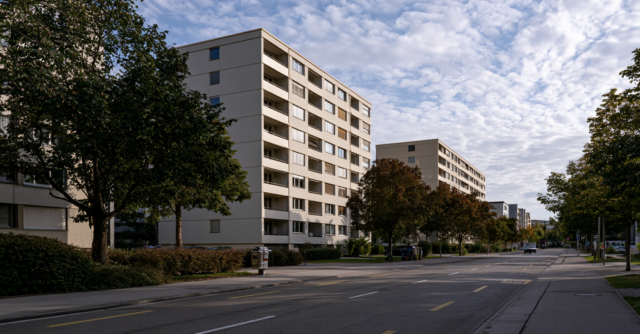
    The Sonnenhof site is centrally located between Bahnhofstrasse and Schaffhauserstrasse and covers a good 20,000 square metres. Today, the site is dominated by a shopping centre from the 1970s, other commercial and residential buildings and a large sealed car park. It is precisely this structure that is now to be fundamentally changed.

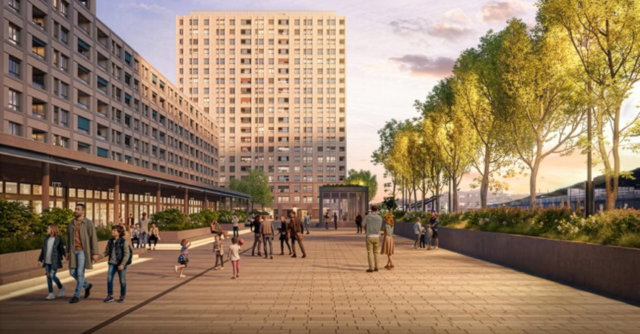
    The plan is to create a new, mixed-use district with a public passageway, green courtyards and squares, businesses, restaurants and a cultural and meeting centre. The existing shopping centre will not disappear, but will be modernised and integrated into the new structure.

    Urban densification
    At the heart of the project are around 240 rental flats in various price categories and with different floor plans. In addition, there are around 12,000 square metres for commercial, cultural and public uses on the ground floors and in the passages.

    In terms of urban planning, the project focuses on density and orientation. Four taller buildings will mark the site and give it a clearly recognisable address. The design plan allows for a maximum building height of 55 metres on the north-eastern corner. This shows how clearly the Sonnenhof will stand out from the previous scale.

    Open space instead of tarmac
    The message is particularly strong in the outdoor space. Where heat-retaining pavement dominates today, unsealed surfaces, trees, courtyards and climate-resistant planting will improve the microclimate in future. Rainwater will be able to seep away and evaporate, roofs will be greened and supplemented with photovoltaics.

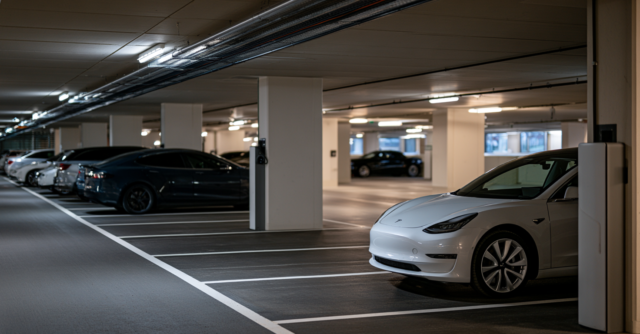
    The project also aims to reorganise traffic flows. Most of the above-ground parking spaces will be moved to the underground car park, while paths and squares will be designed primarily for pedestrians and cyclists. Nevertheless, around 450 car parking spaces will remain on the entire site.

    Culture as part of the development
    The combination of property development and public use is striking. The planned KUBEZ cultural and meeting centre at Sonnenhof will not only be built, but will also create a regional meeting place for culture, education and leisure. The project is being developed in collaboration with the town of Bülach and neighbouring municipalities.

    This is what makes the Sonnenhof more than just a classic development. The site should not only provide living space, but also create a new centre that expands the everyday life of the town and strengthens the connection between the railway station, town centre and neighbourhood.

    A long road to the new centre
    Sonnenhof is still a planning project. the private design plan is due to be submitted in 2026, with approval scheduled for 2027. The first stage could start in 2029 and be completed in 2031, with overall completion scheduled for 2034 according to the project status.

    This shows the true scale of such projects. The transformation of a central site requires not only capital and design power, but above all time, procedures and political coordination. If Sonnenhof succeeds, Bülach will not simply gain new flats. The town will gain a new piece of urbanity.

  • Residential complex to be sustainably renovated and extended

    Residential complex to be sustainably renovated and extended

    The Schlieren-based real estate and construction company Halter is transforming the Clochettes site in the Champel district of Geneva. As part of the project, Halter was commissioned by Baloise to carry out the energy-efficient renovation, conversion and addition of storeys to three residential buildings from the 1970s. According to the press release, a total of 70 existing apartments will be modernized by January 2029 and 15 new apartments will be created by adding two more floors. The work will start in May and will take place while the apartments are occupied.

    As part of the refurbishment, Halter will replace the technical systems and refurbish the façades. Heat recovery and the installation of photovoltaic systems are also planned, according to the project description. The aim is to obtain a Minergie renovation label.

    The architectural design by the Grenier Coretra architecture firm maintains continuity with the existing buildings and harmonizes with the neighbouring residential complex. The new apartments will offer a variety of floor plans and room concepts tailored to modern living.

    New areas for residents and neighborhood-related uses will be created on the first floor of the buildings. The outdoor areas will also be enhanced with wooded areas to promote quality of life and biodiversity.

  • Spreitenbach municipal council adopts property strategy

    Spreitenbach municipal council adopts property strategy

    The Spreitenbach municipal council has adopted a new strategy for municipal properties, as detailed in a press release. The property strategy is of central importance for both the residents’ and the local citizens’ municipality. The decision serves as the basis for the medium to long-term development of publicly owned properties.

    The aim is to manage the municipality’s own property portfolios holistically rather than in isolation according to individual properties. The municipality of Spreitenbach expects this to lead to better harmonisation of the long-term needs of the population, school, administration, associations and other users.

    According to the press release, the new strategy is particularly relevant for the municipality of Spreitenbach, which as a public corporation has a portfolio of 69 properties and five developed building rights plots, in view of upcoming investment decisions. In the coming years, the focus will be on the further development of the school and sports infrastructure, the renovation and expansion of existing facilities, securing additional space for school administration and day-care centres and the development of a municipal park, among other things.

    The local community should also benefit from the holistic approach. It manages a portfolio of 130 properties with a land area of around 2.77 million square metres and a building insurance value of around CHF 13.6 million. The strategy focuses on the areas of housing, the local museum, building rights in the industrial area, agriculture and forests.

    The property strategy is to be reviewed at least every five years and adjusted if necessary. The planning horizon currently extends to the year 2040.

  • New branch strengthens presence in Central Asia

    New branch strengthens presence in Central Asia

    Sika is expanding its presence in Central Asia with a new subsidiary in Bishkek, Kyrgyzstan. According to a press release, the aim of the new branch is to increase customer proximity in the region and improve regional market access for the company.

    One of the reasons for the expansion into Kyrgyzstan is the positive economic outlook for the former Soviet republic. Forecasts predict annual growth in gross domestic product of up to 7 per cent until 2030, according to the press release. Growth drivers in the construction sector include large-scale industrial construction projects as well as infrastructure and energy investments, which further emphasise the strategic importance of Central Asia for Sika.

    “The local organisation in Kyrgyzstan complements our existing activities in Kazakhstan and Uzbekistan and strengthens our regional network in Central Asia. This creates a basis for the targeted further development of our market position in the region and for further growth,” Christoph Ganz, Regional Head EMEA at Sika, is quoted as saying.

    The construction chemicals group Sika focuses on the development and production of systems and products for bonding, sealing, damping, reinforcing and protecting in construction and industry. With the opening of the Kyrgyz site, the company is expanding its global network to 103 national subsidiaries. The company generated sales of CHF 11.20 billion in 2025.

  • Investments strengthen production capacities in the medical technology sector

    Investments strengthen production capacities in the medical technology sector

    The Burgdorf-based medtech company Ypsomed has invested 25 million Swiss francs in the remodelling and construction of a new machine tool park in Solothurn. In order to meet the growing global demand for injection systems and offer customers the highest quality, Ypsomed intends to significantly expand its position and capacity in the production of injection moulds, according to a press release. At the Solothurn site, the company intends to concentrate on the design and manufacture of plastic injection moulds for pens and autoinjectors.

    The commissioning of the mould construction facility marks the start of the implementation of a 200 million Swiss franc investment package to develop the site. Two new high-volume assembly systems with associated injection moulding systems for autoinjectors are to be opened in the coming months. The company has also announced plans to build a fully automated high-bay warehouse at the Solothurn site by the end of 2027. At the same time, a conference centre (Ypsomed Forum) is to be built there with space for around 300 guests. “The investment in the new toolmaking facility in Solothurn is a clear commitment to the development of our sites in Switzerland,” said Simon Michel, CEO of Ypsomed.

    The company also wants to continue to grow internationally in order to consolidate its position in the medical technology market and meet the increasing demand for injection systems for self-medication. in 2025, Ypsomed opened its first own plant in Changzhou, China, and started the expansion of its production site in Schwerin, Germany. A new site is currently under construction in Holly Springs in the US state of North Carolina.

    The investment also serves to double the number of staff in this area. The current number of 35 employees plus trainees is set to grow to 100 employees and apprentices.

  • New development combines residential, commercial and local services

    New development combines residential, commercial and local services

    According to a press release, Schlieren-based Halter AG completed the AuPark plannmässig development at the end of March and handed it over to the client Swiss Life Asset Managers. The project involved the construction of five apartment blocks and commercial buildings with views of Lake Zurich and the Au peninsula.

    The AuPark development comprises a total of 300 flats, including 111 condominium units, according to the project description. There will also be commercial space and a Coop, which will serve as a local supplier for the neighbourhood. The eponymous AuPark lies at the heart of the project and serves as a central meeting point and recreational space for the residents with extensive lawns.

    “As part of our total contractor services, the project was specifically densified and the housing mix optimised,” the company said in the press release. “The result: a sustainable, marketable development with a high quality of living – including in the affordable housing segment.”

  • One million square meters new start for Lugano

    One million square meters new start for Lugano

    The Nuovo Quartiere Cornaredo is located to the north of the city center and is being developed as a new gateway to Lugano. The inter-municipal project, which Lugano is supporting together with neighboring municipalities, is intended to fundamentally reorganize the urban space. Housing, services, retail, leisure and an upgraded public space form the backbone of the project. Not a dormitory district, but an urban hub with everyday functions and economic dynamism.

    Where football and urban development meet
    The PSE with stadium, sports hall, administration and parking areas is being built in the same area alongside the residential and commercial areas. Construction site B1a alone covers around 55,000 square meters with mixed uses, buildings of different heights and commercial and tertiary facilities. This will make Cornaredo one of the most important real-world laboratories for urban development in Ticino. Rarely do sports and event infrastructure, private building construction and public space come together in such a small area.

    Complexity as a program
    The project is not an isolated real estate project. It is a transformation system in which urban planning, road space, public transport and private construction projects have to be coordinated. Delays, appeals and political debates are not the exception, but part of the process. This is precisely what makes the project so relevant for investors, developers and planners. It shows how difficult and valuable it is to develop large sites in topographically sensitive areas.

    A benchmark for Ticino
    Cornaredo is strategically central for Lugano. This is where the city’s approach to growth is decided. Densified, networked and functionally diverse or still small-scale and traffic-heavy. If the implementation succeeds with planning quality and a mix of uses, Cornaredo will be no ordinary district, but a reference project for the next development phase of the entire canton. Southern Switzerland is keeping a close eye on what is being created in the north of Lugano.

    What is still missing
    The real touchstone lies ahead of Lugano, not behind it. Ensuring planning quality over the years, bundling private and public investment and creating a reliable realization perspective. These are the three tasks by which Cornaredo will be measured. The course has been set. The next phases of development will show whether the project delivers what it promises.

  • Bellinzona dares to undertake a major renovation

    Bellinzona dares to undertake a major renovation

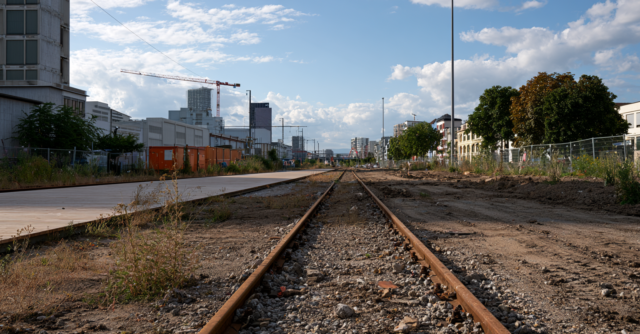
    There are hardly any inner-city transformation areas of this size in Switzerland. The FFS site in the heart of Bellinzona offers an opportunity that cities such as Zurich and Basel have long since lost. The new district will not be built on a greenfield site, but will interweave the historic city with the area around the railroad station and new development zones. Mixed use, biodiversity and generous open spaces are at the heart of the master plan.

    The international competition was won by the team sa_partners, TAMassociati and Franco Giorgetta. Their design breaks up the previously closed industrial area and organizes it around the “Almenda”. A 6.4 hectare central green space that structures the entire district as an ecological and social backbone. The listed “Cattedrale”, which has been a maintenance site for locomotives since 1919, will be retained as an identity-forming focal point and will become the anchor building of the new district.

    Innovation at the heart of
    The district will also be home to the Switzerland Innovation Park Ticino in future. The park was officially recognized as the location of the Switzerland Innovation Park Zurich in November 2024 and is supported by USI, SUPSI, BancaStato, the Ticino Chamber of Commerce and the employers’ association AITI. From 2032, the park and its headquarters will move to a 25,000 square meter area within the new quarter.

    Three competence centers are already active: Swiss Drone Base in Lodrino for drone technology, a hub in Bellinzona for life sciences and a location in Lugano for lifestyle tech. Together with postgraduate training courses offered by USI and SUPSI, an innovation cluster with supra-regional appeal is being created. Bellinzona is thus positioning itself as a location between administration, technology and urban quality of life and as a serious alternative to the major Swiss technology hubs.

    Setback in fall 2025
    The path is not clear. In October 2025, the cantonal administrative court annulled the municipal council’s detailed development plan from April 2023. The financial aspects were insufficiently explained, in particular the costs for the acquisition of public land and the remediation of contaminated sites, which are estimated at CHF 30 to 50 million. The planning process will have to start from scratch.

    At the same time, construction work is already underway on the new FFS plant in Arbedo-Castione, a major project costing CHF 755 million that is scheduled to open in 2028. The site will only become available once Officine has relocated. The first realization phase is expected to start between 2030 and 2035 at the earliest, and the overall transformation is likely to take 20 to 40 years. The time pressure is real and the complexity is high.

    Model for central Switzerland
    Porta del Ticino shows how medium-sized centers beyond the metropolitan areas can deal with large industrial sites. Not monofunctional overbuilding, but development as an urban transformation space with a long-term regional impact. What is being created in Bellinzona can be a benchmark for other cities of the same size. From Aarau to Chur, from Schaffhausen to Sion.

    The next few years will determine whether the planning quality can be secured for years to come, whether investments can be bundled and whether the vision can be translated into a resilient realization perspective. The real test has only just begun.

  • Canton of Bern plans major construction in the Bernese Seeland

    Canton of Bern plans major construction in the Bernese Seeland

    The Road Traffic and Navigation Office has had its headquarters on Schermenweg in Bern for decades. The buildings there have structural defects and are in a condition that makes it impossible to completely renovate them without interrupting operations. In addition, there is a second location in Ostermundigen, where the canton pays over one million francs a year in rent.

    Move three times or build once
    The decision was made in favor of a new building. All three locations will be closed and the approximately 400 employees brought together in a single location. The new building on the Buechlimatt in Münchenbuchsee offers space for offices, test centers and the entire customer operations on one site. Vehicle registrations, driving tests, administrative processes: everything under one roof for the first time in decades.

    One competition, one winner, one timber construction
    in 2021, the canton announced an open project competition. Thirty teams submitted designs, and the Zurich planning team from Studiomori Architektur and KNTXT Architekten won over the jury. Their project bears the programmatic name “One for all”. It is based on a low-maintenance timber construction that blends organically into the rural outskirts of Münchenbuchsee. Not a statement made of concrete and glass, but a building that makes the Canton of Bern’s climate strategy visible. Wood as a building material reduces the CO2 balance over the entire life cycle.

    The politicians decide
    In April 2026, the Bernese government applied to the Grand Council for a commitment credit of 132.9 million francs. The latter is expected to make its decision in autumn 2026. The fact that the amount has risen from around CHF 104 million at the time to CHF 132.9 million since the 2021 competition phase is likely to raise questions in parliament. Construction costs and increased planning requirements are the main reasons. If you offset the rental costs and the renovation backlog, the business case for the new building is clear.

    Move in 2031 at the earliest
    If the parliamentary deliberations go according to plan, the building application will be submitted in mid-2026 and construction will begin in 2028, with commissioning planned for 2030 to 2031. For Münchenbuchsee, this means a new workplace center with several hundred employees on the edge of the village. For the canton of Bern, it means the end of a long period of administrative restructuring. And for the Swiss construction industry, the project exemplifies a trend that will gain momentum in 2026. Public buildings made of wood, built for the next generation.

  • Modernised wastewater treatment plant enhances water protection and energy efficiency

    Modernised wastewater treatment plant enhances water protection and energy efficiency

    The refurbishment and expansion of the Basel Wastewater Treatment Plant have been completed. The wastewater treatment plant was officially inaugurated on 17 April. One of the region’s most important infrastructure facilities had been thoroughly modernised and expanded whilst remaining in operation since 2019. It is now one of the most modern facilities of its kind in Europe. Over the weekend of 18 and 19 April, the public can see it for themselves during the open days.

    According to a statement from the Canton of Basel-Stadt, the aim of the project was to significantly improve treatment performance, adapt the plant to future requirements and make a long-term contribution to water protection. It is now state-of-the-art and ensures legally compliant operation for several decades. It is designed to have a capacity sufficient for 520,000 residents until 2050. It can also receive pre-treated industrial wastewater from the ARA Chemie.

    Following the modernisation, the Basel WWTP is now also equipped for nitrogen removal and features a treatment stage for reducing micropollutants. This is complemented by sludge digestion and photovoltaic systems. Furthermore, biogas is produced from sewage sludge digestion and more waste heat is fed into the district heating network.

    The operator of the Basel wastewater treatment plant is Prorheno AG. The parliaments of the two Basel cantons approved CHF 325.1 million for the plant’s refurbishment. The final accounts are not yet available.

  • People aged 55 and over moving house could ease pressure on the housing market

    People aged 55 and over moving house could ease pressure on the housing market

    The moving patterns of the ‘Best Ager’ generation – those aged between 55 and 74 – are becoming increasingly important for a functioning housing market in Switzerland, as shown by the new Helvetia Housing Report, according to a press release from Helvetia Baloise. The study was conducted by the insurer in collaboration with the Sotomo research institute in Zurich.

    When this age group moves house, they usually relocate to less central areas or, increasingly, abroad. This frees up larger, centrally located flats, which are subsequently occupied by families much more frequently. According to the study, this helps to distribute existing housing more efficiently across different stages of life.

    Furthermore, emigration abroad increased by almost 50 per cent between 2014 and 2024. At the same time, moves within one’s own municipality remain comparatively rare. It is only from the age of 75 that the trend reverses: older people then move more frequently back to well-connected, central locations.

    “Additional moves by this age group make an important contribution to better utilisation of living space,” says Michael Hermann, Managing Director of Sotomo. This dynamic is driven in particular by the moving behaviour of foreign ‘Best Agers’, whose likelihood of moving is 50 per cent higher than that of Swiss nationals. However, this trend is being held back by the so-called lock-in effect: homeowners move significantly less often – their likelihood of moving is over 60 per cent lower than that of tenants. According to the report, however, the often-discussed influence of affordable existing rents is significantly lower than assumed and is not the decisive factor behind the low mobility of older households.

  • Investment secures funding for a major wind energy project

    Investment secures funding for a major wind energy project

    aventron AG has acquired a significant stake in the Sur Grati wind farm in the canton of Vaud, according to a press release. The wind farm is operated by the project company VOé éole SA. In addition to aventron, the energy supplier SIE SA, based in Crissier (VD), and the Vaud municipalities of Premier, Vallorbe and Vaulion also hold stakes in the company.

    Aventron’s entry finalised the shareholder structure and the financing of the project company. This followed a positive ruling by the Federal Supreme Court in May 2025 regarding the wind farm’s building permits; the wind farm is scheduled to come online at the end of 2027.

    VOé, which has been developing the project for several years, is a regionally based energy supplier and is contributing its local networks. Aventron brings experience in the construction and operation of wind farms in several European countries. “Together, we are realising one of the largest wind energy projects in Switzerland. In doing so, we are supporting the federal government’s energy strategy and strengthening security of supply, particularly in winter,” said Eric Wagner, CEO of Aventron.

    The wind farm is located on the Jura mountain range in northern Vaud and is currently under construction. Six wind turbines with a total capacity of 25.2 megawatts are planned. The facility is expected to produce around 45 gigawatt hours of electricity annually, which corresponds to the demand of approximately 11,000 households. Once completed, Sur Grati is set to be the second-largest wind farm in Switzerland.

  • Infrastructure project boosts efficiency and safety in flight operations

    Infrastructure project boosts efficiency and safety in flight operations

    Construction of new infrastructure for general aviation in the West Zone at Zurich Airport began on 14 April. Plans include a terminal building with a hangar and a dedicated apron area. According to a press release, the facility is scheduled to open in spring 2028.

    The new facility is designed to accommodate larger aircraft types and will also provide space for passenger handling and offices. Its proximity to the heliport is also expected to reduce transfer times. In addition, car parks for staff and passengers will be built, along with access via an extended Rohrstrasse.

    Flughafen Zürich AG is investing around CHF 100 million in the project. The new building is part of the development of the approximately 16.8-hectare Zone West, which is earmarked for apron extensions, logistics, and aircraft and airport maintenance, amongst other things.

    With the new building, the airport is responding to changing requirements in the field of general aviation. The existing infrastructure in the east has reached the end of its life cycle and can no longer meet the demand for hangar space, particularly for larger aircraft.

    Furthermore, the project is linked to the planned runway realignment at Zurich Airport. This is intended to reduce the number of runway crossings by landing and taking-off aircraft, thereby enhancing flight safety.

  • Whoever blocks, pays

    Whoever blocks, pays

    The majority of building permit procedures in Switzerland take place within reasonable time limits. However, there are exceptions and these have a serious impact. Objections and appeals can block projects for years or prevent them altogether. Today, even people who are not directly affected by a project can lodge an objection, for example because they don’t like the color of the neighbor’s planned façade. This is one of the structural weaknesses that the Federal Council is now addressing.

    Housing construction becomes a national objective
    The strongest lever in the reform package lies in the Spatial Planning Act. Housing construction as part of inward settlement development is to be enshrined there as a national interest. This sounds technical, but has a concrete effect. When weighing up interests, housing construction would be given more weight than the protection of the townscape or listed buildings. Projects that currently fail due to local protection interests would have a better chance of being realized.

    Objections with consequences
    Anyone who raises objections improperly, i.e. with the sole aim of delaying a project, should in future bear the procedural costs. The Federal Council is considering a legal obligation for the cantons to impose such costs on objectors. At the same time, the right of private individuals to appeal to the Federal Supreme Court is to be restricted. However, the Federal Council rejects flat-rate fees for rejected appeals. Access to legal protection should not depend on your wallet.

    The limits of the federal government
    Despite the political will, the federal government’s scope for intervention is limited. Building permit procedures are the responsibility of the cantons. The federal government cannot impose binding deadlines for cantonal procedures or the obligation to introduce digital approval processes. It recommends that the cantons introduce such measures on their own responsibility, as they have a demonstrably accelerating effect in the long term. The Swiss Construction Industry Association supports this approach and is calling for leaner processes while maintaining a high level of planning quality.

    Consultation
    The reform report fulfills five postulates from the National Council and Council of States and is part of the federal government’s housing shortage action plan. DETEC has now been instructed to draw up a consultation draft by the end of 2026. It is likely to be years before concrete legislative changes come into force.

  • 300 apartments are being made fit – no one has to move out

    300 apartments are being made fit – no one has to move out

    Built in three stages between 1974 and 1990, the “Untere Bühl” still characterizes the old town center of Oberwinterthur today. The complex is considered worthy of protection and some of the buildings are still largely in their original condition. Some of them were already renovated in 2015, and the others are now being renovated. The planning application has been approved and construction is scheduled to start at the beginning of 2027.

    Nobody has to leave the field
    What makes the project stand out is its social consistency. As the asset manager of the AXA Investment Foundation, BNP Paribas designed the refurbishment from the outset in such a way that all tenants can remain in their apartments. The tenants were involved at an early stage, including workshops on outdoor space and design. “Our tenants have been an integral part of the development for years,” says Pascal Messmer, Asset Manager at BNP Paribas. This attitude runs through the entire project.

    Extensions that don’t impose themselves
    For the extension, AXA is relying on bernath widmer architects, who emerged victorious from a cooperative test planning process. The majority of the extensions and new buildings are made of wood and deliberately reflect the character of the existing buildings. Around 80 barrier-free apartments with 1 to 3 rooms will be created. An addition to the existing apartments, most of which are large today. Residential studios, communal areas and a commercial space are planned on the first floor.

    Park remains and becomes more lively
    The park-like outdoor space with communal gardens, playgrounds and the kindergarten from 1977 will be retained. The landscape architecture firm ghiggi paesaggi is taking Fred Eicher’s original open space concept and developing it further. New planting and green roof areas strengthen biodiversity and create habitats for small animals and insects. Greenery is planned on some of the roofs of the new buildings. The central pavilion is to be used by the public in future, for example as a daycare center.

    Into the future in stages
    The project will be implemented in stages, probably up to 2028, with the aim of creating a real estate portfolio with net-zero emissions by 2050. Winterthur is not only gaining refurbished existing buildings, but also 80 new apartments in a mature settlement that knows who it is.

  • Investment foundation raises fresh capital for residential property

    Investment foundation raises fresh capital for residential property

    According to a press release dated 4 May, the Vertina Real Estate Investment Foundation is raising fresh capital until 6 July 2026. The target volume is set at between 60 and 80 million Swiss francs. This may be increased if there is sufficient demand. The funds are earmarked for additional property investments as well as for ongoing and planned developments.

    The capital raising is taking place after the foundation has fully and sustainably invested the funds entrusted to it as part of its seventh capital issue. Following the completion of four transactions in the first quarter of 2026, the portfolio currently comprises 13 properties, including four near-new existing properties, a new-build that is almost complete, and eight project developments. Upon completion of all ongoing projects, a market value of around CHF 350 million is expected. As at 31 March 2026, the residential share stands at 99 per cent.

    Launched in May 2022, the Vertina Investment Foundation invests directly in near-new residential properties in Switzerland that meet high sustainability standards. To this end, the foundation cooperates with the Markstein Group, a property services provider covering portfolio management, construction management, transaction management and marketing. The foundation focuses on providing marketable housing with the lowest possible environmental impact. With a consistent value creation approach, the investment strategy aims to generate stable and reliable long-term returns for investors.

  • Innovation project to serve as a starting point for the new construction industry

    Innovation project to serve as a starting point for the new construction industry

    The BioHaus am Waldsee in the US state of Minnesota has turned 20. The building, located on the Waldsee campus of Concordia Language Villages, is the first building in America ever to be certified as a Passive House by the German Passive House Institute. The project was originally realised by Stephan Tanner and his team from Integrale Planung GmbH (Intep) in Zurich. It also served as the starting point for TANNER Building Products and its related ventures, according to a press release.

    The BioHaus is characterised by materials and technologies such as Passive House-certified windows and doors, high-performance ventilation systems, external shading elements and vacuum insulation panels, which were imported from Europe to the US for the project at the time. It was built at a time when the Passive House standard was still largely unknown in North America and the necessary materials, technologies and construction expertise were lacking locally.

    The project was supported by the German Federal Environmental Foundation and was intended to demonstrate that advanced environmental technologies can also be successful abroad. “BioHaus has not only proven that Passive Houses can work in America. It has also helped others to follow this example,” the statement reads.

    The project also gave rise to Stephan Tanner’s company, TANNER Building Products. Based in Watertown, Minnesota, the company started in 2006 as Peak Building Products and supplied the advanced materials for the BioHaus. “What began as a necessity – importing components that no one else had – sparked an entire industry,” the company explains in the press release.

  • New care home expands capacity in urban neighborhood

    New care home expands capacity in urban neighborhood

    Schlieremer Halter AG has handed over a new home for people in need of care in Bern’s Wyler district. The care home, which is operated by Domicil Bern as the general tenant, provides 112 new care rooms, according to a statement on LinkedIn.

    Each room has its own bathroom and balcony. The facility also has recreation and service rooms as well as publicly accessible areas. Employees have been provided with a modern working environment with optimal conditions. The completed facility was handed over to the Swiss Life Investment Foundation at the end of March.

    According to the press release, a further contract was agreed with Domicil Immobilien AG for the construction of a care home with 75 rooms, a dementia unit and a restaurant.

  • Modernization of operations center secures long-term capacity

    Modernization of operations center secures long-term capacity

    Migros Eastern Switzerland has begun the renovation and modernisation of its operations centre in Gossau. According to a press release, the management of Migros Eastern Switzerland intends to make the building fit “for operation and expansion over the next 40 years” with the reconstruction, as Sandro Feltscher, Head of the Logistics and IT Directorate at Migros Eastern Switzerland, is quoted as saying.

    The work will mainly be carried out on Building C of the operations centre. This has been used since 1979 for the production and distribution of meat and charcuterie products as well as for the commissioning and dispatch of chilled food. In the first construction phase, an extension will be built on the southern side with additional docking points for delivery vehicles. In the coming year, parking spaces for trailers and car parks for employees will be renovated. In 2028 and 2029, new, modern rooms for employees will be built. Parallel to the overall construction measures, the refrigerated lines for order picking are to be replaced with modern ones. Construction work is expected to be completed in 2030.

    “The biggest challenge in the construction project is replacing the systems and modernising production without interrupting operations. Even during the replacement, our supermarkets and restaurants need daily deliveries of dairy products, meat and other chilled goods,” says Feltscher.

  • Infrastructure works tackle challenging terrain on Lake Zurich

    Infrastructure works tackle challenging terrain on Lake Zurich

    Walo Bertschinger AG, a family-run construction firm based in Dietikon, is carrying out the roadworks and civil engineering works as part of an infrastructure project in the Lake Zurich region. According to a press release, over a stretch of 1.1 kilometres between Tägerst and Buchenegg, “roads, drainage systems and numerous engineering structures are being newly constructed, reinforced or repaired.” The project is scheduled for completion by 2027.

    A central element of the project is the construction of two new Lehnen viaducts, measuring 90 and 130 metres in length. A total of 21 piers and around 240 micropiles will provide a solid foundation on the landslide-prone slope.

    “Limited space, steep terrain and a tight schedule make this project particularly challenging,” explains Walo Bertschinger AG in the press release. “We are therefore all the more pleased that the work is progressing according to plan and that the team is delivering a strong performance in their daily work.”

  • Where others park, you soon live

    Where others park, you soon live

    Christoph Schoop didn’t have to look far. The real estate investor from Baden looked out of his office window at the Dättwil industrial estate and recognized the obvious: huge flat roofs, completely unused. On the roof of the factory arcade at Mellingerstrasse 208, where McDonald’s, Spar and a bakery now provide for everyday life, eight so-called Wikkelhäuser are to be built from spring 2027.

    A new world on the roof
    The Wikkelhouse concept originated in Amsterdam and is now coming to Switzerland. Compact wooden housing units that are delivered ready-made by truck and erected with minimal effort. Each unit offers 30 to 35 square meters, its own terrace and ceiling heights of up to 3.5 meters. Architect Andreas Zehnder, who designed the project for Baden, clearly formulates the added value. Instead of adding another storey, an independent living space has been created on the roof.

    Swiss wood, Uri factory
    The houses are not produced on the building site, but in the company’s own factory in Flüelen UR on the shores of Lake Lucerne. The raw material is Swiss wood from sustainable forestry. Schoop is a co-founder and supporter of Wikkelhouse Switzerland and promotes the concept as a circular economy model. A unit costs from CHF 200,000 ex works; transportation and assembly are additional costs.

    Inexpensive, sunny, connected
    By Baden standards, rents should remain low. There is already a waiting list and, according to Schoop, inquiries have come from “a wide range of people”, including those of AHV age. And although the industrial area is not considered a residential location, the roof offers all-day sunshine and a direct public transport connection. The building itself provides noise protection.

    Pilot with scaling potential
    The project in Dättwil is explicitly designed as a pilot project. Schoop sees space for 50 to 70 Wikkel houses in the industrial area alone. The city of Baden is currently reviewing the suitability for planning permission. If everything goes according to plan, the first residents will move in in spring 2027. What sounds like a curiosity today could set a precedent tomorrow.

  • 270 reasons for Stans

    270 reasons for Stans

    The non-profit housing association Logis Suisse AG is planning a new housing estate in the west of Stans. Around 270 affordable apartments, around 1,000 m² of commercial space and two communal areas will be built by 2032 on a 12,700 m² site that the company acquired back in 2015. The study contract, in which seven general planning teams took part in 2025, was won by Studio Sintzel from Zurich and Uniola AG.

    Two buildings, eight courtyards
    The project, known internally as “Eight courtyards for Stans”, is based on two seven-storey buildings. Despite their volume, they appear from the outside as loosely placed point buildings. Head elements refer to existing buildings and structure the street fronts with front garden zones. Open courtyards with passageways structure the outdoor space and allow views of the surrounding mountains. A high-quality counterbalance to the adjacent highway. An existing old building in the center of the development will be retained and will serve as a social meeting point in the future.

    Mixed quarter with short distances
    The site is located opposite the Länderpark shopping center, on a multi-lane road and in the immediate vicinity of the freeway. Bicycle paths and footpaths should nevertheless link the new district well with Stans and Stansstad. With 0.8 parking spaces per apartment, Logis Suisse is below the usual standard, a clear commitment to sustainable mobility. The apartment mix ranges from compact 1.5-room apartments for singles and older people to spacious 5.5-room apartments for families and shared flats. On the first floor, studio apartments, care facilities and commercial space enliven the district.

    Built to conserve resources
    The client’s aim was to create a model project in terms of ecology, social space and economic efficiency. The load-bearing structure is designed to be material-efficient, the floor plans are compact and a photovoltaic system on the roofs covers a large part of the electricity requirements on site. A single-storey underground car park minimizes excavation work. Construction is scheduled to start in 2030 and be completed in 2032.

  • When architectural monuments pack their suitcases

    When architectural monuments pack their suitcases

    Two apartment buildings with 57 apartments ranging in size from 2.5 to 5.5 rooms are being built on a 6500 square meter site to the north of the historic station building. Commercial and restaurant space is planned on the first floors, as well as a small commercial building and an underground garage with 59 car and 92 bicycle parking spaces. A park-like open space with a playground will be created between the two buildings.

    Less, but social
    The project has become smaller. SBB originally planned four buildings with 90 apartments, a third of which would be affordable. However, the signal box next to the station building must remain, which means that an entire building is no longer needed. Of the remaining 57 apartments, 20 are to be offered at affordable prices. This corresponds to 35 percent and is even slightly higher than the original quota.

    Switzerland’s last goods shed
    What residential construction demands requires space. Four existing buildings have to make way, including the goods shed from 1928, designed by Meinrad Lorenz, SBB’s chief architect at the time, one of only four buildings of this type in the whole of Switzerland. Following the demolition of the identical shed in Heerbrugg, the one in Wollishofen is the last remaining example of its kind. It is listed in the cantonal inventory of listed buildings.

    A wooden building packs its bags
    Nevertheless, the goods shed will not disappear. It will be dismantled into individual parts, professionally refurbished and rebuilt at the Zurich Oberland Steam Railway Association in Bauma an der Töss. There it will be made accessible to the public and given a museum function as part of the “Bauma 2020 depot area” project. The approval documents for the dismantling are already largely in place.

    History repeats itself
    This move is not the first in the history of Wollishofen station. The current station building was once the first station building in the city of Zug, built in 1864 and moved stone by stone to Lake Zurich in 1897. What was forced by the scarcity of building materials in the 19th century is now a deliberate act of preservation. Wollishofen is thus writing another chapter in an unusual building history.

  • Ground-breaking ceremony marks the start of a new residential development in Baden

    Ground-breaking ceremony marks the start of a new residential development in Baden

    The first five foundation stones were laid on the Brisgi site, marking the official start of the approximately three-year construction phase. According to a statement from the City of Baden, the site will see the creation of around 220 units of sustainable and affordable housing. The symbolic laying of the foundation stones was carried out by Baden’s Mayor Markus Schneider, representatives of the non-profit developers – the Baden Housing Foundation, Logis Suisse AG and the Graphis Building and Housing Cooperative – as well as members of the local community.

    “These five stones come from the excavation and represent the core values of the future Brisgi site: together we are shaping the future with sustainable and affordable housing,” explains the City of Baden in the statement.

    By 2028, affordable flats and flexible housing options for single people, couples and families are to be built on the site. In addition, community life will be enhanced by studios, green spaces, a neighbourhood square and a playground.

    The project will be built in accordance with the Swiss Sustainable Building Standard (SNBS). “The site focuses on hybrid construction, renewable energy, biodiversity and minimal soil sealing,” the press release states. “In this way, the project demonstrates that high-quality construction, sustainability and affordable housing go hand in hand.”

  • Lucerne cantonal government plans to set up a foundation for innovation

    Lucerne cantonal government plans to set up a foundation for innovation

    The Canton of Lucerne intends to establish the Innovation Lucerne Foundation. To this end, the Cantonal Government has now submitted a request for a special grant to the Cantonal Council. This comprises CHF 1 million in endowment capital and CHF 23 million to fund the foundation’s activities between 2026 and 2029.

    This foundation forms part of Lucerne’s location strategy, which aims to strengthen the canton’s competitiveness. According to the statement, the background to this is that whilst the Canton of Lucerne ranks in the top third in national competitiveness rankings, it consistently ranks lower in terms of its innovative strength. And “without strengthening its innovative strength, the Canton of Lucerne risks further losses in competitiveness”, the analysis states.

    The foundation is intended to counteract this and focus on supporting Lucerne as a hub for innovation and start-ups, with a particular emphasis on SMEs. As a key player, it is to coordinate the established partner organisations “and ensure that their services are better integrated, become better known and achieve greater impact”. In addition, the foundation can co-fund implementation projects such as feasibility studies.

    From 2026, the Canton of Lucerne intends to invest a total of between 250 and 300 million Swiss francs annually in “business- and population-oriented measures” to promote the region. Voters will be able to vote on these regional development measures in September 2026.