Category: New construction

  • Dancing windows in circle 7

    Dancing windows in circle 7

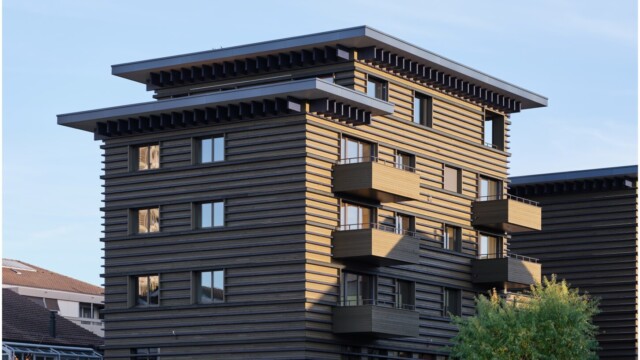
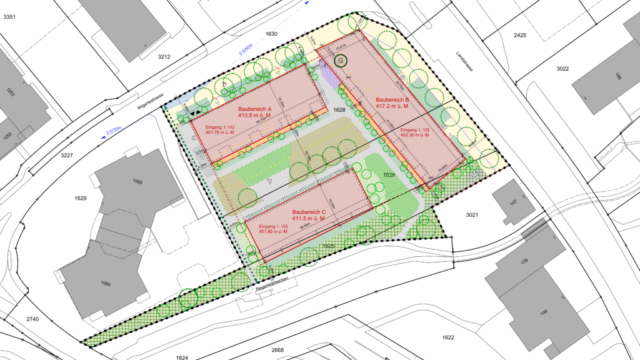
    A total of 16 apartments, 2 offices and an underground car park with 19 parking spaces will be built in a very good location by the end of the 2nd quarter of 2023 – you can be at Bellevue in a good 20 minutes by public transport – at Witikonerstrasse 400 in Stadtzürcher Kreis 7. For the 1341 square meters A multi-family house with four floors is planned for the comprehensive plot area. Seven 2.5 and nine 3.5 room apartments with areas of 66 to 130 square meters are planned. In addition, two offices of 45.8 square meters each will be built. The energy is supplied by geothermal energy.

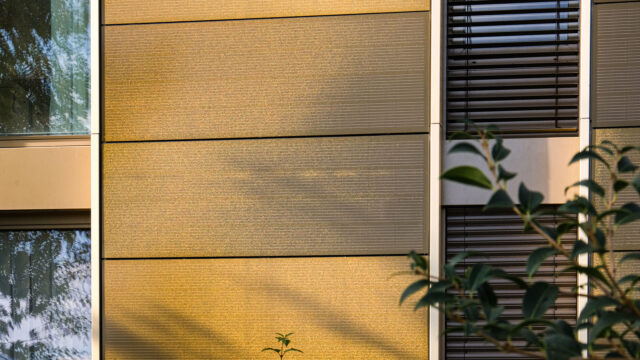
    With its “dancing windows”, the woman from Graubünden will create a landmark for District 7. The architect was already able to impress with these windows with the “Solitaire” high-rise building in Horw, Lucerne. They are characterized by their irregular arrangement – yet they create harmony and offer the residents a view of the outside from every position. Theus has already completed many prestigious construction projects, including Bank Leu on Zurich’s Bahnhofstrasse, the headquarters of World Football Association “Home of FIFA” on the Zürichberg and the five-star hotel “Widder” in Zurich.

    The Quartier Witikon – which is often called the “Quartier on the horizon” – forms district 7 together with Fluntern, Hottingen and Hirslanden. The house with the “dancing windows” is not far from the “Berghaldenstrasse” bus stop – in the immediate vicinity of the local recreation area of the Elefantenbach. The “Looren” sports facility with tennis and football pitches and the center of Witikon with service providers and shops are also within walking distance.

    The residents of Witikon benefit from the south-facing altitude on the slopes of the Adlisberg and Oetlisberg. This brings the quarter little fog and lots of sun as well as a great view. When the weather is nice, the Glarner, Urner and Berner Alps with the Eiger, Mönch and Jungfrau can be seen.

    The LIKA Group AG as total contractor implements the projects with well thought-out processes and thus ensures the high quality standards. Working with qualified architects is essential for the broad portfolio. (see likagroup.ch).

  • New quarters on the Koch site

    New quarters on the Koch site

    In 2013, the city of Zurich bought the Koch site at the intersection of Albisrieden and Altstetten, which had been occupied since March of the same year. In 2017, the city, together with the Zurich section of the Swiss Association of Housing Cooperatives and the consulting firm Wüst Partner, launched a concept call for tenders for the planned district. The team application of the Allgemeine Baugenossenschaft Zürich (ABZ) and Kraftwerk1 cooperatives together with the real estate developer SENN were awarded the contract.

    From 2025 at the earliest, around 330 non-profit apartments for around 900 residents will be built here. In addition, generous commercial areas and a neighborhood park are planned. Grün Stadt Zürich is responsible for the park, while the two Zurich cooperatives ABZ and Kraftwerk1 and the real estate developer SENN take over the land in building rights. In the Koch district, new visions of living and working together are to be implemented and a significant contribution to the 2000-watt society is to be made.

    The family company Senn is planning the commercial building called MACH, which is characterized by oversized rooms, high payloads and plenty of design freedom. The installation of gallery floors can be freely selected and ensures a high degree of flexibility. In the MACH, not only commercial and production companies are planned on 10,000 m2 of mostly double-height rental space, but also trading and service companies as well as educational and leisure facilities. Particular attention is paid to sustainability through the high adaptability, the wooden element facade, PV system, rainwater use and the vertical greening.

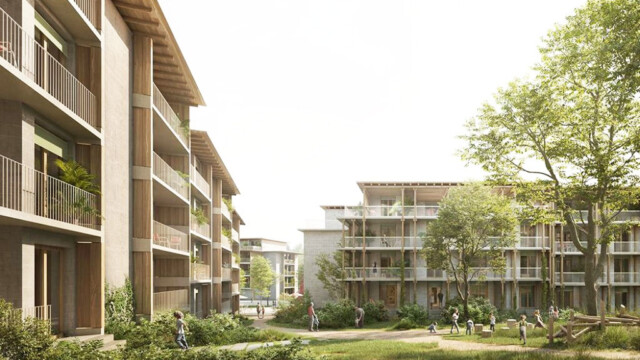
    The Allgemeine Baugenossenschaft Zurich is building a three-part building complex with 204 apartments. This consists of an approximately 85-meter-high high-rise on Flurstrasse and an eight-story row of buildings in the Quartierpark. A mix of 2 to 5.5 room apartments is being built here. A garden of 1830 m2 and a community pavilion are planned on the 1st floor. Photovoltaic systems are installed on the roofs. The ground floor is used for various commercial and community rooms as well as a supermarket.

    Living, business and culture are combined in the compact building of the building and housing cooperative Kraftwerk1. In addition to apartments, gastronomy, kindergarten and after-school care as well as the circus district with the circus Chnopf should invite the neighborhood to linger. A staircase leads from the park to the 1650 m2 terrace on the first floor. 125 apartments are planned, one third of the living space will be rented in subsidized housing. The intensively green roof serves as a place of retreat for the residents. The settlement is planned car-free and will be particularly sustainable thanks to a wood-concrete hybrid construction, photovoltaic systems and rainwater retention.

    The 12,000 m2 district park will be the green heart of the new Koch district. Grün Stadt Zürich is implementing the wishes of the population with the park: many trees, biodiverse, playful – and for everyone. Planned are an open, spacious meadow and a “jardin sauvage” designed to be close to nature. Thanks to the former 2700 m2 coal storage hall, there is also an area that allows people to stay even in bad weather. Wherever possible, the material already available on site is reused: old paving slabs, for example, are turned into a dry biotope for lizards or a place to sit for guests.

    A wide range of cultural offers and forms of living, trade and services will find a new home in the compact building of Kraftwerk1.
  • Learn better in the new replacement building

    Learn better in the new replacement building

    In order to construct a new replacement building of convincing architectural quality in a transforming quarter, the building department of the canton of Zurich, represented by the building department, organized a one-stage project competition in an open procedure on behalf of the canton’s real estate department. Gunz & Künzle Architects from Zurich convinced the jury with their contribution and were commissioned with the project planning.

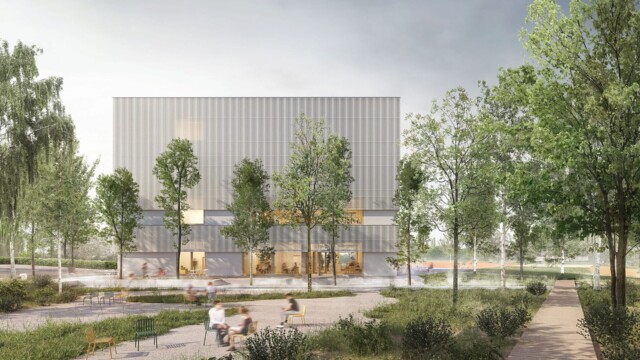
    The slender building is located directly on Limmatstrasse between Klingenpark and a new, spacious courtyard towards the quarter. The high, covered outdoor spaces lead from the opposite corners of the building to the center of the building, where the entrance to the vocational school is located in a wide passage. Various paths around and through the building connect the vocational training mile with the main train station and the district. Spatial relationships are created between the blade park and the new schoolyard. The building is organized simply and efficiently. From the entrance at street level, the path leads down to the sports facilities. On the 1st floor are the school’s public uses such as the multi-purpose room, the lounge, the media center, the administration and the workshop, a room for exhibitions and events that can be used flexibly. On the three floors above, a contemporary learning environment is being created on the basis of a classroom.

    The new BBZ replacement building is sustainable and meets the Minergie-P-ECO standard. In addition, it is the first educational building in Switzerland with the 2.1 building construction certification of the Swiss Sustainable Building Standard (SNBS). Large windows with parapets in the classrooms ensure good natural lighting. Together with the external sun protection, it ensures a pleasant indoor climate all year round. Controlled ventilation reduces heat loss. The economically and ecologically sensible separation of the systems and components is consistently implemented. The simple expandability and retrofitting of the structure meets the requirements of the Minergie-P-ECO label. Likewise, the careful selection of building materials from the point of view of low environmental impact and sustainable use of raw materials. In the outdoor area, native plant species promote biodiversity. Seen in this way, the BBZ future can begin.

  • The Settlers of Guldisloo

    The Settlers of Guldisloo

    The Guldisloo area is easily accessible between the two centers of Unterwetzikon and Oberwetzikon. The closeness to nature, in particular the farsightedness at this slightly elevated and central location, characterizes the location in particular. The planned residential development with 22 owner-occupied units is attached to the small-grained single-family house district along the ring road and forms the southern end of the Ringetshalden free zone.

    The basic idea of the design includes an optimal embedding of the buildings in the existing neighborhood structure and the green environment. The available building mass is distributed over four similarly sized, free-standing main buildings. As a result, the new buildings appear compact and, with short facades, can react optimally to their small-scale counterparts. The setting of the volumes takes into account the existing visual relationships of the quarter and allows maximum views towards the free zone and a distant view of the Alps. All squares and meeting zones are open to the Quartierstrasse and invite instead of being closed off. The new housing estate is given a uniform expression by plastered surfaces in a warm beige tone, which avoids a striking contrast to the built environment and instead blends gently into the existing structure.

    According to the energy plan of the city of Wetzikon, the project area belongs to the area that is developed with gas. However, the project area is also referred to as a zone with low building density, and a withdrawal of the gas network from these areas is conceivable in the future. No heating network is planned on the project area, and the heating network of the ARA Flos is not to be extended to include the project site. On the other hand, the project area is very well suited for geothermal probes. There is no gravel groundwater to be expected, the rock of the upper freshwater molasse is already expected at less than 25 m and extends to a depth of approx. 350 m Geothermal probe heat pumps can be realized.

    The view at a glance.
  • Effretikon has big plans

    Effretikon has big plans

    The town of Illnau-Effretikon, which is located on the Zurich-Winterthur transport axis and has around 17,500 inhabitants, has big plans: after a planning phase lasting several years, the groundbreaking ceremony for the development of the center in Effretikon took place in 2022.

    The basis for this is formed by the master plans “Central development of the West Station” and “Area development of the East Station”. These provide for a densification through the mixed use of apartments and commercial space and are intended to strengthen Effretikon’s function as a regional center.

    With around 750 new residential units and 20,000 square meters for offices and public-facing businesses, living space and work space are being created in the immediate vicinity of the easily accessible and highly frequented train station. Among other things, this is intended to achieve the goals set out in the urban development model for increasing the number of jobs and the population. The private development projects are supplemented with public buildings such as the new city garden and smaller squares and contribute to increasing the quality of life in the center. In addition, local public transport will be optimized with the relocation and new construction of the bus station.

    In a first stage, the concretely planned or already approved construction projects Rütlihof, Rütlistrasse, Rosenhof, Rosenweg including bus station, station square and city garden will be realized by 2027. In a second stage, the conversion of the Effimärt shopping center and the development of the Hinterbüel area are to take place. Most of the center development is expected to be completed by 2030.

    The builders include the Bereuter Group, Mettler2Invest, R. Fuchs Partner AG / Trade Tool AG, the OASE Group, the Zurich Investment Foundation, Habitat 8000 AG and the city of Illnau-Effretikon. Siska Immobilien AG is responsible for the Effimärt shopping center.

    Parallel to the structural development, the city intends to revitalize the center in Effretikon with various measures. An attractive offer of the public-oriented trade should, in connection with the above-mentioned public lounge areas, also encourage more people from outside to spend their time in Effretikon. Together with the new residential and commercial areas, the shops are likely to benefit from higher consumer potential in the future.

    This is what the center of Effretikon could look like in a few years: after several years of planning, the first construction work has begun.
  • Innovation at the Dübendorf airfield

    Innovation at the Dübendorf airfield

    The airfield area in Dübendorf is to be developed further. Among other things, a new platform for research, development and innovation is being created here with the Zurich Innovation Park. It is intended to promote cooperation and exchange between science and business – and thus support the implementation of research results in marketable products and services. According to the BAK study, the Zurich Innovation Park should create around 10,000 jobs and an annual added value of around CHF 1.9 billion.

    The Zurich Innovation Park Foundation is responsible for setting up and running it. It was founded in September 2015 by the Canton of Zurich, ETH Zurich and ZKB. The canton of Zurich, the three local communities of Dübendorf, Volketswil and Wangen-Brüttisellen and the federal government are developing the area together.

    The jointly developed synthesis report of the project partners forms the basis for the development of the area. This also shows how the Dübendorf airfield area should be presented overall in the future, which uses are planned and how these are spatially distributed. The area will be divided into four sub-areas:

    A first area is reserved for the Zurich Innovation Park, in which research is to be carried out in particular in the areas of mobility, robotics, aviation, space travel and advanced manufacturing & materials. In the second sub-area, the innovation park and a research, test and works airfield overlap to form an aviation cluster. In the third sub-area, the uses with high security requirements – the federal base of the Air Force and the Skyguide air traffic control center – can be further developed independently. In the fourth sub-area there are further aviation infrastructures. Nature conservation also plays a central role there. A continuous circular route around the airfield will also be created for the general public.

    The government council submitted three proposals to the cantonal council for further planning and implementation work. The cantonal government is requesting 97.45 million francs for the gradual development of the innovation park and 8.2 million francs for the planning of a research, test and works airfield.

    The cantonal council could decide on these templates by 2023. Renovation of the existing buildings is planned from 2023. Then the first building applications should be submitted. The implementation of the first buildings could therefore start from around 2024/2025.

    The Zurich Innovation Park aims to promote cooperation and exchange between science and business.
  • New NEST unit sprint: demolition, departure, breakthrough

    New NEST unit sprint: demolition, departure, breakthrough

    The new NEST unit Sprint offers 200 square meters of office space made mostly from reused materials and components. Partitions made of different materials that can be flexibly removed divide the office unit into twelve individual offices. The unit was built on the lowest platform of the NEST building, the research and innovation platform of Empa and Eawag. It took only ten months from the ground-breaking ceremony to the opening.

    The entire sprint unit follows the “Design for Disassembly” approach. Their design already takes dismantling into account, and their construction facilitates future modifications and dismantling to recover components and materials. In this way, the premises can be efficiently transferred to another cycle at the end of their service life.

    The sprint unit wants to find solutions that are as universal as possible and thus simplify the reuse of building materials. The project is a collaboration between various actors from research, business and the public sector. During the construction and subsequent use of Sprint, the opportunities and challenges of the reuse process are continuously documented and compiled – with the aim of making the construction more marketable. The sprint unit shows that building with reused materials and components is a viable alternative to building with new material that meets the market requirements for flexible and fast building.

    Building with reused materials is a step-by-step approach – the issue of available materials runs through the whole process. This requires, among other things, a rethinking of planning and execution, a flexible schedule and flexibility in design. For example, the material found also determines the final design. Sprint shows “that reused material is by no means a hurdle for the design, but that creativity can be used to achieve design elements that you would not have originally thought of,” says Oliver Seidel, architect and member of the management board at baubüro in situ AG. An example are the different partition walls. Some are built from scrap bricks, some from old books, and still others from old carpet.

    The reuse of materials is not necessarily cheaper in today’s market situation. However, Seidel is convinced: “As soon as a competitive market with reused materials and components has been established, there will also be cost advantages with reuse.” In addition, certain reused materials such as natural stone or automatically closing fire protection doors would suddenly become affordable, in contrast to the same components made of new material.

    One of the office partitions in the sprint unit is made of bricks that would actually have ended up as waste in the landfill.
    The sprint unit was completed in just ten months – re-use does not necessarily have to have an impact on the construction time.
  • Your gateway to business success

    Your gateway to business success

    With Westgate, a representative business center is being built in the immediate vicinity of Zurich Airport – and thus to the whole world: “The unique mix of state-of-the-art office space, optimal accessibility and first-class infrastructure makes Westgate the perfect company headquarters,” says Patrick Angioy from Seitzmeir Immobilien AG. “The Westgate combines everything that makes a successful business location: outstanding architecture, over 16,000 m² of flexibly scalable office space, excellent gastronomy and a well-developed conference center.”

    But not only the infrastructure is excellent, the location is also hard to beat: The Westgate is being built in the economically successful Zurich airport region – only 600 meters from Zurich Airport and a few steps away from the new Glattalbahn. The building elements Dock A, B and C together with the cube form the architectural work of art. The constitutive element of the building is the interior atrium with a spacious lobby, lounge area and bar. The light-flooded architecture meets the highest aesthetic standards. “The interplay of warm bronze and gray tones as well as the combination of metal, textile and wood has a timelessly modern effect and is at the same time a symbiosis of home and far away,” says Angioy.

    The Westgate Business Center meets all the requirements of “Green Building Switzerland”, is CO2-neutral and is certified according to Minergie P and Leed Gold Standard. Natural building materials such as wood and stone ensure a pleasant, healthy indoor climate. Thanks to intelligent building technology, the networked systems of heating, cooling, ventilation, sun protection, photovoltaics, etc. are ideally
    coordinated with each other and enable maximum efficiency. Heating and cooling (free cooling) are provided by groundwater pumps, and optimized heat recovery supports the sustainable energy cycle. The high insulation quality of the building envelope prevents energy losses and at the same time reduces unwanted heat input through high-quality glazing.

  • The winning project for the Reussbühl West district has been chosen

    The winning project for the Reussbühl West district has been chosen

    Office of Living Things and Büro Dudler for space and traffic planning.

    The 27’000 square meters

    The assessment committee for the study contract for the redesign of the CKW site in Reussbühl, which is now used for commercial and industrial purposes, unanimously decided in favor of the “Habitat – Quartier im Hain” project. It was developed by the Zurich architects Salewski Nater Kretz in collaboration with the Office of Living Things and the Dudler office for space and traffic planning.

    According to a CKW press release , the 27,000 square meter area is to be “transformed into an attractive, lively and distinctive city quarter”. The energy service provider will give up its location there “in a few years”. In the call for tenders, requirements were made with regard to heat generation and rainwater management. In addition, at least half of the CKW shed hall, a former silk mill, was to be retained. Residential buildings will primarily be built on the remaining area.

    The winning project “convinces in the reinterpretation and further development of the historical landscape”, which was once characterized by floodplains and water-using industry. The design based on the so-called sponge city principle “cleverly” incorporates these historical references. This project will be further developed in the coming months and will then form the basis for the Reussbühl West development plan. The designs of all planning teams are on display at CKW in Rathausen from June 21st to July 4th.

  • iCITY is intended to strengthen the Allschwil life sciences location

    iCITY is intended to strengthen the Allschwil life sciences location

    The life sciences location around Basel is to be further strengthened with a new office concept. Behind it is iCITY , an initiative and an ecosystem that wants to network start-ups, investors and researchers. This is to take place in the Alba House , which will be completed by the architects Herzog & de Meuron by 2023.

    The Alba House is being built on the BaseLink campus in Allschwil. The Swiss Innovation Park Basel Area , the Swiss Tropical and Public Health Institute and the Innovation Office of the University of Basel are also located on the site. The house will offer flexible workplaces on a total area of almost 15,000 square meters. According to a press release, it is based on a compact design, circular economy, geothermal energy and photovoltaics.

    iCITY also operates a location for companies from the life sciences and biotech sectors in Reinach BL. There it offers, among other things, special laboratory and workspaces on an area of 10,000 square meters.

    iCITY has its roots in the Dutch family company Vebego . This has also implemented a similar concept for high-tech players in Eindhoven.

  • UBS pension fund joins Halter project

    UBS pension fund joins Halter project

    As the new landowner of the Attisholz core area, the UBS pension fund is participating in the Attisholz development project in Riedholz. According to a media release by Halter AG , this core area covers an area of 73,000 square meters. The remaining area of 420,000 square meters will remain in the possession of Halter. The Schlierem-based real estate company will transform the area step by step over the coming years and will implement various construction projects in the process. “By the time it is completed, this part of the site will offer space for around 740 apartments with 1,250 residents. At the same time, several hundred new jobs will be created,” says the project’s goals.

    A cooperation agreement between the canton of Solothurn, the municipality of Riedholz and Halter AG was originally concluded for the project. This has now been expanded to include the UBS pension fund. “The entry of the UBS pension fund immediately after the usage plan came into force is a strong commitment to the Attisholz area and thus also to the Solothurn region as an attractive place to live, work and live,” says Andreas Campi, Managing Director of Halter Developments.

    The municipality and canton are also pleased about the entry of the UBS pension fund. Sandra Morstein, Mayor of Riedholz, sees the “trustworthy and constant cooperation” of all partners strengthened. “For the Canton of Solothurn, the sustainable and future-oriented development of the Attisholz area is a central concern,” says Government Councilor Birgit Wyss. “The investment by the UBS pension fund is an important signal for the canton of Solothurn as an investment location.”

  • Holcim and Norman Foster Foundation build reusable emergency shelters

    Holcim and Norman Foster Foundation build reusable emergency shelters

    Holcim and the Norman Foster Foundation enter into a partnership. The aim is to develop a concept for the construction of 1000 emergency shelters and a medical facility in one day. According to a press release from Holcim, it is intended to offer the growing number of displaced persons dignified and resilient accommodation.

    “More than 80 million people worldwide are currently being forced to flee their homes,” Holcim CEO Jan Jenisch is quoted as saying. “Emergency shelters can be more than just a roof over one’s head and should offer people the dignity and security of a home.”

    A one-week workshop in Madrid, which will take place until June 10, will kick things off. Holcim will focus on innovations such as low-carbon concrete, lightweight prefabricated support structures and green cements for soil stabilization in the planned construction of 1,000 affordable, demountable and reusable shelters and medical facilities.

    This collaboration follows Holcim’s goal of contributing a total of 500 million Swiss francs to creating positive social impact between 2021 and 2030. To this end, the company leads programs for affordable housing and infrastructure, as well as community initiatives for education, health and skills.

  • «Plaster and Paint» – Prize for the best objects

    «Plaster and Paint» – Prize for the best objects

    The Swiss Painters’ and Plasterers’ Association SMGV and Messe Luzern AG jointly award the “Swiss Prize for Plaster and Paint” under the umbrella of appli-tech. They advertise the prize for teams made up of planners and craftsmen. Concretely implemented projects can be submitted in the two categories plaster facade/color design and interior design. A great opportunity, the SMGV and the Lucerne Exhibition Center agree. «In the past editions, the creative potential in the areas of plaster and paint could be shown with the submitted projects. We are convinced that this time we will be able to make high-quality and exciting work known to the public,” explains Ursula Gerber, trade fair manager at appli-tech. Mario Freda, SMGV Central President, adds: “This year we want to continue to promote the very important cooperation between experts from the trades and planning and move the use of plaster and paint into the focus of public attention.”

    Energy renovation as a focus
    A well-known jury evaluates the objects. In addition to the prizes in the plaster facade/color design and interior design categories, a special jury prize will be awarded for energy-efficient refurbishment. Jury member and SIA President Peter Dransfeld knows how important the topic is: “Sustainable building and energy-efficient renovations are becoming more and more important, with the design of the facade also playing a key role. Innovative and sensible solutions can be achieved in close, trusting and professional cooperation between architecture and trade. This honors this award.”

    The jury awards a total prize money of CHF 35,000. The winning projects and selected works will be presented in a special show at appli-tech, the trade fair for the painting and plastering industry, drywall construction and insulation, from February 8th to 10th, 2023 and on the website. Reports in specialist media and the presentation in the jury report also beckon.

    Registration until the end of September
    Objects can be registered until September 30, 2022. The work must be submitted by October 20, 2022. The call for applications with detailed information and the option to register can be found at www.putz-color.ch .

  • Papieri Cham is in high demand

    Papieri Cham is in high demand

    The Cham Group announced in a statement that the first residents are due to move into the Papieri Cham high-rise as early as mid-September. She is converting the area of the former paper factory into a quarter for living and working. The first phase of construction is expected to be completed this year.

    The real estate company explained in the press release that the 163 rental apartments created in the first construction phase were allocated within a few weeks. The commercial space realized in the first construction phase has already been almost completely let. Two thirds of the 61 condominiums to be built in high-rise I in the course of the second construction phase have also already been reserved. On the official marketing day on June 2, only two free apartments could have been offered on the Internet, the Cham Group reports.

    In November, the first tradespeople should be able to open their studios in construction area A on Maschinengasse. Architectural and other offices, a film production company, two photo studios, a children’s painting studio and a dog grooming salon will all set up shop here. A dental practice and a pottery studio are moving into the ground floor of the L high-rise building.

    The Cham Group sold its remaining paper business in early 2018. Now a pure real estate company, the Cham Group is concentrating on transforming the Papieri area into a mixed residential and working area.

  • SAK implements second multi-energy system

    SAK implements second multi-energy system

    In the Park 2022 development in Uzwil, SAK is realizing “its second ultra-modern multi-energy system”, the group of companies, which specializes in energy supply, informed in a press release . With the system consisting of photovoltaic and heat pump systems, charging stations for electric vehicles and a fully automatic billing system for electricity, water and heat, the three buildings in the superstructure meet “all the requirements for sustainable living in accordance with the federal government’s Energy Strategy 2050,” it says there. In Park 2022, the three trades electricity, heat and water are coordinated across all three buildings in a smart microgrid system.

    Around 300 square meters of photovoltaic modules with a total output of 48 kilowatts peak were installed on the roofs of the buildings, explains SAK. The heat pumps installed in the basements of the buildings together achieve a peak output of 87 kilowatts for heating and hot water. The charging stations set up are equipped with intelligent load management. The residents of the superstructure can also use the smart meters used to measure consumption to track their meter readings and control their consumption.

    “Here in Uzwil, we were able to exploit and deepen our extensive know-how in all aspects of sustainable energy solutions for the second time,” Adriano Tramèr, Head of Production and Energy Solutions SAK, is quoted in the press release. “With the intelligent central control, we optimize energy production and energy consumption between the three buildings to the maximum and significantly reduce CO2 emissions.”

  • A canton creates accessibility

    A canton creates accessibility

    The train and bus connections in southern central Switzerland are bundled in the new cantonal train station in Altdorf. New train stops and additional connections significantly increase the potential for skilled workers. Knowledge-based service providers on the north-south axis benefit from direct access to the labor markets of the Greater Zurich Area and the greater Milan area and encounter technologies in the sectors of precision technology, alpine technology, traffic and safety technology and environmental technologies. With foresight, the canton of Uri has secured development areas on the Werkmatt Uri, which it is handing over exclusively for high-quality jobs at attractive conditions. With the new building of the Urner Kantonalbank directly on the edge of the platform of the new cantonal railway station, a working environment with offices ready for occupancy is offered. The German IT company Essendi IT recently opened its new Swiss headquarters at Bahnhofplatz.

    The canton of Uri is also a fantastic living and leisure area with its lake landscape (water sports and sailing), the mountains and rivers (outdoor, climbing, hiking, Resort Andermatt), an authentic, unaffected area of experience with the primeval history and tradition of Switzerland . This creates inspiration for new business ideas.

  • Apartment house Altera

    Apartment house Altera

    Construction of this house started in June 2021. Altera comprises twelve residential units: four apartments, seven maisonettes and one penthouse. All apartments are flooded with light and the furnishings are kept in warm and light tones. The view from the floor-to-ceiling windows of the rough and mountainous Ursern Valley is the perfect contrast.
    Already in the entrance area of the house, the lobby with a fireplace and sheepskin armchairs invites you to linger. The exclusively equipped common rooms are located on the ground floor. These include a ski room with a personal ski locker including boot warmers, a fitness center including a state-of-the-art spinning studio and a wellness area with spa and sauna for ultimate relaxation.

  • Planning for the burn-out clinic in Vitznau goes into the next round

    Planning for the burn-out clinic in Vitznau goes into the next round

    The plans for a burn-out clinic in the spa town of Gruebisbalm in the Vitznau municipality are entering the next round. A completely revised design plan that takes into account the concerns of the Federal Commission for Nature and Cultural Heritage ( ENHK ) can now be viewed at the municipality of Vitznau . It was implemented to a large extent by the time period planning AG and Roman Hutter architecture . Both are based in Lucerne. The Basel architects Miller & Maranta were also involved.

    The clinic, located at an altitude of 900 meters, will offer space for 80 patients with exhaustion depression. The initiator of this major project is the Basel-based entrepreneur Paul Schaub. According to an article in the “Luzerner Zeitung”, around 120 million Swiss francs are estimated for its construction. The present local planning revision was accepted on February 13 by the Vitznau voters with a large majority. Accordingly, the clinic location is no longer in the spa and sports zone, but now in the tourism zone. The canton of Lucerne still has to approve this.

    The ENHK had objected to the extension of the health center with its originally planned five larger buildings to the south-east as a “serious impairment” of the protection goals. Two of them are too close to the Rigiweg and the Rigi-Bahn. In the new planning, these merge into a single complex with six connected wings.

    The future clinic will only be accessible via the Rigi railway, no parking spaces will be built. Paul Schaub assumes that construction will start in autumn at the latest, “and we expect the opening of operations in 2025”.

  • Apartment house Mira

    Apartment house Mira

    The start of construction for the Mira apartment building is planned for spring 2022. The facade of the house is inspired by the stucco technique «Sgraffito». This is a historical technique for decorating surfaces. In Switzerland, “Sgraffito” is mainly found in the canton of Graubünden in the Engadin.

    The Mira apartment building comprises 18 mezzanine apartments with high ceilings, spiral staircases and generously sized windows. The diverse floor plans of the apartments add a unique and playful touch. The panoramic windows in combination with the double ceiling height give the apartments a loft flair. The 2.5 to 3.5 room apartments include well-equipped common areas, including a ski room, a sauna with a relaxation room and a fitness area.

  • Strickermatte: living and working at the new train station

    Strickermatte: living and working at the new train station

    The Strickermatte development will stretch across several plots opposite the Altdorf cantonal railway station. It turns the area into a dense residential and commercial settlement and aims to use the land reserves sparingly. The superstructure wants to make optimal use of the existing plots of land and fit harmoniously into the existing building structure as a whole.

    Seven apartment buildings with 104 apartments, commercial space on the ground floors of the buildings to the south and two underground car parks are planned. The commercial spaces are being created in the front buildings directly on the new station square and are intended to offer interesting offers to passers-by of the station.

    The aim of the project is to create living space for people of all ages and attractive outdoor areas that can be used privately and publicly. The apartments have balconies or loggias and a high-quality interior design with parquet floors, built-in cupboards and their own washing tower. The majority of the buildings will be built without obstacles and should thus take into account the requirements of all generations.

    With a connection to the district heating network of Heizwerk Uri AG, a photovoltaic system and charging stations for electric vehicles, the buildings meet today’s sustainability standards. A mobility offer with car sharing should also create the possibility of doing without your own car in the future.

    The former industrial and commercial buildings have already been demolished and excavation work has begun. The completion of the first new buildings is planned for the end of 2023. The work on the overall development is expected to last around 3.5 years.

    The construction project is being developed and implemented by Bricks AG in cooperation with HTS Architekten und Partner AG.

  • Three sustainable residential buildings for the Gotthard road tunnel workers

    Three sustainable residential buildings for the Gotthard road tunnel workers

    Since 1980, the Gotthard road tunnel has been the most important Swiss car corridor through the Alps. After more than 40 years of operation, this is in need of renovation. The Federal Roads Office (Astra) is building a second tube by 2029 so that the road connection can be used without interruption despite the repairs. In order to offer the teams involved in the construction optimal accommodation during their assignments, the Astra announced an architecture and investor competition. The contract was awarded to Swiss Property, which developed its project together with the engineering office Pirmin Jung. They convinced the jury with three buildings; two of them in element and one in modular construction as well as a digitized planning and construction with the Timber OS system developed by Swiss Property. This enabled the optimal balance between yield, costs and energy consumption to be calculated.

    The three buildings are named Dammastock, Galenstock and Rhonestock. Your future residents are surrounded by rock, concrete, dust and noise every day. For this reason, the rooms were deliberately designed with a high feel-good factor and a warm atmosphere. A main component used in construction is local wood.

    The Dammastock is the largest of the three buildings: in 2021, 102 single rooms, each with an area of around 14 square meters, as well as an underground car park were built here. The Dammastock has been ready for occupancy since December 2021. The facade consists of saw-grey spruce and fir wood. The building is to be dismantled in 2032: Thanks to the 105 individual wooden modules used, the Damma
    stock can be easily dismantled, transported and reassembled at another location. Possible conversions include a temporary school building, an asylum home or guest rooms.

    The other two buildings, Galenstock and Rhonestock, will be erected as hybrid structures with 72 single rooms of 14 square meters each. Both will have a staircase core made of reinforced concrete. The buildings consist of system timber construction elements made of spruce and fir wood and, thanks to the alpine architecture, harmonize perfectly with their surroundings. After the tunnel work, these buildings can be used on the spot in the long term: the interior design allows for an uncomplicated conversion into 16 apartments with areas of 40 to 110 square meters. The three buildings in Göschenen thus create a benefit that goes beyond the tunnel project.

    The interior rendering shows what an apartment could look like after conversion.
  • Post-NEAT: Off to new shores!

    Post-NEAT: Off to new shores!

    Two commercial buildings have already been realized in the Grund area of the former NEAT construction site. Other projects are taking shape and spreading a spirit of optimism from Amsteg via Silenen to Bristen. Andermatt has the tourism resort, Altdorf is proud of the canton train station. In order to put the entire canton and all regions in the best light, more lighthouses are needed, according to Silener mayor Hermann Epp: “From 1999 to 2016, AlpTransit Gotthard used this area between Gotthardstrasse and Reuss as an installation site for the construction of the Neat base tunnels. Now we want to work with partners and investors to realize new opportunities for business, leisure, living and tourism on the ground that has been freed up,” says Epp.

    In addition to the work yard of a construction company, several projects from the comprehensive plans for the site have already been put into operation. The regional medical and sports center including the restaurant is particularly important to the community. Uri still has the lowest density of doctors in Switzerland. There are also signs of an aging of the population of Uri. The need for medical services is increasing. On the other hand, it is becoming increasingly difficult to persuade young doctors to run a practice in a mountain canton. It turns out that group practices with the possibility of part-time work and flexible participation options meet a need of young doctors. The medical center is therefore well suited to ensure and increase the family doctor care for the municipality of Silenen and the middle and upper Reusstal in the long term and sustainably. An open day will take place on August 13, 2022.

    More information:
    www.silenen.ch
    www.az-silenen.ch
    www.grundimmobilienag.ch

  • Vertically built craft center in Erstfeld

    Vertically built craft center in Erstfeld

    In industry and in the commercial sector, company buildings are traditionally single-storey in order to enable optimal logistics and to shorten distances. This idea has its origins in a time when land was considered an infinite resource and the car was the focus of planning.

    But land is a finite resource. For reasons of sustainability, as little soil as possible should be installed and sealed. The industry must therefore find new ways to minimize sealed ground floor areas without losing flexibility.

    The craft center Ha2 in Erstfeld is taking such a path. His concept: It stacks up the space that would otherwise be spread over a single floor. The building consists of a ground floor and two upper floors. The latter are accessed via a ramp that can be driven on by delivery vans. It connects to each floor via an arcade. A goods lift is also available.

    The Ha2 Crafts Center not only attaches importance to sustainability when it comes to the construction area. The construction was designed for durability, for example by high interior spaces and the separation of the primary, secondary and tertiary structures. The latter should also put the poor CO2 balance of concrete into perspective. The building shell of the crafts center is made of wood, the sun protection was created constructively. Depending on the user, waste wood chips or groundwater are used for heating. With a joiner’s workshop as a co-user, the building could also be heated exclusively by burning wood chip waste.

    The rainwater is collected in a cistern and reused – this saves 40 percent of the fresh water.

    The Ha2 Crafts Center aims to be planned and implemented as simply and efficiently as possible. The ground floor is built over height and can be divided into two levels. This ensures more flexibility in use.

    The craft center is being built in the commercial zone of the municipality of Erstfeld, north of the town centre, with the NEAT and A2 connections in the immediate vicinity. In the neighborhood there are, among other things, a fish farm and a system technology company.

    Small, local craftsmen’s companies should be able to develop in the craftsmen’s center. An important point is therefore the affordability of the areas.

    A company uses part of the space for a sanitary exhibition. A takeaway stand is also planned on the ground floor. Also among those interested are a local carpenter’s shop, hemp plant startups, and plumbing and electrical companies.

    The craft center Ha2 is currently in the status of the preliminary project. The building permit process is scheduled to begin in June 2022. The move into the building is planned for autumn 2023.

    Aerial photo of the micro-location: The location of the crafts center is characterized by the optimal connection to the given traffic routes.
  • New service and commercial arena planned in Werkmatt Uri

    New service and commercial arena planned in Werkmatt Uri

    Franz Kempf AG wants to move its activities to a new building in Werkmatt Uri, which it intends to build. However, since she will only use a small part of the building on the 7,000 square meter plot, managing director and company owner Franz Kempf is looking for companies that have a need for property or rental space.

    The company for plaster, stucco and panel work has too little space at its current location. Kempf also sees great potential in the new location. It is well developed and offers employees a workplace with a high quality of life close to nature. Cooperation with other companies also creates new jobs in the canton of Uri.
    In order to address interested parties from all over Switzerland, Kempf advertised in various media in Basel, Zurich, Central Switzerland, Aargau and Ticino. At the moment he is evaluating the interested parties who have contacted us. He doesn’t want to reveal what kind of company they are: “It’s very exciting, but for reasons of discretion I can’t give any information about it yet.”

    The new building is to be developed according to the needs of the interested parties. Kempf hopes that the project will start soon and that the commercial space will be available from 2024. The plot in which Kempf would like to build its service and commercial arena is the southernmost one in the Werkmatt. It is located right next to the new motorway junction.

    Franz Kempf, Managing Director and owner of Franz Kempf AG.
  • For the best work and life

    For the best work and life

    The Gotthard is a myth, a landmark known throughout Europe, which has been presenting people with supposedly insurmountable challenges for centuries, but which has also driven entire generations to new peak performances. The Gotthard still spurs us on today, not only promoting innovation, but actually demanding it. The name Gotthard radiates north and south, but also beyond our national borders and stands like no other name for durability, robustness, pioneering spirit, innovation and engineering. The brand name Innovationspark Gotthard stands for the symbiosis of stability, durability and strength with creativity, optimism, closeness to nature, community and openness.

    New talents want a place of work with prospects for the future, but also base their choice of location on soft factors and look for a top environment for their family, leisure time and relaxation. Regions outside the major centers are establishing themselves as attractive alternatives thanks to a favorable cost environment (taxes, energy, real estate prices). The Canton of Uri is predestined to develop such a living environment and to become attractive for those who have “arrived”.

    The Gotthard Innovation Park offers an inspiring environment for the knowledge- and innovation-oriented further development of products and services for companies in “outdoor technology” or in the “nature, energy and innovation” sectors.

    It focuses on companies that want to offer their talents (Gen Y, Gen Z) living and flexible working in an intact environment with a wide range of sports and cultural activities “on their doorstep”.

    Possible are:

    • Shared services (spatially: reception, cafeteria, meeting room, etc. as well as content: administrative services). The company can concentrate on its main activity.
    • Fab Lab (offer for small series, 3D printer, simulation and coaching, operating concepts, processes, etc.)
    • Inspiration spaces to promote innovation in mutual interaction
    • Clean rooms, rooms for mech. Manufacturing, experimental laboratories, test centers
    • office space
    • Flexible, open areas (engineering, testing, production, administration) characterize the intended use. It differs from a pure office space offer.
  • Business opportunity Werkmatt Uri

    Business opportunity Werkmatt Uri

    The Canton of Uri and the municipality of Altdorf are opening up new business opportunities for entrepreneurs and investors in the Werkmatt Uri Land. Industrial, commercial and service companies will find flexible options here. More than 1,000 value-added jobs are to be created here in the future.

    Sustainable economic development
    As the owner, the Canton of Uri is striving for a win-win situation with future investors, owners and users in the area. The public sector therefore invested a double-digit million amount in the area between the future cantonal railway station and the new Altdorf Süd half-way junction. The plots of land can be purchased or acquired with building rights.

    The first plots have already been sold and the first development stage has been completed. In the next few years, further building plots are to be sold step by step and built on. The canton is developing the Werkmatt Uri area in a coordinated manner so that sustainable economic uses are created in the overall regional interest. The district design plan serves investors and companies willing to build as an owner-binding, plot-specific planning instrument. It sets guidelines in terms of use, design, infrastructure and, in particular, job density.

    Noticeable increasing interest
    Interest in the Werkmatt Uri has increased again with the opening of the cantonal railway station in December 2021. The two listed buildings, the “Sackmagazin” by the architect Robert Maillart and the “Silomagazin” by the architect Eduard Züblin, have already been sold. Exciting collections of art objects can now be found where the federal government used to stack grain sacks for emergencies. Kässbohrer Schweiz AG, a manufacturer of off-road vehicles, is the first company to buy a plot of land and build on it. Other exciting projects are being planned – as the following articles in this magazine illustrate.

  • A new urbanity is emerging at the Altdorf train station

    A new urbanity is emerging at the Altdorf train station

    «With this residential and commercial building, we focused on a sustainable concept. Ecology, economy and social issues are in harmony. With “Cubo”, the focus is on the social and functional mix of the building. This is achieved with diverse and communal forms of use. With these future-oriented approaches, incentives are created for the establishment of new places of work and life in the region,” explains René Chappuis, management of the responsible CAS Group. The approach is convincing. The apartments and office space were rented out within a very short time. The opportunity to meet in the building in everyday life is particularly popular with commuters and newcomers.

    Staircase as a meeting zone
    The cubic building shell encloses two commercial floors, four residential floors and an attic floor. A total of 36 high-quality rental units with 2.5 to 4.5 rooms have been realized. “Encounter, exchange and the opportunity for joint meetings characterize the room concept. The building surprises with a very generous access zone. The atrium, which is lit by daylight, also serves as a meeting place to promote social exchange between the residents,” explains Helen Chappuis, Management and Head of Architecture. To promote social communication, the laundry room is also located on the ground floor and designed as a washable area.

    Green electricity from the roof
    During the planning, a high priority was given to sustainability. The building has a modern wooden facade and is heated with a groundwater heat pump, which is fed via the photovoltaic system installed on the flat roof. Charging stations for electric cars can easily be made available in the garage. The PV system with an output of 36 kilowatts produces around 34,000 kilowatt hours of green electricity per year. This means that around six tons of CO2 emissions can be avoided per year, which corresponds to around 42,000 kilometers driven by car. As part of an association for self-consumption (ZEV), the solar power is consumed on site as far as possible. In summer, excess solar power flows back into the grid, in winter additional energy is drawn from the public grid. Thanks to this innovative concept, the tenants receive solar power from their own roof, which costs even less than mains power.

  • Intergenerational living

    Intergenerational living

    The new and modern building extends along the Gründligasse and the Allenwindenweg, which is precisely and subtly integrated into the existing environment. On behalf of TMA Immobilien AG, hts architekten + partner ag from Altdorf have realized a dense yet small-scale development that creates modern living space, new alleys, squares and open spaces that are both private and public and can be used and played individually. Intermediate spaces allow views of the surroundings and views of the surrounding mountains. The identity-forming element of the Almausa walls, typical of Altdorf, was included in several places. It accompanies you through the whole district.

    The differentiated range of apartments, consisting of terraced single-family houses, semi-detached single-family houses and small multi-family houses, generates a good mix of residents of different age groups. A total of 51 new residential units (apartments and maisonettes) were built. At the end of the construction work, the barn on Trögligasse will be converted into a single-family home. Despite the different building volumes and the elongated and winding plot situation, the superstructure convinces with a uniform appearance. The houses, built in solid construction, meet increased energy requirements and are connected to the district heating network. The beige brushed plaster and the perforated sheet metal serving as privacy and fall protection give the facade of the new housing estate a special character.

    While the external appearance was defined by the district design plan, the interior design was carried out individually according to the buyer’s wishes. All residential units have a private outdoor space and they all share the park in the center of the quarter. Great importance was attached to a natural environment designed with native plants. In the public park, all paths and squares were designed with unpaved materials in order to leave as much space as possible for nature. Tall trees offer natural shade and invite you to stay.

    Apart from the seven terraced single-family houses along Gründligasse, all residential units have their parking spaces in 2 garages. As a result, there is as little additional traffic in the district as possible, and a lot of outdoor space can be offered. The car-free lanes and squares invite the children of the development and the surrounding districts to play outside carefree.

  • Untere Turmmatt: New urban district with eight apartment buildings

    Untere Turmmatt: New urban district with eight apartment buildings

    A new urban quarter is being created in Altdorf with the “Untere Turmmatt” residential development. Eight multi-family houses with 108 apartments are to be carefully integrated into the townscape via the height gradation and form the transition from the residential area to the industrial area.

    A new park-like inner courtyard with native trees and grass is being created between the apartment buildings as a meeting zone. Playgrounds, alleyways, lounge areas and seating invite residents to linger and promote exchange within the development.

    The clearly structured facade of the residential development has a homely character thanks to details such as rounded edges, textile plaster and French windows. Intensive green roof gardens are being created on the roofs of the superstructure.

    The residential development is to be built in three stages. The first stage is currently being completed. It comprises four apartment buildings with a total of 64 residential units, consisting of storey, attic and maisonette apartments. The apartments vary in size from 3.5 to 6.5 rooms. All apartments have a weather-protected private outdoor space in the form of a balcony or loggia. Some apartments also have direct access to the roof gardens. In March 2022, the first 20 apartments were handed over to their buyers. The next 15 apartments will follow in June and another 11 in October. The remaining apartments should be ready for occupancy in April 2023.

    The second construction phase is in preparation. It comprises two apartment buildings, one of which will be used for rent. The start of construction of the second phase is planned for autumn 2022. The third construction phase with another two apartment buildings is planned for 2024 and 2025.

    The new district is accessed via Fabrikstrasse and via pedestrian paths from Hellgasse and Turmmattweg. The apartment buildings are directly connected to the underground car parks. There are public transport stops near the building.

  • A modern hospital at the foot of the Gotthard

    A modern hospital at the foot of the Gotthard

    The canton of Uri is building a new regional hospital that will serve as a model. After three years of construction, the new Cantonal Hospital Uri (KSU) will open in June 2022. Uri thus sets a record: The new hospital is the largest building construction project that the canton has ever implemented as a builder. The hospital in the main town of Altdorf is a generational work that will secure and improve the health care of the population for years to come. From the architecture to the design to the execution: the new building of the KSU is geared towards the current and future needs of the canton of Uri. “With this investment, we are securing basic medical care in Uri for future generations. The workers on the construction site worked very hard. Thanks to their commitment, difficulties such as the corona pandemic could be overcome on the construction site. In addition, regular hospital operations were able to continue unhindered,” says government councilor Roger Nager.

    New shell, new interior
    Thanks to the investment, the cantonal hospital in Uri can play its role as a medical competence center in the future. The KSU will gain in medical treatment: In the future, patients will have short distances, comfortable rooms, more privacy, modern examination rooms and good service. The team from Darlington Meier Architects, Zurich, has succeeded in creating a compact, independent and stylish building. The new building is surrounded by a large hospital park. The building carefully creates a new, strong identity. In this way, visitors or patients can find their way around quickly and easily. This is achieved through the careful use of material, light and colour. You can see daylight everywhere in the new building, even in the operating theaters you can see the imposing mountains of Uri. As an important base, the KSU also ensures emergency care along the north-south axis for people who do not live in Uri.

    Huge public support
    On September 24, 2017, 85.5 percent of the Uri voters approved the construction loan for the conversion and new construction of the cantonal hospital. Roger Nager is convinced: “The patients and the approximately 600 employees of the cantonal hospital will feel comfortable in the new building”.