Category: Regions

  • Smart City Aarau networked, user-centered and environmentally friendly

    Smart City Aarau networked, user-centered and environmentally friendly

    Aarau is facing complex social and technological developments. In order to respond to this in a future-oriented manner, the city is pursuing a networked, creative and efficient approach with its Smart City strategy. The focus is on concrete benefits for the target groups and environmentally friendly processes. Digital technologies are only used where they create real added value.

    Five basic principles for smart impact
    Based on experience from the first strategy period from 2021 to 2025 and proven models from other cities, Aarau has defined five high-impact approaches.

    Networking: Projects interlock across departments and are implemented collaboratively.

    Meeting needs: Solutions that are actually needed are developed in dialog with the population.

    Testing: Innovation also means trying things out. Pilot tests help to minimize risks and make ideas practicable.

    Environmental protection: Sustainability is a must. All projects take environmental aspects into account and rely on renewable resources.

    Technology as a means to an end: Technology is used in a targeted manner and only if it contributes to the solution.

    Smart City Team as enabler
    The municipal Smart City Team supports employees in the idea and project phase. It helps to identify target groups, hone project ideas and develop testable solutions. Formats such as kick-off meetings, workshops or support for complex projects through to implementation are available. The motto: implement projects with real benefits for Aarau or consciously reject them.

    Targeted support and smart vessels
    The Smart City Team also works in the background. It monitors trends, networks stakeholders and promotes knowledge transfer via formats such as the “Smart City Newsroom”. It also supports projects financially via the Smart City Investment Loan and helps to create participatory vessels.

    Measuring impact and learning
    The strategy is based on the IOOI impact model and measures not only outputs but also outcomes and long-term impacts. The aim is for all municipal specialists to apply user-centered methods, plan their projects in a networked manner, implement them in a resource-efficient way and integrate digital technologies in a meaningful way by 2034.

    Smart City Aarau thinks ahead
    The city of Aarau is reinterpreting Smart City as a method for developing sustainable, liveable urbanity. The focus is on people, not technology. This turns complexity into innovation and ideas into concrete future solutions for Aarau.

  • Councillors demand right to charging stations in residential buildings

    Councillors demand right to charging stations in residential buildings

    On Wednesday, the Council of States adopted a motion by National Councillor Jürg Grossen by 24 votes to 18. The Federal Council should create binding regulations to ensure access to private charging stations in rented and owner-occupied apartments. The proponents argued that slow charging stations are a key lever for the mobility and energy transition.

    Decarbonization needs infrastructure
    Flavia Wasserfallen emphasized that a lack of charging infrastructure is one of the main reasons for stagnating sales figures for electric vehicles. “Cars need to be charged where they are,” she said. Thierry Burkart also pleaded for a state framework, “combustion engines would never have caught on without charging stations.”

    Property rights versus climate target
    The majority of the Council of States Committee for the Environment, Spatial Planning and Energy opposed a legal obligation. They warned against too much interference in the guarantee of property rights and private autonomy. Daniel Fässler argued that the market should determine where charging infrastructure is created.

    Federal Council’s duty
    The Federal Council had also spoken out against the motion. According to the government, the situation is unclear in the current tenancy and condominium law. Nevertheless, it must now draw up proposals to implement the request.

    Past funding approaches failed
    As part of the last revision of the CO₂ Act, the Federal Council wanted to provide up to CHF 30 million annually for charging infrastructure in apartment buildings and public parking lots. However, this measure failed at the time due to opposition from parliament.

  • Zurich convinces as a business location

    Zurich convinces as a business location

    According to a survey of over 400 companies in the canton of Zurich conducted by the Office of Economic Affairs, 82% rate the location positively, with 22% rating it as “very satisfied” and 60% as “fairly satisfied”. This high level of approval is primarily based on three factors: the excellent transport infrastructure, the high quality of life and the availability of well-trained specialists. Economic stability and political reliability were also cited as locational advantages.

    Infrastructure impresses
    Of the 24 location factors assessed, infrastructure (71%) and quality of life (55%) were mentioned most frequently as plus points. The labor market followed with 43%. On the other hand, 90% of companies consider the cost environment, in particular rents, wages and regulations, to be a clear disadvantage. Similarly, 64% criticize the tax environment. Zurich ranks last in Switzerland in terms of corporate tax burden.

    One in four companies planning to relocate
    A quarter of the companies surveyed have thought about moving out of the canton of Zurich in the last five years or have concrete plans to do so. The main driver is the high tax burden. According to statistics, over one percent of Zurich companies relocate to other cantons every year. This trend is in line with the assessment of many companies.

    Well positioned in European comparison
    The results are also reflected in a comparative European study by the Office of Economic Affairs. In comparison with other European economic regions, Zurich is particularly impressive due to its educational landscape, economic performance and quality of life. The study sees a need for action in areas such as labor market dynamics, innovation promotion and regulatory density.

    Location with strengths – but under pressure
    The canton of Zurich remains a leading business location with excellent infrastructure, a high quality of life and a competent labor market. At the same time, feedback from companies clearly indicates that the cost and tax environment needs to be adjusted in order to stop migration trends and ensure long-term competitiveness. For decision-makers, this means actively developing location policy before the strengths are overshadowed by structural weaknesses.

  • Parliament approves new IOM headquarters in Geneva

    Parliament approves new IOM headquarters in Geneva

    On 14 June 2025, the National Council approved an interest-free federal loan for the renovation of the headquarters of the International Organization for Migration by 166 votes to 2. The decision followed a yes vote by the Council of States in March. The IOM, as part of the UN system, plays a leading role in global migration policy. The current site in Geneva’s Morillons district dates back to the early 1980s and does not meet energy, functional or security standards.

    Investment of strategic importance
    Parliament’s approval came despite the fact that the IOM recently announced that it would be cutting around 20 percent of the approximately 1,000 jobs in Geneva. The background to this is a freeze on aid from the USA, one of the organization’s main donors. However, Foreign Minister Ignazio Cassis emphasized in the Council that the construction project was sensibly dimensioned, even with a reduced workforce of around 600 employees in future. With this commitment, Switzerland is pursuing a clear host state policy strategy to strengthen International Geneva in the long term.

    Financing structure and timetable
    The loan of CHF 44.7 million granted by the federal government is interest-free and is to be repaid within 50 years. The funds will flow to the FIPOI (Real Estate Foundation for International Organizations), which is responsible for the project. The Canton of Geneva is contributing an additional CHF 21.6 million. This means that the federal government and the canton are covering around two thirds of the total costs. Parliament had already supported a preliminary project in 2022 with CHF 5.7 million for planning work. Construction is scheduled to start in January 2026 and the building is expected to be occupied in 2029.

    Geneva as a strategic location for international organizations
    The Confederation’s support is to be seen as part of the overarching host state policy. Geneva is currently home to more than 40 international organizations and is considered one of the most important multilateral locations worldwide. Switzerland aims to further consolidate this role. Not least in an increasingly competitive environment for international headquarters. Modernizing the infrastructure is a key means of retaining organizations such as the IOM in Geneva in the long term.

    Signal of continuity despite uncertainties
    By clearly approving the construction of the new IOM headquarters, Switzerland is once again acknowledging its role as a host state for international organizations. Despite geopolitical uncertainties and internal cutbacks at the IOM, the project sends a strong signal of Switzerland’s attractiveness as a location and its reliability. An aspect that is equally important for specialists and managers in diplomacy, international organizations and the construction industry.

  • World record solar fence realized in Basel

    World record solar fence realized in Basel

    A new safety fence was required as part of the BLT streetcar line route renewal. Instead of a conventional solution, the project focuses on functional added value. A vertically installed solar fence. The combination of safety infrastructure with bifacial photovoltaic modules makes double use of existing areas without additional land consumption, a decisive advantage in urban areas.

    High performance along the rail
    A total of over 400 high-performance bifacial modules will be installed, which can absorb solar radiation on both sides and convert it into electricity. The predicted maximum output is 194 kWp. The integration takes place on a specially developed frame system in basalt gray, which blends harmoniously into the cityscape. This system was developed in cooperation with the company Next2Sun, which specializes in vertical photovoltaic solutions.

    Sustainable energy from the fence
    The project is being implemented in stages. While the first construction phase of the fence has already been completed, the installation of the photovoltaic modules is now beginning. The project is being realized as part of a collaboration between Solarzaun GmbH, BLT and Alpsteinzaun Tor AG. The integration into the existing streetcar renovation construction site enabled smooth implementation.

    Research and prospects
    The project is also being supported by the scientific community. Professor Hartmut Nussbaumer from the ZHAW sees the solar fence as a pioneering model for urban energy solutions. Particularly noteworthy is the energy production at times of day when conventional PV systems, such as those on roofs, work less efficiently. The system therefore complements conventional photovoltaic strategies and improves the seasonal security of supply.

    Model with a signal effect for cities worldwide
    With the world’s longest solar fence, Basel is setting a strong example for the intelligent combination of mobility and energy infrastructure. The project combines technical innovation with urban integration and is expected to serve as a model for similar approaches in other regions. For specialists and managers in urban development, energy planning and infrastructure management, this model offers concrete suggestions for a sustainable future in urban areas.

  • Voters stop Locarno railroad station project

    Voters stop Locarno railroad station project

    The proposal to redesign the Locarno-Muralto train station was narrowly rejected with a voter turnout of 31%. 33,723 no votes were cast against 33,621 yes votes. The project was thus stopped by a wafer-thin margin of 102 votes. A result that shows how controversial urban planning interventions can be, even for regionally important infrastructure projects.

    Planned investments for greater clarity and mobility
    The project would have involved a comprehensive upgrade of the transport hub with a total volume of CHF 16 million. The canton of Ticino would have borne around CHF 7 million of this. The plan was to focus more strongly on pedestrian and bicycle traffic and to organize the bus bays more efficiently. The aim was to improve multimodal connections to the station and make public transport clearer and more accessible.

    Opposition from the business community
    The project faced particular opposition from businesses and restaurants around Viale Cattori. They feared that the increased bus frequency – more than 250 buses per day – would impair the quality of life on the lakeside promenade. The loss of direct access routes for motorized private transport to stores and restaurants was also seen as a significant disadvantage. Opponents argued that this could jeopardize the economic attractiveness of the zone.

    Infrastructure project with conflicting local objectives
    The rejection of the station redesign in Locarno is a good example of the tensions between the mobility turnaround, urban development and local economic interests. Despite clear advantages in terms of traffic and design, the project was not able to prevail. This was mainly due to the feared disadvantages for the existing business location. For future infrastructure projects with an impact on urban development, this will serve as a reminder to involve affected interest groups in the dialog early and comprehensively.

  • Shanghai relocates Shikumen complex with robots

    Shanghai relocates Shikumen complex with robots

    With this project, the city of Shanghai is demonstrating its ability to combine heritage conservation and urban development. The Huayanli complex, built between 1920 and 1930, is part of the Zhangyuan district, which looks back on over 140 years of history. With a total area of 4,030 square meters and three brick and timber buildings, it is not only architecturally significant, but also an important testimony to urban identity.

    The temporary relocation is necessary in order to construct a three-storey underground facility of over 53,000 square meters. This will create cultural and commercial spaces, more than 100 parking spaces and connections to three subway lines. An ambitious project in a densely built-up historical environment.

    Robot-assisted precision work in the historic core
    Given the narrow alleyways and limited space, the construction team relied on a combination of advanced technologies and customized robotics. A total of 432 self-propelled robots move the ensemble at a speed of around 10 meters per day. A logistical masterpiece that enables minimal disruption with maximum precision.

    In addition, miniaturized robots were used for foundation work, which move through narrow doors and corridors thanks to remote control. Supported by BIM and point cloud scans, precise 3D models of the existing building were created to identify potential collisions and structural challenges at an early stage.

    Smart earthmoving and minimally invasive interventions
    Another technical innovation is the specially developed earthmoving robots with foldable gripper arms. These can move in spaces less than 1.2 meters wide and use deep learning algorithms to distinguish between clay and obstacles. As a result, the construction project is progressing with high efficiency and minimal risk to the historic building, despite the cramped conditions.

    Zhang Yi, General Manager of the Shanghai Construction No 2 subsidiary responsible for urban renewal, explains the approach: “We designed several curved transportation routes for the excavated earth and implemented a conveyor belt system like in a factory. This allows us to reduce disruption and achieve high working speeds at the same time.”

    Linking old and new
    The project is more than just a technical masterpiece. It exemplifies an urban vision that sees historical heritage not as an obstacle, but as a resource. Once the work is complete, the Huayanli complex will return to its original location. However, above a modern infrastructure that connects it to the surrounding high-rise buildings, shopping centers and residential districts. The integration of above-ground conservation measures with modern underground facilities offers a model for the sustainable revitalization of historic districts in growing metropolises. For Shanghai and for international urban planners and engineers, this project is a milestone. It shows how cultural identity and urban modernization can be combined to form a harmonious whole.

  • Condominiums are more expensive than single-family homes

    Condominiums are more expensive than single-family homes

    ImmoScout24 introduces a press release on the current ImmoScout24 Purchase Index by stating that the trend towards home ownership is continuing. It is compiled monthly by the property marketplace, which belongs to SMG Swiss MarketplaceGroupAG, in collaboration with IAZI, a consultancy specialising in real estate. The current purchase index for May shows an increase in prices compared to April for both condominiums and single-family homes.

    At 0.8 per cent, prices for owner-occupied flats rose much more sharply across Switzerland than prices for single-family homes (0.3 per cent). However, the experts have identified significant differences within the individual regions. “The choice is currently particularly large in the Lake Geneva region,” Martin Waeber, Managing Director Real Estate at SMG Swiss Marketplace Group, is quoted as saying in the press release. “By contrast, supply is tightest in the greater Zurich region, one of the three most populous areas in Switzerland.”

    In the greater Zurich region, prices for single-family homes have risen particularly sharply by 3.9 per cent month-on-month. Eastern Switzerland is at the other end of the scale. Here, prices fell by 2.1 per cent compared to April. Eastern Switzerland, on the other hand, led the way with a 2.7 per cent increase in condominiums. The Mittelland brought up the rear here with a fall of 0.7 per cent.

    ImmoScout24 is a division of SMG Swiss Marketplace Group AG. This combines the digital marketplaces of TX Group, Ringier and Mobiliar.

  • Holiday apartment market in the Alpine region shows stable demand despite price decline

    Holiday apartment market in the Alpine region shows stable demand despite price decline

    The UBS Alpine Property Focus 2025 evaluates the development of the holiday apartment market in the Alpine region. Five Swiss destinations top the price ranking. Engadin/St.Moritz GR takes first place with at least 22,300 francs per square metre. The top 5 are completed by Verbier VS, Zermatt VS, Gstaad BE and Andermatt UR. Prices for Alpine holiday flats rose by 2.3 per cent last year amid high demand.

    The emergence of hybrid forms of work after 2020 triggered the current high demand, according to a press release from UBS. Alpine holiday flats have become around 30 per cent more expensive since 2020. The year 2024 saw subdued price increases in the Alpine region. Prices in French and Italian destinations rose by an average of 4 per cent and in Swiss locations by 3 per cent. In Austria, they fell by 3 per cent.

    “In the short term, the price trend in the Alpine region is likely to weaken further over the next few quarters,” says Maciej Skoczek, property economist at UBS and lead author of the study. Alpine holiday flats are in high demand, but the subdued economic outlook and inflation are weighing on households, says the economist.

    The study assesses the prospects for Swiss property positively. In the face of geopolitical turbulence, this property is very popular as a safe investment. Lower mortgage interest rates and a low supply of holiday flats are also supporting Swiss prices.

    The study sees risks for the holiday apartment market in regulatory intervention: The relaxation of the Second Homes Act is likely to ease the supply situation, while the planned tightening of the Lex Koller will regulate property purchases for foreigners more strictly, according to UBS. These interventions will dampen the price trend in the luxury segment.

  • Pioneering project: Greenhouse solar system utilises light twice

    Pioneering project: Greenhouse solar system utilises light twice

    The start-up Voltiris from Epalinges has installed its largest solar system to date on a greenhouse belonging to Meier Gemüse AG in Rütihof, according to a press release from the canton of Aargau. The solar system is based on a filter technology in which light waves used to generate electricity are filtered out and redirected to a solar panel, while the light required for photosynthesis can enter the greenhouse unhindered. In this way, plants can be grown without any loss of yield and renewable energy can be generated at the same time. The canton of Aargau subsidised the solar system with CHF 50,000.

    The solar plant in Rütihof covers an area of around one hectare and generates around 234 kilowatts of electricity with around 1,730 solar panels. “As a Swiss startup, we are proud that the first and world’s largest plant with our spectral AGRI-PV system has gone into operation here in the canton of Aargau,” said Dominik Blaser, Chief Product Engineer and co-founder of Voltiris, in the press release.

    Thanks to the filter technology, Voltiris’ photovoltaic modules can be used inside greenhouses without casting shadows, unlike conventional solar systems. The concave arrangement of the filter also concentrates the light, allowing it to hit the photovoltaic module with four times the intensity. In this way, a higher energy yield can be achieved than with conventional solar radiation.

    The solar installation is also in line with the cantonal energy strategy, which aims to achieve the net-zero target by 2050 and strengthen security of supply.

    “This plant is an example of how agriculture and energy production can be combined in a meaningful way,” Markus Dieth, member of the cantonal government and Director of Agriculture, is quoted as saying in the press release.

  • Construction of a solar plant at 2000 metres

    Construction of a solar plant at 2000 metres

    Construction of the Madrisa Solar project by Repower, Elektrizitätswerke des Kantons Zürich(EKZ) and the municipality of Klosters has begun, according to a joint announcement by the partners. A solar plant with a production capacity of 12 megawatts is being built at an altitude of around 2000 metres above Klosters. It is expected to supply around 17 gigawatt hours of electricity per year. Over 40 per cent of this will be generated in winter. The electricity produced will be purchased by EKZ for customers in its own supply area and the Klosters-Madrisa mountain railway.

    After the population of the municipality of Klosters voted in favour of Madrisa Solar in October 2023, the first preparatory work began in autumn 2024. Predominantly regional companies were commissioned with the planning and realisation of Madrisa Solar. Around 15 per cent of the plant should be in operation by the end of 2025. Full commissioning is planned for the end of 2027.

    “After an intensive planning phase and a challenging approval process with many parties involved, we are very pleased with the start,” said Michael Roth, Head of Production & Grid at Repower and member of the Executive Board. Paul Sidler, Head of Renewable Energies at EKZ, describes Madrisa Solar as “a further commitment to a secure and sustainable electricity supply in Switzerland. This complex pioneering project also makes an important contribution to the urgently needed winter electricity.”

  • Acquisition in North America strengthens portfolio for precast concrete parts

    Acquisition in North America strengthens portfolio for precast concrete parts

    Holcim has acquired the Canadian Langley Concrete Group Inc. Jaime Hill, Head of the North America region at Holcim, described this strategic step in a company statement as “a natural extension of our growth strategy”. This combines the technical expertise of the Langley Concrete Group in precast concrete parts with Holcim’s own activities. The enlarged portfolio also increases Holcim’s reach.

    The acquisition reportedly includes two state-of-the-art production facilities in the province of British Columbia, located in the cities of Chilliwack and Duncan. From there, the region will be supplied with dry and wet mix concrete products for above and below ground infrastructure applications, including manholes, pipes, boxes and other components for municipal, commercial and industrial applications.

    Langley Concrete President Mark Omelaniec says he is proud of what his family has built over 75 years. The family is “confident that Holcim is the right partner to take it forward as the growth opportunities in British Columbia continue. This transition offers long-term opportunities for our team and our customers.”

  • Expansion of the S-Bahn infrastructure in Frankfurt

    Expansion of the S-Bahn infrastructure in Frankfurt

    DB InfraGO AG has commissioned Implenia to build the inner-city section of the Nordmain suburban railway in Frankfurt. Specifically, the construction and real estate company from Opfikon is to realise the underground section of the S-Bahn from Konstablerwache via the new S-Bahn station Frankfurt (Main) Ost (tief) to Fechenheim for the Deutsche Bahn subsidiary. The contract is worth over 200 million euros, Implenia announced in a press release.

    The contract includes the starting excavation pit Trog and the excavation pit for the underground S-Bahn station Frankfurt (Main) Ost (tief), a series of ancillary excavation pits and engineering structures, as well as two tunnel tubes approximately 1.2 kilometres long. They will be constructed by mechanised tunnelling. Implenia will also carry out extensive dewatering measures and provide a range of specialised civil engineering services. Work is scheduled to start at the beginning of 2026 and be completed by 2031.

    “The further expansion of a functioning transport infrastructure is central to the sustainable development of our cities,” said Erwin Scherer, Head Division Civil Engineering at Implenia, in the press release. “I am delighted that Implenia, with its many years of experience and extensive expertise, is able to contribute to improving public transport in the densely populated Rhine-Main region.”

  • Lift refurbishment with a focus on comfort and safety

    Lift refurbishment with a focus on comfort and safety

    KONE has replaced the outdated lifts of a competitor in the Im Tiergarten neighbourhood of Zurich for 466 occupied rental flats. Within 18 months, the lift manufacturer from Brüttisellen installed a total of 46 of its MonoSpace 500DX lifts in one of Zurich’s largest residential complexes.

    According to a company statement, this model adapts flexibly and with millimetre precision to the existing shaft. The payload of most of the passenger lifts has been increased from 320 to 480 kilograms. The new cabins are also significantly larger. According to KONE, they are monitored around the clock via the company’s digital asset management system and serviced proactively. This should lead to around 30 per cent fewer breakdowns.

    The owners had decided to forego vacancy notices and to carry out further refurbishment measures while the building was occupied. According to KONE, it was able to adhere to the tight schedule thanks to a special logistics concept with overnight delivery and close coordination with the owners and residents.

    The successful complete replacement in the Im Tiergarten development is one of KONE’s largest lift modernisation projects in Europe to date. According to Christian Herbst, KONES Director of Modernisation for Germany, Austria and Switzerland, “it shows that we are well positioned to meet an increasingly important demand in the market: the efficient modernisation of even a large number of installations, in close coordination with partners and under difficult conditions such as renovating while the building is occupied”.

  • How Glarus became an architectural jewel

    How Glarus became an architectural jewel

    When the art historian and diplomat Gustav Schneeli was looking for a location for his own museum in 1942, he found the perfect place in Glarus. The Glarus Art Association, which had been considering the idea of its own museum for decades, recognised the opportunity for collaboration. Schneeli made his Symbolist and Impressionist-influenced works available and promised 250,000 francs for a foundation. The foundation stone for today’s Kunsthaus.

    Architectural clarity with vision
    After Schneeli’s death in 1944, the architect Hans Leuzinger developed a project of remarkable consistency. The path led from classical approaches through numerous variations to a finely tuned lighting design. Scandinavian influences, careful site inspections and creative foresight formed a building that consciously distanced itself from monumental representational intentions and blended sensitively into the Glarus valley basin.

    Political hurdles, patient negotiations
    The realisation was anything but straightforward. Disputes over the location, delays caused by the war, critical voices from the administration and the community of heirs as well as the threat of the foundation’s withdrawal jeopardised the project on several occasions. It was only through diplomatic skill, architectural persuasion and tireless commitment that construction could begin on the last possible day, 15 July 1950.

    Art and architecture as a sign of the times
    The opening in 1952 was not only an architectural success, but also a strong signal for Glarus as a cultural centre. A cultural attitude manifested itself in a simple but expressive building that continues to have an impact today. Architect Reto Fuchs’ research reveals this masterpiece and its eventful construction history. The Kunsthaus Glarus stands for masterful architecture, the courage to take a stand and the idea of thinking big about culture in rural areas.

  • Loss of rent in Zurich only a temporary burden

    Loss of rent in Zurich only a temporary burden

    The Swiss Life REF (CH) ESG Swiss Properties real estate fund generated net income of CHF 30.3 million in the first half of the 2024/25 financial year, which ended on March 31, 2025, Swiss Life Asset Management Ltd announced in a press release. Net income of CHF 27.4 million was reported. The net asset value per unit fell from CHF 113.73 at the end of the 2023/24 financial year to CHF 112.37.

    In addition to rental income, the sale of five properties with a market value of around 60 million francs also contributed to the solid result. A capital gain of around CHF 2.9 million was realized here. The fund also benefited from a residential portfolio acquired in July 2024, whose net profitability was around 0.4 percentage points higher than the profitability of the existing portfolio.

    However, the loss of a major tenant in Zurich had a negative impact on the result. Specifically, the rent loss rate rose to 3.8% as a result. However, the affected space has already been re-let with effect from October 2025.

    Swiss Life Asset Manager intends to further optimize the current income and expenses of its real estate fund in the second half of the current financial year. The asset manager, which is part of the Swiss Life Group, has no plans for major property sales or a capital increase.

  • Profit increase thanks to favorable procurement and fewer reserve requirements

    Profit increase thanks to favorable procurement and fewer reserve requirements

    Stadtwerk Winterthur closed its 2024 financial year above expectations. According to its press release, the reasons for this are the lower market prices for the procurement of gas and lower expenses for the winter reserve prescribed by the federal government. This resulted in a turnover of CHF 311 million and a profit of CHF 26 million.

    There were fewer burst pipes in the water network and the operation of the waste recycling plant was largely uninterrupted. In district heating, significantly less oil and gas had to be purchased to cover consumption peaks. In addition, the number of customers connecting to the heating networks increased. As a result of the financing of the municipal pension fund approved by the Winterthur electorate, previous provisions were released.

    With regard to the challenges in the present and future, the municipal utility cites rising costs for operating resources and external services in all business areas and the increasing shortage of qualified staff. At the same time, the increasing self-production of solar power by private individuals and companies is reportedly a challenge, as this means that they are purchasing less electricity from Stadtwerk Winterthur. In addition, the quantities purchased are more difficult to predict, as they are more dependent on the weather.

    The energy supplier will incur high costs due to the renewal of the waste incineration plant as well as the conversion and expansion projects for the wastewater treatment plant and the heating networks. This will require a large framework credit, which is expected to be voted on at the end of next year. In addition, complex preparations for the legal and financial consolidation of the heating networks are underway. Stadtwerk Winterthur is also increasingly concerned with the costs of environmental regulations and measures to increase energy efficiency.

  • Monument becomes a home with history

    Monument becomes a home with history

    It only took nine months to turn the listed Gütsch farmhouse in Lauerz SZ into a modern detached house. Strüby now reports on this in a press release. The company was commissioned to carry out the extensive conversion and renovation work. Strüby was able to contribute its strength and experience in dealing with listed buildings in project development, architecture, engineering and implementation.

    The early, close, constructive and solution-oriented collaboration with the cantonal monument preservation authority and its head Monika Twerenbold proved its worth, “so that the result was extremely satisfactory for everyone involved,” Kilian Boog, Head of the Conversion division at Strüby Unternehmungen, is quoted as saying.

    A lot has been done on the outside and inside, with the late medieval block building from 1492/93 “largely retaining its original character”. In combination with modern elements, an architectural “jewel” has been created that is “full of history and stories and fascinates with its symbiosis of old and new”.

    The wooden cladding, roof and windows were renewed. The outer shell was given an energy-efficient refurbishment, while the heating technology inside was switched to an energy-efficient heat pump and photovoltaics. When planning the rooms, emphasis was placed on highlighting existing “handcrafted details, interesting signs of use, religious symbols to protect against evil spirits and decorative elements”. The floor plan and room heights remained unchanged.

  • New court building for St.Gallen district court

    New court building for St.Gallen district court

    Since 1996, the district court of St. Gallen has been split between two locations. A solution that was never intended to last. While the offices are housed in the Bohl 1 property, the court sessions are held at Neugasse 3/5. This division not only makes work processes more difficult, but also no longer meets today’s requirements in terms of security and functionality. With the planned move to the Schützengasse 1 property, the court will finally have a modern and coherent home.

    A building for the future
    Schützengasse 1 is owned by the Canton of St. Gallen and will be extensively renovated and modernised for its new purpose. The feasibility study has confirmed that the building is ideally suited to the needs of modern court operations. By bringing all services together at one location, not only can work processes be simplified, but security requirements can also be implemented in line with the times. The current rental solution at Neugasse 3/5 will therefore become obsolete, which will bring long-term financial benefits for the canton.

    Financing and costs at a glance
    The total costs for the project amount to around CHF 27 million. This amount includes CHF 8.5 million for the transfer of the property from financial to administrative assets. The actual costs for the renovation and conversion of the building amount to CHF 19.5 million according to a rough cost estimate. This investment is supplemented by a one-off compensation payment of CHF 780,000 from the City of St. Gallen. The elimination of the rental costs for Neugasse 3/5 will also provide long-term relief for the canton’s finances.

    Start of construction and schedule
    The construction project is scheduled to start in 2027. Completion and occupation are planned for the end of 2028. In the foreseeable future, the District Court of St. Gallen will therefore have a building that not only meets current requirements, but also takes future developments in the justice sector into account.

    The largest district court in the canton
    With around 3,300 court cases a year, the district court of St. Gallen is the most important of the canton’s seven district courts. It deals with cases in the areas of civil and criminal law and has a well-established team of currently 43 permanent employees. These include district court judges, court clerks, clerical staff and auditors. In addition, 14 part-time district judges are involved in handling the cases. These extensive tasks require an infrastructure that fulfils today’s requirements for efficiency, security and flexibility.

    Security as an integral part
    In addition to merging the locations, the security system is a central element of the project. Court operations today must meet high standards in order to ensure the integrity of proceedings and the protection of all parties involved. The new property will be remodelled in such a way that these requirements are met and all security-relevant aspects can be taken into account.

    A win-win situation for everyone involved
    The planned relocation of the St. Gallen district court not only represents an upgrade for the judicial centre, but also a sustainable investment in the quality and future viability of the cantonal court system. The optimisation of processes, the modernisation of the infrastructure and the energy-efficient refurbishment are steps towards efficient and resource-saving operations. At the same time, the parties to the proceedings benefit from a modern environment that facilitates negotiations and processes within an appropriate framework.

  • IPO launched for North American business

    IPO launched for North American business

    Holcim’s new North American company Amrize is to be traded on the stock exchange for the first time on 23 June. This has now been announced by the Zug-based building materials group. The necessary authorisations have now been granted.

    Holcim announced at the Investor Day in March 2025 that the business in the north of the American continent was to be spun off. The background to this is the US government’s investment programmes worth billions over the next eight to ten years, the potential of which Holcim intends to fully exploit through its Chicago-based subsidiary.

    Shareholders will receive one Amrize share for each Holcim share held. The spin-off will be tax-neutral in Switzerland and tax-free in the USA. The Amrize shares will start trading on the same date on both the New York Stock Exchange and in Zurich. There they will be included in the Swiss Market Index (SMI) and the Swiss Leader Index (SLI).

    The company has reportedly secured debt financing of USD 3.4 billion in the form of bonds, a USD 2 billion credit facility and a USD 2 billion commercial paper programme. In addition, Amrize has a bridge loan of 1.7 billion dollars.

    With over 1,000 locations and 19,000 employees, Amrize will become the largest provider of construction solutions focussing exclusively on the North American market. According to Holcim’s NextGen Growth 2030 strategy, Amrize will realise a number of smaller acquisitions from an estimated total capital allocation capacity of CHF 18 to 22 billion by 2030. Excess capital will be used for large strategic acquisitions and share buybacks. The operational headquarters will be in Chicago, while the company’s registered office will remain in Zug.

  • Design guidelines for historic residential quarter

    Design guidelines for historic residential quarter

    Negotiations are underway for the design and further development of the Winterthur terraced single-family housing estate Eigenheimquartier for 120 owner-occupiers. Urban planners OSRI from Lucerne, the Eigenheimquartier Winterthur association and the cantonal monument preservation authority are involved in the process. The results should lead to greater legal certainty and faster building permits for the historic properties, according to a press release from OSRI.

    The housing estate known as the “self-help colony” dates back to the period after the First World War. It was built as a counter-reaction to the great housing shortage and is one of the most important small housing estates in the canton of Zurich with a historically significant residential character, according to OSRI.

    The appearance is characterized by a “generally simple design language”. In order to maintain uniformity, the current negotiations are subject to a design guideline, which was drawn up on behalf of the cantonal monument preservation authority and with the participation of the landowners. This is intended to set out criteria that must apply when redesigning the existing 90 detached and 28 semi-detached houses. Specifically, the following questions will be addressed: Should the rows of houses once again have a uniform color scheme? What shape can skylights have? How much can the ridge height increase after the roof has been insulated?

    OSRI is responsible for deadlines, documentation and communication in the process. In the fall, it is planned to let the residents have their say. Their results will be presented at an information and dialog event and put up for debate.

  • Monument protection and technology in harmony

    Monument protection and technology in harmony

    According to a press release, the Schlieren-based construction company STRABAG AG and its building construction department are taking on “central tasks in the comprehensive renovation of the Landhaus Solothurn”. In addition to measures to modernize the building’s technical infrastructure, including plumbing, ventilation, lighting and stage technology, the focus is on modernizing the heating system.

    This will be converted to resource-saving energy generation by means of a heat pump. Water from the River Aare will be used as a heat source to supply both the Landhaus and adjacent public buildings such as the youth hostel, Kollegium school and municipal theater.

    The location between the old town and the River Aare requires logistical attention. Material deliveries and waste disposal had to take place in the morning so that the riverside promenade could be used as a promenade from midday.

    It was also necessary to take into account the stringent requirements of monument protection. The listed country house is like a “winding architectural work of art with six levels, each with its own renovation requirements”. The approach required “sensitivity” in order to preserve the historical character and the fabric of the building. In particular, the original Solothurn limestone staircases are to be preserved in their uniqueness, it is said. Special protective devices have been created for this purpose.

    Solothurn voters approved the renovation in October 2023. Construction work has been underway since January 2025. Construction is scheduled to end in October 2026. In January, construction site operations will be suspended in consideration of the Solothurn Film Festival 2026.

  • Protect property more effectively against squatters

    Protect property more effectively against squatters

    On Monday, the Council of States adopted the Federal Council’s proposal to amend the Civil Code by a large majority. Owners should now be able to reclaim their property themselves within a “reasonable period” after becoming aware of an occupation. Previously, the condition “immediately” applied. This change gives owners more flexibility and room for maneuver in the event of unlawful occupation.

    Rapid eviction even in the case of unknown squatters
    The second key amendment to the law is also intended to enable homeowners to obtain an eviction more quickly, especially if the number or identity of the squatters is unclear. This should prevent unlawful occupations from continuing in the long term and owners from having to bear high follow-up costs.

    Controversial voices from the Council of States
    However, the bill was not uncontroversial. Carlo Sommaruga, SP member of the Council of States from Geneva, criticized the tightening of the law as superfluous, as many squats are regulated by interim use agreements anyway. According to Sommaruga, rising rents and the housing shortage are much more relevant in this context.

    Further process in parliament
    Although there is still a small difference of opinion between the two chambers, the way has basically been paved for a stronger position for owners in the case of squatting. The bill now returns to the National Council for finalization.

  • Clean energy from the summer for the winter

    Clean energy from the summer for the winter

    The growing amount of solar power in summer holds enormous potential that has so far remained untapped in the winter months. In the pilot project in Bassersdorf, surplus solar power is converted into methanol using Power-to-X and stored in the compact Hybridbox®. This innovative energy center reliably provides electricity and heat in winter, even when conventional heating systems reach their limits.

    Methanol as the key to a secure energy supply
    “Green methanol allows us to store surplus electricity locally and use it in winter with low emissions, a crucial component for a secure energy supply,” explains Boris Meier from OST. Methanol is liquid, easy to store and climate-friendly, making the Hybridbox® a flexible energy system that adapts intelligently to individual needs. Maximum efficiency is achieved by combining it with photovoltaics, battery storage and a heat pump.

    Emergency power supply and cost control
    The system is also impressive in the event of a power failure. The locally stored methanol guarantees an uninterrupted supply to the building. In addition, the high level of self-sufficiency ensures stable operating costs in the long term, a clear advantage over rising energy prices. Especially in areas without a gas or district heating connection, the system offers a real alternative to old oil or gas heating systems.

    Successful partnership for sustainable building
    The joint project shows how practical cooperation works. “The combination of energy efficiency, security of supply and CO2 reduction makes the Methanol-Hybridbox® a sustainable solution,” says Roger Balmer.

    Bringing sustainability to life
    Buildings are responsible for around a third of CO2 emissions in Switzerland. Reason enough to break new ground. The Bassersdorf project not only provides a convincing technical solution, but also makes the energy cycle tangible for visitors to the new “Sustainable Building” exhibition in the Umwelt Arena. Developers, investors and interested parties can experience how the climate-neutral living of tomorrow can be realized today. A model that can have an impact far beyond Bassersdorf.

  • Insight into building permits and renovation dynamics

    Insight into building permits and renovation dynamics

    With the white paper “Retrofitting the Future”, the CRML at HEC Lausanne, together with E4S, is presenting a sound basis for assessing progress in the building sector. The analysis of over 45,000 building permits issued in 2024 provides a precise picture of how the Swiss real estate sector is progressing towards climate neutrality and where it is still encountering obstacles.

    Lots of potential, little energy efficiency
    The study shows that significant trends are emerging in the renovation of buildings. However, only a small proportion of renovations are directly aimed at improving energy efficiency. Although the transition to low-emission buildings has begun, it is not yet sufficient to achieve the ambitious climate targets.

    Financial challenge for real estate funds
    The report also highlights the role of real estate investment vehicles (REIVs). In order to achieve the climate targets by 2050, they would have to mobilize an average of 13 percent of their net assets, a total of CHF 28.3 billion, for energy-efficient renovations. Some market players will have to invest far more than this average, as the authors emphasize.

    Data-based perspective for the future
    “By combining current data and detailed project typologies, we create a bridge from theoretical analysis to a concrete basis for action,” explains Dr. Nathan Delacrétaz, co-author of the white paper. Together with Professors Eric Jondeau and Fabio Alessandrini, he is thus providing a decisive impetus for the urgently needed real estate turnaround in Switzerland.

  • ProKilowatt 2025 tenders set new standards

    ProKilowatt 2025 tenders set new standards

    The submission phase for projects and programs to increase electricity efficiency in the industrial and service sectors as well as in households has been running since November 2024. With 49 applications submitted by mid-April 2025 alone, interest is around 30 percent higher than in the previous year. A record that underlines the potential for sustainable energy savings.

    Flexibility for companies – paperless and plannable
    The uncomplicated, digital application process and prompt processing within just four weeks make it easier for companies to integrate efficiency projects into their operational planning in a way that fits perfectly. Larger projects with a subsidy of up to six million francs can also be submitted at any time from this year onwards – a milestone for ambitious projects such as the replacement of large production facilities or the bundling of smaller measures.

    Concrete savings
    A project in the retail sector has already been approved for up to six million francs. Replacing existing refrigeration units will save an annual amount of electricity equivalent to the consumption of 4,500 households. Projects in industry also range from the replacement of presses and the optimization of printing machines to more efficient blowers in wastewater treatment plants.

    Competitive tenders as an instrument for the future
    The ProKilowatt program is financed by the Swiss Federal Office of Energy and implemented by CimArk SA in Sion. The subsidy, financed via a surcharge on the high-voltage grids, provides impetus for an energy-saving and competitive economy. The next deadline for project applications is November 2, 2025 – an important date for all companies that want to reduce their energy costs with innovative measures and contribute to the energy transition at the same time.

  • Cham Swiss Properties optimizes “Rocket & Tigerli”

    Cham Swiss Properties optimizes “Rocket & Tigerli”

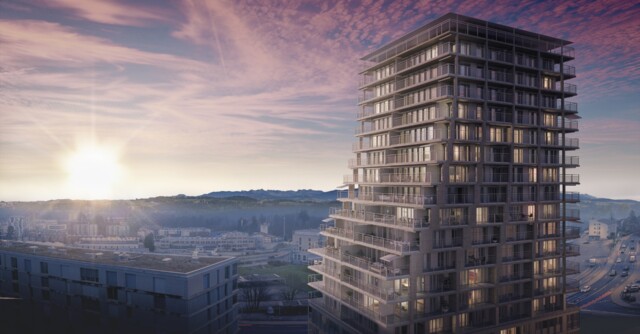
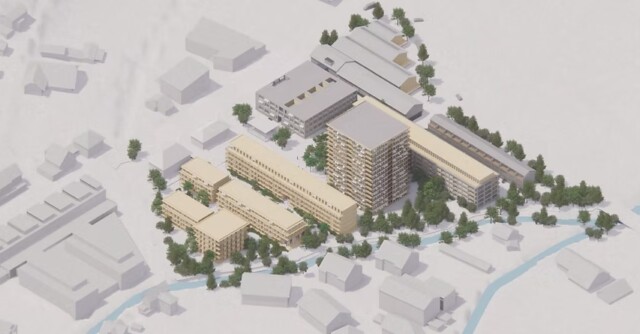
    Das Hochhaus „Rocket“ mit 100 Metern Höhe und die drei angrenzenden Wohngebäude „Tigerli“ sollen in der Lokstadt nicht nur Wohnen und Arbeiten ermöglichen, sondern auch städtebauliche Akzente setzen. Die Stadt Winterthur hat Anfang April 2025 die Baubewilligung erteilt. Allerdings mit strengen Auflagen, die vor allem die öffentliche Nutzung von Erd- und Dachgeschoss betreffen. Cham Swiss Properties AG, hervorgegangen aus der Fusion von Ina Invest und Cham Group, nimmt diese Auflagen ernst und will in enger Abstimmung mit den Behörden Optimierungen vornehmen.

    Formaler Rekurs als Zwischenschritt
    Obwohl es von externen Seiten keine Einsprachen gab, hat die Eigentümerin selbst einen Rekurs gegen die Baubewilligung eingelegt. Hintergrund ist die Notwendigkeit, die Detailvorgaben der Stadt zu präzisieren und in einem konstruktiven Dialog mit dem Amt für Städtebau und dem Amt für Baubewilligungen abzustimmen. CEO Thomas Aebischer erklärt: „Das ist eine Formalie. Entscheidend ist für uns der inhaltliche Austausch, damit Rocket & Tigerli der städtebaulichen Bedeutung vollauf gerecht werden.“

    Zentrale Punkte der Nachbesserung sind eine attraktive, öffentlich zugängliche Dachterrasse und publikumsorientierte Nutzungen im Erdgeschoss, wie Cafés und Gastronomieangebote am Dialogplatz. Diese Anpassungen sollen die Aufenthaltsqualität und die Einbindung in die Lokstadt fördern.Ein Ziel, das auch der Stadt Winterthur wichtig ist. Der Rekurs schafft die rechtliche Grundlage, um diese Punkte sorgfältig zu prüfen, ohne den laufenden Projektplan zu gefährden.

    Keine Verzögerung trotz Rekurs
    Cham Swiss Properties zeigt sich zuversichtlich, dass der Zeitplan eingehalten wird. Bereits jetzt ist klar; Rocket & Tigerli bleiben Meilensteine für den urbanen Holzbau in der Schweiz. Das Ensemble nutzt das Potenzial des zukunftsweisenden Holzhybridbaus und steht für nachhaltige Stadtentwicklung mit hoher architektonischer Qualität. Bis Ende 2028 soll das Projekt abgeschlossen sein, mit Wohnungen im Hochhaus und Hotelnutzungen in den unteren Geschossen.

    Bedeutung für Winterthur
    Für die Stadt Winterthur bedeutet das Projekt nicht nur ein neues Wahrzeichen, sondern auch zusätzliche Impulse für das Quartier Lokstadt. Als Teil einer umfassenden Transformation stärkt Rocket & Tigerli die Position der Stadt als attraktiver Wohn- und Wirtschaftsstandort und unterstreicht die Bedeutung nachhaltiger, innovativer Bauvorhaben.

  • Master plan for the Jenny site

    Master plan for the Jenny site

    The approximately 30-hectare Jenny site of Fritz Caspar Jenny AG is deeply rooted in the industrial history of the Glarus region. Where textile production has taken place since 1834, a multi-layered site with new prospects is being created today. The proximity to Ziegelbrücke railroad station, the size of the site and the existing infrastructure make the area a key location for economic and urban development in the canton.

    Planning with vision and participation
    A strategic master plan was developed as part of a multi-stage process, based on comprehensive test planning with four interdisciplinary teams. The resulting findings form the basis for a long-term development that is aligned with regional spatial planning, economic potential and social diversity. The winning design by Blättler Dafflon Architekten with Tony Fretton Architects and Studio Vulkan impressed with its strong combination of nature, building culture and open spaces.

    Diverse use as a location strategy
    The site already combines a variety of uses. From the Carlsberg Supply Company to creative work and residential forms such as Loft Z25 and the Glarus cantonal vocational school. The master plan builds on this diversity and expands it to include new educational, service and residential facilities. A hotel project is also being examined. The aim is to permanently establish and sustainably revitalize the Jenny site as a business, residential and educational location.

    Building culture as an identity-forming element
    Respectful treatment of the architectural heritage is central to the development. The site is part of the inventory of sites worthy of protection in Switzerland. Existing buildings of architectural and historical significance are to be preserved and integrated in a targeted manner. The listed riding stable, for example, is intended to enrich the new site concept as a defining element and contribute to the identity of the location.

    Focus on the legal framework
    The implementation of the master plan requires adapted land use planning. The project is currently awaiting the legal validity of land use planning II of the municipality of Glarus Nord. The first steps towards rezoning have been taken, but key legal requirements are still outstanding. Once this process has been completed, the development potential of the Jenny site can be fully exploited. A decisive step for the future of the site.

  • Swiss tax landscape in transition

    Swiss tax landscape in transition

    In 2025, the average corporate income tax rate in Switzerland fell from 14.6% to 14.4%. The canton of Zug remains the front-runner with just 11.85%, while Bern (20.54%), Zurich (19.61%) and Valais (17.12%) occupy the upper ranks in the tax ranking. At first glance, this is a sign of the attractiveness of the business location, but the dynamics are more nuanced.

    In fact, some cantons have even increased their tax rates slightly. Geneva, for example, rose from 14 to 14.7 percent, while Basel-Stadt will increase its rate to 14.53 percent in 2026. This is due to the introduction of the global minimum tax rate of 15% for companies with high profits. Cantons that were previously regarded as low-tax locations are adapting in order to cushion the threat of the additional tax and retain revenue themselves. For investors, this means that while the tax advantage remains, flexibility is required in order to be able to react to cantonal differences and future adjustments.

    Location remains competitive
    There has also been a slight decrease in the top tax rates for private individuals. From an average of 32.7 percent to 32.5 percent. Geneva (-1.7 percentage points) and Schwyz (-0.61) in particular have lowered their rates. However, the ranking remains stable. Schwyz (21.98%), Zug (22.68%) and Nidwalden (24.1%) remain at the top. Geneva, Vaud and Bern remain the most expensive cantons for top earners. For real estate developers and highly skilled workers, these locational differences in income tax remain a decisive factor, especially for international projects.

    Global minimum tax Stability in Switzerland, uncertainties internationally
    Over 50 countries worldwide have already implemented the minimum tax of 15 percent for large companies. However, the USA, the original driving force behind the initiative, has not yet adopted the OECD guidelines into national law. On the contrary, the new US administration is increasingly questioning the project. Experts such as Stefan Kuhn from KPMG Switzerland emphasize that, in the worst-case scenario, these uncertainties could lead to a return of tax competition or special digital taxes. For Switzerland, however, the signal is clear: the global minimum tax is becoming a reality here too. The stability of implementation and the ability to plan remain a locational advantage over uncertain international developments.

    Cantons boost location attractiveness with targeted projects
    In parallel to the tax adjustments, many cantons are investing in location promotion projects. Lucerne, Basel-Stadt, Zug and others have already adopted programs to support local companies and new relocations. For real estate developers, this means opportunities for new projects, incentives for investment in commercial and residential space and a solid basis for long-term viable business models.

    At the same time, it is clear that it is not tax policy that determines the attractiveness of a location, but also the accompanying measures such as infrastructure, securing skilled workers and digitalization. This is where new spaces for innovative projects are created for developers and investors,

    especially in a market environment that is characterized by growing demands for sustainability and resource efficiency.

    Industrial policy and tariffs
    In addition to taxes, international trade issues are once again gaining in importance. Discussions about US tariffs, bilateral trade agreements and strategic industrial policy are driving reindustrialization worldwide. For Swiss locations, this means that the demand for suitable production and logistics space could increase. At the same time, the protection of strategic industries is once again receiving greater political support, which could open up new areas for investment in high-tech and industrial production.

    Switzerland remains strong – eyes on Ireland and Asia
    In an international comparison, Switzerland remains on a par with other top European locations. Ireland taxes corporate profits at 12.5 percent, Hungary at 9 percent. Guernsey, the Bahamas and the Cayman Islands remain low-tax havens with zero percent, but this is no comparison for Switzerland. Instead, the location competes with attractive metropolises such as Hong Kong (16.5%) or Singapore (17%), which entice with additional incentive programs. China, India and Brazil also continue to rely on other tax strategies with high rates (25-34%), but selectively offer low effective burdens for strategic industries. Switzerland remains competitive and complements this advantage with a stable political and legal framework.

  • Business location and living space Canton Glarus – A truly fabulous lifestyle

    Business location and living space Canton Glarus – A truly fabulous lifestyle

    The canton of Glarus has a long industrial tradition. What impetus are you providing to strengthen economic competitiveness and create sustainable jobs?
    The canton of Glarus has always been extremely business-friendly. We were one of the first Swiss cantons to regulate economic development by law (1978). Glarus is also a Swiss pioneer in social legislation with the Factory Act (1864) and compulsory old-age insurance (1916). Against this background, Glarnerland is traditionally a modern business location with competitive advantages for employers and employees that may only become apparent at second glance. For example, the Glarnerland is large enough to offer companies sufficient space, but also small enough to make decisions quickly and unbureaucratically. The contact point for business provides pragmatic and reliable support to both company founders and existing companies or companies wishing to relocate. In our three large municipalities, which have merged in an exemplary manner throughout Switzerland, investors can find affordable real estate and employers can find well-trained, motivated employees who enjoy living in an intact environment with the advantages of a modern environment.

    How does the Department of Economic Affairs promote innovative digital business ideas?
    On the one hand, the possibilities of digital transformation serve to redesign processes and products, but they also form the basis for the circular economy. This involves both greater resource efficiency and data management. As a result, tomorrow’s employees will know which materials were used in which processes. Supply chains are another opportunity: New digital processes enable a more robust, efficient and transparent supply chain. With this in mind, we are supporting the digital transformation in the Glarus economy with digitalization loans. The funding program has two million francs available until the end of 2027. Funding is available for innovative projects that incorporate new technologies in processes and production, create new products and business models and establish collaborations. Specifically, we carry out an analysis of the current situation in participating companies with the expertise of the Innovation Network Eastern Switzerland (INOS). The analysis is financed by the new regional policy (NRP) and includes an assessment of the current situation, including an action plan and roadmap for implementation. This basis is required for the application for financial support of up to CHF 100,000 for individual companies and CHF 300,000 for inter-company and/or industry-wide projects.

    How do you think the real estate sector will develop in the industrial and commercial sector?
    The pressure from the agglomeration is noticeable in Glarnerland. However, population growth is moderate, which is conducive to sustainable development. The municipality of Glarus North has particularly high capacities in terms of industrial and commercial space, which are currently being used in several projects at the Bilten site. With active land management, we are focusing on sustainable development with high-quality industrial and commercial projects.

    What trends do you see in the development of supply and demand in the residential sector?
    The majority of new residential construction projects are being implemented in the municipalities of Glarus and Glarus North. This also has to do with land use planning, which can take a holistic and progressive view thanks to the municipal merger. In Glarus South, land use planning is still undergoing a challenging political process, which is also being monitored by the canton.

    How can you ensure that the development of the real estate market meets the needs of the population?
    Anyone who lives in one of our 29 villages, towns or districts appreciates the special features of their place of residence. These are reflected, for example, in the location or club life. Life is completely different in Elm or Braunwald than in the cantonal capital or in Näfels. And there again different from the Kerenzerberg or Lake Walen. This creates a sense of identity and solidarity, which keeps people here. This is consistent with the moderate pace of population growth and the comparatively stable real estate prices.

    How can you ensure that your real estate market develops sustainably?
    With our unique combination of closeness to nature and urban proximity, with its manageable size and compact living and economic area, Glarnerland scores highly. Careful management of these advantages is therefore essential – they are our resources, our capital.

    What infrastructure projects are planned by FEDRO and SBB and what potential for improvement do you see?
    Glarnerland is perceived as a rural region, but thanks to its location between Zurich and Chur, it has very good transport connections. The city of Zurich and the airport are only an hour away by car or train, one of the most important north-south axes runs through the canton, and private planes and helicopters can take off and land in Mollis.

    Naturally, the canton of Glarus is also dealing with the increasing mobility requirements. In recent years, the canton has implemented three of four major road construction projects, in particular to provide future-oriented access to the Mollis airfield development focus. The fourth project to optimize access to the industrial area in the south of the municipality of Glarus is currently in the planning phase. The focus of our efforts is close cooperation with the federal government on the bypass projects to relieve congestion on the current main axis. We have received assurances from the federal government that the Netstal and Glarus bypasses will be combined into one overall project under the leadership of FEDRO. The aim is to relieve the canton of Glarus of all its road traffic problems.

    In terms of public transport, we have had a new legal basis for future public transport services since the Landsgemeinde 2025. Our region is already well connected today with direct connections to Zurich and Rapperswil as well as transfer options in Ziegelbrücke to St. Gallen, Chur and Zurich. Our population and businesses depend on this convenience and the continuous half-hourly service agreed at the Landsgemeinde 2025. We are working hard to achieve this with the federal government and in cooperation with SBB and SOB. We are actively cooperating with companies to make commuting by public transport more attractive for employees – for example, the Bonus Pass creates incentives to switch from car to public transport.

    Short distances within and between our localities also play a key role in mobility. For example, it only takes 20 minutes to cycle from Näfels, Glarus North, or from Schwanden, Glarus South, to the cantonal capital. The trend towards cycling is also reflected in the cantonal Cycle Path Act, which was passed by the Landsgemeinde 2024.

    How does location promotion help to present Glarus as a liveable and future-oriented region?
    The canton of Glarus is the third most financially attractive place to live: in addition to low housing costs, we offer a moderate tax burden and comparatively low health insurance premiums. These are our major advantages in terms of financial factors. Added to this is the high quality of the living environment, which combines the advantages of the countryside with urban amenities. This is evident at first glance when you arrive in the canton of Glarus. Together with the impressive mountain scenery, the witnesses of early industrialization shape the landscape and life in our canton. The historic industrial areas, factory owners’ villas and workers’ settlements from the 19th century and the landscape are also the backdrop for films and TV series for good reason. In people’s everyday lives, this is reflected in a contrasting and lively environment with contemporary settlements for professionals and families who value living, working, culture and leisure in our modern communities.
    With this in mind, Glarus has been actively marketing the canton in a targeted manner for over ten years. This year, we are using our role as host of the Swiss Wrestling and Alpine Festival (ESAF) to put the spotlight on the canton of Glarus as a center of life. With the upcoming major event, the whole of Switzerland is turning its attention to the Glarus region. Under the motto “Really fabulous”, the focus is on working, living and leisure. The face of the campaign is the popular Glarus chef and influencer Noah Bachofen. He and his colleague are accompanied on their mission to create an authentic image film about the Glarus region. The campaign aims to make the unique Glarus lifestyle visible and tasty.

    Why do skilled workers stay in the region and what does location promotion contribute to this?
    Of course, a good campaign alone is not enough. The municipal location promotion agencies make a major contribution to the high quality of life. They continue to develop their residential and leisure areas with new projects and in cooperation with investors – examples include the optimally developed development focal points at the Näfels/Mollis and Glarus railroad stations. The municipalities provide modern schools and supplementary family services, operate sports facilities and offer retail, gastronomy, medical care, industry, commerce and culture space for a lively and functioning everyday life. The canton ensures the operation of the cantonal school, the sports school, the vocational schools, the cantonal hospital, security and social services. The lean administrative structures enable an efficient and direct exchange between the cantonal specialist offices and those responsible at municipal level.

    What is your long-term vision for Glarus as a business location?
    In the coming years, it is crucial for the canton of Glarus that the initiated development is implemented in a coordinated manner. It is important to support and accompany the private initiatives and at the same time create the right framework conditions for companies and skilled workers. If this succeeds, the canton of Glarus will be a secure, networked and economically strong canton with a strong middle class, surrounded by unspoiled nature.

    Future-oriented and efficient structures are decisive for the success of a company. This also applies to the public sector. Glarus is the only canton that has consistently adapted its own structures to the new circumstances. With today’s highly efficient administration, we are fit for the future.