Category: Regions

  • New study on residential mobility

    New study on residential mobility

    The desire for a new living environment is particularly strong among the so-called best agers, the 45 to 79-year-olds. The departure of children or the transition into retirement creates new freedom. However, suitable housing offers that do justice to this phase of life are rare. Many best agers therefore remain in apartments that no longer suit their needs. Digital exchange platforms, neutral housing advice or targeted information events could help to realize these relocation wishes, but such offers are still lacking across the board.

    Challenges for young families
    Younger generations are also affected. The desire to move into their own home is widespread among young families. However, high property prices, a shortage of supply and strict financing requirements make this dream a distant prospect for many. For young adults in particular, home ownership remains virtually unaffordable.

    Innovative models as a way out
    The study highlights alternative models such as installment plan, small-scale home ownership, temporary home ownership or building lease solutions. These concepts could open up new perspectives. Making home ownership possible with an easier entry point or better aligning the transition to a home with the stage of life. However, these models are not yet widespread in Switzerland, are often still unknown or are not easy to implement legally.

    Impetus from politics and business needed
    New impetus from politics and business is needed to change this. Municipal housing strategies, targeted funding programs and pilot projects could help to increase residential mobility. Equally important are innovative financing models that also give lower-income households and young families access to suitable housing.

    Central role of the municipalities
    The municipalities play a key role here. They could specifically establish new forms of housing and advisory services that make it easier for people to change their housing situation. In this way, living space can be better utilized and adapted to growing demand, a decisive factor for sustainable residential development. The “Housing Study Series” thus provides important findings and concrete starting points for all players in the housing industry. It is clear that residential mobility is more than just an individual need. It is a key factor for sustainable housing development in Switzerland.

  • BeOne Medicines anchors itself in the Basel Area

    BeOne Medicines anchors itself in the Basel Area

    BeOne Medicines, formerly BeiGene, has officially relocated its headquarters to Switzerland. Already present in Basel since 2018, the global oncology company is now permanently anchored in the heart of one of Europe’s most innovative biotech hotspots. Basel not only boasts more than 30,000 highly qualified life sciences specialists, but also excellent conditions for regulatory cooperation and international networking.

    Strategic impetus for research and development
    BeOne pursues a vertically integrated innovation strategy that combines basic research, clinical development and production under one roof. The company has one of the most extensive oncology pipelines in the world. With more than 50 investigational compounds, including a BTK inhibitor already approved in 75 countries, BeOne addresses both hematological diseases and solid tumors. Development is based on future technologies such as multispecific antibodies and protein degradation products.

    Site selection as part of a global expansion strategy
    The Basel Area will thus become the European hub of BeOne’s clinical activities. As early as 2024, 13 new drug candidates were transferred to clinical trials. A peak value even compared to Big Pharma. More than 40 trials are currently underway in Europe, involving over 3,000 patients. BeOne employs more than 11,000 people worldwide on six continents, with a rapidly growing proportion in Switzerland.

    A gain for the location and for investors
    For Basel as a location, BeOne’s decision means a clear gain in international visibility, jobs and investment momentum. For investors and project developers in the life sciences, there are new opportunities along the entire value chain, from laboratory space to clinical study centers and production. The proximity to science, talent and regulatory authorities creates ideal conditions for further growth.

  • Foundation stone laid for cutting-edge biomedical research

    Foundation stone laid for cutting-edge biomedical research

    On May 23, the University of Basel celebrated the laying of the foundation stone for the new biomedicine building on the Schällemätteli Life Science Campus together with project partners and guests from politics and science. From 2030/31, around 700 researchers will have access to a state-of-the-art infrastructure here, the University of Basel announced in a press release. “With this building, we are not only creating space for excellent research, but also promoting close spatial networking between the university, clinics and industry,” Rolf Borner, Director of Infrastructure & Operations at the University of Basel, is quoted as saying in his speech at the laying of the foundation stone.

    In the new Biomedicine building, the University intends to bring together the units of the Department of Biomedicine, which are currently spread across six different locations. It conducts research at the interface between basic science and medical application, mainly on tumor diseases, the immune system, regenerative medicine and neurosciences.

    Construction work on the building, which is over 40 meters high and has eleven floors, has been underway since 2023 and the shell is due to be completed next year. In addition to laboratories, the plans include lecture halls, seminar rooms and a lounge to promote scientific exchange. The project is being realized by the construction and real estate company Implenia from Opfikon as total contractor.

    At the groundbreaking ceremony, the University of Basel also launched the new Basel BioMed Symposium conference series. The first edition on May 23 was dedicated to the value chains of biomedical research.

  • Geothermal energy in underground structures

    Geothermal energy in underground structures

    Engineers from the Laboratory of Soil Mechanics(LMS) at EPFL have investigated the use of geothermal energy in two very different applications: in a subway station and in an underground data center . In this Innosuisse project, the researchers, together with the internationally active engineering firm Amberg Engineering from the canton of Zurich, focused on optimizing air conditioning through the improved use of energy geostructures.

    These are building components that are located in the ground and can be used for heat conduction. These include energy piles, floor slabs and basement walls. The two studies were published in the journal “Tunnelling and Underground Space Technology”.

    The transferable models developed by the team took into account either most of the physical factors of the underground railroad infrastructure or the capacity to dissipate excess heat through geothermal activation, in addition to the geometry of the building and mechanical ventilation.

    Among other things, the researchers found that a geothermal system in an underground data center pays for itself in three to seven years. If geothermal energy replaces the heat generated by gas boilers, annual CO2 emissions at the typical site in this case study could be reduced by 45 percent.

    Sofie ten Bosch, a civil engineer at LMS and lead author of the study, was able to apply her PhD research to two specific applications in these two studies. She says: “The technology to assess the potential of geothermal energy in a given area is now mature and we see that the industry is ready to explore new opportunities for the optimal use of this sustainable heat source.”

  • Cooperation strengthens digital precision in infrastructure construction

    Cooperation strengthens digital precision in infrastructure construction

    Amberg Technologies AG from Regensdorf, part of the Amberg Group, is joining forces with Topcon Positioning Systemsfrom Livermore in the US state of California. The aim of the cooperation is “to enable interoperability between Topcon’s sensor solutions and Amberg Technologies’ software and hardware platforms for rail and tunnel applications”, the two international partner companies write in a joint press release. The background to this is the endeavor of Amberg and Topcon to be able to offer joint customers “fully integrated solutions”.

    Amberg Technologies specializes in measurement solutions for the construction of roads, railways, subway railroads and other infrastructure. Founded in 1981, the Regensdorf-based subsidiary of the Amberg Group also offers measurement solutions for monitoring such infrastructure. Topcon Positioning Systems, which belongs to the Tokyo-based Topcon Corporation, develops, produces and distributes precision measurement and workflow solutions for the construction, geodata and agricultural sectors.

  • New certificate verifies energy efficiency in operation

    New certificate verifies energy efficiency in operation

    The Basel-based Minergie association presented its new Minergie Betrieb certificate in Bern on May 22. It is awarded to property owners who make a contribution to climate protection with low energy consumption and low operating costs, explained Minergie in a press release on the launch. While the existing Minergie building standard certifies structural energy efficiency, Minergie operation is intended to prevent incorrect or inefficient settings in building technology.

    “The new Minergie Operation certificate now bridges the gap between planning, construction and operation by checking and certifying the settings of the building technology and the associated energy consumption based on automatically recorded energy data and evaluations,” Sabine von Stockar, Head of Education and Development at Minergie, is quoted as saying in the press release. “This ensures that the potential for energy efficiency is guaranteed during ongoing operations.”

    For the first time, Minergie operation can be awarded after the building technology has been in operation for at least one year. The certificate is aimed in particular at “property owners with large portfolios and sustainable ambitions”, explains Minergie. In addition to the Minergie building standard, the certification process for Minergie operation can result in energy savings of 15 percent across the entire portfolio. The association recommends recertification after three years.

  • Financial reality puts an end to visionary spatial concept

    Financial reality puts an end to visionary spatial concept

    “This is the post we never wanted to make,” Tadah introduces a post on LinkedIn in which the founders Klara Zuercher, Diana Wick Rossi, Sarah Steiner and Julia Cebreros announce the closure of their coworking and kids space. According to them, the business model “could not meet the financial requirements” despite high demand and positive feedback. Operations will therefore cease at the end of June.

    Tadah at Albisriederstrasse 253 in Zurich was designed as a “sustainably furnished coworking space for parents, teams and start-ups”, according to Tadah’s self-description. “With full flexibility, including childcare.” With Tadah, the four founders wanted to make a contribution to making Switzerland more family-friendly.

    Tadah has already found a new tenant for the coworking space. The premises will be taken over by Norm Technologies AG as a start-up hub. New tenants have yet to be found for the Kids Space.

  • Federal Supreme Court confirms responsibility of price control for municipal waste

    Federal Supreme Court confirms responsibility of price control for municipal waste

    The Federal Court in Lausanne is not reviewing whether the price supervisor is responsible for the acceptance prices of municipal waste. According to a ruling on 11 April, it did not accept an appeal by Limeco for procedural reasons, the Limmat Valley regional utility writes in a press release.

    Limeco had lodged an appeal against a ruling by the Federal Administrative Court in St. Gallen on 10 November 2023. In doing so, the company wanted to have the jurisdiction of the price supervisor reviewed.

    However, the St.Gallen judgement of 2023 had ruled in favour of Limeco on the merits. The court ruled that the price supervisor had based its 2018 price reduction order on incorrect calculations. Limeco had charged CHF 150 per tonne of municipal waste for thermal recycling. The price supervisor reduced the price to CHF 102 in its ruling.

    With the current decision of the Federal Court in Lausanne, the price supervisor can continue to assess the acceptance prices for municipal waste in the future. However, it must adhere to the framework set by the St.Gallen court.

    The Limeco member municipalities include Dietikon, Geroldswil, Oberengstringen, Oetwil a.d.L., Schlieren, Unterengstringen, Urdorf and Weiningen.

  • immoTable Glarus shows prospects for the Alpine region

    immoTable Glarus shows prospects for the Alpine region

    [smartslider3 slider=”48″]

    Monika Schärer opened the event with a clear impulse. The Glarus region is ready to reinvent itself and serve as a model for urban development in the Alpine region. Andreas Binkert, architect, lecturer and board member of the Nüesch Group, led the guests through the Spatial Concept Switzerland 2050, emphasizing the need for polycentric structures, forward-looking site development and environmentally friendly mobility and energy solutions. According to the SIA, a development strategy for the whole of Switzerland up to 2070 is needed, which serves as a binding basis for prioritization, weighing up interests and investment security.

    Smart Valley Glarus
    The focus was on the question of how alpine regions such as Glarus can benefit from change. The vision of a “Smart Valley Glarus” was outlined, not as an artificially created city, but as a cluster-like spatial structure with high density, mixed use and seamless integration of existing villages. Education, the circular economy, digitalization and energy-efficient construction form the basis for this. Glarus could thus become a pilot region for an Alpine smart city in which sustainable ways of living and working are created.

    Location quality and pioneering spirit
    Marianne Lienhard, the canton’s Director of Economic Affairs, emphasized the strong pioneering spirit and high location quality in her talk. The canton of Glarus is an “industrial pearl with a down-to-earth attitude” that is economically strong and at the same time offers space for quality of life, recreation and innovation. The heterogeneity of the localities and the close connection of the population to their places of residence are decisive locational advantages that strengthen social cohesion.

    Active location development
    Andreas Mächler from the cantonal contact point for the economy showed how actively location development is being pursued. Thanks to revised land use planning, several hectares of building land are available in Glarus North. Well developed, centrally located and significantly cheaper than the national average. Companies benefit from attractive framework conditions, short distances to the administration and a dynamic relocation policy.

    Real estate market analysis
    Andrea Bernhard from Wüst und Partner analyzed the current situation on the Glarus real estate market. Despite growing demand and an almost empty supply, the price level is stagnating compared to other regions. In Glarus South in particular, new construction activity is low and most of the housing stock is outdated. But this is precisely where the opportunities lie. Densification, flexible building zones and targeted development could provide new impetus, provided a balance can be struck between growth and identity.

    Real Estate Award
    To conclude, Tim Caspar from Real Estate Award AG presented the upcoming award event on October 2, 2025. With over 400 decision-makers, a gala and awards ceremony in five categories, the innovative strength of the industry will be made visible here. A strong starting point for all those who want to help shape the future.

    The immoTable Glarus has shown that the canton is at the beginning of a new stage. With a clear attitude, an open mind for cooperation and the courage to transform, Glarus can become a role model for sustainable development in the Alpine region, as a space for investment, innovation and a good life.

  • Protectionism as a location risk

    Protectionism as a location risk

    What began as US customs policy under Donald Trump is developing into a global threat to open economies. For export-dependent Switzerland, this development is more than just a geopolitical disturbance. It affects the core of the business model, international networking, stable framework conditions and reliable markets.

    According to a representative survey of 800 Swiss companies involved in foreign trade, 70 percent expect a negative impact on their own business. Export-oriented sectors such as the pharmaceutical, watch and machinery industries as well as suppliers in the real estate, construction and logistics sectors are particularly affected.

    Location strategies under pressure
    The reactions of companies show that protectionism is no longer an abstract risk. Over 60 percent of those surveyed expect higher costs and bottlenecks in the supply chain. Every second company is planning price increases in order to pass on the additional costs. At the same time, many are focusing on increasing efficiency and searching for new sales markets.

    Large companies in particular are rethinking their strategy. 40 percent are considering setting up their own sites abroad in order to circumvent trade barriers. This creates new requirements for location development, real estate projects and investment planning, both domestically and internationally.

    Clear demands on politicians
    The Swiss economy is calling for an active and future-oriented economic policy. The focus is on free trade agreements, particularly with the USA, to ensure competitiveness, the reduction of regulations and tax relief to strengthen the willingness to invest domestically.

    Research and innovation as key
    There is also broad support for the further development of bilateral agreements with the EU, particularly in the energy sector. More than 60% of companies see this as an opportunity to strengthen security of supply and integration into central European markets.

    Securing future technologies – together with Europe
    With growing protectionism, there is also growing concern about being left behind when it comes to access to key technologies such as AI, quantum computing or high-performance chips. Three quarters of the companies surveyed see an acute need for action here.

    Entrepreneurs recommend building up their own capacities in cooperation with European partners. In technology-intensive sectors in particular, companies are calling for government stimulus, even if this would mean a paradigm shift in Swiss industrial policy.

  • Swissbau 2026 rethinks the construction industry

    Swissbau 2026 rethinks the construction industry

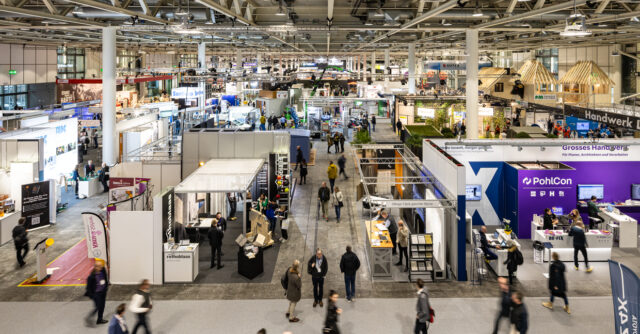
    With a clear focus on content and new formats, Swissbau Lab 2026 is sending out a strong signal. The transformation of the construction and real estate industry will no longer just be discussed, but brought to life. The four key topics “Smart technologies”, “Digitalization in the planning and construction process”, “Circular economy” and “Climate change” structure the programme. Current challenges meet real solutions, which are jointly designed by partners from business, science and start-ups.

    The event starts with a clear appeal to the industry. Tobias Hofmeier and Fabian Cortesi emphasize the role of Swissbau Labs as a networking platform for thinking and implementing the most pressing issues of the present. In 2026, the innovation workshop will not only be larger in terms of space, but also more in-depth in terms of content. The newly created workshop area in particular will create space for direct experience, practical applications and new technologies. This will be hands-on, interactive and directly on site. An additional trade fair day on Saturday will also focus more on interior design and contact with end customers.

    Dialogue instead of individual opinions
    Partners present current projects and pioneering solutions on the Main Stage. In a pointed, interdisciplinary manner and in exchange with experts. The contributions show how technological and structural innovation can work together if they are conceived in a networked way and implemented across disciplinary boundaries. Christoph Schaer from suissetec emphasizes the importance of synergies through digitalization. Markus Weber from Bauen digital Schweiz calls for a common language in the construction data space. Margarete Olender from the FHNW sees not only ecological, but above all economic potential in the circular economy. Sibylle Wälty from Resilientsy advocates robust local infrastructures as a response to climate change.

    The daily live demonstrations in the workshop area make Swissbau Lab 2026 a trade fair of action. Innovations are not only presented, but demonstrated in real time. Technologies, materials and processes can be tried out, evaluated and discussed. Another highlight is the Speakers Corner, where projects, workflows and digital solutions are presented in pitch format and critically evaluated in the subsequent talk.

    A place where new standards are created
    In 2026, Swissbau Lab will once again be a place where the industry outgrows itself, with new approaches, genuine cooperation and the will to change. The challenge is no longer whether digitalization will come, but how it will become the new normal. Amidst a plethora of digital solutions, the question of how people, technology and value creation can interact optimally remains central.

    For the Swiss construction and real estate industry, Swissbau Lab 2026 offers both orientation and exchange. Anyone who wants to actively shape change will find ideas, partners and inspiration here.

  • Empa wins bridge builder

    Empa wins bridge builder

    Matthias Sulzer is not your typical researcher. His career path took him from a trade to engineering studies to founding a company and finally back to research. Today he heads the Empa Department of Engineering Sciences, where he is helping to shape the built environment of tomorrow. His office is just as structured as his way of thinking. On a poster he drew himself, a mountain road shows the stages of a strategic development. For Sulzer, visualizations are not just a working tool, but an expression of pragmatic, goal-oriented thinking.

    He recognized early on that sustainable change can only succeed if research and practice work closely together. Even when he founded his company, he focused on scientific cooperation. This attitude later led him to Empa as a senior researcher, where he led national innovation projects and translated scientific findings into concrete applications.

    Innovation as a combination of systems thinking and responsibility
    Today, Sulzer deals with a wide range of topics, from sustainable robotics and new materials to the decarbonization of entire energy systems. Its work is particularly impressive in the context of climate change. After all, the built environment is responsible for a large proportion of resource consumption. Sulzer sees this not only as a technological task, but also a social one. His vision ranges from closed material cycles to the recovery of atmospheric carbon. For him, climate protection begins in the laboratory, but it ends in application.

    His department covers the entire spectrum of research, from molecular material developments to the evaluation of national energy strategies. From drones for infrastructure repairs to biocompatible implants, the work of the Empa teams is as diverse as it is relevant. According to Sulzer, it is crucial that the various disciplines work together. Where individual experts used to work side by side, today the focus is on real teamwork.

    Research that empowers people
    For Sulzer, however, the focus is not on technology, but on people. Research should not only be measured in terms of excellence, but must also empower the next generation to take responsibility. He sees himself as an enabler who creates spaces for scientific excellence. And he believes in the added value of teams in which individual strengths are combined to create collective intelligence. Where disciplinary boundaries are crossed, new solutions emerge, often with an impact beyond research.

    With Matthias Sulzer, Empa is not only gaining a technically skilled head of department, but also a leader who brings together science, entrepreneurship and social responsibility. At a time when technological developments alone are no longer enough, Sulzer relies on attitude, cooperation and a clear vision. Research that works through people, for people.

  • High-tech timber construction meets craftsmanship

    High-tech timber construction meets craftsmanship

    For centuries, wood was regarded as a traditional craft material. Today, however, it is driving an ecological and technological revolution in the construction sector. Automation, artificial intelligence and digital planning are transforming the timber construction industry. The mix of proven carpentry skills and modern technology makes it possible to implement projects faster, more economically and more sustainably.

    Hybrid systems
    Hybrid timber construction makes targeted use of the respective advantages of timber and concrete. Load-bearing structures made of glulam are combined with reinforced concrete layers. Such composite ceilings enable large spans, reduce the weight and improve the physical properties of the building. Prefabrication increases efficiency on the construction site. Examples such as the Timber Peak in Mainz demonstrate the economic and urban development potential of this technology.

    The potential of transparent wood
    Researchers are working on a material that replaces glass: transparent wood. By removing the lignin and filling the cell structure with polymer resin, a material is created that lets light through, is robust and offers excellent thermal insulation. Applications range from windows and light-flooded façades to building-integrated solar panels. Ideal for energy-efficient architecture with high design quality.

    3D printing with wood
    Wood filaments enable the additive production of smaller objects with the feel and look of real wood. Although this technology is not yet suitable for structural timber construction, new areas of business are opening up in the fields of interior design, model making and individual components. Large-format printing with wood composites in combination with robotics and generative design is already under development.

    Wood foam the next generation of insulation
    Wood foam is a completely bio-based insulating material made from waste wood. Manufactured without synthetic binders, it offers good insulation values, is dimensionally stable and can be recycled. The first industrial applications are about to enter the market. Wood foam is a promising alternative to traditional foams, especially for projects with a focus on sustainability.

    Augmented reality on the construction site
    AR technologies bring digital construction plans directly to the construction site. Using tablets or AR glasses, fitters can view component positions and pipe systems with millimetre precision. This speeds up assembly processes, avoids errors and improves communication between the planning office and the execution team. Initial pilot projects show clear time and cost benefits.

    Artificial intelligence as a planning assistant
    From automated floor plan development to quality assurance on timber surfaces. AI is increasingly being used throughout the entire construction process. Particularly exciting are systems for material optimization that minimize waste and maximize the use of residual materials. Ageing simulations and adaptive machine control systems are also becoming a reality.

    Robotics is revolutionizing manufacturing
    Robotic arms that mill, screw and assemble are no longer a dream of the future. Today, collaborative robots work side by side with skilled workers. They take on heavy or monotonous tasks and increase precision. Research projects in Zurich, Biberach and Austria show that robots can be used economically in timber construction. The combination of AI, sensor technology and robotics will enable virtually autonomous production in the future.

    Timber construction is becoming an investment in the future
    The timber construction of tomorrow stands for efficiency, sustainability and design diversity. For investors and project developers, it offers opportunities to realize properties economically and future-proof. Especially where ESG criteria, construction time and location quality are decisive for market success. Intelligent timber construction is more than just a trend, it is a strategic advantage for Switzerland as a business location.

  • First Zurich cantonal building to be awarded platinum

    First Zurich cantonal building to be awarded platinum

    The canton of Zurich is making history. The asylum center in Adliswil, which will be completed in 2023, is the first cantonal building to be certified with the highest SNBS Platinum award. This makes it one of only a handful of construction projects in Switzerland to have achieved this level.

    Unlike many conventional sustainability certificates, the SNBS Building Construction not only takes ecological criteria into account, but also evaluates the entire life cycle of a building and its impact on society, the environment and the economy.

    Context-strong architecture and modular efficiency
    The new building impresses with a differentiated architectural approach that incorporates both functional and social aspects. The result is a place that not only offers accommodation, but also facilitates integration. Semi-open meeting zones, planted gardens and a sports field encourage interaction and voluntary commitment.

    The modular timber construction not only guarantees high quality and cost efficiency, but also contributes to ecological goals. The short construction process, ease of dismantling and high degree of prefabrication also make the project economically attractive.

    A step beyond its own standard
    With an overall score of 5.5, the project even exceeds the cantonal targets. Zurich requires at least gold certification for new buildings, but the asylum center achieved platinum. This is confirmation of the commitment of the building construction office and the teams involved in the project.

    Signal effect for public building construction
    For investors, planners and decision-makers, the project is impressive proof that sophisticated sustainability is also feasible for public buildings and pays off in the long term. The Adliswil asylum center is therefore not only a functional building, but also a forward-looking location factor.

  • Glarus – truly fabulous

    Glarus – truly fabulous

    The canton of Glarus is also progressive at other levels, for example in terms of digitalization. The MINTGL initiative promotes enthusiasm for the subjects of mathematics, IT, natural sciences and technology among children and young people. Coverage with UHB Internet via mobile communications or fiber optics has increased significantly and is being continuously expanded. And the economy benefits from subsidies for the digital transformation of its products and business models.

    Room for development
    Glarus has exceptionally large reserves of building land as a result of the municipal structural reform. Thanks to its geographical proximity to Zurich, St. Gallen, Graubünden and Liechtenstein, companies have access to the expertise of universities, dynamic economic areas and skilled workers.

    The implemented land use plans in Glarus and Glarus North enable the targeted development of key areas and an unbureaucratic response to the needs of the population and companies. The areas around the Glarus, Näfels and Ziegelbrücke railroad stations offer enormous development potential – in the immediate vicinity of the town center and with excellent transport links. There are 170,000 square meters of land reserves available in the employment zones. At the same time, over 2,000 new apartments are planned in the canton of Glarus – state-of-the-art living space for around 6,000 people. This corresponds to around 15 percent of the current population.

    The contact point for the economy supports investors in their search for suitable sites and land reserves. This is based on work zone management, which provides information on building maturity, development and possible natural hazards. In the case of strategically important sites, the canton can become active itself – either by investing directly in their development or by acting as a partner.

    Skilled workers for success
    If you want to attract companies, you need space – including space for skilled workers. This is exactly what Glarus offers. Here, people have the opportunity to live where they work: to enjoy lunch with the family, to experience nature after work – and all this with a low cost of living, a relaxed real estate market and in a safe, socially intact environment. Glarnerland thus combines the economic strength of the “Greater Zurich Area” with a quality of life close to nature.

    The canton of Glarus is also committed to education and training. With the Work 4.0 pilot project, it is specifically strengthening the employability of skilled workers by co-financing training and further education. This commitment is complemented by three cantonal vocational schools, two technical colleges in Ziegelbrücke and the proximity to the universities and colleges in Zurich, Rapperswil, St. Gallen and Chur. Together with offers in adult education, vocational and career counseling, people in Glarnerland have access to almost every training and further education path. The smartglarus.com platform offers a compact overview of educational opportunities, support programs and services – a digital showcase for anyone who wants to learn, work or develop in Glarus.

    Innovation for the future
    It is often said that innovation mainly originates at universities and colleges. This is only partly true. Start-ups need more than just good ideas: They are dependent on partners from industry and business who can drive product development forward with their experience and know-how. This is exactly what the Glarus economy offers. When it comes to growth, practical factors count: affordable space, qualified specialists and continued access to universities. The canton of Glarus combines all of this. And is therefore an ideal location for start-ups with ambitions.

    Innovation promotion is broadly based in the canton of Glarus – thanks in part to cooperation with strong partners such as InnoSuisse and the Innovation Network Eastern Switzerland (INOS). Start-ups and companies benefit from coaching, expertise and financial support for the development of their products and services. One example: the fast-growing drone manufacturer ANAVIA made a conscious decision to locate in Näfels – a clear sign of how innovation-friendly the Glarus region is.

    Circular economy in the food and packaging industry

    In Glarnerland, the circular economy is a way of life – from the development of energy-efficient machines and innovative packaging solutions to food production and recycling: the economic area combines industrial strength with ecological responsibility. The result is a regional ecosystem that not only thinks about sustainability, but also puts it into practice.

    It all started with Netstal Maschinen AG, which develops high-performance injection molding machines. These are used at Resilux Schweiz AG in Bilten – together with high-precision molds from Glaroform AG. Resilux uses them to produce preforms, i.e. PET preforms, as well as finished bottles. These in turn are filled at the mineral springs in Elm.

    After use, the cycle starts all over again: the empty bottles end up at the Resilux recycling plant, where they are processed back into high-quality recyclate – ready for the next round of production. This creates a regional ecosystem based on innovation, efficiency and resource conservation. The companies benefit from each other’s expertise and thus drive the circular economy forward.

    Rethinking plastics
    Kunststoff Schwanden AG is also part of this sustainable network: it develops and manufactures sophisticated plastic parts using multi-component injection molding – with a focus on recyclates and energy-efficient processes.

    Where ideas take shape in corrugated cardboard and paper runs in circles
    Müller Kartonagen AG supplies customized solutions. Its corrugated cardboard packaging made from renewable raw materials is manufactured regionally – efficiently, in a resource-saving manner and tailored to customer requirements, such as those of Läderach. The raw material comes from the Netstal paper mill, which produces around 50,000 tons of recycled paper every year – from waste paper, most of which comes from Switzerland, and is processed using closed material and water cycles.

    Packaging is just the beginning. In Glarus, the contents are also produced responsibly: In the food industry, regional ingredients meet modern processing – sustainably and efficiently.

    Traditionally, Glarner Schabziger stands for local food production. Today, the spectrum is broader. Foodstuffs from chocolate to salmon are taking the lead. The entire region benefits from the growing potential of the food industry.

    Chocolate art with global success
    Since the invention of the Truffes hollow ball in 1970, Läderach has expanded steadily – and is now present in Europe, Asia and North America. The new factory in Bilten makes it possible to control the entire value chain – from the cocoa bean to the end product.

    Also from Bilten, GUMA AG distributes the traditional Stalden cream – a Swiss dessert classic in four varieties with over 120 years of history.

    Mexican bite with Glarus roots
    MiAdelita has been producing fresh corn tortillas and potato chips since 1995 – and is now the largest supplier of its kind in Switzerland. Now in its second generation of management, the company consistently focuses on regionality: the corn comes from the Landolt mill in nearby Näfels. Together with the delicatessen supplier IMEX, a new production site with around 40 jobs is being built in Bilten.

    North Atlantic salmon from land-based farming
    Swiss Blue Salmon AG is planning the largest land-based fish farm in Switzerland in Mollis. With a market share of seven percent, it will make an important contribution to climate-friendly food supplies. The recirculation system will be supplied with water from Lake Walen and passively cooled – ideal conditions for sustainable salmon farming. The location in the “Biäsche” industrial area also offers first-class transport links to Zurich and Chur.

    High-flyer – the aviation industry in Glarus

    Flying has a long tradition in the canton of Glarus. in 1939, the first flight day attracted thousands of onlookers to watch the daredevils in their flying boxes. Today, aviation is one of the main areas of development in the canton of Glarus. With the zoning of additional building land, the Mollis airfield offers new space for aviation companies.

    The municipality of Glarus North is drawing up a master plan for the structural development of the site by summer 2025. Also in summer, athletes take to the skies at Mollis airfield – and land unerringly in the sawdust: 150,000 visitors are expected every day at the Swiss Wrestling and Alpine Festival (ESAF).

    Flying high – with a firm footing on Glarus soil
    Everything around the Mollis airfield revolves around precision and high-altitude flights. What the companies based here have in common: They use the synergies of a specialized cluster. First and foremost the Kopter Group. The helicopter manufacturer wants to establish itself internationally with the single-engine AW09. The location offers space for test flights, short assembly routes and a technology-friendly environment.

    Anavia is one of the youngest aviation companies in Glarus. The start-up develops unmanned helicopters – such as the HT-100, which flies for up to six hours, carries 60 kilograms and is ideal for border surveillance, infrastructure inspections or rescue missions. Founder and Co-CEO Jon Andri Jörg says: “Glarus is ideally suited to our needs. We have access to highly qualified specialists. And the proximity to Mollis airfield offers an ideal location for both production and testing.”

    Another start-up has made a conscious decision to locate in Glarus in 2025: Marenco Aviation is working on a new generation of lightweight helicopters with a focus on alternative propulsion systems.
    A proven player is Rega, which has been operating its own base in Mollis since 2010. The strategically favorable location allows for quick missions in the Alps. The expansion into a permanent station shows how central the location has become for air rescue.

    Heli-Linth AG has been operating here since 1972. It flies tourists over glaciers, supplies alpine huts, transports materials – and occasionally rescues cows from rough terrain. Comprehensive aircraft management is provided by the internationally active Linth Air Service AG, which has been anchored at the site for over 20 years. The Ecoflight flight school also takes off from here.

    Only Sauter, Bachmann AG remains on the ground, and with good reason: the Netstal-based specialist for gears and drive systems also supplies the aviation industry and benefits from direct contact with partners at the airfield, the technical expertise in the region and the industrial tradition of the Glarus region.

    Together, these companies focus on quality, proximity and a clear commitment to the Glarus region. They take off and yet remain grounded.

  • Strategy adjustment brings personnel changes

    Strategy adjustment brings personnel changes

    Jacques Mauron is drawing the consequences of the strategic restructuring of Groupe E and is stepping down as CEO. According to a press release, the Board of Directors has appointed Alain Sapin, Director of Electrical Energy at the Fribourg-based energy supplier, as interim CEO. Mauron has worked for Groupe E since 2004 and has been CEO since November 2019.

    Groupe E announced in April that it was reviewing its photovoltaic and heat pump activities in its own canton and other parts of French-speaking Switzerland. This was the company’s response to a sustained decline in sales in this area since 2023. It now wants to adapt the structure of the Technology and Infrastructure Directorate so that the individual branches are given more independence.

    This strategic reorganization is associated with job cuts. In April, the company was still assuming that 188 of its 2,600 employees would be made redundant. Following consultation with the social partners, the number of redundancies was reduced to 168 in May.

    The previous head of the Technology and Infrastructure Directorate, Michel Beaud, has since left Groupe E. He has now been succeeded on an interim basis by Johann Ruffieux, Head of Procurement and Trading.

  • Federal government selects five reserve power plants

    Federal government selects five reserve power plants

    Following its meeting on 14 May 2025, the Federal Council will conclude contracts with energy service providers for the operation of five reserve power plants. According to a press release, the Swiss Federal Office of Energy(SFOE) has conducted direct negotiations with potential providers in advance. Following the end of the tendering process in February 2025, the Federal Department of the Environment, Transport, Energy and Communications(DETEC) decided to select five projects with a total capacity of 583 megawatts (MW).

    The selected projects include the reserve power plant Monthey VS with 55 MW from CIMO, the reserve power plant Sisslerfeld 1 in the municipality of Eiken AG with 13 MW from Getec, the reserve power plant Stein AG with 44 MW from Getec, the reserve power plant Sisslerfeld 2 in Eiken AG with 180 MW from Sidewinder and the reserve power plant Auhafen in Muttenz BL with 291 MW from Axpo. All five plants will run on CO2-neutral fuel, according to the press release.

    The five projects should be ready for operation between 2027 and 2030. For the transition, DETEC is currently working on variants using hydropower, emergency power generators and consumption reserves.

  • Electricity agreement with the EU triggers opening of the electricity market

    Electricity agreement with the EU triggers opening of the electricity market

    Switzerland’s planned electricity agreement with the EU also provides for the electricity market to be opened up to end consumers. According to a press release, the Federal Council therefore presented key points for this opening on 14 May.

    The Federal Council’s key points stipulate that end consumers can choose to remain in the basic supply of the local supplier with its regulated prices and can also freely choose their electricity supplier. They are also free to return to the basic supplier, even during the year. Basic suppliers can charge a fee for switching out of or back into the basic supply.

    At the same time, consumer protection measures are to be introduced. For example, a comparison portal will provide an overview of offers. An ombudsman’s office will offer arbitration options. The contracts with the supplying companies must fulfil certain requirements. The Federal Electricity Commission will monitor the market.

    The electricity market has been open in the EU since 2007. A referendum in 2002 failed to open up the Swiss electricity market. Since 2009, the market has been open to large customers with a consumption of at least 100,000 kilowatt hours per year.

  • Smart City Aarau Strategy 2034

    Smart City Aarau Strategy 2034

    With “Smart Aarau 2034”, the city is pursuing a forward-looking approach. The strategy does not rely on technological impetus alone, but sees digitalisation as a tool for solving complex challenges. The focus is on the needs of the population, cooperation between departments and resource-efficient implementation. Aarau is orientated towards the city’s existing development goals and integrates smart thinking into all urban projects.

    A methodological framework for real progress
    The change in strategy also means a rethink in terms of implementation. In future, projects will no longer be planned in secret, but developed in dialogue with those affected. A municipal team will provide methodical support to employees. From the initial idea to the actual tested project. Experience from the Smart City period to date shows that this approach is effective if it is applied consistently.

    Smart means networked and usable
    The new strategy puts an end to isolated islands of innovation. Instead, projects should be systemically conceived and networked across the city in future. The goal is a city that utilises its resources efficiently, can react to changes and introduces new solutions where they are actually needed. Digital tools will only be used if they contribute to quality of life or efficiency.

    Effectiveness instead of symbolic politics
    Aarau measures success not by the number of digital projects, but by their impact. The new strategic framework focuses on measurable progress. This applies to implementation, behaviour, awareness and everyday use. This makes smart thinking the new basis for urban development – comprehensible, user-centred and climate-friendly.

  • Spatial concept Switzerland without substance

    Spatial concept Switzerland without substance

    The revision of the Swiss Spatial Concept was intended to provide a strategic compass for spatial development up to 2050. However, the document presented in December 2024 does not adequately address key issues such as densification, infrastructure and conflicts of use. Yet the demand for intelligently utilised space, resilient infrastructure and sustainable solutions for growing cities and regions is more urgent than ever before.

    Densification remains unresolved
    The depiction of advanced inner-city development is at odds with reality. Replacement new builds, a key means of densified construction, are still fraught with uncertainties and hurdles. There is a lack of a pragmatic implementation concept that creates clear rules, facilitates investment and accelerates site development. This is an omission with consequences for housing construction and the competitiveness of urban areas.

    Transport is blocked instead of facilitated
    A further deficit can be seen in the transport infrastructure. The spatial concept neglects the need for efficient transport routes and promotes a conflict between road and rail. However, sustainable location development requires networked mobility strategies that fulfil both economic and social requirements.

    Without political backing, everything remains theory
    In addition to its substantive weaknesses, the concept lacks clear political legitimisation. Without broad-based governance structures, the paper will remain ineffective. The Swiss Federation of Master Builders has therefore submitted amendments and rejects the draft in its current form.

    Conclusion for the property industry
    If you want to develop locations and help shape Switzerland as an attractive place to live and do business, you need solid framework conditions and a realistic planning policy. The current spatial concept offers neither. It is time for a practice-orientated model that creates planning security, facilitates investment and strengthens the attractiveness of locations in the long term.

  • MFO-West becomes an urban neighbourhood

    MFO-West becomes an urban neighbourhood

    The purchase of the 25,500 m² ABB site by the City of Zurich for a net CHF 106 million is more than just a land purchase. It is a strategic decision with a long-term impact. Thanks to the urban development contract concluded in 2021 and the special building regulations that come into force in 2025, Zurich can shape the future on a centrally located piece of the city. With high density, mixed uses and consistent citizen participation.

    Transformation through participation
    A key success factor is the early and transparent involvement of residents, associations and neighbourhood organisations. The needs of the neighbourhood were directly incorporated into the participatory strategy process. This turned an industrial site into an urban development concept with a high level of social acceptance. Urban planning thus not only gains space, but also trust.

    Mix of uses as a driver of innovation
    The utilisation concept envisages three new construction zones and three existing areas. A mix of non-profit housing, neighbourhood supply, creative commercial use and publicly accessible open spaces is planned. The House for Culture and Circular Economy is a flagship project for innovative urban utilisation. The combination of culture, sustainability and economic activity makes the site a catalyst for new value creation models in urban areas.

    Temporary use as an impetus for location quality
    Before construction work begins, halls and open spaces are used temporarily in a targeted manner. A strategy that brings life to the neighbourhood, promotes social contacts and creates identity even before construction begins. Interim uses are increasingly recognised as a success factor for the attractiveness of locations and resilience in transformation areas.

    Public-private partnership with a role model function
    ABB remains anchored in Oerlikon with 500 jobs and supports the development. The project shows how forward-looking urban development can work constructively with private owners. A model that can be transferred to other urban conversion sites. The combination of urban management and entrepreneurial willingness to co-operate points the way forward.

    MFO-West is not an isolated case, but an exemplary model for the urban transformation of former industrial sites. Those who invest in such development areas can help shape new urban qualities. From social integration and innovative utilisation concepts to sustainable value creation. In times of housing shortages, climate targets and new forms of mobility, sites like MFO-West are the key to the city of tomorrow.

  • Business opportunities in the Uri valley floor

    Business opportunities in the Uri valley floor

    Werkmatt Uri is one of the last large land reserves in the Uri valley floor. The first industrial uses with a direct railway connection were already established here during the First World War. The listed grain stores designed by architects Eduard Züblin and Robert Maillart in 1912/13 are particularly characteristic. These buildings will be preserved as landmarks and converted into an exhibition centre and art warehouse. The canton is investing in infrastructure to further develop the area between the new Altdorf cantonal railway station and the future Altdorf South motorway junction.

    Optimum location and economic impetus
    Uri is strategically located on the most important European north-south axis with the Gotthard Base Tunnel and the A2 motorway. The immediate proximity to the Altdorf intercity railway station and a modern bus concept promote the accessibility of Werkmatt. The improved accessibility provides impetus for economic and residential projects. With “Vena”, “Cubo” and “Strickermatte”, private investors have realised modern residential developments within walking distance.

    Development with vision
    Kässbohrer Schweiz AG has already recognised the added value of Werkmatt and relocated its headquarters to Altdorf in 2019. The new service building has created 30 qualified jobs in the areas of administration, sales, service, training, final assembly and production of special vehicles, mainly snow groomers. Werkmatt AG is also developing an innovative utilisation concept for building plots 9 and 13. The plans include a multifunctional centre with a business hotel with 80 rooms, co-working spaces, commercial and cultural spaces, restaurants and fitness and recreation areas.

    Targeted planning for sustainable growth
    As the owner, the canton of Uri is striving for a win-win situation with the future owners, users and investors in the area. The plots are to be sold and built on gradually over the next few years. The canton is developing the Werkmatt Uri site in a coordinated manner so that sustainable economic uses are created in the interests of the region as a whole. To this end, it is drawing up guidelines – including those relating to workplace density. The neighbourhood design plan serves as a planning instrument for investors and companies wishing to build on the site, which is binding on the owner and defines the parcel of land. It sets guidelines regarding utilisation, design and infrastructure.

    Success through co-operation
    Werkmatt Uri is an example of coordinated and sustainable site development. Companies benefit from a committed administration, short decision-making processes and needs-orientated solutions. The region expects the project to provide long-term economic impetus and create more than 1,000 jobs.
    Werkmatt Uri is therefore much more than just an industrial area, it is an economic driver and an attractive location for forward-looking companies.

  • Innovation campus in the heart of the Engadin

    Innovation campus in the heart of the Engadin

    The Engadin is known for its cultural diversity and breathtaking nature. At the same time, the region is increasingly focussing on innovation and sustainable development. The InnHub La Punt is a place where research, entrepreneurship and education come together.

    The centre offers a wide range of uses over an area of 7,700 square metres. These include workshop and classrooms, coworking workspaces, an auditorium with 250 seats, a sports training infrastructure, a spa, a restaurant with bar and lounge, a sports shop, a tourist information centre, 44 hotel rooms and 8 tourist flats. The multifunctional premises create a dynamic environment for innovation and interdisciplinary dialogue.

    Construction begins in spring 2025
    Following a comprehensive planning phase in which the concept was further refined, construction of the InnHub La Punt will begin in spring 2025. The municipality issued the building permit in autumn 2023. The existing buildings will be demolished first, followed by the excavation and construction of the underground car park by summer 2026. The shell will be completed by mid-2027 before the interior work begins. The opening is scheduled for the end of 2028.

    In parallel with the municipality of La Punt Chamues-ch’s future projects, including the road bypass and the renaturation of the Chamuerabach stream, the InnHub will create a new centre that will revitalise the town and provide new impetus.

    Sustainability as a central building block
    A key component of the project is its sustainable approach. The building is being constructed from local wood, granite and lime mortar and is an example of the circular economy and ecologically responsible construction. “The InnHub is a matter close to my heart, as I have lived in the Engadin for years. It is an example of sustainability and innovative construction methods,” emphasised architect Norman Foster in a video message.

    The operation of the campus is also designed to be sustainable. The initiators, including Caspar Copetti, are not focussing on short-term profits, but on long-term positive effects for the region. The InnHub is intended to create new jobs, promote year-round tourism and establish an innovation ecosystem in the Engadin.

    New impetus for the economy and the community
    The InnHub La Punt will not only attract companies, start-ups and skilled workers, but also facilitate strong networking with the local population. The municipality of La Punt Chamues-ch sees the project as an important step for the further development of the region. “The campus will create a cultural and social meeting point in our village. The projects that are being created here will inspire future generations to come to La Punt,” says mayor Peter Tomaschett.

    In addition to the long-term effects for the region, the InnHub offers an InnHub PopUp even before its completion, which can be used as a co-working and event venue for locals, holiday guests and professionals until it opens.

    A milestone for the Engadin
    The InnHub La Punt combines innovation, sustainability and community in a unique way. With a clear focus on responsible development, it will radiate far beyond the Engadin and serve as a model for sustainable innovation centres in the Alpine region. The combination of state-of-the-art architecture, innovative working environments and regional roots makes the InnHub a forward-looking project that will provide new impetus for the Grisons as a business location.

  • New start-up centre promotes entrepreneurship in Uzwil

    New start-up centre promotes entrepreneurship in Uzwil

    A second startup space of the IFJ Institute for Young Entrepreneurs will be built on the site of the Uzwil grinding plant, which is located on the Bühler Group premises. Uze AG, the Bühler Group’s property and family office, is working with the IFJ to develop this part of the site on the Spickel between Bahnhofstrasse and Fabrikstrasse into an innovation hub. The IFJ has already been operating its first centre of this kind in Schlieren for ten years.

    According to Uze AG, the Mahlwerk in Uzwil will be a “lively place for start-ups, entrepreneurs and creative minds” from 2027, “with modern office & engineer spaces, events & meetings and plenty of room for innovation”. According to a statement from the IFJ, construction will begin on 12 June 2025.

    As part of the densification and renovation of properties, the Bühler Group relocated the space it used to the neighbouring main site. This freed up 18,680 square metres for something new. “Uze AG is opening a new chapter here with the Mahlwerk and continuing the industrial tradition with entrepreneurial vision, innovative strength and international networking,” says the IFJ.

    The Mahlwerk creates “space for growth, encounters and movement – and above all for visibility and strong connections to companies, experts, organisations and investors”. In addition to the space for start-ups and SMEs, there will also be premises for industrial and commercial enterprises.

  • LG site becomes an urban neighbourhood

    LG site becomes an urban neighbourhood

    The transformation of the LG site aims to create a lively, open district characterised by architectural quality and urban flair. The project is based on a development plan that ensures that urban development and architectural standards as well as social and ecological aspects are incorporated into the planning. In a study process, the team Salewski Nater Kretz, pool Architekten, Studio Vulkan Landschaftsarchitektur and mrs partner were selected as the winners, whose concept forms the basis for the neighbourhood development.

    Purchase of land by the city of Zug
    In order to influence the urban use and price development on the LG site in the long term, the city of Zug is planning to purchase a central plot of land on Theilerplatz. The cost of the plot amounts to CHF 65 million. This transaction will soon be dealt with by the Grand Municipal Council. This acquisition will enable the city of Zug to influence the design of the neighbourhood and ensure that affordable living space is created in the heart of Zug in the near future, as demanded by the people of Zug in June 2023 when they approved the 2000-apartment initiative.

    Remodelling work on the LG site
    While the long-term development plans for the upgrading of the LG site are in the political planning process, two existing buildings on the UBS Fund Management (Switzerland) AG site are currently being renovated. These are Gartenstadt 2a and the brick building at Zählerweg 3-9, both of which are adjacent to the Shedhalle with the “Freiruum”. This renovation is being carried out by property developer and total contractor Losinger Marazzi AG outside of the ordinary development plan procedure on the LGAreal and is being implemented in stages.

    Occupation by 2027
    The building at Gartenstadt 2a should be completed by mid-2026 and provide space for new commercial tenants. The 60 or so flats at Zählerweg 3-9, on the other hand, are expected to be ready for occupation in early 2027. If everything goes according to plan, the “Freiruum” will move into the ground floor of the 200-metre-long building at this time. Once the LG-Areal development plan comes into force, the Shedhalle can be renovated in a further stage in order to offer the “Freiruum” its long-term premises from 2029.
    New urban neighbourhood
    By 2032, the once “forbidden city” will become an open and mixed neighbourhood with an industrial character and urban flair. Around 1,200 flats and 2,300 jobs will one day be on offer. Theilerplatz, the heart of the new urban quarter, will be transformed into a central meeting place for neighbourhood residents and the city’s population with inviting places to spend time and green open spaces.

  • City of Winterthur extends agreement with location promotion organisation

    City of Winterthur extends agreement with location promotion organisation

    The new service agreement between the city of Winterthur and the House of Winterthur provides for an adjustment of the organisation’s tasks. The House of Winterthur should focus on strengthening the Winterthur Switzerland brand and on the strategic marketing of the location for business, education, culture and tourism, according to a statement from the city.

    This includes making the hidden champions among the companies and the diversity of the local business landscape visible. Innovation and knowledge transfer are to be strengthened through targeted networking and new event formats, among other things. The House of Winterthur will also actively support start-ups.

    Operational location promotion, on the other hand, will once again be the responsibility of the city. This includes company relocations, portfolio management and space brokerage.

    The city intends to support the House of Winterthur with CHF 760,000 per year between 2026 and 2029, CHF 100,000 per year less than before. The final say lies with the city parliament.

    In a statement, the House of Winterthur recalls that the city’s contribution was CHF 960,000 per year when the organisation was founded in 2017. Beat Schwab, President of the House of Winterthur, which is organised as an association, refers to the new management and other changes in personnel. “There is a spirit of optimism at House of Winterthur,” he is quoted as saying in the press release. “It would be a shame if excessive pressure to save money were to jeopardise this development and seriously impair the sustainable promotion of the location as well as the management of company relocations.”

    The association is supported by the city, the neighbouring municipalities and over 400 members.

  • New distribution centre with train connection

    New distribution centre with train connection

    The wholesaler Pistor AG has opened a distribution centre in Sennwald for customers in Eastern Switzerland. According to a press release, Pistor has been supplying bakeries, catering companies and hospitals with food and goods from there since Monday, 12 May. After a construction period of around one year, the wholesaler’s customers in Eastern Switzerland are supplied directly from Sennwald. “The start went smoothly,” says Pistor’s Head of Logistics Richard Betschart.

    “We are expecting daily deliveries of up to 85 tonnes from Sennwald,” continues Betschart. 21 employees work on site, most of whom are lorry drivers. Three of the 14 lorries are electrically powered. This number is set to rise to eight over the next few years.

    According to the press release, the company has focussed on sustainability in the project. The distribution centre in Eastern Switzerland enables shorter distances and sustainable deliveries. Pistor transports the goods overnight by train from its headquarters in Rothenburg to Sennwald before they are distributed further by lorry. This saves over 400,000 kilometres on the road every year, the company adds. The building is also made of wood, which has prevented 670 tonnes of CO2. There is a solar system, an underground storage tank and a rainwater washing system for the lorries and rail wagons.

    Pistor is a trading and service company for the bakery and confectionery sector, the catering industry and the healthcare market. Founded in 1916, the company now employs more than 700 people. According to the company, the Pistor range comprises over 20,000 products, services and a large network of specialists. In 2024, Pistor generated a turnover of 827 million Swiss francs.

  • Photovoltaic system wins sustainability award

    Photovoltaic system wins sustainability award

    Solnow AG has received one of the three sustainability prizes awarded annually by the Beverin Nature Park, Viamala Tourism and the Viamala Region at this year’s MUMA, Viamala Tourism announced in a press release. Specifically, the young company from Zillis-Reischen was honoured with the prize in the Innovation category for its photovoltaic in-roof system at the exhibition of tradespeople from the Graubünden districts of Avers, Rheinwald and Schams. The prize for tourism and the audience award went to the Bachhuus project from Hinterrhein GR and the Val Schons pump track project in Andeer respectively.

    “Bricks off, Solnow on” is how Solnow AG describes its business model. The fully recyclable photovoltaic in-roof system is installed instead of tiles or other roof cladding and can also be operated in alpine conditions. It therefore makes an important contribution to a sustainable and regional energy supply, writes Viamala Tourism in the press release.

  • Large-scale decarbonisation through district heating expansion in Zurich

    Large-scale decarbonisation through district heating expansion in Zurich

    The city of Zurich wants to reduce CO2 emissions to net zero by 2040. In order to achieve this goal, thermal networks and a district heating network are to be significantly expanded. According to a press release, the city council is proposing a new framework credit of CHF 2.26 billion to voters. This credit includes the funds from the credits of CHF 330 million and CHF 573 million already approved in 2021 and 2022.

    The new loaned funds are intended to take into account both the increased financial requirements for the expansion of thermal grids and their degree of greening. Currently, 70 per cent of the energy generated by existing networks is fossil-free; the target is 100 per cent.

    “We want to double the proportion of the city supplied with district heating to around 60 per cent of the residential area by 2040. This is a generational project and requires a major expansion of the infrastructure. This will require major investments,” said City Councillor Michael Baumer, Head of the Department of Industrial Operations, in the press release.

    The entire project to reorganise the city’s heating supply, including the consolidation of all thermal networks in the city, is to be carried out under the umbrella of Elektrizitätswerk der Stadt Zürich(ewz).

  • Development plans are being revised and expanded in Hünenberg

    Development plans are being revised and expanded in Hünenberg

    OSRI AG from Lucerne is supporting the Zug municipality of Hünenberg in the implementation of two development plans. According to a press release, the urban planning and spatial development company is to assist the municipality with the transfer of existing development plans, to finalise the planning basis and to coordinate with cantonal authorities. The aim is to create a consistent, legally compliant basis.

    Parallel to this work, OSRI is to draw up a development plan for the Langrüti conservation area. This will integrate the building structure, the open space planning and the urban planning connection.

    With this joint project, Hünenberg aims to drive forward sustainable community development in which the existing buildings are harmonised with future developments.