Category: Regions

  • Expansion of the range for modern building envelopes

    Expansion of the range for modern building envelopes

    The Pestalozzi Group has launched Pestalozzi Alutechnik AG. As Pestalozzi reports in a LinkedIn post, the subsidiary will offer “a wide range of high-quality aluminium products and innovative system solutions” as the exclusive Swiss distribution partner of Aluprof, a manufacturer of aluminium systems belonging to Grupa Kęty SA from Kenty (Kęty) in Poland and operating in Europe. While the company is available immediately for industrial profiles and consultations, aluminium systems are to be delivered from 9 March 2026.

    Pestalozzi Alutechnik AG is your contact for windows and doors, façades and fire protection. The company offers innovative products as well as intelligent and modular system solutions for residential and commercial construction. After detailed consultation with experts, solutions are developed individually and customised to the customer’s needs. Pestalozzi offers support from planning and system selection through to delivery.

  • Traditional property in Horgen changes hands

    Traditional property in Horgen changes hands

    UBS is ceding the Bocken seminar hotel and country estate in Horgen to the Swiss Life Group. A corresponding contract has already been signed, UBS announced in a press release. The purchase price for the property has not been disclosed.

    The former Credit Suisse training centre in Horgen was transferred to UBS as part of the merger of the two major banks. However, UBS operates its own training centre, the UBS Center for Education and Dialogue Wolfsberg in Ermatingen TG. Since its reopening in 2020, this centre has also had greater capacity for seminars and events than the Bocken training centre in Horgen. This means that UBS no longer needs the Bocken seminar hotel.

    Swiss Life intends to use the “historic country estate” primarily “for internal events and further training”, explains Group CEO Matthias Aellig in the press release. “We also want to open up the Bocken to external guests.” According to Sergio P. Ermotti, CEO of UBS Group AG, the takeover of the Bocken seminar hotel by the Swiss Life Group “creates the best conditions for all parties involved and for the region to ensure that this wonderful property can continue to be run sustainably in the future”.

  • Architecture firm expands international presence

    Architecture firm expands international presence

    Montalba Architects, the international architecture firm with existing offices in Lausanne, Switzerland, and Los Angeles, California, has opened an office in New York’s Meatpacking District in Manhattan. With this office, the architects are strengthening their presence on the American East Coast and their commitment to location-based, well thought-out architectural markets in various global markets, as detailed in a press release.

    The location allows architecture to be perceived through different perspectives, be it rural or metropolitan, explains David Montalba, founder of Montalba Architects. Building on the foundations of the Lausanne and Californian offices, the architecture firm can continue to promote cultural exchange and design dialogue between Europe and the United States. The opening ceremony in New York was attended by a close circle of friends, employees and design and architecture professionals. “We are excited to build a growing circle of partners in New York and internationally as we embark on the next 20 years as a firm,” said David Montalba.

    Montalba Architects, founded in 2004, combines Californian modernism with Swiss precision in its projects, according to the company. The architects have won multiple awards for their designs of residential, retail, hospitality, commercial and cultural spaces in North America, Europe, Asia, the Middle East and the Caribbean.

  • Between regulation and innovation

    Between regulation and innovation

    What is the biggest challenge facing the Swiss construction industry?
    The construction industry is facing numerous challenges: A shortage of skilled workers, increasing regulation, climate neutrality and digital transformation. The SBC is therefore actively investing in young talent, digitalization and the circular economy. However, the biggest challenge, which has far-reaching consequences for society, is the implementation of the Spatial Planning Act, i.e. structural densification. There is no alternative if we want to protect our living space and manage population growth at the same time. The cantons and municipalities have largely failed in this respect. We are progressing far too slowly.

    In your opinion, what are the main reasons for the shortage of skilled workers in the construction industry and how can the sector be made more attractive to young people?
    Many experienced specialists will soon be retiring, while there is a shortage of future generations. In addition, working in construction is seen as demanding and is associated with prejudices. Yet the construction industry offers very attractive working conditions: Around 5,000 francs starting wage and the highest tradesmen’s wages in Europe, early retirement from 60 and very good career opportunities. To make these strengths visible, we invest in career marketing(bauberufe.ch) and are constantly developing our training and further education program. This is having an impact: the number of apprentices rose by 10 percent in 2024.

    What strategies and initiatives does the Master Builders Association want to use to strengthen and expand the construction industry’s contribution to Switzerland’s climate targets?
    The construction industry is central to a sustainable Switzerland and has already halved its per capita footprint in the last 30 years! The SBC supports its members in exploiting sustainability opportunities and transferring knowledge from research into practice. The focus is on the circular economy with a life cycle approach. Concrete is the world’s recycling champion and can make a significant contribution to climate neutrality with CO₂ storage. To ensure that recyclable building materials and construction methods are used, building owners must tender accordingly. The SBC Sustainability Toolbox helps to integrate ecological, economic and social criteria into tenders. Energy-efficient renovations and replacement buildings remain important in the building stock, where appropriate.

    How digital is the construction industry and what are the future trends in the construction industry in the digital age?
    The construction industry is more digital than is often assumed, but there is still a lot of potential. Many companies now use digital tools for organization and construction site documentation. Building Information Modeling (BIM) is a key lever: model-based information can already be used in specific use cases on the construction site. In addition, more and more clients are demanding model-based tenders. Due to the lack of binding standards, SBV is developing component-based calculation bases. We also support companies with the digital AI assistant Construix.ch, which answers legal and normative questions in a matter of seconds. This is the new chat GPT of the Swiss construction industry, soon to be indispensable for every construction specialist.

    What opportunities do you see for the construction industry through the increased use of 3D printing technologies?
    3D printing is no longer a new technology. We are following it closely, particularly with regard to sustainability, efficiency and construction time. However, it is currently not widely applicable due to a lack of technical, regulatory and economic requirements. Some SBC members are testing pilot projects, but many are still questioning the practical benefits. The SBC positions itself as a mediator between hype and reality and sees 3D printing as one of many means of increasing productivity. As an association, we consciously focus on topics that are having a broad impact today, such as BIM or the use of AI. Where the leverage is greatest.

    In your view, what political reforms are urgently needed to accelerate the planning and approval processes?
    For us, this is the top priority on the road to successful densification! We need three key reforms to achieve this: Firstly, faster procedures. Solar systems or heat pumps, for example, should be subject to the notification procedure and digital processes should be implemented consistently. Secondly, objections must be restricted. Too many objectionable cases are currently blocking construction. Only those with vested interests worthy of protection should be permitted and abuse should be prevented with cost requirements. Thirdly, there needs to be a better balance between residential construction and monument protection: inner densification, replacement new builds and a reduction in protection inventories are crucial to ensure that residential construction is not blocked. We are driving these reforms forward, hand in hand with our cantonal sections, at all three federal levels.

    How does the sector assess the international political situation and what specific effects are you feeling?
    The global uncertainties are above all an opportunity for the Swiss real estate industry. As a safe haven, Switzerland attracts wealthy foreigners to the country, who demand real estate and infrastructure. Of course, we also have risks in supply chains, rising material and energy costs and more regulation, but the industry can deal with these and is therefore resistant to crises.

    What motivates you personally to work so hard for the further development of the Swiss construction industry?
    I live the Swiss militia system with conviction. Our civil society needs pragmatic practitioners at the levers and not ideologues with mere theoretical knowledge. The construction industry plays a central role in our social future, and that motivates me. It creates living space, infrastructure and secure jobs for many families.

  • Federal Council plans new law for communication platforms and search engines

    Federal Council plans new law for communication platforms and search engines

    Today, the digital space is largely controlled by a few global platforms. Companies such as Meta, Alphabet, TikTok and X operate central communication infrastructures according to their own rules. These corporations not only influence what content is visible, but also how public communication and opinion-forming take place. The Federal Council sees this as a growing risk for democratic debate in Switzerland and wants to counteract this with the new law.

    Protection of users and constitutional procedures
    The core of the regulation is a binding reporting procedure for illegal content. Platforms must enable users to report suspected criminal content such as defamation, abuse or hate speech in an uncomplicated manner. At the same time, providers must justify their moderation decisions in a comprehensible manner, inform those affected and provide internal complaints procedures. Out-of-court dispute resolution should serve as an additional protective measure in cases of conflict.

    Transparency in advertising and algorithms
    In addition to content management, the law also targets the economic and algorithmic power of platforms. It provides for new transparency obligations regarding the labeling of advertising, the use of recommendation systems and the establishment of publicly accessible advertising archives. Authorities and research institutions are to be given access to relevant platform data in future. A step that is not only important in terms of democratic policy, but also in terms of location strategy.

    Legal representation in Switzerland becomes mandatory
    Another point strengthens legal enforcement. Foreign providers without a branch in Switzerland must appoint a legal representative in Switzerland. The draft law thus creates an effective means of obliging global companies to comply with national standards. A measure that creates legal clarity and positions Switzerland as a digital location capable of regulatory action.

    Targeted regulation instead of overregulation
    The law is explicitly aimed at very large platforms only. Defined as services with a monthly reach of at least ten percent of the permanent resident population, i.e. around 900,000 users. This keeps the law focused and proportional without burdening smaller providers or start-ups.

    Consultation and open questions
    The consultation will run until February 16, 2026. Authorities, associations, companies and other interested parties are invited to participate. Particular attention is being paid to feedback on the planned provisions for the protection of minors and the specific structure of the notification procedure.

    A signal for digital location competition
    With the new law, Switzerland is positioning itself in international location competition as a country with clear and fair rules in the digital space. This creates new framework conditions for investors, platform operators and digital business models. Anyone wishing to tap into the Swiss market must focus on transparency, accountability and user rights in future. A decisive step towards a responsible digital ecosystem.

  • Young talents shape the future with responsibility and context

    Young talents shape the future with responsibility and context

    The award-winning projects focus on transformation instead of tabula rasa. Existing places, materials and social structures are not replaced, but rather built upon and re-contextualized. This approach reflects a change in the profession. Analysis, research, field studies and the examination of local realities are an integral part of the design process. Architecture is understood as a precise reaction to complex framework conditions, with a clear awareness of social responsibility and resource conservation.

    New choice of location, new perspectives
    By holding the competition in southern Switzerland for the first time, the focus has shifted to regional identities and academic diversity. At the same time, the award for a project from the Università della Svizzera italiana marks a milestone for architectural education in Ticino. The jury recognized 31 Master’s theses, evaluated by renowned experts. The decision criteria reflected technical depth, spatial sensitivity and the ability to develop design clarity from complex contexts.

    Projects that open up spaces and strengthen communities
    Whether harbor area in Basel, contaminated industrial zones in Portugal or barns in alpine communities, the award-winning projects address real challenges and offer socially anchored solutions that are close to their intended use. They create meeting places, strengthen local production cultures, rethink rural spaces and experiment with temporary uses as an urban strategy. Images, models and drawings serve not only as representations, but also as research tools to make design processes transparent and comprehensible.

    A generation with attitude and vision
    All the works are united by a common ethos: repair instead of replacement, context instead of icon, cooperation instead of solitaire. This attitude stands for a concept of architecture that focuses on collective sustainability. The award ceremony made it clear that young architects are prepared to take responsibility and actively participate in the spatial transformation of our built environment. The self-image of the profession is thus developing further towards moderation, mediation and social commitment, without sacrificing aesthetic ambition.

  • Satellites create new transparency

    Satellites create new transparency

    The CO2M satellite mission represents a turning point in the detection of greenhouse gases. The originally planned two satellites were extended by a third satellite following Empa simulations. This shortens the global measurement period from five to around 3.5 days. Instead of narrow measurement strips, the instruments will in future provide comprehensive maps with a resolution of two kilometers. This will make emissions from individual countries, cities and industrial sources visible. The mission is anchored in the EU’s Copernicus Earth observation program and is being developed by ESA and later operated by EUMETSAT.

    Nitrogen dioxide data reveals inaccuracies
    At the same time, the CORSO project is creating a global data set of large emitters such as power plants, cement works and steel factories. Comparisons of databases with TROPOMI satellite measurements show significant deviations. Plants that do not even exist, missing entries and incorrect assumptions about fuels. In the case of dual-fuel power plants in particular, it was shown that in many places gas is primarily used instead of oil, which results in lower nitrogen oxide levels. These findings form the basis for mapping CO2 with comparable precision in the future.

    Perspective on global climate progress
    The new measuring instruments expand the possibility of monitoring man-made emissions precisely and continuously. Air pollutants such as nitrogen oxides can already be reliably quantified today. With the CO2M satellites, this capability will be transferred to greenhouse gases. This creates a data-based view from space that shows in detail whether international climate targets are actually being achieved.

  • Engineering highlight and architectural vision in Barcelona

    Engineering highlight and architectural vision in Barcelona

    The central Christ Tower, part of an ensemble of 18 towers, marks the latest step in a construction process that began in 1882 and has now reached a new dimension. The tower will reach its final height of 172.5 meters by mid-2026, just in time for the 100th anniversary of Antoni Gaudí’s death. The spire, made of steel, glass and ceramic elements, was prefabricated in segments from Bavaria and installed using special cranes. The choice of materials and production process follow strict requirements for wind stability, UV resistance and temperature resistance.

    Building in generations
    The construction process of the Sagrada Família can be read as a mirror of technological evolution. From the handcrafted 19th century to the reconstruction phase after the Civil War to the CAD-supported planning and digital production of the present day. The temple is both a monument and a research laboratory. Since the 1980s, parametric models, 3D simulations and robot-assisted stone processing have revolutionized its construction. Final completion is scheduled for 2033, subject to construction logistical challenges.

    Structural design without buttresses
    Gaudí’s structural concept deliberately dispenses with classic Gothic buttresses. Inclined load-bearing columns, whose lines follow the force curves of natural structures, as well as hyperbolic and parabolic geometries efficiently direct loads into the ground. This is complemented by real-time monitoring of the structure, analysis of natural frequencies and adaptive construction processes. The church demonstrates how biomimicry, engineering mathematics and sensor-based monitoring can keep a project of the century stable.

    Financing without public funds
    The Sagrada Família is still financed by donations and entrance fees. This principle gives the project autonomy, but has historically led to delays and social debate. Critical voices still accompany the construction to this day. Nevertheless, the basilica is considered a global symbol of visionary construction beyond conventional time and financing models.

  • Investments boost marketing success

    Investments boost marketing success

    With targeted investments in marketing, cybersecurity and AI innovations, the company is continuously developing its platforms, offering real estate professionals future-proof products and services for a digital competitive edge in the market.

    Marketing power for maximum reach
    Visibility is a decisive factor in real estate marketing. This is why SMG Real Estate invests in marketing activities with its platform brands, which include ImmoScout24 and Homegate, in order to continuously improve reach, efficiency and target group approach. The aim is to lead the most relevant interested parties directly to the advertisements, to strengthen the market opportunities of business customers and to position the two brands as the top real estate platforms in Switzerland in the long term.

    Dedicated marketing experts at SMG Real Estate develop integrated strategies that combine inspiring and attention-grabbing content with target group-specific social media campaigns. Interactive user engagement approaches are used to make property seekers aware of the platform brands in the long term. This ensures that the real estate professionals’ properties are present at exactly the right time on the channels with the widest reach.

    Technological reliability is a key issue
    To ensure all of this, performance is a key issue – after all, hundreds of thousands of Swiss people visit the SMG Real Estate platforms every day and use the daily updated listings for their property search. A team of over 100 tech specialists ensures that the required systems function efficiently, reliably and with the latest technology.

    Security also plays an important role. State-of-the-art protection mechanisms and two-factor authentication (MFA) ensure that customer data is reliably protected. Investments in the stability of the platforms and strict security requirements create the basis for real estate professionals to focus on their marketing ambitions.

    Gaining efficiency with artificial intelligence
    Real estate professionals are also supported by innovative, AI-based functions that take real estate marketing to a new level. They make it possible to display advertisements in a more targeted manner, identify the best times to approach advertisers and use data analysis to increase the relevance and attractiveness of listings. Artificial intelligence is thus increasingly becoming a valuable tool that makes the day-to-day work of marketers and managers measurably easier – from AI-supported ad creation, which saves up to 14 minutes per ad, to the intelligent management of ad performance. In summary, SMG Real Estate’s extensive investments in technology, marketing and security have a clear objective: they offer business customers the best possible return on investment and therefore a competitive advantage in the highly competitive real estate market. Because only those who can sustainably position themselves in the market and stand out will have the best possible marketing opportunities.

    Find out more

  • Precision work at the Luterbach hydropower plant honoured

    Precision work at the Luterbach hydropower plant honoured

    Senn AG from Oftringen, which specialises in steel and metal construction as well as crane and other transport, took second place for Crane Work of the Year 2025 under 120 tonnes at the BSK Annual General Meeting on 12 October. The company was nominated in several categories with challenging projects.

    According to a press release, the basis for the award is the overhaul of the Luterbach SO hydropower plant, which Senn carried out together with ADEV. As part of the project, a 20-tonne generator with a height of 3.5 metres and a 3.4-metre turbine wheel had to be removed from the hydroelectric power plant, transported, overhauled and finally reinstalled. Lifting the generator and turbine wheel through a roof opening in the power station required millimetre precision work from the crane operators. A specially designed steel frame and a customised heavy-duty transport solution then ensured the smooth removal to the overhaul plant.

    The Luterbach project is an example of the company’s own combination of engineering skills, precision and experience in heavy haulage, which enables successful project execution, explains Senn AG.

    Senn AG operates in the fields of steel and metal construction, sheet metal and stainless steel centres, emergency power systems, cranes and transport. With more than 200 employees, the company claims to be one of the most important employers in the Zofingen district.

  • Swiss industry under stress test

    Swiss industry under stress test

    There are many reasons for this development. External shocks such as the strong franc, US tariffs and declining demand in China have been hitting Swiss industry with full force since spring 2025. In the machinery and technology base, incoming orders and production capacities are slumping noticeably. According to Swissmem, the order volume of the MEM industries fell by over 13 per cent in the second quarter, and industry turnover has fallen for nine consecutive quarters. Swiss companies’ dependence on exports makes them particularly vulnerable, as competitors in the EU pay significantly lower customs duties

    Job cuts among the big players and the consequences
    Sika is cutting 1,500 jobs worldwide, mainly in the construction sector and production sites in China. The restructuring is a reaction to double-digit sales losses and a weakening construction market. At the same time, Sika is focusing on investments in digitalisation and automation

    Kühne Nagel also announced up to 1,500 job losses following a slump in profits and pressure on margins. The market is heavily burdened by overcapacity and US tariffs. Efficiency improvements and automation are leading to the loss of many logistics jobs

    SFS Group cuts 110 jobs with the closure of the Flawil plant. The dramatic slump in the automotive industry, the switch to electromobility and competitive pressure from Asia lead to the relocation of production and the reduction of skilled assembly jobs

    Schindler rationalised 1,200 jobs in the third quarter because the global new installations business for lifts, particularly in China, collapsed. This resulted in rationalisations in the back office and production

    Other industry giants such as Rieter (mechanical engineering) and Helvetia (insurance) are also reporting hundreds of impending job losses, often citing declining orders and relocation abroad

    Blue-collar jobs and the risk of a location crisis
    Classic blue-collar jobs – i.e. jobs in production, assembly, logistics or maintenance – are particularly affected. Technology-driven rationalisation, the switch to electromobility in the automotive sector and efficiency programmes in logistics and back office are causing processes to be relocated abroad or automated. According to surveys, more than one in three CFOs in Switzerland currently expects further job cuts in their own company

    The consequences extend far beyond individual companies. Regionally, there is a threat of the desertification of industrial locations, social decline scenarios and risks to social stability. Labour market researchers also warn that even the strong pharmaceutical industry may not be spared further waves of rationalisation.

    Society and politics in dialogue
    Public discussions and economic forums are struggling to find answers. Location promotion, targeted further training and qualifications, accompanying socio-political measures and innovation promotion are the key issues. This is because the downsizing is an expression of a twofold structural change. It is the result of a fluctuating global economy, but also of the rapid progress of digitalisation and AI, and will not be solved by pure market logic.

  • New event arena for Central Switzerland inaugurated

    New event arena for Central Switzerland inaugurated

    The Pilatus Arena is preparing for its grand opening: On 25 October, the “most modern midsize arena in Switzerland” will be unveiled to the public in front of a sold-out crowd with an opening show followed by a home match between handball club HC Kriens-Lucerne and HSC Suhr Aarau, Halter Gruppe AG announced in a press release. The property developer from Schlieren owns 70 per cent of Pilatus Arena AG. The remaining 30 per cent is held by Caranto AG from Lucerne, which specialises in property management and stadium catering. Both companies are also responsible for the operation of the facility via Pilatus Arena Sports & Event AG.

    On 14 October, invited guests from the worlds of politics, sport and culture were given their first exclusive glimpse of the facility at a pre-opening event. The Pilatus Arena offers space for 4,500 visitors and will serve as the new home of HC Kriens-Lucerne as well as a “hub for sport, events and culture in Central Switzerland and beyond”, according to the press release. At the pre-opening, Lucerne Councillor of States Damian Müller (FDP) described the project as a “promise of sport, culture, sustainability, community and emotion in Lucerne and the whole of Central Switzerland”.

  • Green light for railway extension between Zurich and Winterthur

    Green light for railway extension between Zurich and Winterthur

    According to a press release, the Federal Office of Transport has granted planning permission for the expansion of the link between Zurich and Winterthur. A nine-kilometre double-track tunnel is to be built for this purpose, which will be reached in the south with two access routes from Bassersdorf and Dietlikon. In the north, it ends at Tössmühle in Winterthur. At the same time, the railway stations in Winterthur-Töss, Dietlikon, Bassersdorf and Wallisellen are to be rebuilt and extended.

    The expansion will widen the current bottleneck through Effretikon and Kemptthal to four tracks throughout. This will shorten journey times and expand the range of regional connections in particular.

    The costs are estimated at CHF 3.3 billion in 2014 prices. The expansion is part of the 2035 railway expansion phase approved by the Federal Parliament in 2019.

    The planning approval can be appealed to the Federal Administrative Court within 30 days. Otherwise, SBB can determine the definitive expansion programme and start the preparatory work at the beginning of 2026.

  • Swissbau 2026 creates new synergies

    Swissbau 2026 creates new synergies

    Collaboration has always been the defining theme of Swissbau: meeting in person, acting together, helping each other move forward. For the next edition in January 2026, the trade fair organizer is increasingly focusing on positive synergies. Joint development is not only practiced in the Swissbau Focus & Lab collaboration platforms, the exhibition areas of the trade fair have also moved closer together both spatially and thematically. This is particularly evident in the newly staged Hall 1.2, which provides an atmospheric stage for the entire interior design sector.

    Trend world interior design for design enthusiasts
    Newly positioned in Hall 1.2, the Swissbau public will encounter a world of bathroom innovations, trendy surfaces, atmospheric lighting and high-quality contract furnishings. The shared level for interior design offers space for discoveries and an in-depth exchange with renowned manufacturers and new brands. The highlight: the new Trend World in Hall 1.2 is also open on Saturday. Thanks to the Swissbau Focus with partner lounges, info points and events, the weekend visit leads directly to the Trend World via escalators.

    Experience the trade up close
    Swissbau’s eye-catchers in Hall 1.0 on the first floor are undoubtedly two real construction projects that are being built and developed in parallel by various trade businesses. In a steel hall, metalworkers, electricians, gate and door builders demonstrate their skills. In the two-storey residential building, woodworkers, plasterers and tilers can be seen at work. Both buildings will be completed on the construction site after Swissbau. The “Treffpunkt Handwerk” has even more to offer: In addition to playful activity areas and a forum with practical topics, craft businesses and topic-specific exhibitors will be presenting themselves in the surrounding area. A spacious BauBeiz invites you to talk shop.

    Benefit from the exchange with experts
    Swissbau Focus in Hall 1.0 and Swissbau Lab in Hall 1.1 are the best examples of an interdisciplinary dialog on current challenges and future trends in the industry.
    Leading associations, institutions and universities will contribute their positions to the Swissbau Focus event platform. Trade visitors can discover and try out suitable products and market-ready solutions in the Swissbau Lab. Visitors will also benefit from an enlarged Swissbau Workshop, where they can scrutinize innovative applications in practice. Participation in the extensive program in the Swissbau Focus and Lab is included in the admission ticket. Event registrations are easy to complete on the Swissbau website and should not be missed in any trade fair preparation for an optimal gain in know-how.

    A colorful marketplace for plaster and paint
    A new-born cooperation with the Swiss Painting and Plastering Contractors’ Association SMGV offers insights into innovative techniques, high-quality materials and sustainable solutions in the creative sector in Hall 1.1. With its presence at the multi-industry trade fair, the association aims to position itself more strongly with architects, planners and other construction professionals. Highlights of the themed area include the “Swiss Prize for Plaster and Paint” exhibition and award ceremony on January 22 in the Swissbau Focus, live training sessions by two newly crowned Swiss champions for the WorldSkills in Shanghai, the “SMGV-Marktblitz Spezial” industry get-together on January 21 and 23 and a “Maler-Gipser-Stübli” for personal discussions. The SMGV training centers will present practical examples of their diverse industry sectors. In the painter-plasterer workshop, experienced craftsmen will show how facades are designed with decorative plaster structures.

    Valuable partnerships
    Before exhibitors and partners take command of the halls on Tuesday morning and unveil their innovations, Swissbau will be opened by Bauenschweiz, the umbrella organization of the Swiss construction industry. In discussions with people from politics and business, the core group of the finishing trade and building envelope, as the industry with the highest turnover, will focus on its importance, needs and further development at the opening ceremony. The continued relevance of Swissbau in 2026 is also demonstrated by renowned partnerships. The Swiss Society of Engineers and Architects (SIA), the Swiss brand LAUFEN and the new partner Abacus Business Solutions are making a major commitment and contributing their specialist expertise to the trade fair’s offering.

    Swissbau under new management
    Rudolf Pfander has been at the helm of Swissbau for 25 years and has successfully led it into the modern era. In order to take on new tasks for MCH Exhibitions & Events after the 2026 edition, he handed over the reins to his deputy Tobias Hofmeier in September. The 36-year-old from Lörrach has been in charge of Swissbau project management and the successful development of the Swissbau Focus and Lab collaboration platforms since 2020. Rudolf Pfander emphasizes: “Tobias is the perfect successor for Swissbau. He knows the needs of exhibitors, partners and visitors inside out and is also aware of the future development opportunities for the trade fair.”

    Swissbau 2026 – the leading platform for the construction and real estate industry in Switzerland

    Exhibition duration, opening hours
    20.- January 23/24, 2026
    Tuesday to Friday, 9 a.m. to 6 p.m
    Saturday additional day Interior Construction and Swissbau Focus, Hall 1.2 and Hall 1.0 South, 9 a.m. to 4 p.m

    Buy a ticket or redeem a voucher
    swissbau.ch/ticket

    Register for events
    swissbau.ch/events

    All information
    swissbau.ch

    Organizer
    MCH Exhibitions & Events GmbH, Swissbau, CH-4005 Basel

  • Ramon J. Kälin becomes a partner

    Ramon J. Kälin becomes a partner

    Since joining the company in September 2023, Ramon J. Kälin has provided decisive impetus. He is responsible for developing a Group-wide People & Culture strategy, modernizing the IT and collaboration infrastructure and central business development topics. An important milestone is the establishment of the new Pfäffikon SZ site as the third hub alongside Zurich and Zug. This growth in regional presence is in line with his entrepreneurial approach and strengthens Property One’s long-term position.

    Future-oriented leadership and commitment
    Kevin Hinder, Co-Founder and CEO of Property One, praises Ramon’s structured, solution-oriented approach and his excellent network as the cornerstones of the company’s future-oriented approach. Ramon J. Kälin also emphasizes the value of the joint commitment. The partnership offers him new opportunities to actively support the next development steps and shape the future of Property One.

    Industry expertise with responsibility
    He holds an MAS ZFH in Real Estate Management and is a federally certified real estate trustee. His commitment to the industry is reflected in his role as Vice President of SVIT Zurich, as a trustee of the Domicil Foundation and in various advisory board mandates. He also supports the next generation of the industry as an audit expert. He has been a Member of the Royal Institution of Chartered Surveyors since 2021.

  • G15 Symposium: Progress instead of regulations – breaking free from constraints, shaping the future

    G15 Symposium: Progress instead of regulations – breaking free from constraints, shaping the future

    Despite its supposed resilience, Switzerland is no longer an island where global industry impulses have no effect. Issues such as digitalization, housing shortages and climate pressure are increasing the pressure on market players to act. At the same time, regulation remains a key area of tension. How much state intervention is appropriate so that innovation does not come to a standstill, but undesirable developments are corrected? It is precisely this interplay that the Group of Fifteen symposium is dedicated to with positions and multi-perspective contributions

    Positions from reputation to regulation
    This year’s panel brings together experts from a wide range of disciplines. Prof. Dr. Christian A. Schaltegger will focus on the balancing act between image, influence and innovation. For him, an environment of trust is essential if the industry is to develop sustainable and forward-looking investment models.

    Prof. Dr. Christian Kraft uses empirical examples to shed light on the extent to which the use of AI can help to safeguard investment decisions despite regulatory uncertainties. His experience shows that data-based decision-making aids are becoming increasingly important. However, this creates both new opportunities and risks.

    Use concepts and participation as levers
    Dr. Sibylle Wälty from ETH Zurich introduces a new urban planning perspective with the 10-minute neighborhood model. She shows how dense, heterogeneous neighborhoods strengthen urban qualities and achieve sustainable added value. The focus is on the aspect of social acceptance and the early involvement of local stakeholders.

    Legal expert Dr. Wolfgang Müller describes the often underestimated influence of rights of objection and their effect on project sponsorship and time horizons, between democratic participation and a brake on innovation.

    Transformative approaches and industry dialog
    It is important to look ahead. Paolo Di Stefano presents practical strategies to ensure that real estate portfolios remain resilient even under changing conditions. In the “Future Talk”, National Councillor Beat Walti and Government Councillor Esther Keller will discuss what the sector could look like in ten years’ time. In particular, how legislation, sustainability and social change should intertwine to enable progress instead of stagnation.

    Platform for dialog and transformation
    The Group of Fifteen is more than just an industry network. It offers an independent platform for dialog that regularly brings together experts from the fields of real estate, law, politics and science to develop new approaches. They constructively support the industry’s transformation process, provide guidance and raise awareness and that, ultimately, collaboration, openness and commitment form the basis for genuine innovation.

    Further information can be found at:
    https://group-of-fifteen.ch/

  • For the first time, some of Switzerland’s largest cities are meeting for a dialog

    For the first time, some of Switzerland’s largest cities are meeting for a dialog

    Since 2019, Swiss cities, municipalities, companies and organizations have been sending out a clear signal for the 17 Sustainable Development Goals every autumn. Raising the SDG flag stands for the commitment to the 2030 Agenda and the will to tackle global challenges together. In Lugano, Federal Councillor Ignazio Cassis opened the event with a video message and emphasized Switzerland’s key role in sustainable development at national and global level. A special feature of this year, the SDG Flag Day was used as a platform for metropolitan exchange, from administration to innovation promotion

    Exchange, practical examples and youth visions
    The dialog revolved around the status of the 2030 Agenda in cities, best practices and the role of international networks for urban transformation. The delegations discussed challenges ranging from climate change to biodiversity, but also opportunities arising from cooperation between science, business, politics and civil society. The presentations by high school students from Lugano, who presented their visions for urban development in 2030 in the “Laboratori di cultura urbana – Mediazione Giovani”, were particularly impressive. Their “Summer Islands” project was implemented together with the city and the Institute of Architecture and stands for youth engagement and participatory urban development

    Framework and principles of the 2030 Agenda
    With its 17 SDGs, the 2030 Agenda, which was adopted by the UN member states in 2015, defines the international framework for action to tackle challenges such as climate change, resource consumption and social inequality. Their aim is to reconcile prosperity and the planet through partnership, peace and progress and to create sustainable living realities worldwide. Flag Day is part of the UN Global Compact and is used in Switzerland and internationally as a symbol of commitment and exchange

    The SDG Flag Day in Lugano was the starting signal for more intensive and networked cooperation between cities in the area of sustainable development. The lived practice of dialog, exchange and participation at several levels makes it clear. The implementation of the SDGs is not a competition, but a joint project for the future of society throughout Switzerland and beyond its borders.

  • Between AI dynamics and stable services

    Between AI dynamics and stable services

    In Switzerland, the increase in employment in the second quarter of 2025 was only 0.6 %. The long-term average is 1.3 %. Germany is stagnating, France is even recording a decline, only Italy and the United Kingdom are still showing growth, albeit below the norm. In Switzerland, the service sectors are affected differently. While the healthcare and education sectors are experiencing robust growth, the ICT sector is down 1.4% and has lost almost 3,000 jobs

    ICT weakens
    The ICT sector has been a growth driver for years. Currently, a combination of productivity gains through artificial intelligence, automation and economic restraint is causing a noticeable slowdown. Routine tasks are being automated and the demand for traditional software developers is falling. Junior positions in particular are coming under pressure as a result of the use of AI. Tasks are being completed faster and with fewer staff, and entry-level opportunities are becoming rarer. In contrast, specialized roles for cloud architecture, machine learning and cybersecurity remain scarce and in demand

    After some above-average growth in ICT in recent years, a correction phase can be observed, which is also accompanied by a shift in job profiles.

    Government-related services remain stable
    The picture is different for healthcare, education and public administration. These government-related sectors continue to grow steadily, in some cases even above average. They are driven by three factors.

    • Demographics: Ageing societies, retirements and a shortage of skilled workers are increasing the need for care, support and education.
    • Political initiatives: Programs and wage incentives specifically promote new hires, for example in care or early childhood education, and ensure employment growth.
    • Productivity limit: Many activities in the education and social sector can hardly be automated, the need for personnel remains constantly high (“Baumol effect”)

    Specialization is in demand
    The labour market remains dual. Growth continues in government-related sectors, driven by social and political trends. In the ICT sector, demand remains fundamentally present, but is shifting more towards specialized and higher-skilled roles. Investments in the cloud, AI and cyber security will be key job drivers in the long term. However, there will be no broad-based increase in employment. Those who focus specifically on the skills of the future will remain successful in the changing job market.

    After strong years, 2025 marks a turning point in Switzerland and Europe. Declines in the ICT sector, robust growth in government services. The dualization of labour market trends will continue to intensify. Specialized skills and all services related to healthcare, education and administration have a bright future.

  • Working hours as the key to building in the mountains

    Working hours as the key to building in the mountains

    Experienced practitioners from various cantons emphasize that work in the mountains is subject to tight time constraints. Construction machinery and materials often have to be laboriously transported, while electricity and water supplies as well as access are limited and susceptible to weather conditions. Strong temperature fluctuations, long access routes and periodic freedom from construction work in winter require flexible, project-related time models – rigid working time specifications are practically impossible to implement here

    Planning, pride and AVOR
    For companies, this means careful work preparation and ongoing flexibility. Construction companies often organize special working time calendars for mountain projects, which are adjusted seasonally, by the week or even by the day. With the approval of the local Joint Professional Commission, the main construction industry can deviate from the normal weekly working hours in order to take geographical and climatic factors into account

    The construction workers’ wages follow the national regulations in accordance with the collective labor agreement for the construction industry. Forward-looking resource planning is becoming increasingly important. Sometimes the model of a four-day week or longer shifts over the summer helps to compensate for bottlenecks and offer skilled workers attractive prospects in a seasonal context

    Special features and motivation in mining
    Increased physical strain due to the thinner mountain air, challenging terrain and logistics that require autonomy demand experience and a pioneering spirit and, according to industry representatives, increase employee motivation. The changing backdrop of the mountains, team spirit and pride in what has been achieved contribute to the special identity of “building in the Champions League”. Flexible working time models, from forward-looking planning and locally coordinated time accounts to temporary staff contracts, are essential in order to give mining a professional, economically and socially balanced face

    If you want to build in the Swiss mountains, you have to calculate flexibly, adapt to the weather and geography and establish tailor-made time models together with planners, authorities and the workforce. The demand for flexibility is therefore not a fad, but a necessity for building culture and competitiveness in Switzerland.

  • The future of the Ticino real estate market at the heart of immoTable Ticino

    The future of the Ticino real estate market at the heart of immoTable Ticino

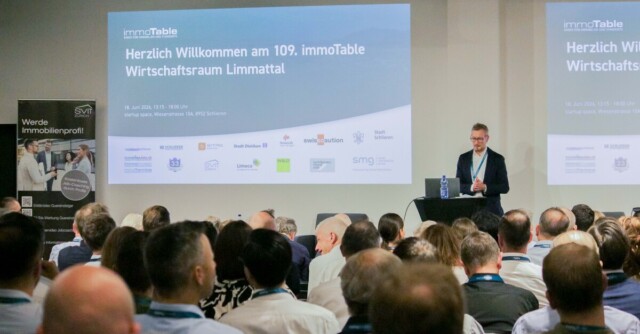
    Under the moderation of Natascia Valenta, Michele Bertini (La Mobiliare), Nicolas Daldini (SVIT Ticino), Gian-Luca Lardi (Swiss Association of Building Contractors) and Sandro Montorfani (Private Construction Department, City of Lugano) spoke.

    The debate touched on key issues such as the replanning and densification of the territory, the simplification of procedures for building permits and the need to streamline legislation in order to speed up decision-making processes.

    It was also emphasized that investments in Ticino are positive today, thanks to the decrease in vacancies, which are mainly concentrated in obsolete properties.

    Future challenges also included the issue of PPPs (public-private partnerships) and shrinking funds for renovation in the context of an ageing population and the building stock in need of renewal. This is an issue that will be of crucial importance in the coming years.

    The strategic role of Italy as an economic partner and source of skilled labor was also mentioned, as well as the effects of the recent votes on the imputed rental value, which will have a significant impact on the finances of the canton and the municipalities.

    Despite the challenges, the Sonnenstube remains a dynamic and attractive region for real estate investment, ready to take advantage of the opportunities offered by a changing market.

    [smartslider3 slider=”50″]
  • Switzerland Innovation Park Basel Area Main Campus

    Switzerland Innovation Park Basel Area Main Campus

    The site extends over 115,000 square meters, structured around a central park that acts as a social and creative heartbeat, promoting communication and creating encounters. The striking main buildings, Main Campus HQ, HORTUS, ALL, SCALE, HOPE, Swiss TPH, ALBA Haus, Innovation Garage, Holiday Inn Express and the parking garages, create a visionary structure. Each building is more than just space. HORTUS is a prime example of the circular economy and sustainable urban development, ALL combines flexible working and laboratory landscapes in a new architectural idea, SCALE and HOPE are aimed at growing biotech and medtech industries, while Swiss TPH and ALBA Haus combine expertise in public health and research.

    Sustainability and community
    The cluster offers more than just space. Radically sustainable construction, energy recovery from photovoltaics, green roof landscapes and a self-regenerating campus park set new standards for urban development. With coworking, intellectual exchange zones and gastronomy, innovations are created in everyday life. Up to 8,000 workplaces will be created on the site and supplemented with sports, educational and leisure facilities.

    The Botnar Institute of Immune Engineering
    In 2027, the Botnar Institute of Immune Engineering (BIIE) will move into a new building on the campus. Endowed with one billion dollars by the Fondation Botnar, BIIE will focus on international immune-based research and therapies, especially for children and adolescents. As an anchor tenant in the ALL building, the institute will attract up to 300 researchers, putting Basel on the global map for cutting-edge research. The decision in favor of Basel was made against major international applicants from the USA, England, Israel and Singapore and underlines the importance of the research cluster in the region.

    Innovation, networking and prospects
    More than 100 companies, universities and international teams from biotech, digital health and medtech are working here on the challenges of tomorrow. Accelerator programs such as BaseLaunch, open community platforms and physical proximity establish a dynamic workspace in which knowledge transfer is lived directly. One third of the usable space is reserved for start-ups and founders and the link between science and entrepreneurial practice is promoted.

    The Switzerland Innovation Park Basel Area Main Campus brings a new quality of collaboration, spatial concept and scientific excellence. Basel’s vision of becoming a model city for circular innovation and applied research can become a reality here, internationally visible and locally rooted.

  • Digital management of real estate portfolios

    Digital management of real estate portfolios

    Real estate is very different in terms of use, typology and construction method. What they all have in common is a life cycle with different renewal intervals. In order to balance out the structural ageing process with targeted measures and to plan the portfolio with an eye to the future, up-to-date data on the condition, use and potential of the individual properties is required. The systematic consolidation of this information ensures that both short-term maintenance work and long-term investment projects can be managed in a timely and appropriate manner

    System levels and life cycles as a management tool
    Classification into system levels is helpful for planning adaptations and renovations.

    • The primary system comprises the load-bearing structure
    • The secondary system comprises the building envelope and durable installations
    • Further levels relate to interior fittings, technical equipment and short-lived elements

    If the useful lives of the system levels are defined in stages (e.g. 12, 24, 48, 96 years), coordinated renewal cycles are created almost automatically, from which investment packages can be derived. The overall renewal is particularly relevant. This is a turning point in the middle of the building’s life cycle, when all important components can be thoroughly overhauled and the property can be adapted to new requirements

    Lever for transparency and control
    Digitalization has long been the central driving force for targeted and sustainable property management. Specialized software solutions such as portfolio and asset management platforms enable the efficient collection, evaluation and analysis of large volumes of data. Application examples show that renewal cycles and investment volumes can be easily calculated, simulated and documented. Overall portfolio performance becomes more transparent, management more flexible and decisions are fact-based rather than intuitive

    A particularly effective approach is the visualization of portfolio data in the form of matrices or bubbles. Individual properties are strategically positioned in terms of key valuation figures, while historicizations make long-term development lines visible. This allows weaknesses, opportunities and critical points in time for investments to be identified and addressed in a targeted manner

    Life cycle management and networking
    The integration of a life cycle perspective and digital tools is becoming the standard for sustainable portfolio management. Early analyses and forecast-based investment planning create added value for owners, users and management bodies. Technology, such as cloud solutions or AI-supported analytics, increases the scalability and efficiency of management, facilitates the interaction between demand and supply and creates a reliable basis for sustainability and ESG reporting

    These approaches are essential for owners of public real estate portfolios, as the focus is on long-term usage strategies and maintenance management. The overall refurbishment of a building becomes a strategic decision point for further development, conversion or sale. Successful portfolio management means that all relevant data is consolidated and continuously reflected in the dialog between stakeholders – supported by digital tools that actively drive change in the real estate sector.

  • Canton of Lucerne plans measures for successful location promotion

    Canton of Lucerne plans measures for successful location promotion

    In response to global tax developments, the canton of Lucerne is planning a package of measures from 2026 to improve the framework conditions for companies and the quality of life of the population. According to a press release, the investment package comprises 250 million francs in the first year and 300 million francs annually from 2027 and is to be channelled into “a broad range of measures”.

    According to the press release, global developments could lead to massive losses in competitive advantage. Developments such as the OECD minimum taxation could lead to the canton losing its advantage in the form of low corporate profit taxes. This could lead to large international corporations no longer investing in Lucerne – at the expense of local jobs and tax revenue. There is talk of a loss of fiscal revenue totalling CHF 1100 million for the federal government, canton and municipalities.

    By promoting innovation, improving the tax burden, increasing digitalisation, developing economic areas, the availability of commercial and residential space and a customer-oriented administration, the aim is to create more attractive conditions for large global companies based here.

    The population should benefit from a lower tax burden, a better work-life balance, culture and digitalisation. The vote of the electorate is due to take place in September 2026.

  • Streamlined management with a focus on synergies

    Streamlined management with a focus on synergies

    Mobimo Holding AG is introducing a new management structure. As of the start of 2026, the Executive Board will consist of the five divisions Real Estate, Development, Finance, Corporate Centre and the newly established Acquisitions division, the Lucerne-based real estate company announced in a press release. The reorganisation is intended to ensure “that the company remains agile and successful on the real estate market, while at the same time making even better use of the synergy potential in operational processes”, writes Mobimo.

    The Executive Board previously comprised six divisions and members. In the new model, the former property management division will be added to the real estate division. Christoph Egli, former Head of Property Management, will leave Mobimo as part of the reorganisation of the management structure.

    The previous Portfolio and Transactions and Property Management divisions have been combined in the Real Estate division. The current Head of Portfolio and Transactions, Nadia Mastacchi, will take over the management of the division. The other divisions will also be managed by existing members of the Executive Board. As Head of Development, Marco Tondel will now also be responsible for Realisation. The previous Head of Realisation, Vinzenz Manser, will move to the newly created Acquisition division. The roles of Daniel Ducrey as CEO and Jörg Brunner as CFO will remain unchanged.

  • New hotel project strengthens tourism in Scuol

    New hotel project strengthens tourism in Scuol

    Halter AG and Bergbahnen Scuol SA have signed a purchase agreement for the land of the former Engadinerhof in Scuol. The two partners intend to establish a hotel business with 130 rooms there, as detailed in a press release. Additional added value is to be brought into the region through the annual occupancy rate. In addition, staff flats, tourist flats as well as first and second homes are to be built to meet local demand.

    “The hotel complex will give visitors unforgettable moments and at the same time help to further consolidate Scuol as a lively and attractive tourist destination,” comments Roman Kummer, project manager at Schlieren-based Halter AG, in the press release. The project aims to strengthen Scuol as a holiday and recreation destination in the long term. Bergbahnen Scuol is contributing its local roots and tourism experience to the collaboration.

    The current plan is to submit the planning application in mid-2028.

  • Federal Council plans next expansion of transport infrastructure

    Federal Council plans next expansion of transport infrastructure

    The Federal Council is preparing the next expansion of rail, road and agglomeration transport. It has instructed the Federal Department of the Environment, Transport, Energy and Communications(DETEC) to prepare a consultation draft for a first expansion phase in 2027 by the end of June 2026, the Federal Council announced in a press release. DETEC will base its work on an ETH report commissioned by the Federal Council. In this report, the university sets out which projects should be realised as a matter of urgency over the next 20 years from a technical perspective.

    By the end of January 2026, DETEC is also to draw up a proposal based on the report as to which transport infrastructure projects should be implemented by 2045. Additional revenue must be generated in the railway sector. The existing financial framework will be maintained for road expansion and the agglomeration transport programme.

    “The prioritisation by ETH Zurich and the subsequent political decision by the Federal Council should ensure an orderly, financially viable and holistically coordinated development of transport infrastructure by 2045,” the press release states. The Federal Council is sticking to a staggered expansion programme when determining the expansion stages. The consultation proposal for the first expansion phase in 2027 is intended to bundle all planned measures for rail, road and urban transport. At the same time as its presentation, the Federal Council intends to provide an outlook for the further expansion stages in 2031 and 2035.

  • New building project with sustainable energy concept in Olten

    New building project with sustainable energy concept in Olten

    Alpiq Holding Ltd. is to relocate its Olten site within the city. To this end, the Lausanne-based energy supplier has acquired a new building project from the Pallas Kliniken hospital north of Olten railway station, Alpiq announced in a press release. A new building with an attractive working environment and a sustainable energy concept is to be constructed here. The amount of the investment is not disclosed in the press release.

    Pallas Kliniken had already received a building permit for the construction project. Alpiq now wants to optimise the project for its own needs on this basis. The company plans to utilise the water from the River Aare for the energy supply. The interior design will be characterised by flexible room concepts and open communication zones.

    Once the new site is completed, the approximately 470 Alpiq employees in Olten will move into the new building. Alpiq intends to sell the old site, which is also located close to Olten railway station. Alpiq’s head office will remain in Lausanne, the Group clarifies in the press release.

  • Residential development in Wädenswil reaches important milestone

    Residential development in Wädenswil reaches important milestone

    Halter AG has reached an important milestone in the AuPark project in Wädenswil, the Schlieren-based property developer announced in a post on LinkedIn. Specifically, the first stage of the development was handed over to the client Swiss Life Asset Managers on schedule. The second stage should be completed by 30 March next year.

    In the AuPark project, five apartment blocks and commercial buildings with a total of 300 flats are being built around the eponymous central AuPark. The client, Swiss Life Asset Managers, is having some of the flats built as affordable housing. The first 120 flats are now available to their new residents with the completion of the first phase. A number of commercial spaces were also completed in the first phase. Coop will be setting up a branch on one of them.

  • High sustainability standards confirmed for property portfolios

    High sustainability standards confirmed for property portfolios

    Three Helvetia real estate investment vehicles have received excellent ratings in this year’s Global Real Estate Sustainability Benchmark(GRESB), the Helvetia Group announced in a press release. The listed real estate fund Helvetia (CH) Swiss Property Fund of Helvetia Asset Management AG and the real estate investment group Real Estate Romandie of the Helvetia Investment Foundation were each awarded a 5-star rating with 90 out of a possible 100 points. The Swiss Real Estate investment group of the Helvetia Investment Foundation qualified for the second-best 4-star rating with 89 points.

    All three investment vehicles were also once again awarded a Green Star at this year’s GRESB, Helvetia explains. “The outstanding GRESB 2025 results of the three real estate investment vehicles are confirmation of our sustainable investment strategy, in which real estate plays a central role,” André Keller, Group Chief Investment Officer at Helvetia, is quoted as saying in the press release. “Responsible investment in sustainable and value-orientated capital investments is a major strategic concern for us.”

    The Group has set itself the goal of achieving net-zero emissions in its investment portfolios by 2050. A total of CHF 3.4 billion is invested in the three property investment vehicles recognised by the GRESB.

  • Seuzach secondary school generates generational power

    Seuzach secondary school generates generational power

    EKZ promotes the installation of large solar systems via the company’s own EKZ fund. Most recently, the installation of a solar system on the roof of the Seuzach secondary school was supported with CHF 30,000, EKZ reports in a post on LinkedIn. The system’s panels were installed towards the end of September. The secondary school pupils were able to lend a hand themselves as part of myblueplanet ‘s Impact Day.

    The involvement of students is part of the way the EKZ fund works: “In the projects with schools, the young generation is sensitised to climate-friendly electricity production,” says the EKZ fund description. The electricity not consumed by the schools themselves is sold by EKZ to its own customers as generational electricity. Part of the proceeds flow back into the EKZ fund to finance the construction of further solar plants.