Category: Aargau

  • New school infrastructure in Zofingen takes shape

    New school infrastructure in Zofingen takes shape

    The building construction for the new secondary school centre in Zofingen has been underway since June 2024. As the construction company responsible, STRABAG, has now announced, the basement and the first floor with classrooms are already in place. In the excavation pit next to the gymnasium, the specialised civil engineering team has completed the groundwork by installing the bored piles and constructing the retaining walls.

    At the same time, employees from Verkehrswegebau Obergösgen are laying the service lines. The structural engineering work should be completed by the end of June 2025. The finishing work will then begin, according to the information provided. The building will be put into operation at the start of the 2027/2028 school year.

    STRABAG describes the ten concrete beams for the gymnasium ceiling, which were lifted into place in mid-November, as a “spectacular highlight”. Each of them was 29 metres long and weighed 60 tonnes. Other prefabricated elements were also installed. They were reportedly planned immediately after the contract was awarded in order to be ready for use on time.

    Now that the beams for the new triple gymnasium have been moved into place, the structural engineering staff, led by site manager Daniela Huonder and foreman Vincenzo Tafaro, are currently busy shuttering, reinforcing and masonry work on the other floors.

  • Farewell party planned for the Raben-Bad in Baden

    Farewell party planned for the Raben-Bad in Baden

    Bagni Popolari heralds the end of the interim use of the Bad zum Raben. On 25 January, the thermal baths on Kurplatz in Baden will celebrate the end of the “Acts of Attention” exhibition, the association announced in a press release. At the same time, a temporary outdoor pool with natural thermal water on the Limmat promenade will invite visitors to take a dip.

    Bagni Popolari has been revitalising the previously closed Raben-Bad since 2017 with exhibitions, performances, music, readings, lectures and animated films, attracting thousands of visitors, according to the press release. However, the thermal baths now need to be thoroughly renovated in order to continue operating. Among other things, it needs solid pool technology, ventilation, new electrical installations and wheelchair-accessible toilets.

    The Raben cooperative, which emerged from Bagni Popolari, is responsible for the renovation. It was founded in 2022 to acquire the bathing floor in the former Badegasthof zum Raben. The Raben cooperative estimates that the necessary renovations will cost around CHF 4.5 million.

    1.5 million of this is to be raised through the sale of new cooperative shares and donations. The Raben-Genossenschaft intends to raise the remaining 3 million Swiss francs through donations from the public sector, foundations and sponsors as well as loans. “If everything goes well, Bagni Popolari will be able to celebrate the first vernissage in the renovated Bad zum Raben in 2027,” hopes the association.

  • Aargau reapplies for membership of the GZA

    Aargau reapplies for membership of the GZA

    The canton of Aargau has applied for renewed membership of the GZA. According to the cantonal state chancellery in a press release, rejoining the regional marketing organisation would offer the best effect in terms of presenting Aargau as a business location abroad at the lowest risk. The alternatives considered were the establishment of an own presence abroad and the expansion of existing marketing activities.

    The canton of Aargau was already a member of the GZA from 2007 to 2010 as part of a trial membership. However, the membership was not extended as the regional location promotion “focused on tax-optimising companies at the time”, “for which the canton of Aargau was of no interest”, according to the press release. However, the GZA is now “focussing on innovative sectors that are already strongly represented in the canton of Aargau”. The canton of Aargau hopes to attract new companies from sectors such as life sciences, energy technology, mechanical engineering and digital technologies by rejoining the GZA.

    “We don’t want growth at any price, but rather to attract companies with high added value, good jobs and innovative products,” said Dieter Egli, Mayor of the Canton of Aargau, in the press release. “For this to succeed, we must be able to address companies directly in the foreign target markets.” To this end, the GZA aims to publicise Aargau as a business location abroad and find companies interested in setting up in Switzerland. The Canton of Aargau’s location promotion organisation will then suggest specific potential locations and clarify further questions.

  • Sustainable office space for global headquarters in Baden

    Sustainable office space for global headquarters in Baden

    Colliers Switzerland has leased 1530 square metres of office space on the fifth floor of Konnex Baden to the Harting Technology Group. According to a press release, the new global headquarters of the provider of industrial connection technology is to be built there and will start operations in October 2025.

    Harting has its headquarters in Eskelkamp in North Rhine-Westphalia and its Swiss headquarters in Volketswil ZH. Harting connection technology is used in the transmission of data and electricity in areas such as transport, electromobility, renewable energy generation, automation and mechanical engineering, according to the press release. From the new central office, top managers with supra-regional operations will take over the global management of the company. Harting’s decision to move to Konnex was influenced by the high sustainability standards at Konnex, among other factors.

    An innovative city-within-a-city concept is to be realised in Konnex, with a range of services and amenities, including restaurants, shops for everyday needs, fitness, childcare and co-working. The Konnex building is located in the city centre, just a five-minute walk from Baden railway station and 20 minutes from Zurich.

    Colliers Switzerland, based in Zollikon, previously traded as SPGI Zurich AG. The property management company is a subsidiary of the Intercity Group.

  • Aargau forest currently stores 40 million tons of CO2

    Aargau forest currently stores 40 million tons of CO2

    The Forest Division of the Aargau Department of Construction, Transport and Environment has examined the contribution of the Aargau forest to the canton’s CO2 balance. “The forest is already making a non-negligible contribution to achieving the goal of net-zero greenhouse gas emissions by 2050, but the potential has not yet been exhausted,” writes the department in a press release on the corresponding study. The study identified the forestry sector, wood processing and the construction industry as key players for improvement.

    The forestry sector is of the greatest importance. The Aargau forest currently stores 40 million tons of CO2, according to the press release. This corresponds “almost exactly to today’s total annual domestic emissions”. According to the authors of the study, this long-term storage of CO2 must be supported by near-natural management, soil protection and long-term adaptation of the forests to climate change.

    Wood processing and the construction industry can contribute to improvements to a lesser extent. The modelling of a CO2-optimized scenario has shown that increased cascading use of wood as a resource can store or avoid up to an additional 11.1 tonnes of CO2 by 2100. This corresponds to an annual reduction in emissions in the canton of Aargau of up to 3.7 percent. Cascade use refers to the repeated use of the raw material wood in a circular economy. However, if the same amount of wood is used directly for energy production, the contribution is reduced to 6.5 million tons or a maximum of 2.2 percent CO2 reduction.

  • New acquisition strengthens market for stainless steel fittings

    New acquisition strengthens market for stainless steel fittings

    The Franke Group has acquired Nokite EcoSmart Water Heating Systems (Guangdong), a manufacturer of stainless steel taps and accessories for private kitchens. Financial details were not disclosed. According to a press release from the kitchen specialist from Aarburg, Nokite is “known for its outstanding manufacturing quality and innovative product solutions” and has been in business for over 20 years. The company employs around 150 people and is to be integrated into Franke’s Home Solutions division.

    The expertise of Nokite, which was the first company to manufacture stainless steel mixer taps in China, “fits perfectly with the high-end positioning of the Franke brand”. Furthermore, Franke expects that the regulatory trend towards the elimination of lead will lead to rapid growth in the stainless steel fittings segment. This makes “Nokite’s specific know-how and experience particularly valuable”. According to Barbara Borra, CEO/President of Franke Home Solutions, Nokite’s expertise in multifunctional faucets complements Franke’s strategic focus on the growing water treatment and purification market.

    The Franke Group is a global manufacturer and supplier of solutions and equipment for domestic kitchens, chain restaurants, convenience stores and professional coffee preparation. It employs around 7700 people in 35 countries and is part of the Artemis Group, Switzerland. Franke Home Solutions generated net sales of CHF 932 million in 2023 with around 4200 employees in over 30 countries.

  • Advanced logistics solution: opening of the new centre in Möhlin

    Advanced logistics solution: opening of the new centre in Möhlin

    Rhenus Logistics AG will open its new Swiss logistics centre in Möhlin in January after a construction period of one and a half years. According to a press release, this will comprise a total of 30,000 storage spaces on a total area of 2,000 square metres.

    The logistics centre will be operated by around 80 employees working with 30 P40 robots from Chinese manufacturer Geek and seven RoboShuttles. This collaboration should enable time savings of 70 per cent. The building will also have special storage rooms for temperature-controlled goods and the storage of hazardous materials, for example.

    Power will be supplied by a photovoltaic system on the roof. This is expected to generate 1 million kilowatt hours per year.

    “Our new logistics centre in Möhlin is an impressive example of what modern logistics looks like: more automation and increased efficiency while simultaneously promoting jobs, sustainability goals and quality standards,” said Andreas Stöckli, CEO of Rhenus Alpina and a member of the Rhenus Group’s Management Board, in the press release.

    The Rhenus Group, which has its headquarters in Holzwickede in North Rhine-Westphalia and its Swiss headquarters in Basel, has a presence at 1,320 sites in more than 70 countries and generates an annual turnover of EUR 7.5 billion.

  • Renewable energy on contaminated soil

    Renewable energy on contaminated soil

    Energy supplier AEW has built a ground-mounted photovoltaic system in Spreitenbach. According to a press release, the newly built solar plant went into operation in September 2024 and was officially opened on November 26. Its installed capacity is 622 kilowatt peak. According to the press release, this could supply 140 households with solar power per year.

    The project is AEW’s first ground-mounted system. The energy supplier is thus temporarily using a previously contaminated plot of land at the Spreitenbach site, which became an open space when the old open-air switchgear was dismantled. It was previously contaminated by foundations, shafts and cable systems, according to the statement. “Brownfield and previously contaminated areas can be used sensibly on a temporary basis to make a significant contribution to the Energy Strategy 2050,” René Wüst, Project Manager at AEW Energie AG, is quoted as saying.

    The decision was also supported by the fact that the system, which comprises 1414 solar modules, requires less maintenance during operation and is less susceptible to faults. If the grid needs to be expanded in the future, for example to include a storage system, it can also “simply be reused, as the photovoltaic system is very easy to dismantle”.

  • Sustainable power generation for the canton of Aargau

    Sustainable power generation for the canton of Aargau

    The new installation of photovoltaic systems at the Buchenhof site in Aarau by the Canton of Aargau ‘s Real Estate Department(IMAG) is intended to make an important contribution to the canton’s sustainable electricity generation, according to a press release. In view of the upcoming renovation cycle for the flat roofs of the administrative site, the IMAG) has determined that Buchenhof offers good conditions for the expansion of photovoltaic systems on the flat roofs, it continues. In addition to the structural condition, the potential for sustainable electricity generation measures was also examined.

    The expansion planned for 2025 is part of the cantonal energieAARGAU strategy and will help to reduce external energy consumption thanks to the defined optimum number of photovoltaic modules. Due to the high energy requirements of the cantonal data center, 100% of the electricity produced by the photovoltaic systems will be consumed internally.

    “The fact that Buchenhof will be able to use the electricity generated by the photovoltaic system in future means that energy purchasing costs can be reduced. The system also makes an important contribution to the canton’s climate-neutral energy supply,” said Markus Dieth, Head of the Department of Finance and Resources.

    “Immobilien Aargau has also taken biodiversity into account when expanding the photovoltaic systems,” continued Cantonal Councillor Dieth. In order to preserve the wild orchids on the roofs, the number of photovoltaic modules to be installed has been optimized.

  • Overall transport concept 2040 for the Baden area

    Overall transport concept 2040 for the Baden area

    Following an intensive planning and participation process from 2022 to 2024, the delegation of authorities has adopted an overall transport concept that aims to sustainably improve mobility in the Baden region. The range of measures with a time horizon of 2040 includes the expansion of public transport with bus priority and optimised junctions.

    For pedestrians and cyclists, the cycle network will be expanded and additional bicycle parking spaces created. In terms of the road network, short-term measures are planned for the eastern bridgehead and improvements along Bruggerstrasse in Baden. At the same time, the upgrading of local thoroughfares and the strengthening of neighbourhoods as a “city of short distances” should promote urban and open spaces. In addition, transport demand is to be better controlled by municipalities and the canton through targeted mobility management. Long-term options for the period after 2040 were also considered.

    In addition to the short-term measures, options for the period after 2040 were also discussed. These include securing routes for important public transport corridors and possible measures for the eastern bridgehead.

    Centre relief as a central component
    The “ZEL long” variant, a road relief option with a bypass around Untersiggenthal, was also decided as a long-term option. The implementation of this variant is to be examined as soon as the impact assessment of the initial measures indicates a need.

    Participation and broad consensus
    The concept was developed in a participatory process that included mobility conferences, online participations and support group meetings. The broad involvement of municipalities, experts and the population led to a consensus-based package of measures that is now to be implemented step by step.

    With the adopted overall transport concept 2040, the Baden region is laying the foundations for sustainable and future-oriented mobility development. The coordinated measures promote public transport, non-motorised traffic and the quality of life of the population and offer a clear perspective for the coming decades.

  • Successful design for Eichmatt residential development in Villmergen

    Successful design for Eichmatt residential development in Villmergen

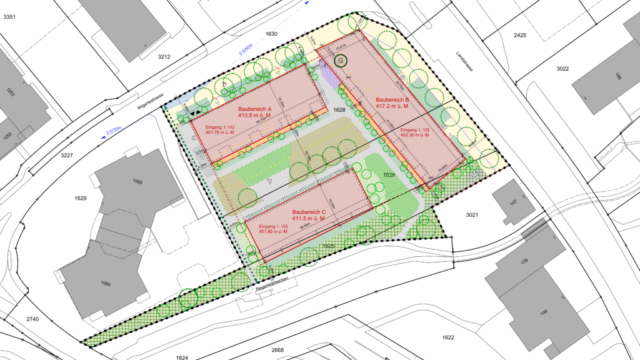
    Spreitenbach-based fsp Architekten AG has won first place in the competition for the study contract for the MW Eichmatt Villmergen project, according to a press release. The assessment committee unanimously decided to recommend the Janus project by fsp Architekten AG and landscape architects Appert Zwahlen Partner AG in Cham ZG to the client for further development and realisation. It was the “most convincing project proposal overall”, according to the press release from fsp.

    The new Eichmatt-Villmergen residential development is located on the outskirts of the village. Adjacent to the agricultural zone, this development offers 112 modern 2.5 to 4.5-room flats in three-storey buildings. Balconies and garden seating areas are consistently south-west facing. The arrangement of the twelve buildings provides generous open spaces. The existing Eichmatt Süd development was realised to the Minergie standard.

  • Strong property market in Aargau shows high prices and low vacancy rates

    Strong property market in Aargau shows high prices and low vacancy rates

    The latest property barometer from Aargauische Kantonalbank(AKB) attests to the “strong momentum” of the Aargau property market. The canton’s strong appeal as a place to live is reflected in “continued above-average increases in property values”, write the AKB experts in the barometer. Specifically, they noted a 4.6 per cent year-on-year increase in residential property prices.

    Among the individual regions of Aargau, Aarau/Seetal stands out with a 5.1 per cent increase in house prices and Rheinfelden/Fricktal with a 6.1 per cent increase in the price of owner-occupied flats. According to the experts’ research, in the majority of the canton’s 230 municipalities, more than CHF 1 million must be paid for a detached single-family home with a neighbouring plot. Prices are even higher in the catchment markets of the surrounding major centres.

    The AKB experts have recorded a 4.7 per cent year-on-year increase in asking rents. The average rent for a modern 4.5-room flat is therefore around CHF 2,200 to 2,300 excluding ancillary costs. The vacancy rate across the canton is currently 1.3 per cent.

    The property experts at Kantonalbank expect prices for residential property and asking rents to continue to rise in the future. They are basing this forecast on continued strong population growth coupled with a continuing stagnation in construction activity. They also expect further reductions in key interest rates, which will have a positive effect on the return on property investments compared to comparable investments such as government bonds.

  • Property prices in Aargau continue to rise at an above-average rate

    Property prices in Aargau continue to rise at an above-average rate

    The property market in the canton of Aargau continues to record an above-average increase in value. As the latest real estate barometer from Aargauische Kantonalbank shows, prices for residential property have risen by 4.6 per cent and asking rents by 4.7 per cent. “The canton’s strong appeal as a place to live is reflected in sharply rising property values,” say the experts at AKB.

    Aarau/Seetal and Rheinfelden/Fricktal in the lead
    Particularly significant price increases were recorded in the regions of Aarau/Seetal with a 5.1 per cent rise in house prices and Rheinfelden/Fricktal with a 6.1 per cent increase in condominiums. In most municipalities in the canton, buyers now have to pay more than CHF 1 million for a detached single-family home, and prices are even higher in the catchment areas of the surrounding major centres.

    Increased level with falling vacancy rate
    The rents on offer have also risen sharply. The average rent for a modern 4.5-room flat is between CHF 2,200 and 2,300, excluding ancillary costs. The canton-wide vacancy rate is comparatively low at 1.3 per cent, which indicates high demand with limited supply.

    Prices set to rise further
    AKB property experts assume that both residential property prices and asking rents will continue to rise. The reasons for this are:

    • Strong population growth in the canton of Aargau
    • Stagnating construction activity, which limits supply
    • Expected reductions in key interest rates, which will make property investments more attractive

    The combination of high demand, limited supply and economic conditions will ensure that the Aargau property market remains dynamic in the future. Both buyers and tenants should be prepared for further price increases.

  • Aargau energy subsidy programme limited until 2026

    Aargau energy subsidy programme limited until 2026

    The Aargau energy promotion programme will be continued until 2026 with a gross credit of CHF 97.2 million. This decision by the Grand Council, which was passed by 89 votes to 47, deviates from the original proposal by the cantonal government. The government had envisaged an extension until 2028 and a total budget of CHF 176.5 million. The shorter period was chosen due to possible cost-cutting measures by the federal government, which could make cantonal co-financing more difficult.

    Controversy surrounding the funding
    While the SP, Centre Party, GLP and Greens welcomed the increase in the credit, the FDP and SVP were sceptical. The FDP called for a budget of CHF 88.25 million, which would cover half of the originally proposed total costs for four years. The SVP rejected the programme in principle and criticised state intervention.

    Focus of the programme
    The funding programme supports measures to improve energy efficiency and reduce CO₂ emissions. Among other things, the programme supports

    • Improvements to the building envelope
    • Wood heating systems and heat pumps
    • Connections to heating networks
    • Solar thermal systems
    • Projects for the development of heating networks

    Funds are also available for pilot projects. According to the cantonal dispatch, previous programmes have shown that energy efficiency has been increased and CO₂ emissions have been significantly reduced.

    Funding from CO₂ levies
    The majority of the funding comes from federal contributions, including from the CO₂ partial earmarking and the federal impulse programme. The canton itself bears around 25 % of the total costs.

    Prospects for homeowners
    The two-year limit raises questions about long-term planning. Homeowners and builders emphasised the need for continuity in funding programmes in order to promote investment in sustainable building technologies.

    The Canton of Aargau’s energy subsidy programme remains an important instrument for reducing CO₂ emissions and increasing energy efficiency. However, the limited duration of the programme until 2026 reflects the uncertainties surrounding federal funding and poses planning challenges for the future.

  • New platform for Aargau as a business location

    New platform for Aargau as a business location

    The Canton of Aargau location promotion organisation is presenting Aargau as a business location on a new platform. At www.aargau.swiss, existing companies and companies interested in setting up a branch can find out about the advantages of the business location, explained the location promotion organisation in a press release. The Aargau cantonal government is pursuing the goal of increasing the economic strength of the location by attracting companies with high added value. The new website contributes to this by making the strengths of Aargau more visible.

    The new website provides information about the business location, programmes to promote innovation as well as advisory and support services offered by the cantonal location promotion agency and its partners. Separate sections are dedicated to company start-ups, relocations and the expansion of existing companies. In addition, news about the business location and its companies is published regularly. The news is produced by the Café Europe news agency based in Winterthur.

  • Expansion of the district heating network in Kaiseraugst for a better heat supply

    Expansion of the district heating network in Kaiseraugst for a better heat supply

    AEW Energie AG is opening up its heating network in Kaiseraugst to new customers. According to a press release, it will begin construction work on two branch lines of the “Ast Dorf” project on 4 November.

    These two branch lines are located at Lindenweg 11 and 13 and between Dorfstrasse, at property no. 36 and Heidemurweg. According to a press release, the work is expected to be completed by Christmas.

    Work on the main district heating line and the other sections along Dorfstrasse and Lindenweg will begin in January 2025. After deducting the municipality’s contribution to the costs, AEW is investing a total of around 3.2 million in the expansion of the Kaiseraugst district heating network.

    The Kaiseraugst heating network has been in operation since October 2021. It is one of the largest in the canton of Aargau. in 2023, additional customers were connected in the industrial area, in the south-east and with the branch to the Rinau retirement home. The large-scale project, which took over four years to build, currently supplies over 1,500 households and numerous industrial and commercial customers with heat from at least 80 per cent renewable energy.

  • New district building in Lenzburg receives striking concrete artwork

    New district building in Lenzburg receives striking concrete artwork

    The artwork “Gedankenspeicher” by Paul Takács in front of the new district building in Lenzburg has been realised by the construction company Hächler. According to a press release, the approximately seven-metre-high concrete stele was clad step by step with stones in different colours, shapes and sizes. A total of 35 tonnes of stones were used for the construction. Each of the stones, weighing between 30 and 150 kilograms, was carefully selected and placed on the stele by hand, according to the Hächler press release.

    The Wettingen-based construction company Hächler Group seconded its employees Reto Schwitter and Dear Sadiku for the work, who worked closely with the artist Paul Takács. Construction work began at the beginning of September with the foundations. The concrete stele was then erected as the scaffolding for the “Thought Memory”.

    Before the stones were installed, Paul Takács and the Hächler employees spent two days in a gravel pit to select the individual stones. Despite being delivered by crane, each stone was moved by hand several times before being installed in its final position. The aim was to create a work of art that was both aesthetically and structurally impressive. The “Gedankenspeicher” was completed at the end of September.

    Paul Takács was born in the USA and lives and works in Nussbaumen TG. His work includes oil painting, wall drawing, sculpture, adhesive works and video.

  • District heating and sustainability for the Metro Shop

    District heating and sustainability for the Metro Shop

    According to a press release, the Metro Shop in Baden has been connected to the district heating and cooling network. With its high energy requirements and annual consumption of around 300,000 kilowatt hours, it is one of the largest consumers of Baden’s energy network. The connection will make it possible to reduce CO2 emissions by 50 tons per year, according to the city’s press release.

    The city of Baden is pursuing the goal of reducing its energy-related greenhouse gas emissions to net zero by 2050 at the latest. To this end, a consistent switch to renewable energies is planned. In cooperation with Regionalwerke AG Baden, the city is driving forward the rapid expansion of renewable district heating and cooling, the report continues. The expansion is progressing rapidly. Five properties in the administrative assets with an annual consumption of around 1,235,000 kilowatt hours and five properties in the financial assets with an annual consumption of around 320,000 kilowatt hours (kWh) are already connected.

    Sandro Valsecchi, project manager for heating systems at Regionalwerke AG Baden, is quoted as saying that the many interfaces were one of the biggest challenges in the Metro Shop project. “Laying the pipes on both floors of the train station parking garage was particularly challenging – and that during ongoing operations,” says Valsecchi.

    The connection of the Metro Shop marks the completion of a key sub-project in the expansion of the district heating and cooling network. In future, the project will reach further areas of the city in cooperation with Regionalwerke AG Baden.

  • Museum Langmatt in Baden to be completely renovated by 2026

    Museum Langmatt in Baden to be completely renovated by 2026

    ERNE is involved in the complete renovation of the Langmatt Museum in Baden. Specifically, the construction company from Laufenburg is to take on part of the renovation of the villa. “The work includes the demolition of entire rooms inside the building and the subsequent reconstruction of floor slabs, walls and ceilings, the renewal of the sewerage system and the partial demolition of the exterior façade, including façade renovation,” explains ERNE in a post on LinkedIn. ERNE also moved benches and steel supports for the construction of a new glass pavilion.

    The overall refurbishment of the villa and the surrounding public park will take place this year and next. Meanwhile, the museum’s private collection of French Impressionism in Europe will be sent on a European tour. The Langmatt Museum is due to reopen in spring 2026.

  • Innovative PV system financing facilitates entry into solar energy

    Innovative PV system financing facilitates entry into solar energy

    With the clever4all project, energy supplier IBW in Wohlen wants to make it easier for its customers to have their own photovoltaic (PV) system. According to a press release, customers can have their own PV system for as little as CHF 60 per month.

    “In recent years, we have heard from many of our customers that they would like to produce their own electricity but do not have the necessary financial means to invest in a photovoltaic system,” said Peter Lehmann, Chairman of the IBW Management Board. The new offer is “to our knowledge” unique in Switzerland and is aimed at all property owners in Wohlen. Clever4all was developed in collaboration with the Aargauische Kantonalbank(AKB).

    IBW installs the systems at the customer’s premises, with battery storage and charging station if desired, and takes care of regular maintenance. The customer simply pays a monthly instalment over a self-determined term, and at the end of the contract period the system automatically becomes the customer’s property.

    As an example, Peter Lehmann cites a system with an output of 10 kilowatts that produces around 10,000 kilowatt hours of electricity per year. The system costs just under CHF 30,000. In this example, the customer makes a down payment of 10 per cent and chooses a contract term of 15 years. With an annual self-consumption of around 3,500 kilowatt hours, the monthly costs in this case are only 60 francs, according to the example.

  • Cantonal hospital: New brand identity under the banner of healing architecture

    Cantonal hospital: New brand identity under the banner of healing architecture

    Baden Cantonal Hospital(KSB) will move into its new building at the beginning of 2025. According to a press release, the hospital’s horizontal design concept is based on the principle of so-called healing architecture. In line with this concept, the hospital management has commissioned advertising and branding expert Frank Bodin to design a new brand identity for the KSB.

    In the new logo, the blue KSB is supplemented by an orange underline between S and B: KS_B. Together with the additional subline “Ort der Gesundheit” (place of health), also in orange, the new logo is intended to symbolize positive thinking aimed at healing. The underline can be used in both digital and analog form, for example it can be animated and transformed into a heart rate. An oversized logo at the hospital entrance is suitable as a place for selfies, according to the press release.

    “The new logo impressed us with its simplicity. It also stands out very well in the digital sphere,” Adrian Schmitter, CEO of KSB, is quoted as saying in the press release. “With the color orange to complement the blue, our brand identity now has a splash of color that makes us unmistakable.”

  • Konnex Baden invites you to visit

    Konnex Baden invites you to visit

    Following extensive renovations, the modernized Konnex commercial building will be unveiled to the business world and the public at a pre-opening on Thursday, 26 September 2024. According to a press release, the complex includes offices, furnished apartments, conference rooms and a wide range of restaurants. The event is intended to herald a new era for modern working. Dr. Stephan Sigrist, founder of the think tank W.I.R.E., has been announced as a speaker. He will talk about the future of the world of work in an era characterized by artificial intelligence.

    In addition to office and work space, 42,000 square meters of space will be available for services and offerings such as restaurants, stores for everyday needs, fitness, childcare and coworking. The energy concept meets high environmental standards. Photovoltaic systems and the CO2-neutral energy supply from Regionalwerk Baden support the climate targets.

    The first tenants have moved into the premises: online retailer Apfelkiste, IT service provider Aveniq, mechanical engineering group Liebherr, energy management expert Schneider Electric, coworking provider Office Lab and co-living serviced apartment provider Citi Pop. An industry mix that underlines “the attractiveness of the flexible space and modern facilities”. Other companies will further enrich the Konnex environment, it is said.

  • Expansion of the Webermühle housing estate in Neuenhof planned

    Expansion of the Webermühle housing estate in Neuenhof planned

    Altura RE AG is the owner of six plots with a total area of 15,234 square metres on the Webermühle/Damsau site in Neuenhof, the Nidwalden-based real estate company announced in a press release. The general conditions for the expansion and future development of the large Webermühle housing estate are to be worked out for its plots and the plots of other owners in the Webermühle residential zone. To this end, Altura RE and the municipality of Neuenhof are embarking on a cooperative planning process.

    “Among other things, it is important for us to be able to create a well thought-out bridge to the Klosterrüti neighbourhood,” Rudolf Peschel, Chairman of the Board of Directors of Altura RE AG, is quoted as saying in the press release. “The appraisals and expert reports we have received so far clearly show us that the Webermühle-Ermitage site is predestined for the creation of attractive and modern living space thanks to its good accessibility and location in green surroundings directly on the Limmat.”

    The cooperative planning process is to be designed and supported by the Lucerne planning office plan:team in a workshop process. It is expected to be completed by the beginning of 2026. This will be followed by the development of the design plan, for which the municipality will then act as the approval authority.

    The timing of the actual start of construction depends heavily on the planning efficiency in the previous phases, explains Altura RE. “At the moment, we are hugely dependent on the timing of the collaboration with the municipality of Neuenhof and its personnel capacities,” says Peschel.

  • Vision for sustainable technology centre takes shape

    Vision for sustainable technology centre takes shape

    FlexBase intends to realise its new technology centre in line with the plans already presented. According to a press release, the technology company has secured the ERNE Group, also based in Laufenburg, as general contractor. Construction is scheduled to begin in 2025. An updated planning application has been submitted to the relevant authorities.

    The technology centre is to be built on the former Swissgrid site. The centrepiece will be a new building opposite the existing building. In addition to many research facilities, a data centre with capacities for the use of artificial intelligence is to be built there. FlexBase also plans to build a 20,000 square metre battery storage facility with a capacity of more than 500 megawatts on the site. According to the press release, the non-flammable and non-explosive storage facility is the “world’s largest and most modern battery storage facility of its kind”. The construction of the new technology centre will create several hundred jobs for skilled workers and apprenticeships.

    According to the press release, Marcel Aumer, CEO of the FlexBase Group, does not anticipate a delay in construction despite the relaunch of the project. He justifies this view with the close collaboration with ERNE: “In this project, I have not only experienced ERNE’s expertise right from the start, but also the full attention of the top management.” The CEO of ERNE, Giuseppe Santagada, is also optimistic: “My personal commitment goes far beyond the realisation of this project; it also includes the promotion of new technological skills and increasing the attractiveness of Laufenburg as a location for the vision of a prosperous region”.

  • Mobimo expands Aeschbach neighbourhood in Aarau

    Mobimo expands Aeschbach neighbourhood in Aarau

    Mobimo has laid the foundation stone for the Hofhaus and Hallenhaus buildings in Aarau’s Aeschbach neighbourhood with representatives from the authorities and its project partners, according to a press release. As part of the overall Torfeld Süd development area, the next stage in the expansion of the neighbourhood, which was revitalised in 2019, is thus being realised.

    Based on plans by Baumberger Stegmeier Architekten from Zurich, 126 rental flats with 1.5 to 5.5 rooms will be built there. The courtyard house is being realised as a timber construction with a garden courtyard in a future-oriented, ecological design. According to Mobimo, the hall building stands out positively in terms of sustainability and grey energy because as much of the existing façade of the former Hall 5 has been retained as possible. It will serve as the ground floor for the extension of the historic building.

    Completion is planned for autumn 2026, with occupancy scheduled for the second quarter of 2026. Marketing will begin in the third quarter of 2025. The Aeschbachquartier will then have a total of around 260 rental and owner-occupied flats. It will also offer around 4600 square metres of commercial space for 1400 people working there.

  • District heating network in the canton of Aargau is growing

    District heating network in the canton of Aargau is growing

    Regionalwerke AG Baden(RWB) has acquired the shares of AEW Energie AG in Aarau in Fernwärme Siggenthal AG(FWS), according to an ad hoc announcement. In doing so, RWB intends to expand its commitment to sustainable energy supply in the region. AEW Energie specialises in solar power in the canton of Aargau. The sale price was not disclosed.

    RWB has reportedly been working successfully with FWS for many years. The acquisition of the 27.3 per cent stake in FWS is intended to deepen the partnership. FWS, which is based in Nussbaumen, is stable and financially independent and has developed very positively over the last few years since it was founded. It therefore describes RWB as an ideal partner.

    “The investment in Fernwärme Siggenthal AG fits in perfectly with RWB’s activities in the area of district heating,” Managing Director Michael Sarbach is quoted as saying. “Both companies attach great importance to the further expansion of district heating in the region.” Adrian Hitz, Chairman of the FWS Board of Directors, refers to the good cooperation with RWB to date: “Now that AEW has decided to sell its shares, we are relieved that we already know the future shareholder well, as we have already developed and realised a very good project together with the SIBANO connecting pipeline.” SIBANO is a 3.3 kilometre long district heating transport pipeline from the Turgi waste incineration plant to the Baden Nord heating centre.

  • Kilchberg awards contract for lake water heat network

    Kilchberg awards contract for lake water heat network

    AEW Energie AG from Aarau has been awarded the contract by the municipality of Kilchberg for the project development of the Kilchberg lake water heating network, AEW announced in a press release. The contract was awarded as part of a tender process. The Aargau-based energy company will be responsible for the construction, operation and financing of the heat network.

    As a first step, AEW will now review the existing project scope and contact key customers. Based on this, the profitability calculation will be analysed again. At the same time, AEW wants to acquire customers. Only then will the company make the final implementation decision.

    “The final investment decision is expected in summer 2025,” writes AEW. If everything goes according to plan, the first heat deliveries could take place in spring 2027. Until then, the municipality and company want to keep the population informed about important project steps.

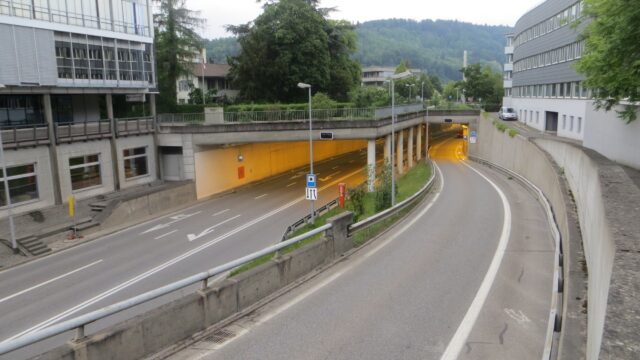
  • Innovative solutions for the tunnel renovation of the Bad Zurzach northern bypass

    Innovative solutions for the tunnel renovation of the Bad Zurzach northern bypass

    Last year, ERNE completed the Bad Zurzach eastern bypass. Work is now underway on the tunnel renovation of the northern bypass, the Laufenburg-based construction company announced in a press release. ERNE is using innovative solutions for this project.

    The press release cites cable and siphon shafts as well as cable shaft covers as examples. The former are not made from polymer concrete, as is usually the case, but from more robust ultra-high performance fibre concrete. The covers are made of composite material (composite). It is lighter and more corrosion-resistant than conventional cast iron.

    The project includes the renewal of the verges with cable conduit system and extinguishing water pipes and a new tunnel coating. Two existing emergency exits will be rebuilt and supplemented with new emergency exits. In addition, the tunnel control centre will be rebuilt and two new stacking basins built. The project poses challenges due to the limited space available and the fact that work has to be carried out while the tunnel is in operation.

    ERNE expects to have completed the ongoing work on the south side of the tunnel by mid-August. Following this, the half-sided traffic routing will be changed so that the north side of the tunnel can be renovated. The construction work is scheduled for completion in 2025.

  • New plans for technology centre in Laufenburg

    New plans for technology centre in Laufenburg

    The FlexBase Group has decided to withdraw its planning application for a technology centre on the former Swissgrid site in Laufenburg. According to a press release, a total of around 350 jobs are to be created there. FlexBase expects to employ 100 to 150 people by the end of 2027 alone.

    The centrepiece of the centre, which is to be built in collaboration with universities and companies, will be one of the largest large-scale battery storage facilities in the world with a capacity of at least 500 megawatts. It is to be built in a strategically favourable location directly next to the world’s largest electricity grid, the Laufenburg Star, and will contribute to the security of supply in Switzerland and parts of Europe. The technology centre will also house a data centre for artificial intelligence and a wind tunnel for research and development in the sports industry.

    According to the press release, the company is now submitting an updated planning application. According to the information, it now respects the maximum height defined in the current building and utilisation regulations, “which is sufficient for the start of construction”. However, in view of the significance of the project, the applicant is requesting an increase in the permitted building height to 30 metres. In consultation with the Laufenburg town council, a partial amendment to the existing building and utilisation regulations for this construction perimeter, coordinated with the overall revision, has already been initiated.

    “Despite the necessary step of updating our planning application, we remain confident that we will be able to realise our project within the planned timeframe,” says CEO and co-founder Marcel Aumer. He assumes that the overall revision will take into account the importance of such forward-looking projects for the region.

  • StWZ Energie announces halfway point in smart meter rollout

    StWZ Energie announces halfway point in smart meter rollout

    StWZ Energie AG has been switching to smart electricity meters in its supply area since the beginning of 2022. The Aargau-based energy supplier has now installed more than 5,700 smart meters, equipping half of its electricity customers in Zofingen and Strengelbach with modern meters, StWZ Energie reported in a press release. A law stipulates that at least 80 percent of electricity meters in Switzerland must be smart meters by 2027.

    The intelligent meters serve to increase the efficiency of electricity consumption and at the same time simplify the billing process. Grid operators will find it easier to identify and smooth out peak loads. Customers benefit from the electronic measurement of consumption data. They can be viewed on the StWZ customer portal on the following day. This means, for example, that “electricity guzzlers in your own household can be identified”, writes StWZ Energie. There is also no need for on-site meter reading.