Category: Switzerland

  • The way is clear for Wil West

    The way is clear for Wil West

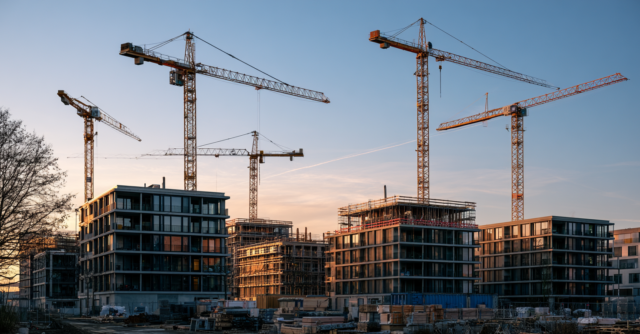
    At the second attempt, the voters of St. Gallen say yes to Wil West. The decision is close, but clear enough to create planning security. The vote shows that the region wants to grow. Bundled, plannable and coordinated across cantonal borders.

    With the sale of the land, St. Gallen is handing over a former estate of the Wil psychiatric clinic to the canton of Thurgau. In future, the economic area will be located entirely on Thurgau soil, but will remain within the immediate sphere of influence of the Will region. This creates a clearer starting position for investments, infrastructure and long-term settlement strategies.

    Concentration instead of urban sprawl
    Wil West stands for a model that keeps many regions busy, enabling economic growth without further urban sprawl. Instead of constantly scattering new commercial zones on the outskirts of towns, the location will in future concentrate companies, services and productive jobs in a location with good transport links.

    The plan is not just any old industrial area, but a modern work location. The aim is to create high-quality businesses that generate added value and skilled jobs without taking up an excessive amount of space. The development potential of the region will thus be utilized. For spatial planning, the project is therefore also an instrument for channeling growth instead of leaving it to chance.

    Infrastructure as a driver of development
    Wil West has a particularly strong impact through its infrastructure. With the project, the federal government, cantons and region are linking the expansion of the highway, public transport and pedestrian and bicycle connections. The planned freeway link to the A1 and better rail and bus connections will make the area attractive for companies and at the same time relieve pressure on the existing town centers.

    Sustainability as a location factor
    The first version of Wil West failed due to concerns such as loss of cultural land, traffic and ecological impact. In the revised version, sustainability plays a much more visible role. More compact construction methods, more careful land use and more green and open spaces are intended to reduce the ecological footprint.
    This is precisely what is becoming a location factor for companies looking to relocate. When choosing a location, more and more companies are looking at energy and land consumption, accessibility without a car and an attractive environment for employees.
    Wil West has the opportunity to set a new standard for work zones if quality assurance, phasing and criteria for settlements are consistently implemented.

    Seize opportunities, manage expectations
    With the yes vote for the proposal, expectations are now also rising. Politics and administration must pick up the pace without falling into a hectic pace. The region needs clear guidelines: which sectors should come? What density is desired? How can development be managed over decades without having to change strategy every time the economy changes?

  • Four axes that are reorganizing the real estate industry

    Four axes that are reorganizing the real estate industry

    Data & AI
    Industry reports see data-driven decisions and AI-based analytics as one of the strongest drivers. From predictive analytics for rents, vacancy rates and capex to automated valuations and AI-supported due diligence and document processing.

    Along the life cycle, this starts with land acquisition and project development (location scoring, risk and scenario models) and extends to operations and portfolio management (predictive maintenance, portfolio optimization, dynamic price and space management).

    Decarbonization and ESG
    Net-zero targets, taxonomy rules and ESG investing make green proptech a cluster in its own right. Smart building systems, IoT sensor technology and ESG data platforms measure emissions, energy and resources, automate reporting obligations and support refurbishment and investment decisions.

    This has a social impact through stricter regulation and investor pressure, and an economic impact through the growing difference in value between stranded assets and climate-friendly stocks. From carbon screening when purchasing land to decarbonization roadmaps for ongoing operations.

    User experience and flexibility
    Digital tenant experience, hybrid working models and flexible residential and commercial spaces are considered a core trend. Mobile access, self-service portals, real-time communication and dynamically bookable, usage-based spaces are required.

    Throughout the life cycle, this shifts the focus to user-centric concepts and mixed use right from the planning stage and requires platforms for booking, community building and personalized services during operation, which directly changes the value creation logic of properties.

    Platform ecosystems
    Many sources see a move away from isolated stand-alone solutions towards networked platforms in which data, processes and services from different players converge. Open interfaces and integrations are seen as the most important requirement on the part of developers and operators.

    Economically, this creates new platform operators, while socially, transparency, power and role models are shifting. From land purchase CRM and development tools to operating and ESG platforms that digitally connect the entire lifecycle.

  • First consultation on location promotion

    First consultation on location promotion

    For the first time, the dispatch on location promotion will be submitted to a consultation procedure, which will run until 1 June 2026. For the years 2028-2031, the Federal Council is requesting five financing decisions amounting to CHF 392.21 million, compared to CHF 428.83 million in the period 2024-2027. The instruments remain the same: SME policy, tourism policy, regional policy, export promotion and location promotion. The bottom line is that the budget, adjusted for special Covid payments and the 2027 relief package, will fall by around 5.2 percent.

    Easing the digital burden on SMEs
    One focus is on easing the administrative burden on SMEs by expanding digital government services. The core component is Easy-Gov.swiss, which is to be further developed into a marketplace for digital services from the federal government and cantons and positioned as a standard infrastructure for a “digital government” for companies. The aim is to simplify procedures, reduce duplication and ensure more efficient cooperation between the administration and business.

    Access to international markets
    Export promotion should provide SMEs with targeted support when entering new foreign markets and expanding existing ones. In an environment with increasing export hurdles and volatile framework conditions, there is a greater focus on information, advice, risk diversification and export risk insurance. At the same time, SMEs should be able to make better use of the opportunities offered by new and existing trade agreements.

    Strengthening regions as economic and living spaces
    The federal government wants to support economic development in all parts of the country with its location promotion. It promotes tourism destinations and economically oriented projects in rural and border regions. This enables them to remain attractive places to live and work. In this way, the Federal Council combines growth impulses for SMEs with balanced regional development.

  • Tour Invictus new face for Fribourg

    Tour Invictus new face for Fribourg

    The Tour Invictus marks a turning point in Fribourg’s urban development. It increases the density of living space upwards instead of continuing to grow outwards. The project is a response to scarce land, changing household structures and an ageing population.

    At the same time, the tower raises the question of identity. How much “high-rise” can a medium-sized Swiss city tolerate? The building will be visible from the city and from afar. It will thus become a symbol of a new phase of urban development that rebalances density, mobility and quality of life.

    New forms of housing instead of classic perimeter blocks
    The mix of uses is clearly geared towards housing, but is finely graduated internally. On the lower floors, there will be apartments suitable for the elderly with assisted living facilities. On the upper floors are privately financed condominiums with expansive views and a high quality of living.

    This vertical mix replaces the classic perimeter block with separate buildings for different target groups. It brings people with different lifestyles together in the same building. For operators, owners and urban planners, this opens up new options for services, neighborhood connections and community building.

    Creating quality of stay
    A tower of this height always provokes the same question. Will density become a burden or a quality? The decisive factor is the design of the transitions. The street level, first floor and surroundings must maintain the scale for pedestrians. Green outdoor spaces, a clear address and legible entrances determine whether the tower is perceived as a foreign body or as a natural part of the neighborhood.

    What counts inside is the sense of spaciousness. Daylight, room heights, private outdoor spaces and views are the counterbalance to the large number of units. Where open spaces are deliberately moved indoors, for example with communal rooms, roof terraces or usable arcades, identification is created instead of anonymity.

    Opportunities for the city
    For the city of Fribourg, the Tour Invictus is both an opportunity and a test case. It shows how investors, planners and authorities deal with densification targets. The handling of traffic, development, shading and the neighborhood will be closely monitored. If the project is successful, it will strengthen the acceptance of further vertical densification.

    At the same time, the area of tension remains visible. A high-rise triggers discussions about the skyline, character and social mix. Managers in administration and the real estate industry are called upon to actively moderate this debate. Clear narratives are needed as to why density does not mean sacrifice, but rather enables new forms of urbanity.

  • New white paper: ‘’Cooling buildings efficiently’

    New white paper: ‘’Cooling buildings efficiently’

    Although the impact of climatic changes differs depending on the location and use of the building, in future almost every residential and office building will require cooling. Anyone planning a new build is well advised to carry out an analysis of exterior and interior comfort levels, define summer heat insulation requirements and maximum acceptable interior temperatures, and request proof of thermal comfort. For existing buildings that don’t meet current or future requirements in summer, there are other viable measures that can be implemented.

    With comfortable indoor temperatures increasingly considered a criterion for rentability, it makes sense for property owners to invest in climate control for their properties. Buildings with a high level of climate comfort are future-proof, their market value increases and they usually attract higher rental income.

    The new white paper, ‘Cooling buildings efficiently’ (23 pages), shows how we can build or renovate properties today to ensure they continue to offer a high level of comfort in the climate of the future.

  • Urban change on the Wellis site

    Urban change on the Wellis site

    One of the region’s most exciting transformation areas is located between the railroad station and the old town. Halls, warehouses and work yards are being transformed into an urban quarter with its own character. The area thus plays a key role as the gateway to Willisau.

    The area is roughly the same size as the historic old town. The previously closed production site is being transformed into an open piece of town. Paths, squares and open spaces will connect the station, the old town and the district. The previous barrier will become an urban interface.

    Mixture instead of monofunction
    The development clearly focuses on a mixture of uses. Several hundred apartments of different sizes and typologies are planned, supplemented by areas for commerce, services and local amenities. Living, working, shopping and leisure are moving closer together.

    It creates frequency throughout the day, increases the utilization of the infrastructure and reduces dependency on a single type of use. At the same time, it opens up scope for new forms of work, small-scale service providers and local suppliers.

    Identity from the industrial past
    The Wellisareal remains recognizable as a place. Parts of the existing building fabric will be preserved and used for new purposes. The industrial character not only provides history, but also identity. It clearly distinguishes the district from green meadow developments on the outskirts of the town.

    New buildings complement the existing buildings without covering them up. A high point marks the area in the silhouette of Willisau. The decisive factor here is not the height alone, but the effect in the urban space. This creates an image that remains anchored in the perception of residents, visitors and investors.

    Open space as a location factor
    The project consistently combines density with open space. Generous green spaces, trees, squares and paths structure the quarter and ensure a quality of stay. Instead of the inner courtyard as a residual area, the open space is at the center of the concept.

    For future users, this is more than just a matter of comfort. Shaded recreational areas, well thought-out outdoor spaces and differentiated microclimates are becoming hard location factors. They influence rentability, image and long-term value development. A robust open space concept also supports the adaptability of the neighborhood over its life cycle.

    Rebalancing mobility
    The location directly next to the train station and close to the old town allows for a low-traffic approach. Priority is given to pedestrians and cyclists, with public transport services within walking distance. The project deliberately reduces the number of parking spaces and focuses on alternative forms of mobility.

    For local authorities and investors, this means less land consumption for cars, more space for value creation and quality of life. At the same time, there is increasing pressure to think of mobility as an integrated offer. From sharing solutions to logistics and neighborhood services.

  • New CKW headquarters strengthens Emmen

    New CKW headquarters strengthens Emmen

    With the “EnergiePark Emmen” project, CKW intends to further develop its existing site on the Reussinsel. The centerpiece is a new plant building for the Grids and Building Technology divisions, including a grid base for the construction, operation and maintenance of the electricity grid in the greater Lucerne area. The employees previously based in Reussbühl will thus have modern workplaces in Emmen, and processes will be bundled in terms of space and organization.

    Commitment to Emmen and more jobs
    The Reussinsel is CKW’s historic place of origin, where the first power plant went into operation in 1894. With the planned relocation of its headquarters, CKW is building on these roots and making a long-term commitment to the Emmen site. The number of employees on the Reussinsel will increase from around 600 today to around 1,000, which will generate additional tax revenue and strengthen the economic development of the municipality.

    Careful planning and inward densification
    The guideline project was developed in a planning process lasting several years with the municipality of Emmen and a study contract with five planning teams. The “Compakt” project by Penzel Valier AG with Maurus Schifferli Landschaftsarchitekten was selected for its urban planning quality and sensitive integration into the landscape. The project consistently focuses on inward densification. The valuable natural space on the Reussinsel remains untouched and additional buildings are only planned as a long-term reserve.

    Traffic, development and next steps
    An important part of the project is the development and traffic management. Mobility measures are planned together with Emmen and Ebikon, including a new bus stop in the Rathausen area, adjustments to the road infrastructure and mobility management with trip caps and balanced traffic distribution. Based on the indicative project, the municipality of Emmen is now drawing up the development plan with the active involvement of the local population. According to the current timetable, concrete construction projects could be approved and implemented from 2030.

  • Group of 15: Joint plea for a united real estate industry

    Group of 15: Joint plea for a united real estate industry

    The Swiss real estate sector is viewed with suspicion in some places – especially when it comes to the housing market. Is there enough living space in central locations? Why are rents in metropolitan regions rising sharply and constantly? What influence do municipalities, cantons and the federal government have on the activities of the institutional real estate industry? And what voice does the sector speak with throughout the country?

    The professional, institutional and commercial real estate industry is undoubtedly under observation. It is undoubtedly caught between growing regulation, social change and, in many places, calls for innovation, renewal and fairness. The minds and planners of the 25th symposium of the Group of 15, the think tank of the Swiss real estate industry founded in 2001, posed the questions to be answered in the run-up to the event: What does sustainability mean in a market that is becoming increasingly controversial? How can economic incentives be combined with social responsibility and sustainable urban development? And: How much state intervention is necessary – or too much?

    “Curbing regulatory madness”
    For Basel-born Prof. Dr. Christoph A. Schaltegger, one thing is clear: the state’s influence on the construction and real estate industry is enormous – and needs to be curbed. The professor of political economy, director and founder of the Institute for Swiss Economic Policy (IWP) at the University of Lucerne and former member of the executive board of economiesuisse criticized Bern and its authorities. He said that subsidyitis and patronage politics were rampant there in their purest form. “The federal government is twice as big as the state quota implies,” he told the 300 or so guests at the symposium in Zurich’s Kunsthaus.

    The Swiss state is growing more than twice as fast as the productivity of the economy and is now accumulating “implicit debts of over 300 percent of economic output”, Schaltegger continued. His call: the “Sturzenegger approach”, a thorough cleaning of public finances à la Argentina. At the same time, he argued for a significant reduction in federal regulation. He referred to the sharp increase in the number of ordinances and decrees since the 1970s. Of course, many of these federal decisions also affect the local construction and real estate sector.

    Artificial intelligence as a remedy?
    Prof. Dr. Christian Kraft, Head of the Real Estate Competence Centre at Lucerne University of Applied Sciences and Arts, then turned his attention to the topic of structural (dis)order and the question of whether artificial intelligence could possibly promote investment security in the “chaos of Swiss-German building laws”. His answer: a clear yes and no. The current uncertainty, which is partly location-specific, is primarily due to longer approval periods for real estate projects at BZO level. Between 2011 and 2024, for example, the average approval period increased from less than 100 days to almost 200 days on average. In addition, there has recently (since 2020) been a sharp increase of 20 to 30 percent in the planning and construction costs of apartment buildings, according to Kraft.

    Successful neighborhood mix and fatal objections
    Dr. Sibylle Wälty, lecturer at ETH Zurich and founder of Resilientsy, then showed what added value the concept of “10-minute neighborhoods” can create in land use planning. Her research and consulting focus is on a balanced mix of residential and working populations as well as other important factors for liveable urban districts. Dr. Wolfgang Müller, Partner & Head Real Estate at MLL Legal Ltd, then shed light on the “room for contradiction”. He explained where current case law offers opponents and “project obstructors” a hand and what conclusions politicians and the real estate industry could and should draw from this.

    Decency and consideration in residential construction
    After the coffee break, Paolo Di Stefano’s symposium presentation entitled “More freedom and personal responsibility” dealt impressively with how real estate investors can move “from problems to prospects” and make residential real estate “fit for the future”. The experienced Head of Real Estate Switzerland at Swiss Life Asset Managers (with around 37,000 residential units in its portfolio throughout Switzerland) showed, among other things, a successful example of portfolio renovation without vacancy notices at the Schmiede in Zurich-Wiedikon. He also presented the Au-Park in Wädenswil, an almost completed major new construction project in which, in addition to around 200 rental apartments, many condominium units are being built by Swiss Life Asset Managers.

    At the symposium, he made a plea and at the same time urgently appealed to the representatives of the real estate industry to speak with one voice to both politicians and the general public. He also pointed out self-critically that the current representation of the farming community in the Swiss National Council and Council of States, for example, is far more important and influential than that of the construction and real estate industry. Di Stefano warned that speculative building investors and long-term institutional investors were sometimes lumped together in the “political power play”. It is important to work together to counter this with arguments and show that “decent building also means consideration”.

    “Simply make good and convincing projects”
    The major Group of 15 event at the Zurich Kunsthaus concluded with a slightly peppery future talk by conference host Rainer Maria Salzgeber with National Councillor Beat Walti (FDP) and Green Liberal Councillor Esther Keller (Canton of Basel-Stadt). They agreed that regulations in the construction sector should not continue to grow wildly and that, above all, discretionary leeway should be made possible for real estate projects. Both warned against an “unholy political alliance between left and right”, which could have counterproductive consequences for the real estate industry.

    Beat Walti, who has been President of the VIS Swiss Real Estate Association since 2023, which represents the interests of institutional investors such as pension funds, insurers and private real estate companies in federal Berne, called on the real estate industry, which he warned at the beginning with a “yellow card”: “Show what you are building and doing in order to create trust – among politicians and the general public”. Esther Keller, Head of Basel’s Department of Construction and Transport, agreed and summed up her demand succinctly in her closing statement: “Just do good and convincing projects”.

  • From industrial heritage to innovation campus

    From industrial heritage to innovation campus

    Where textile machines and industrial production used to set the pace, a new focus for technology, trade and entrepreneurial development is now being created. The approximately 75,000 square meter site is not being conceived as an isolated business park, but as a networked innovation location with a direct link to the Töss district. Existing buildings, paths and spaces form the backbone of the transformation.

    Historical substance remains where it creates character and identity. At the same time, structures will be opened up, paths made more permeable and new places for encounters, collaboration and exchange created. The Vitus site will thus become a visible driver of Winterthur’s economic development.

    Mission statement and site strategy
    The guiding principle is both simple and ambitious. A tech and innovation cluster that brings together companies, start-ups, education and research in one place. The focus is on work, not living. Office and commercial space is planned for technology-oriented companies, research-related businesses, service providers and creative players. Co-working facilities, flexible spaces and space for young companies will also be added.

    At the same time, the site development focuses on atmosphere. Urban meeting zones, restaurants, cultural offerings and publicly accessible outdoor spaces are intended to ensure that the area also comes alive outside of traditional office hours. The planned Vitus Promenade connects the site with the Töss river and creates an identity-forming open space axis that enables movement, recreation and interaction.

    Development in stages
    The transformation is deliberately taking place in several stages. In the first phase, existing buildings will be activated, renovated or upgraded through targeted conversions. Interim uses, co-working, events and cultural formats will ensure that the area gains appeal even during the planning phase. The first companies from the fields of technology, sustainability and future mobility are already using the Vitus site as a place to work and develop.

    At the same time, structural foundations are being laid for the next steps, such as improved access, sharper utilization concepts, mobility and sustainability approaches. Individual construction projects, such as the new LANDI site, fit into this picture and strengthen the commercial character of the area. In a later stage, the eastern part of the site in particular will be redeveloped in greater depth. Additional, contemporary space for production, laboratories, offices and services will be created here – tailored to market needs and demand.

    Prospects for Töss and Winterthur
    The Vitus site will give Winterthur-Töss a strong economic anchor point. The site offers potential for several thousand jobs and thus strengthens the district’s role as a productive yet urban location. Open spaces, permeable paths and cooperation with local players should prevent the creation of an isolated commercial area.

  • Lucerne invests 300 million in its location

    Lucerne invests 300 million in its location

    The starting point for the proposal is the concern that the previous locational advantage of low corporate profit taxes will be lost as a result of the OECD minimum taxation. International corporations will have to pay more tax in future, which means there is a risk that top taxpayers and jobs will move away. The adopted package is intended to cushion these effects and keep Lucerne attractive as a business location through other levers.

    The Cantonal Council has amended the law on economic development and regional policy for this purpose. An annual volume of measures of around CHF 300 million has now been anchored in favor of location promotion. The canton is thus creating a predictable framework for the targeted financing of strategic projects and structural improvements.

    Innovation, taxes, land, administration
    The measures in favor of the economy are concentrated on several axes. At the center is the promotion of innovation. This means supporting companies, projects and structures that increase value creation and future viability. This is complemented by an improvement in the tax burden in other areas in order to partially compensate for the loss of the profit tax advantage.

    Another focus is on the development and availability of commercial and residential space. Lucerne wants to ensure that sufficient suitable space is available for businesses, services and housing. Equally important is a “customer-oriented” administration. Processes should become faster, more transparent and more business-oriented so that investments do not fail due to bureaucratic hurdles. For the population, additional measures are aimed at easing the tax burden, improving work-life balance, culture and digitalization.

    New rules for micro-shops and shop-fronts
    The bill also includes changes to the retail sector. Self-service stores without sales staff with a maximum area of 30 square meters will be allowed to open daily from 5 a.m. to 10 p.m. in future. A restriction to farm stores was narrowly rejected. The regulation thus applies more broadly and facilitates new, automated store concepts.

    In addition, stores with fast charging stations will in some cases be treated in the same way as petrol station stores. Anyone who operates at least four charging stations with 150 kilowatts each and a simultaneous total charging capacity of at least 300 kilowatts can benefit from extended opening hours. In this way, the canton is supporting the expansion of e-mobility and linking charging infrastructure with local service offerings.

    Political controversy is inevitable
    The bill is politically controversial. The SVP and SP have announced a referendum. Both because of the fundamental direction of the package and because of the extended store opening hours and the location policy in favor of large companies. This means that the thrust of Lucerne’s location strategy is likely to be the subject of public debate.

    In practice, this means that companies, investors and municipalities will receive a clear signal that the canton is prepared to invest substantial funds in location development. However, whether and in what form the package of measures will definitely come into force will also depend on the political debate and a possible referendum.

  • Lucerne Economic Development Wermelinger takes over

    Lucerne Economic Development Wermelinger takes over

    The Board of Trustees of Lucerne Economic Development has elected 54-year-old Patrik Wermelinger from Lucerne as its new Director. He comes from the canton of Lucerne, lives with his wife in Meierskappel and has known the regional economy at close quarters for many years. He has a degree in business administration and an Executive MBA in General Management, which he completed at Lucerne University of Applied Sciences and Arts.

    Wermelinger is currently Chief Investment Promotion Officer and a member of the Executive Board at Switzerland Global Enterprise. In this role, he supports international companies in setting up operations in Switzerland and operates at the interface between location marketing, investment decisions and global competition for projects. This profile predestines him to position Lucerne visibly in the competition between business locations. With a clear understanding of the requirements of international investors.

    Familiar head with a return bonus
    Patrik Wermelinger is no stranger to Lucerne. From 2006 to 2016, he was head of location promotion and marketing at the Lucerne Economic Development Agency. During this time, he built up a broad network of companies, municipalities, institutions and partners in Switzerland and abroad. He knows the strengths, but also the challenges of the economic region from practical experience. From industry to tourism and knowledge-intensive services.

    This return with additional international experience is a strategic advantage for the organization. Wermelinger brings in-depth relocation and promotion experience from Switzerland as a whole, combined with a clear view of Lucerne as an independent brand in the competition between locations. This creates good conditions for maintaining existing relationships and attracting new companies. Especially in an environment in which location decisions are more competitive.

    Orderly transition at the top
    Patrik Wermelinger will take over as Director on June 1, 2026. The current Director, Ivan Buck, will retain operational responsibility until the end of February 2026. He will then set up his own company in the field of relationship management. For the transition phase between March and the end of May 2026, Deputy Director Andreas Zettel will take over management on an interim basis and ensure a smooth transition.

    Lucerne Economic Development thus relies on continuity in ongoing operations and a clear handover. The combination of temporal overlap, internal interim solution and succession communicated at an early stage strengthens planning security for partners, municipalities and companies that work with the organization.

    Trust in expertise and personality
    The Board of Trustees is convinced that it has made the right choice in Patrik Wermelinger. President Erwin Steiger emphasizes both the high level of expertise and the international experience of the designated Director. At the same time, he emphasizes his trustworthy and winning manner. A combination that is central to the work at the interface between politics, administration and business.

    With this personnel decision, Lucerne Economic Development is positioning itself for the coming years with regional roots, an international network and a director at the helm who already knows Lucerne as a location.

  • Digital intelligence in construction

    Digital intelligence in construction

    “Planning is already highly digitalized, construction less so and operations more so,” explained Alex Walzer from the FHNW. A lot of information still gets lost between the project phases. This is a problem, particularly with regard to the circular economy. Walzer sees great potential in the consistent use of data. Learning from projects, designing buildings based on data, standardizing processes. But without a clean data basis and precise questions, even artificial intelligence remains ineffective.

    Consistent data with Lakeup
    Michal Rzinski from Bond BIM presented the Lakeup platform, a system for life cycle data management. It is designed to enable building owners and real estate organizations to use data in a structured way over the entire life cycle of a building. From the definition of requirements to ordering and evaluation, Lakeup creates data consistency and transparency.

    According to Rzinski, the focus is on people. “We want to pick up specialist planners, engineers and decision-makers in equal measure.” One example is provided by the University Hospital Basel, where AI agents automatically classified 25,000 data records, the basis for later applications. The platform has a modular structure, from specialist planning tools to corporate solutions.

    Virtual bathrooms and real decisions
    Things got practical with Patrick Marti from Hegias Vision. His platform combines 3D visualization with real-time data in bathroom renovation. Using an iPhone, rooms can be scanned, objects automatically recognized and designed in a digital environment. Customers can immediately see what their bathroom could look like, including materials, lighting moods and real product data.

    Together with BMS, Hegias is enabling a new, interactive consultation process. “People used to leave the showroom with a block full of product names, now they leave with a link to their dream bathroom,” says Ilona Lupart from BMS. The room scanner makes it easier to get started, speeds up decisions and increases satisfaction.

    People at the heart of digitalization
    In the final round, everyone agreed that automation cannot replace people. “AI should relieve the burden on advisors, not replace them,” emphasized Marti. Walzer emphasized that AI is particularly strong where large amounts of data are analysed or supply chains are optimized. Nevertheless, specialist knowledge, reflection and further training are still required.

    Rzinski added that Lakeup was deliberately designed to cover different levels of expertise, from data specialists to management. Lupart added that training, involvement and communication are key to reducing skepticism. Openness is more important than age: even 90-year-olds have used VR glasses enthusiastically.

    New skills and outlook
    Walzer sees a change at the FHNW. “Students today are working more collaboratively and critically with technology.” In addition to technical skills, soft skills, communication, understanding of interfaces and teamwork are increasingly in demand.

    Marti and Rzinski announced that they will continue to expand their platforms in the future. More automation, better user guidance and deeper integration of AI into existing processes. Walzer dares to look ahead “In ten years, AI will work as naturally in the background as electricity from the socket. The goal will have been achieved when building is fun again thanks to technology.”

  • Antitrust law with scope for cooperation

    Antitrust law with scope for cooperation

    The Swiss economy supports strong antitrust laws. Restrictions on competition should be prevented and fair competition ensured. In practice, however, the competition authorities had increasingly moved away from this principle. Instead of examining the actual effects on the market, they primarily assessed the form of an agreement. Certain agreements were thus automatically deemed inadmissible, even if they were proven to have no harmful effects.

    This led to considerable legal uncertainty, particularly for SMEs, planning offices, and companies in the construction industry. Purchasing groups, joint research projects, and insurance pools came under scrutiny, even though they often enabled efficiency gains and better market performance. With the revision that has now been passed, Parliament is responding to this problem and calling for a return to the original intention of the legislature.

    New assessment logic in Art. 5 of the Cartel Act
    The core of the revision is the clarification in Art. 5 para. 1 of the Cartel Act. In future, it will no longer be sufficient to simply classify an agreement as a “hard agreement.” An overall assessment of its significance, taking into account qualitative and quantitative elements, will always be required. These include market structure, market shares, and specific framework conditions in each individual case.

    The nature of the agreement remains important because it provides indications of typical harmful potential. However, it is now clearly stated that it must be examined whether this potential actually materializes in the real market environment. In practice, this means that competition authorities can no longer sanction cooperations solely on the basis of their form, but must justify why and where they actually impair competition. The substantive amendments are expected to come into force on January 1, 2027.

    More scope for cooperation
    The revision strikes a delicate balance. Cooperation that is competitively unobjectionable or even beneficial is taken out of the firing line without weakening the enforcement power of the Competition Commission. This provides greater clarity for planning offices, engineering firms, and other players in the construction industry. This is particularly the case where cooperation is permitted, such as in joint procurement, standardization projects, or shared resources.

    At the same time, the fundamental mandate of antitrust law remains untouched. Hardcore cartels, price fixing, and bid rigging will continue to be strictly prosecuted. The revision does not shift the focus away from protecting competition, but back to its core. Effect rather than form, abusive behavior rather than blanket suspicion.

    Institutional reform of the competition authorities
    The process is not complete with the substantive revision. In 2026 and 2027, institutional reform will come to the fore. This involves the question of how cartel proceedings are conducted and how they are structured in accordance with the rule of law.

    Several elements are central to this. First, the institutional separation between investigation and decision-making is to be sharpened. The Competition Commission will be expanded into a more court-like body with its own specialist resources, while the Secretariat will act as an independent prosecuting authority.

    Second, a specialized appeals body is planned to bundle antitrust cases, secure expertise, and speed up proceedings. Third, an independent hearing officer will be appointed to monitor compliance with procedural rights and serve as a neutral point of contact for the parties without interfering in the substantive decisions.

    Fourthly, greater transparency is to be created by publishing dissenting opinions and making divergent views visible, which will make legal developments more comprehensible. Under the ECHR, antitrust proceedings are considered criminal proceedings, deeply interfere with the rights of the companies concerned, and are therefore subject to high constitutional requirements. It is precisely in this area of tension that Bauenschweiz continues to see a considerable need for reform.

    Bauenschweiz pushes for greater rule of law
    Bauenschweiz welcomes the fact that the Federal Council recognizes the need for reform in enforcement, but rejects the current proposal for institutional reform. From the umbrella organization’s point of view, it does not sufficiently address the central shortcomings. In particular, the independence of the decision-making body, the clear separation of investigation and judgment, and the protection of procedural guarantees are not yet sufficiently ensured.

    An antitrust framework that deeply interferes with entrepreneurial freedoms requires robust institutions, transparent procedures, and trust in fairness. Only in this way can competition violations be consistently sanctioned without unnecessarily hindering investment willingness and meaningful cooperation.

    The Federal Council’s message on institutional reform is expected in the summer of 2026, with parliamentary deliberations likely to begin in the third or fourth quarter. Bauenschweiz intends to get involved again, together with an economic alliance. The aim is to establish antitrust law that protects competition, assesses cooperation on a case-by-case basis, and consistently meets the requirements of the rule of law.

  • Where real estate loses its appeal

    Where real estate loses its appeal

    The cantons with the greatest demographic risks include Ticino, Bern, Neuchâtel, Jura, Appenzell Ausserrhoden, Nidwalden, Obwalden, Graubünden, Glarus and Schaffhausen. They account for around 23 percent of the total mortgage volume in Switzerland and are therefore anything but peripheral regions. At the same time, they are structurally less well equipped for the future.

    The core of the problem lies in the age structure. Population growth is taking place primarily in the over 65s. People who rarely move and hardly ever demand additional living space. At the same time, the number of working people, i.e. those households that typically buy their own home or enter into new tenancies, is falling. The result is less demand, more patience when selling and growing price markdowns. This is particularly noticeable in markets with many single-family homes and vacation properties, for example in parts of Ticino, Graubünden or the Jura.

    Demographics beat price fantasy
    The study outlines a market that is likely to diverge significantly over the next 20 years. While owners in many of the cantons concerned still expect prices to continue to rise, demographics paint a different picture. If hardly any young households move in and immigration remains weak, the surge in demand that justifies today’s valuations will not materialize.

    For owners, this means longer holding periods, higher sales risks and, depending on the location, more significant price falls. Older single-family homes in peripheral communities that no longer meet the expectations of new generations of buyers in terms of energy efficiency and quality are particularly exposed. Where there is a lot of supply on the market at the same time, for example from estate situations, price pressure can increase rapidly.

    Booming cantons as a counterbalance
    On the other hand, there are the growth cantons of Zurich, Vaud, Lucerne, Geneva, Thurgau, Aargau, St. Gallen, Valais, Fribourg, Zug and Basel-Stadt. According to the analysis, they are expected to absorb almost 86 percent of future population growth. Two thirds of the mortgage volume is already concentrated in these cantons, and the trend is rising.

    This is where immigration meets economic dynamism, urban centers and strong labor markets. For the real estate market, this means sustained high demand, stable to rising prices and lower structural risks, despite digitalization, the interest rate turnaround and increasing regulation. The polarization between “loser” and “winner” cantons is therefore likely to intensify further.

    Consequences for banks and investors
    For banks, insurance companies and pension funds, the demographic perspective is more than just a footnote. In many portfolios, regional risks have so far been inadequately reflected. Regional institutions with a strong focus on their home canton in particular bear increased cluster risks in shrinking regions. Especially if a large proportion of the portfolio consists of single-family homes in rural locations.

    It is not only location, condition and affordability that count, but also the question of how many potential buyers will still be there in 10, 15 or 20 years’ time. If you want to manage mortgages and real estate investments in the long term, you need to systematically consider demographics, housing demand and the local economic structure together.

    What owners can do now
    For owners in the affected cantons, it is worth taking a sober look at their own property in terms of location, target group, energy status and possible conversion. Those who actively manage, modernize and think about alternatives at an early stage have a clear advantage over those who simply hope that prices will continue to rise.

    The market is not tilting across the board. Housing will remain scarce in many cities in the “loser” cantons, while rural areas will come under greater pressure. The decisive factor will be how precisely market participants understand the differences within a canton and how quickly they adapt their strategies to the new demographic reality.

  • Zurich municipal council elections 2026

    Zurich municipal council elections 2026

    Experience politics in a fun way with SVIT Zurich’s “Built&Rent” game!
    The first round of elections in the city of Zurich will take place on March 8, 2026. With regard to this important election in the largest municipality in our canton (with an impact beyond the cantonal borders), SVIT Zurich is recommending seven candidates for election. They are members of the relevant commissions HBD/SE (Department of Buildings, Urban Development) and FD (Department of Finance) or hold important positions in their parties. Newcomers who are not yet members of the municipal council are also included.

    However, all seven candidates share a common interest: To advance a liberal housing and real estate policy for Zurich that addresses the current challenges on the housing market quickly and effectively.

    The “Built&Rent” game brings to life the pressure that real estate professionals are under – and how political decisions shape the sector. Great learning and non-cash prizes can be won. From numerous Apple vouchers to free participation in SVIT Zurich training courses and seminars. Participation is free for everyone. SVIT membership is not required. Political education becomes an interactive experience! It’s played like “Tetris”.
    (Playing time January 28 to February 15, 2026)

    Competition link: https://www.svit.ch/de/svit-zuerich/politik

  • The Sursee hospital site – new prospects from 2034

    The Sursee hospital site – new prospects from 2034

    The new construction of the LUKS Sursee and the Seeblick care center on Schwyzermatt in Schenkon will free up an area of around 47,000 square meters on Spitalstrasse in Sursee. About seven football pitches, centrally located, well developed and with views as far as the Alps. Where hospital buildings still stand today, a new urban building block can be created from 2034 that will shape Sursee in the long term. The canton of Lucerne is the main owner of the site, while adjacent areas also belong to the canton and partly to the city and will be included in the planning.

    The almost 50-year-old LUKS Sursee no longer meets the requirements of a modern hospital operation. The government council’s decision to build a new hospital and care center in Schenkon by 2033 will shift the healthcare infrastructure and open up a rare urban development potential in Sursee.

    Living, living, meeting
    The canton of Lucerne and the city of Sursee are pursuing a common goal: a mixed-use, lively district that combines living, services and quality of life. A test plan from 2026 will examine which uses and development structures are possible and sensible on the site. The results will form the basis for rezoning, architectural competitions and the first construction phases, which are to start after the hospital and nursing home have moved away, with the aim of avoiding vacancies as far as possible.

    It is already clear that the area is particularly suitable for residential use, for families, couples, singles and senior citizens. In addition, services, shopping facilities and restaurants are conceivable to fill the district with life. The aim is to create a socially mixed environment with a mix of upmarket and affordable housing that strengthens Sursee as a place to live and at the same time creates new opportunities for different phases of life.

    Sursee is growing
    Sursee is growing dynamically and, with a vacancy rate of 0.26 percent, has an extremely tight housing market. The new offer on the hospital site should help to alleviate the pressure and create additional residential quality in a central location. Its proximity to the old town, the existing transport links and the view of the lake make the site a key location for future urban development.

    It is an opportunity to create a new, identity-forming district. The site can provide impetus for the economic development of the region, create new jobs in the service sector and further raise Sursee’s profile as a regional center.

    District development as a joint task
    The planning of the hospital site is deliberately designed as an open process. Workshops with the local population and various interest groups are planned from spring 2026. Needs, ideas and expectations are to be incorporated at an early stage so that a district is created that is not only convincing from a planning perspective, but is also supported by the population.

    The municipal assembly will decide on the necessary changes to the sub-zone plan. This makes it clear that the future of the hospital site will not be designed in secret, but in a transparent process that combines specialist planning and local perspectives.

    A new urban building block with a history and a future
    In the long term, a diverse residential and living space with green areas, play areas and recreational spaces could be created where a hospital still operates today. Outdoor meeting places, short distances and good connections to the existing urban structure should make the area an integral part of Sursee.

    The canton of Lucerne wants to make targeted use of the potential of the privileged location with its lake view and historical use. From 2034, there will be an opportunity to create a district that respects the history of the site and at the same time provides answers to the housing and living needs of the coming decades. A new chapter for the hospital site and for Sursee.

  • ABB cashes in and Oerlikon builds

    ABB cashes in and Oerlikon builds

    ABB is selling a site of around 7,000 square meters near Zurich-Oerlikon railroad station to real estate service provider Pensimo. The sale will result in an operating gain on disposal of around CHF 290 million before taxes in the first quarter of 2026. ABB no longer needs the site as a strategic land reserve and is taking this step to enable the further development of the Neu-Oerlikon district.

    Around 500 apartments, a high-rise building and commercial space are planned for the site. Over the next few years, the former industrial area is to be transformed into a mixed-use district with housing, services, workplaces and cultural and commercial facilities. Due to high land prices, rents are expected to be rather high. At best, individual apartments at cost rents are conceivable, for example as part of a densified site development.

    New ABB headquarters in Oerlikon
    ABB is expanding its presence in Oerlikon at the same time as selling the land. The Group is planning a new headquarters in the immediate vicinity, into which around 500 employees are expected to move in 2031. The project comprises a renovated, listed existing building and a new six-storey timber composite construction designed by Christ & Gantenbein.

    With a gross floor area of around 10,800 square meters, modern working environments including an auditorium, lounge and cafeteria, foyer and exhibition area as well as recreation and fitness areas will be created. The investment volume is around 80 million Swiss francs. ABB CEO Morten Wierod emphasizes the company’s commitment to Switzerland and the city of Zurich. Mayor Corine Mauch speaks of an even more “colorful and lively” district around Oerlikon station in the future.

    Strong final quarter of 2025
    ABB made significant operational gains in the final quarter of 2025. Comparable sales rose by 9 percent to 9.05 billion US dollars. Order intake developed particularly dynamically, increasing by 32 percent on a comparable basis to USD 10.32 billion, exceeding the USD 10 billion mark in a quarter for the first time.

    The operating EBITA margin improved from 16.6% to 17.6%, while adjusted net profit rose by 29% to USD 1.27 billion. For the full year 2025, net profit increased to USD 4.73 billion, around 20% more than in the previous year. The dividend is to be increased from CHF 0.90 to CHF 0.94 per share; at the same time, ABB is announcing a further share buyback program.

    Outlook and new buyback program
    For the first quarter of 2026, ABB expects comparable sales growth of 7 to 10 percent and a further increase in the margin. For the year as a whole, management expects growth of 6 to 9 percent and slightly higher profitability. Analysts see particularly strong drivers in the data center business and in the Electrification division, where orders increased by around a third.

    In addition, ABB is launching a new share buyback program with a volume of up to USD 2 billion, which is scheduled to run until January 27, 2027. A previous program of up to 1.5 billion US dollars has expired. This strengthens the attractiveness of the share and signals confidence in the company’s own earning power.

    ABB share at record level
    The figures and outlook were rewarded with price gains on the stock market. ABB shares rose by 8.46 percent to 66.38 Swiss francs, reaching a new all-time high of 67.22 Swiss francs. The strong order intake, the improved margin, the increased dividend and the larger share buyback program clearly exceeded the previously cautious expectations.

    For the Zurich-Oerlikon site, the combination of the sale of land, the construction of the new Group headquarters and the planned development of the district means a significant structural change. From an industrial site to a dense, urban residential and working district, with high investments, but also with the prospect of further rising rents.

  • Rankstrasse residential tower block

    Rankstrasse residential tower block

    In order to make optimal and sustainable use of the limited space on Rankstrasse, Basel’s “1000 ” residential construction program is based on a widely advertised, anonymous architectural competition. 78 teams showed interest, 15 selected projects were submitted and competed for the best solution. The expert jury was ultimately won over by “Miranda” by Zurich-based studio DIA, Haller Ingenieure and Hefti Hess Martignoni.

    Sustainability integrated into the architecture and social fabric
    The 88-metre-high building will provide over 100 new rental apartments based on the “Mietvertrag Plus” model, which is affordable and bound by income and occupancy rules. The outstanding feature is the innovative neighborhood concept. Three floors are connected vertically, creating inclusive meeting zones for diverse groups of tenants. The apartments have a compact and functional design, enable economical use of space and meet high ecological and economic standards. Green outdoor areas, communal spaces and resource-conserving construction methods underline the sustainability claim. The city is thus proactively committed to responsible, socially integrative urban growth.

    New benchmark for living on the outskirts of the city
    With “Miranda”, Basel-Stadt is launching a further development on the eastern outskirts of the city. The high-rise marks a striking prelude to future neighborhood developments and sets an architectural example of openness. The earliest start of construction is 2028, preceded by a development plan and public information. The focus on community, mixing, sustainability and architectural quality positions the project as a reference for modern, urban construction in Switzerland.

  • Roche site development Basel

    Roche site development Basel

    The first development phase of the Roche site was completed at the end of 2023, and now a new stage follows. One of Europe’s most important research infrastructures will be built on the north site by 2030. The core project is Building 12, a 72-metre-high research and development building with space for around 450 researchers. The new building will replace the outdated infrastructure and create optimal conditions for developing novel active ingredients from basic research to production maturity. With an investment volume of around 500 million Swiss francs, Building 12 will become the central interface between research and clinical development.

    At the same time, the Institute of Human Biology in Building 92 will be expanded into a new center for biological model research. Around 100 million francs are being invested in the modernization and conversion. The aim is to link academic and industrial research in order to make complex human cell models usable for drug development.

    Production is also undergoing a fundamental overhaul. State-of-the-art facilities for the development and commercialization of synthetically produced active ingredients will be built in buildings 50 and 51 by 2028. A new era of pharmaceutical process innovation will be ushered in here with a modular design, digital control and high energy efficiency. The investment framework for these projects is around CHF 570 million.

    Sustainable urban development on the south site
    Parallel to the research on the north side, Roche is pursuing a long-term sustainable development strategy on the south site. The site on the Rhine is being redesigned in close consultation with Basel politicians. The revised development plan provides for generous green spaces, ecological networking along the banks of the Rhine and integration into Solitude Park. Old building structures will be gradually dismantled and building materials reused according to the principle of the circular economy.

    The Canton of Basel-Stadt is actively supporting this process. The cantonal government and the Grand Council support the approach of upgrading the southern area in terms of urban development without providing for public thoroughfares or expropriation. This means that the site will remain within the company’s own control, but will be opened up in the future through landscaping connections and new open space concepts.

    Signal for Switzerland as a business location
    Since 2015, Roche has invested around eight billion Swiss francs in its Swiss sites and over 33 billion in national research and development. In Basel alone, further facilities for research, production and infrastructure will be built by 2029, including a new underground heating and cooling center to ensure security of supply for the entire site. The construction work on the north and south sites is emblematic of sustainable, resource-conserving site development that combines business, the city and science.

    The next few years will be characterized by intensive construction phases, urban planning coordination and technological innovations. With the ongoing development of the site, Roche is not only strengthening Basel as a pharmaceutical location, but is also sending out a strong signal of its long-term commitment to Switzerland as a place for cutting-edge research, sustainable architecture and shaping the urban future.

  • Nidwalden pools its blue light forces

    Nidwalden pools its blue light forces

    The 33,000 square meter site on Kreuzstrasse is now completely built over. Many of the buildings are in need of considerable renovation, including the cantonal police and prison buildings. In addition, there are operational deficiencies such as a lack of escape routes or inadequate separation between public and staff entrances.

    On the basis of a broad-based investigation, the cantonal government has decided to completely reorganize the site and build new replacement buildings. The aim is to create a modern security competence center that improves functional processes, increases security and is more economical in the long term than selective renovations.

    Bundled blue-light organizations
    The site is currently home to the police, prison, road safety center, road inspectorate, justice department and public prosecutor’s office. Due to the central location, the possibility of relocating additional emergency services, in particular the fire department and ambulance service, to Kreuzstrasse is being examined. The aim is to create a location with short distances, coordinated processes and clear responsibilities.

    Test planning has shown that this bundling on the existing site is realistic. It confirms that the spatial requirements of the current uses and additional organizations can be implemented on the site without obstructing the site’s development potential.

    Prison with a view to future needs
    The future direction of the cantonal prison was also analyzed in depth as part of the test planning. The demand for prison places in Switzerland is high, particularly for inmates in need of care in the penal system. Against this background, Nidwalden is examining how the new prison facilities should be dimensioned and functionally aligned in order to meet demand in the long term.

    Design plan and indicative project
    The District Council has approved a planning credit of CHF 1.63 million for the design plan and indicative project. The planning will be continued with a clearly defined group of users – the cantonal police, rescue service, fire department, justice department, public prosecutor’s office, prison, road inspectorate, road safety center and selected administrative units.

    The design plan is intended to create the legally binding framework for the next planning steps. It specifies which uses are permitted where, how development, open spaces and urban planning are to be designed and which stages are possible.

    Adjustments to the process and open sub-projects
    Several planning teams were initially involved in the study commission for the design plan and indicative project. In the course of 2025, however, it became apparent that the development with a moderate expansion of the existing traffic circle would not be sufficient in view of new traffic forecasts. At the same time, a new option for the road safety center came into play. Obwalden is planning a new building in Sarnen and synergies of a shared location with test halls and test tracks are being examined.

    In order to be able to react more flexibly to these changes, it was decided to terminate the study contract in its previous form and to continue working on the indicative project with just one planning team. In October 2025, the District Council also requested more planning certainty, particularly for the two sub-projects “Road Safety Center” and “Prison”, before the design plan and indicative project are definitively completed.

    Next steps and timetable
    The design plan will cover the three local municipalities of Stans, Buochs and Oberdorf. The corresponding municipal assemblies or ballots for decision-making are currently scheduled for 2027.

    The first loan applications for architectural competitions for individual buildings of the security competence center are expected from 2028 at the earliest. Until then, it will be a matter of clarifying the unresolved issues relating to development, the prison layout and the traffic safety center.

  • Mobile networks must receive emergency power

    Mobile networks must receive emergency power

    The Federal Council is tightening the requirements for the reliability of mobile networks. In future, operators will have to install an emergency power supply at key locations and antennas that will maintain operations for at least four hours in the event of power outages.

    The focus is on the safety of the population. Emergency calls, traditional telephony and Internet access should continue to function even if the regular power grid fails. This also explicitly includes radio programs that are broadcast via the Internet as an information channel in crisis situations.

    Staggering until 2034
    The new requirements do not apply to all services equally or immediately. From 2031, emergency calls must be possible for at least four hours. Other mobile services, such as general data traffic, will only have to be secured over this period from 2034.

    In order not to overload the networks in a shortage situation, operators will also be given clear room for maneuver. They will be allowed to restrict the transmission of videos and TV programs in order to secure capacity for priority services such as emergency calls, voice connections and central information services.

    Compromise after criticism from the industry
    The Federal Council originally planned much stricter requirements. The mobile networks should have remained stable even in the event of power outages lasting up to three days and repeated shutdowns. Telecommunications companies and trade associations criticized these requirements in the consultation process as hardly feasible and too costly.

    In a moderated dialog led by Federal Councillor Albert Rösti, mobile network operators and the administration agreed on the solution that has now been adopted. It increases the level of protection of the networks without overburdening the industry with maximum scenarios and is in line with what other European countries are also demanding.

    Examination of further hardening
    The partial revision of the Telecommunications Services Ordinance is not the end of the discussion on security of supply. In a second stage, the responsible department is examining the extent to which further hardening of the grids is realistically feasible for scenarios such as power shortages or outages lasting several days.

    Several federal departments are working together on this, including Economic Affairs, Education and Research as well as Defense, Civil Protection and Sport. By the end of 2027 at the latest, it should be clear whether and how additional measures are necessary to ensure that Switzerland is provided with the most reliable mobile services possible, even in extraordinary situations.

  • Improve quality, streamline processes

    Improve quality, streamline processes

    Since the revision of the Spatial Planning Act, economical land use has been the guiding principle, but in practice, procedures often remain slow and cumbersome. Interests clash, responsibilities are not always clear and objections can block projects for years.

    Anyone who wants to promote inner-city development must therefore start earlier. Project sponsors, planners, authorities, politicians and implementers should enter into a structured dialog before the planning application is submitted. This allows conflicts to be clarified, quality to be defined and procedures to be geared towards a realistic target image from the outset.

    Five factors for better procedures
    Representatives of the federal government, cantons, municipalities and the construction industry have identified five success factors in a dialog lasting several years. It requires attitude, early and structured dialog, clear responsibilities, acceptance and everyday benefits of the projects as well as a clear strategic embedding.

    What is often missing is less technical knowledge than consistent application in everyday life. Reliability between the stakeholders, the will to implement and tools that help to manage complex processes pragmatically. Corresponding work aids were presented at Swissbau in January 2026 and then made available online. As concrete support to “make building easier”.

    Contribution of the construction industry
    The construction industry is actively involved in the search for solutions. For example, as part of Federal Councillor Guy Parmelin’s housing shortage action plan and on the basis of studies by ARE and BWO. This work has resulted in a concept for a two-stage building permit procedure. The use and architecture are clarified first, followed by technical aspects and standards.

    This model is to be accompanied by consistent digitalization throughout the entire process. The aim is to increase planning security, avoid loops, clarify interfaces and thus reduce both the duration of the process and the workload for everyone involved. The concept is intended as a basis for discussion and makes the industry’s perspective tangible for authorities, politicians and the public.

    ISOS, townscape protection and municipal autonomy
    Another focus is on dealing with ISOS as well as monument and townscape protection. In the dialogues at federal level, it was established that cantons and municipalities can deviate from ISOS conservation objectives when fulfilling their own tasks, for example in housing construction, if there are overriding interests. This strengthens the municipalities’ scope for action and facilitates local considerations.

    An amendment to the ordinance is planned by fall 2026 in order to focus the direct application of ISOS on cases that are actually relevant to the townscape. At the same time, it is being examined how a new division of tasks between the federal government and the cantons could further develop the practice. A corresponding committee postulate from the National Council has been transferred. The construction industry is closely following this process and is calling for a sustainable balance to be struck between protection and development.

    Fast, digital and high-quality approval procedures
    The course is set: the industry is committed to leaner, digital and faster building approval procedures, with a clear focus on two-stage procedures, practical tools and reliable cooperation.

    After all, Switzerland’s inner city development can only succeed if everyone involved pulls together. With transparent processes, clear responsibilities and projects that are both qualitatively convincing and create urgently needed living and working space.

  • More living space from the system

    More living space from the system

    The construction and real estate industry is under pressure. Construction costs are rising, there is a shortage of skilled workers, the population continues to grow and climate targets set clear limits for CO₂ emissions. Serial construction provides answers to these challenges.

    Thanks to industrial prefabrication and standardized processes, construction times are shortened, workflows are more predictable and projects are more economical. The construction site becomes an assembly site, with less noise, less impact on the neighborhood and higher quality workmanship.

    What serial construction is all about
    Serial construction sees the building as a product, not as a one-off prototype. A system is intensively developed, thought through and used in many projects. Elements are largely created in the factory and assembled on site. This allows for precise costs and continuous improvement based on experience. Classic problem areas such as connections, thermal and sound bridges can be specifically mitigated.

    From prefabricated buildings to the “Teslamoment
    Serial construction methods have a long history, from the early timber systems of the 1920s to the “Göhnerbauten” in Switzerland and prefabricated housing estates in the East. The efficiency was high, the design quality often not and the image still suffers today.

    The topic is currently experiencing a new wave. Hybrid systems combine room modules and 2D elements, offer more flexibility for different plots and regulations and are bringing architecture and urban planning back on board. Projects such as the student-oriented “Woodie” in Hamburg show that serial construction and architectural quality do not have to be mutually exclusive.

    Strengths: Time, costs, quality, climate
    Serial systems shorten construction times and increase cost certainty. Because components and details are standardized, budgets and deadlines can be set early and reliably.

    At the same time, industrial production opens up new scope for sustainability. Specifications for CO₂ reduction, material selection and energy efficiency can be consistently written into the system. Material passports and platforms are used to document installed components, making them visible as a resource for subsequent conversions or dismantling.

    Acceptance determines the future
    The big challenge is perception. In many people’s minds, serial construction stands for monotonous architecture and social problem districts. As long as current projects are only partially convincing in terms of design, this skepticism will persist.

    To be widely accepted, buildings need to deliver more than just efficiency. Good floor plans, a high quality of stay, differentiated outdoor spaces and careful integration into the urban space. Standardization should be seen as the basis on which diversity is created.

    Serial construction can become a central component of the building turnaround, faster, more plannable, more resource-efficient and circular. The technical prerequisites are in place, as are successful pilot projects.

    Whether the approach experiences its “Tesla moment” now depends on whether the industry and cities manage to combine industrial processes with high quality living and design and thus show that repetition does not mean uniformity, but can be the basis for sustainable, diverse neighborhoods.

  • Choice of materials to combat the urban heat

    Choice of materials to combat the urban heat

    Switzerland is heading for hotter summers, more hot days and more frequent extreme weather events. Cities and densely populated areas in particular heat up more than their surrounding areas and cool down more slowly at night – the well-known heat island effect. It is directly related to the way buildings are constructed; dense sealing, dark surfaces and solid structures store heat and only release it again with a delay.

    Because buildings and infrastructures stand for decades, the materials used today shape the microclimate of tomorrow. This makes the choice of materials a strategic decision. It influences not only energy requirements and comfort in the building, but also health and quality of stay in public spaces.

    What the new edition does
    This is where the second, expanded edition of the materials catalog comes in. The reference work from the Federal Office for Housing shows how different building materials influence the outside temperature and what contribution they make to a heat-resilient urban climate.

    The catalog compares common outdoor materials such as floor coverings, facades and now also roofs and greenery in dry and wet conditions. In addition to the effect on the ambient temperature, it takes into account additional properties such as reflection of solar radiation, durability and, in the case of coverings, infiltration capacity. This creates an overall picture that combines thermal, functional and water management aspects.

    Updated method, comparable results
    The new edition is based on simulations carried out by the University of Applied Sciences Northwestern Switzerland on behalf of the Swiss Federal Office of Energy and the BWO. The materials already included in the first edition were also recalculated using improved simulation software.

    As a result, all results are based on a uniform methodological standard and can be directly compared with each other. For planners, this means that they can compare variants qualitatively and quantitatively and better justify their decisions to clients and authorities.

    Tool for planning and implementation
    The material catalog is designed as a practice-oriented reference work for new buildings and renovations in densely built-up areas. It supports specialist planners and property developers in integrating the effect of material selection on heat development into their processes at an early stage, from the project idea to detailed planning.

    In combination with other instruments for climate-adapted urban development, the catalog becomes a building block for heat-resilient districts. It helps to brighten surfaces in a targeted manner, utilize evaporation capacity, improve infiltration and thus gradually make the urban climate more robust in the face of climate change.

  • Startups that are turning construction upside down

    Startups that are turning construction upside down

    Tobias Hofmeier (Swissbau) and Moritz Kistenmacher (Startup Academy) provided the framework for young companies to gain visibility, access to partners and a professional environment. Startups made up almost half of the 70 or so partners in the Swissbau Lab Innovation Village. A clear signal of the importance of entrepreneurial innovation for Swissbau.

    For Swissbau, start-ups are not a marginal phenomenon, but a core element of the innovation program. Under the motto “Setting new impulses together”, the aim was to tackle challenges such as climate targets, resource efficiency, productivity pressure and a shortage of skilled workers together. These topics are key and innovation is the key to startups continuing to bring speed and the courage for radically new approaches.

    As part of the challenge, the Startup Academy Switzerland provided particularly close support to young companies from the construction and real estate industry. Some startups that were still pitching in the Innovation Lab a few years ago are now present at the trade fair with larger stands. It is precisely this development, from early prototype to established market player, that sets the Challenge in motion and has an impact far beyond the trade fair dates.

    Politics and location promotion as a tailwind
    The importance of this was underlined by the welcoming address from Cantonal Councillor Kaspar Sutter, Head of the Department of Economic, Social and Environmental Affairs of the Canton of Basel-Stadt. The canton was the patron of Swissbau and supports companies in switching to circular business models with Basel Circular. The fact that the Circular Award was presented here for the first time was logical and makes it clear that the circular economy and climate targets are now at the heart of construction policy.

    Sutter emphasized how strongly Basel is geared towards promoting innovation and with programs that provide concrete support for companies and industries. His message has an impact beyond Swissbau. Start-ups are central to every economic ecosystem; without them, new fields of technology would be almost inconceivable. A similar situation is emerging in the construction industry. The industry can only cope with technological and regulatory change if new players with fresh ideas join it.

    The canton of Baselland is also consciously focusing on innovation with its location promotion. Thomas Kübler, Head of Location Promotion Baselland, spoke at the finale about framework conditions that should make it easier for start-ups to grow and scale. The repeated partnership in the Swissbau Startup Challenge shows that networks are not only established here selectively, but that long-term ecosystems are built up. A basis from which the industry also benefits after the trade fair.

    Construction is central to the Swiss economy, but causes high CO₂ emissions and large amounts of waste. Basel-Stadt is pursuing an ambitious net-zero target of 2037. Such targets permanently increase the pressure and demand for solutions such as those presented by the finalists and further developed in projects and pilot applications.

    Six finalists, six answers to the construction turnaround
    The six start-ups in the final were Aconitum Swiss, Benetics, Impact Build, Moduvo, Planlabs and Talpa Inspection. They represented different levers of transformation, from digital process optimization to circular materials and rethought construction site communication.

    What they have in common is their approach to improving construction and real estate practice in a tangible way and achieving less waste, more efficiency and better data. The ideas on stage at the Swissbau Lab are not visions in a vacuum, but solutions that can already be integrated into projects, construction sites and planning offices today, where they are already having an impact.

    Interiors without plastic
    Aconitum Swiss has developed a biological material made of polymer collagen that does not require plastic and therefore reduces energy, resources and waste. The aim is to provide permanently healthier solutions for people and the environment. Founder Dr. Vlada Snus goes one step further and uses recycled leather and upcycled building materials such as broken concrete, sand, recycled glass and old roof tiles to produce porous acoustic panels. These panels improve room acoustics, filter air pollutants, viruses and bacteria and help regulate temperature and humidity. The system is recyclable, reduces plastic consumption and is already being used in B2B business in Switzerland, Europe and the Middle East – with potential for further expansion.

    Construction site communication without paperwork
    Benetics tackled a perennial issue on construction sites: communication and documentation. Instead of clipboards, paper plans, notes and chaotic chat histories, the start-up relies on a cloud-based platform with a smartphone app. The person responsible speaks their instructions into their cell phone, an AI automatically structures the information and stores clear tasks in the system under task, responsibility, deadline, necessary steps and photos.

    This is a particular advantage in an international industry. Employees receive their tasks in their own language. This reduces the administrative workload, errors caused by misunderstandings are reduced and the data flows cleanly into existing systems. This has already been demonstrated in the use cases presented, and in future even more construction sites can benefit from the fact that the people on site can concentrate more on what really matters – building.

    Robotics and earth material
    Impact Build is rethinking building components from the material basis. The ETH start-up wants to produce wall elements without traditional formwork, using robot-assisted production and local resources. The “impact printing” process shoots dense masses of excavated material and rubble onto each other at high speed so that the layers bond over the entire surface and load-bearing elements are created.

    The components produced in this way can be cut to size, detailed, coated and modularly combined. They regulate humidity and temperature, are inherently fire-resistant and acoustically effective, and all this with lower material, labor and transport costs. With the Circular Award behind it, Impact Build is now strengthening its position to bring mobile robot factories close to construction sites, reduce emissions and gradually roll out the model internationally.

    Circular interior walls
    Moduvo has set its sights on the plaster wall as a disposable product. The aim is to make interior walls recyclable without completely turning the practice on its head. The start-up developed prefabricated, wood-based wall systems that are quick to assemble and just as easy to convert or reuse. Ideal for offices with frequently changing layouts. The system is complemented by a timber stud construction kit that can be processed in a similar way to traditional drywall construction. Craftsmen do not have to learn any completely new techniques, but the rules of the game are fundamentally changed with less waste, less gray energy and better life cycle costs. The startup is therefore well positioned to respond to current and future regulations on the circular economy and climate protection and to make new and existing buildings fit for future requirements.

    Building services at the touch of a button
    Planlabs starts where a lot of planning time and material is tied up, such as in technical building services. The cloud-based platform automates the planning of ventilation, heating/cooling and electrical systems. All systems are taken into account simultaneously with real manufacturer components, local standards, automatic dimensioning and collision checks. The aim is less oversizing, better coordinated systems and significantly reduced planning time. Variants can be run through quickly and sustainability targets can be defined more precisely. What was presented in the final gives planners more freedom for concept work and quality and creates the basis for future projects to be planned in a more robust, resource-efficient and better documented way.

    Early warning system for corrosion damage
    Talpa Inspection is developing a new type of inspection probe that can be used to detect corrosion damage to concrete structures at an early stage before it becomes a safety-relevant problem. The spin-off team from ETH Zurich is replacing time-consuming, selective on-site measurements and paper protocols with a digital process. The probe systematically records condition data, which is visualized in a 3D digital twin of the structure. This allows the risk of corrosion to be precisely localized and infrastructure operators know where and when they need to intervene in order to renovate bridges and other structures in a targeted manner and extend their service life. Winning the Swissbau Startup Challenge gave Talpa Inspection additional impetus to put this technology into practice on a broader scale.

    Countdown 2030
    Countdown 2030 is an association of experts from the construction industry around the startups. At its heart is the “Reduction Roadmap Switzerland”. It derives national and sector-specific quotas from a global CO₂ budget, which are to be broken down to municipal level. This allows municipalities to align construction projects and local development with the climate budget. Denmark serves as a role model. There, binding life cycle assessment obligations and ambitious reduction paths have already led to innovation, material substitution and conversions. The message from the Swissbau Lab is that without clear CO₂ quotas, sensible regulation and the interaction between politics, administration and the market, the turnaround in construction will not succeed. However, they open up new scope for the very solutions that were on show in the final.

    Circular Award Circularity as a guiding principle
    The Circular Award, powered by Basel Circular, was presented for the first time at Swissbau as an award specifically for circular business models. Basel Circular, a partnership between the Canton of Basel-Stadt and other funding institutions, supports companies in the transition from linear to circular models.

    Project manager Stefanie Sendes made it clear at the finale that the construction sector is responsible for the largest share of waste generation in Switzerland. Her point remains valid: the circular economy is much more than just recycling. Reuse, reparability, modular products and sufficiency along the entire value chain are crucial, and this is precisely where many of the start-ups presented come in.

    The 2026 winners
    The Circular Award went to Impact Build, an award that underlines the potential of robotically manufactured components made from recycled materials. Here, resource conservation, industrial scalability and design quality come together directly and create a basis for concrete projects in the coming years.

    In the Swissbau Startup Challenge itself, third, second and first place were awarded. Impact Build secured third place, Benetics came second with its AI-supported construction site communication and Talpa Inspection was the main winner of the final. This order remains a snapshot, but the real race will only begin once the solutions have proven themselves on the market.

    In the end, the Swissbau Startup Challenge proved to be much more than just a stage for pitches. It functioned as a laboratory for the construction turnaround and as a meeting place for startups, established companies, politics and administration. The fact that the construction industry is the winner applies not only in retrospect to the days of the trade fair, but above all when the innovations presented now find their way into the everyday lives of planners, contractors and operators.

  • New Center for Social Sciences

    New Center for Social Sciences

    The Alte Gewerbeschule, once built in the German Neo-Renaissance style, will remain architecturally and culturally significant following its extensive renovation. The Canton of Basel-Stadt is investing around 63 million francs in the renovation, which is based on strict monument protection regulations and current standards for accessibility and energy efficiency. Specialist departments and general planners are working closely with the cantonal monument preservation authorities to preserve the façade, interior and historical details.

    With the renovation, eight university departments, the dean’s office and central services will be concentrated at Petersplatz, which will strengthen academic dialog and the use of shared resources. The UVB Social Sciences will have a new, modern library in the inner courtyard and attractive learning and working areas on the mezzanine floor. This will create a university center for the humanities and cultural sciences with a high quality of stay and optimal infrastructure.

    Refurbishment under the banner of sustainability
    Construction work began in November 2025 and will last until summer 2029. The building will be modernized in terms of energy efficiency, made earthquake-proof and contaminated sites will be removed. The new interior design combines functionality and monument protection. Characteristic building elements will be restored and the technical infrastructure and flexibility of use will be brought up to the level of a modern campus. It is being carried out under the leadership of the cantonal monument preservation authorities and specialized architects, accompanied by federal expert committees, in order to ensure maximum protection of the historical substance.

    The Alte Gewerbeschule Basel will be an innovative bridge between academic excellence and historical identity. A strong signal for the future of urban learning.

  • Klybeckquai and Westquai as a hinge between the city and the future

    Klybeckquai and Westquai as a hinge between the city and the future

    Klybeckquai and Westquai have been among the most vibrant places in Switzerland for over a hundred years. This is where the city meets the port, the Rhine, the river Wiese and three countries. The ongoing modernization of the port infrastructure, in particular the relocation of the port railroad to the Südquai, opens the door to the urban transformation of this striking urban area. This will create unique opportunities for the Klybeck and Kleinhüningen districts. They are gradually moving closer to the Rhine and the River Wiese and gaining in quality of life and amenity. Urban growth, social diversity and sustainable integration.

    At the heart of the new development concept is the consistent expansion of the Klybeck district towards the Rhine. The plans include a variety of affordable apartments, neighborhood-friendly uses and spacious perimeter block developments that strengthen the urban climate with green courtyards. The striking neighborhood park, which will develop from the Ackermätteli, and an extended, widened Rhine promenade will connect the neighborhood even more closely with the river and offer space for encounters, leisure, recreation and nature. The barrier of the former railroad tracks will disappear, but the traces of industrial history will be preserved as an identity. The focus on pedestrian and bicycle traffic as well as a new streetcar line promote sustainable, future-proof neighborhood mobility.

    Westquai space for the future
    Westquai will initially remain an industrial and commercial zone, but will gradually develop into a new urban hotspot from 2030. The innovation area between the port, the Rhine and the border triangle offers space for work, urban production, leisure, gastronomy, culture and a variety of green and open spaces. The future use should remain open in order to be able to react flexibly to social developments. Existing buildings will be preserved as far as possible in line with the net zero target for 2037.

    More greenery, more opportunities, more quality of life on the waterfront
    With the expansion of the natural and open spaces by 20,000 m², half of the site now comprises high-quality green areas. A substantial contribution to the biotope network and urban climate. The new district park and the two-kilometre-long Rhine promenade make the river a tangible experience for the city’s population. The strengthened open space fulfills central requirements of urban development and will become the social heart of Basel’s urban network.

    Klybeckquai and Westquai will create urban life on the waterfront. Basel is using the interface between past and future, industry and innovation to give the city a new face on the Rhine.

  • View into the fire zone

    View into the fire zone

    Fires in large buildings, tunnels or industrial plants are a race against time. Emergency services often have to venture into smoke-filled, unstable structures without knowing exactly what to expect. The FireDrone is designed to close this gap and, as a heat-resistant reconnaissance platform, flies into hazardous areas and delivers situation information to the screen in real time.

    Instead of sending people into areas at risk of collapse, the flying robot takes over the reconnaissance. It detects hazardous substances, helps to locate missing persons and shows sources of fire where visibility and access are limited. This reduces the risk for emergency services and increases the quality of decisions.

    Greater safety for fire departments and industry
    Toxic smoke, collapsing components and explosions are among the greatest risks in fire operations. Searching complex structures such as multi-storey parking lots, industrial halls or tunnels is particularly difficult and dangerous. This is where the drone comes into its own, as it can fly over such areas quickly and precisely without causing any damage.

    The heat-resistant drone also opens up new options in industry. Today, plants with furnaces, refineries or thermal processes often have to be shut down for hours or days before an inspection is possible. The drone should be able to inspect cement or steel plants as well as waste incineration plants during operation. This shortens downtimes, reduces costs and saves energy.

    Aerogel shell for 200 degrees
    Where conventional drones fail at around 40 degrees Celsius, this one stays in the air. Its core is a patented insulation made of ultra-light aerogel. This material consists almost entirely of air, embedded in a heat-resistant polyimide structure, and protects the sensitive electronics from temperatures of up to 200 degrees Celsius.

    The new generation dispenses with complex composite structures with glass fibers and relies on a pure polyimide aerogel that can be cast into three-dimensional shapes. This means that the shell is practically cast in one piece and fits snugly around the components.

    The new aerogel variant combines high heat resistance with mechanical flexibility and is supplemented by an internal temperature management system that actively monitors and cools the electronics.

    Thermal images in real time even without GPS
    When in use, the drone delivers high-resolution thermal images directly to the remote control. An infrared camera makes sources of fire, heat pockets or hidden people visible, even through thick smoke. Several emergency crews can follow the images at the same time and thus get a picture of the situation independently of the first team in the building.

    The drone can be modularly equipped with additional cameras or sensors. It can also measure outside temperatures or detect gases produced by fires. Another highlight is its use indoors. As GPS often fails in buildings, tunnels or covered industrial facilities, the system works with specially developed assistance and localization functions that ensure stable flights even without a satellite signal.

    From laboratory to operational vehicle
    The path from prototype to operational solution leads through tests under real conditions. The drone has already been tested on training grounds for firefighters and in operating industrial plants, including the Siggenthal cement works. The aim is for pilots to be able to use the drone safely in extreme situations after minimal training.

    With the planned FireDrone Nest, the spin-off is going one step further. The mobile, thermally insulated docking and maintenance station is to be integrated into fire engines or modern fire protection systems. After a mission, the drone lands automatically, is secured, checked and prepared for the next flight. This turns a research project into a reliable system for everyday use by fire departments and industry.

    Spin-off with a tailwind
    The drone represents a line of development that began in the Empa laboratories for “Sustainability Robotics” and “Building Energy Materials and Components”. Today, a spin-off from Empa and EPFL is driving the technology towards market application. The team is supported by various funding programs and foundations that enable the transition from idea to product.

    For the researchers, it is clear that the combination of new material technology, robotics and practical testing opens up a new chapter in firefighting. The task now is to take the drone from the test environment to real operations so that in future it can fly to places where it is better for people to keep their distance.

  • Market digitally. Sell more economically.

    Market digitally. Sell more economically.

    For over two decades, the Swiss real estate industry has benefited from the performance of established brands such as ImmoScout24, Homegate and Flatfox, which SMG Real Estate continues to develop further. Such platforms have become an integral part of the everyday lives of home seekers and real estate professionals alike. The results in practice are correspondingly clear: In an analysis by management consultants McKinsey, over 90 percent of the agents surveyed rated real estate marketplaces as by far the most cost-efficient marketing channel. Without their use, the successful sale of a property would take around 25 days longer on average, according to the respondents.

    To enable this efficiency, SMG Real Estate combines direct access to some of the most widely used real estate platforms in Switzerland with a continuously growing range of data-based products and services. The aim is to generate more qualified leads, shorten marketing times and further reduce the cost per contact request. For real estate agents and property managers, this results in a sustainable competitive advantage: new mandates can be acquired more efficiently, deals can be concluded more quickly and sales and lettings can be realized with a significantly better cost-benefit ratio than would be possible via alternative marketing channels.

    In addition to the high reach, SMG’s platforms also impress with strong economic key figures. This is particularly evident in the costs per contact request: according to McKinsey, the platforms operated by SMG Real Estate have the best price-performance ratio in the industry compared to the next largest competitors. Specifically, the costs per qualified contact request are three to four times lower on average. More than half of the buyers surveyed in Switzerland found their dream property on ImmoScout24 or Homegate.

    However, it is not only the large number but also the quality of the contacts generated that is a decisive success factor. The McKinsey analysis also shows that advertisements on specialized real estate platforms generate on average twice as many qualified contact requests as comparable offers on other channels. Less wastage and shorter marketing times also have a positive effect on the success and revenue per advertisement.

    In addition to the high marketing opportunity, operational efficiency is an equally important driver of economic success. On SMG Real Estate’s platforms, automated and AI-supported advertisement text creation reduces the time required per advertisement by around 14 minutes on average. Intelligent matching algorithms, personalized marketing formats, specific recommendations based on data-based analyses and modern cybersecurity solutions are also used. As a result, real estate offers reach relevant potential buyers faster, in a more targeted and secure manner.

    Overall, it is clear that digital real estate marketing delivers its greatest economic benefits where wide reach, meaningful data, intelligent automation and high efficiency consistently work together. The result is more qualified contacts, shorter marketing times, lower costs per inquiry and a sustainable increase in profitability for real estate players.

    Find out more

  • SVIT Zurich political talk “Zurich municipal council elections 2026”

    SVIT Zurich political talk “Zurich municipal council elections 2026”

    Municipal elections will be held in the city of Zurich on March 8, 2026. With regard to this important election in the largest municipality in our canton (with an impact beyond the cantonal borders), SVIT Zurich recommends candidates for election. They are members of the relevant commissions HBD/SE (Department of Buildings, Urban Development) and FD (Department of Finance) or hold important positions in their parties. Newcomers who are not yet members of the municipal council are also included. However, all seven candidates share a common interest: To advance a liberal housing and real estate policy for Zurich that addresses the current challenges on the housing market quickly and effectively.

    In the political talk, the candidates will explain where they stand up for housing policy and the real estate sector and will also be available to answer critical questions in person during the drinks reception. At the end of the event, our political guests will compete against each other in the SVIT Zurich political game “Build & Rent”. Who will win the game? Who will win the 2026 Zurich municipal elections? We are curious.

    Link to the candidate videos

    Link to registration for the political event

    Download:
    SVIT Zurich “Polit-Check” on the municipal elections