Category: Switzerland

  • Energy future in the Limmat Valley

    Energy future in the Limmat Valley

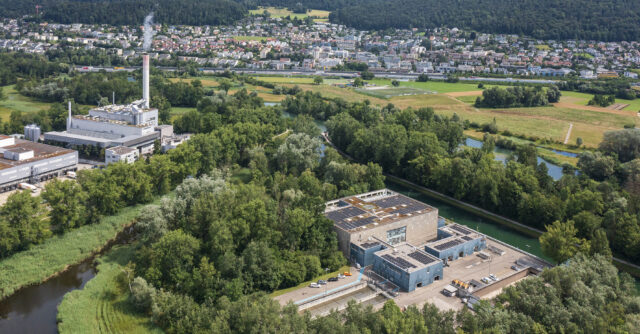
    The Limeco regional plant in the Limmat valley is facing a project of the century. A new waste recycling plant is to be built by 2034, followed by the reorganization of wastewater treatment by 2050. This will ensure that waste and wastewater from the Limmat Valley will continue to be processed in an environmentally friendly manner and used as a source of energy.

    The existing waste incineration plant will be replaced by a new building further to the west. A larger WWTP is to be built at the existing site to meet the needs of the growing Limmat Valley in the long term. The current WWTP will be decommissioned by 2050. It is located in a nationally protected nature and bird sanctuary.

    A project with vision
    The Limmattal Energy Center is a prime example of the transformation in the waste disposal and energy sector. From pure waste recycling, a multifunctional energy hub is being created that provides heat, electricity and gas – resource-conserving, locally anchored and climate-neutral.

    Design plan sets out framework
    A cantonal design plan forms the basis for planning law. It defines in a binding manner how the plants are to be phased, developed and embedded. Specifications on building plots, environmental and water protection, natural areas and public green spaces create planning security.

    An environmental impact assessment is being carried out in parallel. It examines the impact of the construction and operating phases on the environment, local residents and ecosystems. The aim is to create an energy center that combines climate and resource conservation. This includes electricity, district heating and gas production from renewable sources as well as concepts for the direct capture of CO₂ emissions.

    Participation and information
    The design plan will be open to the public for 60 days from January 20, 2026. Citizens, associations and authorities can comment on the draft during this time. The submissions will be examined by the cantonal authorities and documented in an objection report.

    On Wednesday, January 21, Limeco is hosting a public information event at which representatives of the canton and the company will present details of the project and answer questions. Information about the event can be found at www.lez.ch/gestaltungsplan.

    The complete documents are available at www.zh.ch/raumplanung and can also be viewed at the municipality of Dietikon and the Cantonal Office for Spatial Development.

  • Engineers’ Day 2026

    Engineers’ Day 2026

    Against the backdrop of climate change, digitalization and sustainable mobility, engineers are taking on a key role. They develop solutions for renewable energy systems, resilient infrastructures, smart mobility concepts, digital technologies, data-based applications and resource-conserving production.

    focus on the next generation
    Engineers’ Day aims to get young people interested in technology at an early age, from primary school children to university students. Companies and institutions offer guided tours, workshops, demo stations and dialog formats that bring professions to life and enable direct encounters with experts.

    the background to this is a persistent shortage of skilled workers, particularly in engineering and STEM professions, where women continue to be severely underrepresented. Companies, organizations and educational institutions are therefore invited to register their own events and activities for 4 March 2026 and thus actively contribute to the promotion of young talent.

    national Conference of Engineers
    The National Conference of Engineers will be held on the same day for the first time. Around 40 experts from business, science, politics and associations will come together at Lucerne University of Applied Sciences and Arts in Horw to discuss specific measures to strengthen the next generation of engineers.

    the aim of the conference is to join forces across industries and disciplines and find new ways to attract more young people in their diversity to engineering, STEM and tech professions. The conference thus complements the decentralized activities of Engineers’ Day with a strategic platform for exchange and joint initiatives.

    from Muttenz to Lucerne
    The handover from the previous venue of Muttenz to Lucerne in October 2025 marks a further step in the format’s development. With the first National Conference of Engineers at HSLU, Engineers’ Day 2026 will not only be an event for young talent, but also a meeting place for decision-makers in the engineering and education landscape.

  • Zurich strengthens energy transition with 60 million program

    Zurich strengthens energy transition with 60 million program

    Buildings are among the biggest energy consumers in the canton of Zurich. Around 40 percent of energy requirements and a third of CO₂ emissions are attributable to this area. However, a lot has changed in recent years. Technical innovations, the CO₂ levy and cantonal regulations are having an impact.

    With the energy subsidy programme, the canton is creating additional incentives to replace fossil fuel heating systems, insulate building shells or modernize heat distribution systems. Demand for subsidies remains high, fueled by the revised Energy Act of 2022.

    Financial framework until 2029
    The cantonal government is now requesting CHF 60 million from the cantonal council to continue the program. These funds are to be supplemented with shares from the CO₂ levy and from the national impulse program. Provided the federal benefits are not reduced, this will result in a total budget of up to CHF 286 million for the years 2026 to 2029.

    The focus is on measures in the building sector. Advice and information services will also be supported, particularly for owners who want to renovate their properties to make them more energy efficient or are looking for alternatives before the statutory ban on electric heating systems from 2030.

    Focus on innovation and biogas
    In addition to traditional building renovations, the canton will increasingly promote innovation in future. One million francs per year is available for pilot projects that test new technologies and processes for efficient energy use or storage. A further CHF 250,000 per year will go towards the promotion of biogas from agricultural facilities. A promising energy source for industrial high-temperature processes.

    In this way, the energy promotion program combines climate protection with regional value creation. It strengthens innovation and at the same time acts as a lever on the way to net zero in Zurich’s building stock.

  • Wolf-Areal Basel affordable apartments

    Wolf-Areal Basel affordable apartments

    SBB is pressing ahead with the transformation of the former Wolf freight station into an urban living and working quarter. As with the Volta Nord project, former railroad areas are being opened up for living, working and leisure.

    from 2028, around 270 apartments will be built on two building plots in the heart of the site, specifically positioned in the affordable segment.

    low-cost rent and contemporary forms of housing
    The Basler Wohngenossenschaft is planning around 150 cooperative apartments, while Vivanta is planning around 120 additional affordable units. All apartments will be built according to the cost-rent principle, which allows for moderate rents in the long term.

    the concepts are based on contemporary forms of living for different phases of life, from families to singles to older people. Communal areas and meeting zones are intended to strengthen neighborhood life and promote social networking.

    Non-profit partners with a clear mission
    BWG and Vivanta pursue an explicitly non-profit mission. To secure affordable living space while maintaining high quality and sustainability standards. The projects should demonstrate that ecological construction methods are compatible with affordable rents.

    building rights as a development instrument
    Building plots are allocated on the basis of a partnership-based building rights agreement developed jointly by SBB, the Federal Office for Housing and the Swiss Housing Association. This model creates reliable conditions for non-profit developers and accelerates the realization of affordable housing in city centers.

    with the development of the Wolf site, SBB is continuing to pursue its strategy of opening up areas that are no longer required for operational purposes for modern urban use and making a substantial contribution to affordable housing.

  • Real estate market in a state of tension

    Real estate market in a state of tension

    With the Swiss National Bank’s interest rate cut to 0% in summer 2025, financing conditions will return to historic lows. Buyers will benefit, as will institutional investors who are shifting capital into investment properties. As a result, prices are rising again, especially for apartment buildings.

    At the same time, the falling reference interest rate is leading to rent reductions for old contracts. However, demand clearly exceeds supply. This is pushing the rental housing market further towards scarcity.

    Ownership wins, preservation loses
    The abolition of the imputed rental value is changing the ownership landscape. Without the tax burden, interest in buying is increasing, especially in the middle income bracket. However, the abolition of the flat-rate maintenance deduction curbs investment in building maintenance. Some cantons are already examining alternative taxes to compensate for the loss of revenue. The reform decision therefore has a double effect. It stimulates the market, but harbors risks for the building fabric.

    Construction activity collapses
    Construction output fell sharply in 2025. In Zurich by around 35 %, in Ticino by as much as 80 %. This is due to political uncertainties, rising construction costs and complex approval procedures. This has a direct impact on rental prices, which continue to rise in many regions.

    The result is a structural shortage that will persist in 2026. Even a slight drop in immigration figures will do little to change this. SIV members in particular see the shortage as the main price driver of the year.

    Politics as a game changer
    Cantons and cities are experimenting with changes to building laws, from car-free districts to stricter regulations on the disclosure of pre-rentals. For project developers, this means more uncertainty, longer procedures and increasing risks.

    Investors are becoming more selective and the choice of location is gaining in importance. The market is becoming increasingly fragmented along local lines.

    Climate risks and new valuation standards
    FINMA Circular 2026/1 makes sustainability mandatory. Banks and insurers must explicitly include climate and natural hazards in their risk assessments.
    Exposed locations are becoming less attractive, while stable and climate-resilient properties are gaining. For institutional investors, this means rethinking valuation models and portfolios.

    Residential properties on the rise, commercial properties under pressure
    The SIV analysis shows a clearly divided market picture. The residential market remains robust despite the turnaround in interest rates. Demand is high, vacancy rates are continuing to fall and should soon drop below 1.2 %. Rent increases are realistic, particularly for new lettings. The pressure on the market remains.

    In contrast, the commercial sector is under increasing pressure. Numerous companies are selling office space, resulting in a slight increase in vacancy rates. Modern, ESG-compliant new buildings are holding their own, while older properties are becoming less attractive and price concessions are becoming necessary.
    The retail sector is also showing a mixed picture. Local supply remains stable, but fashion and electronics stores are struggling with declining footfall and falling profitability.
    In terms of mortgages, owners are benefiting from low interest rates. Overall, financing costs are falling significantly. At the same time, energy and maintenance costs are rising and thus remain a fixed cost driver.

    Despite political and economic uncertainties, the majority of SIV members expect rising prices and stable income in the residential segment and a further decline in construction activity.

    Differentiation as a key factor
    The market will remain robust but selective in 2026. Quality, location and climate fitness determine success. While residential is considered a safe asset class, commercial is becoming a challenge. Investors and owners are faced with the task of reading market environments more precisely and incorporating regulatory dynamics at an early stage.

  • Basel becomes the building site of the future

    Basel becomes the building site of the future

    When the doors to Swissbau 2026 open tomorrow, Messe Basel will be transformed into a vibrant center of the construction and real estate industry. 592 exhibitors and partners will showcase products, systems and ideas for sustainable building and modern living.

    Hans Wicki, member of the Council of States and President of the umbrella organization Bauenschweiz, opens the trade fair with the Globus Basel lighthouse project as an example of sustainable renovation. Accompanied by representatives from politics and business, the industry demonstrates how professional expertise, climate targets and building practice can be combined.

    Experience craftsmanship live
    In Hall 1.0, the focus is on a real construction project. A two-storey house is being built in front of visitors’ eyes. Over 15 craft businesses will be demonstrating their skills, from woodworkers to solar installers, from tile layers to plasterers. The project makes tangible what building culture means in everyday life.

    Right next door, a cooperation with the Swiss Painting and Plastering Contractors’ Association SMGV brings color into play. Decorative plaster textures, live training sessions by two Swiss master craftswomen and the “Swiss Prize for Plaster and Paint” exhibition – a marketplace full of ideas and dynamism.

    Sharing knowledge, shaping change
    The Swissbau Focus and Swissbau Lab platforms create space for dialog. Here, experts discuss the circular economy, climate adaptation and digital change in the construction process. High-caliber speakers and practical examples provide food for thought and show how the future can be implemented in concrete terms.

    Whether in specialist forums or in direct discussions, knowledge transfer remains at the heart of the trade fair. All events are included in the admission price. A clear plus for trade visitors.

    Rooms for inspiration
    Design lovers and interior professionals will find new inspiration in the Trend World Interior Design (Hall 1.2). Bathroom innovations, surfaces, light and materials combine to create an atmospheric world of experience. Like Swissbau Focus, the hall will also remain open on Saturday, providing space for encounters outside the working week.

    Looking to the future
    Swissbau 2026 is more than just a trade fair. It is a showcase for progress, a laboratory for solutions and a place where the industry and society work together on the construction of tomorrow.

  • Canton of Jura updates list of industrial sites suitable for redevelopment

    Canton of Jura updates list of industrial sites suitable for redevelopment

    The canton of Jura is committed to revitalising its industrial wastelands. As part of theSwissRenovproject, it has now updated the cantonal register of industrial wastelands suitable for redevelopment, according to a press release. This first step is intended to provide up-to-date and reliable information to companies and investors who are looking for commercial space or are interested in the redevelopment and modernisation of industrial facilities.

    In the first phase of the project in 2019, around 90 industrial brownfield sites were identified, of which around half have been redeveloped to date. Now, 30 more brownfield sites are being added. The updated map, which can be viewed online, currently lists 70 industrial sites. 60 per cent of these are located in the district of Porrentruy, 36 per cent in the district of Delèmont and the rest in the districts of Franches-Montagnes and Moutier. In the current phase, the SwissRenov project in Jura is scheduled for completion by 2028.

    The SwissRenov project is being led by Haute École Arc in collaboration with the cantonal spatial planning departmentand is being driven forward byCreapole SAin Delèmont. It is supported by the Swiss Confederation through theInnosuisse flagship programme and byCleantechAlps, the cleantech promoter for French-speaking Switzerland.

    According to the press release, this project, which is unique in Switzerland, aims to promote the renovation and refurbishment of industrial buildings in line with the principles of the circular economy.

  • Watt d’Or last edition of an energy prize

    Watt d’Or last edition of an energy prize

    The Swiss Federal Office of Energy awarded the Watt d’Or for the nineteenth and final time on January 8, 2026. The prize has been awarded since 2007 as a non-endowed seal of quality for energy excellence. The aim was to make exceptional achievements in the energy sector visible and to attract business, politics and the public to innovative energy technologies. 55 applications were received for the 2026 edition, 17 projects made it to the final round, from which the jury, chaired by National Councillor Susanne Vincenz-Stauffacher, selected the four winning projects.

    Gaznat Innovation Lab “GreenGas
    Gaznat’s Innovation Lab in Aigle, where the gas supply company is working with EPFL and start-ups to test technologies for sector coupling, decarbonization and seasonal storage on an industrial scale, won in the energy technologies category. The GreenGas concept combines CHP, photovoltaics, power-to-gas (electrolysis), hydrogen storage, CO₂ capture, methanation and Gaznat’s real gas network at the Aigle site, thus building a bridge from research to industrial application.

    Endigo with alpine façade PV
    Endigo Holding AG from Fiesch, which has installed an alpine façade solar system at its new company headquarters in Goms, received an award in the renewable energy category. The lightweight timber construction with slatted façade combines architectural quality with a PV solution that utilizes the existing alpine light and reflection potential and stands for endigo’s regionally anchored, nature-loving and future-oriented energy focus.

    Electric tractor from Rigitrac
    Rigitrac Traktorenbau AG from Küssnacht am Rigi received the award for energy-efficient mobility for the SKE 40 e-direct electric tractor, the first production-ready electric tractor with European type approval. The vehicle is emission-free, quiet, maneuverable and particularly energy-efficient, making it suitable for applications where exhaust fumes and noise are undesirable. For example, in municipal maintenance, in vegetable tunnels or at indoor sports events.

    Buildings and space
    The Hobelwerk site in Oberwinterthur, which was developed by the building cooperative “mehr als wohnen”, Lemon Consult AG and the Low-Tech Lab together with other partners, received an award in the buildings and space category. The district impresses with its timber construction, the use of recycled materials, intelligent energy systems, an innovative ventilation concept, climate-oriented architecture and social diversity and is regarded as a model for forward-looking, non-profit housing construction in Switzerland.

  • Experimental field of cooperative city life

    Experimental field of cooperative city life

    As an innovation and learning platform, “mehr als wohnen” sees the Hobelwerk not only as a housing estate, but also as a real-life laboratory for new forms of housing, participation models and cooperative governance. For experts in planning, housing construction and urban development, the neighborhood offers illustrative material for central questions of future urban development. For example, the focus is on how much community everyday life can actually tolerate and how mixed uses can be organized in such a way that they function robustly in the long term. It also shows how a district can be designed to be socially open, ecologically ambitious and yet economically viable.

    The Hobelwerk is located on the former site of the Kälin & Co. carpentry factory right next to Oberwinterthur railroad station and thus in a well-developed, formerly commercial location. The client is the building cooperative mehr als wohnen, which has realized its second major project after the Hunziker Areal and developed the site in two stages between 2018 and 2023.

    five new buildings and several converted existing buildings have been built on an area of around 16,000 m², with a total of around 158 apartments plus commercial and communal areas. The development is considered a model for socially, ecologically and economically sustainable urban development and has won several architectural and energy awards.

    urban design, architecture and mix of uses
    The various structures, including long blocks along the tracks, a courtyard house, a rectangular building and a small residential tower, create a small-scale quarter with courtyards, alleyways, play areas and gardens. Several offices, including pool Architekten, Ramser Schmid, Pascal Flammer, Baubüro in situ and Studio Vulkan, ensure diversity in the details while maintaining a clear overall figure.

    the mix of uses ranges from classic 1.5- to 6.5-room apartments, cluster apartments and micro co-living to residential studios for cultural workers and commercial space of various sizes, some of which is affordable. The first floor includes a daycare center, bakery, co-working space, studios, laundromats, common rooms and communal areas that function as an extended “living room” for the development.

    living concepts and everyday organization
    The cooperative combines established and experimental forms of living such as micro-co-living for one to two people with shared kitchens and common areas, spacious cluster apartments for shared apartments, classic family apartments and inclusive housing projects, for example with partner organizations such as jawohn. The residential offering is complemented by guest rooms, guest apartments and rooms that can be flexibly rented.

    the commons play a central role with arcades, roof terraces, common rooms and the covered Hobelwerkplatz square, which facilitate informal encounters and shared use. Residents actively shape the neighborhood in neighborhood groups and participation formats, a core component of the “more than housing” DNA.

    existing buildings, open space and identity
    The old planing mill hall and the Z-Hall were preserved, gently converted and now form the center with a covered square for markets, festivals, cultural and neighborhood events. In this way, the industrial past remains present as a spatial and narrative layer and gives the area a clear identity.

    the open space design with vegetable gardens, gravel paths, play areas and the greening of courtyards and façades aims to ensure a high quality of stay, heat reduction and biodiversity. Low-car access and a mobility station with bikes and trailers make everyday life without a car easier.

    sustainability, governance and learning character
    The project focuses on energy-efficient construction, robust, durable materials and the targeted reuse of components, combined with low per capita consumption of resources and space. The Hobelwerk received several awards for this, including as one of the best new construction projects in Switzerland and for its energy-efficient, resource-conserving design.

  • Cantons stop fire protection liberalization

    Cantons stop fire protection liberalization

    The current VKF fire protection regulations from 2015 form the binding framework for structural and technical fire protection throughout Switzerland. They are implemented by the cantons and municipalities. A complete revision was planned for 2026/2027. On behalf of the cantons, the VKF prepared a draft of around 500 pages, which had been undergoing technical consultation since September 2025 under the project title “BSV 2026”.

    The aim was to create a more modern set of regulations with a stronger focus on proportionality, deregulation and cost-benefit optimization. The approach was clear protection targets, simplified verification procedures and more individual responsibility throughout the entire life cycle of a building.

    Planned relaxations in focus
    Critical discussions focused primarily on selective relaxations. The draft provided for longer permitted escape route lengths and simplified requirements for combustible components in certain usage scenarios. In addition, mandatory inspections were to be partially reduced in favor of more self-declaration and personal responsibility on the part of owners.

    how much reduction in standards can a system whose core mission is to protect human life tolerate? Critics warn that supposed efficiency gains could come at a high price in the event of an emergency.

    Halt after fire disaster
    The fire disaster in Valais on New Year’s Eve suddenly changed the discussion. The Intercantonal Body for Technical Barriers to Trade, as the political client of the project, called a halt to the liberalization efforts at the beginning of January 2026.

    although the technical consultation will be formally concluded by January 11, the content of the entire reform project will be reassessed. Reliable findings from the ongoing investigations into the fire are to be discussed both technically and politically and explicitly integrated into further work.

    Criticism of “more market, less state
    Even before the fire, experts and the media expressed skepticism about the direction of the revision. The thrust of “deregulation, more personal responsibility, fewer controls” was interpreted as a risk of weakening security in favor of cost savings, flexibility and project acceleration.

    The situation is particularly delicate in cantons without cantonal building insurance, such as Valais, where the prevention and control structures are less dense. There is growing concern that longer escape routes, more flammable components and reduced supervision could result in higher risks of major damage and casualties.

    What’s next for BSV 2026?
    The consultation on the technical draft is being evaluated, while the IOTH and VKF are simultaneously drawing up a new timetable for the “BSV 2026” project. Officially, everything is open, from targeted clarifications and greater standardization to more stringent individual requirements.

    At the same time, another debate is gaining momentum. Many stakeholders are calling for more uniform inspections and minimum standards throughout Switzerland, as the current implementation of fire safety inspections varies greatly between cantons. The marching halt is therefore not the end of the reform, but a turning point. Away from pure deregulation and towards a fire protection policy that makes the lessons learned from Crans-Montana visible and binding.

  • Expansion of strategic management with Daniel Kuster

    Expansion of strategic management with Daniel Kuster

    With the planned election of Daniel Kuster, Property One is specifically strengthening the strategic management and long-term orientation of the Group. Together with the entire Board of Directors, Kuster will shape the further development of the Group and closely support the implementation of key strategic initiatives.

    The collaboration goes beyond a traditional Board of Directors mandate. In direct exchange with the Executive Board and the organization, he will contribute to the conceptual sharpening, organizational development and implementation of the growth agenda. The election is subject to the approval of FINMA.

    Experience along the real estate value chain
    Daniel Kuster brings with him over twenty years of management experience in executive positions, boards of directors and investment committees, including many years as CEO of Fundamenta Group (Schweiz) AG and as managing director of a real estate investment foundation. His career thus encompasses both operational management and institutional capital market experience in the real estate sector.

    Today, he acts as an independent board member, foundation board member and strategic sparring partner and advises companies on governance issues, strategy development and the structuring of business models. This combination of market knowledge, governance expertise and investor perspective fits in well with Property One’s growth-oriented positioning.

    Added value for further development
    The Group not only wants to further expand its platforms, products and projects, but also take them to the next level of development in terms of strategy and organization. Kuster’s experience in corporate management, governance and structuring business models should help to balance growth, professionalism and a values-based corporate culture.

    The close involvement in the Board of Directors and operational discussions creates the basis for translating strategic ambitions into robust structures, clear decision-making processes and scalable business models. This strengthens the company’s position as an entrepreneurial, long-term thinking real estate and investment group.

  • Sunrise streamlines structures

    Sunrise streamlines structures

    The planned reduction is part of an “organizational development” with which Sunrise intends to reduce hierarchical levels, shorten decision-making paths and make processes more efficient through the use of new technologies. Numerous management functions in particular would be affected. Store employees with direct customer contact and trainees are to be largely spared.

    in the event of unavoidable redundancies, a social plan will come into effect that takes into account age and years of service, provides for a new placement program and includes a fund for individual bridging and qualification measures. Employees aged 58 and over receive fixed-term contracts until 62, and from 62 Sunrise supports early retirement. Younger employees are to be reintegrated into the labor market as quickly as possible.

    repeated cuts hit staff hard
    The news comes as another shock for employees. Sunrise already cut 166 jobs in 2024 as part of the integration of UPC following a consultation process.

    in the ongoing consultation process, the Syndicom trade union is calling for alternatives to be seriously examined and for the company to refrain from further job cuts. The decision on the actual redundancies is expected once the process has been completed. They are likely to be announced in February and March 2026.

    price war forces efficiency
    The Swiss telecoms market is highly competitive and numerous new providers have entered the market since liberalization, while there has been no market consolidation. At the same time, customers are becoming increasingly price-sensitive, discount campaigns and promotions are squeezing margins and forcing consistent cost discipline.

    in this environment, providers are trying to distinguish themselves with low tariffs, package offers and service quality, while at the same time investing heavily in networks, fiber optics and 5G. Structural programs such as Sunrise’s are therefore not just business manoeuvres, but an expression of a market in which efficiency is becoming a question of survival.

  • Apartments are shrinking again

    Apartments are shrinking again

    Households are getting smaller, while apartments remain large. The average household size has fallen to around two people since the 1960s, and the proportion of single-person households is now around 41%, in some cases half of all households in large cities. At the same time, the large multi-room apartment dominates the housing stock, a structural mismatch that puts new construction under pressure.

    added to this are price and location pressures as well as sharp rises in land, construction and energy costs. This makes large apartments unaffordable for many, while investors achieve higher returns per square meter with smaller units. Urban planning models are focusing on redensification instead of single-family homes, and the proportion of new-build apartments in apartment buildings has risen.

    technical consequences for planning and construction
    Smaller apartments do not mean less planning, but more complexity in a smaller space. Higher building densities, larger spans and finer load transfer place demands on structural planning. The building services must supply more residential units per building, with higher requirements for sound insulation, ventilation, cable routing and meter logistics.

    in terms of fire protection, escape routes, fire compartments and rescue concepts are becoming more demanding as densification and mixed use increase. At the same time, there is growing pressure for flexible floor plans that can be divided, combined or repurposed, from single apartments to family homes and back again.

    conversion instead of tabula rasa
    New construction alone cannot remedy the structural imbalance between household and apartment sizes. Most of the existing housing stock dates back to the days of other housing and family models. Demolition and replacement would be neither economically nor ecologically justifiable.

    the focus is therefore shifting to the existing housing stock. Dividing up large apartments, building additions in the courtyard, adding storeys or converting office space become the central engineering task. In technical terms, this means interventions in statics and fire protection, retrofitting building services during ongoing operations and precision work on the occupied building.

    space as an underestimated lever
    The most important message from the evaluations is that heating, insulation and systems engineering are decisive for energy requirements. The heated living space per capita is decisive. Living on fewer square meters automatically reduces the heating load, the use of materials and the operating energy required

    Smaller and more energy-efficient homes therefore become a double key. They are better suited to smaller households and noticeably reduce the energy consumption of the building sector. Downsizing has a more immediate effect than many individual technical measures, provided that floor plans remain liveable, adaptable and socially mixed.

  • Zurich strengthens energy future with solar and storage obligation

    Zurich strengthens energy future with solar and storage obligation

    The largest unused power plant is located on Zurich’s roofs. Around 6 terawatt hours of solar power could be generated annually, almost two thirds of the canton’s electricity requirements. The cantonal government wants to exploit this potential. In future, all suitable roofs over 300 square meters are to be fully covered with solar systems. New buildings are subject to the obligation from the time of construction, existing buildings when the roof is replaced.

    In this way, Zurich is focusing on proven structures. Solar energy is generated locally, can be implemented quickly and hardly encounters any resistance. It strengthens self-sufficiency, especially if surplus summer electricity can be stored.

    Storage as a bridge to winter
    The way to a secure winter supply is through storage. Three quarters of solar power is generated in the summer months. A surplus that should be available for long-term use in the future. The Government Council wants to oblige grid operators to promote long-term storage in a technology-neutral way.

    A moderate levy of no more than 0.5 centimes per kilowatt hour will feed the subsidy fund, which will be administered by the EKZ. For households and businesses, this means around two percent higher electricity costs. Hardship regulations protect electricity-intensive companies.

    Law with a sense of proportion
    Where systems are uneconomical, financial hardship exists or there is no grid connection, exceptions remain possible and the obligation does not apply. Protective interests for the landscape and townscape are also weighed up.

    Zurich is thus sending out a pragmatic signal. Instead of hoping for large-scale projects in the Alps or wind farms, the potential is being used locally. The combination of nationwide solar production and a storage strategy forms the backbone of a secure, renewable energy future in the canton.

  • Renovation combines functionality, comfort and alpine location

    Renovation combines functionality, comfort and alpine location

    Heller Gastro AG will open its newly renovated and converted Eiger Lodge Grindelwald on 19 December 2025. The work centred on the renovation of the Eiger Lodge “Easy”, the older of the two buildings that form part of the Eiger Lodge. It was modernised between April and December. According to a press release, the investment volume totalled 4.5 million Swiss francs. The two hotel sections “Easy” and “Chic”, located directly beneath the north face of the Eiger, offer a total of 220 beds.

    according to the statement, 70 per cent of the order volume was carried out with local companies, while the remaining 30 per cent was carried out with companies from Bern and the Bernese Oberland. The new breakfast area now offers more space and large window fronts with mountain views. New kitchen facilities are intended to simplify processes behind the scenes. The reception and entrance area has also been completely refurbished. A sauna has been installed on the upper floor. An adjoining terrace is still under construction. The communal showers, which are part of the “Easy” multi-bed, double and family rooms, have also been completely renovated.

    The hotel has been the base for numerous mountain enthusiasts since the 1990s under the name Mountain Hostel. in 2015, it was taken over by Heller Gastro and renamed the Eiger Lodge. The company also operates the Eiger Mountain & Soul Resort Grindelwald on site.

  • Merger strengthens care and living in old age

    Merger strengthens care and living in old age

    The Dübendorf-based Tertianum Group has acquired the Senevita Group, which previously belonged to the French care group Emeis from Puteaux. According to a press release, the transaction has already been approved by the Competition Commission(COMCO). The parties have agreed not to disclose the takeover price.

    The merger of the two care groups is intended to improve the entire area of nursing and residential care for the elderly in German-speaking Switzerland. Both companies combine high quality standards, regional roots and a clear commitment to social responsibility in the care sector, according to the press release.

    “I would like to warmly welcome the employees of the Senevita Group to our joint company. They complement the Tertianum Group perfectly – with their expertise, commitment and professionalism. We are proud to be working with them under one roof in the future to become even better together,” Luca Stäger, CEO of Tertianum Group, is quoted as saying in the press release. “The merger also complements our geographical presence, enables numerous synergies in operational excellence through mutual learning and creates new perspectives for all employees.”

    The now joint company will provide needs-based care for 10,000 guests. The Tertianum Group now has a total of 6,400 care beds and 4,300 age-appropriate apartments at 140 locations throughout Switzerland. In order to secure the next generation of nursing staff, 800 apprentices are being trained.

  • New sales concept focuses on experience and encounters

    New sales concept focuses on experience and encounters

    Rohner is redesigning its sales area in Balgach. According to a statement from CEO Hermann Lion, the site will be expanded to include a new sales area and is set to open in September 2026. The aim is “a space that connects brands and people. A space that inspires, surprises and shows that modern retail is far more than just sales.”

    The traditional company, founded in 1873, is thus responding to its perception that “people are once again shopping more consciously and looking for real contact – after years in which much has become digital,” says Lion on request. “Brick-and-mortar retail has a future if it offers more than just a transaction.” This is why the textile company is “investing specifically in a concept that combines experience, quality and encounters. It is a statement for the strength of physical retail – and for our region”.

    The new sales area is being designed by Zurich-based Susanne Fritz Architekten: “Clear lines. Natural materials. Light that tells stories,” says Lion. Susanne Fritz has already renovated and extended the entire building complex in Balgach and put it to a new use. The entire brand identity of Rohner AG was modernized and also architecturally redesigned, including the existing store space. “Despite a lower density of racks, it was possible to increase sales per square meter,” according to a presentation of the work.

    According to Lion, something is now being created in the new sales area “that we have never seen before in our region”. Various brands are to be visible together at this location. Shop-in-shop concepts for other textile brands are planned, as well as for accessories, lifestyle products, outdoor and design brands. “It is important to us that the partners can tell a story and fit into the overall experience, whether they are local manufacturers or international brands with a clear attitude.”

  • Realignment of a former weapons range takes shape

    Realignment of a former weapons range takes shape

    With the signing of a letter of intent to cede the Moudon military base, the canton of Vaud can start its planning process for the future use of the site. As the Confederation confirmed in a press release, the army will vacate the site from the end of 2027 to make way for the Vaud Police Academy. The canton, armasuisse Real Estate as the real estate competence center of the Federal Department of Defence, Civil Protection and Sport(DDPS) and the State Secretariat for Migration(SEM) are involved in the declaration of intent. The basis for this step is the decision taken by the Vaud State Council in May 2022 to relocate the police academy from its current location in Savatan to Moudon.

    According to the press release, the area and infrastructure of the Moudon weapons range offers great potential for establishing an interdisciplinary training center. The canton is already examining whether the site could be used not only by the police academy, but also by other partners from the security sector. In particular, so-called blue light services, services in the area of environmental protection or in the area of the penal system are under discussion. A project planning loan should enable all options to be explored.

    It is already clear today that the area will be gradually redesigned after the withdrawal of the army. The 41 Hospital School Command stationed in Moudon will move to the Chamblon military base in stages from the second half of 2027. The emergency capacities of the SEM in Moudon will remain in place. This means that accommodation can be provided in the multi-purpose hall there in the event of an increase in asylum seekers. “If the project progresses according to plan, the first training courses could begin between 2030 and 2032,” says the federal government.

  • New logistics hall increases efficiency in the national distribution network

    New logistics hall increases efficiency in the national distribution network

    Senn AG from Oftringen, which specializes in extensions, new buildings and special constructions, is building a new steel warehouse for the Migros distribution company(MVB) in Suhr. According to a press release, the new building covers an area of 7500 square meters, is more than 100 meters long and 15.5 meters high. At the heart of the modernization is a fully automated storage system, which will increase capacity and make logistics more efficient.

    A total of 1100 different components were required, which was logistically demanding and a challenge for assembly due to limited space for temporary storage. According to Senn AG, most of the assembly work was carried out using the company’s own mobile crane and two construction site cranes.

    According to the press release, the supporting structure is made of white-coated steel. a total of 530 tons of steel were used. According to the company, Senn AG processes 7,000 tons of steel and aluminium annually at its headquarters and is active in steel and metal construction, sheet metal and stainless steel centers, emergency power systems, mobile crane operations and other transport solutions.

    Construction work has been underway since the end of June. Around three quarters of the hall has been assembled and the final parts of the hall are currently being coated in the workshop and prepared for transportation. The project should be completed before the end of December.

    The realization of the warehouse is important for Migros’ supply network. As MVB writes, the retail group operates one of two national distribution centers in Suhr. The first was built more than 50 years ago in Neuendorf SO, and another site was built in Suhr more than 25 years ago.

  • Where the construction and real estate world is building its future

    Where the construction and real estate world is building its future

    Swissbau 2026 is more than just a trade fair. It is a seismograph of an industry in upheaval. Climate change, the energy crisis, scarcity of resources and a shortage of skilled workers are coming up against the rapidly advancing digitalization of the construction and real estate industry.

    the focus is on questions that will determine the future viability of a company today. How can we plan and build in a circular way? How can buildings become more energy-efficient and resilient? And how can digital tools be used to make processes simpler, more transparent and more collaborative? From design to operation.

    At the same time, there is growing pressure to visibly implement sustainable answers in projects, processes and products. Swissbau brings these topics together in a shared experience space where strategies, solutions and practical examples come together.

    focal points and highlights
    The trade fair sets clear focal points in terms of content. These include climate and energy, circular economy and materials, digitalization and collaboration as well as architecture and quality of life in the built environment. These topics will be presented in a practical and condensed manner in stage formats, guided tours and live demonstrations.

    highlights include premieres of new systems, materials and technologies that bring resource-saving construction and energy-optimized buildings to life. Live demos will show how digital planning, model-based collaboration and robotic production are changing the construction site and what opportunities this presents for efficiency, quality and occupational safety.

    how digital is Swissbau?
    Digitalization is no longer a stand-alone area, but runs as a common thread through the entire Swissbau. The focus is on end-to-end processes, from digital planning and BIM-supported collaboration to data rooms that connect planning, construction and operation.

    Platforms, tools and applications that make building data usable and thus contribute to more efficient project management, better decision-making and smarter operation will be presented at the trade fair. The physical trade fair will be complemented by an expanded digital presence that offers a program overview, streams of selected formats and extended dialogue opportunities before and after the trade fair days.

    The result is a hybrid knowledge and networking platform that goes far beyond the classic trade fair visit and enables companies to make their digitalization journey visible and think ahead.

    swissbau Focus Stage for dialog
    Swissbau Focus forms the heart of the trade fair in terms of content. In curated talks, panels and specialist events, associations, companies, universities and authorities discuss key issues relating to the future of the construction and real estate industry.

    The focus here is on framework conditions, strategies and specific responsibilities. How is the regulatory framework developing? What incentives are needed for climate-friendly and circular construction? What role do the public sector, real estate sector and industry play in the interplay?

    The character of the event is deliberately dialog-oriented. The focus is on exchange rather than frontal presentations, on controversial perspectives rather than one-sided product messages. This makes Swissbau Focus a place for managers and experts to sharpen their positions, form alliances and gain impetus for their own strategy

    Swissbau Lab and live craftsmanship
    While Swissbau Focus focuses on discourse, Swissbau Lab brings innovations to life. In a mixture of workshop, stage and laboratory, start-ups, established industry partners and educational institutions present new solutions. From digital tools and circular materials to pioneering construction processes.

    Formats such as the Main Stage, the Speakers Corner and thematic sessions focus on short, condensed inputs, best practices and direct exchange with the participants. This creates a field for experimentation in which new ideas can be tested, discussed and further developed. Close to practice, open to criticism and cooperation.

    At the same time, Treffpunkt Handwerk shows how much the building trade itself is changing. A two-storey timber house will be built live and companies will demonstrate work processes, tools and materials in operation. Digitalization, prefabrication and precision will be directly visible here, from smart tools to networked construction sites.

    Training, networking and safety
    A central concern of Swissbau 2026 is securing the next generation of skilled workers. Professional and industry associations, schools and training providers use the platform to showcase training paths, specializations and career opportunities. As well as to strengthen the dialog between young talent, companies and educational institutions.

    Networking runs through the entire trade fair. Lounge areas, themed meeting points and curated events offer space to initiate projects, deepen partnerships and forge new coalitions around the topics of climate, energy, digitalization and security.

    The topic of safety is broadly understood. From occupational safety on the construction site to building safety and resilience through to stable, trustworthy digital infrastructures. Swissbau 2026 shows that if you want to shape the future of construction, you not only need good products, but above all strong networks, shared knowledge and the courage to break new ground

    Trade fair dates and address
    Tuesday to Friday, January 20 to 23, 2026:
    9 a.m. to 6 p.m.
    All halls

    Saturday, January 24, 2026:
    9 a.m. to 4 p.m.
    Hall 1.2 and Hall 1.0 South
    Trend World Interior Design and Swissbau Focus
    www.swissbau.ch

  • St.Gallen prevents planning standstill in municipalities

    St.Gallen prevents planning standstill in municipalities

    In many St.Gallen municipalities, comprehensive revisions of structure and framework land use planning are currently underway, while in some cases the 1972 Building Act is still in force. As a result, no new planning principles could be implemented for years between the publication and approval of new land use plans, and important projects remained blocked. The IV. Amendment to the Planning and Building Act closes this gap and implements the motion to avoid a planning standstill. The aim is to ensure the municipalities’ ability to develop and at the same time create legal clarity.

    Two approaches for greater planning certainty
    The government is pursuing two approaches to achieve this. On the one hand, special land use plans that are still materially based on the old law can continue to be approved until the new framework land use plan has been approved by the Office for Spatial Development and Geoinformation. If such a plan is compatible with the future regulations, it can be converted into a PBG-compliant special use plan without having to restart the procedure. On the other hand, under the new law, special land-use plans may be published and approved as soon as the revised framework land-use plan has been published. Depending on their compatibility with the old law, they enter into force either immediately or only when the new plan comes into force.

    Extended deadline for local planning revisions
    In addition, the government is proposing to extend the deadline for adapting the municipal framework land use plan to the new Planning and Building Act from 2027 to 2030 across the board. Experience to date has shown that many municipalities are unable to complete their extensive planning work within ten years. The deadline can also be extended further on an individual basis upon justified request. The new provisions combine legal certainty with flexibility and thus form an important basis for orderly settlement development, reliable investment decisions and the implementation of the canton’s spatial planning objectives.

  • Federal government supports 33 model projects for tomorrow’s spatial planning

    Federal government supports 33 model projects for tomorrow’s spatial planning

    The model projects are seen as a field of experimentation for municipalities, regions and private organizations that want to tackle current challenges with new methods. These include an ageing population, housing shortages, a lack of space for sport and exercise, the decline in biodiversity and gaps in basic services in rural areas. What is needed are bold, directly implementable projects whose experiences can serve as a model for other regions. This funding instrument has been in existence for 25 years and is now supported by nine federal agencies from four departments under the leadership of the Federal Office for Spatial Development ARE.

    33 projects, six thematic priorities
    33 projects were selected for the 2025-2030 program generation and allocated a total of CHF 4.274 million. In addition to financial support, the projects will receive technical support and assistance with knowledge transfer, especially if solutions prove successful. The projects are divided into six thematic priorities.

    • Strengthening central functions in rural and mountain regions
    • Improving the quality of life through biodiversity and attractive landscapes
    • sport and exercise-friendly settlement planning
    • more sustainable regional food systems
    • sustainable housing through conversion and transformation of existing buildings
    • Co-creation of local services

    Broad federal sponsorship
    In addition to the ARE, the Federal Roads Office, the Federal Office for the Environment, the Federal Office of Public Health, the Federal Office of Culture, the Federal Office of Sport, the Federal Office for Agriculture, the Federal Office for Housing and the State Secretariat for Economic Affairs are involved. These federal agencies contribute their expertise and ensure that successful model projects also have an impact on other regions and programs. Some earlier projects have already been recognized with prestigious awards such as the Wakker Prize. The new projects will start at the beginning of 2026 and are intended to show how sustainable spatial development can be shaped on the ground.

  • Polysportive lighthouse project takes shape

    Polysportive lighthouse project takes shape

    After many years of planning, construction has now begun. A large polysport complex is being built on the Dürrbach site for around CHF 65 million, realized by HRS Real Estate AG as total contractor. The new building is set to open in fall 2026 and will mark a new sporting focal point in the Glattal.

    Over 30 sports under one roof
    The project is being supported by Zurich Tennis and the Zurich Gymnastics Association, which together unite almost 100,000 sports enthusiasts in the region. The plans include modern halls for tennis and gymnastics, specialized training areas and space for numerous other indoor sports. The offer will be complemented by sports infrastructure, overnight accommodation and facilities for sports medicine and regeneration. The sports center is designed for year-round operation of popular and elite sports.

    Campus for sport and training
    The new sports center will also be home to the Zürcher Oberland Art and Sports School. This will create a campus that combines training, school and talent development in terms of space and content. Young athletes will find ideal conditions on site to combine sporting ambitions and training.

    Beny Ruhstaller strengthens strategic management
    Beny Ruhstaller recently joined the Board of Directors of Sportzentrum Dürrbach AG. He is not joining primarily as a construction specialist, but as an expert in the world of gymnastics. Thanks to his previous activities for the Zurich and Swiss Gymnastics Associations, he brings many years of association experience, a broad network in gymnastics and tennis and a keen sense of the needs of athletes. This strengthens his ambition to develop the Zurich Sports Center into a forward-looking platform for sport, training and exercise in the region.

  • Location policy in transition

    Location policy in transition

    Basel-Stadt has responded to international developments in the area of tax and location promotion with a revision of the Location Promotion Act, which was clearly approved by the Grand Council and the electorate in 2025. At the heart of Basel’s location package are two funds into which the cantonal government can pay between CHF 150 and 500 million annually, depending on the canton’s financial situation. 80 percent of the funds will flow into the promotion of innovation and 20 percent into the areas of society and the environment. A maximum of 300 million Swiss francs will already be allocated in the current year.

    Social added value through parental leave
    One component is support for voluntary parental leave that goes beyond the legal requirements. Companies that voluntarily grant their employees parental leave that goes beyond the statutory provisions can be reimbursed for up to three weeks of additional salary costs for mothers and fathers. This regulation strengthens the compatibility of work and family life and promotes a modern, inclusive work culture. A factor that is becoming increasingly important in the international competition between locations.

    Energy transition as a locational advantage
    The environmental section of the programme supports companies in Basel City that make targeted investments in decarbonization and energy efficiency in the canton and in Switzerland. Contributions are granted based on CO² savings achieved or energy saved. The canton can cover up to 40 percent of the investment costs of implemented measures. The reduction of the emission intensity of direct greenhouse gas emissions worldwide is also eligible for funding. The Basel location package complements and reinforces the other measures of the cantonal climate protection strategy with the goal of net zero by 2037. Basel-Stadt is thus setting standards throughout Switzerland for a practice-oriented climate policy that combines responsibility with economic rationality.

    Innovative strength from Basel for Switzerland
    The most important part of the Basel location package is the area of innovation. Here, the Canton of Basel-Stadt contributes to the personnel expenses of Basel-based companies for research and development. Depending on their size, companies benefit from graduated subsidy rates of up to 28% and additional contributions for depreciation on equipment for research and development and high-tech production. The canton also supports companies’ expenditure on clinical trials in Switzerland. This strengthens the canton’s profile as a leading innovation location and life sciences hub in Europe.

    A new balance between business and society
    The Basel location package is more than just a funding program. It is a strategic course-setting exercise to harmonize competitiveness, sustainability and social responsibility. The close involvement of business and politics has created a model that radiates beyond Basel – as an example of modern, future-oriented location promotion.

  • Renewable heating with district heating

    Renewable heating with district heating

    District heating is an important part of Basel’s climate strategy. Over 6,500 households and businesses are now supplied with environmentally friendly heat via 130 kilometers of district heating pipes. This is largely generated by using waste heat from the waste incineration plant and wood-fired power stations, which significantly reduces CO² emissions. By 2037, the network will grow to 180 kilometers and supply a large part of the city. The cycle works efficiently by heating hot water centrally, transporting it to customers, collecting it there and feeding it back into the plants.

    Innovative production
    A master plan forms the basis for ensuring that only renewable sources and waste heat are used to generate heat from 2035 onwards. IWB is relying on a large heat pump, which will use and label waste heat from wastewater treatment, to meet the increase in heat sales resulting from customer growth.

    Decarbonization and coordinated expansion
    The political mandate is clear. The canton of Basel-Stadt must become climate-neutral by 2037. IWB is investing over 450 million Swiss francs in the expansion of the district heating network and the associated infrastructure. At the same time, the gas network will be decommissioned in stages. For gas-heated properties, the transition will be planned early and transparently. The owners are informed at least three to four years before the shutdown and can apply for subsidies to replace the heating system. An interim solution can also be used to bridge the gap until district heating is connected.

    Planning the network expansion is a logistical and organizational feat. The expansion of district heating is coordinated with road renovations, greening, the renewal of electricity and water pipes and traffic planning measures. In densely populated districts, optimized construction times and efficient work processes are crucial. From planning to implementation, the Department of Construction and Transport, IWB and Basler Verkehrs-Betriebe work in partnership and in close coordination.

    Attractive connection solutions for owners
    Whether individual, multiple or shared connections, district heating can be obtained according to customer requirements. Cooperative connection models are becoming increasingly important, particularly in Basel’s city center, but also in densely populated districts. In the case of multiple connections, neighboring buildings are connected via house-to-house lines; in the case of community connections, several properties share a central heating station, which saves space and costs. Each property remains technically independent, but benefits from attractive conditions and efficient operation.

    Basel as a role model for the urban heat transition
    With the ambitious expansion of district heating and the gradual phasing out of fossil fuels, Basel-Stadt is focusing on a climate-friendly heat supply in the urban environment. The combination of renewable production, intelligent grids, coordinated expansion and cooperative connection models makes the transformation a successful example of a sustainable energy policy. For Basel, the region and Switzerland.

  • What the new Spatial Planning Act can do

    What the new Spatial Planning Act can do

    A central point of criticism concerns the possibility of using agricultural buildings that are no longer in use outside of building zones for residential purposes. Kappeler emphasizes that this is only possible within the framework of the so-called territorial approach. Cantons can designate special use zones for clearly defined areas, for example to preserve and further develop traditional cultural landscapes. Only in such areas are conversions permitted under strict conditions, and the Second Homes Act with the 20 percent threshold for second homes continues to apply. In the view of the ARE, this selective flexibility is not a softening, but a specifically controlled instrument for regional characteristics.

    Separation principle with stabilization target
    The core concern of RPG2 is to strengthen the principle of separation between building and non-building areas. This is now supplemented by a stabilization objective. The building stock and sealed surface area as at 29 September 2023 are the decisive factors against which future development outside the building zones will be measured. If cantons do not achieve this stabilization, they must take additional measures. Parliament deliberately did not want a rigid cap, but rather limited flexibility with a clear upper limit. This gives building outside of building zones an additional barrier without completely blocking sensible adjustments.

    Demolition premiums and pioneering work by the cantons
    Another pillar of the revision is the demolition premium for buildings outside of building zones. The federal government anticipates 1,000 to 2,000 demolitions per year at an average cost of CHF 20,000 to 30,000, resulting in an annual volume of CHF 20 to 60 million. This is to be financed jointly by the federal government and the cantons. This is a challenge for the latter, as they have to develop and implement stabilization strategies at the same time. The ARE draws up guidelines, approves the cantonal strategies and monitors their effectiveness; if the measures are not effective, sanctions are envisaged.

    Renewable energies and tourism businesses
    In the final phase of parliamentary deliberations, additional provisions on renewable energies outside building zones were included in the law. Under certain conditions, plants for the commercial use of biomass or methanation are to be permitted in less sensitive areas, with the details being specified at ordinance level. Another controversial issue is the simplified further development of existing hospitality and accommodation establishments. Hotels and restaurants outside of building zones will be given more leeway for modernization and expansion. Often without a comprehensive planning procedure and participation, if a building permit is sufficient. Critics see this as a weakening of the principle of separation, while supporters point to the need to ensure the economic viability of existing businesses.

    Tougher action against illegal building
    Kappeler cites the new regulations against illegal building as a clear strength of the revision. Authorities must now issue a mandatory ban on illegal use. This is a powerful instrument, as a building that cannot be used quickly loses its attractiveness. In addition, municipalities can no longer decide on their own not to restore the building to its legal state. In future, such a waiver will require the approval of the canton. RPG2 thus combines more differentiation and leeway where planning is justified with stricter rules, measurable objectives and more consistent enforcement outside of building zones.

  • Swiss economy between a damper and confidence

    Swiss economy between a damper and confidence

    After two consecutive declines, the KOF Business Situation Indicator is below the level of the summer, but still above the lows of August and September. Economic momentum remains moderate, a weak but stable foundation. The business situation has deteriorated further, particularly in the manufacturing sector. Production and purchasing policies are stagnating and price increases are being planned less frequently. Despite this, expectations for exports and order books are increasingly optimistic. Many companies anticipate a slight improvement in the first half of 2026.

    Inconsistent sector trends
    The situation is developing differently across all sectors. Project planning offices, financial and insurance service providers and other services are reporting flatter business development, while the construction and retail sectors are seeing a slight recovery.

    These contrasts are also evident in expectations. Confidence prevails in the construction industry and among financial and insurance service providers, while retailers and planning offices are somewhat more cautious. The retail trade recorded the second consecutive decline in its expectations indicator. This is a sign that consumer trends are only hesitantly consolidating.

    The gloom remains
    From a regional perspective, the current business situation is falling in all parts of the country. Central Switzerland, Espace Mittelland, Eastern Switzerland, Zurich and Northwestern Switzerland are particularly affected. The decline remains more moderate in Ticino and the Lake Geneva region. The indicator shows that economic pressure is being felt throughout the country, despite stable exports and services.

    Economic clock shows cautious recovery
    The KOF illustrates the tension between the present and the future. The situation remains below average, while the prospects are above average. With a tentative recovery in 2025, the Swiss economy has not yet moved into a genuine upswing. Nevertheless, the increasing brightening of expectations is a harbinger that 2026 could bring better momentum. Supported by robust service sectors, stable export expectations and a gentle recovery in construction.

    At the turn of the year, the Swiss economy continues to be characterized by stability with slight headwinds. While the present is characterized by a slower pace, many companies are looking ahead optimistically in the hope that 2026 will be the year of a genuine economic recovery.

    KOF Business Situation Indicator (source: kof.ethz.ch)
  • New management confirmed for Stadtwerk Winterthur

    New management confirmed for Stadtwerk Winterthur

    The Winterthur City Council has confirmed Martin Emmenegger as the new Director of Stadtwerk Winterthur, according to a press release. Emmenegger is currently Head of the Networks Division and a member of the Executive Board of Elektrizitätswerk Zürich(ewz). He was previously Head of the Electricity and Telecommunications Division at Stadtwerk Winterthur for four years.

    Emmenegger has a degree in electrical engineering from the Zurich University of Applied Sciences. The 57-year-old succeeds Marco Gabathuler, who has managed the municipal utility since 2017 and will retire in January 2026.

    “With Martin Emmenegger, we have chosen a motivating personality who can successfully lead Stadtwerk Winterthur into the future,” said City Councillor Stefan Fritschi in the press release.

  • Strategic acquisition focuses on specialized commercial areas

    Strategic acquisition focuses on specialized commercial areas

    Swiss Life Asset Managers aims to strengthen its position in the life sciences sector with the acquisition of Schlieremer Gewerbe- und Handelszentrum AG(GHZ), as detailed in a press release. GHZ has developed the Wagi site that belongs to it. A total of around 250 companies and organizations from the life sciences sector are now based there on a rental area of 143,000 square meters, providing more than 2,400 jobs. The Bio-Technopark Schlieren is also located on the site.

    The GHZ site will be retained, the employees will be kept on and GHZ Managing Director Walter Krummenacher will continue to act as a contact person for the tenants and develop the site with his employees. “We are very happy to have found a reliable partner in Swiss Life Asset Managers that shares our values and our long-term commitment to real estate and life science as a contribution to society. In this way, the vision of our founder Leo Krummenacher will be carried into the future”, Walter Krummenacher is quoted as saying in the press release.

    With the acquisition of the “dynamic and fast-growing center with long-term value creation potential”, Swiss Life Asset Managers wants to underline its focus on investments in the Living, Logistics, Light Industrial and Life Science and Tech (“4L”) sectors. “We are delighted to continue the impressive development of the site with the experienced team at GHZ. Swiss Life Asset Managers is convinced of the attractiveness and future strength of life science real estate, as it is of great importance for our economy as well as for our society,” says Paolo Di Stefano, Head of Real Estate Switzerland at Swiss Life Asset Managers.

  • Modernized shopping center boosts usage and energy efficiency

    Modernized shopping center boosts usage and energy efficiency

    Schlieren-based Halter AG has completed the modernization and redesign of the Signy Centre in Signy-Avenex. The renovation included two buildings with administrative and commercial space, three floors with around 50 stores and five parking decks with a total of around 1,100 parking spaces. According to Halter, the project started in 2023 and has now been completed with the official handover to customers.

    As part of the renovation, the technical systems and security facilities in the Signy Centre were modernized. Halter also redesigned the shopping center and its outdoor facilities. According to the company, the completed renovations increase the comfort and safety of employees and customers in the shopping center. The site’s energy and environmental footprint has also been improved.

    The project also involved the companies Burckhardt and ARFOLIA, which were responsible for the architecture and landscape architecture respectively. While sd ingénierie was involved as the civil engineer, Caeli Ingénierie took on the role of technical engineer. The last fire protection engineer was srg engineering.