Category: Zentralschweiz

  • LG site becomes an urban neighbourhood

    LG site becomes an urban neighbourhood

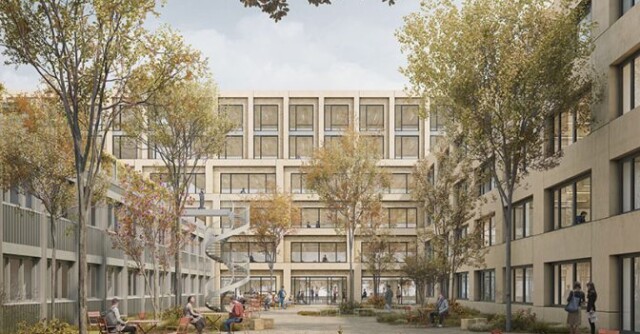
    The transformation of the LG site aims to create a lively, open district characterised by architectural quality and urban flair. The project is based on a development plan that ensures that urban development and architectural standards as well as social and ecological aspects are incorporated into the planning. In a study process, the team Salewski Nater Kretz, pool Architekten, Studio Vulkan Landschaftsarchitektur and mrs partner were selected as the winners, whose concept forms the basis for the neighbourhood development.

    Purchase of land by the city of Zug
    In order to influence the urban use and price development on the LG site in the long term, the city of Zug is planning to purchase a central plot of land on Theilerplatz. The cost of the plot amounts to CHF 65 million. This transaction will soon be dealt with by the Grand Municipal Council. This acquisition will enable the city of Zug to influence the design of the neighbourhood and ensure that affordable living space is created in the heart of Zug in the near future, as demanded by the people of Zug in June 2023 when they approved the 2000-apartment initiative.

    Remodelling work on the LG site
    While the long-term development plans for the upgrading of the LG site are in the political planning process, two existing buildings on the UBS Fund Management (Switzerland) AG site are currently being renovated. These are Gartenstadt 2a and the brick building at Zählerweg 3-9, both of which are adjacent to the Shedhalle with the “Freiruum”. This renovation is being carried out by property developer and total contractor Losinger Marazzi AG outside of the ordinary development plan procedure on the LGAreal and is being implemented in stages.

    Occupation by 2027
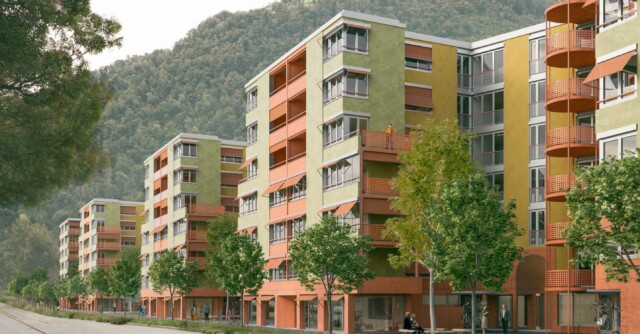
    The building at Gartenstadt 2a should be completed by mid-2026 and provide space for new commercial tenants. The 60 or so flats at Zählerweg 3-9, on the other hand, are expected to be ready for occupation in early 2027. If everything goes according to plan, the “Freiruum” will move into the ground floor of the 200-metre-long building at this time. Once the LG-Areal development plan comes into force, the Shedhalle can be renovated in a further stage in order to offer the “Freiruum” its long-term premises from 2029.
    New urban neighbourhood
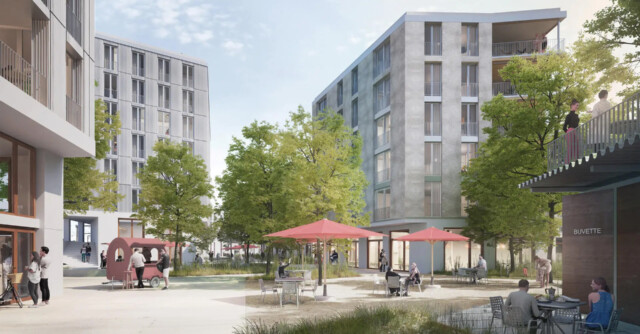
    By 2032, the once “forbidden city” will become an open and mixed neighbourhood with an industrial character and urban flair. Around 1,200 flats and 2,300 jobs will one day be on offer. Theilerplatz, the heart of the new urban quarter, will be transformed into a central meeting place for neighbourhood residents and the city’s population with inviting places to spend time and green open spaces.

  • Development plans are being revised and expanded in Hünenberg

    Development plans are being revised and expanded in Hünenberg

    OSRI AG from Lucerne is supporting the Zug municipality of Hünenberg in the implementation of two development plans. According to a press release, the urban planning and spatial development company is to assist the municipality with the transfer of existing development plans, to finalise the planning basis and to coordinate with cantonal authorities. The aim is to create a consistent, legally compliant basis.

    Parallel to this work, OSRI is to draw up a development plan for the Langrüti conservation area. This will integrate the building structure, the open space planning and the urban planning connection.

    With this joint project, Hünenberg aims to drive forward sustainable community development in which the existing buildings are harmonised with future developments.

  • Preliminary project cantonal school Ausserschwyz in Nuolen

    Preliminary project cantonal school Ausserschwyz in Nuolen

    The demolition of the 1947 school building offers a unique opportunity to redefine the urban development of the site. A new school and village square will be created that opens up towards Seestrasse and the village. The historic Patres building will be freed from extensions and staged as a solitaire, restoring it to its original splendour.

    Modern school buildings
    The new school wing will be realised as a compact timber construction that will house classrooms and a canteen with a view of the lake. The existing gymnasium will be converted into an assembly hall and can be used flexibly as a singing hall. New music rooms and improved administrative areas will complement the available space. The buildings from 1967 and 1982 will be retained and adapted to today’s requirements with targeted interventions. A new access structure ensures a clear separation between school operations and escape routes, which enables versatile use without fire safety restrictions.

    Open space design with a historical reference
    The open space concept connects the school site with its surroundings and creates high-quality recreational areas. The newly designed square with numerous trees and a water basin is reminiscent of the site’s history as a former spa hotel. The existing sports area will be retained, supplemented by car parking spaces and equipment rooms. A metal footbridge crosses the Mühlebach canal and connects the campus with the lakeshore.

    Construction method and energy supply
    The new building fulfils the high sustainability standards and is certified according to SNBS and Minergie-A. Heating is provided by a groundwater heat pump, which also enables recooling in summer. In addition, the roof area is equipped with photovoltaic elements to generate part of the operating energy itself. Efficient mechanical ventilation ensures a pleasant indoor climate.

    An educational centre with a future
    With the renovation and partial new construction of the Ausserschwyz cantonal school in Nuolen, a future-oriented school centre is being created that combines tradition and modernity. At the same time, the new school site blends harmoniously into the townscape and will become an open, lively meeting place for the whole community.

  • How Lucerne is actively designing new workspaces

    How Lucerne is actively designing new workspaces

    At the beginning of April 2025, representatives from Lucerne municipalities and regional development agencies met for the third “Location and economic development in the municipalities” forum. The event was organised by Lucerne Economic Development and the Association of Lucerne Municipalities. The forum at Lucerne University of Applied Sciences and Arts focussed on the question of how municipalities can strategically secure and develop areas for economic activities.

    Cantonal framework and digital tools
    After the opening by Ivan Buck, Director of Lucerne Economic Development, and VLG President Sibylle Boos-Braun, the Business Development team presented practice-orientated tools. These included a guide and the digital tool from start.swiss, which enables automated welcome processes for new companies in the municipality. A step towards efficient administration and location management.

    Cantonal planning as a driving force
    André Duss from the canton of Lucerne presented the planned measures for the development of workplace areas in the draft cantonal structure plan. The focus was on areas for the expansion of local companies and attractive locations for new settlements. Coordination between the canton and municipalities is to play a central role in this.

    Regional practical examples provide impetus
    Specific projects were used to illustrate how municipalities are already taking action today. LuzernPlus demonstrated successful area management with LuzernNord, flanked by developments in LuzernSüd, LuzernOst and Rothenburg-Station. The Sursee Plus pilot project, presented by Matthias Senn, also showed how densified construction in work zones can also work for land-intensive companies. Florian Furrer from Schüpfheim gave an insight into the municipal process of zoning new employment areas, an example of forward-looking planning at municipal level.

    Municipalities are actively shaping the future with
    The forum made it clear that location and business promotion starts locally. Innovative approaches, digital tools and targeted cooperation between the canton, municipalities and regions are creating new spaces for entrepreneurial development. Lucerne shows how the future is being realised.

  • Quality label strengthens ceramics industry with 121 Platinium certifications

    Quality label strengthens ceramics industry with 121 Platinium certifications

    A total of 121 tiling, trading and mixing companies from the ceramics industry have received Platinium certification this year, CERUNIQ announced in a press release. The quality label is awarded by the association of leading installation companies and specialist retailers in the ceramics industry to companies for the high quality and professionalism of their work. “Platinium embodies consistency, quality and stability,” CERUNIQ Central President Konrad Imbach is quoted in the press release from his speech on the occasion of the awarding of the label.

    Of the certified companies, five received the label for the first time, while the others were recertified. The canton of Lucerne is represented by nine of the recertified companies. Specifically, Bacchetta Baukeramik GmbH from Horw, Bühlmann Keramik AG from Hochdorf, DÄHLER KERAMIK GmbH from Weggis, Häfliger Plattenbeläge AG from Rain, JÖRI PLATTEN AG from Egolzwil, MUHEIM KERAMIK AG from Weggis, P. Bachmann AG from Urswil/Hochdorf, Ziswiler GmbH, Keramik, Naturstein, Ofenbau from Eschenbach and Zwimpfer – Platten AG from Sursee were awarded the label.

    This year’s certification took place “under stricter requirements”, writes CERUNIQ. Particular emphasis was placed on the training and further training of apprentices and employees, the quality of advice, precision in the execution of the work and the professional and customer-oriented handling of complaints. The next Platinium certification is scheduled for 2027.

  • Modernization ensures fresh water in the spa

    Modernization ensures fresh water in the spa

    Shortly before Easter, the Wellness Hotel Stoos modernized the water technology in its Wellness & Spa. Aqua Innovation GmbH was involved as a partner, as the Rotkreuz-based company specializing in water and air treatment systems explains in a post on LinkedIn. The Aqua Innovation team put in a few extra hours to ensure that the system was back in operation in time for Easter.

    Specifically, Aqua Innovation was responsible for the installation of a high-precision programmable logic controller (PLC) and the installation of a chlorine dosing system with integrated pH control. The new control system makes it possible to monitor and control all parameters from temperature, water flow and filter cycles to chemical water treatment centrally via the building management system. “We’ll save a personal test of the system for later,” writes Aqua Innovation with a wink in the article.

  • Sustainable products drive earnings stability in the building materials industry

    Sustainable products drive earnings stability in the building materials industry

    Holcim AG generated global sales totaling 5.54 billion Swiss francs in the first quarter of 2025, the Zug-based building materials group announced in a press release. In the same period of the previous year, sales were at the same level at 5.59 billion Swiss francs. At CHF 515 million, recurring operating profit at EBIT level was 3.1 percent weaker than in the first quarter of 2024. In local currencies, however, EBIT growth of 1.7 percent was achieved.

    “We achieved a disproportionately high increase in recurring EBIT in the first quarter and maintained the margin level,” said Holcim CEO Miljan Gutovic in the press release. “The growing demand from our customers for our sustainable building solutions contributed to ECOPact and ECOPlanet’s share of sales in their respective product lines reaching new highs.” Specifically, the sales share of low-carbon ECOPact concrete increased from 26% to 32% year-on-year. At the same time, the low-carbon ECOPlanet cement improved its share of sales from 26% to 29%.

    Against the backdrop of the stable quarterly result, Holcim is sticking to its targets for the 2025 financial year. It aims to achieve sales growth in the mid-single-digit range in local currency and a disproportionately high increase in recurring EBIT. The spin-off of Holcim’s North American business (Amrize) is proceeding according to plan. On March 25, Amrize held its first investor day in New York, explains Holcim. The spin-off is to be listed on the NYSE and the SIX Swiss Exchange in June.

  • New technologies for sustainable building tested in practice

    New technologies for sustainable building tested in practice

    Swiss Prime Site (SPS) has identified promising start-ups in the fields of cleantech, PropTech, EnterpriseTech and other sectors relevant to the real estate industry together with the Schlieren-based start-up promoter Venturelab. According to a statement from Venturelab, the real estate company headquartered in Zug has completed the 25th edition of its Start-up Accelerator program. In collaboration with Venturelab, SPS’s initiative aims to connect with start-ups developing solutions that can be integrated into the company, focusing on areas such as smart buildings, healthy architecture, smart materials and circular economy, it added.

    Ten start-ups were selected from the 70 applicants to present their solutions in a virtual pitch session at the end of March. From this group, four were invited to take part in the acceleration program to present their business models to the SPS Board of Directors. The “innovative approach to sustainability and alignment with the environmental priorities of SPS” was highlighted for three start-ups. These are ecoLocked, based in Berlin, which focuses on solutions for building with climate-neutral concrete, Vunanexus in Küsnacht ZH, which specializes in water purification, and Quanthome in Lausanne, which offers data-driven intelligence for investment decisions. They will hold further talks with SPS for upcoming projects and tests of the solution, the press release states.

    “It’s rare to find a pitch competition where the organizers go out of their way to make it easy and advise you throughout the process,” Ruth Beniermann from ecoLocked is quoted as saying about the selection process.

  • Canton approves stadium expansion with a clear majority

    Canton approves stadium expansion with a clear majority

    On March 27 of this year, the canton of Zug approved a loan for the expansion of the Zug Ice Sports Club(EVZ) stadium. According to a press release, 71 members of the cantonal council voted in favor of the expansion of the arena, with one vote against.

    This means that the Keep Building project, which was developed by architects studiomatt, can move forward. The project envisages the expansion during match operations. Construction is scheduled to start in the summer of 2025. The expansion should be completed by the start of the 2027/28 season.

    “We would like to thank the cantonal government, in particular Finance Director Heinz Tännler and the commissions for their preparatory work on our behalf,” said Patrick Lengwiler, CEO of EVZ, in the press release. “We appreciate the cantonal council’s very clear approval of the bill. It is a recognition of the great social and economic importance of the EVZ for the region on the part of Zug’s politicians and a commitment to the important expansion of the arena.”

    The city of Zug had already approved the project at the meeting on January 30, 2025.

  • Award for health-oriented corporate culture

    Award for health-oriented corporate culture

    Real estate service provider Welcome Immobilien AG has become the first real estate consultancy to be awarded the “Friendly Work Space” certificate for successful occupational health management, according to a press release. The label was introduced in 2009 by Health Promotion Switzerland with partners from science and practice to support companies in systematically implementing and promoting occupational health management.

    The Emmenbrücke-based real estate service provider was recognized for a wide range of measures that ensure a sustainable working environment, employee well-being and a good corporate culture. These include systematic human resource management, flexible working time models, offers for well-being, further training opportunities and flat hierarchies.

    “We are convinced that an attractive working environment is crucial to our company’s success,” CEO Marc Furrer is quoted as saying. Motivated and satisfied employees can ensure better customer service and strengthen the company in the long term. “We are already seeing the benefits of these measures and are benefiting, for example, from a comparatively low fluctuation rate.”

    Welcome Immobilien AG has 80 employees and is represented not only in Emmenbrücke but also in Zug, Sursee and Lucerne.

  • Investing in depth saves costs and improves carbon footprint

    Investing in depth saves costs and improves carbon footprint

    Pistor’ s initial assessment of the first winter with its new geothermal storage system is positive: “It works so smoothly that we haven’t had to burn a drop of heating oil so far,” Michael Waser, Pistor’s Head of Infrastructure, is quoted as saying in a company press release.

    This saves Pistor over 100,000 liters of heating oil per year at its headquarters in Rothenburg and prevents the release of 330 tons of CO2. This amount is released by more than 200 direct flights from Zurich to Tokyo, for example. Waser expects “that the underground storage facility will save us money in the medium term”.

    Pistor has invested CHF 1 million in the construction work. This involved drilling 75 boreholes to a depth of 250 meters. The result is one of the largest geothermal storage facilities in Central Switzerland, according to the trading and service company for the bakery and confectionery industry as well as for restaurants and care facilities.

    According to Waser, the Pistor cooperative is responding to the wishes of its customers, who are increasingly demanding supply chains that are as socially and environmentally friendly as possible: “We meet them.” The twelve electric trucks in the fleet and renovations with sustainable materials also contribute to this.

    In addition, Pistor transports its more than 27,000 products by train from one distribution center to another. Thanks to this rail transport, an additional 785 tons of CO2 are saved each year.

  • Compact heat storage system wins innovation award for energy solutions

    Compact heat storage system wins innovation award for energy solutions

    The international jury of the SET Award 2025 has chosen Cowa Thermal Solutions as the winner in the Clean Energy & Storage category. The SET Award promotes innovative ideas and solutions for a sustainable energy future and thus accelerates the energy transition.

    The competition is announced and organized worldwide by the German Energy Agency in cooperation with the World Energy Council. It is supported by the German Ministry of Economic Affairs and Climate Protection. The award recognizes innovations that drive forward the global energy transition. The award ceremony took place as part of the SET Tech Festival 2025 in Berlin.

    As the organizers point out in a press release, Cowa is developing “compact heat storage systems with phase change materials that are five times smaller than water-based systems. With the aim of serving the growing European heat pump market, Cowa is improving the integration of renewable energy and urban energy efficiency.”

    In a press release issued by his company, which was founded in 2019 and is based in Technopark Lucerne, Cowa CEO Simon Maranda describes this award as “a great recognition of our work and commitment to innovative energy storage solutions. Our compact thermal energy storage systems are an ideal solution for integrating renewable heating systems, especially heat pumps, in urban buildings with limited space. We are proud to continue to drive this technology forward and play an active role in shaping the energy transition.”

    Once again this year, pioneering start-ups were honored in five categories: Clean Energy and Storage, Mobility & Transportation, Industry, Buildings & Construction and Access to Quality Energy & SDG-7. The winners of all five categories also presented their solutions at the Berlin Energy Transition Dialogue afterwards.

  • Lucerne responds to tax pressure with a billion-euro package

    Lucerne responds to tax pressure with a billion-euro package

    International tax competition is being readjusted by the OECD minimum taxation and is hitting Lucerne hard. The previous advantage of low corporate taxes for internationally active groups will no longer apply. This could result in companies moving away, a drop in investment and a massive loss of tax revenue. Over a billion francs are at stake for the federal government, canton and municipalities – a scenario that Lucerne is not prepared to accept without taking action.

    Strengthening the business location, ensuring quality of life
    The cantonal government is responding with a far-reaching location promotion programme, which comprises around CHF 300 million per year. Around two thirds of this is to flow directly into measures to promote innovation, digitalisation, economic areas and a business-friendly administration. This will also create new opportunities for property developers and investors. In particular in the planning and realisation of forward-looking commercial and infrastructure projects.

    The remaining third is dedicated to quality of life. The measures range from tax relief and family friendliness to the promotion of culture and digital participation, key location factors when it comes to retaining talent and attracting new workers.

    Participatory and forward-looking
    The programme was developed in close consultation with the business community, municipalities and social partners. The public consultation will run until 9 June 2025 via the “e-participation” tool. The final decision lies with the people. The package will be put to the vote in September 2026 and is scheduled to come into force on 1 October 2026.

    Lucerne is sending a strong signal with this proposal. Location promotion is no longer an optional extra, but a strategic duty – and it requires clear, long-term investment.

  • Complete renovation of the Zug cantonal school

    Complete renovation of the Zug cantonal school

    The Zug Cantonal School, a masterpiece of post-war modernism, was designed between 1971 and 1975 by the renowned architects Leo Hafner and Alfons Wiederkehr. The exterior design by Fred Eicher is also an integral part of this architectural heritage. In view of the advancing structural ageing, there is an urgent need for comprehensive renovation measures. These include upgrading the load-bearing structure, replacing the building envelope and replacing the building services and interior fittings. In particular, the focus on adapting the room structure is crucial in order to guarantee learning conditions.

    Refurbishment concept and targeted extension
    The refurbishment concept, which was developed in close cooperation with the school management, offers a balanced solution between the needs of flexible teaching methods and the existing spatial conditions. The available space will be expanded in a targeted manner through clever room renovations and adaptations. Planned measures include a new connecting wing and an extension to Wing 7 in order to meet the challenges of modern educational requirements.

    Principles of sustainability
    The decision in favor of a complete renovation is based on the financial, ecological and scheduling advantages. The Construction Department of the Canton of Zug is thus pursuing its clear real estate strategy. New construction projects should only be considered if it is no longer possible to optimize the existing buildings.

    Project competition and next steps
    The next milestone in the renovation process is the project competition in a selective procedure, which was announced in mid-2024 and is aimed at general planning teams. The aim is to find the best solutions for a renovation that respects the preservation of the original architecture while meeting the requirements of a modern educational establishment. The Construction Department of the Canton of Zug emphasizes that the competition represents a decisive phase in the implementation of the project and should ensure a high-quality renovation.

  • Cham-Hünenberg bypass

    Cham-Hünenberg bypass

    The Cham-Hünenberg bypass (UCH) is more than just a new road. It is the last big piece of the puzzle in the transport planning of the Canton of Zug, which not only serves to bundle transit traffic, but also to free the centre of Cham from through traffic. This ambitious project, which is being implemented by the Canton of Zug’s Department of Construction in collaboration with the Ennetsee municipalities, aims to enhance living and economic areas and improve mobility for all road users.

    Construction and location
    Construction of the UCH has already begun and is scheduled for completion in 2027. The route runs predominantly parallel to the A4 motorway, which allows for minimal land consumption and efficient use of space. This aspect is particularly important in order not to jeopardise the planned settlement and landscape development in the Ennetsee municipalities.

    Tunnelling and construction work
    The main work on the Städtlerwald road tunnel began in March 2024 with the construction of the pumping stations and settling basins. The tunnel operations centre is also being built, while the pre-cut for the Stumpen tunnel portal is being constructed in parallel. The tunnel itself will have a total length of 543 metres, the majority of which will be created underground using a roadheader.

    Progress of the preliminary work
    Preliminary construction work has been taking place along the future UCH route since 2022 and has now been completed. The first ground works along the western UCH perimeter and neighbouring N4 national roads are already in full swing. Neighbouring woodland areas have already been cleared, with the standing tree trunks being handed over to the hydraulic engineering department for later projects.

    A benefit for all road users
    The Cham-Hünenberg bypass not only promises improvements for road traffic, but also positive effects on the quality of life of local residents. By relieving the congestion in the villages of Cham and Hünenberg, a quieter and safer living environment will be created, offering space for additional leisure and recreational activities. The improved transport links will also encourage companies to settle in the region, which in turn will strengthen Zug as a business location.

  • Central Switzerland’s economy remains confident

    Central Switzerland’s economy remains confident

    The economic mood in Central Switzerland remains largely optimistic. According to the latest edition of “Finanzmonitor Zentralschweiz 2025”, an annual study conducted by the Institute of Financial Services Zug at Lucerne University of Applied Sciences and Arts and the Central Switzerland Chamber of Commerce and Industry, almost 65 per cent of the companies surveyed rate their economic situation as good. This shows an overall stable development despite slightly gloomier expectations compared to the previous year.

    Focus on expansion and skills shortage
    Around 60 per cent of companies are planning to expand, which indicates a continued willingness to grow. At the same time, the shortage of skilled labour remains a key challenge for the economy. Companies are finding it increasingly difficult to recruit qualified employees.

    International uncertainties affect export-oriented companies
    While small and medium-sized companies are reporting a stable business situation, larger export-oriented companies are more affected by global developments. Uncertainties in the USA, France and Germany in particular are having an impact on planning. In addition, protectionist measures by the new US government are increasingly becoming the focus of economic concerns.

    Exchange rate risks are becoming less significant
    Compared to the previous year, the strong Swiss franc is perceived as less of a problem. Despite an expected further appreciation against the euro, concerns about exchange rate fluctuations appear to be becoming less important.

    Less voluntary reporting, less effort
    Another topic covered by the Financial Monitor is sustainability reporting. The number of voluntarily active companies is declining, but it is clear that the actual effort required to prepare a sustainability report is less than many companies initially feared.

    Stability with growing challenges
    Central Switzerland’s economy remains optimistic, but faces structural and international challenges. There are prospects for growth, but issues such as a shortage of skilled labour, global uncertainties and regulatory requirements will have a significant impact on future development.

  • Canton of Lucerne plans investments in living and business location

    Canton of Lucerne plans investments in living and business location

    The canton of Lucerne is planning an investment offensive to promote the location. Due to international tax developments such as the OECD minimum taxation, the canton is “losing its competitive advantage of low corporate profit taxes for large international companies”, explained the cantonal state chancellery in a press release. Specifically, there are fears that affected companies will relocate or limit their investments in the canton. The cantonal government wants to counteract this with targeted investments in the canton as a place to live and do business.

    A proposal submitted for consultation by the cantonal government on 10 March envisages investing CHF 300 million a year in a broad package of measures from 2026. “The canton of Lucerne is doing well, so we have the opportunity to invest in our living and economic environment and remain attractive in the long term,” said Fabian Peter, Head of the Cantonal Department of Building, Environment and Economic Affairs, in the press release. “That is the aim of this bill.”

    Two thirds of the funds will be used to strengthen the business location. The focus here is on promoting innovation and improving the framework conditions for digitalisation, the availability of business premises and customer-oriented administration. Of the remaining CHF 100 million in favour of the people of Lucerne, the lion’s share of CHF 70 million is earmarked for a reduction in the tax rate for natural persons.

  • Property company increases profit and reduces vacancy rate

    Property company increases profit and reduces vacancy rate

    The Zug Estates Group generated net profit excluding revaluations and special effects of CHF 36.9 million in the 2024 financial year, the real estate company, which focuses on the Zug economic and living environment, announced in a press release. This corresponds to year-on-year growth of 9.0 per cent. Shareholders are to participate in the profit with a 6.8 per cent increase in the ordinary dividend.

    The press release cites the Group’s property income as the growth driver. It increased by 5.5 per cent year-on-year to CHF 69.3 million. The Hotel & Catering segment contributed CHF 15.5 million to total income. Total operating income increased by 4.7 per cent to CHF 88.8 million.

    At CHF 58.7 million, Group profit including revaluations and special effects in 2024 was 142.7 per cent higher than in the previous year. The increase is primarily attributable to revaluation gains totalling CHF 24.8 million. In addition, Zug Estates invested a total of CHF 8.1 million in new construction and renovation projects in the year under review. At CHF 1.86 billion, the market value of the Group’s entire portfolio at the end of 2024 was 1.7 percent higher than the previous year’s figure.

    In addition, Zug Etates had a practically fully let property portfolio at the end of the financial year: The vacancy rate was reduced from 3.9 to 0.7 percent compared with the previous year, which was characterised by conversions. In the year under review, the Group was able to extend or conclude new commercial leases totalling more than CHF 5.4 million a year.

  • Lucerne relies on energy from the lake

    Lucerne relies on energy from the lake

    The city of Lucerne and the local supplier energie wasser luzern(ewl) want to work together to create opportunities to cover part of the city’s heating requirements with energy from Lake Lucerne. According to a press release, the aim of switching to lake energy is to reduce greenhouse gas emissions from gas, oil, petrol, diesel and paraffin to zero by 2040.

    In order to achieve this goal, the partners have considered possible locations for mostly underground energy centres. From a selection of 100 possible sites, five have emerged from the preliminary process: Three sites are on the left bank of the lake, one each on the right bank and in the Würzenbach supply area.

    Following extensive analysis, these sites were found to be the most suitable. In addition to the energy yield, ownership and criteria such as nature conservation and social impact were also taken into account. Urban planning and feasibility studies should be available by mid-2025. Alternative locations will be announced if there are too many conflicts of interest.

    “It was therefore crucial to involve municipal and cantonal authorities as well as various nature conservation and planning associations in the search for suitable locations,” said Martin Arnold, member of the Executive Board and Head of Realisation at ewl, in the press release. “In this way, we were able to take the various interests into account and harmonise them.”

  • Project planning credit for Lucerne theatre rejected

    Project planning credit for Lucerne theatre rejected

    With 15,033 votes against compared to 10,914 votes in favour, the project planning loan for the planned Lucerne Theatre was clearly rejected on 9 February 2025. The turnout was 49.67 per cent. The result spells the end for the “überall” project by Ilg Santer Architekten, which was intended as a new stage for music, spoken word and dance theatre.

    City Council expresses disappointment
    The City Council notes the vote with great regret. The planned further development of the Lucerne Theatre cannot be realised with this decision. City President Beat Züsli emphasises: “We have always said that there is no Plan B. What happens next is completely open. This result is a great disappointment for Lucerne’s culture.”

    The location and construction volume of the planned theatre in particular were repeatedly criticised in the public debate. Nevertheless, it is still too early to draw any definitive conclusions. The city council intends to carefully evaluate the results of the vote together with the partner organisations involved.

    Consequences for cultural policy
    The rejection of the loan presents the city of Lucerne with new challenges. The previous plans have been halted and it remains unclear how the future of Lucerne’s theatre can be shaped. Nevertheless, the city council emphasises the importance of dealing constructively with the vote: “It is now our joint task as a city community to find a new solution for theatre culture in Lucerne.”

    Despite the defeat, the city council would like to thank everyone who was involved in the project. The existing partnerships will continue to be cultivated and the impact of the result of the vote on cultural policy will be carefully examined.

  • District heating network in the lower Wiggertal is getting closer

    District heating network in the lower Wiggertal is getting closer

    The energy companies Primeo Energie from Münchenstein and StWZ Energie AG are in the planning stages for the district heating network Fernwärme Unteres Wiggertal (FUWI). According to a press release, their solution envisages the integration of existing networks.

    “The project is an important contribution to the decarbonisation of the heat supply. StWZ and Primeo are convinced that the district heating network in the lower Wiggertal can be realised most effectively if we join forces in a joint company,” Michael Schneider, Managing Director of Primeo Wärme AG, is quoted as saying. The first step will be to expand the district heating network in Oftringen and Zofingen and to integrate the existing district heating networks of both municipalities. Wood combustion in the StWZ energy centres and waste heat from the waste incineration plant (KVA) of Erzo (Entsorgung Region Zofingen) are to be used as climate-neutral heat energy substitutes.

    In addition to StWZ Energie AG Zofingen, EW Oftringen AG and EW Rothrist AG were initially involved in the project. Contrary to the plans, the two regional energy suppliers have withdrawn their commitment to join the company for the time being for various reasons. However, according to the press release, both companies are behind the project for CO2-neutral district heating. Participation at a later date has not been ruled out.

    The question of a future increase in heat consumption from summer 2027 is also still open. The Oftringen electorate will be asked to vote on the construction of a new waste incineration plant and the additional land required for this in November 2025.

  • New standard at JVA Bostadel

    New standard at JVA Bostadel

    The Bostadel prison, built between 1972 and 1977, is showing clear signs of wear and tear after decades. Structural modifications to increase earthquake safety, fire protection and energy efficiency are urgently needed to ensure the safety of inmates and staff. The comprehensive renovation project includes both the modernisation of the building technology and the construction of a new special department, which will serve as a temporary facility during the construction phase.

    Refurbishment during operation
    A central aspect of this project is the refurbishment during ongoing operations. The new building provides a temporary alternative solution during the renovation and is particularly geared towards the needs of older and long-term prisoners. This approach was developed in close cooperation with the Prison Concordat of Northwest and Central Switzerland and the Federal Office of Justice to ensure the smooth operation of the prison.

    Architectural innovation
    The winning project by Eggenspieler Architekten AG and architecture aménagement s.a. impresses with its well thought-out planning and architectural innovation. The extension creates additional outdoor areas and ensures a pleasant environment by optimising the lighting of the interior spaces. The result is the realisation of a modern and sustainable prison infrastructure.

    Efficient and sustainable project
    According to a rough cost estimate, the total costs amount to CHF 66.6 million, or CHF 50.35 million net after deduction of federal contributions, making the project efficient and sustainable. The involvement of the cantonal governments of Zug and Basel-Stadt guarantees the fulfilment of modern standards and requirements.

    Setting the course for the future
    Following approval by the cantonal governments and the forthcoming procedure in the cantonal parliaments, the project will be realised in stages. The extension is scheduled for completion by 2028 and the full refurbishment by 2031, preparing Bostadel Prison for the requirements of the coming decades.

  • First construction phase in Unterfeld Süd in Baar starts in 2025

    First construction phase in Unterfeld Süd in Baar starts in 2025

    The owners Ina Invest and Estella Invest and the developer Implenia decided in favour of a digital project competition in which a digital 3D model was submitted instead of physical models. This made the jury process much easier, as different levels and elements could be flexibly combined and analysed. The winning design for the first construction phase, a combination of the proposals from Enzmann Fischer Partner AG and ORT AG, impressed with its innovative floor plans and a well thought-out design of the open space that harmoniously combines living and working.

    Open space design as the key to the attractiveness of the neighbourhood
    The Unterfeld Süd neighbourhood will be enhanced by generous open spaces, which
    extend along the Stampfibach stream. An ecologically valuable green space is being created here that offers a wide range of uses. The central arrival square at the S-Bahn station will be transformed into an inviting place to meet and linger thanks to tall trees and green islands.

    High-rise building with a view to the future
    The 60-metre residential tower block in the first phase is impressive not only for its height, but above all for its well-thought-out floor plans and flexible room layouts. The generous windows offer impressive views from every flat, while the bay windows on the façade allow residents to enjoy both the outside and the inside of their own flat.

    Commercial building as a centre for dynamic companies
    The adjoining commercial building also focuses on flexibility. Two glazed inner courtyards create islands of light that can be used as break areas. With its flexible room structure, the building offers space for a wide range of uses – from small offices to larger rental spaces for anchor tenants.

    The second phase will provide affordable housing and flexible commercial space
    The second construction phase, the planning of which is already at an advanced stage, will focus on affordable rental flats and owner-occupied flats. The inner courtyard of the planned perimeter block development in the second phase will create opportunities for retreat and public meeting spaces in equal measure. The buildings along Nordstrasse are deliberately designed to minimise noise pollution. A referendum on the second stage will also be held in Baar in 2025.

    Sustainable architecture and flexible usage concepts
    The architecture of the buildings reflects the vision of a future-oriented neighbourhood. The combination of flexible living, versatile commercial space and well thought-out open spaces creates a lively and attractive cityscape. Particularly noteworthy is the combination of living and working, which is supported by well thought-out spatial concepts and attractive outdoor areas.

  • Lighthouse Papieri Cham

    Lighthouse Papieri Cham

    People today are looking for the “as well as” – in the case of Papieri, it is the interplay of an urban lifestyle in close proximity to nature. On the one hand, the new district offers all the extras of a lively neighbourhood with practical services for everyday life, such as a wide range of shopping and dining options, childcare and cultural and sporting activities
    And catering facilities, childcare and cultural and sporting activities. On the other hand, you can find peace and quiet by the River Lorze or in one of the neighbouring recreational areas.

    Next Level Spaces
    In the third construction phase, a total of 10,000 m² of office, commercial and retail space will be created with the “Next Level Spaces”. Where and how people work has changed dramatically in recent years. Attractive and adaptable work concepts are needed to inspire employees. This leads to new requirements for buildings, such as a high degree of flexibility in order to fulfil a wide range of needs, from office layout to building services.

    The spaces in the “Next Level Spaces” can be flexibly designed and are over 6 metres high with a payload of up to one tonne per m², and intermediate floors can be installed as required. The user decides where intermediate floors are needed and can also create additional space at a later date. The “Next Level Spaces” offer future-orientated companies a wow location for offices, trade and Industry 4.0.

    Landmark boiler house
    The landmark at the heart of the site – the listed boiler house – will also be converted in the third construction phase. Where steam boilers used to be fired up, guests can expect a culinary treat in future. In spring 2026, the Segmüller Collection will expand its portfolio of unique gastronomy concepts such as Carlton, Loft Five, Roof Garden and Sablier in Zurich to Papieri-Platz in Cham and open a new grill restaurant with bar and lounge on the ground floor of the Kesselhaus. Industrial charm meets modern lifestyle, archaic fire cuisine meets refined elegance – a place that promises enjoyment for every taste. In the western section above, unique office space awaits new users in the former monument, while a fitness centre in the eastern section offers space for physical exercise.

    Sustainability
    Awarded the “Watt d’Or” by the Swiss Federal Office of Energy, the energy system of the Papieri site enables completely CO2-free operation and ultimately generates around 75% of the energy on site. In addition, the “Next Level Spaces” commercial building is certified with the internationally renowned “Leed Platinum” sustainability label. Resource-conserving construction is also already common practice at Papieri. For example, with the conversion of listed buildings such as the boiler house or an innovative timber-hybrid residential tower block. However, the most important contribution to sustainability is a long service life. Great attention is paid to this factor during development. Buildings must be flexible in order to meet the as yet unknown needs of a changing society in the future. An office building that can be converted into flats, for example, prevents premature demolition and thus contributes to sustainability. This is why Papieri constructs high-quality, adaptable buildings that will still be in favour for various uses decades from now.

  • Space for the future “An der Aa”

    Space for the future “An der Aa”

    The “An der Aa” project aims to repurpose and densify the ZVB site. Key elements include increasing the living and working space, a modern infrastructure for public transport and emergency services and opening up the neighbourhood to the local population. Of the planned flats, 40% are to be offered at an affordable price in order to meet the demand for affordable housing in Zug.

    Infrastructure for mobility and emergency services
    In the centre of the new district, a state-of-the-art building will be constructed to house the Zug rescue service and the cantonal administration. The proximity to the new ZVB main base will enable synergies, for example in vehicle maintenance. The new infrastructure will meet the increasing demands of public transport and rescue services and contribute to future-proof mobility.

    Focus on quality of life
    The site is being densified and ecologically upgraded. The Siehbach stream will be uncovered and a barrier-free footpath integrated. Green spaces and public squares will enliven the neighbourhood and provide space for recreation. The Schleifendamm will be secured as a biodiversity-rich oasis for plants and animals and contribute to the quality of life in the neighbourhood.

    Legitimisation and broad support
    Work on the “An der Aa” project has been ongoing for 14 years, involving various stakeholders from politics, administration and the public. With 81.3% approval in March 2024, the people of Zug have given their support to the development plan. Construction is scheduled to begin in 2025 and be completed by 2032. Thanks to this broad support, the neighbourhood will become a flagship for innovative urban development in Zug.

    Future prospects
    The project will change the face of Zug and meet the growing demand for residential and commercial space. The new infrastructure will create capacity for a significantly higher volume of public transport passengers and secure the operation of the emergency services.

  • Collateral in the construction and property sector – What to look out for?

    Collateral in the construction and property sector – What to look out for?

    The usual means of security
    Collateral is ubiquitous in the construction and property sector. For the financing of land or residential property, mortgages (liens on real property) are in the foreground. Step-by-step transactions (e.g. the purchase of a plot of land or a flat) are usually secured with so-called promises to pay from banks. Abstract guarantees or sureties are then frequently used to ensure that construction work is carried out in accordance with the contract. Finally, it is also conceivable to hand over movable property as a pledge or to transfer (future) claims of one’s own company against third parties to a lender.

    Guarantees and sureties in particular
    With a guarantee, a bank or insurance company undertakes to pay the guarantee recipient an amount if certain conditions (e.g. a breach of contract) are met. If the bank/insurance company waives all defences and objections arising from the basic relationship, this is an abstract guarantee in accordance with Art. 111 CO. Such guarantees can be called with a mere notification, which is why they are often also called “guarantee on first demand”. In practice, such guarantees are used as performance, advance payment and warranty guarantees.

    In contrast, a surety is always dependent on the underlying transaction. The bank/insurance company is entitled to the same defences and objections as the principal debtor. The main case of application in practice is the joint and several guarantee, which is also specified in the widely used SIA-118 standard as standard security for liability for defects.

    The recipient of an abstract guarantee is in a better position and usually receives his money immediately. Guarantees are therefore expensive and the guarantor always requires security in the event of a claim. The need for security must be examined on a case-by-case basis and the form of the security must be weighed up.

    Guarantees – a world of formality
    Guarantees on first demand sound tempting because they are supposedly easy to handle. This can be deceptive: Firstly, the guarantee text must be checked, because not every guarantee is abstract. Then you need to keep an eye on the period of validity. When making a claim under a guarantee, the formal requirements in the guarantee document must be meticulously observed, otherwise payment may be refused (so-called guarantee rigour). Another decisive factor is the way in which the claim must be submitted to the bank/insurance company and with which declaration (directly, via a correspondent bank, etc.). It is worth checking this in advance.

    A guarantee is utilised – what needs to be done?
    When the guarantee is issued, it is important to ensure that the bank/insurance company undertakes to provide notification in the event of a claim. This gives the party against whom the guarantee has been issued the opportunity to have the bank/insurance company prohibited from making the payment by court order. However, it should be borne in mind that the courts will only prohibit a payout if the claim is clearly an abuse of rights. The hurdles are so high that payouts are very rarely prohibited.

  • Canton of Zug strengthens its property portfolio

    Canton of Zug strengthens its property portfolio

    The Building Directorate is legally responsible for the construction and maintenance of the canton’s own buildings. The financial framework conditions are carefully analysed in order to make targeted use of both the maintenance and investment budgets. Sound, long-term planning is becoming increasingly important in order to ensure that the buildings retain their value.

    Strategic guidelines for property management
    The Canton of Zug’s real estate strategy is based on the overarching objectives of the Cantonal Government and the specific guidelines of the Building Department. Priority is given to maintaining existing infrastructures rather than building new ones. The targeted use of resources ensures future-orientated buildings that meet the requirements of sustainability and efficiency.

    Cost and benefit efficiency as guiding principles
    The Building Directorate pursues a differentiated strategy that focuses on cost control and the fulfilment of public tasks.
    Properties that do not directly serve a public purpose are used for value creation or exchange transactions in order to optimise the management of the portfolio.

    Investment requirements and future developments
    The Building Department has further expanded the cantonal property portfolio. With the projects realised, the value of the portfolio has risen to CHF 1.06 billion by 2023. Further investments are planned for the coming years. Planned major projects in the education and administration sectors will contribute to the canton’s infrastructural development and strengthen the economic attractiveness of the region. A forward-looking real estate strategy ensures that the canton of Zug makes optimum use of its property portfolio and is equipped to meet future requirements.

  • Affordable living in Zug

    Affordable living in Zug

    The canton of Zug and the city of Zug suffer even more than other cantons and cities from a lack of living space. The canton of Zug has the lowest vacancy rate in the country at 0.2% for the fourth year in a row. The lack of supply and the persistently high demand are leading to strong competition for the few advertised rental flats: the re-letting period is record-breakingly short. There are plenty of affluent tenants moving in and out who are prepared to pay ever higher rents¹.

    Because asking rents are now 50% higher than the Swiss average, complaints that rental flats are no longer affordable have spread far into the middle classes². Even those with normal household incomes who want to move or relocate to the canton have little chance of accessing the housing on offer.

    In this context, the question arises as to what profit-orientated owners who have or would like to develop housing stock in the canton and city of Zug can contribute to the provision of housing for broad sections of the population.

    How should affordable housing be defined?
    The first question is how “affordable” housing should be defined. There is an object-orientated, a market-orientated and a target group-orientated approach³. Affordable housing can be defined as housing rents that are calculated using the maximum fixed investment costs for a residential property. For this calculation to work for yield-orientated owners, a consensus is needed on what constitutes a sensible limit for investment costs. The market-oriented approach categorises low-priced residential rents in certain quantiles of market rents. This requires a consensus on which quantiles are affordable. Finally, affordable housing rents are defined as those that are financially viable for tenants. This requires a consensus that households should not spend more than a third of their gross income – or more generously, their taxable income – on rent, for example.

    Room for manoeuvre via the subject-oriented approach
    The approach based on financial affordability is the most meaningful for a broad-based housing supply. Unlike the approach based on investment costs, this approach recognises that many people in the canton of Zug earn more than in other cantons and can therefore afford higher rents (Fig. 1). However, unlike the approach using the quantiles of market rents, it is not based on the willingness to pay of those moving in and out, but on the real income of the population. This approach helps to target the needs of specific income groups.

    An affordable flat for a person from the lower middle class living alone, who earns between 70 and 100% of the median income, should therefore cost between CHF 1,400 and 1,900 in the city of Zug. How much living space is offered for the price is decided by the provider based on his assessment of the marketability of a flat. Because affordability is based on the unit price of the flat and not the price per square metre, yield-oriented investors have more leeway to integrate affordable housing into their profitability calculations.

    Optimising the distribution of existing affordable housing
    Building flats takes a long time and is often associated with uncertain planning processes. Owners and investors are also not free to decide where and how much additional living space they want to realise. Owners have direct options for action with their portfolio: they can contribute to supplying the wider population if they optimise the distribution of their vacant rental flats. Every change of tenant offers the opportunity to consider the most suitable tenant in line with the “best owner principle”. Owners can instruct lettings teams to maximise the affordability of rental properties that are affordable to the middle class and choose the tenant who can least afford the property – assuming a full salary, for example. Letting teams simply need a matrix that shows them the maximum rental prices affordable for the middle class (or the targeted income group) for each number of rooms. If a vacant flat in the corresponding price range becomes available, the rule would apply.

    Conclusion
    In order to ease the situation in the housing market, the lengthy tasks of reducing barriers to housing construction and developing a cross-party understanding of how affordable housing is defined and how its provision should be regulated must be tackled. In the meantime, yield-orientated owners can make a contribution by approaching the provision of affordable housing with a subject-orientated approach that fits into their market logic. In doing so, they also remain fair to the legitimate interests of their direct stakeholders.

  • Smart City Strategy Zug

    Smart City Strategy Zug

    The challenges of urban growth, from the climate crisis to transport logistics and urban densification, call for holistic approaches. Zug is focusing on digitalisation as a key strategy. With its strong technological basis and the active involvement of all urban stakeholders, the Smart City Strategy Zug offers innovative answers to the questions of the future.

    Intelligent administration and citizen-centred services
    The city of Zug is striving for an efficient, citizen-centred administration that facilitates access to services and promotes transparency. Digital technologies, such as open data and smart administrative processes, offer citizens access to municipal services regardless of time and place. This customer-friendly approach strengthens the dialogue between the city and the population and makes Zug a pioneer for modern city administration.

    Strengthening social participation and digital skills
    With its smart city strategy, Zug is creating new platforms for the participation of all social groups. Digital channels expand dialogue and promote the right to have a say, especially for younger generations and less mobile people. Educational programmes are designed to improve the digital skills of both the population and the administration and prepare the people of Zug for the opportunities and challenges of the digital transformation.

    Smart mobility for sustainable mobility and quality of life
    Smart mobility is a central pillar of the strategy. Innovative technologies and alternative forms of transport are intended to reduce commuter traffic, cut emissions and improve the quality of life. Zug is focussing on real-time data, intermodal mobility and the expansion of emission-free modes of transport. The goal: clean, safe and sustainable mobility that enriches city life.

    Innovative business location
    With its dynamic start-up scene and innovative sectors such as fintech and blockchain, Zug creates an attractive environment for high-tech companies and qualified specialists. The Smart City strategy strengthens the location’s profile and connects companies that are committed to a sustainable economy and circular processes. In this way, Zug is not only positioned for the future as a place to live, but also as a business location.

    Sustainability and environmental protection through smart technologies
    Promoting energy efficiency and CO2 reduction is a key objective of the strategy. Digital applications such as “smart metering” enable a transparent presentation of energy consumption and promote the conscious use of resources. The city is focussing on the expansion of renewable energies and the intelligent use of existing infrastructure – a clear commitment to climate protection and sustainable urban development.

  • Der Switzerland Innovation Park Central

    Der Switzerland Innovation Park Central

    At Suurstoffi in Rotkreuz, the SIPC offers an inspiring environment that promotes dialogue and collaboration between over 120 partners from business, science and society. A vibrant innovation ecosystem is created here that efficiently translates new ideas into marketable solutions in the construction sector.

    Diverse formats to promote innovation
    In order to drive innovation, the SIPC works in five thematically focussed Future Labs, which specifically address current challenges such as the transformation to a circular economy in construction or new processing models
    in construction or new processing models. These labs are hybrid working environments with structured processes and formats that promote collaborative innovation. A variety of event and workshop formats as well as the digital community platform Jointcreate – a kind of “LinkedIn for innovation” – provide inspiration, empower participants and support the innovation process. The focus is always on implementation to achieve real impact. Financing and start-up advice as well as office and project space are available for this purpose.
    The SIPC also manages various programmes, such as the Circular Building Charter, an association of major real estate investors who are increasingly focusing on circular procurement and construction methods. The SIPC imparts knowledge in regular experience workshops. The open sharing of experiences in pioneering projects promotes dialogue within the industry.

    A contribution to the construction industry of tomorrow
    With its clear values – openness, fairness and professionalism – the SIPC makes a decisive contribution to the transformation of the construction industry. As a non-profit organisation, it pursues the motto “Building Excellence” and invites all interested parties to become part of this movement. Switzerland Innovation Park Central shows how innovation in the construction industry can promote not only technological progress but also social responsibility. By combining vision and practice, the SIPC is shaping a sustainable future and is an indispensable partner for anyone who wants to contribute to the construction industry of tomorrow.