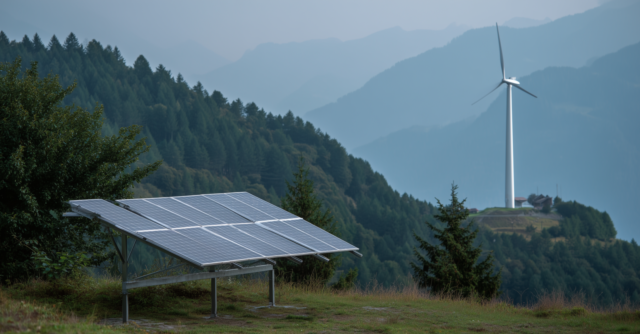
Around 50% of CO2 emissions in the canton of Zug come from the economy, which emphasises the urgent need for action in this area. The Zug Chamber of Commerce, the WERZ Institute (OST), the Technology Forum Zug and the Switzerland Innovation Park Central have founded the Climate Charter Zug together with the Canton of Zug to support SMEs in particular in implementing climate-friendly and economical measures.
Consultancy, CO2 footprint and measures The advisory services offered by the Climate Charter provide support and tools for recognising and reducing CO2 emissions in your own company. The canton of Zug covers 50% of the consultancy costs and has pledged CHF 1.6 million for this, around 60 per cent of the budget. The remaining funds come from the private sector. The initiative’s office, based at the Zug Environmental Institute WERZ, offers expertise and advice, from energy savings and emission reductions to practical solutions for specific challenges in companies.
Climate protection as a locational advantage Climate protection has long been more than just a trend – it is becoming an important advantage for companies and locations. The Climate Charter Zug supports SMEs in reducing emissions and setting sustainable standards. At the same time, a growing charter community is emerging in which committed Zug companies can exchange experiences and learn from each other. The willingness to invest in climate-friendly innovations strengthens the competitiveness of the company and the canton in the long term.
Concrete support for SMEs Alex Beck, co-leader of the initiative, emphasises: “As a business community, we have a duty, to create an intact environment for future generations.” The Climate Charter provides companies that want to reduce their CO2 emissions with customised and practical solutions – from sustainable heating systems to the provision of solar power for e-charging stations.
Sustainable investments for a climate-friendly future As part of the Klima Charta Zug, companies fulfil the increasing requirements in climate protection and position themselves as responsible players. Alex Beck emphasises that the exemplary effect of individual companies creates a “momentum of its own” that has an impact beyond the company itself. The pioneering role in climate protection promotes a culture of commitment that enables sustainable development for the canton of Zug.
Founded in 2022, the Association for the Decarbonisation of Industry aims to reduce emissions to a minimum through innovative technology. At the forefront is the methane pyrolysis process, which enables emission-free energy utilisation by splitting hydrogen from methane. The remaining carbon is utilised as a resource, for example as humus in agriculture or as a building material, which binds the carbon in the long term.
Cooperation between business, research and politics Without the cooperation of 16 leading companies, Empa and politicians from the Canton of Zug, the project would hardly be possible. Together, they are contributing to the development and scaling up of the pyrolysis process, which is to be scaled up from laboratory to industrial size by 2026. The partners are providing funding of over CHF 8 million, thereby sending a strong signal for the decarbonisation of industry.
Methane pyrolysis Reduction of CO2 emissions The association is focusing on methane pyrolysis, a process that minimises CO2 emissions when using natural gas. Instead of traditional combustion, hydrogen is obtained from methane, while the carbon is in solid form and therefore does not cause any emissions. This technology could save up to 270 g of CO2 per kilowatt hour produced and is therefore a potential key to the net-zero targets by 2050.
Sustainable ecosystem without waste The association is working to create an ecosystem that optimally utilises all components of the process. Through the circular economy concept, not only hydrogen, but also carbon and waste heat are to be efficiently reused to avoid waste. This holistic strategy creates a model that is ideally suited to a climate-friendly future.
Membership of the Association for the Decarbonisation of Industry Companies that are committed to the climate-neutral future of industry and would like to benefit from the findings of the association can become members. The association is tax-exempt and donations are deductible in the canton of Zug. Members gain access to advanced knowledge and support an initiative that lays the foundations for an emission-free industry.
Over the years, more and more companies from the same industries have settled here, resulting in the formation of various industry clusters, as they are known. This also includes education, research and various platforms such as the Innovation Park or associations, in which a lively exchange takes place. The large number of companies, service providers, suppliers and private institutions provide mutual support and promote a service-orientated and efficient administration. The local companies also benefit from the high educational standards and excellent infrastructure.
Blockchain, fintech and IT Zug has developed into a global hotspot for blockchain, fintech and IT. Here, innovations unfold in a symbiotic ecosystem where pioneering technologies meet and create a wealth of limitless opportunities. Zug has earned recognition for its transparent regulations, crypto-friendly banks and administrations, a dynamic labour market for cryptocurrencies and a varied calendar of events. Due to its proximity to the Zurich region, Zug is developing an attractive ecosystem for around 600 crypto companies in the “Crypto Valley” and is the birthplace of Ethereum. This environment is favoured by a positive regulatory framework, attractive taxes, incubators such as CV VC and a large number of fintech companies. The Canton of Zug supports research in this area financially by contributing almost CHF 40 million to the blockchain research initiative of the University of Applied Sciences and Arts Lucerne and the University of Lucerne.
Zug’s “Fintech Cluster” embodies a centre of innovation in the field of financial technology. Within the “Crypto Valley”, this cluster acts as a dynamic meeting place for fintech companies, start-ups and financial institutions. Zug is also home to the National Test Centre for Cybersecurity (NTC) as well as various labs and research centres in the fields of blockchain, AI, ML and robotics at HSLU, located in Rotkreuz.
Life sciences (pharma/biotech and medtech) The canton of Zug is a leading location for life sciences with around 300 companies and 9,000 employees. In addition to the strong focus on commercial functions, the medical and clinical areas are also growing. The regional innovative strength is reinforced by other leading clusters in deep tech, AI and ICT, which creates innovative synergies.
Pharma/biotech Zug attracts numerous international pharmaceutical and biotech companies, including Biogen, Amgen, Astra Zeneca and Johnson & Johnson. In addition, around 60 US biotech companies have chosen Zug as their European headquarters in recent years. The high density of pharmaceutical and biotech companies in the canton of Zug and the large number of service providers specialising in life sciences create an advantageous business environment.
Medtech In the medical technology sector, more than 100 companies specialising in diagnostics and medical production are represented with production sites and global headquarters. Representative examples of global headquarters are Roche Diagnostics, Medela, SHL Medical, Schiller and Johnson & Johnson Medtech with important global functions at their international campus in Zug.
Zug also offers up-and-coming medtech start-ups such as Deep Breath Intelligence, Heart Force and Sedimentum optimal conditions for growth and innovation.
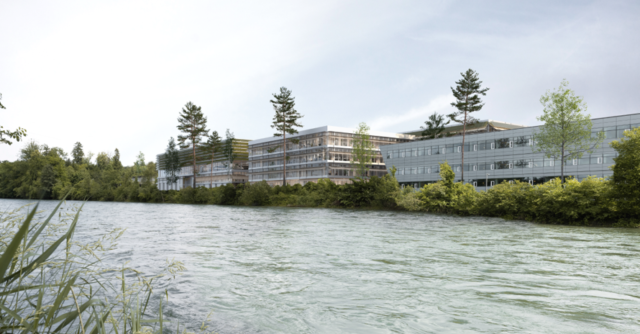
New SHL Medical AG building
The 5,000 m² office and 10,500 m² production building for the tenant SHL Medical AG is being built on the Tech Cluster Zug site. The compact design, the reduction in materials and the innovative hybrid construction of wood, steel and concrete promote resource-saving, efficient construction. Visible wood on the inside and a protective aluminium layer on the outside reflect the high quality standards. A 20% reduction in CO2 emissions is made possible by on-site concrete production using Jura Eco cement.
SHL’s energy supply is designed as part of the site-wide multi-energy hub. The energy supply is supplemented by lake water cooling and large-scale PV systems on roofs and façades. The surplus heat and energy is recovered for further use in the hub.
New Roche production building
Roche is investing 215 million in a new 29,000 m² diagnostics production building in Rotkreuz, which will be completed by 2027. The flexible design will allow the building to be adapted to future production needs, thereby increasing long-term efficiency. Sustainability is a top priority: a fossil-free energy supply, water circulation systems and resource-saving construction methods are planned. The surrounding area will be designed to be close to nature, with wet meadows, a fen and a roof garden at a height of 23 metres to promote biodiversity.
Tech industry The tech industry is one of the largest employment sectors in Switzerland. With around 14,000 employees and 750 companies, this sector is also important for the canton of Zug. The focus of the high-tech cluster in Zug is on the development, design and manufacture of electronic products and services. Digitalisation, the Internet of Things (IoT), robotics and artificial intelligence (AI) also play important roles.
Zug stands out as one of the most dynamically expanding technology centres in Europe. The canton of Zug is home to numerous notable SMEs and start-ups specialising in cutting-edge and pioneering technologies. Their influence extends across various industries as they develop ground-breaking solutions based on emerging technologies. Access to various research and networking institutions such as the University of Applied Sciences (HSLU), the Innovation Park Central Switzerland and the Technology Forum Zug create the ideal framework for innovative, technology-driven companies.
Siemens Campus
The 81,000 m2 Siemens Campus Zug is a showcase project for digitalisation and sustainability and demonstrates how modern products and solutions can accelerate the digital transformation. It sets technological standards in every respect and shows how buildings and infrastructures can be developed from static, inactive objects into responsive and reactive objects. The campus combines everything a community needs: Fire protection, access and intrusion control, CCTV, CO detection, extinguishing, voice-controlled evacuation, room automation and much more.
Financial service providers Around 2,000 companies form a dynamic environment for financial services in the canton of Zug. Hundreds of companies from the fields of asset management, family offices and hedge funds are based in the canton of Zug.
In the private equity/venture capital sector, for example, Partners Group, Capital Dynamics, HBM Healthcare Investments, CAPVIS and Invision should be mentioned. Leading Swiss financial institutions and platforms are also based here, including the Institute of Financial Services Zug IFZ, the Swiss Private Equity and Corporate Finance Association SECA, the Swiss CFO Forum and the VQF, the leading self-regulatory organisation in the non-banking sector.
New Partners Group Campus
Partners Group, Switzerland
Partners Group’s new global headquarters consists of three buildings: the “Green Building”, an elongated, elliptical structure whose variously curved, terraced layers provide a richly planted, forward-looking counter-accent to the two brick buildings, which are modelled on historic factory buildings and evoke the past. This is Partners Group’s way of emphasising its focus as a company builder.
The building not only impresses with its architecture, but also with its high-quality infrastructure, including an in-house gym, canteen, daycare centre and car park.
Consumer goods The canton of Zug is also home to over 1,700 consumer goods companies with around 14,000 employees, which account for around a third of GDP. Zug is home to international and regional headquarters of leading brands in the areas of food and beverages (e.g. Anheuser-Busch InBev, Burger King, Coca Cola HBC), personal care (e.g. Galderma, Kenvue), textiles (e.g. Odlo, Hugo Boss) and sporting goods (e.g. Specialized). The automotive supply sector and the wholesale of raw materials and pharmaceutical products also play an important role.
Commodities trading Zug is a leading global trading centre for commodities, particularly in the areas of metals, (renewable) energy and agricultural commodities, with over 200 companies (e.g. Glencore, Shell) and specialised professionals. Key areas include headquarters, trading, supply chain, production, processing and marketing.
Headquarters, Supply Chain Management & Procurement In recent decades, Switzerland has developed into a leading location for international headquarters with over 1,000 companies. The canton of Zug has the highest density of headquarters with globally leading industry clusters.
A special centre for companies in the supply chain & procurement sector has developed here.
Centralisation enables cost-effective procurement and efficient management of production resources along the entire value chain. Large multinational companies such as Bossard, Glencore, Johnson & Johnson and V-Zug have located global supply chain and procurement functions here.
The cantonal structure plan regulates the main features of the desired spatial developments. It sets out in text and on maps how the cantons and municipalities should develop.
The need for more affordable living space is recognised by politicians and the canton: In addition to “conventional” flats, flats for families, affordable flats and flats for the elderly are also being built in the various areas.
A wide variety of site developments are taking place across almost the entire perimeter of the “valley communities”. In addition to the sites, the traffic situation is also being further developed and adapted to the increased utilisation: Examples range from the conversion of bus stops to bypasses to relieve the burden on Cham town centre. This also includes car-sharing concepts, such as at the Papieri site in cooperation with AMAG.
A lot is also happening in public transport. In future, the Papieri site in Cham is to receive an express bus via the bypass motorway and the Unterfeld Süd site will have a bus stop in the neighbourhood.
Sustainability plays a decisive role in new projects in particular. The Zug area plays a pioneering role in this respect. The Papieri site in Cham was honoured with the prestigious Watt d’Or award from the Swiss Federal Office of Energy. This emphasises the site’s initiative in the field of renewable energies. A climate-neutral district is being created here that relies entirely on renewable energy sources and covers 75% of its energy requirements on site. The innovative technologies contributing to the high level of energy self-sufficiency include hydroelectric power plants and photovoltaic systems. Geothermal energy is used for heating and cooling.
The sustainability certificate, awarded by the Swiss Sustainable Building Council to Suurstoffi in Rotkreuz, recognises the sustainable construction methods and holistic planning of the project. The award proves that the highest standards in terms of energy efficiency, mobility and biodiversity have been met. The projects show that Zug not only assumes ecological responsibility, but also serves as a model for forward-looking urban development in Switzerland. By utilising innovative concepts and technologies, the canton of Zug is positioning itself as a pioneer in the sustainable design of urban living spaces.
The other sites are also impressive. The construction of a high-rise building in timber construction is planned on the Tech Cluster site. The “lighthouse project” called “Project Pi” envisages the construction of an innovative residential tower block. With a height of 80 metres, the plan is to build one of the tallest timber high-rises in Switzerland with affordable flats.
Baar – Unterfeld Süd A mixed-use neighbourhood with around 400 residential units and around 1,000 workplaces is planned for the Unterfeld Süd area. The basic structures were defined by representatives of the population of Baar together with experts under the leadership of the municipality. The development plan for the first of three construction phases was put to the people of Baar for a vote on 22 September 2024. The plan was approved with 74 per cent of votes in favour.
The realisation of the first stage includes the high-rise building at the Baar Lindenpark light rail station and the neighbouring commercial building. These will be transferred to a joint development plan. The earliest possible start of construction of the first stage is planned for 2025. The remaining building plots will be developed in parallel and realised in subsequent construction phases. According to current planning, Implenia’s project will be completed in 2029, provided the subsequent plans are approved by the relevant authorities and construction proceeds according to plan.
Hinterberg South (Städtler Allmend) The Hinterberg Süd site in the Städtler Allmend employment area in Cham will become a new, lively and easily accessible working and shopping centre for the local population. It offers attractive space for new companies to set up shop and ground-floor uses for the neighbourhood. The upper floors of the office buildings offer flexible spaces that can be customised to the individual needs of future companies.
Publicly accessible uses such as a restaurant, café or bakery are located on the ground floors. They offer workers, shoppers, visitors and passers-by various consumption options and contribute to the revitalisation of the area and the entire neighbourhood. The four buildings surround a public square – the actual centrepiece of the site, which is open to the general public as a place to meet and spend time.
Bösch Hünenberg In order to meet the requirements of a growing service and commercial area, the infrastructure needs to be adapted. The Bösch area should become more attractive for workers and companies and offer space for 6,000 jobs in future. This densification is provided for in the cantonal structure plan. It is binding for the municipality of Hünenberg. The vision is for the Bösch area to develop into a modern and urban place of work that is attractive to investors. To this end, space is to be created through structural densification, which can also lead to an increase in jobs. A holistic landscape design and well-organised mobility will ensure a better quality of life in Bösch. New leisure, supply and catering facilities ideally complement everyday working life in Bösch. On 9 December 2024, the municipal assembly will decide on the road credit of CHF 2.9 million to finance the first stage of the implementation of the operating and design concept in Bösch.
LG Zug Due to its size and prominent location, the LG site is of central importance for the urban perception and urban character of Zug. A lively urban district with a convincing architectural design is to be created on the site of the former industrial area. With the necessary development plan, the planning and building law of the Canton of Zug ensures high-quality development and realisation.
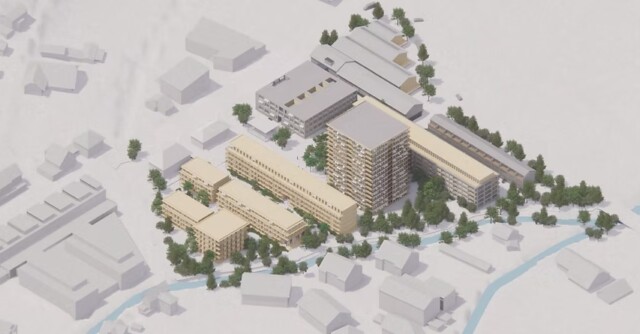
Papieri Cham The Cham Group is developing a new residential and working neighbourhood with industrial charm on the Papieri site. Directly on the River Lorze, the distinctive existing buildings of the former paper factory are being supplemented with striking new buildings and realised in a sustainable way. A new meeting place with supra-regional appeal is being created here, where past and present go hand in hand. A new urban district with around 1,000 flats and 1,000 jobs is being built in several stages over eleven hectares on the site of the former paper factory. It is not being built on a greenfield site, but in the midst of buildings steeped in history: The conversion of characteristic existing buildings preserves the connection to the past – the industrial roots of the neighbourhood remain tangible.
They are complemented by striking new buildings, including five tower blocks with impressive views. The new neighbourhood directly on the Lorze offers an attractive mix of commercial space, flats, lofts, workplaces, studios, open spaces and public-oriented uses. All of this on a sustainable and well-balanced site that maintains – and continues to write – its own history.
The Papieri site creates new foundations for an energy-efficient, climate-neutral and sustainable society. It is a pioneering project throughout Switzerland.
Spinning mill on the Lorze Many threads once ran together in the largest spinning mill in Switzerland. The construction of the spinning mill on the River Lorze shaped the development of Baar in the middle of the 19th century. A new, lively neighbourhood with shops, cafés and other local businesses is being created around the historic spinning mill building, which characterises the public pedestrian zone. In addition to family flats and affordable flats, there will also be flats for the elderly. These will be complemented by vegetable gardens, green façades and shady trees.
Suurstoffi The Suurstoffi site was the first site in Switzerland to be awarded the DGNB platinum certificate for sustainable neighbourhoods in planning and construction by the Swiss Sustainable Building Council (SGNI). The DGNB certification confirms that Zug Estates has realised a prime example of sustainable site development with the Suurstoffi site in Rotkreuz. It meets the comprehensive quality requirements of the DGNB certification system, which includes criteria such as energy efficiency, CO2 emissions, life cycle assessment, grey energy, flexibility of use and recyclability of the materials used. The Suurstoffi site is one of the first lighthouse projects of the last 10 years. This also includes the “XUND” health education centre, for which one of the last buildings is currently being completed.
Tech Cluster From June 2018 to May 2019, five renowned Swiss and one Austrian team took part in an overall performance study to explore how affordable living in a high-rise building can be made possible using state-of-the-art construction methods and sustainable materials. At the same time, a study contract was drawn up for an overall urban development concept for the surrounding area of the city of Zug between Baarerstrasse, Göblistrasse, Industriestrasse and Mattenstrasse.
The Tech Cluster Zug builds on the preliminary investments made by V-Zug and other companies in the Metall Zug Group. Its potential lies in the diverse relationships and synergies between the future users. These will transform the current factory site into an innovative and exciting part of the city of Zug.
Since October 2023, the Unterfeld energy centre has been supplying several Zug neighbourhoods and parts of Baar Süd with climate-friendly heating and cooling in stages. Thanks to the use of lake water as the main energy source, the plant meets the growing demand for environmentally friendly energy. With its modern technology, the centre demonstrates how the heating and electricity sectors can be intelligently linked. This model shows the future of energy supply and reduces the need for individual heating and cooling systems through centralised generation.
Sector coupling as the key to the energy transition Sector coupling links the energy sectors of electricity, heat and transport, thereby contributing to the stability of the electricity grid. At the Unterfeld centre, technologies such as “Power-to-X” are used to efficiently convert surplus electricity and reduce the load on the power grid. This innovative approach plays a key role in decarbonisation and makes an important contribution to achieving climate targets. The proximity to the Herti substation also creates optimal conditions for combined heat and power generation and the utilisation of renewable energy sources.
Efficient and space-saving solution for the region The Circulago energy network offers a space-saving solution for energy supply in Zug, where space is scarce and expensive. The centralised generation and distribution of heating and cooling eliminates the need for individual heating systems and increases the efficiency of energy distribution between the city of Zug and Baar South. The network not only significantly reduces CO2 emissions, but also ensures stable prices and economic planning security in the long term – a decisive advantage for investments in new buildings or when replacing existing heating systems.
Long-term benefits for buildings and industry Circulago enables buildings and industrial plants to be connected to a district heating system that provides a reliable and low-emission source of energy. By combining modern storage technologies with renewable energies, the network increases overall energy efficiency. In addition, the centralised heat supply relieves buildings of the investment and reinvestment costs that would be incurred with individual heating solutions. With these advantages, Circulago is creating a strong basis for the economic future and sustainable energy supply in the region.
Golf Sempach has expanded its golfing facilities to include an indoor area. According to a press release, from 17 January 2025 golfers will be able to train indoors in first-class conditions in Hildisrieden. Modern technologies allow for maximum training efficiency. For example, precise target lines for putting can be created on the indoor field by means of projection. The practice facility for pitching and chipping provides effective training for all types of shots.
During swing analysis, radar systems provide detailed club and ball data with more than 40 parameters. Data acquisition is supplemented by a moving floor that can simulate variable ground inclinations. In addition, three high-speed cameras record movement and ball contact from every angle for later video analyses.
In a fitness area, golfers can tackle targeted endurance, stability and strength training on the latest generation of Technogym equipment, thus creating “the perfect basis for a biodynamically optimised and precisely controlled golf swing”.
As Golf Sempach reports, the Performance Centre sets new standards throughout Europe. “The high-end technology used meets Professional Tour standards and gives ambitious players in Switzerland access to world-class training facilities,” Daniel Weber, Managing Director and owner of Golf Sempach, is quoted as saying.
The canton of Lucerne is joining forces with the Lucerne University of Applied Sciences and Arts to promote circular construction. The two partners have launched the Eco-Design in Building Construction tender, the cantonal state chancellery announced in a press release. Circular building projects are to be subsidised with a total of 200,000 Swiss francs in the coming year. Particularly innovative projects will also receive a material passport and consultancy services.
Building owners from the private and public sectors as well as planners can apply for funding digitally from 13 January until 16 May. It does not matter whether the projects have already been realised or are still in the planning or implementation phase. However, the prerequisite for funding is that it is a construction project in the canton of Lucerne.
We are looking for projects that follow the eco-design approach. According to this approach, buildings are designed to be durable and circular. In order to receive funding, the project should also have the character of a lighthouse, according to the press release. The canton and university want to use this to raise the profile of opportunities for sustainable construction and the circular economy and provide planners with the relevant knowledge.
How is the Zug economy doing? Zug is praised in numerous specialist publications and in the media for its diversified economy – services, trade, manufacturing industry and commerce. Growth is still above the Swiss economic average of 1.2% and has so far proved resilient to global or technical upheavals. Thanks to the positive financial results, the city of Zug, together with private households and the flourishing economy, is an important pillar for further growth in the coming years.
How does the city of Zug plan to ensure its economic growth is sustainable in the coming years, especially given the strong focus on the financial and crypto industries? Sustainability also means that we look after the companies based here and are reliable partners and employers. It is therefore important that we continue to have strong legal certainty in Switzerland and Zug. We offer a strong education system, have short distances to the city and canton, maintain great local recreational areas and have good road and rail connections to Lucerne and Zurich.
Zug is experiencing high demand for residential and commercial space. What long-term solutions does the city see to promote residential construction while maintaining the quality of life? Many years ago, we demanded the framework conditions for the V-Zug site/technology cluster development plan and the LG site development plan with a letter of intent. In both of these cases, we defined 10,000 m2 of affordable housing and affordable commercial space. We have also been working closely with Zug’s building cooperatives for over 10 years. We also recently purchased an area right next to the railway station for 65 million. This is to be used for the construction of affordable housing. The mix of flats still needs to be defined and will ultimately be put to a referendum. Here, too, it is to be sold under building rights. This is because the building cooperatives know what the people of Zug need in terms of housing. In addition, the city of Zug is working closely with landowners to develop development plans in cantonal densification areas that permit high densities. The municipal high-rise building regulations form an important legal basis for this. As part of these measures, increased attention is paid to the quality of the open spaces on the sites themselves, as well as the other public open spaces. In the spirit of a “city of short distances”, the inner-city open spaces and leisure infrastructure, as well as the natural and landscape areas, should be easily accessible, especially by public transport, on foot and by bike.
What new projects and initiatives is the city of Zug planning to promote sustainable urban development? There are many new projects in the city of Zug. They all have to take equal account of social, economic and ecological aspects. In this respect, each of our projects should already support sustainable urban development. Perhaps you will allow me to give you two examples in which we are also playing a pioneering role. For example, an internal strategy project is underway to check whether we are well organised and sufficiently fit to master the future challenges of sustainable development. Or in the area of climate adaptation: we are currently installing temperature sensors throughout the city to identify heat islands and take targeted measures.
The issue of affordable housing is becoming increasingly important. What measures is the city taking to ensure that Zug remains attractive for less affluent people? The city council is already calling for affordable housing to be created on at least 20% of the additional eligible floor area in residential and mixed zones when issuing ordinary development plans. Following the adoption of the “2000 flats for Zug’s middle class” initiative, affordable housing of at least 40% of the newly constructed living space must be created in residential and mixed zones located in densely populated areas when issuing ordinary development plans and in the case of rezoning and upzoning. To be honest, however, this has also halted construction projects. We are currently working on solutions.
How important is citizen participation in municipal projects to you, and what opportunities do the residents of Zug have to contribute their ideas and opinions? The city of Zug has a strong and long-standing culture of participation. Public participation projects on various topics have been held regularly since the 1990s. The online participation portal “mitwirken-zug.ch” has also been available since 2020.
Traffic in and around Zug is increasing. What is the city’s plan to bring the transport infrastructure in line with growth and strengthen public transport at the same time? Unfortunately, the city tunnel was rejected and solutions must be found nonetheless. The city of Zug is working closely with the cantonal civil engineering office to develop a joint transport plan for the vibrant centre of Zug. The city’s aim is to ensure that the existing road space is available to all road users equally and efficiently: Cars, public transport, bicycles and pedestrians. Fortunately, the city of Zug is small-scale, so many things can be done on foot or by bike.
What plans are there to further expand public transport in order to relieve commuters and reduce traffic in the city? The next major expansion step is planned for the opening of the Zimmerberg tunnel. This will be around 2035 to 2037. Until then, public transport will continue on the current routes and the frequency will be adapted to demand. The public transport system will thus be adapted to the needs of the municipalities on a “small scale”. According to GöV, the municipalities have the option of purchasing additional services over and above those ordered by the canton. The city of Zug does this with the Zugerberg railway and on bus route 5, where it purchases additional cable cars and courses. This additional service, which is decided by the city parliament, gives the city of Zug flexibility over and above the service determined by the canton. However, it is clear that the service ordered by the canton is excellent and that the municipalities hardly need to make any improvements. The city of Zug already has excellent public transport connections in all neighbourhoods. Additional courses significantly reduce the cost recovery ratio. The cost recovery ratio to be achieved according to the GöV is 40%. Personally, I would like the S-Bahn to offer double-decker trains.
How does the city of Zug support the expansion of educational facilities in order to address the shortage of skilled labour and at the same time strengthen Zug as a location for education? Education is our only resource and this is where the city of Zug invests the most money. The design of attractive school buildings as places to work and learn, with the involvement and participation of pupils and teachers in the planning process, are key concerns. In addition, there are attractive childcare and leisure facilities for children and families as well as a modern ICT infrastructure. In addition, forward-looking and innovative projects and collaborations such as the school portal – where parents can communicate online with teaching and support staff and the school administration – the DigiWerkstatt and the inclusion of AI in lessons are being driven forward. However, it is also important that we meet the needs of companies and actively support the dual education system. A great project is underway here!
What role does the promotion of innovation play in Zug and how is the city planning to establish itself as a centre for pioneering technologies and companies? The promotion of innovation plays a central role in the city and canton of Zug in positioning the city as a centre for pioneering technologies and companies. One important point is: we try things out. For example, following a presentation by a student, we decided to accept Bitcoin as a means of payment in the city of Zug, which caused a worldwide furore. Today, the city of Zug is THE Crypto Valley worldwide with over 4000 employees in over 800 companies. True to the motto: “no risk, no fun”. We will continue to be innovative! Targeted measures and programmes are designed to strengthen the innovative power of the city of Zug so that the environment becomes even more attractive and motivating for companies and, above all, for employees. You can move mountains with innovative projects and motivated people. The framework for this is provided by the development strategy for the city of Zug adopted by the City Council in autumn 2021: “Zug remains Zug – liveable, visionary, vibrant”. It is an overarching management tool with a long-term perspective to help shape the future of the city of Zug. Innovative economy, green city, strong community, healthy finances – these are our credos for the future.
What is your long-term vision for the city of Zug? What goals are you determined to achieve in the coming years? As a growing business location with excellent conditions for companies and skilled workers from near and far, we cultivate our economic diversity and position ourselves specifically through future-oriented industry clusters. We are developing Zug as a green city in a sustainable and resource-conserving manner and are planning mobility, space and energy in a visionary way.
In the tension between tradition and modernity, we promote dialogue and create an inspiring framework for a vital, diverse and cosmopolitan urban community. And to maintain our healthy finances, it is important to ensure competitive framework conditions, make future-oriented investments and secure our tax base in the long term. In addition to all impact targets, we promote lifelong learning, utilise the potential of diversity in the population, economy and culture for pioneering lighthouse projects for change and use incentives to steer change.
Zug is committed to more climate protection. Can you give us an overview of the most important measures that are currently being implemented to reduce CO2 and increase sustainability in the city? When it comes to climate protection, the focus is on moving away from fossil fuels. All heating systems must be able to run on local renewable energy in the medium term. Compliance with modern building standards and, together with Wasserwerke Zug (WWZ), the expansion of district heating are at the forefront here. We have brought Circulago into being. We take cold and heat from the lake and thus have a “battery” on our doorstep. At the same time, we also want to upgrade our own properties, produce our own electricity and get rid of fossil-fuelled heating systems. The introduction of CO2 monitoring and many larger and smaller measures as part of the “Energy City” programme, where we have also been certified with the “Gold” label for 2023, will help us achieve this. I am convinced that we can supply ourselves with energy. We have innovative companies such as Siemens, Landis & Gyr, V-Zug, the technology cluster and many more companies in Zug that all offer these technologies and innovations. It’s certainly been 10 years since Siemens showed us that the technology for local self-sufficiency already exists, so let’s do it!
Where do you see the city of Zug in 20 years’ time? In 20 years’ time, the city of Zug should be a liveable, innovative and sustainable place that offers both economic dynamism and a high quality of life. In other words, we will have made Zug even more attractive for companies and skilled workers, while at the same time creating space for a strong community. Zug’s role as an international business and financial centre has been strengthened, particularly in the area of digitalisation and new technologies such as blockchain and AI applications. Thanks to sustainable urban planning and environmentally friendly infrastructure, the city of Zug is climate-neutral. We have attractive places to live and work, green recreational areas, attractive cultural offerings and a diverse infrastructure for education, leisure and health. Zug has made a name for itself as a centre of education and innovation that is networked with tertiary education institutions and research facilities. We have intelligent traffic management and an efficient infrastructure that meets the needs of a growing population and is designed to be sustainable. Progress is being made step by step – I am delighted!
Located within the Greater Zurich Area (GZA), Zug is one of the world’s leading economic regions. The location boasts an excellent infrastructure, great potential for young talent and political and economic stability.
Both the municipalities and the canton of Zug are constantly evolving and adapting to the requirements. With innovative projects, such as a bypass to relieve congestion in the centre of Cham, lake water that will regulate the temperature in the houses in residential areas in the future and exciting projects, such as the Association for Decarbonisation or the Climate Charter Zug, the canton is shaping a modern image with ambition.
Numerous areas of historical significance are being renovated and converted to create attractive mixed-use developments comprising residential, work and commercial space.
As a result, Zug remains a canton worth living in, which is also reflected in a high level of life satisfaction.
Zug is not only appreciated by its 133,000 residents, numerous independent ratings and studies also confirm Zug’s outstanding position. For example, Zug has been ranked first among the Swiss cantons in the Credit Suisse and UBS rankings for 24 years. The basic principles of business friendliness, service orientation and a culture of innovation make the canton of Zug an ideal partner for companies, educational institutions and research institutes.
Testimonials
Andreas Klopp General Manager Roche Diagnostics International AG
“Rotkreuz is located in the Zurich-Zug life sciences cluster and offers ideal conditions for driving innovation thanks to its excellent infrastructure and high quality of life. For over 50 years, Roche in Rotkreuz has been contributing to the health of patients worldwide with diagnostic solutions.”
Dr Katja Buller Vice President, Head of Corporate Affairs International, Biogen
“Local and international specialists, “Local and international specialists, a multi-layered infrastructure and professional cooperation with the authorities have made the canton of Zug the ideal location for our international headquarters for more than 20 years”
Katharina Gasser President of the Zug Chamber of Commerce
“Our members appreciate the business-friendly conditions in the dynamic and innovative Canton of Zug. The authorities are service-orientated, make decisions quickly and work efficiently; the unique “spirit of Zug” is palpable.”
Hanspeter Rhyner Chairman of the Executive Board, Zuger Kantonalbank
“Zuger Kantonalbank combines tradition and modernity. This is precisely the DNA of the attractive location of the Canton of Zug. Digital AND personal – this is how we meet the needs of our customers in line with this DNA. And we can fulfil all needs and accompany you through life.”
There has been a change in management at the Seewen-based timber construction company Strüby. According to a press release, Ivo Steiner has been fully responsible as the new CEO since December 6. The 45-year-old business economist from eastern Switzerland took up the position as designated CEO on June 1, 2024 and underwent an intensive induction phase.
In the press release, the Board of Directors states that Steiner is “a perfect fit for the operational leadership” of the company “thanks to his solid education, extensive management experience at several companies and his down-to-earth, pragmatic personality”. Strüby has over 400 employees.
The current CEO, Anton Strüby, will in future assume his strategically important role in the company as Chairman of the Board of Directors. In this role, he will contribute his expertise and network for the benefit of the company, according to the press release.
Zug Estates is tackling the final construction project in the development of the Suurstoffi site in Rotkreuz, which began in 2010. The Zug real estate company announced in a press release that the ground-breaking ceremony for the two new buildings Suurstoffi 43 and 45 was held at the beginning of December together with representatives from the authorities and project partners. Together with a central park, they are due to be completed by mid-2027.
Zug Estates is creating around 14,400 square metres of office and training space in the two new properties. A further 1,100 square metres have been designed as living space for student accommodation. Once completed, the Suurstoffi 45 property will be home to the Central Switzerland Health Education Centre(XUND). The training centre is relocating from Alpnach OW to Rotkreuz in order to meet the growing demand for practical healthcare training and changing training models. XUND and Zug Estates signed a long-term rental agreement for Suurstoffi 45 in September.
The final development project for the site “fits seamlessly into the Suurstoffi site, both architecturally and in terms of sustainability”, writes Zug Estates. “The existing, almost emission-free energy system” will have another geothermal probe field. The proportion of grey energy will be lower than in comparable properties thanks to a reduced basement level and the optimisation of façades, building services and statics.
The winning project by Credit Suisse Investment Foundation and HRS Real Estate AG was selected as part of a two-stage competition process. It combines public space, commerce, gastronomy and various forms of housing to create a neighbourhood that will be lively around the clock.
Living, working and recreation combined The development plan allows for a balanced mix of uses, making the neighbourhood attractive for different target groups. There are plans for 272 flats, 50% of which will be affordable, as well as a boutique hotel in the listed south wing of the old hospital. Additional areas for catering, commerce and public services will create a diverse offering. The “Süd-See Hub” construction area in particular is geared towards public uses and is set to become a popular meeting place.
Open space design takes centre stage The “Süd-See Zug – für üs alli” concept focuses on open spaces to make the neighbourhood more attractive. The “Stadthof” as a central square opens up to the lake and connects the old town with the water. A public roof garden, green courtyards and squares offer additional space for recreation and quality of stay. The lakeside terrace and the park promote biodiversity and create a connection to nature.
A well thought-out process The detailed development phase begins once the building lease has been signed. The Credit Suisse Investment Foundation, together with HRS Real Estate AG, will assume responsibility for the realisation of the architectural competition. This exciting project illustrates how a historic site can be transformed into a lively and inviting environment through innovative solutions and planning. The transformation of the former Zug Cantonal Hospital will not only enrich the architectural landscape of the city, but will also make an essential contribution to the quality of life of the population and further strengthen Zug’s position as a sought-after place to live and work.
in 1896, Richard Theiler laid the foundation stone for the Electrotechnical Institute, which later became world-famous as Landis Gyr, with the construction of the Theilerhaus. The importance of the Theilerhaus for the people of Zug cannot be denied and its preservation became a priority in 1989 when the Canton of Zug acquired the site in order to preserve it for future generations.
Preservation of historical substance The Canton of Zug has developed a comprehensive concept entitled “The Theilerhaus and its spirit”. This outline of ideas aims to preserve the “spirit” of the buildings and to bring together aspects of economy, technology, architecture and culture in a holistic framework.
Refurbishment in keeping with the heritage The maintenance measures extend to all existing old buildings, focussing on earthquake safety, fire protection and accessibility. The renewal of windows, sun protection and roof cladding as well as the insulation of the Shedhalle are important steps towards meeting the requirements. The new building in the eastern area respects the historical substance and creates an appealing overall urban structure.
A new urban accent The planned new building complements the urban ensemble and consists of a five-storey head building and a four-storey intermediate building. This design, which is connected to the high-rise building by a modern stair tower, blends harmoniously into the existing surroundings and strengthens the identity of the site.
The Shedhalle as a cultural, creative space Once the renovation work has been completed, the Shedhalle will not only function as a place of remembrance of the past, but also as a lively space for cultural and artistic events. This use offers added value for the people of Zug and emphasises the versatility of the site and its relevance in today’s world.
Forward-looking project Overall, this project represents a significant step in the urban development of the Canton of Zug and should benefit future generations. The planned measures emphasise how important it is to view historical heritage as part of a living, constantly evolving society and to shape it accordingly.
Sintio AG has successfully completed a seed financing round, the specialist for charging solutions, which was founded in 2020, announced in a post on LinkedIn. The Innovation Foundation of Schwyzer Kantonalbank (SZKB) has joined Sintio as lead investor. “The foundation has already successfully supported numerous technology start-ups in Switzerland and we are delighted that it will contribute its expertise and network as a reliable partner to the further development of our company,” writes the young company from Freienbach in the post.
Sinito has developed software for the intelligent operation of charging solutions for electric vehicles and launched it on the market in 2022. “The Sintio software enables the measurement, control and individual billing of charging energy, which is particularly useful for property management companies and companies with real estate portfolios,” writes the SZKB Innovation Foundation in a separate post on LinkedIn. The amount of the foundation’s investment and the total funds raised in the financing round are not communicated in the posts.
The Schlieren-based Halter Group is to become the majority shareholder of Pilatus Arena Sports & Events AG (PASE) in Kriens, according to a press release. Halter will become the majority shareholder with a 70 per cent stake. caranto AG from Lucerne, which specialises in real estate management and stadium catering, holds 30 percent. The Pilatus Arena is being built in the Mattenhof neighbourhood of Kriens and will provide space for sporting and other events. The arena has space for a maximum of 4,500 spectators and is scheduled to open in the fourth quarter of 2025. The interior work is currently underway.
The project was launched by Toni Bucher and Nick Christen in 2011 and has been under the lead management of Halter AG since 2018, according to the press release. Pilatus Arena Sports & Events AG (PASE) was founded in November and will be responsible for operating the arena.
The arena will be the new home of handball club HC Kriens-Lucerne. According to Halter’s press release, the focus will also be on international matches, national finals, world and European championships, concerts, corporate events, congresses and school and university sports. As general tenant of the arena, the operating company PASE is responsible for the organisation and marketing of these events.
“The fact that the Halter Group is now also significantly responsible for the operation of the Pilatus Arena is an ideal constellation. The cooperation between the partners is well-established and the competences complement each other perfectly,” says Toni Bucher, Chairman of the Board of Directors of the client Pilatus Arena AG.
Mayor André Wicki opened the event with an inspiring look at the economic future of the city of Zug. Under the motto “Zug remains Zug – liveable, visionary, vibrant”, he emphasised the challenges associated with sustainable growth, affordable housing and climate protection. His visions emphasise the aspiration to further develop Zug as an innovative and attractive place to live and do business.
Sustainable strategies and economic success Beat Bachmann presented the “Spirit of Zug” long-term strategy, which strikes a balance between growth and resource consumption. Regional cooperation and attractive conditions for companies will strengthen the region as a leading business location. The innovation platforms, such as HSLU and the Tech Cluster Zug, promote technological advances in areas such as energy, mobility and decarbonisation.
Successful projects for modern living and commerce Lukas Fehr presented the award-winning “Papieri Cham” project. The neighbourhood combines historical substance with modern new buildings, sustainable architecture and green open spaces. With around 1,000 flats and 40,000 square metres of commercial space, the Papieri site sets new standards for sustainable living and working.
Material innovation in timber construction Pius Kneubühler spoke about the advantages of board stack constructions made with Swiss timber and minimal glue. This technology promotes sustainable cascade utilisation and combines high load-bearing capacity with an excellent carbon footprint. Material identity is at the centre of sustainable construction.
Water treatment and infrastructure safety André Spathelf rounded off the event with a comparison of the Swiss market leaders in water treatment. He emphasised the importance of a proactive approach to monitoring and maintaining water networks. This approach ensures the quality and sustainability of vital infrastructure.
The 103rd immoTable Zug once again demonstrated the importance of dialogue between business, science and politics in shaping a sustainable future. Visionary projects, technological innovations and economic strategies strengthen Zug as a leading region in Switzerland.
Lynus has founded Enerfin AG. The Tuggen-based technology company, which specializes in energy systems for the optimal use of renewable energy, announced in a press release that the new subsidiary will be responsible for tenant electricity contracting. Specifically, Enerfin will plan, finance, set up and operate tenant electricity systems. Property owners will share in the profits. The new company already has 300 residential properties with around 2,400 residential units in its portfolio.
Enerfin uses Lynus software and hardware to optimize energy systems in residential buildings. The technology company’s software uses machine learning “to predict and control the energy flows in the building – right through to the connection to our virtual power plant”, explains Paul Hauser, CEO of Enerfin and Lynus, in the press release. “In this way, renewable electricity is used optimally.”
By connecting the properties’ energy systems to Lynus’ virtual power plant, property owners can realize a higher profit than with conventional tenant electricity contracting, writes Lynus. The background to this is the marketing of the flexibility that results from the forecast of energy generation and consumption created using machine learning. “Enerfin combines benefits for tenants and landlords with the advantages of intelligent tenant electricity solutions for the electricity grid and the climate and makes the whole thing as simple as possible for users on both the supplier and consumer side,” says Hauser.
Energie Ausserschwyz AG has completed work on the core renewal and expansion of the district heating network in the center of Lachen. “We are very happy and proud to have reached this milestone,” said Philipp Züger, Head of District Heating Construction at Energie Ausserschwyz AG, in a press release issued by the company. The district heating network of Energie Ausserschwyz AG has currently reached an extension of over 26 kilometers.
From the fall, around 40 customers in Lachen will receive district heating from the wood-fired power plant in Galgenen. Energie Ausserschwyz has invested around CHF 15 million this year in the expansion of the network, which will be in place from 2021. Further areas in Lachen are to be connected in the coming year. Specifically, the press release mentions Neuheimerstrasse, Zürcherstrasse and Säntisweg. “Interested parties are welcome to contact us,” explains Züger. “We will then be happy to clarify when a connection is possible.”
Energie Ausserschwyz AG was founded in 2020 and its main shareholder is EW Höfe AG from Freienbach SZ. The company sells heat and electricity from a wood-fired combined heat and power plant and a biogas plant at the energy center in Galgenen.
Mrs Thalmann, you have been the mayor of the canton of Zug since 2023 and head the Department of Economic Affairs. It houses ten offices from the fields of business, education and social insurance and works with third-party partners from the fields of business and vocational training. How do you see the economic development of the Canton of Zug over the next five years? Very well. The financial situation of the Canton of Zug continues to develop positively and the canton has a high level of equity. The 2025 budget anticipates an income surplus of CHF 226 million. The very good earnings situation allows the canton to maintain its attractiveness as a business location. Such surpluses consolidate its already very good position. The canton of Zug can continue to position itself as a financially sound and attractive location for companies and a highly qualified workforce. The canton of Zug wants to maintain its position as an economically successful and attractive business location and residential canton. The political debate is ongoing. Large sums will be allocated in the 2025 budget and in the planning years 2026-2028 for contributions to supplementary childcare for pre-school and school-age children, the increase in the cantonal contribution per pupil to recognised public schools and the promotion of research into blockchain development. The increase in the canton’s share of inpatient healthcare costs will also be taken into account. The “Added value for all” package, which provides for tax relief for the people of Zug, businesses and the economy, will result in lower revenue.
These measures, which the cantonal government intends to implement specifically for the benefit of the people of Zug and the economy, are possible thanks to the high revenue surpluses in previous years and the very solid equity capital. The expected additional income from the introduction of the OECD minimum tax is to be returned in full to the population and the economy.
What is the Canton of Zug doing to remain an attractive location for companies in the future? It is the overall package of several factors that is decisive. The basic principles are business friendliness, service-orientation and a culture of innovation.
The canton has significant clusters in various sectors and is an attractive location for established and up-and-coming local and international companies. A dense network of service providers, suppliers and private institutions support value-enhancing growth. Economic support for local companies is a top priority. The authorities support companies in their long-term growth. To this end, they offer access to the Zug business network. The lines of communication are short; concerns are dealt with quickly and in a solution-orientated manner.
Which sectors are the focus of location promotion and how does the canton of Zug support their development? The canton of Zug has been pursuing a good framework policy for all sectors for decades and wants to maintain its attractiveness. Various industries have formed clusters; the industry groups are broadly diversified: Wholesale incl. consumer goods and commodities trading; high-tech / deep-tech industry; life science including pharma / biotech / medtech; finance with asset management / private equity / family offices; ICT including fintech and blockchain; headquarters as well as global procurement & supply chain functions.
The focus is on the growth of the resident companies. In addition, new companies, especially value-added intensive companies, are moving here. I am delighted when companies from the second sector prosper in our canton. V-Zug, Siemens and Roche are just a few examples of very high value-added companies.
The Zug economic region is larger than the canton of Zug. Access to a talent pool of potential specialists is sometimes an important reason for choosing Zug as a business location. There is no individual company promotion policy or cluster policy. What counts is a good economic environment with attractive taxes, well-trained skilled labour, a functioning infrastructure with short administrative distances. Then there is the proximity to the ETH, university, etc. and the regional universities of applied sciences, the quality of life in terms of landscape and culture, the accessibility thanks to the location in the heart of Europe with the connection to the airport in Zurich.
How important is the tax policy of the Canton of Zug for attracting companies? Attractive taxes are an argument in favour of choosing a location; they open the door to the shortlist. Ultimately, it is the overall package of locational advantages that makes the difference. The Canton of Zug has a long-term tax and financial policy, high net assets and an attractive tax environment. It also offers planning and legal certainty.
How does the Department of Economic Affairs support companies in the canton of Zug? 80 per cent of the energy is used for economic development. Companies should feel at home here. The team at the Business Contact Centre is very service-minded and is in constant contact with various stakeholders in order to maintain business-friendly conditions for local companies. They see themselves as partners and promote Zug as a business location, are networked and in dialogue with local companies, business associations, organisations, etc. They are committed to the concerns of Zug’s entrepreneurs; their satisfaction is the goal.
The property market in Zug is tight. What steps is the canton taking to create more living space? Finding living space is a major issue that also concerns the Zug government. The canton of Zug has just finalised a “Housing Policy Strategy 2030” with 19 measures that will be successively implemented. The main points are: more flats, more affordable flats and more flats for the local population. One of the aims is to increase the number of vacant flats to allow more movement. The resulting measures are Simplified and more flexible building regulations, such as adding storeys, superstructures or relaxing the requirements for high-rise buildings, should enable the construction of more living space. Existing building permit processes are to be reviewed and examined for simplification, acceleration and optimisation. By strengthening and simplifying the Housing Promotion Act, non-profit property developers should be able to obtain loans more easily and subject aid for needy households should be optimised.
The Government Council is prepared to initiate the corresponding amendments to the Planning and Construction Act and the Housing Promotion Act. In principle, it wants to achieve the housing policy goals with voluntary measures. Financial incentives should lead to a larger, more readily available and affordable housing supply.
What role does the canton play in promoting sustainable construction and energy-efficient property projects? On the one hand, the canton of Zug fortunately has investors who are taking on a pioneering role with regard to sustainable construction and energy-efficient projects. Examples include the Suurstoffi and Papieri sites and the Techcluster in Zug.
On the other hand, the cantonal energy law comes into play: when heating systems are replaced, at least 20 per cent of the heating requirement must be covered by renewable energies or energy efficiency must be increased to the same extent. In order to cushion the financial consequences for building owners, the cantonal energy promotion programme will provide generous subsidies for the replacement of heating systems and thermal insulation until 2032.
As mayor, you are also active in regional and national politics. What challenges do you see for the coming years? The challenge is to provide childcare to supplement family life in line with demand. Other tasks include finding answers to demographic developments and dealing with the increasing numbers of asylum seekers – the people of Zug are doing a great deal to integrate; the canton of Zug promotes integration, the loss of tax attractiveness (STAF, minimum taxation) and a clarified relationship between Switzerland and the EU with regard to access to the market.
Which upcoming property projects will influence the Zug economic region? The dynamic economic development of our canton has been and will continue to be strongly fuelled by the development of attractive sites for working and living. The focus on sustainability is particularly important here. Sites such as Suurstoffi (Rotkreuz), Papieri (Cham) and Techcluster/V-Zug (Zug) are already well-known projects with nationwide appeal. Upcoming major projects such as the LG site (Landis & Gyr) (Zug) or Unterfeld (Baar/Zug) as well as Hinterberg/Städtlerallmend (Cham/Steinhausen) will continue this sustainable development.
The canton of Zug is investing CHF 40 million in the establishment of the Institute for Blockchain Research. What do you hope to gain from this? We believe that blockchain technology has the potential to change many areas of our lives and we want to be at the forefront of this development. With Blockchain Zug, we are launching an innovative flagship project with international appeal. This educational project will further strengthen Zug as a business location, also against the backdrop of the OECD minimum taxation introduced on 1 January 2024. This is a measure that will help to secure the competitive position of the canton of Zug as a successful residential and business location. The canton wants to bring together the areas of research, education and business and promote innovation. The aim of the initiative supported by the canton is to make Zug a leading global centre for blockchain research.
Final question: Why should companies come to Zug? Zug has proven that it is a very attractive place to live and do business. Its success is based on a long-term development strategy. Decisive factors for choosing Zug as a business location are its business friendliness, the availability of skilled labour, decades of stability, the high quality of life and the short distances between Zug’s authorities, which work quickly and efficiently.
The relocation of the cantonal administration to the new Kaltbach administration and security centre opens up new opportunities for the subsequent use of the previous administration site. The canton of Schwyz emphasises its responsibility not to leave the vacant site to its own devices, but to establish a value-adding and centre-promoting use together with the municipality of Schwyz. The building rights are to be awarded to a private investor as part of an investor tender in order to drive the development forward.
Findings from the study process As early as 2022/23, the cantonal building construction office conducted a study to analyse potential uses for the site. This revealed the high attractiveness of the site for private-sector projects. Initial development concepts showed that commercial uses, combined with centre-promoting elements such as cultural spaces or green areas, could enrich the village in terms of urban development.
Roadmap to implementation The next steps include the preparation of a partial revision of the municipal utilisation planning, which should be completed by 2025. The subsequent procedural steps, including a referendum in the municipality of Schwyz, are expected to take until 2027. The planned timeframe until the structural realisation of a follow-up project extends until 2029, after the relocation of the cantonal administration.
An overview of the timetable
By the 2nd quarter of 2025: Preparation of the subzone plan revision
By the 1st quarter of 2026: Consultation and cantonal preliminary review
By the 4th quarter of 2026: Public consultation and objection negotiations
By the 3rd quarter of 2027: Referendum in the municipality of Schwyz
From 2029: Construction realisation
Sustainability and added value The target image for the site at Bahnhofstrasse 15 primarily comprises commercial uses, supplemented by publicly accessible areas. Green spaces and cultural facilities could further enliven the neighbourhood and contribute to the attractiveness of the location. The canton and the municipality of Schwyz see this project as an opportunity to strengthen the urban character and contribute to the economic and social development of the centre in the long term.
The subsequent use of the former AHV building is an important step for the future of the village centre of Schwyz. With strategic planning and clearly defined milestones, the canton and municipality are working to create a value-adding and sustainable neighbourhood. The invitation to tender for investors and the revision of the sub-zone plan are key elements on the way to creating a lively and economically attractive neighbourhood.
The Lucendro power plant in the Gotthard region on the territory of the municipality of Airolo will be jointly operated by the cantons of Uri and Ticino in future. According to a press release, this is the result of an agreement reached on 1 November. The agreement was reached thanks to mediation by the Federal Office for the Environment, Transport, Energy and Communications, which has been ongoing since 2022. According to the agreement, both cantons will each hold a 50 per cent stake in the future company, which will be based in Airolo. Uri will receive a majority share of the electricity. Technical operation and maintenance will continue to be ensured by Azienda Elettrica Ticinese(AET). Uri will take over the commercial management.
The power plant was built between 1942 and 1948 by the former Atel, which was later merged into Alpiq. in 2013, the two cantons decided not to renew Alpiq’s licence after the reversion. aET acquired the plant in 2015.
The power plant utilises water from the Gotthardreuss and Ticino rivers, which is collected in the Lucendro and Sella reservoirs. It produces around 103 gigawatt hours per year.
The Schlieren-based construction company Strabag AG is building a new bridge for non-motorised traffic next to the listed Hirschenbrücke dating from 1940. According to a press release, the bridge for pedestrians, bicycles and light vehicles connects the two villages of Lachen and Altendorf in the canton of Schwyz and carries traffic over the train tracks of the Zurich-Chur line. All road users currently use the same bridge. In order to increase safety for slow-moving traffic, the canton of Schwyz has planned an additional bridge to be built next to the existing bridge.
Construction work on the new pedestrian bridge will be completed by the end of 2024, according to the press release. Work on the connecting structures and road expansion will then follow in 2025. It is expected to take until the end of 2025 before the new bridge is opened to non-motorised traffic.
According to Strabag, the new bridge is very slender and has been designed as a three-hinged arch. This echoes the design language of the old Hirschenbrücke, which was designed by civil engineer Robert Maillart in 1940.
According to Strabag, extensive preparatory work such as securing the excavation pit and anchoring the foundations using micropiles preceded construction. The prefabricated bridge was lifted into place at night in just 3 hours and 15 minutes. In August, the civil engineering team lifted the two prefabricated arch elements weighing 27.5 tonnes into place. The work required the closure of the SBB railway tracks, the transmission line, the cantonal road and the railway track. In September, the two edge elements were also installed at night.
Roche laid the foundation stone for a new diagnostics production building in Rotkreuz on October 29. According to a press release, the pharmaceutical company will invest 215 million Swiss francs in one of the most important sites of its Diagnostics Division. Sustainability and energy efficiency have top priority.
The new building will replace an old production building, cover around 29,000 square meters and is scheduled for completion by 2027. The development and introduction of new tests and systems for the rapid and reliable diagnosis of diseases reportedly requires additional space that can no longer be provided by the existing infrastructure. “Roche is thus sending a clear signal of the importance of the Rotkreuz production site and underlining its clear commitment to Switzerland,” the company said.
Roche Diagnostics International AG develops, produces and markets diagnostic systems for clinics, laboratories and doctors’ surgeries in Rotkreuz with around 2,700 employees. It is the largest private employer in the canton of Zug.
“We are proud that here in Rotkreuz we will be making another important contribution to the healthcare sector in Switzerland and worldwide by providing answers to patients’ health issues with our diagnostic solutions,” said site manager Andreas Klopp. “This innovative and sustainable production facility will play a key role in this.”
On 24 November, voters will decide on a bill to amend the Planning and Building Act (PBG). The canton of Lucerne explains in a press release that the amendment to the PBG is intended to accelerate the expansion of renewable energies. Various measures from the planning report on climate and energy policy, which was approved by parliament in 2022, would require these amendments to the PBG. For example, in future, charging stations for electric cars should be planned directly when building car parks. The SVP parliamentary group rejected these changes as they believe that the production of renewable electricity should be voluntary and “not enforced by regulations”. The Centre, FDP, SP, Green and GLP parliamentary groups, on the other hand, approved the government council’s proposal. The cantonal council also voted in favour of the amendments to the PBG by 83 votes to 27. The referendum on 24 November will now take place because a committee has launched a referendum.
The cantonal government recommends that voters approve the amendments. “We are still investing too much money in importing fossil fuels from abroad. By investing in our domestic renewable energies, we are freeing ourselves from our dependence on foreign countries and generating even more added value here at home,” Fabian Peter, the cantonal councillor responsible for the legislative amendment, is quoted as saying in the press release.
Construction company Implenia has been awarded the contract by Andermatt Swiss Alps to build a large new hotel complex in Andermatt. According to a press release, the project is part of the overall development of the Andermatt Reuss district. A hotel & residences with 66 rooms, 164 apartments, a restaurant and a spa area are to be built in the vacation destination by the end of November 2027. Construction is due to start in spring 2025.
According to the press release, the hotel complex consists of three individual buildings. These are connected by a spacious lobby area on the first floor. The building will be a solid construction and connected to a district heating network. Groundwater will be used for cooling and a photovoltaic system will be installed on the façade. The construction contract also includes part of the access road and a snow protection roof.
The Buildings division in the Baumeister business unit was also awarded contracts for other major construction projects: Implenia is building two large, mixed-use residential developments in Köniz near Bern and in Zug, new school buildings in Binningen BL and Zug and a new community center in Pratteln BL. Handover for these projects is scheduled for fall 2025. This results in a total order volume of CHF 200 million.
Despite existing technologies and support measures, switching to climate-neutral forms of heating is still a challenge in Switzerland. In particular, high investment costs and uncertainty about the best technology are holding many owners back. This is where the Wesemlin neighbourhood in Lucerne comes in: In a collaborative project with the HSLU, the aim is to develop community-based, customised heating solutions that go beyond individual actions and involve the entire district in the energy transition.
The QUBE project – a model for change The QUBE research project by HSLU and Innosuisse is based on the assumption that community heating solutions achieve more than isolated measures. The transdisciplinary team developed a method to accompany such change processes that takes equal account of technical and social factors. The pilot project found a perfect test environment in the Wesemlin neighbourhood: residents, authorities and teams of experts worked together to establish climate-neutral energy sources. “Only by involving all stakeholders can we find viable and customised solutions for the local energy transition,” emphasises Prof. Alexa Bodammer from HSLU.
Community expertise as a driving force Initially unfamiliar, the open dialogue in the Wesemlin district brought decisive progress. Residents were able to contribute their own ideas, experiences and concerns, while the research team took on the role of technical moderator and incorporated technical analyses. Business partners and authorities supported the planning, offered data and helped to clarify funding opportunities. “Cooperative projects create possible solutions that would never be achieved through individual solutions,” explains Stefan Mennel from the Institute of Building Technology and Energy IGE.
Energy transition as a joint task The QUBE project impressively demonstrates that technical innovations alone cannot bring about the energy transition. Sustainable change can only be achieved if local residents are involved in shaping it and the solutions are socially accepted. Through workshops, information events and network meetings, technical and social expertise was pooled in order to develop an implementable and accepted energy strategy for the Wesemlin neighbourhood. “This collaborative approach acts as a multiplier for change,” says Bodammer.
Knowledge building and networking as a lever for success The collaboration with experts and authorities led to a great increase in knowledge at an individual level. Today, neighbourhood residents are well equipped for discussions with technical providers and energy suppliers. For Daniel Bolliger, resident and researcher at HSLU’s iHomeLab, the project demonstrates the value of collective engagement: “QUBE has opened up access to relevant stakeholders and energy providers – an opportunity that individuals would otherwise not have had.”
A model for the future The concepts for the neighbourhood energy transition developed as part of QUBE can be used in a variety of ways. The methodology for supporting and moderating cooperative processes provides a blueprint for similar projects in other neighbourhoods and cities. According to Stefan Mennel, interdisciplinary collaboration is the key: “Only through cross-disciplinary, cooperative collaboration can we ensure that everyone involved is properly understood.” This applies both within the project team and in dialogue with the residents of the neighbourhood. The QUBE project has shown that a sustainable, community-led energy transition is possible – a model for the future.
In future, the roofs of new buildings or roof renovations in the municipality of Sursee are to be fitted with solar panels. For flat roofs, the aim is also to green them. This was decided by the Sursee municipal council on 14 October with the majority approval of a counter-proposal to the municipal initiative for an independent and ecological energy supply (solar initiative). The initiative committee had withdrawn the solar initiative after the city council had drafted the counter-proposal.
The counter-proposal is in line with the new cantonal energy law, which will come into force on 1 March 2025, subject to a referendum. New buildings will then have to be equipped with 60 per cent solar panels, and 30 per cent for roof renovations. If the requirements are not met, a replacement levy of CHF 1,000 per kilowatt will be due. In deviation from cantonal law, this levy will only be possible in Sursee if the construction and operation of the solar system is economically unreasonable.
The new cantonal energy law does not specify any requirements for the greening of roofs. However, Sursee wants to use green roofs to improve the urban climate and as a substitute habitat for plants and animals. For this reason, a combination of green roofs and solar panels is being sought as standard on flat roofs.
The solar utilisation of façades called for in the solar initiative is not provided for in the counter-proposal. The city council feared that this would have a negative impact on the townscape. In addition, the cost-benefit ratio of façade systems is currently even worse than that of roof systems.
The Zug-based building materials company Holcim and the Climate Pledge Fund, which belongs to Amazon, have decided to support start-ups that are committed to sustainable construction, according to a press release. The money donated from the fund for the company 14Trees, which operates in Africa, will be used for high-rise buildings using 3D printing technology. 14Trees uses the technology developed by Holcim and British International Investment(BII) for 3D-printed buildings such as schools, residential buildings and a low-carbon data center. The company intends to use the funding provided for Paebbl to further advance its mineralization technology, which can be used to store CO2 in concrete.
“By investing in 14Trees and Paebbl with Amazon’s Climate Pledge Fund, we can scale up these breakthrough technologies to push the boundaries of sustainable construction – from 3D printing to turning concrete into a carbon sink,” Nollaig Forrest, Chief Sustainability Officer at Holcim, is quoted as saying in the press release.
Francois Perrot, Managing Director of 14Trees, was delighted to have found Amazon and Holcim as investors. For Marta Sjögren, co-founder and co-CEO of Paebbl, this funding round “enables us to take even bolder steps in our mission to make the built environment a cornerstone of the decarbonized economy”.
Energy consumption in the canton of Zug amounts to almost 3,000 gigawatt hours per year, with buildings and mobility accounting for the largest share. The cantonal government’s new energy and climate strategy (EKS) aims to reduce energy consumption and rely more heavily on renewable energies. At the same time, the government wants to strengthen security of supply in the canton and reduce greenhouse gas emissions to net zero by 2050. With clear interim targets up to 2030, the government is concretising the path to these ambitious goals.
Investments in solar power and energy storage A central component of the strategy is to increase the production of solar power in the canton. At the same time, investments in innovative energy storage technologies such as hydrogen are planned. “We want to shape the energy infrastructure of the future through close collaboration with industry and science,” explains Construction Director Florian Weber. Buildings in the canton should also increasingly serve as energy producers and thus become an energy hub.
Sustainability in agriculture and negative emission technologies As part of the KERB sustainability project, the canton is focussing on measures in agriculture to reduce CO2 emissions. Forests and moors play a central role in CO2 sequestration. For unavoidable emissions, the canton is focussing on negative emission technologies that are intended to permanently remove CO2 from the atmosphere. A study is to determine the potential of these technologies in the canton.
Adapting to climate change In addition to reducing emissions, the canton of Zug is also preparing for the effects of climate change. A cantonal natural hazard strategy aims to minimise climate-related risks such as heat and invasive pests. At the same time, investments are being made in climate-adapted road surfaces and sustainable forest management to ensure both protection and recreational areas.
According to a press release, Susanne Seitz is the first head of the Buildings Division at Siemens Smart Infrastructure. Previously, as Head of Sales and Marketing at Siemens Smart Infrastructure, she was responsible for the digital transformation of sales and marketing on a global level, among other things. Prior to that, she was a member of the Group Executive Management of Landis Gyr. The Swiss national studied environmental engineering at the Swiss Federal Institute of Technology in Zurich and holds an Executive MBA from the University of St.Gallen.
Since October 1, the Buildings Division has bundled all building-related areas of Siemens. It has almost 30,000 employees worldwide and works with an ecosystem of partners in 60 countries. “Buildings cause more than 40 percent of annual global CO2 emissions worldwide and we have a responsibility to drive their decarbonization,” Matthias Rebellius, member of the Managing Board and CEO of Smart Infrastructure, is quoted as saying in the press release. “Smarter buildings create added value for owners, users, operators and the environment as a whole.”
The new business unit is intended to further expand Siemens’ leading position in the building market. “With innovative technology, we can accelerate the transformation towards smarter, more autonomous and self-sufficient buildings by leveraging the benefits of artificial intelligence, IT/OT convergence and digital services,” Susanne Seitz is quoted as saying.
Siemens Smart Infrastructure is based in Zug.
Wir verwenden Cookies zur Unterstützung und Verbesserung unserer Dienste. Mit der Nutzung dieser Website erklären Sie sich mit der Verwendung von Cookies einverstanden. Weitere Informationen finden Sie in unserer Datenschutzerklärung.