Category: Zentralschweiz

  • Ecopark Tivoli opens roof garden

    Ecopark Tivoli opens roof garden

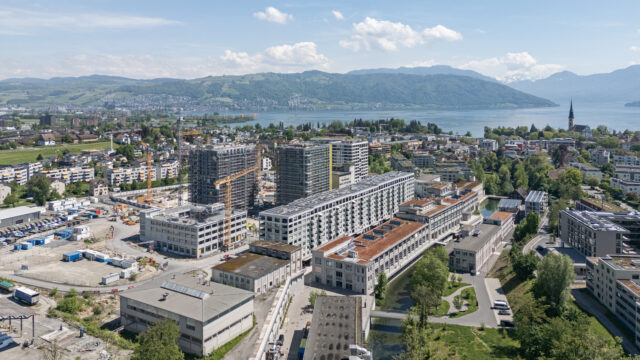
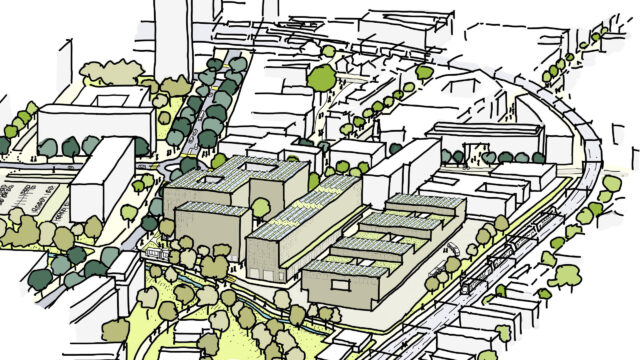
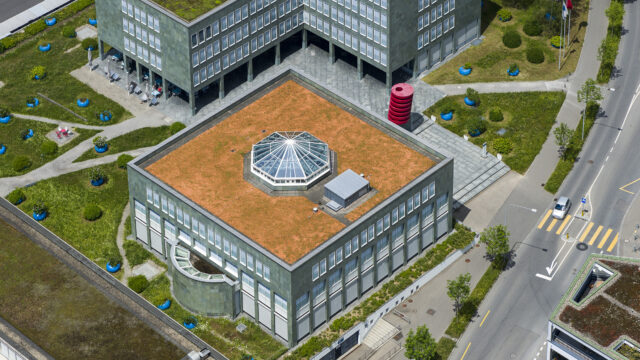
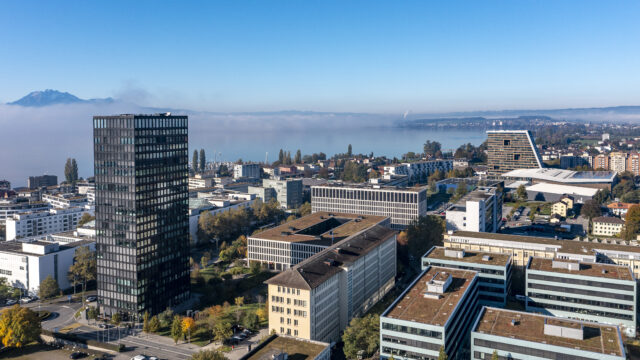
    KIRKBI AG, based in Baar ZG, provides both office and commercial space with Ecopark Tivoli. The building in Spreitenbach has been planned sustainably from the very beginning. District heating and solar energy, for example, ensure the CO2-neutral operation of the building. And now the roof garden has also been opened on an area of 2500 square metres, according to a media release.

    The tenants can use the roof garden for recreation. In addition to numerous seating areas, there is also a barbecue area and a sports field. But beyond that, the roof garden is also intended to be “our contribution against species loss and insect mortality in Switzerland”, according to the real estate company. Wild bees and butterflies have already been attracted. And for the coming year, those involved hope for the use of a nesting box by a pair of kestrels.

  • Helion Energy and Meyer Burger enter into partnership

    Helion Energy and Meyer Burger enter into partnership

    Photovoltaic manufacturer Meyer Burger has agreed a strategic partnership with Helion Energy, a provider of complete solar energy solutions and AMAG subsidiary. According to a media release, the AMAG Group will give preference to Meyer Burger solar modules for all its own photovoltaic plants yet to be built. As part of its climate strategy, the AMAG Group will build around 75,000 square metres of solar plants at its own locations by 2025.

    Helion Energy and Meyer Burger Technology are committed to rebuilding the photovoltaic value chain in Switzerland as part of the strategic partnership, the statement added. Currently, Switzerland imports more than 90 percent of its solar modules from Asian countries.

    “Meyer Burger high-performance modules offer a number of advantages for customers: they are developed in Switzerland and sustainably produced in Germany,” Helion CEO Noah Heynen is quoted as saying. The modules show lower performance losses over the years and higher yields in all seasons due to better temperature coefficients and low-light behaviour. They are designed to last more than 30 years and come with an industry-leading warranty of at least 25 years, he said.

    According to CEO Gunter Erfurt, Meyer Burger is in the process of “massively expanding” its production for solar cells and modules. The Swiss solar modules have a technological advantage over the Asian competition and generate significantly higher yields over the entire lifetime.

  • Valais rejects simplified approval of large solar installations

    Valais rejects simplified approval of large solar installations

    Voters in the Canton of Valais have rejected a simplification and acceleration of the cantonal approval procedure for large photovoltaic plants. In the cantonal vote on 10 September, a decree to this effect was rejected by 53.94 percent of those who voted, the State Council of the Canton of Val ais informs in a statement. It “takes note of this result”.

    The decree, which had already been approved by the Grand Council, provided, among other things, for a more concentrated approval procedure and the transfer of the approval authority from the cantonal building commission to the State Council. Complaints against a permit could thus have been lodged with the cantonal court without a diversion. After the rejection of the decree in the cantonal referendum, the previous cantonal procedure remains in force. Permits will continue to be the responsibility of the building commission. Appeals must first be lodged with the State Council. In the second and third instance, the cantonal court and the federal court have a role to play.

    By simplifying the cantonal procedure, the State Council wanted to support the implementation of the new Article 71a in the national energy law. It is aimed at the increased construction of large photovoltaic plants. The corresponding federal law remains unaffected by the result of the cantonal vote. Among other things, the conditions for the approval of large photovoltaic plants are regulated there.

  • Siemens puts climate-neutral campus into operation

    Siemens puts climate-neutral campus into operation

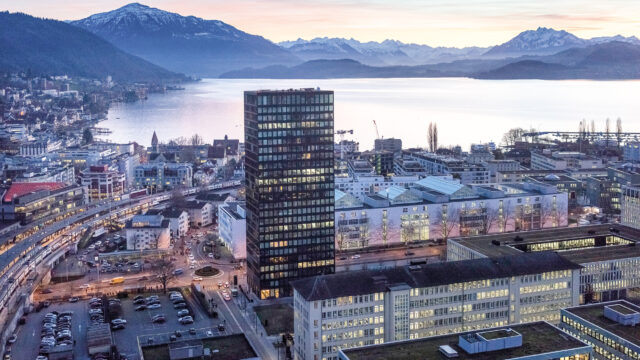
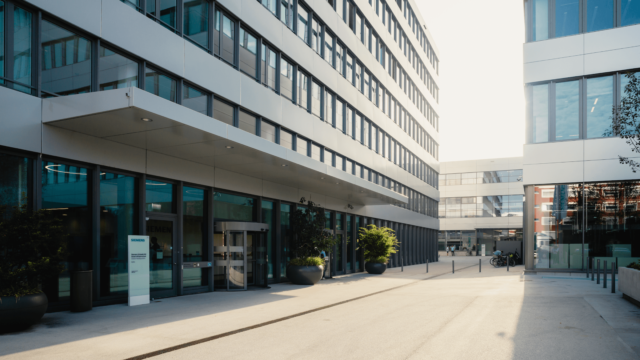
    Siemens has officially opened the new research and development building at the global headquarters of its Siemens Smart Infrastructure Division in Zug. The climate-neutral campus for 1700 employees is now complete after seven years of construction, according to a media release. The German technology group has invested around 250 million Swiss francs in cutting-edge technology and in Switzerland.

    Zug is an important location for the development of building technologies. Every year, about 80 new patents are registered from there. The technology company sees the campus, which consists of three buildings, as a model for its new digital business platform Siemens Xcelerator for sustainable building technologies. One part of this is Building X. At the opening ceremony, the participants also had the opportunity to experience Building X on a tour. The scalable digital building platform from Siemens helps to digitise, manage and optimise building operations.

    “Siemens uniquely connects the real and digital worlds,” Matthias Rebellius, CEO of Smart Infrastructure and Member of the Managing Board of Siemens AG, is quoted as saying in the release. “The new Siemens Campus in Zug is an excellent example of this. Using the latest technologies from our portfolio to improve building operations and achieve maximum efficiency, the campus will be operated in a completely climate-neutral manner.” This means that the company is already achieving the goal to which it committed two years ago.

  • Hoyou wins at the Start-up Weekend Uri 2023

    Hoyou wins at the Start-up Weekend Uri 2023

    The Canton of Uri held the second edition of its Start-up Weekend Uri from 1 to 4 September. The canton “once again presented itself as an attractive location for start-ups”, writes the cantonal Department of Economic Affairs in a statement. Four young companies were given the opportunity to further develop their business idea “in an inspiring environment between co-working space, canoe tours and culinary delights together with expert coaches”, it continues.

    “We have only known the canton of Uri in passing,” Miro Mandelz and Philip Zollinger of appreci8 are quoted as saying. Their start-up from Zollikon ZH uses artificial intelligence to mediate between job seekers and employers. “During the three days, we were able to get to know the versatile business and living location of Uri better and further develop our business idea.”

    At the final presentation on 4 September, Christine Hegglin was able to convince the jury of experts from companies and the cantonal administration with her platform for real estate exchange. She received the *zünder wildcard for this and is allowed to participate in the *zünder accelerator funding programme with her start-up Hoyou without going through the selection process.

  • Preventing heat islands in the planning stage

    Preventing heat islands in the planning stage

    Climate change is causing problems for cities, especially in summer. “Heat island” has become a ubiquitous topic. However, those who plan larger neighbourhoods can avoid heat accumulation. The decisive factors here are the setting of the buildings in line with their surroundings, the choice of materials for façades and outdoor areas, green spaces and clever shading. The effects of these factors should actually be taken into account at an early planning stage. For this, however, architects would have to consult computer models that can calculate the impact of the decisive factors for a specific location. The problem with the existing models is that the calculation is time-consuming and costly. For this reason, they are usually not used at an early stage. The Lucerne University of Applied Sciences and Arts (HSLU) has now developed a new interactive neighbourhood climate modelling (QKM), which is limited to phase-specific information and delivers results in seconds. The project was financed by the Infinite Elements Foundation and the HSLU.

    Things have to move fast in the planning phase
    For large-scale construction projects, architectural firms usually apply in an elaborate competition procedure under high time pressure. “They have to consider a multitude of requirements in their design, one of which is the microclimate,” explains simulation expert Prof. Markus Koschenz from the Lucerne University of Applied Sciences and Arts. High costs and two-day waiting times would be out of the question for the architects in this creative work phase. But this is exactly what they would have had to accept up to now if they wanted to include the complex calculations. So what happens if you win a competition project and only then realise that the building placement was chosen in an unfortunate way? After all, the jury has decided in favour of the proposed solution; fundamental adjustments are no longer envisaged in the phase after the jury’s decision – even if the subsequent calculation of the microclimate would suggest this. In short, the dilemma cannot be solved this way. Now, warmer summer temperatures are already causing problems for people today. Warming in the coming years and decades will increase, which can be life-threatening, especially for older people. And buildings that are being planned now will still be standing in fifty years. Ignoring all this in the planning process seems negligent.

    Results in seconds
    “What is needed is an instrument for calculating the microclimate that is cheaper and, above all, can deliver results very quickly,” says Koschenz. His core team with Andrii Zakovorotnyi, Reto Marek and an external Revit specialist developed this instrument at the Lucerne University of Applied Sciences and Arts. He explains: “Existing methods use generally applicable computational fluid dynamics (CFD) instruments. These instruments can be used by specialists to develop machines, investigate flows on aircraft or determine the microclimate in neighbourhoods. They are powerful but also correspondingly complex. Our model concentrates on the aspect of the neighbourhood climate and we work with algorithms that calculate quickly,” says Koschenz, explaining the striking difference in calculation speed. It takes seconds or at most a few minutes to calculate the effects of a change. The tool can be used by the planners themselves from the first step in the planning process. With little effort, for example, one can compare two variants of façade design or the planting of trees in an inner courtyard. And not just for one summer day, but for an entire summer period.

    Checking the model with measurements
    The information on the planned buildings, their position, the materials used or the type and position of green spaces and trees is obtained by the interactive neighbourhood climate modelling from the planning tool Revit, which is already used in architecture and landscape planning offices. From this, the physical model calculates the effect of radiation, shade, heat storage properties of materials, air flow, vegetation and time of day on the neighbourhood climate. Images with colour scales show the results in an intuitively understandable way.

    Koschenz’s team proved that the model works correctly with measurements in the Suurstoffi district in Rotkreuz and also compared the results with those of existing commercial software. Koschenz is extremely satisfied with the results: “We can say that the agreement with both the measurements and the results of other software was high. This means that our tool is much faster with the same accuracy.

  • New professions through the circular economy?

    New professions through the circular economy?

    Prof. Dr. Stephen Wittkopf, how do you find a flat that is built according to the principles of the circular economy? That would be very difficult at the moment. In Switzerland, there are only a few residential buildings that have been built according to the principles of the circular economy, in Winterthur for example. In industry and office buildings, people are already a bit further ahead.

    The idea of reuse is very plausible. Why is it only being implemented hesitantly? Because not everything that is built today is suitable for reuse. In many buildings there are so-called composite materials. This means that different materials such as concrete, wood or steel have been glued together. You can’t just separate them. This creates an enormous amount of construction waste. Of all the material that is imported into Switzerland, i.e. clothes, computers, food and other commodities, by far the largest part is destined for the construction sector. That is, for roads, bridges and buildings. All of this is enormously weight-intensive. The construction sector therefore clearly has the greatest potential for saving material and energy through reuse.

    Is the circular economy only about reusing, or also about rebuilding or continuing to build? The concept of the circular economy can indeed be defined so broadly that it includes all reuse. The question of how to preserve and repurpose existing buildings is the first level of the circular economy. The second level is the reuse of building components and the third level is about recycling and reprocessing materials.

    How would new buildings have to be designed so that the components can be reused decades later? The materials must be separable and the components repairable. This means that the purest possible materials are central, which are not glued together but provide stability with plugs and screws. Repairability is important for the longevity of the individual components. It must not be the case that you have to throw away an entire window just because the window handle no longer works. And last but not least, meticulous documentation is important so that it can be traced later which materials are where. At the moment, this is not yet sufficiently recorded.

    Components are continuously being developed; my grandmother had front windows that could be removed, today there is triple glazing. Is it realistic to reuse them in 50 years? Many products are so good today that a noticeable improvement can only be achieved with much greater effort. And you don’t have to reuse components one to one. In the case of windows, there is a good example from the canton of Zurich: older, double-glazed windows were supplemented with a third glazing; as a result, the improved windows could be reused in a new building.

    That sounds as if the reuse of materials completely changes the work for architects. Yes, it requires a radical change. Architects’ work no longer starts on a greenfield site. They have to incorporate existing materials and the availability of products into their concept. But this paradigm shift does not have to become a design or economic obstacle; it can lead to a new language of form.

    So the client must also be on board. Exactly, they play at least as important a role. The client can shape the brief differently, and specify, for example, that only second-hand materials are to be sought and that planning is to be based on this. It will certainly be a complex puzzle – but other industries also work with complex and flexible supply chains. The construction industry is lagging behind.

    What is the situation in terms of profitability? Can the circular economy in construction be profitable? It can, but not without effort and not overnight. It needs new business models, but also financial support, because it is currently a niche market. However, I am firmly convinced that this will change.

    And what might the new business models look like? Maybe one day we will rent recyclable materials – windows, doors, wood or concrete – instead of buying them. Or we design a new building from the outset as a material store for later buildings. This results in a completely new basis for calculation, because the material costs do not have to be amortised in their entirety. The materials could be traded on material exchanges – by the way, this is already done in other countries like Denmark. Maybe even new professions will emerge, such as component hunters.

    That sounds exciting. So it changes the whole concept of new buildings? Definitely. If the future of a building is taken into account, it will be built in such a way that it can be converted with as little effort as possible. Society is changing, and with it the needs for living space. A neighbourhood that was once designed for families may no longer fit the needs of the now older generation decades later. If the family flats can be converted into smaller ones with relatively little effort, money, materials and energy can be saved.

    In which areas of the construction industry would you describe Switzerland as progressive? Switzerland is already quite advanced in the reuse of concrete. Today, natural stone or gravel is replaced by processed construction waste that would otherwise end up in landfill. In addition to reuse, this has the advantage of saving landfill fees. In large new construction projects, building concepts are also becoming more and more flexible. In general, I observe a growing interest in circular economy among building owners. In Switzerland, the canton of Zurich has a pioneering role. And we, as a university, are of course researching the topic and have the task of sensitising a young generation to the issue by giving high priority to used materials in our training and further education courses.

  • 96. immoTable Lucerne

    96. immoTable Lucerne

    [smartslider3 slider=”14″]

    Monika Schärer welcomed Cantonal Government Councillor Reto Wyss, who informed us about current issues in the Canton of Lucerne. Mr. Zettel, Head of Corporate Development, Lucerne Economic Development, gave an insight into current business and presented current real estate projects. Markus Weber HSLU Co-Director of the Digital Construction course, President of Bauen digital Schweiz showed the potential of BIM, IoT and Lifecycle Data Management. Sabine Ruoss, overall coordinator, and Massimo Guglielmetti, project manager for the Lucerne through station, showed us what is planned and will be built for the through station over the next 20 years. Finally, Clemens Högger from Energie360° showed us a forward-looking and economical energy solution with regard to the energy strategy challenge. At the Apéro Riche, the opportunity to exchange ideas and learn more with the speakers and partners was actively used.

  • Holcim creates 1.5 degree frames for cement industry

    Holcim creates 1.5 degree frames for cement industry

    Holcim announces the launch of the world’s first science-based framework for decarbonizing the cement industry . This emerged from a partnership with the Science Based Targets Initiative ( SBTi ). Previously, Holcim independently of the SBTi, together with a group of experts from academia, civil society and industry, had developed such a framework to achieve the decarbonization of the industry “in a rigorous and science-based way”. The building materials producer has realigned its own net zero climate targets for 2030 and submitted them to the SBTi for validation.

    For the first time, cement companies have a clear plan “on how to align their decarbonization strategies with climate science,” Alberto Carrillo Pineda, co-founder and CTO of SBTi, is quoted in the release. “The shift to low-carbon technologies is critical to the long-term viability of the industry.” That’s why the SBTi encourages all cement manufacturers to “set science-based targets and play their part in building a climate-resilient economy.”

    “With the growing population and increasing urbanization, the construction sector has a key role to play in building a net-zero future,” says Holcim CEO Jan Jenisch. It’s about “building better with less effort”. Holcim encourages all colleagues to “join us to increase our impact together”. mm

  • The government of Uri rejects the environmental associations' objection to the renewal of a license for CHC

    The government of Uri rejects the environmental associations' objection to the renewal of a license for CHC

    Rapid expansion of renewable energies is more necessary than ever. The hunger for electricity in Switzerland is growing, the reliability of electricity imports from abroad is dwindling and a third of the annual domestic electricity production will be lost with the phasing out of nuclear energy. In short: new power plants urgently need to be built to prevent power shortages in Switzerland very soon.

    In 2018, the Canton of Uri publicly published the modified license application for the use of the Meienreuss and thus advocated the expansion of renewable energies in the canton of Uri. The environmental organizations WWF and Pro Natura then raised an objection. CKW repeatedly sought dialogue with the objectors to reach an agreement, but without success. At its meeting on July 5, 2022, the government of Uri rejected the objections of the environmental associations and thus sent an important signal for the energy transition. The environmental associations can lodge an appeal with the Uri High Court on this decision and thus take legal action, which can go as far as the Federal Supreme Court. This would trigger a massive project delay. However, CKW CEO Martin Schwab hopes that they too have recognized the seriousness of the situation: “In terms of the energy transition and in view of the current energy crisis, it must be possible for us to implement such important projects of national importance quickly. This requires targeted action on all sides. You can’t be in favor of the energy transition, the expansion of renewable energies and more climate protection and at the same time block important projects,” says Schwab.

    Power station of national importance produces electricity for the people of Uri
    The Meiental power plant is located in the municipal area of Wassen and is a joint project by CKW and several local partners. The total investment is around CHF 37 million. Hydropower has been the backbone of electricity supply in Switzerland for over 100 years. Because it produces ecologically sustainable, renewable electricity reliably and predictably at all times – even in winter. However, due to ecological requirements, hydropower is facing production losses of around 10 percent by 2050. With the Meiental run-of-river power plant, CKW wants to make an important contribution to more renewable electricity production and security of supply in the canton of Uri. The targeted annual production is 32 GWh. This corresponds to the consumption of around 7100 average 4-person households.

    Original project revised and reduced
    The power plant project meets all the requirements of the “Protection and use concept for renewable energies in the canton of Uri” (SNEE). The SNEE shows where in the canton of Uri systems for energy production from renewable sources such as water, wind and sun can be set up and where landscapes and watercourses should be preserved undiminished. Based on the SNEE, CKW has revised its original project submitted in 2008 and reduced it from two to one power station stage in the lower reaches of the Meienreuss. The use of the ecologically more valuable upper course with partial floodplain character as well as the alpine tributaries is dispensed with. With a protection and use plan, these parts of the body of water are excluded from use for energy production for the concession period of 80 years that has been applied for.

    Due to the large production volume, the Meiental power plant is considered a power plant of national importance under the Swiss Energy Act. The national public interest in safe electricity production thus takes precedence over regional protection interests. Furthermore, without this power plant, it would not be possible for the Canton of Uri to be able to achieve its own expansion target of 150 GWh for its own energy production.

  • Swisspor is building in Reiden

    Swisspor is building in Reiden

    Swisspor wants to set up a production plant for mineral insulating materials and a service center in Reiden Mehlsecken. The internationally active company based in Stans has secured the area of 200,000 square meters designated by the canton of Lucerne as a strategic work area, according to the Lucerne State Chancellery in a press release . The establishment of a building and environmental technology cluster planned by swisspor is supported by the canton of Lucerne and the municipality of Reiden .

    swisspor will use 145,000 square meters of the total area of the site for its own facilities. The remaining area is reserved for research institutions and other companies active in the field of building and environmental technology. The Lucerne University of Applied Sciences and Arts wants to expand its existing cooperation with swisspor in Reiden Mehlsecken.

    In addition, other industry-related companies and research partners are to be recruited. The coordination for this was taken over by the Switzerland Innovation Park Central , according to the statement. The Federal Materials Testing and Research Institute ( Empa ) was also addressed.

    “We support the creation of a building and environmental technology cluster with swisspor and the Lucerne University of Applied Sciences and Arts,” government councilor Fabian Peter is quoted as saying in the statement. The head of the construction, environment and economic department sees a double opportunity for the region and canton: “On the one hand, jobs, innovation and value creation are created and on the other hand, the cluster makes a contribution to achieving our climate goals”.

  • SVIT Swiss Real Estate Forum 2022 – focus on digitization, disruption and flood of data

    SVIT Swiss Real Estate Forum 2022 – focus on digitization, disruption and flood of data

    After the official SVIT delegates’ meeting on Thursday morning, the strategy and innovation consultant Maks Giordano gave a lecture in the conference room of the Swiss Museum of Transport in Lucerne. He showed what happens and how one can react “when the future comes in exponential steps”. Giordano is convinced that after mobile communications and the World Wide Web, our industries are now being fundamentally changed again by the third wave of digital disruption and its exponential developments in technology. “In these times of hyper-innovation and hyper-growth, it is imperative that we all learn the necessary skills to manage this change,” he said.

    Comedy and political gossip
    Afterwards, comedian Kaya Yanar offered a “best of” of his previous work in the television and comedy scene, before the first panel discussion took place in the afternoon. SVIT Forum moderator Urs Gredig welcomed the politicians Hans Egloff (SVP, President HEV Switzerland) and Michael Töngi (Greens, Vice President of the Swiss Tenants’ Association) as well as Martin Tschirren , Director of the BWO Federal Office for Housing, on stage. Together they analyzed the current political and social mood with regard to a possible total revision of Swiss tenancy law, which dates back to 1990. In general, given the majority in the National Council, they only consider minor changes to be possible, even if Egloff and Töngi demanded fundamental modifications and partial revisions. Federal Office Director Tschirren pointed out that the housing shortage is threatening to worsen in the period ahead. This is primarily to be seen in the large cities and centers.

    The Federal Council sees a need for action on rents
    At the end of the first day of the SVIT Forum 2022, Federal Councilor Guy Parmelin , Head of the Federal Department of Economics, Education and Research and President of the Swiss Confederation in 2021, addressed a message of welcome to the SVIT delegates and guests. He emphasized the new meaning for living as a result of the corona pandemic. In view of home office and video conferencing from home, office workers in particular have now given more thought to their living situation. Today it is important to react to sharply rising housing and energy prices. In addition, the home ownership rate in Switzerland is again in reverse gear: While it was still 38.4 percent in 2015, it was only 36.4 percent in 2019, Parmelin quoted from the figures from the BFS and the Federal Office for Housing. He sees a “certain need for action” when it comes to structuring rents. Specifically, he was in a possible review of the site and neighborhood customary. There will soon be a group of experts to deal with this topic. Regarding the latest developments on the interest side, Parmelin said: “The Swiss National Bank is getting back to normal.”

    Boat ride and roller coaster
    The first day of the event was rounded off with a boat trip on Lake Lucerne on the MS Diamant. The second day of the SVIT Forum 2022 on Friday began with an impressive keynote speech by the former AMD boss and current start-up investor Carsten Maschmeyer , who described the ups and downs of his business career and shared his “success formula through opportunities and crises for a fulfilled life» revealed.

    Data rights of digitized service providers
    The second panel discussion, moderated by “Immobilia” editor Ivo Cathomen , dealt with the future of real estate service providers. He had invited Oliver Hofmann , CEO of Wincasa AG, Béatrice Schaeppi , head of the family company of the same name, and Severin Krebs , managing director of Pfannenstiel Immobilien AG, to the podium. The three company leaders described how digitization influences and determines the work of the manager in many ways today. They identified data sovereignty and data protection as well as the satisfaction of different customer needs and the recruitment of specialist staff as the most important construction sites for services in the real estate industry.

    The SVIT Swiss Real Estate Forum 2022 ended on Friday afternoon in the Verkehrshaus Luzern with a farewell by SVIT President Andreas Ingold and finally with a Thai stand-up lunch in the foyer, while the first major thunderstorm of the day fell outside.

  • Hug inaugurates a climate-neutral bakery

    Hug inaugurates a climate-neutral bakery

    Hug inaugurated his bakery in Malters in the presence of numerous guests. According to a press release , it is one of the most modern and energy-efficient production centers for baked goods in Switzerland. The planning time for this “generation project” was five years, the construction time three years. It creates 100 new jobs on a production area that has now been doubled. Hug has invested a total of 63 million francs in the expansion of the production building, the move from Trimbach SO and in systems.

    “I am proud to have this innovative and sustainable family business here in the Canton of Lucerne and I would like to thank the Hug family for their loyalty and their connection to the Malters location,” said government councilor Fabian Peter, Director of Construction, Environment and Economics of the Canton of Lucerne , at the inauguration. “I am pleased that the Hug company creates jobs here, produces in a modern and energy-efficient manner and thus makes its contribution to achieving our climate goals.”

    According to the Chairman of the Board of Directors, Andreas Hug, the energy concept dispenses entirely with fossil fuels. Groundwater and operational waste heat are used to generate heat and cold. By the end of 2022, Hug will build more photovoltaic units on the roof of the bakery.

    On the occasion of the inauguration, the fourth generation, represented by the previous managing director Andreas Hug, handed over the operational management of the company to Anna Hug. She will run it in the fifth generation together with Marianne Wüthrich Gross. This is the first time since the company’s founding in 1877 that it will be conducted by two women.

  • ewl opens a climate-neutral underground data center

    ewl opens a climate-neutral underground data center

    The energy service provider ewl has opened an ecological data center underground, according to a media release . The building is based on state-of-the-art technology and sustainability through the use of renewable energies and can use the waste heat from the server park efficiently.

    Because the data center is ideally connected to ewl’s own lake energy and communication network, ecological electricity can be used during ongoing operations. Lake water from Lake Lucerne is used for cooling. The waste heat from the computers is used to heat buildings in the vicinity.

    In this combination, the data center is energy-efficient and sustainable and is “one of the most ecological data centers in Switzerland”, Patrik Rust, CEO of ewl, is quoted in the press release.

    Important and sensitive data from various organizations are stored and secured in the data center. The IT infrastructure required for this consists of 600 server racks on an area of more than 1,600 square meters in a tunnel in Lucerne’s Wartegg hill. More than 50 years ago, there was a civil protection facility for the government council and the students of the canton school in Lucerne.

    During construction, the rock was partially blasted. Thanks to the hard rock at the underground location, the data center can guarantee the “highest level of physical protection”. State-of-the-art technologies such as biometric access controls and non-stop video surveillance also contribute to data security.

  • The winning project for the Reussbühl West district has been chosen

    The winning project for the Reussbühl West district has been chosen

    Office of Living Things and Büro Dudler for space and traffic planning.

    The 27’000 square meters

    The assessment committee for the study contract for the redesign of the CKW site in Reussbühl, which is now used for commercial and industrial purposes, unanimously decided in favor of the “Habitat – Quartier im Hain” project. It was developed by the Zurich architects Salewski Nater Kretz in collaboration with the Office of Living Things and the Dudler office for space and traffic planning.

    According to a CKW press release , the 27,000 square meter area is to be “transformed into an attractive, lively and distinctive city quarter”. The energy service provider will give up its location there “in a few years”. In the call for tenders, requirements were made with regard to heat generation and rainwater management. In addition, at least half of the CKW shed hall, a former silk mill, was to be retained. Residential buildings will primarily be built on the remaining area.

    The winning project “convinces in the reinterpretation and further development of the historical landscape”, which was once characterized by floodplains and water-using industry. The design based on the so-called sponge city principle “cleverly” incorporates these historical references. This project will be further developed in the coming months and will then form the basis for the Reussbühl West development plan. The designs of all planning teams are on display at CKW in Rathausen from June 21st to July 4th.

  • Walo installs new flooring in the Gübelin Museum

    Walo installs new flooring in the Gübelin Museum

    Walo Bertschinger has installed a new floor covering in Lucerne’s Gübelin Museum. According to a message from the Dietiker construction company on Facebook, the order was placed in the summer of 2021. The work is in the final phase, the message says. The goal is a floor covering that adorns the museum as an additional work of art.

    The client imagined a warm floor with various rubber granules and a wooden frieze, according to the Walo report. The company ‘s own HALTOPEX rubber granulate was recommended to her. According to the company, this covering is particularly suitable for conversions, is very elastic, hard-wearing and easy to maintain. The optics are also inviting.

    After inspecting a similar property, the client placed the order. From this April, work was carried out in the museum. The sub-floor was reprofiled and reinforced and a new sub-layer of epoxy mortar installed. The final installation of the HALTOPEX covering began in May. The work is nearing completion.

  • Andermatt has the best concert hall in the world

    Andermatt has the best concert hall in the world

    The jury of the Architizer A+Awards has awarded the Andermatt concert hall the prize in the category of cultural halls and theaters , Andermatt Swiss Alps AG informs in a press release . “The award for the Andermatt concert hall recognizes the unique transformation of the mountain village of Andermatt into a prime alpine destination,” says Raphael Krucker, CEO of the company responsible for the development, realization and operation of the holiday destination. The Andermatt Concert Hall enriches the year-round destination of Andermatt with a unique cultural program.

    Designed by London-based architecture firm Studio Seilern Architects , the building can be used for multiple purposes thanks to a retractable system that allows up to nine tiers of seating to disappear beneath the main balcony. The flexible stage offers space for an orchestra of up to 75 people.

    “This victory is an extraordinary honor for us at Studio Seilern Architects,” said project manager Christina Seilern in the statement. “With entries from over 80 countries submitted for the award, I am extremely pleased with the outcome.” Recently named Architect of the Year at World Architecture News’ Female Frontier Awards , the professional hopes “the honor reputation of this project as a world-class concert hall – one that Andermatt deserves”. With the Theater Nouvelle Comédie de Genève , a second Swiss theater has made it into the finalists of the Architizer A+ Awards in the category of cultural halls and theaters.

  • Yukon also in Switzerland in the future

    Yukon also in Switzerland in the future

    Yukon’s project management and consulting services focus on the implementation of collaborative project delivery models and lean management approaches in challenging construction projects. The company is currently supporting most of the projects in Germany that are carried out using the Integrated Project Management (IPA) model with multi-party contracts. Customers include well-known companies from industry and the real estate sector as well as public building owner organizations.

    Yukon has also successfully completed its first orders in Switzerland. With the new branch, Yukon now offers customers in Switzerland the entire service portfolio in lean project management.

    The new branch in Rotkreuz is represented by Thomas Hänggi. He brings over 20 years of experience in product and process development and project management in construction and other industries. We are pleased to have gained a proven expert in the field of integrated project management and lean management in construction for our commitment in Switzerland.

  • «Plaster and Paint» – Prize for the best objects

    «Plaster and Paint» – Prize for the best objects

    The Swiss Painters’ and Plasterers’ Association SMGV and Messe Luzern AG jointly award the “Swiss Prize for Plaster and Paint” under the umbrella of appli-tech. They advertise the prize for teams made up of planners and craftsmen. Concretely implemented projects can be submitted in the two categories plaster facade/color design and interior design. A great opportunity, the SMGV and the Lucerne Exhibition Center agree. «In the past editions, the creative potential in the areas of plaster and paint could be shown with the submitted projects. We are convinced that this time we will be able to make high-quality and exciting work known to the public,” explains Ursula Gerber, trade fair manager at appli-tech. Mario Freda, SMGV Central President, adds: “This year we want to continue to promote the very important cooperation between experts from the trades and planning and move the use of plaster and paint into the focus of public attention.”

    Energy renovation as a focus
    A well-known jury evaluates the objects. In addition to the prizes in the plaster facade/color design and interior design categories, a special jury prize will be awarded for energy-efficient refurbishment. Jury member and SIA President Peter Dransfeld knows how important the topic is: “Sustainable building and energy-efficient renovations are becoming more and more important, with the design of the facade also playing a key role. Innovative and sensible solutions can be achieved in close, trusting and professional cooperation between architecture and trade. This honors this award.”

    The jury awards a total prize money of CHF 35,000. The winning projects and selected works will be presented in a special show at appli-tech, the trade fair for the painting and plastering industry, drywall construction and insulation, from February 8th to 10th, 2023 and on the website. Reports in specialist media and the presentation in the jury report also beckon.

    Registration until the end of September
    Objects can be registered until September 30, 2022. The work must be submitted by October 20, 2022. The call for applications with detailed information and the option to register can be found at www.putz-color.ch .

  • CKW takes over Elektro Camenzind + Partner AG

    CKW takes over Elektro Camenzind + Partner AG

    CKW Gebäudetechnik is expanding its position in the electrical installation sector in the canton of Zug with the purchase of Elektro Camenzind + Partner AG. The takeover took place on June 1, 2022 and as part of a succession plan. «I am very pleased to be able to pass my life’s work on to CKW and I am very happy that all employees have good prospects for their future. Thanks to the strong partner CKW, the company will be able to develop further for our customers,” says Alfred Camenzind on the sale to CKW Gebäudetechnik.

    Optimal addition to the CKW portfolio
    Elektro Camenzind + Partner AG has made a very good name for itself nationwide as a holistic building services engineer. Be it in the installation area, but also in building automation, e-mobility etc. – from planning to implementation to maintenance. «Electro Camenzind + Partner AG is a perfect fit for us, both geographically and in terms of the service portfolio. We are very pleased to welcome this well-established team to the CKW family,” says Thomas Gisler, Head of the Electronics Division at CKW. Elektro Camenzind + Partner AG employs 52 people, including 21 apprentices. For the customers, the previous contact persons with the three management members Urs Lang, Cornel Räber and Ruedi Felder will remain and guarantee the customer base continuity.

  • Papieri Cham is in high demand

    Papieri Cham is in high demand

    The Cham Group announced in a statement that the first residents are due to move into the Papieri Cham high-rise as early as mid-September. She is converting the area of the former paper factory into a quarter for living and working. The first phase of construction is expected to be completed this year.

    The real estate company explained in the press release that the 163 rental apartments created in the first construction phase were allocated within a few weeks. The commercial space realized in the first construction phase has already been almost completely let. Two thirds of the 61 condominiums to be built in high-rise I in the course of the second construction phase have also already been reserved. On the official marketing day on June 2, only two free apartments could have been offered on the Internet, the Cham Group reports.

    In November, the first tradespeople should be able to open their studios in construction area A on Maschinengasse. Architectural and other offices, a film production company, two photo studios, a children’s painting studio and a dog grooming salon will all set up shop here. A dental practice and a pottery studio are moving into the ground floor of the L high-rise building.

    The Cham Group sold its remaining paper business in early 2018. Now a pure real estate company, the Cham Group is concentrating on transforming the Papieri area into a mixed residential and working area.

  • Second home prices soar

    Second home prices soar

    In a press release , the major Zurich bank UBS informed about an increase in the price of holiday apartments in the Alpine region. With a price increase of almost 10 percent, residential real estate has reached its highest level in the past twelve years. Arosa GR, Engelberg OW, Flims/Laax GR and the Jungfrau Region, where prices have risen by 15 percent, are most affected.

    Based on the findings of the Alpine Property Focus study, UBS explains the price increase, among other things, with a decline in supply and increasing demand. As a result of the corona pandemic, working from anywhere has become attractive. Many working people have moved their desk and primary residence to the holiday regions.

    Furthermore, held back sales have led to the tense supply situation on the residential real estate market. According to this, many owners would have refrained from a planned sale of the holiday apartment because of their own needs for their home office.

    The Second Homes Act, which has been in force since 2012, has also had an unfavorable effect, ordering a de facto freeze on the construction of second homes in tourist regions. However, the stable value of residential real estate is said to be unaffected by the lack of new housing construction.

    As a result of the high capital costs when buying a holiday home and rising interest rates at the same time, the demand for holiday homes is likely to fall again, according to experts. The real estate economist at UBS, Maciej Skocz, quoted in the study, also includes the increased energy costs and expects “a good third higher usage costs” for an “average holiday home” for 2023 compared to the “beginning of the second home boom in 2020”. In the medium term, the expected increase in the supply of second homes will regulate the current price explosion again.

  • A canton creates accessibility

    A canton creates accessibility

    The train and bus connections in southern central Switzerland are bundled in the new cantonal train station in Altdorf. New train stops and additional connections significantly increase the potential for skilled workers. Knowledge-based service providers on the north-south axis benefit from direct access to the labor markets of the Greater Zurich Area and the greater Milan area and encounter technologies in the sectors of precision technology, alpine technology, traffic and safety technology and environmental technologies. With foresight, the canton of Uri has secured development areas on the Werkmatt Uri, which it is handing over exclusively for high-quality jobs at attractive conditions. With the new building of the Urner Kantonalbank directly on the edge of the platform of the new cantonal railway station, a working environment with offices ready for occupancy is offered. The German IT company Essendi IT recently opened its new Swiss headquarters at Bahnhofplatz.

    The canton of Uri is also a fantastic living and leisure area with its lake landscape (water sports and sailing), the mountains and rivers (outdoor, climbing, hiking, Resort Andermatt), an authentic, unaffected area of experience with the primeval history and tradition of Switzerland . This creates inspiration for new business ideas.

  • «Innovative energy concepts in the fast lane»

    «Innovative energy concepts in the fast lane»

    Forward-looking planning has resulted in an interesting energy concept during the construction of the “SisCampus” new building project. The aim was to implement an environmentally friendly and climate-friendly concept. The client decided on a concept that was based on this objective. The main risk lay in the modern approach, and that without relying on empirical values. So the focus was not primarily on sensational elements, such as visible photovoltaics as a label for a sustainable climate image.

    The core of the innovation was the use and storage of naturally occurring energy resources. For this purpose, the sun’s energy and the groundwater are used as a heat or cooling source in an optimal way. The structural prerequisite was the creation of an adequate storage facility. For this purpose, the entire building mass was defined as storage and equipped with thermoactive components, so-called TABS. These ensure an optimal temperature distribution in the entire mass storage at a flow temperature of < 30 degrees.

    With the use of electrochromic facade glazing (SageGlas) as the primary control element, energy consumption, daylight and glare can be influenced dynamically. The energy transmission of solar energy can be easily regulated by a factor of 10 (G value 0.03-0.35). Another advantage is that other traditional sun protection solutions such as blinds or heat protection devices were not used at the location with a strong foehn influence.

    Ventilation is a key element in the climate concept. Energy-consuming air conditioning and active ventilation systems have been dispensed with. Ventilation systems can only be found in the catering area in the kitchen, in the restaurant and in the hotel rooms. The office area is ventilated by hand and ventilated by means of motorized window sashes.

    With these core elements, the year-round climate target of 22-26 °C with a humidity of 35-60% could be achieved. The investment costs for heating and cooling could be reduced by more than 60% in terms of space and system technology.

    The room climate is continuously recorded by means of meaningful monitoring. The energy requirement is currently around 8 W/m2 and will be comprehensively validated for the first time in summer 2022 after 2 years of operation.

  • Planning for the burn-out clinic in Vitznau goes into the next round

    Planning for the burn-out clinic in Vitznau goes into the next round

    The plans for a burn-out clinic in the spa town of Gruebisbalm in the Vitznau municipality are entering the next round. A completely revised design plan that takes into account the concerns of the Federal Commission for Nature and Cultural Heritage ( ENHK ) can now be viewed at the municipality of Vitznau . It was implemented to a large extent by the time period planning AG and Roman Hutter architecture . Both are based in Lucerne. The Basel architects Miller & Maranta were also involved.

    The clinic, located at an altitude of 900 meters, will offer space for 80 patients with exhaustion depression. The initiator of this major project is the Basel-based entrepreneur Paul Schaub. According to an article in the “Luzerner Zeitung”, around 120 million Swiss francs are estimated for its construction. The present local planning revision was accepted on February 13 by the Vitznau voters with a large majority. Accordingly, the clinic location is no longer in the spa and sports zone, but now in the tourism zone. The canton of Lucerne still has to approve this.

    The ENHK had objected to the extension of the health center with its originally planned five larger buildings to the south-east as a “serious impairment” of the protection goals. Two of them are too close to the Rigiweg and the Rigi-Bahn. In the new planning, these merge into a single complex with six connected wings.

    The future clinic will only be accessible via the Rigi railway, no parking spaces will be built. Paul Schaub assumes that construction will start in autumn at the latest, “and we expect the opening of operations in 2025”.

  • Apartment house Altera

    Apartment house Altera

    Construction of this house started in June 2021. Altera comprises twelve residential units: four apartments, seven maisonettes and one penthouse. All apartments are flooded with light and the furnishings are kept in warm and light tones. The view from the floor-to-ceiling windows of the rough and mountainous Ursern Valley is the perfect contrast.
    Already in the entrance area of the house, the lobby with a fireplace and sheepskin armchairs invites you to linger. The exclusively equipped common rooms are located on the ground floor. These include a ski room with a personal ski locker including boot warmers, a fitness center including a state-of-the-art spinning studio and a wellness area with spa and sauna for ultimate relaxation.

  • Apartment house Mira

    Apartment house Mira

    The start of construction for the Mira apartment building is planned for spring 2022. The facade of the house is inspired by the stucco technique «Sgraffito». This is a historical technique for decorating surfaces. In Switzerland, “Sgraffito” is mainly found in the canton of Graubünden in the Engadin.

    The Mira apartment building comprises 18 mezzanine apartments with high ceilings, spiral staircases and generously sized windows. The diverse floor plans of the apartments add a unique and playful touch. The panoramic windows in combination with the double ceiling height give the apartments a loft flair. The 2.5 to 3.5 room apartments include well-equipped common areas, including a ski room, a sauna with a relaxation room and a fitness area.

  • Andermatt Alpine Apartments

    Andermatt Alpine Apartments

    Andermatt Swiss Alps real estate can be used both as a first and second home. In the case of a second home, the owners have the opportunity to rent the apartment to holiday guests during their absence and thus generate income. The Andermatt Swiss Alps team takes care of the entire organization and processing of the rental. From the reservation process to cleaning and on-site guest care. With this rental program, the apartments are better utilized and Andermatt Reuss is busy all year round. This also reduces the number of so-called cold beds, and numerous guests can enjoy the stylishly furnished apartments.

    Holidays in modern apartments
    The apartments in Andermatt Reuss are the ideal accommodation for a break in the mountains. Depending on the equipment for families, couples or holidays with friends. The year-round destination of Andermatt offers a variety of activities and events for young and old in both winter and summer. The Andermatt concert hall is used throughout the year and offers a varied programme. The ski area can be reached on foot in just a few minutes or with the free ski bus, and the cross-country ski trail extends just a few meters from the front door. In summer, the hiking trails and bike trails start just a few steps outside of Andermatt. There are also a few shops, restaurants and bars in the Andermatt Reuss part of the village.

  • Strickermatte: living and working at the new train station

    Strickermatte: living and working at the new train station

    The Strickermatte development will stretch across several plots opposite the Altdorf cantonal railway station. It turns the area into a dense residential and commercial settlement and aims to use the land reserves sparingly. The superstructure wants to make optimal use of the existing plots of land and fit harmoniously into the existing building structure as a whole.

    Seven apartment buildings with 104 apartments, commercial space on the ground floors of the buildings to the south and two underground car parks are planned. The commercial spaces are being created in the front buildings directly on the new station square and are intended to offer interesting offers to passers-by of the station.

    The aim of the project is to create living space for people of all ages and attractive outdoor areas that can be used privately and publicly. The apartments have balconies or loggias and a high-quality interior design with parquet floors, built-in cupboards and their own washing tower. The majority of the buildings will be built without obstacles and should thus take into account the requirements of all generations.

    With a connection to the district heating network of Heizwerk Uri AG, a photovoltaic system and charging stations for electric vehicles, the buildings meet today’s sustainability standards. A mobility offer with car sharing should also create the possibility of doing without your own car in the future.

    The former industrial and commercial buildings have already been demolished and excavation work has begun. The completion of the first new buildings is planned for the end of 2023. The work on the overall development is expected to last around 3.5 years.

    The construction project is being developed and implemented by Bricks AG in cooperation with HTS Architekten und Partner AG.

  • Three sustainable residential buildings for the Gotthard road tunnel workers

    Three sustainable residential buildings for the Gotthard road tunnel workers

    Since 1980, the Gotthard road tunnel has been the most important Swiss car corridor through the Alps. After more than 40 years of operation, this is in need of renovation. The Federal Roads Office (Astra) is building a second tube by 2029 so that the road connection can be used without interruption despite the repairs. In order to offer the teams involved in the construction optimal accommodation during their assignments, the Astra announced an architecture and investor competition. The contract was awarded to Swiss Property, which developed its project together with the engineering office Pirmin Jung. They convinced the jury with three buildings; two of them in element and one in modular construction as well as a digitized planning and construction with the Timber OS system developed by Swiss Property. This enabled the optimal balance between yield, costs and energy consumption to be calculated.

    The three buildings are named Dammastock, Galenstock and Rhonestock. Your future residents are surrounded by rock, concrete, dust and noise every day. For this reason, the rooms were deliberately designed with a high feel-good factor and a warm atmosphere. A main component used in construction is local wood.

    The Dammastock is the largest of the three buildings: in 2021, 102 single rooms, each with an area of around 14 square meters, as well as an underground car park were built here. The Dammastock has been ready for occupancy since December 2021. The facade consists of saw-grey spruce and fir wood. The building is to be dismantled in 2032: Thanks to the 105 individual wooden modules used, the Damma
    stock can be easily dismantled, transported and reassembled at another location. Possible conversions include a temporary school building, an asylum home or guest rooms.

    The other two buildings, Galenstock and Rhonestock, will be erected as hybrid structures with 72 single rooms of 14 square meters each. Both will have a staircase core made of reinforced concrete. The buildings consist of system timber construction elements made of spruce and fir wood and, thanks to the alpine architecture, harmonize perfectly with their surroundings. After the tunnel work, these buildings can be used on the spot in the long term: the interior design allows for an uncomplicated conversion into 16 apartments with areas of 40 to 110 square meters. The three buildings in Göschenen thus create a benefit that goes beyond the tunnel project.

    The interior rendering shows what an apartment could look like after conversion.