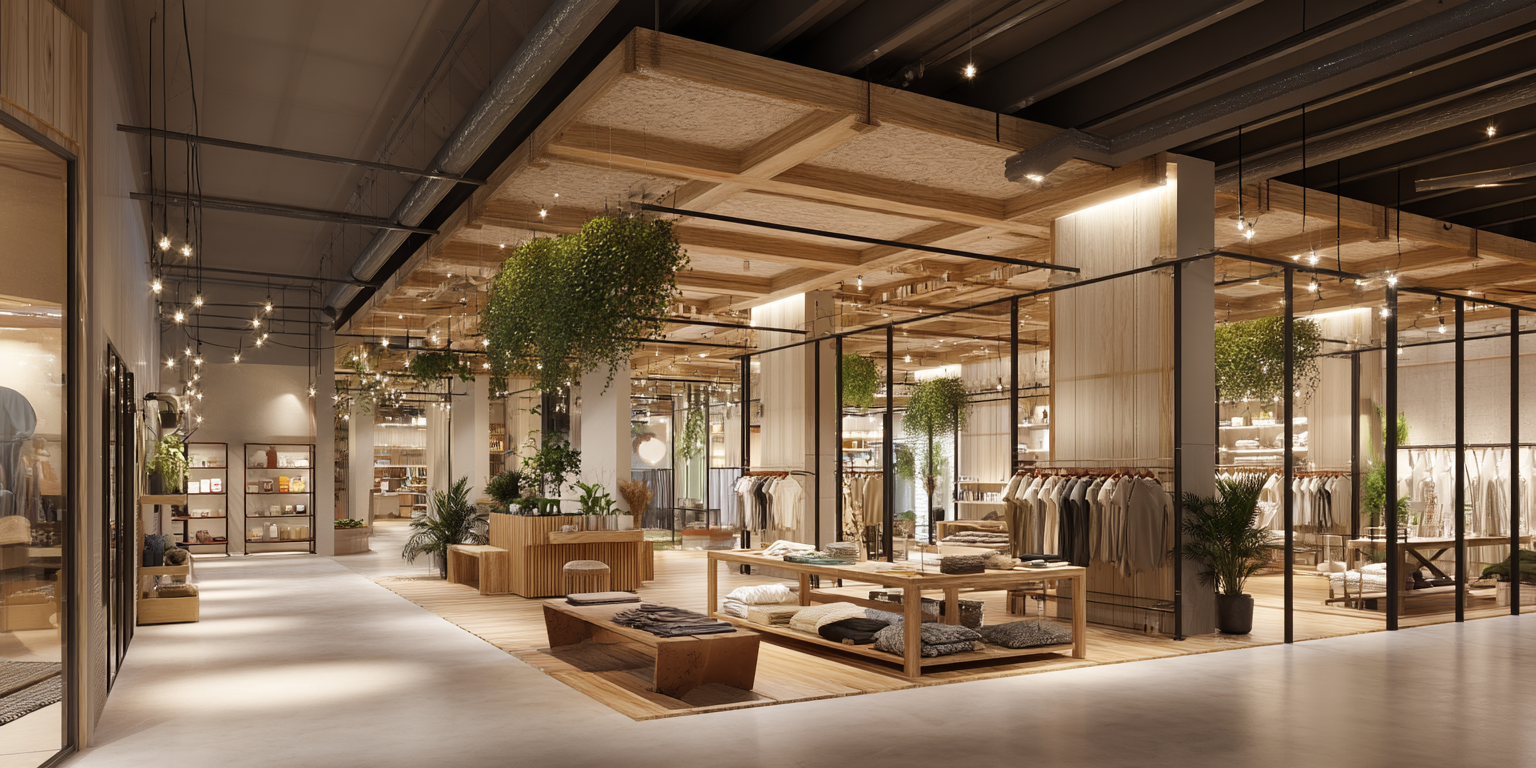
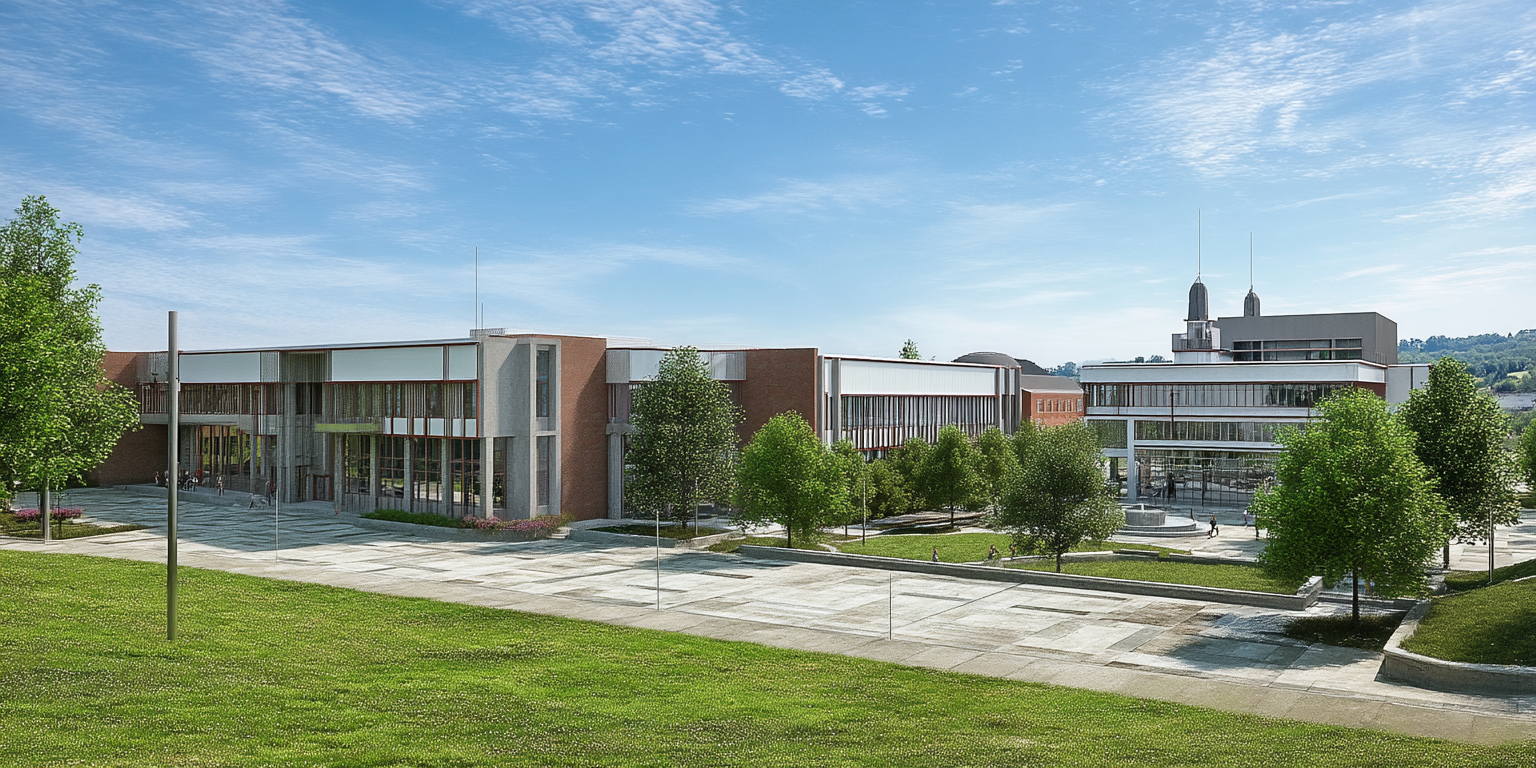
OF GOODS is set to become a “new space where production, trade and the public come together” in Bern, as stated in a press release. The trading house will open on 10 April across three floors of the Kaiserhaus. The organisers aim to create an experimental space with a view to realising a potential trading house of the future.
As consumers are increasingly interested in the origin of materials and their life cycles, OF GOODS aims to provide context in this area. Open workshops and curated retail spaces contribute to this, as do accompanying formats. On the one hand, this brings craftsmanship to the fore, and on the other, customers can learn how to mend clothes or care for shoes at a do-it-yourself station.
In addition, workshops, exhibitions and other events are held at the retail space. A variety of formats are designed to invite visitors to “rediscover materials, processes and ideas”.
To date, more than 60 established and lesser-known brands, studios and manufacturers are among the suppliers at OF GOODS, which celebrates its opening on 10 and 11 April. Catering establishments such as Brasserie Kaiser, Kaiser Deli and Hof-Bar are also part of the concept.
Bremgarten began the overall revision of its land use planning over seven years ago. Regulations and documents were revised in several stages, always with the involvement of the population. In October 2024, the municipal assembly approved the revision, followed by approval from the cantonal government in December 2025. Two appeals lodged against this were both rejected.
Rezoning as the centerpiece The most important measure in the settlement area is the rezoning of the Oberebene area from a pure work zone to a new residential and work zone. At the same time, a core zone for the development of the station area will be established and the Oberebene work zone will be strengthened as an economic focus of regional importance. This creates scope for investment and urban development.
New regulations for cultural land and the old town The cultural land plan establishes binding overarching open spaces and water areas. This includes the water and migratory bird reserve of national importance. The regulations for building in the old town were also reviewed and clarified. An important signal for property owners and investors who need planning security.
Three points still open The government council sent back three amendments. The non-protection of two properties at Birrenbergstrasse 10 and Glärnischweg 5/7 and the proposed deletion without replacement of a paragraph on roof breakthroughs in the building and usage regulations. In November 2025, the city council had already secured a loan of 200,000 francs for the reprocessing.
Municipality to decide in June The municipal assembly will meet again on June 11, 2026. This is when the three rejected items are to be finally resolved. Bremgarten is nearing the end of a long planning process and the start of a new phase of urban development.
The secondary school community of Arbon applied for an exemption permit for the planned Lärche school center. Specifically, this concerns the attic storey, which is 4 meters high instead of the 3.2 meters stipulated in the building regulations. The maximum permissible overall height of 16 meters is nevertheless undercut at 15.5 meters. A technical borderline case, not a fundamental problem.
One man, one objection Architect Gustav Maurer has lodged an objection to the application for exemption. He describes the project, which emerged from a competition, as a “proven planning error” and considers it irresponsible in view of the global economic situation. Maurer claims that the required construction volume could be realized for CHF 43 million. This is around 20 million less than the credit of 62.9 million francs approved by the people.
Timetable is faltering The secondary school authorities wanted to submit the building application in November. Due to the objection and the resulting legal uncertainty, this deadline is beginning to waver. If the process is delayed, there is a risk of follow-up costs in the millions due to rising construction prices, longer planning times and postponed building approvals.
Clear words from the school president Secondary school president Robert Schwarzer finds clear words. Maurer has been opposing almost everything that is to be built in Arbon for years. The right to object is undisputed as a fundamental right, but what is being practiced here is an “expression of harassment and arbitrariness”. The objector seemed to be indifferent to the potential multi-million euro follow-up costs.
Support from the population The project has democratic legitimacy. Almost 60 percent of voters were in favor of the 62.9 million loan in September 2025. The ground-breaking ceremony was planned for September 2026, with occupancy scheduled for the 2028/29 school year. Whether this timetable holds will now be decided by the Legal Service. Not at the ballot box.
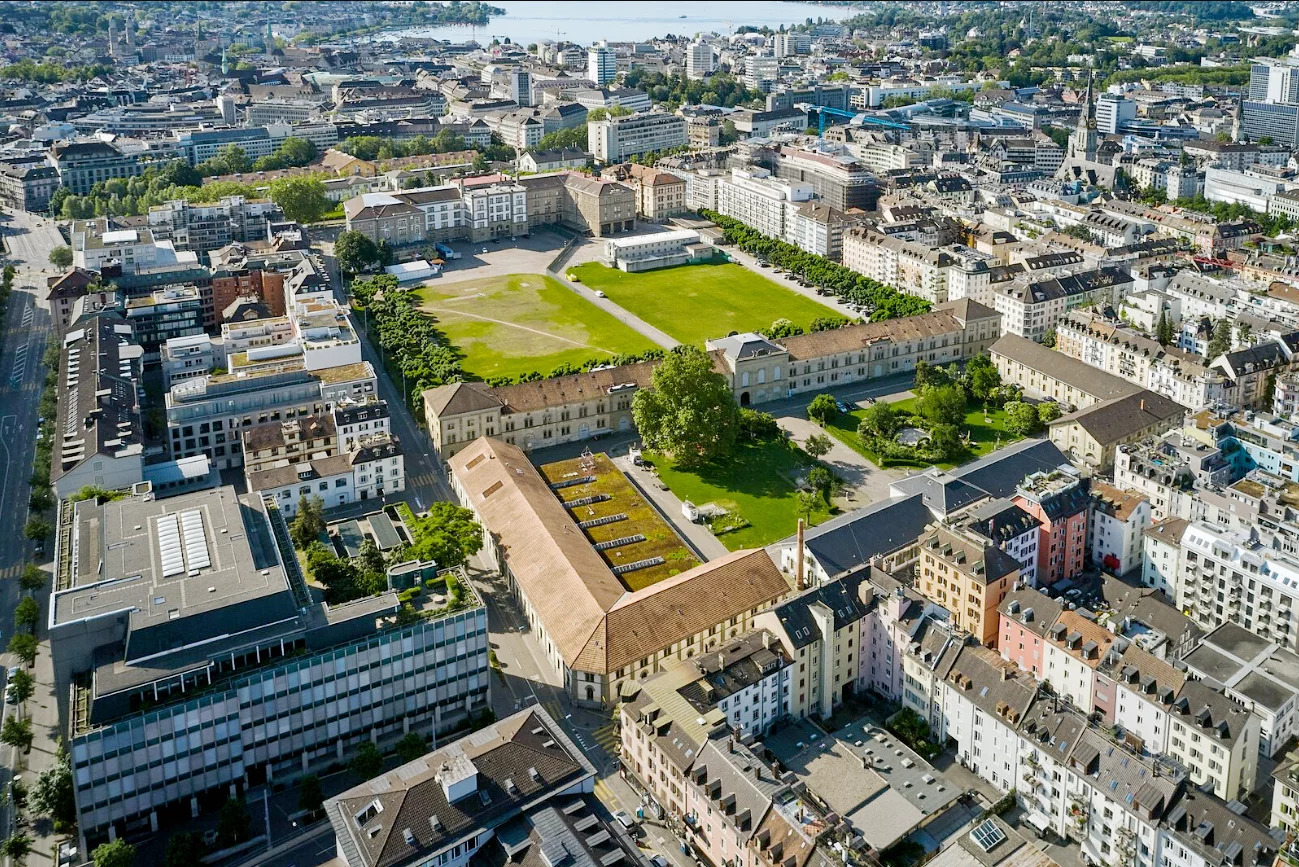
When the city of Zurich announced the renovation of the armory on the barracks site in Zurich-Aussersihl, it still sounded like a manageable project. The initial cost estimate was around 55 million francs. Today, a figure of just under 200 million francs is on the table that makes even experienced city parliamentarians sit up and take notice. A multiplication that needs to be explained.
Dilapidated fabric drives up costs The main driver is the fabric of the building itself. The historic arsenals are in a far worse condition than originally assumed. Pollutant remediation, structural interventions and monument conservation requirements add up to a cost that was simply underestimated in advance. Added to this are increased construction costs and an expanded usage concept that requires higher technical standards.
Culture, commerce and community What is to be created after the renovation has substance. The city council is planning a mixture of cultural use, small businesses and publicly accessible spaces. A lively meeting place in the middle of Zurich-Aussersihl. The social mix is an explicit part of the concept. The aim is to enhance the barracks area as a whole, not just the arsenals themselves.
Long road to opening The timetable is ambitious and the history of the project calls for caution. The renovated arsenals should be ready for occupation in 2034 at the earliest. Until then, the municipal council will need to approve a loan, an approved construction project and a smooth construction process. In Zurich, experience shows that these three factors rarely all work smoothly at the same time.
Monument obliges The arsenals are part of the protected barracks area. An ensemble that makes the city’s history visible. Demolition is out of the question. If you want to preserve historic buildings, you have to be prepared to pay for them. The question is not whether, but how the city finances this task and communicates it transparently, comprehensibly and with clear added value for all Zurich residents.
In the fall of 2025, the Swiss population voted clearly in favor of abolishing the imputed rental value. The fictitious rental income that homeowners have had to declare as taxable income for decades, even though not a single franc flows in, has thus become politically obsolete. However, it took the Federal Council until the end of March 2026 to set a date for its entry into force and it ended up in 2029.
Mountain cantons put the brakes on After the vote, Federal Councillor and Finance Minister Karin Keller-Sutter still mentioned 2028 as the earliest possible date. The mountain cantons, including Valais, pushed for 2030, as they need time to introduce a new tax on second homes to compensate for their tax losses. The year 2029 is the result of this trial of strength.
70 million franc hole The canton of Valais alone is expecting tax losses of over 70 million francs as a result of the reform. The new property tax for second homes is intended to close this gap. But its implementation is complex. Cadastral values are outdated and the definition of second homes for private use is unclear. The question of whether the municipalities or the canton will levy the new tax is still open.
Homeowners are outraged The Valais homeowners’ association campaigned strongly for the abolition of the tax during the referendum campaign. Association director Reinhard Meichtry commented on the Federal Council’s decision, saying that he initially believed it was an April Fool’s joke and that the decision was “absolutely unacceptable”. Meichtry announced that he would apply to the Federal Council for a rejection and also doubted the seriousness of the communicated tax loss figures.
What applies now The current system will remain unchanged until the end of 2028. Owners continue to declare the imputed rental value and can deduct mortgage interest and maintenance costs. Anyone planning major renovations or mortgage adjustments should make strategic use of this transition phase, as most of these deductions will no longer apply when the system changes in 2029.
According to a statement, Hansjörg Brunner is stepping down as president of WirtschaftsPortalOst (WPO). The owner and CEO of Fairdruck AG, based in Sirnach, Thurgau, has chaired the Wil Greater Area Business and Economic Association since its foundation in May 2019. Brunner had previously chaired both the Hinterthurgau SME Trade Association and the Thurgau Trade Association. He served as a member of the Thurgau Cantonal Council and the National Council for the FDP.
The Executive Board is proposing Marc Flückiger as the new president to the delegates’ meeting on 23 April. The 44-year-old grew up in Thurgau and lives in Wil. A trained cheesemaker, he worked at Züger Frischkäse AG, most recently as a member of the extended management team. Since 2014, he has been co-owner and managing director of SYGMA AG Liegenschaftenbetreuung in Wil, which employs around 170 people. He served as a member of the Wil City Council for the FDP and has been a member of the St. Gallen Cantonal Council since 2024.
“As WPO President, I would be delighted to contribute my experience and my network in business, politics and association work, and to devote my full energy to our region,” Flückiger is quoted as saying in the press release.
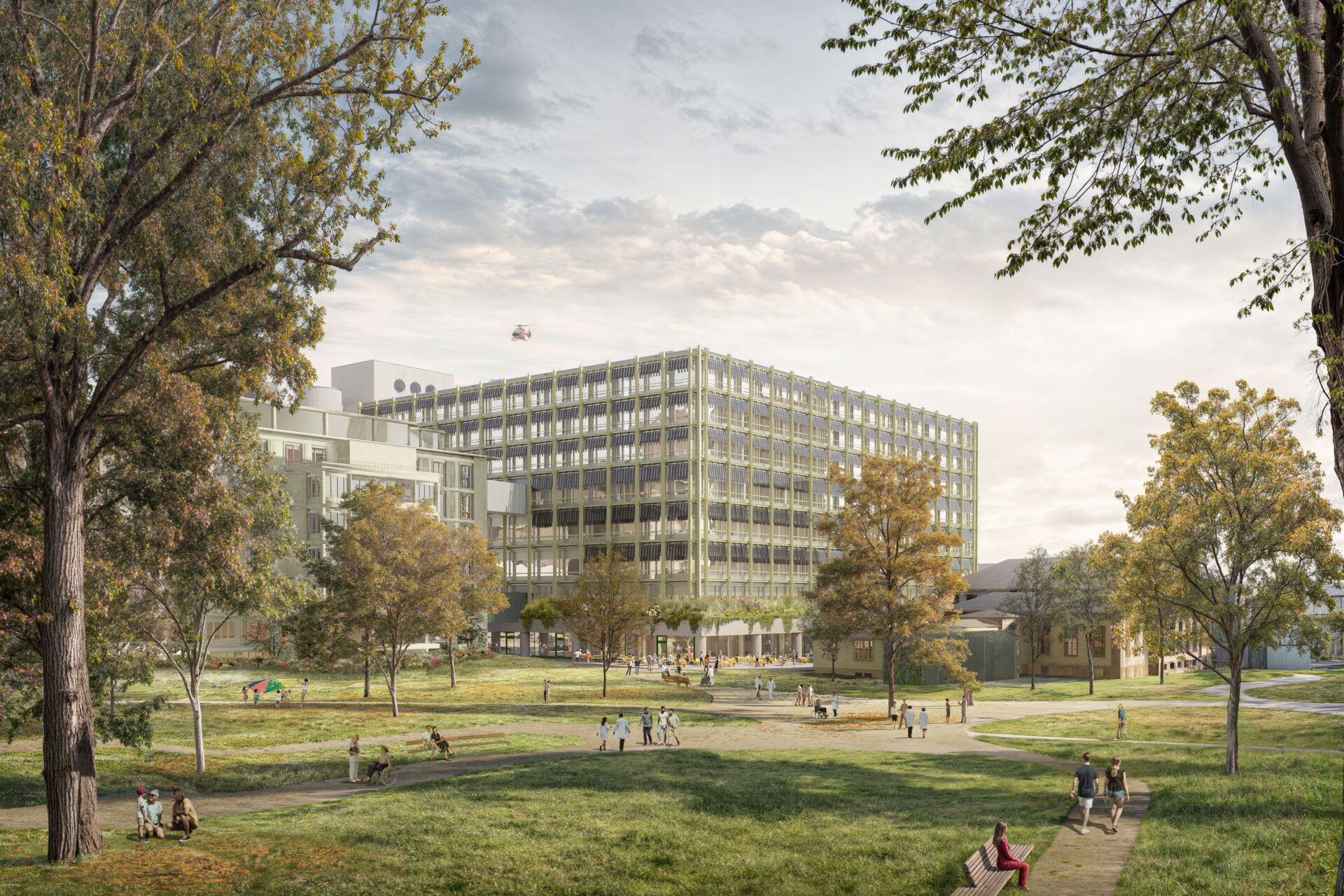
Anyone driving through the Hochschulquartier will see it immediately. Cranes. Building pits. Large construction site. Campus Mitte is being built and with it the ambition to redefine cutting-edge medicine in the long term. The investments are underway. The question has long been, how will the balance sheet support this? Now there is an answer.
The turnaround is real 36 million francs profit. For the first time since 2019. A year earlier, a loss of 31 million francs. The contrast is clear and the direction is right. Inpatient cases rose by just under 3 percent, outpatient visits by 5 percent to around 882,000. More patients, better capacity utilization, more consistent processes. The result is no coincidence. The turnaround is real. The work has only just begun.
Digitalization is paying off Since CEO Monika Jänicke took the helm in 2023, the clear strategy “USZ 2030” has been in place. More efficient processes, greater digitalization, focused medicine. The EBITDA margin rose from 2.9 to 6.6 percent. Strong, but not yet at the finish line. As the owner, the canton is demanding 10 percent. At the same pace, this can be achieved in 2026. The target for the equity ratio, just under 40%, has already been met.
The canton is moving with Investments are running in parallel with the increase in earnings. Around CHF 100 million was invested in real estate in both 2023 and 2024. The canton is supporting the project and is borrowing CHF 690 million on the capital market. This at better conditions than the hospital itself would ever receive and passes the money on. The retained earnings, which fell to under 200 million francs in 2024, have now risen again to around 230 million francs. The cushion is growing.
Not just the USZ The positive trend is not an isolated case. Winterthur Integrated Psychiatry closed 2025 with a profit of CHF 1.8 million. After red figures in the previous year. Patient numbers up 5 percent. This shows that cantonal healthcare institutions are responding to cost pressure with structure, efficiency and clarity.
The Homegate rental index for advertised rents, which is compiled by the real estate marketplace Homegate in collaboration with Zürcher Kantonalbank (ZKB), measures the monthly, quality-adjusted change in rental prices based on current market offers. For January 2026, the index shows a slight increase of 0.2 per cent compared to the previous month. Compared to January 2025, advertised rents rose by 2.2 per cent across Switzerland.
At the cantonal and municipal level, the picture is unusually varied. At the start of the year, rents were down in half of the cantons, particularly in Nidwalden (minus 2.7 per cent) and Schwyz (minus 2 per cent). In several cantons, this development followed a phase of one to three months of strong increases. Compared with the previous year, however, asking rents rose in all cantons, particularly in Graubünden (up 7.7 per cent), Glarus (up 6.4 per cent) and Valais (up 6.2 per cent).
Cities also showed downward trends in January. Compared with December 2025, all cities showed unchanged or lower values. Rents fell particularly sharply in Geneva (down 1.2 per cent) and Lugano (down 1 per cent). Only Zurich recorded an increase in rents in January (up 0.5 per cent). As in the cantons, however, asking rents in all cities are above the previous year’s level. Rents rose particularly sharply in Lugano (up 7.6 per cent) and Lucerne (up 3.8 per cent) in 2025.
Homegate is a platform of the SMG Swiss Marketplace Group. It brings together the digital marketplaces of TX Group, Ringier and Mobiliar.
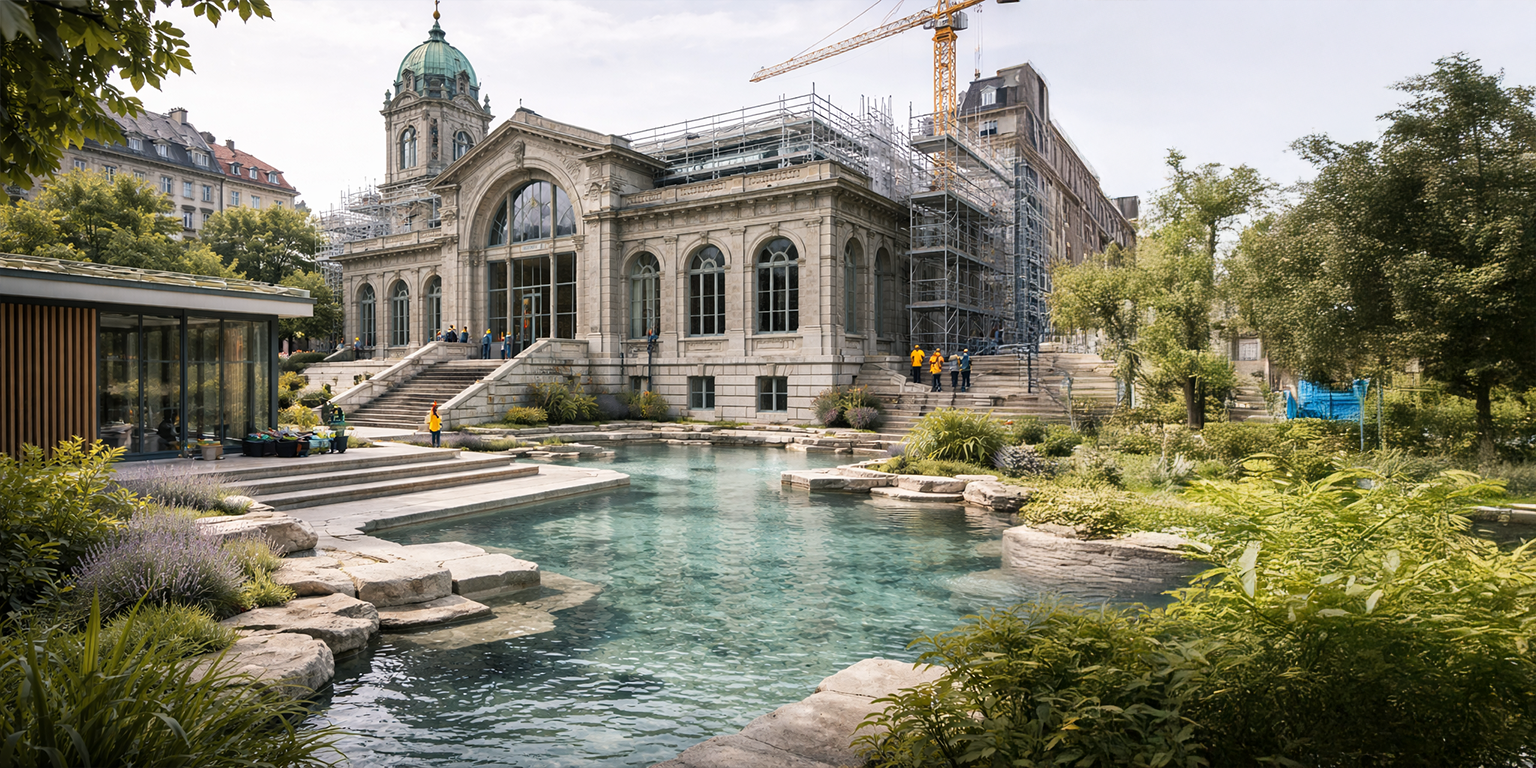
The city of Baden and the canton of Aargau have granted the Bad zum Raben cooperative planning permission to renovate the Bad zum Raben swimming pool. According to a statement issued by the cooperative, the renovation will combine monument preservation, water hygiene, fire and flood protection, and efficient operations. Once financing has been secured, the renovation is scheduled to start at the end of 2026 and be completed in early 2028.
“We are very pleased about this important milestone. The building permit gives us planning security and is the basis for further fundraising,” said Andreas Rudow, co-president of the Bad zum Raben cooperative, in the press release. “With the project approved, it will be easier to find funding.”
The total cost of the renovation will be around CHF 4.5 million. While CHF 1 million has already been covered by own funds, donations and initial funding commitments, the remaining financing is to be secured through contributions from the public sector, foundation fundraising, donations and the sale of cooperative shares. The Bad zum Raben cooperative is also continuing to seek additional members and is symbolically selling components of the future baths.
The renovation aims to preserve the historic building fabric and enable the communication of history and culture through sustainable bathing operations and flexible use. In addition to four pools with natural thermal water, the Bad zum Raben will feature a small bistro, a stage for cultural events, rooms for art and relaxation, and a bathing media library. The entrance area will offer insights into the history of the old bathhouse and the historic water system. After the renovation, thermal water will also be used to heat the showers in the baths and the apartments on the former hotel floors.
The Lucerne Cantonal Council supports the further development of location promotion. According to a statement, it passed the corresponding bill during its January session and amended the law on economic promotion and regional policy. It now provides for a package of measures for location promotion worth around CHF 300 million per year.
This is the canton’s response to the OECD minimum tax, which will require large international companies to pay more tax in future. According to an earlier press release explaining the motivation behind the package of measures and its contents, this means that the canton will lose its competitive advantage of low corporate income tax and fears that tax revenues and jobs could be lost.
Accordingly, the measures now approved in favour of the economy focus on promoting innovation, improving the tax burden and framework conditions with regard to digitalisation, the development of commercial space, the availability of commercial and residential space, and a “customer-oriented” administration. The measures in favour of the population concentrate on improvements in the tax burden, work-life balance, culture and digitalisation.
In addition, the Cantonal Council has decided that self-service shops without sales staff and with a maximum area of 30 square metres may be open daily from 5 a.m. to 10 p.m. A restriction to farm shops was rejected by an extremely narrow margin. Shops with at least four charging stations for electric vehicles, each with a minimum of 150 kilowatts and a simultaneous minimum total charging capacity of 300 kilowatts, are treated in the same way as petrol station shops. The SVP and SP announced a referendum against the proposal.
The canton of Aargau will rejoin the Greater Zurich Area (GZA) on 1 January 2027. This was decided by the Grand Council at its meeting on 13 January. It is providing CHF 5.5 million for membership of the location marketing organisation for the first four years. In its proposal, the cantonal government had requested CHF 8.5 million for six years.
In its deliberations in November, the preliminary consultation committee pointed out that, compared to the rest of Switzerland, the canton’s population is growing at an above-average rate, but its economy is growing at a below-average rate. Joining the location marketing organisation was a “clear opportunity to attract new value-added jobs to the canton,” it wrote in a statement at the time. It justified its request to reduce the initial period from six to four years by citing concerns about competition among the member cantons. The shorter period would allow for careful assessment of the effectiveness of membership.
The Greater Zurich Area includes the cantons of Glarus, Graubünden, Schaffhausen, Schwyz, Solothurn, Ticino, Uri, Zug and Zurich. It promotes the Zurich economic area in the USA and China in particular, with the aim of attracting high value-added companies to settle there. Aargau was a member of the GZA between 2007 and 2010.
On 13 January, the Grand Council also approved economic development in areas with potential. This will allow groups of municipalities with economic potential to join forces to promote their location professionally. The focus will be on establishing business contacts and brokering sites and land. The canton will cover 50 per cent of the costs. The Grand Council has now approved CHF 4.5 million for this purpose.
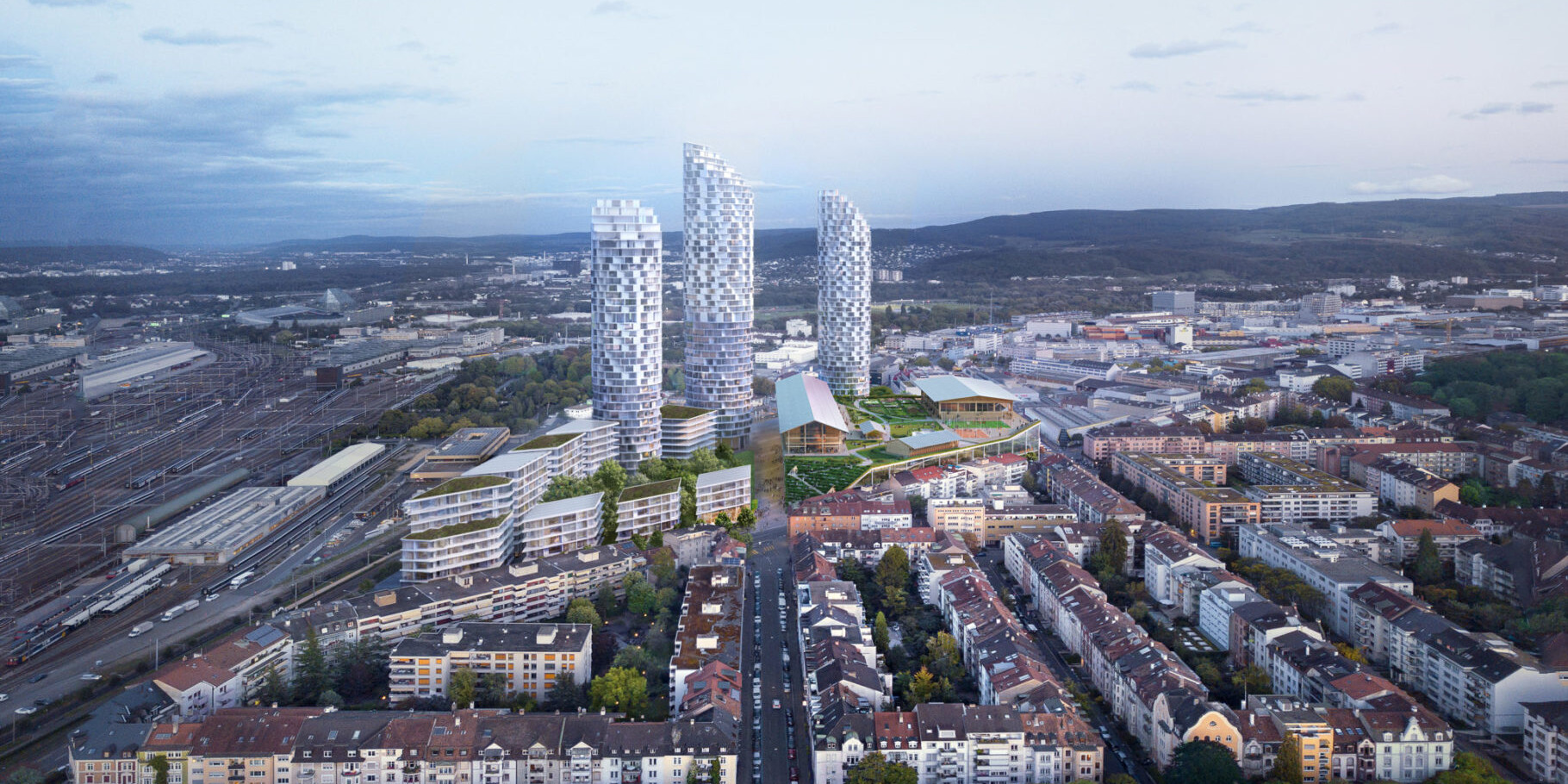
Dreispitz Nord is transforming a formerly single-use area covering around eight football pitches into an inclusive district. Around 800 flats are being built, a third of which will be affordable and non-profit housing. Three striking round high-rise buildings will offer attractive flats as well as office space, a library and a fitness centre. The focus is on a neighbourhood where everything is within easy reach. Living, working, shopping and leisure activities merge into an urban whole. Pedestrians and cyclists have priority, and the public space is almost completely car-free. A total of 4,000 bicycle parking spaces are planned, and car parking facilities are bundled together and separated from the residential area to minimise traffic in the neighbourhood.
A green place for urban climate and community Two newly planned city parks with large shade trees will transform the area into Basel’s green lungs and improve the microclimate in the long term. Permeable soils and planted roofs fulfil the principles of the sponge city and help to mitigate heat effects. The secondary school for around 600 pupils will be built on the roof of the modernised MParc, opening up new dimensions in terms of land use. The facilities will be complemented by basketball and sports fields, a triple gym and a youth club, which can also be used outside school hours. Direct access from Gundeldingen via a green ramp seamlessly connects Dreispitz Nord with the neighbouring district and creates public spaces that foster a sense of identity.
Partnership-based planning with vision The Christoph Merian Foundation as the landowner, the Migros Basel cooperative as the building leaseholder and the canton of Basel-Stadt as the planning authority are jointly driving the project forward. After an intensive public consultation period with seven objections, all of which were rejected, the cantonal government confirmed the development plan on 14 October 2025 and forwarded it to the cantonal parliament for consideration. In addition to the development plan, adjustments to the zoning plan, noise sensitivity levels and building regulations are also planned. The environmental impact assessment confirms that all requirements have been met.
Sustainability and social balance Dreispitz Nord is a prime example of sustainable neighbourhood development. Instead of grey parking spaces, green open spaces are being created, and the diversity of housing promotes social mixing. The existing building is being integrated into the new complex in a resource-efficient manner. Wide distances between the high-rise buildings ensure good ventilation, shade providers reduce heat stress and permeable surfaces strengthen climate adaptation. With 1,400 new residents, representing 7 per cent of the total population of Gundeldingen, and 1,600 jobs, the district will become a significant economic driver.
Urban life and economy in harmony The new quarter integrates today’s modernised retail spaces, complemented by cafés, restaurants and small shops, which are also easily accessible via the extended tram stop. The interconnection of living, working, shopping and leisure creates an inspiring atmosphere and promotes sustainable mobility over short distances.
Dreispitz Nord is characterised by its urban compactness, ecological sensitivity and social diversity. The project is a prime example of how comprehensive urban development can harmonise innovation, sustainability and quality of life, strengthening Basel as an attractive city for today and tomorrow.
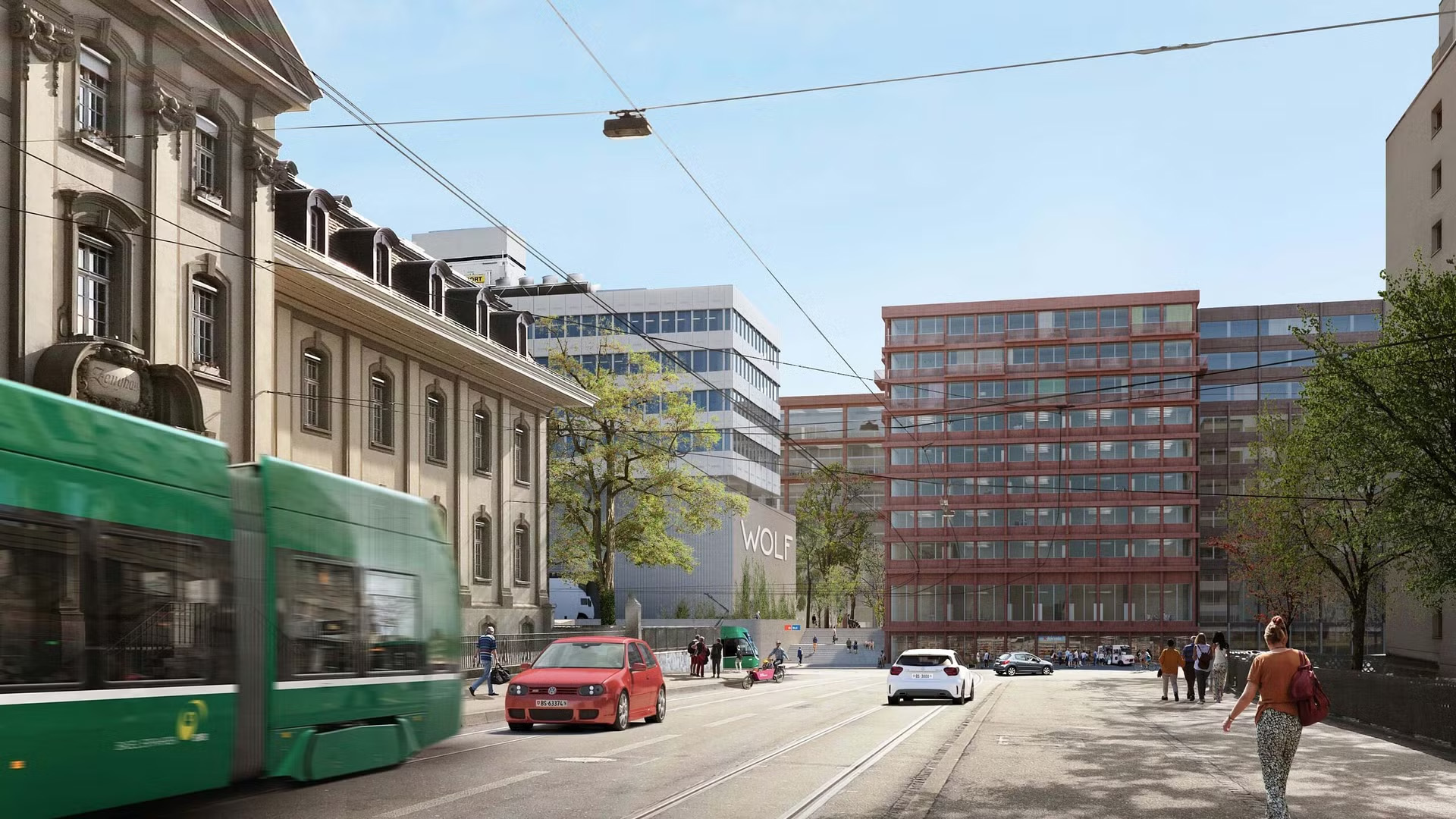
The transformation will begin in 2027 with the first phase of development in the western part of the site. Around 600 flats will be built, a third of which will be affordable cooperative flats. The aim is to attract a diverse population and combine urban density with social diversity. The Urban Hub will become the lively centre of the neighbourhood. It will combine gastronomy, sport, culture and services and act as a link between residential buildings and commercial areas.
The second phase of development will begin in the east of the site in 2031. Modern service and commercial buildings will create around 1,000 jobs and unlock the site’s potential for business, innovation and city logistics. Its central location at the railway station and its connection to the regional transport network reinforce its function as an urban hub in Basel.
Focus on architecture, sustainability and flexible use The master plan consistently follows the principles of ecological and sustainable urban development. The new perimeter block development is based on the sponge city principle and integrates historic railway buildings into the courtyard concept. This ensures a pleasant microclimate, promotes biodiversity and improves rainwater management. Buildings such as Janus and Binaria impress with reused components, modular wood and metal elements, green and accessible roofs, and photovoltaic surfaces. The flexible construction guarantees reparability, ease of maintenance and subsequent conversion.
Cultural and social start-up initiatives strengthen neighbourhood identity Even before construction begins, the area is being actively revitalised through innovative temporary uses. SBB is opening historic warehouses for culture, gastronomy and sport. One example is pickleball, which offers 2,000 square metres of space and attracts new players. Rental space for creative and social initiatives is also available. These pioneering uses create proximity to the neighbourhood population and promote creative participation. In particular, the broad participation process, in which the public, associations and organisations are involved from the outset, guarantees acceptance and innovation.
Mobility, smart city and quality of life as a guiding principle People are at the centre, with technology and sustainability as the supporting pillars. A city logistics hub in the eastern area ensures resource-efficient goods distribution in Basel and the surrounding area. Modern mobility services and integration with public transport are an integral part of the neighbourhood strategy. The SBB’s scientifically supported quality of life model, developed in collaboration with the University of Basel, makes Wolf Basel a laboratory for innovative solutions in energy, circular economy and social cohesion.
Wolf Basel is creating an inspiring neighbourhood that combines urban densification, sustainability, smart networking and social diversity. In this way, Basel is growing not only spatially, but also socially and technologically into the future.
Jansen, a steel system supplier based in the St. Gallen Lake Constance area, has agreed to extend its partnership with Schüco International KG, based in Bielefeld, Germany, which has been in place since 1978. According to a press release, Jansen will continue to be the exclusive distributor of Schüco aluminium systems in Switzerland and Liechtenstein. The German company will continue to be the exclusive distributor of Jansen steel systems in Germany, Luxembourg, the United Kingdom, Ireland, Scandinavia, Finland, Greece and the Baltic States.
Since 1 January 2026, Schüco International S.C.S, based in Le Perray-en-Yvelines, has been distributing the steel systems of RP Technik Profilsysteme GmbH, which was taken over by Jansen, in France and the French overseas territories. The steel systems are used for windows, doors, fire protection and façade constructions, according to the press release.
“We have shared these values with Jansen, a family-owned company like Schüco, for over 45 years. I am delighted that we will continue and further expand our trusting partnership in the future,” said Andreas Engelhardt, personally liable partner at Schüco International KG, in the press release. Christoph Jansen, Managing Director and Member of the Board of Directors of Jansen AG, considers the long-standing stable partnership to be extremely important, especially in “times of great change and uncertainty”: “Our partnership is based on shared goals and values, always with a focus on our mutual customers.”
Taller buildings in cities could alleviate the housing shortage, but they are unpopular with the general public. This is according to a survey conducted by the comparison portal Comparis. According to the survey, 50 per cent of those questioned by Comparis were against the construction of taller buildings with more than six storeys. In contrast, 45 per cent of the 1,039 adults surveyed across Switzerland in November 2025 were in favour.
According to real estate expert Harry Büsser from Comparis, taller buildings in urban areas could be “a political path to more living space”. “Let’s get people in cities to take the lift instead of driving,” he is quoted as saying in a statement accompanying the study. It highlights a dilemma: rising rents affect everyone, but most people reject possible countermeasures. For example, 68 per cent of those surveyed are against densification with fewer green spaces and smaller distances between buildings. 66 per cent reject new building zones at the expense of agricultural or green spaces. Only the restriction of objections found a relative majority: 47 per cent are in favour, 43 per cent against.
The study also shows that measures to create additional living space are assessed differently depending on gender and age. While 54 per cent of men are in favour of taller buildings, the proportion of women is 36 per cent. Denser development was approved by 33 per cent of men compared to 22 per cent of women. Thirty-nine per cent of the men surveyed said yes to new building zones, compared to 21 per cent of women. Büsser suspects that the reason for this lies in different roles and activities. Women often bear the brunt of family and neighbourhood responsibilities. Changes in the living environment would therefore “probably be perceived more strongly as a loss of quality of life”.
The worsening housing shortage is particularly felt by 18- to 35-year-olds (65 per cent) and city dwellers (66 per cent). According to Comparis, this explains why the approach of building upwards met with the most approval among this group: 52 per cent of respondents in the young population group would agree to buildings exceeding six storeys. The survey also found that taller buildings are only accepted in the city centre (54 per cent). In the suburbs, only 39 per cent are in favour.
In January, the Swissôtel hotel chain announced the opening of a new hotel in the Czech spa town of Mariánské Lázně. According to UNESCO, Mariánské Lázně is one of Europe’s most important spa towns. According to a press release, the new hotel, together with the recently opened hotels in Montenegro and Romania, will consolidate Swissôtel’s strong presence in Europe. Swissôtel is part of the French Accor Group.
“The Swissôtel Mariánské Lázně is a landmark opening for our brand in Central Europe,” said Jean Wendling, Vice President Operations Management at Accor, in the press release. “We are presenting a hotel that combines Swiss joie de vivre with the unique character of the city and offers both holidaymakers and business travellers a first-class experience based on well-being and balance.”
Swissôtel Mariánské Lázně has 102 rooms, 22 suites and a presidential suite. The hotel also offers a variety of culinary options. These include the 105 Dining Lounge, the Swiss Café and the Pod Oblaky rooftop bar. Guests also benefit from the hotel’s own spa and sports area. For business travellers and events, the hotel has four versatile rooms, a conference room and an area for cocktail receptions and presentations.
In its 2026 energy promotion programme, the Nidwalden Cantonal Council has decided to increase subsidies for energy-efficient building renovations by 300 per cent to 2.9 million Swiss francs. Together with federal funds, this means that a record annual budget of CHF 6.3 million is available, according to a statement. This cantonal subsidy programme supports owners who optimise their building envelope, replace fossil fuel or electric heating systems with renewable energy systems, or construct energy-efficient new buildings.
According to the information provided, demand for subsidies was “exceptionally high” in 2025. The canton expects a further sharp increase in applications in 2026, particularly due to the expansion of district heating networks. In addition, tax breaks will be abolished in the future, which is also likely to cause demand to rise further this year.
According to the information provided, energy-efficient building renovation – a key pillar for achieving the canton’s emission targets by 2035 – will only succeed if owners are willing to invest in their properties. “In doing so, they are making a major contribution to reducing greenhouse gases and saving energy,” said Environment Director Joe Christen.
Although the subsidy can only cover a small portion of the investment, these investments are worthwhile in the long term when combined with tax savings and lower heating costs. “On average,” says Christen, “one franc of funding triggers almost ten times that amount in investment. Most of this added value remains in the canton, strengthening local businesses and helping to reduce the outflow of money abroad thanks to renewable energies.”
The canton of Nidwalden is one of the exhibitors at the SWISS Pavilion at the Singapore Airshow. The international aviation trade fair takes place from 3 to 8 February.
The Aargau municipalities of Bellikon, Remetschwil and parts of Oberrohrdorf are no longer supplied via wooden pole lines from the valley, but via a new cable line. According to a statement, AEW Energie AG has completed and commissioned a central infrastructure project on the Rohrdorferberg with this cable. As a result, 1.6 kilometres of existing wooden pole lines have been dismantled – “a contribution to a more robust, low-maintenance network and an improvement to the landscape,” according to the Aargau energy supplier.
The Rohrdorferberg line between Künten and Fislisbach has a total length of 11.2 kilometres. A total of eight transformer stations were connected to the new line. According to the information provided, this will particularly benefit businesses “with increased requirements for security of supply”.
AEW invested a total of CHF 3 million in the project. “By consistently expanding and cabling our grid infrastructure, we are not only increasing security of supply for the population, but also creating the conditions for a flexible and sustainable energy system,” says Christoph Fischer, who heads the Networks division at AEW.
Civil aviation generated direct added value of CHF 9.8 billion in Switzerland in 2024. This includes companies at airports and their suppliers. This is shown in a report prepared by INFRAS AG on behalf of the Federal Office of Civil Aviation (FOCA). At 68 per cent, more than two-thirds of the direct value added is attributable to Zurich Airport and the neighbouring building complex The Circle. Geneva follows with 19 per cent and Basel with 12 per cent.
The total value added, which also includes indirect effects such as tourism in Switzerland, amounts to CHF 24.8 billion.
Civil aviation is also a driver of employment. It directly provides 49,100 full-time equivalent jobs and a total of 150,200 full-time equivalent jobs.
Thanks to its airport, the Zurich region is the most accessible region in Europe. North-western Switzerland ranks sixth, also thanks to Basel Airport, and the Lake Geneva region ranks seventh, thanks to Geneva Airport. The other regions of the country are also among the 15 most accessible of the 284 regions surveyed in Europe.
The report estimates the external costs of civil aviation at CHF 6.1 billion. Of this, CHF 4.6 billion is attributable to the climate and CHF 1.1 billion to upstream and downstream processes.
Prices for owner-occupied residential property continued to rise in the fourth quarter of 2025, according to a statement from Raiffeisen on its new transaction price index. Prices for single-family homes rose by 0.2 per cent compared to the previous quarter, while condominiums cost 1.2 per cent more. Compared with the fourth quarter of 2024, detached houses cost a total of 5.7 per cent more at the end of 2025, while condominiums cost 3.8 per cent more.
Compared to the previous year, detached houses in the Bern (8 per cent) and Eastern Switzerland (6.9 per cent) regions recorded the highest price increases, while prices in Northwestern Switzerland remained somewhat more stable (3.0 per cent). Condominiums became particularly expensive in Central Switzerland (6.7 per cent) and Eastern Switzerland (4.3 per cent), while prices in the Bern region rose only slightly (0.8 per cent) and even fell on Lake Geneva (-0.5 per cent).
Broken down by municipality type, centres (5.4 per cent) and tourist municipalities (5.3 per cent) recorded the highest price increases for single-family homes, while prices in urban centres rose the least on average, at 4.5 per cent. In terms of condominiums, tourist communities in particular saw significant growth of 4.6 per cent, while centres recorded the lowest price dynamics with an average price increase of 1.2 per cent.
“In contrast to the rental housing market, where rental price growth has recently slowed somewhat due to declining immigration, price momentum in the owner-occupied housing market, which is more strongly influenced by domestic demand, remains high,” said Fredy Hasenmaile, Chief Economist at Raiffeisen Switzerland.
Rohner is redesigning its sales area in Balgach. According to a statement from CEO Hermann Lion, the site will be expanded to include a new sales area and is set to open in September 2026. The aim is “a space that connects brands and people. A space that inspires, surprises and shows that modern retail is far more than just sales.”
The traditional company, founded in 1873, is thus responding to its perception that “people are once again shopping more consciously and looking for real contact – after years in which much has become digital,” says Lion on request. “Brick-and-mortar retail has a future if it offers more than just a transaction.” This is why the textile company is “investing specifically in a concept that combines experience, quality and encounters. It is a statement for the strength of physical retail – and for our region”.
The new sales area is being designed by Zurich-based Susanne Fritz Architekten: “Clear lines. Natural materials. Light that tells stories,” says Lion. Susanne Fritz has already renovated and extended the entire building complex in Balgach and put it to a new use. The entire brand identity of Rohner AG was modernized and also architecturally redesigned, including the existing store space. “Despite a lower density of racks, it was possible to increase sales per square meter,” according to a presentation of the work.
According to Lion, something is now being created in the new sales area “that we have never seen before in our region”. Various brands are to be visible together at this location. Shop-in-shop concepts for other textile brands are planned, as well as for accessories, lifestyle products, outdoor and design brands. “It is important to us that the partners can tell a story and fit into the overall experience, whether they are local manufacturers or international brands with a clear attitude.”
With the signing of a letter of intent to cede the Moudon military base, the canton of Vaud can start its planning process for the future use of the site. As the Confederation confirmed in a press release, the army will vacate the site from the end of 2027 to make way for the Vaud Police Academy. The canton, armasuisse Real Estate as the real estate competence center of the Federal Department of Defence, Civil Protection and Sport(DDPS) and the State Secretariat for Migration(SEM) are involved in the declaration of intent. The basis for this step is the decision taken by the Vaud State Council in May 2022 to relocate the police academy from its current location in Savatan to Moudon.
According to the press release, the area and infrastructure of the Moudon weapons range offers great potential for establishing an interdisciplinary training center. The canton is already examining whether the site could be used not only by the police academy, but also by other partners from the security sector. In particular, so-called blue light services, services in the area of environmental protection or in the area of the penal system are under discussion. A project planning loan should enable all options to be explored.
It is already clear today that the area will be gradually redesigned after the withdrawal of the army. The 41 Hospital School Command stationed in Moudon will move to the Chamblon military base in stages from the second half of 2027. The emergency capacities of the SEM in Moudon will remain in place. This means that accommodation can be provided in the multi-purpose hall there in the event of an increase in asylum seekers. “If the project progresses according to plan, the first training courses could begin between 2030 and 2032,” says the federal government.
Senn AG from Oftringen, which specializes in extensions, new buildings and special constructions, is building a new steel warehouse for the Migros distribution company(MVB) in Suhr. According to a press release, the new building covers an area of 7500 square meters, is more than 100 meters long and 15.5 meters high. At the heart of the modernization is a fully automated storage system, which will increase capacity and make logistics more efficient.
A total of 1100 different components were required, which was logistically demanding and a challenge for assembly due to limited space for temporary storage. According to Senn AG, most of the assembly work was carried out using the company’s own mobile crane and two construction site cranes.
According to the press release, the supporting structure is made of white-coated steel. a total of 530 tons of steel were used. According to the company, Senn AG processes 7,000 tons of steel and aluminium annually at its headquarters and is active in steel and metal construction, sheet metal and stainless steel centers, emergency power systems, mobile crane operations and other transport solutions.
Construction work has been underway since the end of June. Around three quarters of the hall has been assembled and the final parts of the hall are currently being coated in the workshop and prepared for transportation. The project should be completed before the end of December.
The realization of the warehouse is important for Migros’ supply network. As MVB writes, the retail group operates one of two national distribution centers in Suhr. The first was built more than 50 years ago in Neuendorf SO, and another site was built in Suhr more than 25 years ago.
After two consecutive declines, the KOF Business Situation Indicator is below the level of the summer, but still above the lows of August and September. Economic momentum remains moderate, a weak but stable foundation. The business situation has deteriorated further, particularly in the manufacturing sector. Production and purchasing policies are stagnating and price increases are being planned less frequently. Despite this, expectations for exports and order books are increasingly optimistic. Many companies anticipate a slight improvement in the first half of 2026.
Inconsistent sector trends The situation is developing differently across all sectors. Project planning offices, financial and insurance service providers and other services are reporting flatter business development, while the construction and retail sectors are seeing a slight recovery.
These contrasts are also evident in expectations. Confidence prevails in the construction industry and among financial and insurance service providers, while retailers and planning offices are somewhat more cautious. The retail trade recorded the second consecutive decline in its expectations indicator. This is a sign that consumer trends are only hesitantly consolidating.
The gloom remains From a regional perspective, the current business situation is falling in all parts of the country. Central Switzerland, Espace Mittelland, Eastern Switzerland, Zurich and Northwestern Switzerland are particularly affected. The decline remains more moderate in Ticino and the Lake Geneva region. The indicator shows that economic pressure is being felt throughout the country, despite stable exports and services.
Economic clock shows cautious recovery The KOF illustrates the tension between the present and the future. The situation remains below average, while the prospects are above average. With a tentative recovery in 2025, the Swiss economy has not yet moved into a genuine upswing. Nevertheless, the increasing brightening of expectations is a harbinger that 2026 could bring better momentum. Supported by robust service sectors, stable export expectations and a gentle recovery in construction.
At the turn of the year, the Swiss economy continues to be characterized by stability with slight headwinds. While the present is characterized by a slower pace, many companies are looking ahead optimistically in the hope that 2026 will be the year of a genuine economic recovery.
KOF Business Situation Indicator (source: kof.ethz.ch)
FlexOffice has opened its new location in Schlieren. The event venue in the JED, the former NZZ printing house, offers a wide range of possibilities in the area of office work, according to a message from the office rental company on LinkedIn.
The flexible space can be organised for events from 80 to 150 people. It can be booked by users of individual workstations, workshop organisers and even larger meetings with theatre-style seating.
The room is designed for “workshops, keynotes, team offsites, launches or networking nights”, according to the press release. Najat El Harat is responsible for event management and looking after the guests. An after-work programme with sport, relaxation and gastronomy is also planned. Bookings can be made now at FlexOffice, with early bookers receiving a 25 per cent discount for events in 2026.
The software company zevvy AG and Elektrizitätswerk der Stadt Zürich(ewz) are joining forces for electricity billing solutions. In future, ewz will also use the flexible billing platform, which calculates energy flows in multi-party buildings and neighbourhoods, as detailed in a press release. The zevvy software enables the billing of solar power for self-consumption (ZEV), virtual ZEVs (vZEV), tenant electricity and local electricity communities (LEG), as well as heating and water costs and charging stations for electric vehicles. In future, the platform will be used as a white label, i.e. under the ewz logo.
According to the press release, ewz benefits in particular from the software’s integration capability, which can be used with various building technology systems, monitoring platforms, smart home providers and Internet of Things (IoT) solutions. This versatility enables a flexible system architecture for future energy services and reduces lock-in effects. This makes it more difficult to switch to other providers or systems.
“We are delighted that other partners from the zevvy ecosystem are contributing to our success. The software enables work in the client system. For example, dSyde SA supports French-language projects and Prola Services GmbH helps with the initial migration effort,” says Cyrill Burch, CEO of zevvy.
The background to the partnership is the increasing importance of shared solar power and the associated services and technologies. For example, active energy management in solar energy communities and the concept of local energy communities), which will be introduced in January 2026, require new solutions. Ewz wants to use the zevvy software to expand its range of energy billing services for property portfolios.
The Maisprach heating network in the canton of Basel-Landschaft and the Basel-based energy supplier IWB have launched a new project to supply heat from regional raw materials. Since the beginning of December, energy has been generated from a wood-fired boiler and a biochar plant and fed into the heating network, according to a press release.
The municipality of Maisprach laid the foundations for this step in January 2025 with the construction of a new depot. IWB initially set up new wood heating systems there. This was followed in November by the construction of the biochar plant. Every year, 250 tonnes of biochar are to be produced here from landscape conservation wood and biomass through pyrolysis. The waste heat from the charcoal production will be fed into the district heating network. The operators anticipate 900 megawatt hours of heat energy for network customers, with a further expansion of the network on the horizon. The wood-fired boiler is also fuelled by regional biomass. The biochar produced is used in the region as an additive for composting, in soil substrates and in agriculture. IWB invested CHF 3.5 million in the project.
“IWB has experience in the construction and operation of heating plants. As part of a pilot project in Basel, IWB tested the innovative approach of utilising waste heat from a biochar plant in a heating network. We can now benefit from this,” said Dorian Wernli, Mayor of Maisprach, in the press release.
Elektro Meier AG has completed a change in management and a change of name. According to a statement from Eglin Holding AG in Baden, the Würenlingen-based company will be operating under the new management of Marc Wey and under the new name Eglin Elektro AG Würenlingen as of 1 December.
According to the press release, Marc Wey is a “management personality from the company’s own ranks”. Marc Wey has been with the company since his apprenticeship as an electrician (2009 to 2013 at the former Ing. W. Eglin AG). After years as a service fitter, Wey took over responsibility as Junior Project Manager at Elektro Meier AG Würenlingen in 2018. Most recently, he had been Project Manager in E-Service since 2020. The move marks the completion of the integration into the Eglin Group, which began in 2002. “This makes the affiliation with the Eglin Group transparent to the outside world and creates a clear, future-oriented identity,” the press release explains.
The family-run company Elektro Meier AG can look back on almost 100 years of company history. Originating from the Eglin electrician company founded in 1931 in Ennetbaden AG, the company is now active in the planning, manufacture and sale of electrical systems and equipment. It specialises in solutions and services in the fields of electrical installation, ICT and building automation.
Architect Markus Schietsch has received a silver Hase Architecture Prize from “Hochparterre” for his new construction of the cantonal AVS building in Unterentfelden. The prize was awarded on December 2 at the Zurich Museum of Design. It recognizes the architectural quality of the building and the consistent implementation of sustainable construction methods.
The new building with its laboratory and office workstations for currently 80 employees was officially opened on October 25, 2024 after two and a half years of construction. The construction work was planned and carried out by Immobilien Aargau.
“The award confirms the path we have taken,” said Cantonal Councillor Dr. Markus Dieth in a press release. “The canton of Aargau invests in sustainable, economical and high-quality buildings that also take cost-efficient construction into account. I would like to congratulate Markus Schietsch and the Aargau Real Estate Department on this success.”
According to Schietsch, this award shows “that careful planning, a clear architectural approach and the courage to use sustainable materials such as wood are more in demand today than ever before”. Head of office and cantonal chemist Dr. Alda Breitenmoser emphasizes that the new building offers “optimal working conditions” for consumer protection: “The architecture supports our work processes, creates a pleasant indoor climate and shows that modern administration can be ecological and functional at the same time.”
At the beginning of November 2025, the new AVS headquarters received an award from the Pro Holz Aargau wood network for its timber construction.
Swiss Prime Site has acquired a new office property on Pfingstweidstrasse in Zurich-West, as detailed in a press release. The property, which has a rental area of 19,000 square meters and a net yield of 3.8 percent, is already fully let to the stock exchange operator SIX Group Services AG.
The acquisition marks the last major investment of the CHF 300 million capital increase for growth investments from last February. In April and August, Swiss Prime Site had already used the funds to acquire office properties in Geneva and Lausanne. All new acquisitions generate yields that are significantly higher than the portfolio yield and increase the net asset value (NAV) per share as well as the funds from operations (FFO) per share.
Swiss Prime Site and the private seller have agreed not to disclose the purchase price of the property. Due to the recent year of construction, the sustainable construction method and the office building’s district heating connection, Swiss Prime Site expects a BREEAM sustainability rating of “very good”.
“The transaction underscores our focus on first-class, centrally located office properties and shows how agile we are in deploying fresh capital for sustainable growth. It is particularly pleasing that we were able to acquire this prestigious property – used by the Swiss stock exchange as our country’s central infrastructure – as part of an exclusive purchase review and thanks to the trusting cooperation with the seller”, René Zahnd, CEO of Swiss Prime Site, is quoted in the press release.
With the three acquisitions made and a reduction in the planned property sales as part of capital recycling, Swiss Prime Site expects an increase in rental income of CHF 20 million from 2026. The transaction was completed on December 1, 2025.
Wir verwenden Cookies zur Unterstützung und Verbesserung unserer Dienste. Mit der Nutzung dieser Website erklären Sie sich mit der Verwendung von Cookies einverstanden. Weitere Informationen finden Sie in unserer Datenschutzerklärung.